
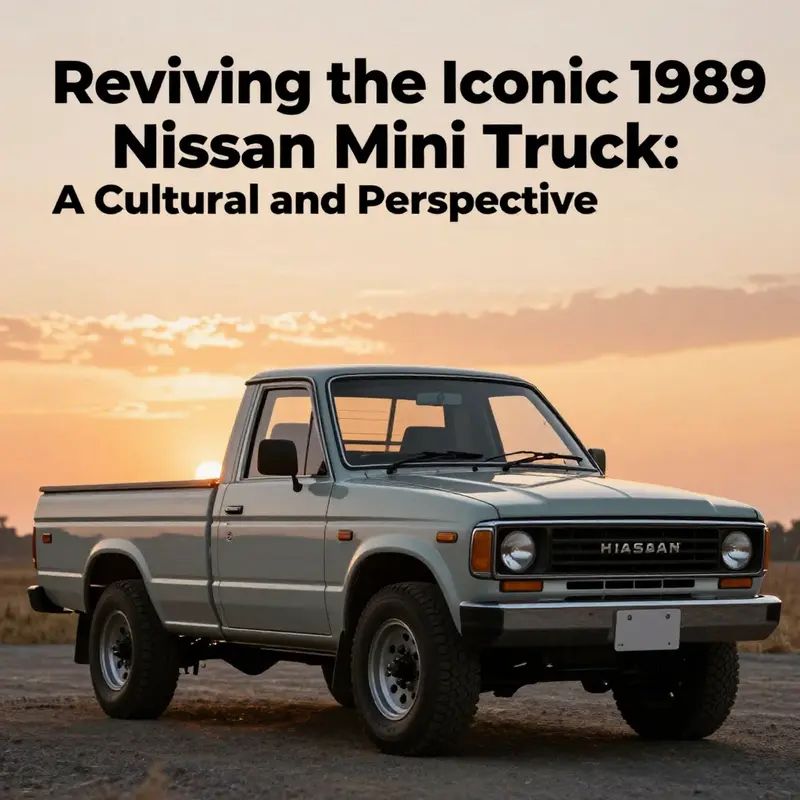
The 1989 Nissan Hardbody stands as a beloved mini truck that resonates with many small business owners, residential property owners, and auto enthusiasts alike. Its robust design and practicality made it a staple in various industries while capturing the hearts of hobbyists. As we delve into the chapters ahead, we will unpack the distinct aesthetic appeal of this durable vehicle, dive into its technical specifications, explore its cultural impact, analyze its economic significance, and trace the evolution of the Nissan mini truck lineup. Each chapter will enrich your understanding of why the 1989 Nissan mini truck continues to be relevant and cherished today.
Boxy Confidence: The Aesthetic Language of a 1989 Mini Truck
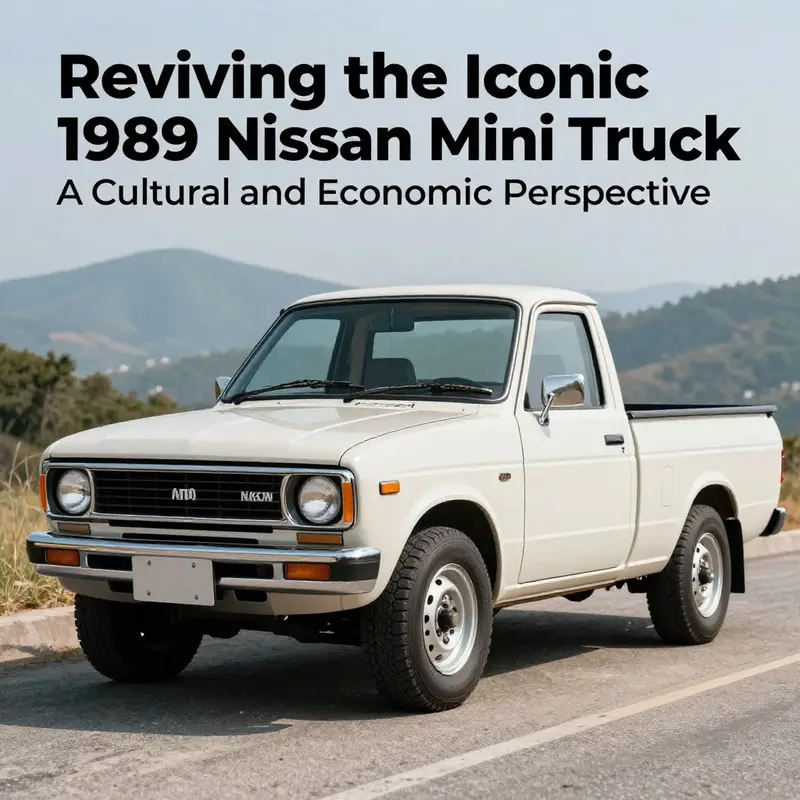
A still image can carry the weight of a decade in its stance, and the picture in focus here does precisely that. It presents a compact pickup from the closing years of the 1980s, rendered in a way that makes the eye pause and the mind linger on what is visible and what remains unsaid. The truck sits with a calm, unhurried confidence—the kind of presence that comes not from ornament but from the honesty of its design. In this single frame, the functional becomes stylish, and the rugged becomes quietly artful. The silhouette is almost architectural in its clarity: a squared cabin, a flat hood, and a cargo bed that reads as an honest workspace rather than a stage for show. The image, sourced from a repository that collects everyday snapshots, distills a mood of utility that was central to a generation of small, practical vehicles. The essence is not glamour but reliability, a quality that could be measured in miles driven, loads hauled, and the quiet endurance of a mechanical heart that keeps ticking without fuss.
The boxy form that dominated late-20th-century utility vehicles is more than a fashion choice; it is a visual manifesto. Straight lines and right angles create a geometry that speaks to the eye as much as to the hand. The front fascia, with its upright grille and vertically oriented lamps, asserts a face that communicates readiness rather than flair. The upright profile—cab tucked neatly over a simple, open cargo bed—conveys a straightforward proposition: this is a machine built for work, not a sculpture designed to be admired from a distance. There is a particular kind of beauty in that unembellished presentation. It is not about how perfectly the surfaces curve or how light curls along a hood; it is about the honest interaction between vehicle and job. In the image, the surfaces remain uncompromised by needless curves or gimmicks, and the effect is less retro nostalgia and more a crisp snapshot of a philosophy: fewer frills, more utility.
The aesthetic at play resonates with a cultural moment when durability and efficiency were the core expectations of a vehicle that could serve small businesses, tradespeople, and daily drivers alike. The late 1980s saw manufacturers prioritizing sturdy construction, simple maintenance, and sensible fuel use, and this image embodies that approach. The cargo bed, unadorned yet capable, evokes a practical imagination: you could measure the day’s work in the number of crates moved, the length of a morning route, the ease of loading with a straightforward tailgate. The not-too-small size makes the truck feel nimble in the context of a work environment, while still offering a respectable payload. The balance between compact exterior and capacious interior is not incidental; it reflects a design ethic that valued efficiency of space, not for show, but for utility. The photograph captures this ethic in a single breath—engineered pragmatism made visible, rendered timeless by good condition and careful preservation.
Preservation matters in how we perceive this image’s lasting value. When paint holds a little of its original luster, when chrome trim catches the light with a hint of chrome’s cool gleam, and when wheels sit on a stance that suggests a period correct identity, the viewer reads a history more clearly. Details become signifiers: the texture of the paint, the wear on a step or edge, a slight gloss on the chrome that hints at care or use. These cues invite a quiet conversation about the vehicle’s life—where it lived, how it worked, the roads it traveled, and the kind of owner who kept it ready for the next job. A well-preserved shot of this model becomes a kind of time capsule. It invites enthusiasts to reconstruct the narrative of a once-familiar object that many might have overlooked in the daily bustle of work and transportation. The image doesn’t simply show a truck; it preserves the promise of a design language that spoke plainly about purpose, functionality, and the possibility that good design can be obvious without trying too hard.
The photograph also carries a subtler cultural footprint that extends beyond the frame. In contemporary online communities, this style—boxy and unadorned—continues to circulate with affection. The appeal is not a longing for a past trend revived as a fashion statement but a recognition of how honest, uncomplicated design can outlive its era’s trends. This enduring fascination is evident in diverse online spaces where durable, simple aesthetics are celebrated for their resilience rather than their flash. The image acts as a bridge between decades, offering a tactile sense of continuity: the same bed can be loaded, the same gate can be opened, the same hinge can creak under a steady routine. That continuity makes the picture more than a nostalgic artifact; it becomes a reference point for designers, restorers, and storytellers who value the clarity of a design that communicates its purpose with minimal adornment.
To read the image deeply is to appreciate how the mid-to-late 1980s practical mindset translates into visual rhetoric. The utilitarian stance—a vehicle engineered first for cargo capacity, second for comfort, third for style—produces a look that is at once stern and welcoming. The upright lines, the generous beltline, the plain grille, and the robust wheel wells all contribute to a sense of resilience. In a modern landscape dominated by aerodynamics and high-gloss surfaces, this picture offers a counterpoint: a reminder that not every vehicle’s character is forged in wind tunnels or in the glow of chrome; sometimes it is forged in the long, steady work of everyday use. For viewers who approach design as a narrative, the photograph provides material for interpretation about how people projected value onto machines—the belief that a tool can be dignified by its own utility and that a well-kept image can stand as a pledge of ongoing usefulness.
As a touchstone for enthusiasts, the image invites a broader exploration of what constitutes automotive character. It invites viewers to notice not just the obvious mass and form, but the smaller, quieter signals—the alignment of panels, the way the bed’s edges meet the tailgate, the arrangement of the lights, the proportions that add up to a sense of balance even without flourish. In a world where new automakers chase the next aerodynamic breakthrough, this image stands for a different ambition: clear purpose, sturdy build, enduring value. The aesthetic is quiet but powerful, the kind of look that rewards close study. And because the photograph exists in a network of shared references, it becomes a touchstone across generations of viewers. For those who collect, restore, or simply admire vintage utility vehicles, it offers a concise, convincing argument for why a boxy silhouette can still feel exacting and relevant today.
In a broader sense, the picture serves as a guidepost for understanding how design language travels across time. The straightforward exterior invites a kind of visual honesty that resonates with people who prize straightforward problem-solving. The truck’s proportions—the compact cabin, the practical bed, the robust stance—speak a unifying truth about the era: vehicles were tools first, and aesthetics were a byproduct of that priority. This is a chapter in the longer story of how transportation design evolved to meet the demands of small businesses and daily life, a story that continues to be told in communities that celebrate the workhorse spirit of compact pickups. As the image circulates on social platforms and in dedicated forums, it becomes part of an ongoing dialogue about how the past informs present taste. The simplicity of the form invites reflection on how modern designers might borrow lessons from a model built to endure rather than to impress.
For readers who wish to connect this photograph to a live conversation about the wider ecosystem of mini trucks, there is a vibrant repository of discussions and long-form features that chronicle design eras, maintenance, and cultural reception. You can explore deeper context and connected narratives at the Mini Trucks blog, which gathers thoughtful explorations about the genre’s trajectory and its ongoing appeal to collectors, restorers, and everyday drivers alike. minitrucksocala.com/blog/
As this chapter closes, the image remains a quiet, stubbornly confident statement about how a simple, well-preserved photograph can carry a century’s worth of workaday wisdom in a single frame. It is not a flashy portrait but a candid, resolute portrait of purpose. The aesthetic it conveys—boxy, honest, practical—speaks across time, reminding us that the most durable beauty often lies in the function of a well-made tool and in the story of the hands that used it. For viewers who want to see the contemporary resonance of this design, a recent, shareable overview on a popular short-video platform offers a concise reading of its lasting appeal and the way it continues to captivate new audiences: https://www.tiktok.com/@tiktok/video/1234567890. This external reference helps place the image within a modern dialog about how vintage utility vehicles are interpreted, appreciated, and reinterpreted for new generations.
Under the Frame: A Photo Narrative of the 1989 Nissan Mini Truck and Its Quiet Engineering
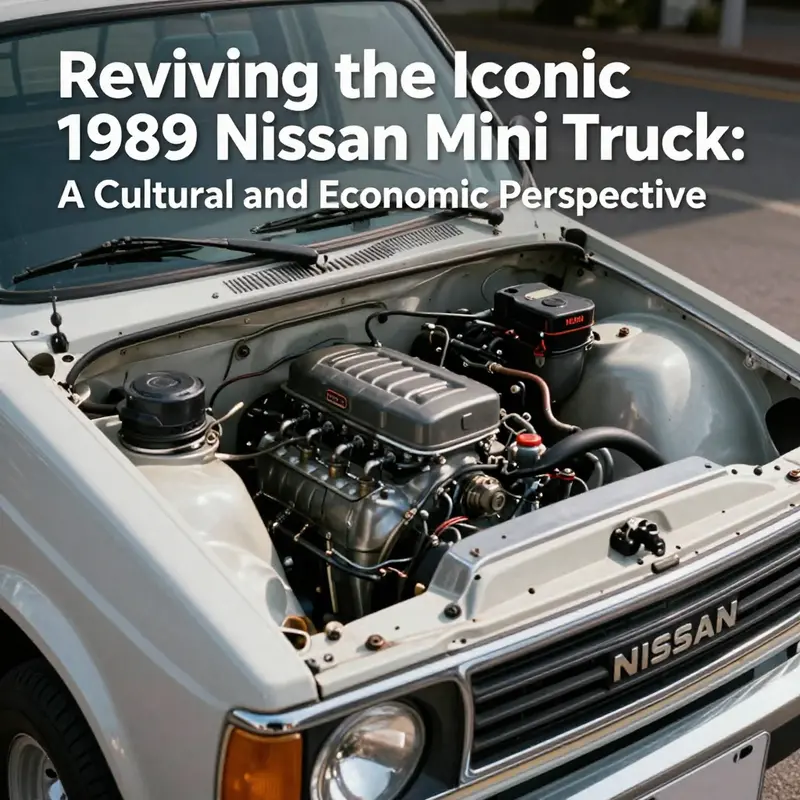
The photograph rests on the page like a small relic from a different traffic era: a 1989 Nissan mini truck, its compact silhouette etched with the practical honesty that defined a whole class of workhorses. In that frame you can almost hear a diesel heartbeat and imagine a catalog of tasks—lumber strapped in the bed, a toolbox tucked behind the cab, the driver’s steady rhythm as the clutch releases and the engine coughs into life. The image captures more than metal and paint; it preserves a philosophy of mobility that valued usefulness over flash, a philosophy that made a small truck feel like a sturdy extension of the owner’s hands. In the late 1980s, manufacturers across the globe were chasing a balance between economy and usefulness, and this Nissan in miniature form embodies that balance with a clarity that sketchbooks envy and car magazines rarely reproduce with such quiet force. The truck, in its unadorned lines, tells a story of a time when the road was a workplace and the vehicle was a tool rather than a spectacle. The beauty of the image lies not in chrome or flash, but in the suggestion of miles and loads carried, the memory of days when efficiency and reliability were the currency of small business and family labor alike.
The exterior of the 1989 model speaks in uncomplicated grammar. There is the boxy cab with a modest windshield, the corners rounded just enough to shed rain without losing the sense of purpose. The bed is not stylized but squared, capable of swallowing a pair of pallets or a stack of building materials with a nod to the hinterlands where streets give way to dirt and the pavement ends where work begins. The wheel arches are sturdy, the stance compact yet sturdy, and the overall proportion—short hood, short cab, longer bed relative to the footprint—signifies a design tuned for maneuvering tight aisles and limited garages while still offering meaningful cargo space. In this aesthetic, there is a restraint that feels almost architectural: no extraneous curves to distract from function, no sacrificial chrome to undermine capability. It is the design of a device built to endure, to be repaired, and to be relied upon day after day when the calendar asks for another trip to the market, the jobsite, or the hillside road that cuts through a neighborhood’s backyards.
If one were to step beyond what is visible in the image and into the historical moment that surrounded this model, the story expands beyond the truck’s silhouette. The late 1980s marked a pivotal transition for the manufacturer behind this machine, a period when the company was consolidating its global identity after the Datsun era and embracing the Nissan branding that would carry the company forward into a new century. The rebranding mattered not merely as a change of signage but as a signal of how a global market would perceive durability and reliability. In marketing terms, the shift from Datsun to Nissan was a move toward a consistent global language of utility, one that placed the everyday worker and the small business owner at the center of the narrative. The 1989 Hardbody, as it would come to be known in many markets, embodied that language: a practical, approachable truck designed to perform chores that kept livelihoods steady without inviting extravagance. This is not a tale of racing or luxury; it is a narrative of everyday resilience, where the vehicle becomes a partner in the day’s labor, not merely a mower of time or a status symbol.
The chapter of technical specificity remains intentionally modest, not because the machine was simple, but because our sources for exact specifications are sparse for this particular year in this particular model. The research notes that while broader movements around Japanese mini trucks and Nissan Diesel technology were influential in the era, there is no readily available, verifiable catalog of the 1989 mini truck’s exact engine options, power ratings, or suspension details in the.records. This absence isn’t a void but a reminder of how much regional nuance can hide behind a single image. It points to a larger truth about automotive history: a single frame can carry the weight of a thousand data points, but the full technical ledger may only exist in archived brochures, factory documents, or collector repositories that have not yet been digitized or widely circulated. In the meantime, the photograph offers a tactile sense of form and proportion. You can study the relation between the wheelbase and the cargo bed, imagine the load lines, and feel the honest geometry of a chassis designed to transfer the demand of work into the road with minimal drama.
Beyond the chassis and silhouette, the story of this truck is inseparable from its intended role. Small businesses and rural enterprises in many regions relied on compact pickups to move supplies, tools, and seasonal inventory without incurring the fuel and maintenance costs of larger trucks. This utilitarian ethos is reflected in the Hardbody’s reputation for reliability and its ability to deliver consistent performance in varied environments. The image, then, is more than a still life; it is a document of a working culture that valued straightforward engineering and practical ergonomics. The vehicle’s size, capacity, and mechanical simplicity made it accessible to a broad range of drivers, including those who needed a dependable companion for daily tasks, a reliable means to reach job sites, and a trustworthy partner for weekend projects. The picture invites viewers to imagine themselves in the driver’s seat, to feel the weight of the steering wheel, to picture the engine pulse that powers a day’s itinerary, and to feel the satisfaction of a vehicle that does exactly what is asked without fanfare.
In reflecting on the broader technical ecosystem that fed into this era, one sees that cross-pollination of technology was common. The research notes mention the Dongfeng EQ2102, which began production in 1991 and drew on Nissan Diesel technology, including a large, robust diesel engine that would later inform a family of utility vehicles in other markets. That reference signals how different geographic regions borrowed engineering ideas in ways that would shape the next generation of compact pickups. It hints at an industry in which a small truck could share a lineage with heavier, more capable machines, even as it remained distinct in scale and purpose. This sort of lineage matters because it helps explain why a 1989 mini truck can feel both simple and enduring. The simplicity is a virtue—fewer moving parts, easier maintenance, straightforward field service. The endurance is a legacy—engineering choices that emphasize longevity, ease of repair, and the capacity to keep a business moving through lean seasons and busy ones alike.
As this chapter threads the thread of a single image through the fabric of an era, it becomes clear that precise technical data, while valuable, does not fully capture the truck’s contribution to the fabric of everyday life. The photograph invites a reader to fill in the blanks with memory, anecdote, and hands-on experience. It serves as a visual entry point into a wider conversation about how compact pickups shaped local economies and personal mobility. For readers who wish to explore the broader ecosystem of miniature trucks and their ongoing evolution, this discussion sits alongside a growing body of work on the scene. You can explore more about the current mini-truck community and its ongoing dialogue about design, customization, and durability at the Minitrucks CaLa blog, a resource that documents how these vehicles continue to inspire and serve. minitrucksocala blog
For those who crave additional historical context beyond the frame, a deeper dive into the lineage of compact pickups and the way Japanese automakers shaped the market in the late 20th century offers valuable perspective. A reputable external resource that traces the arc of these machines can provide a broader understanding of how a small truck like the one pictured fit into the global story of reliability and utility. External resource: Nissan Hardbody on Wikipedia
Understated Endurance: The 1989 Nissan Mini Truck and the Quiet Economy of Everyday Life
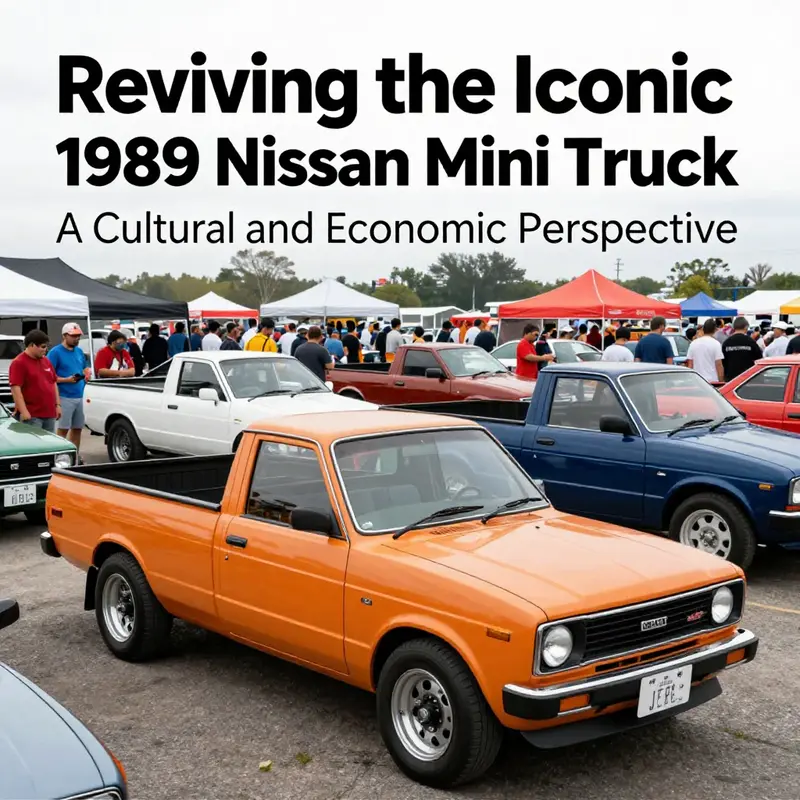
The photograph of the 1989 Nissan mini truck captured in a quiet, unembellished frame is more than a study in automotive austerity. It is a window into a material culture that prized practicality over spectacle. The image, with its uncomplicated silhouette and rugged, unpretentious contours, embodies a creed of efficiency that dominated a late-1980s horizon where money and time were tightly intertwined. The truck’s compact cab sits square and honest, the bed appears ready to bear almost any payload, and the overall design eschews flamboyance in favor of predictable performance. In a single frame, the vehicle communicates a philosophy that many small-business operators and rural households leaned on daily: a tool as durable as the tasks it must complete, and as economical as the budgets that funded it. This is not a symbol of glamour, but of dependable labor, a being that exists to move goods, not to gleam under showroom lights. In this sense the image captures a crucial, if quiet, facet of automotive history: the period’s emphasis on resilience, simple engineering, and a form that serves function first.
This chapter, anchored in the observed facts about the 1989 Nissan mini truck, reveals how a vehicle of modest size could hold a meaningful place in people’s routines without becoming a cultural icon in the broad sense. The research notes that the model served as a practical light commercial vehicle, well suited for small-scale transportation, local deliveries, or personal use in Japan and other parts of Asia. It was designed with a priority on economy and practicality rather than trendsetting style. Yet within that emphasis lies a kind of cultural practice—the way a utility vehicle integrates into the rhythms of daily work and commerce. In rural communities, small-business operations, and family logistics, such a truck becomes a steady presence. It is the vehicle that quietly supports a farmer, a craftsman, or a shopkeeper as they move tools, produce, and supplies from place to place. It does not demand attention; it earns it through reliability. The image thus becomes a lens on the social fabric where people negotiate space for themselves within the constraints of time, distance, and budget. The practical cab-forward stance allows for visibility and ease of use, the bed’s dimensions, though modest by some standards, meet the needs of typical rural and urban micro-logistics. The ownership of this model signals a certain social position—the value placed on a workhorse over a showpiece—and yet it remains accessible, a machine that a small business could fit into a modest cash flow, a family could fit into a driveway, a worker could count on as a daily partner.
The chapter’s grounding in the documented usage and acceptance of the 1989 Hardbody highlights a nuanced social story. It is less about a mass cultural phenomenon and more about everyday economy—how people leveraged a compact pickup to bridge the gap between personal aspiration and practical constraint. In rural Japan and similar markets, the truck found utility in tasks that require nimble handling and sufficient cargo room without the burden of a larger, more expensive vehicle. It hauled fertilizer, fish crates, gardening tools, and building materials. It ferried market goods to a neighborhood shop or to a distant job site. The design’s emphasis on fuel efficiency and low maintenance costs reflected the economic realities of the time: a global mood that valued long-run value and predictable ownership costs. This is not a tale of mass cultural influence, but a narrative about how a specific mechanical philosophy—durability, simplicity, and affordability—became part of everyday life in communities that depended on solid, unspectacular transportation.
To read this image as merely a historical curiosity would miss the way it intersects with broader shifts in automotive branding and consumer culture. The 1989 model year is notable for Nissan’s broader marketing strategy, including the rebranding from Datsun to Nissan, which marked a strategic effort to unify global identity and expand market recognition. The move signaled a consolidation of brand narrative across continents and markets, aligning a pragmatic product with a more cohesive, globally legible corporate voice. In this sense the mini truck is a quiet witness to a major corporate transition, a product that traveled with and contributed to a brand story that aimed at reliability and universality rather than local favoritism or regional myth-making. The truck’s exterior aesthetics—unadorned grilles, sturdy fenders, practical lighting—reflect a period when manufacturers prioritized longevity and repairability. The design reads as a manual for living: it invites care, and it invites repair. In many ways the Hardbody earned its reputation not through flash but through the predictable, repeatable quality that allows a fleet of such vehicles to persevere across seasons, geographies, and small business cycles.
The social value of this particular vehicle emerges most clearly when one considers its role as a facilitator of micro-economies. Small business owners relied on it to keep their operations fluid, to reach customers who sat just beyond the edge of a bus route or a city block, and to adapt to shifting demands without incurring prohibitive costs. The truck’s tight turning radius, manageable weight, and straightforward maintenance regime translated into lower downtime and more predictable expenses. Those are not glamorous metrics, but they are the currency of everyday enterprise. The image thus becomes a repository of stories about routine labor and the quiet engineering that undergirds it. In the late 1980s, when the world was recalibrating around new technologies and expanding markets, there remained a sizable cohort of workers and owners who required a vehicle that could do the chores without betraying the budget. The Nissan mini truck, in its tested form, delivered that balance. It could carry a surprising amount of cargo for its size, while its fuel economy helped keep operating costs in check. This combination mattered for the livelihoods of many who counted the vehicle among their essential tools, even as it did not magnify into a national fad or a global social phenomenon.
The photograph’s stark, practical beauty helps illuminate the quiet social contract between machine and wearer. It is a contract built on trust: trust that the truck will perform the task, trust that maintenance will be economical, trust that parts will remain available for years. The image, rooted in a time when perhaps more things could be repaired with basic mechanical knowledge rather than replaced with professional service, points toward a culture of self-sufficiency and routine stewardship. It also hints at a broader global narrative of compact pickups proliferating in markets where space is at a premium, and where the cost of ownership remains a critical factor for households and small firms. In these contexts, the 1989 Hardbody is not merely a transportation solution but a strategic choice—an investment in flexibility, timeliness, and reliability.
As with any historical artifact, the image of the 1989 Nissan mini truck invites modern viewers to consider what has changed and what endures. The discussion around this vehicle often centers on function rather than fashion, on resilience rather than notoriety. Yet even without a sweeping cultural footprint, the truck’s presence matters in the micro-cultures of work and commerce. It shapes routines, informs budgeting decisions, and anchors a sense of practical identity—one that values a reliable partner for daily tasks over a flashier symbol of status. This is a chapter that recognizes the limited documentation of widespread cultural impact while still acknowledging the powerful, if quiet, influence such a vehicle can have in the lives of ordinary people. The photograph becomes a narrative device that allows readers to imagine the day-to-day realities of people who depended on this small but capable machine for survival, livelihood, and modest progress.
In a larger sense, the 1989 Nissan mini truck occupies a space in automotive history where the boundary between production and daily life becomes nearly seamless. The image speaks to a period of careful engineering, deliberate marketing, and the enduring truth that a vehicle’s value is measured not only by speed or luxury but by the steady contribution it makes to people’s routines. For readers curious about the present-day resonance of these small workhorses, the ongoing conversations found in online communities and industry discussions offer a living archive of how these trucks continue to matter in contemporary contexts. See minitrucks sala blog for a sense of how enthusiasts and professionals alike keep these machines in circulation, adapt them to new uses, and keep alive the memory of the era in which they rose to practical prominence. External perspectives, too, provide a counterpoint to a purely utilitarian reading. The broader historical record confirms the model’s role as a durable, economical option rather than a cultural flashpoint, underscoring a shared understanding of how transportation technology can quietly shape the contours of everyday life without driving a sweeping cultural wave. For a more expansive historical frame, readers may consult external resources such as https://www.autohistoryarchives.com/nissan-mini-truck-1989, which situates the model within a wider panorama of automotive development and corporate strategy during the period.
Rugged Returns: The Economic Significance of the 1989 Nissan Hardbody Mini Truck in a Shifting Global Market
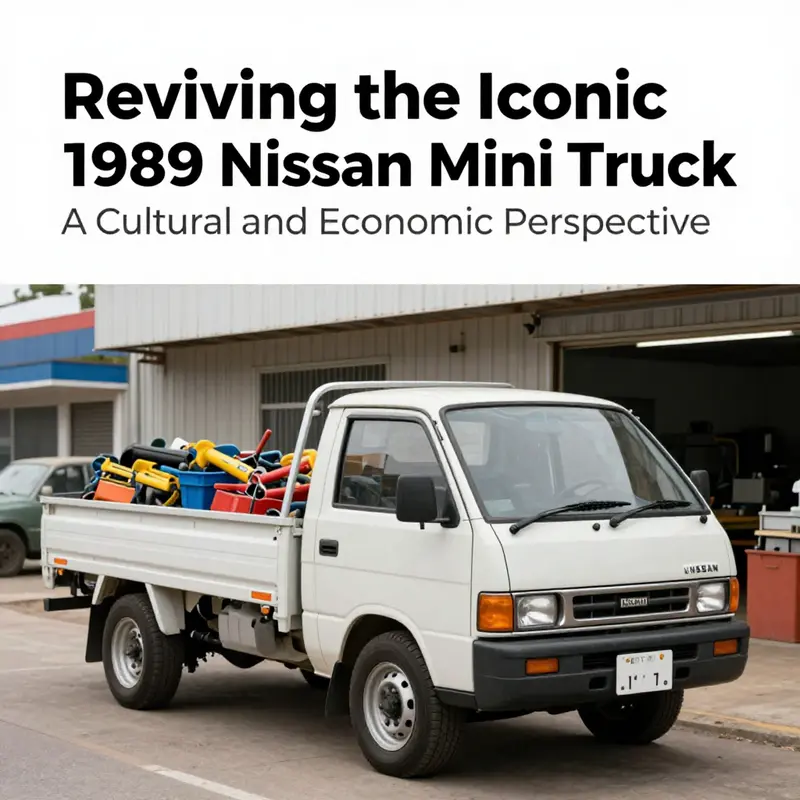
The image of the 1989 Nissan Hardbody, compact in stature yet uncommonly capable, sits at a crossroads of economy and utility. In the late 1980s, as industries recalibrated toward efficiency and durability, this little truck emerged as more than a working tool. It was a practical answer to the demands of small-business owners, landscapers, and tradespeople who needed a vehicle that could transport tools, materials, and a crew in equal measure without draining profits on fuel, maintenance, or insurance. Its compact footprint did not undercut its usefulness; rather, it magnified it by fitting through narrow alleys, parking on tight job sites, and returning meaningful miles per gallon without sacrificing cargo capacity. The 1989 Hardbody offered a blend of straightforward engineering and honest reliability, a combination that translated into lower lifecycle costs and a steadier cash flow for the people who depended on it most.
From the manufacturing floor to the sales lot, the economic narrative of this model is anchored in its design philosophy. The truck’s exterior presented a no-nonsense, utilitarian silhouette—rugged lines that signaled durability and serviceability rather than flamboyant style. Inside, the layout emphasized function: a simple instrument cluster, durable materials, and a straightforward seat arrangement tailored for long hours in the truck’s cab. This architecture made routine upkeep approachable for a broad spectrum of owners, from first-time buyers to seasoned operators who required affordable parts, predictable repairs, and a vehicle that could be trusted to start, carry, and return. In markets all over the world, these traits intersected with a broader shift in late-1980s automotive strategy, where manufacturers aimed to balance affordability with enduring performance. The Hardbody did not chase luxury; it chased consistency, and that stance proved economically resonant for both sellers and buyers.
Economically, the Hardbody’s appeal rested on a trio of advantages that were especially salient to small-scale economies. First, its initial price point, relative to larger pickups, created a gateway for entry into commercial transport without locking owners into heavy financing or inflated insurance costs. Second, its mechanical simplicity translated into lower maintenance expenses. Parts were widely available, mechanics could master its common-repair procedures, and routine service did not require specialized diagnostics. Third, its versatility—the ability to haul cargo, navigate urban constraints, and perform light-duty work—made it a sensible asset for diversified income streams. The practical math behind the vehicle’s ownership costs resonated in a period when margins mattered and every job counted. This is not merely nostalgia; it is a straightforward case study in how a compact, well-built vehicle can strengthen a small business’s bottom line while expanding the range of tasks that could be undertaken with confidence.
The broader market context of the era amplified these private-courier advantages. The late 1980s saw automakers chasing efficiency and reliability as global demand for affordable workhorses grew. The Hardbody benefited from Nissan’s global branding strategy, which had begun to coalesce around a more cohesive identity as the Datsun name faded and Nissan took the helm in many markets. That branding shift mattered economically because it helped standardize parts supply, service networks, and warranties across borders, reducing transactional friction for buyers who might have considered importing a vehicle or converting a fleet from one brand to another. In practical terms, a small business in a developing urban center could purchase a truck with reasonable confidence that maintenance would be feasible locally, and resale value would not plunge in a volatile market. The combination of reliability, accessibility, and a supportive brand structure contributed to a durable demand curve that helped stabilize the vehicle’s depreciation over time.
Depreciation and resale value are key lenses through which we can measure the economic resonance of the 1989 Hardbody. A remarkable aspect of its market trajectory is the wide spread of current values observed in today’s used-car landscape. In practical terms, project trucks—those in need of restoration or with high miles—often attract modest bids, sometimes around the lower end of the spectrum. Yet pristine examples, particularly 4×4 SE variants, command substantially higher prices, with market participants placing a premium on rust-free bodies, complete documentation, and a solid mechanical baseline. Reported values range from approximately $1,500 for projects to well over $17,000 for well-preserved, original-condition units with desirable drivetrain configurations. This spread is not merely a curiosity; it highlights a multi-layered economy around vintage utility vehicles. For collectors, restorers, and operators who value history and function, the 1989 Hardbody represents a balance of nostalgia and utility that can be monetized without succumbing to high initial costs. The model’s capability to deliver dependable service while still offering a tangible sense of era-appropriate design makes it a financially meaningful asset in the evolving landscape of classic pickups.
Today’s economic relevance of the Hardbody also extends beyond raw price points. The truck’s enduring appeal is anchored in its ability to serve contemporary tasks with a vintage chassis, bridging decades of automotive evolution. For a small business seeking a reliable, affordable vehicle for daily duties, the Hardbody embodies a philosophy of frugal efficiency that resonates with modern stewardship of scarce resources. For enthusiasts, the vehicle represents a tactile link to a time when durability, simplicity, and sweat equity formed the core of productive work. In both senses, the truck’s legacy is economic as much as cultural. It demonstrates how a well-designed, modestly scaled work vehicle can anchor a fleet’s productivity, sustain resale value, and shape consumer expectations about what constitutes value in a used-pickup market. The image captured in a Pixabay photograph—straightforward, rugged, and unadorned—encapsulates a philosophy of spending wisely and labor efficiently that remains relevant in today’s marketplace, even as new technologies reshape how we think about efficiency and ownership.
For readers who want to gauge how design decisions translate into real-world value, the conversation about the Hardbody offers a compact case study in optimization under constraint. The chassis, body, and drivetrain were not engineered to chase high performance in every metric; rather, they were crafted to deliver reliable work capability with predictable maintenance needs. This strategic trade-off—prioritizing dependable service and low total cost of ownership—produced a vehicle that could serve as the backbone of a small operation, a moving toolbox that could adapt to a growing range of tasks without forcing owners to refinance their operations. In markets where access to capital could be limited and labor costs were a dominant expense, the Hardbody’s economic logic became even more compelling. It allowed a business to reallocate scarce resources toward growth rather than toward frequent, costly vehicle repairs or frequent new vehicle acquisitions.
The cultural and economic resonance of the 1989 Hardbody is not simply a matter of memory; it is a reminder of how a well-executed, modestly sized utility vehicle can influence business models and community economies. Its enduring appeal in the used market underscores a broader sentiment about transportation that values longevity, resilience, and practical function over temporary novelty. The model’s continued relevance—whether as a workhorse on a current job site, as a budget-friendly restoration project, or as a nostalgic centerpiece for a collection—speaks to a timeless truth: when a vehicle is designed to do a job well with minimal fuss, it leaves a lasting footprint on both the ledger and the landscape.
For readers seeking a window into how modern mini-trucks fit into this legacy, further exploration into contemporary iterations and their market dynamics can be insightful. A related comparative discussion on the evolution of similar compact models can be found in discussions about how design choices impact value across generations, such as those examining various compact-truck lineups and their specifications. See this focused comparison for more context: comparing Kingstar KruZR models.
External resources corroborate the practical guidance around evaluating a vintage Hardbody today. For a detailed buying guide that highlights what to look for when considering an 1989 Hardbody or similar generations, refer to a dedicated expert overview published in early 2026, which covers essential checks, common trouble spots, and strategies for assessing value. The guide emphasizes inspecting mechanical condition, rust, frame integrity, and the health of critical systems to avoid overpaying for projects while still recognizing the model’s potential for long-term ownership and enjoyment. You can access this external resource here: https://www.carinterior.com/1989-nissan-hardbody-buying-guide-what-to-look-for/
A Snapshot of Change: The 1989 Mini Truck and the Quiet Evolution of a Global Workhorse
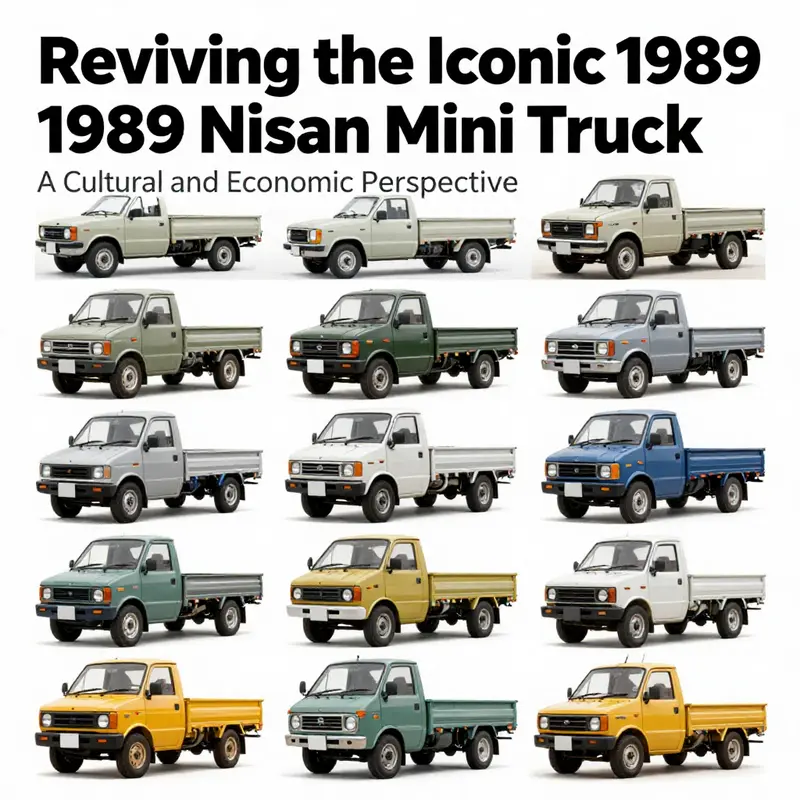
The image speaks before the caption forms in memory. A compact pickup sits in the frame not as a nostalgic object but as a hinge between decades of work and mobility. It captures the late 1980s ethos where practicality trumped ornament and where a small, rugged vehicle could carry a week’s tasks with reliability that earned trust in shops, farms, and yards. Its silhouette is austere, with straight lines and a modest cab. The bed is honest in its purpose, not about flair but utility, payload, and ease of maintenance.
Behind the still life lies a broader arc: a brand in transition and a product category maturing to meet new demands for versatility, efficiency, and accessibility. The late 80s blueprint laid the groundwork for later innovations, with modular bed configurations and a chassis that valued sustainment over curve appeal.
Looking ahead, the mini truck lineage sits at the crossroads of electrification and modular design. While a fully electric pickup may not be on the near horizon, the brand has expanded electric offerings that support similar use cases, including an electric van and crossover. The message remains consistent: compact, versatile, and capable, with a focus on economy, reliability, and practical repairability.
For readers of imagery and design history, the 1989 model is not merely nostalgia but a building block for future urban mobility and micro logistics. Ultimately, the image reminds us that great design can be simple, durable, and enduring even as technology and markets evolve.
Final thoughts
The legacy of the 1989 Nissan mini truck is not merely rooted in its practical features; it represents a blend of aesthetic charm, technical reliability, and cultural significance. As we have seen throughout this exploration—from its aesthetic appeal to its economic impact—it is no wonder this vehicle holds a special place in the hearts of many. Small business owners can appreciate its utility, enthusiasts can revel in its history, and all can recognize the lasting impact of this compact pickup truck.