
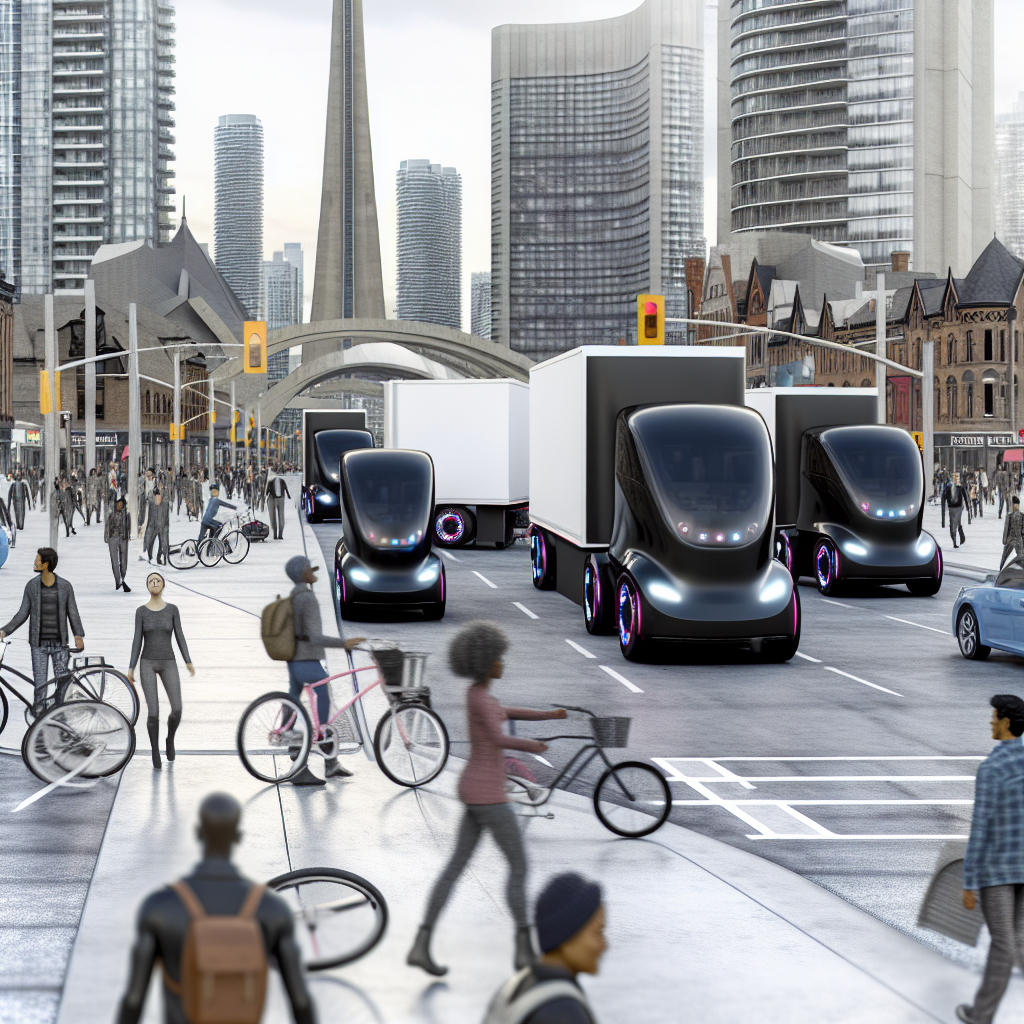
The transportation landscape in Canada is witnessing a seismic shift with Loblaw’s groundbreaking announcement to deploy 50 autonomous trucks from Gatik. This milestone is not merely a corporate expansion; it is a bold leap into the future of logistics and supply chain management. As the first major retailer to transition from pilot programs to commercial-scale operations of autonomous trucking, Loblaw is setting a precedent for the industry amidst the ongoing driver shortage in Canada. These new trucks, equipped with state-of-the-art sensor technology, will service over 300 stores in the Toronto area, ensuring enhanced reliability, safety, and operational efficiency. This deployment is a testament to Loblaw and Gatik’s commitment to innovation and sustainability, promising to revolutionize how goods are transported and distributed across the country.
Addressing the persistent driver shortage is crucial, as it not only affects logistics operations but also serves as a catalyst for embracing innovative solutions like autonomous trucks. By tackling this challenge, companies can unlock the full potential of automated technologies, ensuring that logistics remain fluid and responsive to market demands.
Benefits of Autonomous Trucks
The introduction of autonomous trucks into the supply chain brings numerous direct benefits tailored to meet modern industry needs, particularly in the realm of transportation technology. Here are the key advantages:
- Reliability: Autonomous trucks can run continuously without human limitations like fatigue. A review by Orion Journals shows that these vehicles can reduce shipping costs by up to 40% per kilometer while boosting operational reliability. Their ability to operate around the clock helps companies keep delivery schedules, enhancing overall supply chain stability. Predictable delivery times from autonomous trucks also help in managing customer expectations effectively.
- Safety: Safety significantly improves with the deployment of autonomous trucks. The Vintly blog notes that these vehicles could greatly reduce accidents caused by human error, a leading cause of transportation incidents. By eliminating risks associated with driver fatigue and distractions, autonomous trucks create a safer transit environment. Studies indicate fewer incidents during autonomous operations compared to traditional trucking methods.
- Scalability: Autonomous trucks offer crucial scalability for supply chains busy responding to growing demand. Gatik’s partnership with Walmart illustrates this advantage, achieving a 30% reduction in delivery times with their use. Companies can efficiently scale operations in response to market demand without needing to proportionately increase human labor, a vital flexibility in today’s fast-paced logistics sector.
As the industry develops, the benefits of autonomous trucks make them essential to modern supply chain strategies. They ensure reliability, enhance safety measures, and support scalable operations.
The advancements in transportation technology through autonomous vehicles are revolutionizing logistics, ensuring they meet contemporary demands and challenges.
Canada’s Driver Shortage
The driver shortage in Canada is escalating to alarming levels, posing significant challenges for the trucking industry. Here are the critical insights regarding this pressing issue:
- Immediate and Projected Shortages: The Conference Board of Canada indicates that the trucking sector will face a shortfall of around 25,000 drivers by 2025, escalating to a staggering 55,600 by 2035. This situation jeopardizes supply chain stability and is projected to lead to economic losses of $1.3 billion directly, with additional indirect effects amounting to $4.3 billion.
- Workforce Demographics: A concerning trend is the aging workforce, with 32% of truck drivers aged 55 and older. This factor is significantly contributing to the shortage as retirements mount.
- Economic Impact: In 2024, the trucking industry contributed approximately $96.5 billion to Canada’s GDP and supported about one million jobs. However, the ongoing labor shortages are causing delivery delays, with estimated losses around $450 million in specific sectors like forest products.
- Industry Responses: Recent surveys show that only 9.8% of transportation businesses plan to expand their workforce despite the anticipated demand growth. To address this gap, companies are advocating for more immigration flexibility and increased investment in training programs.
- Mental Health Concerns: The sector is not only facing labor shortages but also mental health challenges, with high incidences of loneliness (27.9%) and depression (26.9%) reported among drivers.
- Role of Autonomous Trucks: In light of these pressing labor shortages, the role of autonomous trucks is becoming increasingly vital. Companies like Gatik are introducing autonomous vehicles to reduce dependency on human drivers, enhance operational efficiency, and ensure reliability in logistics. Considering the growing shortage, the integration of autonomous trucking technology is not merely beneficial but essential for the survival and resilience of Canada’s logistics framework.
Operational Framework for Autonomous Truck Deployment
The operational framework for deploying autonomous trucks is designed to ensure efficient, safe, and compliant integration into existing transportation systems. This framework encapsulates several key components:
- Regulatory Compliance: Autonomous trucks must adhere to the standards set forth by Ontario’s Automated Commercial Motor Vehicle (ACMV) pilot program, launched in August 2025. This ten-year program aims to test automated commercial trucks weighing over 4,500 kg, featuring various levels of autonomy (SAE Level 3-5) on public roads. Its goals include evaluating the performance of these vehicles, ensuring their compatibility with existing road infrastructures, improving road safety, and supporting the trucking sector while collecting data for future policy actions.
- Safety Protocols: Comprehensive safety protocols must be implemented, focusing on risk assessments associated with autonomous operations. This includes incident reporting requirements that must be fulfilled within 24 hours and regular inspections similar to those required for standard commercial vehicles.
- Technological Infrastructure: A robust technological framework is essential. This involves an integrated suite of sensors and communication systems to facilitate real-time monitoring and data collection. Continuous data gathering is critical for evaluating the safety and efficiency of operations, as well as informing adjustments where necessary.
- Stakeholder Engagement: Continuous engagement with stakeholders, including local communities, regulatory authorities, and industry partners, is crucial. This ensures transparency and helps build public trust in the deployment of autonomous trucks.
- Training and Support: Operators and support personnel must undergo specialized training programs to ensure they are equipped to manage and monitor the technology effectively and respond to emergencies, enhancing the overall safety and efficiency of operations.
- Governance Structure: A clear governance framework must oversee all operations associated with autonomous trucks, ensuring that best practices are adhered to, and facilitating compliance with regulatory requirements.
- Continuous Improvement: An established feedback mechanism will allow the organizations involved to continuously improve operations based on real-world data and performance outcomes from the ACMV pilot program, positioning the companies to adapt proactively to challenges and innovations.
This operational framework not only enhances the functional capacity of the autonomous trucks but also lays a foundational strategy for broader adoption of autonomous vehicles within the logistics industry.
Technological Innovations in Gatik’s Autonomous Trucks
Gatik’s autonomous trucks have made significant strides with their next-generation sensor suite, tailored for efficient logistics, especially in refrigerated transport. Equipped with a multi-temperature sensor suite, these trucks are engineered to handle ambient, cold, and frozen goods. They feature advanced multi-modality sensors that enhance the logistics process while ensuring product safety and maintaining temperature integrity throughout the journey.
Key features include:
- Temperature Control: Gatik’s autonomous trucks have 26-foot temperature-controlled boxes, allowing for the safe transportation of perishable goods. This technology ensures that food products remain at the required temperatures during transport, which is critical for compliance with health standards.
- Safety and Reliability: The sensor suite is designed for fail-safe operations on pre-defined routes, incorporating advanced AI and simulation tools that improve reliability while minimizing risks. This means they can autonomously navigate urban, suburban, and highway environments under various conditions.
- Efficient Short-Haul Operations: Targeting middle-mile logistics, Gatik’s trucks specialize in delivering goods over shorter distances frequently. This operational focus allows for optimized driving patterns, reducing time spent on the road and minimizing operational costs, thus offering a solution to the ongoing driver shortage.
- Robust Testing and Development: Gatik employs a phased testing approach that combines simulated training and real-world trials, ensuring that the technology is well-validated before full deployment.
- Partnerships for Innovation: Collaborations with companies like Tyson Foods and Walmart demonstrate Gatik’s commitment to integrating their autonomous systems into established supply chains, enhancing efficiency and sustainability.
In essence, Gatik’s next-generation sensor suite not only positions them at the forefront of autonomous trucking technology but also aligns them with contemporary logistics trends focused on reducing emissions and improving safety in food transportation.
| Deployment Phase | Number of Trucks | Timeline | Impact on Delivery Networks |
|---|---|---|---|
| Initial Deployment | 20 | By the end of 2025 | Improved service to more than 300 stores in Toronto. |
| Additional Deployment | 30 | By the end of 2026 | Enhanced delivery capacity, addressing driver shortages. |

Overall Impact Summary
The deployment of Loblaw’s autonomous trucks marks a transformative shift in Canada’s logistics landscape, directly addressing the chronic driver shortage while introducing a range of operational benefits.
Firstly, the introduction of autonomous trucks significantly enhances reliability in logistics operations. These vehicles are designed to operate around the clock, effectively mitigating the impacts of driver fatigue and availability. Improved safety is another key benefit, as robotic driving systems dramatically reduce accidents caused by human error, leading to fewer incidents on the road. Furthermore, their scalability allows logistics companies to adapt swiftly to fluctuations in consumer demand without the constraints related to labor shortage, thereby ensuring that goods are delivered efficiently across the expansive Canadian market.
From a socio-economic perspective, the deployment of autonomous trucks is a crucial response to the concerning driver shortage, which is projected to reach 55,600 by 2035. With an estimated economic loss of $4.3 billion due to this gap, integrating autonomous vehicles into the supply chain is essential for sustaining economic stability. It not only promises to alleviate immediate logistical bottlenecks but also contributes to developing a more resilient and innovative logistics sector in Canada. Consequently, this initiative not only reshapes the future of freight transport but also paves the way for a more sustainable and efficient economic model.
The deployment of autonomous trucks by Loblaw, in collaboration with Gatik, is underscored by impactful statements from key stakeholders, highlighting the significance of this initiative in reshaping the logistics landscape in Canada:
Rob Wiebe, Chief Administrator of Loblaw Companies Limited, echoed this sentiment, stating, “This expanded partnership with and investment in Gatik represents a significant step forward in our commitment to innovation and supply chain sustainability. Autonomous logistics will enable us to move more orders more frequently for our customers. We are excited to continue leading the way nationally in retail distribution with Gatik’s groundbreaking technology, which has already been proven across our operations.” Wiebe’s words reinforce Loblaw’s dedication to innovation in logistics and its role in propelling the sector forward.
These quotes not only articulate the strategic mindset driving this partnership but also underscore the broader implications of embracing autonomous trucking technology in the quest for an efficient, reliable, and sustainable supply chain.
Blog Structure Outline on Strategic Impact of Autonomous Trucks
Introduction
- Brief overview of Loblaw’s initiative to deploy autonomous trucks and its significance in the logistics sector amidst Canada’s driver shortage.
Section 1: Benefits of Autonomous Trucks
- Detailed discussion of the benefits: reliability, safety, and scalability.
- Case studies/examples of existing deployments having a positive impact on logistics.
Section 2: Canada’s Driver Shortage
- Insight into the current state of driver shortages in Canada.
- Statistics showing projected shortages and industry challenges.
- Discuss how autonomous trucks serve as a solution to these challenges.
Section 3: Operational Framework for Deployment
- Overview of the operational framework including regulatory compliance, safety protocols, and stakeholder engagement.
- Discussion on training and the role of governance in successful deployment.
Section 4: Technological Innovations in Autonomous Trucks
- In-depth look at the sensor technologies used in Gatik’s trucks and their application in logistics.
- Explanation of how these technologies align with industry trends and needs.
Section 5: Impact on Workforce
- Exploration of how automation affects the workforce dynamics in logistics.
- Discussion on the balance between automation and human labor needs.
Section 6: Overall Strategic Implications
- Summary of how autonomous trucks will reshape the logistics and transportation landscape in Canada.
- Future prospects and broader economic implications for the sector.
Conclusion
- Recap of the strategic benefits of deploying autonomous trucks and their relevance in addressing contemporary challenges in logistics.
- Call to action for industry stakeholders to embrace and adapt to these innovations for a sustainable future.