

Introduction to Mini Truck Market Challenges and Electrification in Mini Trucks
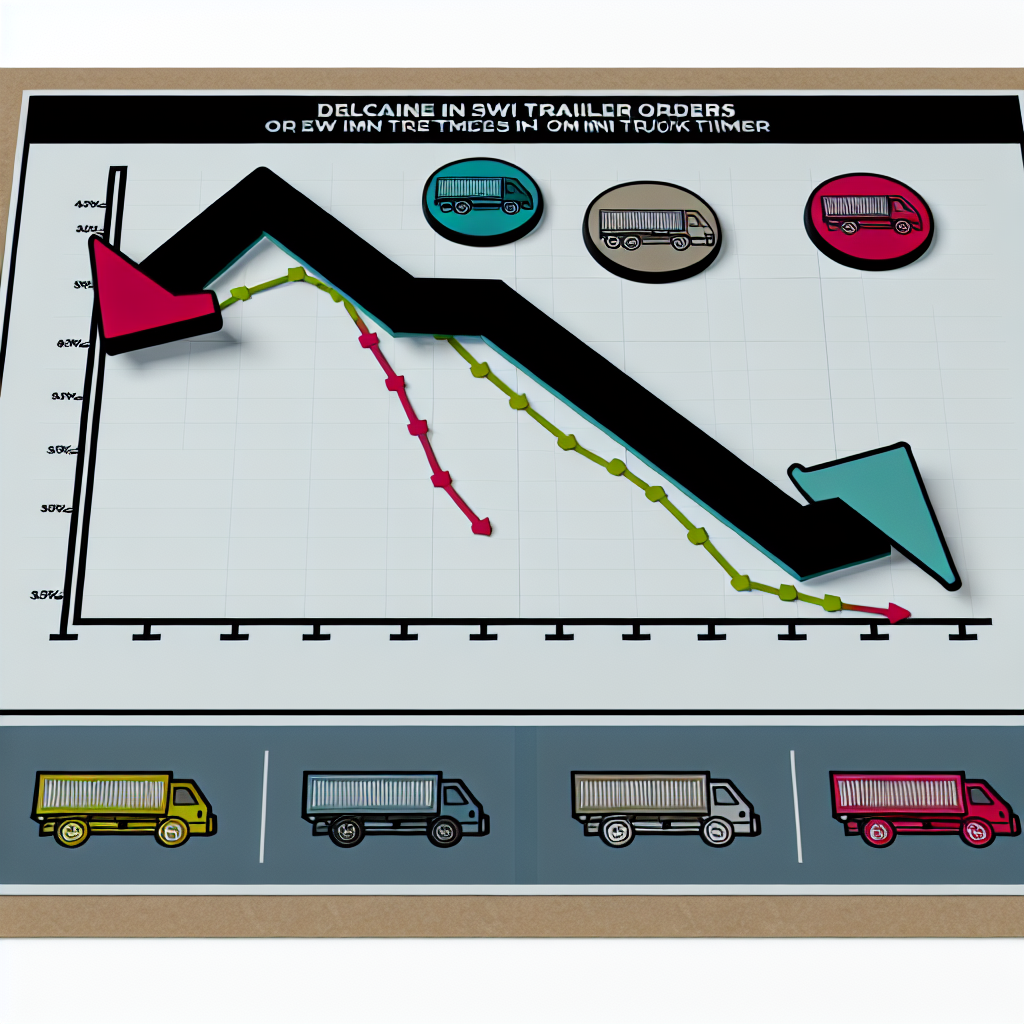
The U.S. trailer market is currently facing significant challenges, with a reported 5% decline in trailer activity and a staggering 39% drop in July trailer orders compared to the previous month. These numbers reflect an uneasy climate where economic uncertainties and shifting freight demands are impacting fleet investments.
Current Market Overview
- Decline in Orders: 39% drop in July trailer orders compared to June.
- General Trends: Many fleets are deferring new purchases due to economic pressures.
- Market Symbolism: The situation symbolizes broader trends within the mini truck industry, as fluctuations in freight demand influence trailer production and sales, leading to cautious behavior among fleet managers.
As carriers hesitate to purchase new trailers amidst these pressures, the future of both the trailer market and the mini truck sector hangs in the balance. This prompts manufacturers and stakeholders to rethink their strategies in response to evolving market dynamics.

Current Market Analysis of the Mini Truck Sector
The mini truck market is changing due to challenges from a weak freight market. Projected trailer production orders stand at 187,000 units for 2025, indicating adaptations and innovations in the market.
Market Growth Amid Challenges
The global mini truck market is growing, estimated to reach USD 53.23 billion in 2025 and USD 97.71 billion by 2035, with a compound annual growth rate (CAGR) of 6.26%. This growth is driven by the rising demand for urban logistics and efficient last-mile solutions, supported by e-commerce growth and urbanization. Mini trucks are favored for their low ownership costs and ability to maneuver in crowded areas, making them suitable for local delivery.
The Freight Market’s Impact
Even with a healthy mini truck market, the broader freight market is struggling. North American trailer production is expected to decline, affecting supply chains. Many vendors are shifting strategies, focusing on smaller, more efficient vehicles instead of larger trucks and trailers. This shift can impact mini truck sales, as small businesses adapt their operations to minimize shipping costs and alter their delivery strategies.
Vendor Adaptation Strategies
- Electrification Initiatives: Companies like Suzuki are introducing electric mini trucks to meet the demand for sustainable transportation.
- Smart Technologies: Partnerships with tech companies are enhancing mini trucks with AI and Internet of Things (IoT) connectivity, improving route efficiency and overall performance.
- Production Adaptations: Manufacturers are using modular designs to allow for customization across different industries, adding versatility to their offerings.
- Market Expansion: Brands such as Tata Motors are broadening their manufacturing operations in Southeast Asia to meet new market needs.
Economic Trends Affecting Mini Trucks
The mini truck sector remains strong despite economic challenges. The focus on sustainability and government incentives for electric vehicles supports growth. However, fluctuations in raw material costs, evolving regulations, and the need for charging infrastructure present potential challenges moving forward.
Conclusion
The mini truck market is experiencing growth, driven by a need for efficient urban logistics while tackling challenges in the freight market. Manufacturers are adapting through electrification, smart technologies, and cost-effective practices, positioning the sector to flourish amid economic uncertainties.
Impact of Tariffs on Trailer Prices
The imposition of tariffs has significantly affected the trailer market, leading to a staggering 30% increase in trailer prices. This rise can be largely attributed to tariffs on materials and components used in trailer manufacturing, which have escalated production costs. As manufacturers grapple with these heightened expenses, the burden is inevitably passed on to consumers who are seeking to purchase new trailers.
The implications of these price increases are multifaceted. For consumers, particularly small business owners relying on mini trucks for logistics and transport, the sharp increase in trailer prices means higher upfront costs and potential long-term financial strains. Many operators may be forced to delay purchases or opt for used trailers instead, limiting their operational capabilities and flexibility in an already competitive market.
Furthermore, small businesses that depend on efficient delivery routes may face elevated logistical costs, impacting the overall budget and pricing strategies.
From the perspective of manufacturers, while they may benefit from higher profit margins per unit sold initially, the drop in consumer purchasing power can lead to lower overall sales volume. The fear is that a stagnant or declining demand could result in reduced production rates, layoffs, and increased uncertainty in the market. This dynamic creates a challenging environment where manufacturers must navigate rising prices while also working to stimulate demand without significantly compromising on quality or service.
Ultimately, the ongoing impact of tariffs extends beyond mere pricing; it fosters an environment of caution, forcing both consumers and manufacturers to reassess their strategies and adapt to the new realities of the trailer market.
| Manufacturer | Market Position | Innovations | Production Rates |
|---|---|---|---|
| Manac | Leading in North America | Focus on lightweight materials and customization options | Annual production rate: 25,000 units |
| Fontaine Trailer Company | Major player, known for durability | Introduced modular designs for flexibility | Annual production rate: 30,000 units |
| Trailcon Leasing | Large leasing fleet, 12,000 trailers | Electrification initiatives underway | Annual production rate: 20,000 units |
| Penguin Trailers | Niche market, strong in specialty trailers | Smart technology integration | Annual production rate: 15,000 units |
Insights from Industry Experts
As the mini truck market navigates the turbulence of current economic conditions, insights from industry leaders highlight the complexities of this landscape. Charles Dutil, CEO of Manac, articulates the direct impact of freight market fluctuations on purchase behaviors among fleets. He states, “When freight markets are tough, buyers respond by sitting on their wallets and sweating out their existing assets.” This cautious assessment underscores the hesitance of fleet operators to engage in new acquisitions.
Dutil elaborated further on the implications of these delays, saying, “A fleet that typically replaces a dozen trailers might end up deferring all replacements altogether. They simply decide not to replace a single trailer and don’t need growth in their fleet.” This combination of hesitance and a focus on asset retention suggests a need for manufacturers to rethink their strategies in enticing fleet managers back into the market. Dutil’s warning is stark: “Certainly, I think there’s no confidence [among customers] to go out and place great big orders for new equipment.”
Future Outlook and Strategic Planning
Despite the immediate challenges, Dutil maintains a long-term view, suggesting that fleet managers should not wait too long before reordering. He emphasizes, “For 35 years, I’ve seen this cycle: fleets stop renewing, and then suddenly, by spring or summer 2026, hopefully, economic conditions improve, fleet ages will have risen, and renewal will return in full force. Order books will explode and so will prices.” This cyclical nature of the industry indicates that there will be a rebound, and proactive planning may place resilient vendors ahead of the curve.
Maintenance as a Key to Longevity
Jason Hirsch, Vice-President of Sales for Penguin Trailers, focuses on the critical aspect of maintenance in extending trailer lifespans. He asserts, “This really is reflective of who owns the asset and what checkpoints they have instituted in their maintenance program.” Hirsch highlights a case study that shows how a simple commitment to maintenance can enhance the longevity of trailers. He recounts an owner’s effective regimen where he stated, “I touch these trailers every 90 days and wash them twice a year. Regular care is so key.” The emphasis on robust maintenance protocols not only prolongs trailer life but also enhances their resale potential.
Hirsch posits, “Clean equipment always sells,” reinforcing that well-maintained units can command a premium upon resale, which may reach 20 to 30 percent higher. This perspective dovetails with Dutil’s recommendations, illustrating how routine maintenance can be both an operational necessity and a strategic financial move.
Regulatory Considerations and Safety
Moreover, Hirsch acknowledges the role of regulations in improving trailer safety standards. He notes the impacts of initiatives such as Ontario’s DriveOn program, which he believes effectively regulates maintenance standards. Hirsch mentions, “I feel the program has improved the general level of trailer safety in the province.” On this note, both experts underscore that strategic investment in maintenance and adherence to safety regulations are pivotal for not only sustaining current operations but also for ensuring profitability and competitive edge in the long term.
Conclusion
The insights from Charles Dutil and Jason Hirsch provide a comprehensive understanding of the prevailing challenges in the mini truck and trailer markets. As economic pressures bear down, the critical themes of cautious spending, timely maintenance, and regulatory compliance emerge as essential for navigating these turbulent times. While the market may currently exhibit signs of contraction, the cyclical nature of this industry suggests an impending recovery, reminding stakeholders to remain proactive in their strategies.
Future Market Predictions for the Mini Truck Sector
As the mini truck market navigates through the ongoing uncertainties of the freight landscape, expert predictions offer a roadmap for understanding the potential trajectory of this important segment. Commonly, the global mini truck market is projected to witness significant growth, with valuations surging from approximately USD 7.5 billion in 2024 to an estimated USD 12.3 billion by 2033, reflecting a CAGR of 6.5%. Projections from other analyses further exhibit a range of estimates, including figures as low as USD 4.71 billion in 2025 escalating to USD 8.06 billion by 2035, suggesting overall confidence in the rebound of market conditions. Additionally, unit sales are expected to increase from 8 million in 2023 to 8.5 million by 2030, which, while representing a modest growth rate, still indicates sustained demand for mini trucks in various applications.
Economic Recovery and Industry Rebounding
Despite the challenging conditions of the broader freight market, leading industry figures express optimism about a robust rebound in the mini truck sector. According to industry insights, while the freight market is experiencing an extended period of correction, characterized more as a stall than a crash, the demand for mini trucks is expected to remain resilient. This optimism points towards a gradual resurgence in freight demand driven by stabilizing shipment volumes, better inventory management, and enhanced multimodal transportation efficiency, which will ultimately catalyze growth in the mini truck segment.
Challenging Market Dynamics
Yet, even with these positive forecasts, industry stakeholders must remain aware of several enduring challenges that could hinder growth:
- Economic Pressures: Ongoing inflationary pressures and rising operating costs—including fuel, maintenance, and insurance—pose risks to the profitability of mini truck operators. While these factors do not directly stem from the mini truck sector, they can indirectly influence purchasing decisions by impacting overall commercial activity.
- Supply Chain Vulnerabilities: The mini truck market continues to grapple with supply chain disruptions, particularly global semiconductor shortages and logistical bottlenecks that can delay production and increase costs of essential components, including those required for electric models.
- Competitive Market Landscape: With intensifying competition and legislative pressures aimed at reducing emissions, manufacturers must continuously innovate. The introduction of eco-friendly and advanced technology solutions is crucial for staying relevant in the market.
- Underdeveloped Infrastructure: A significant barrier for the electric mini truck segment is the limited infrastructure for charging stations, particularly in rural regions where these vehicles are popularly used. Addressing this infrastructure shortfall will be crucial for widespread adoption of electric models.
Opportunities Ahead
In contrast, the mini truck sector is uniquely positioned to leverage emerging opportunities as the freight market stabilizes:
- Urbanization and E-commerce Demand: The accelerated shift towards urbanization, paired with the burgeoning need for last-mile delivery solutions, represents a vital growth driver. Mini trucks are seen as an ideal choice for operational adaptability in congested areas.
- Technological Innovations: Advances in electric vehicle technology, telematics, and automation pave the way for mini trucks to achieve enhanced operational efficiency. This technological evolution will be critical as fleet operators seek cost-effective and environmentally friendly solutions.
- Government Support: Policymakers are actively championing incentives for eco-friendly vehicles, thus providing a conducive environment for mini truck growth.
- Market Diversification: The use of mini trucks in agriculture, construction, and short-distance delivery continues to expand, reinforcing their necessity across multiple sectors.
- Strategic Investments and R&D: Major manufacturers are stepping up investments in R&D of new models tailored for niche market penetration, particularly focusing on electric and hybrid designs, to stay competitive amidst evolving consumer preferences.
Expert Insights on Market Strategy
Renowned industry leaders assert that preparation is paramount for manufacturers looking to navigate these evolving market conditions effectively. “When freight markets stabilize, those who are poised to adapt will emerge as market leaders,” states Charles Dutil, CEO of Manac. At the same time, analysts suggest that proactive engagement with emerging technologies and market trends will enable manufacturers not only to weather current economic headwinds but to position themselves advantageously for the anticipated market rebound.
Conclusion
In summary, the future of the mini truck market appears bright despite facing significant challenges. Increased demand due to urban logistics, technological integration, and supportive government policies will likely catalyze substantial growth. Continual adaptation and innovation will be essential as manufacturers prepare to meet the evolving demands of the market, ensuring their place at the forefront of the industry in the years to come.
Conclusion
The current climate of the mini truck and trailer market reveals a blend of challenges and opportunities that stakeholders must navigate with care. Key insights underscore a cautious outlook as the freight market confronts declines in demand and trailer orders, highlighting a 5% drop in trailer activity and a significant 39% decrease in July orders. Despite these numbers, there is a sense of resilience among mini truck manufacturers, as they adapt by integrating innovations like electrification and smart technologies to meet the evolving needs of fleet operators.
Industry leaders express a hopeful yet careful vision for the future. While immediate conditions are challenging, the cyclical nature of the market suggests a potential rebound in demand. Predictions indicate that despite current setbacks, the global mini truck market could experience a robust growth trajectory, leveraging emerging opportunities in urbanization and e-commerce.
As Charles Dutil, CEO of Manac, aptly puts it, “The evolution in the mini truck market not only reflects the challenges we face but also the immense opportunities ahead as we innovate and adapt to new standards.” This insight serves to remind stakeholders of the critical need for adaptability and innovation in the face of uncertainty.
Ultimately, as businesses adjust their strategies in response to shifting requirements, the sustainable growth of mini trucks and trailers may soon reinforce their integral role within logistics and freight sectors, steering towards a more vibrant future.
User Adoption Trends for Mini Trucks
The global mini truck market is showing significant momentum in user adoption, bolstered by evolving preferences and varied applications across different sectors. In 2023, the market was approximately 8 million units, with promising growth forecasts projecting a valuation range between USD 4.71 billion and USD 53.23 billion by 2025.
Market Size and Growth
- Unit Sales (2023): Estimated at around 8 million units.
- Projected Valuation (2025): Estimates range from USD 4.71 billion to USD 53.23 billion.
- Growth Rate: Anticipated to grow at a CAGR of 4.8% to 10.1% between 2024 and 2032.
User Adoption Insights
- Commercial vs. Personal Use: Commercial usage accounts for nearly 58% of the market share, driven largely by logistics and last-mile delivery services, while personal use contributes to approximately 42%.
- Interest in Electric Models: Electric mini trucks are gaining traction, with over 28% of urban fleet operators expressing interest, reflecting a shift towards sustainable transport solutions.
- Fuel Type Preferences: A significant 66% of consumers still favor fuel-powered models, though this is gradually changing toward more eco-friendly options.
Consumer Preferences
Consumers prioritize cost-effectiveness, with mini trucks providing potential savings of up to 30% on logistics costs.
The vehicles’ practicality and versatility align well with urban delivery demands, making them attractive in congested areas.
There is also a notable shift from larger vehicles to mini trucks, emphasizing the need for efficiency and affordability.
Future Market Trends
- Electrification and Sustainability: Trends towards electric and hybrid models are expected to accelerate, as regulatory pressures and consumer preferences influence manufacturers.
- Smart Technologies: Growing demand for connectivity and advanced features is pushing manufacturers to adopt digital solutions and enhance safety in mini trucks.
- Customization: Market trends indicate a rising demand for modular designs that can be tailored for various commercial applications.
The mini truck market is poised for continued growth, reflecting broader trends in urbanization and e-commerce needs. As manufacturers adapt to these emerging consumer preferences and technological developments, the future appears encouraging for both the industry and users alike.
Outbound Links on Electric Vehicle Adoption
- Summary of BloombergNEF Electric Vehicle Outlook 2024 – This report provides an in-depth analysis of the current state and future projections of the electric vehicle market.
- Passenger EV adoption: Revving up or slowing down? – PwC – An analysis based on data revealing the trends in electric vehicle adoption in North America.
- Electric vehicles: slowing market likely to accelerate again – NatWest – This article discusses the challenges and opportunities facing the EV market, including adoption trends.
- How to retake the momentum in the EV transition | EY – Global – A comprehensive study on the current consumer sentiments and obstacles regarding EV adoption.
| Statistic | Value |
|---|---|
| Decline in Trailer Activity | 5% |
| Drop in July Trailer Orders | 39% |
| Projected Trailer Production Orders | 187,000 units in 2025 |
| Increase in Trailer Prices | 30% |
| Trailcon Fleet Size | 12,000 trailers |
| Projected Mini Truck Market Valuation (2025) | USD 53.23 billion |
| Future Market Growth Rate | CAGR of 6.26% |
| Expected Mini Truck Unit Sales (2030) | 8.5 million units |