
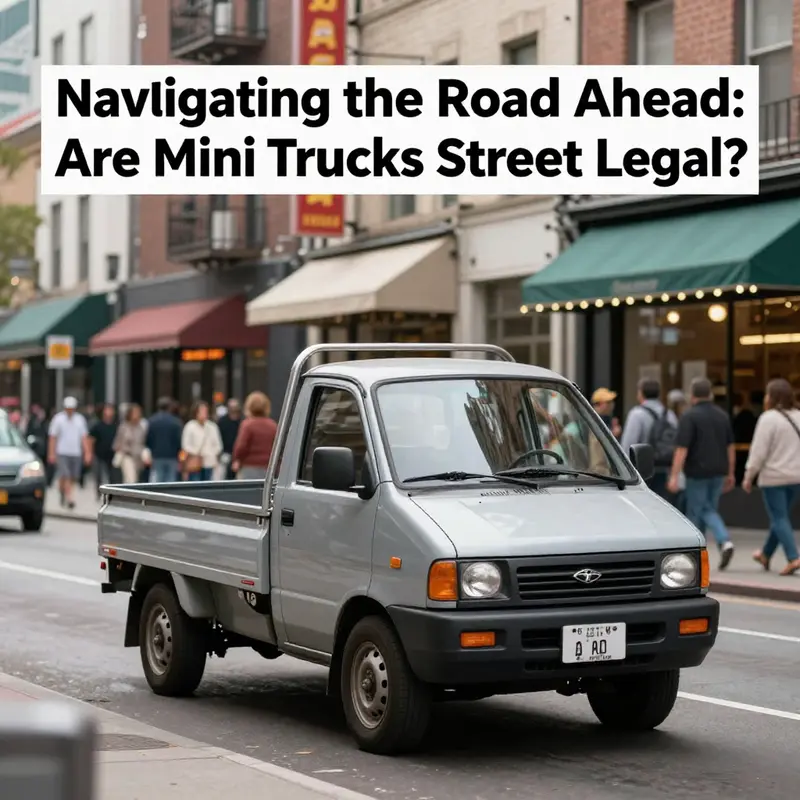
Mini trucks, with their compact size and efficient utility, have captured the hearts of small business owners, residential property owners, and hobbyists alike. As these vehicles become more popular, understanding their street legality is crucial. Given their diverse designs and specifications, the legality of operating mini trucks on public roads varies significantly across regions and models. This article aims to clarify whether mini trucks are street legal, focusing on aspects like Japanese Kei trucks, electric mini trucks with EEC approval, necessary modifications for compliance, and the local regulations that impact legality. By diving into these topics, readers will gain insight that helps them navigate the road ahead confidently. Let’s embark on this informative journey together!
From Kei to the City Streets: Navigating the Legal Realities of Mini Trucks
Tiny in stature, mighty in usefulness, mini trucks sit at an unlikely crossroads between practicality and regulation. They promise economical urban utility, high maneuverability, and surprisingly capable payloads, yet their path to the public road is not a given. The term street legal is not a universal passport but a moving target that shifts with where you are and which rules apply to the vehicle you intend to drive. To understand how a compact workhorse becomes a compliant citizen of the road, it helps to trace the core ideas behind street legality, then see how they play out across different regions and vehicle types. At the heart of the matter lies a simple, practical equation: a vehicle must meet the local standards for safety, emissions, and roadworthiness while delivering the advantages its compact size and efficient design promise. This is not merely a technical checklist; it is a negotiation between a vehicle, a regulator, and a driver who plans to share the road with larger, more conventional automobiles. In many places, mini trucks originated in contexts where space is scarce and efficiency is prized. They were designed to function within regulatory frameworks that favor smaller engines, lighter weight, and modest dimensions because those traits naturally align with lower risk and lower tax burdens. In Japan, for example, a class of compact trucks was crafted to fit strict limits on size and engine displacement. The result is a vehicle that is economically sensible, easy to register, and typically well integrated into the national traffic system. Yet those same design choices do not automatically translate to universal acceptance elsewhere. When a vehicle travels beyond its country of origin, it encounters a different ledger of requirements. Emissions standards can diverge, crash safety expectations can differ, and lighting and signaling rules can have exacting specifications. The practical impact is that many mini trucks, while perfectly adequate on their home turf, arrive at a port with a new set of hoops to jump through to be roadworthy in another jurisdiction. The process often begins with an evaluation of core specifications: size, weight, and engine or motor configuration. A vehicle that fits a compact footprint and uses two-wheel or four-wheel drive with a small engine is more likely to be considered for road use in a broader set of markets. But the mere fit does not guarantee approval. Regulators scrutinize how these vehicles integrate with road systems apart from the tradition of large passenger cars and heavy-duty trucks. Safety equipment is a focal point. Mirrors, seat belts, and appropriate seating layout are basic expectations. Lighting is another nonnegotiable area; headlights, tail lights, turn signals, brake lights, and sometimes reflex or reflective features must meet specified brightness, color, and coverage. The vehicle’s braking system, steering geometry, and protection against rollover can also become decisive factors in whether it can safely share lanes with standard road users. Emissions, too, carry weight in the equation. Even small engines can be subject to stringent tests that measure pollutants and overall exhaust behavior. With the rise of electric propulsion, the equation shifts again. Electric mini trucks may present a cleaner, simpler compliance path in some regions, particularly where electric drivetrains align well with urban constraints and low-speed throughput. In places where environmental considerations dominate policy, a battery-powered compact utility vehicle can benefit from streamlined processes, provided it carries the required approvals and demonstrates consistent safety and performance under local testing. In discussing the road readiness of mini trucks, it is critical to separate the practical reality from the ideal. A vehicle that is designed with road compliance in mind—incorporating appropriate lighting, braking performance, and occupant safety features—stands a better chance of passing inspections and obtaining registration. Conversely, a vehicle intended primarily for off-road or industrial use may miss essential items that are mandatory on public roads. Such gaps are not merely cosmetic; missing items like proper signaling devices, mirrors, or seat belts remove the vehicle from the pool of roadable options and transform it into an entity that can operate legally only in restricted contexts or closed environments. The import and adoption story adds another layer. When a mini truck is imported into a country outside its origin, there is often an extra step, a conversion or a certification process, before a vehicle can be driven on public streets. Some jurisdictions require a conformity assessment, a verified emissions profile, or a crashworthiness demonstration. Others permit certain modifications that align a vehicle with local standards, such as updating lighting assemblies or adding safety equipment to meet regulatory expectations. It is common to encounter requests to remove or modify a speed governor, adjust brake mechanisms, or upgrade signaling and lighting to achieve compliance. The decision to undertake these modifications is typically weighed against the total cost of admission, including potential compliance testing, insurance considerations, and the practical realities of maintaining a federally recognized or state-registered vehicle. Yet even as these hurdles exist, the landscape is not uniformly restrictive. Newer electric mini trucks, especially those designed with explicit regulatory approval in mind, illustrate a more straightforward route to street legality in some markets. An electric footprint often simplifies the emissions equation and can introduce alignment with standards that favor zero tailpipe emissions and quieter operation in urban centers. In contexts where certification processes recognize the vehicle’s build and its safety and environmental claims, buyers may find a more predictable path to registration. The bottom line remains clear. The status of a mini truck as street legal is not guaranteed by its small size or practical usefulness alone. It depends on where you intend to drive, how the vehicle was built or adapted, and whether it can meet the detailed requirements of your local road authority. This is why prospective buyers and operators are encouraged to consult the relevant regulatory bodies or certified import specialists before committing to a purchase or an import project. Knowledge of local rules helps set expectations and prevents expensive detours. It also frames a broader discussion about how mini trucks can fit into urban and rural mobility strategies without compromising safety or compliance. For readers seeking further context on the regulatory landscape and practical considerations, the mini truck community often aggregates practical guidance and user experiences through dedicated informational resources. For more context on trends, practical considerations, and regulatory updates, visit minitrucksocala.com/blog/. This resource can help frame how different markets interpret small-vehicle utility and how owners navigate the path to road use. As the conversation continues, the evolving story of street legality looks less like a fixed rulebook and more like a dialogue between designers, lawmakers, and drivers who value compact utility on crowded streets. The inclusion of electric variants and new certification pathways further broadens the possibilities, offering options that may align better with urban mobility goals while still respecting the norms of road safety and environmental stewardship. When considering a mini truck as a practical tool for work, delivery, or personal use, it is essential to treat legality as a starting point rather than a given. The right approach is to articulate clear expectations about what the vehicle must demonstrate to be allowed on public roads and to pursue those standards through the appropriate channels. In the end, the street status of a mini truck reflects a careful balance between form, function, and compliance—a balance that, with the right preparation, can tilt in favor of a vehicle that is not only useful but also lawful on the streets where it will actually operate. External reference for further exploration of compliant electric mini trucks includes a useful example of EU-oriented certification and market readiness: https://www.alibaba.com/product-detail/New-Arrival-Street-Legal-72V-Two-Seater-E_1600859347919.html
null

null
European Streets, Electric Mini Trucks: Unraveling the Legality of Driving Small Workhorses Across Europe
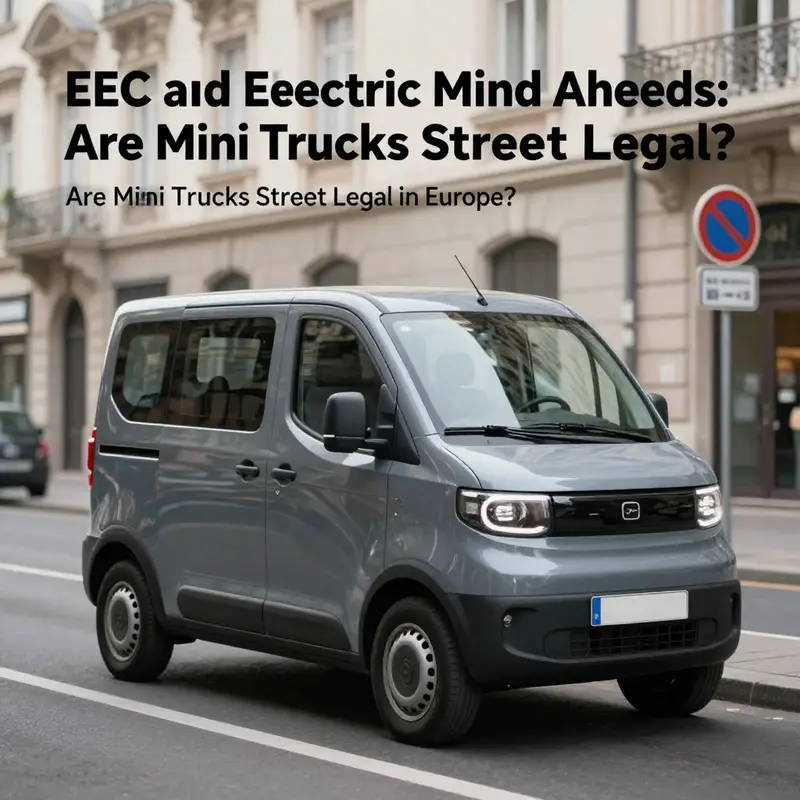
The question of whether mini trucks are street legal in Europe hinges on a web of rules that starts with the European Union’s approach to vehicle safety, emissions, and technical conformity, and then filters down through national registries and road-traffic authorities. In this landscape, electric mini trucks that carry the right kind of certification can sit squarely on public roads, carrying passengers, light cargo, or both, much like their larger counterparts. The core mechanism that makes this possible is a form of regulatory approval that signals a vehicle meets the EU’s common standards: a process historically rooted in the idea of the European Economic Community, but today embodied in EU type-approval and its more familiar partner, the certificate of conformity. When an electric mini truck bears this seal, it signals to national authorities that the vehicle was designed to comply with established safety, environmental, and technical requirements designed for road use across member states. In practical terms, that certification is the passport that can unlock registration, insurance, and the right to operate on public streets, subject to local registration and inspection procedures.
The European framework makes the road-legal status of mini trucks a function of compliance rather than pure capability. An electric mini truck can be ready for Europe if it aligns with the EU’s specifications on brakes, steering, lighting, stability, occupant protection, and electrical safety, as well as environmental considerations such as noise and thermal management. While the term EEC is still encountered in marketing and regulatory discourse, it is the EU type-approval that underpins legality. In markets where the EU-approved vehicle is offered, the vehicle’s documentation will typically include the EU type-approval certificate and a certificate of conformity. These documents assure national authorities that the vehicle can be registered and tested within the local road network, provided it remains compliant after entry and during its lifecycle on European roads.
A key nuance often shaping the street-legal status is how the vehicle was designed and whether it is intended for EU markets. Models that come with explicit EU-type approvals tend to have features aligned with European road rules from the outset: proper lighting that meets ECE regulations, reflectors, seat belts, and a frame designed to absorb energy in a collision. Some electric mini trucks are marketed with clear European validation, including language that signals EEC or EU compliance and claims about road legality in member states. This clarity matters: with EU-type approval, a vehicle stands a far better chance of passing the inspections required for registration, and it reduces the likelihood of later surprises during roadworthiness checks.
Yet the path to being street legal is not automatic simply because a vehicle can run on a test track or a showroom floor. Importing a vehicle into a European country from outside the bloc often triggers a second wave of conformity checks. Even when a model holds EU-type approval somewhere, importing it may require adapting its electronic systems, lighting, speed regulation, and emissions components to match the precise requirements of a given member state. In practice, this frequently means ensuring the vehicle’s lighting is aligned with European regulations for daytime running lights, headlights, and indicators, and sometimes removing or adjusting speed governors, depending on the local speed limits and enforcement expectations. In addition, inspectors might verify that the vehicle’s documentation, including the VIN, the CoC (certificate of conformity), and any EU-specific annexes, matches the vehicle as imported and registered. The steps can also involve ensuring that the vehicle’s mirrors, horn, and braking system meet European minimum standards, and that the vehicle is equipped with appropriate safety equipment for anticipated operating environments.
Another layer of complexity is the varied landscape within Europe itself. Continental Europe largely favors left-hand drive configurations, while certain regions and destinations have different expectations for driver positioning. This is more than a matter of comfort; it affects visibility, lamp alignment, and even the interpretation of certain safety features by inspectors. For this reason, a vehicle type-approved for the EU market may still prompt a local assessment or modification when moving between countries, especially where additional national safety or environmental requirements exist or where infrastructure differs significantly. In some cases, a vehicle that is legally drivable in one jurisdiction may require minor adjustments to be deemed roadworthy in another. The end result is a system that encourages, but does not guarantee, universal cross-border operation without additional steps.
The practical upshot for readers and potential buyers is that the presence of an EU-type approval or EEC certificate is a strong indicator of street legality, but it is not a guarantee in every situation. If a mini truck’s documentation clearly demonstrates EU compliance, and if the vehicle is properly registered and insured in the destination country, it has a solid footing for legal operation. Conversely, vehicles designed primarily for off-road or industrial use, or those lacking essential road-use features, may fail inspections and be deemed illegal on public streets even if they are mechanically capable. The distinction between on-road readiness and off-road specialization is not only regulatory but practical—affecting maintenance practices, resale value, and the day-to-day decisions of businesses that depend on these compact movers for urban logistics and last-mile delivery.
For readers seeking a practical guide to navigating this landscape, a good starting point is to verify the vehicle’s documentation against EU requirements. The EU’s type-approval framework provides a baseline, but national registries will still require that the vehicle pass a roadworthiness inspection, verify insurance, and confirm the vehicle’s registration status. As part of due diligence, it is wise to confirm that the vehicle’s documentation aligns with the specific country’s registration rules, that the vehicle is permitted to operate in the intended urban or suburban environment, and that any required modifications—whether for lighting, speed regulation, or driver-side configuration—have been completed and certified.
For readers who want a broader sense of how these matters unfold in practice, the Minitrucks blog offers a broad perspective on road-readiness and practical considerations for small trucks in different markets. See the Minitrucks blog for more on navigating the balance between capability and compliance when bringing a small electric truck into Europe. Minitrucks blog.
The European picture is nuanced but navigable. An electric mini truck that carries an EU-type approval is aligned with Europe’s core aim: enabling useful, low-emission urban transport while preserving high safety and environmental standards. The type-approval acts as a bridge between international manufacturing and local road use, but the bridge is only as solid as the paperwork that accompanies it. If the documentation is robust, if the vehicle remains within the parameters of its EU certification, and if the national authorities perform the standard checks, the vehicle can join European streets with the same legitimacy as other light commercial vehicles. In that sense, Europe’s regulatory framework does what many regulators aspire to do: keep urban commerce moving efficiently while ensuring the safety of drivers, passengers, pedestrians, and the cities themselves.
For those who want to understand the regulatory context beyond the EU’s internal market, a broader reference point to international road-vehicle regulation is available online. This external resource provides additional background on how different jurisdictions approach vehicle certification and roadworthiness, offering a comparative lens that helps readers appreciate why Europe emphasizes EU-type approval as a prerequisite for street use. https://ec.europa.eu/transport/roadsafety/specialist/vehicleregulation_en
From Mods to Mandates: Navigating the Road to Street-Legal Mini Trucks
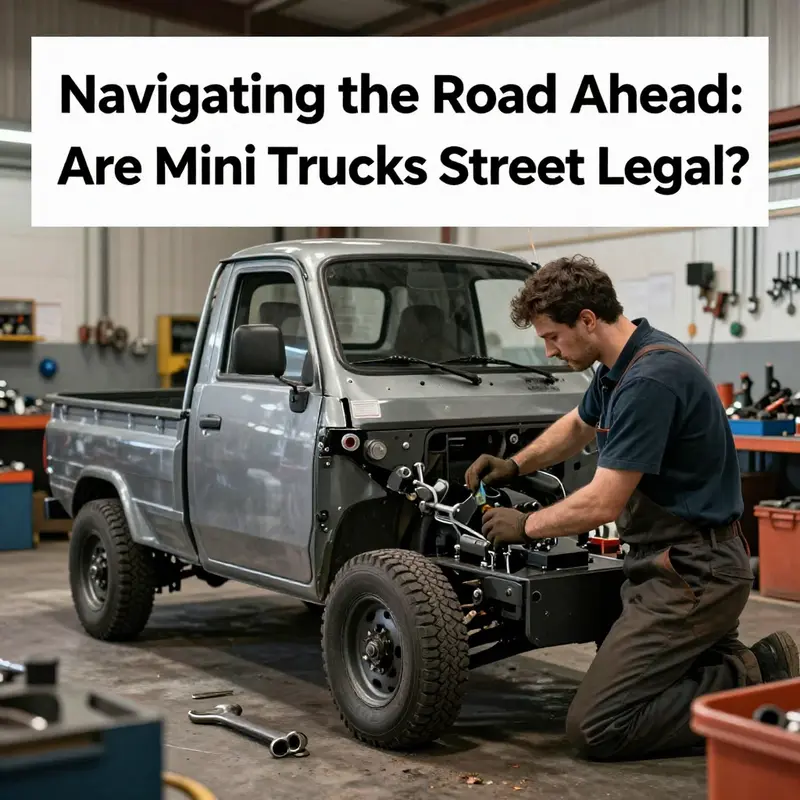
The idea that a mini truck can simply be used on public roads without much friction is tempting. In reality, street legality sits at the intersection of design intent, regional rules, and the practical realities of vehicle certification. For anyone who owns or contemplates a compact, utility-focused pickup, understanding what it takes to move from a functional machine to a legally compliant one is essential. The journey is not a single step but a sequence of checks, upgrades, and approvals that reflect how a country treats small, low-displacement vehicles in everyday traffic. The answer, therefore, is nuanced: yes, many mini trucks can be street-legal, but the path to legality varies as widely as the roads themselves. This is not about a single universal blueprint but about aligning a vehicle’s features with the letter and spirit of local regulation. For readers already in the process, a practical sense of the steps involved helps manage expectations and budgeting while avoiding unexpected compliance hurdles.
At the heart of the matter is a simple distinction: some mini trucks are designed with street use in mind from the outset, while others are built primarily for off-road, agricultural, or industrial work. In places like Japan, certain small-truck designs are crafted to meet strict size, weight, and engine displacement limits. These Kei-style configurations can offer smoother registration, favorable tax treatment, and straightforward street use within that market. However, when such a vehicle is imported into another country, the same features that once aided registration may become a barrier. The import landscape is a regulatory maze where the local authority, not the seller, decides whether the vehicle’s current state suffices or if modifications are needed. The same vehicle can therefore pass in one jurisdiction and require substantial work in another. This isn’t about a defect in the vehicle; it’s about the different criteria used to judge roadworthiness across borders. The practical implication is clear: you should anticipate a localization process rather than a plug-and-play transfer.
A core part of that localization is addressing safety standards. Road legal status hinges on ensuring that a mini truck has reliable lighting, proper visibility, and functional signaling systems that meet the local standard. Headlamps may need to be tuned or swapped to meet photometric requirements, while turn signals, reflectors, and tail lighting must conform to specified colors and placements. Mirrors also come under scrutiny, with regulations dictating minimum field of view and mounting height. In many markets, the drive to street-legal status includes removing devices that artificially cap speed, if those devices exist, to ensure the vehicle can operate safely within posted limits. These changes are not cosmetic; they alter the fundamental behavior of the vehicle in public traffic, and they must be validated by the appropriate authority.
Emissions control is another pivotal domain. Even compact vehicles with small engines face environmental scrutiny. In regions that enforce strict emissions limits, modifications may be needed to lower hazardous outputs. This can involve installing catalytic systems, recalibrating exhaust management, or adjusting engine tuning to reduce pollutants while preserving drivability. The balance between performance and compliance is delicate. It’s not just about meeting a code on paper; it’s about achieving a calibrated state where the vehicle behaves predictably under varied loads, temperatures, and fuel qualities. In practice, this often means working with accredited technicians who understand both the hardware and the regulatory expectations, ensuring that any changes don’t compromise safety or reliability.
Crash test compliance brings a further layer of complexity. Some jurisdictions require that key safety features—seat belts, crash-worthy restraint systems, structural integrity in certain areas, and airbag provisions—meet established standards. If a mini truck lacks these elements by design, it may need substantial reinforcement or substitutions to reach the required level of protection for everyday road use. The result is not a cosmetic upgrade but a fundamental re-engineering of how the vehicle absorbs and dissipates energy in the event of a crash. The process can be technically demanding and financially significant, but it is a nonnegotiable part of achieving lawful operation on public streets.
Another practical challenge arises with drive configuration. Vehicles engineered for right-hand drive in some markets can require conversion to left-hand drive in others. This change is far from routine. It touches steering geometry, pedal layout, dashboard instrumentation, and even the position of controls. In some cases, whole subassemblies must be redesigned or replaced. The cost and complexity of such a conversion should not be underestimated. It is not simply a matter of swapping a steering wheel; it is a systems-level realignment that must be validated for safety and reliability.
A subset of mini trucks is marketed as off-road or industrial workhorses. In these cases, the baseline design may feature higher ground clearance, heavy-duty tires, and rugged suspensions that are excellent for dirt roads or construction sites but problematic for street use. The higher ride height can complicate entry and exit, while the tires may not meet street noise, rolling resistance, or footprint requirements. Braking systems and occupant protection can also lag behind consumer-grade road vehicles. Bringing such a model into compliance often requires lowering trim components, upgrading braking performance, and adding more conventional road-oriented safety features. The end result is a vehicle that has been adapted from its origin but is now tuned for safe, predictable on-road behavior.
The rise of electric mini trucks adds another layer of nuance. Electric powertrains can meet modern emissions expectations, but they still must satisfy the same safety and performance gates as their internal-combustion counterparts. Certification processes assess electrical safety, battery integrity, and performance under a spectrum of conditions. Even when a vehicle is designed with urban logistics in mind and benefits from quiet operation and zero tailpipe emissions, authorities must confirm that it is fit for rail or curbside use, that charging interfaces are safe, and that the vehicle’s energy management is robust. The overarching principle remains: legality is earned through rigorous testing and verification, not by the promise of low emissions alone.
There is no one-size-fits-all answer, but there is a replicable path. Start with a careful compliance audit that maps local requirements to the vehicle’s current configuration. Engage qualified professionals early, since many regulatory bodies require third-party validation or controlled testing as part of the registration process. Budget for potential modifications, inspections, and documentation. Maintain meticulous records of all changes, including parts, installation notes, and test results, because authorities will request a clear trail showing how the vehicle meets every criterion. And remember that approval may be contingent on specific equipment or configurations at the time of inspection, not just on historical or advertised capabilities. In this sense, the road to legality is as much about documentation and process as it is about the hardware.
For readers who want to explore broader perspectives on this topic, the Minitrucks blog offers a repository of discussion and experiences that illuminate how different markets approach the same question. A careful read through community insights can help set realistic expectations and reveal practical detours that practitioners have successfully navigated. Minitrucks blog.
Ultimately, the practical truth remains straightforward: a mini truck can be street-legal, but achieving that status requires planning, technical readiness, and proactive engagement with the regulatory framework. The task is not merely cosmetic or cosmeticized by novelty. It is a legal, safety-oriented, and technically demanding process that aligns a small work vehicle with the standards that keep roads safe for everyone. With thorough preparation and the right expertise, a compact pickup can join the ranks of compliant street vehicles. For those pursuing this path, the payoff is not just compliance; it is the confidence to operate a trusted, well-constructed machine in daily life. For authoritative guidance on the certification process itself, refer to the official regulatory resource online: https://www.nhtsa.gov/vehicle-compliance-and-recalls/vehicle-certification
Road Rules in Practice: How Local Compliance Shapes Whether Mini Trucks Can Drive on Public Streets
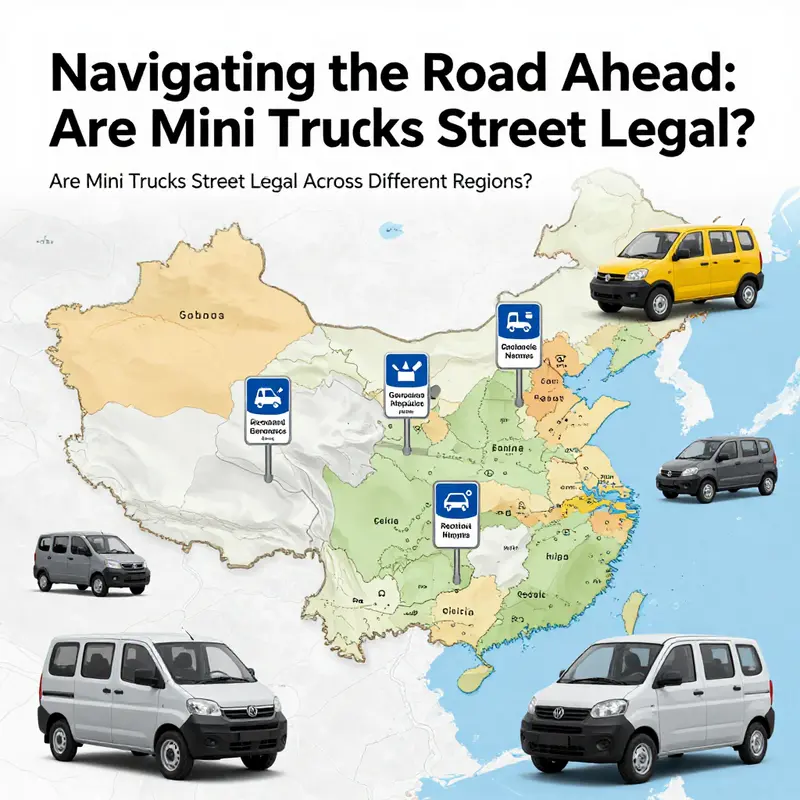
Across regions, the dream of park-and-drive convenience with a tiny workhorse on public streets meets the reality of local regulations. Mini trucks live in a regulatory gray area that mixes policy and engineering. They are small and efficient, but to be street-legal they must meet safety, emissions, and road-use standards. In places with broad vehicle-size categories, legality can be straightforward for compact designs engineered with compliance in mind. In others, road legality becomes a checklist: crash protection, lighting, emissions controls, and a verifiable VIN that authorities can use to register and insure the vehicle. The result is that legality is a process rather than a single attribute, and it varies from jurisdiction to jurisdiction.
Japan shows that compact, low-displacement trucks designed to national standards can navigate registration and taxation more smoothly. When built to meet criteria, street use is established through a framework that recognizes the model’s intent. However, even there, legality comes from compliance, not loopholes.
Beyond Japan, the United States has a more fragmented landscape. A mini truck common in a yard may fail federal or state requirements if used in ordinary traffic without safety features, crash testing, and proper emission controls, plus the necessary signaling and lighting. Road legality often requires headlights, turn signals, mirrors, a street-legal VIN, compliant tires, and emissions documentation.
Canada follows a similar logic, while Europe poses different challenges around dimensions and safety conventions. Narrow streets are a fit for compact designs, but regulators may demand minimum crash protections or standardized headlamps and bumpers as part of a broader category.
Practical guidance is to start with official channels: the local motor vehicle department, national safety authority, and regional transport offices. They provide the latest roadmaps for what a model must accomplish to be registered and insured for street use. Document compliance, plan for inspections, and recognize that a vehicle may require different adjustments across jurisdictions.
Electric mini trucks may benefit from conformity certifications that signal compliance with broader safety and emissions expectations, but even then, clear registration and proper documentation are essential.
Finally, design compliance into the vehicle from the outset: ensure headlights and signaling are correct, mirrors are arranged, emissions controls are appropriate, and the vehicle can bear a verifiable VIN. Ongoing compliance means periodic inspections and renewals.
Final thoughts
Understanding whether mini trucks are street legal is essential for owners, enthusiasts, and businesses alike. Throughout this guide, we’ve explored the intricacies of mini truck legality across various contexts—from the well-regulated Kei trucks of Japan to the EEC-approved electric models in Europe. We also discussed the modifications necessary to ensure compliance and considered the local regulations that impact these vehicles. Ultimately, knowledge is power; being informed about the specifics of mini truck use will help you make confident and legal choices about your vehicle.