

In today’s bustling urban environments, finding efficient ways to transport goods and navigate tight spaces can be quite the challenge. Mini trucks, with their compact design and impressive versatility, have become a favorite among local small business owners, residential property owners, and mini truck enthusiasts alike. As we delve deeper into the specifications and regulations that shape these vehicles, the wide array of applications they serve in urban settings, the economic benefits they offer, and the future trends poised to influence the mini truck market, it’s clear that these small wonders pack a powerful punch in turning logistics into a seamless operation. Whether you’re eyeing one for business or a personal project, understanding the ins and outs of mini trucks will empower you to make informed decisions.
Small Frame, Big Reach: Navigating Specifications and Standards for the Modern Mini Truck

The mini truck is more than a compact unit with a short chassis and a tight turning radius. It is a carefully engineered response to the demands of dense urban environments, where space is a premium and time is money. In practice, the smallest commercial vehicles must juggle a spectrum of constraints: payload needs, range or fuel use, maneuverability, and the regulatory frameworks that govern what can be on the road and how it can operate. The result is a vehicle class that appears modest in size yet is robust in its capability to endure repeated short trips, tight loading docks, and the ebb and flow of city traffic. This chapter follows the thread of specifications and regulatory considerations that give these machines their practical value. It is not a catalog of features but a narrative about how a compact footprint translates into strategic advantages for last‑mile logistics, municipal tasks, and light construction work, all while staying within the rules that society designs to keep roads safe and cities livable.
A central facet of any mini truck’s utility is its configurable footprint, which includes the cab arrangement, cargo box dimensions, and the bed’s load-bearing structure. The most common configurations are single-cab and double-cab models, each serving different stakeholder needs. A single-cab layout prioritizes cargo space and payload efficiency, reducing weight and facilitating easier loading and unloading in tight spaces. A double-cab arrangement, by contrast, expands crew capacity, enabling more inclusive scheduling for crews or teams that must travel together to a worksite. Yet the choice between these configurations reverberates through the vehicle’s dynamic profile: wheelbase, overall length, and cargo area dimensions all influence stability, turning radius, and the ease with which a driver can navigate narrow lanes or crowded loading zones. The cargo compartment itself is typically weather-resilient and secure, with enclosed boxes that protect goods from rain and theft, a feature that becomes increasingly significant for urban deliveries and high‑value merchandise. The interplay of cab design and cargo geometry underpins practical outcomes, affecting not only how much can be carried but how reliably and safely it can be loaded, secured, and delivered within a workday’s rhythm.
Power, efficiency, and motive force are the next layer in the specification story. Engine displacement—often expressed in hundreds of cubic centimeters—significantly shapes performance envelopes and regulatory eligibility. A common split in the market is the distinction between sub‑1000cc and around‑1500cc configurations. The former tends to align with strict urban regulations and lower emissions, while the latter offers more robust acceleration, better gradeability, and a higher ceiling for payload. In either case, the payload capacity typically ranges from roughly 500 kilograms up to about a metric ton, with the exact figure contingent on chassis strength, suspension tuning, and regulatory standards that govern vehicle mass and axle load. The cargo box’s geometry and the drivetrain’s efficiency determine how those kilograms translate into real-world performance. A weatherproof, lockable cargo compartment not only preserves goods but also enhances security against theft in busy city centers. In the realm of e-commerce and last‑mile logistics, this weatherproofing is not a luxury but a functional necessity that can influence insurance costs, delivery speed, and customer satisfaction. The emphasis on payload is not merely about bulk but about reliability—knowing that a given mini truck can consistently handle the daily distribution workload without overtaxing its mechanics.
Electric propulsion is reshaping the economics of urban freight, and mini trucks are no exception. In many cities, electric variants are favored for their zero‑emission operation and lower operating costs in high‑traffic corridors where idling and fuel penalties can accumulate. The electric option brings a different calculus: range, charging time, and energy consumption become central to planning. A typical urban electric mini truck might be optimized for routes under a certain distance per day, with a workable payload cap that remains compatible with city logistics needs. The advantage lies in quiet operation, reduced maintenance compared to internal combustion engines, and eligibility for incentives or exemptions in low‑emission zones. Yet charging infrastructure, battery durability, and the time required to replenish energy reserves can constrain planning. Fleet managers increasingly weigh a 1‑ton electric model against heavier ICE configurations, balancing the energy intensity of larger loads with the long‑term savings of electric propulsion. The decision is seldom about a single dimension; it is about how energy cost, maintenance, and regulatory compliance converge through a typical route profile and service hour window.
Drivetrain architecture further delineates capability. Right‑hand drive (RHD) variants cater to markets with left‑hand traffic, aligning the vehicle’s ergonomics and visibility with local road behavior. This alignment is not merely about driver comfort; it also reduces the cognitive load during urban navigation and improves safety at intersections and in congested corridors. Then there is four‑wheel drive (4×4), which broadens the potential use cases beyond city streets to muddy fields, uneven construction sites, or rural perimeters where traction matters more than top speed. The 4×4 configuration introduces a tradeoff: it often carries a higher baseline weight and incurs greater mechanical complexity, which can elevate maintenance costs and reduce payload-to-weight efficiency. Consequently, a decision to adopt 4×4 is typically tied to the mission: the more challenging the terrain or the more frequent the need for traction on varied surfaces, the more compelling the option becomes. In urban contexts, the added weight and drivetrain drag usually translate to higher energy use, so fleets must weigh the benefits against the operational realities of daily stop‑and‑go cycles.
A specialization within the broader spectrum is the dump or tilting bed mini truck. The hydraulic mechanism that tilts the bed enables rapid unloading of loose materials like sand, gravel, or debris. This capability makes these models indispensable for small‑scale construction tasks, municipal maintenance, and waste handling on compact sites. The rake of the unloading process and the stability of the tipping operation receive careful regulatory attention because load securing and structural integrity are safety priorities during tipping. Operators must ensure ballast and securing devices are compatible with standard safety practices, and that the tipping sequence complies with local standards on tipping angles and obstruction clearance. The regulatory lens thus spans not only emissions and noise but also the mechanical robustness of the tipping system, the integrity of hydraulic components, and the efficiency of load containment during transit. Industry practice has shown that when these criteria are met, dump mini trucks unlock a level of operational agility that is otherwise difficult to achieve with conventional flatbeds or fixed‑box configurations.
Regulatory considerations extend well beyond the chassis and engine into the realm of environmental performance, licensing, and road use. Across many regions, mini trucks fall under light commercial vehicle regulations that define maximum weight, maximum speed, and required safety features. Seat belts and airbags, anti‑lock braking systems, rearview cameras, and robust lighting are among the baseline requirements that agencies emphasize to improve driver safety and reduce collision risk. Environmental regulations increasingly shape design, encouraging the use of electric or hybrid powertrains in cities with congestion charges or low‑emission zones. In some jurisdictions, urban operators benefit from tax incentives, reduced tolls, or exemptions for vehicles under a strict weight threshold. Importantly, the regulatory framework recognizes that the mini truck’s value proposition hinges on a balance of payload capacity, energy efficiency, and emissions. A fleet manager weighing options must assess delivery radius, typical payload, and the local regulatory climate. In many cases, the strategic recommendation points toward a one‑ton electric variant for short‑range deliveries in dense cores, with a 1.5‑ton ICE model reserved for heavier or longer legs that exceed the range of a battery pack while keeping energy consumption within a tolerable band.
When it comes to regional spec alignment, one must consider a host of dimensions and standards—engine displacement limits (which interact with weight and size classification), width, length, and height envelopes, as well as the permissible bed height and tailgate design. In a notable example from a specific clean‑air framework, kei‑class concepts in Japan illustrate how very small engines, tight width, and compact overall length can define an entire category that thrives precisely because it fits narrow streets and minimizes urban footprint. The Kei truck model‑type cap reflects a deliberate design philosophy: a small, economical, and highly maneuverable tool for dense markets. Translating these considerations to other regions involves mapping the same core principles onto different regulatory scales and safety regimes, while preserving the essential advantages of compact size, nimble handling, and cost efficiency.
For businesses considering which mini truck to deploy, the practical takeaway centers on alignment: match the technical specifications to the intended application. A common guideline suggests pairing a delivery radius and typical load weight with the corresponding model class. For short‑range, light deliveries, a 1‑ton electric variant often delivers the best balance of efficiency and reliability, supporting frequent stops with predictable energy needs. If the operation involves heavier items or longer stops, a 1.5‑ton platform might be more appropriate, recognizing the increased energy consumption but gaining in payload flexibility and route resilience. The choice also hinges on local incentives, charging infrastructure, and maintenance ecosystems. In short, the most successful mini truck strategy is one that couples a clear understanding of payload and range with a practical read of local rules and market conditions, enabling fleets to optimize total cost of ownership while maintaining service levels that modern urban commerce demands.
For readers seeking a deeper dive into the granular specifications, grades, and practical applications that shape these decisions, a comprehensive guide synthesizes technical data and regulatory insights into actionable guidance. See the Kingstar Kruzr models comparison for a detailed look at how different specifications translate into real‑world performance. This resource helps connect the dots between engine size, payload, and drive configuration, illustrating how small mechanical differences can influence route planning and cost efficiency over an asset’s lifetime. Kingstar Kruzr models specs.
As the landscape of urban transport evolves, the mini truck remains a flexible tool adaptable to diverse tasks—from parcel delivery and street vending to site logistics and municipal services. Its strength lies not only in its compact scale but in the thoughtful convergence of engineering choices and regulatory design. The best practice for practitioners is to approach each vehicle as a system: how its powertrain, chassis, and body work together with regulatory requirements to deliver reliable operation in a specific city’s rhythm. When this systems view informs procurement, fleets gain a resilient, compliant, and cost‑effective platform for the modern urban economy.
External resources offer broader regulatory context and practical frameworks that help anchor these decisions. For a thorough regulatory framework overview and an in‑depth examination of specifications, grades, and practical applications, readers can consult the external guide that surveys the field in detail and provides structured guidance on choosing among powertrains, payloads, and body configurations. Understanding mini trucks in this comprehensive light helps ensure that the selection process remains grounded in both technical capability and compliance realities, ultimately supporting urban logistics that are efficient, safe, and scalable.
Tiny Titans of the City: Redefining Last-Mile Delivery with Mini Trucks

In cities where streets tighten around corners and curb edges, the geometry of movement matters as much as the quantity of goods carried. The urban freight puzzle hinges on access, speed, and the ability to park where customers expect service. In this context, mini trucks emerge not as a novelty but as a practical answer to the constraints of dense environments. They are small enough to fit into narrow lanes, yet capable enough to move meaningful payloads in a single run. Their value is not only the cargo they bear but the route they open through a city’s daily rhythm. The result is a shift in how businesses plan deliveries, how fleets allocate time, and how regulators and city planners conceive the infrastructure that supports urban commerce. This chapter follows the thread of urban applications, tracing how compact, agile, and increasingly electric platforms are reshaping the core of last-mile logistics without pretending to replace larger trucks where they are truly needed. Instead, they complement them by filling the gap where speed and accessibility matter most, and where congestion often makes the idea of a conventional truck untenable. The narrative that follows treats the mini truck as a strategic tool for urban efficiency, not merely a smaller vehicle with a different engine. Its strength lies in how the form advances a broader vision of city logistics: lighter fleets, smarter routing, and closer proximity to customers, all while keeping emissions and noise in check. Alongside this practical utility, the chapter also emphasizes how the urban environment itself shapes the design and deployment of these vehicles, turning city-specific needs into features rather than compromises. For readers seeking broader perspectives on how these vehicles fit into the global market, the minitrucksocala blog provides a more expansive look at urban implementation and practical lessons learned in practice. minitrucksocala blog
Urban delivery, at its core, seeks a balance between speed and reliability within the constraints of street networks that were never built for modern e-commerce peaks. The last mile is not simply the final leg of a journey but the most unpredictable one, where customer expectations, time windows, and immediate access collide with parking scarcity, pedestrian zones, and street traffic. A compact electric platform redefines what is possible within those boundaries. Its lightness translates into low inertia, enabling swift starts and stops that improve cycle times and reduce dwell at curbside. Its electric propulsion reduces the localized emissions that urban fleets have long struggled to mitigate, providing a cleaner footprint for routes that repeatedly traverse the same neighborhoods. The quiet operation of such a vehicle can also lessen noise pollution in densely populated cores, a benefit that resonates with residents and businesses alike. The combined effect is a delivery profile that can meet tight time commitments without imposing the bulk and rigidity of heavier machinery. In many city markets, this is precisely where the most significant gains occur: where the demand for rapid, accurate deliveries intersects with the reality of limited space to maneuver and park. The practical implication is that fleets can extend the reach of their express or scheduled services into corridors and micro-areas that larger trucks simply cannot service efficiently. For urban merchants and service providers who must respond quickly to customer needs, the capability to park close to the point of delivery turns into a tangible competitive advantage. Another dimension of this advantage is cost. Lower weight and smaller engines generally push operating costs downward, particularly when fleets aim for high utilization rates in urban routes. Energy consumption stays modest even as daily throughput rises because the vehicle remains easy to deploy, requiring less planning overhead and fewer expensive permits for restricted zones. These economics are not just about per-mile fuel savings; they ripple through maintenance schedules, driver training, and the cadence of restocking or pick-up cycles, enabling a more predictable service pattern. The urban story is further enriched by the vehicle’s inherent flexibility. A compact platform can be configured for different tasks without demanding a complete fleet rebuild. In practice, it can handle express parcels, grocery items, and small construction materials with a single chassis, simply by adjusting cargo space or adding modular storage kits. This versatility reduces the need for a large, diversified fleet and helps businesses align their urban logistics with real-time demand fluctuations. The ability to tailor a basic platform to multiple roles also translates into faster deployment in new markets. When a city opens a corridor to rapid delivery services or when seasonal demand spikes, a modular electric mini truck can scale operations without triggering the capital intensity that larger vehicles require. Such adaptability matters as urban centers continuously evolve their own logistics ecosystems to accommodate smarter inventory management, micro-fulfillment, and just-in-time procurement practices. The broader implications extend beyond the individual business case. City administrations and planners increasingly view these vehicles as enablers of sustainable urban development. The logic is straightforward: if fleets can deliver with less energy and less congestion, the city spends less on air quality remediation and traffic management costs. Electric mini trucks support electrification strategies by offering a bridge between pedestrian-friendly streets and the larger transport network. They are suitable not only for routine deliveries but also for services that require regular, door-to-door visits. For example, field technicians, home improvement professionals, and neighborhood service providers can use a compact truck to carry tools and parts to multiple sites within a single day. The smaller footprint helps them avoid the space and scheduling friction that often accompanies larger work vehicles. In practice, this means more productive hours spent on-site and less time spent navigating parking constraints, loading docks, or restricted lanes. The outcome is a more continuous workflow, where the vehicle acts as a mobile workshop that can quickly adapt to changing tasks and environments. The collaborative potential of mini trucks emerges when fleet operators connect them with digital management systems. Real-time tracking, route optimization, and dynamic scheduling can maximize the value of each mission. When drivers receive a direct window to pair a pickup with a nearby delivery, the overall cycle time drops and reliability climbs. The city itself becomes part of the operating system, shaping how the vehicle is used, not just where it can go. This integration of vehicle and urban infrastructure—smart traffic signals, curb management, and micro-fulfillment nodes—amplifies the advantages of small-scale, nimble freight. It creates a feedback loop in which cities learn from incremental deployments, adjusting policies to encourage more efficient routing and safer curbside activities. In such an environment, standard indicators of fleet performance—utilization rate, on-time delivery, and total cost of ownership—take on new dimensions. A smaller vehicle that can perform more runs per day may yield a lower per-delivery cost without compromising service levels. The experience benefits end customers as well: shorter wait times, more precise delivery windows, and the perception of a responsive and modern urban service. The social dimensions of urban micro-logistics should not be overlooked. When fleets operate closer to neighborhoods, the need for large, heavy drop-offs diminishes. Residents experience less traffic disruption and noise, and the urban landscape becomes more people-oriented. The resulting improvements in street life can be a subtle but meaningful feature of city redevelopment: a sense of daily ease, where goods arrive with minimal impact on the cul-de-sacs and sidewalks that form the fabric of urban life. The regulatory environment plays a central role in shaping this trajectory. Where cities promote cleaner fleets through incentives, charging infrastructure, and fleet renewal programs, mini trucks move from experimental pilots to everyday practice. In regions that favor low-emission transportation, electric mini trucks align with broader aims such as reducing local pollution and improving public health. Conversely, where regulatory regimes emphasize safety, urban planners emphasize curb space optimization, pedestrian safety, and vehicle dimensions that minimize conflicts with other road users. The design ethos of these vehicles reflects that balance. Builders prioritize stability and controllability, ensuring that even light-duty platforms can perform consistently in stop-and-go traffic. They also invest in durable, modular cargo areas that can be configured rapidly to accommodate a range of goods. The aim is not to produce a single best-in-class vehicle but to offer a versatile family of platforms that cities and fleets can adapt to evolving needs. In this sense, mini trucks become part of a larger urban logistics culture—one that values adaptability, sustainability, and intelligent use of space. The result is a transportation ecosystem where smaller, cleaner, and smarter vehicles are not marginal options but core enablers of city vitality. The potential is vast: a city that can move more goods with less energy, less congestion, and less noise, while maintaining the high service standards demanded by modern commerce. The road ahead includes continued attention to charging infrastructure, battery durability, and safe-sharing strategies with pedestrians and cyclists. It also invites ongoing dialogue among manufacturers, operators, and policymakers about how to calibrate incentives, regulate access, and measure success in a way that reflects real-world urban dynamics. As the urban freight narrative unfolds, the mini truck stands as a practical testament to the idea that small can be mighty when designed with the city in mind. Its impact lies not merely in what it carries, but in how it reshapes the tempo of daily life in neighborhoods, markets, and workshop corridors where goods move from doorstep to doorstep with speed, courtesy, and responsibility. For readers seeking a broader lens on where this market is heading, external analyses forecast continued expansion and increased market penetration of compact electric delivery platforms across global cities. https://www.marketresearchfuture.com/reports/mini-truck-market-17695
Slim, Smart, and Profitable: The Economic Logic of the Mini Truck for Cities and Small Businesses

City streets set a relentless price on space, time, and adaptability. In this pressure cooker, the mini truck emerges not as a novelty but as a pragmatic instrument of urban economics. It is a vehicle whose value is measured not merely in pounds of cargo carried but in the hours saved, the parking spaces secured, and the operating costs shaved year after year. The economic advantages are multifaceted and interconnected. On the surface, the lower sticker price of a compact, light-duty vehicle is compelling. Yet the true leverage comes from a combination of energy efficiency, simplified maintenance, favorable regulatory treatment, and the flexibility to reimagine the vehicle’s role in the business model. Taken together, these factors tilt the economics in favor of the mini truck for last-mile delivery, mobile commerce, and service-based ventures that rely on urban mobility rather than long-haul transport. The result is not just cost savings but a redefinition of what is financially feasible in small-scale entrepreneurship and city logistics.
A central pillar of the mini truck’s economic argument is its dramatically lower operating cost per kilometer. In electric configurations—a growing subset of the class—the energy expenditure can be remarkably modest. A representative electric mini truck has been reported to burn only a few tenths of a dollar per kilometer, roughly five cents per kilometer. When you translate that into a tangible yearly picture, the savings accumulate quickly. If a business runs 200,000 kilometers over five years, the energy advantage can amount to about 100,000 RMB, which is approximately $14,000 USD, compared with a gasoline-powered alternative. That figure is more than a one-time rebate; it is a recurring edge that compounds with every mile driven. And because electric powertrains have fewer moving parts than combustion engines, maintenance costs tend to be lower, too. Fewer fluids to change, fewer belts to replace, and a drivetrain designed for high-torque, low-speed urban work all contribute to a reduced maintenance footprint. The upshot is straightforward: the total cost of ownership over a typical useful life becomes substantially more favorable for the mini truck, especially for fleets that rely on predictable, short-range propulsion rather than extended highway travel.
Beyond energy and maintenance, the economics of the mini truck are eased by policy in many markets. In places where this class enjoys tax incentives or purchase-tax exemptions, the initial acquisition hurdle drops, accelerating the return on investment. A lower up-front cost is a powerful driver for small businesses and individual operators who must balance cash flow with growth. When governments also offer subsidies or incentives for clean, low-emission transportation, the financial attractiveness intensifies. The combination of reduced upfront cost and ongoing savings creates a favorable payback profile that can outpace larger, more complex delivery vehicles in dense urban corridors. For a small business owner planning a micro-expansion into last-mile delivery or a mobile service, those fiscal incentives can determine whether a project is financially viable from the outset or remains a theoretical option.
The urban environment itself feeds into the economic case. The compact footprint of a mini truck translates into easier parking, reduced parking fees, and the ability to access narrow streets and congested cores where larger vehicles struggle. This is not just convenience; it is an operational advantage that translates into time saved per shift and more complete service coverage within a given workday. The ability to park in tight spaces, load efficiently, and complete more trips without circling for space reduces downtime, which is a material contributor to business productivity. In high-density areas, where parking maneuvers and curbside space are as valuable as the cargo itself, this efficiency compounds with every hour and every kilometer. The economics of urban delivery are ultimately a story of minimizing friction: less time spent seeking parking, fewer delays at loading docks, and more predictable service windows for customers.
The potential for a robust return on investment grows when the mini truck is not merely a transport tool but a mobile revenue-generating asset. The small, adaptable cargo area invites creative body configurations that transform the vehicle into a temporary storefront. A compact truck can be outfitted or repurposed to become a snack stand, a fresh produce cart, or a beverage kiosk on wheels. The economic logic here is simple: the same vehicle that delivers goods can also host a low-overhead sales operation on the curb. The incremental revenue from such a mobile venture can be substantial, particularly in markets with high foot traffic and frequent, recurring demand for convenient, on-site offerings. This dual-use capability enhances the vehicle’s utilization rate, shortening the payback period and expanding the total addressable market for the enterprise.
Payload capacity remains a critical variable in the equation. Mini trucks are available in configurations that span from modest to fairly substantial capabilities, with payloads ranging from roughly 500 kilograms up to around 5,000 kilograms. This breadth supports a wide spectrum of business models. A small bakery or farmer’s market vendor might opt for lighter payloads that maximize efficiency and handling ease, while a contractor or materials supplier could justify a heavier configuration for bulk deliveries within a city or a constrained industrial zone. The key is alignment: choosing a configuration that matches the actual urban workload, not simply the highest advertised capacity. When the payload aligns with the typical daily load plus a reasonable margin for peak periods, the vehicle’s energy efficiency and low maintenance costs translate into stronger unit economics over time.
Regulatory frameworks, particularly in markets with specialized vehicle categories, further shape the economic calculus. In Japan and other regions with strict dimension and engine-size limits for small-duty trucks, the Kei truck class demonstrates how policy can harmonize with urban needs. Vehicles in these categories are designed to fit narrow streets and tight parking, a design intent that directly supports cost-saving urban operation. The engine size and compact dimensions constrain power, but they also confer predictable energy use and a lower tax burden in some jurisdictions. This regulatory alignment with city-scale logistics underscores a broader principle: policy can amplify the inherent efficiencies of a vehicle class by ensuring that the physical and financial costs stay tightly coupled with the realities of urban work. For operators, this means a more predictable total cost of ownership and a more straightforward budgeting process for fleet deployment.
As with any economic decision, there are constraints to consider. Upfront capital, even when subsidized or tax-advantaged, remains a hurdle for some operators. Battery life and replacement cycles can affect long-term costs, particularly if a vehicle’s mileage profile is unusually high or if usage patterns deprioritize charging opportunities. The ecosystem around charging infrastructure, maintenance networks, and resale markets also matters. However, when an operator can design work schedules that leverage short, predictable routes, the combination of lower energy use, reduced maintenance, and favorable policy creates a durable advantage. The mini truck’s economics are strongest in an operating model that emphasizes steady cadence, urban coverage, and repeated, reliable trips rather than sporadic, long-haul deployments.
From a business-model perspective, the mini truck encourages a disciplined approach to cost management and revenue generation. A micro-entrepreneur simply cannot ignore the synergy of low operating costs and high daily utilization. The vehicle becomes a platform: a reliable, mobile base that supports both transport and commerce. In practical terms, this means tighter control over variable costs, improved cash flow, and the ability to scale the business incrementally. A single unit, deployed with a clear plan for repeatable trips and scheduled maintenance, can deliver a predictable economic trajectory. When the operation scales to a small fleet, discounting for maintenance, insurance, and centralized charging arrangements can further improve unit economics and reduce risk per vehicle. Beyond the arithmetic of cost per kilometer, there is a strategic dimension: the mini truck invites operators to rethink what constitutes a productive asset in urban business. A fleet is not merely multiple transports; it is a modular platform for agile service delivery in a city where speed, cost discipline, and customer proximity determine competitive advantage.
For readers seeking practical insights into deployment and real-world cases, the mini truck blog offers case studies and practical guidelines on getting started, evaluating configurations, and designing routes that maximize utilization. mini truck blog
In contemplating the broader trajectory, electrification and a growing emphasis on sustainable logistics are likely to strengthen the economic case. As battery technology improves, charging infrastructure expands, and energy prices fluctuate, the relative economics of electric mini trucks will continue to tilt toward lower operating costs and higher reliability. The public policy environment that favors clean, efficient urban transportation will likely broaden subsidies and incentives, further flattening the total cost of ownership curve. The combination of favorable economics, adaptable form factors, and the possibility of turning the vehicle into a mobile commerce platform points toward a future in which mini trucks play a central role in city logistics and micro-entrepreneurship across diverse urban economies.
External resource: https://www.electricvehicle.com.cn/news/20230801/17894.html
Tiny Trucks, Big City Transformation: The Rise of Urban Mini-Trucks
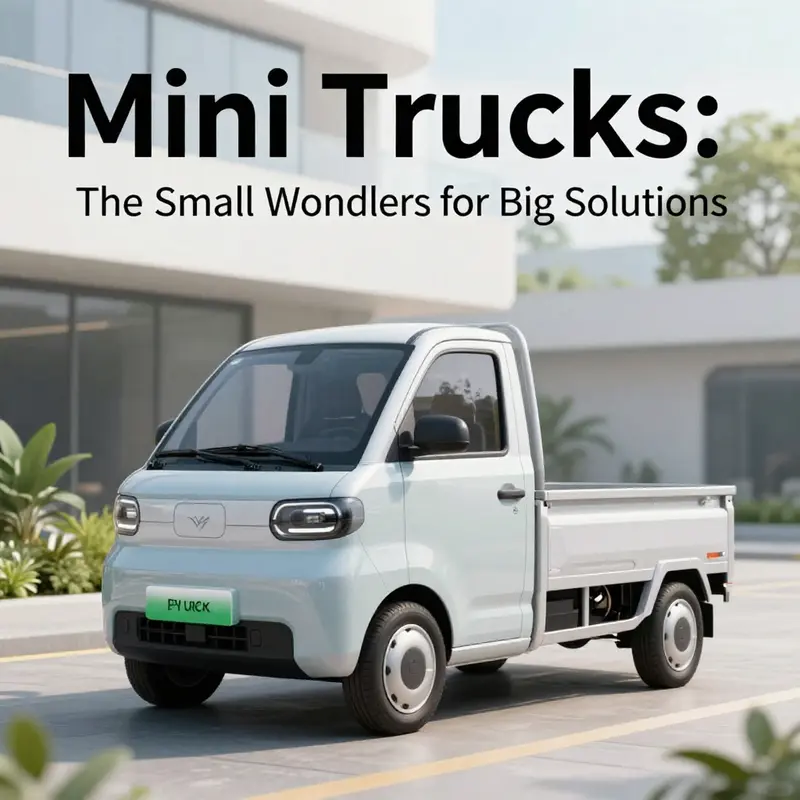
Cities are learning to manage growth while keeping streets navigable and air cleaner. The mini truck sits at the center of that challenge, a vehicle class built for dense urban routes where space is costly and time is precious. It is not a single gadget but a evolving platform, capable of serving fleets that must weave through dense cores, shuttle goods to curbside doors, and meet emissions, safety, and urban quiet requirements. To understand the future of the mini truck, consider three intertwined currents: demand for sharper last-mile execution, electrification, and digital ecosystems that bind vehicle, route, and customer experience into a single, trackable flow. When these currents converge, fleets move beyond bulky workhorses to compact, capable, and increasingly intelligent partners.
The last-mile story has grown louder as e-commerce pushes urban carriers to deliver more, faster, with tighter time windows. In crowded cores, full-size trucks struggle to maneuver, consume more fuel, and contribute to congestion. Mini trucks, with tight turning radii, light weight, and nimble acceleration, offer a different calculus. They can traverse narrow streets, park in constrained spaces, and deliver to the same doorstep with speed. This makes them well suited for zone-based delivery strategies, micro-warehousing, and on-demand replenishment. A fleet built around compact trucks can schedule more predictable routes, reduce dwell times, and improve on-time performance where larger systems stumble.
Urban planners are shaping the landscape through infrastructure and policy. Low-emission zones, congestion pricing, and curb management tilt economics toward smaller, cleaner vehicles. A mini truck that is quiet, clean, and easy to park can slip into restricted areas that challenge larger vehicles. In many cities, the size envelope for delivery fleets becomes almost as important as payload. Designers and regulators are balancing payload with dimensions and emissions to harmonize busy street life. The narrative shifts from squeezing more cargo into a small vehicle to extracting efficiency from every inch of urban space and every kilowatt-hour of energy.
Electrification accelerates the optimization story in two ways. First, electric mini trucks promise lower total cost of ownership for short urban routes, thanks to reduced maintenance and lower energy costs. Second, propulsion expands design envelopes, enabling more versatile cargo bodies without sacrificing maneuverability. Electrification also aligns with ESG goals that companies embed in procurement and fleet management. Governments often couple incentives with credits that reward clean fleets, making electricity a strategic bet for modernizing fleets and supporting public policy goals.
But electrification is not only about swapping engines. It invites a broader shift in fleet operations that relies on digital intelligence. Real-time tracking and telematics provide visibility into where a vehicle is, distance traveled, and how routes translate into outcomes. Advanced route optimization uses live data to minimize idle time and energy use. Predictive maintenance, fed by data from the vehicle, anticipates issues before they disrupt service. In practice, these technologies translate into smoother handoffs, fewer failed deliveries, and a customer experience aligned with digital expectations. Small trucks become nodes in a larger digital ecosystem that connects micro-warehousing, routing, and customer communication in a single interface.
A practical consequence is a more nuanced business model around mini trucks. Fleets are adopting flexible rental and service-based arrangements, emphasizing uptime and predictable operating costs. Manufacturers build service ecosystems that support rapid maintenance and energy management. Modular bodies and standardized interfaces enable a single platform to serve multiple cargo needs—from fresh food to parcels to municipal tasks—without owning a fleet of specialized vehicles.
The interplay of urban form, regulation, and technology also carries a cultural dimension. Operators adopt data-informed decision making as a normal practice. The reliable performance of a small, electrified, digitally integrated vehicle changes how teams plan, measure, and report success. It shifts conversations toward holistic system performance: on-time deployments, energy efficiency, cargo integrity, and customer experience. In this sense, the mini truck becomes a central instrument in the city’s logistics orchestration.
For readers seeking practical grounding, we can reference industry discussions and analytics. Practical resources offer ongoing commentary on how compact trucks are deployed in urban contexts and how fleets optimize operations. While each city charts its own path, the core logic—compactness plus capable powertrains, data-driven management—remains constant. The market for mini trucks is likely to evolve toward a more flexible, modular, and smarter family of vehicles that adapts to local rules and customer expectations.
Ultimately, the trajectory of the mini truck market rests on three forces: fast, reliable last-mile service; the economics of electrification; and the maturity of digital tools that bind vehicle performance to customer experience. When aligned, fleets deliver higher service quality with lower emissions, while city centers experience less congestion and more predictable freight patterns. The chapter ahead contextualizes these trends within broader market dynamics and explores how manufacturers, operators, and policymakers might collaborate to shape a resilient urban freight future.
Final thoughts
As we explore the captivating world of mini trucks, it’s evident they hold immense potential for local businesses, residents, and enthusiasts. Their compact nature, adherence to specific standards, and the versatility in urban applications offer practical solutions for transporting goods and managing logistics effectively. Additionally, the economic benefits of integrating mini trucks into business strategies cannot be overlooked, emphasizing cost savings and operational efficiency. Lastly, as the auto industry shifts toward sustainability, the rise of eco-friendly mini trucks promises a bright future for environmentally conscious transportation. Whether you’re aiming to invest in one for your business or simply interested in their capabilities, mini trucks are indeed invaluable allies in today’s fast-paced world.