
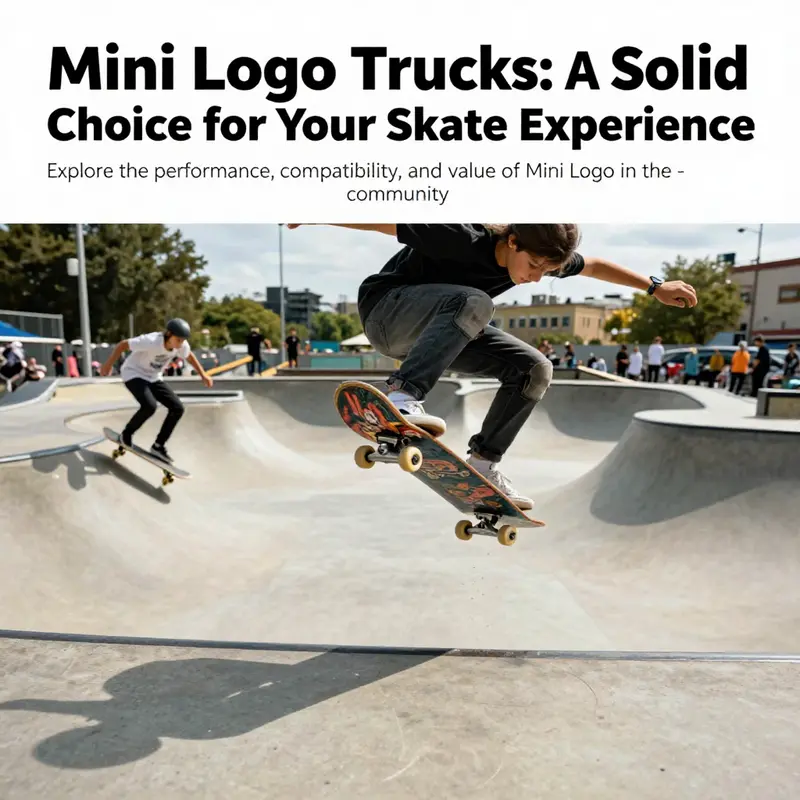
For those looking for reliable skateboard components, Mini Logo Trucks stand out in the market. Known for their solid construction and compatibility across various decks, they offer a performance level that caters to both casual skateboarders and those executing aggressive tricks. Across this article, we’ll delve into their performance and quality, analyze their price point, explore compatibility with different deck styles, and hear from users on their satisfaction levels. By the end, you’ll have a comprehensive understanding of why Mini Logo Trucks are favored by many in the skateboarding community, giving you the confidence to make an informed choice.
Compact Yet Capable: Reading Performance and Value in Mini-Logo-Style Skateboard Trucks
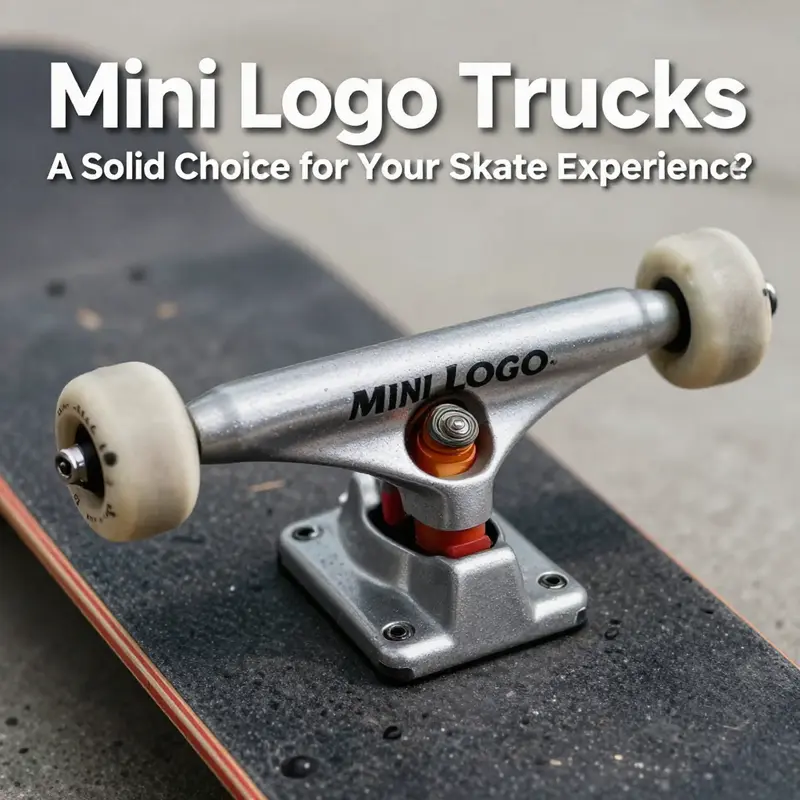
Skateboard trucks are more than hardware. They act as the hinge on which every trick, turn, and moment of balance pivots. In the world of compact lightweight trucks designed for everyday riders, skaters often ask whether these smaller, lower profile options deliver on durability, predictability, and value. The chapter that follows treats this question with care, weaving together practical realities of riding, the subtle mechanics of truck geometry, and the marketplace dynamics that shape what riders actually get for their money. It is not a sweeping treatise on every possible variation, but a cohesive exploration of how these mini design trucks perform in real world settings, how to gauge their quality, and what riders can realistically expect when they choose them for cruising, learning, or pushing the envelope with tricks.
To begin, the core appeal of compact trucks is straightforward. They promise a reliable, affordable, and adaptable platform. In many community roundups and reviews, this category is praised as an option that reliably balances stiffness, turning responsiveness, and weight. Riders who want to maximize control without paying a premium often gravitate toward these designs, especially when they are paired with boards in the mid to small width range. The perception that they offer good value hinges on a combination of solid construction, predictable turning, and the capacity to work across a range of deck styles—from flat straight boards to more curved, directional shapes that encourage carving and technical maneuvering alike.
Yet a closer look at the evidence shows that the conversation around these compact trucks is as much about fit as it is about fabrication. The market does not present a single, universally recognized authoritat ive brand in the way some other skate gear categories do, and public facing references can be sparse or inconsistent. What does emerge from user reviews, retailer descriptions, and riding testimonials is a pattern: riders value consistent performance, durable materials, and debate the trade offs between weight, stiffness, and ease of maintenance. In practice, this means that a set of compact trucks can feel exceptionally dependable for one rider and merely adequate for another, depending on riding style, deck choice, and personal tolerance for quick, reactive turns versus stable, plank like balance at speed. The practical implication is not that these trucks are universally perfect, but that they hold a meaningful place in the skate toolbox for riders who want capable equipment at a reasonable price.
A frequently cited point in community feedback is the balance between durability and price. The most lauded configurations in this category tend to be built from reliable aluminum alloys with machining that yields consistent geometry. Skaters consistently note that the best options in this class offer robust pivot systems, solid hanger machining, and a baseplate alignment that stays true across sessions. The result is a platform that remains predictable after days of skating, not a fragile set that loosens, warps, or develops unexpected play. These observations matter because they translate into how soon a rider can progress from basics to more advanced lines, and how much time is spent on maintenance versus progression. When a truck feels precise and predictable, it reduces the cognitive load a skater must bear during transitions, flips, and less forgiving surfaces. In educational terms, it is a facilitator of confidence, which is a quiet but powerful form of performance enhancement.
An important caveat in the literature is that the specific branding often cited by riders can be elusive in publicly accessible sources. There is no widely cited authoritative registry that clearly maps every compact truck model to a formal standardized specification across the entire market. What becomes actionable for a rider is a careful reading of the specs that accompany any given set: hanger width, axle length, height of the truck, baseplate angle, kingpin orientation, and the overall torsional stiffness that results from the combination of these elements. For a rider choosing a compact truck, the key is compatibility with deck width and riding style. A mid width hanger paired with a long axle tends to favor a stable ride on a wider deck, while a shorter axle and a narrower hanger can yield quicker transition and a tighter turning radius on a narrower board. These relationships are not merely academic; they define how a rider will experience turning, wheel bite with different wheel and riser configurations, and ceiling height on grinds.
In this light, a commonly referenced configuration within the category serves as a useful case study. Descriptions from reviews highlight a setup with a modestly wide axle and mid range hanger as a versatile all rounder. Such a configuration supports a spectrum of boards, from cruiser oriented shapes to street oriented decks, enabling both smooth cruising along sidewalks and the push toward more technical tricks. The advantage is not simply in raw strength, but in the predictability of the geometry: the rider learns how the board will respond at different lean angles and what kinds of turns, slides, or escapes from stalls to curb cuts will feel natural. When the geometry is tuned to a rider deck width and typical riding tempo, the experience becomes steadier, more intuitive, and more forgiving under imperfect surfaces such as potholes, painted crosswalks, and the occasional misjudged landing.
Of course, the practical reality of using compact trucks is that not all setups age equally well. Maintenance becomes more critical as the rider pushes the envelope. Regular inspection of the pivot bushings, a light application of lubricant on moving parts, and an occasional tightening to maintain alignment are ordinary maintenance steps that significantly extend the life of these components. A well maintained set will resist creaking and uneven wear, which in turn preserves turning accuracy and reduces the likelihood of unexpected slop that disrupts balance mid trick. The best riders treat their trucks as a living part of the board, something that needs periodic tuning much like a bicycle does with its bearings and air pressure. This practical perspective helps explain why many skaters who value durability and value consider these compact trucks to be a reliable baseline rather than a luxury item.
In the broader sense, these compact trucks are not monolithic in design. There are variations driven by riding preferences, whether the rider prioritizes cruising stability, park performance, or street style maneuverability. Some sets emphasize a lower profile to reduce wheel bite for aggressive lines; others achieve a taller, stiffer response intended for more controlled drop ins and higher speed carving. The market in its diversity means that riders can often find a configuration that aligns with their deck width and wheel setup without having to compromise essential reliability. For a rider who works with a mixed cycling schedule, weekends at the park, and weekdays on thin downtown rails, the flexibility to swap wheels, swap bushings, or adjust the kingpin tension can be the difference between a good session and a great one.
From a value perspective, the consensus among experienced riders is that these compact trucks represent a strong mid range option. They are not the absolute lowest cost entry point, nor are they the premium, high performance outliers used by top professionals. Instead, they occupy a practical middle ground where you can secure solid, well machined hardware without paying for features that you may never use. This makes them particularly attractive to newer skaters learning the craft, as well as seasoned riders who want a reliable workhorse for daily use without a heavy financial commitment. The value proposition strengthens when the trucks combine durability with broad compatibility. A chassis that can work across several deck styles, and with multiple wheel configurations, reduces the need for frequent replacements and broadens the scope for experimentation as skill and taste evolve.
Important caveats accompany any broad assessment like this. Even when the category earns high marks for reliability and price to performance, it is essential to understand that not all products within the class perform equally. A poorly machined baseplate or misaligned axle can result in unpredictability, wheel bite, or premature wear. Therefore, riders should verify the fit against their specific deck width, consider the riding surface they encounter most often, and evaluate how the geometry interacts with their preferred bushing setup. For someone who mainly cruises or rides in smoother skateparks, the standard configuration may feel nimble and responsive. For someone who aims to push tricks in a concrete jungle with occasional rough patches, a truck that delivers consistent performance under stress becomes more critical. In short, the question are they good resolves most cleanly when framed as do they fit my deck, riding style, and maintenance routine, and do they deliver consistent, predictable behavior over time. In that sense, the answer is nuanced but largely affirmative for a wide spectrum of riders.
Beyond the immediate riding implications, there is a broader educational arc to consider. The mini or compact design truck, in its own way, mirrors a broader consumer truth: small does not have to mean low quality. In the world of small vehicles and micro machines, compact design often forces a discipline of precision. In skate hardware, that translates into tight manufacturing tolerances, careful material selection, and thoughtful geometry. For riders who value resilience and consistent performance without a premium price tag, these factors translate into a practical and dependable everyday tool. The narrative in the market tends to favor riders who seek reliable performance as a function of budget, rather than those scouting for absolute maximum speed or trick specific features. That perspective aligns with the core reality: compact trucks, when chosen with a mindful eye to deck compatibility and maintenance, can be a strong foundation for riders evolving their skill set.
As this analysis concludes, the practical verdict remains thoughtful rather than categorical. Compact trucks can be a good choice for many skaters, especially those who want dependable performance at a reasonable price and who ride a broad range of decks. They are most successful when a rider buys with intent, understanding their own deck width, their preferred riding style, and their maintenance habits, and when they select a set whose geometry supports those choices. For riders who push extraordinary limits or require highly specialized gear for niche tricks, a more targeted or premium option may offer advantages. But for the everyday rider, for learning and for cruising with a dash of performance, these compact trucks embody a meaningful balance of performance, durability, and value that makes them a solid option in the broader skateboarding hardware ecosystem.
External resource: While the following reference sits outside the skateboarding hardware world, it offers a contrast in how the term mini is applied to a related field, mini trucks, emphasizing durability, payload, and design choices in a different context. For readers curious about how compact engineering scales up to real world rugged use, see the official specifications and features of the Foton Tunland 4×4 mini truck: https://www.fotontruck.com/en/product/tunland-4×4/
Value, Reliability, and Real-World Performance: Are Mini Logo Trucks Truly Good?
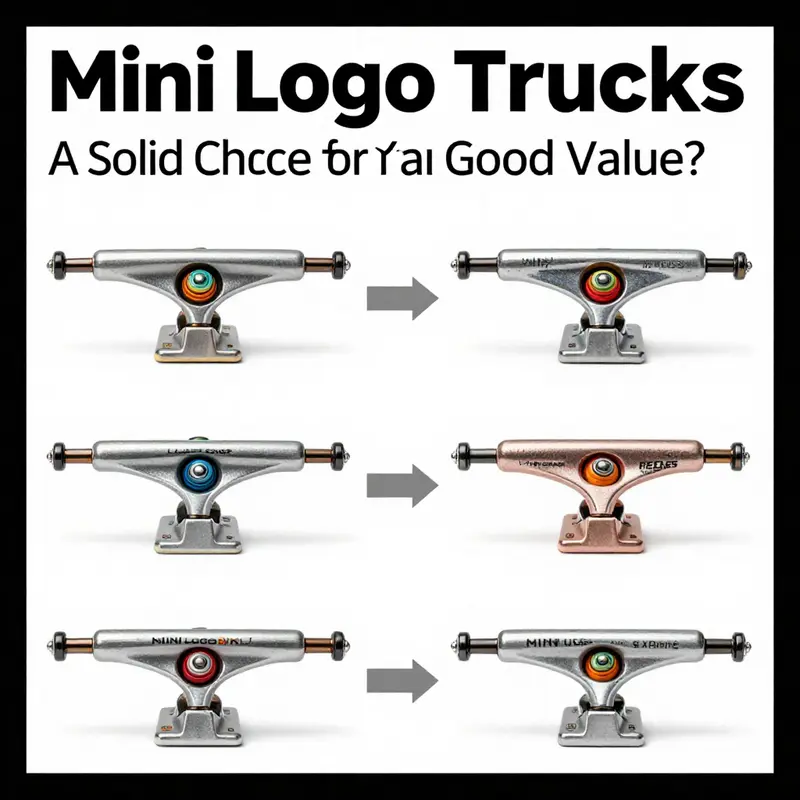
When the phrase “Mini Logo Trucks” crosses a skater’s lips, most riders picture hardware rather than horsepower. This distinction matters because it frames how we judge value. In the skateboarding world, Mini Logo trucks are not mini vehicles; they are compact, durable components that sit under a deck and translate rider intent into the board’s response. The question of goodness, then, hinges on how well these parts meet the practical needs of everyday riding: stability without weight, resilience through grind and impact, and a price that invites experimentation rather than forcing a costly commitment. For many skaters, that combination is precisely what makes Mini Logo trucks a compelling option. They offer a reliable baseline—stiff enough to resist unwanted flex, predictable in turning, and affordable enough to allow riders to test deck widths, wheel setups, and riding styles without breaking the bank. In that sense, value here is not just dollars saved; it is freedom to try, refine, and progress on a board that remains within reach.
The notion that these trucks are an “Overall Pick” in several reviews is not accidental. The specific configurations most commonly cited—paired with a 5.5-inch hanger and an 8.38-inch axle—strike a balance that suits a wide range of boards. Reviewers emphasize solid construction and consistent performance across sessions. This consistency matters because skateboarding is a sport of translators: you demand that the hardware translate your stance and weight into stable turns, controlled slides, and dependable returns from a landing. When a set remains predictable—from the moment you bolt it to a deck to the end of a long park session—it softens the learning curve for new skaters and provides seasoned riders with the reliability they crave during repeats and repetitions. The durability piece—how long a pair lasts under normal abuse, how easily worn parts can be swapped, and how the geometry holds up under pressure—often becomes the silent driver of perceived value. In short, the trucks earn their reputation by delivering steady, repeatable results rather than flashy performance that decays after a few sessions.
Price is a central pillar of the value argument, and here Mini Logo trucks shine in a way that resonates with riders who juggle budget with ambition. The bat-and-ball math is straightforward: affordable, widely available trucks lower the cost of entry for beginners, and they also empower more experienced skaters to experiment with different deck widths, wheel radii, and ride heights without committing to a premium price tag. That affordability is not merely about initial purchase; it also shapes long-term ownership. Replacement parts—bushings, kingpins, axles—are typically easy to source, further enhancing the practical value. When a rider can adjust the turning radius with a simple bushing swap, or replace a worn piece without hunting down a rare component, the overall cost of ownership drops. This makes the early years of learning and experimentation less daunting and, for many skaters, more enjoyable. The value calculus extends beyond sticker price; it embraces the iterative, modular nature of skateboard customization, where small, incremental upgrades can yield meaningful changes in control and confidence on the board.
A common point of confusion—and a blocker to a clear value judgment—is the naming itself. “Mini Logo” sounds like a nod to cars or mini-trucks, but in the skating world it refers to a brand and a line of hardware designed for boards. The result is a product whose purpose is dedicated to deck-based performance: steadiness for cruising, reliability for grinds, and a geometry tuned for predictable returns after tricks. For readers coming from an automotive mindset, the difference can feel stark. The very idea of payload, road clearance, and all-terrain capability recedes; what matters instead is how the trucks handle impact, how they maintain alignment after a hard landing, and how well they pair with a given deck profile. The upshot is that expectations must shift: the value of these trucks lies not in off-road prowess or hauling capacity, but in consistency under a rider’s weight, the precision of the turn, and the ease with which a board can be tuned to the rider’s preferences.
Understanding the hardware itself helps illuminate why many skaters regard Mini Logo trucks as a solid buy. The geometry—the 5.5-inch hanger tends to favor mid-sized boards, while the 8.38-inch axle offers a stable track that remains nimble enough for smooth carving. This combination translates into a board that feels predictable whether you’re learning to ollie, carving through a park, or rolling along a street line. The build quality matters too. A well-constructed hanger resists flex under pressure, maintaining wheel separation and reducing the chance of wheel bite when you push a board through tight turns. In practice, that means fewer moments of surprise when landing or switching between tricks, and fewer trips to the shop to address misalignment. For riders who value dependable feedback from their hardware—the kind that tells you when you’re on a board that will respond consistently—Mini Logo trucks deliver. They don’t promise stardom or focal-point sensation, but they do offer a reliable, affordable baseline that many skaters come to rely on as their stage for learning and advancing.
The idea of “good value” in this context is nuanced. It isn’t a single metric but a composite of performance, durability, modularity, and the flexibility to evolve with a rider’s needs. On the performance front, the trucks provide a stable, predictable platform that supports a wide variety of riding styles. You’ll find that they respond well to the common inflections of a skater’s weight shifts, foot placements, and the small, precise adjustments that define flow in street and park sessions. Durability comes from a solid core geometry paired with materials that can stand up to the repeated stress of tricks and impact from rough pavement. Modularity matters because most riders will want to switch wheels, swap bearings, or even upgrade bushings to match a changing deck width or riding style. When you consider all of this, the value rests not just in the initial price, but in how long the trucks stay reliable and how easily you can keep them performing well through months of sessions.
Another layer of value is the breadth of options that often accompany a budget-friendly lineup. While the core pair can serve the majority of deck profiles, Mini Logo’s broader offerings provide a pathway for riders who want to tailor their setup without mixing brands. This ecosystem approach reduces the guesswork that comes with shopping for compatible parts and accelerates the time to a finished, ride-ready board. For new skaters, that ease of setup lowers the barrier to experimentation: you can try a few different board widths and wheel choices to discover what feels most controllable. For more experienced riders, this variety supports ongoing refinement, allowing subtle shifts in control without replacing the entire truck system. The practical upshot is a more forgiving, more adaptable platform that remains affordable while inviting continued exploration of what makes a board truly yours.
If you’re curious about the broader conversation surrounding such components, a good next step is to explore independent reviews and setup tips that discuss how these parts behave in real-world conditions. A noteworthy resource within the community is the Mini Trucks Blog, which gathers hands-on impressions and setup advice across a spectrum of boards and styles. This kind of peripheral guidance helps convert raw specifications into meaningful decisions about what to buy and how to tune. For example, a rider who is experimenting with a slightly wider deck can anticipate how the change might interact with the 5.5-inch hanger, and what to adjust in terms of bushings or tightened hardware to preserve stability. The bottom line is that value emerges from the synergy between a well-matched deck, reliable hardware, and the rider’s willingness to tune the setup over time. Regular checks—tightening, replacing worn components, and confirming alignment—are small steps that pay off in smoother sessions and longer-lasting performance. Mini Trucks Blog
Of course, any discussion about value should also acknowledge the market context in which these products sit. In the broader world of small, task-oriented vehicles, pricing structures reflect a balance between specialized capability and the economics of mass production. The same logic applies to skateboard hardware: an affordable, widely available option can unlock a broader base of riders who might otherwise be priced out of experimenting with different boards and styles. The result is a more inclusive skating ecosystem where beginners can gain confidence, and veterans can push their limits without worrying about bank-breaking upgrades. For a more distant, industry-wide perspective on how price points map to function in the related field of compact service vehicles, readers are encouraged to consult external analyses such as this detailed pricing study: https://www.madisonhill.com/mini-delivery-truck-pricing-analysis/.
Striking the Balance: Can Compact, Value-Driven Trucks Do It All Across Street, Park, and Vert?
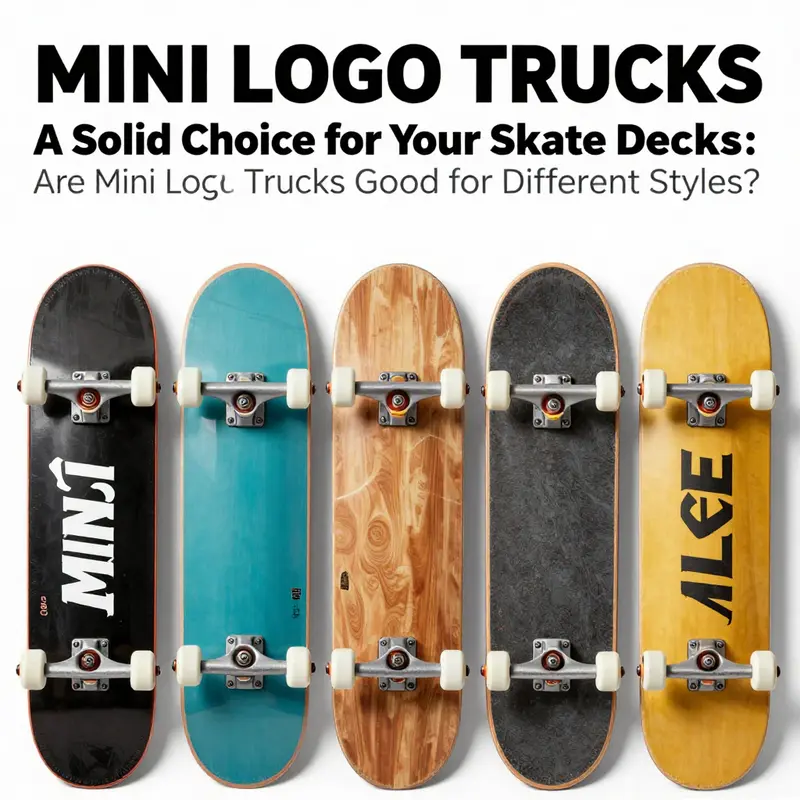
When you set out to build a skater’s setup that can genuinely cover multiple terrains without needing a different gear bag for every session, you start with two core ideas: compatibility and consistency. Compact, value-driven trucks claim to support a broad spectrum of skating—from street lines that hinge on flips and precise grind control to park sessions that demand stable landings and clean transitions, all the way to vert demands where strength matters most. The data from budget-minded truck options suggests this balance is achievable and practical for many riders. The key is thoughtful dimensioning, robust construction, and a design that respects standard deck patterns without forcing compromises in setup geometry.
Compatibility comes from the standard mounting patterns most decks use. A hanger around five and a half inches and an axle just over eight inches gives a wide range of decks the ability to accept these trucks without expensive substitutions. The 100 mm or 110 mm mounting patterns remain a reliable baseline that supports a range of wheelbases and deck widths, enabling riders to swap decks while keeping the same truck underfoot. This cross-compatibility is a practical advantage for skaters who value a straightforward, predictable setup across styles.
In street skating, the compact hangers contribute to a snappier, more responsive feel when threading lines or dialing in tricks. Strength remains intact through sturdy pivots and durable grind surfaces, delivering repeatable axle alignment that helps riders stay on track. Park sessions benefit from stability at speed, clean transitions, and the ability to hold lines through landings, while the finish and corrosion resistance keep these trucks looking sharp even after repeated grinds and re-entries.
Vert skating tests budget-friendly trucks on strength and geometry. A setup that can absorb a heavy landing and hold its geometry under pressure translates into confident drop-ins and smooth lines. The better-designed compact trucks deliver a breadth of performance without demanding premium price tags, allowing riders to push taller lines with reliability rather than trepidation.
Aesthetics matter too. Black or black/polished finishes provide a timeless look that matches most deck graphics and resist wear. A cohesive aesthetic helps riders feel confident about their setup, which can translate into more consistent practice and more ambitious attempts.
Ultimately, the value-driven compact truck line aims to deliver dependable performance across street, park, and vert. It is not about chasing peak performance in every dimension, but about delivering consistent behavior that lets riders focus on progression rather than constant upgrades. If the goal is a practical baseline that’s ready for a broad spectrum of environments, this approach offers a compelling balance.
For those who want deeper context, brand blogs and community discussions provide additional perspectives on tuning and real-world setups. External retailer pages often offer hands-on feedback and specifications that help riders compare options.
Sizing for Satisfaction: How Budget-Friendly Skateboard Trucks Earn Skaters’ Trust

On the surface, trucks are a small component, but for skaters they are the hinge between control and chaos. Budget-friendly trucks earn their stripes not by flash, but by how reliably they translate a rider’s input into a predictable ride. When they hit the right balance of stability, weight, and durability, they become the quiet workhorses of a setup that stays true session after session.
Sizing is king. If the hanger is too narrow or the axle too short for a given deck, the board can feel twitchy and unforgiving at speed. The opposite—wide enough hangers, a sturdy baseplate, and an axle length that matches the wheelbase—helps the board feel calm and predictable. Predictability breeds confidence, which in turn encourages practice and progression, especially for newer riders.
For beginners and casual riders, stability matters most, and budget lines often deliver it with wide hangers and reinforced bases. The result is a ride that spreads weight more evenly and dampens chatter through landings and slides. For more technically oriented skaters, budget options can still perform well when the geometry is balanced and the bushings are tuned to taste: softer bushings for easier turns, firmer ones for more precise control. In both cases, the key is a model that tolerates a range of boards and rider weights without deviating from a solid, confident feel.
Bottom line: value in budget trucks comes from sensible design choices and proper sizing, not from novelty or hype. The best budgets are the ones that stay true under real-world use, letting riders focus on tricks rather than gear quirks.
Final thoughts
Mini Logo Trucks have carved a niche in the skateboard community by offering excellent performance, compatibility, and value for money. Their solid construction enables skaters to enjoy both casual rides and challenging tricks without compromising on quality. As we’ve explored in this article, user satisfaction and positive reviews further enhance their appeal, making them a reliable choice for anyone looking to upgrade their skateboarding experience. Whether you’re a local business owner selling skateboard components or a skater looking to enhance your ride, Mini Logo Trucks present a worthy investment for versatility and dependability.