
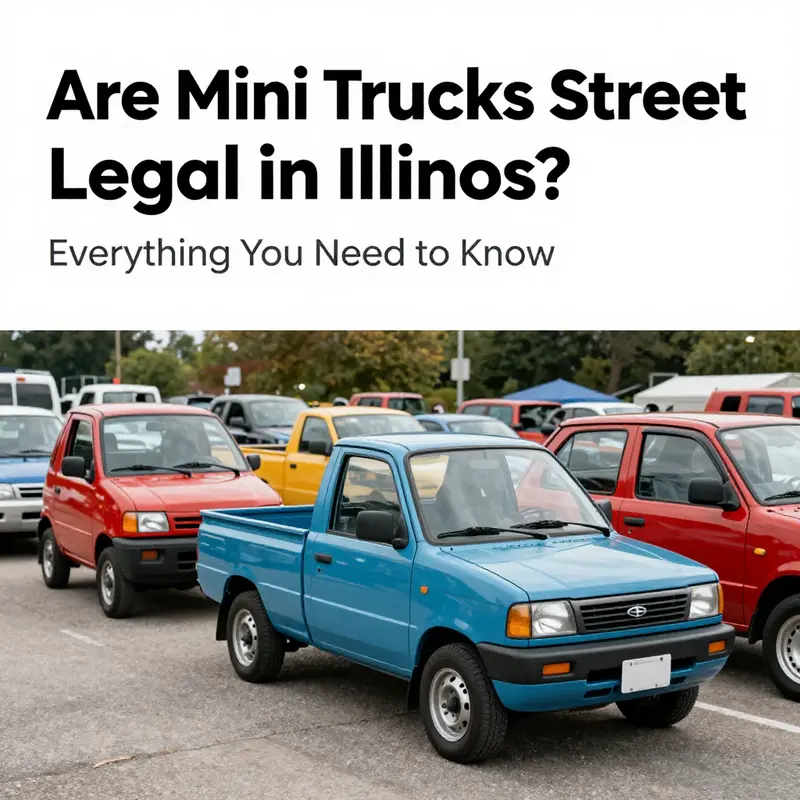
Mini trucks have become increasingly popular among small business owners, residential property owners, and enthusiasts for their versatility and utility. However, questions around their street legality in Illinois can be daunting. Understanding the regulations, safety standards, and registration requirements is crucial for anyone considering owning or operating a mini truck. Each chapter of this article will break down these vital elements, empowering you with knowledge about how to ensure your mini truck is road-ready and compliant with Illinois laws.
On the Road in Illinois: Decoding When a Mini Truck Can Legally Share Public Streets
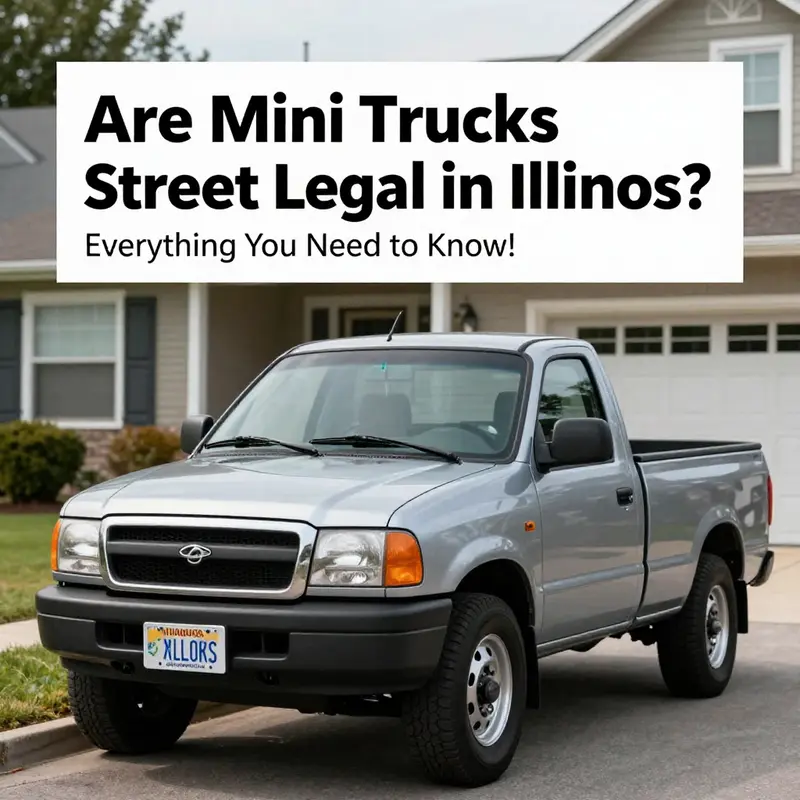
The road question that haunts many buyers and curious drivers in Illinois boils down to a practical attorney’s question dressed in a mechanic’s coveralls: is a mini truck street legal here, and if so, under what conditions? The short answer is nuanced. In Illinois, a compact, electric, or low-speed utility vehicle can travel the same arteries as cars and pickups, but only if it is properly classified, registered, and equipped. The longer answer depends on how the vehicle is defined by state rules, how fast it can go, and where you intend to drive it. The state’s approach centers on distinguishing vehicles that meet low-speed vehicle standards from those treated as full-fledged motor vehicles. This distinction matters every time you turn the key and look toward the curbside or the next traffic light. For anyone considering using a small electric truck on public streets, the decision is less about power and more about speed, safety equipment, and official recognition from the state’s regulatory system. Within this framework there is room for a lot of practical, real-world use—campus shuttle routes, maintenance corridors, and short trips on neighborhood streets—yet those uses must stay within the boundaries set by law. A core element in this framework is the desire to balance accessible, efficient transport with consistent safety expectations for all road users. The state makes it clear that a vehicle’s eligibility hinges on classification as a low-speed vehicle (LSV) or as a motor vehicle, with the path forward sharply different for each category. Understanding where your mini truck fits starts with its speed, its construction, and its compliance with safety standards. As manufacturers and drivers navigate this landscape, it helps to keep in mind that the goal is not merely legality for legality’s sake, but a legally sound basis for insurance, roadway operation, and accountability in the event of a collision or a citation. The practical takeaway is simple: if your vehicle can meet the strict criteria for an LSV and you meet every administrative requirement, you gain access to certain street rights on roads with modest speed limits. If it cannot, the vehicle’s operation on public streets becomes far more restricted, and in many cases, restricted to private property or private roads unless additional waivers or permits are obtained. The distinction between LSVs and full motor vehicles is not a mere label. It drives the requirements for lighting, seat belts, windshield protection, and the availability of license plates and insurance. It also governs where you may travel and how you must behave once you are there. When the regulatory framework is understood, the practical steps become more straightforward, though not necessarily simple. To be deemed street legal in Illinois, a mini truck must be registered with the Illinois Secretary of State, insured through a licensed provider, and equipped to meet basic safety standards. These standards cover critical elements such as lighting and signaling systems, mirrors, braking performance, and occupant protection. In addition to these safety fixtures, the vehicle must display valid license plates and be properly titled. The process is not merely ceremonial; it creates a verifiable record that can be checked during traffic stops or safety inspections. The exact standards are anchored in federal safety guidelines, even as state authorities adapt them to the specific form and use case of low-speed, compact utility vehicles. The emphasis on safety equipment cannot be overstated. Seat belts are not optional in the lanes Illinois envisions for LSVs. Turn signals, proper headlights, and a windshield are part of the baseline requirement. These features are not just checkbox items; they are the legal and practical essentials that protect drivers and pedestrians alike. The resilience of the system lies in the clarity with which these elements are defined and enforced. That clarity begins with the vehicle’s speed. The widely cited standard for an LSV includes a top speed in the neighborhood of 20 to 25 mph, a rate that yields a vehicle less likely to disrupt typical traffic flow and safer to share the road with cars and trucks built to much higher speeds. In practice, however, some mini trucks marketed or converted for low-speed operation report higher top speeds, sometimes approaching or exceeding 30 mph. This difference matters because a vehicle that cannot be reliably certified as an LSV may be treated as a motor vehicle. In that case, it must comply with the full spectrum of vehicle registration, inspection, and licensing requirements that apply to conventional cars and light trucks. The result is a two-track system in which the same general class of vehicles can either glide along quiet streets under a specialized regime or face a more burdensome, traditional regulatory path. And then there is the speed ceiling that guides where these vehicles can be operated. In Illinois, LSVs are typically permitted on roads with speed limits up to 35 mph, which provides a meaningful corridor for neighborhood and campus usage. Yet highways and any road with higher speed limits are out of reach for these quiet, low-speed machines. Local municipalities may add their own restrictions or even bans, reflecting concerns about traffic density, road design, and the compatibility of a narrow, low-powered vehicle with faster, larger equipment. The interplay of local ordinances and state rules means that even if a vehicle meets all state criteria for an LSV, the final word on where it may travel still rests with the city or township that administers each street or district. As a result, before purchasing or deploying a mini truck for street use, a prospective owner should arrange a careful inquiry into the specific town or village ordinances, in addition to the state requirements. A thoughtful approach requires confirming that the vehicle bears the EEC or equivalent certification noted in product listings, as this certification is part of the safety and compliance narrative that supports street operation. Verification of such certification should be part of the registration process, because it helps establish that the vehicle has been designed to meet essential safety benchmarks. The registration process itself is not merely a formality. It creates a lasting record that the SOS can reference if questions arise about ownership, liability, or eligibility. After registration, proof of insurance becomes a practical necessity. Without insurance, even a legally classified vehicle cannot be operated on public roads. The presence of insurance provides a safety net for both the vehicle operator and other road users, and it is a legal prerequisite that signals responsible ownership. In addition to the core requirements of registration and insurance, the operator must ensure that the vehicle features proper lighting and signaling devices that function reliably. This includes headlights suitable for night operation, tail lights for visibility from behind, turn signals to communicate intention, and a windshield to protect the driver from road debris and weather. The habit of ensuring these elements works well beyond compliance; it reduces the likelihood of accidents and arguments that stem from ambiguous road behavior. It also echoes a broader principle: safety is a continuous practice, not a one-time checkbox. For readers seeking a broader context about how these vehicles fit into the evolving landscape of mini trucks and compliance discussions, a useful resource is the general blog hub that tracks trends, laws, and practical tips for owners. You can explore more at the Mini Trucks Blog. Mini Trucks Blog. This resource offers a broader look at design choices, safety considerations, and regulatory updates that influence street eligibility and practical usage. While the blog is not a substitute for official rules, it helps map the practical terrain of ownership and operation, making it easier to navigate the gap between product marketing and regulatory reality. The core point remains straightforward: if a mini truck cannot meet LSV criteria, or if its top speed and construction place it outside the safe, predictable envelope Illinois requires, you should plan for a different classification. In that case, full vehicle registration, licensing, and insurance become necessary, and operations on public streets may be severely limited or prohibited. Conversely, if the vehicle can demonstrate compliance with LSV standards, and you can satisfy the SOS registration and insurance requirements, you gain a defined set of street-use rights along roads with modest speed limits, with the caveat that highways remain off-limits. The entire process emphasizes accountability, safety, and predictability, which are essential for sharing the road with heavier, faster vehicles. As you move toward final decisions, it is prudent to consult the official guidance that governs these matters. The Illinois Secretary of State’s framework, including the Cyberdrive Illinois portal, provides the definitive rules and procedures for classification, registration, and safety compliance. For the most accurate and up-to-date information, visit the official website: https://www.cyberdriveillinois.com. This resource offers detailed guidance on vehicle classification, registration procedures, and safety requirements for all motorized vehicles, including compact utility units used in public traffic. Engaging with these sources helps ensure that your road use aligns with state law and local ordinances, while also supporting clear accountability in the event of a regulatory review or an insurance claim. In sum, the street legality of mini trucks in Illinois is not a blanket verdict but a careful alignment of speed, safety, and official recognition. When a vehicle is deemed an LSV and meets the required standards, registration, insurance, and proper equipment open the door to lawful street operation on the right roads. If it does not meet those thresholds, the vehicle’s road use is significantly narrowed, with local restrictions potentially standing in the way. As regulations evolve with technology and mobility needs, staying informed through official channels and practical guides remains essential for anyone who loves the idea of a compact, efficient vehicle that can navigate the everyday streets of the Prairie State. The road ahead for mini trucks in Illinois is a careful balance of speed, safety, and regulatory clarity—an equilibrium that makes sense for drivers who seek utility without compromising safety or the shared responsibility of the street. For those who want a broader, more practical sense of how these rules play out in real life, the journey begins with understanding the classification, then lining up the paperwork, and finally choosing routes that fit the vehicle’s capabilities and the law’s expectations. And as with any evolving area of transportation policy, a regular check of state and local updates helps keep the plan on track and the ride smooth. Official guidance remains the baseline, guiding owners as they navigate the intersection of performance, legality, and everyday use. For the latest, see the official state resources cited above, and consider a forward-looking approach that prioritizes safety, compliance, and the practical realities of Illinois streets.
Street-Ready in Illinois: Decoding the Rules for Mini Trucks and Low-Speed Electric Work Vehicles
Across Illinois, the appeal of compact, electric mini trucks is clear. They promise nimble urban delivery, easy maneuvering in tight spaces, and a smaller environmental footprint. Yet a not-insignificant gate stands between interest and actual street use: the state’s regulatory framework. These vehicles are not automatically street-legal just because they are small or electric. Instead, they must clear a defined set of requirements that hinge on how the vehicle is classified, how it is certified, and how it is documented with state authorities. For readers weighing a practical purchase, the path to legality begins with understanding the core concepts of classification, registration, safety compliance, and where these vehicles can legally operate. The overarching message is straightforward: Illinois allows street use for certain mini trucks, but only when they are treated like a specific class of road vehicle and when every piece of paperwork and safety equipment aligns with state and federal expectations. The real-world effect is that a well-planned approach can turn a modest, low-speed electric hauler into a legitimate tool for light-duty work on public roads, so long as you stay within the 35 mph speed envelope and meet the required standards. This is not a loophole; it is a carefully bounded option that reflects how Illinois balances innovation with public safety on busy streets and quiet residential corridors alike.
At the heart of the matter is classification. Mini trucks typically do not fall under the standard passenger-car umbrella. Depending on design and use, they may be evaluated as commercial vehicles or as special-purpose vehicles. This distinction matters because it changes which laws apply, which agencies have oversight, and what safety norms will be required in practice. A vehicle built primarily for local cargo tasks, campus operations, or utility work may be assessed with an emphasis on durability, payload capability, and reliability rather than the features that define a family sedan. The classification is not merely bureaucratic; it is the lens through which the entire street-legal process is viewed. When a mini truck is perceived as a work vehicle rather than a private passenger vehicle, the steps to legality become clearer and more predictable, even if they are still exacting.
Registration and titling follow from that foundational classification. In Illinois, the vehicle must be registered with the Secretary of State if it is used for business purposes or if its gross vehicle weight rating (GVWR) crosses specific thresholds. A title is issued that reflects the vehicle’s type, and license plates are required to operate on public roads. This paperwork is not mere formalism; it anchors liability, insurance, and accountability on the road. The practical upshot is that a buyer cannot assume automatic freedom from the usual vehicle registration process. Instead, the operator must navigate the Secretary of State’s office, secure proper documentation, and ensure that the vehicle’s registration is aligned with its intended use. Inadequate or mismatched paperwork can derail a street-legal plan before it begins.
Compliance with safety and equipment standards forms the other major pillar. Illinois expects that street-legal vehicles meet minimum safety criteria that are consistent with broader traffic laws. Working lights, functional brakes, and properly maintained tires are baseline expectations. Mirrors and a windshield are standard-issue requirements, with seat belts for occupants part of the package when the vehicle carries people. In the broader context, many low-speed vehicles (LSVs) or neighborhood electric vehicles (NEVs) must also align with federal safety standards designed to ensure rider protection and predictable performance on urban streets. The balance the state seeks is practical: enable the use of small, efficient electric work vehicles while ensuring they do not pose undue risks when mixed with faster traffic. This balance informs the design, operation, and inspection processes that vehicle owners must navigate.
Speed limits crystallize this framework into everyday consequences. In Illinois, the LSV pathway—one common route for street-legal mini trucks—permits operation on roads where the posted speed limit is up to 35 mph. The key caveat is non-negotiable: these vehicles cannot be driven on highways or on roads where the speed limit exceeds 35 mph. The implication for planning is immediate. If the vehicle’s home base is a university campus, a campus service corridor, a municipal work zone, or a residential district with quiet streets, the vehicle can be a practical tool so long as the route design keeps it within that 35 mph boundary. This constraint reinforces the point that the vehicle’s purpose and performance must align with the public road environment; speed is not a mere number but a defining boundary that shapes where and how the vehicle can legally operate.
Licensing requirements align with the same careful calculus. Even when a mini truck is compact and quiet, it enters traffic as a legitimate road user and must meet licensing standards alongside registration and insurance obligations. The operator’s credentials must be appropriate to the vehicle’s use, and the insurance policy must reflect that use. In practice, this means obtaining the necessary license or endorsement for operating a vehicle that falls into the LSV/NEV category, while maintaining proof of insurance as required by Illinois law. These steps are not optional add-ons; they are essential elements of a legal on-road profile. The state’s intent is clear: keep the operator accountable for safe, predictable driving within the vehicle’s performance envelope.
The practical trajectory to compliance blends engineering realities with administrative steps. The vehicle must demonstrate safe stopping capability, predictable handling, and reliable visibility. Brakes, tires, and steering need to respond consistently under ordinary urban conditions. Lighting and signaling must communicate intent clearly to other road users. Safety equipment is not a decorative add-on; it is a functional requirement that reduces collision risk and explains the vehicle’s behavior to weary drivers behind the wheel. The paperwork—certifications, inspections if applicable, title, registration, plates, and insurance—creates a durable legal foundation for operating in mixed traffic. It is a process that invites diligence rather than delay, rewarding those who collect the right certifications, verify safety features, and secure the appropriate registration before venturing onto public streets.
For readers seeking concrete strategies, the pathway is straightforward but exacting. Start by confirming that the vehicle carries the certification recognized by the state, such as an EEC certification or its equivalent—documentation that signals compliance with applicable safety and performance standards. Then verify that the Secretary of State will title and register the vehicle, and that you can obtain plates and proof of insurance that comply with state requirements. The equipment list should include proper lighting, functioning brakes, secure mirrors, seat belts, and a windshield, with the presence of turn signals and a compliant horn. If in doubt, a dealer or compliance specialist can illuminate the precise steps for your vehicle’s GVWR and intended use, reducing the risk of late surprises during inspection or registration.
As a practical note for those who like to plan, a well-chosen reference point can be a useful compass. A resource that outlines general considerations for compact, utility-oriented vehicles can help readers gauge how different configurations might stack up against Illinois requirements. A concise comparison of compact mini-truck models, specs, and features can illuminate how various setups meet or fail to meet the state’s standards. This kind of overview is not a substitute for official guidance, but it can clarify the kinds of design choices that align with legal operation. For readers who want a direct link to a broader discussion, this overview can be explored here: comparing compact mini-truck models, specs, and features.
Ultimately, the path to street legality in Illinois emphasizes a disciplined approach. It starts with the right classification and ends with the right paperwork and safety equipment, all bounded by the 35 mph limit on which LSVs can operate. The goal is not to simplify the law to a checklist but to illuminate a practical route for legitimate utility usage on public roads. When these elements align—clear classification, proper registration and titling, adequate insurance, and compliant safety features—the mini truck can become a legitimate tool for campus services, municipal tasks, or light-duty deliveries in communities throughout the state. The framework makes room for innovation while preserving road safety, ensuring that the driver who plans ahead and adheres to the rules can enjoy the benefits of a small, efficient vehicle without compromising the broader traffic ecosystem.
For readers who want official guidance beyond the narrative, consult the Illinois Department of Transportation and the Secretary of State’s guidance. These sources provide the precise criteria, forms, and processes that govern registration, certification, and operation of mini trucks on Illinois roads: https://www.cyberdriveillinois.com
null
null
Road-Ready in Illinois: Practical Guide to Registration and Street Legality for Mini Trucks
This chapter explains how a compact electric mini truck can be registered and operated on Illinois roads. It covers classification as a low-speed vehicle or neighborhood electric vehicle, required safety equipment (headlights, taillights, mirrors, turn signals, windshield, and seat belts), and the general process through the Illinois Secretary of State for eligibility, titling, insurance, and registration. It also notes that street use is generally limited to roads with speed limits up to 35 mph and prohibits highways. The text emphasizes the importance of compliant labeling, documented ownership, and adherence to local ordinances. For prospective owners, the path involves verifying eligibility, meeting safety standards, obtaining certification and insurance, and securing plates. Resources and reminders to review official state guidance are included, with a pointer to the Illinois SOS vehicle registration information page for the latest requirements.
Small, Street-Ready: Navigating Illinois’ Rules for Mini Trucks and Low-Speed Vehicles
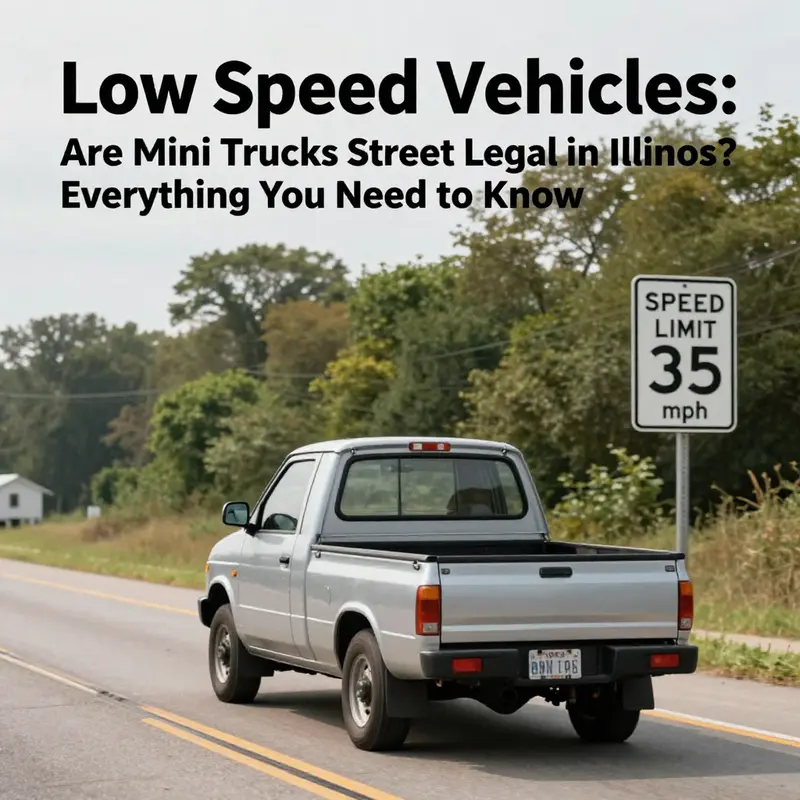
On the crowded streets and quiet avenues of Illinois, a new kind of utility vehicle has begun to carve out a niche: the mini truck. These compact, purpose-built machines promise efficiency, ease of maneuver, and the potential for emissions-free operation when electric. Yet “mini” does not automatically equal “street legal.” To actually roll a small utility truck onto public roads in Illinois, you must navigate a regulatory terrain that balances convenience with safety and accountability. The story of street legality is not about a single rule but about a collection of standards that a vehicle must meet, from its construction and certification to its registration and ongoing compliance. In practice, the path is straightforward in outline, but it requires careful attention to detail. A vehicle might be permitted on local streets, yet barred from highways, depending on its speed, safety features, and how it is classified. The framework hinges on the distinction between low-speed vehicles and conventional passenger cars, a distinction that helps define where and how these machines can operate without compromising road safety. When you begin to explore whether a mini truck can legally share Illinois roads with sedans and SUVs, the first landmark is the category of Low-Speed Vehicles, or LSVs. In Illinois, LSVs are allowed to travel on roads where the posted speed limit is up to 35 miles per hour. This is a crucial boundary, because it explicitly excludes highways and major arterials where higher speeds would demand more robust safety standards and larger, more capable braking and suspension systems. The 35 mph threshold is not arbitrary; it is chosen to align with federal guidelines for low-speed operation while still enabling practical utility for city deliveries, campus-related tasks, and light municipal use. In practical terms, a mini truck that meets the LSV criteria can ply neighborhood streets, industrial corridors, and other 35 mph routes, so long as it remains registered and compliant with safety standards. Yet speed is only one dimension of legality. A vehicle must also be properly titled and registered with the Illinois Secretary of State, a step that confirms ownership, establishes a license plate, and ties the vehicle to insurance coverage. Beyond that administrative process, the vehicle must meet a suite of safety features that allow it to operate alongside conventional traffic without presenting additional risks to other road users. The core safety requirements—seat belts, turn signals, appropriate lighting, mirrors, and a windshield—are not optional adornments but functional necessities in Illinois law. These features serve a dual purpose: they protect occupants and they give other drivers the information they need to anticipate the mini truck’s movements, whether it is turning, braking, or signaling a lane change. For electric mini trucks and other low-emission vehicles, there is an added layer of consideration. Electric propulsion offers environmental and efficiency benefits, and it opens doors to government incentives and to the possibility of operating in designated green zones where emissions restrictions apply. However, even in the electric context, the road-legal pathway follows the same structural requirements: certification, registration, insurance, and safety compliance. An important point in the current regulatory environment is the need for certification that demonstrates the vehicle meets recognized safety or equivalence standards. In some listings and product materials, you may see references to EEC certification or equivalent. While the EEC designation is historically tied to European standards, the intent in Illinois is clear: the vehicle must demonstrate that it can meet or exceed the safety benchmarks that the state expects. This is not a mere formality. It is what allows a utility or mini-truck to be treated similarly to other low-speed vehicles on the road and to be eligible for the same kinds of registration and operational allowances as long as the vehicle remains compliant. The registration process itself is a practical checkpoint. Once a vehicle has the necessary certification, the owner must register it with the Illinois Secretary of State. This is more than a bureaucratic hurdle; it is a formal declaration of the vehicle’s status, ownership, and responsibility for insurance. Upon completion, the operator receives license plates and proof of insurance, credentials that tie the vehicle to a specific owner and to the roadway system. With registration and certification in place, the vehicle enters the public-traffic ecosystem. But the ongoing reality of street legality is not static; it requires continuous compliance with the safety features that make LSVs appropriate for shared roads. The lighting, brakes, and signaling systems must be maintained; mirrors and windshields should be intact; and modifications that affect safety, such as altered braking performance or dimming of headlights, can jeopardize both legality and safety. The regulatory framework in Illinois emphasizes that the vehicle remains within its designed category. It is possible for an electric mini truck to be classified as an LSV or an NEV, depending on its characteristics and the way it is used. The difference between LSVs and NEVs can be subtle in practice, but the practical effect is real: it shapes where the vehicle may operate and what infrastructure it can rely on. The overarching message to readers considering a mini truck is that street legality is not a one-time check but an ongoing commitment. Before purchasing, an interested party should confirm several elements. Does the vehicle carry the certification noted in its listing—EEC or an equivalent standard? Can it be titled and registered with the Secretary of State? Are license plates issued and is proof of insurance readily available? Do the safety features—seat belts, turn signals, lights, mirrors, and windshield—meet the Illinois requirements? And crucially, is the intended route within the 35 mph limit that defines an LSV’s domain? To illustrate how these considerations play out beyond the theoretical, consider the practical scenario of a small business using a mini truck for on-site deliveries in an urban setting. The business would benefit from electric propulsion in terms of reduced emissions and potentially lower operating costs. Yet the same business must ensure that every vehicle in its fleet is categorized correctly and kept within the speed boundaries that Illinois law prescribes. It must also secure appropriate insurance and maintain all required safety equipment. The intersection of policy and practice is where plans either proceed smoothly or hit a snag at the DMV counter or in a roadside encounter with law enforcement. Those who seek a well-informed footing can turn to the official channels that govern vehicle classifications, registrations, and safety requirements in Illinois. For readers who want a broader perspective or practical examples drawn from the wider community of light-duty, low-speed transport, a visit to the Minitrucks Cali blog can be informative and context-rich. See minitrucksocala.com/blog/ for general discussions and perspectives on how these vehicles are used in everyday settings, how people assess regulatory risk, and the kinds of considerations that come with selecting a vehicle for specific tasks. This resource can complement the state-focused guidance by offering real-world viewpoints from owners and operators who have navigated similar regulatory questions. Of course, when in doubt, the definitive source remains the state. Illinois maintains its Low-Speed Vehicle Regulations as part of the broader vehicle code, and these guidelines are actively used by customers, dealers, and fleets to determine fit and eligibility for road use. The official framework provides the specific criteria that govern certification, registration, and on-road operation, including the permitted speed range, required safety equipment, and the process for documenting compliance. For anyone planning to rely on an electric mini truck for routine road use in Illinois, taking the time to verify each element—certification, registration, insurance, and safety features—helps prevent mismatches between expectations and reality. It also protects public safety by ensuring the vehicle behaves as a predictable participant in traffic. When these conditions are met, the dream of compact, efficient, street-legal mini trucks on Illinois roads becomes a practical possibility rather than a theoretical ideal. It is a precise balance: reaping the benefits of small-scale, low-emission transport while adhering to the safeguards that keep all road users secure. For those who want to explore how such vehicles fit into the broader ecosystem of lightweight utility equipment, understanding the regulatory boundaries can empower smarter decisions about purchase, modification, and daily operation. The bottom line is clear: in Illinois, mini trucks can be street legal, but they must conform to a defined code of compliance that covers certification, registration, insurance, and safety features, and they must operate within the speed limits that define low-speed vehicles. As the landscape of urban mobility evolves, these rules provide a stable foundation for integrating compact, capable machines into everyday life. Official guidance and updates can be found at the state’s regulatory portal, and the related external resource offers a practical overview of the exact standards that make these vehicles permissible on public roads. External resource: https://www.dot.il.gov/vehicle/low-speed-vehicles
Final thoughts
Understanding the legal landscape of mini trucks in Illinois is imperative for any potential owner. By familiarizing yourself with the regulations, safety standards, and registration requirements, you can confidently operate your mini truck in compliance with state laws. For local business owners, residential property owners, and hobbyists, this knowledge not only ensures peace of mind but also enhances the enjoyment of owning such a versatile vehicle. Embrace the possibilities that mini trucks bring to your community!