
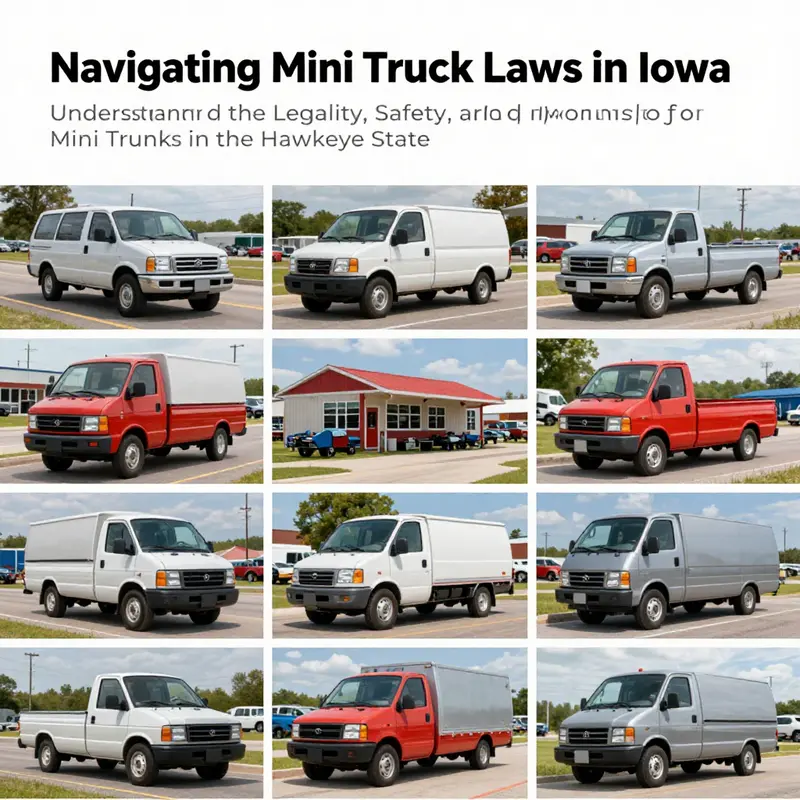
Mini trucks are becoming increasingly popular among local small business owners, residential property owners, and enthusiasts. However, navigating their legality in Iowa requires a solid understanding of the regulations that govern their use, especially on highways. While these compact vehicles offer numerous benefits—like fuel efficiency and easier maneuverability—they also come with specific restrictions that could impact your experience and enjoyment. This article will cover crucial aspects such as the legal restrictions on mini trucks, the safety concerns of using them on higher-speed roads, the public policies shaping these laws, and practical considerations for ownership in Iowa. By the end, you’ll have a clearer view of whether you can drive a mini truck in Iowa and how that fits into your life and business.
Mini Trucks in Iowa: When Do They Belong on Public Highways?
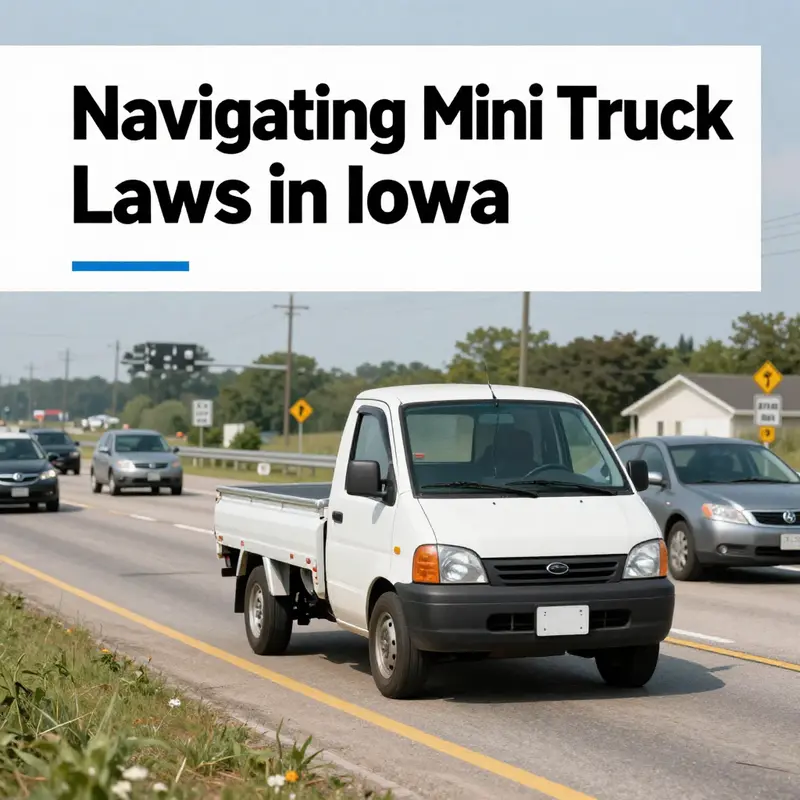
This piece explains the core issue: in Iowa, whether a mini truck may operate on public roads depends on vehicle registration, speed limits on the road, and required safety equipment. A highway speed restriction generally prohibits mini trucks on highways when posted speeds exceed 55 mph, though local streets and certain lower-speed road segments may be used within the legal framework. For registered minitrucks, seat belt requirements and other safety standards may apply. Because regulations can change and depend on road designations and registration status, consult the Iowa Legislature and Iowa Department of Transportation for the latest language on relevant House Files and sections like HF 2075, HF 2090, and 321.275A. Always verify current rules with official sources before operating a minitruck on public streets.
Not in the Fast Lane: How Iowa’s Highway Rules Shape Mini Trucks’ Legality
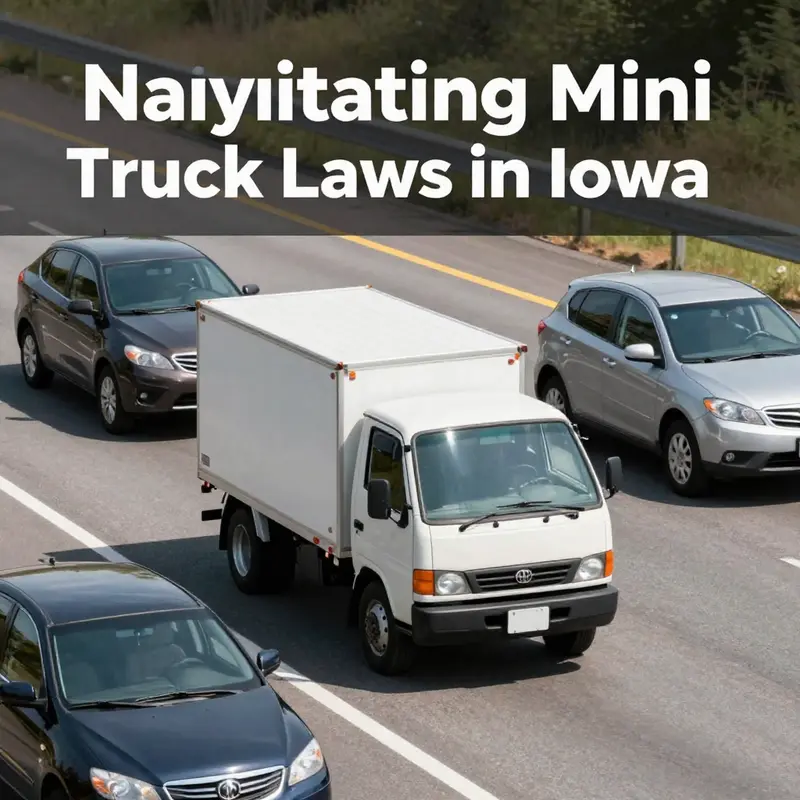
On a map of Iowa’s roads, the appeal of a compact, nimble vehicle can clash with the hard rules that govern what may ride beside semis and passenger cars on the state’s highways. The core question—are mini trucks street legal in Iowa?—tempts people to imagine a loophole in an otherwise strict transportation framework. The reality is more nuanced. The safety calculus and the regulatory text developed in recent years point to a precise constraint: these small work vehicles face a ban-like restriction when they are asked to share the state’s higher‑speed corridors. Reading the room of Iowa’s traffic laws reveals that the prohibition is not a blanket declaration against all on‑road use, but a targeted limitation tied to highway speed and the risks that arise when a small, relatively light vehicle is placed in high‑speed traffic. In practical terms, this means that on stretches of highway where the posted limit climbs above 55 miles per hour, a mini truck is unlikely to meet the criteria for lawful operation. For residents who rely on rural routes or municipal streets, the distinction can feel more like a question of where you drive than whether you drive at all. The law’s structure is, in effect, a compliance framework that prompts vehicle owners to plan routes with a careful eye toward speed and road type rather than toward one-size-fits-all answers about legality. At its heart, the statute is a public safety instrument. It assumes that the risk profile of a small, lightweight vehicle with a relatively high center of gravity behaves differently on fast, open roads than it does on slower, urban arterials or private driveways. The upshot is clear: the highway portion of Iowa’s transportation system is governed by rules that do not easily accommodate mini trucks as traveling companions for drivers who routinely encounter 60, 65, or even higher mph conditions on rural interstates or heavily traveled highways. The prudence behind this approach is not simply about driver skill or vehicle capability in isolation. It rests on a broader understanding of crash dynamics, vehicle performance limits, and the relative visibility of smaller machines in mixed traffic. The smaller footprint of a mini truck, though offering advantages in maneuverability and fuel efficiency, can translate into reduced crashworthiness in certain types of collision scenarios. It can also contribute to visibility challenges, especially for other drivers who may not expect a diminutive vehicle to be occupying the same lane at high speed. The regulatory intent, then, is to minimize exposure to these risks on the most demanding parts of the network—the highways where speed differentials, lane discipline, and longer stopping distances converge into a higher-stakes safety environment. This is not merely a matter of philosophy; it is encoded in the legislative language that defines how and where these vehicles can operate. As legislation moves from concept to enforcement, it also shapes how drivers think about their mobility options. In Iowa, a line is drawn between what is permissible on high-speed roadways and what might be permissible on other kinds of roads. The legal text—while technical—reads as a clear reminder that speed, vehicle class, and road designation interact in predictable ways when safety is the governing priority. The regulatory framework includes explicit references to the circumstances under which mini trucks are barred from certain segments of the highway system, particularly those with speed limits above the threshold, which is set at 55 miles per hour in the current language under discussion. It is important to note that this threshold is not merely a number chosen at random. It represents an attempt to align the capabilities of these smaller vehicles with the operating realities of Iowa’s faster corridors. If the road is slower than that barrier, the door remains ajar for a different set of regulatory considerations. Yet even in those slower environments, the path toward lawful operation is not automatic. The practical reality requires drivers to verify that their route, time of day, and intended usage align with the broader objectives of traffic safety and compliance. In other words, being on a local street or a rural road with a 40‑ or 45‑mph limit may be legally permissible in some circumstances, but the exact applicability depends on how the vehicle is treated by the road’s design, the surrounding traffic, and, crucially, the official interpretation of the applicable statutes by the authorities entrusted with enforcing them. For readers who want a concise, current understanding of the policy landscape, it helps to see how the debate has evolved. The introduction of targeted restrictions signals a preference for clear, enforceable rules that reduce the likelihood of high‑speed conflicts in environments engineered for larger, heavier vehicles. The public conversation surrounding this topic has also drawn attention to whether additional standards—such as safety equipment requirements or size limits—should accompany any on-road use by mini trucks. Advocates and safety officials in Iowa have argued that even if a vehicle could physically operate under certain conditions, the absence of standardized safety features and the vehicle’s lightweight construction warrant tighter controls and, in some cases, exclusion from highway travel altogether. This line of reasoning aligns with the broader public policy objective of minimizing crash severity on high‑speed roadways. It also underscores why many drivers who imagine a simple, rule‑of‑law path to legality discover that the enforcement landscape and the statutory text demand careful navigation. When people ask about crossing from private property or off‑highway use into public roadways, the conversation becomes even more layered. The risk assessment shifts from typical driving scenarios to those that involve interaction with other road users who rely on uniform expectations about vehicle behavior, braking, and stability. The smaller size and lighter weight of mini trucks may yield advantages in parking and urban maneuverability, but those benefits do not automatically translate into a green light on highways. The practical implication for motorists is clear: if your trip requires high-speed travel on a state-controlled highway, the current regulatory stance is unlikely to permit that operation in Iowa. The exception to this picture is not a blanket permission granted by some general tolerance; rather, it is a matter of route specificity. If a trip can be planned to stay on roadways with speed limits at or under the threshold, and if the vehicle’s design and maintenance meet the expectations set forth by the relevant statutes, there may be a pathway to lawful operation. That pathway, however, is not a universal invitation; it is a matter of precise compliance, careful route selection, and ongoing attention to safety standards and enforcement guidance. For readers seeking a more detailed sense of the broader discussion, a good starting point is the contextual material found in industry and safety-focused discussions, such as those hosted on the Mini Trucks Blog. The site aggregates perspectives that help illuminate how people think about sizing, performance, and the practical realities of operating these vehicles within the bounds of state law. Accessing such discussions can provide a useful frame for understanding the tension between practicality and safety that characterizes Iowa’s approach to mini trucks on public roads. The discussion also helps explain why some drivers look at alternative solutions—such as using larger, more conventional trucks for highway work or reserving mini trucks for non‑highway tasks where speed and traffic complexities are less demanding. The bottom line remains: the highway legality of mini trucks in Iowa is constrained by the speed‑related prohibition, reinforced by safety considerations that drive the regulatory stance. That combination makes the decision about whether to operate such a vehicle on a given route a careful balance of legal compliance, safety risk assessment, and realistic planning about the geography of the trip. If you are exploring this topic for personal use or policy analysis, you may want to connect with official resources that translate the letter of the law into practical guidance for drivers and fleet operators. The Iowa Department of Transportation (Iowa DOT) maintains current standards and interpretations that are essential for anyone navigating these questions. To broaden the discussion and gather diverse viewpoints on design, safety, and policy implications, you can also consult broader industry resources and community discussions, such as the Mini Trucks Blog, which offers a sense of how enthusiasts, safety advocates, and policymakers are engaging with this evolving issue. For readers who want to engage with these ideas further, the link to the blog provides a useful entry point for contextual commentary that complements the regulatory text. As the legal framework continues to develop, it will be important to monitor any amendments or new guidance from the state’s transportation authorities. The balance between enabling practical, economical use of smaller vehicles and ensuring safe operation on high‑speed routes will likely influence future conversations about vehicle standards, on‑road conditions, and enforcement practices. The Iowa DOT remains the anchor for official interpretation, and its publications will provide the most current answers for individuals trying to determine exactly where a mini truck can operate and under what conditions. In the meantime, the present structure means that drivers should plan with caution, seek official confirmations when in doubt, and consider alternative transport options for highway travel. For a concise portal into broader discussions on the topic, you can explore the Mini Trucks Blog as a starting point for related perspectives and updates. Mini Trucks Blog. In parallel, for those seeking authoritative standards and regulatory texts, the Iowa Department of Transportation maintains up-to-date resources that detail the restrictions and exemptions that apply across the state. The official information is accessible through the Iowa DOT’s main portal, and a careful read of the current statutes and administrative rules will help prevent ambiguities during road travel and planning. In sum, while the allure of a compact, versatile vehicle persists for many users, the statewide highway regulations in Iowa place a clear constraint on mini trucks’ operation on high‑speed roadways. This constraint reflects a deliberate risk‑management approach designed to protect all road users on the higher‑speed segments of the network. If you are mapping a route or evaluating a vehicle for work in Iowa, the prudent course is to assume that highway travel with a mini truck will require alternative arrangements or a vehicle class that meets the highway standards, rather than attempting to force a fit that could conflict with the law and undermine safety. For those who need to verify specifics, the most reliable source remains the official statutes and the guidance published by the Iowa Department of Transportation. Their materials help translate the general safety intent into concrete compliance steps, clarifying what kinds of roadways are permissible and what documentation or vehicle modifications might be necessary to align with current policy. In the end, the question “are mini trucks street legal in Iowa?” is best answered with a careful look at where you intend to travel, how fast you expect to go, and whether the vehicle in question meets the safety expectations that state law seeks to uphold on the highways. The conversation will continue to evolve as policymakers, safety professionals, and drivers share their experiences and insights. For down‑to‑earth context from a practical‑driving lens and to see how these debates surface in everyday mobility, the Mini Trucks Blog remains a useful companion resource, while the Iowa DOT provides the regulatory backbone that clarifies the boundaries of lawful operation. As regulations adapt, keeping pace with official guidance will always be the most reliable path to staying compliant and safe on Iowa’s roads. The balance between mobility and safety continues to shape the conversation about mini trucks, reminding all riders that legality is not just about capability, but about the responsible design and use of vehicles within a community’s traffic system. The path forward will likely involve ongoing dialogue, updated standards, and deliberate planning by drivers who value both efficiency and safety. For now, drivers should treat highway travel with a mini truck as a decision that hinges on official guidance and precise route analysis, rather than an assumption about permissibility. The discourse around this topic—rooted in safety, practicality, and regulation—will persist as communities weigh the benefits of compact, agile vehicles against the imperative to keep all highway users secure. The chapter ends with a reminder that the most reliable way to verify current legality remains a direct check with the state authorities and the official texts that govern highway operation in Iowa. External resource.
Small Wheels, Big Boundaries: Navigating Iowa’s Mini-Truck Legislation and the Future of Road-Ready Mobility
The question of whether mini trucks can legally share Iowa’s roads with everyday commuters invites more than a simple yes or no. It prompts a broader look at how policymakers are redefining roadworthiness in a landscape where technology compresses distances and public safety demands clearer standards. In Iowa, the evolving answer to this question rests on a carefully drawn line: the state treats mini trucks as distinct from conventional passenger vehicles and full-size pickups in specific circumstances, especially on faster highways. The core regulatory move is a prohibition that targets highways with speed limits above 55 miles per hour. If a road’s posted speed overtakes that threshold, driving a mini truck on that highway becomes unlawful. This provision is not merely a technocratic footnote; it sits at the intersection of safety calculations, infrastructure realities, and the practical needs of residents who seek economical, low-commitment options for short trips across rural or peri-urban landscapes. The language itself is blunt, but its implications ripple outward, shaping expectations about where and how these compact vehicles may operate on Iowa’s public thoroughfares. The upshot is precise: on the high-speed arteries of the state, mini trucks face a legal constraint that mirrors larger traffic safety concerns. On lower-speed roadways, the door is not sealed shut, but the regulatory emphasis shifts toward ensuring basic compliance with standard vehicle safety expectations. This dual approach—restricting fast-road operation while allowing limited access elsewhere—reveals a policy posture that values safety without closing off mobility options, at least in a measured, rule-based way. The practical effect is that a driver who depends on a mini truck for short errands or rural errands must be mindful of the route and its speed limits, recognizing that a casual, freeway-level pace is simply not compatible with the current Iowa framework for these vehicles. The public policy question, then, becomes not only whether mini trucks can be driven on any public roads, but how their presence on the road affects overall traffic dynamics, the efficiency of travel, and safety outcomes for all users. In this sense the Iowa provision does more than police a single behavior; it participates in a broader debate about how to reconcile personal mobility with collective safety in a road network built for faster, heavier, and more predictable vehicles.
Layered into this central highway restriction are additional legislative details that reveal a broader safety-oriented mindset. The BillBook referenced by lawmakers underscores a safety-forward approach to mini trucks that goes beyond simple speed-clarification. It notes an unusual but telling requirement: a minitruck must be equipped with nine windshield wipers and safety belts. The multiplicity of windshield wipers is not arbitrary; it suggests a precautionary philosophy aimed at maintaining visibility in adverse weather, a condition Iowa communities are all too familiar with. The idea is that in weather where visibility is compromised, a higher level of windshield coverage helps ensure that small, light vehicles do not disappear into the glare or the spray of a passing truck. While nine wipers may strike some readers as excessive, the underlying logic is clear: when smaller vehicles share the road with much larger and faster machines, visibility and occupant protection become a matter of policy, not merely personal preference. The emphasis on safety equipment aligns with a broader public policy goal—mitigating the risks associated with small, light vehicles traversing alongside more robust traffic. It is a reminder that policy responses to mobility innovations often blend common-sense safety with a willingness to experiment, provided the safeguards are in place.
Alongside safety standards, Iowa’s mini-truck regime introduces a separate, more pragmatic fiscal element: a modest annual registration fee. The stated rate—$40 per year for all-terrain vehicles or mini trucks—lowers the barrier to entry for potential owners while creating a predictable revenue stream for state administration. The revenue modesty mirrors the policy aim: to enable mobility for households that may rely on a low-cost, point-to-point transport option, particularly in rural settings, without imposing a heavy tax burden that would deter legitimate use. In this sense, the fee structure reinforces the policy calculus that vehicle accessibility should be balanced with road safety obligations. It also reveals a broader fiscal logic visible in other states that are reevaluating the economic dimensions of small vehicle allowances. The comparatively low fee is not merely a fiscal footnote; it signals an attempt to align personal mobility with budgetary realities, ensuring that regulatory programs remain accessible to a wide spectrum of residents while maintaining basic check points for safety and accountability.
What emerges from these provisions is a policy architecture designed to maintain public safety without blanket rejection of mini-trucks as a transportation option. The law’s emphasis on speed-appropriate routing acknowledges a practical reality: rural and semi-rural corridors in Iowa often feature lower-speed limits that may accommodate smaller, more economical vehicles. Yet the highway-centric restriction signals a deliberate caution about integrating these vehicles into the fastest segments of the road network. The underlying logic is not simply about vehicle size; it is about behavior and exposure. On high-speed routes, the consequences of a collision involving a tiny, lightweight vehicle can be grave, not only for the occupants but for others on the road. Policymakers thus frame the issue in a risk-management framework: control where the risk is greatest, while preserving mobility where the risk profile is more favorable. The policy design also invites ongoing evaluation. The enforcement landscape—how strictly the 55 mph rule is applied, what counts as a highway in practice, and how exemptions might be interpreted—depends on the day-to-day work of the Iowa Department of Transportation and the state courts. The text itself is a starting point, not a final word. For readers seeking the precise statutory language and any official commentary, the Iowa Legislature’s BillBook offers the authoritative source. It is a reminder that the legal status of any vehicle, no matter how small, is ultimately tethered to the text and how it is implemented on the ground.
Beyond the letter of the law lies a social and political ecology of mobility. The mini-truck debate is not just about whether a vehicle can physically be driven on a road; it is about what the vehicle represents in terms of access, autonomy, and equity. A slim, fuel-efficient vehicle can help rural residents reach essential services, run errands, or shuttle between farms and markets at a cost that may be lower than alternative options. In those terms, allowing at least some public-road access aligns with broader public policy goals of extending transportation choice and reducing vulnerability tied to car ownership costs. Yet this potential benefit must be weighed against the realities of traffic composition and system resilience. Iowa’s highways and arterial routes are optimized for vehicles with higher mass, higher performance, and different acceleration profiles. Small vehicles, especially on crowded days or in adverse weather, can present unique challenges to drivers who are not expecting to share the road with something strip-sized yet nimble. The policy thus frames an experimental boundary: additional lanes of mobility for some, bounded by safety conditions on the most dangerous segments of the network. This is the core policy tension that undergirds House File 2075 and its successors: how to balance personal liberty and mobility with public safety, infrastructure compatibility, and the practicalities of enforcement.
In the broader conversation, Iowa’s approach sits among a chorus of states reconsidering what counts as a roadworthy vehicle. The research landscape surrounding mini trucks in other states points to a regional trend: policymakers are increasingly willing to countenance smaller, lighter, and more economical vehicles as part of the transportation mix, provided they meet a clear set of standards. For instance, parallels are drawn with Texas and Oregon, where legislative moves aim to expand the range of road-legal compact vehicles, reflecting a convergence toward recalibrating the definition of roadworthiness in response to evolving consumer demand, technological innovation, and the desire to preserve mobility options for diverse populations. These parallel efforts illuminate a shared policy impulse: to widen the set of practical transportation choices while instituting guardrails that manage risk and preserve overall traffic safety. The Iowa case thus contributes to a continental conversation about what a highway-ready vehicle looks like in an era of changing mobility expectations.
Several questions naturally arise from this policy perspective. How will enforcement adapt as mini trucks become more common, particularly in rural counties where road conditions, weather, and traffic patterns differ from urban centers? Will the windshield-wiper and safety-belt requirements prove to be practical safeguards or points of friction for owners and inspectors? How will the registration fee influence ownership demographics—will it keep mini trucks within reach of low-income households while ensuring accountability, or will it prompt more informal usage that skirts the letter of the law? And how will Iowa monitor and evaluate the real-world impact of allowing or restricting these vehicles on different road classes? These questions do not admit neat answers; they invite ongoing data collection, stakeholder engagement, and iterative policy refinement. The dynamic nature of mobility technology, coupled with fluctuating weather patterns and demographic needs, means that the law will likely evolve. The current framework can be seen as a foundation—a cautious but forward-looking starting point from which adjustments may emerge as experience accumulates and as other states publish their own lessons learned. The aim is not to foreclose mobility but to ensure that whatever mechanisms are put in place maintain harmony among users of the network and preserve the public good.
For readers who want to glimpse how these debates unfold in the policy sphere, the Iowa Bill Book entry provides the official reference point and a traceable record of the legislative intent. It anchors the discussion in a concrete document and invites further reading about the exact language and any amendments that might shift the interpretation or application of the rules. The broader takeaway is that policy is not a static proclamation but a living conversation about safety, infrastructure, and personal freedom. The question of whether mini trucks are street legal in Iowa is answered, in part, by the speed threshold on highways, but it is answered more fully by understanding the safety requirements, the modest fiscal framework, and the comparative policy experiments unfolding across the region. This is how a state negotiates a delicate balance: by setting clear guardrails that protect the public while offering space for individual mobility within the cadence of a shared road system. The path forward will depend on continuous evaluation, stakeholder dialogue, and an openness to adjust rules in light of new data and shifting mobility needs. As rural life and urban life interweave with new technological possibilities, the Iowa framework represents one node in a larger map of how states are redefining road-readiness for a new generation of compact, efficient vehicles.
For a detailed look at the legislative text and the official framing of these provisions, readers can consult the Iowa Legislature’s BillBook: https://www.legis.iowa.gov/legislation/BillBook/2025/89th%20General%20Assembly/2025HB2372.html. And for broader public-facing context and ongoing discussions about mini trucks in mobility planning, you can explore one of the industry-focused blogs that track developments and offer practical perspectives on how these policies translate into everyday driving and ownership experiences: Minitrucks CaLa blog.
External resource:
https://www.legis.iowa.gov/legislation/BillBook/2025/89th%20General%20Assembly/2025HB2372.html
Tiny Trucks on Iowa Roads: Navigating the Legal, Practical, and Safety Realities
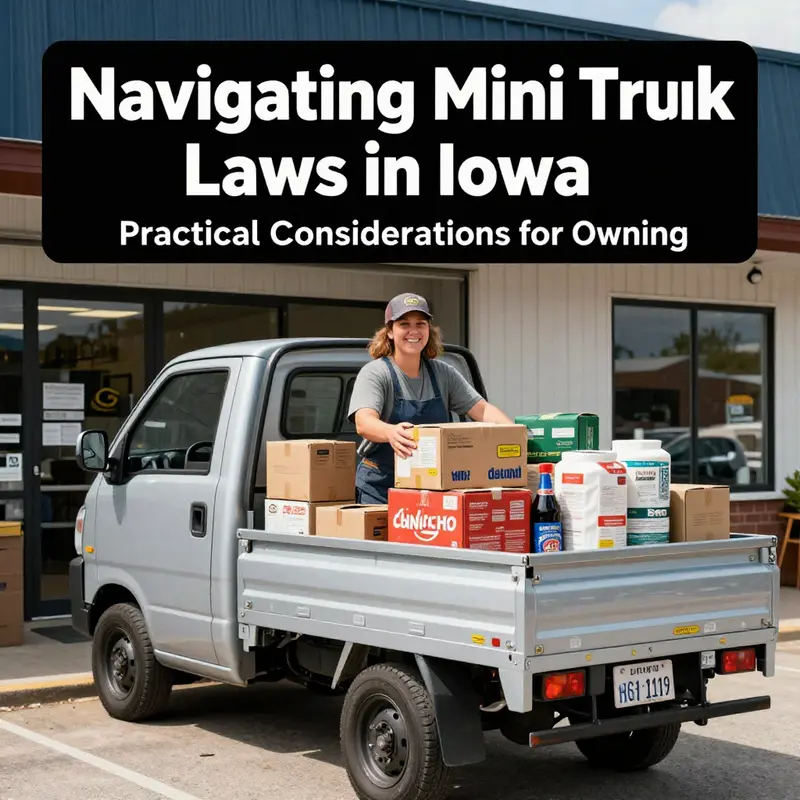
In Iowa, compact work vehicles are popular for urban errands and light deliveries, but their use on public roads is guided by specific rules. A key point for many readers is the 55 mph threshold: mini trucks may be restricted on highways where posted speed limits exceed 55 mph. This boundary is intended to balance the benefits of small, efficient vehicles with highway safety considerations.\n\nBeyond the speed rule, ownership involves registration and insurance. The state requires that these vehicles be registered, with a modest registration fee that signals compliance with Iowa’s traffic system. Insurance remains essential, and minimum liability coverage is prudent regardless of vehicle size. Depending on usage—personal, delivery, or small business—additional coverages can be appropriate.\n\nPractical operation depends on route planning and awareness of road conditions. Mini trucks are well-suited to urban streets and rural roads with lower speed limits, but interstates and other high-speed facilities are typically outside their operating scope. Proper maintenance, safe driving practices, and consideration of other road users help maximize safety in mixed traffic.\n\nFor the most current guidance, refer to the Iowa Department of Transportation, which publishes official standards and enforcement interpretations. Staying informed about any updates helps ensure ongoing compliance as laws and vehicle classifications evolve.
Final thoughts
Navigating the complexities of mini truck laws in Iowa isn’t just about understanding regulations; it’s about ensuring safety and optimizing their benefits for personal and commercial use. Given the restrictions on highways, it’s essential for enthusiasts and business owners to stay informed about where and how to use these vehicles legally and safely. While they have fantastic advantages, knowing the legal landscape and practicalities can enhance your ownership experience. Remember to always refer to your local regulations and stay connected with community resources for the latest insights and updates about mini truck usage in Iowa.