
The world of mini trucks is buzzing with excitement, especially among local small business owners, residential property owners, and mini truck enthusiasts. As these compact vehicles become more popular for both work and play, understanding their legality in Missouri is crucial. This article will shine a spotlight on whether mini trucks can be street legal in the Show-Me State, covering everything from the specific requirements that need to be met to the necessary safety standards and registration processes. Get ready for a comprehensive exploration that will equip you with all the knowledge you need to ensure your mini truck sails smoothly on Missouri’s roads!
Chapter 1: Mini Trucks on Missouri Roads: Legality, Classification, and Registration
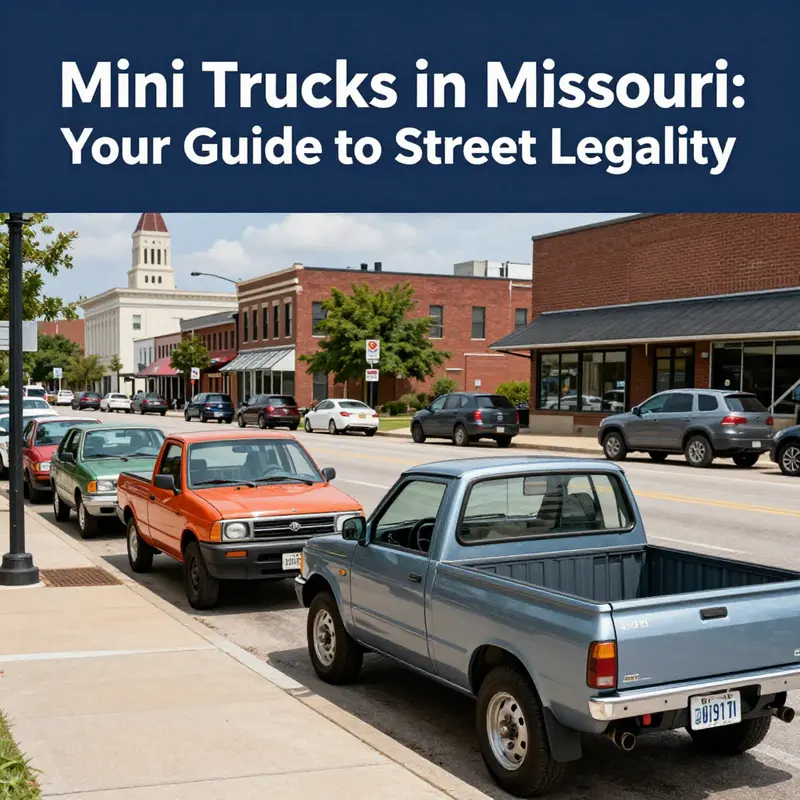
Mini trucks on Missouri roads spark a mix of curiosity and caution. They look like compact pickups, yet their status in state law depends on how they are designed, used, and equipped. The central question is not merely speed or size, but how the vehicle aligns with Missouri’s definitions of what constitutes a motor vehicle, what safety standards apply, and how the state regulates registration, titling, and licensing. In practice, a compact electric or gasoline-powered mini truck can be street legal in Missouri, but only if it clears several regulatory hurdles that hinge on classification, safety compliance, and proper paperwork. Understanding these hurdles begins with a clear view of how Missouri classifies vehicles and why those classifications matter for anything that might venture onto public streets. The Missouri Department of Revenue, alongside the state’s highway patrol and other regulatory bodies, is the arbiter of which machines qualify for road use and under what conditions. As with many regulatory questions, the answer is context-dependent. A vehicle that is primarily designed for off-road work, with an open frame, minimal safety features, and a focus on farm or construction environments, may not be eligible for road use at all. On the other hand, a mini truck that is fully enclosed, integrated with seat belts, headlights and taillights, turn signals, mirrors, and a compliant braking system can be considered a light-duty motor vehicle and thus eligible for on-road operation, provided it meets all mandatory federal and state standards and steps through the registration process. The line between off-road utility equipment and a street-legal vehicle is not arbitrary; it is a defined set of criteria that Missouri enforces to balance safety with the practical needs of work, recreation, and daily transportation. The distinction matters for a driver who wants to use such a vehicle for hauling light loads down the street or commuting to a job site. If the vehicle is found to be an off-highway vehicle (OHV) by design and use, it is generally prohibited from public roadways unless a specific exception exists. That exception, when applicable, depends on the vehicle meeting the conditions that convert it from off-road equipment into a registered motor vehicle. These conditions include proper construction, safety features, and a formal recognition under state law as a light-duty motor vehicle that can be titled, registered, and plated. The Missouri Department of Revenue outlines how vehicles are classified and what evidence is needed for a vehicle to qualify as a road vehicle. In essence, the process is a crossroads of design, safety, and paperwork, with each factor playing a pivotal role in whether a mini truck can join Missouri’s highways and byways. At the heart of the decision is the question of compliance with federal safety standards. For a vehicle to be street legal, it must be able to meet applicable federal motor vehicle safety standards (FMVSS) or, in some circumstances, be recognized under federal regulations that align with the state’s own safety expectations. The presence of FMVSS-compliant components and a clear determination that the vehicle is a motor vehicle under the United States code are critical. A vehicle that asserts European certification, or any non-U.S. regulatory approval, adds complexity. While some importers and manufacturers present European Economic Community (EEC) approval as a mark of safety, Missouri—and the United States more broadly—does not automatically grant street-legal status based solely on EEC approval. The U.S. regulatory framework requires certification or conformity to FMVSS, or explicit approval by the U.S. Department of Transportation (DOT) or another Federal agency with authority for such conformity. In practice, this means that even if a compact electric mini truck bears non-U.S. certifications, it still must be evaluated against FMVSS standards or DOT approbation to be legally operated on U.S. roads. This is not a mere formality. FMVSS compliance implicates both safety and liability. Vehicles approved for the road must demonstrate proper crashworthiness, occupant protection, lighting performance, braking standards, steering integrity, and the reliability of safety devices such as seat belts and air bags where applicable. For a small electric two-seater or similar compact, the path to on-road legality hinges on whether the manufacturer can certify that the vehicle or its cargo-utility platform adheres to FMVSS. Absent such certification, the state will not grant road registration. The practical implication for buyers and users is that the question of whether a particular mini truck is street legal is not simply about how fast it can go or how it looks. It is about whether the vehicle meets the safety standards that are mandatory for motor vehicles operating in Missouri and whether it has been properly documented and registered with the state. In Missouri, speed is a factor in classification, but not in isolation. Low-speed vehicles (LSVs) and certain electric vehicles have specific thresholds and safety expectations. An LSV, commonly defined to operate at speeds up to 25 mph, must incorporate features integral to street-legal operation: passive and active safety elements that meet FMVSS or equivalent standards, permanent vehicle identification, and a compliant electrical and lighting system. The classification landscape also recognizes what can be termed electric utility vehicles or light-duty electric vehicles. These designations reflect a vehicle’s intended use, weight, performance, and safety apparatus. A compact electric mini truck with a top speed near higher ranges, such as around 37 mph, could fall into another category depending on how it is designed and certified. That is where the interplay between speed capabilities and safety compliance becomes crucial. A vehicle capable of 37 mph is not by itself disqualifying; rather, its classification will be driven by the combination of its speed, its structural design, its safety features, and its FMVSS conformity, if applicable. The rules emphasize that the vehicle must be designed to be driven on public roads with standard lighting, signaling, braking, and occupant protection. If the design aligns with those requirements, a vehicle can be registered and legally operated as a light-duty motor vehicle. If not, it may be restricted to off-road use or farm use, and any attempt to operate on public roads without meeting the classification criteria could invite penalties, including fines or impoundment. The practical guidance for someone considering a mini truck as a daily driver or as a work vehicle is to treat the classification process as a checklist. Start with the question: Is the vehicle designed as a motor vehicle or is it primarily an off-highway vehicle? If it is the former, gather the safety features required by the state: seat belts, headlights, taillights, turn signals, mirrors, and a horn. Confirm that these components function properly in all expected conditions. Next, confirm the vehicle has a vehicle identification number (VIN) and can be titled. In Missouri, a vehicle that qualifies as a light-duty motor vehicle under Section 301.020 RSMo can be registered and driven on public roads. This classification is not an automatic guarantee; it is a regulatory acknowledgement that the vehicle meets the essential criteria for road use. The registration process then requires proof of ownership, the appropriate title, and any necessary inspection or fee payments. The Missouri Department of Revenue’s official vehicle classification page provides the definitive framework for understanding how a given mini truck fits into Missouri’s system. It clarifies the criteria that differentiate a road-legal light-duty vehicle from an off-road or farm-only machine. For those who want to explore the topic further within a community of like-minded enthusiasts and practitioners, there are general discussions and resources in the broader mini-truck space that can shed light on practical experiences and common questions about road use. A good starting point for such reading is the main blog hub that aggregates content about mini trucks and related vehicles. This resource can offer context, practical examples, and summaries of how others interpret the classification rules in their states, including Missouri. While the blog is not a regulatory authority, it can help buyers and operators understand what steps are typically needed to move from concept to on-road eligibility, and what common pitfalls to avoid during the compliance process. When considering any specific model, it is prudent to engage directly with a licensed motor vehicle dealer or a qualified attorney who specializes in vehicle regulation. They can review the vehicle’s documentation, verify FMVSS compliance or certification data, and confirm the steps needed to obtain the title and license in Missouri. The interplay between federal standards and state requirements means that even a vehicle with impressive performance figures on paper may not be legally operable if FMVSS compliance is absent or if the vehicle’s classification remains ambiguous. The state’s guidance cannot be replaced by an informal assessment or anecdotal evidence. For anyone aiming to operate a mini truck on Missouri streets, the practical takeaway is straightforward: verify classification, confirm safety features, establish FMVSS or DOT compliance, secure proper registration and title, and obtain license plates. This process ensures that the vehicle is recognized as a legitimate road vehicle, not merely a novelty or a farm utility. It also provides a safety net in the event of an accident or road risk, since the presence of proper registration and safety equipment reduces liability and helps align with insurance requirements. In short, yes, a properly configured and certified mini truck can be street legal in Missouri, but it is not an automatic status granted by design alone. Each vehicle must be carefully evaluated against the state’s classification framework, the federal safety standards, and the registration requirements that the Department of Revenue enforces. For a more complete understanding of the classification criteria and to verify your vehicle’s eligibility, consult the Missouri Department of Revenue at their vehicle classification information pages, and consider speaking with a licensed dealer who can guide you through the process. If you’re exploring the broader regulatory landscape, you may also want to read through community resources that discuss real-world experiences with Missouri’s road-legal pathways for micro-trucks and similar small work vehicles. And for direct access to official guidance, the state provides a comprehensive reference point on its regulatory site, which outlines the specific criteria that determine whether a mini truck can be registered as a motor vehicle and operated on public roads. For additional context on community perspectives and practical considerations, you can visit the general mini-truck blog hub at minitrucksocala.com/blog/ which offers a perspective on how enthusiasts approach the balance between legality, safety, and practical utility while navigating state rules. For official information, rely on the state’s guidance: https://dor.mo.gov/vehicle-registration/vehicle-classification. External resource: https://dor.mo.gov/vehicle-registration/vehicle-classification
null
null
Beyond the Bumper: How Safety Standards and Certification Shape Missouri’s Mini Trucks on Real Roads
Missouri’s roads tell a practical story about micro-mobility. It’s a story where size and speed matter, but so do safety standards and official certifications. For anyone eyeing a tiny, electric workhorse or a compact neighborhood truck, the question isn’t just, “Can I drive this on my street?” It’s also, “What safety features does it need, and who signs off on its roadworthiness?” In Missouri, the answer rests on a careful alignment of the vehicle’s design with state rules and federal safety laws. The state classifies certain compact vehicles as low-speed vehicles, commonly called LSVs, or as electric utility or neighborhood electric vehicles in other contexts. These classifications are not mere labels; they determine what features the vehicle must have, what inspections it must pass, and where it can legally run. The overarching aim is straightforward: allow practical, low-speed mobility while ensuring that any vehicle sharing the public roadways upholds minimum safety standards that protect drivers, passengers, and other road users alike.
At the heart of Missouri’s framework is the recognition that mini trucks occupy a different niche from standard passenger cars. They may be physically smaller, they often travel more slowly, and they are frequently used for tasks such as campus logistics, campus maintenance, or short-haul work in urban and suburban environments. Because of that distinct role, they don’t automatically fit the same regulatory mold as a full-sized pickup or a compact sedan. Instead, they are evaluated under a set of rules that balances practicality with safety. The result is a system that allows street operation for a limited speed range and under certain conditions, while still imposing strong requirements for features that are essential for day-to-day roadway use.
To understand what makes a mini truck street-legal in Missouri, it helps to draw a line between the various regulatory tiers involved. On one side, there are state regulations that define vehicle classes, registration, inspections, and use limitations. On the other side, there are federal safety standards administered by the Federal Motor Vehicle Safety Standards (FMVSS), along with federal vehicle approval programs administered by the Department of Transportation (DOT). Missouri does not grant a blanket permit to operate any small electric truck on any road; instead, it requires that the vehicle either complies with FMVSS or be certified through a route that aligns with federal requirements before it can be registered and plated for public-road use. What this means in practice is that a mini truck must be crafted and documented in a way that proves its safety compatibility with the broader fleet of vehicles that share the streets.
A central point of consideration is speed. In Missouri, a vehicle classed as a low-speed vehicle is defined by an upper speed threshold. The statutory framework holds that a qualifying LSV can attain more than 20 mph but not exceed 25 mph. This speed band is not arbitrary. It reflects the intended use of these vehicles—short-range, low-speed work or transit within limited access zones or neighborhoods—while acknowledging that higher speeds would trigger a different set of safety and regulatory expectations. In practice, the speed rating helps determine which safety features are required, how the vehicle must be equipped for night-time operation, and where the vehicle can be legally operated. A two-seater, 72-volt electric mini truck, designed to reach around 25 mph to 37 mph in some configurations, will be evaluated against these thresholds to determine its proper classification and the corresponding compliance path. If a vehicle’s design pushes it beyond the 25 mph mark under typical use, the state may reclassify it and require additional safety and road-use certifications.
But speed is only part of the story. Safety features play a crucial, non-negotiable role. Missouri law expects LSVs and similar mini trucks to be equipped with the core safety ensemble more commonly associated with larger passenger vehicles: functional headlights, taillights, brake lights, turn signals, and reflectors; a horn; mirrors on the driver’s side and often the passenger side as well; seat belts for all occupants; and, in many cases, a robust braking system. The windshield, where present, along with windshield wipers, often becomes a practical requirement in regions where weather can obscure visibility. These features are not merely decorative add-ons; they form a minimum safety package designed to reduce risk in mixed traffic scenarios where small, lighter vehicles interact with standard passenger cars and trucks.
The certification landscape is where federal rules reinforce state requirements. Even if a vehicle is legally registered and plated at the state level, it must still meet FMVSS guidelines if it is manufactured for sale in the United States. The FMVSS framework ensures that certain safety tests—ranging from crash performance to equipment integrity—have been met before a vehicle can be marketed or registered. In some cases, vehicles pass FMVSS compliance through U.S. DOT certification, and in others, a manufacturer may claim conformance with FMVSS standards through appropriate documentation and testing results. What cannot be assumed is that European or other non-U.S. approvals automatically grant street-legal status in Missouri. While European Economic Community (EEC) approvals can be informative to manufacturers and buyers, Missouri’s process does not treat such approval as definitive for road use in the United States. The state’s priority is FMVSS compliance as the benchmark for safety compatibility on U.S. roads. In practice, a vehicle that carries EEC approval but lacks FMVSS certification would still require another path to ensure it meets U.S. safety standards before it can be registered for public operation.
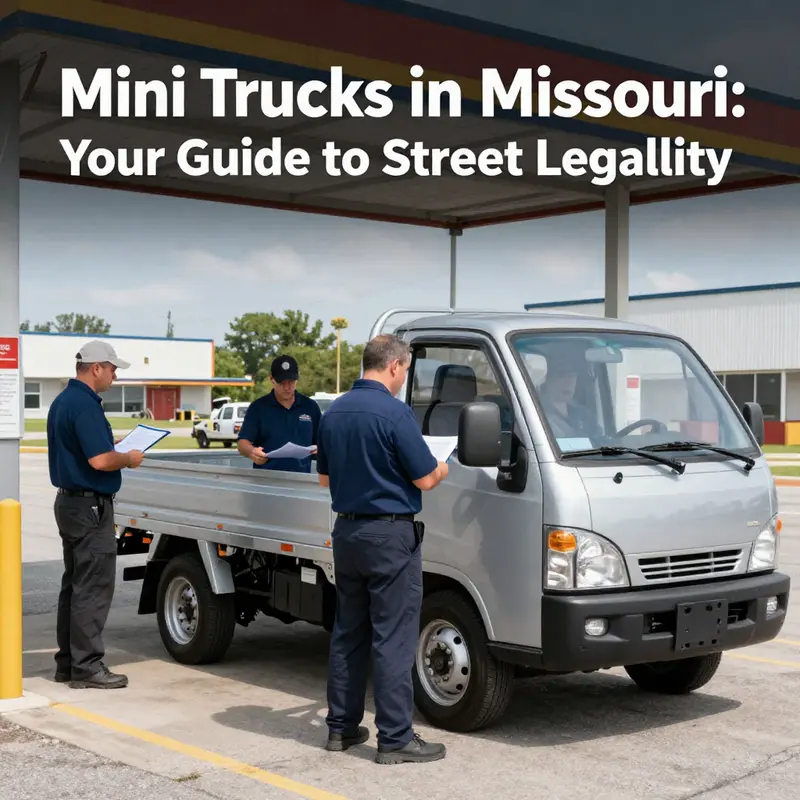
Because of this layered structure, the registration and inspection process becomes a pivotal step for would-be owners. Missouri requires proof of ownership, a title, and a safety inspection before the vehicle can receive license plates and be registered for road use. The inspection is not a purely cosmetic check. It is a mechanical and safety assessment designed to verify that the vehicle complies with the relevant state specifications and is in a generally safe operating condition. The inspector will verify lighting functions, signaling devices, seat belts, and an overall mechanical state that ensures the vehicle can operate predictably on public streets. Importantly, the state does not require a separate, FMVSS-specific stamp on the vehicle at registration; rather, the vehicle’s compliance with FMVSS standards is evaluated through the combination of the vehicle’s manufacturing documentation and the state inspection outcome.
A practical implication of these rules concerns road use limitations. In Missouri, even a compliant mini truck is typically restricted to roads with posted speed limits of 35 mph or less. Operators must avoid highways and limited-access roads, where higher-speed traffic would pose disproportionate safety risks given the vehicle’s dimensions, braking performance, and acceleration profile. This limitation dovetails with the speed threshold, ensuring that the vehicle remains within a corridor of mobility where its safety features and handling characteristics can be effectively managed by drivers who share the road with larger vehicles. Vehicles operating under these constraints must also comply with seat belt usage and use of turn signals, headlights, and other signaling devices. The combined effect is a regime that makes mini trucks practical for neighborhood and campus environments while still insisting on disciplined, law-abiding behavior by drivers.
For owners contemplating a particular model, the certification question often boils down to two pillars: design compliance and evidence of testing. The design must reflect FMVSS-oriented safeguards. The evidence might include testing data, compliance certificates, or other documentation that attests to the vehicle’s conformity with applicable standards. Because Missouri does not issue its own “certification stamp” separate from these federal tests, the onus is on buyers and manufacturers to present clear, verifiable proof that the vehicle meets FMVSS requirements. In many cases, dealers and manufacturers work with inspectors to prepare the necessary documentation in advance of registration. This cooperation helps prevent delays and ensures that the vehicle can be plated and driven on public streets once the paperwork is in order. It is worth noting that although the state’s process emphasizes FMVSS alignment, it does not require manufacturers to bear the same label burdens as traditional passenger cars. The emphasis remains on safety functionality, reliability, and the ability to prove compliance through appropriate channels.
To navigate this terrain responsibly, it is advisable to engage early with trusted professionals. A licensed motor vehicle dealer can interpret which regulatory pathway applies to a given mini truck, particularly if the vehicle is imported or adapted from another market. They can help prospective buyers determine whether the vehicle’s specifications place it within the low-speed vehicle category or if its design would compel a different classification with correspondingly stricter requirements. The Missouri Department of Revenue (DOR) remains the authoritative source for the step-by-step registration process, inspection standards, and the precise list of operating limitations for LSVs and related electric vehicles. The DOR’s guidance documents and frequently asked questions address common scenarios and help prevent misinterpretation that could lead to penalties or impounded vehicles.
For readers who want a tangible sense of how to compare candidate mini trucks against the regulatory backdrop, considering the task of balancing cost, performance, and compliance is essential. When evaluating a vehicle’s suitability for street use, a practical approach is to assess not only the top speed and torque but also the presence and reliability of safety features, the availability of service and parts, and the ease of obtaining FMVSS-related documentation from the manufacturer. A quick way to frame this evaluation is to compare how different models stack up on the criteria that matter most on public roads: lighting and signaling integrity, restraint systems, braking performance, and overall structural safety. If you want to explore how these factors translate into real-world choices, a comparative overview of mini truck models and specs can be a valuable companion resource. a comparative overview of mini truck models.
The path to legality is not simply a checkbox exercise. It requires a careful, consistent approach across purchasing, documentation, and ongoing compliance. Even when a vehicle meets the speed and safety features required by state law, owners must maintain that compliance over time. Regular maintenance—checking lights, brakes, seat belts, and mirrors—becomes part of the ongoing process of staying road-worthy. When a vehicle is used in a commercial or campus setting, additional considerations may apply, including display of certain identification or adherence to campus or municipal policies that regulate vehicle operations on property and in surrounding streets. In short, Missouri’s framework recognizes the dual realities of mini trucks: they offer valuable, efficient mobility in restricted-speed contexts, and they demand disciplined safety and documentation practices to keep streets safe for everyone.
Ultimately, the practical takeaway is clear. It is entirely possible to operate a mini truck on Missouri’s public roads, but doing so requires respect for the layered safety and regulatory standards that govern these vehicles. Owners should approach the process with a mindset that prioritizes safety, compliance, and reliability. Start by verifying whether the vehicle is designed to meet FMVSS standards or has robust certification documentation that aligns with U.S. requirements. Prepare for a state inspection, and be ready to demonstrate proper lighting, signaling, and occupant restraints. Confirm operating limitations, especially speed and road-type restrictions, to ensure you don’t inadvertently venture into zones where the vehicle would be noncompliant. Throughout, keep in mind that the regulatory framework is designed not to hinder practical use but to ensure that a vehicle built for short-range mobility does not compromise safety on a shared roadway.
For official guidance and the latest, most precise requirements, consult the Missouri Department of Revenue’s Low-Speed Vehicles page and related resources. The page provides the authoritative procedures for registration, inspection, and road-use limitations, and it is the best starting point for anyone seeking to understand how to bring a mini truck onto Missouri streets in a compliant, responsible way. As regulations evolve with technology and vehicle design, staying current with the DOR’s updates is essential. When in doubt, a licensed motor vehicle dealer or an experienced mechanic with familiarity in Missouri’s inspection practices can help translate regulatory language into practical steps tailored to a specific vehicle and its intended use on Missouri roads. External resources and official guidance will remain your most reliable anchors as you navigate the subtle boundary between neighborhood practicality and the responsibilities of public-road operation.
From Eligibility to On-Road Reality: Registering a Missouri Mini Truck for Street Legality
When you start thinking about turning a compact, light-duty truck into a lawful participant on Missouri streets, the process isn’t just a matter of slapping on a plate and hitting the accelerator. It is a careful navigation of classifications, standards, and paperwork that collectively determine whether a small, practical vehicle can take its place among the state’s road-legal fleet. The question—are mini trucks street legal in Missouri?—does not have a single, universal answer. It hinges on how the vehicle is classified, whether it meets federal safety standards, and how thoroughly the owner follows the state’s registration pathway. In Missouri, many small electric or gas-powered pickups can be street legal, but only if they align with a set of concrete criteria that keep safety and accountability at the forefront of road use. The emphasis is on compliance: federal standards, proper registration, and the license plate that marks a vehicle as a legitimate road user rather than a hobbyist curiosity. The practical implication is that any mini truck aspiring to legal street status must earn its stripes through a precise sequence of verifications and approvals, rather than a casual qualifying claim.
A central distinction shapes the entire process: the vehicle’s classification. Missouri recognizes several categories that vehicles can inhabit on public roads, and small, low-speed models often fall into the low-speed vehicle (LSV) or electric utility vehicle space. The key characteristic of LSVs is speed—vehicles designed to travel at up to 25 miles per hour on the open road can qualify under certain conditions. Yet speed alone does not grant street legality. The state also requires adherence to safety standards and proper documentation. For a mini truck to be street legal in Missouri, it must not only be capable of operating safely at its intended speeds but must also be equipped with the right safety features and registered in a way that guarantees accountability to the driving public. The practical takeaway is simple: speed and purpose must align with the regulatory framework, and the vehicle must meet the safety and labeling requirements that the framework prescribes.
In practice, a compact electric vehicle with a higher top speed—say, a model capable of reaching roughly 37 mph—might still qualify for LSV or another permissible category if it adheres to safety standards and weight limits. The crucial caveat, however, is that the mere fact of meeting European Economic Community (EEC) approvals does not automatically translate into U.S. street legitimacy. Missouri, like many states, does not recognize EEC approval as sufficient by itself. The vehicle must be certified to U.S. standards, specifically those set by the U.S. Department of Transportation (DOT) or, more commonly, compliant with the Federal Motor Vehicle Safety Standards (FMVSS). This distinction matters because some importers may present EEC certifications as a shortcut. In Missouri, the practical path to legality is clear: FMVSS compliance or DOT certification must underpin the vehicle’s on-road eligibility. If a vehicle lacks these U.S.-specific certifications, it faces a substantial barrier to registration and operation on public roads.
With that framework in mind, the practical journey from concept to street-ready involves several essential steps. The first step is to determine eligibility. Missouri does not maintain a separate, unique “mini truck” category. Instead, eligibility is anchored in weight, use, and compliance with emissions and safety standards. A typical light-duty or compact pickup that weighs under 8,500 pounds gross vehicle weight rating (GVWR) and is not used for hire in a commercial sense generally falls under passenger vehicle classifications for registration purposes. The important caveat is that even within this broad framework, the specific use and the vehicle’s design must comply with applicable standards. If the vehicle is intended for personal transport and can meet FMVSS requirements, the door to registration remains open. If it is used in a commercial capacity or is heavier than the defined thresholds, it may be treated differently, and the registration pathway can shift accordingly. Therefore, the first practical act is to confirm the vehicle’s weight class and its intended use, then verify whether it aligns with Missouri’s emission and safety expectations for the category into which it falls.
Once eligibility is established, the next step is assembling the necessary documentation. The file you build at the MoDOR (Missouri Department of Revenue) office or through the MoDOR’s online services must demonstrate clear ownership, transfer history, and compliance readiness. The core documents typically include the title or certificate of origin if the vehicle is new, which proves ownership and origin; a bill of sale if the vehicle was purchased from a private party; an odometer disclosure statement for vehicles under the 10,000-mile threshold; proof of liability insurance, which Missouri law requires before registration; and a VIN verification form if the VIN is not legible or is missing. The VIN verification form is often completed by a licensed Missouri dealer or a law enforcement officer to certify the vehicle’s identity. In addition, you’ll need the Application for Missouri Title and Registration, commonly Form 103, which captures the vital details of the vehicle, owner, and use and serves as the formal entry point for the state’s registry. The documentation list is not merely a bureaucratic checklist; it is the skeleton that supports your claim that the mini truck is a responsible, traceable road participant.
Gathering documents is a preparation exercise as well. It helps to gather everything before you visit a DMV office or before you begin an online submission. This foresight minimizes delays and ensures you can promptly respond if the MoDOR requests additional information. The documentation journey is complemented by a practical set of fees that accompany registration. Fees vary by vehicle weight, the type of registration (passenger vehicle or other), and your county of residence. In Missouri, the base registration fee scales with weight, and you should anticipate sales tax on top of the base fee. There is also a title fee and plate fee. As an illustrative reference, consider a mid-range mini truck around 5,000 pounds: total costs can land in the neighborhood of a hundred twenty to a hundred fifty dollars, depending on local tax rates and the exact registration type. While these figures are ballpark estimates, they illustrate that the financial side of the process is tangible and predictable, provided you have an accurate weight and use profile.
To navigate fees and the overall process efficiently, MoDOR offers an interactive fees calculator. This tool allows you to input vehicle specifics and your county to obtain a more precise estimate of the total cost, including the combination of base registration, tax, title, and plate fees. The calculator is a practical resource when budgeting for the registration endeavor and can help you avoid surprises at the counter. In preparation for submitting documents and paying fees, you should also plan for any county-specific nuances that may apply to your registration. Local options can influence the final figure and processing time, especially when you visit a county treasurer or MoDOR office in person.
The actual application process can be completed in one of two primary ways: in person at a MoDOR office or online via MoDOR’s eServices portal. In-person registration offers the advantage of immediate, tangible assistance from staff who can review documents, answer questions, and issue temporary tags right away if the registration is approved on site. The online route is designed for convenience, enabling most non-commercial vehicles to complete the process electronically. In many cases, online registration can streamline the workflow and reduce the need for multiple visits, especially if the vehicle’s VIN, ownership history, and insurance details are straightforward. Regardless of the path chosen, you should be prepared to provide all requested information, confirm accuracy, and ensure that the vehicle meets the FMVSS requirements and any other applicable standards.
Once the MoDOR completes the review, there is a predictable cadence for receiving license plates and the registration card. If you register in person, you typically receive temporary tags on the spot, providing immediate proof of registration while the permanent plates are produced. If you register online, you will generally receive temporary proof as well, with permanent plates mailed within several business days. The registration card and plates should arrive in the mail, and you must display the plates properly and maintain a valid registration to avoid penalties. Throughout this process, you can track the status of your registration through MoDOR’s online tools, which provide real-time insight into where your application stands in the queue and whether additional information is required.
Beyond the mechanics of paperwork and payment, there are safety- and standards-related considerations that influence the likelihood of successful street operation. The vehicle must be equipped with essential safety features that are typically expected for any road-legal passenger vehicle. This includes seat belts, lights, turn signals, mirrors, and a horn. These are not mere formalities; they are baseline safety commitments that help ensure the vehicle can be operated predictably by the driver and understood by other road users. In the context of a mini truck or any small electric vehicle, these features are fundamental to meeting the state’s safety expectations and the federal standards that govern on-road operation. The registration process is the mechanism through which the state verifies these features exist and function as intended, rather than relying on a vehicle’s brand or a marketing claim.
The alignment with federal safety standards, particularly FMVSS, cannot be overstated. For a vehicle to be street legal in Missouri, FMVSS certification or equivalent DOT compliance is typically required. The FMVSS framework is the U.S. baseline for vehicle safety, covering aspects from crashworthiness to lighting requirements, occupant protection, and emergency signaling. While some compact vehicles may be imported with non-U.S. certifications, the Missouri pathway generally requires U.S.-recognized compliance. The critical message here is that EEC or other non-U.S. certifications, while potentially informative, do not by themselves unlock street legality in Missouri. The vehicle must earn U.S. regulatory legitimacy through DOT or FMVSS alignment. If there is any uncertainty about a vehicle’s compliance status, the prudent step is to consult a licensed motor vehicle dealer or a MoDOR representative who can assess the vehicle’s documentation and safety certifications against current state and federal requirements.
In many cases, prospective owners assume that a small vehicle’s practice of being “legal in one state” automatically translates to “legal in another.” That assumption can lead to costly and time-consuming missteps. Missouri’s approach emphasizes a careful, methodical verification process that centers on safety standards and official registration. It is feasible to bring a compact, light-duty vehicle to street status in Missouri, but only once the vehicle has cleared the FMVSS or DOT compliance hurdle and its ownership and safety documentation have been thoroughly verified. This is not a dry, legalistic exercise; it is a practical pathway that translates a concept—owning a small, efficient transport option—into a legally operable vehicle that can participate in everyday travel, errands, and small-scale commuting. The end goal is straightforward: a vehicle that is not only physically capable of performing its tasks but is also legally recognized as a road user, with a traceable history and a clear commitment to safety.
For readers seeking guidance rooted in official policy, the Missouri Department of Revenue is the authoritative source. The department provides current rules on vehicle registration, eligibility, and the precise forms required for title and registration. It is prudent to consult the agency’s resources to confirm whether any updates to classifications, safety requirements, or fees might affect your particular mini truck. You can begin by visiting the MoDOR website and exploring the vehicle registration section for the most up-to-date information and procedural details. Additionally, to tap into practical insights and experiences from other Missouri vehicle owners who navigate similar registrations, you can explore the Mini Trucks Blog Hub, which offers community perspectives and practical tips. See the resource at the internal link for broader context and conversations that can inform your planning: minitrucksocala.com/blog/.
In sum, the journey from an idea—a compact vehicle intended to serve as a practical everyday transport option—to an officially registered, street-legal mini truck in Missouri is entirely navigable, provided you approach it with a clear understanding of eligibility, robust documentation, and a careful alignment with safety and federal standards. The process rewards preparation and patience. As long as the vehicle is properly classified, equipped with mandated safety features, and registered with the state with the correct titles and insurance in place, a small truck can indeed join Missouri’s streets as a lawful and dependable companion for daily tasks and weekend adventures alike.
For those who want to take the next step with confidence, rely on the official resources for the most precise, current guidance. You will find direct information about registration requirements, forms, and fees through the Missouri Department of Revenue, and you can use the agency’s tools to plan your registration timeline and anticipated costs. If you are unsure about a particular vehicle’s eligibility or the documentation requirements, consider reaching out to a licensed motor vehicle dealer, who can offer expert guidance and help you navigate any unique circumstances that may apply to your situation. The road to a street-legal mini truck in Missouri is a journey through compliance, but it is a journey that leads to practical, economical mobility built on a solid regulatory foundation. The steps outlined—not just as a checklist but as a coherent process—are designed to keep roads safer and everyone on them more accountable, while still enabling vehicle owners to enjoy the compact, nimble utility that these small trucks can offer.
External reference for official guidance: dor.mo.gov
Final thoughts
In summary, mini trucks can indeed be street legal in Missouri, provided they align with state laws regarding low-speed vehicles and comply with essential safety standards. By understanding the outlined requirements, ensuring your vehicle is certified, and navigating the registration process efficiently, you’ll be well on your way to enjoying your mini truck on Missouri’s roads. Whether you’re a local small business owner, a residential property owner using it for errands, or an enthusiastic hobbyist, knowing these details can enhance your experience and ensure compliance.