
Mini trucks, particularly the popular Kei trucks, are captivating many small business owners, hobbyists, and residents in South Carolina with their compact design and utility. As these vehicles increase in popularity, understanding their legal status becomes essential. In the following chapters, we’ll delve into the rules governing mini trucks in South Carolina, explore the registration process, discuss exemptions for older models, and compare the legality of mini trucks in other states. Together, we’ll uncover how to navigate the complexities of mini truck ownership within the Palmetto State, ensuring you ride on the right side of the law.
Tiny Workhorses on Southern Roads: Navigating South Carolina’s Street-Legal Landscape for Mini Trucks
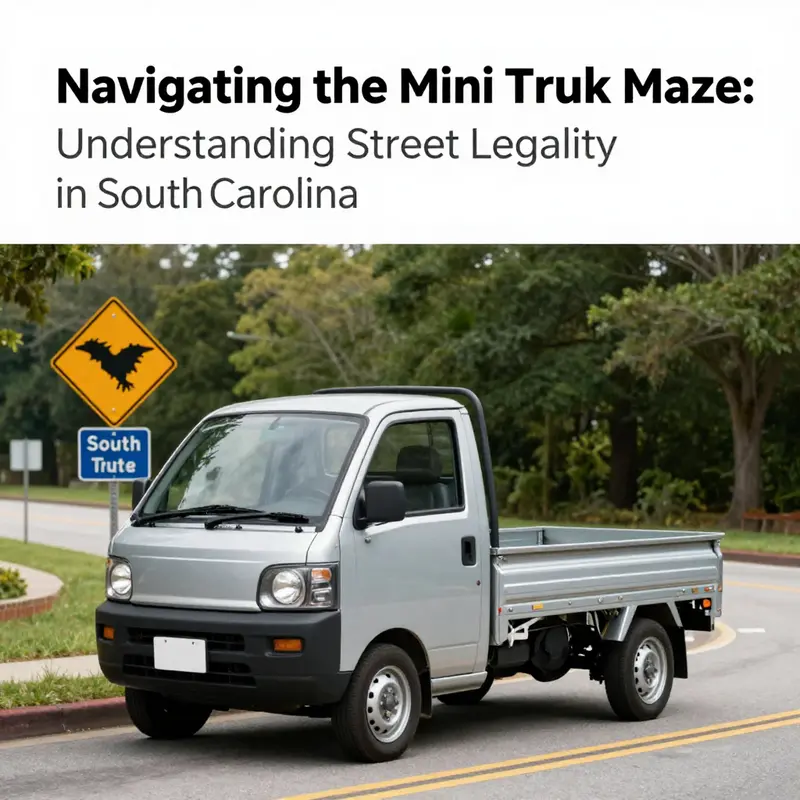
Along a backroad where the speed limit barely nudges past a quiet heartbeat, a small, purposeful silhouette moves with a stubborn economy of space and a stubborn practicality. Mini trucks, often grouped under the umbrella of kei trucks, have carved out a niche in rural yards and urban alleys alike. They are not mere curiosities; they are portable solutions for light-duty work, the kind of vehicle that can squeeze through tight gaps, haul a surprising load, and still sip fuel in a way full-size pickups cannot. Yet the dream of driving such a vehicle on public streets in South Carolina collides with a bedrock reality: legality isn’t a blanket of permission but a map of requirements, inspections, exemptions, and occasional concessions. The state’s approach to mini trucks, like similar discussions across the country, rests on the tension between innovation, practicality, and the long-standing framework of motor vehicle law that governs what may legally share the road with bigger, more standardized cars and trucks. To understand where a kei-styled mini truck sits on South Carolina’s streets, one must trace the thread from federal safety standards to local registration, and then sift through the increasingly nuanced guidance that emerges when a small, imported vehicle enters a landscape designed for much larger, purpose-built machines.
At the core of the question lies a straightforward checklist that many would-be drivers instinctively carry: does the mini truck meet federal safety standards, and does it meet emissions requirements? In South Carolina, as in many states, the answer depends on how the vehicle was built and what it can prove about its compliance. The federal government, through the National Highway Traffic Safety Administration, sets safety standards designed to ensure that any vehicle operated on public roads offers a baseline level of occupant protection, crash performance, and reliability. Emissions regulations further shape whether a vehicle can be registered and driven legally on public roads. A Japanese-origin mini truck, designed for a different market and often manufactured before U.S. standards were fully harmonized with every FMVSS (Federal Motor Vehicle Safety Standard), frequently arrives with a configuration that requires careful assessment and potentially substantial modification before it can be registered for road use in the Palmetto State. In practice, this means many mini trucks must be altered to align with U.S. safety equipment, lighting configurations, mirror placements, crash protection, and, in some cases, braking performance. The path from import to on-road approval can be a roadblock if the vehicle’s fundamental design and components do not meet the expectations or the written requirements imposed by the state.
Yet the story is not purely about strict compliance and denial. South Carolina’s regulatory framework also recognizes the aging of vehicle fleets and the shifting landscape of emission controls. Some observers point out that certain older, small, imported vehicles may benefit from a rolling exemption in the sense that they can qualify for registration even if they do not perfectly align with every modern standard. In other words, if a mini truck crosses the 25-year threshold under certain federal rules, it may be exempt from some modern emissions and safety mandates that apply to newer model year vehicles. This 25-year grace period is widely discussed in discussions of import legality, and it reflects a broader tolerance in the regulatory ecosystem toward older vehicles that are preserved, operated, and maintained in a manner consistent with their original design. That said, exemptions are not universal or automatic. They hinge on the vehicle’s documented history, its current condition, the specific model in question, and the jurisdiction’s interpretation of the federal and state rules at the time of registration. What remains constant is the crucial step of verification with the state’s licensing authority to determine whether a particular mini truck can become a legally operable vehicle on South Carolina roads.
In the landscape of official guidance, the South Carolina Department of Motor Vehicles (SCDMV) serves as the compass for drivers navigating the tension between novelty and legality. The DMV’s guidance emphasizes that each vehicle must be eligible for registration and title, and that eligibility depends on whether the vehicle meets applicable safety and emissions standards, either through compliance or through permissible exemptions. The importance of this posture cannot be overstated: a mini truck may be perfectly capable of performing a task or fulfilling a niche role, yet without clear confirmation from the DMV that it can be registered and insured for road use, the vehicle remains a private-property asset rather than a legal citizen on the state’s streets. The DMV’s resources, including information on vehicle registration and title, provide the practical framework that converts a technical curiosity into a tangible, road-legal asset—if the vehicle can satisfy the checks and balances that the state requires. This is not about denying utility to small vehicles, but about ensuring that any vehicle sharing the road adheres to a common standard that protects drivers, pedestrians, and everyone else who uses the roadway.
For enthusiasts and small-business operators who see value in a compact, nimble vehicle, the practical steps toward compliance begin with understanding what model is under consideration, and then pursuing a disciplined due-diligence process. The first step is identification: what is the exact model, year, and any known modifications? The second is documentation: does the vehicle have the necessary safety equipment that aligns with U.S. standards, and can it demonstrate its eligibility for emissions compliance or exemption? The third is a plan for any required modifications, whether in lighting, braking systems, seat belts, mirrors, or other safety-critical components. It is not merely a matter of fashioning a vehicle to resemble a U.S.-market pickup; the goal is to achieve demonstrable compliance that the DMV can recognize and that a licensing official can verify during registration and titling. This is a process that often involves consultation with qualified technicians who understand not only how to restore or retrofit a vehicle to meet U.S. standards, but also how to document those changes in a way that satisfies a regulatory audit. The difference between a vehicle that remains a curiosity and one that becomes a legitimate road user can hinge on the precision of those steps and the thoroughness with which the work is documented and tested.
Within the broader dialogue about mini trucks on South Carolina roads, there is a recurring theme: the tension between regulation and flexibility. Some observers point to a permissive posture for smaller, imported vehicles, noting that states have begun to chart regulatory paths that accommodate non-traditional configurations while preserving safety benchmarks. This perspective aligns with actions in other states that have chosen to create avenues for small, practical vehicles to be used on public highways, provided they can clear the safety, emissions, and registration hurdles. It is a reminder that legality in this space is not a static verdict but a dynamic negotiation among safety standards, road-use needs, and the legitimate demands of drivers who seek efficiency, utility, and accessibility. However, even in a more permissive environment, the onus remains squarely on the owner to ensure that the vehicle meets state requirements before attempting to register or operate it on public roads. The DMV and the broader regulatory framework will not grant permission as a default; permission is earned through demonstrated compliance, accurate record-keeping, and, when applicable, documentation of exemptions that apply to older vehicles.
For readers who want to know where to start, a practical, grounded approach is essential. Begin with research that is grounded in the state’s official guidance. The South Carolina DMV’s Vehicle Registration & Title Information portal is a reliable starting point for understanding how a vehicle is classified, what documentation is required, and what the registration process looks like for non-standard or imported vehicles. This information helps to anchor expectations and to prevent the aspirational impulse from colliding with the realities of the law. It is also worth noting that the DMV’s guidance is not static; rules can evolve as technology, safety standards, and environmental priorities shift. Therefore, those who are serious about pursuing a street-legal mini truck must commit to ongoing due diligence, including periodic checks with the DMV to confirm that the compliance status of a specific vehicle remains current and that any modifications, upgrades, or changes in ownership do not jeopardize registration or insurance status.
From a consumer perspective, there is also value in connecting with others who have navigated the same terrain. A visit to the community pages and blogs dedicated to these vehicles can provide practical insights into the kinds of issues that often arise in the registration process, the typical costs involved in achieving compliance, and the common pitfalls that can delay or derail a project. An accessible starting point for such learning is a centralized blog focused on mini trucks, where readers can explore discussions about modifications, maintenance, and the realities of keeping a small utility vehicle road-ready in a landscape that emphasizes safety and accountability. For those who want to explore the broader conversation and stay up to date with ongoing developments and shared experiences, the Mini Trucks Blog offers a community-driven perspective that complements official guidance and helps readers build a more informed plan. You can visit this resource to see how hobbyists, owners, and small-business operators discuss practical challenges, exchange ideas about safe and compliant modifications, and share stories about the journey from import to road-legal status.
As readers consider the path from curiosity to compliance, it is useful to keep one eye on the present reality and another on the evolving possibilities. The current regulatory environment does not automatically grant entry for every compact vehicle imported from overseas, but it does preserve a pathway for those that demonstrate a robust commitment to safety and conformity. A vehicle that is properly registered, insured, and maintained according to the standards recognized by the state becomes more than a novelty; it becomes a legitimate participant in the daily ecosystem of South Carolina streets. This is the essence of the chapter’s inquiry: to illuminate how mini trucks can navigate the state’s legal framework, what thresholds must be crossed to achieve road legality, and how drivers can prepare themselves to meet those requirements without sacrificing the practicality that makes these small machines appealing in the first place.
In the end, the question of whether mini trucks are street legal in South Carolina is not a simple yes-or-no verdict. It is a careful, model-specific assessment that hinges on federal and state compliance, the vehicle’s age, the history and quality of any modifications, and the DMV’s current interpretation of the law. The most reliable path forward is a disciplined, informed approach: confirm classification and eligible exemptions with the DMV, pursue required or permissible modifications with qualified professionals, secure appropriate insurance, and keep meticulous records that document the vehicle’s compliance. This process respects the dual goals of safety and practicality, ensuring that those who rely on these compact workhorses on public roads can do so with confidence that they are meeting the standards that keep everyone safer on the road. For ongoing updates and experiential perspectives, the linked blog provides a useful lens into the community’s practical insights, while the official DMV portal remains the definitive authority for current requirements. As the regulatory landscape continues to evolve, those who stay engaged with both sources will be best positioned to transform a compact vehicle’s potential into a responsible, road-legal reality.
External resource for current, official requirements: https://www.scdmvonline.com/vehicle-registration
Internal resource for community perspectives and practical insights: Mini Trucks Blog
Between Quiet Country Roads and City Streets: Navigating South Carolina’s Rules for Mini Trucks
On the surface, the appeal of a mini truck in South Carolina sits comfortably between the practical and the quaint. Their compact footprint, nimble handling, and utilitarian beds make them attractive for everything from urban errands to rural chores. Yet the reality of driving one on public roads in South Carolina rests on a careful alignment with a tangle of laws that aim to safeguard drivers, pedestrians, and the broader traffic ecosystem. The short answer to whether mini trucks are street legal in South Carolina is not a simple yes or no. The reality is that legality is largely contingent on age, documentation, and how closely the vehicle mirrors the standards that federal and state authorities deem essential for on‑road operation. In practice this means that many mini trucks, particularly those sourced from overseas markets with different safety and emissions histories, begin life in the United States as projects rather than as ready-to-drive consignments. The decision to bring one into compliance, to register it, and to insure it hinges on a sequence of checks and confirmations that go beyond the size of the cab or the compactness of the bed. To understand the path a mini truck must follow in South Carolina, one must start with a foundational policy known as the federal import exemption: vehicles over 25 years old can, in principle, bypass the most modern U.S. safety and emissions standards that govern new cars and recent importations. This provision, steeped in the history of how the United States treats classic and older imports, creates a crucial doorway for mini trucks whose production dates place them beyond the 25‑year threshold. The practical implication is simple, at least on paper: if a mini truck is at least 25 years old, it can be registered and driven without having to meet every current federal standard designed for new vehicles. The caveats, however, are numerous and often nuanced, and they begin with a single question: is the vehicle recognized as age-qualifying by the state? South Carolina does not operate in a vacuum on this front. While the federal threshold is a starting point, state law and the administrative interpretations of the South Carolina Department of Motor Vehicles (SCDMV) determine whether a given vehicle can be titled, insured, and legally operated. The interplay between federal exemptions and state rules can turn a straightforward “yes, it’s old enough” into a more intricate process of verification and paperwork. For the hobbyist or small‑business owner who wants a compact fleet for gatherings, deliveries, or off‑grid work, this is where the journey begins: confirm the vehicle’s age, verify that age aligns with federal exemption provisions, and then navigate state registration requirements with the SCDMV as the guiding authority. The first checkpoint is the age itself. A classic threshold for import exemptions exists at 25 years. This means that, in the eyes of federal policy, the vehicle is no longer required to conform to the latest U.S. crash safety standards and the most current emissions controls that new vehicles must meet. But age alone does not grant a free pass. In South Carolina, the state’s regulatory framework requires a careful corroboration of age as part of a broader verification process. To start, owners must establish the vehicle’s production year and age for documentation that will be presented to state authorities. This often involves historical records that can include original import documents, build plates, or proof from the source country’s manufacturing records. The goal is to demonstrate that the vehicle has indeed crossed the 25‑year boundary at a point that aligns with federal allowances. Yet even when the age is clear, the road ahead in South Carolina can present additional filtering steps. State‑specific eligibility checks may arise, because some states maintain extra restrictions that can apply to unusual vehicle profiles, including their size, weight, or intended use. South Carolina’s own administrative practices require that the vehicle be fit for road use even if it is exempt from modern safety and emissions mandates. In practice this means an inspection of basic roadworthiness and adherence to fundamental safety features. The idea is straightforward: the vehicle must be safe to share the pavement with heavier, modern cars, even if it doesn’t bear the latest federal compliance marks. A basic safety inspection may be mandatory, or at least strongly recommended, to ensure that critical components—brakes, steering, suspension, lighting, tires, seat belts, and windshield integrity—are present and functioning. The specifics can vary by local DMV office or inspection station, which makes direct confirmation with the SCDMV a sensible step before investing time and money in the process. Once age and basic roadworthiness are established, the more technical pieces come into focus: title, registration, and proof of ownership. The path begins with securing a clear bill of sale or a valid title that demonstrates ownership. If the mini truck arrived from abroad, documentation proving its age and the chain of ownership becomes essential. The federal exemption does not erase the need to prove provenance; rather, it changes the bar for safety and emissions testing. In South Carolina these documents are typically submitted as part of the registration packet, along with any forms required by the SCDMV for titling and plate issuance. This paperwork trail also helps establish the vehicle’s eligibility for registration under the 25‑year exemption. In parallel, the owner should prepare for insurance. Insurance is not merely a financial precaution; it is a legal necessity for driving on public roads. In many cases, private liability coverage suffices for registration, but the cost and availability can vary with the vehicle’s age, make, and the owner’s location. The interplay between insurance and registration is important because even the most thoroughly prepared paper trail will not translate into a road‑ready vehicle without coverage. The practical experience of many mini truck enthusiasts suggests a methodical approach: begin with the age verification, confirm state eligibility with the SCDMV, assemble ownership documents, arrange a potential basic safety inspection, and secure a compatible insurance policy. While each of these steps is straightforward in theory, the execution often depends on the unique history of the vehicle and its imported status. A vehicle that spent years abroad may present challenges in tracing import documentation and establishing a clear chain of title. In some instances, an auxiliary step is required: providing proof that the vehicle’s conversion to U.S. road standards, if any, was not compulsory under federal age exemptions. This does not mean modernization is mandatory; rather, it means the paperwork might demand explicit statements about the vehicle’s current state and its compliance with the exemption framework. The balance between staying faithful to the exemption and ensuring road‑worthy status can feel delicate. Owners who have navigated this terrain often describe a process that is as much administrative as mechanical. The SCDMV offices do their best to guide applicants through the process, but the onus is on the owner to present a coherent and complete set of documents that convincingly demonstrate age, ownership, and basic safety. It is worth noting that South Carolina’s rules regarding registration can interact with local regulations in various counties. Some jurisdictions may require vehicles to meet certain local ordinances related to inspection, noise, or exhaust systems, even when federal exemptions apply. The prudent approach is to check with the local DMV office or a licensed inspection station for any county‑level nuances that could affect registration timelines, fees, or the need for an additional inspection. From a narrative perspective, the path of legal ownership for a 25‑year‑old mini truck in South Carolina is less a single leap and more a careful sequence of confirmations, each one designed to protect a different stake in the process. The vehicle may be old enough to slip through the federal safety net, but the state steps in to confirm that the vehicle is legally operable, properly titled, and insured. The paperwork is a map, and the steps form a route that, when followed, can lead to a vehicle that is both legally registered and genuinely usable for the intended purposes—whether that means weekend show events, light urban work, or countryside utility tasks. For readers seeking practical orientation, the next move is to confirm the model’s age with reliable sources, gather ownership documentation, and lean on the SCDMV as the decisive authority for registration specifics. It is not unusual for the journey to include conversations with DMV staff that clarify whether the vehicle qualifies under federal exemptions and whether any state‑level peculiarities might apply to the vehicle’s size, weight, or intended usage. In this climate of careful compliance, a well‑prepared applicant who understands the interplay between federal exemptions and state registration standards stands a much better chance of turning a compact import into a road‑worthy, legally operating vehicle. Those who have completed this process often describe a sense of accomplishment that comes with seeing a once‑foreign machine acknowledged as a legal participant in South Carolina’s traffic system. It is a reminder that the legal question behind the simple “Are mini trucks street legal in South Carolina?” is not a binary verdict. It is a procedural journey—one that respects both the age of the vehicle and the practical realities of road safety, insurance, and ownership. While the broad strokes are clear, the finer details depend on the vehicle’s history and the procedural diligence of the owner. To those who are contemplating such an undertaking, the path is navigable, but it rewards careful preparation, a willingness to consult the official sources, and, when needed, a readiness to adapt to the specifics of a local DMV office’s procedures. For ongoing readers who want a broader sense of community perspectives and practical commentary on mini trucks, further discussion and related insights can be found at the Minitrucks SC blog, which offers perspectives from enthusiasts who have trodden this road themselves. minitrucksocala.com/blog/ Beyond personal experience, it is wise to anchor any plan with the most current, official guidance. The South Carolina Department of Motor Vehicles maintains the definitive framework for vehicle registration, title transfer, and compliance expectations. When in doubt, a direct check of their resources ensures that decisions reflect the latest rules and interpretations rather than outdated assumptions. The official gateway for these considerations is accessible at the state’s DMV portal, where one can locate the precise forms, eligibility criteria, and inspection requirements that govern the registration of 25‑year‑old vehicles and the documentation necessary to support ownership. As a closing orientation, it bears repeating that legality on the road is a product of documented age, verifiable ownership, and a demonstrably safe vehicle. The 25‑year federal exemption acts as a doorway, but the trust and legitimacy of operation on South Carolina’s streets rest on the alignment of paper, policy, and practical safety. For anyone pursuing a mini truck with intentions of legal street use in South Carolina, the recommended path is clear: verify age, assemble ownership documentation, consult SCDMV guidelines, anticipate a basic safety check, secure insurance, and stay open to county‑level variations that might appear in local practice. It is a careful but achievable process for the committed owner who respects the structure of modern road use while cherishing the distinctive utility and charm these compact vehicles offer. For additional context and related explorations into the broader hobbyist scene, readers can explore the wide community knowledge base and practical narratives that often accompany this journey, which provide a complementary perspective to the formal regulatory voice. The aim is not to glamorize a workaround but to illuminate a methodical path that ensures safety, legality, and ongoing enjoyment. In closing, the road to legality for a mini truck in South Carolina is ultimately a matter of disciplined preparation, accurate documentation, and informed engagement with state authorities. The core idea remains stable: if the vehicle clears the 25‑year threshold and is supported by a straightforward documentation package, and if it passes any basic safety checks demanded by the state, it can join the small but growing cohort of classic‑age mini trucks sharing the state’s highways. A steady, well‑researched approach minimizes the chance of surprises and helps keep the journey toward registration, title, and insurance moving smoothly. For readers seeking a broader sense of how these vehicles are treated in related jurisdictions or how enthusiasts adapt their builds within legal boundaries, the external reference below provides a foundation for understanding the broader landscape of rules and exemptions that affect older imports on American roads. External resource: https://www.scdmv.com
Exemptions and Road Rules: How Mini Trucks Navigate South Carolina’s Legal Landscape
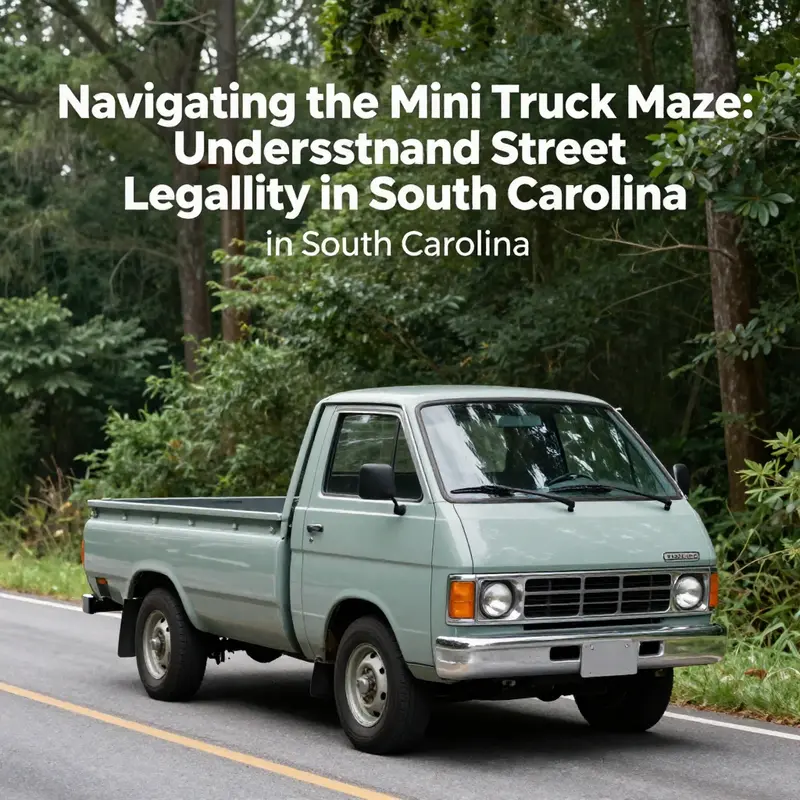
In South Carolina, the question of whether a mini truck can legally share the road with full‑size vehicles is less a simple yes or no and more a layered assessment of federal standards, state classifications, and practical compliance realities. The core issue is not just the vehicle’s size or nickname, but whether it meets the specific safety, emissions, and registration requirements that allow a vehicle to circulate on public streets and highways. For anyone considering a mini truck in this state, the terrain is defined by federal import rules, state vehicle classifications, and the dynamic cost of compliance. The path to legality begins with understanding that mini trucks, including those commonly labeled Kei trucks, were not originally designed to meet U.S. safety or emissions standards. Most imports from Japan or other regions entered the market under different regulatory frameworks, and many emerged without the packages of equipment or crash-test data that U.S. regulators require. As a result, many of these vehicles, without significant modifications, cannot be registered or operated legally on public roads in South Carolina. This is not simply a matter of how the vehicle looks or how it behaves at low speeds; it is about whether the vehicle’s design and installation of components align with the federal and state rules that govern motor vehicles. In practical terms, this means that a mini truck’s eligibility hinges on whether it can be demonstrated to meet or be exempt from certain federal requirements and whether it can be categorized by a South Carolina classification that supports lawful operation on the state’s roads.
A pivotal consideration is the federal 25‑year importation rule. Under federal import exemptions, a vehicle that is at least 25 years old may gain access to the U.S. market through the import exemption pathway. This exemption has long served classic car and vintage vehicle enthusiasts, and it occasionally applies to compact or utility vehicles that originated abroad. The key caveat is that the exemption is not automatic for every 25‑year‑old vehicle; it applies only when the vehicle is imported in a manner consistent with federal exemptions and, crucially, when it can still meet applicable federal safety and emissions standards, as enforceable at the time of entry and thereafter as the vehicle remains in circulation. In other words, a 25‑year‑old mini truck might qualify for import exemption, but it must also be able to satisfy the broader federal safety framework and emission limits, or be able to operate in a compliant, legally registered state of entry. South Carolina acknowledges federal exemptions in their framework, but the practical implication is clear: even with an old vehicle, exemptions do not guarantee a green light on the road if the vehicle fails to align with essential federal standards.
For most contemporary mini trucks, the hurdle is the absence of a universal, pre‑built path to compliance. In South Carolina, the regulatory apparatus does not define a distinct “mini truck” category with a unique set of allowances. Instead, vehicles are classified according to broader categories such as light commercial vehicles, pickups, or micro‑trucks. This classification determines the specific road use rules, registration requirements, and insurance obligations that apply. Because the state does not establish a standalone mini truck category, the vehicle’s registration journey is shaped by how it is categorized in practice and how it can satisfy weight limits, safety equipment standards, and, where applicable, emissions controls. This means a mini truck may be treated as a light‑duty commercial vehicle or a similar classification that imposes certain limits on gross vehicle weight, axle load, and other performance metrics. Adherence to these thresholds is a prerequisite for registering and using the vehicle legally on public roads.
Weight and load considerations further complicate legal viability. South Carolina imposes strict rules on overweight trucks because excessive weight correlates with higher road wear and potential damage to bridges and infrastructure. The state’s concern about the structural integrity of roadways means that even a small vehicle can encounter enforcement actions if it is loaded beyond its rated capacity. A mini truck, when used for hauling, must not only meet the vehicle’s own weight rating but also comply with permissible gross vehicle weight. If a driver places payload that exceeds those limits, the vehicle becomes a candidate for penalties, and more importantly, it risks road safety. The intersection of load limits and the need for proper registration creates a practical boundary: the vehicle must reflect its weight capacity in its configuration, and the owner must maintain records that document payload, load distribution, and compliance with any applicable weight restrictions for the routes chosen.
Registration, insurance, and compliance are not merely formalities; they are the backbone of lawful operation. In South Carolina, registering a vehicle means confirming that it meets the state’s safety and emissions expectations or qualifies for a federal exemption path, and that it has a valid VIN, insurance coverage, and a title that aligns with the vehicle’s history. For mini trucks particularly, the risk of non‑compliance is not just a matter of being ticketed. It can include the loss of registration, inability to renew license plates, or penalties that arise from non‑compliant modifications or improper inspections. This is why prudent ownership involves a proactive, informed approach to verify a model’s compliance status with the South Carolina Department of Motor Vehicles (SCDMV) and to understand how the vehicle will be categorized for road use. Even when a vehicle is technically older than the 25‑year threshold, the state’s rules require ongoing attention to registration and insurance to remain compliant on public roads.
The practical path to legality, therefore, starts with careful due diligence before any purchase or modification. Prospective buyers should confirm whether the specific mini truck model has a recognized pathway to legal operation in South Carolina. This includes investigating whether the vehicle can be titled, whether it can pass a safety inspection, and whether it can comply with emissions requirements if applicable in the state. Because vehicle classification can hinge on nuanced aspects of the vehicle’s build—such as the presence or absence of certain safety equipment—consultation with the SCDMV or a knowledgeable dealership familiar with unusual imports is essential. The process may involve evaluating the vehicle’s safety features, such as stability controls, braking systems, lighting, and occupant protection provisions, and determining whether any required federal or state upgrades are feasible or cost‑effective.
To create a clear picture for readers, it is helpful to consider how a typical ownership scenario might unfold. A person might encounter a mini truck with a long history of overseas registration but lacking modern U.S. emission controls. They would need to determine whether the vehicle can be brought into compliance through modifications, or whether it must be kept within the bounds of an exempt import pathway that aligns with federal standards. In some cases, owners pursue the 25‑year import exemption to bring a vintage vehicle into the country, paired with an adjustment program to ensure safety equipment meets U.S. expectations, all while maintaining proper documentation of import dates, VIN history, and service records. The process, while potentially lengthy, is not inherently impossible; rather, it requires thorough documentation and a willingness to invest in the necessary upgrades or reevaluation to fit within the state’s regulatory architecture.
In practice, most mini trucks do not come into the state ready for registration without modifications. This reality highlights the importance of recognizing that legality is not a function of appeal or utility alone. A vehicle that may be perfectly suited to a small‑town, off‑road, or hobbyist setting could be legally constrained on main arteries if it cannot demonstrate compliance with federal and state standards. Owners who pursue compliance often work with experienced mechanics or import specialists who understand how to interpret federal exemptions and how to document the vehicle’s conformity in a way that satisfies the SCDMV. This collaborative approach can help bridge the gap between a vehicle’s original design and South Carolina’s requirement for a road‑ready platform, including the necessary safety systems, emissions controls, and crashworthiness elements that define modern road traffic safety.
For readers who want to connect with practical guidance, a number of community and information resources discuss the lived realities of owning and operating unusual, compact, or “mini” trucks. While individual experiences vary, one useful starting point is the Minitrucks SC Blog, which aggregates discussions, tips, and practical considerations around mini trucks in South Carolina and nearby regions. This resource can offer a sense of what real‑world owners encounter when they navigate titles, inspections, and registration hurdles. It is important to note that while community forums can provide valuable context, they should complement, not substitute, official guidance from state agencies. For those who prefer a direct route to formal information, establishing contact with the SCDMV or the South Carolina Department of Public Safety ensures that questions about current forms, inspection requirements, and compliance checklists are answered with the latest state standards. If you want to explore more community discussions, you can visit the internal resource at the Minitrucks SC Blog—a place where enthusiasts share their experiences and the practical lessons learned from attempting to register or operate these vehicles in different settings. Minitrucks SC Blog.
The overall takeaway for anyone considering a mini truck in South Carolina is clear: legality is contingent on a combination of federal import rules, state classifications, and meticulous adherence to weight, safety, and emissions standards. Before purchasing or modifying a mini truck, prospective owners should dedicate time to verify the model’s compliance status with the SCDMV, understand how the vehicle will be classified once in their name, and determine what, if any, upgrades are necessary to align with regulatory expectations. The process may involve redirection of the vehicle’s configuration to ensure it satisfies required safety features and performance benchmarks. It may also involve the careful assessment of whether a federally exempt import can be modified or tuned to meet state requirements without undermining the vehicle’s legal standing. Throughout this journey, the role of state agencies cannot be overstated, as they serve as the gatekeepers of road legality, balancing safety, environmental considerations, and the practical needs of vehicle owners who value compact utility and unconventional design.
In short, the road to legally operating a mini truck in South Carolina is rarely a single stroke of compliance. It is a careful, multi‑layered process that weighs federal exemptions, state vehicle classifications, and the realities of load capacity and road safety. This is not a guarantee of easy access, but a pathway that, with proper due diligence and professional guidance, can lead to legitimate road use. For readers who want to dive deeper into practical considerations and real‑world experiences, the publicly available resources and official channels are the anchors of accuracy. Keeping abreast of regulatory changes is essential, as state statutes and administrative interpretations can shift over time, affecting how mini trucks are treated in terms of registration, inspection, and on‑road use. The most reliable strategy remains: verify with the SCDMV, stay informed through official channels, and approach any purchase with a clear plan for achieving compliance rather than assuming automatic eligibility.
External resources on this topic can provide current, authoritative guidance beyond the broad framework described here. For authoritative guidelines and up‑to‑date regulations, consult the South Carolina Department of Motor Vehicles: https://www.scdmv.com
Small Wheels, Big Rules: The Legal Terrain of Mini Trucks in South Carolina
In the landscape of American roads, South Carolina stands out for the way it welcomes certain tiny workhorses while insisting they follow a distinct set of rules. The appeal of mini trucks—compact, economical, and nimble in rural driveways and suburban backstreets alike—meets a precise legal architecture when they cross the state line. The question at the heart of this chapter is not merely whether a toy-like vehicle can be driven legally on a public road, but how a vehicle that seems to exist somewhere between a compact utility vehicle and a low-speed vehicle must fit into South Carolina’s motor vehicle framework. The answer is layered. It is not simply a matter of a vehicle being small or cute; it is about meeting state definitions, federal standards, and the practical realities of registration, insurance, and ongoing compliance. In South Carolina, mini trucks are generally treated as a specific, regulated category—one that offers a functional pathway for certain users but imposes clear constraints that shape how, where, and when such vehicles can operate on public roads.
To understand the SC approach, it helps to begin with the broad framework: the state’s motor vehicle laws align with a patchwork of classifications that balance safety, road-use norms, and the practical needs of people who rely on smaller, utilitarian transport. In practice, many of these vehicles are labeled as low-speed vehicles (LSVs) or as special-purpose vehicles. This classification matters because it maps to a defined set of operating conditions rather than a broad license to roam anywhere a full-sized car can go. The permitted speed, the required safety equipment, and the verification of compliance with emissions and safety standards all derive from this designation. The core contemporary picture is that a mini truck in South Carolina is not a free-for-all; it is a vehicle that can be driven on public roads only when it meets a defined threshold of compliance, and when the operator adheres to the licensing, insurance, and registration processes that keep the vehicle connected to the public-transport system’s safety and accountability expectations.
Speed is perhaps the most tangible limiter embedded in this system. In South Carolina, mini trucks marketed for rural work or neighborhood utility operate under a maximum speed ceiling—commonly around 25 mph in many practical installations. This constraint is not a capricious rule designed to quash utility; it is a deliberate alignment with safety realities where such vehicles are intended for short-range, low-speed tasks rather than cruising highways. The speed limit is not merely a number on a sign; it signals the broader set of expectations that the vehicle will perform as a specialized tool for certain tasks and environments. When the operator remains within this designated speed envelope, the vehicle stands a much better chance of receiving and maintaining the required approvals that keep it on public roads.
Alongside speed, safety features form a quiet but steady backbone of legality. Seat belts and lights are not decorative add-ons; they are essential components of a standardized safety package that the state requires for public-road operation. The presence of seat belts and lighting systems is a practical acknowledgment of the shared spaces that South Carolina roads represent—from quiet country lanes to busier corridors in growing suburban clusters. These features reduce risk to occupants and to other road users, and their presence helps document that the vehicle is not a mere toy but a bounded, regulated machine with predictable behavior and visible signals to others on the roadway.
Registration and insurance are the practical hinges that hold any potential SC mini-truck operation in place. Registration is the formal acknowledgment that the vehicle exists within the state’s motor-vehicle ecosystem, equipped with a record that the authorities can verify, monitor, and enforce if necessary. Insurance is the other half of this accountability, ensuring that responsibility is shared among all parties that participate in road use. The requirement for registration and insurance reflects a broader public-policy aim: even a low-speed vehicle, when used on public infrastructure, can pose risk to other drivers, pedestrians, and property. The SC approach recognizes that some mini trucks provide real utility while still presenting safety and liability considerations that must be managed through formal documents and ongoing compliance.
An additional nuance is the possibility that certain vehicles, particularly those nearing or exceeding 25 years of age, may enjoy exemptions from some modern safety or emissions requirements. This elder-vehicle provision is not a blanket free pass. It does not erase the need for proper registration or insurance, nor does it remove the obligation to operate within the state’s safety norms. The idea behind such exemptions is to acknowledge a historical class of vehicles that may not have been designed to meet current standards but still deserve legitimate access to roadways under careful, documented conditions. The practical takeaway is clear: even if a mini truck falls into an older-vehicle category that can be exempted from some modern standards, it remains bound by the fundamental requirements of registration, insurance, and compliance with the state’s vehicle codes when it moves into public traffic.
The process of becoming road-legal in South Carolina is not merely pro forma; it demands a careful alignment of the vehicle’s design, its safety features, and the operator’s compliance with state procedures. Before any registration is possible, a prospective owner or user must verify that the model in question actually aligns with the state’s regulatory definitions and that all required safety systems are in place. The South Carolina Department of Motor Vehicles (SCDMV) is the definitive reference for this verification. Consulting the SCDMV’s official guidance helps ensure that a prospective owner does not embark on a registration path that is blocked by a mismatch between the vehicle’s features and the state’s legal definitions. In practice, this means confirming that the vehicle’s classification as an LSV or a special-purpose vehicle is consistent with its capabilities and intended use, and that it meets the necessary safety and operational criteria that the state sets forth.
This regulatory approach in South Carolina stands in notable contrast to many other states, which have taken tighter or broader routes to regulate mini trucks on public roadways. California, for instance, has a framework grounded in federal safety standards administered by the National Highway Traffic Safety Administration (NHTSA). In California’s environment, many mini trucks struggle to meet the crash-test and structural-safety requirements that are central to the state’s road-legal framework. The result is a tendency toward non-registration or prohibition for simpler, lighter trucks that would otherwise be appealing for localized tasks. The difference is instructive: it shows how a given state’s emphasis on safety standards, emissions compliance, and vehicle classifications can shape the everyday experiences of owners and drivers who rely on smaller, utilitarian vehicles to perform essential tasks. New York State provides a parallel contrast in its own way, with stringent classification rules and a web of registration and emissions standards that place a higher barrier around mini trucks, often translating into a much narrower spectrum of legally drivable cases. The point of these comparisons is not to rank states by permissiveness, but to illustrate that the choice of regulatory framework directly affects how people can deploy mini trucks in daily life, in work settings, and in regional mobility networks.
Against this broader regulatory canvas, South Carolina’s approach has, over time, cultivated a practical and somewhat permissive environment for certain uses of mini trucks. The state’s familiar combination of speed-limiting design, required safety features, and clear registration requirements has made SC a destination for users who need a small, efficient work vehicle in rural or suburban contexts. It is not a guarantee that every mini truck can be registered and operated legally, but it is a framework that recognizes utility and public safety in a balanced way. The upshot for residents and visitors is that, with careful planning and proper documentation, a mini truck can be a viable tool for tasks such as small-scale farming operations, maintenance duties in campuses or industrial settings, or other work-centered activities that benefit from a compact, maneuverable vehicle. Yet the daily practice of using such a vehicle on public roads must still pass through the gate of compliance—through the actual registration with the state, the procurement of appropriate insurance, and the ongoing attention to the vehicle’s safety equipment and performance relative to the state’s requirements.
In navigating this landscape, the landscape of practical guidance matters. A prudent path begins with due diligence: identifying the specific model’s construction, its safety features, and its compatibility with the state’s regulatory framework. It then moves toward the procedural steps in the SCDMV process for registration and the acquisition of insurance tailored to the vehicle’s use and classification. It also entails a broader awareness of how the vehicle will be employed on public roadways and whether its typical use-case aligns with the permitted operating conditions. For many who seek a straightforward, low-cost solution for farm work or neighborhood tasks, the SC route offers a legitimate option—one that respects both the vehicle’s utility and the public’s safety. For those who imagine a mini truck driving on highways or in densely trafficked urban cores, the reality is more complicated, as the speed, safety, and registration constraints are unlikely to be conducive to unfettered road use.
In framing this discussion for readers who are evaluating options and potential purchases, it is essential to emphasize due diligence and verification. The simplest, most reliable path to understanding whether a particular mini truck can be legally operated on South Carolina roads begins with checking the vehicle’s classification against state definitions, ensuring the presence of safety equipment, and confirming compliance with emissions and safety standards where applicable. The SCDMV remains the authoritative touchpoint for clarifications, while the broader context—reflected in comparative state analyses and national resources—helps illuminate how South Carolina fits into the evolving landscape of small-vehicle regulation. For readers who want a snapshot of comparative policy developments or who seek to see how other states navigate similar questions, a trusted, state-focused policy resource provides a broader lens on this issue. The aim is not to prescribe a single path, but to equip readers with a solid understanding of the boundaries and opportunities present in South Carolina’s regulatory framework, and to encourage informed choices that respect both utility and safety.
For readers who wish to dive deeper into ongoing discussions and community experiences with mini trucks in South Carolina, the state’s online conversations, blogs, and community forums offer a practical complement to official guidance. These sources can provide anecdotal insight into real-world registration experiences, common issues that arise during inspections or compliance checks, and the local considerations that come with rural and suburban operation. One way to engage with this community is through the broader archive of content that documents both the practical and aspirational sides of owning and operating a mini truck in the Palmetto State. This repository of experiences helps translate the formal rules into tangible steps and expectations, bridging the gap between policy and daily life. For readers seeking an accessible starting point that also ties into broader discussions, a good place to begin is the state-focused blog hub, which aggregates reflections, how-to pieces, and practical updates that illuminate the intersection of utility and legality in South Carolina’s roadways. Mini Trucks in South Carolina Blog.
The regulatory journey does not end with compliance alone. Even after registration and insurance are secured, ongoing maintenance and attention to safety can influence future eligibility and operation. Keeping up with emissions requirements, where applicable, and staying informed about any changes in state policy are prudent habits for vehicle owners who rely on mini trucks for regular work tasks. The dynamic nature of vehicle standards means that what is compliant today may require reassessment tomorrow, particularly if the vehicle undergoes significant modifications or if the use-case expands beyond its original scope. Engaging with official resources and up-to-date policy analyses helps ensure that the vehicle remains a lawful and reliable tool within the range of activities it was designed to support.
From a narrative vantage point, the story of mini trucks in South Carolina is less about a single, static rule and more about a living balance between local needs and statewide safeguards. It is a story that acknowledges the ingenuity and practicality of compact-weight, high-use vehicles while recognizing that road safety and regulatory coherence require careful, documented alignment. The Palmetto State’s approach illustrates a broader truth about road-legal small vehicles: legality is best achieved not through simplification, but through transparent, enforceable standards that respect both the utility of the vehicle and the safety of everyone who shares the road. In this sense, the question of whether mini trucks can be street-legal in South Carolina becomes a question of process as much as policy—the process of verifying classification, ensuring safety and emissions compliance where applicable, documenting ownership and use through proper registration and insurance, and maintaining an ongoing commitment to the standards that keep roads safe for all. The practical takeaway for readers is that diligence, patience, and a clear understanding of state processes are the best guides when exploring the legality and viability of using a mini truck on public roads in South Carolina.
For those who want a broader frame of reference beyond state borders, the national perspective on vehicle standards and regulations offers a useful compass. It highlights how state-level choices interact with federal safety expectations and how variations among states shape the everyday realities of owners and operators. This broader lens helps people appreciate the nuance of the South Carolina approach while also acknowledging why some peers in other states adopt stricter regimes or more permissive allowances. The divergence across states is not an indictment of any one approach; it is a reflection of differing priorities, landscapes, and traffic ecosystems. As you consider your own plans for a mini truck—whether for farm tasks, maintenance work, or neighborhood errands—the important thing is to anchor your decision in verified requirements and a clear path to compliance, guided by official sources and thoughtful, experience-informed guidance.
External resource: For a national overview of how states regulate vehicle standards and classifications, see the National Conference of State Legislatures’ portal on vehicle standards and regulations: https://www.ncsl.org/research/transportation/vehicle-standards-and-regulations.aspx
In the end, South Carolina’s framework embodies a practical philosophy: the road is open to useful, compact vehicles when they are firmly anchored in safety, accountability, and a transparent regulatory process. It is a philosophy that respects the everyday realities of rural and suburban life while reaffirming a shared commitment to road safety. For readers who approach mini trucks with curiosity or with a clear operational need, the route through SC’s system is approachable, but it is not automatic. It requires attention to classification, compliance with safety and emissions concerns where applicable, and the discipline of proper registration and insurance. If done thoughtfully, it can yield a lawful and efficient solution that keeps wheels turning and tasks getting done—without compromising the safety of the wider driving public.
Final thoughts
Understanding the intricacies of mini truck legality in South Carolina is vital for enthusiasts, small business owners, and property owners alike. With careful attention to registration requirements and compliance with state regulations, you can enjoy the unique benefits of mini trucks while adhering to the law. Whether you’re considering bringing an imported Kei truck or an older model into the state, staying informed will ensure a smoother journey in your mini truck endeavors.