
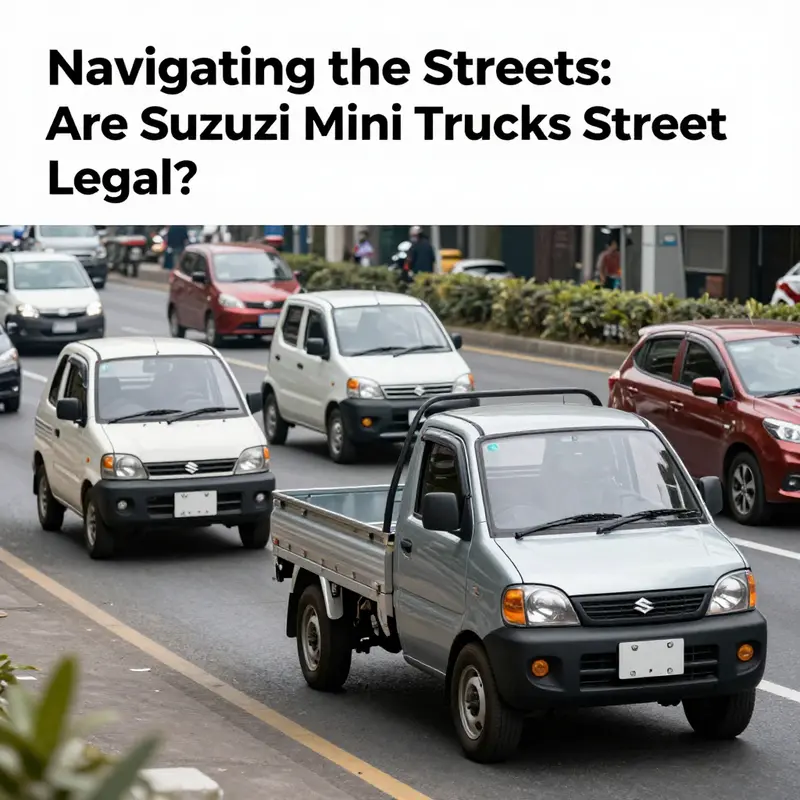
Understanding whether Suzuki mini trucks are street legal is crucial for various stakeholders, including local small business owners, residential property owners, and mini truck enthusiasts. These compact vehicles offer an efficient and environmentally-friendly option for city driving, but legality can vary depending on local regulations and safety standards. This article delves into the essential aspects of regulatory compliance, emissions standards, safety requirements, and market trends concerning the street legality of Suzuki mini trucks. Each chapter will provide insights into how these factors intertwine to shape the landscape for both commercial and personal uses of these vehicles.
Kei Trucks on Public Roads: Navigating Global Rules and Real-World Legality
Kei trucks sit at an interesting intersection of compact design, efficient engineering, and the realities of on-road regulation. Their small footprints make them ideal for tight urban streets, narrow alleys, and small-business routes where clearance, maneuverability, and fuel economy matter as much as load capacity. Yet the same traits that make them attractive for city use—tiny footprints, light weight, and specialized engineering—also draw attention from regulators who guard the boundaries between private mobility and commercial obligation. The question at the heart of this chapter is not merely whether a kei truck can physically drive on a road, but what it takes for a vehicle of this class to be considered street legal in different jurisdictions, and how owners navigate the rules that govern size, emissions, safety, and registration. The answer, unsurprisingly, is nuanced and deeply tied to local standards, national schemes, and the way lawmakers translate a vehicle’s purpose into regulatory categories.
In Japan, the birthplace of the kei truck concept, the rules are explicit and tightly defined. Kei trucks are built to fit within the kei class, which sets strict limits: engine displacement must stay under 660 cubic centimeters; the vehicle’s width must be under 1.48 meters; length under 3.4 meters; and height under 2 meters. These caps are not just numbers on a brochure. They determine tax treatment, insurance costs, and even licensing considerations. When a vehicle meets these criteria, it doesn’t just qualify for lower taxes or simpler insurance; it gains a legal identity that aligns with a broader urban mobility strategy. The kei category is designed to emphasize practicality and urban efficiency, and when a vehicle sticks to those dimensions, owners typically enjoy a straightforward path to road use, with the expectation of compliance for safety features such as seat belts, lights, mirrors, and a basic structural framework that keeps occupants protected in standard traffic scenarios. This framework illustrates a central truth about kei trucks: their legality is inseparable from their physical and performance profile. The regulation confirms what the engineering already suggests—that a small, purpose-built vehicle can be a legitimate tool for work and daily travel in dense environments.
Outside Japan, the story diverges according to each jurisdiction’s regulatory palette. In much of North America and Europe, the pathway to street legality for kei-class trucks hinges on a combination of emissions compliance, safety standards, and the vehicle’s status within the broader regulatory taxonomy. In the United States, for example, the federal gatekeepers—the Department of Transportation and the Environmental Protection Agency—maintain a structured approach to imported vehicles. As of the mid-2020s, many kei trucks can only be driven on public roads if they are at least 25 years old to qualify for exemption from the federal safety and emissions requirements, which means that only pre-2001 models typically enter the country without facing extensive federal modifications. Newer models can still be brought in, but they require compliance pathways that often involve significant certification work, sometimes rendering road-legal status impractical or prohibitively costly for individual buyers. On top of federal rules, state and local authorities carve their own path. Some states treat these vehicles as light-duty commercial vehicles with specific registration, titling, and insurance requirements, while others impose additional constraints on low-speed vehicles or non-standard passenger-carrying configurations. The practical effect is clear: legality is not a universal passport. It is a dynamic status, contingent on meeting a web of standards that can shift with changes in policy, enforcement priorities, and local enforcement capabilities.
Across the Atlantic, Europe presents a mosaic of approaches shaped by emissions regimes, road-use policies, and the mobility needs of dense urban centers. Emissions standards such as Euro 6 apply to vehicles operating on European roads, and compliance with those standards is a fundamental condition for road use in many member states. The UK, post-Brexit, retains its own set of regulatory expectations, with MOT testing, vehicle tax, and insurance requirements determining whether a kei-class vehicle remains eligible for street use. In practice, this means a kei truck aiming for Europe’s public roads must demonstrate that its emissions profile aligns with the relevant standard and that it carries the necessary safety equipment and lighting to meet general road-going requirements. In addition to mandatory checks, there can be regionally specific constraints—such as city center access rules or congestion-charge schemes—that further shape the practical feasibility of keeping a kei truck on the road in urban cores. The overarching takeaway is that, even when a vehicle is technically capable of meeting the physical dimensions and mechanical reliability of a kei class, it remains subject to the same scrutiny as other small, work-oriented vehicles. The goal is straightforward in concept—ensure safe, clean, and predictable operation on shared roadways—yet the pathways to achieve that goal differ by jurisdiction and can vary by city block as easily as by country.
Canada and many Asian countries add their own layers to the story. In some markets, the kei-style concept is absorbed into broader categories of light commercial vehicles, with registration, insurance, and licensing tied to those categories. In others, regulatory bodies adopt a more stringent interpretation of emissions and safety, requiring owners to navigate import rules, conformity assessments, and, where applicable, domestic assembly or assembly-equivalent modifications. The result is a spectrum of legality that mirrors the variety of road-use contexts around the world. It is precisely this spectrum that makes due diligence essential for anyone contemplating ownership, purchase, or importation. If the aim is to operate legally and with minimal friction, prospective buyers and operators must verify the precise regulatory classification that applies to their locale, confirm whether the vehicle meets the local standards, and prepare for any registration or inspection processes necessary to keep the vehicle in compliance year after year.
A practical perspective arises when we consider how these rules influence everyday decisions. In urban environments, where space is at a premium and delivery routes are often short but numerous, a kei-class vehicle offers the appeal of nimble steering, easy parking, and lower operating costs. Those benefits, however, can be undermined if the vehicle’s regulatory status is uncertain or if the cost of bringing it into compliance is prohibitive. The tension between economic practicality and regulatory rigor is a constant factor in the decision-making calculus. In regions with supportive policies—such as lower taxes or incentivized access for small, low-emission vehicles—the ownership permutation becomes more straightforward. In places with stringent inspections, limited access, or restrictive classifications, owners might opt for a different tool for the job or pursue a model that already complies with the local framework. In this sense, legality is not a static trait of a vehicle; it is a dynamic attribute that reflects the intersection of engineering, policy, and daily usage.
For readers who want to explore practical implications and model-specific considerations—without getting lost in regulatory minutiae—a grounded approach is to look at the daily operations these vehicles are designed to support. They excel in short-range tasks, light payloads, and environments where larger trucks would struggle to navigate. This does not negate the responsibility that comes with road use; it simply places the responsibility in a different register. It is about matching the vehicle’s inherent strengths to the demands of the routes, schedules, and local rules that shape how those strengths translate into reliable service. To reinforce practical understanding, consider the wide range of day-to-day factors that influence legality: the vehicle’s documented specifications, the provenance and age of the model, the availability of compliant emissions equipment and safety features, and the insurance and registration landscape in the consumer’s jurisdiction. All of these pieces come together to determine whether a kei-class truck can legally be operated in a given setting and for what purposes—personal, commercial, or mixed-use.
As this chapter moves toward its broader arc, the emphasis remains on clarity and due diligence. The road to legality is not a single stamp of approval but a mosaic of criteria that must be met to ensure lawful operation. For readers seeking further context on U.S. import rules and eligibility, the Department of Transportation provides definitive guidance and up-to-date regulatory summaries. In addition, for ancillary insights into everyday use, modifications, and practical comparisons among different kei-class platforms, the following internal resource offers a user-friendly perspective: minitrucksocala blog.
In sum, kei trucks—whether used as city workhorses, niche delivery vehicles, or light-duty utility partners—enter the road-legal landscape through a combination of dimensional constraints, emissions performance, safety compliance, and proper registration. The exact requirements hinge on where the vehicle is operated, but the common thread is that legality is earned by aligning engineering with regulation. The compact design that makes these vehicles so appealing is supported by a regulatory framework that rewards efficiency and safety, provided owners take the time to understand and satisfy local rules. The global tapestry of standards means that one vehicle’s street-legal status can look very different from another’s in a neighboring country or even a neighboring state. Yet the underlying policy aim remains consistent: enable practical, low-impact mobility while maintaining safe, predictable roads for everyone. For readers who want to trace the exact steps toward compliance in their area, the official sources and local authorities are the best starting points, followed by informed conversations with qualified dealers or import specialists who understand the nuances of their jurisdiction.
External resource: https://www.transportation.gov
The Regulatory Road Map: How Local Rules Decide Whether a Mini Truck Can Hit Public Streets
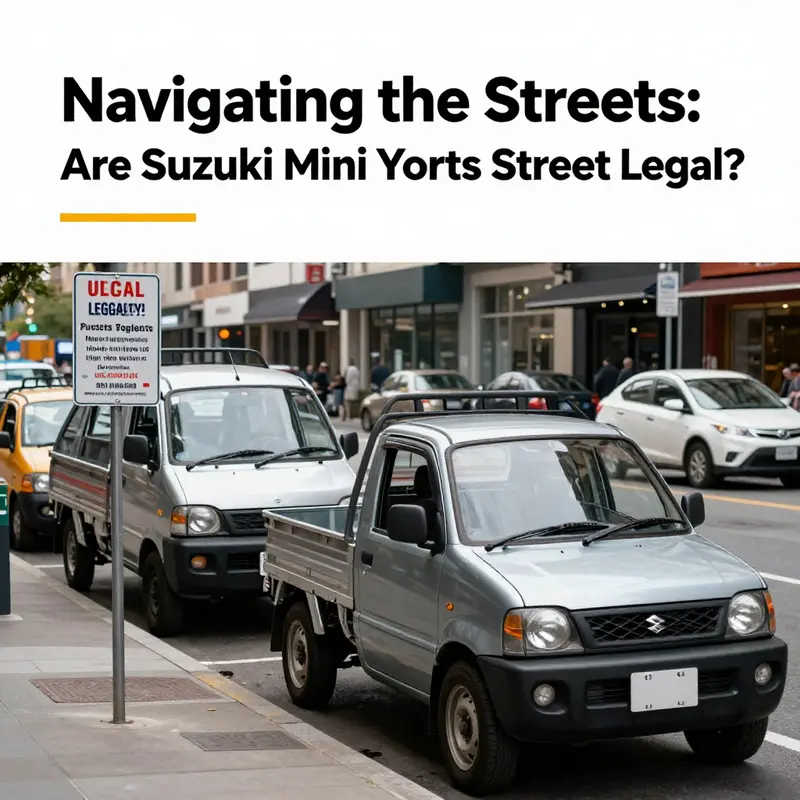
Across the world, compact, light-duty pickup trucks designed for urban work have carved out a practical niche. They often promise affordable maintenance, nimble maneuvering, and the ability to squeeze into tight job sites or tight city blocks. Yet the street legality of these vehicles—especially when they arrive with modifications like raised suspensions—rests on a landscape of regulations that is anything but uniform. What qualifies as street-legal in one country, state, or city can be markedly different in another. The result is a core truth that emerges with near certainty: there is no universal green light for mini trucks. Instead, there is a layered set of standards that regulators apply to emissions, safety, registration, and the precise configuration of the vehicle itself. For anyone contemplating operation of these compact workhorses on public roads, this layered framework is not a sidebar but the central path to compliance. The practical upshot is straightforward in its implications: before you drive a lifted or modified mini truck in any given jurisdiction, you must align the machine with the letter and spirit of local law, not merely with what is customary in another country or region. The journey from showroom to street is, in this sense, a regulatory negotiation rather than a purely mechanical one. Emissions control, for instance, is not a decorative feature. In many markets, the public road climate is defined by standards that limit pollutants and require confirmations that a vehicle’s exhaust, fuel system, and general combustion characteristics meet established thresholds. In Europe, those thresholds have evolved through stages such as Euro 6, while in North America the framework is anchored in regional or national emissions programs that resemble, in spirit, a consistent baseline. The essential corollary is that a vehicle can be perfectly safe and mechanically sound yet fail to meet the emission standards that authorities demand for road use. Safety, likewise, is not optional. The roadworthiness of any small utility vehicle hinges on the integrity of its fundamental systems: seat belts must function, lights must illuminate with proper precision, mirrors must provide adequate rear visibility, and the vehicle’s structural elements must withstand typical on-road stresses. The safety narrative also intersects with design choices made during modifications. If suspension lifts are added, for example, regulators will scrutinize not only the ability of the vehicle to maintain stability under dynamic conditions but also whether the alteration affects critical safety features such as the alignment of headlights or the visibility offered by the vehicle’s mirrors. The practical consequence is that modifications that change the vehicle’s geometry or mass distribution can trigger additional inspection criteria and, in some jurisdictions, require recalibration of safety systems, load ratings, or braking performance. Beyond emissions and safety, there is the regulatory touchstone of paperwork: registration and insurance. The rules here are not merely bureaucratic hurdles; they are the legal interfaces that determine whether a vehicle may be driven on public roads at all. In many places, a vehicle that meets the relevant standards will be registered as a light commercial vehicle or a similar category, and it will be insured accordingly. In others, the category might carry nuances tied to weight, dimensions, or intended use. These distinctions matter because they influence everything from licensing fees and inspection cycles to permissible cargo and operating hours. In practice, this means that the question “Is this mini truck street-legal?” cannot be answered once and for all without locating the jurisdiction in question and consulting the authoritative sources that define its terms. In the United States, for example, the path to legality is especially state-driven. Each state’s department of motor vehicles maintains its own rules for vehicle modifications, including lifts. Some states permit lifted configurations so long as they meet defined criteria—such as maintaining adequate ground clearance, ensuring headlights are correctly aimed, and ensuring that height and width stay within statutory limits. Others impose stricter prohibitions or require extensive inspections before a lifted vehicle can be registered for street use. The variation is not merely technical but procedural: the enforcement pattern and the exact inspection standards can differ by region, even within the same state. What this means for a driver or business owner is clear: the most reliable approach is to check the precise DMV guidance for the jurisdiction in which the vehicle will operate. Those seeking definitive, up-to-date information should consult official state or provincial sources rather than relying on generalized summaries. For a broader, accessible baseline discussion and practical considerations that apply across many markets, the landscape is often summarized in consumer-facing resources that stress direct engagement with regulatory authorities and vehicle inspectors. The key takeaway is simple: if a lift or other modification is contemplated, anticipate a regulatory review process that will query both the modification and how it aligns with safety, visibility, and roadworthiness standards. In the United Kingdom, mini trucks are typically treated as vans for tax and regulatory purposes, which places them in a familiar framework of requirements for on-road operation. In Japan—the country of origin for these compact machines—the vehicles are designed and tested to meet national road standards, reflecting a closely integrated system of compliance that supports their widespread use in both personal and commercial contexts. Across other European and Asian markets, the story remains harmonized to the extent that emissions and safety norms are widely adopted, but the final word on street use still hinges on national and local rules. The practical implication for anyone curious about street legality is that compliance is a moving target. Regulations evolve as technology, safety philosophy, and environmental policy shift. Lift heights, suspension components, and headlights can all become focal points of regulatory scrutiny, especially as enforcement strategies become more sophisticated and as cities push toward lower-emission zones and tighter traffic rules. To navigate this environment, the best course is to treat regulatory compliance as a continuous process, not a one-time checkbox. Before modifying a vehicle, verify the latest requirements with the relevant department of motor vehicles or transport authority. After modifications, prepare for an inspection or proof of conformity process that confirms the modifications have not compromised safety or compliance. Documentation matters: keep records of parts, installation procedures, alignment checks, and any recalibration of critical systems such as the braking and steering assemblies. Maintaining a meticulous trail of compliance activity helps not only with registration but also with ongoing road-worthiness. In practice, most jurisdictions that allow on-road use with modifications will expect ongoing adherence to the same standards that apply to stock vehicles. This includes regular inspections, up-to-date insurance, and adherence to any height or width limitations that govern road safety and infrastructure compatibility. It is worth noting that some regions actively promote the practical benefits of compact, low-emission vehicles for urban mobility. In such places, there can be avenues for access to green zones or reduced congestion charges, reflecting a policy orientation that values small, efficient, and carefully regulated urban transportation solutions. However, even in these contexts, the permission to operate is earned, not assumed. The reality for a prospective operator is that the street-legal status of a lifted mini truck is contingent on rigorous alignment with local requirements, and the process can vary widely from one jurisdiction to the next. For this reason, the most reliable, action-oriented guidance is to consult the official DMV or transport authority’s website for the specific region where the vehicle will be used. This approach helps ensure that all elements—from modifications to insurance and branding—are coherent with the local rule set. For readers seeking a broader, practical context that illustrates how communities discuss and navigate these questions, the minitrucks cola blog offers a starting point to explore related experiences and perspectives from owners and regulators alike. minitrucksocala blog. In addition, for a technical reference on lift-specific regulation considerations, an external resource provides a consolidated overview of the official stances and practical inspection criteria that inspectors may rely upon when evaluating lifted configurations. External resource: https://www.dmv.org/united-states/vehicle-lifts.php. The interplay between design ambitions and regulatory realities is not adversarial; it is a structured, navigable process. Understanding the hierarchy—from emissions and safety to registration and inspection—helps owners anticipate the questions regulators will ask and prepare the documentation that proves a vehicle’s readiness for city streets. This is particularly important for small, purpose-built machines whose value lies in efficiency and agility. When the rules are clear, these vehicles can become dependable tools for urban work, capable of performing in dense environments without excessive cost or environmental impact. Yet the clarity comes not from a single manual but from a disciplined practice of due diligence: verify, document, and comply with the jurisdiction’s standards before taking the vehicle onto public roads. In this sense, the street legality of a mini truck is less a fixed attribute than a dynamic condition that reflects the evolving balance between mobility, safety, and environmental policy. The result is a practical instruction set for owners and operators: treat local rules as the governing framework, respect the regulatory pathway for modifications, and engage with regulators early and often. The effort invested in understanding and meeting these standards pays off in a more predictable experience on the road, fewer administrative hiccups, and a better fit with urban transportation goals that prioritize safety, efficiency, and environmental responsibility.
Tiny Power, Big Rules: Emissions, Compliance, and Street Legality for Kei-Class Mini Trucks
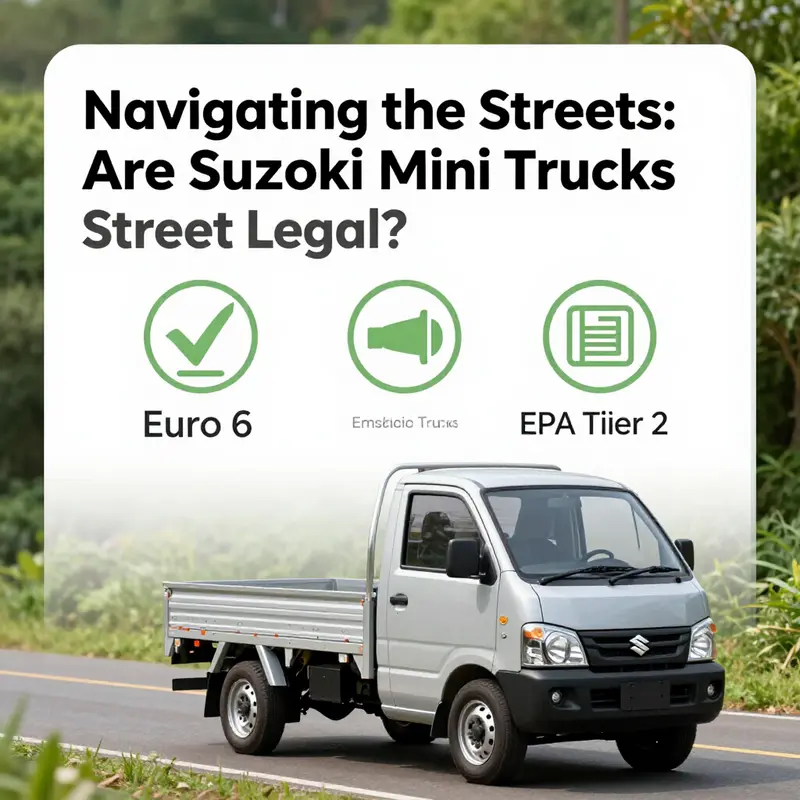
Across continents and city blocks, kei-class mini trucks occupy a unique niche. They bring nimble maneuverability, low operating costs, and surprising cargo capacity to tight urban corridors. Yet the very trait that makes them appealing—compact size—also places them under a complex tangle of emissions and safety standards that govern whether they may travel public roads. The tension between practical usefulness and regulatory compliance runs through every market where these diminutive workhorses are available, and it shows how street legality cannot be assumed simply because a vehicle exists in a catalog. Instead, it must be understood as a living, evolving balance between design constraints, environmental goals, and the safety expectations that cities and nations set for road use. In this chapter we trace how emissions standards shape the on-road viability of kei-class mini trucks, how markets differ, and what manufacturers are doing to future-proof these small work vehicles for a world leaning toward cleaner streets and more stringent rules.
In Japan, where the kei-class concept originated, the regulatory framework is built around efficiency, economy, and extremely tight emissions limits tailored for small, light vehicles. Kei cars are celebrated for their fuel efficiency and minimal environmental footprint, and the corresponding standards are designed to preserve that edge while ensuring vehicles meet on-road safety and performance requirements appropriate for their size. The 660cc engine limit, a defining feature of kei regulations, keeps pollution modest and helps drive down fuel consumption. Emissions limits are embedded in a broader ecosystem of tax incentives and registration parameters that encourage owners to choose these compact vehicles for city errands or light commercial tasks. In that market, compliance is not a matter of special exemptions but of design intent: small engines, simplified powertrains, and a weight class calibrated to optimize air quality and road safety outcomes. As a result, these vehicles reliably meet domestic road laws and are widely used for a spectrum of practical applications within Japan’s urban and rural landscapes.
Outside Japan, the picture becomes more complex. In the United States, what seems like a straightforward choice for a compact work vehicle runs into a more formidable regulatory gate. The federal framework, administered by agencies tasked with safety and environmental stewardship, requires rigorous crash tests, the inclusion of mandatory safety features such as seat belts and airbags, and a comprehensive system of tailpipe emissions controls. The standard kei-truck configuration—optimized for light weight and efficiency rather than full-scale crash protection or new-vehicle emissions certification—often falls short of those standards. Consequently, most of these models are not legally road-registered under federal rules unless they undergo substantial modification, reposturing, or conversion programs that align them with NHTSA and EPA requirements. The result is a cautionary tale about assuming road legality in new markets: the very design principles that make kei trucks so appealing in one jurisdiction do not automatically confer eligibility in another.
The European and Australian regulatory landscapes similarly temper the on-road prospects for kei-class mini trucks. In Europe, the hurdle is the Euro emission regime, which imposes more stringent standards for urban and cross-border usage. For new vehicles, compliance with Euro 6 and related rules is a major barrier, and many manufacturers find it not cost-effective to certify kei platforms for European certification in their stock form. Some markets do permit the import of older, used kei vehicles under localized conditions such as time-limited or mileage-based allowances—often described in terms of age or registration rules—but this path is not a blanket green light for everyday use. In Australia, the approach tends to emphasize conformity with emissions criteria and vehicle safety rules that track broader regional standards, again creating a landscape where newer kei models generally require substantial adaptation to meet road-legal criteria. In all these regions, the practical takeaway is that the path to on-road legitimacy for kei mini trucks is not universal; it’s contingent on the intersection of engine outputs, emissions performance, safety equipment, and the specific regulatory architecture of the jurisdiction in question.
Engine architecture itself is a key factor in how these vehicles align with external standards. The 660cc engine limit that characterizes kei regulation in Japan yields lower raw emissions and draws attention to the efficiency narrative that supports city driving. But when markets stretch beyond domestic borders, those engine constraints can become a liability if the rest of the vehicle’s systems—emission control, exhaust aftertreatment, and safety features—do not meet the more demanding rules of those markets. The lighter weight and simpler powertrain that help reduce fuel use can complicate compliance with crash-test standards and modern safety requirements, which rely on protective structures, airbags, and sophisticated restraint systems. This tension has nudged manufacturers to pursue two parallel strategies. On one front, they refine and preserve kei configurations for markets that favor their compact footprint and low emissions. On the other, they invest in development programs that target broader, more universal standards—often by pursuing electrified or hybrid variants that can ride the rails of evolving environmental targets and urban-logistics policy.
The strategic response from manufacturers to this regulatory complexity is evolving in a way that reflects broader shifts in the automotive world. There is a clear trend toward electrification or hybridization of mini trucks, driven by the push to meet stricter emissions targets in large markets and the growing appetite for quiet, low-emission urban delivery solutions. Electric powertrains can sidestep many tailpipe emissions concerns while opening doors to urban access regimes that prioritize clean fleets and low noise. In parallel, the industry is exploring lightweight materials, advanced safety concepts, and modular design approaches that facilitate easier certification across jurisdictions. The overarching aim is not merely to comply with today’s standards but to create platforms flexible enough to adapt to tomorrow’s regulatory expectations, including potential shifts toward common international frameworks that harmonize the rules around commercial micro-mobility and light-duty urban freight.
For urban operators and small-business fleets, the regulatory mosaic around kei-class mini trucks translates into practical considerations about where, how, and under what conditions these vehicles can operate on public roads. The deterrent of stiff registration or the risk of noncompliance must be weighed against the benefits of compact dimensions, easy maneuverability in congested zones, and the potential to access lower-emission zones or receive favorable congestion-pcharging treatment in certain cities. In markets where exemptions or deferments exist for clean or low-mileage fleets, a kei mini truck can be a cost-effective instrument for daily deliveries and service calls that require a small footprint and nimble handling. Yet this is not universal. The consumer or business contemplating such a vehicle should conduct a careful regulatory audit, ensuring that the chosen model meets local registration requirements, safety standards, and emissions targets before committing to road use. It is the kind of due diligence that separates a practical urban solution from an isolated showroom curiosity.
To illuminate practical accessibility, consider how a prospective operator can approach the regulatory puzzle with clarity. First, identify the jurisdiction’s stance on lightweight and micro commercial vehicles, including whether there are any exemptions for low-speed or low-power profiles. Then examine the safety equipment expectations: seat belts, lighting, mirrors, or structural integrity standards that must be satisfied for public-road use. Emissions status follows closely behind, with attention to any region-specific limits and the possibility of aftertreatment or engine-tuning requirements to align with local rules. Finally, assess the administrative steps: vehicle registration, insurance, and any inspections or periodic tests that may be mandated. This methodical approach helps avoid surprises when a vehicle that fits a specific urban role meets the practical realities of local law.
For readers navigating these topics, industry perspectives and practical pointers can be valuable. The industry blog space offers case studies, regulatory overviews, and community insights that complement the formal rulebooks. See minitrucksocala.com/blog/ for a broad look at how different regions view compact trucks in urban settings and the practical considerations that accompany road use in local markets. These discussions can help bridge the gap between theory and day-to-day operation, illustrating how drivers and fleets adapt to a patchwork of standards while leveraging the benefits of small, efficient delivery vehicles. In parallel, the environmental and regulatory context continues to evolve, with ongoing work in some markets to align standards and facilitate safer, cleaner mobility options that preserve the advantages of kei-class platforms while meeting the demands of modern road safety and air quality targets.
As a final note, the path to road legality for kei-class mini trucks remains highly jurisdiction-dependent. The Japanese kei framework provides a model for how small, efficient vehicles can thrive under tailored standards, but it is not a universal passport to on-road use. Across the Atlantic and within Europe and Australia, the road to registration often requires adaptation, certification, or even a pivot to electrified or hybrid configurations that can satisfy stricter tailpipe and safety regulations. The regulatory landscape is not static; it will continue to reframe what is possible for compact, city-oriented freight and service vehicles. For anyone contemplating a purchase or fleet deployment, the prudent course is a rigorous, jurisdiction-by-jurisdiction assessment that aligns vehicle design with local law, while keeping an eye on the industry’s momentum toward electrification and broader regulatory harmonization that could someday simplify access to on-road use for these capable, compact machines. External reference: https://www.epa.gov/vehicle-emissions-testing/federal-emission-standards-vehicles
Street-Legal Realities of Kei-Pattern Mini Trucks
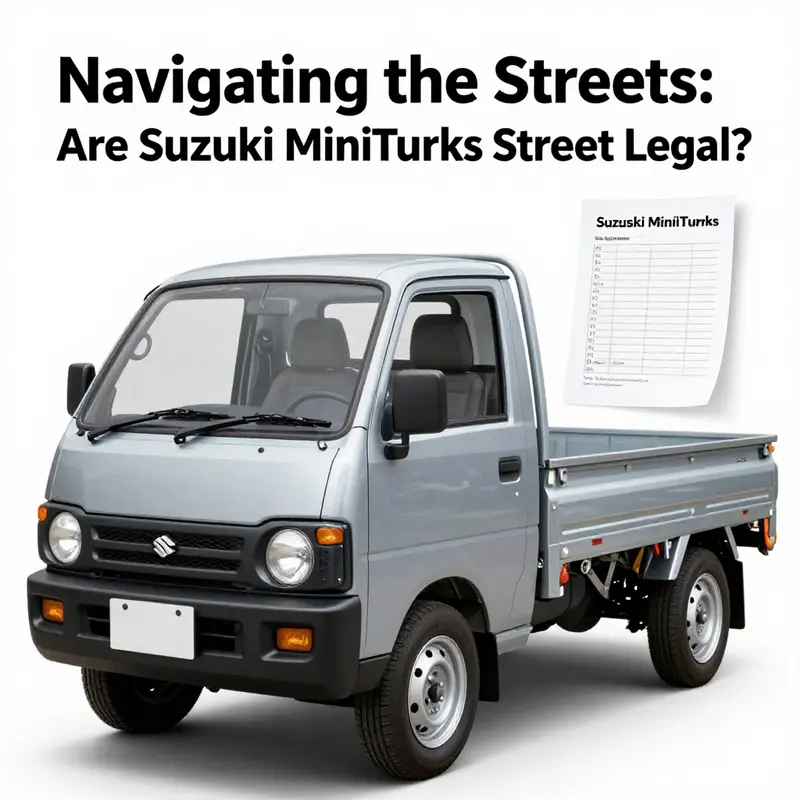
Across cities around the world, a small class of kei-pattern mini trucks occupies a practical niche. Compact, frugal, and surprisingly capable for light-duty work, they invite questions about where and how they can legally operate on public roads. The answer is not a single universal yes or no; it depends on national regulations, local classifications, and the intended use on the road. In Japan, kei-trucks conform to strict size and engine limits that optimize urban mobility, but these constraints do not automatically translate to highway readiness in other markets. In the United States and Europe, on-road certification often hinges on crash protection, occupant restraints, and emissions compliance, with many models requiring modifications or specialized registrations to be driven on public highways. In some regions, these vehicles may be restricted to local streets or private property, or registered as low-speed vehicles with limited travel rights.
The practical implication is that street legality is dynamic and jurisdiction-specific. Prospective operators should begin by confirming how the vehicle is classified in their locale—standard street vehicle, light-duty commercial, or restricted low-speed category—and then review insurance, licensing, and registration requirements. If highway travel is essential, expect scrutiny and potentially substantial upgrades. If mostly local, a lighter regulatory path may be available. For readers seeking real-world reference, industry resources and community forums often provide variant specs, payload options, and practical notes on modifications that help map the regulatory terrain before engaging local authorities.
Ultimately, the kei-pattern mini truck demonstrates how urban efficiency can clash with highway safety standards. The same chassis and powerplant may be treated differently from one region to another, reinforcing the importance of local due diligence and compliance. For official guidance, consult national road-safety authorities and the relevant vehicle standards bodies to understand the precise requirements for on-road certification and permissible configurations.
Street-Level Momentum: Market Growth, Urban Use, and Legal Pathways for Compact Mini Trucks in City Environments
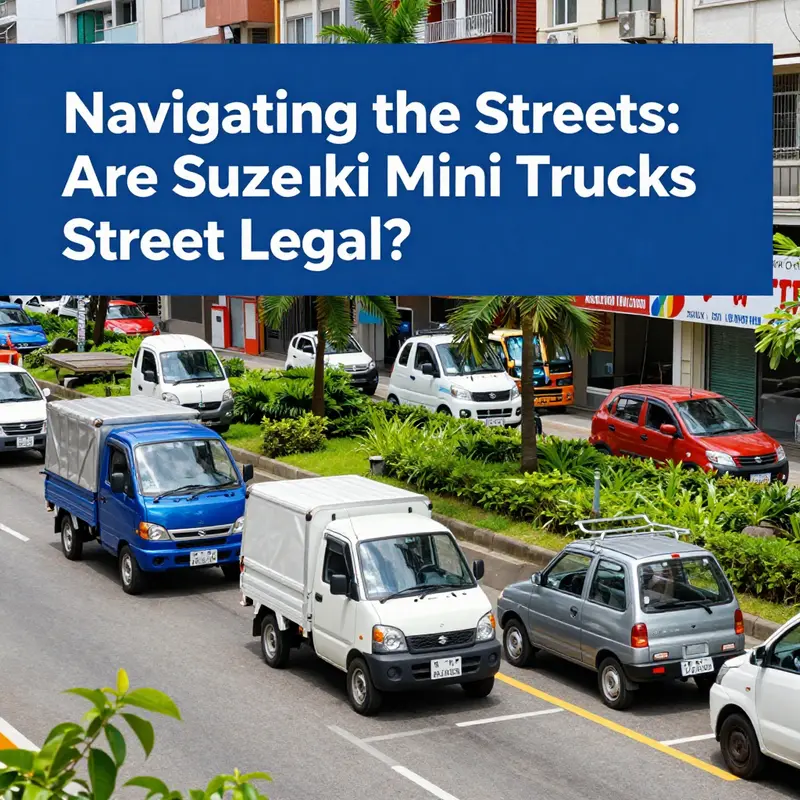
Cities around the world are redefining what it means to move goods in dense urban cores. Compact mini trucks offer a unique combination of small footprints, robust payloads, and agile handling that suits last-mile delivery, on-demand services, and on-site maintenance tasks in crowded streets. The street-legal path for these vehicles is not a single doorway but a matrix of criteria—including registration, insurance, lighting, seat belts, and emissions standards—that can vary by country and city. When correlations between these standards are clear, urban operators gain reliable access to narrow streets, limited curb space, and regulated loading zones. This chapter explores market momentum, practical urban use, and how regulatory frameworks shape both perception and reality of legality on public roads.
Market dynamics show growing interest in urban-centric fleets. The ability to shuttle small loads quickly through congested corridors translates into meaningful productivity gains for parcel couriers, service technicians, and food delivery networks. While the total market size may be reported with varied figures, the trend is consistent: demand in city centers is rising as populations densify, emissions rules tighten, and fleets seek lower total cost of ownership. Diesel and CNG variants broaden the option set, allowing operators to balance upfront costs, fuel price volatility, and long-term maintenance considerations. In practice, a fleet may mix compact minis with larger vehicles to optimize coverage, resiliency, and cost efficiency in urban environments.
Urban usage spans multiple use cases. Beyond parcel delivery, these trucks support food service supply chains, mobile services, and field maintenance where short trips and easy parking are essential. The compact chassis enables access to building side streets, parking lanes, and loading docks with constrained ingress, while the ability to carry tools and spare parts helps reduce trips back to depots. Environmental considerations also drive adoption: many cities reward lower-emission fleets through incentives or exemptions, and even modest improvements in fuel economy can multiply across hundreds or thousands of daily trips. The result is a compelling total cost of ownership: durable street-legal status, predictable maintenance, and stable resale value in markets that value maneuverability as a competitive advantage.
Legality and classification remain central to the conversation. Vehicle categorization—whether as a van, light commercial vehicle, or small truck—can influence taxes, insurance, and inspection regimes. Buyers need to map local rules before purchasing, to avoid unexpected hurdles during registration or road use. Transparency in documentation, compliance checks, and a clear road-map for ongoing inspections help fleets scale urban activity with confidence. Looking forward, policymakers and manufacturers share an interest in harmonizing standards where possible, while preserving city objectives around safety and air quality. The result is a pragmatic approach to legality that treats these vehicles not as curiosities but as practical tools for modern urban logistics.
The path forward is one of integration and clarity. Market momentum, evolving powertrain options, and more modular urban policies could widen access and reduce total ownership costs for city operators. Vendors can support adoption by offering transparent compliance packages, easily trackable maintenance plans, and powertrains tailored to city duty cycles. In this collaborative vision, compact mini trucks become integral components of a structured urban transport system, delivering reliable service to diverse urban tasks while aligning with city goals for cleaner air, safer streets, and more efficient use of curb space.
Final thoughts
In summary, Suzuki mini trucks hold street legality in most regions where they are sold, but understanding the intricacies of local regulations, safety, and emissions standards is crucial for owners and potential buyers. By ensuring compliance and staying informed about current trends, you can effectively leverage these versatile vehicles for personal or business use. Whether navigating city streets as a small business owner or enjoying them as a hobbyist, Suzuki mini trucks can be a practical choice in urban settings.