

For small business owners, residential property owners, and mini truck enthusiasts, the ability to transport equipment like mini excavators is crucial, especially in rural or construction contexts. However, the question remains: can your half-ton truck pull that mini excavator? This article delves into crucial aspects such as the relationship between the weight of mini excavators and the towing capacity of half-ton trucks, safety hazards to consider, legal requirements, and best practices for ensuring safe transport. Understanding these factors will help you make informed decisions and safeguard your investment.
Weighing the Tug: How Half-Ton Trucks Measure Up to Mini Excavator Towing Demands
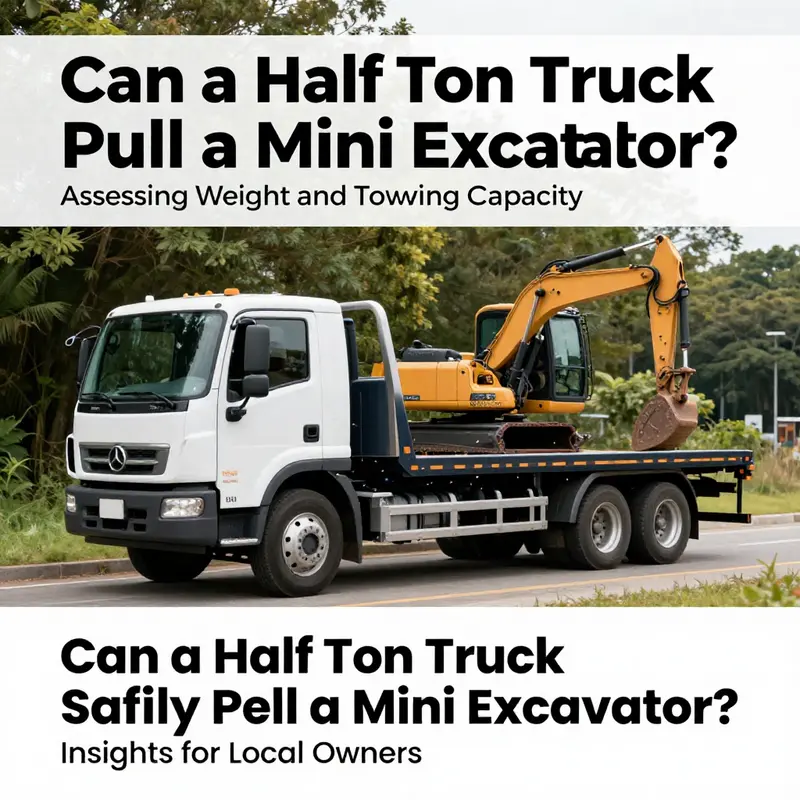
The central question—can a half-ton pickup pull a mini excavator—resists a simple yes or no because the answer hinges on a tangle of weights, ratings, and real-world operating conditions. At its core, towing is a balance problem: the mass you hook behind the truck, the mass you’re pulling, and the mass the trailer itself adds to the system. Compact excavators typically span a broad range, from roughly 3,000 pounds on the light end to as much as 8,000 pounds for larger tiny models. Some configurations and attachments can push the weight higher, depending on the counterweights, bucket, and any optional implements fitted for transport. On the other side of the equation, a modern half-ton pickup is designed with a maximum towing capacity that varies widely based on the configuration—engine, transmission, axle ratio, driveline, and whether the truck has the proper towing package. In practice, many half-ton pickups advertise towing capacities in a broad band—from about 7,000 pounds up to 14,000 pounds for certain configurations. The real-world takeaway is not a single line on a spec sheet, but a careful accounting of every element that combines to form the total load and how that load behaves on the road. For someone planning a tow, the first step is to identify the excavator’s weight as it is listed for transport, including typical attachments and any ballast. Then translate that into the trailer’s combined weight, and add the trailer itself to reach the total mass the truck must move. It is equally important to account for tongue weight—the portion of the trailer’s weight that sits on the hitch—as it directly affects steering and weight transfer to the rear axle. If the tongue weight is too light, the trailer can wander and sway; if it’s too heavy, the rear suspension can sag, complicating braking and handling. Beyond these weight numbers, the trailer’s own braking system and the tow vehicle’s braking controller become critical safety features. A well-equipped rig with trailer brakes and a properly matched brake controller improves stopping distances and stability, especially in downhill grades or sudden-stop scenarios. This is not just about meeting a rating; it is about ensuring the entire system remains within a margin of safety that accounts for road grade, wind, and the thermal stress that comes with sustained towing. Those who study heavy loads in practical settings often emphasize that the margin between capability and risk narrows quickly as more weight and more speed are introduced. Even if a particular excavator’s weight sits within a truck’s stated capacity, operating near the upper end of that capacity with a standard cooling system, a stock transmission, and modest engine cooling is asking for overheating, reduced braking performance, and less reserve power for acceleration or evasive maneuvers. The dynamic nature of towing—combined with the fact that a trailer adds kinetic energy as it moves—means the risk profile changes with terrain. An incline amplifies engine load, a tailwind increases drag, and a long stretch of highway can push a drivetrain toward its heat limits. In this sense, the question shifts from “does the math add up?” to “how much reserve do you have for real-world conditions?” A practical approach is to frame the problem with a conservative mindset. If the excavator weighs near the midpoint of the small-to-midweight range, the safest course is to evaluate not just the truck’s tow rating but the combined system’s ratings: vehicle GVWR, GCWR (gross combined weight rating), trailer GVWR, and tongue weight. The key is to ensure the total weight remains well under these ceilings, leaving a buffer for safety margins, weather, and unexpected road conditions. The way weight is distributed across the vehicle can also influence how it behaves in motion. Tongue weight that is properly balanced helps to maintain steering feel and helps the trailer stop in tandem with the tow vehicle. A weight-distribution hitch can help, but it introduces additional components that must be correctly installed and maintained. The overall reliability of the setup depends on more than just the numbers. It requires a capable braking system for the trailer, an electrical system that maintains lighting and brake control, and properly rated tires on both the truck and the trailer. If any one piece of the system is undersized or poorly maintained, the safety margin collapses. From a safety perspective, the simplest truth is that towing a heavy machine with a light-duty vehicle is a high-stakes operation. The temptation to treat it as a routine driveway maneuver or a quick trip to a job site must be resisted. The risk of poor handling, longer stopping distances, and potential damage to the drivetrain or suspension grows as the load encroaches on the upper end of the rating or when the load sits on a marginal trailer. These cautions are not mere recommendations; they reflect regulatory expectations and manufacturer guidelines that emphasize adherence to GVWR and towing limits, proper equipment, and routine maintenance. Those who want a clearer sense of how to approach the problem can benefit from a practical, experience-based resource that discusses heavy-load considerations in the context of light-duty equipment. A useful point of reference is the way the broader community talks about moving heavy gear with lighter vehicles; the related discussions on the Mini Trucks Kala blog offer useful perspectives on what it takes to balance power, weight, and control when equipment sits at the edge of what a vehicle is designed to tow. In the end, the path to an informed decision rests on translating the excavator’s weight into a total system mass, confirming the trailer’s braking capacity and tongue weight, and verifying that chassis and drivetrain cooling can handle sustained demand without overheating. It also requires accepting that the outcome is not universal; some lighter excavator configurations may sit within a specific truck’s permitted range, but others will push past what a half-ton setup can reliably and safely handle, particularly when you factor in payload, hitch choice, and the possibility of operating on grades or in adverse weather. This nuance should guide planning, budgeting, and site logistics in equal measure. For readers who want to explore how these tradeoffs play out in real-world contexts, the linked resource provides a broader discussion of how heavier loads intersect with lighter platforms, offering a framework for evaluating whether a particular combination is prudent or risky. If you decide to pursue a tow, remember that every step—from selecting a suitable trailer to confirming the equipment’s condition and ensuring proper installation of braking and electrical components—contributes to a safer outcome. And while the numbers can sometimes align, the safest and most reliable approach remains choosing a setup that keeps the system comfortably within the published limits and avoids pushing the hardware to its limits. For additional guidance and a broader perspective on heavy-load dynamics in the context of smaller vehicles, you can consult the Mini Trucks Kala blog for related discussions on how weights, trailers, and load distribution interact in practice, which can help refine your plan before you commit to a heavy-turn job. For the authoritative, up-to-date guidance on towing limits and required equipment, refer to the official manufacturer resource on towing specifications and trailer integration, which provides the current standards and recommendations that apply to your chosen vehicle. You can review the detailed guidance and specifications at the manufacturer’s dedicated resource: https://www.ford.com/trucks/f-150/.
Weight, Brakes, and Boundary Lines: The Safety Realities of Pulling a Mini Excavator with a Half-Ton Truck

When a property line, a curb cut, or a new landscaping project is on the horizon, the image of a compact excavator being hauled behind a half-ton pickup can look almost normal in a home workshop daydream. The reality, however, is not about a simple trailer and a loose chain. It hinges on a complex blend of weight, momentum, and control, all operating within defined safety margins that many drivers underestimate. The weight of a mini excavator, even when it sits relatively still on a trailer, can push a half-ton truck beyond its comfortable operational envelope. A compact excavator is not a toy, and the trailer that carries it is not merely an accessory; it is a moving platform that distributes weight, shifts balance, and demands precise handling and braking. The combination—heavy machine, unyielding track weight, vulnerable tongue weight, and a trailer with its own inertia—demands respect. To speak plainly, a half-ton pickup is often not up to the task of safely pulling the typical mini excavator, especially over any distance or on variable terrain. The physics involved are not abstract algebra; they are the practical rules that govern every decision a driver makes on the road and at the worksite. If the goal is reliable transport rather than a spectacle of risk, the conclusion becomes clear: a light-duty pickup, under most conditions, should not be used as a dedicated tow vehicle for a mid-range mini excavator. The decision rests on more than a single number in the owner’s manual. It rests on the way weight behaves when it is moving, how trailer brakes respond to that weight, and how environmental factors—from hills to wind—alter the dynamics of a downhill glide or a crosswind sweep. For readers exploring practical realities rather than wishful scenarios, this chapter threads together the key hazards, the governing limits, and the safer alternatives that can make a job both feasible and safe. It is a topic that invites caution, not bravado, because the margins for error shrink drastically when a heavy machine is placed behind a vehicle not engineered for sustained high-load towing. For those seeking a broader discussion of real-world towing challenges in the context of smaller trucks, the Mini Trucks blog offers a perspective built from practical experience and field observations. Mini Trucks blog The objective here is to illuminate where the line lies, what the signs of trouble look like, and how to pursue safer options without compromising the work at hand.
At the core of the safety equation is the broader framework of weight classifications, ratings, and legal limits that govern vehicle operations. A mini excavator, depending on its size, commonly weighs from three thousand pounds to eight thousand pounds, and some models push past that when you factor in fuel, attachments, and the trailer itself. This range places many excavators squarely in a zone where the combined weight of the truck, trailer, excavator, and cargo exceeds a typical half-ton pickup’s capacity to operate within comfortable margins. The towing capacity specified by manufacturers—often between seven thousand and ten thousand pounds for half-ton models—assumes ideal conditions that rarely persist in the field. Even in conversations that begin with that number, the caveats pile up quickly. Real-world towing involves grade, wind, altitude, road surface, vehicle maintenance, and the presence of accessories that add weight and complexity. When the actual conditions drift from the ideal, the margin of safety evaporates. This reality is not a condemnation of half-ton pickups; it is a reminder that ratings are designed to guide decisions, not to authorize extremes. The vehicle’s engine and transmission may endure a few hard miles, but the cost to the drivetrain, cooling system, and tires, when pushed near or beyond the limit, can be steep and not easily recoverable. In such circumstances, the right choice is often to reframe the approach: use a trailer with its own braking system, a gear ratio alignment to the load, and, crucially, a tow vehicle designed for higher weight classes. The goal is to preserve the longevity of the truck and, more importantly, the safety of everyone on the road.
One of the most critical hazards to understand is the distribution of weight between the trailer and tow vehicle, often described in terms of tongue weight and gross trailer weight. When a mini excavator sits on a trailer, most of its weight transfers toward the tongue of the trailer. If the tongue weight is too light, the trailer can fishtail, reducing steering control and increasing the likelihood of a dangerous sway at highway speeds. If the tongue weight is too heavy, the rear axle of the tow vehicle bears excess load, which can shorten braking distances, but it also reduces the vehicle’s ability to accelerate safely and, in some cases, can twist the frame or overtax the suspension, particularly if the truck is not built to handle 10–15 percent tongue weight. The precise sweet spot is tricky to hit in practice because it depends on trailer design, the excavator’s exact mass distribution, the attachment hardware, and how the entire package is loaded. Proper loading practices require attention to the trailer’s balance, ensuring that the load sits low, centered, and secure. This is not simply a matter of choosing a heavy chain and a few straps; it requires a structured approach to tie-downs, anchor points, and the use of equipment rated to withstand the force that can be generated by shifting weights during transit. The risk if this balance is off is not merely the possibility of a strap snapping. It is the potential for an unpredictable change in trailer dynamics that can surprise even experienced drivers.
Braking is another domain where safety concerns multiply when a half-ton pickup tows a mini excavator on a trailer. Trailers often require their own braking system, and the modern towing setup typically depends on an integrated braking mechanism that communicates between the trailer and the tow vehicle. If a trailer brake system is present but the vehicle lacks a proper brake controller or the electrical system cannot handle the load, braking performance can be compromised. In mass terms, adding a heavy trailer to a light truck can multiply stopping distances, and the heat generated in the brake system rises quickly when the load does not respond as expected. The risk extends to the tires as well. Dual-axle trailers used for heavier loads place significant stress on tires, and any mismatch between tire rating, speed, and load can lead to heat buildup, tread separation, or blowouts. The hazard is only amplified when the trailer’s own weight, plus the excavator’s weight, exceeds what the tires and suspension are designed to handle. These are not theoretical concerns; they are routine checks that technicians and inspectors emphasize for anyone who considers towing beyond the simplest loads. The brake controller, the hitch, and the wiring harness must be in good working condition, because a failure in any one of these components can turn an ordinary drive into a high-stakes test of reflexes and timing. Even a small misjudgment can result in a situation where the vehicle cannot stop in the same distance as a non-towed load, increasing the likelihood of collision or rollover under heavy winds or uneven road surfaces.
The handling characteristics of a half-ton pickup when it tows a heavy excavator on a trailer are not forgiving. The overall stability of the vehicle is affected by the added length of the trailer, which elevates sway risk and makes steering feel sluggish or delayed. A crosswind can push the trailer toward the edge of the lane, while a gust can create a momentary sway that the driver must correct with careful steering input and a steady foot on the brake while maintaining a controlled speed. The combination of increased stopping distance, reduced acceleration response, and altered steering geometry means that maintaining lane position, negotiating curves, and braking from highway speeds all require a higher degree of attention and experience. This is not about a lack of skill; it is about the physical constraints of a system designed for lighter loads. Drivers may find themselves gravitating toward aggressive driving behavior to compensate, which only elevates stress on the tires, the hitch, and the truck’s suspension. The risk of rollover, though not inevitable, becomes a real consideration when high crosswinds meet the added lateral load on the trailer.
Beyond the physical and mechanical considerations, there are important legal and insurance dimensions that must be respected. Exceeding the towing capacity of a vehicle can have consequences for warranties, insurance coverage, and compliance with traffic regulations. In many jurisdictions, the combined weight of the tow vehicle and the trailer—often referred to as the gross combined vehicle weight rating (GCVWR)—is a safety parameter that is used to determine roadworthiness and enforce limits on speed, licensing, and inspection. When a vehicle operates outside these parameters, insurers may dispute coverage in the event of an accident, and law enforcement may assess penalties if the load is deemed unsafe or improperly secured. The potential liability is not abstract; it translates into real-world costs in the form of fines, legal fees, and higher insurance premiums, not to mention the risk to life and limb. A prudent approach is to treat the towing arrangement as part of the broader risk management plan for the project. When the excavator’s weight approaches the upper end of what the half-ton pickup is rated to handle, the safer alternative is to pause the plan and reassess with a heavier vehicle, a trailer with its own braking, or a dedicated transport solution designed for such workloads.
The safety calculus also includes the practicalities of securing the excavator itself. The boom, arm, and bucket are not simply inert metal pieces; they pose a potential hazard if they shift, sway, or bounce while moving. Securing them requires more than a few straps; it demands an understanding of how the machine’s geometry interacts with the trailer’s bed and the truck’s hitch. Any slack or inadequate anchor may allow parts to swing, impacting the stability of the trailer or the ability to stop safely. The use of wheel chocks, purpose-made tie-downs, and a robust anchor plan are essential elements of any attempt to tow a mini excavator on a trailer behind a light-duty pickup. Even when everything appears secure in a driveway or yard, the road is a different test. The vibrations, the vibrations from the road surface, and the changes in temperature can gradually loosen or shift securing points. The safe approach is to recheck all connections before hitting the road and to maintain a conservative travel plan that prioritizes time for inspection en route.
Given these hazards, what does a safer path look like for those who need to move excavators but do not own a heavy-duty tow vehicle? The short answer is that a three-quarter-ton or one-ton truck, or a dedicated flatbed or heavy-duty transport vehicle, is a far wiser and more reliable option. These vehicles are engineered with higher towing and GCWR ratings, stronger cooling systems, and more robust braking capacities. They are designed to manage sustained heavy loads and to provide a margin of safety in conditions that would stress a lighter truck. If a move must occur with a half-ton truck, it should only be under carefully controlled conditions: a very small excavator, a properly rated trailer with its own brakes, a cautious route, mild weather, and a plan to shorten the trip to reduce exposure to risk. Even in those constrained circumstances, the operation should be treated as a tightly managed task rather than a routine road operation. The key is to acknowledge the risk, prepare for contingencies, and avoid pushing the limits of the vehicle’s ratings.
The narrative here is not about doom and gloom; it is about clarity. The numbers that live in manufacturer charts and the rules that govern road safety exist for a reason. They reflect the interplay of mass, momentum, and control, a combination that can quickly turn a straightforward transfer into a hazardous episode. For anyone who has experienced or witnessed a near-miss while towing heavy loads, the lesson is the same: respect the limits, don’t test them, and seek safer alternatives whenever possible. In this sense, the decision to use a heavier tow vehicle or a dedicated transport solution is not a concession but a prudent, practical choice that protects the project, the vehicle, and the people around it. The goal is not to stigmatize half-ton pickups; it is to recognize where their performance envelope ends and to choose the path that minimizes risk while achieving the required result.
For readers who want to explore the broader conversation about tow safety and the practical constraints of moving heavy equipment with smaller trucks, the discussion does not end here. The conversation continues in the comprehensive resources and community discussions that explore what works best in real-world scenarios. If you are looking for additional perspectives and practical guidance, you can browse the Mini Trucks blog for related narratives and experience-based insights. Mini Trucks blog
In sum, while the imagery of towing a mini excavator with a half-ton truck is appealing to the imagination, the road-tested reality is far more conservative. The weight of the excavator, the dynamics of the trailer, and the limits of the tow vehicle combine to create a safety equation with a narrow margin for error. The most reliable, lowest-risk path to transport remains the use of a heavier truck or a trailer with its own braking system, paired with diligent loading practices, disciplined securing procedures, and legal compliance. When in doubt, prioritize safety and seek alternatives that keep the work moving without compromising the road and the lives that share it. For authoritative guidance on towing capacities and safety standards, refer to the official U.S. Department of Transportation resource on towing: https://www.dol.gov/general/topic/safetyhealth/towing
null
null
Tow or Not: Navigating the Realities of Pulling a Mini Excavator with a Half-Ton Truck
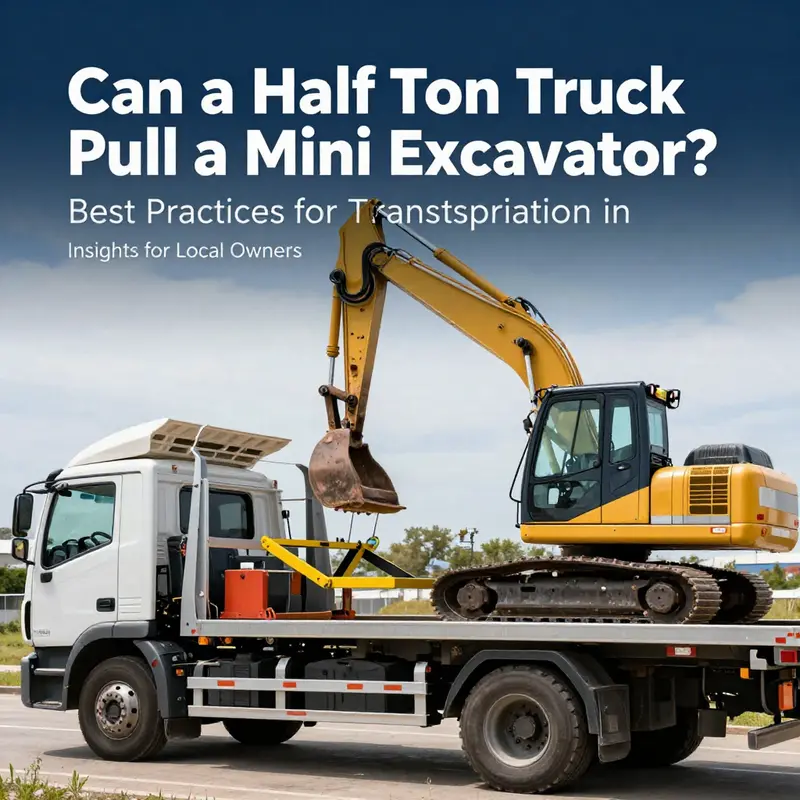
The question at the heart of this chapter—whether a half-ton pickup can pull a mini excavator—unfolds into a layered engineering and safety puzzle. It isn’t simply a matter of a number in a spec sheet; it is a conversation about weights, forces, and the conditions under which a vehicle operates. In practice, the answer hinges on the specific excavator’s weight, the trailer or towing setup, how the truck is equipped, and the terrain and regulatory environment in which the move takes place. What makes this topic particularly compelling is how it sits at the intersection of practical field needs and the mechanical realities of light-duty towing. A half-ton pickup, when properly equipped, can handle unexpectedly heavy loads, but the margin between capability and risk can be slim. This is why the best approach blends careful calculation with disciplined driving and meticulous preparation, rather than a hopeful assumption that “if it fits on paper, it will behave nicely on the road.”
To begin, the core figures matter. Mini excavators—also called compact excavators—span a wide range in weight. At the lighter end, they can creep into the low thousands of pounds, while mid-sized units hover around four to six thousand pounds. Heavier compact models push beyond that, even approaching the upper end of what a light-duty pickup might consider towing. The typical half-ton pickup, designed for everyday work like light trailer pulls and camper hauls, often lists a towing capacity somewhere in the seven-thousand-to-twelve-thousand-pound band when properly equipped. That range, however, hides a critical truth: towing capacity is not a single, universal number. It depends on the exact truck configuration, year, engine, transmission, axle ratio, cooling package, and even the chosen hitch and braking setup. The towing rating is a ceiling, not a guarantee. The truck must also carry payload in its bed and cab, and towing can push the engine and cooling system toward their limits. In short, the numbers on a spec sheet are guides; the real story is the dynamic load created by the combination of vehicle, trailer, and cargo on the road.
A helpful way to think about this is to separate two related concepts: towing capacity and tongue (or hitch) weight. Towing capacity describes how much weight the tongue can pull behind the vehicle, calculated with reference to the hitch and trailer combination. Tongue weight, on the other hand, refers to how much of that load actually sits on the hitch itself—roughly the downward force that the trailer coupling exerts on the tow vehicle’s hitch. For safe handling, tongue weight typically should be about 10 to 15 percent of the total trailer-load weight. This is not a trivial distinction. A load that weighs within the truck’s towing capacity but places a disproportionate burden on the hitch can destabilize the vehicle, alter steering response, and degrade braking effectiveness. The math becomes more intricate when you factor in gear on the trailer, such as the excavator’s bucket or tracks, and the weight of the trailer itself. The end result is that even if the excavator’s mass falls within the nominal towing capacity, the actual on-road behavior can still be unpredictable if the tongue weight is not properly managed.
Given these realities, a careful, model-specific approach is essential. If you are contemplating moving a mini excavator with a half-ton pickup, you should first determine the excavator’s exact operating weight, ideally from the machine’s data plate or manufacturer specifications. Many mini excavators sit in a weight range of roughly 3,000 to 6,000 pounds. Lighter mini excavators around 3,000 to 4,000 pounds can, in theory, be pulled by a half-ton truck that is properly equipped, but this scenario risks operating near the upper end of the truck’s safe towing envelope. Heavier compact models, particularly those pushing or exceeding 5,000 pounds, quickly move from a cautious, within-capacity pull to a high-risk proposition. The trailer’s weight must be counted as well. A trailer that weighs 1,000 to 3,000 pounds (unloaded) can substantially alter the total load the truck must manage, and a heavier trailer increases tongue weight and can demand more braking and cooling capacity from the tow vehicle.
Beyond raw weight, the equipment and the method of carriage matter just as much. A weight-distributing hitch (WDH) can improve stability when towing heavier loads, helping to keep weight more evenly distributed between the hitch and the vehicle’s rear axle. A WDH can mitigate squat and improve steering and braking response, which are critical when hauling a load that includes substantial mass and, sometimes, uneven weight distribution from the excavator’s bucket or tracks. A compatible ball hitch, properly rated and installed, is not enough; the entire towing package—the hitch, the wiring harness, the trailer braking system, and the tongue weight distribution—must be assessed and matched to the weight of the load. In many jurisdictions, if the combined weight of the trailer and its cargo exceeds a threshold (often around 3,500 pounds in various forms of regulation), the trailer is required to have its own braking system. This is not just a nice-to-have feature; it is a safety-critical component that significantly influences how quickly and predictably the vehicle can come to a stop.
The practical takeaway here is straightforward: do not assume that because a mini excavator’s weight falls within a broad towing capacity, it is safe to tow with a half-ton pickup without additional precautions. The magnitude of the risk grows as you near the upper limits of the vehicle’s capabilities. Driving with a heavy, near-limit load introduces several hazards that demand respect and precise preparation. Braking distance lengthens, especially on wet or uneven pavement. Steering can feel heavier, turning radii increase, and the vehicle’s engine cooling system may be called upon to work harder than usual. The transmission can heat up under sustained load, and if the trailer component is inadequate, electrical or braking failures could combine with poor road conditions to create a dangerous situation. These concerns are not abstract—they translate into real-world decisions about whether to proceed with the move using a half-ton pickup or to switch to a heavier-duty vehicle or dedicated trailer.
Preparation, then, is the prudent path. The first step is to verify the exact towing capacity and payload specifications for your specific truck model and year. Manufacturer’s manuals and official websites provide the precise numbers, often broken down by cab style, axle ratio, bed length, and whether a tow package is installed. If the excavator’s weight sits well under the high end of the truck’s towing capacity and the trailer is properly sized and equipped, you may proceed with caution. If the weight is near the upper limit, or if you anticipate hilly terrain, long distances, or adverse weather, it is wise to consider alternatives. A larger—or even a different class of vehicle—paired with a suitable trailer may provide a substantial safety margin that reduces the likelihood of overheating, component wear, and handling issues.
Another essential layer is the securing and staging of the load. The excavator must be transported on a purpose-built trailer with a robust deck, tie-down points, and a reliable brake system. The machinery should be secured with sturdy chains or ratchet straps rated for the weight, and the operator should verify that the excavator is immobilized, with the tracks or wheels firmly secured and the boom and bucket stowed in a position that minimizes movement. Pre-trip checks should include testing all trailer lights, ensuring the brake controller is functioning, and confirming that the hitch connections are secure with no signs of wear or play. The importance of checks cannot be overstated: a single loose chain or a malfunctioning light can create dangerous situations on the road, especially when towing a heavy, unwieldy load on a highway or a winding rural road.
Driving practice then becomes the final, yet essential, layer of safety. When a half-ton pickup is used to pull a mini excavator, you should adopt conservative driving habits: maintain lower speeds, anticipate longer stopping distances, and avoid abrupt maneuvers, especially on uneven surfaces or grades. The load changes the vehicle’s dynamics, so smooth acceleration and gentle steering are crucial. You should plan your route to minimize steep grades, sharp curves, and high-traffic conditions that would force frequent braking or rapid maneuvering. Weather conditions add another dimension of risk; rain, snow, or ice can drastically affect skid resistance and the efficiency of the trailer’s braking system. A cautious driver understands that towing even a light load behind a half-ton pickup is a different driving task from everyday highway travel, and the margin for error is thinner.
The literature and practitioner guidance you encounter when evaluating whether to tow a mini excavator with a half-ton truck converge on a simple, practical philosophy: use the right tool for the job. If the excavator’s weight is comfortably within the truck’s towing capacity and the trailer setup supports safe stopping and stable handling, a cautious plan may permit the move. If there is any doubt about the margin of safety, if the trailer’s mass pushes the tongue weight toward the upper end of what the vehicle can safely handle, or if the terrain or weather could complicate the trip, the safer choice is to opt for a heavier-duty vehicle, a larger trailer, or, in many cases, a dedicated flatbed transport solution. In this sense, the topic is not purely about mechanical capability; it is about creating a safety envelope that preserves the integrity of the vehicle, the equipment, and everyone on the road.
For those who want a broader context on towing practices and how these considerations fit into typical light-to-medium-duty setups, the industry has curated practical resources that emphasize weight distribution, connection integrity, and defensive driving techniques. These guidelines reinforce the idea that safe transport of equipment like excavators is not achieved by luck but by deliberate attention to weight, balance, and control. When you approach the task with that mindset, you begin to see how a half-ton pickup can either be a competent transport solution for certain excavators or—more often—an unsuitable choice for others.
If you’re exploring related topics or looking to deepen your understanding of how small-truck configurations handle towing challenges, you can consult general guidance on the Minitrucks CaLa blog, which compiles practical insights on how to optimize utility and safety in light-truck applications. It offers perspectives on trailer configurations, load balance, and the kinds of equipment that pair well with light-truck platforms. You can visit the blog here: minitrucksocala.com/blog/. It serves as a useful companion resource when weighing the decision to tow a mini excavator with a half-ton pickup and helps connect the practical considerations described here with broader real-world experiences.
As you finalize a plan, it is also worth noting the regulatory and safety frameworks that guide towing practices. Different jurisdictions impose requirements for trailer brakes, lighting, weight limits, and license or permit considerations for heavy loads. The overarching standard is that vehicle and trailer combinations must stay within the Gross Vehicle Weight Rating (GVWR) and the stated towing capacity of the vehicle, while ensuring the load is secured and the braking system is adequate for the weight being moved. In many places, when a trailer exceeds certain weight thresholds, a trailer brake system becomes mandatory, not optional. This is a reminder that the question of safety is not merely academic; it has tangible legal and practical implications.
In closing, contemplating whether a half-ton truck can pull a mini excavator invites a careful, numbers-driven examination rather than a quick yes-or-no answer. For excavators weighing in the mid-range and for trailers that are sized and equipped thoughtfully, a half-ton truck can perform a pull with caution, but only when a safety margin is maintained. The moment the weight of the excavator or the trailer pushes toward the upper edge of the vehicle’s capability, or when terrain, weather, or dynamic conditions add uncertainty, the prudent choice is to shift to a heavier vehicle or an appropriate transport solution. The conversation is not about compromise for the sake of convenience; it is about preserving mechanical integrity, ensuring road safety, and aligning with best practices that have been developed through experience and regulation alike. That balance—the interplay between capability, margin, and responsible operation—defines the right answer for each unique situation.
External resources that reinforce these best practices include formal guidelines on weight distribution and towing safety, which can provide additional context on how professionals manage these loads in varied conditions. For a broader perspective on safe towing practices, you can consult the ATA Safety Guidelines available online: https://www.trucking.org/resources/safety-tips-for-truck-drivers.
Final thoughts
When it comes to towing mini excavators with a half-ton truck, there is much to consider. From ensuring proper weight limits are followed to understanding potential safety hazards, each aspect plays a vital role in securing your transport operation. Realizing the legal and compliance factors is just as crucial, ensuring you adhere to regulations and avoid fines. Adopting best practices for safe loading and transport can lead to a smooth experience. By staying informed and prepared, you can transport your equipment confidently and securely.