
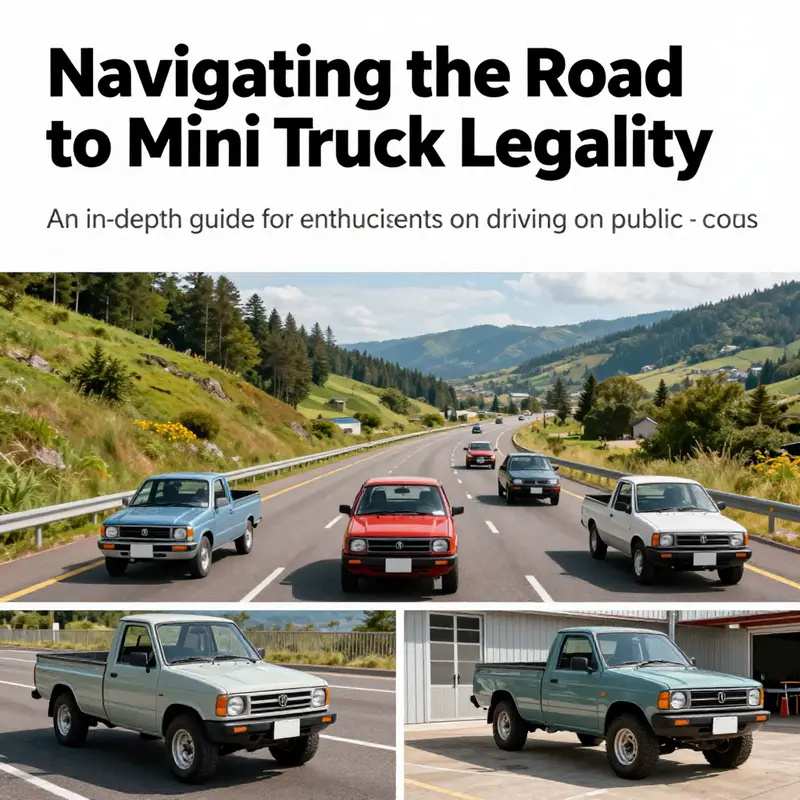
Mini trucks are small but mighty vehicles, often beloved for their utility and compact design. But can you legally drive one on the road? This question is critical for local small business owners, residential property owners, and mini truck enthusiasts alike. Understanding the legalities behind operating these vehicles can save you from potential fines and enhance your driving experience. In the chapters ahead, we’ll explore the regulations surrounding mini trucks, the safety and registration requirements you need to be aware of, regional variations that could impact legality, and the overall implications of mini truck usage on roadways. Whether you’re looking to use a mini truck for business, pleasure, or adventure, this guide aims to provide clarity and solutions.
Road-Ready or Off-Road Only? Navigating the Legal Road Map for Mini Trucks
When people first consider a mini truck, a common question rises with practical urgency: can this compact workhorse share the road with full-size cars, or is it relegated to fields, farms, and off-road trails? The short answer is nuanced. A miniature utility truck can be driven on public streets, but whether you may do so legally hinges on a mix of design intent, regulatory alignment, and the vehicle’s compliance with safety and environmental standards. These factors are not abstract requirements; they determine whether a vehicle can earn a plate, carry insurance, and pass inspections without triggering stops from curious traffic officers or costly upfits that render it noncompliant. In practice, many mini trucks are designed to serve both on-road and off-road duties, but the highway eligibility rests on meeting the same baseline expectations that apply to any street-legal vehicle. The road-legal status is not guaranteed by form alone; it is earned through a concrete checklist that starts at the factory and ends at the DMV window or its international equivalent. The underlying framework is deliberate and standardized, not arbitrary, and understanding it helps owners plan how they will use their machine in daily life and in the backcountry alike.
From the outset, the governing logic runs through two layers: federal safety and emissions standards, and state or local rules that translate those standards into registrations, licenses, and road-use allowances. At the federal level, safety authorities set core criteria that any vehicle must meet to be considered street-legal. These criteria cover structural integrity, which ensures that the passenger cabin and chassis provide predictable strength under normal and emergency conditions. They also cover lighting and signaling so that a vehicle is visible and communicates intent to other drivers. Braking systems must reliably reduce speed and stop the vehicle under diverse loads and weather. Seat belts are non-negotiable for occupant safety, and emissions control is the bridge to cleaner air and regulatory compliance. When a mini truck comes straight from the factory with these features, it is more likely to be treated as a road-legal variant rather than a specialized, off-road-only machine. When a vehicle is engineered strictly for off-road use or significantly altered from its original specification, it may fail to meet one or more of these baseline requirements. In such cases, the vehicle risks denial of registration or, at minimum, the need for substantial modifications before it can legally ply public highways.
The next layer belongs to states and, in some regions, local jurisdictions. State regulations govern how a vehicle is registered, insured, and operated on public roads. Registration typically requires proof of ownership, a title, and a vehicle identification number that aligns with the standards of the jurisdiction. Insurance is not optional if one intends to drive on a public road; it protects drivers, passengers, and other road users and is frequently required for registration or renewal. Operations rules can vary as well: some areas may require a specific vehicle classification or permit for lightweight trucks, while others rely on general compliance with standard traffic rules for passenger cars and light trucks. In practice, this means that a mini truck that is road-legal in one state might face restrictions in another. Add to this any local ordinances—county or city codes—that address vehicle height, lighting, or noise, and the regulatory picture becomes a mosaic rather than a single rule set. The most reliable path to clarity is a careful, jurisdictional check with the local department of motor vehicles or its equivalent. This due diligence helps prevent costly missteps and ensures the vehicle can be operated with confidence on the routes you plan to travel most often.
A practical way to think about the road-legal status is to imagine the vehicle traversing a standard mix of conditions: daytime commuting, nighttime urban driving, infrequent highway travel, and occasional rural or country roads. In each scenario, the vehicle must perform to expectations: lights must illuminate correctly, signals must communicate clearly, brakes must respond promptly, and the vehicle must remain stable and controllable. Emissions systems, meanwhile, must function within the limits set by environmental agencies, which are designed to minimize air pollution and curb excess emissions. For owners, this means not only verifying that the vehicle appears to meet the basic requirements but also confirming that it carries the appropriate paperwork and passes any required tests or inspections. Some states require periodic safety or emissions inspections, a process that helps ensure continued compliance and road readiness over time. When a vehicle lacks inspection history or has failed past inspections, the road-legal status becomes uncertain until issues are resolved.
The distinction between on-road capability and off-road specialization is especially important when considering modifications. It can be tempting to upfit a mini truck with rugged tires, reinforced suspension, or winches to maximize off-road performance. However, changes that significantly alter the vehicle’s intended use or safety characteristics can trigger a re-evaluation of its road-worthiness. In some cases, modifications can push a vehicle out of the highway category, requiring re-certification or change in classification. Vehicle owners should approach any upfit with a compliance-minded mindset. If potential changes are contemplated, consulting with local authorities or a certified mechanic who understands regulatory expectations is prudent. The core principle is simple: any alteration should preserve or enhance the vehicle’s ability to meet federal safety and emissions standards while preserving road-use functionality. When in doubt, choose conservative upgrades that maintain the integrity of lights, brakes, seat belts, and suspension within the parameters allowed by the jurisdiction.
For those who are evaluating which mini truck to consider, a practical starting point is to compare models’ specifications and compliance features. A thoughtful comparison helps distinguish vehicles that are designed with highway use in mind from those intended primarily for off-road or agricultural work. A well-chosen model will typically provide clear documentation of certification, approved emissions package, and factory features such as appropriate lighting layouts, seat belt configurations, and a braking system designed for highway speeds. If you want a structured starting point for comparison, consider examining sources that lay out model-by-model specifications and compliance capabilities. This can help you identify candidates that align with your road plans and reduce the risk of acquiring a vehicle that cannot be legally operated where you live. In this regard, exploring dedicated comparison guides can be informative: they summarize how different compact trucks stack up against highway standards and provide concrete, usable criteria for evaluating road-worthiness. You can look at a resource that discusses model-specifications and features in depth by visiting the article on comparing Kingstar Kruzr models specs and features.
Beyond the federal and state layers, practical considerations influence everyday use. Local laws may affect whether a mini truck is permitted to operate on certain streets, highways, or lanes. Some municipalities impose noise limits, height tolerances, or daylight-use rules that can affect driving a compact truck within city limits. A vehicle that is designed for dual use—on-road and light off-road—needs to be assessed against these local constraints to ensure smooth operation. Without this due diligence, the vehicle might be legally drivable, yet practically constrained in your usual driving environments. It is worth noting that the road-legal status is not merely a one-time paperwork exercise; it is a dynamic status that can change with changes to the vehicle or modifications in local regulations. Periodic reviews of the vehicle’s compliance, especially after any major maintenance or update, help maintain the intended legal status and prevent inadvertent violations during routine trips.
The journey from curiosity to compliance is not a dark corner of regulatory complexity. It is a corridor of clarity that begins with understanding the federal baseline and extends through state and local layers that tailor that baseline to everyday life. For anyone who intends to use a mini truck on public roads, the path is straightforward but exacting: confirm that the vehicle meets the core safety and emissions requirements; verify vehicle registration and insurance; ensure proper labeling and lighting; keep up with any required inspections; and stay informed about local rules that may affect operation. When these steps are followed, the mini truck can function as a legitimate vehicle for work, errands, and even occasional light commuting, broadening the range of tasks it can perform without forcing owners into purely off-road escapades or private property use only. The aim is not to acquire a novelty that barely makes it into the driveway; it is to secure a practical, legal, and reliable instrument for daily mobility and rural work.
In closing, a prudent owner balances ambition with responsibility. The allure of compact, versatile utility vehicles should be matched by a disciplined approach to compliance. By treating road legality as a structured process rather than a guess, owners can enjoy the benefits of a mini truck without the anxiety of unexpected penalties or vehicle immobilization. The road-legal status, though sometimes nuanced, is ultimately a product of good planning, proper documentation, and ongoing attention to both safety standards and local rules. For those who want a concrete, model-focused baseline before heading to the showroom or the DMV, remember that the road toward legality starts with a careful evaluation of the vehicle’s base specifications and compliance footprint, and grows with diligence in registration, insurance, and inspection. This approach keeps the vehicle a genuine partner in daily work and exploration, rather than a project that lingers in gray areas. External resources and official guidelines can further illuminate the specifics of your jurisdiction, helping you navigate the road with confidence and clarity.
External resource: For federal guidelines on vehicle compliance, see the NHTSA Vehicle Compliance page.
Legality in Motion: Navigating Safety, Registration, and Real-World Access for Mini Trucks on Public Roads
When readers ask whether you can drive mini trucks on the road, the answer isn’t a simple yes or no. It’s a careful calibration of who makes the rules, which rules apply, and how a small vehicle was built and has been maintained since it left the factory. Mini trucks span a spectrum from compact utility designs used in busy work yards to street-legal, light-duty options that resemble tiny pickups. Their design intent often blends on-road versatility with off-road capability, a dual purpose that sounds ideal until you realize how regulation treats that blend in practice. If you own one, or you’re considering buying one for daily driving, you’ll need to think about the vehicle’s origin, age, and the paperwork that ties it to a responsible operator’s hands. The legal route is less about novelty and more about adherence to a layered system of federal standards and state and local rules that govern who may operate what on public streets or highways.
At the federal level, the National Highway Traffic Safety Administration and the Environmental Protection Agency are the gatekeepers. They determine, in part, whether a vehicle can be registered and used on public roads without expensive and invasive modifications. The core issue is safety and emissions—two categories that public roads depend on to minimize risk to drivers and to protect air quality. In practice, most mini trucks produced for non-automotive markets were not designed with the full spectrum of modern highway safety features in mind. That means, for many models, a straightforward registration for street use is not possible without substantial changes. The federal framework exists to prevent a mismatch: a vehicle that lacks proper occupant protection systems, braking performance, lighting, or emissions controls should not be placed in regular traffic where higher speeds and longer stopping distances become critical.
Within this framework, two time-based guardrails decide a great deal about legality. First is the age of the vehicle. Vehicles that are twenty-five years old or older are often exempt from some modern federal standards. This exemption recognizes that older vehicles were built under different safety norms and that mandating retrofits for such engines could be impractical or economically unfeasible. The practical upshot is that a mini truck manufactured in 2001 or earlier has a much greater chance of receiving road-legal status without conforming to today’s strict safety and emissions requirements. In 2026 terms, that means vehicles built in 2001 or earlier fall squarely into the exemption zone. A truck manufactured in 2002 or later, however, generally falls outside that exemption and would need to navigate a process that can involve costly modifications and official certification to prove compliance before it can be registered for road use.
Second is the reality that many mini trucks were designed primarily for off-road tasks, light-duty utility, or agricultural contexts. Their original purpose often did not include compliance with high-speed highway standards or the full suite of safety mechanisms that modern road vehicles carry. The result is a practical barrier for buyers of newer models who want to use the vehicle beyond private property or off-road parks. It’s not simply about buying a vehicle and signing up for insurance; it’s about whether the chassis, frame design, restraint systems, crashworthiness, braking performance, and exhaust emissions align with current federal expectations. In many cases, the answer is that they do not, unless the truck has undergone a formal modification and certification process. Those modifications are not cheap, and they require rigorous testing, documentation, and often the involvement of specialists who understand both automotive engineering and regulatory compliance. The barrier is real enough that some people end up using newer mini trucks in controlled environments—private property, designated off-road trails, or closed courses—where public-road rules do not apply.
This is where state-level variations become crucial. Even if a vehicle can meet federal standards through a certified modification, state and local jurisdictions frequently impose additional requirements that can trip up a road-legal plan. Some states classify mini trucks under narrow vehicle categories with strict limits on overall size, weight, lighting configurations, and the available registration options. Other states may require a distinct licensing category for such vehicles, effectively creating a separate class that is not automatically eligible for standard freeway operation. The practical implication for owners is that a vehicle that seems ready for the street in one state could be effectively blocked in another, despite compliance with federal milestones. It also means that insurance providers, who assess risk based on the same constellation of factors, may decline coverage or impose higher premiums if the vehicle is not properly registered, or if the vehicle’s safety and emissions profile does not meet the jurisdiction’s expectations. In short, legality on public roads becomes a layered reality: federal exemptions set the ceiling, but state and local rules often determine the floor.
What does this mean for someone who already owns a mini truck or is contemplating purchase? The central steps are practical, not theoretical. Start with the model’s year of manufacture and the vehicle’s current registration status. If the vehicle is older than twenty-five years, you’ll still need to confirm that the registration reflects the exemption and that the vehicle is otherwise road-ready in terms of lighting, brakes, tires, and visibility. If the vehicle is younger, the question becomes whether it has or can be granted the required safety and emissions certifications. This includes aspects as basic as a seat belt installation and as complex as a certified crash-structure upgrade or a functional emissions-control system. The cost and feasibility of these upgrades can be prohibitive. In some cases, buyers learn that the road-legal pathway involves more than just a single retrofit; it requires a documented redesign that demonstrates the vehicle meets the standards applicable to new light-duty trucks. It’s a reminder that the decision to drive a mini truck on public roads is, at its core, a compliance journey rather than a mere purchase decision.
For those who want a focused view on what to check before committing to a road-legal plan, the rule of thumb remains the same: verify the exact model year, confirm any modifications, and obtain clear, written confirmations from the appropriate motor vehicle department or an approved certification body. This isn’t just about ticking boxes; it’s about ensuring that a vehicle enters traffic with documented safety and environmental performance that peers and inspectors can verify. The process can feel bureaucratic, but it exists to ensure that all road users share a baseline of safety and performance. The risk of proceeding without proper verification is substantial. It ranges from fines and impoundment to a loss of insurance coverage and increased liability exposure in the event of a collision. These are not hypothetical concerns—their likelihood grows with the vehicle’s age and with the complexity of its modifications.
If you’re pondering the practicalities of registration, a good starting point is to map out the regulatory landscape as a single workflow. Confirm the vehicle’s exact year and country or state of operation. Check the DMV or equivalent authority for the vehicle classification under that jurisdiction and seek a clear list of required inspections, safety features, and emissions standards for road use. Gather any official documentation of prior modifications, dealer assessments, or engineering certifications. This documentary trail matters because even seemingly minor discrepancies—such as an unregistered alteration to lighting or braking components—can derail a registration attempt and trigger penalties. It’s a discipline that rewards patience, careful documentation, and a willingness to engage with specialists who understand the intersection of vehicle design and regulatory compliance.
In addition to the federal and state considerations, there is a practical question about ownership and daily use. Insurance is not a given for a non-standard vehicle on public roads. Even if the state allows registration, the insurer will typically want to see proof of compliance with safety standards and emission controls. Some providers may require additional endorsements or may impose restrictions on usage, such as prohibiting high-speed highway driving or limiting operation to certain locales. The result is that owning a mini truck and using it as a daily driver often requires negotiating a more intricate insurance agreement than a conventional passenger car, with coverage tailored to the vehicle’s classification and the operator’s qualifications.
All this underscores a broader point about the road-legal outlook for mini trucks: legality is not a single checkbox but a network of requirements that can shift with geography and time. The 25-year rule offers a potential pathway for older vehicles, but it is only one piece of a larger puzzle. For newer vehicles, the pathway is typically more complex and financially demanding, often pushing owners toward private-property use or controlled off-road settings unless a certified modification program has been completed. This reality is important for buyers who might otherwise view a mini truck as a simple, economical alternative for everyday transport. The truth is more nuanced: the very features that make mini trucks appealing—the compact size, the nimble handling, and light-duty utility—also make them exceptional candidates for regulatory review. The result is a realistic reminder that smart ownership hinges on diligence, not over-optimism about a vehicle’s default road-worthiness.
Those who want a concise reference on federal guidance can consult official sources that explain vehicle age and eligibility. The guidance outlines how the 25-year exemption operates and under what circumstances it might still be necessary to meet current standards. This is not a detour from practical advice; it is the map that helps buyers and owners navigate a dense regulatory landscape. For a broad overview and updates on policy nuances, consult the official materials produced by the federal authorities charged with vehicle safety and environmental compliance.
For readers seeking a practical, community-informed perspective on ownership and project possibilities, the broader mini truck community offers a wealth of experiences. A good starting point to explore practical discussions, owner experiences, and broad considerations is the minitrucksocala blog. It provides a sense of how owners approach the road-legal question, the kinds of modifications people pursue, and the kinds of questions that arise when a vehicle leaves the showroom for the street. You can tap into those conversations here: minitrucksocala blog.
As this chapter moves from federal principles to the daily realities of ownership, a final reminder holds true: the road-legal status of a mini truck is a negotiation between age, design intent, and the regulatory environment in your place of residence. If you approach the process with patience, thorough documentation, and a realistic view of the costs and timelines involved, you will have a clearer sense of what it takes to make a mini truck a legitimate participant in everyday traffic. And if the journey seems overwhelming, consider the alternative of enjoying the vehicle in environments where the legal constraints are clarified and there is a shared understanding of how these compact machines best serve their intended roles. The aim is not to chase an illusion of universal road access but to foster responsible, well-informed use that respects both personal mobility needs and the safety of everyone on the road.
In closing, the path to road use for mini trucks is variable but navigable with the right information and planning. The question is not just about whether the vehicle can physically travel on pavement; it’s about whether it can travel there legally, safely, and responsibly. The nuances—the federal age exemption, the possibility of required modifications, the state-level rules, and the realities of insurance—combine to shape a practical, if sometimes arduous, road ahead for mini truck owners. For readers who want to dig deeper into how these pieces fit together, the next chapters will explore how to assess a specific mini truck’s potential road-legal status, how to estimate the costs of compliance, and how to compare the true value of street-ready versus off-road-focused configurations.
External resource: https://www.nhtsa.gov/vehicle-age-and-eligibility
Roads Without Borders: Navigating Regional Rules for Driving Mini Trucks on Public Highways
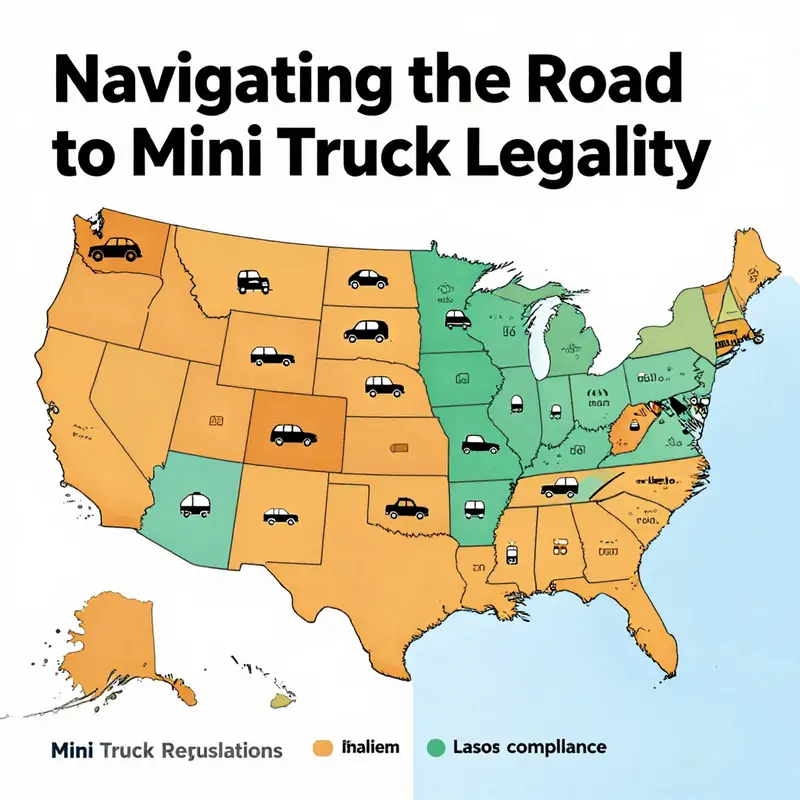
The question of whether you can drive a mini truck on public roads is less a single yes-or-no answer and more a map of regulatory borders that shift with location, purpose, and the precise design of the vehicle. When people ask can you legally use a compact, light-duty truck for everyday highway travel, they are often surprised by how differently the answer can come back depending on where they are and what they intend to do with the vehicle. The core idea that helps anchor the discussion is straightforward: road liability, safety standards, and environmental rules are national to some extent, but they are applied through a patchwork of regional regulations. This means a vehicle that passes muster in one country or state may face additional hurdles or even outright restrictions elsewhere. The deeper truth is that mini trucks are not uniformly categorized across jurisdictions. Some regions treat them as specialized off-road or agricultural tools; others recognize them as legitimate, road-going light-duty vehicles with their own sets of registration, licensing, and compliance requirements. Understanding this landscape requires attention to vehicle intent, technical specifications, and the administrative steps that turn a potentially eligible chassis into a legally drivable machine.
The most stable reference point for this inquiry is the sense in which these small trucks originated and evolved. In many parts of Asia and Europe, compact utility vehicles are designed with a strong emphasis on practicality and efficiency. Their compact footprint, tight turning radii, and modest engine displacements are well-suited for farm work, rural deliveries, and constrained urban corridors. In Japan, for example, a distinct category exists for ultra-compact, low-displacement vehicles that enjoy certain tax and registration advantages. These Kei-class machines are built to fit specific size and engine limits, which yields lower operating costs and smoother eligibility for road use within that framework. The regulatory backbone here is clear, and the calculus for ownership and operation becomes predictable: stay within the dimension and displacement caps, meet the safety and emissions expectations that accompany light-duty road use, and the vehicle can be registered and driven with typical licensing requirements.
Across the Pacific and into other parts of the world, the road-legal status of mini trucks becomes more nuanced. In regions where there is a robust, centralized vehicle registration system, authorities may still differentiate between trucks that are primarily intended for off-road or restricted-use scenarios and those that are designed to meet highway safety standards. The result is a spectrum. On one end, a vehicle that aligns with highway standards—adequate lighting, brakes, tires, crashworthiness, and emissions compliance—gains full access to public roads. On the other end, a vehicle built primarily for off-road, agricultural, or industrial tasks may be restricted to private property or limited-use corridors, unless certain modifications or certifications are pursued. The line between these categories is not always obvious, and it is not unusual for a vehicle to straddle both worlds depending on locale and the specific regulatory framework in place.
In practice, the critical checklist for road legality begins with registration and licensing. Any vehicle that will travel on public roads normally requires proper registration with the relevant motor vehicle department, clear license plates, and ongoing compliance with safety inspections. Emissions standards are another piece of the puzzle. The regulatory emphasis on environmental responsibility has grown in many jurisdictions, and mini trucks—given their small engines and often efficient fuel use—can benefit from favorable emissions considerations if they meet the local thresholds. When these pieces align, the path to road use becomes straightforward: prove identity, prove ownership, demonstrate safe operation, and operate within the law of the land. When they do not, owners may face a range of outcomes—from additional certification and testing to restrictions on driving, or even prohibition of operation on public streets without modification.
A key distinction appears in large, federated nations where state or provincial authorities maintain autonomy in vehicle rules. In the United States, for instance, mini trucks do not form an officially recognized federal category. The practical effect is that legality becomes highly state-specific, and often locally nuanced. Prospective buyers or operators must navigate a maze of import considerations, age requirements, emissions checks, and safety-certification hurdles. The interplay between federal considerations and state-level implementation can be opaque, especially for vehicles that originate outside the country or that have been modified in ways that affect crash safety or crash-test compliance. A diligent approach for anyone exploring road use in this context involves early, thorough verification with the state’s department of transportation and its motor vehicle agency. The January 2026 buyer’s guide to mini trucks emphasizes the same point: the most common pitfalls are unapproved modifications and failure to satisfy crash-test or regulatory-prescribed inspections. These cautions are not merely bureaucratic footnotes; they are practical safeguards against the risk of a vehicle being deemed unfit for operation, which can carry penalties and invalidate insurance.
Beyond the United States, regional contexts continue to diverge in telling ways. In parts of Asia and Europe, small commercial vehicles have gained traction as viable urban logistics solutions. Some European nations have begun to push zero-emission mandates into the micro-delivery space, shaping the design and certification requirements for new vehicles and impacting the regulatory acceptance of older platforms. The net effect is that, for a fleet operator or a private owner who travels across borders with a mini truck, the business case becomes more complex: you must factor in cross-border regulatory compatibility, not just the localities of origin. In other regions, such as parts of the Commonwealth and certain Scandinavian countries, the approach to light-duty transport often balances rigorous environmental expectations with pragmatic allowances for specialized use cases, including agricultural or off-road work that may permit limited road access when paired with specific compliance features.
For listeners and readers who want a broader, non-country-specific overview, it helps to adopt a regional lens. In countries with strong, centralized vehicle oversight, the road-legal status of mini trucks is shaped by a combination of weight classifications, engine displacement, and the ability to pass standard safety and emissions testing. In other places where regulatory bodies operate more conservatively or where enforcement is uneven, even a vehicle meeting many practical criteria may run into bureaucratic obstacles. The central takeaway is not a universal yes or no but a three-part lens: first, does the vehicle meet the technical criteria that local law requires for road use? second, has it been properly registered and insured in a way that aligns with local expectations? and third, can the operator demonstrate safe, legal operation through the necessary licensing and inspection regimes?
To illustrate how this plays out in real life, imagine a prospective owner who plans to use a compact, utility-style vehicle for urban deliveries and light construction support within a single country or region. If the vehicle is intended for daily highway travel, the owner should verify that the design meets safety and emissions requirements for highway use, not just off-road or restricted-use, and that it can be registered with the appropriate plate and title. If the intent is cross-border operation, the job becomes more complex still. Border crossing, duty, and compliance issues multiply; even if a vehicle is road-legal at home, it may require modifications to meet the standards of another jurisdiction, from lighting configurations to emission control technologies or crash-test documentation. In these contexts, the cost and logistics of maintaining compliance can rival the initial price of the vehicle itself. The strategic takeaway for individuals and businesses is not to treat a mini truck as a one-size-fits-all tool but as a platform whose road-legal viability is earned through deliberate alignment with local and, when applicable, international requirements.
From a practical mindset, the path to legally driving a mini truck on the road begins with awareness, then due diligence, and finally ongoing compliance. Start with the basics: confirm the vehicle’s identification numbers, engine displacement within the allowed range, vehicle category as defined by the jurisdiction, and the intended use case. Next, engage with the local authority to determine the exact registration requirements, license plate formats, and the schedule for periodic inspections. If emissions standards are involved, document the capabilities of the exhaust and engine management system to demonstrate compliance. The licensing piece is equally important. In many places, the operator must hold a standard driver’s license suitable for the vehicle class, and in some regions, a special endorsement or certificate may be required for drivers of light-duty trucks with particular configurations. Insurance considerations follow, with coverage that reflects the vehicle’s intended use, its operation on public roads, and any cross-border plans.
This is where the narrative intersects with the everyday realities of owners and fleets. A mini truck, when properly matched to the regulatory landscape, can be an economical, efficient tool for a range of tasks—from agricultural support to on-site construction assistance and last-mile urban logistics. When regulations restrict on-road use, the same vehicle can still be valuable in restricted contexts—on private property, job sites, or closed-loop operations—where safety, liability, and efficiency remain central concerns. The key is to recognize that legality is a moving target, one not defined by a vehicle’s potential performance but by its conformity to the rules that govern its operation. Enterprises that plan to deploy these vehicles across borders must plan for border-specific compliance from the outset. The consequences of neglect can be significant, including fines, seizure, insurance claims being denied, or, in worst-case scenarios, liability in the event of an accident.
For readers who want a consolidated sense of how regional rules shape the feasibility of road-use for mini trucks, a practical takeaway is to consult a breadth of sources and to follow a disciplined due-diligence process before purchase, modification, or deployment. A useful starting point for those seeking deeper, community-informed perspectives is the broader mini-truck ecosystem online. For further context and discussions, see minitrucksocala.com/blog. This hub provides ongoing, community-driven updates about regulations, practical experiences, and policy shifts that affect street legality and daily operation across settings. The dialogue on that platform can help prospective drivers understand how regulations evolve and what accrued experiences imply for future purchases and fleet planning.
In looking ahead, the regulatory landscape is likely to continue evolving, driven by broader goals of road safety, emissions reduction, and urban logistics efficiency. Zero-emission incentives and standardized safety benchmarks may gradually reduce some of the regional friction that currently complicates road use for mini trucks. Yet even with such harmonization on the horizon, the reality remains: regional compliance is not a static backdrop but a dynamic condition that requires ongoing attention. Fleets operating across borders may need modular compliance strategies, built around adaptable chassis choices, flexible maintenance plans, and clear documentation trails that satisfy the most stringent jurisdictions they intend to operate in.
If you are weighing the feasibility of a mini truck for your day-to-day needs, start by mapping your typical routes, the kinds of tasks you expect to perform, and the regulatory regimes you are most likely to encounter. Then engage with the appropriate authorities, ideally with a checklist in hand that covers registration, licensing, safety inspections, and emissions. If your plans include cross-border operations, consult cross-border compliance specialists or regulatory guides that spell out the steps required to bring a vehicle up to the standard for each jurisdiction you expect to access. The careful, proactive approach does not guarantee universal access in every scenario, but it does maximize the likelihood of a smooth, legally compliant driving experience wherever you choose to use your mini truck.
For readers seeking a compact, practical takeaway, the road-legal reality of mini trucks is not a universal blanket but a tailored map. Knowing the regional contours—what is permitted, what is restricted, and what adjustments might be required—enables smarter decisions about vehicle selection, upgrades, and deployment strategy. It also invites a broader conversation about how cities and regions alike can accommodate efficient, smaller-scale logistics while preserving safety and environmental standards. In this sense, mini trucks are not merely niche tools; they are test cases for how modern road systems balance efficiency, accessibility, and responsibility. The more informed the decision-maker, the better the alignment between the vehicle’s capabilities and the road system’s expectations.
External resource for deeper reading: https://www.example.com/us-minitruck-legal-guide-2026. For ongoing, community-informed insights, you may also explore the mini-trucks blog community at the link mentioned earlier. If you want to dive into broader discussions about regulations, safety, and regional practices, the mini trucks ecosystem at minitrucksocala.com/blog offers a useful starting point and a living archive of real-world experiences that can illuminate how regional variations translate into everyday legality and practical operation on the road.
Road-Ready Mini Trucks: Balancing Urban Potential with Safety, Regulation, and Road Sense
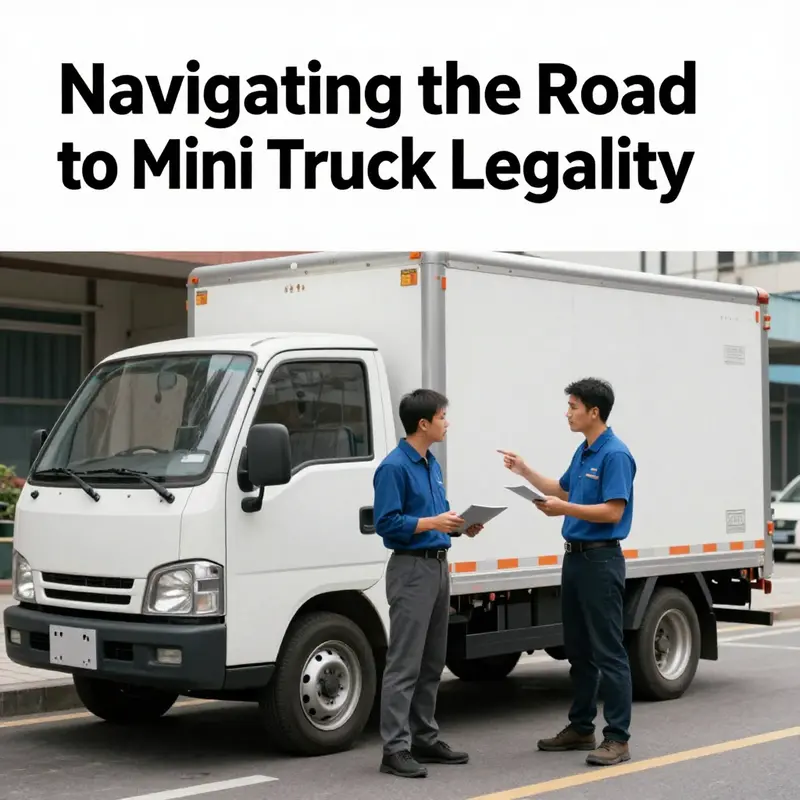
The question of whether you can legally drive a mini truck on public roads sits at the intersection of vehicle design, local regulations, and urban needs. Mini trucks, by their nature, are designed to be compact, agile, and efficient enough to handle tight streets and short trips. That combination makes them attractive for city deliveries, light commercial tasks, or simply navigating congested neighborhoods where space is at a premium. Yet the same compact footprint that grants nimbleness can raise concerns about safety, compliance, and compatibility with existing road networks. The broad truth is that road legality is not a blanket label for every mini truck. It is a conditional status that depends on the specific vehicle, how it is equipped, and the jurisdiction in which it operates. To move from a showroom concept to a publicly driven reality, a vehicle must clear a sequence of checks that ensure it is recognized, insured, and safe for sharing the road with standard passenger cars, cyclists, and pedestrians. In practical terms, this means registration with the appropriate motor vehicle authority, valid license plates, periodic safety inspections, compliance with emissions standards, and a driver with a current license. These are fundamentals shared by most jurisdictions, yet the criteria can diverge in meaningful ways when it comes to ultra-compact trucks that straddle categories or are tailored for off-road use, agricultural tasks, or industrial work. The conversation, therefore, unfolds across three interwoven axes: the on-road feasibility of the vehicle itself, the regulatory framework that governs its use, and the urban environment that will host its presence. Within this triad, the road-ready status of a mini truck is less about a single stamp of approval and more about a layered alignment of design, law, and city life that makes sense in a given place. This layered reality is not merely a bureaucratic hurdle; it is a practice of urban foresight that weighs efficiency against safety, mobility against pedestrian dignity, and private advantage against public responsibility. With this framing in mind, we can explore how mini trucks fit into the daily rhythms of streets that were built for larger vehicles, and why some cities see them as viable tools for last-mile delivery, maintenance work, and small-scale enterprise, while others approach them with caution or even restrictions. The core takeaway is that road legality is about fit—in the same way a key must match a lock, a mini truck must match the road system it intends to share. The fit is defined by how the vehicle’s performance characteristics, safety features, and regulatory status align with local rules and the city’s capacity to absorb new vehicle types without compromising safety or mobility. In practice, this means a careful assessment of dimensions, braking and lighting systems, tire design, and the presence of safety features such as reflectivity, visibility aids, and crash protection. It also means checking whether the vehicle is classified as a light-duty truck, an off-highway vehicle, or another category in the local regime. These classifications carry implications for license requirements, insurance, and permitted operating environments, including whether the vehicle can be licensed for street use or restricted to private property or certain low-speed zones. For the prospective operator, the starting point is always the same: identify the precise model or configuration, confirm that it complies with the standards applicable to on-road operation, and then pursue registration and licensing through the appropriate authorities. This process typically involves documentation such as proof of ownership, safety inspection reports, and, in many places, an emissions test or certification to meet environmental standards. It may also require a demonstration of braking performance, lighting compliance, and tire condition. Each jurisdiction has its own thresholds, and those thresholds can change as cities experiment with new mobility solutions. The result is a landscape where some mini trucks glide onto the road after straightforward checks, while others are curtailed or require modifications to meet highway standards. The difference often boils down to the vehicle’s weight, speed capability, and active safety systems. A light, low-speed design may meet the constraints in some places, especially if it operates within a defined speed envelope or in zones designed for micro-mobility and small commercial vehicles. On the other hand, higher speed expectations or vehicle weight that pushes into a higher category can trigger stricter standards that resemble those for conventional pickups or vans. This is more than a matter of hardware; it is also a matter of systems integration. If a mini truck is intended for regular street use, it is most effectively designed with highway-appropriate brakes, tires that provide predictable grip at various speeds and weather conditions, and lighting that ensures visibility for all road users. The chassis and suspension should offer stable handling, especially in urban settings where sudden pedestrian crossings, cyclists, or parked vehicles can create dynamic obstacles. In addition, a robust safety package — including electronic stability control, anti-lock braking, traction control, and adequate crash protection for occupants — goes a long way toward making a compact vehicle a dependable road partner. Yet safety is not just about the vehicle. The surrounding traffic ecosystem—the behavior of other road users, the availability of clearly marked lanes, and the reliability of infrastructure like signage and lighting—plays a decisive role in determining how well a mini truck can operate on a given street network. This is where regulatory clarity and urban design come into play. When regulations clearly define the status of compact trucks, the rules of the road become more predictable for drivers and other users alike. Clear guidance on where and when these vehicles can operate, what kind of infrastructure they can use, and what safety standards they must meet reduces a great deal of uncertainty. It also signals a city’s willingness to experiment with new mobility models rather than resisting them out of hand. Urban planners, traffic engineers, and policymakers thus face a shared challenge: how to accommodate a class of vehicles that promises to relieve congestion and lower emissions without compromising safety or fairness on the roadway. One practical approach is to encourage or require micro-vehicle demonstrations in controlled or low-speed corridors before broad deployment. Where permitted, such corridors can be equipped with enhanced visibility, lighting, and signage to ensure small-capacity vehicles can operate in harmony with larger traffic. This approach mirrors how many cities have approached other new mobility forms—introducing pilots, gathering data on safety outcomes, and refining rules as experience grows. The complexity of this endeavor grows when we consider the commercial use of mini trucks. For businesses that depend on frequent, small-load deliveries or on-site service calls, the allure is straightforward: reduced fuel costs per mile, easier maneuvering in dense neighborhoods, and the possibility of faster response times in crowded cores. But the realities of cargo capacity, payload limits, and route planning must be accounted for. In some cases, the practical payload of a mini truck aligns well with urban micro-delivery tasks or yard-to-curb services where larger vehicles are impractical or inefficient. In others, the need for bulk transport will still require a larger vehicle with greater volume and weight-handling capability. Planning for these use cases means more than purchasing decisions. It means a thoughtful mix of vehicle options, scheduling, and regulatory compliance. It also invites a broader conversation about how cities handle curb space, loading zones, and parking for a diverse fleet of vehicle sizes. Parking and loading zones, in particular, require careful policy design. If mini trucks gain popularity, cities may need more flexible loading zones or dedicated micro-vehicle bays that recognize their smaller footprint while protecting pedestrians and cyclists. At a higher level, the environmental argument for mini trucks—especially those with electric propulsion or highly efficient drivetrains—gains weight when measured against the emissions and fuel costs of larger, less efficient vehicles used for similar tasks. The appeal is not merely the reduced tailpipe output; it is the longer-term cost stability and resilience in urban energy ecosystems. Yet this environmental upside depends on the broader energy mix and the availability of charging or refueling options. For electric mini trucks, the infrastructure challenge is real: urban planners must coordinate parking, charging corridors, and grid capacity to prevent new bottlenecks from appearing where the vehicles congregate. Without reliable charging options, even the most efficient micro-truck can fail to deliver its promised economic and environmental benefits. The decision to deploy on-road mini trucks is thus a balancing act among several factors. Practitioners must weigh regulatory readiness against the practicalities of a task, ensuring that the vehicle’s capabilities align with street behavior and infrastructure realities. In many places, the ideal path involves choosing configurations that emphasize safety and compliance first, then exploring niche use cases that demonstrate clear, measurable benefits. Operators should also stay mindful of public perception and safety risk, as the widespread presence of small, quieter vehicles may alter the way pedestrians and cyclists interact with traffic. This concern highlights the need for visibility enhancements and thoughtful vehicle design that keeps vulnerable road users in view. To connect readers with ongoing real-world discourse, consider visiting the Mini Trucks Blog for current discussions, case studies, and practical experiences from people who are testing these vehicles in diverse urban contexts. The conversation is evolving, and the best-informed choices come from examining both regulatory landscapes and lived trials in cities around the world. For broader policy context and detailed considerations, see the UK government’s analysis on mini trucks and urban mobility. This resource helps illuminate how different regulatory environments approach micro-mable, curb-space allocation, and road safety when new classes of vehicles enter public streets. As with any meaningful shift in urban transportation, the pursuit of road-ready mini trucks is about more than technical feasibility. It is about creating a shared rhythm on crowded streets where efficiency serves safety and where regulatory clarity supports legitimate economic activity without compromising the rights and safety of other road users. The conversation invites a careful, iterative process: test, measure, adjust, and expand. When implemented with attention to design detail, regulatory alignment, and thoughtful urban planning, mini trucks can become a recognized, legitimate component of the city’s mobility mix. The result can be a city that moves more smoothly for a broader range of tasks and actors, with smaller, more agile vehicles that ease the pressure on commuter corridors and provide practical options for last-mile services. In this light, road legality is less a fixed boundary and more a negotiated arrangement—one that reflects evolving technology, changing urban form, and a collective commitment to safer, more efficient streets. External resource: https://www.gov.uk/government/publications/mini-trucks-and-urban-mobility
Final thoughts
Understanding the legality of driving mini trucks is essential for enthusiasts and business owners alike. By being informed of the regulations, safety requirements, and regional nuances, you can operate your mini truck confidently and compliantly on public roads. From enhancing efficiency for business purposes to enjoying leisure drives, mini trucks offer versatile capabilities that shouldn’t be overlooked. Stay educated, check your local regulations, and drive safely!