
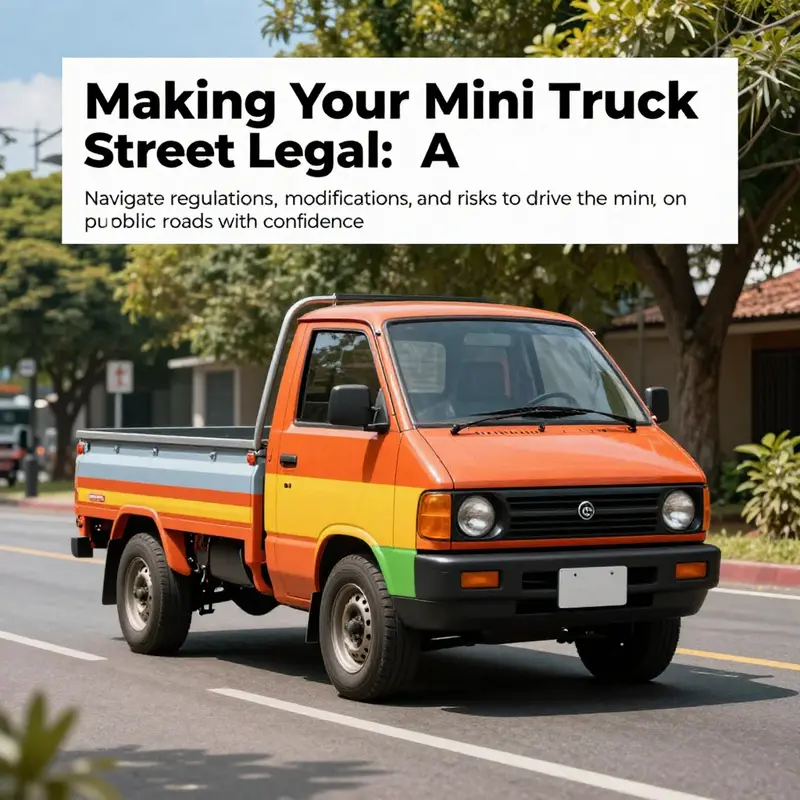
Owning a mini truck can be exciting, but making it street legal is essential for safe and lawful driving. Whether you’re a local small business owner who needs a compact utility vehicle, a residential property owner considering practical transportation, or a mini truck enthusiast passionate about your ride, understanding how to make your mini truck street legal is vital. This guide will explore the local laws surrounding mini vehicles, common modifications that may be necessary, the types of mini trucks eligible for legal status, and the risks associated with non-compliance. Let’s dive into each aspect, helping you on your journey to hitting the road legally and confidently.
Tracing Local Law: Roadmap to a Street-Legal Mini Truck
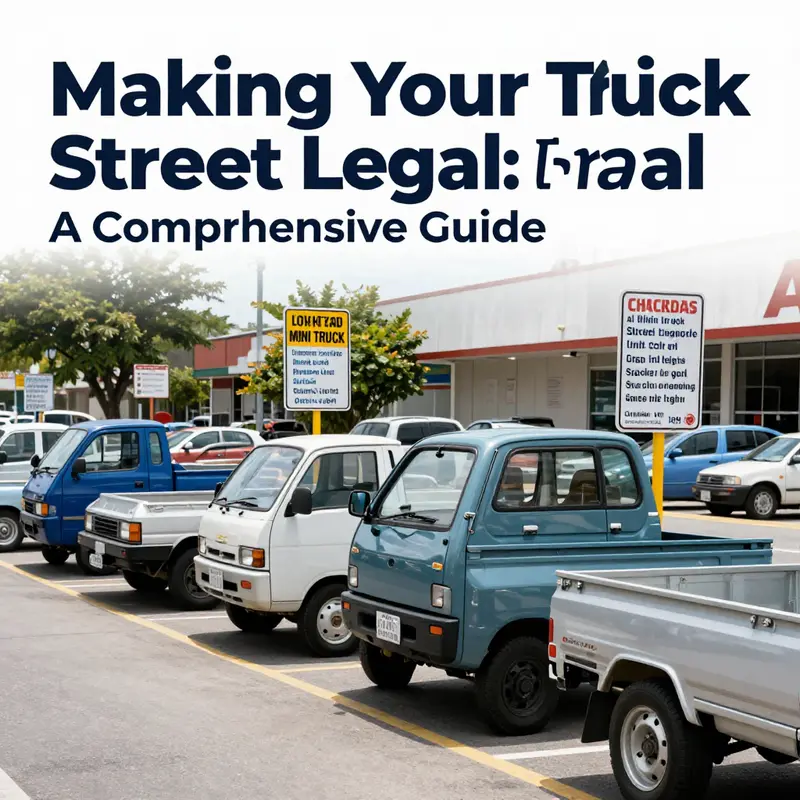
A practical overview of making a mini truck street-legal. Achieving road use requires understanding how your jurisdiction classifies the vehicle, what safety and emissions standards apply, and what documentation is required. It is not a single modification but a formal pathway that aligns the build with regulatory categories rather than attempting to bypass them. The process starts with classification, since different regions treat small trucks as conventional vehicles, low speed vehicles, or regionally defined alternatives. In the United States, federal safety standards may apply to standard registrations, while some markets allow an LSV or NEV path with speed limits and limited use. In Europe, certified approvals and harmonized standards matter for cross-border operation. The key takeaway is to confirm classification with the authority before making major changes, because misclassification can complicate or prevent registration later.
Next come the practical modifications that support compliance. Speed control and lighting are commonly inspected areas. A street-legal mini truck should have headlights, tail lights, brake lights, turn signals, reflectors, and license plate illumination. It should also meet requirements for mirrors, horn, windshield wipers, and a safe braking system. For electric models, emissions testing or electrical safety certifications may be needed, along with battery protection and charging compatibility. Documentation proves that the vehicle has passed safety tests, met emissions criteria, and can be registered and insured.
From a project planning perspective, many builders pursue two paths: buy a model designed for street use with built-in safety kits and defined speed ranges, or convert a small vehicle by adding certified lighting, restraints, and compliant brakes. Regardless of path, the path to legality is planned, inspected, and documented. Officials emphasize starting with classification, then mapping the required inspections and certifications, rather than chasing the end state without regard to paperwork.
Practical resources include official guidance from national safety authorities and local inspectors who can confirm specifics for your vehicle. Community resources and builder blogs can provide case studies but should complement official standards rather than replace them. Keep a careful record of all certificates, inspection reports, registrations, and any correspondence with authorities. The road to legality is a staged process focused on safety, compliance, and documentation.
Common Modifications and the Legal Path to a Street-Ready Mini Truck
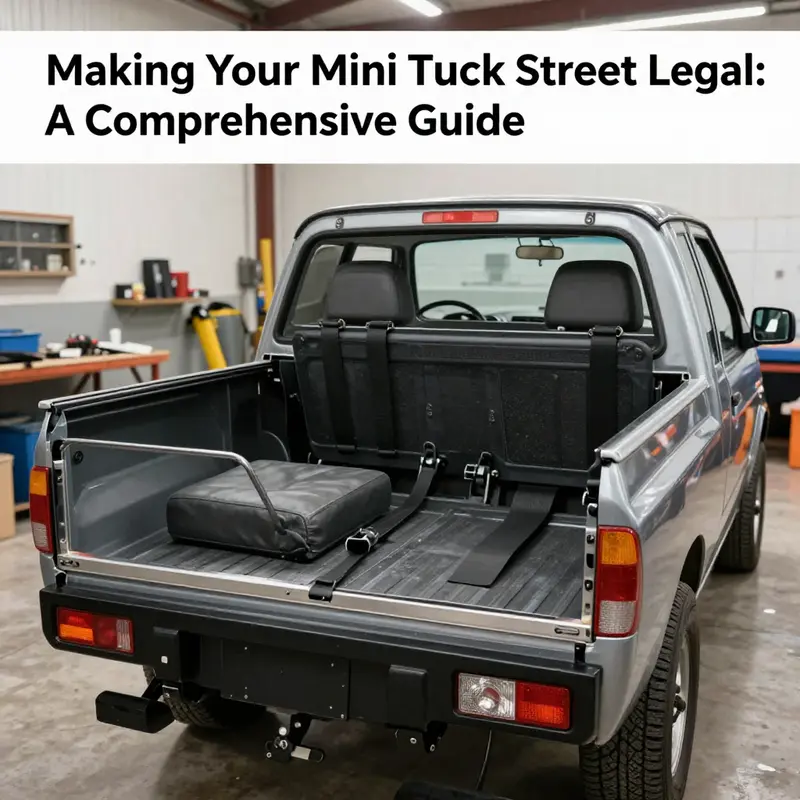
Making a mini truck street legal goes beyond a simple accessories checklist. It is a legal and technical project that requires aligning the vehicle with the same safety, emissions, and registration standards that govern any roadworthy machine. The core challenge is not just how the vehicle looks or how fast it can run, but whether every modification is documented, approved, and certified to preserve safety for everyone on the road. The process varies by country and even by subnational jurisdictions, but there are consistent threads that run through most regulatory frameworks. To navigate this terrain with clarity, it helps to start with a mental map of the legal framework, then move toward the concrete modifications that inspectors scrutinize during inspections and registrations. In the United States and similar markets, the starting point is to identify what category the mini truck falls into and what standards apply to that category. In the United States, for example, a light, street-legal vehicle must meet federal safety standards and be registered appropriately, either as a low speed vehicle or as a full passenger vehicle, depending on its design, speed, and intended use. In the European context, tiny electric trucks or similar light-duty vehicles often require a formal approval path, such as a European type approval, proof of emissions compliance, and conformity with local road-use regulations. The common denominator across these regions is that a vehicle cannot merely be adjusted in the workshop and then declared road legal. Each change calls for documentation, verification, and, in many cases, formal approvals from a state or national authority. The road toward legality begins with a careful assessment of the vehicle type, its gross vehicle weight rating or GVWR, its intended use, and the regulatory category it falls under. For instance, a compact, low-speed pickup might be designed to fall within an LSV or a light-duty category. In many places, that classification carries an upper speed limit, often in the range of 25 to 35 mph, and carries with it a distinct set of inspection and equipment requirements. It is essential to check the local DMV or equivalent authority to determine how a mini truck will be classified and what the implications are for title, registration, and insurance. The legal framework is not merely about ticking boxes; it is about ensuring that the vehicle has the structural integrity to withstand the demands of public road use. This reflects the longstanding emphasis of regulatory bodies on crashworthiness, occupant protection, and compatibility with other road users. When modifications move beyond factory specifications, they can alter the vehicle’s crash dynamics, weight distribution, and braking performance. That is why the process frequently requires engineering documentation, sometimes even professional engineering sign-off, to demonstrate that the changes preserve or enhance safety margins. A practical first step is to document every modification before installation. This means keeping a detailed log of the intended change, the reason for the change, the exact parts used, and the installation steps. This is not a mere formality; it is the foundation for any later permitting process. In many jurisdictions, you must present proof that the new components meet applicable safety and emissions standards. For some modifications, such as altering the body structure or changing the powertrain, the state may require pre-approval or a modification permit. The process often involves submitting an application to the DMV or a dedicated vehicle safety authority, along with photos, engineering reports, and part compliance data. The aim is to establish that the vehicle, after modification, remains within the boundaries of safe operation and environmental responsibility. The modifications themselves fall into several broad categories, each with its own regulatory considerations. First are the fundamental safety features that must be present and functioning on a street-legal vehicle. These include seat belts for all occupied seating positions, clearly visible and properly aimed headlights, taillights, brake lights, and turn signals, as well as reliable mirrors and a horn. In many places a windshield and wipers are expected, and in some regions a defroster or heater may be required for visibility and occupant comfort. The presence and proper alignment of lights and signaling devices are not cosmetic concerns; they are critical for driver visibility and for predictable behavior of the vehicle in traffic. From an inspector’s perspective, a vehicle that cannot clearly communicate its intentions to other road users stands at risk for failing the safety requirements, even if it otherwise looks conventional. Lighting and signaling standards are often tied directly to FMVSS or equivalent national safety standards. After determining that foundational safety equipment is in place, the next set of modifications concerns powertrain and emissions. Electric mini trucks add a layer of complexity because they must meet emissions standards and electrical safety criteria in addition to basic motor vehicle safety requirements. In regions with zero-emission mandates or low-emission incentives, the government may require documentation showing electric propulsion components comply with defined safety and electromagnetic compatibility standards, as well as compliance with any battery safety regulations. The documented compliance is not only about avoiding penalties; it is about guaranteeing that the battery system, charging circuits, and high-voltage components pose no undue risk to occupants or first responders during an accident. In the context of internal combustion variants, the engine, fuel system, and exhaust configuration must align with emissions regulations and noise limits. Installing a more powerful engine or a different transmission does not automatically enable street-legal operation. Most jurisdictions require pre-approval for engine or powertrain changes to ensure that emissions performance remains within permitted bounds and that the new configuration integrates with the vehicle’s chassis, suspension, and braking systems. This often translates into the need for a professional evaluation or a documented engineering analysis that demonstrates the new configuration will not degrade safety performance. The interiors and occupant protection system components also deserve attention. If a vehicle is being re-categorized from a passenger vehicle to a cargo vehicle, or if seats are removed to create a different layout, the regulatory framework may require reclassification and re-registration. Occupant protection equipment, including seat belts, must be retained for each seating position that remains in use. If a seating configuration is altered, the vehicle may require a revised seating capacity declaration and may be subject to different occupancy limits. A subtle yet important area is the handling of cargo areas and load distribution. If the vehicle is repurposed with a cargo bed or a modified cargo area, the changes must be designed to preserve structural integrity. This is not a case for ad hoc adjustments; it is a matter of ensuring that modifications do not compromise crashworthiness and that the load handling characteristics remain within safe limits. In practical terms this often means validating that the chassis, frame, and mounting points can safely handle the revised load path and weight distribution. When it comes to electrical systems, the installation of lighting and signaling devices beyond the original specification must still meet safety standards. Aftermarket lighting, for example, cannot cause glare or distraction to other road users, and it must be properly shielded to prevent electrical interference with vehicle systems. The same caution applies to exhaust and noise. Any changes to the exhaust system must adhere to emission regulations and keep noise within permissible limits. Exhaust components that create excessive noise or emissions can be a red flag during inspections and might lead to failed certification, even if the vehicle otherwise looks road-ready. The interior’s seating arrangements and belt systems are not the only elements regulators consider. If a vehicle is to carry passengers, the number of seats and seat belts, as well as their anchorage points, are part of the safety calculus. If the vehicle is converted to a cargo-only configuration, removing seats and re-registering as a non-passenger vehicle may be required. The key theme across these modification domains is verifiable compliance. Any major change typically triggers an inspection stage and a potential emissions test. The inspection is not a one-size-fits-all process; it is tailored to the vehicle class and the jurisdiction. In some places, a safety inspection will verify the presence and condition of brakes, tires, steering, suspension, and lighting; in others, an emissions check may be a prerequisite for registration renewal. In jurisdictions that require VIN verification after significant changes, inspectors will confirm that the vehicle’s identity matches the documentation and that the modifications did not introduce fraud or misrepresentation. The practical path to street legality, therefore, blends careful planning with robust documentation. A typical sequence might begin with confirming that the modified vehicle still conforms to the appropriate GVWR and dimensional limits. You then submit a modification application to the DMV, including a title history, registration details, photos of the modifications, engineering assessments if required, and proof that the parts used comply with safety and emissions standards. Once approvals are granted, the vehicle undergoes the mandated safety and emissions inspections. A successful pass yields a corrected title and registration reflecting the vehicle as a street-legal configuration. For those who want to explore how these processes look in practice, the community resources hosted on our site offer practical case studies and debates about individual modifications and the regulatory responses they prompted. You can visit the blog for additional perspectives and procedural notes that illuminate the real-world complexities of making a mini truck road-legal. minitrucksocala.com/blog/ This resource can help readers understand the kinds of documentation and approvals that commonly appear in modification projects and how different jurisdictions approach similar problems. The broader takeaway is that the road to legality is a structured journey that requires balancing safety, environmental responsibility, and regulatory compliance, rather than pursuing a shortcut to speed or aesthetics. It is not a process of simply removing a governor or adding brighter lights; it is a process of documenting and verifying that every change aligns with established standards and that sufficient safeguards exist for occupants and other road users. The end goal is not merely to pass a one-off inspection, but to secure a legally recognized status that permits operation on public roads with a legitimate title, registration, and insurance. In some cases, the pathway to street legality intersects with broader regulatory programs for light-duty electric and hybrid vehicles, as well as programs that encourage safe, low-speed urban mobility. The regulatory environment may reward compliant modifications with simplified registration, but it does not tolerate unverified alterations that compromise safety or emissions. The practical implication for readers planning a road-ready mini truck is to adopt a disciplined, evidence-based approach. Start with a clear classification, then map the required approvals and documentation. Engage with the appropriate authorities early, particularly when contemplating structural changes, engine swaps, or significant changes to the vehicle’s weight distribution. Preserve a transparent record of all components, tests, and engineering calculations. Seek professional verification when needed, and be prepared for inspection steps that test the vehicle under real-world operating conditions. The overall message is straightforward: yes, you can make a mini truck street legal, but the path is defined by regulatory standards, not by a wishlist of parts. The aim is to integrate safety, emissions, and registration into a coherent plan that keeps you, other drivers, and pedestrians protected while enabling practical use of a small, efficient vehicle. For readers seeking additional practical context and insights, the external resources listed by regulatory agencies provide authoritative guidance on the standards and processes that apply across jurisdictions. External resource: https://www.nhtsa.gov
null
null
Crossing the Line: The Risks and Realities of Making a Mini Truck Street Legal
The appeal of a compact pickup that can squeeze through narrow city streets while still carrying a few logs, bags of soil, or a weekend’s worth of gear is powerful. Yet turning a tiny workhorse into a roadworthy vehicle is not simply a matter of removing a limiter, installing a brighter headlamp, and hoping for the best. The path to street legality is a tightrope walk built from regulatory requirements, safety standards, and practical insurance considerations. When you step onto that line, you enter a terrain where what looks like a clever customization can quickly become a legal hazard if any element is left untreated. This is not a general caution about tinkering with engines or frames; it is a focused examination of the nontrivial risks that accompany any attempt to register and operate a mini truck on public roads. The reason such a discussion matters is clear: the moment a vehicle travels in traffic, it becomes a public responsibility, and the standards governing that responsibility are not optional, they are enforceable. The aim here is to illuminate what can go wrong, not to discourage experimentation, but to encourage diligent compliance so that a practical mobility solution does not devolve into a legal or financial quagmire.
To begin with, the legal framework is heterogenous by jurisdiction, which is to say there is no universal rulebook you can apply with a single checklist. In a country like the United States, for example, compliance generally hinges on meeting federal safety standards and obtaining the appropriate registration category, such as a low-speed vehicle or a passenger vehicle, depending on the vehicle’s capabilities and intended use. In other regions, the criteria shift toward different regulatory bodies and assessments, with processes that may demand certifications, emissions compliance, and import approvals. The European Union, for instance, has its own pathways for small electric trucks, where approvals like EEC certification can be central to demonstrating that a vehicle meets the necessary safety and environmental thresholds. The common throughline is that regulators want proof that the vehicle is as safe in public operation as any other vehicle sharing the road. The practical implication for the aspiring street legal mini truck owner is straightforward: do not treat compliance as a postscript. It must be built and documented from the outset with the correct standards in mind, and any deviation from those requirements can end up costing far more than the original modification plan.
The most immediate legal consequences of non-compliance are often financial and procedural. Fines are the most visible penalty, and they can be accompanied by more severe consequences such as vehicle impoundment, particularly if the vehicle is found to be unregistered or misregistered, or if essential safety components have been altered in ways that contravene local rules. In many jurisdictions, enforcement agencies reserve the right to seize a non-compliant vehicle until it passes the necessary inspections and a proper certificate of conformity or equivalent documentation is secured. The risk is not limited to what happens at the point of inspection. If the vehicle is involved in an accident while operating unregistered or improperly equipped, insurance coverage can evaporate quickly. Insurance providers frequently require the vehicle to meet specific standards to be eligible for coverage, and a non-compliant vehicle may be deemed uninsurable or subject to severely restricted terms. In such cases, the financial exposure is not only the cost of the accident itself but also the potential outlay for medical costs, liability, and legal fees—costs that can remain with the owner long after the incident.
Beyond these immediate penalties lies a broader, longer shadow: the impact on your future mobility. A vehicle that has skirted around compliance or been treated as a novelty rather than a sanctioned road vehicle tends to complicate future registrations or upgrades. Some inspection regimes anticipate prior non-compliance and flag it as a reason to hold or deny a new registration. Even if you obtain a temporary or provisional allowance, that status can become a stubborn hurdle for any later modifications, repairs, or re-registration. The downstream effect on resale value is real as well. Cars and trucks that carry a non-standard or dubious compliance history typically command lower prices and can face more stringent background checks during transfers of ownership. The reductions in value are not merely theoretical; they reflect the market’s preference for standing on a clear legal foundation when the vehicle changes hands.
Safety risks are not a separate category from legal and financial concerns, but they sit at the core of both. A non-compliant mini truck may lack vital safety features that are taken for granted on more mainstream road vehicles. Functional headlights and brake lights, turn signals, rear reflectors, and license plate illumination are not decorative; they are critical for visibility and predictability in traffic. Mirrors, an audible horn, and a reliable windshield with wipers often mark the baseline of roadworthiness. Where these features are missing or substandard, the risk of collisions increases, especially in poor weather or low-light conditions. Emissions and electrical safety cannot be neglected either. Electric models must meet stringent electrical safety standards, and any laxness in the electrical system can elevate the risk of electrical fires or malfunction. The concept of a safety-first approach is not about slowing innovation; it is about ensuring that the novelty of a smaller, more affordable vehicle does not become a liability when the vehicle meets the road alongside larger, purpose-built cars.
A critical but frequently underappreciated safety risk concerns braking and handling. Some mini trucks are equipped with minimal braking systems by design, or with speed governors that limit top speeds to low thresholds. While those design choices can help with efficiency or safety in non-road contexts, they can create hazardous gaps when the vehicle is pressed into urban traffic scenarios that demand timely stopping power. A braking system without modern features such as brake assist or a comprehensive braking protocol can fail to deliver the stopping distance a driver expects in an emergency. This disconnect between expectation and reality can translate into serious accidents, with consequences that extend beyond personal harm to affect other road users, pedestrians, and cyclists who may be in the vehicle’s path. These braking considerations, like all safety features, are not optional extras but mandatory components in the calculations regulators perform when deciding whether a vehicle is capable of operating safely on public roads.
Beyond personal consequences, there is also the social dimension of compliance. Local authorities must balance mobility needs with road safety and the integrity of the traffic system. Allowing myriad unregistered or inadequately equipped micro vehicles onto streets can complicate enforcement, complicate insurance markets, and raise overall risk in neighborhoods that may already face congestion or vulnerable road users. This is not a scare tactic but a reminder that policy frameworks exist because they help ensure that a larger pool of drivers can operate with a reasonable expectation of safety and accountability. The social contract surrounding street-legal mini trucks rests on the premise that every vehicle in traffic has been vetted for safety, emissions, and legality. When that contract is breached, it is not only the individual owner who bears the cost. The broader community bears potential exposure to unanticipated liability, and local authorities may respond with tighter controls that restrict access for everyone.
To navigate these risks responsibly, a constructive approach begins well before any physical modification takes place. The first step is to verify the specific requirements in your jurisdiction. What category does your intended use fall into—low-speed vehicle, neighborhood electric vehicle, or a full passenger vehicle? What is the minimum road speed that would satisfy street-use criteria, and how does that intersect with local speed limits and vehicle classification rules? It is essential to determine whether the vehicle requires federal approvals, such as FMVSS compliance in some jurisdictions, or if regional standards are sufficient. This due diligence is not a bureaucratic hurdle but a practical map of the compliance landscape, helping you avoid expensive detours or dead ends. Once you have a clear picture, the next phase involves engaging certified professionals. This includes consultation with a qualified technician or a compliance specialist who understands the regulatory language and the inspection criteria that inspectors use during roadworthiness checks. A professional assessment can identify gaps—such as the need for a windshield and wipers, a compliant lighting package, appropriate seat belts, or proper VIN documentation—that could otherwise become stumbling blocks during inspection. The aim is to align the vehicle’s technical configuration with accepted standards, documenting every modification with receipts, certifications, and test results that demonstrate ongoing conformity.
The practical steps to mitigate risk are straightforward but require discipline. Start with a comprehensive audit of the vehicle’s current state. List all safety features present and missing, verify the illumination system against local standards, and ensure that the braking performance aligns with regulatory expectations. Next, plan modifications in a way that maintains or enhances overall safety rather than merely achieving a passing grade on a tuning sheet. This often means upgrading lighting to comply with standards, installing a robust seat belt system, and ensuring there is a reliable horn and mirrors suitable for the vehicle’s size and anticipated use. When it comes to emissions and electrical safety, especially for electric mini trucks, insist on verifiable compliance that includes appropriate testing, certification, and clear documentation that can be presented during inspections. Finally, treat the acquisition of the necessary paperwork as the project’s backbone. This includes titles, VIN placement, export or import certifications if applicable, and any local registration documents required to prove lawful ownership and proper vehicle identity.
To reflect the reality of this process, consider a hypothetical but plausible scenario. An owner acquires a small electric truck intended to navigate urban neighborhoods for light delivery tasks. The vehicle initially lacks a full lighting package, the braking system is standard but incomplete for road use, and there is no formal emissions documentation for the region. Because the owner skipped the upfront regulatory check, a roadside inspection reveals multiple deficiencies. The vehicle is taken out of service, fines begin to accumulate, and registration cannot proceed until the necessary upgrades and certifications are completed. The owner faces a choice: invest in comprehensive compliance or abandon the project. The decision is not merely financial; it is a matter of whether the vehicle will be used at all. The lesson is not that street legality is an obstacle to innovation but that it is a necessary framework to ensure life safety, financial stability, and legal certainty for everyone who shares the road. This kind of consequence is exactly why the information and resources supplied by reputable regulatory bodies matter. They provide the blueprint for turning a clever, efficient idea into a practical, lawful form of transportation.
When you choose to pursue road legality, you should also consider how to connect with credible information streams that can provide updated guidance as standards evolve. It is easy to slip into a mindset of treating this as a one-off project—install a couple of lights, run a few tests, and register the vehicle. Yet the reality is that laws can change, and new safety technologies or certification pathways can appear. A robust compliance strategy keeps you informed through reliable channels and ensures you are prepared for future inspections or adjustments. A practical way to stay engaged is to consult industry-minded resources that discuss modifications, roadworthiness criteria, and case studies of successful, compliant conversions. For readers who want to explore related discussions and practical examples, the following resource provides an broader context for safe modifications and responsible operation on public roads: minitrucksocala.com/blog/.
In summary, the path to a legally compliant mini truck is a careful blend of legal due diligence, thoughtful technical upgrades, and disciplined documentation. It requires recognizing that non-compliance is not just a theoretical risk but a real and immediate set of consequences that can affect finances, freedom of movement, and personal safety. The up-front effort to verify classification, obtain necessary certifications, and implement standards-based modifications is an investment in long-term usefulness and peace of mind. If you approach the project with respect for the regulatory landscape and a commitment to safety and verifiable conformity, your mini truck can serve as a practical, lawful, and efficient tool rather than a source of legal trouble or financial strain. Keep in mind that the goal is not merely to pass a single inspection, but to sustain compliant operation across the life of the vehicle, which in turn preserves value, protects against risk, and supports responsible mobility. For those who want to dive deeper into practical examples and modification considerations, the relevant community conversations and case studies available through dedicated mini truck resources can be a valuable companion on this journey. External resource: https://www.dmv.ca.gov/vehicles/
Final thoughts
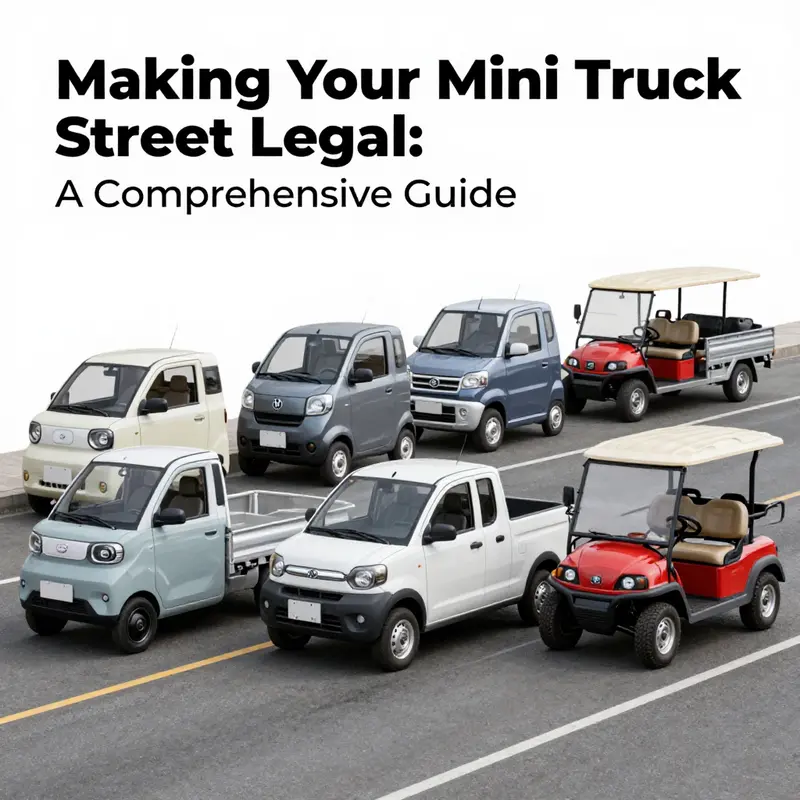
In summary, making your mini truck street legal involves a clear understanding of local laws, necessary modifications, and knowing which types of vehicles qualify for legal road use. Adhering to these regulations not only ensures safety but also grants peace of mind. Finally, being aware of the risks associated with non-compliance can save you from unnecessary headaches. So gear up, make the right adjustments, and hit the road legally and confidently with your mini truck!