
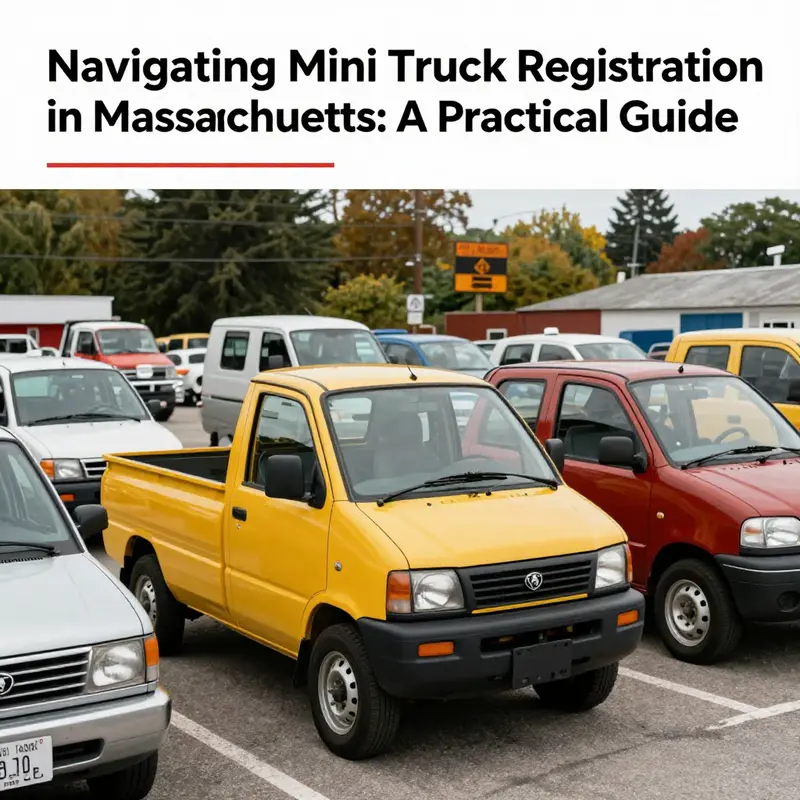
For local small business owners, residential property owners, and mini truck enthusiasts in Massachusetts, understanding the vehicle registration process is crucial. If you’re contemplating registering a mini truck, you’re in good company—these versatile vehicles can serve numerous purposes, from transporting goods for your business to recreational adventures. This guide will illuminate the steps involved in registering a mini truck in Massachusetts, the necessary requirements, and the broader implications this registration may have for you. By the end of our journey through this article, you’ll be well-equipped to handle the registration process smoothly, ensuring your mini truck is legally on the road.
null
null
Navigating the Registration Road: What a Massachusetts Mini Truck Must Meet to Hit the Streets
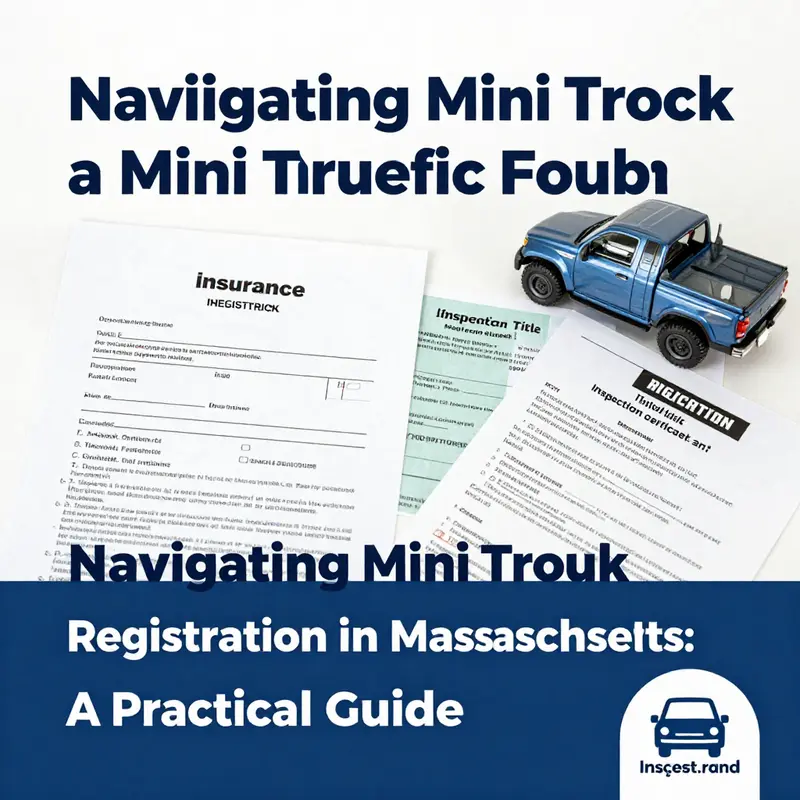
When you bring a mini truck into Massachusetts, the dream of cruising along old mill towns and winding coastal routes often meets the reality of rules and paperwork. Yet the path to legal registration is not a gauntlet of red tape but a sequence of clear milestones that describe what the vehicle is, how it will be used, and what protections the state requires of drivers who share the road with larger trucks and family sedans alike. The Massachusetts Registry of Motor Vehicles, or RMV, does the heavy lifting here by classifying vehicles, setting minimal standards, and approving plates that reflect the vehicle’s purpose and capabilities. A mini truck, depending on its design, weight, and intended use, can slide into one of several categories. It can be treated as a light-duty truck, sometimes as a utility vehicle, or in rarer cases as a specialized vehicle that may call for different inspection and insurance expectations. The distinction matters. It governs not just the registration process but the insurance you must carry, the inspections you must pass, and the fees that will be assessed when the registration finally comes through. The RMV uses a practical framework: weight, configuration, and the vehicle’s function on the road. If a mini truck has a gross vehicle weight rating that stays within the light-duty boundary, if it is built for ordinary road use rather than off-road only, and if it is not a low-speed vehicle designed for controlled environments, it is more likely to qualify for standard vehicle registration. If, however, the design is tailored to nonhighway operation or it would be categorized as a utility vehicle or a commercial vehicle in ways that complicate its road-use eligibility, the path becomes more nuanced. This is not about denying access but about ensuring that the road remains safe for all users, with every vehicle carrying the appropriate standards for brakes, lighting, emissions when applicable, and insurance. The journey toward registration begins even before you pull into an RMV office or click through an online portal. It starts with a precise assessment of what the vehicle is, what it was built to do, and how Massachusetts defines the line between a private passenger vehicle and a commercial or light-duty truck. The weight threshold is a practical guide: a mini truck that has a GVWR of ten thousand pounds or less usually lands in the light-duty or utility category, a range that aligns with Massachusetts expectations for most personal and small-business use cases. But this threshold is not an automatic passport; it is a piece of a larger puzzle that considers how the vehicle will be used on daily commutes, how it will be insured, and what kind of inspection it will face. In the same breath, the RMV recognizes that not every mini truck is designed for highway speeds or long-distance hauls. Some models operate as low-speed vehicles with limited top speeds, and these may not qualify for standard road registration. In such cases, the vehicle could be steered toward a different program or a specialized designation that reflects its performance envelope and intended environment. The practical implication for you as the owner is simple but worth careful attention: identify early whether your mini truck’s specifications align with a straightforward light-duty registration or if the design nudges you toward a more specialized path. The difference affects every subsequent step, from the documents you bring to the exact questions you will answer about emissions and inspections. Once you have a preliminary sense of classification, you can inventory the documents that the RMV will require. The process hinges on verifiable ownership, proper identification, and proof of financial responsibility in the form of auto liability insurance that meets the state’s minimums. In Massachusetts, the insurance requirement is not a negotiable add-on but a baseline standard designed to protect road users in the event of an accident. The stated minimum liability coverage consists of three elements: a per-person limit of thirty thousand dollars, a per-accident limit of fifty thousand dollars, and a property damage limit of twenty-five thousand dollars. These numbers are not arbitrary; they reflect a balance between keeping people protected and preventing premiums from becoming an obstacle to vehicle ownership. In practice, you will need to obtain an insurance policy that explicitly meets or exceeds these minimums before you can complete the registration. The proof of ownership is equally straightforward in concept, though the exact documents can vary. In most cases, the RMV will want evidence that the vehicle belongs to you or your business. An official title proves ownership, while a bill of sale can serve as a backstop if the vehicle is newly acquired or transferred between parties. If the vehicle originates from another state, the title from that state will often suffice, provided it is properly transferred and recorded. The RMV’s emphasis on accurate documentation is not a test of your honesty but a safeguard that ensures continuity of ownership and correctness of the vehicle’s legal identity on the road. With ownership and insurance out of the way, the next requirement concerns safety and emissions—a domain where Massachusetts has integrated environmental goals with road safety and vehicle reliability. All vehicles must undergo a safety inspection to verify that essential components such as brakes, lights, tires, and steering systems meet minimum standards. The inspection is a practical check that the vehicle is roadworthy and does not pose a risk to others. In addition, emissions testing is a fixture for model years 1996 and newer, reflecting state policies that aim to minimize air pollution from motor vehicles. The policy is straightforward: emissions testing is required if the vehicle falls within the set model year and compliance framework, and it is the vehicle owner’s responsibility to take the mini truck to an authorized testing station. There are notable exceptions to this general rule. For vehicles that are electric or hybrid, the emissions testing requirement may be waived, recognizing that these powertrains produce lower or negligible tailpipe emissions. This nuance is particularly relevant for those who consider a mini truck as a practical work vehicle with an electric drive or a hybrid system designed for urban or suburban use. The emission status dovetails with the broader question of road readiness. If your mini truck’s design implies limited highway application or a unique electrical configuration, discussing these aspects with the RMV or a licensed agent can reveal whether an emissions waiver applies to your situation. The RMV process accommodates a range of realities, including vehicles that have been imported or rebuilt. If a vehicle’s origin is outside Massachusetts, or if the vehicle has been rebuilt after import, it is essential to bring complete documentation for the RMV to assess its classification, its compliance with safety standards, and its conformity to state regulations. The RMV does not rely on guesswork; it reviews documents, verifies title status, and confirms that the vehicle’s configuration aligns with the category under which it seeks registration. A key practical insight is to start early in the planning process. If you already know your vehicle’s weight, its intended use on Massachusetts roads, and whether you anticipate a simple light-duty classification or a scenario that could become more complex, you position yourself to gather the right records before you visit an RMV branch or engage an agent. The steps to registration are designed to offer flexibility while maintaining accountability. You can apply online through the Massachusetts RMV portal, which guides you through the necessary information, including ownership, insurance, and the vehicle’s identifying numbers. Alternatively, you can complete the process in person at an RMV branch, where staff can confirm your documents in real time and resolve any ambiguities about classification or required inspections. Many people also work through licensed agents who can navigate the nuances of out-of-state titles or unusual vehicle configurations. The ability to choose among these pathways gives you the latitude to align your registration approach with your schedule and your comfort with paperwork. The fees associated with registration are not fixed in a single figure but reflect several factors. In Massachusetts, the price is influenced by the vehicle’s weight, its classification, and even the engine size in some cases. A light-duty or utility classification often carries a base registration cost that is then adjusted by ancillary fees tied to plate type, handling, and potential local surcharges. If the vehicle is new to your ownership or if you are renewing a registration after a transfer, the standard fees apply, but special considerations can arise for out-of-state titles that require additional processing. When budgeting for registration, it is prudent to assume that the total cost will include the base fee plus any applicable miscellaneous charges. The exact sum is not published as a single line item; rather, it is calculated during the RMV’s processing, sometimes after an inspection result is known or after the vehicle’s weight is confirmed for classification. For those who maintain a small business or a fleet of vehicles, or who operate a mini truck in a commercial context, there may be additional considerations. The classification as a commercial vehicle can entail separate registration streams, different insurance expectations, and perhaps different inspections, all designed to recognize the vehicle’s function in commerce rather than private mobility. The important takeaway is to clarify, from the outset, how you intend to use the mini truck on state roads. If your plan is to use it for personal errands and occasional light-duty tasks, a standard light-duty registration is likely appropriate. If, however, the vehicle will routinely transport goods, tools, or passengers in a way that resembles commercial activity, the RMV will expect you to align your documentation and insurance with that reality. In exploring these possibilities, it can be tempting to rely on general guidance or anecdotes from online forums, blogs, or informal communities. While those sources can be helpful for practical tips and a sense of how others have navigated the process, the RMV rules remain the definitive authority. For readers who want to turn to a broader community resource, the Mini Trucks CA blog offers a hub for enthusiasts who share experiences, tips, and questions about a range of mini truck topics. You can visit the blog to see how others discuss ownership, maintenance, and registration in varied contexts. The blog can be a useful reference point, particularly for understanding common challenges and practical steps others took to gather the necessary documentation, verify classifications, and prepare for inspections. However, when you are ready to finalize your registration, rely on the official RMV materials and the direct guidance of vetted professionals. The RMV’s official pages are the source of truth for current requirements, and the details can change as regulations evolve and as the RMV streamlines its processes. To begin or to verify any specific question about your mini truck, consult the official Massachusetts RMV register a vehicle page. It provides the most up-to-date information on how to proceed, what forms you need, and how to prepare for an inspection and emissions review if applicable. The process is designed to be comprehensive yet navigable, acknowledging that a wide range of vehicles—each with its own specific configuration—will seek registration. With careful preparation, you can approach the RMV confidently, knowing that you have documented ownership, verified insurance, and a clear understanding of whether your mini truck will be registered as a light-duty vehicle, a utility vehicle, or a different category that suits its capabilities and your intended use. Keeping a steady eye on the requirements reduces the risk of delays and ensures a smoother journey from paperwork to plate. In the end, the goal is straightforward: once the documents are in order, the vehicle is safe and tested, and the insurance stack meets state requirements, you should be able to secure registration and enjoy the road with your compact work partner. If you are unsure about any step along the way, consider a quick consultation with an RMV agent or an automotive compliance professional who can translate the regulatory language into a practical checklist for your specific mini truck. The RMV page and the advisory materials from the RMV are designed to be navigable, and their authoritative guidance remains the anchor for your registration path. For a broader sense of how people discuss and experience mini truck ownership online, you may browse community resources and blogs that reflect real-world usage, maintenance, and registration experiences, while keeping in mind that the official process and requirements reside with the RMV. Official guidance aside, a careful, well-documented approach will help ensure that the day you pull into with your mini truck, the registration is complete, the vehicle is legally on the road, and you can focus on the function of the truck rather than the paperwork attached to it.
Official RMV guidance: https://www.mass.gov/service-details/register-a-vehicle
Mini Trucks in Massachusetts: Registration, Regulation, and Everyday Realities
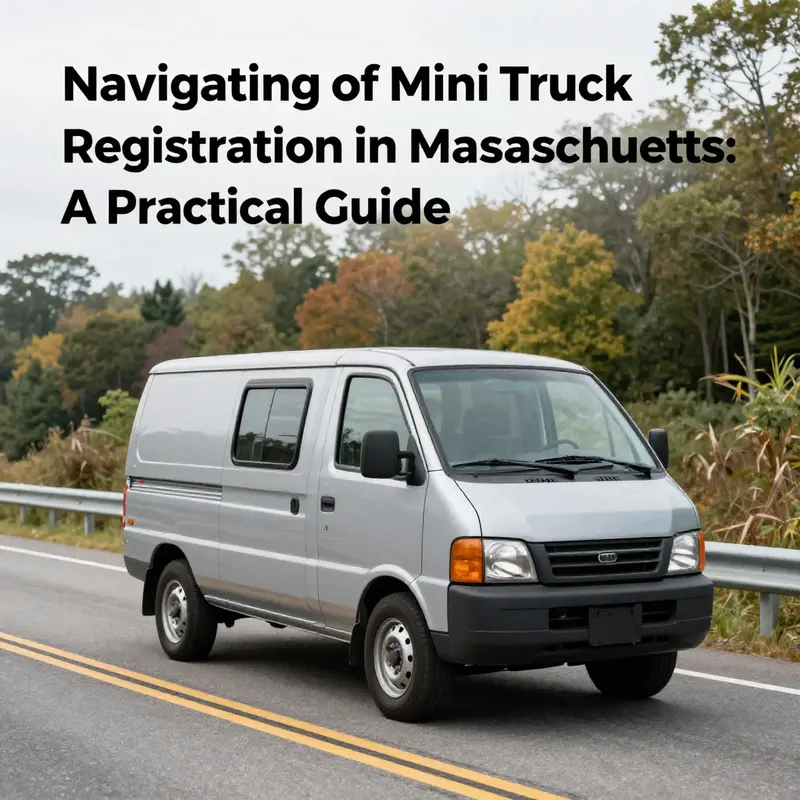
Massachusetts treats mini trucks not as a uniform category but as a blend of weight, use, and vehicle type. Registration hinges on classification; depending on gross vehicle weight, bed size, and intended use, the RMV assigns a category that determines who may drive the vehicle and what standards apply. A light-duty mini truck used for local deliveries might align with passenger-vehicle rules, but crossing into heavier or commercial profiles triggers higher fees, insurance requirements, and possibly a Commercial Driver’s License if required. Insurance follows the classification: personal-use vehicles carry standard liability limits, while commercial deployments often demand higher coverage, endorsements, and proof of financial responsibility. Local municipalities can regulate where a mini truck can park or operate, influencing loading zones, residential parking, and curbside operations. Emissions testing remains a checkpoint for model-year 1996 and newer vehicles, and the process applies differently based on vehicle use and weight class. Registration mechanics typically require a title, proof of insurance, and, for eligible models, an emissions certificate, with fees scaled by weight and category. The practical takeaway is that registering a mini truck in MA is not just a formality; it is a step in aligning with state and local requirements that affect licensing, insurance, and daily operations. Prospective buyers should verify classification with the RMV, review local ordinances, and plan for potential insurance adjustments before purchase. The official RMV page and MassDOT guidance remain the authoritative sources for the latest rules and fee structures, and readers are encouraged to consult those resources directly to confirm current requirements.
Final thoughts
Registering your mini truck in Massachusetts is not just a legal requirement; it opens doors to endless possibilities, whether you’re enhancing your business’s logistics or enjoying outdoor adventures. By understanding the registration process, fulfilling all requirements, and recognizing the implications of your registration, you can ensure that you get the most out of your mini truck ownership. Keep this guide handy, and don’t hesitate to reach out to the Massachusetts RMV for any additional questions. Here’s to many successful journeys on the road ahead!