
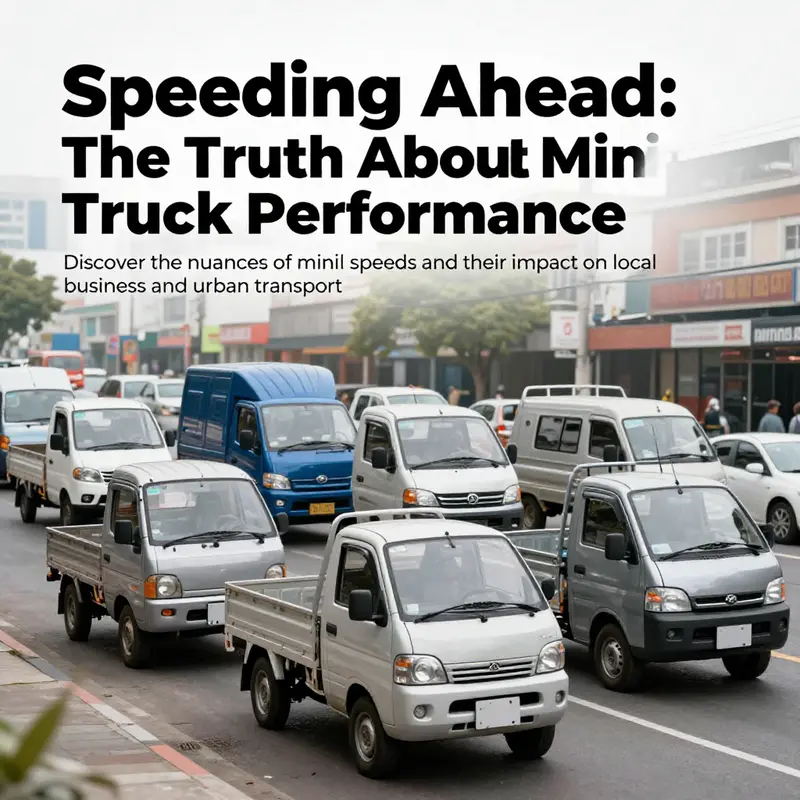
Mini trucks have carved a unique niche in the automotive landscape, serving as the go-to choice for both urban delivery tasks and personal use. Their speed capabilities, however, aren’t just numbers; they encompass a range of designs and purposes. For small business owners, residential property owners, and enthusiasts alike, understanding how fast these vehicles can go not only informs purchasing decisions but also streamlines daily operations. This article will explore everything from the lower speed limits of electric cargo variants to the impressive speeds attainable by higher-end models, while also considering how regional regulations frame these dynamics. Enjoy insights into how mini trucks stack up against their full-sized counterparts, and uncover the implications that speed can have on efficiency, especially in bustling urban settings.
Speed in Small Packages: Understanding How Fast Low‑Speed Electric Mini Cargo Trucks Move in Urban Logistics
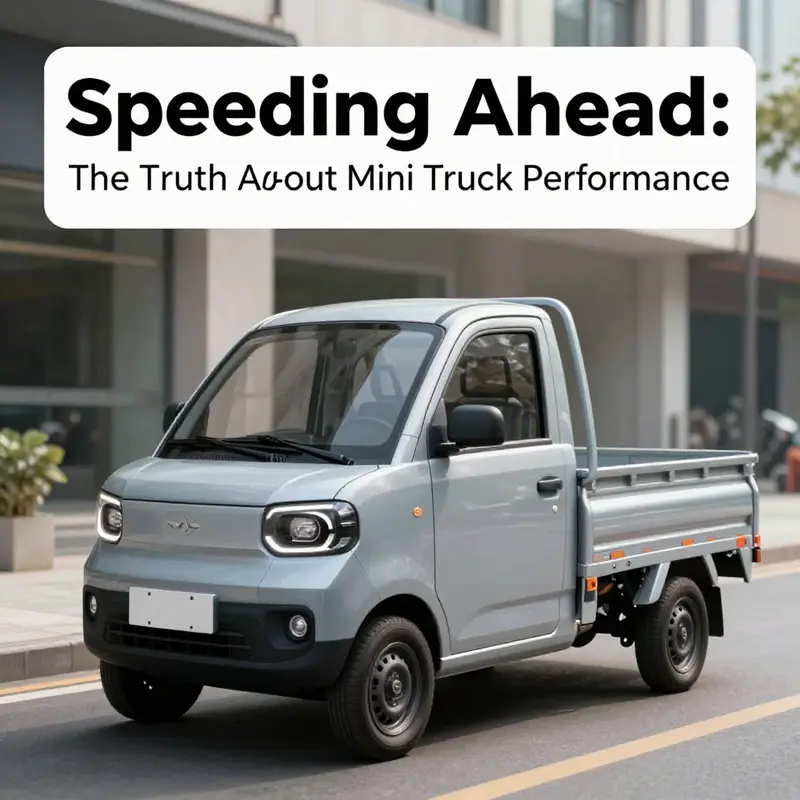
When we think about mini trucks, the image that comes to mind for many is not a sports car but a nimble routine worker—an urban courier, a last‑mile delivery runner, a local utility hauler. The speed of these vehicles is not a single figure but a spectrum shaped by design goals, regulatory rules, and the practical demands of city streets. In the low‑speed segment, which is purposefully tuned for urban cargo work, top speeds commonly fall within a narrow band of about 30 to 60 km/h. This range is not arbitrary; it reflects a conscious balance between the need to move efficiently through dense traffic and the paramount importance of safety and reliability in congested environments. Some designs are calibrated to maximize energy efficiency and maneuverability at the lower end, around 30 km/h, while others push toward 60 km/h to shave a few minutes off routes and expand the practical working window of the vehicle within a city. In many cases, the actual operating reality is even more nuanced: top speed may be limited to 40 or 50 km/h in certain jurisdictions or during specific operating hours to align with local traffic laws and urban planning objectives. The result is a class of urban cargo vehicles that prioritize predictable behavior, economical operation, and the capacity to carry meaningful payloads over flashy acceleration or highway performance.
Within this framework, the technical specifications tell a story of practicality. A typical low‑speed electric cargo pickup might boast a top speed of about 60 km/h and deliver a range that makes sense for daily urban routes—often around 130 km when measured at a steady, gentle pace. The underlying power system is modest by highway standards, with configurations that emphasize reliability and long life over blistering performance. A common arrangement might operate on a medium‑voltage architecture, such as a 72V drivetrain, paired with compact battery packs designed to endure frequent urban charging cycles rather than long highway treks. These choices translate into predictable energy use per delivery, which in turn supports tight dispatch windows and minimal downtime for charging. The payloads are typically sized to match city logistics needs—tens of hundreds of kilograms to around a ton—enabling a single vehicle to shuttle multiple smaller consignments in a single loop without refueling or recharging mid‑route.
A representative perspective on how these vehicles behave in practice helps ground the numbers in real‑world operations. Consider a design focused on urban cargo delivery with a balance of speed, range, and payload. In this context, a top speed of 60 km/h is more than a speed limit; it is a ceiling that protects energy reserves while ensuring timely deliveries through moderate traffic. In city corridors where congestion and stop‑and‑go traffic dominate, the vehicle’s acceleration and braking performance matter just as much as its top speed. Easy, predictable responses to throttle input, stable braking engagement, and a well‑tuned regenerative system can convert brief accelerations into meaningful gains in energy efficiency over a typical delivery day. The range figure—approximately 130 km at a constant pace—signals that planners can map daily routes with fewer mid‑day charging stops, reducing the risk of downtime and enabling more predictable service levels for urban customers.
Other configurations in the same category illustrate how much the speed envelope can hinge on regulatory and use‑case choices. There are low‑speed models that sit more firmly in the intra‑city, short‑distance niche, with top speeds closer to 30 km/h. These vehicles may be deployed on densely populated routes where pedestrian density, curbside activity, and narrow lanes elevate the safety stakes. In such settings, the trade‑offs tilt toward slightly lower top speeds to maximize maneuverability, tighter turning radii, and smoother rides on uneven pavement or poorly maintained roads. The diversity within the segment is not accidental; it reflects a market calibrated to fit a mosaic of urban tasks—from parcel drops in crowded downtown districts to utility fleets performing routine service calls in residential neighborhoods.
What, then, does speed really mean for the economics and practicality of these machines? First and foremost, speed must be viewed in the context of energy efficiency. A vehicle that travels at 60 km/h but consumes disproportionate energy per kilometer will suffer higher operating costs than a slower vehicle that uses energy more efficiently in stop‑and‑go city traffic. This is why many low‑speed designs emphasize lightweight construction, efficient aerodynamics for the specific chassis profile, and battery management strategies that favor frequent, shallow charging cycles over deep discharges. The end result is a fleet that can perform more cycles per day with lower energy per kilometer, which translates into lower operating costs and, often, lower total cost of ownership over the vehicle’s lifespan.
Another critical lens is safety and regulatory alignment. The top speeds of urban cargo vehicles are not mere marketing numbers; they are constrained by rules designed to harmonize with dense, mixed traffic. In many jurisdictions, low‑speed vehicles are capped well below highway speeds to reduce collision risk with faster traffic participants and to support predictable integration with pedestrian zones, bike lanes, and curbside activity. This regulatory framework reinforces the design emphasis on steady acceleration, firm but controlled braking, and reliable ride quality in the typical urban corridor. The practical upshot is that the fastest models in this category are not defined by their ability to sprint between points but by how smoothly they can complete a delivery circuit within prescribed speed envelopes while maintaining comfort for the driver and reliability in payload handling.
From an operations standpoint, the speed spectrum reshapes route planning, maintenance scheduling, and even the way fleets are staffed. A vehicle that operates at 60 km/h will travel farther on a given battery charge than one constrained to 30 km/h, but it also consumes energy differently in urban stop‑and‑go conditions. Dispatch teams account for factors such as traffic patterns, charging opportunities, and time windows for customer deliveries. Battery care becomes a first‑order concern: cycles, state of charge, and thermal management all influence how often a truck can move before needing a recharge. Maintenance intervals for motors, controllers, and battery modules tend to be tied to thermal cycles and cumulative energy throughput rather than merely mileage. In practice, this means a well‑designed urban cargo pickup is not only about top speed but about how consistently its performance can be preserved across a full workday.
The practical takeaway for readers looking at city logistics is that speed is a means to an efficient, safe, and cost‑effective operation, not a stand‑alone selling point. The most successful deployments rely on a coherent ecosystem: vehicles tuned for the urban scale, charging infrastructure that minimizes downtime, and routing strategies that exploit the strengths of the low‑speed profile. In many fleets, the choice to operate closer to 60 km/h in certain corridors—and closer to 30 km/h in pedestrian‑dense districts—reflects a deliberate, data‑driven mix that prioritizes reliability and service quality over raw velocity. The result is a fleet capable of delivering tangible productivity gains in dense urban environments without inviting the hazards or energy penalties that accompany higher speeds.
For readers curious about how this topic translates into broader practice, practical case discussions and fleet insights can be found in the broader fleet and urban logistics conversations here: minitrucksocala.com/blog/. The deeper threads in that space explore how urban micro‑trucks, with speeds safely tethered to city life, integrate with micro‑hubs, delivery scheduling, and last‑mile strategies to create resilient and cost‑effective urban logistics networks. As the landscape evolves, the slow, steady pace of these little workhorses may prove to be the most humane and efficient response to the tempo of modern city living.
External resource for reference and broader context: https://www.alibaba.com/product-detail/Environmental-Protectional-130km-Low-Speed-Mini_1601862996240.html?spm=a2700.189042.0.0.6f4b7e4dWQjKXr
Velocity at the Micro Frontier: Understanding the Speed Realities of Higher‑Speed Mini Electric Trucks
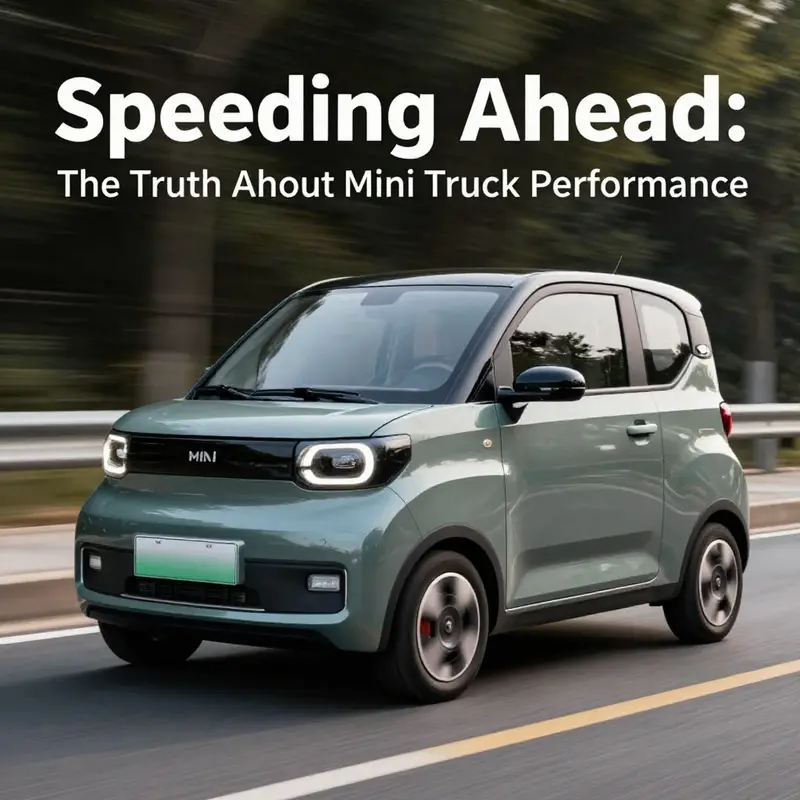
Speed is not the sole measure of usefulness in the micro‑truck segment, yet it remains a crucial piece of the logistics equation. In the world of mini electric trucks, the spectrum runs from practical urban couriers to nimble personal‑use machines that can cover more ground in a day. The common assumption that small means slow is quickly challenged when you consider how different designs are tuned for very different roles. For most higher‑speed mini electric trucks used in city logistics, designers cap top speeds around 60 km/h (about 37 mph). This limit supports energy efficiency, stability, and predictable handling, which are essential when every pallet or box counts toward timely deliveries and safe operation in mixed traffic. Yet this is not a hard ceiling. The same chassis and motor vocabulary that yields efficiency for a fleet in dense urban corridors can be repurposed for a private micro‑car that doubles as a compact utility vehicle. In those cases, engineers may push performance toward the mid‑range, often into the 70–80 km/h band, to provide a practical alternative to traditional compact cars without sacrificing payload capacity or energy economy.
That nuanced picture matters because speed in this class is a design choice, not a default. When fleets are optimized for high turnover and tight delivery windows, a modest top speed translates into faster urban cycling, more reliable acceleration with heavy payloads, and smoother energy management during frequent starts and stops. A top speed around 60 km/h balances the need to creep through crowded streets with the stamina to carry multiple loads over a standard urban day. In contrast, a private‑use mini electric truck designed to double as a light utility vehicle may tilt toward higher performance, offering greater acceleration and a higher top speed to improve highway ingress, overtaking capability, and driver convenience on longer trips. Yet even in these cases, designers must contend with the realities of weight, aerodynamics, and braking capability, which all interact to determine how much real speed is exploitable without compromising safety or range.
From a mechanical standpoint, the speed envelope is shaped by several intertwined factors. The motor’s torque curve, gearing strategy, and cooling capacity dictate how quickly the vehicle can reach and sustain higher speeds while carrying a payload. The vehicle’s mass matters as well; every additional kilogram requires more energy to accelerate and more braking force to decelerate. Aerodynamics plays a surprisingly large role at the upper end of the range, where even small improvements in drag coefficient can yield meaningful gains in efficiency at modest speeds like 60–80 km/h. Battery chemistry and pack layout influence not only range but the ability to sustain elevated speeds without excessive thermal buildup. In short, higher top speeds in mini electric trucks are not just about more horsepower; they reflect a careful optimization of power delivery, stability, and endurance across real‑world duty cycles.
The retail and fleet markets reflect another layer of complexity. In urban settings, where maximum speed limits are tight and street dynamics are unforgiving, the practical speed ceiling tends to cluster around 60 km/h. This range delivers a comfortable margin for urban platooning, where a vehicle may repeatedly accelerate to cruising speeds and then decelerate for stops at traffic lights and loading zones. The emphasis is on reliable torque at low revs, fast response during acceleration to catch gaps in traffic, and energy efficiency during frequent idling. Such characteristics lend themselves to predictable performance for drivers and predictable energy consumption for fleet managers, enabling easier route planning and more precise forecasting of range per shift. Yet the same class of vehicles can also appeal to drivers who value flexibility and the ability to cover short highway segments. In those scenarios, a top speed in the 70–80 km/h range can be a meaningful differentiator, widening usable routes and time windows, especially on suburban arterials where delays due to congestion are common.
It is important to acknowledge that the most extreme speed figures often cited in popular discourse belong to a different corner of the broader market: micro cars engineered for personal use and sportier ambitions. In those instances, top speeds can extend toward the mid‑range, and occasionally beyond, into the high‑80s or low‑100s km/h. This is not typical for traditional mini electric trucks designed for cargo and utility, but it does illustrate the spectrum’s upper boundary. These higher speeds are commonly associated with lighter bodies, refined aerodynamics, and powertrains tuned for rapid acceleration rather than maximal payload. It is a reminder that the niche exists where performance‑oriented micro EVs share the road with compact cargo specialists, yet the core mission of most micro cargo vehicles remains efficiency, reliability, and payload resilience over raw velocity. Even within this broader context, extremely high speeds—approaching or exceeding 180 km/h in any micro category—remain the exception rather than the rule and are typically found in vehicles engineered for a different market segment altogether, not standard urban cargo operations.
The practical implications of these speeds extend beyond miles per hour. For operators, a vehicle’s top speed interacts with route design, shift length, and traffic conditions. A fleet that prioritizes 60 km/h limits can schedule more frequent returns to stock rooms and warehouses, reduce wear and tear on tires and brakes, and maintain steadier energy use across a workday. Conversely, the option to reach higher speeds in a private micro‑car configuration broadens the potential for longer trips, faster interurban runs, and a more versatile vehicle profile that can adapt to mixed duties. The trade‑offs, however, are clear: higher top speeds tend to entail steeper energy demands, greater power management requirements, and, crucially, tighter safety considerations for both occupants and pedestrians. This interplay between speed, safety, and efficiency is the core reason why the majority of higher‑speed mini electric trucks sit in a careful middle ground: fast enough to offer practical day‑to‑day utility, still restrained enough to protect cargo, drivers, and bystanders when the vehicle is used in busy city environments.
For readers seeking context on how these vehicles fit into the wider mini truck ecosystem, the ongoing conversation around design priorities—speed, payload, efficiency, and safety—benefits from a broader view of industry trends, regulatory frameworks, and real‑world operating conditions. The broader literature and community discussions of compact electric trucks provide useful benchmarks and practical insights for fleets weighing the value of a higher‑speed option versus a more conservative, efficiency‑driven approach. If you’d like to explore more about the evolving landscape of mini trucks and related vehicles, you can visit the main blog for ongoing analysis and case studies, which includes discussions of model comparisons, fleet strategies, and customization considerations. minitrucksocala blog.
The takeaway is pragmatic. Higher‑speed mini electric trucks exist as a niche within a spectrum that ranges from ultra‑low‑speed urban workhorses to more road‑capable micro‑cars. Most operations benefit from keeping top speeds aligned with typical urban speeds, ensuring safe interactions with other road users while preserving range and payload performance. When speed does become a differentiator for a particular use case, it is usually as part of a broader package that includes thoughtful weight distribution, robust braking, and efficient thermal management. In those configurations, the top speed is less an independent lure and more a carefully engineered feature that supports the vehicle’s core mission: reliable, efficient, and flexible transportation of goods over short to mid‑range distances. External considerations—from local traffic rules to road safety expectations—also play a decisive role in determining how fast a mini electric truck can or should be allowed to go in a given market, underscoring that speed is always part of a larger system of performance, safety, and purpose. For safety and regulatory context, see authoritative resources from standard‑setting bodies and government agencies that govern vehicle classifications, permissible speeds, and the performance criteria that support safe operation on public roads. External resource: https://www.nhtsa.gov
null

null
Speed in Small Packages: How Mini Trucks Compare to Full-Size Haulers on Real Roads
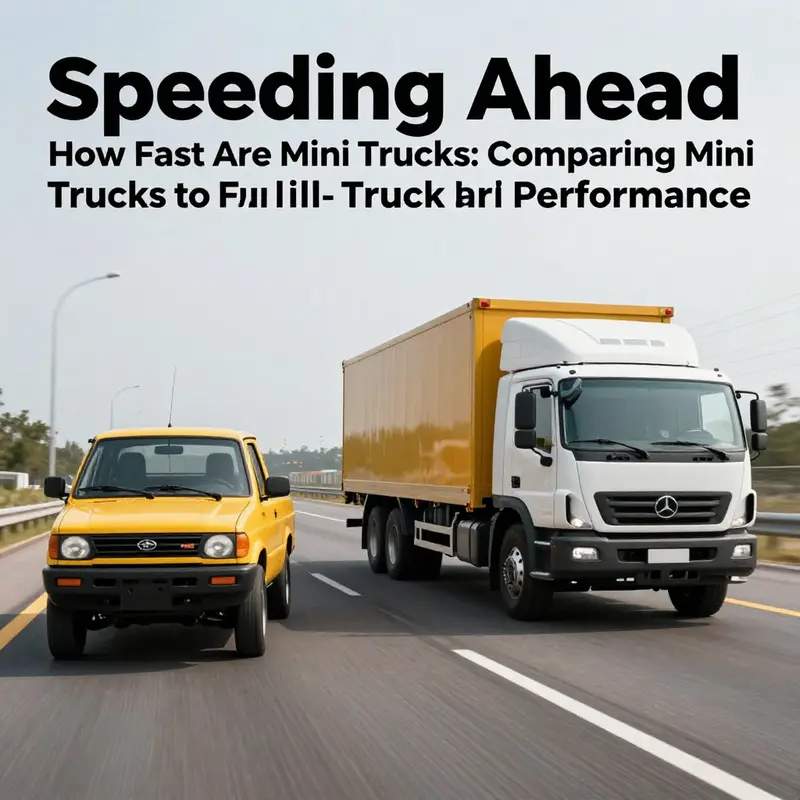
Mini trucks occupy a distinct niche in the transportation landscape. They are designed for tight urban corridors, short-range deliveries, and tasks that require maneuverability more than raw highway power. The question of how fast they can go is not a single number but a spectrum shaped by design intent, regulatory rules, and practical trade-offs between payload, efficiency, and safety. The resulting speed profile reflects a deliberate balance that manufacturers and regulators strike for specific use cases. In many markets, this balance is explicit: mini trucks meant for local logistics are steered toward modest top speeds to maximize efficiency and reduce road-sharing risks, while more versatile small vehicles aim to blend city usability with occasional highway capability. In other words, speed becomes a tool that must be tuned to the mission at hand.
Consider first the segment most common in urban and peri-urban commerce: low-speed electric cargo pickups. These vehicles are built for routes where a driver makes frequent stops, navigates crowded streets, and pulls away with a payload that does not justify high-speed cruising. Their top speeds are typically capped around 40 to 60 km/h. This ceiling is not a marketing gimmick; it is a regulatory-friendly safeguard that keeps these machines aligned with low-speed vehicle standards in many districts. The practical upshot is that a delivery cycle, not a sprint, governs the design. Acceleration is often stepped to provide smooth, predictable performance from zero to the cruising range needed for a typical urban loop, rather than punchy hops to highway speeds. The focal point is reliability, predictable handling, and the cost efficiencies that come with lightweight builds and simpler drivetrains.
Yet the speed conversation does not stop there. A different class—micro or kei-style trucks—emerges from a different regulatory framework. These are compact, purpose-built for maximal efficiency within stringent size and weight limits. In some markets they can reach highway speeds, commonly in the vicinity of 100 to 110 km/h, though they are not engineered for prolonged high-speed operation. The experience of these small-but-capable machines on a highway is noticeably different from that of larger, purpose-built highway trucks. Road noise can rise as aerodynamics, fans, and tires work harder to sustain higher speeds with a small footprint and modest power. The takeaway is that speed in this category is a practical ceiling rather than a marketing target; it reflects the constraints of size, engine displacement, and the need to balance ride quality with efficiency.
On the other side of the spectrum lies the full-size truck. These are built to handle long hauls, heavy payloads, and sustained highway operation. Their top speeds generally fall within a broader band, from about 90 to 110 km/h, with some commercial variants capable of exceeding 120 km/h depending on engine tuning and load conditions. The difference in architecture is clear: larger engines, advanced suspension systems, and aerodynamic shaping designed for stability at speed over miles of highway. Even when not loaded to maximum capacity, the machine’s sheer mass and power output permit higher cruising velocities. The confluence of powertrain design, chassis dynamics, and regulatory allowances gives full-size trucks an operating envelope optimized for highway and intercity travel, where time efficiency and predictable performance under varying loads are critical.
Between these poles, the speed story of mini-trucks becomes a study in purpose-driven design. Urban-oriented models prioritize rapid returns on investment through greater efficiency per mile, lower energy costs, and lower maintenance demands. The top speed is not merely a number but a constraint that preserves energy, reduces tire wear, and minimizes risk in dense traffic. In this sense, a mini-truck’s speed is not a limitation to be overcome but a feature that enables a safer, more economical, and more scalable approach to local logistics. When a vehicle is tasked with numerous stops per mile, the marginal gain from squeezing out additional top-end speed may be small or even counterproductive. The driver’s experience matters more—the ability to accelerate smoothly, brake predictably, and maneuver through tight spaces with confidence becomes the defining metric.
The narrative of speed also intersects with how fleets and drivers perceive efficiency. In many urban delivery scenarios, the overall scheduling efficiency—how many drops can be completed in a given work window—depends more on route optimization, dwell time, and loading speed than on the vehicle’s solitary top speed. A mini-truck that can accelerate quickly from a stop but remains within a regulated speed cap may outperform a faster rival that spends more energy fighting wind resistance or dealing with a less efficient drivetrain. This is where the concept of speed as a total package comes into play: top speed matters, but consistent performance, battery range under typical load, and energy recovery during braking all contribute to the bottom line.
There is value in acknowledging the diversity within the mini-truck category. Different regions impose distinct limits that shape consumer expectations and fleet usage. Some jurisdictions treat specific mini-electric pickups as low-speed vehicles with separate licensing, which reinforces the idea that their primary role is urban utility rather than highway logistics. Others enable higher-speed operation for personal-use mini-electric cars or kei-class trucks, expanding the concept of what mini can accomplish on a road that might otherwise favor larger, faster machines. The design implications flow from these regulatory realities: powertrain choices, cooling strategies, control algorithms, and safety features are all calibrated to the intended operating envelope. The result is a spectrum rather than a single archetype, a spectrum that mirrors the varied demands of cities, towns, and intercity corridors.
For readers who want a practical sense of where speed fits into the bigger picture, consider the way a small delivery fleet balances time, energy, and risk. A typical route may involve dozens of short hops with frequent stops. In such a pattern, a max speed of 60 km/h can be more than adequate, especially when the vehicle’s endurance, battery management, and regenerative braking are tuned for steady, predictable performance. In contrast, a scenario that combines urban deliveries with occasional highway runs would push a micro-truck toward the higher end of its permissible range, if only to reduce travel time on the highway leg and to maintain driver expectations about schedule reliability. The emphasis remains on the intended use and the realities of the operating environment: speed is a tool to support efficiency, not an ornament to showcase capability.
For those exploring how speed translates into real-world outcomes, a useful point of reference is how mini-trucks compare with full-size trucks under identical conditions. On a fixed route spanning city streets to highway segments, a mini-electric cargo vehicle constrained to around 60 km/h will complete city legs with greater energy efficiency and shorter dwell times, while the full-size truck will dominate the highway sections where higher speeds and payload capacity offset its higher energy appetite. The practical takeaway is straightforward: mini-trucks excel in conditions where maneuverability and energy efficiency trump top-end velocity, whereas full-size trucks dominate when speed on open roads and heavier loads are the primary requirements.
If you want a deeper dive into how specific models balance these dimensions, see the detailed specifications and comparisons for the latest mini-truck lineups in the industry, such as the Kingstar KruZR family and its peers. For readers who prefer a broader view, the topic is well illustrated by a resource that delves into model-by-model specifications and features. You can explore that analysis here: Kingstar KruZR models specs and features. Beyond that, broader industry benchmarks and regulatory notes are available from major manufacturers and regulatory bodies, which provide context on how top speeds are chosen and standardized across markets. External resources, such as Sinotruk’s official site, offer technical details on how heavy-duty platforms optimize speed, power, and efficiency for different mission profiles: https://www.sinotruk.com. These references help connect the on-road realities of mini-trucks with the larger logistics ecosystem they inhabit, where speed is one of many levers used to align capability with purpose.
Urban Velocity: How Mini Trucks Set the Pace for City Deliveries and Dense-Location Logistics
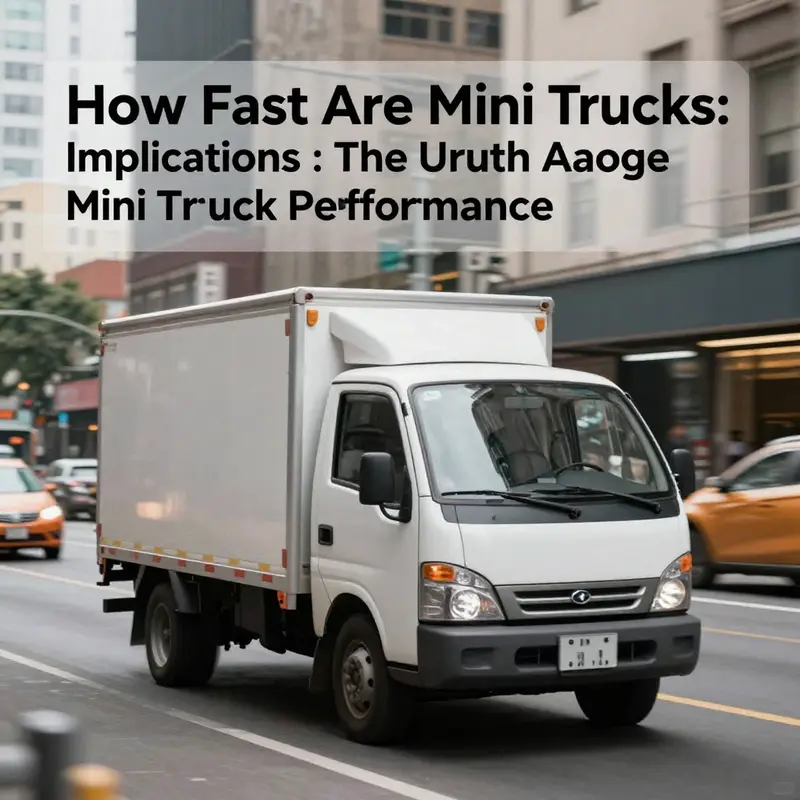
In the crowded arteries of modern cities, speed is less a show of power and more a measure of how well a vehicle fits into the rhythm of daily life. Mini trucks sit squarely on this axis, balancing efficiency, safety, and operability over outright acceleration. The question of how fast mini trucks can go is not a single number but a spectrum shaped by design intent, regulatory frameworks, and the very real constraints of urban infrastructure. For practitioners and researchers alike, the practical pace of these compact workhorses matters because it directly influences delivery schedules, energy use, and the ability to weave through congested streets without creating new hazards. The speed landscape themselves ranges from deliberately slow, city-grade cargo variants to more car-like, compact electric vehicles that blur the line between a light-duty truck and a personal transport. In broad terms, many mini trucks aimed at urban logistics carry a top speed in the modest range required for city driving—often between 80 and 100 km/h—where the emphasis is on predictable performance, stable handling, and the ability to maintain steady progress through stop-and-go traffic. This is not a limitation so much as a design choice: once a vehicle is tuned for urban duty, every additional kilometer per hour adds one more layer of risk, energy drain, and required braking capacity, particularly when frequent stops are the norm. The urban task demands reliability in acceleration, smooth gear changes, and a drivetrain that can negotiate tight corners, sudden pedestrian movements, and the quirks of curb-side loading. In this sense, a moderate top speed becomes a feature rather than a flaw, enabling fleets to meet tight delivery windows while reducing the likelihood of abrupt speed differentials that can unsettle drivers and disrupt nearby traffic flow.
There is, however, a meaningful divergence within the mini truck family when electric propulsion enters the picture. Electric variants that are purpose-built for low-speed cargo tasks—think small urban deliveries, municipal services, and warehouse transfers—often cap their top speed around 40 to 60 km/h. In practice, these vehicles excel precisely because they operate within a speed band that matches the realities of inner-city streets: narrow lanes, frequent turning points, and congested intersections where the energy cost of sustained higher speeds would be inefficient and unnecessary. The benefit is not simply lower speed but greater control and predictability. A delivery route can be executed with fewer dramatic accelerations and braking cycles, translating into longer range per charge, reduced maintenance needs, and lower operating costs over time. Yet this is not to say that higher-speed mini electric vehicles do not exist or do not perform a legitimate role. Some compact electric cars and mini SUVs—vehicles not primarily designed as cargo carriers—achieve top speeds well above 100 km/h, with some models approaching or surpassing 160–180 km/h. Those instances belong to a different segment of the market, where performance, comfort, and longer-range capability align with personal use and highway travel rather than the tight, frequent-stops world of urban delivery. In the context of the question at hand, such high-speed variants remind us that the category is diverse; but they also underscore a crucial point: the speed of a mini truck is a function of its purpose. When the mission is city-wide delivery, a lower, controlled top speed often yields better overall efficiency and safety than chasing higher velocity on roads where speed limits and pedestrian density already set the pace.
The practical implications of these speeds unfold in the daily life of urban logistics. Maneuverability is one of the strongest selling points for mini trucks, especially in markets where street width and curbside loading zones demand precision handling. A compact footprint allows drivers to execute tighter turns, park more effectively, and stage loads with minimal traffic disruption. That maneuverability does not occur in a vacuum; it interacts with energy consumption in a way that makes low to moderate road speeds advantageous. At moderate speeds, the engine, motor, or battery system operates within a comfortable efficiency band, reducing fuel or electrical draw per kilometer. For fleets engaged in repetitive stop-and-go routes—dwell times at loading docks, curbside unloading, and frequent short trips—the cumulative savings in fuel and wear can be substantial. The economics are not just about fuel price per liter or per kilowatt-hour; they extend to maintenance intervals, brake wear from frequent deceleration, and the reliability of a vehicle that spends more of its life in predictable urban cycles than on open highways. The safety implications are equally important. Slower operating speeds in high-pedestrian zones translate to lower risk of collision severity and give drivers more time to react to unpredictable urban events. In dense areas, even a few kilometers per hour can alter the risk calculus, influencing how fleets schedule routes, assign drivers, and deploy vehicles for specific neighborhoods or time windows.
All of these dynamics tie back to design philosophy. A mini truck built to maximize payload and energy efficiency in a stop-and-go environment will, by necessity, emphasize stability, braking efficiency, and a drivetrain tuned for smooth, incremental acceleration rather than the raw pull of a highway sprint. For end users, this translates into a predictable acceleration profile, a comfortable operating range between charges, and a chassis tuned for precise steering at urban speeds. In practice, this means a vehicle that remains composed when weaving through traffic, negotiating narrow streets, and loading goods in tight spaces around other parked cars. The result is a delivery system that can thread the city needle with high reliability, converting each block into a controlled segment of time rather than a potential bottleneck. To illustrate how these principles play out in real-world planning, consider the typical urban delivery cycle: a driver exits a warehouse, accelerates to a modest cruising speed that keeps energy use in a favorable range, negotiates city streets with frequent stops, then slows for a curbside handoff and returns to base. When repeated across dozens or hundreds of runs each day, the difference between maintaining 60 km/h on a highway and achieving steady progress at 40–60 km/h in the city becomes a decisive factor in on-time performance, scheduling flexibility, and total cost of ownership.
For teams and researchers concerned with urban logistics optimization, the speed of mini trucks is a critical variable that should be matched to route characteristics, payload needs, and regulatory constraints. This alignment is what allows fleets to maximize throughput without sacrificing safety or compliance. It also explains why even within the same class, some fleets will prefer slightly different speed profiles depending on whether their routes are dominated by dense residential areas, mixed-use corridors, or industrial districts with dedicated loading zones. The overarching theme is clear: in urban settings, the value of speed is less about how fast a vehicle can run and more about how well its speed profile can integrate with the urban tempo. An adaptable approach—one that prioritizes predictable energy use, reliable braking, and smooth acceleration—enables mini trucks to deliver faster turnarounds, smoother driver experiences, and better overall efficiency for city-focused operations. And because much of urban logistics hinges on non-driving time—the time spent loading, waiting for doors to open, or coordinating with dispatch—these speed considerations become part of a broader system design rather than an isolated performance metric.
For further reading on how city-focused vehicle design and urban delivery strategies converge, see the broader resources available at the Mini Trucks Blog, which offers perspectives on equipment selection, route planning, and practical operation in urban contexts. Mini Trucks Blog
External reference for broader context on traditional, larger-scale cargo trucks and their design considerations can be found here: https://www.sinotruk.com/en/mini-truck/howo-mini-truck.html
Final thoughts
Understanding the speed capabilities of mini trucks reveals a spectrum of options tailored to various needs, from urban deliveries to personal enjoyment. The insights shared throughout this article highlight the importance of speed and regulatory considerations in enhancing the operational efficiency of small businesses and the convenience for residents. Whether you’re a small business owner looking to optimize deliveries or an enthusiast excited about speed, embracing the agility and performance characteristics of mini trucks can make a significant difference in achieving your goals.