
When it comes to mini trucks, speed is often an afterthought compared to utility. However, understanding their speed capabilities is essential for local small business owners, residential property owners, and enthusiasts alike. This article delves into the various speed classifications of mini trucks, highlights the impact of electric versus internal combustion engines, and provides insights into the performance of some popular models. Additionally, we’ll touch on regulatory considerations that affect how fast these vehicles can legally operate and forecast future trends in mini truck speed. By the end, you’ll have a comprehensive understanding of just how fast mini trucks can go and what that means for you.
Small-Speed, Big-Impact: Understanding How Fast Mini Trucks Can Go and What It Means for Use, Regulation, and Efficiency

Mini trucks are compact by design, but their speeds tell a larger story about how they fit into modern transport networks. The top speed of a mini truck isn’t just a number on a spec sheet; it’s a reflection of the engine or motor technology, the vehicle’s weight and aerodynamics, and the regulatory environment that governs its development and use. Different tasks—from curbside deliveries in dense city cores to light work on rural parcels—demand very different speed profiles. As a result, manufacturers tailor power and gearing to the job, balancing efficiency, safety, and practicality.
Speed Classifications
In general, mini trucks fall into discrete classes driven by propulsion type: electric and internal combustion, each with its own typical ceiling. Electric models emphasize efficiency for urban duty, while gasoline or diesel variants tend to offer more willingness to run at higher speeds on longer routes. The reality is nuanced, but the pattern is clear: the faster a vehicle is allowed to travel, the more it tends to consume energy unless weight and aerodynamics are carefully controlled.
Electric mini trucks typically cap out at modest speeds—roughly 30 to 40 km/h (about 18 to 25 mph) in many urban-focused designs. These vehicles are built for tight streets, frequent stops, and quick, predictable acceleration that helps keep energy use reasonable while maintaining nimble handling in crowded lanes. A two-seat compact electric box vehicle used for last-mile delivery or urban courier tasks, for example, often carries a top speed near 40 km/h. That ceiling isn’t a drawback so much as a design choice aligned with city traffic flow, pedestrian safety, and practicality for short-range trips. For drivers, the implication is clear: in dense urban settings, the goal is not just speed but reliable, repeatable performance that can be counted on every workday.
Gasoline or diesel-powered mini trucks, by contrast, are frequently built for tasks that require a broader operating envelope. They can push into the neighborhood of 80 to 100 km/h (50 to 62 mph) and are treated as light commercial vehicles in many regulatory regimes. That classification comes with a package of safety, emissions, and roadworthiness standards aimed at vehicles used for light construction, agricultural work, and other demanding applications. In these contexts, a higher top speed can translate into shorter travel times between job sites or delivery points, but it also brings considerations around payload stability, fuel economy, and the wear patterns of tires and drivetrains when operated at higher steady speeds.
There is also a growing niche within the electric segment that aims for higher performance. A subset of newer electric mini trucks is designed to achieve top speeds around 120 km/h (75 mph). These models are not everyday city delivery vehicles; they target peri-urban use, longer commutes, and applications where a balance between payload and speed becomes attractive. They push the envelope on powertrain architecture and cooling systems to sustain higher speeds without sacrificing safety, range, or reliability. In the most general sense, these machines remind us that the “mini” label can coexist with surprisingly capable highway performance, provided the chassis, battery, and suspension systems are tuned to meet the demands of higher velocity operation.
Even within this spectrum, there exists a broader category sometimes described as “performance mini cars.” In that wider family, small, lightweight vehicles with robust powertrains can reach speeds well into the high hundreds of kilometers per hour. In that context, the speeds are not typical of a work-oriented mini truck, but they illustrate how the same engineering drives can produce different outcomes depending on the vehicle’s architecture and purpose. It is a useful reminder that the word mini often aligns with size rather than a single mission profile, and the top speed is a function of intent as much as hardware.
Performance, as a concept, depends on a triad of constraints and opportunities. First is weight distribution, which influences how quickly a vehicle responds to steering input and how stable it remains at the upper end of its speed. A compact body with a well-thought-out weight balance can feel glued to the road at higher velocities, even when the payload is light. Second is tire quality and contact patch. Grip, temperature management, and tire construction all determine how much of the engine’s torque translates into forward motion without slipping or skidding. Third is drivetrain efficiency—the efficiency with which power is transferred from the source to the wheels. In high-speed configurations, even a small loss in transmission efficiency can be magnified, leading to less acceleration, reduced top speed, or decreased range under load. Battery tech, motor control software, and cooling strategies all play a role here, and advances in electronics have made it possible to extract meaningful speed improvements without sacrificing energy efficiency.
The speed of mini trucks is thus not a fixed ceiling but a series of trade-offs that reflect what the vehicle is asked to do every day. For instance, in urban delivery fleets, managers might prioritize predictable acceleration, gentle on-ramps, and a tight turning radius over outright top speed. In rural settings or light construction tasks, the same class of vehicle could be pushed toward higher speeds, provided the weight stays manageable and the operator remains within safe handling margins. The design goal becomes less about chasing the fastest possible number and more about aligning the vehicle’s performance envelope with the real-world duties it will perform, the infrastructure it will share with other road users, and the energy and maintenance costs that accompany more aggressive speed profiles.
From a regulatory perspective, speed is entwined with safety standards and vehicle classification. In many places, the top speed a vehicle is allowed to approach is influenced by its categorization as a light-duty or light commercial vehicle, a segment that carries a defined set of design, testing, and emissions expectations. National authorities often require speed governors, controlled acceleration, and stability features that help prevent loss of control at higher speeds. The regulatory framework, in turn, shapes both how manufacturers calibrate motors and how fleets deploy these vehicles in daily operations. For readers planning purchases or fleet upgrades, this regulatory context matters because it provides a baseline for what is technically feasible within a given jurisdiction, and it helps explain why a seemingly similar vehicle might display different performance numbers in different markets.
For readers seeking broader regulatory context, the safety standards that govern light-duty commercial vehicles are an important reference point. The information in national safety standards databases helps buyers and operators understand the safety and performance criteria that products must meet before they reach the road. While such databases are technical, they are a useful reference when comparing how different designs balance speed, safety, and utility across various regions.
Operationally, the speed capabilities of mini trucks should be considered in concert with other critical factors such as range, payload, and duty cycle. A vehicle that travels quickly but drains its battery in half a workday is rarely a good choice for a fleet, and a vehicle that has ample range but insufficient payload capacity can hinder productivity. The most effective approach is to match the speed envelope to the task—planning routes that minimize stop-and-go conditions, allocating the right vehicle type to each job, and ensuring maintenance practices keep tires, brakes, and steering in top condition. In practice, this often means preferring a modest top speed paired with robust energy efficiency for most urban tasks while reserving higher-speed configurations for longer trips or jobs that require occasional highway legs, where the extra speed translates into meaningful time savings without sowing unnecessary risk.
From a buyer’s perspective, the decision is rarely about chasing the loudest numbers but about aligning performance with the actual work. Urban couriers benefit from compact dimensions, stable low-speed handling, and a consistent torque curve that makes stop-and-go traffic feel predictable. Agricultural or light construction operators may prioritize a broader speed range, fuel flexibility, and cost-per-mile metrics, with the understanding that higher speeds can impact wear and energy draw. Fleet managers also weigh maintenance and availability; the more sophisticated the powertrain and control systems, the more important it becomes to ensure a reliable supply chain for parts and service. In this sense, speed is a component of total cost of ownership, not a standalone boast.
For those who want to compare specific configurations and how they translate to real-world performance, consider a closer look at model families and their numbers. You can explore a representative comparison of different compact, high-performance options via the page dedicated to Kingstar Kruzr models and specs. This resource helps illustrate how parallel design choices—payload capacity, motor rating, gearing, tire selection, and chassis tuning—shape the speed envelope in practice. comparing-kingstar-kruzr-models-specs-features.
In sum, mini trucks can span a broad speed spectrum, but the most productive lens through which to view their capabilities is through the lens of use-case rather than raw top speed alone. The right vehicle for an urban delivery route is not the one with the highest top speed but the one that delivers consistent performance, reliable range, and predictable handling within the constraints of city traffic. For longer trips or jobs that require occasional highway legs, electric or combustion variants at higher speed bands may be appropriate, provided the fleet design accounts for energy use, payload stability, and maintenance needs. As engineering continues to evolve, the field is moving toward smarter, safer, and more efficient ways to deliver speed when it matters most, while keeping daily operations practical and economical.
External reference: FMVSS standards provide regulatory context that guides design and safety expectations for light-duty commercial vehicles. See https://www.fmcsa.dot.gov/standards/fmvss for more detail.
Electric Sparks, Diesel Drags: Parsing Mini Truck Speed Across Powertrains
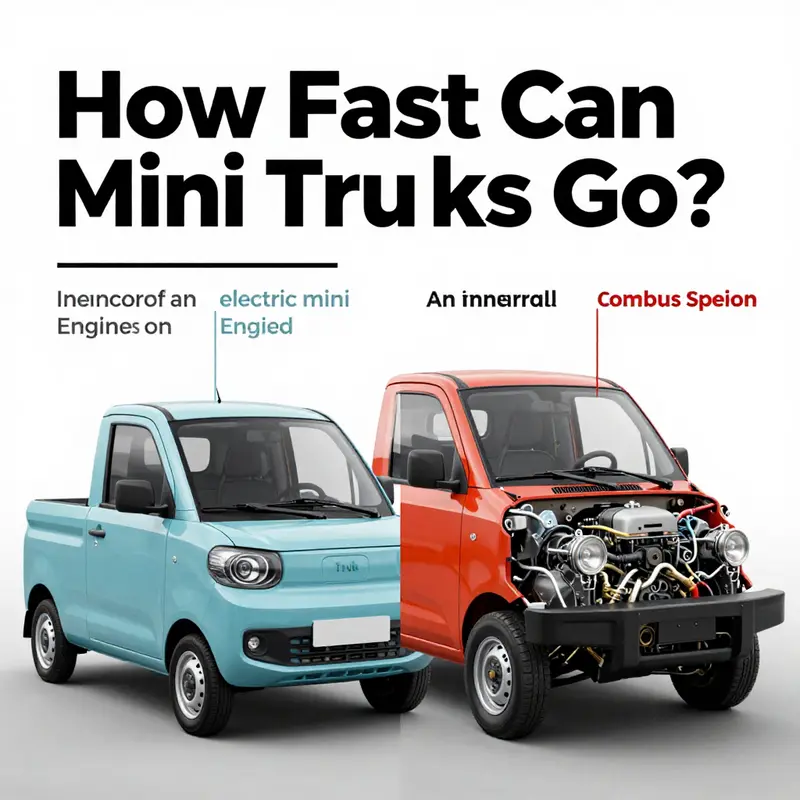
The speed of a mini truck is a product of more than the engine that powers it. In practical terms, it is the sum of a powertrain’s torque characteristics, how power is delivered to the wheels, the gearing that translates that power into motion, the vehicle’s weight under load, and the way aerodynamics and tires manage air and friction at speed. When you tilt toward electric versus internal combustion, the difference is more pronounced, but it remains a matter of how a machine converts energy into forward momentum. Electric motors, with their ability to unleash maximum torque from zero RPM, tend to feel more responsive on the street. A micro electric truck can leap off the line with a certainty and consistency that surges past a similarly sized diesel or gasoline-powered rival, especially when the vehicle is light and the road is favorable. The instant torque is not a short burst; it can be sustained, enabling brisk acceleration profiles across a wide range of speeds. That characteristic has real-world consequences for urban deliveries, where swift, predictable responses can shave minutes off a route and allow drivers to dodge gaps in traffic with greater ease. Yet top speed, that oft-cited figure that sweeps through marketing materials, is not simply a function of motor capability. It is constrained by software limits, battery management, cooling, and the gearing strategy that the manufacturer chooses for the drivetrain. A common theme in electric mini trucks is a relatively high peak torque and a deliberate, often conservative, top speed cap. The cap is there for energy efficiency, thermal stability, and to keep the vehicle within the safety envelope required for urban operation and highway integration in different regions. In short, electric powertrains often win the sprint, but their top peg is set with a purpose beyond raw horsepower.
On the other side of the spectrum stands the internal combustion option. Even when compact, diesel and gasoline engines deliver meaningful torque, the delivery curve tends to peak higher up in the rev range. In practice, that means a slower start from a standstill, where the engine still needs to wind into its powerband before the full torque occurs. The result is a more deliberate, sometimes slower, initial acceleration compared with an electric counterpart. As speed climbs, an ICE mini truck may continue to accelerate efficiently, especially if it benefits from a well-muned turbo or a larger displacement within the constraints of its class. But the top speed across many ICE-powered mini trucks sits in a narrower band, often around 60 to 80 km/h, depending on engine size, the vehicle’s weight, and how the drivetrain is tuned for urban work rather than highway roaming. The reality is that many compact ICE minis are designed to maximize payload and urban maneuverability rather than pure speed, so their top-end figures are a compromise aligned with their core mission.
These dynamics translate into a practical speed spectrum that begins to take shape when you sort mini trucks by their intended use. In the broadest sense, there are low-speed city runabouts designed to operate within dense urban grids; there are high-speed electric mini trucks engineered to push toward highway-legal performance in some markets; and there are performance-oriented micro cars that overlap with the “mini truck” umbrella in some contexts but emphasize speed and nimble handling more than payload. Even if a model is electric and can claim a higher top speed than its ICE counterpart, the true utility for a fleet or a courier operation rests in how quickly it can reach that top speed and how consistently it can sustain traction and control as loads vary. In this sense, the distinction between acceleration and top speed becomes essential: the former governs daily performance and rider experience, the latter defines highway compatibility and long-haul capability.
Delving into the numbers helps illuminate the landscape, even as it risks oversimplification. A practical framework that emerges from recent observations places mini trucks into three broad categories. First, low-speed city runabouts, often electric, are designed for compact corridors and short trips. Their maximum speeds typically hover in the vicinity of 40 to 105 km/h, with the lower end reflecting more conservative urban compact designs and the higher end representing models that have expanded their target markets or adopted higher gearing and more capable battery packs. Second, there are high-speed electric mini trucks that push toward the upper end of the spectrum, reaching around 120 km/h in capable configurations. These are the vehicles that try to combine urban agility with a more comfortable highway presence, aided by robust drivetrains and well-integrated thermal management. Third, performance-focused mini cars—vehicles that sit close to the edge of what many would call a “mini truck” in spirit if not in exact classification—can reach even higher speeds, with top figures approaching or exceeding 170–180 km/h in some contexts. While not every mini truck aims at those speeds, the range helps frame what speed means when powertrains are tuned for maximum performance rather than maximum payload or efficiency.
In practice, the choice between electric and ICE powertrains triggers a cascade of consequences that go beyond peak velocity. Electric drivetrains are exceptionally well suited to dynamic driving conditions. The response is immediate, the control is precise, and the combination of instant torque with compact, efficient packaging makes it straightforward to optimize for urban delivery patterns. That said, the trade-off often comes in energy density, thermal performance, and overall range under load. A loaded electric mini truck must manage the thermal load generated by sustained high-torque operation, and the recovered energy through regenerative braking becomes a significant factor in maintaining range in city cycles. If the vehicle is repeatedly accelerating and braking within a short radius, the battery and motor cooling system work hard to stay within safe operating temperatures, which can constrain acceleration bursts during a long shift.
ICE-powered mini trucks bring a different balance to the table. The engine’s torque curve can feel robust at moderate speeds, especially when a well-tuned natural aspiration or turbocharged variant is in play. A loaded diesel or gasoline unit still has to manage fuel economy, heat, and the mechanical drag of the drivetrain, which affects both acceleration and top-end speed. In many fleets, the top speed of ICE minis remains lower than their electric peers in urban duties, but their ability to maintain mid-range performance under heavier loads can be an advantage in certain scenarios, such as sustained highway runs or routes that require prolonged climbs. The reality is that the speed an ICE mini can sustain depends heavily on load, gearing, and engine design. The top speed that a fleet sees on a given day is rarely the same as the manufacturer’s claimed no-load figure; it shifts with cargo weight, tire condition, ambient temperature, and road grade.
These generalizations point toward a practical conclusion: speed within the mini truck segment is a function of classification, application, and the tuning decisions that engineers make to match a vehicle to its intended duties. A micro electric truck designed for dense urban corridors might cap top speed to preserve battery life and protect thermal margins while delivering blistering off-the-line torque. A higher-performance electric or a more capable ICE-powered variant, engineered to handle frequent highway ingress or heavier payloads, might push toward the upper limits of its class—but often at the cost of efficiency or payload capacity. The conversation about speed thus becomes a balance sheet of energy, control, and purpose rather than a chase for the highest number.
For readers who want a deeper, model-by-model sense of how powertrains translate into real-world speed, the practical differences among various options can be understood through a targeted model comparison, such as the one focusing on how different powertrain configurations in a popular mini-truck lineup affect acceleration, top speed, and handling under load. This kind of comparative lens helps align expectations with the realities of street performance and fleet operations. In that sense, while the raw top speed is an important figure, it is the way speed is delivered—torque at the wheels, throttle response, and the ability to sustain momentum under varying conditions—that truly shapes how fast a mini truck can go in everyday use. When fleets evaluate potential purchases, they weigh not only the top-end figure but the speed at which the vehicle can safely and reliably navigate common routes, the predictability of its acceleration, and how well it maintains that performance across a shift.
For a concise, model-focused comparison that digs into drive layouts, motor placement, and performance targets, see the guide on comparing Kingstar Kruzr models specs and features. That resource helps translate engineering choices into concrete expectations about speed, handling, and usability in real-world settings. As you move from theory to practice, it becomes clear that speed in mini trucks is less about chasing a single number and more about matching a vehicle’s powertrain to the tasks at hand, the routes it will travel, and the operating environment in which it will work. The most successful choices are those that deliver rapid, reliable response when needed, while preserving energy, maintaining control, and keeping the payload moving efficiently.
External context can further illuminate these trends. For readers seeking deeper technical insight into how powertrains, torque curves, and energy management shape mini truck speed in practice, the Mini Truck Motors Guide: Key Features, Applications, and Performance Insights provides a thorough overview of performance considerations and design trade-offs. https://www.researchgate.net/publication/397125438MiniTruckMotorsGuideKeyFeaturesApplicationsandPerformanceInsights
Mapping the Speed Spectrum: How Fast Mini Trucks Really Go
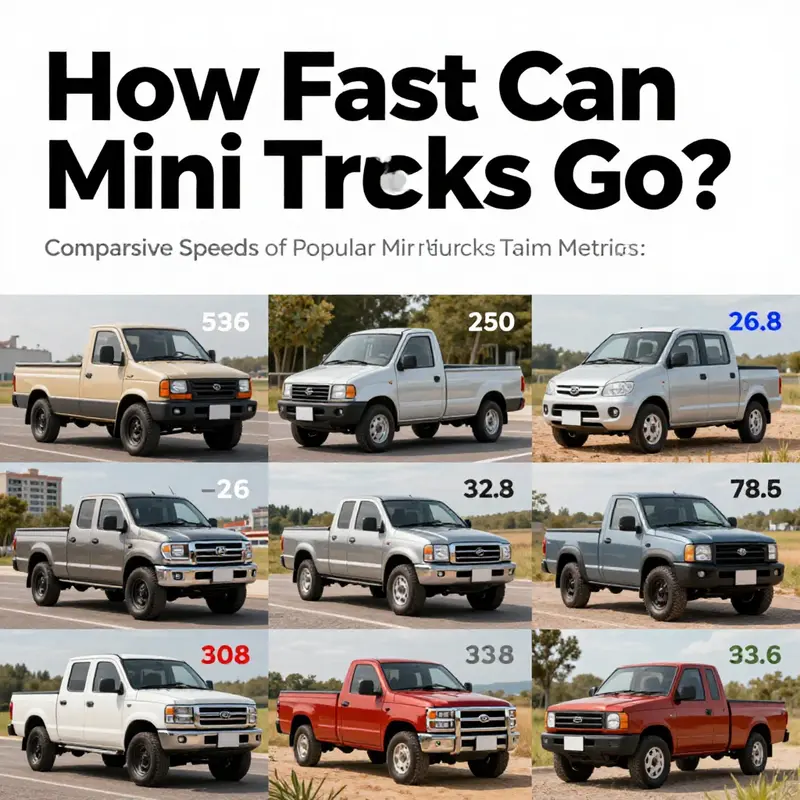
Mini trucks occupy a curious space in the vehicle landscape. They are not primarily engineered to chase top-end speed, yet their speed envelope is not a single, fixed line. Instead, it is a spectrum shaped by design intent, powertrain architecture, weight, and the conditions under which they operate. The broad picture shows three distinct corners of this spectrum: lightweight, low-speed urban runabouts; higher-speed, more capable electric variants designed for semi-urban and highway use; and the high-performance edge where the term mini is more about packaging than pace. In the everyday world of logistics and cargo movement, drivers favor reliability, efficiency, and maneuverability over outright sprint capability. Yet understanding where a mini truck sits on that spectrum helps buyers match the vehicle to its job and the road distances it will cover.
For micro electric models designed for city corridors, top speeds typically fall within a wide range. Many of these compact EVs are governed to balance urban agility with highway compatibility where allowed. In practical terms, they can travel from about 40 km/h up to roughly 105 km/h (25 to 65 mph). The lower end reflects scenarios where social and infrastructural realities, such as narrow streets or dense traffic, predominate. The upper end corresponds to markets that enable higher-speed operation on roads where the design and regulatory framework permit it. In these cases, a vehicle marketed as a city commuter can reach around 100 km/h (about 62 mph) in controlled conditions. This level of capability is often sufficient to meet legal highway requirements in regions that set a minimum design speed around 70 km/h, allowing these micro EVs to blend into road networks without becoming traffic bottlenecks for heavier vehicles.
Beyond the entry-level end of the scale, a newer breed of electric mini trucks pushes the envelope toward higher performance. These models leverage more powerful motors, more sophisticated battery packs, and lighter chassis to achieve top speeds in the neighborhood of 120 km/h (about 75 mph). The math here is straightforward enough: more power and improved drivetrain efficiency deliver a higher peak speed, enabling these trucks to perform better on longer routes or in mixed-use corridors where speed limits are higher. Yet even at this tier, top speed remains constrained by payload, aerodynamics, and the practical realities of handling a small vehicle with a typically substantial load. The emphasis stays on efficiency, reliability, and duty-cycle resilience rather than outright blistering pace. In short, the speed contenders across the electric mini-truck segment tend to fall into a gradient—from urban-optimized runabouts to higher-speed workhorse configurations—rather than a single, universal ceiling.
The landscape is not limited to electric powertrains. In the wider context of mini trucks, diesel and gasoline variants still populate a significant share of the market, especially in regions where fuel economy regimes and maintenance considerations have shaped fleet choices for years. Diesel power in compact 4×4 layouts is often tuned for durability and traction, with top speeds generally in the range of 70 to 90 km/h (about 43 to 56 mph). These figures reflect the balance between carrying capacity, terrain versatility, and the need to keep operating costs predictable across vehicle life cycles. A classic 4×4 diesel mini truck, commonly cited in practice for its ruggedness, typically lands in that 80–90 km/h territory. Here, the design priorities emphasize reliability on uneven surfaces, traction in slippery conditions, and the ability to perform steady work in rural or industrial settings rather than highway camaraderie with larger trucks.
Even within these broad categories, there are notable variations. A mid-market, light-chassis mini truck with a modern drivetrain can push its top speed toward 100 km/h when conditions are ideal and payload is light. In the context of open-bed or flatbed configurations used for construction and delivery work, a slight uptick in top speed can occur thanks to refined engine tuning and weight reduction strategies. However, the moment a payload is loaded, the momentum and gearing stretch become limiting factors. Real-world performance often diverges from the published top speed, with acceleration and cruising ability more strongly influenced by payload, road grade, and engine health than by horsepower alone. The upshot is clear: top speed numbers matter, but they tell only part of the story about how these vehicles perform on the job.
From a practical standpoint, the top speeds cited in official specifications or automotive reviews should always be interpreted in light of the typical operating envelope. In day-to-day use, drivers rarely operate at, or even near, those maximums. The real utility of a mini truck comes from a blend of torque, gearing, and weight distribution that yields confident acceleration from a stop, steady hill-climbing ability, and predictable braking with a load. The acceleration curve matters as much as the ultimate top speed because it governs how quickly a vehicle can merge, overtake, or adjust to traffic without compromising safety or cargo integrity. Heftier payloads, for instance, dramatically affect both how fast a vehicle can accelerate and how quickly it can reach and maintain highway speeds. Road conditions—wet pavement, uneven surfaces, and wind resistance—also color the actual speeds drivers experience. In the end, the top speed is a useful reference point, but the working reality of mini trucks lies in how they perform the tasks they were designed to handle, at the speeds that allow safe, efficient, and economical operation on the roads they are meant to navigate.
In the broader sense, then, speed is a spectrum that mirrors a vehicle’s purpose and its market segment. A compact diesel 4×4 or a small urban EV has very different design constraints from a high-speed electric mini truck designed for mixed-use routes. Buyers evaluating these machines should look beyond the top-speed metric to consider acceleration profiles, torque delivery, payload handling, braking confidence, and energy efficiency under load. The numbers matter, but they are most meaningful when aligned with the job the vehicle is expected to perform. When a fleet needs to shuttle goods through congested city streets, the ability to start instantly, climb a modest grade, and maintain stable cruising under a load can be far more valuable than the ability to sprint briefly at the top end. Conversely, when a route includes longer stretches with fewer stops and a higher allowable speed, the benefits of a higher top-end capability—balanced against increased energy consumption and higher purchase costs—become more relevant.
For readers aiming to deepen their understanding, exploring a resource that surveys a range of models and their specifications can be illuminating. The minitrucks blog page offers ongoing analyses of market trends, model varieties, and performance benchmarks, helping readers place individual numbers within a broader context and evolve their purchase criteria as markets shift. minitrucks blog.
Ultimately, the speed story for mini trucks is less about chasing a single number and more about choosing the right tool for the mission. If the goal is urban courier service with frequent stops and tight loading docks, a low-to-mid-speed urban electric model may deliver the best balance of cost, range, and maneuverability. If the task involves rural delivery lanes, longer legs, and the occasional highway segment, a higher-speed electric option or a robust diesel 4×4—with careful attention to payload and maintenance—will serve better. And for those who equate minimal footprint with performance, there are configurations that offer a more spirited top-end without losing the practical virtues mini trucks bring in terms of size, efficiency, and adaptability. The bottom line is that speed, while important, is only one axis in a three-dimensional decision matrix that includes payload, efficiency, and reliability—without which any speed advantage is unlikely to translate into meaningful value on the job.
For readers seeking a broader external perspective on how performance translates into real-world capability, an in-depth external resource provides additional context on how a compact, high-utility platform performs on varied road conditions and under load. This external reference complements the discussion here by anchoring top-speed figures in more comprehensive test data and driving dynamics. external performance resource.
Speed Under the Law: How Regulation Defines Mini Truck Velocity on Public Roads
Speed, in a vehicle class built for tight spaces and bustling delivery corridors, is not a simple matter of engine power. It is a negotiated outcome, shaped by how regulators expect these machines to behave on roads shared with cars, trucks, buses, and pedestrians. Mini trucks sit at a crossroads between ultra-light city runabouts and compact freight vehicles. They must be nimble enough to navigate crowded streets, yet controlled enough to avoid overwhelming traffic or compromising stability under load. Because of this, the straight answer to ‘how fast can a mini truck go?’ must be filtered through the lens of safety, road classification, and design philosophy.
In many jurisdictions, especially in Europe and Asia, these vehicles frequently carry a legal top speed in the neighborhood of 90 to 100 km/h. This is not an arbitrary guardrail; it reflects regulators’ conclusions about braking performance, steering response, tire and wheel standards, and the tendency for rear-heavy weight distribution to affect handling at higher speeds when a heavy payload is onboard. The caps are set in law and regulation to ensure that a delivery vehicle can decelerate reliably even when fully loaded, and can stop within a distance compatible with typical highway or urban road scenarios. When a vehicle is designed primarily for short trips and dense traffic, there is a premium on predictable behavior at modest speeds rather than raw acceleration toward highway speeds.
Where these limits come from is a matter of engineering and public policy. Regulators scrutinize a mix of factors, starting with the engine’s power output, but focusing more on braking system capacity, tire and suspension standards, steering geometry, and the presence of stability and traction control systems. Governments rely on type-approval tests and performance benchmarks to determine whether a vehicle aligns with road safety expectations. The rear-engine topology, common in compact models, can maximize cargo space but also alters weight transfer during braking and cornering. That heavier rear axle can degrade stability under certain maneuvers, particularly when a vehicle is fully loaded or negotiating a curve at the edge of its speed envelope. In these circumstances, the regulator’s job is to ensure that speed limits reflect not just what the machine can do, but what it can do reliably and safely in real-world traffic.
A further layer comes from vehicle categories and compliance regimes. In the European Union, many mini trucks fall into specific classifications, such as L7e, which define not only basic attributes like weight and dimensions but also permissible performance figures, including maximum speed. Registration and road use hinge on meeting these parameters, and non-compliance can mean denial of road access, fines, or restrictions on where the vehicle can operate. This is not mere paperwork; it is a framework designed to maintain uniform expectations among drivers sharing a dense urban fabric and across cross-border fleets. The upshot for operators is that a given model’s top speed is as much a regulatory feature as a technical specification, shaping how fleets plan routes, allocate payloads, and schedule deliveries.
The practical implications of speed limits ripple through the choices of fleets and buyers. A speed cap translates directly into route planning, traffic pacing, and even maintenance planning. Operators often opt for a balance that favors torque, braking efficiency, and stable handling over the last few kilometers per hour of top speed. A vehicle that can accelerate quickly from a stop while carrying a heavy cargo load can be more productive in city traffic than one that merely claims a high peak speed. And because top speed cannot be reliably extended without addressing the trinity of power, braking, and stability, manufacturers tune control software, calibrate braking systems, and refine traction control to ensure that the vehicle stays within the authorized envelope across a broad spectrum of payloads and road grades. In practice, the most valuable performance for urban delivery comes from predictable, controllable acceleration and deceleration, not from reaching a higher maximum velocity on a highway where the vehicle is rarely deployed.
This regulatory character shapes not just what is legal, but what is perceived as practical by operators in the field. You will see different markets showing variations in top speeds for similar-looking vehicles, but those differences usually reflect distinct safety philosophies and road-use classifications rather than a simple horsepower contest. In some jurisdictions, higher caps may be permitted for certain vehicle families that have passed additional safety testing and earned enhanced type-approval credentials. Such enhancements are not a universal guarantee; they come with extra requirements for braking performance, door-mounted safety standards, and electronic stability control among other criteria. The broader point is that the speed limits are a signal about how traffic authorities expect these machines to behave when sharing lanes with cars and heavier freight.
Understanding this regulatory framework helps explain why brochures and press materials sometimes show performance figures that do not translate directly to what a driver can legally achieve on public roads. It also clarifies why there can be regional differences in cap figures for vehicles that appear similar at first glance. The framework is designed to preserve predictability across thousands of daily trips, so a fleet manager can reliably estimate arrival times, fuel or electricity consumption, tire wear, and maintenance needs without worrying about unexpected deviations in performance once the vehicle leaves the showroom floor.
If you want to see how these rules translate into real-world decisions, the market ecosystem often provides useful illustrations. For readers curious about how these rules play out in practice, the Mini Trucks blog collects debates, case studies, and regulatory notes that illustrate the spectrum of regional approaches and the practical implications of these limits. Mini Trucks blog
Looking ahead, policymakers, fleets, and manufacturers are likely to continue negotiating the balance among speed, safety, and efficiency. The shift toward more urban, last-mile delivery, paired with growing electrification and the expansion of road-sharing infrastructure, influences where speed limits may move in the future. Some studies suggest that increasing braking performance and stability control can justify more permissive limits in certain contexts, but others argue that lower caps with robust traffic-calming and dedicated lanes can improve overall safety in dense urban zones. The debate often centers on whether speed enhancements should be paired with driver training, better tires, and smarter vehicle automation that can anticipate and respond to street-level hazards in real time. The result is a dynamic landscape in which the speed of a mini truck is not a fixed feature but a negotiated outcome that depends on road design, vehicle engineering, and the regulatory appetite for risk management.
Finally, for practitioners and policymakers alike, the regulatory baseline remains a reliable anchor. It is essential to consult official regulations for the specifics that apply to a given jurisdiction, especially as rules evolve with technology and traffic conditions. The EU Regulation 510/2011 provides a formal backbone for type-approval of light commercial vehicles, detailing the parameters that define safe, lawful operation on public roads. Keeping pace with these updates ensures that fleets can plan, procure, and deploy vehicles with confidence that they will remain compliant as networks and delivery models evolve.
External resource: EU Regulation 510/2011: https://eur-lex.europa.eu/legal-content/EN/TXT/?uri=CELEX%3A32011R0510
From Urban Runabouts to High-Speed Hybrids: The Rising Frontier of Mini Truck Speed
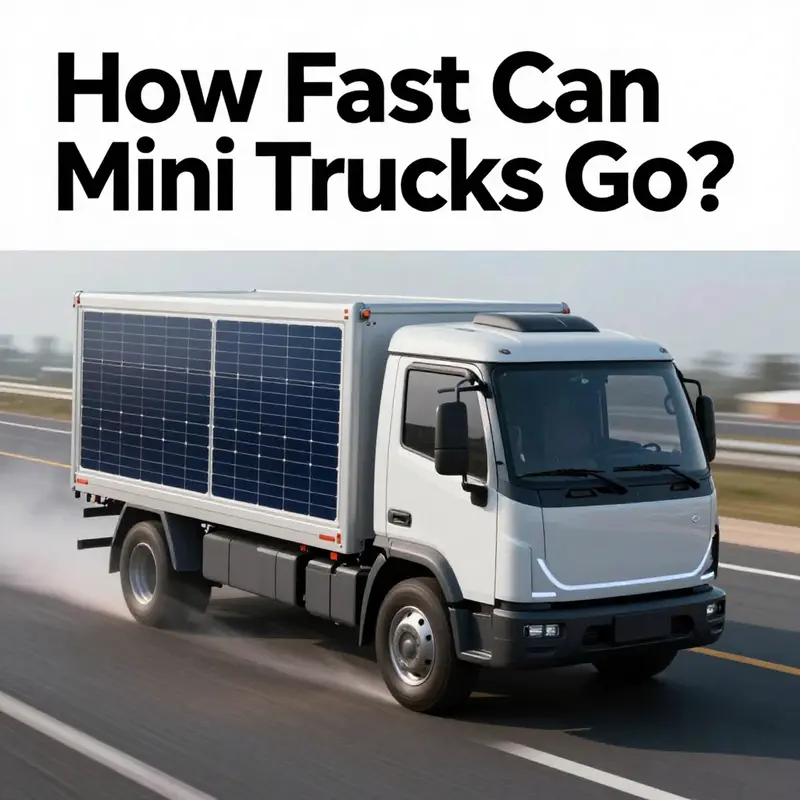
The question of how fast mini trucks can go sits at the intersection of practicality, design philosophy, and a shifting marketplace that treats speed as one part capability and one part value proposition. In current practice, the speed profiles of mini trucks fall into clear, though evolving, categories. There are low-speed city runabouts whose top speeds cluster around 40 to 105 kilometers per hour (roughly 25 to 65 miles per hour), vehicles tuned for urban duty, last-mile deliveries, and short-range commuting where acceleration, efficiency, and reliability matter more than outright velocity. Then there are high-speed electric mini trucks designed for greater highway reach and responsiveness, capable of about 120 kilometers per hour (roughly 75 miles per hour). And beyond that, the umbrella of what people loosely call mini or compact autos, including high-performance mini cars, can push top speeds toward the upper end of the spectrum, with conventional small cars reaching around 170 kilometers per hour and some electric variants approaching 180 kilometers per hour. Taken together, these figures illustrate a landscape where the label mini does not lock in a single pace; instead, it signals a family of vehicles whose speed is a function of their intended role, their drive system, and the engineering choices behind them.
What makes the fast end of the mini truck spectrum feasible is a progressive alignment of powertrain capability with weight management and control systems. Electric drivetrains are central to this shift. They offer instantaneous torque delivery, a feature that translates to brisk acceleration even when a vehicle remains compact. The rapid torque response can shorten the time between a driver requesting speed and the actual surge in forward motion, a crucial factor for urban and last-mile delivery contexts where unpredictability and stop-start conditions are common. But torque is only part of the story. Battery architecture and power management are equally influential. Battery packs with higher energy density and improved thermal management enable sustained performance and more confident throttle behavior during bursts of speed. In practical terms, this means that a high-speed electric mini truck does not merely reach a higher top speed; it maintains stable acceleration and predictable throttle response under load, which matters for fleet reliability and customer experience in fast-paced delivery windows.
Weight reduction emerges as another decisive lever. Every kilogram shaved from the vehicle reduces the energy required to accelerate and maintain speed, which in turn can enable higher performance without a proportional hit to range. Advances in lightweight materials, such as high-strength steels and advanced composites, are being paired with refined component packaging to optimize mass distribution and aerodynamics. These design choices do more than simply lift top speed; they improve handling, braking efficiency, and ride quality at higher velocities, all of which contribute to safer, more predictable performance on real roads. In a market that increasingly favors efficiency and duty-cycle longevity, the challenge is to improve speed without compromising range, payload, or durability. The best contemporary approaches quietly weave higher power density, thermal resilience, and smarter energy management into a package that remains suitable for urban ecosystems and mixed-use routes.
A parallel thread in the evolution of mini truck speed runs through digitization. The ongoing sector-wide push toward IoT connectivity, telematics, and automation is reshaping how speed is deployed and managed across fleets. Real-time data streams from each vehicle inform predictive maintenance, health monitoring, and performance tuning. When fleets can anticipate component wear or battery degradation, they can maintain optimal performance levels more consistently, reducing the likelihood of unexpected slowdowns during critical delivery windows. Telematics evidence also helps operators optimize routes and loading strategies to minimize drag and maximize acceleration capacity where it matters most. In short, the speed profile of a mini truck is not only a function of a single machine but of the digital ecosystem around it, which orchestrates several moving parts to deliver faster, more reliable service with less downtime.
The market context amplifies the importance of these technological developments. Industry analyses project a steady expansion of the mini truck market, with a compound annual growth rate (CAGR) around 5.8 percent from 2023 to 2030. That growth is not just about selling more vehicles; it reflects intensified investment in research and development aimed at improving powertrain efficiency, reducing weight, and extending the practical range in real-world duties. Manufacturers are increasingly prioritizing powertrain efficiency and system integration so that higher speed is paired with better overall performance and longer service life. In this environment, number-crunching tests and lab benchmarks gain fresh relevance, because they translate directly into the real-world ability of a mini truck to deliver quicker acceleration, safer passing, or more confident highway cruising while still meeting the needs of urban customers.
To understand how these trends might shape the near term, consider how a high-speed electric mini truck might feel in daily use. A vehicle designed for higher top speed but optimized for city duty is likely to feature a dual emphasis: a compact footprint and a powertrain tuned for rapid, smooth response rather than brute drag-limitation. This can yield a refreshing balance: brisk takeoff when a delivery point requires swift access, stable mid-range performance on arterial routes, and the ability to maintain highway speeds with adequate power to spare for overtaking or merging. Such capabilities can make mini trucks compelling options for last-mile logistics where time is money, while still aligning with urban noise and emission goals. At the same time, the existing low-speed segment continues to fulfill essential functions in dense neighborhoods, campus corridors, and housing developments with speed limits that prioritize safety and efficiency over velocity. The spectrum, rather than a single destination, represents a deliberate strategy to tailor performance to context.
The role of safety and regulation cannot be overstated in this evolving velocity landscape. As speeds hover at different thresholds across classes, authorities weigh considerations related to vehicle weighting, braking performance, crash protection, and operator training. The push toward higher speed capabilities must co-exist with robust safety systems, including advanced braking, stability control, and driver-assist features. In high-density urban areas, where micro-mized fleets proliferate, the value proposition shifts toward predictable acceleration profiles, quick recovery from slowdowns, and reliable braking responses that minimize risk for pedestrians and other road users. The broader takeaway is that speed advances do not occur in a vacuum; they are part of an integrated approach to mobility that values efficiency, reliability, and safety in equal measure.
The external horizon offers further clarity on where this trajectory might lead. The convergence of stronger electric propulsion, lighter architectures, and smarter fleets points toward a future in which mini trucks can operate with enhanced velocity envelopes while preserving the energy balance demanded by urban deployments and last-mile logistics. In practical terms, fleets may selectively employ higher-speed options for intercity hops or peri-urban routes where time savings justify the trade-offs, while keeping the city-running variants optimized for short trips, tight streets, and frequent stops. The result is a versatile portfolio of speed profiles that can be matched to route-specific requirements rather than forcing a one-size-fits-all speed target.
For a practical look at how modern micro trucks stack up against rivals, see comparing-kingstar-kruzr-models-specs-features. This kind of resource helps readers gauge where a given vehicle sits on the speed-performance continuum and how it aligns with payload, range, and duty-cycle expectations. As readers digest these comparisons, it becomes clearer that speed is best understood as a multi-dimensional attribute. It depends not only on the top number a vehicle can reach but also on how quickly it can reach that threshold, how reliably it maintains it under load, and how well the overall package supports the missions for which the vehicle is designed.
The chapter thus comes full circle to a central observation: the speed of mini trucks is not a fixed ceiling but a moving target shaped by technology, design discipline, fleet economics, and regulatory environments. The trend line points upward, but with accelerations calibrated to where the vehicle is going to work. Electric drivetrains, with their torque-rich performance, are the most visible engines of change, yet they work best when paired with careful weight management and intelligent energy deployment. Lightweight materials, smarter aerodynamics, and advanced battery technologies enable higher performance without sacrificing range or durability. At the same time, the digitization of fleets makes speed more actionable; maintenance becomes more predictive, routing becomes more efficient, and the overall flow of a delivery network can reach new levels of speed without increasing risk or compromising safety. The future of mini truck speed, therefore, lies in smarter speed—an adaptive, context-aware velocity that matches the task, the road, and the customer expectation with precision.
External resource for deeper context: https://www.motorsguide.com/minitruck-motors-guide
Final thoughts
Understanding the speed capabilities of mini trucks is not just about performance; it’s about choosing the right vehicle for your needs. Whether you’re a small business owner looking for efficient logistics, a homeowner seeking practicality, or an enthusiast passionate about performance, knowing how fast your mini truck can go allows you to make informed decisions. With the rise of electric models and ongoing innovations, we can expect improvements in speed and efficiency, making these vehicles even more appealing for practical use. Embracing the future of mini trucks means being prepared for the exciting developments on the horizon.