
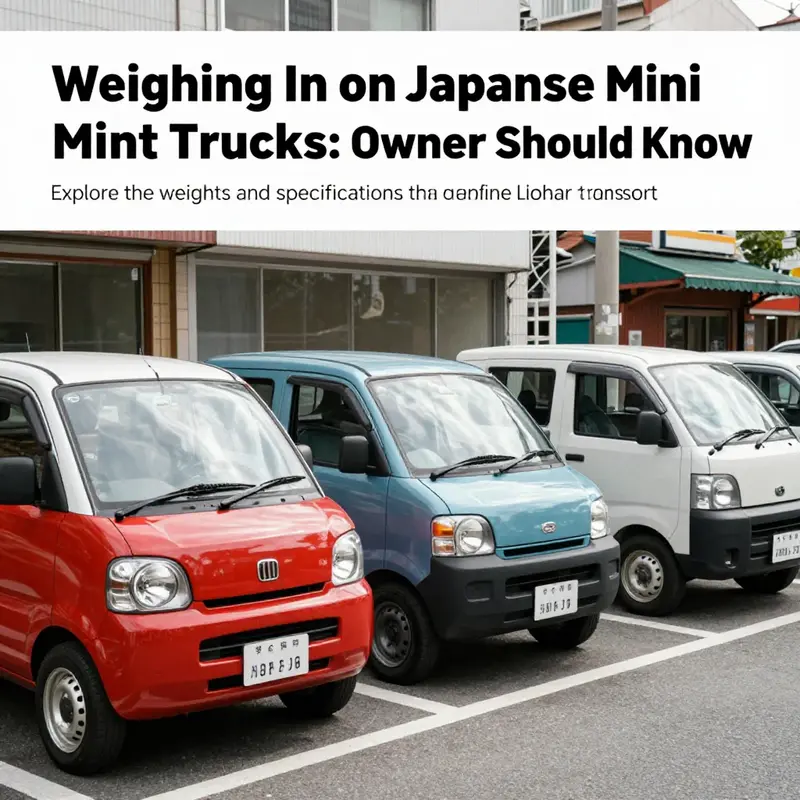
Understanding how much Japanese mini trucks weigh is essential for local small business owners, residential property owners, and mini truck enthusiasts. These vehicles are not only a staple for delivery and transport in urban settings, but their unique weight specifications are key to their performance and efficiency. In this article, we’ll dive into the concepts of Gross Vehicle Weight (GVW) and Curb Weight, unpack various models, and consider the regulations that impact design. Each chapter will build on your knowledge, helping you make informed decisions about mini trucks for your needs and interests.
GVW vs Curb Weight in Japanese Mini Trucks: How Much Can They Carry?
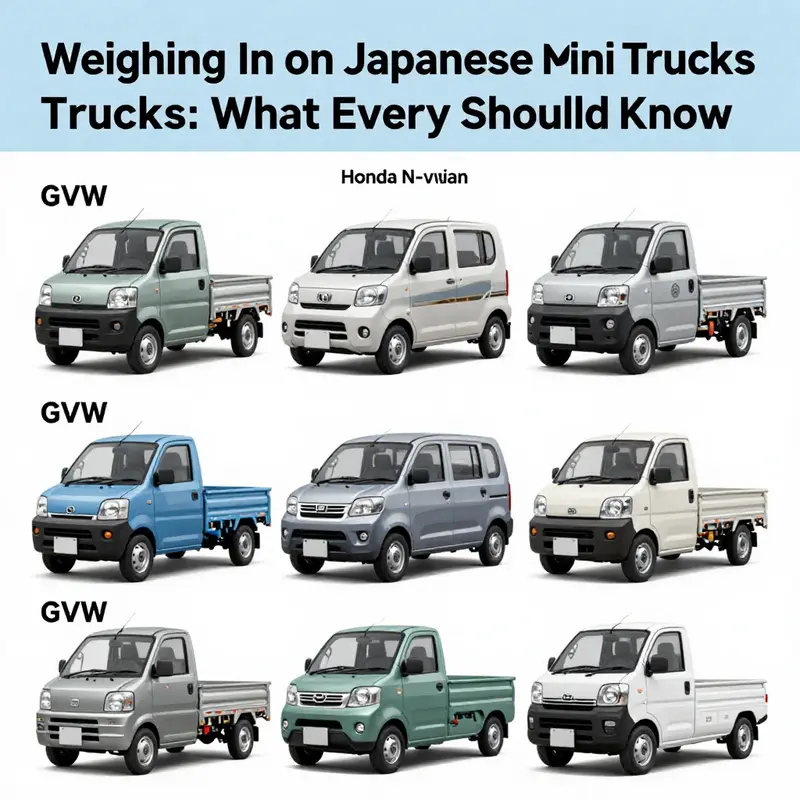
Weight is more than a number on a spec sheet. It is a living constraint that shapes performance, payload, and safety in narrow city streets. In the world of kei trucks, two figures sit at the center of the discussion: GVW, gross vehicle weight, and curb weight, the unladen mass of the vehicle. GVW is the ceiling that the vehicle may approach when loaded with people, fuel, cargo, and gear. Curb weight is the baseline – the weight you start with before any payload is added. Those numbers map the practical limits of what can be moved, how quickly the truck can accelerate, and how it behaves when corners tighten.
GVW is a composite figure. It represents the vehicle mass in its fully loaded state, including the engine and chassis, the body, fuel, fluids, the driver and passengers, and the payload. Because GVW aggregates many variables, it is a key figure for safety, regulatory compliance, and planning how much can be hauled daily. In Japan, GVW interacts with licensing categories and road classifications and engine displacement in service of safety and efficiency on crowded roads.
To sketch the landscape, kei trucks span a broad range. On the low end, GVW sits near roughly 1 to 1.5 tons; on the high end, closer to 4 tons in heavier configurations. The exact numbers vary by model, country, and regulatory rules, but the pattern is similar. Heavier GVW means more payload headroom but more careful loading, braking, and suspension demands.
As for curb weight, unladen mass sits roughly from 0.7 to 2.5 tons across the kei and urban utility spectrum. Payload capacity equals GVW minus curb weight. A practical example: a truck with GVW around 2.4 tons and curb weight near 1.6 tons offers roughly 0.8 tons of payload. Pushing GVW to 4.1 tons with similar curb weight could push payload near two tons, changing handling characteristics and fuel dynamics.
Regulatory backdrop: in Japan the kei category and related classifications influence permissible payload, licensing, insurance, and safety requirements. GVW is a regulatory boundary as well as a performance guide. Users should verify official weight figures on the data plate or purchase documents and recheck whenever configurations change.
Practical takeaway: larger GVWs unlock more payload but demand careful loading, braking, and route planning. Lighter GVWs emphasize agility and efficiency but cap payload. The best choice depends on typical load, routes, and regulatory constraints.
For readers seeking more context, see external resources on GVW and curb weight for general framing.
Curb Weight and Urban Utility: How Japanese Mini Trucks Define City Performance
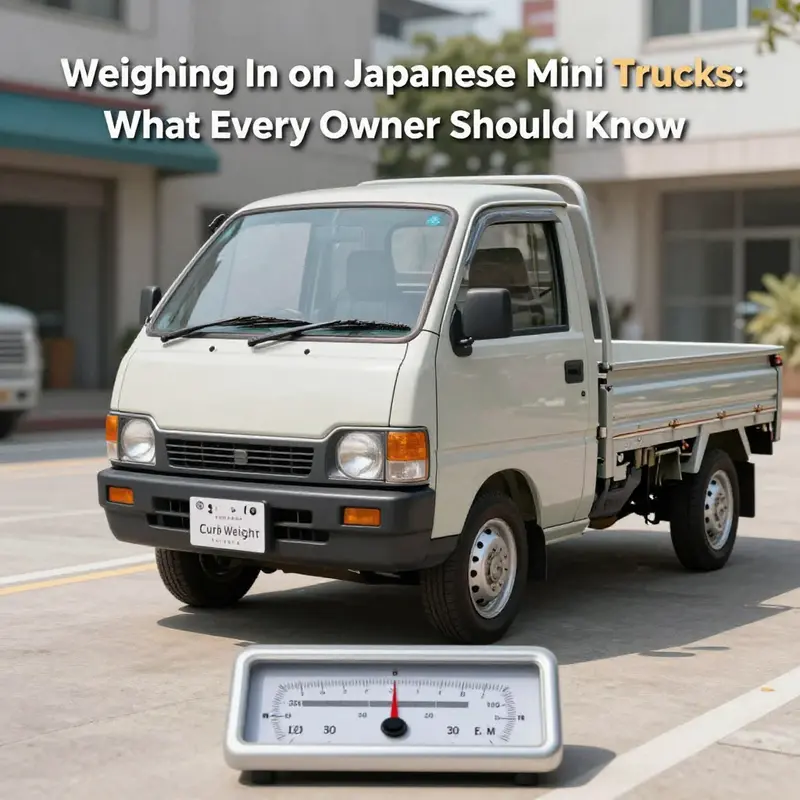
Curb weight is the baseline mass of a mini truck when it is empty. It determines how quickly the vehicle responds to throttle, how soon it stops, and how efficiently it runs in stop and go city traffic. A lighter curb weight improves acceleration and braking in urban conditions and tends to lower fuel use when the truck is unloaded. A heavier curb weight adds stability and can help when carrying larger loads, but it requires more power and more energy to stop.
The GVW or gross vehicle weight is the total allowed mass with cargo and occupants. The difference between GVW and curb weight is the payload capacity, the amount of mass the truck can legally and safely carry. Across markets, curb weights vary widely. Light duty city variants commonly sit near 1800 kg to 3500 kg, while some compact utility models push toward 2500 kg, 3000 kg, and beyond.
Heavier mini trucks, closer to the upper end of the mini truck family, may weigh 4500 kg to 6000 kg empty, reflecting stronger frames and more capable drivetrains, designed for higher payloads or four wheel drive. These heavier baselines reduce payload percentage but improve stability and load distribution for demanding work.
For buyers, the key takeaway is to compare GVW and curb weight together. The payload equals GVW minus curb weight, minus a small safety margin for fuel and fluids. In practice a city oriented model with GVW around 2.4 to 3.0 metric tons and curb weight near 2.0 metric tons yields a typical payload of about 0.4 to 1.0 metric tons for regular tasks. Heavier configurations with GVW around 4.0 to 4.1 metric tons and curb weight near 1.5 to 2.0 tons offer roughly 2.0 to 2.6 tons of cargo capacity.
Design choices matter. Steel, aluminum, and composite components are used to trim mass where it helps and to strengthen the frame where loads concentrate. The bed, tanks for fuel and water, and body panels all contribute to curb weight, but smart engineering keeps the mass in the right range for each model. Lighter bases support agility in dense streets, while heavier bases support bigger payloads and more stable handling when loaded.
Finally, buyers should consult official product sheets and dealer data for the exact curb weight of a chosen model. The relationship between curb weight, GVW, and payload is a daily consideration that affects procurement, running costs, and overall efficiency in urban work. For further context, industry blogs and datasets can provide additional real world examples of how curb weight shapes operating results in different markets.
Weighing the Kei Footprint: A Deep Dive into How Much Japanese Mini Trucks Really Weigh Across Models
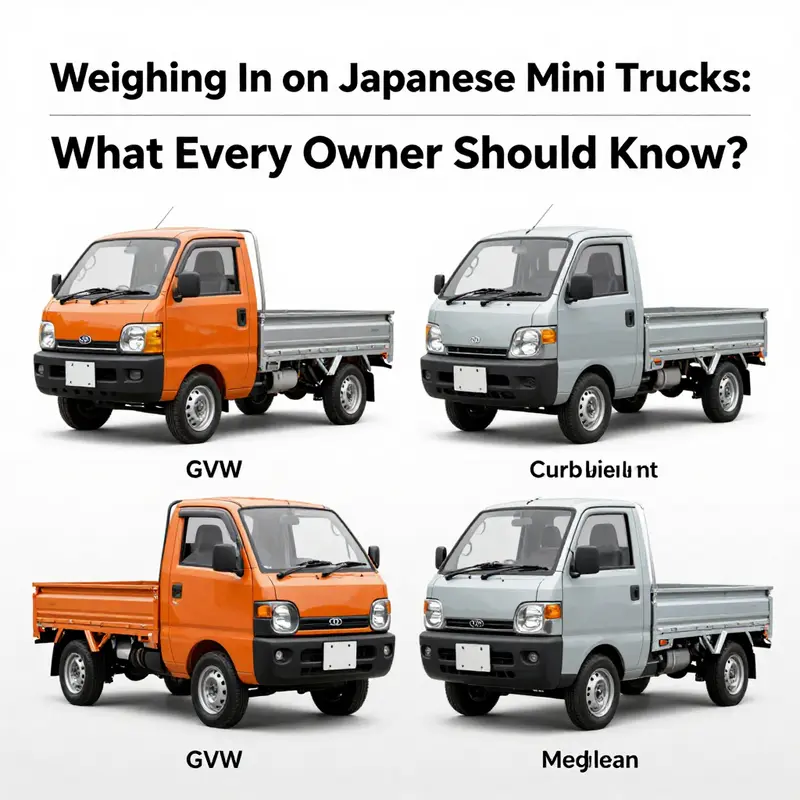
In the tight corridors of Japanese cities, weight is more than a number. It is a measure of maneuverability, fuel efficiency, and the practical ceiling on what a small business can move in a single trip. The weight of Japanese mini trucks reflects a design philosophy that blends compact dimensions with the need to haul cargo, navigate narrow streets, and meet regulatory constraints without sacrificing durability. What looks on the surface like a simple matter of mass becomes a nuanced conversation about payload, handling, and the tradeoffs engineers make when they choose a drivetrain, chassis, and body construction. When you start to look at the numbers across models, a pattern emerges: these vehicles occupy a spectrum that runs from featherweight nimbleness to sturdy, work-ready heft, all within the broader envelope of what the Kei car framework allows and what the market demands for urban delivery and light-duty transport.
To set the stage, it helps to distinguish between two fundamental weight concepts that routinely appear in spec sheets. The curb weight, or unladen weight, is the vehicle’s mass without cargo, passengers, or fluids. It is the baseline from which every payload calculation is made. The gross vehicle weight, or GVW, is the total permissible weight of the vehicle when fully loaded, including passengers and cargo. For Japanese mini trucks, the range of these weights tells one story about who that truck is designed to serve. The smaller, lighter end of the scale prioritizes agility and low operating costs, while the heavier end leans toward greater payload and more robust duty cycles. Across the broader landscape of light trucks in Japan, GVW figures generally trend upward as you move from ultra-light, city-focused designs toward models built for more demanding loads and longer legs of service. In practical terms, the GVW can set the ceiling on what a given vehicle can legally carry, while the curb weight sets the floor for how much the truck itself adds to the equation when deciding how much payload remains usable on a given trip.
Among the clearest takeaways from the weight data is the way unladen weight sits well below GVW, creating a usable payload that varies from one model to the next. Some of the most lightweight mini trucks push their curb weight into the lower end of the tonnage spectrum, while others lean heavier in the name of increased rigidity and cargo handling capability. For the lightest end, models designed with a cab-over-engine (COE) configuration optimize space and reduce overall footprint. These COE designs trade a bit of mass for cargo area efficiency, a balance that suits frequent urban stops and tight parking spaces. On the other hand, models that emphasize rear-wheel-drive configurations or more substantial chassis and structure tend to weigh more even when empty, because their design prioritizes durability and payload potential over pure nimbleness.
Looking at concrete examples helps illustrate this spectrum. The classic Daihatsu Midget, a tiny COE mini truck that has remained a reference point for city-friendly design, typically lands in an unladen weight around 650 to 750 kilograms. That scale makes it exceptionally nimble on narrow streets and easy to park, a virtue in dense urban settings where every meter of roadway and every inch of curb matters. The Midget’s design philosophy is explicit: keep mass down while retaining a practical cargo area for light loads. By contrast, the Suzuki Carry series and the Mitsubishi Minicab, which are often discussed together as representative, are generally heavier in unladen weight, typically around 700 to 850 kilograms. The slightly heavier frame and chassis in these models reflect a balancing act—slightly more rigidity and cargo handling features, with a still-electric emphasis on low operating costs and simplicity. These figures are not mere trivia; they translate directly into how much you can carry before you exceed the GVW and how the vehicle behaves when loaded. A few kilograms here or there can subtly shift braking distance, acceleration response, and cornering behavior, especially when a payload approaches the upper limits of what the model is designed to haul.
There are even heavier offerings within the same family of light trucks, particularly when you consider RWD variants designed for more substantial work duties. The Toyota Stout and the Mazda B-Series, for example, sit in a range where unladen weights typically fall between 800 and 950 kilograms. The extra heft comes with the promise of greater structural durability and an increased payload ceiling, but with a cost in terms of fuel efficiency and urban nimbleness. For fleets or operators who routinely load almost to capacity, that extra mass can translate into real-world benefits in durability and load stability. It also nudges GVW higher, which means a correspondingly higher payload—up to several hundred kilograms more—before the GVW limit is breached.
To connect the weight story to the broader regulatory and practical realities, consider the way these weights align with the GVW ranges observed in the wider field of Japanese light trucks. GVW, the total weight of the vehicle when fully loaded, can span from roughly 2.4 tons to about 4.1 tons across different models and configurations. This range captures the difference between compact, city-oriented small trucks and those that serve more demanding delivery routes or light-duty commercial tasks. An unladen weight as low as 0.65 to 0.75 tons paired with a GVW near 2.4 to 2.5 tons yields a usable payload in the vicinity of 1.6 to 1.8 tons. That is a meaningful payload for many urban and semi-urban applications, enabling substantial cargo with a compact footprint. On the heavier end, a model with a curb weight around 2.0 tons and a GVW up to 4.1 tons offers a payload of roughly 2.1 tons or more, depending on exact configurations and equipment. Those numbers illustrate how a single design choice—whether to push lighter materials and simpler structures or to equip the truck with more robust chassis and cargo features—drives the practical payload that a fleet can rely on. The math is simple, but the strategic implications are significant: heavier, more capable trucks are not always the best choice for every route; sometimes the lighter option delivers more trips per fuel unit and easier maneuvering, while the heavier variants excel where payload density and stability matter most.
In the scope of Kei car regulations, the weight debates take on an extra layer of complexity. Kei cars impose stringent limits on length, width, height, and engine displacement, but they do not fix a single GVW ceiling that would fit every light-truck mandate. The result is a family of vehicles tuned to stay within a narrow footprint while delivering a spectrum of payload capabilities. This is why the lighter COE models tend to be favored for small-scale, day-to-day urban deliveries, where frequent stops and tight parking demand quick, cost-effective operations. Heavier variants, meanwhile, serve more aggressive delivery schedules or light-duty commercial tasks, where the need to move larger or more numerous items without sacrificing stability becomes a decisive factor. The weight differences among these models are not accidental; they reflect deliberate engineering tradeoffs between agility, payload, and the long-term operating costs that matter to small businesses and fleet managers alike.
The weight story is also a reminder of how important it is to consult official specifications when planning a purchase or a fleet strategy. As a rule of thumb, weight figures posted by manufacturers capture a snapshot of a model in a given configuration. If a customer adds options—an upgraded cargo bed, reinforced suspension, or additional lighting—the curb weight can creep upward, and with it the potential impact on payload and fuel economy. The payload, defined as GVW minus curb weight, is the critical figure to monitor for real-world planning. For a fleet manager, a consistent approach to calculating payload across models is essential to avoid underutilization or unexpected overloading. In this sense, the weight data functions not only as a metric of mass but as a practical guide for determining how many trips a given vehicle can complete per day and what kind of routes it should be assigned.
For readers who want a broader framework for comparing weights across models, there is a straightforward path. A model-by-model comparison highlights the weight cadence across the spectrum—from the featherweight COE options around 0.65 to 0.75 t up to the heavier RWD and commercial-oriented designs near 1.0 t or more in curb weight. This pattern aligns with the intuitive sense that lighter models emphasize nimbleness and cost efficiency, while heavier models emphasize payload and duty-cycle resilience. The result is a practical, usable guide for owners and operators choosing the right tool for the job rather than chasing a single universal standard of weight. The takeaway is clear: weight is not the only measure of capability, but it is a decisive one that shapes route planning, maintenance, and total cost of ownership over the life of a vehicle.
For readers seeking a consolidated, model-specific reference, the source resources compiled in official automotive databases can be invaluable. These databases offer precise, model-specific curb weights and GVW values, along with other critical parameters like payload capacity, gross combination weight for towing scenarios, and recommended load distribution. While the numbers cited here provide a representative picture of how weights tend to cluster across Japanese mini trucks, the exact specification for a given vehicle should be verified in the official data sheet. In particular, the range of unladen weights across lighter models and the higher GVW figures seen in more robust or commercial-oriented variants illustrate the spectrum you’ll encounter in the market. The practical upshot is to treat these figures as a guide rather than a guarantee, and to verify the exact numbers before making a purchase or planning a fleet replacement.
As you compare models, a natural reference point to explore further is how weight interacts with other performance traits, such as payload density, braking performance under load, and acceleration with a full cargo bed. Weight affects everything from the vehicle’s turning radius to the stability of a loaded bed, and understanding these interactions helps explain why some models stay light while others carry more mass with confidence. For readers who want to pursue deeper model-to-model comparisons, a focused resource such as comparing-kingstar-kruzr-models-specs-features can provide additional context and concrete numbers across a broader set of configurations, while still anchoring the discussion in the same weight principles that govern smaller, urban-oriented trucks. This kind of cross-model study supports buyers and operators in making sense of the weights they will actually encounter when the cargo is in the bed and the driver is behind the wheel.
For those seeking an authoritative baseline beyond manufacturer figures, the official vehicle specifications database maintained by the national association provides a reliable cross-check. It aggregates standardized data across models and variants, offering consistent, comparable figures to guide decision-making and benchmarking. You can consult this external resource to confirm the precise curb weights and GVW values for any specific model under consideration and to verify how payload capacity changes with different configurations and equipment packages. External resource: https://www.jama.or.jp/
In sum, weight in the Japanese mini-truck segment is a spectrum shaped by design intent, regulatory constraints, and real-world use cases. Lighter COE designs champion maneuverability and efficiency for dense city routes, while heavier RWD models are built to carry more, endure longer, and handle tougher workloads. The unladen weight sits well below the GVW, creating room for payload; the exact payload depends on the model and configuration. The practical takeaway for buyers and operators is to examine both curb weight and GVW in tandem, understand how payload figures translate into daily load, and remember that the numbers on the spec sheet are a starting point for planning, not a guarantee of performance in every scenario. If you want to see how a particular model stacks up in a side-by-side comparison, the linked resource offers a deeper dive into additional models and configurations, while the official data remains the ultimate reference for precise numbers. By keeping weight in view, fleets can optimize route planning, maintenance cycles, and total cost of ownership, turning the compact charm of Japanese mini trucks into a reliable, repeatable competitive advantage for urban logistics.
Weighing the City: How Weight Regulations Shape Japanese Kei Trucks and Their Real-World Utility
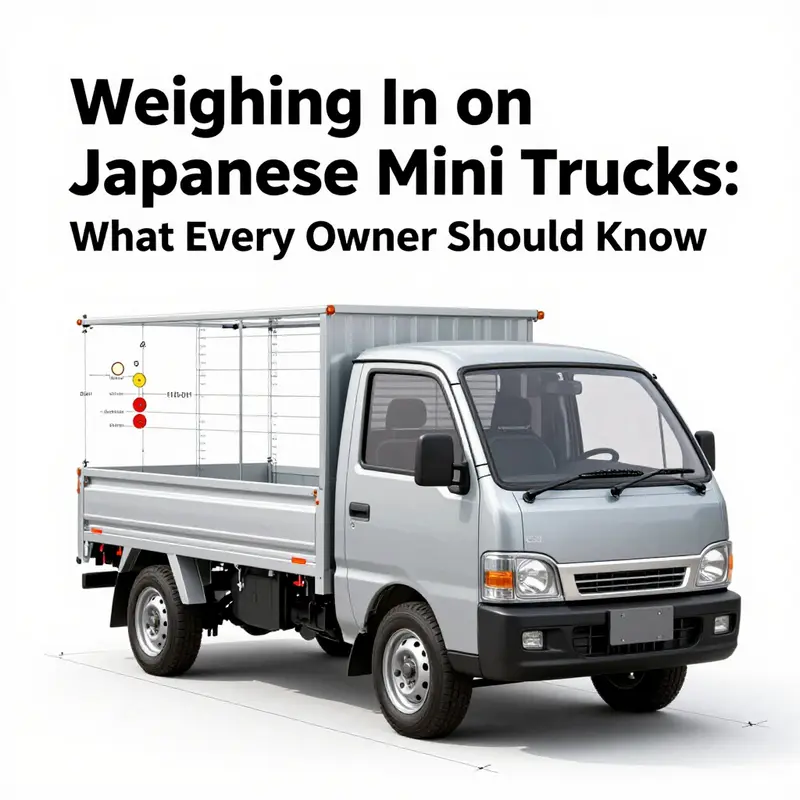
Across Japan’s crowded streets, kei trucks operate not merely as smaller cousins of full-sized pickups but as specialized tools with weight and dimension constraints baked into their very design. The regulatory framework that governs these vehicles imposes a maximum engine size of 660 cubic centimeters and tight limits on overall length, width, and height. Those rules are not cosmetic; they define who pays lower taxes and insurance, and they set the stage for how engineers and designers allocate mass, balance, and durability. In practice, this balance shows up in two related metrics: the curb weight, or the unladen mass of the vehicle, and the gross vehicle weight, which is the total mass when the truck is fully loaded. While curb weights typically sit in a lean range, often about 1.5 to 2.5 tons, the GVW can stretch from roughly 2.4 to 4.1 tons, depending on the configuration and intended use. Those numbers are not mere statistics on a spec sheet; they map onto real work scenarios. A truck that weighs 1.6 tons when empty will carry far more payload before hitting regulatory or mechanical limits than a heavier counterpart. Likewise, a 3.8-ton GVW is a signal that the vehicle is prepared for a heavier daily workflow, but it also demands more careful weight management to preserve handling, fuel efficiency, and tire life on congested urban routes or rural lanes alike. The practical implication is that weight is a driver of capability while also imposing discipline on every other design choice the developer makes. This is the tension that shapes the kei truck’s character: light enough to slip through narrow streets and light enough to be economical, yet sturdy and versatile enough to shoulder a useful payload and survive tough workdays.
The engine constraint of 660cc is a deliberate trade-off. On one hand, a smaller displacement engine keeps manufacturing costs down and reduces emissions and fuel use—vital in a class where operating costs directly influence the day-to-day competitiveness of a business. On the other hand, the same constraint presses the drivetrain to extract as much efficiency as possible from a limited power band. When the vehicle carries cargo, the engine must work harder to move mass, which can magnify throttle response, torque delivery, and acceleration profiles in urban settings dominated by stop-and-go driving. The result is a powertrain that favors low-end torque and steady, predictable responses rather than high-speed gusto. The interplay between engine size, weight, and drivetrain geometry explains much of what operators experience: a nimble city machine that shines in urban deliveries, farm tasks, or construction-site runs, yet not a high-speed highway collaborator. Engine developers respond to this reality with optimized fuel maps, lighter components, and precisely calibrated transmissions that maximize the limited displacement without overstressing the system.
The weight story also has a spatial dimension. The distribution of mass, particularly how it sits between the front and rear axles, governs stability during acceleration, braking, and cornering. In some kei truck architectures, designers purposefully position heavier elements to retain favorable front-rear balance, but the result can shift as payload changes. A heavier payload toward the back can improve traction in slick or uneven conditions, yet it can also raise the risk of oversteer or body roll when a tight corner is taken at speed. Conversely, placing more mass forward can bolster steering feel but may burden the front tires and reduce rear-wheel loading during a carry. This delicate mass choreography is part of what makes kei trucks so methodical in their behavior; the chassis and suspension are engineered to preserve predictable handling across a range of payloads and road conditions. This is especially evident in layouts that feature rear-mounted or rear-biased configurations, where weight distribution becomes a central design consideration rather than a peripheral concern.
Payload capacity is the most tangible aspect of this weight discipline. Legal and practical constraints typically place payload in the range of roughly 350 kilograms to 700 kilograms, depending on the specific configuration and the regulatory limits in place for a given market. That payload window is narrow compared with larger trucks, yet it aligns with the intended use profile of kei-class vehicles: urban deliveries, farm tasks, landscaping, and light-duty construction. The payload ceiling shapes what the truck can reliably carry and how often it can operate without exceeding the GVW ceiling. The practical consequence is that operators must plan cargo loads with precision, distributing weight to avoid overburdening any single axle and to maintain stable braking and steering characteristics. The emphasis on payload within tight overall limits reinforces a design mentality that prioritizes efficiency, reliability, and controllable performance over raw mass transport capacity.
To meet these constraints, kei trucks rely on design features that provide robustness without breaking the weight budget. Suspension systems often combine solid axles and rear leaf springs, a configuration known for durability and high load tolerance. This choice supports the kind of work these vehicles undertake—constant loading, frequent stop-and-go, and exposure to rough surfaces. The trade-off is a ride that can feel firmer and less compliant than independent-suspension setups, and a tendency for more body roll in sharp turns when heavily loaded. Yet this arrangement remains integral to the kei truck’s value proposition: rugged, long-lasting performance in environments where the roads may be narrow, uneven, or poorly paved. The solidity of the mechanicals translates into a higher confidence level for operators who need to place pallets, buckets, or tool kits into the limited cargo space and then trust the vehicle to bring them back with reliability.
The engineering balance required by these rules teaches a broader lesson about how constraints drive innovation. To maximize payload and efficiency under the 660cc constraint while staying within GVW limits, manufacturers explore a spectrum of lightweight or high-strength materials, improved powertrains, and suspension innovations that can tolerate high loads without growing the vehicle beyond its regulatory envelope. Lightweight materials reduce the curb weight, improving payload margin and fuel economy, while advanced powertrains optimize energy use during acceleration and stopping. Durable suspension components, refined shifting between gears, and carefully tuned braking systems all contribute to a chassis that remains predictable under varying loads. The outcome is a class of vehicles that are engineered to perform well for specific, well-defined use cases rather than to serve as multipurpose hybrids that chase performance at the expense of efficiency.
The regulatory framework that shapes weight and dimensions also carries economic and social implications. By offering lower taxes and insurance for kei-class vehicles, governments incentivize adoption in densely populated regions where narrow streets and frequent stop-and-go situations make maneuverability and cost of ownership critical. This economic architecture sustains a fleet of small, efficient workhorses that can be deployed in large numbers to support urban logistics, neighborhood commerce, and local services. The weight regulations thus operate on multiple levels—technical, operational, and economic—creating a coherent ecosystem where the vehicle’s mass becomes a virtue rather than a limitation. For readers seeking a more accessible, narrative exploration of these dynamics, the Mini Truck Blog provides a broad discussion that complements the technical focus of this chapter. You can learn more there by visiting the Mini Truck Blog.
This weight-centric design discipline also carries practical implications for maintenance, parts availability, and lifecycle planning. Heavier GVW configurations demand robust braking systems, tires rated for higher loads, and chassis components that can sustain repeated stress without fatigue. Operators who regularly transport heavier loads will notice tire wear patterns and brake temperatures more quickly, making routine inspections and preventive maintenance critical. Because the payload is a meaningful portion of what these vehicles carry, even small gains in efficiency or durability can translate into lower operating costs and fewer disruptions in daily routines. In this sense, weight is not simply a static measure of mass; it is a dynamic lever that influences how a fleet performs over months and years, how often it requires service, and how it contributes to the bottom line of small businesses or individual operators.
Ultimately, weight regulations sculpt a design space that yields kei trucks finely tuned for their environments. The constraints push engineers toward precision in every component, from the engine internals and transmission strategy to the chassis plates, suspension geometry, and even the way cargo anchors are arranged inside the bed. The result is a vehicle that embodies a purposeful compromise: light enough to excel in tight city streets and to deliver efficiency, but sturdy enough to support meaningful workloads with predictable handling and long life. The weight story is, in other words, the story of utility—how a machine designed to be small and economical can also be capable, reliable, and responsive to the varied needs of urban and rural work alike. For researchers, policymakers, and practitioners alike, this lens helps explain why the kei truck remains a distinctive and enduring entrant in the broader landscape of light commercial vehicles.
External reference: Car and Driver has offered broader perspectives on how weight regulations shape Japanese mini trucks and their engineering responses. See https://www.caranddriver.com/japanese-mini-trucks-kei-truck-design-impact-regulations for a detailed treatment of design trade-offs and regulatory influences.
Final thoughts
In summary, understanding the weight of Japanese mini trucks—both Gross Vehicle Weight (GVW) and Curb Weight—provides essential insights for optimal usage. From choosing the right model for your business or residential needs to appreciating how regulations shape these vehicles, each aspect plays a crucial role in their performance. As you consider your next mini truck purchase, leverage this knowledge to select a vehicle that best meets your transport requirements while complying with local regulations.