
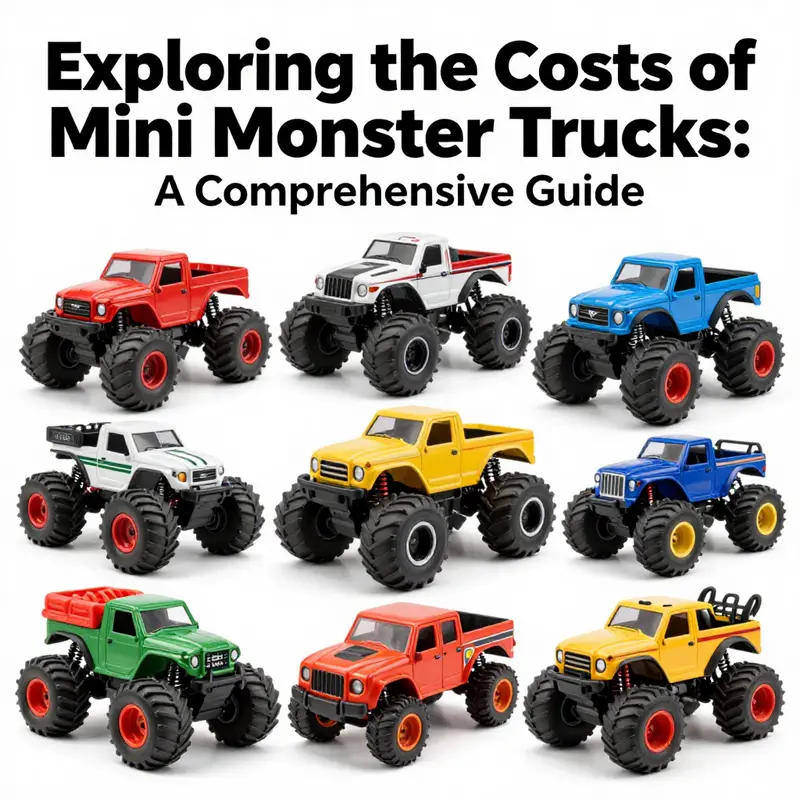
Mini monster trucks have captured the imagination of both kids and adults alike, offering a range of options from simple toys to high-performance models. Whether you’re a small business owner looking for industrial solutions or a hobbyist searching for the perfect remote-controlled truck, understanding the costs associated with mini monster trucks is essential. This guide breaks down the different categories and their corresponding price ranges, making it easy to find the perfect fit for your needs. We’ll explore toy models tailored for children, remote-controlled versions ideal for enthusiasts, and commercial trucks designed for tougher tasks, allowing you to navigate the vast landscape of options available today.
From Pocket Change to Pro-Level: A Thorough Look at Mini Monster Truck Costs
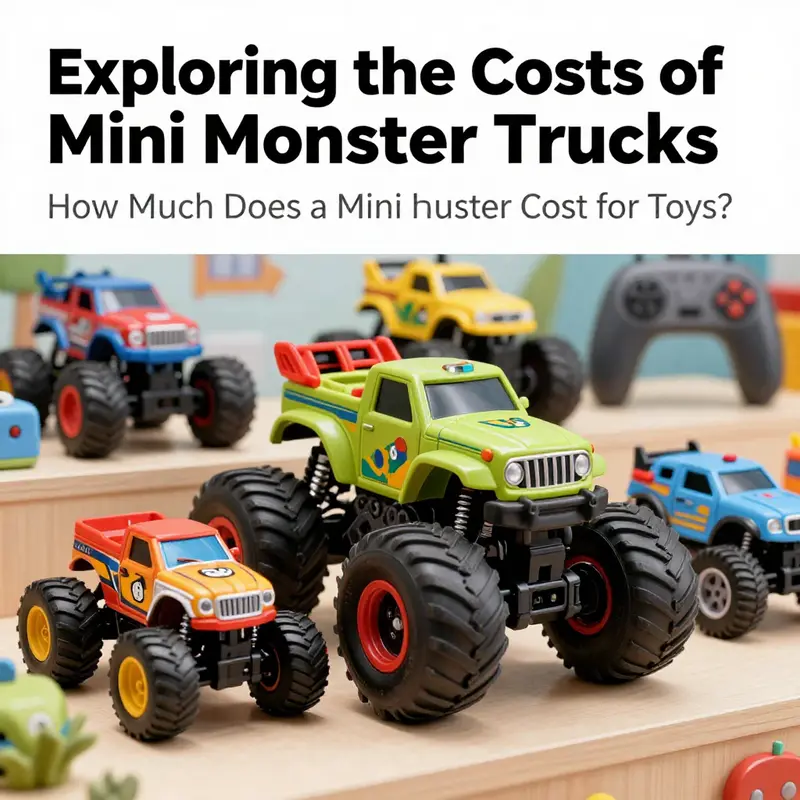
Prices can be as deceptive as they are revealing when you start to unspool the spectrum of mini monster trucks. The question many shoppers ask — how much does a mini monster truck cost? — unfolds into a layered answer that depends on what you mean by “mini,” who you are buying for, and what you expect from the vehicle.
At one end are child-oriented toys and basic RC models where price is driven by simple materials and mass production; at the other are industrial mini machines and high-performance hobby rigs that resemble their larger cousins in both capability and cost. Between these poles lies a midrange favored by hobbyists and collectors seeking more durable construction, better control, and upgrade options without jumping to full-scale commercial equipment.
Entry-level toys: In the most accessible portion of the market, mini monster trucks sold as children’s toys or simple RC units are often very affordable. The cheapest units may appear in clearance or promotional sales for a few dollars; typical mass-market entry-level RC mini trucks commonly fall in a broadly representative corridor of roughly $15–$40 USD. These units prioritize affordability, basic safety features, and suitable durability for indoor or light outdoor play.
Midrange hobby models: Enthusiasts seeking realistic performance, longer range, and customization move into the midrange. Prices here reflect improved materials (reinforced chassis, higher-impact plastics, composite elements), stronger motors, better gearing, improved suspension, and more responsive controls. This tier often ranges from the high teens into the low hundreds for particularly robust or feature-rich consumer configurations, with many satisfying options clustered around the midrange price points.
Industrial and commercial mini equipment: A separate category includes miniature versions of real equipment used for training, demonstrations, or on-site logistics. These are engineered for payload, durability, and safety and are priced accordingly—commonly starting in the low thousands and extending into the tens of thousands per unit depending on capability, certifications, and support agreements. Buyers here evaluate total cost of ownership, service, warranties, and supplier reliability more than upfront sticker price alone.
Drivers of price: Several factors determine where a model falls on the price ladder: production scale and economies of scale, material choices, design complexity, quality of electronics (motors, ESCs, batteries), availability of replacement parts, and the supplier’s logistics and support terms. Factory location and scale—Shantou and similar manufacturing hubs—can influence per-unit costs due to established supply chains and production capacity. Order size, lead time, customization, and negotiation power also materially affect quoted prices.
Practical guidance for buyers: Match price to use case. For a child’s first vehicle, prioritize safety certifications and basic durability at the lower price tiers. For an outdoor-capable hobby model, seek midrange units with upgrade paths and readily available parts. For professional or industrial needs, engage manufacturers directly to discuss minimum order quantities (MOQs), certifications, warranties, and after-sales service—these items justify higher costs in professional contexts.
Cost versus value: Higher price does not automatically equal the best choice for every buyer. Cheaper units are acceptable for occasional indoor play; midrange models deliver better durability and satisfaction for regular hobbyist use; industrial-grade minis provide reliability and support for professional applications. Consider total cost of ownership—replacement parts, repairs, charging infrastructure, and expected lifespan—rather than sticker price alone.
A practical shorthand: categorize purchases by intended use rather than price alone. Define needs, set a budget, compare features meaningful to you (chassis strength, gear quality, motor performance, battery life, steering precision), and request detailed quotes that reflect order size and customization. For small-scale testing, start with modest orders to evaluate market interest before scaling to leverage bulk pricing.
Resources and further reading: Comparative resources that examine model specifications and feature trade-offs can help align choices with priorities. For broader context on scale models and how materials and production processes influence price, consider general references such as the overview on scale modeling and manufacturing practices.
In closing: the mini monster truck market spans simple playthings to engineered tools. The precise price you pay reflects production economics, materials, engineering, and the intended use. An informed purchase aligns the price with the expected use case, available support, and the total cost of ownership rather than chasing sticker price alone.
Price Cascades and Practical Choices: Navigating the Wide World of Mini Monster Truck Costs
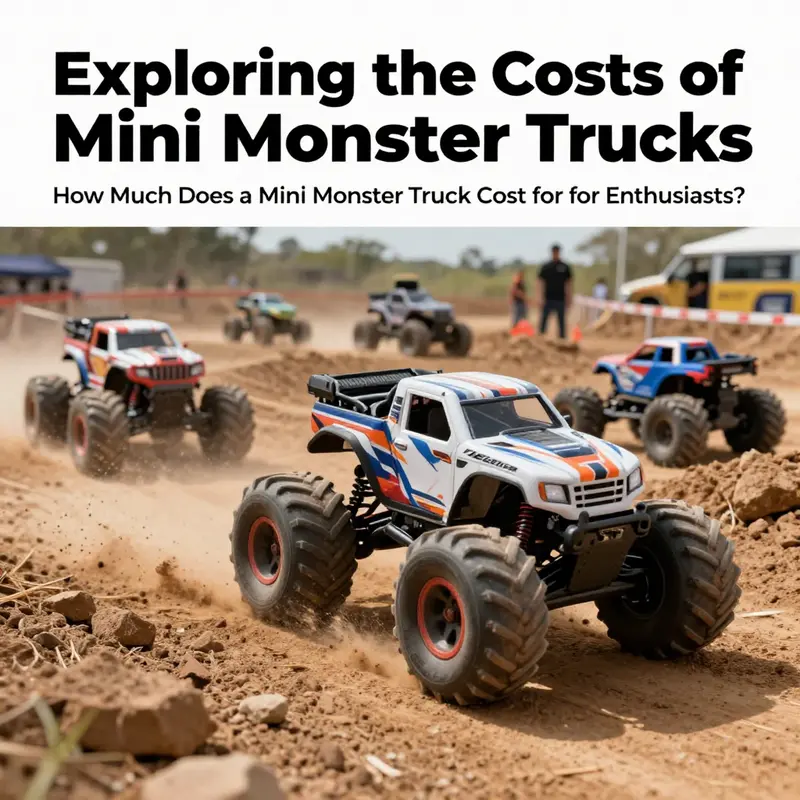
The question of what a mini monster truck costs does not have a single answer. Prices cascade across a spectrum that mirrors the diversity of products that fall under this umbrella. At the lowest end, a basic toy or a miniature remote-controlled model aimed at very young children can be almost disposable in its affordability. At the opposite end, industrial or commercially oriented mini units designed for specific tasks can reach sums that resemble serious machinery, albeit in miniature form. Between these two poles lies a broad middle ground that most enthusiasts and casual buyers inhabit. This middle ground is where most timelines of value unfold: the moment you decide what you want the model to do, who will use it, and how long you expect it to last, price begins to tell a story that is as much about expectations as about dollars and cents.
When we speak first about the lower tier, the landscape becomes almost astonishingly varied. On a purely toy scale, there are plastic constructions with modest remote-control capabilities that can be as inexpensive as a few pennies in the most generous sense, and in a more practical frame often land somewhere between a few dollars and a couple of dozen. The most affordable mini monster trucks for kids can sit in the sub-dollar range for ultra-basic designs, sometimes marketed as quick novelty purchases or promotional items. Yet even within the category labeled for children, there is a meaningful spread. A common, durable option with a 2.4G remote control might price around the lower teens. These are the kinds of models meant for light play, with simple materials and limited endurance. They are not designed to survive a day of rough play, but they offer immediate gratification and a gentle introduction to the idea of a mini monster truck as a toy, a gateway to the hobby for a later, more serious purchase.
In the same neighborhood, a widely popular LEGO-style building set or a branded plastic mini may hover near the mid-teens in price. These products blend construction play with vehicle aesthetics, letting kids assemble and then drive a compact model around a floor or carpeted course. The appeal lies not only in the finished toy but in the creative act of building it. For some families, this combination of play and construction makes the model feel like two toys in one: a building kit and a small remote-control vehicle. The price here is higher than the simplest pull-back toy but still modest enough to be considered an affordable indulgence. In price terms, these options form the gateway to the hobby. They demonstrate how the cost curve begins to bend upward without demanding a large cash outlay.
For enthusiasts who want true RC capability with a bit more fidelity, the market begins to separate into more defined segments. Entry-level remote-controlled mini monster trucks typically cost between roughly $16 and $28. This is a crucial tier for those who want a real RC experience without committing to serious investment. These models generally offer improved durability, a more substantial chassis, better wheel-tire setup, and a remote with reliable control. The materials, while still light, are engineered to withstand casual crashes and outdoor use on paved or light off-road surfaces. The remote control systems in this category are capable of handling modest terrains, and some models may even feature basic weather resistance. The buying decision here hinges on a balance: you want enough performance to feel like a real RC machine, but you don’t want to overpay for capabilities you won’t fully exploit.
For those who plan to push further, the middle ground expands into more serious territory. Enthusiasts and collectors who seek higher performance tend to gravitate toward models priced in the $50 to $200 range. In this band, you’ll encounter larger scales—commonly around 1:15 or 1:64—and more robust builds that use sturdier plastics or light metals. The remote controls get smarter, with more precise steering, longer range, and sometimes dual-speed modes. Some higher-end entries boast reinforced suspensions, ball-bearing components, and better wheel hubs that improve handling on rougher surfaces. Water resistance is often a feature at the upper end of this tier, allowing for light water splashes or damp grass play without immediate degradation to electronics. The appeal is practical as well as aspirational: you not only get a model that looks the part, you gain a device that feels more capable and more engaging to operate, turning play into a more tactile, hands-on hobby.
A typical mid-tier example is a 1:15 scale RC monster truck with a water-resistant chassis and a 2.4G radio system. The price tag for such machines often hovers around the $89 region, with some models hovering closer to the $100 mark when the design emphasizes durability and authentic detail. In these cases, the investment is not merely the vehicle; it includes a reliable charge system, durable batteries, and often a spare parts ecosystem that allows for straightforward repairs after mishaps on rough ground. These attributes matter because the lifeblood of any model is not only how much it costs upfront but how long it can be driven, how often it requires maintenance, and how easily a family or a hobbyist can replenish worn components. A robust mid-tier model can serve as a reliable training ground for someone who may later upgrade to higher-end gear or who simply wants a more realistic driving experience without venturing into the top of the market.
Within this middle region, there is also the tension between licensed branding and generic design. Some enthusiasts prize official branding for its visual fidelity, its authenticity of scale, and the sense of connection to a larger community of fans. Others prefer to avoid licensing costs and choose unbranded or self-assembled options that offer similar performance at a lower price. Either choice spotlights how price is only part of the equation. A vehicle can look visually impressive and still be built with cost-conscious materials, while a carefully engineered unbranded model can deliver competitive performance and a longer service life while remaining under the licensing radar. The way people weight branding, aesthetics, and functional durability fundamentally shapes their willingness to spend, and the price tags that accompany those priorities reflect the market’s attempt to accommodate a diverse audience.
As buyers drift toward more ambitious purchases, a new tier begins to take shape. The high end of consumer RC is where the line between toy and model begins to blur with the real-world engineering mindset. Here, enthusiasts observe price escalations that often accompany larger scales, more advanced control systems, and a broader range of terrain capabilities. It is not unusual to encounter models priced between $200 and $300, and occasionally beyond, when the product design emphasizes aggressive performance, advanced materials, and sophisticated electronics. The appeal of this tier is the prospect of speed, accuracy, and durability that can translate into a more immersive driving experience. Yet even within this zone, price is a proxy for the expected lived-in months of wear and tear, not a guarantee of unassailable quality. A single crash, a hit on a curb, or a splash into a shallow puddle can necessitate replacement parts. This dynamic is a gentle reminder that while mini monster trucks are compact, their thrill comes with real-life maintenance considerations.
There is a separate category altogether that sits beyond the everyday hobbyist: the industrial or commercial micro-truck. These are minimal, purpose-built units designed for on-site demonstrations, training, or specialized tasks in controlled environments. Their price ranges run significantly higher, from roughly $1,899 to more than $12,100 per unit, with a minimum order quantity that can start at one. These figures are not about play; they reflect industrial-grade engineering, strict tolerances, and often unique safety features. The purpose-built nature of these machines means they come with warranties and service agreements tailored to business needs, and the return on investment can be evaluated in the context of workflow efficiency and operator safety rather than pure entertainment value. The contrast with consumer models is stark, yet it helps to complete the full picture of what a “mini monster truck” can mean in different worlds.
In addition to toys, RC models, and industrial machines, there are gifts and collector items that occupy their own peculiar niche in the pricing spectrum. A chest or calendar set featuring multiple mini outfits or accessories can be priced around the mid-to-high single digits or the lower teens. Such items are often more about delight and display than about ongoing play, but they still contribute to the wider story of what fans are willing to invest when their interest is anchored in a broader ecosystem of collectibles and seasonal novelties. The price of a collectible kit, like a holiday calendar containing several mini trucks and related accessories, offers a snapshot of how the hobby can expand beyond the drive-time experience into a broader world of display, memorabilia, and shared enthusiasm.
The practical take on all these price points is simple: for most consumers who want a quality RC or toy model that delivers consistent play value, a realistic plan sits between $15 and $40 for something that balances durability and performance without demanding heavy maintenance. In many households, this middle ground serves as a sweet spot for a receiver’s first serious foray into mini monster trucks. It’s the point at which you begin to understand the rhythm of charging, driving, and occasional repairs, while still preserving a margin for fun that isn’t overshadowed by sticker shock. Those who chase higher fidelity or more robust capabilities should anticipate spending more, but the incremental value is not merely about speed or scale. It is also about the ability to navigate more challenging courses, to survive the inevitable crashes with fewer parts needing replacement, and to enjoy a more immersive experience that resembles the real-world thrill of monster trucks.
For those who want a concrete frame of reference, consider a widely available 1:15‑scale RC monster truck designed with a water-resistant body and a capable drive train. Its price often lands near the $89 mark, which many families consider a fair compromise between affordability and the sense of authenticity that comes with a more serious model. This price point is notable because it sits at the boundary between casual play and a more committed hobbyist pursuit. It signals a willingness to invest a bit more to gain better handling, longer run times, and a more resilient chassis. When you factor in the costs of batteries and spare parts—replacements for tires, gears, or electronics—a single purchase can become a small, ongoing investment that grows with the owner’s growing skill and appetite for experimentation. In this sense, price is not just a number; it is a gatekeeper that helps buyers align their expectations with their resources and their time.
The pricing conversation would be incomplete without acknowledging the way the market communicates value through packaging and accessibility. The lower end, with its quick gratification and immediate use, often appeals to impulse buyers and casual parents seeking a simple gift. The mid-range, with its blend of performance and durability, attracts hobbyists who want more control and longer play sessions. The upper end, where the scale and engineering approach a more professional standard, speaks to collectors and dedicated builders who value precision and resilience. Each tier has its logic, and each tier has its champions. The result is a market that accommodates varied interests, budgets, and levels of commitment, rather than a single, monolithic price tag.
A practical note for buyers is to consider the broader cost of ownership. Batteries have a recurring price tag, and not just one but several spares can be wise to keep on hand. Chargers, replacement parts, and maintenance tools add up over time. Some models ship with USB charging, which is convenient but can lead to more frequent battery replacements if the duty cycle is high. Others use more robust charging setups that may be worth the upfront investment for serious use. Regardless of the starting price, the total cost of ownership over a season or two can tilt a purchase decision one way or another. This is often the missing piece in a quick price comparison: what will it cost to keep the fun going, and how easy is it to fix when something breaks? In practice, buyers who plan ahead for these ongoing needs often end up enjoying better long-term value than those who chase the lowest upfront price.
The structural reality of pricing in this space is that there is value at many points on the scale. For families looking for a first experience in mini monster trucks, a modest investment can deliver a surprisingly satisfying entry. For hobbyists, the incremental upgrades and a steady supply of spare parts can justify stepping up from a basic model to something richer in detail and capability. And for professional context or display, the industrial-grade options, while expensive, are calibrated to deliver predictable performance in specialized settings, with service structures that reflect factory standards. The practical effect of this tiered market is that cost is intimately tied to use-case, durability expectations, and ongoing engagement with the hobby. A buyer who wants a model that stays faithful to the monster-truck persona but also endures daily use will likely find the sweet spot around the middle range, while those chasing the highest fidelity and the most robust performance will naturally push toward higher price brackets.
If you are curious about a concrete, off-the-shelf example that illustrates the middle ground without getting lost in branding, consider a widely available 1:15 scale RC model with water resistance and upgraded control electronics. It’s the kind of purchase that many readers will recognize as a practical compromise between price and performance. The model’s design priorities include a sturdy chassis, reliable steering, and a favorable balance between weight and power. The price tag communicates a promise of durability and a sense of real driving capability, without turning the experience into an all-out investment. For parents, hobbyists, and regular buyers alike, this category explains why the more modest price brackets exist at all and why they matter for everyday enjoyment. To further explore the comparative landscape in a way that helps you weigh options more precisely, you can refer to guides that compare different model lines and their specifications. When you are ready to focus on specific model families and how their features align with your goals, a deeper dive into a comparison resource can be invaluable. See the guide on Kingstar Kruzr model comparisons for a practical, feature-driven look at how different designs stack up against each other in terms of durability, handling, and value. Kingstar Kruzr model comparisons.
No matter where you fall on the spectrum, the key is to anchor your decision in how you plan to use the truck. If the plan is to introduce a child to a controllable, fast-moving toy, then price and durability should be balanced toward affordability and simplicity. If the goal is to enjoy weekend sessions with a fragile sense of realism, then you want to favor models that can tolerate repeated crashes and offer a generous parts ecosystem. If, on the other hand, you are shopping for a display model or a collector’s piece that doubles as a technical showpiece, you’re shopping in a different universe where the price signals not just performance but prestige and meticulous craftsmanship. Across all these paths, the essential duty of the buyer remains the same: understand what the model is designed to do, what it will endure, and how much time and money you are prepared to invest in it over the next season or two. In doing so, you will arrive at a purchase that feels less like a gamble and more like a value choice—a decision that resonates with your own expectations for fun, durability, and ongoing enjoyment.
For those who want a practical snapshot of a broader market listing without committing to a specific brand, keep in mind that the mid-to-high tier often features models around the $50–$200 range, while the top-tier, feature-rich options around the $200–$300 range can offer enhanced build quality, better control, and longer run times. If you’re just starting out, this information helps you calibrate your budget and prevents sticker-shock when you walk into a store or see online listings. The market’s pricing pattern is not arbitrary; it reflects the engineering decisions, materials chosen, and the anticipated lifespan of the product. The same logic applies whether you’re shopping a small, child-friendly model or a larger, more capable RC monster truck. The journey from the lowest-cost curiosities to the most robust hobby-class machines is shaped by the same underlying assumptions: what you want to accomplish, how often you expect to use the model, and how much you’re willing to invest in maintenance and parts over time.
If you’re weighing your future purchases, you may also want to consider the broader ecosystem around these vehicles. A robust community, compatible spare parts, and readily available replacement components can extend the life of a mid-range model far beyond what its initial purchase price might suggest. The availability of widely supported batteries and chargers can cut the total cost of ownership by reducing downtime and keeping operation smooth. Conversely, choosing a model with limited spare parts or a small user community can lead to frustration when you need replacements. This is why the price narrative is never just about sticker price; it also encompasses the accessibility of support, the ease of maintenance, and the confidence that parts will be available when needed.
In the end, the pricing landscape for mini monster trucks reflects the diversity of the hobby itself. For many readers, the right choice will be the model that aligns with their expectations for performance, durability, and daily use, rather than the one that simply carries the highest price tag. The journey from a few dollars to several thousand is not simply about escalating numbers; it is about a spectrum of experiences, from quick, joyful play to sustained, practice-driven skill development and even industrial applications. The lens you bring to the market—the way you define fun, the degree of technical interest you bring, and your readiness to maintain and upgrade—will determine where on that spectrum your next purchase lands. For those who want to explore the landscape more deeply and compare various lines side by side, a targeted guide such as the Kingstar Kruzr models comparison can offer a focused way to evaluate how different specifications translate into real-world performance, reliability, and value. The path through price to purpose is not random; it is a curated journey that rewards clarity of intent and patience in research.
External resource for practical reference: https://www.amazon.com/dp/B0B6FZQXKJ
Industrial Mini Monster Trucks: Decoding the True Cost for Industrial Use
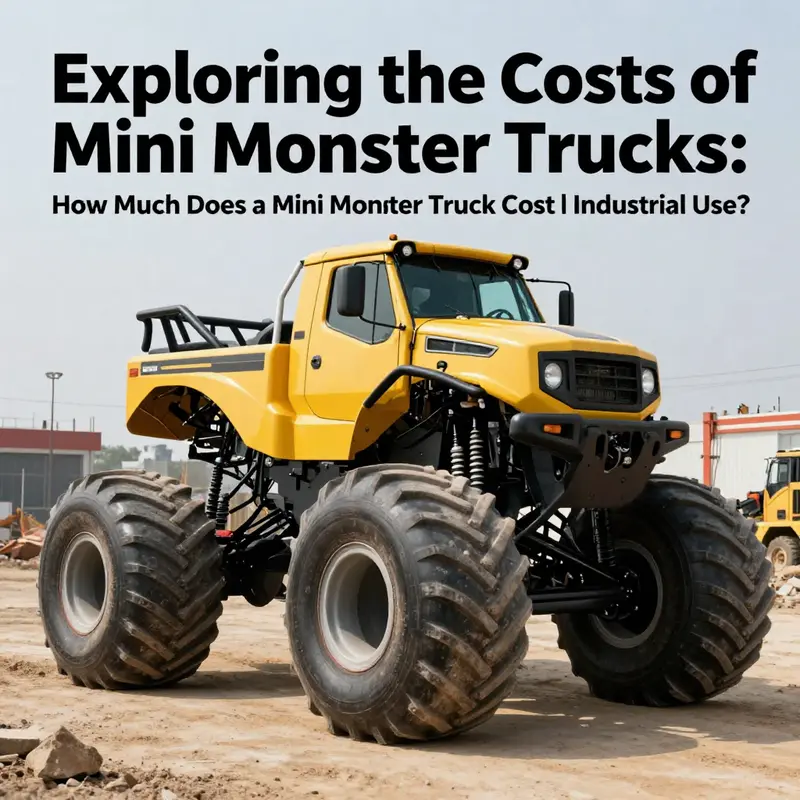
Prices for mini monster trucks span a broad spectrum, but when the topic shifts from playful toys to industrial capability, the conversation becomes less about price tags and more about value, reliability, and total cost of ownership. In workshops, yards, and urban job sites, the “mini” label disguises machines built to navigate tight spaces, carry payloads, or traverse uneven surfaces. The cost structure reflects these duties. On the lower end, consumer-graded mini trucks and basic remote-controlled models exist for light amusement or training. Yet the moment a facility needs a dependable, work-ready vehicle, the economics shift decisively. The industrial mini monster truck category sits at the intersection of rugged design and specialized function. The price starts higher, but the return comes in the form of uptime, precision, and the ability to perform tasks that would be impractical for larger equipment in restricted spaces. This chapter unpacks what drives that price, what buyers should plan for beyond the sticker price, and how to approach procurement with a focus on long-term performance rather than short-term affordability.
To understand the cost landscape, it is helpful to distinguish the different roles that “mini monster trucks” can play in industrial settings. There are compact workhorses designed to operate in warehouses, factories, and loading docks that require tight turning radii, electric propulsion for clean indoor use, and precise, programmable control for repetitive tasks. There are also ruggedized, miniaturized dumpers and crawlers used in challenging outdoor environments where payload capacity, suspension travel, and traction matter more than raw speed. The common thread among these devices is that the price reflects not just the initial purchase but a package of performance guarantees, service networks, and endurance under demanding conditions. Industrial buyers weigh the upfront cost against anticipated fuel usage, parts replacement frequency, maintenance downtime, and the potential impact on production schedules. When these elements are tallied, the sticker price becomes part of a broader financial equation that favors reliability and operational continuity over mere initial savings.
A realistic price corridor for commercial mini monster trucks places the entry point at a few thousand dollars, but that figure rises quickly as specifications tighten and capabilities expand. In the industrial sphere, a practical starting point often sits around the mid five-figures, with many entries in the single-digit to low six-figure range if one considers high-end, purpose-built units. However, the market is not a single fixed line; it is a spectrum that reflects propulsion choices, durability standards, payload expectations, and the environments in which the machines will run. Electric-drive variants tuned for indoor use are valued for zero-emission operation and quiet performance, while internal combustion options deliver greater range and power for outdoor duty in dusty, muddy, or rugged sites. Each propulsion choice carries its own cost implications, both upfront and over the life of the machine.
A foundational driver of price is the power source. Electric mini trucks, especially those designed for interiors or clean-room-friendly environments, command a premium for battery systems with substantial cycles and robust safety features. The cost of lithium-ion or other high-performance chemistries is embedded in the price tag, balanced by lower operating costs, fewer emissions-related considerations, and minimal maintenance compared with combustion engines. Diesel and gasoline-powered options, while typically less expensive to purchase upfront in some configurations, accrue higher long-term costs through fuel consumption, oil changes, exhaust systems, and more extensive maintenance intervals. In industrial contexts, a machine’s endurance, charging or fueling infrastructure requirements, and the availability of service technicians nearby all factor into a total cost of ownership that can tilt the scale toward one propulsion path or another.
Another crucial cost driver is the chassis and drivetrain design. Industrial mini monsters are designed to withstand repeated, sometimes heavy-duty cycles in variable terrain. Materials have to endure impact, vibration, and load-bearing demands while maintaining safe operator control. Heavier frames, reinforced axles, and upgraded suspension contribute to better durability, but they also push the purchase price higher. In some configurations, specialized features such as all-terrain tires with reinforced treads, sealed housings for exposure to dust and water, or payload-assisted hydraulic systems add to the cost but deliver tangible performance benefits. The result is that two machines that look similar on the surface may diverge significantly in price when examined in terms of structural robustness, component quality, and the capacity to perform specific tasks over an extended period.
Remote-control capability, safety interlocks, and precision feedback systems are other factors that shape the price in this segment. For industrial work, the ability to operate equipment remotely or with a high degree of control fidelity translates into improved safety and productivity. These systems require robust radio-frequency control hardware, error-checking software, and redundancy to prevent unexpected spurious movements. The more sophisticated the control suite, the higher the initial cost, but the payoff is fewer accidents, reduced risk to operators, and smoother workflow. Furthermore, integrated safety features—such as emergency stop controls, operator training modes, and protective enclosures—contribute to both safety and price. These features are not cosmetic extras but essential elements of an industrial platform designed to integrate into real-world operations rather than into a showroom.
A practical rule of thumb in the industrial mini monster truck market is that the true price of the machine includes not just the chassis and drivetrain but a bundle of capabilities that are tailored to specific roles. For example, an industrial mini dumper variant designed for confined spaces and light payload transport generally starts around $9,000, with the price climbing toward or beyond $15,000 as the configuration includes more advanced materials, larger payload capacity, and enhanced control and safety features. These figures reflect the current market dynamics and the expectation that facilities will require quick uptime, predictable maintenance costs, and predictable performance in real-world conditions. It is worth noting that these price ranges are not arbitrary. They encode the investments required to supply a machine that can perform reliably when the clock is ticking and the job site is unforgiving.
To get a sense of how this translates on a practical level, consider the long-term implications of owning a robust, industrial-grade mini monster truck. The upfront price is only part of the story. Fuel costs, while highly variable depending on the model and usage pattern, can be a meaningful day-to-day consideration. Electric variants have a different economic profile, often benefiting from lower energy costs and reduced maintenance complexity. However, they rely on charging infrastructure and battery lifecycle costs that must be budgeted for across the equipment’s field life. Gasoline- or diesel-powered machines incur ongoing fuel expenses, periodic oil changes, filter replacements, and more frequent component wear in certain duty cycles. Each of these factors changes the overall cost forecast and, in a best-case scenario, aligns with a maintenance plan that minimizes downtime. In this sense, the price you see on a spec sheet is a constant reminder of the careful balance between upfront investment and the predictable availability of the machine for critical tasks.
In addition to propulsion and chassis, the task profile itself influences price. A unit that must operate in confined, indoor spaces with strict emission controls will justify a higher price due to the need for advanced battery technology, compact packaging, and rigorous safety compliance. A machine expected to work outdoors in variable weather and rough terrain will rationalize a different set of upgrades: more rugged frames, better traction, sealed electronics, and perhaps a larger reserve of hydraulic or electric power to handle heavier payloads. The more a system is tailored to unique challenges—whether it’s navigating a subterranean warehouse, climbing a rocky slope, or moving goods through a congested industrial corridor—the higher the price point will move. Yet in every case, the aim remains the same: to ensure that the machine delivers consistent, predictable performance with a predictable maintenance footprint.
A useful mindset for buyers is to view the purchase through the lens of total cost of ownership (TCO). TCO encompasses the purchase price plus the cumulative costs of operation over the machine’s life. Fuel or electricity, routine maintenance, scheduled parts replacements, potential repairs under warranty, and downtime related to service can all eclipse the upfront price over the years. In some instances, the difference between a cheaper unit and a higher-priced one can be a matter of days of downtime avoided due to sturdier construction or a more resilient drivetrain. In others, the savings come from lower energy consumption and simplified maintenance. The key is to map out a realistic usage scenario: how many hours per day the machine runs, the typical load, the terrain, and the expected service radius. With those inputs, a buyer can forecast annual operating costs and determine which price tier offers the best long-term value rather than the lowest initial price.
From a procurement perspective, many industrial buyers gravitate toward a modular framework that enables upgrades as needs evolve. A base platform that accommodates optional payload attachments, advanced control systems, and upgraded safety packages allows a facility to start with a sensible, value-oriented configuration and scale up as demand grows. This approach helps control the initial outlay while preserving the possibility of expanding capability. When evaluating quotes, it is prudent to consider not just the quoted price but what is included in the package: warranty terms, service intervals, the availability of spare parts, and the responsiveness of the vendor’s service network. In markets with dispersed service infrastructure, the value of a strong warranty and local support can materially reduce operating risk and hidden costs associated with unexpected downtime. The dealer or manufacturer’s willingness to tailor a configuration to specific site constraints also matters. If the machine must operate in a narrow aisle, for example, a skid steering or differential drive layout, plus tight turning radius, becomes a crucial feature that neighbors a higher price point but yields greater day-to-day utility.
For those who want a concise anchor point in this market, it helps to think in terms of a basic industrial mini monster truck as a platform with three entry points: core durability and control, payload and terrain capability, and lifecycle economics. The core durability envelope defines the baseline price by specifying the resilience of the frame, the robustness of the drivetrain, and the protection offered to sensitive electronics. The payload and terrain capability determine the extent to which the vehicle can transport goods, maneuver through obstacles, and maintain traction under adverse conditions. Finally, lifecycle economics capture ongoing fuel or energy costs, maintenance cadence, part availability, and service response times. Each of these elements is interdependent; elevating one often influences others. When a facility negotiates a deal, the decision is rarely about choosing the most powerful or the cheapest unit. It is about selecting a configuration that harmonizes performance with predictability, and price with resilience.
In practical terms, buyers should weigh not just the machine’s specifications but the operational ecosystem that supports it. A robust charging solution for electric variants, for instance, is not merely a convenience—it is a critical component of uptime. Likewise, a reliable supply chain for spare parts and a trained maintenance team can dramatically lower the risk of extended downtime, which otherwise inflates the true cost of ownership. In environments where schedules are tight and downtime is costly, the value of service contracts, preventative maintenance plans, and training for operators becomes as important as the machine’s listed features. The market recognizes this reality, and many sellers bundle these services with the purchase to create a predictable operating expense line, which can be preferable to a leaner package that leaves the buyer to fend for parts and repairs without a ready support network.
The sourcing landscape for industrial mini monster trucks is not a monolith. Some buyers prefer factory-direct configurations that ship with comprehensive warranty and customization options. Others lean toward established distributors who can offer a broader portfolio, faster lead times, and more flexible financing. Each path has its merits, and the right choice depends on how a buyer envisions the machine fitting into their broader equipment ecosystem. In any case, it is essential to approach the procurement with a clear understanding of how the total price tag translates into daily performance and long-term reliability. A well-chosen unit becomes not only a tool for moving goods or accessing tight spaces but a dependable partner in daily operations, contributing to smoother workflows, safer work environments, and more predictable project timelines.
For readers who want to explore comparative dimensions of industrial mini trucks beyond the scope of this chapter, a practical resource exists that consolidates model comparisons, specifications, and features. While avoiding overt endorsement of any single brand, the comparison-focused page offers a framework to evaluate how different configurations stack up against specific site needs. This type of resource can be especially helpful when a facility needs to justify a larger investment by presenting a clear, apples-to-apples view of how various options handle the same workflows. See the page comparing-kingstar-kruzr-models-specs-features for a structured approach to model evaluation and feature mapping. This kind of comparison helps translate a glossy brochure into measurable, site-specific value and aligns expectations with what the machines can realistically deliver on the job.
Beyond the immediate economics, there is a broader strategic argument for investing in industrial mini monsters when the task demands a nimble, capable platform that can operate where larger vehicles cannot. The cost equation improves when the machine reduces manual handling, speeds up material movement in constrained corridors, or eliminates the need to mobilize more than one piece of equipment for a given job. In these cases, the equipment’s price is absorbed as part of labor savings and throughput gains rather than merely as a line item on a capital expenditure. When executives review such investments, they are often balancing a portfolio of projects and equipment with a shared aim: to minimize bottlenecks, reduce cycle times, and improve safety outcomes in high-pressure environments. The price tag is then reframed as a lever to unlock higher efficiency and more predictable work patterns, rather than simply a barrier to entry.
In sum, pricing in the industrial mini monster truck sector reflects a sophisticated blend of capability, durability, and lifecycle economics. The base numbers—such as the roughly $9,000 starting point and the potential to exceed $15,000 depending on configuration—provide a practical frame, but the true value emerges only when buyers examine how a machine integrates with their processes, maintenance routines, and energy strategy. The most effective purchases are those that align the upfront investment with consistent performance, minimal downtime, and a service framework that keeps the equipment ready to perform when it matters most. For teams evaluating options, the exercise should begin with a candid assessment of site requirements, including space constraints, payload expectations, outdoor exposure, and the preferred energy path. From there, the path to a cost structure that makes sense becomes clearer, guiding a customer toward a configuration that balances price with the assurance of reliability and sustained productivity. And as with any sophisticated industrial purchase, the dialogue should extend beyond the sticker price to include clear, enforceable warranties, accessible spare parts, and a maintenance horizon that fits the organization’s operational tempo.
External resource: For real-world pricing and specifications, consult the broader market reference at https://www.monstertrucks.com/.
Final thoughts
Understanding the cost of mini monster trucks is crucial whether you’re considering them for fun or work. From budget-friendly options for kids to high-performance models for enthusiasts and powerful industrial trucks, the market caters to various needs. Each of these categories has its own pricing structure, making it imperative to choose wisely based on your preferences and requirements. By exploring this guide, you can better navigate the options available and find the mini monster truck that suits your taste and budget.