

Buying a Japanese mini truck can unlock new possibilities for small businesses, hobbyists, and property owners alike. With compact size, excellent fuel efficiency, and versatile payloads, these vehicles are popular choices for urban delivery, farm work, and off-road light-duty tasks. This guide walks you through five key chapters—from choosing authorized channels and understanding vehicle classifications to verifying origin and exploring corporate import options—so you can confidently select a legitimate vehicle that fits your needs.
The Authorized Route to a Japanese Mini Truck: Securing a Legal, Reliable Workhorse Through Licensed Channels
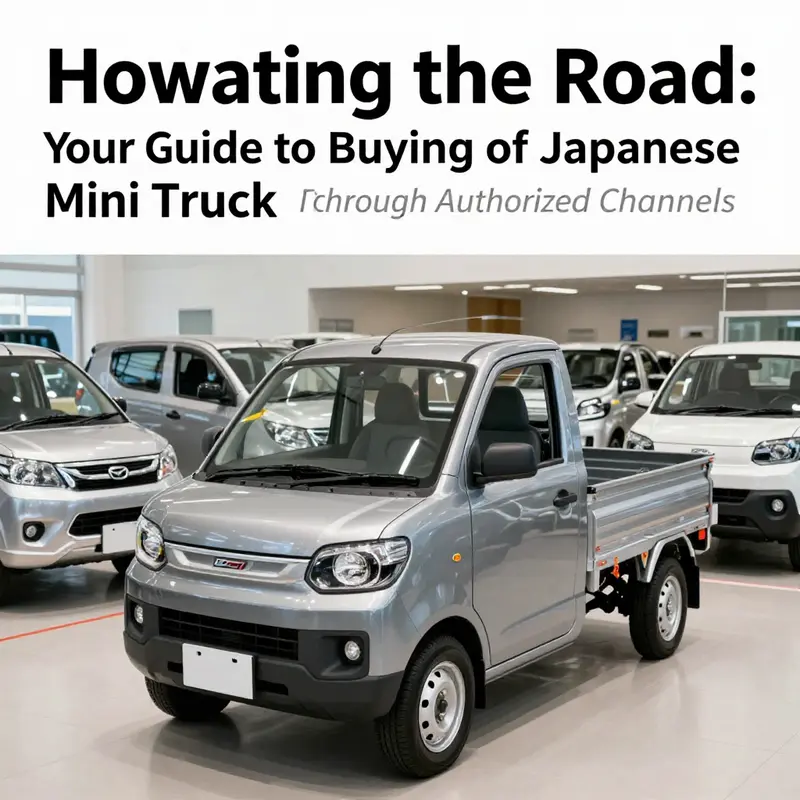
Buying a Japanese mini truck is more than a price tag or a tempting listing. It is a carefully navigated process that balances legality, reliability, and long-term value. In markets where private import of foreign vehicles is restricted, the only sustainable path is through authorized channels. This means working with licensed importers or official distributors who can manage the entire lifecycle of the transaction—from sourcing and documentation to customs clearance and registration. The overarching goal is simple: to obtain a vehicle that is genuinely Japanese-built, properly documented, and capable of meeting local safety and emissions standards. When you choose this route, you reduce the risk of falling prey to misrepresented units, unclear provenance, or costly compliance hurdles later on. The discipline of buying through authorized channels also translates into practical benefits: access to genuine parts, standardized warranties, and support networks that can keep the vehicle running smoothly long after the sale, a crucial consideration for a compact workhorse that will spend more hours on the road than in a showroom. In essence, the authorized path is not just about legality; it is about safeguarding your investment and ensuring predictable performance for the years ahead.
Understanding the core reason to favor authorized routes helps frame the steps that follow. First, the classification of mini trucks in Japan matters widely for how they are documented and sold abroad. A mini truck is commonly defined by a total mass under 3.5 tons, a threshold that aligns with practical urban delivery needs and small-business logistics. This categorization influences not only the kinds of regulatory checks the vehicle must pass but also the availability patterns at export warehouses and ports. The market reality in Japan is robust: numerous factories and importers routinely move thousands of these compact, efficient machines. This scale supports reliable warranties, certified condition reports, and ready access to replacement parts. When you engage with an authorized channel, you tap into a stream of vehicles that have been prepared to meet international export standards, with documented histories and traceable origins.
A discerning buyer then turns to the mechanism of legitimacy. The primary criterion is straightforward: ensure the vehicle is a genuine Japanese-built model that has traveled through lawful channels and is compliant with the destination country’s registration requirements. The risk of gray-market transplants or previously registered units in other jurisdictions can create legal and logistical headaches. Unauthorized dealers may promise steep discounts, but they often deliver uncertainty. They might offer units that lack complete export documentation, or that carry modifications outside standard specifications. Such issues complicate not only customs clearance but also the eventual registration and roadworthiness checks required by local authorities. By committing to authorized importers, you guarantee that the vehicle’s origin, build quality, and compliance profile are verifiable through official records. This is not merely about avoiding trouble; it is about aligning value with risk, so that maintenance, recalls, and parts availability stay within predictable, legitimate channels.
To bring this point into sharper focus, it can be helpful to imagine the full import journey as a chain. The source factory, the export license, a bill of lading, a certificate of origin, and the vehicle’s compliance with ISO or local equivalents—all of these steps are interlocked. When one link is weak, the entire chain suffers. Authorized channels routinely provide a comprehensive package: clear export documentation, transparent pricing, and a straightforward path to registration. They also offer a layer of after-sales support that is often missing with gray-market sellers. This is where the value of professional guidance becomes evident. A licensed importer can advise on the specific emission and safety standards your country requires, outline any approved modifications or retrofit options if needed, and coordinate the necessary inspections before you take possession. By relying on these professionals, buyers reduce the likelihood of costly missteps and enjoy a smoother, faster transit from purchase to daily use.
The practical considerations extend beyond paperwork and legality. Even with a straightforward price, the total cost of ownership includes duties, taxes, insurance, and ongoing maintenance. Authorized channels typically present a transparent, itemized estimate, with a warranty period that covers essential drivetrain components and critical operating systems. This warranty, though it may be modest in duration, often travels with the vehicle when supported by a recognized service network. The benefit is twofold: you gain peace of mind about immediate reliability and you preserve resale value by maintaining a service history that future buyers can verify. In contrast, purchasing through an unverified channel can obscure the vehicle’s true condition, complicate future service needs, and expose you to recalls or noncompliant parts that are hard to source locally. For buyers who rely on the truck for daily operation—whether for urban deliveries, light construction, or mobile trades—the difference between a well-supported purchase and a stranded one can be substantial.
Within this framework, the acquisition process through authorized channels becomes a sequence of carefully managed interactions. The importer or dealer will typically help with initial sourcing aligned to the buyer’s needs, whether that means a particular payload capacity, bed configuration, or cabin layout that suits the intended route and load profile. They will then handle the pre-delivery inspection, ensuring the vehicle meets the export and import standards before it ever changes hands. This pre-delivery step is not merely cosmetic; it covers a functional appraisal of the engine, transmission, suspension, braking system, and electrical components. A trusted importer will document the vehicle’s condition with a thorough report, which becomes part of the official record you receive at handover. As you weigh options, it is prudent to request a comprehensive condition report, a full history, and a clear statement of any prior registration in another country, if applicable. These documents form the backbone of a transparent, accountable purchase that stands up to regulatory scrutiny and long-term use.
For readers seeking ongoing context and case studies, a centralized resource can provide broader perspectives on maintenance, customization, and operational use of mini trucks in various environments. A well-curated industry blog hub offers updates, practical tips, and community insights that complement the formal documentation you obtain through an authorized channel. See the resources available at the MinitrucksCal blog hub for ongoing commentary and practical examples that illuminate how owners maximize the value and reliability of these vehicles. minitrucksocala.com/blog/
Beyond the immediate purchase, the choice of who you work with matters deeply. Authorized distributors or official importers usually provide not only the vehicle but also the necessary export and import documentation, a clear bill of lading, and a certificate of origin. They guide you through the formalities that ensure the vehicle can be registered and insured without surprises. If a corporate entity is involved, the process becomes more structured but also more flexible. A registered business with a valid import license, an issued import permit from the national commerce authority, and a compliant customs declaration can access a streamlined path to bring in a fleet or a batch of mini trucks. Even in this scenario, the role of a professional customs broker remains critical. They translate the regulatory requirements into actionable steps, ensuring accurate tariff classifications, emission compliance, and the correct payment of duties and taxes. Because the process touches on cross-border regulatory regimes, having a seasoned broker reduces the risk of delays and penalties that can arise from misclassification or incomplete paperwork.
Within the frame of this chapter, it is important to emphasize the balance between cost and certainty. Authorized channels may present a higher upfront price than some discreet listings, but they deliver a more stable ownership trajectory. You gain access to after-sales support, spare parts supply, and the assurance that the vehicle’s documentation aligns with your country’s registration and roadworthiness standards. The alternative—pursuing a private import or gray-market deal—can end up costing more in the long run due to unexpected compliance hurdles, limited parts availability, and the potential for non-recoverable losses if the vehicle cannot be legally registered. In short, the decision to buy through licensed importers is a strategic one, designed to protect your investment and to keep your operation running with predictable downtime and maintenance costs. The right channel acts as a guarantor for provenance, quality, and long-term value, turning a smart purchase into a dependable, efficient work solution.
External resources can offer additional context about how these channels function in practice. One widely cited marketplace example demonstrates how export-ready units are presented and vetted, including verification programs that aim to ensure supplier reliability and product quality. Buyers are advised to confirm export documentation, including the bill of lading and certificate of origin, and to verify that the vehicle meets ISO or equivalent international standards. For readers seeking concrete listings and potential options, a representative external resource provides a tangible glimpse into the market dynamics and the kinds of specifications buyers should consider when evaluating a unit through an authorized channel. For further reading, you can explore a product listing that illustrates the typical features and documentation often associated with export-ready units: https://www.alibaba.com/product-detail/4X2-Janpanese-Brand-3-Tons-Mini-Dump-Truck_1600573734385.html?spm=a2700.100197.0.0.1f4d7c4dKtDmIb.
Kei Clarity: How Vehicle Classification Guides Your Japanese Mini Truck Purchase
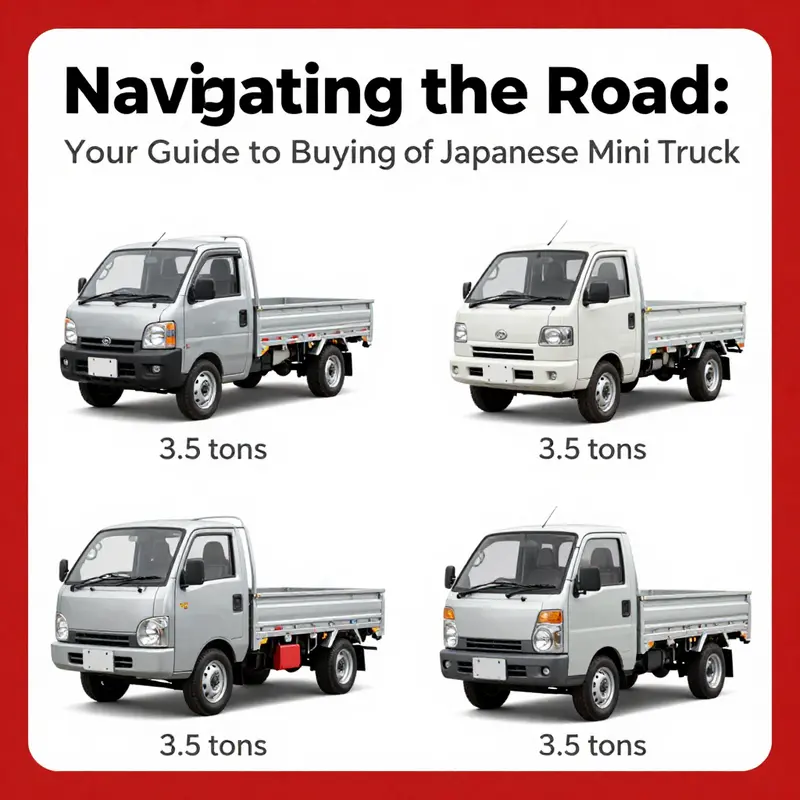
When you set out to buy a Japanese mini truck, the quickest path to a smart decision is understanding how vehicle classification shapes every aspect of the purchase. In Japan, classification is not merely a label; it maps directly to price, taxes, insurance, and how you can legally use the vehicle. This awareness helps you pick a truck that truly fits your needs and avoids surprises at the border or in the registry line. The kei category, in particular, acts as a compact blueprint that governs size, power, and practicality, while also signaling long‑term running costs and eligibility for various incentives. With this lens, you approach the market with a clear expectation of what you should be looking for and what you should reasonably expect to pay over time.
In Japan, kei—often described as a kei car segment—operates under a tight set of rules designed to keep the lineup compact and affordable. The engine must be no larger than 660cc, and the vehicle’s footprint must stay within strict bounds: length up to 3.4 meters, width under 1.48 meters, and height below 2 meters. These constraints were drafted to optimize urban maneuverability and fuel efficiency, enabling small businesses and individuals to transport cargo through crowded streets without the burden of larger, heavier vehicles. The result is a versatile family of light-duty trucks that balances practicality with cost efficiency, letting owners move goods with minimal upkeep. This isn’t merely about novelty; it’s a practical framework that directly influences what you can buy, how it performs on real roads, and what it costs to own.
Because kei trucks share a common regulatory template, buyers benefit from a broad, compatible ecosystem. A kei‑class truck tends to offer a predictable torque curve that favors low-end response, which matters in stop‑and‑go urban routes and loading maneuvers. The compact engine and light weight complement a drivetrain tuned for reliability and efficiency, rather than raw highway performance. But the classification also shapes design options. Within the kei envelope, you’ll encounter variations in cargo bed style, bed depth, and chassis length. Some configurations emphasize cargo versatility with deeper box sections, while others optimize weight distribution for urban handling. There are also different body styles within the same classification, including standard cargo boxes, flatbed variants for open‑air work, and models that accommodate specialized tasks like refrigerated transport. Each configuration speaks to a specific use case, helping you align the vehicle with the function you intend, whether you’re delivering groceries around a dense town center or servicing a fleet of small shops.
The classification has tangible implications for costs and compliance. Being in the kei category typically translates to lower annual road taxes, lighter insurance premiums, and favorable depreciation patterns. It also means that your vehicle’s eligibility for certain tax incentives and registration pathways is shaped by its ability to stay within the prescribed dimensions and engine size. For buyers, this translates into a long-term equation: a lower upfront price and reduced operating costs, balanced against the need to operate within the minimal footprint that the category allows. If your duties are largely urban or short‑haul, kei trucks can deliver strong value stability over several years, especially when paired with prudent maintenance and careful use planning. However, if your work requires higher sustained speed, longer trips, or heavier payloads, you’ll want to acknowledge that the kei class has intrinsic limits. In those cases, you may consider models outside the kei box, recognizing that such choices shift the vehicle out of the recognized Japanese category and bring different regulatory and cost considerations.
For buyers looking to import kei trucks to markets outside Japan—whether in the United States, Europe, or elsewhere—the classification remains a guiding principle but adds layers of compliance. Importers must assess how the vehicle’s size, power, and safety features align with the host country’s standards, such as safety and emissions requirements. Some kei models can be imported with relatively modest modifications to meet local standards, while others may require more extensive changes or may be restricted altogether. The import path therefore hinges on a careful verification of whether the model can be legally registered in the target market, and what steps are necessary to achieve that registration without erasing the vehicle’s core kei attributes. This process is easier when you work with professionals who understand both the Japanese classification framework and the destination country’s regulatory environment.
From the buyer’s perspective, the central question is how classification translates into daily usefulness. If the job centers on urban deliveries, a kei truck’s tight turning radius, excellent visibility, and favorable fuel economy become decisive advantages. The compact dimensions also mean faster, less costly parking and easier access to congested streets, which can translate into measurable time savings day after day. If your work involves highway speeds, longer journeys, or heavier payloads, the plain truth is that kei trucks may require compromises. You might end up choosing a non‑kei option that better suits those demands, with the trade‑offs of higher taxes, greater fuel consumption, and a larger footprint. In any case, starting with the classification helps you calibrate expectations and budget right from the outset, ensuring you don’t overestimate what the truck can do or underestimate the costs you’ll incur along the way.
Within the kei framework, there is still a spectrum of practical configurations to weigh. Standard cargo box models dominate urban logistics, while flatbed variants are favored for construction or farming tasks that demand an open surface for quick loading. Some kei trucks offer refrigerated compartments, expanding their applicability to perishable goods and temperature‑sensitive delivery. When weighing options, it’s wise to compare payload capacity against the footprint of the vehicle, because a small increase in bed depth or curb weight can noticeably affect stability and handling during tasks like loading over curbs or negotiating tight corners. Drivetrain options—two-wheel drive versus four-wheel drive—also matter, especially in regions with varied weather and road conditions. A well‑matched configuration helps you maximize efficiency and uptime, while a mismatched one can lead to unnecessary maintenance and higher operating costs.
The centrality of classification makes verification of legitimacy especially important. A genuine, Japanese‑built kei truck will come with documentation that traces the vehicle back to its origins, and it will be presented in a way that supports legitimate registration in your country. The risk of misrepresented exports or gray‑market sales remains, particularly in online marketplaces. Buyers should insist on complete import paperwork, confirm that the truck has not been registered elsewhere, and check for unauthorized modifications that could complicate compliance. It’s not only about the stamp on a VIN; it’s about the history of where the vehicle has been and how it has been prepared for its next registration. In practice, this means asking for a clear chain of custody, a transparent maintenance history, and an explicit statement about any changes made to meet local standards.
This is where the purchasing channel matters as much as the chassis. In markets with strict import rules, such as China, private import is limited by law. The usual path is through licensed importers or authorized dealerships with the necessary certifications. These channels manage the tangled web of customs clearance, tariff assessment, import permits, and local vehicle registration. They also validate that the vehicle stays within its classification boundaries as it crosses borders, thereby reducing the risk of tax surprises or compliance failures once the vehicle lands and is prepared for use. A reputable importer will not only guide you on what to buy but also explain how the kei classification affects ongoing costs, insurance eligibility, and permit requirements in your destination country. The aim is to align your vehicle’s classification with practical realities, so the truck remains a capable tool rather than a source of friction or expense.
For a deeper look at model variations and configurations within the kei family, you can visit the Mini Trucks Cali Blog. This resource provides a practical sense of how different bed styles, payloads, and construction options translate into real‑world performance in dense urban environments. Mini Trucks Cali Blog
External reference: the broader regulatory framework and vehicle safety standards are outlined by national safety authorities. An essential reference is the U.S. National Highway Traffic Safety Administration, which offers guidance on safety standards and compliance considerations for imported light vehicles. External resource: https://www.nhtsa.gov
How to Buy a Japanese Mini Truck: Verify Legitimacy and Origin
Verifying legitimacy and origin is the quiet backbone of a smart purchase when you’re trying to acquire a Japanese mini truck for use beyond its homeland. The temptation to chase a glossy listing or a rock-bottom price can be strong, but the real value lies in a documented lineage that proves the truck’s origin, its journey to your hands, and its current compliance with the rules that will later govern its operation in your country. A considered approach begins with a simple principle: transparency is nonnegotiable. Without it, even the most appealing truck can become a liability. In this chapter, we pursue a single through line—traceability—while balancing practicality and prudence so that every decision you make rests on verifiable evidence rather than hopeful assumptions.
The first signal is the paperwork. Ask for the original import documents that accompanied the vehicle from Japan to its current point elsewhere. The core items to review are the Japanese Certificate of Registration, commonly known as the shonin-sho, and the Bill of Lading. The certificate should enumerate the vehicle’s VIN, the exact make and model, the engine specification, and the date of first registration in Japan. A careful reader will notice if the numbers on the certificate diverge from the numbers stamped on the chassis or the engine block. In legitimate transactions, these identifiers align across documents and the vehicle itself. If a seller hesitates to provide these records, or offers only blurred copies, you should treat it as a warning sign and push for greater verification before any consideration of transmission of funds.
Beyond the surface of documents, the path a vehicle took into a new market matters deeply. Legal importation is not a universal guarantee of a clean history, but it’s a strong baseline. You should seek to confirm that the truck entered your country through proper channels and that the owner transfers were recorded in an auditable trail. In regions where compliance with emissions and safety standards is required, a compliant vehicle will have documentation supporting conformity checks or eligibility for registration. If such confirmations are absent, the burden shifts onto you as the purchaser to assess the risk and potential retrofit costs. To further protect yourself, consider independent history checks that assemble the vehicle’s timeline across jurisdictions, verify whether it has been reported stolen, involved in major accidents, or recorded as salvage. These checks are not infallible, but they substantially reduce the chance of unknowingly acquiring a truck with hidden baggage. The aim is a traceable history that you can corroborate with the physical vehicle and its paperwork.
The next layer is the professional inspection, a critical step that brings the vehicle’s story to life through its mechanical and structural condition. A certified technician, ideally one with experience in Japanese work trucks, will perform a thorough examination that goes far beyond a cosmetic once-over. They will listen for irregular engine sounds, verify compression, test all gauges and electricals, and evaluate the transmission and clutch under load. The undercarriage deserves a meticulous look for rust, prior repairs, or signs of accident repair that may not be readily apparent from above. A vehicle with an honest chronology will show consistent wear patterns and a coherent maintenance history, while red flags might include mismatched panels, hidden rust that resurfaced after repairs, or odometer inconsistencies that don’t align with service records. The inspector’s notes should dovetail with the documents you have gathered, reinforcing a single narrative of origin, journey, and current condition.
Choosing where to buy is another dimension of legitimacy. Reputable sources—established dealers or verified platforms with transparent seller information and clear return policies—are worth prioritizing. A credible seller will be able to articulate the vehicle’s provenance and provide access to or copies of the supporting paperwork, not just glossy photos. While direct import or “export-ready” language can be appealing, it is essential that the buyer understands the specific regulatory pathway that applies in their country. If you are a private buyer, the risk profile is higher, as private transactions frequently involve more ambiguous documentation and a greater chance of regulatory mismatch. Corporate or institutional buyers may access licensed importers who handle procedural compliance, customs declarations, and post-import registration checks. Even in those cases, the verification steps outlined above remain essential; papers must align with the truck you receive, and the seller must be able to support post-sale needs, from registration support to after-sales service.
Direct sales channels and authorized distributors can offer a more predictable route to ownership, but they carry a price premium that reflects warranty and service expectations. When evaluating this option, ask for explicit confirmation of warranty terms, the scope of service coverage, and a clear path for ownership records, should you ever need to prove the truck’s legitimacy in the future. The goal is not to eliminate all risk but to shift risk toward standards and assurances that strengthen your ownership experience. If a seller cannot offer credible assurances without evasive caveats, it is prudent to step back and reorient toward a source with transparent credentials and testable provenance.
The framework for legitimacy and origin also sits within the regulatory environment of your own country. Private importation may be restricted or even prohibited in some jurisdictions, particularly when the vehicle’s origin and compliance status are uncertain. If you are a business, a regulated import pathway may be accessible, but it still requires meticulous documentation, accurate declarations of duties and taxes, and a readiness to meet emissions and safety standards in the destination market. Your due diligence must confirm that the paperwork you receive matches the vehicle, and that the import pathway is auditable and compliant from start to finish. The down payment on good faith cannot replace the need for verifiable evidence when you reach the registration desk or the insurance office.
In practice, legitimacy and origin are not a series of one-off checks but a disciplined habit. The questions you ask, the documents you collect, and the condition you verify must form a coherent story. The story should not only present a vehicle that looks right but also demonstrate that it traveled through proper channels, arrived with complete and consistent paperwork, and is ready for the regulatory steps ahead. When you can cross-check VINs against registration records, confirm that import documents match the vehicle’s features, and corroborate the vehicle’s history with independent records, you gain the confidence that you are purchasing a genuine, compliant machine rather than a risk-laden artifact.
To place these ideas in a broader, practical context, consider exploring related discussions in the community that frequently address the realities of cross-border vehicle purchases. For readers seeking a wider lens, this broader resource offers practical perspectives—from recognizing listing red flags to aligning expectations about seller disclosures. It can help you spot patterns in how listings are presented and what questions tend to surface early in negotiations. You can visit the Minitrucks CA blog for a broad perspective on how these trucks are discussed and evaluated in real-world buying scenarios, which serves as a useful counterpart to the formal documentation and inspections described above.
Regulatory guidance from official channels is indispensable for grounding your approach in legality and reliability. While online discussions provide practical tips, the primary sources—your country’s transport or customs agencies—offer the definitive rules about what documents are required, what conformity checks apply, and how vehicles are registered and taxed. The standard workflow often includes a conformity assessment, a clear declaration of duties and taxes, and a post-import registration process that confirms the vehicle’s eligibility for road use. This is not merely paperwork; it is a framework that protects you, the seller, and the community by ensuring that every vehicle entering the market meets minimum safety, environmental, and performance standards.
If you want a consolidated reference for the import and export framework, you will find a concise external guide that outlines the kinds of documents typically required, the agencies involved, and the general expectations for legitimate ownership. This resource is meant to reinforce the checklist you already carry and to help you structure your due diligence workflow so that you proceed with confidence rather than guesswork. It is useful to have this outside perspective as a companion to your own vetting process, especially as you approach final negotiations and the moment when you sign the purchase agreement.
The overarching aim remains consistent: obtain a genuine vehicle with a transparent history, a traceable import path, and a seller who can substantiate every claim with the right paperwork. The journey from a marketplace listing to a registered, insurable, road-ready truck is not instantaneous, but it becomes reliable once you treat documents as the map, history checks as the compass, and professional inspection as the trusted guide. If you keep these elements in balance, you reduce the risk of misrepresentation and improve your chances of a smooth transition from deal to driveway. This approach is not about overcomplication; it is about clear, verifiable criteria that stand up to scrutiny, time, and the practical realities of cross-border vehicle ownership.
For further reading on how these considerations fit into a broader import framework, refer to the external guideline linked at the end of this chapter. It provides a concise, practical overview of the processes involved in legitimate vehicle imports and exports and can help you frame your due diligence checklist as you move toward a final decision. The practical takeaway is straightforward: insist on verifiable origin, request complete documentation, and leverage professional inspection to confirm that the vehicle you intend to own is a legitimate, compliant asset rather than a risk masquerading as a bargain. This discipline will serve you well as you navigate a nuanced market and lay the groundwork for a durable, work-ready vehicle that can meet your demands without legal or logistical headaches.
External reference: https://www.nhtsa.gov/vehicle-imports-and-exports
Corporate Routes to a Japanese Mini Truck: Navigating Legal Imports, Compliance, and Practical Deployment
A corporate or business import route to a Japanese mini truck offers a pragmatic path when private import remains restricted by local regulation. For companies that rely on compact, efficient transport—whether for urban delivery, on-site logistics, or specialized service tasks—this approach blends access to a familiar vehicle class with the discipline of formal compliance. The broader landscape makes clear that these vehicles, defined in their origin markets as under 3.5 tons total mass, are purpose-built for the kinds of short-haul, heavy-duty tasks that small and medium enterprises encounter daily. In this context, the decision to pursue a corporate import is not just about price or availability but about establishing a reliable, legally sound supply chain that can withstand the scrutiny of customs, safety, and environmental standards. It is a path that, when managed properly, aligns the efficiency of a compact truck with the due diligence expected of a business operation.
From the outset, the corporate option rests on a simple, but crucial principle: legality and traceability. The private import of foreign vehicles for individuals is generally constrained, and the responsible route is through authorized channels that possess the requisite certifications and logistical capabilities. The right partner—an authorized importer or a licensed dealership with expertise in cross-border vehicle movement—takes on much of the complexity, from export documentation and shipment to customs clearance and registration. This arrangement reduces the risk that a company will encounter non-compliant vehicles or hidden fees, and it provides a framework for ongoing service and parts support once the truck is in operation. It also creates a documented trail for accounting, warranty, and regulatory audits, which can be particularly important for fleets or businesses that need to demonstrate compliance to local authorities or insurers.
The practical steps begin with a clear appraisal of needs and constraints. A business should quantify not only the initial purchase price but also the total cost of ownership (TCO) over the vehicle’s lifecycle. TCO includes shipping, insurance, duties and taxes, port handling, and any import-related fees. Beyond the sticker price, a fleet-oriented buyer must account for ongoing maintenance, availability of spare parts, and access to a local service network capable of handling heavy-duty, compact trucks. The risk profile changes when a vehicle has to meet specific emission and safety standards in the destination market. A corporate importer understands these requirements and screens potential models for compliance, rather than merely chasing the lowest upfront price. In practice, this means requesting certificates of conformity, engineering evaluations, and history on prior usage, particularly for units classified as industrial or logistics vehicles.
The procurement phase often centers on establishing a trustworthy supplier relationship. Reputable suppliers and importers specialize in commercial vehicle movements and bring a concentration of experience in handling the paperwork that accompanies cross-border shipments. For a business, a well-chosen supplier can offer more than a price quote; they can provide a transparent bill of lading, consolidated documentation for customs, and a predictable timeline from order to delivery. The model selection, while typically focusing on a 3-ton class mini dump truck—an archetype valued for its payload capacity and maneuverability—should be guided by the operational environment. If the fleet operates in congested urban corridors, on narrow job sites, or in regions with variable terrain, the vehicle’s drive configuration, payload, and durability must be aligned with real-world demands. It is not merely a matter of obtaining a vehicle; it is about aligning a machine with business processes so that uptime, reliability, and safety become a formal part of the fleet’s performance profile.
Additionally, the corporate route makes it feasible to negotiate terms more favorable to a business, particularly around volume, financing, and post-sale support. With a formal business entity, a company may access import permits or preferential duties where applicable, provided it can demonstrate legitimate commercial activity and compliance readiness. In many markets, the presence of a registered business, an established tax or licensing framework, and a documented import plan can smooth the path toward obtaining the necessary permits and ensuring that the vehicle can be registered and operated without legal friction. The process may involve customs declarations, verification of vehicle history, and a careful review of the model’s compatibility with emission standards and road-safety requirements. An experienced customs broker or import agency is often indispensable here, guiding the client through the maze of forms, declarations, and potential inspections that accompany a successful cross-border transfer.
What often distinguishes the corporate option is the control it affords over the vehicle’s lifecycle in a fleet context. A business can implement a standardized maintenance schedule, secure a steady supply chain for spare parts, and arrange for routine inspections that extend the vehicle’s usable life. These elements translate directly into reduced downtime and more predictable operating costs. In addition, the procurement approach can be designed to minimize risk through due diligence. Before a contract is signed, the buyer should verify the supplier’s credentials, confirm the model’s technical specifications, and request a transparent history of the unit’s usage, including any prior interventions or non-standard modifications. The importance of this due diligence cannot be overstated: a compliant, well-documented truck is more readily insurable, easier to register, and less likely to encounter post-delivery complications that disrupt operations.
Speaking to the numbers, corporate buyers often encounter factory-price ranges for certain vehicle classes that can be compelling. It is not unusual to encounter figures around the vicinity of US$18,000 for a 3-ton mini dump truck, with a parallel expectation that the top speed will be in the modest range—adequate for on-site and urban operations but not optimized for highway travel. The minimum order quantity, while often modest, may still be one unit in many cases, reflecting the balance between fleet needs and supplier readiness. These numbers, however, must be assessed with the full context of import-related costs. Shipping arrangements, insurance coverage, and the potential for duties or value-added taxes can alter the economics significantly. The corporate buyer’s advantage lies in controlling these variables, ensuring that the total cost aligns with the project’s budget and the fleet’s financing arrangement.
To truly leverage the corporate route, a company should lean on a trusted network of partners. A professional import agent or a dealership with a proven track record in commercial vehicle imports can demystify the process, identify compliant models, and help secure the necessary documentation. The value extends beyond the point of sale; it encompasses the post-purchase phase—logistics coordination, after-sales service, and support for ongoing maintenance is essential to keeping a fleet productive. The decision to engage an intermediary is not a sign of weakness but a strategic acknowledgment that the road from import to operation is a complex journey with regulatory, financial, and technical dimensions. The right partner brings not only expertise but a commitment to transparency, with clear pricing, predictable timelines, and complete documentation that stands up to audits.
For readers seeking practical guidance and reflection on choosing a Japanese mini truck for corporate use, a prudent approach is to consult resources that distill the experience of others who have navigated the same terrain. A practical guide updated through early 2026 emphasizes understanding the vehicle’s specifications, aligning them with operational needs, and acknowledging potential pitfalls such as hidden fees or non-compliant units. It underscores the importance of establishing trust with suppliers and using documented channels that minimize risk. Within this context, a corporate buyer can document the decision process, verify the supplier’s credentials, and maintain a clear ledger of all costs incurred from purchase through to fleet deployment. This deliberate, methodical approach helps to ensure that the final outcome—an economically sensible, legally compliant, and operationally effective mini truck—delivers the expected returns while fitfully integrating into the company’s broader logistics strategy.
Those undertaking this path should also remember the value of accessible reference material. Internal resources, such as industry-focused blogs, can provide practical narration of experiences with similar imports and fleets. For companies exploring this option, a helpful starting point is to engage with a dedicated industry blog that discusses the realities of running compact, Japanese-origin trucks in diverse regions. Such resources offer a realistic lens on supply chains, pricing dynamics, and service networks essential to keeping a small- to mid-sized fleet running smoothly. Alongside this, the broader research landscape suggests looking at external insights that help calibrate expectations about model availability, regulatory shifts, and the evolution of emission standards that influence import viability over time. The combination of formal regulatory knowledge, supplier due diligence, and practical fleet management considerations builds a robust framework for corporate import success.
Internal link for further reading: minitrucksocala blog emphasizes the lived experience of enthusiasts and professionals navigating this space, including practical considerations for sourcing and deployment. Explore their insights at minitrucksocala.com/blog/. For those who want a wider panorama of the Japanese mini-truck landscape, a practical external resource offers a focused guide on how to select a mini truck that meets performance, regulatory, and environmental criteria. External resource: https://www.japanesetruckguide.com/choosing-a-mini-truck
Final thoughts
Acquiring a Japanese mini truck involves careful planning and understanding of the legal landscape in China. By purchasing through authorized dealerships, understanding vehicle classifications, verifying legitimacy, and knowing corporate import options, you can ensure a smooth and compliant process. For small business owners, hobbyists, or anyone intrigued by these versatile vehicles, being informed is key. So gear up and take your first step towards driving your very own Japanese mini truck with confidence!