
Buying a mini truck can be a game-changer for local small business owners, residential property owners, and enthusiasts alike. As urban logistics and personal transport needs grow, mini trucks have become an ideal solution for various applications—be it for delivering goods, running errands, or enjoying leisurely hobbies. This guide will take you through the crucial steps you need to consider: defining your needs and budget, researching models and features, leveraging government incentives, comparing dealership prices, and ensuring a test drive before finalizing any purchase. By the end of this article, you’ll have a clear path laid out to make the best decision when buying a mini truck.
Framing Your Need and Budget for a City-Ready Mini Truck: A Practical Start
When you begin the journey of buying a city-ready mini truck, the most important moves are deliberate: define what you truly need the vehicle to do, and set a budget that keeps you pursuing value rather than impulse. In dense urban environments, these two decisions ripple through every other choice you will make, from payload and cargo space to range, size, and even the kind of charging or fueling infrastructure you can realistically support. The goal is not simply to own a compact vehicle; it is to own one that integrates smoothly with daily work patterns, tight streets, and evolving city policies that increasingly favor low-emission options for last-mile logistics. Think of this stage as laying a solid foundation before you start comparing models or chasing promotions. Your clarity now will save time, money, and frustration later, especially as subsidies and public incentives shift the economics of ownership in meaningful ways.
To begin, pin down the primary use case. Will the mini truck serve as a workhorse for daily deliveries in a congested neighborhood, or will it be pressed into service for light cargo runs between markets, workshops, and client sites? In many cases, a vehicle optimized for urban delivery benefits from a compact footprint, narrow width, and a surprisingly short turning radius, which together enable access to alleys and loading zones that larger vans cannot reach. Consider also whether you will rely on the truck for personal transport during off hours, since dual use can influence decisions about interior comfort, infotainment, and driver assistance features. The practical consequences of this planning show up in several concrete specifications: cargo volume, payload, and the ability to maneuver around obstacles. For example, a small, efficient cargo bay might offer on the order of a few cubic meters of space, with payload capacities that handle the day’s lightweight shipments without forcing you to compromise on return trips.
Next comes the budget frame. In markets where new energy and compact commercial vehicles are proliferating, you can find a spectrum that spans basic, no-frills configurations to more fully equipped variants. For budgeting purposes, it helps to distinguish between four broad considerations: upfront price, operating costs, total cost of ownership, and potential subsidies that can ease the financial burden. Upfront price is the most visible gate—yet it is sometimes misleading if it ignores what you will spend over the vehicle’s life. Electric propulsion, for instance, tends to show lower fuel or energy costs per mile, but it may require additional investments in charging hardware or a service plan for battery health. Similarly, a petrol or diesel option might appear cheaper at purchase but incur higher maintenance and energy costs over time. In practical terms, you might see new mini cargo trucks priced in a range that reflects essential features plus a modest cargo footprint; modest configurations could sit around a few thousand dollars, while more capable units with larger cargo volumes or specialized fittings move higher toward the range of several thousand. In early 2026 market observations suggest that basic new mini cargo trucks can start near seven thousand USD, with more complete, higher-spec variants commonly near nine thousand USD, and specialized variants that add features like tipping mechanisms can push toward ten thousand USD or slightly above. These figures are indicative and depend on region, tax treatment, and whether the seller bundles options or promotions into the deal. Importantly, regional subsidies intended for low-emission fleets can slash the effective out-of-pocket cost by a meaningful margin, sometimes making what appears to be a modest investment far more affordable in practice.
Dimensioning the budget also means anticipating total ownership costs. Even if the sticker price seems acceptable, consider how your vehicle will be used day to day. Will you incur high charging costs if you rely on urban rapid charging networks, or will you be able to leverage home charging during off-peak hours? If the plan includes occasional heavy loads, assess whether the payload and cargo space can be expanded through simple, reversible add-ons without sacrificing maneuverability. Remember that urban work often rewards reliability over glamorous specs. A compact chassis with predictable performance, straightforward maintenance, and readily available parts can deliver lower long-term expenses than a flashier model whose service network is limited. And because many buyers are weighing electric versus internal combustion options, explore the expected energy costs and maintenance profiles of each choice. An electric mini truck tends to benefit from lower energy costs per kilometer and fewer moving parts, but battery health and charging availability become critical factors in total cost of ownership. A gasoline or diesel alternative may require more routine maintenance, yet it can be easier to source parts in some regions and may come with initial purchase prices that look more appealing on the surface. Your budget should reflect a thoughtful balance of upfront price, anticipated operating costs, and the risk that comes with uncertain future incentives or tariff changes.
In terms of concrete planning, set a cap that aligns with your working capital and cash flow, then build in a small margin for tax, delivery, and potential customization you might need to perform in the next year. If you plan to drive the vehicle through narrow city lanes or into compact garages, the physical footprint of the truck matters almost as much as its rated cargo capacity. A narrow body and a short overall length can translate into easier parking, safer navigation, and less time spent waiting for access to loading areas. These considerations will influence not only the model you choose but also the equipment and interiors you install, from storage modules to raised cargo floors or weatherproof enclosures. In the loop of this early decision phase, you can also begin to explore the kind of after-sales support you will require: warranty terms, service intervals, and the availability of parts in your region. A vehicle that is simple to service can dramatically reduce downtime and help you sustain a predictable operating schedule, particularly when delivery windows matter and downtime costs accumulate quickly.
As you gather cues about price and utility, a few practical tactics help you refine your target spend without sacrificing value. Start by surveying multiple authorized retailers and requesting formal, written quotes. Do not settle for the first offer; a single-page quote can miss subtle differences in warranty coverage or service packages. When possible, compare quotes across different regions, as rebates and tax exemptions can shift the bottom line in non-trivial ways. It is also worth checking whether dealers offer bundled benefits such as charging cards, extended warranties, or maintenance credits that apply to new energy models. If you are exploring used or lightly used stock, equip yourself with a plan for verifying vehicle history, ensuring clean titles, and confirming that any transferred warranties or service credits transfer to your ownership. A well-structured agreement should spell out the exact price, the terms of transfer, and the responsibilities for any outstanding violations or pending registrations, so you can avoid disputes later. In this phase, a thoughtful buyer is not chasing the lowest sticker price alone but rather the combination of price, certainty, and after-sales support that minimizes risk and keeps the operation running.
For readers who want a tactile sense of how compact, adaptable layouts can transform urban work, a useful line of inquiry is to explore how space can be optimized for varied cargo scenarios. A resource I have found helpful offers perspectives on customization and practical adaptations for compact trucks, including how to approach small-space layouts and the integration of add-ons for diverse tasks. For readers curious about how such adaptations are implemented and what to look for during planning, see Godzilla Truck Camper Customization. This resource helps frame how your choices about interior organization and exterior fittings can influence cost, functionality, and durability, especially when your day begins with a tight schedule and ends with a return to a charging station rather than a full garage. You can explore it here: https://minitrucksocala.com/godzilla-truck-camper-review-customization/. If you want a broader study of price ranges and import considerations, a practical guide focused on a specific regional class of mini trucks offers insights into engine performance, payload, dimensions, and resale value, and can help you benchmark your expectations against established norms. For more external reading on Japanese mini trucks and related import considerations, consult this external resource: https://www.japancar.com/japanese-mini-truck-buying-guide-2026. Finally, to stay aligned with current market dynamics and dealer networks, you can reference the Asia-Pacific auto information ecosystem that aggregates regional pricing and availability through a centralized platform. A practical entry point for real-time pricing and dealer locations is available through PacAuto, which collects regional quotes and promotions in one accessible hub: https://www.pacauto.com. The balance of price, reliability, and the ability to scale your operation with predictable costs is rarely found by focusing on a single feature; it emerges from weighing all these aspects together against the realities of your workday and the city you operate in.
Charting the Right Mini Truck: A Deep Dive into Models, Specs, and Urban Delivery Realities
When you set out to buy a mini truck for urban logistics, research becomes less about chasing the newest appearance and more about translating daily routes into solid, testable specifications. The small driver’s seat of a micro-truck reveals a lot about how well it can perform in tight spaces, crowded streets, and long workdays. The decision hinges on how you plan to move goods rather than on a single statistic, and the best approach is to synthesize a handful of core factors into a clear picture of value. A thoughtful buyer begins by mapping typical routes—how many deliveries per day, what mix of light cargo, and how often the vehicle must squeeze through narrow lanes or make tight U-turns. The MINI卡 design ethos speaks to this need: a narrow body and a short turning radius enable confident maneuvering through alleyways and residential streets that would challenge a larger pickup. In practice, that translates into a crucial metric you can’t ignore: payload capacity relative to your actual load. A high rated payload matters not only for efficiency but for safety and regulatory compliance. Overloading, or operating near the limit, increases wear, fines, and points deductions in some licensing regimes. Equally important is the chassis structure. A non-load-bearing body on a ladder-frame or large-beam chassis tends to be more durable under the repeated stresses of stop-and-go urban routes and occasional cross-city hops. This is not merely a durability concern; it directly affects ride quality, handling, and resale value. In other words, the framework of the vehicle often dictates how well it will age under urban delivery work. Alongside payload and chassis, consider the drive system. Electric models offer predictable, low-carbon operation and a cost profile that can be compelling for city work, where daily miles are modest but the number of hours behind the wheel is high. Yet the electrical option isn’t a universal answer. For some operators, diesel torque remains attractive for heavy-duty tasks or longer routes when charging opportunities are scarce. What matters is aligning the powertrain with your daily rhythm. A practical reference point is to target a realistic range for electric mini trucks—roughly 120–125 kilometers per charge—and to weigh that against your typical daily travel. If most days stay within a single urban corridor, that range is more than sufficient, and the lower running costs can add up to substantial savings. The upshot is clear: you don’t need the longest range to justify an electric option; you need enough range to avoid mid-route charging frictions that disrupt schedules. The economics of the choice often hinge on incentives. National and regional programs can reduce the out-of-pocket price by subsidies or tax relief, and many jurisdictions extend extra support for upgrades to new energy vehicles. These incentives, when combined with lower operating costs and simpler maintenance, can tilt the balance toward an electric micro-truck for urban work. The potential savings aren’t merely cents per kilometer. Over a few years, the savings on fuel, maintenance, and tax can add up to a sizable share of the total cost of ownership. The decision process then extends to the practicalities of procurement: how to compare dealers, what to demand in quotes, and how to verify the credibility of a seller. Don’t settle for the first quotation you receive. Reach out to multiple authorized dealers and request written quotes. Use regional platforms that aggregate offers so you can see the range of pricing and promotions in one view. Some dealers throw in perks such as charging cards or extended warranties, which can improve the effective value of the deal. A practical tactic is to compare apples to apples: ensure the quotes reflect similar specifications, including range, payload, cargo space, and after-sales terms. A convenient way to streamline this process is to consult a centralized model-specs and features page that distills the crucial data in an accessible format. This reference point helps you see how a given chassis, powertrain, and cargo layout stack up against your needs, without getting lost in marketing language. For readers who want a direct, organized comparison, one can review a dedicated model-specs and features comparison page which consolidates payload, range, and chassis details in one place. model specs and features comparison. As you chase the best price, also check whether the seller participates in government stimulus programs and whether the option includes a discount on vehicle purchase tax or incentives for new-energy configurations. The price can be substantially lower when subsidies apply, and this is not merely theoretical; in many regions the net outlay after incentives can be dramatically reduced. The next step is the test drive, which should be approached with a disciplined, almost ritual-like mindset. Schedule a test drive through official channels—visit the brand’s website, download the brand app, or use a networked booking system. A robust approach is to use a platform’s one-click booking option to arrange a test in your locale, ensuring you can evaluate the vehicle on realistic urban routes. During the drive, concentrate on the feel of the steering, the precision of the brakes, and how easily the vehicle navigates tight spaces. Observe the visibility from mirrors and any camera-assisted features that help reduce blind spots. Take note of how intuitive the control layout is, from the instrument cluster to the infotainment interface. If you’re considering a used mini truck, the due diligence increases. The green vehicle registration booklet, the insurance policy, the vehicle inspection certificate, and tax proofs must all be verified. A private-sale agreement should specify the VIN, the chassis number, and a final price written in both numerals and words, plus explicit terms like no outstanding violations, full transfer included, and insurance coverage through a stated date. These steps help protect you from hidden liabilities and ensure the transfer of ownership is clean and enforceable. In the end, the purchase decision is a synthesis of many small checks: the right payload and chassis, the appropriate powertrain for your routes, favorable purchase terms, and a credible post-sale support network. For new vehicles, the process converges around a clean transaction and the anticipation of a unified invoice, while used purchases require a formal transfer at the local vehicle management office to register ownership in your name. The MINI卡 family embodies a design philosophy built around urban delivery realities: a narrow body, a short turning radius of about 4.5 meters, and a focus on agility rather than brute payload alone. If you’re a young entrepreneur or a gig worker, this class of vehicle can be a decisive component of a last-mile strategy, turning congested streets into efficient, predictable routes that you can rely on day after day. With the right research frame in place, you’ll avoid common missteps—overestimating payload, underestimating maintenance, or missing out on subsidies that shrink the upfront price. The key is to translate raw numbers into practical, day-to-day viability, and to do so with a disciplined, methodical approach that keeps your business moving forward. External references can augment this process by offering current market data and user experiences that reflect real-world conditions. For those who want to explore the broader landscape of urban mini-trucks and their configurations, an external resource provides deeper market context and practical validations: https://www.pcauto.com.cn/vehicle/7489/7489776.html
Smart Savings on the Urban Fleet: How to Leverage Government Incentives When Buying a Mini Truck

Choosing a mini truck for urban logistics is as much about money as it is about capability. The city demands nimbleness, low operating costs, and reliable service that can squeeze into narrow lanes and tight loading zones. Government incentives and subsidies are designed to tilt the economics in favor of electric and other energy‑efficient micro‑vehicles, making a practical purchase even more compelling. When approached with a clear plan, these incentives can shave thousands off the upfront price, lower running costs, and shorten the payback period for a small business or gig operation. Yet incentives are not a magic wand. They come with rules, timing, and paperwork, and their generosity can shift from year to year. The challenge—and the opportunity—lies in navigating the programs wisely and aligning them with the specific needs of a city-driven delivery operation.
First, see incentives as part of the total cost of ownership. A mini truck may look affordable on sticker price, but the real value appears when you account for subsidies, tax relief, reduced fees, and any vendor promotions that can be combined with public programs. In many regions, the national policy framework encourages new energy vehicles through a mix of direct grants, rebates, and tax concessions. Regional and local programs can offer additional layers, such as replacement subsidies for older, higher‑emission vehicles or discounts tied to urban renewal initiatives. The exact mix varies by jurisdiction, but the pattern is consistent: subsidies are more generous for vehicles with higher efficiency, lower emissions, and a clear use case in commerce or service delivery. This layered approach means that a smart buyer will research beyond a single program and map out how multiple incentives could apply to the same purchase.
To begin, identify every program that could apply. This starts with the national landscape, then drills down to provincial or state schemes, and finally to city or district initiatives. The best source of up‑to‑date guidance is official government or agency portals, where eligibility criteria, funding caps, application timelines, and required documentation are posted. Dealers can be valuable allies here as well, because they frequently operate with knowledge of eligible programs and can help assemble the paperwork in a compliant way. Some incentives are available only if the vehicle is registered in a particular category or used for specific activities, such as last‑mile delivery or on‑demand service work. A cautious buyer will check the fine print and confirm that the intended use satisfies the program’s criteria before selecting a model.
Once you have a map of eligible incentives, the next step is diligence in documentation. Most subsidies require proof of business status, location, and the intended use case for the vehicle. You’ll likely need a combination of: a business license or registration, proof of address, identification, and documentation showing the vehicle’s purchase agreement or lease terms. Some programs require pre‑approval or registration before finalizing the purchase, while others apply as a credit against the purchase price at the point of sale or during vehicle registration. Keeping these documents organized is not merely bureaucratic—it can be decisive in securing the maximum benefit. It also helps to maintain a clear trail of communications with the dealer and the government body in case any part of the application needs clarification or adjustment.
An important practical angle is the potential to combine subsidies with manufacturer or dealer promotions. In many markets, the public incentive is designed to be stackable with private discounts, making the total savings larger than the sum of each policy by itself. Your negotiation posture should include an inquiry about whether the dealer has access to any regional promotions, extended warranties, or charging packages that can be bundled with the public incentive. The result can be a noticeably lower effective purchase price, improved warranty coverage, and a smoother transition to usage, especially for a business expanding its local fleet. When you talk to a dealer, ask for a written quote that explicitly shows the advertised incentives integrated into the final price, along with the terms that apply to ongoing maintenance and after‑sales support.
Timing matters. Incentive funds are finite and often administered on cycles that align with fiscal budgets or policy reviews. Some programs require applications before purchase, while others allocate funds during vehicle registration. In fast‑moving urban markets, prices and subsidy levels can shift month to month. A disciplined approach is to plan a procurement window that maximizes the chance of receiving the full benefit. This may mean coordinating vehicle delivery with the start of a funding period or ensuring that the vehicle is on the official eligible list for the current cycle. The guidance here is to stay flexible but purposeful, aligning your fleet upgrade with public timelines and the cadence of dealer promotions.
The practical benefits of incentives sharpen when you connect them with the vehicle’s performance and lifecycle costs. A compact electric or other energy‑efficient option typically consumes less fuel or electricity, reduces maintenance spend, and benefits from favorable residual values due to growing demand in urban logistics. When you add subsidies to the mix, the payback period can shrink significantly, turning a routine vehicle purchase into a strategic financial decision that supports broader business goals, such as scaling delivery capacity, improving service reliability, or reducing carbon footprint in dense neighborhoods. The MINICARD family of urban delivery vehicles, with their tight turning radii and lightweight footprints, are especially well suited to this equation because incentives often reward efficiency and city suitability as part of a broader environmental or mobility strategy. The combination of compact form, city‑friendly size, and public support creates a compelling business case for many small fleets and independent operators.
A practical path to success also involves staying connected to informational resources that track policy developments and program updates. Readers seeking ongoing guidance can turn to the industry blog that curates timely commentary on incentives, policy changes, and market shifts. This resource can be a dependable companion as you evaluate options, compare the latest opportunities, and understand how regional programs evolve over time. It can help you identify when to act, how to structure your submission, and what documentation tends to be most persuasive in the eyes of administrators. For those who want a central place to follow these conversations, the Mini Trucks Blog offers regular insights and practical takeaways that can complement your own due diligence. Mini Trucks Blog keeps readers informed about policy updates, market dynamics, and user experiences as urban fleets adapt to electrification and compact logistics.
Of course, incentives are most valuable when they align with a well‑considered purchase decision. Before you commit to a specific model, run a simple financial model that compares the net price after subsidies with the expected total cost of ownership over the first five years. Include depreciation, insurance, maintenance, charging costs, and any financing charges. Use conservative assumptions for usage that reflects real‑world delivery patterns—city miles, frequent stops, and a mix of payloads. If the projected savings under subsidy support exceed the incremental costs of a more capable or advanced vehicle, you have a robust business case. If not, you might explore a slightly different configuration, a longer horizon, or a different funding mix that still delivers the operational benefits you seek.
The vehicle’s design and mission also contribute to incentive eligibility. Vehicles intended for small‑scale commerce or urban logistics, with favorable energy profiles and low emissions, are typically favored in policy frameworks designed to support city mobility goals. The value of a compact, easy‑to‑maneuver chassis becomes more evident when incentives are applied to a fleet that prioritizes urban reach, quick turnaround, and reduced congestion impact. A narrow footprint and tight turning radius—which define many urban micro‑trucks—make it easier to navigate dense neighborhoods, parks, and alleyways. When combined with subsidies, these features translate into tangible advantages: lower fuel or energy costs, reduced parking fees, and less wear on tires and suspension from frequent starts and stops in congested corridors.
To close the loop, remember that due diligence must extend to the post‑purchase phase. After you finalize the sale and the subsidy is approved, keep meticulous records for compliance and potential audits. Track the vehicle’s registration status, energy consumption, and any invoiced incentives. If your business scenario changes—such as a shift in delivery routes or changes in licensing requirements—revisit the incentive landscape to determine whether new opportunities exist for upgrades or adaptations. The government programs are designed to support sustainable growth, but they require active management from applicants. A proactive buyer who stays informed, maintains documentation, and coordinates closely with dealers and authorities will be well placed to maximize the value of every subsidy received.
For readers who want a practical reference point, consider exploring additional information and perspectives through the urban‑trade ecosystem. An external resource that offers context on related vehicle options and supplier discussions can provide a useful backdrop as you compare potential purchases in light of subsidies. External reference: Factory Price Mini Cargo Truck Tipper. https://www.alibaba.com/product-detail/Factory-Price-Mini-Cargo-Truck-Tipper-Tipping-Dumper-Truck_1600453699217.html?src=1&albCategory=100000007&spm=a2700.1.w121146.10.6a3e1d3cYKvWgk
In sum, incentives can reshape the economics of buying a mini truck designed for city logistics. They reward efficiency, curb emissions, and support small businesses in building resilient, scalable delivery networks. The path to maximizing value is deliberate: map available programs, prepare robust documentation, and coordinate with dealers to stack subsidies with legitimate promotions. Combine that with a carefully chosen vehicle that fits tight urban spaces, and you transform a purchase into a strategic asset for growth—one that sits at the intersection of policy, practicality, and profit. For ongoing inspiration and practical updates, stay connected to the community of readers who are charting these purchases in real time, always mindful that incentive landscapes shift as cities evolve and technology advances.
Hunting the Best Deal in a Narrow Lane: Navigating Dealership Prices and Promotions for a Mini Truck

When you buy a mini truck, the sticker price is only the opening chapter. The real value emerges when you count the total cost of ownership, the promotions you can actually access, and the frictionless path from quote to keys. In markets where compact electric and gasoline-powered urban workhorses are gaining traction, dealerships compete not just on price but on the bundles that can tilt the deal in your favor. To navigate this effectively, you need a clear plan for price comparison that looks past the initial number and into the terms, fees, incentives, and long-term costs that shape the true value of your purchase. It means doing your homework, chasing written quotes, and understanding how regional and national programs can shrink the price without sacrificing the features you need for reliable, city-friendly performance. The aim is to assemble a portfolio of options that reflects not only what you can pay today but what you will pay over the life of the vehicle, including maintenance, financing, and the inevitable investment in charging or fueling. This approach transforms a potentially routine purchase into a lever for smarter, more deliberate capital deployment in a business as well as a personal venture.
A practical starting point is to treat price quotes as living documents rather than final statements. Ask every authorized dealer for a written quote that itemizes every fee, from destination charges to documentation fees, from optional add-ons to the estimated sales tax. Some quotes look deceptively low because they withhold or bundle charges in separate lines that are easy to overlook when you skim the number. When you receive the quotes, compare not just the bottom line but the line-by-line structure. Beware quotes that promise savings on a few months of payments but hide a higher interest rate, longer loan term, or mandatory maintenance packages. A clean quote should spell out the total amount financed, the annual percentage rate, the term of the loan, any down payment, and the expected monthly payment. This transparency creates a solid baseline and reduces the risk of later surprises.
To cast a wider net, leverage online exploration while staying grounded in local realities. In practice, you can use trusted online pricing platforms and dealer networks to gather market-wide pricing signals without losing sight of your own region. The goal is to identify what the typical transaction price looks like in your area and to gauge whether a given dealer is quoting a fair figure in line with regional competition. As you widen your search, consider scheduling visits to multiple showrooms or connecting through the brand’s official channels to arrange test drives and obtain formal, emailed quotes. The process rewards patience and persistence, because even small differences in financing terms or promotional offers can accumulate into meaningful savings over the term of ownership. A practical tip is to keep a running file of quotes and to note any promotional deadlines. Seasonal promotions, such as end-of-quarter or year-end incentives, can shift the price calculus in subtle but important ways, and timing your negotiation around those windows can yield tangible results.
Government incentives and subsidies can be a decisive factor. Across many markets, national programs encourage the adoption of light electric commercial vehicles and compact urban trucks with cashback, tax reductions, or import incentives. Regional or provincial schemes may reward replacements of older fleet vehicles, or provide additional subsidies for upgrading to new energy configurations. The interaction between national programs and local subsidies can produce an effective price reduction that isn’t visible in a single dealership’s quote. The critical step is to verify eligibility and collect the necessary documentation before you negotiate. Keep in mind that some incentives require the vehicle to be registered as a commercial or business asset, while others hinge on the vehicle’s energy source, weight class, or delivery use. When you factor in these incentives, the apparent price can drop by thousands of yuan or other local currencies, significantly altering the perceived value of the vehicle you want.
Promotions at the dealership level can also tilt the economics in your favor. Limited-time offers may include reduced upfront costs, subsidized maintenance packages, or extended warranties that lower the perceived risk of long-term ownership. Some dealers sweeten the deal with charging cards, free first-year inspections, or loyalty credits for customers who trade in older models within the same brand family. The challenge is to distinguish real value from promotional packaging. Ask for a written outline of what remains after promotions expire and whether the terms extend to future service intervals or only to the initial purchase. Promotions that seem generous at purchase may conceal higher financing costs or service constraints later on, so it pays to extract the full financial picture before you sign. When discussing promotions, demand clear, post-promotion figures and a comparison against the standard price with no promotions applied. This makes it easier to see whether the deal truly delivers.
When you plan a dealership visit, integrate the test-drive experience into your price-analysis framework. A test drive is not merely a test of acceleration or steering feel; it is a practical evaluation of the vehicle’s alignment with your daily routes, loading patterns, and urban maneuvering. In tight city spaces, a mini truck should feel nimble yet stable, with predictable braking and responsive handling on inclined streets. The comfort of the cabin, the intuitiveness of the control layout, and the accessibility of features like a usable display, a reliable rear-view camera, and well-placed switches all contribute to the vehicle’s real value. A vehicle that feels excellent on a short drive but carries hidden costs in maintenance or fuel efficiency can erode the savings gained from a lower sticker price or promotional package. Use the test drive to reinforce your price-based assessment: if a considerably lower advertised price comes with noticeably higher maintenance expectations or limited after-sales support, the overall value proposition may not be as strong as it first appears.
Another essential dimension is the total cost of ownership. The sticker price plus taxes tells only part of the story. Insurance premiums, maintenance costs, replacement parts, and charging or fueling expenses will accumulate over the life of the vehicle. In urban environments, these factors can be especially impactful for mini trucks, where frequent short trips and stop-and-go driving dominate the utilization pattern. Some buyers underestimate the impact of registration fees and annual taxes that scale with vehicle category and energy source. If you are considering a used mini truck, the calculus becomes even more intricate: you must weigh the risk of hidden past damage, potential maintenance surprises, and the residual value after a few years of service, against the savings at the point of purchase. A disciplined approach involves creating a projection spreadsheet that captures purchase price, financing costs, insurance, taxes, maintenance, and an estimated depreciation rate. This tool helps you compare candidates with different price points and promotional packages on a like-for-like basis.
Amid this careful scrutiny, it is beneficial to anchor your search in a trusted, centralized resource that aggregates regional dealer activity and pricing signals. In practice, this means selecting a single, reputable platform to compare quotes while using direct dealer visits to validate those figures with written offers and to assess the human element of the negotiation. The human factor—how the dealer handles questions, how transparent they are about fees, and how responsive they are to follow-up—can be a hidden but decisive component in the final decision. It also helps to keep doors open with multiple dealers. If you can negotiate a better price or more favorable terms with one dealer, you should be prepared to present that offer to another as a leverage point. The goal is not to race to a lower number but to secure a fair price accompanied by clear terms, quality after-sales support, and a reasonable path to ownership that aligns with your financial plan.
For readers seeking concrete case studies and practical buying steps, a useful companion resource is the MiniTrucks Cala blog, which catalogues buyer experiences, dealer promotions, and practical tips for navigating regional markets. This internal resource can provide real-world context to the numbers you crunch at the showroom floor and help you interpret the incentives in light of daily usage. Access to this resource is straightforward, and it serves as a handy reference when you want to compare your experiences with broader community insights: MiniTrucks Cala blog.
In the end, buying a mini truck at a favorable price is about disciplined comparison, awareness of incentives, and a clear sense of how the vehicle will perform in your daily operations. It is a collaborative process with the dealer, where written quotes and scheduled test drives form the backbone of a transparent negotiation. The more you document, the more you protect yourself against last-minute add-ons masquerading as savings. It also strengthens your negotiating position, converting promotions and subsidies from potential windfalls into reliable, repeatable savings that improve the return on investment for your urban logistics or personal mobility needs. The journey from quote to purchase is not a sprint; it is a well-mannered clockwork of diligence, timing, and informed decision-making that yields a better balance of upfront affordability and long-term value. External support and up-to-date information, including official manufacturer incentives and regional programs, will further refine your choice and help you steer toward a sound, economical buy. For broader context on how manufacturers structure promotions and incentives, see this external resource: https://www.ford.com/vehicles/ranger/.
From Test Drive to Title: Mastering the Testing Phase Before Buying a Mini Truck
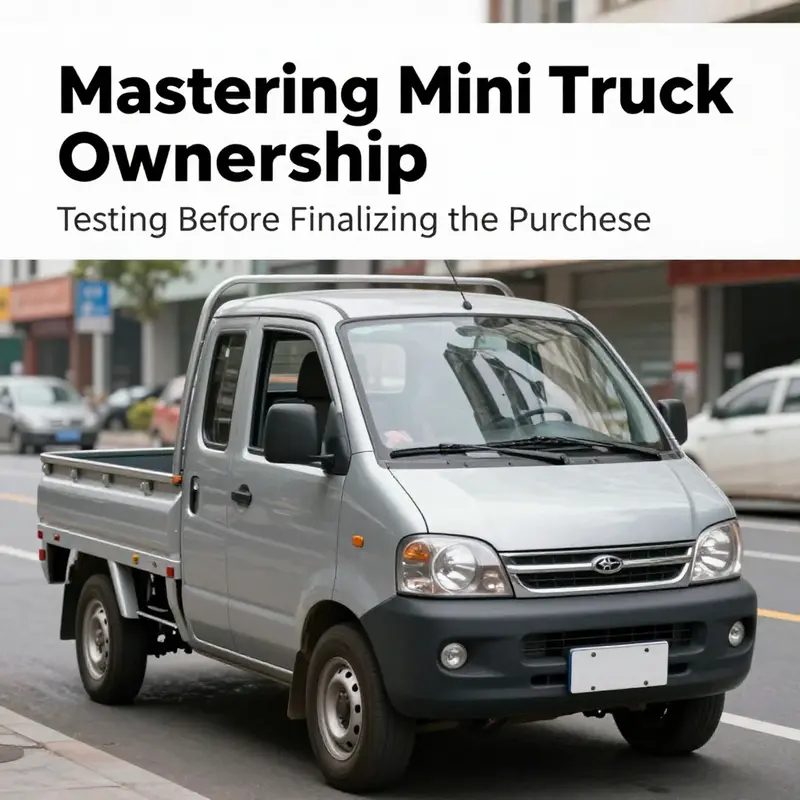
Buying a mini truck for urban logistics is a careful balancing act between price, practicality, and reliability. In crowded cities where lanes narrow and parking is scarce, the decision hinges on more than a glossy spec sheet. The testing phase reveals hidden truths about value. It is worth starting before you step into the showroom. The goal is to confirm the vehicle fits your daily routes: a narrow footprint, a tight turning circle, and a cargo bed that matches your typical load. For many urban deliveries, a turning radius around 4.5 meters and a width near 1.48 meters can decide which streets you can access. The right tester will simulate your real day: a loop through tight alleyways, a stop-and-go cadence, and a quick pause at loading docks. This disciplined approach turns a potentially risky buy into a confident choice.
Mechanical condition matters most. Start with the powertrain, especially if you consider electric propulsion. A well-tuned motor should respond promptly at low speed and deliver steady torque when you climb a ramp or crawl over curb edges. Listen for odd noises at startup and during acceleration. In an electric model, note the smoothness of the throttle and the consistency of the regenerative braking feel. Check the battery health indicators if available. Confirm the stated range and compare it with your daily needs. If you expect to run deliveries of 100 kilometers a day, you need a buffer. Inspect firmware versions, motor cooling, and the condition of the charging port. A simple way to frame this is to test for linear acceleration, stable braking, and predictable steering response across the vehicle’s speed range.
Maintenance history matters as much as the current condition. Review service records for routine oil changes, filter replacements, brake pad wear, suspension checks, and tire replacements. For electric models, look for battery service notes, inverter checks, and coolant service intervals. Ask whether the vehicle has had any major repairs, such as motor or control unit replacements. A clean maintenance trail often signals thoughtful ownership. When possible, request the hands-on log of recent trips and a record of any warning lights that appeared and were addressed. The presence of regular checks reduces the risk of surprise failures after purchase.
Hidden issues lurk in corners and creaks. Examine the exterior for rust, dents, or signs of prior collisions. Look under the vehicle for oil leaks or damaged subframes. A careful eye should track fluid levels—oil, transmission fluid if present, coolant, brake fluid, and battery electrolyte health for 12-volt systems. Test all electrical components: headlights, turn signals, horn, interior lights, and the camera or sensor suite that guides parking and safety features. In many mini trucks, the cargo area is exposed to the elements; verify the seals around doors and the bed to avoid water intrusion. If the model has active safety features, test them in a controlled environment. Ensure the sensors and cameras align properly and that manufacturer settings reflect your driving style.
Import eligibility and compliance rise to the top if you are considering a used import or a vehicle sourced from another market. Verify emissions compliance, safety certifications, and the vehicle’s ability to be registered in your region. Gather documents that prove the vehicle met codes and standards before you commit. For used imports, expect a more detailed paperwork bundle. It should include a clear title, proof of ownership, and a transparent record of any recalls and repairs. A professional inspection can help uncover subtle issues, such as corrosion in hidden cavities or wiring harness wear that does not show up in a casual check. The confidence you gain from confirming regulatory readiness reduces risk and speeds up the final steps of ownership.
Testing planning matters as much as the test itself. Map a route that mirrors your typical days—a mix of curbside pickups, short delivery hops, and a final park at your workspace. While in the showroom, request a test drive through official channels. You may use a brand app or the dealer’s scheduling system to lock in a timed session. Pay attention to steering feel in tight spaces, braking response on downhill segments, and the suspension’s ability to smooth out rough urban roads. Take note of visibility from mirrors and camera displays. Inspect the control layout and infotainment interface for usability during busy shifts. Finally, verify the payload comfort by loading a representative weight and seeing how it impacts handling. This step translates a promise into real performance.
Documentation matters, especially when buying used. For a private sale, insist on a detailed private vehicle sales agreement. Include the VIN, the chassis number, the total price in both numerals and words, and explicit terms about transfer, insurance, and any outstanding violations. Check the motor vehicle registration certificate to confirm engine power and registration dates. Verify the insurance policy and ensure continuous coverage through the transfer. Obtain a tax payment proof and vehicle inspection certificate. If you buy from a dealer, you still want written guarantees about the vehicle’s condition and a clear note on what is included in the sale, such as warranty terms. For new purchases, confirm the invoice process and the standard delivery timeline, because a smooth handover minimizes delays and miscommunication.
Negotiation and final steps hinge on preparation. Gather quotes from several authorized retailers and request written proposals. Compare not just the sticker price but also the after-sales offers—charging cards, extended warranties, service packages, and post-sale maintenance. In a competitive market, government subsidies and incentives can alter the economics significantly, so confirm eligibility in your region and whether the dealer can apply the subsidies on your behalf. This is where a broad perspective helps you avoid hasty decisions. If you find two trucks that fit your needs, the test results determine the winner. The right choice aligns with daily tasks, budget realities, and a sustainable plan for growth. A final courtesy check of documents, timeliness of registration, and the clarity of the sales contract ensures a confident completion.
To deepen your understanding, consider exploring comparative model evaluations that help you weigh options across makes and configurations. For readers evaluating a family of compact pickups, a focused comparison of specs and features can clarify what truly matters in city work. This can complement the hands-on testing you have done. comparing Kingstar Kruzr models specs and features. In parallel, you may want to consult established guides on imported mini trucks to understand the broader landscape and common pitfalls. A practical Japanese guide on choosing a mini truck offers a structured approach to price ranges, import considerations, and typical risks, which can save time and money during your testing phase. External resource: https://www.japanesemini-truckguide.com/2026/01/26/how-to-choose-a-japanese-mini-truck-a-practical-guide/.
Final thoughts
Choosing the right mini truck can be a daunting task, but by following these steps—defining your needs and budget, researching models, leveraging government incentives, comparing pricing, and undergoing test drives—you’ll ensure that you’re making a sound investment. Mini trucks are not just vehicles; they represent the opportunity to enhance your business efficiency and personal mobility. Take the insights from this guide and approach your purchase with confidence. Your ideal mini truck awaits.