
Japanese mini trucks have become increasingly popular, not only for their reliability and fuel efficiency but also for their versatile functionality. Whether you’re a local small business owner looking for a compact delivery vehicle, a residential property owner needing a handy utility truck, or a mini truck enthusiast seeking your next project, there’s a world of opportunities awaiting you. This guide is designed to provide you with everything you need to know about acquiring a Japanese mini truck, from purchasing new models in Japan to exploring used options for international buyers, understanding the importing process, attending industry events, and summarizing essential recommendations. With this information, you’ll be well-equipped to make an informed decision that suits your unique needs.
Navigating the Domestic Route: Purchasing New Kei Trucks in Japan with Confidence
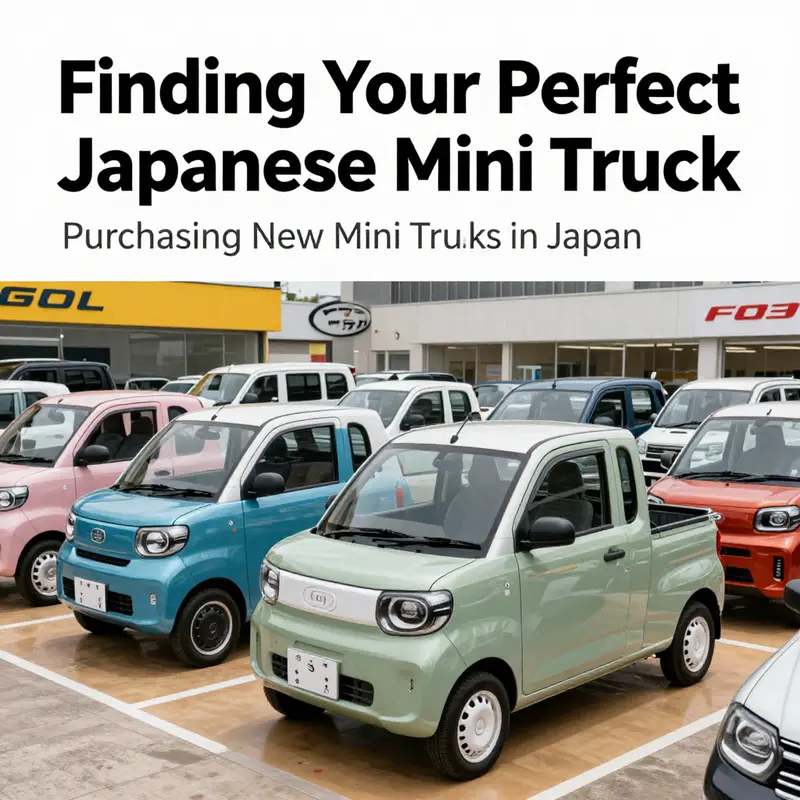
In Japan, the kei truck sits at the crossroads of practicality and urban necessity. Its compact dimensions are designed to squeeze through narrow streets, ferry small loads, and keep fuel costs low, all while fitting within a regulatory framework that keeps the class consistent across the market. For buyers who are resident in Japan, the path to ownership of a brand-new kei truck is straightforward in outline but precise in execution. The journey begins with a clear understanding of the kei-class regulations—engine displacement limited to 660cc, total length capped at 3,400 millimeters, width no more than 1,480 millimeters, and height restricted to 2,000 millimeters. These constraints ensure that the vehicle remains maneuverable in crowded city centers and rural lanes alike, and they define the baseline that every authorized dealer in the country upholds when presenting options. With these limits in mind, a domestic buyer can approach the market with a practical set of expectations about size, cost, and maintenance, knowing that every model in the authorized lineup adheres to the same framework. The result is a level of predictability that is rare in more expansive segments of the market, where dimensions and specifications can vary widely from one model to another.
The first decision in this domestic journey is choosing a model and a brand within the kei category, but the emphasis is on finding a configuration that best suits your everyday needs. In Japan, the market is dominated by a small handful of manufacturers, each bringing a slightly different emphasis to the table. One producer may prioritize lightness and nimble handling, which suits city deliveries and frequent trips around tight neighborhoods. Another may emphasize durability and payload capacity, which matters for longer daily routes and heavier loads. The core choice, however, rests on how you balance payload, fuel efficiency, and total ownership costs, rather than chasing a few flashy features. When you visit authorized dealerships, you will encounter a range of bodies, cab configurations, and bed sizes, all calibrated to the kei constraints. This is not a market that rewards excess; it rewards fit for purpose, reliability, and the ease with which the truck can become a daily tool rather than a weekend novelty.
To navigate this landscape effectively, it pays to visit multiple authorized dealers and look at the same model across different showrooms. The goal is not to chase a single catalog price but to understand the nuances of each offer. You may find a dealer able to provide additional support, extended maintenance plans, or a preferred financing option that aligns with your cash flow. A crucial element of the negotiation is to approach the price with a disciplined mindset. In Japan, it is common for the list price to be a starting point rather than a final number. Dealers often have some flexibility, particularly if you are prepared to pay in cash or to bundle services into a single package. The art of negotiation, sometimes referred to as “mōsō” in everyday parlance, hinges on clarity about what you value most—price, service, or a combination of both—and on comparing offers from several outlets. A thoughtful comparison can yield meaningful savings, particularly during seasonal sales periods that historically see promotions. While it is not a guarantee, a careful buyer who shops around frequently discovers that the difference between a first quote and a final price can be substantial enough to alter the decision-making calculus.
Financing, if needed, is another area where domestic buyers often require careful consideration. The standard path is to explore a loan through the dealership or a partner financial institution. For residents with stable status, obtaining a loan is typically straightforward, and transparency about terms is the norm. Buyers should beware of payments that come with opaque clauses or future obligations that persist beyond the stated term. A common pitfall is a residual-value loan, which can obscure the true cost of ownership over time. A reputable dealer will present clear information about the interest rate, monthly payments, and total cost of the loan, enabling you to assess affordability against your budget. There are stories in the market of loans that seem modest at first glance but accumulate due to fees or interest structures. The prudent approach is to model the total cost of ownership across the planned years of use, including insurance and maintenance, before committing.
Once the price and financing are settled, the purchase moves into the registration phase. Japan’s vehicle registration system is streamlined for new-car buyers, and the process is generally efficient when handled by the dealership in conjunction with the relevant authorities. One distinctive aspect of ownership in Japan is the absence of a lottery or plate-quota system for kei vehicles; your registration is straightforward, and in many cases you can arrange to have a personalized license plate number if you wish, subject to the usual regulatory steps. This flexibility adds a small but meaningful touch to ownership, allowing new buyers to imprint a personal credential on their everyday workhorse. Insurance follows registration and is mandatory. The basic liability coverage required by law is designed to provide a safety net against the high costs that can arise from even minor incidents on crowded roads. For domestic buyers, this mandatory coverage is a foundational cost of ownership, and many buyers pair it with more comprehensive protection to minimize financial risk. The cost and scope of insurance can vary with the chosen dealer’s bundled options, so it is wise to weigh the value of additional protections against the likelihood and cost of potential incidents in your specific operating landscape.
This domestic route—selecting a suitable kei-truck configuration, negotiating across multiple authorized dealers, arranging financing if needed, and completing registration and insurance—creates a practical, predictable framework for ownership. The appeal of a new kei truck in Japan lies not in a single standout feature but in the sum of a small, efficient tool designed to handle daily tasks with reliability and economical operation. The vehicle’s compact footprint is matched by the efficiency of its maintenance and the simplicity of its parts ecosystem, which makes ownership manageable for a wide range of small businesses and individual operators alike. In practice, this means a buyer can expect a clean title, a well-documented service history from a brand-aligned network, and the satisfaction of driving away with a vehicle that is purpose-built for tight streets and regular, low-cost operation.
For readers seeking broader context and practical experiences drawn from the wider kei-truck community, the online space where owners and enthusiasts share insights can be a helpful companion. A dedicated blog hub aggregates real-world perspectives, tips, and occasional price observations that complement the official dealer pathways. You can explore more stories and practical tips at the minitrucksocala.com/blog/ via a simple link that keeps you connected to the broader user experience while you navigate your own purchase. This resource acts as a bridge between the formal, dealer-led process and the on-the-ground realities of ownership, offering a chance to hear about delivery routes, urban maneuverability, and the everyday economics of running a kei-truck workhorse.
As you move through this process, it helps to maintain a clear picture of your daily needs. Consider the frequency of deliveries, the typical load, and the distances involved in your route. A kei truck is a tool optimized for efficiency rather than sheer power, so your choice should reflect how compact you need to be for urban tasks and how often you will rely on the vehicle for longer trips. The result is a decision that remains grounded in practicality, with the confidence that the domestic path to ownership is well-trodden, supported by a network of authorized dealers, predictable regulatory requirements, and a straightforward ownership lifecycle that begins the moment you sign on the dotted line. For anyone planning to use this vehicle primarily within Japan’s borders, the domestic purchase route offers a reliable, efficient, and cost-conscious entry into the kei-truck world.
External reference and further reading can help cement this approach. For an official perspective on kei-truck specifications and category standards, you can consult the manufacturer’s category information page available at the external resource link below. This reference provides context for the regulatory framework and the class-wide design philosophy that underpins every new kei truck sold within Japan.
External reference: https://www.toyota.co.jp/jp/vehicles/mini-truck/pixis/
From Auction Lots to Overseas Roads: A Practical Guide to Buying Used Japanese Mini Trucks for International Buyers
Buying a used Japanese mini truck as an international buyer can feel like threading a narrow alley with a moving target. On one hand, these compact workhorses are celebrated for their durability, diesel efficiency, and ability to slip through tight urban lanes or rough rural paths. On the other hand, the journey from a listing in a distant port to a reliable machine on your doorstep involves a mix of market knowledge, regulatory savvy, and careful logistics. The appeal is simple to articulate: you gain a rugged, economical tool that can handle farm chores, local deliveries, or small-scale construction without the overhead of a full-sized truck. The vehicles themselves have earned a reputation for longevity because many are retired from commercial fleets only after long service life and routine maintenance. They tend to accumulate mileage differently from typical passenger cars, and their simpler, robust layouts often translate into easier field repairs. Yet the practical path to ownership remains complex enough to demand a disciplined approach. You will need to balance your needs with the realities of import rules, shipping times, and the paperwork trail that connects a Japanese auction or export yard to your driveway or farmyard abroad. Understanding this path begins with clarity about what you actually want to accomplish with the truck, and how much risk you are willing to manage along the way. In this sense, the journey mirrors any careful overseas purchase: define the use case, gauge the total cost of ownership, verify provenance, and align yourself with trustworthy partners who can navigate the cross-border maze for you. The core idea is not simply to find a bargain but to secure a reliable asset that can perform as promised in your climate, terrain, and workload. To this end, the most important early decisions revolve around purpose, capacity, and long-term maintenance rather than the initial sticker price alone. If you plan to move light freight through mixed surfaces, you might favor a truck that balances cargo space with maneuverability. If your routes include unpaved roads or steep grades, you’ll likely prioritize payload stability and drivetrain resilience. These preferences translate into a few concrete criteria: cargo volume often falls in a practical range for small businesses, drive configuration matters for traction on less-perfect surfaces, and the engine type—commonly diesel in this category—offers torque and durability that pay dividends over years of service. Keeping these priorities in mind helps you sift listings without becoming overwhelmed by the sheer volume of options that exist in international marketplaces. And while every shipment carries some level of uncertainty, a deliberate, informed approach reduces risk and increases the chance that your overseas purchase becomes a dependable partner in your daily operations. For ongoing context and community perspectives as you navigate this space, the Minitrucks Coala blog offers practical articles and reader experiences that can complement the specifics in this guide. Minitrucks Coala blog.
Importing a Japanese Mini Truck: A Practical 25-Year Path to the U.S. Road
The Japanese mini truck offers compact size, simple mechanicals, and useful payload for light tasks. For buyers outside Japan, the appeal goes beyond nostalgia; it can be a practical tool for farms, small businesses, and urban deliveries. However turning that truck into a road legal vehicle in another country requires careful planning, paperwork, and realism about limits. The key concept in the United States is the 25 year rule: vehicles manufactured in 2001 or earlier become eligible for import under this exemption as of 2026. The rule aims to reduce ongoing safety and emissions testing for older, simpler vehicles. It does not guarantee immediate registration, and each state may add steps about title, inspections, and potential modifications. The import path begins with confirming eligibility, securing origin documents, and arranging shipping to a port of entry. A broker or importer with experience in cross border vehicle entry can be very helpful.
Once the vehicle clears eligibility, you still need to address compliance. Federal rules from the DOT and EPA apply in some contexts, and states may require emissions testing or safety inspections. Common upgrades include lighting adjustments, a compliant headlamp pattern, accurate odometer labeling, and verify safety belt and mirror compliance. Budget for possible modifications and the cost of inspections. A plan should include a buffer for delays, translations, and paperwork.
The actual import process typically includes choosing a vehicle, arranging container shipment, handling customs paperwork, paying duties, securing a title, and completing state registration. Working with a reputable broker or importer helps ensure VINs match, titles are clear, and you meet state requirements for transfers and insurance. In many cases, total costs extend well beyond the purchase price, so a line by line budget is essential. With patience and professional support, a kei truck can become a practical road ready tool rather than a costly impulse.
Networking on the Show Floor: Sourcing Japanese Mini Trucks for Business Buyers at Japan Truck Show 2026
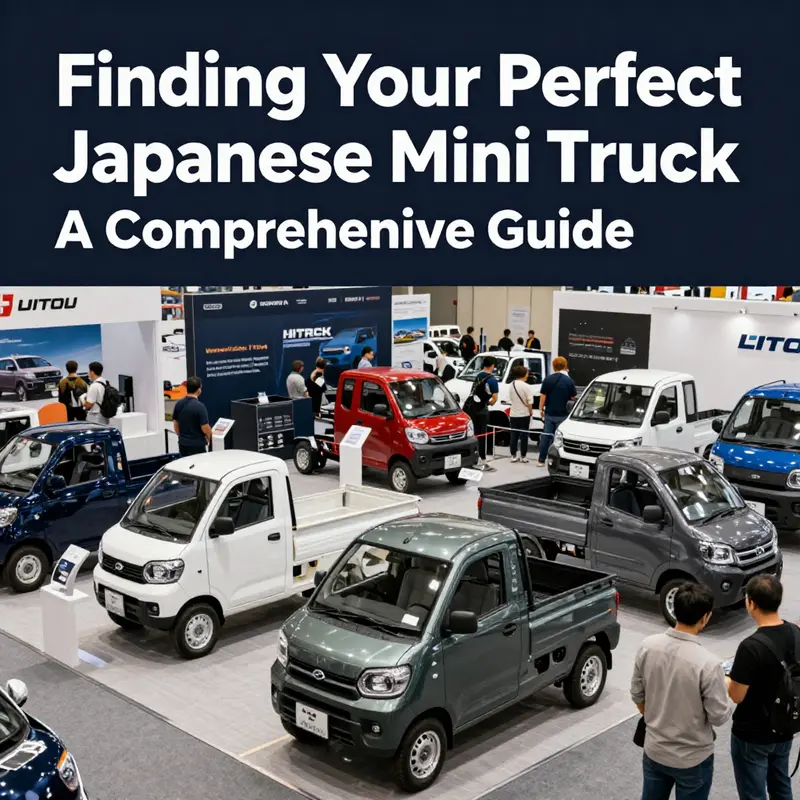
A trade show floor is more than a display area; it’s a concentrated marketplace where intent meets opportunity, especially for business buyers eyeing Japanese mini trucks. When you’re procuring vehicles for a fleet, distributor network, or specialized industrial tasks, a well-planned presence at an industry event can compress months of outreach into a few days of face-to-face conversations. The right show gathering you to Yokohama isn’t just about cataloging models; it’s about mapping a practical path from interest to import, from test drive to delivery, and from initial contact to a formal agreement. In this world, preparation is a differentiator. Before you step onto the show floor, you should translate business objectives into a concrete plan: what kind of service network do you need, what volume are you considering, and which export routes and compliance steps must be laid out to avoid delays when the time comes to move from demonstration to deployment. Industry events are designed to reveal those pathways in real time, as you watch models you may have only seen in brochures or spec sheets move across a stage, a booth, or a demonstration yard.
The Japan Truck Show in particular has earned its reputation as a focal point for the truck sector in Japan. The 2026 edition is positioned as a hub where manufacturers, distributors, and service providers converge to showcase the core vehicles that drive Japan’s dense urban and regional logistics networks. For business buyers, the value lies not only in seeing the latest designs but in engaging with export-minded teams that understand the specifics of moving vehicles across borders. On the show floor you can explore how a compact, class-appropriate vehicle is engineered to navigate narrow streets and tight loading bays, and you can listen to narratives about durability, parts availability, and maintenance support that are critical when endurance and uptime matter more than flash. Though you may be focusing on export, the presence of domestic market players and their experience with safety, regulatory compliance, and after-sales service offers a realistic picture of what a long-term relationship could look like, including how a supplier network will back you after the sale.
A central benefit of attending is the chance to meet in person with the export and international sales teams of leading manufacturers. These conversations can yield more than just a price quote. They provide an opportunity to discuss the logistics chain—the sequence of steps from factory to port, the containerization options, and the potential for bundled services such as financing, warranty coverage, and spare-parts supply. If you are considering large orders, these discussions can pave the way for pre-negotiated terms, bulk discounts, or distributorship arrangements. And while the show may highlight vehicles that meet domestic regulatory standards, it also serves as a practical launching point for conversations about how to adapt or certify a vehicle for import to your country. Understanding these options early can prevent misalignment between the engine, transmission, chassis, and the regulatory paperwork required for a smooth entry into your market.
Preparation for a show begins long before you arrive. Start by identifying a clear objective for your trip: identify one or two ideal models you want to compare, quantify the maximum price you’re prepared to pay, and determine which regional representatives you need to meet based on your target markets. Compile a short list of questions focused on operational reliability, maintenance intervals, and the availability of after-sales service. For business buyers, it’s crucial to inquire about training for local technicians, the availability of spare parts, and the potential for a direct supply channel to minimize downtime. It’s easy to underestimate the importance of logistics until you’re staring at a quote that includes shipping, import duties, and compliance fees. At the show, you can press for practical details: the lead times, the stock levels for export, the flexibility of shipping routes, and the acceptable forms of payment for large international orders.
Networking at a show also means leveraging the informal spaces where meaningful deals often begin. Booth conversations can lead to deeper discussions with sales engineers and product planners who understand how a compact truck’s real-world performance translates to your local environment. They might explain how certain configurations affect payload, maneuverability, or fuel efficiency in your typical route. These sessions are opportunities to explore trade-offs—between cargo capacity and turning radius, or between cabin comfort and payload protection—without having to wade through a dozen long email threads. As you gather insights, take careful notes and sketch quick mitigations for any potential friction points you identify, such as regulatory hurdles or lead-time constraints. A well-documented show experience becomes a practical map for post-show action.
One of the most meaningful outcomes of attending is the possibility of scheduling direct follow-ups with exporters who are open to export-oriented conversations. If your objective is to establish a repeatable procurement channel, use the show as a platform to discuss pre-qualification steps, documentation readiness, and the specific certifications required by your country. You may find that some teams can propose staged deliveries, testing periods, or pilot programs that align with your fleet’s usage patterns. The dialogue at the booth can also reveal the breadth of support a supplier is prepared to offer—from on-site training and warranty terms to a robust parts and service network with technicians capable of handling the installation of any export-specific adaptations needed for your market.
As you walk the aisles and stand beneath bright overhead lighting, one practical rule anchors everything: translate every conversation into a tangible next step. If a particular model aligns with your needs, request a formal product brief and a written calendar of availability for export. If a company signals interest in a distribution partnership, seek a contact who can outline the process for negotiating a distribution agreement, the minimum order quantities, and the level of exclusivity offered. If you are evaluating multiple vendors, prepare a simple scoring framework on site that weighs important criteria such as price, delivery lead times, after-sales support, and the robustness of the parts supply chain. The goal isn’t to accumulate a pile of business cards; it’s to create a curated shortlist that you can go back to with a targeted set of questions and a realistic plan for next steps.
In this context, a small but meaningful resource can help you stay connected after the show. For readers who want ongoing buyer-focused content that complements hands-on show experiences, the Minitrucks Cali blog offers practical perspectives and buyer stories that can sharpen your post-show follow-up. You can explore this resource at minitrucksocala.com/blog/.
Beyond the meetings and demonstrations, the networking ecosystem of a major show is designed to simplify the logistics side of international procurement. The event organizers often provide travel guidance, visa considerations, and land-side support to streamline attendance for international buyers. They may also offer matchmaking services that pair you with exhibitors whose product lines and export capabilities best fit your stated objectives. The value of this matchmaking cannot be overstated: when a meeting is arranged with a supplier who has already assessed your needs and confirmed export viability, your time on the floor becomes more productive and your follow-up steps become clearer.
As the conversations unfold, keep in mind the broader market signals that a show emits. The emergence of new configurations, the emphasis on lightweight construction, and the integration of certain technology packages can indicate where the market is headed. If a vehicle demonstrates an innovative packaging of payload, electrical architecture, or driver-assistance features, note how these elements could translate into long-term cost savings or productivity gains for your operation. You don’t need to chase every trend, but you should recognize which trends are likely to yield tangible advantages in your own fleet management. The best business buyers convert trend awareness into a concrete plans: a preferred supplier list, a set of prioritized configurations, and a robust schedule for trial orders and staged deliveries.
Finally, attending such events is also a moment to inventory risk management opportunities. A well-told story on the show floor is not merely about choosing a vehicle; it’s about building confidence in a procurement pathway. You want a partner who can align with your regulatory framework, supply chain constraints, and after-sales expectations. The kind of relationship that emerges from open, direct dialogue on the show floor often carries through to smoother coordination during shipping, customs clearance, and post-delivery support. If you approach Japan Truck Show 2026 with precise goals, a clear plan for follow-up, and a readiness to discuss export practicality, you can transform a week of exposure into a dependable, long-term supply route for your operation.
In this narrative of show-floor sourcing, the key is balance: balance speed with due diligence, balance price with service quality, and balance curiosity with a disciplined follow-through. The event acts as a catalyst for conversion—moving you from curiosity about compact trucks to a concrete, export-ready plan that fits your market. For international buyers and business operators, the show floor is not a spectacle; it is the most efficient workshop for shaping a strategic partnership that can underpin a fleet’s capability for years. It is here, amid the noise of engines and the cadence of negotiations, that a well-prepared buyer can turn opportunity into a reliable supply chain.
External resource: https://www.japan-truckshow.com/
Small Wheels, Large Path: A Practical, Narrative Guide to Getting a Japanese Mini Truck
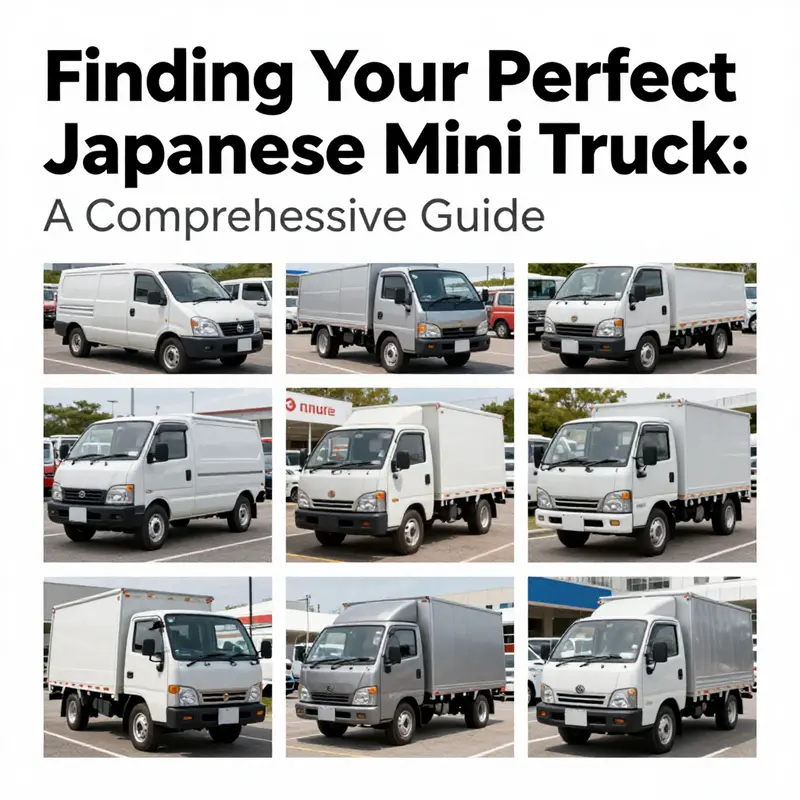
In the logistics world, the Japanese mini truck stands out as a compact tool with a surprisingly large footprint on daily operations. It thrives where space is tight, fuel costs matter, and durability is non-negotiable. The decision to acquire one hinges not only on budget but also on location, regulatory realities, and the kind of work you expect it to handle. This chapter threads together the practical routes—whether you’re chasing something new for domestic use in Japan or seeking a proven, cost-effective option for export to other regions—and it does so with a steady, narrative rhythm that mirrors the way operators actually shop for these nimble workhorses. It begins with the core choice: go new in Japan or buy used for international deployment, then follows through on the legal and logistical steps that turn a listing into a functioning vehicle on the road or in a warehouse yard. Along the way, it highlights market dynamics that matter to buyers, touches on emerging trends like electrification, and finishes with a clear set of action steps you can adapt to your own situation. If you’re aiming to optimize urban deliveries, farm tasks, or small-scale construction logistics, the path to a Japanese mini truck is not a single fork but a well-lit corridor that narrows down as you define your needs and your limits.
One of the most important starting points is understanding the market itself. In Japan, mini trucks—compact, high-efficiency, and designed to nestle into narrow lanes—have become the backbone of city logistics and local work. They are built to fit inside tight spaces, yet their payload and utility remain surprisingly robust for their size. This balance helps them dominate daily service and small-business deliveries, particularly in environments where larger trucks would struggle or incur prohibitive operating costs. The latest market data show that these compact workhorses still command a strong share of new-truck registrations, driven by reliability, low running costs, and a design ethos that prioritizes practicality over bravado. For buyers inside Japan, the appeal is straightforward: you get a vehicle purpose-built for urban or compact rural routes, backed by dealer networks that provide service, parts, and warranty coverage tailored to these models.
If your aim is to acquire a model for domestic use in Japan, the path is comparatively straightforward. You would visit authorized dealer networks that represent the major Japanese manufacturers and explore a lineup designed to meet strict regulatory standards. The key constraints are clear and non-negotiable: engine displacement at or below 660 cubic centimeters, length no longer than 3,400 millimeters, width at or under 1,480 millimeters, and height limited to 2,000 millimeters. These are the dimensions that keep the kei truck category nimble on Japan’s congested streets while delivering predictable performance for a broad spectrum of tasks: hauling small loads, topping up with supplies, or acting as a mobile utility platform in a tight worksite. The experience of buying new within Japan is often anchored by the peace of mind that comes with manufacturer-backed warranties, the assurance of compliant emissions and safety features, and access to standardized service networks. For readers simply curious about the domestic route, the practical takeaway is that a new kei truck can be a dependable, long-term ally where the vehicle is needed to perform reliably year after year.
For international buyers, buying used becomes a different kind of strategic decision. The appeal is not the newest model, but the combination of price, availability, and the potential to unlock practical, yard-friendly utility quickly. The used market for Japanese mini trucks has a robust global footprint, with exporters and marketplaces specializing in pre-owned, export-ready vehicles. Platforms that connect buyers to suppliers emphasize the availability of diesel-powered units and left-hand-drive configurations that can ease integration into a variety of operating environments outside Japan. Typical price ranges for used examples fall into a broad band, often in the neighborhood of several thousand dollars, with variation driven by condition, mileage, and the specific features a vehicle carries. The reality is simple: international buyers frequently find value in used kei trucks because they deliver a low total cost of ownership and a fast path to operation in new markets, provided the import and compliance steps are properly managed.
The practical route for international procurement commonly starts with a global marketplace that specializes in exporting used Japanese vehicles. These platforms connect buyers to verified suppliers and specialists who handle the paperwork, shipping, and port clearance. The export process is a chain that begins with a clear description of the vehicle’s condition, service history, and any required documentation, and ends with a compliant vehicle that can be registered in the destination country. An important caveat is that you must verify emissions compliance, safety modifications, and any local standards that affect the vehicle’s legality and roadworthiness in your region. In many cases, vehicles older than a certain age are subject to relaxed rules or exemptions, but the details vary by country and sometimes by the kind of activity the vehicle will perform. Engaging a reputable importer or logistics provider who specializes in cross-border vehicle exports is not optional; it’s essential to navigate the nuances of title transfer, bill of lading, inspection, and registration seamlessly.
Beyond the fundamentals of new versus used, it helps to keep a couple of strategic considerations in view. First, right-hand-drive configurations are standard in Japanese kei trucks, and that can pose a learning curve depending on where the vehicle will be operated. If your operation is in a country with left-hand traffic, you’ll need to plan for driver training or consider equipment and accessories that make the transition smoother. Second, emissions standards matter in every market today. Diesel remains common in these vehicles, but there is a growing spectrum of hybrid and electric options that align with stricter urban air-quality goals. While the traditional diesel kei truck remains the workhorse for many operators, the electrification trend is moving through pilot programs and selective subsidies in several regions. If you anticipate expanding into green logistics or want to position your fleet for the longer term, you may want to weigh the long-term advantages of a hybrid or electric model, especially in urban delivery roles where energy costs and emissions performance are more tightly constrained.
Alongside the procurement path, attending industry events can offer real-world clarity. Business buyers who want direct exposure to manufacturers, distributors, and the latest product ideas should consider industry showcases dedicated to commercial vehicles and logistics solutions. In this space, a flagship trade show focusing on Japanese commercial transport is scheduled periodically, with the 2026 edition anticipated to take place in Yokohama. The event serves as a hub for demonstrations, live demonstrations, and conversations about regulatory environments, new powertrains, and evolving service models. It’s a place to compare different configurations side by side, gauge potential supplier responsiveness, and capture market intelligence that isn’t always evident in catalogs or online listings. If you’re serious about a purchase that will underpin a portfolio of local or regional operations, making time to visit such a show can yield a disproportionate payoff in terms of relationships and knowledge.
Looking ahead, the future of mini trucks in this segment is increasingly tied to electrification and smart logistics. Electric and hybrid compact trucks are emerging as viable options for dense urban routes where noise, emissions, and total operating costs are under scrutiny. Government subsidies and regulatory incentives align with a broader push toward greener freight, and the market forecasts suggest that EVs and hybrids will begin to capture a meaningful share of new light-duty commercial vehicles in the next few years. For operators evaluating long horizons, the best approach is to incorporate flexibility—whether through a mixed fleet that combines legacy diesels with a forward-looking electric model, or by choosing suppliers with clear roadmaps for battery-based options and service networks that can keep these units running with limited downtime.
With this context in mind, the recommended course of action becomes clear. Start by defining your exact needs: the type of work, the typical loads, and the operating environment. Then compare the core models that fit those needs, while keeping an eye on total cost of ownership, after-sales support, and the availability of parts. For new purchases inside Japan, connect with the official dealer network and validate warranty and service terms. For used purchases intended for export, use trusted exporters and marketplaces that emphasize export readiness, vehicle history, and transparent condition reports. When you finalize a choice, engage a professional export or import intermediary who can manage shipping, customs clearance, and registration in your country. This is not simply about acquiring a vehicle; it’s about anchoring a logistical capability that can scale with your business or project.
For readers seeking deeper practical guidance and ongoing updates, the Minitrucks Blog offers a regularly refreshed resource that aligns with the realities of sourcing and deploying these compact workhorses. You can explore more there to refine your criteria and compare real-world experiences across regions: Minitrucks Blog.
External resource for extended context: https://www.alibaba.com/product-detail/Japanese-used-mini-dump-truck-for-sale_1600587557484.html?spm=a2700.100194.0.0.7c3f6b71uqyPnU
Final thoughts
In summary, acquiring a Japanese mini truck is accessible and offers numerous options tailored for both domestic buyers and international enthusiasts. Whether you choose to explore the vibrant local dealerships in Japan for a new model or navigate the exciting world of used trucks through global platforms like Alibaba, understanding the purchasing and importing process is crucial. Additionally, attending industry events can provide valuable insights and contacts. No matter your preference, with the right steps, you’re well on your way to owning a reliable and functional mini truck that meets your needs. Happy truck hunting!