
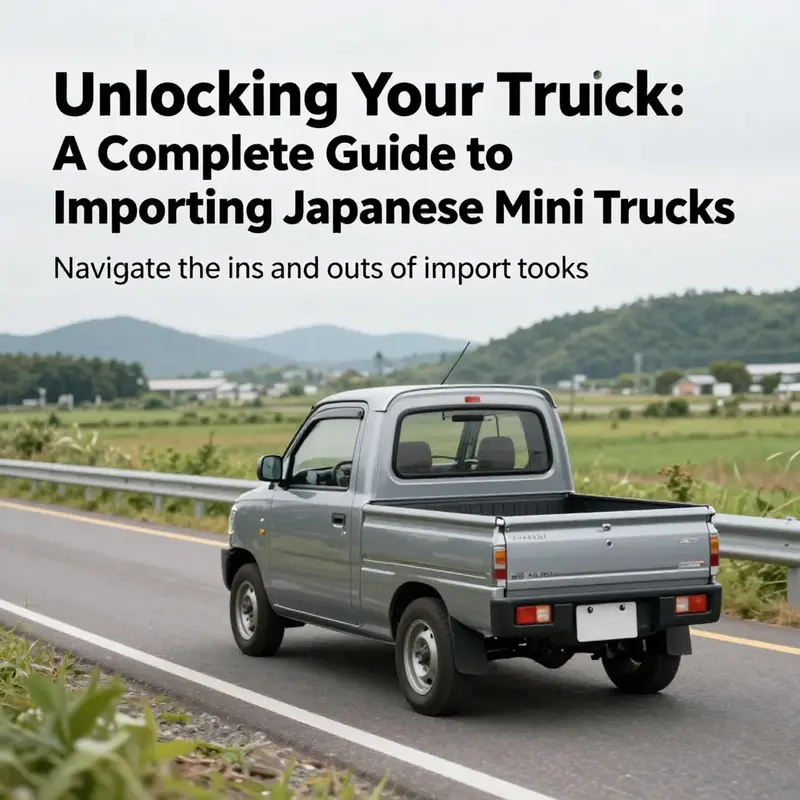
Dreaming of a Japanese mini truck? Whether you’re a local business owner needing a reliable workhorse or a hobbyist looking to enhance your collection, importing a mini truck can be an exciting venture! However, there are several regulations to navigate, documentation to prepare, and compliant import agents to choose. This guide aims to walk you through every step of the import process, from understanding regulations and choosing an agent, to ensuring compliance with safety standards, preparing essential paperwork, and successfully clearing customs. Let’s turn your mini truck dreams into reality, effortlessly!
Cross-Border Kei: Navigating Regulations, Eligibility, and the Route to Importing a Japanese Mini Truck
Owning a Japanese mini truck, a kei pickup that fits tight alleys and rural lanes alike, often begins with a simple wish: to bring a compact, dependable workhorse across borders. The path from a Japanese showroom to a driveway abroad is rarely a straight line. It is a negotiation between the vehicle’s design and the law’s demands, a balance of safety, emissions, paperwork, and the practical realities of logistics. This chapter follows that balance, focusing on two major markets where kei trucks frequently appear on importers’ radars: China and the United States. The stories behind these routes are not about technical trivia alone, but about the people who navigate them—agents, inspectors, registrars, and the ever-watchful customs desks—all trying to ensure that a simple truck can move from one country to another without becoming a legal headache. In China, as in many jurisdictions, the process is anchored in regulation that treats imported vehicles as controlled cargo, not casual consumer goods. The first hurdle is eligibility: the Ministry of Commerce and customs authorities maintain a framework that restricts entry to vehicles that meet strict safety and emission standards and that are imported through licensed channels. Private import by individuals is seldom allowed for personal use, especially when a vehicle’s age suggests it may not meet modern standards. This isn’t a blanket disqualification; there are exceptions, particularly for certain kinds of industrial or commercial use, but they require special permits and a formal approval process. The practical upshot is clear: for most hobby buyers, the path runs through an authorized import agent or a car dealership that specializes in Japanese imports. The agent’s role is not merely to sign documents but to shepherd a bundle of certificates through the maze: a Certificate of Origin from Japan, a Bill of Lading or Air Waybill, a Commercial Invoice, a Vehicle Inspection Report, and a Foreign Vehicle Import Permit. These papers are not decorative—each one proves a specific step in the journey and is scrutinized by customs officials on arrival. The government’s rationale is straightforward: vehicles must conform to national standards before they enter the road system, and the paperwork provides a verifiable record trail. The agent’s expertise is thus a form of insurance, reducing the risk of a shipment being held or rejected for documentation gaps. When a vehicle does arrive, the compliance test begins anew with safety and emission standards. In China, a kei truck must pass the China Compulsory Certification and meet GB 18352.6-2016 (China VI) emission standards. An inspection by a designated testing agency, often CATARC, checks the vehicle’s subsystems, from braking to lighting, and may reveal subtleties that require modification. Because a truck that was designed for one side of the world uses different driving ergonomics, lighting configurations, and even seat belt protocols, adaptations may be necessary to suit Chinese specifications. The caution, however, is not to assume that adapting a left-hand drive vehicle is a simple swap. Even when a truck is technically compliant, older models can be rejected for features deemed outdated by current safety norms. The documentation trail continues post-approval with the actual transport and customs process. Shipping a kei truck to China usually involves traditional sea freight, often in a sealed container, or a Roll-on/Roll-off option for straightforward handling. A freight forwarder familiar with automotive logistics can coordinate with the Japanese exporter, the Chinese broker, and the port authorities to minimize delays. The arrival at port marks a new phase: customs clearance via the China Single Window, followed by duties and taxes that reflect the vehicle’s classification, value, and age. Import duties may range, and the value-added tax typically applies to the CIF value, while some vehicles can attract a consumption tax depending on engine size and performance. There are tariff nuances tied to free trade agreements and origin certificates, so it is important that the importer or agent verifies eligibility for any preferential treatment. Once the vehicle clears customs, local registration becomes the next gate to cross. Registration protocols vary by province but usually require customs paperwork, a vehicle inspection report, a purchase contract, proof of insurance, and, in many places, a pass through a vehicle safety and emissions test. Even after a successful registration, the vehicle may face district- or city-specific restrictions, particularly for foreign-made imports. The story of importing into China is a reminder that a kei truck’s charm is matched by a parallel complexity in law. For readers who are contemplating entry into the United States, another pathway emerges: the 25-year exemption rule. In the U.S., federal safety and emissions standards administered by NHTSA and the EPA generally apply to imported vehicles. Vehicles aged 25 years or more are exempt from most of these standards, which makes importing a Japanese kei truck significantly more straightforward—but not entirely effortless. The eligibility hinge is age. A model manufactured in 1999 or earlier can be imported without meeting the current federal safety and emissions standards, provided it is intended for personal use, restoration, or as part of a collection. This exemption, however, does not imply the absence of paperwork or due diligence. The importer must still demonstrate ownership, secure a bill of lading, and complete Customs Form 7501, among other obligations. And while the age exemption reduces regulatory friction, it does not grant a free pass on documentation, labeling, or liability concerns. Because kei trucks differ in size, weight, and safety features from typical U.S. vehicles, their importation is often treated as a specialty case. Many importers work with a licensed customs broker experienced in antique and classic vehicle entries to navigate the process and anticipate potential delays. The documentation package remains robust: the bill of sale, the title, the proof of ownership, the import entry, and any lab test data that demonstrates emissions equivalence or exemption status. It is not unusual for hobbyists to encounter questions about whether the vehicle is road-legal upon arrival. In such situations, the broker and sometimes the state motor vehicle authority can provide guidance on the steps to obtain temporary permits or to reinstate compliance if needed for street usage. Here the guidance from official sources becomes invaluable. The state’s interpretation of exemptions, the role of local inspection, and the exact documentation required can differ from one jurisdiction to another. In this sense, the import process reveals a broader truth: the vehicle itself is only one part of the journey. The patchwork of laws, standards, and administrative practices requires a partner who understands how the pieces fit together. That is where a trusted import agent or broker becomes essential. They not only collect and verify documents but also anticipate issues, coordinate with Japanese exporters, and communicate with Chinese or U.S. authorities as needed. For readers who crave practical perspective beyond the formal path, a visit to a broader online resource pool—such as the Minitrucks blog hub—can provide context on usage, maintenance, and practical adaptations. Accessing a well-curated collection of experiences and case studies helps bridge the emotional appeal of a kei truck with the realities of import mechanics. You can explore the hub here: minitrucks blog hub. The chapter’s arc returns to the core idea: importing a Japanese mini truck is not a one-step purchase. It is a process with gates, audits, and decisions that shape whether the vehicle ever makes it to its new home. The endgame is a legally compliant, road-ready truck that fits the local rules and daily duties. To empower readers, this narrative also recognizes that the same principles apply whether the destination is Shanghai’s bustling ports or a quiet American town street. The emphasis remains on credible partners, clear paperwork, and realistic expectations about age, standards, and registration. In the end, success comes from aligning the vehicle’s design with the jurisdiction’s requirements, not from bending rules to fit a dream. For anyone pursuing this path, a careful, resourced approach—grounded in official guidelines and supported by experienced brokers—creates the best odds of turning a kei truck into a reliable workhorse. And should you seek broader context on how such stories unfold in practice, the NHTSA’s vehicle importation guidelines offer a reliable compass for the U.S. route: https://www.nhtsa.gov/vehicle-importation.
Choosing a Reputable Import Agent: The Critical Bridge to Legally Bringing a Japanese Mini Truck Home
Navigating the path to importing a Japanese mini truck into China begins long before a crate is loaded at the port. It starts with trust, paperwork, and a deep understanding that the process cannot be tackled by a casual buyer alone. In a landscape where vehicle imports are tightly regulated to ensure safety, environmental compliance, and revenue collection, the decision to work with a licensed import agent or dealer is not just prudent—it is essential. Since private individuals cannot clear a vehicle through Chinese customs on their own, every import travels through an authorized conduit. This means that the first real decision in the journey is choosing a partner who holds the proper import qualifications, has a transparent process, and can orchestrate the many moving parts from origin to registration. A reputable agent does more than arrange transport; they act as a regulatory navigator, a logistics manager, and a guarantor that the vehicle you receive has the necessary documents, has met the destination standards, and will be eligible for local registration after it arrives. The breadth of responsibilities they shoulder is substantial, and the cost of ignorance can be measured in delays, unexpected duties, or even the seizure of goods at the port. The rationale for selecting a credible intermediary becomes clearer when you consider the workflow: verification of credentials, coordination with shipping lines and customs brokers, and careful handling of the paperwork that proves the vehicle’s origin, conformity, and compliance with the China VI emission standard. In other words, choosing the right partner is the hinge on which the entire import hinges. To begin, look for agents registered with the country’s customs authority and affiliated with recognized brands or trade associations. Their capability to provide a complete documentary package is non negotiable: a Certificate of Origin from Japan, a Bill of Lading or Air Waybill, a Commercial Invoice, a Vehicle Inspection Report, and a Foreign Vehicle Import Permit are not optional extras but required pillars of the clearance process. The documents must be accurate and consistent with the vehicle’s VIN, engine number, and price. Any inconsistency can trigger delays or outright rejection at the port. A trustworthy agent will also help you obtain the Certificate of Conformity from Japan and the Export Certificate, then ensure those papers align with the Chinese requirements before shipment. The importance of precision cannot be overstated, because customs declarations are scrutinized under the Single Window platform, and a small error in the paperwork can ripple into costly delays. A practical way to assess potential agents is to request evidence of their authorization and a track record of successful imports in recent years. Look for certifications, affiliations with automotive associations, and a clear statement of the roles they play in the process—from pre-shipment document preparation to post-clearance delivery. In addition to credentials, the agent should offer a transparent evidence trail: the actual import goods certificate, the vehicle inspection certificate, and the vehicle conformity certificate that will be needed when you register the vehicle locally. These documents are not merely for show; they are the core components that your local vehicle management office will demand during registration. While the formal documents set the stage, the ongoing process requires a steady hand to navigate the logistics, timing, and regulatory checks that accompany international vehicle movements. The best agents maintain open channels with you, the client, throughout the journey, updating you on the status of the shipment, the anticipated customs timeline, and any issues that could affect delivery. They will coordinate with a freight forwarder who understands automotive cargo, whether by sea container, Ro-Ro, or air freight, and they will liaise with the Chinese customs broker and the inspection authorities to minimize the risk of holds or rework. A central value proposition of a reputable agent is end-to-end management. They can handle pre-shipment document preparation, the declaration process, the payment of duties and taxes, and the eventual post-clearance handover. In markets like this, where tariff rules and standards can shift with policy changes or trade agreements, having a partner who stays current with regulations is priceless. The role extends beyond compliance; it includes helping you optimize costs through legitimate pathways, such as identifying whether a shipment can benefit from any applicable preferential origin rules under regional accords. This is where an experienced agent’s advice becomes a tangible financial advantage, not a theoretical one. You may also hear about the importance of reviewing contracts with a fine-tooth comb before signatures. A robust agreement should clearly specify vehicle details, delivery timelines, liability for delays, and warranty terms, along with the precise scope of what the agent will and will not do. It should also address post-delivery support, including any maintenance and service arrangements available in China, which can be critical once the vehicle arrives and you begin the local registration and inspection steps. The literature of import practice emphasizes the value of a partner who can demonstrate a web of collaborative relationships—shipping lines, port authorities, testing agencies, and inspection bodies—so that the process can proceed without disruption. In this context, a reputable agent also positions themselves as a bridge between the origin and destination ecosystems. They understand how to align Japan’s export controls with China’s import rules, ensuring the vehicle meets the chain of compliance from the moment it leaves Japan until it stands at the vehicle management office for registration. When you review options, you might also inquire about their ability to draft or verify the necessary inspection reports and conformity certificates, since these are critical for the state’s acceptance of the vehicle. A well-chosen partner can help you avoid common traps—misdeclared values that inflate duties, missing or mismatched documents that trigger penalties, or misalignment between the vehicle’s specifications and the emissions and safety standards required in China. They can also offer practical guidance on model compatibility, such as fuel type, engine capacity, and potential adjustments to lighting or safety features that may be required to align with local standards. For readers seeking broader industry perspectives and practical references, the minitrucks post archive offers case studies and discussion threads that can provide background context on market expectations and logistical considerations. You can explore more at the minitrucksocala blog. Of course, no two imports are identical, and your choice of agent should reflect your specific vehicle type, intended use, and timeline. A candid discussion about expectations, deliverables, and risk management with the agent at the outset saves confusion later. The better agents will also be forthright about costs, including government-imposed duties, VAT, and any Consumption Tax that might apply, plus the service charges for the end-to-end handling they provide. They should help you map the true landed cost and illustrate how that figure compares with domestic alternatives, a comparison that becomes meaningful once you understand the regulatory scaffolding that supports every import. In sum, a kinetic, well-managed import is built on a foundation of verified credentials, transparent documentation, proactive communication, and a joint commitment to compliance from origin through to registration. A reputable agent is not merely a customs broker; they are a regulatory partner who turns a complex maze into a navigable route. If you choose to pursue this path, invest time in due diligence and ask for real-world examples of successful clearances and registrations. The clarity you gain up front will translate into smoother shipping and a faster, legally compliant route to owning your Japanese mini truck. External resources can provide broader context about import processes and regulatory expectations; for instance, one comprehensive reference is available at https://www.jihaicn.com/ for businesses and individuals navigating cross-border trade. This external guidance helps anchor import planning in current best practices and practical workflows that have stood the test of time.
The 25-Year Gate and Beyond: Importing a Japanese Mini Truck to the United States with Safety and Emissions in Focus
The appeal of a nimble, Japanese mini truck is undeniable for many hobbyists, farmers, and small-business operators in the United States. Yet the path from dock in a Japanese port to driving legally on a U.S. road is shaped by meticulous compliance with safety and emissions requirements, plus a web of federal and state procedures that can feel opaque to newcomers. The central hinge that many importers learn to rely on is the 25-year rule, a federal exception that recognizes vehicles meeting or exceeding a quarter-century of model years as essentially grandfathered from the modern regulatory maze. This rule does not erase compliance concerns, but it does redefine what is feasible and cost-effective for individuals who want a classic, utilitarian mini truck rather than a showroom-new import. Understanding how the federal framework works, and how it interacts with state-level rules, is the first step toward a successful, legal, and enjoyable ownership experience.
At the heart of the U.S. import landscape are two parallel pillars: the safety standards enforced by the Department of Transportation through the Federal Motor Vehicle Safety Standards (FMVSS) and the environmental rules administered by the Environmental Protection Agency (EPA). Most Japanese mini trucks manufactured before about the mid-1990s were designed to meet a different set of standards than those that now shape American roadworthiness. As a consequence, many of these older vehicles fail to meet FMVSS on issues ranging from seat belt configuration to headlight aiming and crashworthiness. The 25-year rule offers a critical workaround for older models, but it is not a blanket license to neglect inspection or documentation. As of 2026, the rule effectively allows the import of vehicles that are at least 25 model years old to be imported without meeting the current FMVSS or EPA certifications. The practical implication is clear: a 2001 model or older could be eligible for import under federal exemption, but this does not relieve the owner of all compliance responsibilities; it shifts the burden toward rigorous documentation and successful registration rather than certification per se.
Even when a vehicle falls under the 25-year umbrella, emission considerations remain relevant. EPA rules typically require that imported vehicles meet applicable emission standards or qualify for a specific exemption under the 25-year framework. Importers must prepare and file Form 3481-1 (Application for Importation) with the EPA, providing evidence that the vehicle complies with relevant emission requirements or demonstrates that the exemption applies. The paperwork path can be intricate, and missteps here can stall a shipment or complicate registration later. A careful broker or attorney with experience in DOT and EPA processes can help translate the regulatory language into a concrete, auditable file. The goal is not merely to pass a file through the door but to ensure that the vehicle can be titled and registered in the destination state after it arrives.
The role of the licensed customs broker or importer is essential in this environment. Importing a Japanese mini truck that vectors through a port city requires navigation of both federal and state gateways. A broker familiar with DOT, EPA, and state DMV expectations will coordinate the necessary steps: confirming eligibility under the 25-year rule, preparing and submitting the appropriate forms, and arranging for the vehicle to be physically inspected if required. The broker also keeps a careful eye on the timing of each step, because delays in one area—such as a missed emission certificate, an incomplete bill of lading, or a lack of proof of ownership—can ripple through the process and extend the time before the vehicle can be driven legally on public roads.
Documentation is the backbone of any import plan. The core package for a classic Japanese mini truck typically includes a commercial invoice, a packing list, a bill of lading (or air waybill for air shipments), and proof of ownership. When the 25-year rule is invoked, extra attention goes to the documentary trail that proves the vehicle’s age, its compliant status under federal exemptions, and its conformity with the agency’s record-keeping requirements. The EPA’s involvement often requires a clearly labeled submission that demonstrates the vehicle’s historical compliance trajectory or its exemption status. On the safety side, while the 25-year rule provides relief from current FMVSS conformity, some states may impose their own safety checks, vehicle inspections, or emissions tests as part of the registration process. Anticipating these state requirements is essential to avoid roadblocks at the DMV. At the import stage, a robust set of documents might include: a certificate of origin, export certificate from Japan, a formal vehicle inspection report, and evidence of the tests or certifications performed by an accredited lab.
Transport logistics complete the circle of planning. An experienced freight forwarder with automotive transport expertise can arrange the best route to the United States. Depending on the ship’s schedule and the vehicle’s dimensions, options include sea freight in a container, Ro-Ro (roll-on/roll-off), or, for urgent cases, air freight. Each option has its own balance of cost, risk, and timing. Sea freight is typically the most economical for a mini truck, but it may require additional handling and longer lead times. Ro-Ro simplifies loading and unloading and reduces packaging complexity, though it might impose different insurance considerations. Air freight, while faster, adds substantial cost and is generally reserved for time-critical imports. Regardless of the mode, the importer should ensure that the carrier’s liability coverage and terminal handling align with the vehicle’s value and the anticipated risk during transit.
Once the vehicle clears the port, the real work begins in the realm of registration. Local Vehicle Management Offices (VMOs) vary from one state to the next in terms of required inspections, emissions testing, and data verification. Some states have implemented more stringent checks for imported vehicles, even for those qualifying under federal exemptions. The practical advice is simple: build a compliance checklist that aligns federal exemptions with the destination state’s rules. This means securing a vehicle inspection report that satisfies the state’s safety and emissions criteria, providing a clear purchase contract, presenting the owner’s identification, securing proof of insurance, and demonstrating a transparent chain of ownership. The registration fees, license plate issuance, and title processing will follow once the DMV is satisfied that the vehicle is roadworthy and properly documented.
An overarching thread throughout this process is the need for careful, informed decision making. It is tempting to treat the 25-year rule as a golden shortcut, but the rule is only one element of a broader compliance mosaic. The equation includes federal exemptions, state-specific registration prerequisites, and the practical realities of documentation accuracy and timing. In this sense, the import journey reads less like a single leap and more like a careful, staged ascent where each step reduces risk while expanding the possibilities of owning a vintage Japanese mini truck on U.S. roads. For those who invest in the right expertise and a well-organized documentation package, the reward is the ability to enjoy a compact, reliable workhorse that carries with it decades of design philosophy from a different automotive era.
To those starting this journey, a useful starting point for practical guidance is the Mini Trucks Blog, which offers general insights and community experiences related to importing and owning these vehicles. You can explore introductory material at minitrucksocala.com/blog.
For further official context on the federal framework that underpins this process, including the 25-year rule, the U.S. Customs and Border Protection resource provides authoritative information on eligibility and procedures: https://www.cbp.gov/trade/basic-trade-information/25-year-rule.
From Paperwork to Port: Mastering the Documentation Chain for Importing a Japanese Mini Truck
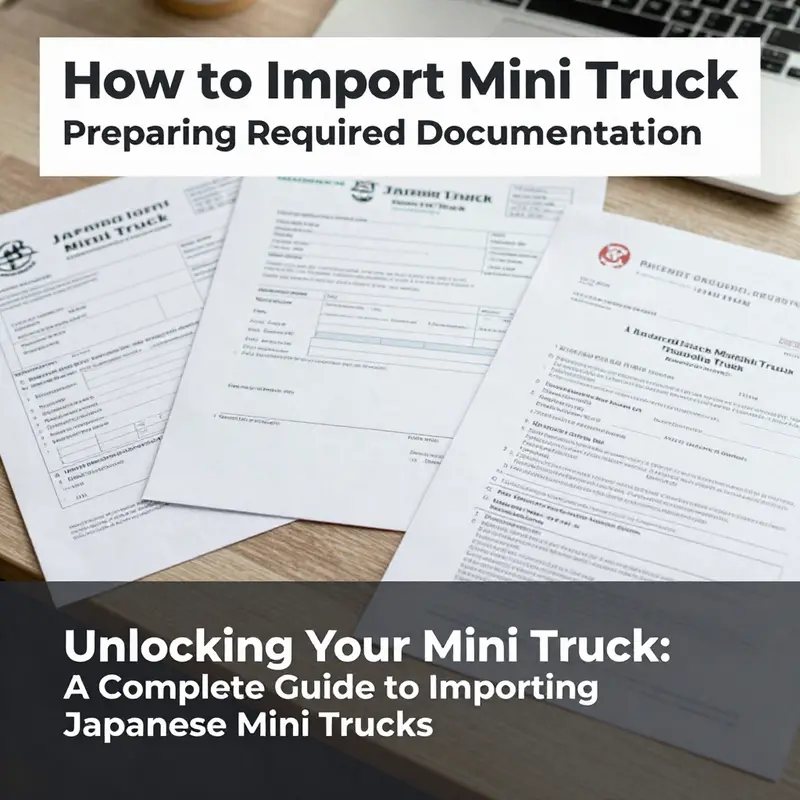
Bringing a Japanese mini truck into a new country hinges on precise paperwork as much as on logistics. A well-managed document package reduces delays, clarifies ownership, and helps meet the destination’s import rules. Start with the Commercial Invoice, a clear English-language record listing the vehicle’s description (make, model, year), VIN, engine number, sale price, and terms of sale. Downstream, the Bill of Lading or Air Waybill acts as the transport contract and proof of shipment. A detailed Packing List enumerates items, weights, dimensions, and packaging method. A Certificate of Origin can influence tariff treatment and eligibility for trade arrangements. Depending on the destination, an Import Permit or License may be required, and safety and emissions certificates may be needed to demonstrate compliance. A Vehicle Title or Proof of Ownership confirms legal ownership and should match the identifiers on the invoice and vehicle. An accurate Customs Declaration Form translates prior documents into a standard data package that customs systems can process. Insurance certificates may be required to cover transit risk. Import professionals can help gather, authenticate, and align these documents, advise on Incoterms, and coordinate with shippers, carriers, and customs authorities. With the shipment in motion, the document package remains the backbone of the plan, guiding inspections, fees, and eventual vehicle registration.
From Dock to Driveway: Navigating International Transport and Customs for a Japanese Mini Truck
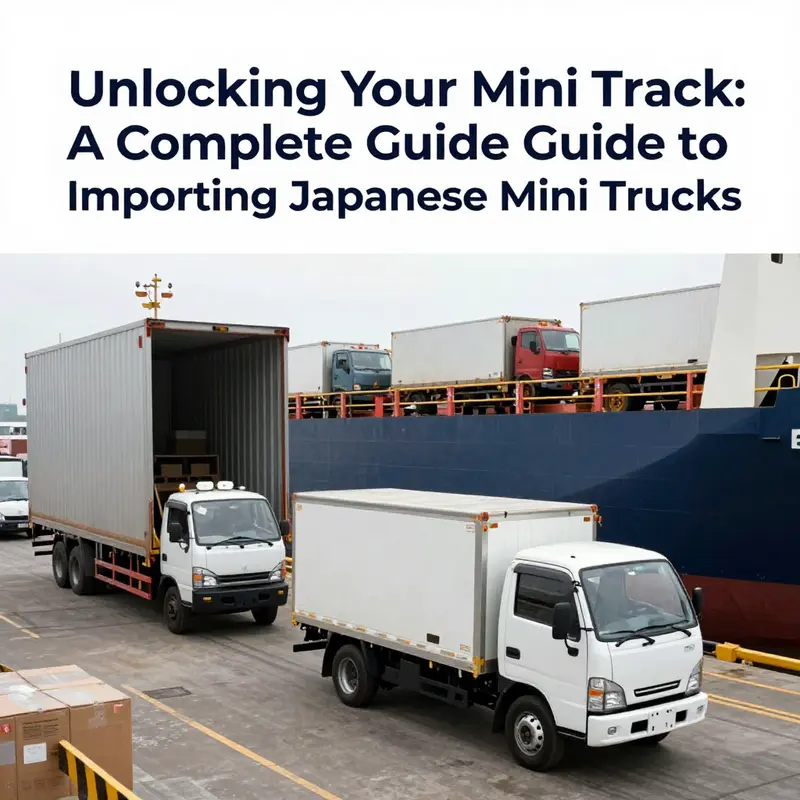
Coordinating the shipment of a Japanese mini truck from Japan to another country is a careful dance of logistics, legality, and timing. It begins long before a truck ever leaves the yard in Japan and ends only after it is registered and plated in the destination. The path is less about a single moment of sale and more about managing a chain of compliance, documentation, and coordination across borders. In practice, the journey hinges on two intertwined tasks: arranging reliable international transport and ensuring spotless customs clearance. While these steps appear daunting, they are eminently manageable when approached with a clear plan and the right partnerships. The first truth to grasp is that in many markets private individuals cannot clear customs on their own. A licensed import agent or dealer who understands the country’s vehicle import policy must guide the process, handle the paperwork, and liaise with customs brokers at both ends. This reality shapes the whole project, because the agent’s expertise becomes the engine that drives every other activity. A competent agent will confirm eligibility for the model year, arrange the appropriate documentation, and coordinate with maritime or air forwarders who specialize in vehicles. The objective is to move from a purchase in Japan to a registered vehicle in the destination with minimal risk of delay or refusal. The pre-import stage thus carries as much weight as the transport leg itself. It starts with a careful check of eligibility—specifically, whether the mini truck meets the destination country’s safety and emissions standards and whether import restrictions permit the vehicle type and age. In China, for example, the market is tightly governed; new or near new vehicles generally have clearer pathways than older, second-hand units. The country’s policy framework often restricts used imports or imposes strict age limits, inspection requirements, and compliance with local emission standards. That is why the decision to import hinges on research and verification up front rather than the promise of a quick shipment. Once eligibility is established, the next move is to secure a licensed import agent. A reputable broker will hold import licenses and be registered with the country’s customs authorities. They will verify that the documents they collect reflect actual facts rather than mere placeholders. The documentation package is the passport of the shipment. It should include a commercial invoice that describes the model and the vehicle’s VIN and engine number, a packing list, the bill of lading or air waybill, and a certificate of origin. The certificate of origin can be essential for tariff preferences under trade agreements, but its value varies by country and agreement. Some readers find it useful to also attach a Japanese vehicle inspection certificate and an export certificate, which reassure destination authorities about the vehicle’s condition and origin. Insurance documentation for transit is another cornerstone; a solid policy guards against loss or damage during an inherently long and uncertain voyage. The import permit, where required, is another nonnegotiable piece. Without it, the shipment sits in limbo at the port of entry. The agent will also guide you through any additional forms demanded by the destination’s customs regime, including declarations tied to the vehicle’s class, engine size, and intended use. With documentation lined up, the focus shifts to transport itself. For vehicles of this scale, sea freight in a container or a Ro-Ro option is typical. Ro-Ro, short for roll-on/roll-off, allows the truck to be driven directly onto the vessel, minimising handling and the risk of damage. Container shipping, while less common for a single vehicle, provides a controlled environment ideal for protecting the machinery and its delicate components during long voyages. The choice between Ro-Ro and container depends on the shipper’s risk tolerance, budget, and the vehicle’s size and weight. Regardless of the mode, arranging transit requires a logistics partner who is familiar with automotive shipments, capable of coordinating with both Japanese and destination country brokers, and equipped to handle ocean or air freight insurance add-ons. A good forwarder will also help you estimate transit times, typically several weeks for sea freight, with longer timelines if customs hold or inspections occur. The actual voyage is only part of the story. On arrival, the destination country’s customs authorities will take the lead in clearance. Here the process is governed by electronic submissions through the national or regional customs platform. In many markets, the import agent will file the required documents, then the authorities perform automated checks and may request additional information or physical verification. Duties and taxes follow a predictable logic but can still surprise if one is not prepared. The tariff basis, the vehicle’s classification under the HS code, the CIF value (cost, insurance, and freight), and the origin all influence the final bill. In some cases, a VAT or sales tax is assessed as a percentage of the CIF value, and there may be a separate consumption tax aligned with engine displacement or vehicle category. It is not unusual to encounter a range of duty and tax figures during the clearance process, which is why a precise, timely submission of documents—without glitches or misstatements—is critical. The Single Window platforms that many countries deploy for customs clearance streamline this process, but the user must still provide accurate data. The official guidance on motor vehicle importation often emphasizes the need for compliance with vehicle safety and emission standards. In China, for example, vehicles must pass the CCC certification and meet the GB 18352.6-2016 China VI emission standard. The vehicle may require inspections by designated laboratories such as CATARC. When a truck arrives with a left-hand drive configuration or mismatched lighting or seat belts for the destination, modifications may be necessary to achieve full compliance. These modifications, if required, are usually handled post-entry, but they can add both time and cost to the project. The documentation journey does not end with clearance. After a release from customs, the vehicle must be moved to its final site and undergo local registration. The local Vehicle Management Office will require the release documents, the vehicle inspection report, the purchase contract, owner identification, and proof of insurance. A safety and emission test is almost always required before plates can be issued. In some regions, foreign-made vehicles face extra hurdles or higher fees, which means budgeting and planning for potential regional variances are prudent. The storytelling of the import ends with the practical act of taking possession and arranging transport from the port to the final address, followed by the legal steps of registration, plate issuance, and title transfer. The nucleus of success across all these stages rests on choosing the right partners: a licensed import agent with credible references, a freight forwarder who understands the peculiarities of vehicle logistics, and a local expert at the destination who can guide registration and compliance. It helps to approach the process with a realistic timeline and a transparent cost model, recognizing that duties, taxes, inspection fees, and potential modification costs can be substantial. For readers seeking practical context or related experiences, the broader automotive import community maintains a catalog of insights and case studies that can inform decisions without replacing professional consultation. A representative entry point for deeper reading is the general repository of vehicle import perspectives at the blog of a community focused on mini trucks, which can serve as a starting point for understanding the practical rhythms of this niche. See more at the internal resource: minitrucksocala.com/blog/. When approaching the actual shipment, remember that every journey is specific to the vehicles involved, the countries of origin and destination, and the evolving regulatory climate. Keep a living checklist, maintain open lines of communication with your agent and forwarder, and anticipate the possibility of small, predictable delays that accompany cross-border trade. With disciplined preparation, the path from a single Japanese mini truck to an on-road asset in another country becomes a structured, manageable sequence rather than an insurmountable hurdle. The guidance offered here is a framework, not a fixed script, and the exact steps will hinge on current policy details at both ends of the voyage. The high-level maxim remains simple: verify eligibility, appoint a licensed broker, assemble precise documentation, choose a suitable transport mode, navigate customs with patience, and complete local registration. If you follow this pattern, the complexities of import logistics and customs clearance become a predictable cadence rather than a deterrent. External resource: https://www.customs.gov.cn/customs/302249/302272/index.html
Final thoughts
Importing a Japanese mini truck may seem daunting, but with the right guidance and preparation, you can navigate the complexities and enjoy the benefits of this versatile vehicle! Remember to stay compliant with regulations, work alongside reputable agents, and keep your documentation in check. Your ideal mini truck journey starts with understanding and preparation, and soon you’ll be behind the wheel of your very own imported beauty.