

Curious about bringing a mini truck from Japan to your driveway? Whether you’re a small business owner looking to enhance your operations, a property owner seeking a functional vehicle for your maintenance needs, or simply a mini truck enthusiast, you’ve come to the right place! This guide provides everything you need to understand and navigate the world of importing mini trucks—from regulations to sourcing vehicles, and the logistics involved. Each chapter breaks down these essential components, helping you make informed decisions and ensuring your experience is smooth and enjoyable.
Navigating the Regulatory Maze: How to Import a Mini Truck from Japan with Confidence
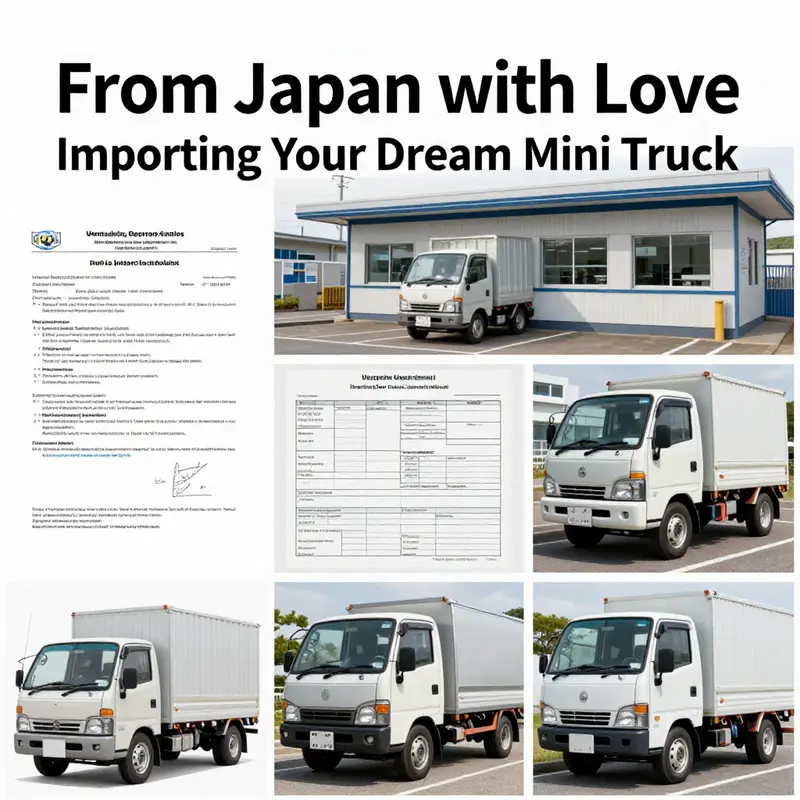
Navigating the Regulatory Maze: How to Import a Mini Truck from Japan with Confidence
When you set out to import a mini truck from Japan, you are stepping into a terrain shaped by a tangle of rules, standards, and paperwork. The idea of a compact, practical vehicle arriving at your port is exciting, but the path from sourcing to showroom-ready is paved with compliance checks, safety evaluations, and procedural milestones that can make or break a project in weeks rather than months. This chapter threads together the regulatory threads that bind the process, presenting a cohesive understanding of what must be considered, why it matters, and how to move forward without getting tangled in red tape. It is not a mere checklist; it is a continuous awareness that regulation shapes every decision, from the vehicle you choose to the final plate on the chassis, and from the moment you confirm a seller’s offer to the moment you swing the door open on your own lot.
The journey begins long before you press the purchase button. Japanese mini trucks occupy a unique niche—small, efficient, and purpose-built for local roads and small-lot work. They are designed to meet Japan’s domestic standards for size, engine displacement, and emission controls while reflecting the country’s approaches to traffic safety and vehicle inspection. Yet those domestic qualifications do not automatically translate into compliance in other markets. Each destination has its own highway of requirements, and individual jurisdictions layer on extra conditions—emission limits, safety equipment, clearances for right- versus left-hand drive, and the practical realities of vehicle age and certification. This is the essence of the regulatory maze: a set of gates that determine whether a vehicle can legally travel, be insured, be registered, and be driven on public roads.
For many buyers, the pathway hinges on two broad branches of regulation: recognizing eligibility and understanding the specific compliance regime that applies to the destination country. On one path, older models may gain easier access through mechanisms that recognize age rather than conformity, while younger models face a more demanding compliance gauntlet that demands evidence of safety, emissions performance, and type approval status. The split is not merely about vintage; it is about safety philosophies, environmental goals, and the administrative capacity of the importing nation to verify and enforce. In the United States, for example, a vehicle that is at least 25 years old can typically be imported without full EPA and DOT conformity, leveraging a longstanding policy designed to preserve vehicles of historical interest or regional practicality. That route, often described as the “25-year rule,” makes classic or older kei-type trucks more accessible but does not eliminate all hurdles; it reframes risk, pricing, and road readiness rather than eliminating them. In Europe, similar concepts exist, but the regulatory landscape frequently requires demonstrating conformity with broader vehicle type approvals, which can demand more extensive documentation and even specific structural modifications.
The other main branch concerns newer models. When a vehicle is younger than the 25-year threshold, it must meet the regulatory expectations of the destination country. This can imply major testing, modifications, or certifications to align with safety standards, lighting configurations, and occupant protection that the vehicle may not have been originally built to satisfy. The process may involve third-party inspections, crash-test considerations, and compliance with electrical, seat-belt, and airbag norms. It is not unusual for importers to face the need to rework lighting to satisfy beam pattern regulations in a country, reinforce seat belts to meet modern standards, or add protective bumpers and crash structures to comply with local expectations. Such adjustments, while technically feasible, add cost, time, and risk to the project—and they can turn a bargain into an expensive proposition if not anticipated from the start.
Another layer to consider is drive configuration. Japanese mini trucks are typically right-hand drive, reflecting Japan’s traffic infrastructure. The U.S. and several European markets require left-hand drive for standard road use, and while some exceptions exist for specialized applications or conversions, the practical reality is that most buyers must factor in a RHD-to-LHD conversion—or accept the realities of using a vehicle with RHD in a market where it is not the norm. The conversion itself is not merely cosmetic; it touches the steering system geometry, visibility, headlight alignment, pedal positions, and even the placement of mirrors. Cosmetic changes are rarely enough; regulatory acceptability requires that the vehicle meet the safety and visibility expectations of the importing country. This is where experienced importers, engineers, and sometimes aftermarket specialists are essential partners, ensuring that a conversion protects occupant safety without compromising legality.
That is the regulatory backbone, but the practical person-to-person journey remains deeply human. You will need to navigate a constellation of documents, verifications, and fees in addition to the vehicle’s mechanical readiness. The pre-purchase phase, therefore, should be shaped by compliance awareness. It begins with confirming eligibility in the destination country: the vehicle’s age, its engine displacement category, and any country-specific restrictions on imports of nonconforming vehicles. It continues with a process of due diligence around the seller’s credibility and the vehicle’s documented history. A thorough inspection, ideally by a professional with international experience, is not merely a safeguard against mechanical issues; it is a compliance measure for provenance, accident history, and tampering that could complicate future inspections or valuations. The inspector’s report acts as a bridge between the seller’s representation and the importer’s expectations, translating on-site observations into data that can inform regulatory viability and financial planning.
Beyond the vehicle’s condition, the logistics of moving it across borders are themselves governed by rules that stand between you and your delivery. Freight forwarders, import brokers, and insurance providers operate in a tightly regulated ecosystem. They handle the export documentation, the moving of cargo to the port, and the transfer of ownership documentation. Roll-on/roll-off shipping remains a popular option for its cost-effectiveness, as a wagon can be driven onto a ship in Japan and driven off at the destination port, but it demands careful packaging and insurance to minimize risk during transit. Container shipping offers enhanced protection for the vehicle but commands higher costs and a more complex logistics chain. Either path requires precise documentation—an official bill of lading, a commercial invoice, a packing list, and, in many jurisdictions, a certificate of origin that proves the vehicle’s source. For those targeting markets with stringent import oversight, additional certificates—such as vehicle safety inspection reports or conformity statements—may be demanded before the vehicle can clear customs.
What this means, practically, is that the import decision can no longer be treated as a simple purchase. It is an investment in regulatory clarity, documentation discipline, and an alignment of the vehicle’s design with the law of the land where it will eventually operate. The process of clearing customs is a legal threshold, not a financial one alone. It tests whether the vehicle’s VIN is properly recorded, whether the declared value aligns with the actual transaction, and whether the duties and taxes have been calculated on a basis that matches the country’s rules. In many places, duties and value-added taxes apply, and the exact rates are not isolated to a single factor but are computed on a matrix of vehicle price, freight, and insurance costs. In some markets, environmental taxes and processing fees further alter the total landed cost, turning a seemingly straightforward purchase into a multi-tiered financial event.
The story of documentation does not end at customs clearance. A new chapter opens at the local registration authority, where the vehicle’s papers are checked against the VIN, the chassis and engine numbers, and the authenticity of the origin documents. The local authority is not simply stamping a plate; it is confirming that the vehicle meets design standards, that it carries appropriate safety features, and that it has passed any required emissions tests or inspections. In some jurisdictions, the requirement to display front- and rear-end lighting that complies with local standards means the vehicle cannot be registered until the lighting system has been verified and, if necessary, modified. In others, the registration process is the moment at which the importer becomes a registered operator of a vehicle under a specific classification—private import, business fleet, or commercial use—and the operator must then secure insurance coverage adequate for the intended use.
All of this underscores a core truth: importing a mini truck from Japan is a long-haul project of regulatory literacy as much as mechanical procurement. It rewards careful front-end planning more than last-minute problem solving. To succeed, you must approach the journey with a clear map of the gates you will encounter and a credible plan for how to meet each gate’s requirements. A professional import agent or freight forwarder who specializes in automotive imports can be a strategic ally, not merely a service provider. They are often the ones who interpret the regulations across borders—translating a country’s customs language into actionable steps, translating inspection outcomes into compliance evidence, and coordinating the timing of shipments, inspections, and approvals so that delays do not cascade through the entire project. Their expertise helps protect you from the most common missteps: overestimating what is possible without modifications, underestimating the cost of compliance, or misaligning the paperwork with the destination’s expectations.
The topic of documentation deserves particular emphasis because it is the primary lever through which regulators verify compliance. A well-prepared package reduces the risk of delay and, in some cases, reduces the likelihood of having to repeat inspections or rework components. Standard documents include the Bill of Lading, Commercial Invoice, and Packing List, but many jurisdictions require additional attestations. In a China-focused context, for example, importers are often asked to present a Certificate of Imported Goods and a Vehicle Safety Inspection Certificate, among others, to demonstrate compatibility with domestic safety and environmental regimes. In the United States, the U.S. EPA and the Department of Transportation require specific information and, in the case of newer vehicles, a demonstrated compliance through conformity statements or documentation showing that modifications have brought the vehicle into alignment with emission and safety standards. Even if your vehicle originates from a country with permissive rules, you must be prepared for the destination’s framework to demand proof that the vehicle can operate legally and safely within its roads, climates, and regulatory culture.
With these principles in mind, you can approach the sourcing decision with more confidence. When selecting a seller, you favor those with transparent, verifiable data about the vehicle’s history and a track record of delivering export-ready units that have undergone basic checks. A reliable seller will provide not only the vehicle’s mechanical and cosmetic details but also the necessary export documentation and the ability to facilitate export procedures. A professional inspection report, ideally performed by an independent party, offers an objective baseline on the vehicle’s condition and aids in projecting whether any post-import modifications will be necessary. The same thoroughness should extend to freight arrangements. The forwarder’s expertise matters not only for timely delivery but for ensuring that insurance coverage travels with the vehicle and that export licenses and bills of lading align with both Japanese export rules and the destination’s import statutes.
To connect these threads to practical action, remember that the documentation you assemble and verify now becomes the foundation of the entire import experience. It enables the smooth passage through each assessment gate, from customs to registration. The process invites a collaborative approach: buyers, sellers, inspectors, brokers, forwarders, and authorities all contribute essential information. When you see the import journey as a coordinated process rather than a one-off event, the path forward feels less like a guessing game and more like a carefully choreographed sequence where timing, accuracy, and compliance produce tangible results.
For readers seeking broader practical resources while you map your own import route, consider exploring the Mini Trucks Cala blog, which offers practical context and additional perspectives about working with exporters, inspectors, and logistics partners. The link below provides a convenient entry point to a broader set of discussions about mini trucks and the import process: minitrucksocala.com/blog/.
As you plan, you will also want to anchor your expectations with a realistic understanding of costs and timelines. Compliance steps introduce non-trivial expenses—fees for inspections, potential modifications, certification arrangements, and import duties. Timeframes can stretch because of the paperwork cadence—export documentation, port handling, shipping schedules, and the sequencing of inspections and registrations. The best preparation reduces surprises: confirm eligibility, secure a credible seller, engage a competent import professional, and build a timeline that accommodates the most conservative forecast. In the chapters that follow, you will see how to translate these regulatory considerations into the practical steps of sourcing a vehicle, arranging logistics, and navigating post-arrival processes. The overall arc remains the same: respect the rules, plan with them in mind, and you will unlock a smoother journey from Japan to your driveway.
External resource for official guidance is also a wise companion on this journey. For authoritative, up-to-date guidelines on US vehicle import rules, consult the EPA’s Importing Vehicles page, which provides critical context on the regulatory expectations and the timelines that govern the entry of vehicles into the U.S. market: https://www.epa.gov/vehicles/importing-vehicles-us
From Yard to Dock: The Strategic Path to Sourcing and Buying a Mini Truck from Japan

Sourcing and buying a mini truck from Japan is more than a simple purchase; it is the opening act of a complex, multi-jurisdictional journey. The goal is not merely to secure a vehicle at a favorable price, but to lay the groundwork for a smooth import that meets the technical, safety, and environmental standards of the destination country, while protecting your investment from the many bottlenecks that can arise along the way. The process begins long before you place a bid or sign a contract. It starts with a clear understanding of what you need, a careful appraisal of potential suppliers, and a disciplined approach to documentation, logistics, and regulatory compliance. When these elements align, the path from a Japanese yard to your driveway becomes a manageable sequence rather than an unpredictable expedition.
The first consideration is the reliability of the supplier. In practice, this means conducting due diligence that goes beyond price and availability. A reputable vendor will provide verifiable business licenses, a transparent export history, and a track record of complete, consistent documentation. You should obtain the vehicle’s original invoice, the certificate of origin, and the conformity certificate whenever possible. These documents are not merely bureaucratic formalities; they are the threads that tie the physical vehicle to its legal and regulatory identity. In the context of a major market like China, there is an additional layer of scrutiny: the model must be listed in the official import vehicle directory and must be demonstrably compliant with current emission standards such as the latest China VI framework. Without this alignment, you risk delays, penalties, or outright rejection at customs. The due diligence you perform on the supplier becomes a proxy for the diligence you will exercise later with the vehicle itself. If you keep rigorous records from the outset, you will have a coherent, traceable trail that facilitates both licensing and clearance, reducing the likelihood of surprises at every checkpoint.
As you narrow your choices, you also want to validate the vehicle’s conformity to the destination market’s environmental and safety expectations. This means confirming that the mini truck model you intend to purchase has a documented pathway to compliance and is included in the official lists that customs authorities rely on to determine admissibility. The task is not only to verify the paperwork but to ensure that the physical characteristics—engine displacement, fuel type, and emission profile—will survive the scrutiny of the destination country’s regulators and testing facilities. It is precisely this alignment of product and regulation that makes the difference between a smooth import and a prolonged hold at the port. With a trustworthy supplier and a vehicle that meets the regulatory file, you begin the formal portion of the journey: the licensing and documentation that will underpin every subsequent step.
Before any purchase is finalized, an import license from the relevant authority in the destination country must be in play. In the context of China, for example, you must ensure that the purchase contract corresponds exactly to the commercial invoice, the bill of lading, and the proof of vehicle conformity. The documents that travel with the shipment must reflect the vehicle itself in precise terms, including the model, engine size, chassis number, and country of origin. Any discrepancy can trigger delays or non-acceptance during customs clearance. Once again, the emphasis is on accuracy and consistency across all documents. This is not a bureaucratic formality; it is a control mechanism that prevents confusion and protects both the importer and the customs authorities from misreporting, misclassification, or value disputes. If you are working with a reputable import agent or freight forwarder, they will help you assemble and verify these documents before shipment. They will also guide you on the specific forms and declarations required by your destination country’s regulatory framework.
Logistics is the next critical hinge. Sea freight remains the most cost-effective method for heavy, bulky assets like a mini truck. Within sea freight, you typically choose between roll-on/roll-off (Ro-Ro) and container shipping. Ro-Ro tends to be the least expensive option and is widely used for vehicles because it allows the truck to be driven onto the vessel in Japan and driven off at the destination port. Container shipping provides a higher degree of protection and security but comes at a higher cost. The decision often hinges on the vehicle’s value, the risk tolerance of the buyer, and the specific advisories of the forwarder. When engaging a logistics partner, it is essential to select a provider with demonstrated experience in automotive shipments, including secure immobilization, vibration dampening, and, if applicable, climate-controlled arrangements for particularly sensitive components. A seasoned forwarder will coordinate the pickup from the seller, arrange the export documentation, and ensure that the shipment is insured for its full transit—factors that significantly reduce the risk of damage or loss during transit.
Parallel to choosing a shipping method is the careful preparation of pre-clearance and import documentation. The forwarder will typically assemble and verify the core documents needed for customs declaration and inspection. These include the Bill of Lading, Commercial Invoice, Packing List, and a Certificate of Origin to prove the vehicle’s Japanese provenance. A vehicle inspection report from the exporting country may also be required to verify the condition of the vehicle at the time of shipment. In some markets, explicit proof of insurance for the journey is also necessary. For a rigorous importer, the documentation portfolio extends to country-specific requirements such as a certificate of imported goods and a vehicle safety inspection certificate, along with a certificate of conformity. The goal at this stage is to minimize friction at the border by preempting questions and ensuring that all declared values, engine displacement, and other technical specifics align precisely with the vehicle that arrives. The more meticulous your paperwork, the faster you can progress from voyage to clearance.
Once the cargo arrives at the port, the time to navigate customs clearance and pay duties arrives. A licensed customs broker plays a pivotal role here, handling declarations and the nuanced reporting that ensures the correct valuation and classification of the vehicle. The taxes that apply can vary by country and vehicle type, but a typical profile often includes an import duty, value-added tax (VAT), and, in some regimes, a consumption tax that is contingent upon engine size and emissions profile. In the Chinese context, illustrative figures have been cited where small trucks could face a duty of around 15 percent, a VAT near 13 percent, and a consumption tax that scales with environmental attributes. These figures are subject to change and depend on the latest tariff schedules and regulatory interpretations, but they convey the reality that the total landed cost of a mini truck can become substantial once shipping, insurance, and these levies are factored in. The broker’s diligence here is indispensable: accurate reporting of the vehicle’s value, precise engine displacement, and other technical metrics prevent disputes that can stall clearance and trigger penalties or reclassification.
After customs clearance, the vehicle must pass mandatory safety and environmental inspections conducted by designated testing centers. In many jurisdictions, this is a critical gatekeeping step between import and registration. The inspections assess essential safety features such as braking systems, lighting, seatbelts, and the structural integrity of the vehicle, along with environmental parameters like emissions. The outcomes of these inspections determine whether the vehicle can proceed to registration. In some cases, the inspection results will be the single most decisive factor in whether the vehicle is allowed to circulate in the market. The importance of this phase cannot be overstated: a vehicle that arrives clean on paper but fails the required tests will require corrective actions, resubmission, and possibly a costly re-inspection, not to mention the added time delay.
Registration is the final formal hurdle before you can legally drive the mini truck on public roads. Local vehicle management authorities require a complete set of documents, including the import certificate, tax payment receipts, the vehicle inspection report, and proof of compulsory third-party liability insurance. In practice, this means presenting a coherent packet that proves the vehicle’s compliance from import through inspection to insurance availability. The registration process is also a reminder that regulatory compliance is an ongoing obligation: even after the vehicle is registered, you must maintain the applicable safety and emissions standards and ensure renewal of insurance and plates as required by local law. Throughout this whole journey, clear and continuous communication with your Japanese supplier, customs broker, and logistics agent minimizes the risk of misalignment and delays. Any deviation in the paperwork, such as mismatches between what was contracted, invoiced, and declared on the bill of lading, can trigger delays, reworks, and, in worst cases, confiscation or refusal at the border.
The reality of importing a mini truck from Japan is that the process is as much about meticulous coordination as it is about the vehicle itself. The narrative here is one of disciplined preparation, where each step—supplier verification, licensing, logistics, document accuracy, and post-arrival testing—serves as a safeguard against the inevitable friction points that arise in cross-border trade. The emphasis on documentation cannot be overstated. A well-documented shipment reduces the likelihood of misclassification or misvaluation during customs checks and speeds the passage from port to final delivery. It also creates a reliable paper trail that you can rely on if inspections, audits, or insurance claims ever arise in the future. Many importers find it advantageous to work with a professional import agent who has developed a practiced routine for dealing with both the paperwork and the people who enforce the rules. Such specialists can leverage established relationships with customs authorities and testing facilities, which translates into smoother processing and fewer surprises. At the same time, the importer bears responsibility for ensuring that every document path remains coherent and that any changes in policy or tariffs that affect the vehicle are tracked and understood before committing to a purchase.
In this context, it is helpful to keep a forward-looking perspective. The procurement phase is not a one-time event but the initialization of a lifecycle that includes ongoing compliance, timely maintenance of registrations and insurance, and readiness to respond to any regulatory changes that could affect ownership or operation. If you are enthusiastic about keeping aligned with the broader community of mini truck enthusiasts and importers, you may find value in reading regular, consolidated guidance from industry resources that summarize regulatory shifts, best practices for negotiation with sellers, and practical tips for safeguarding shipments during transit. For readers seeking a synthesis of these considerations, the general guidance available on the minitrucks blog can provide a helpful frame of reference while you plan your steps and assemble your team. the minitrucks blog.
As you map out the logistics and compliance pathway, remember that every market has its own peculiarities. While the example above centers on China, the fundamental logic applies globally: verify the supplier, secure the necessary import license, arrange secure transport, confirm documentation matches the vehicle, clear customs with accurate declarations and appropriate duties, pass mandatory inspections, and finally complete the vehicle registration and insurance protections. The specifics—emission standards, VAT rates, consumption tax, and the precise documents required—will differ, but the structure remains consistent. The best practices are universal: maintain a clear line of communication with every stakeholder, ensure that every document is complete and consistent, and engage professionals who can navigate the regulatory environment with you rather than in opposition to you. This approach minimizes risk, condenses timelines, and ultimately preserves the value of your investment as the vehicle travels from a Japanese yard to your local roads.
For those who want to ground their planning in a firm regulatory reference, the official guidance published by the country’s customs authority provides the authoritative framework. It is worth consulting the relevant agency’s portal to understand current tariffs, required documentation, prohibited items, and tariff schedules—these are the levers that determine the total landed cost and the feasibility of your particular model. In the Chinese case, the General Administration of Customs remains the primary source of truth for import procedures, and its online resources can help you verify the most up-to-date requirements before you commit to a purchase or initiate a shipment. Access to this information helps prevent the common missteps that can derail an otherwise sound procurement strategy.
External resources and ongoing updates are essential, because regulatory landscapes are not static. The practical takeaway is simple: start with a robust supplier verification, build a tightly controlled documentation package, partner with experienced logistics professionals, and stay connected with the regulatory authorities throughout the process. If you pursue this path with diligence, the journey from a Japanese yard to your doorstep becomes a well-orchestrated sequence, not a gamble. And while the path is intricate, it is navigable with the right preparation, the right partners, and a clear, ongoing understanding of the regulatory canvas that shapes every cross-border vehicle purchase.
In the broader context of the article, this chapter links to the ongoing conversation about the financial and regulatory commitments involved in importing a mini truck from Japan. It emphasizes that sourcing and buying are just the lead-in to a carefully choreographed sequence of steps that culminate in lawful ownership and road-ready operation. As you continue through the article, you will see how this foundation supports the subsequent chapters on arranging transportation, completing pre-clearance, and navigating post-entry duties and registration. The journey is practical, but it is also strategic: a well-planned start reduces risk, lowers total cost of ownership, and accelerates you toward the outcome you want—a reliable, compliant mini truck that serves your needs on your terms. For readers seeking a concise compass to keep them on track, the essential message is that meticulous due diligence, precise documentation, and trusted professional partners are the cornerstones of a successful import operation, from the moment you first engage a seller in Japan to the moment you pull a newly registered mini truck onto your driveway. To keep informed and connected with practical perspectives drawn from the community, visit the referenced blog as a supplementary resource, and consult the official customs portal for the most current procedures and tariffs.
Navigating the Logistics Maze: Overcoming Challenges in Importing a Mini Truck from Japan

The idea of a compact, reliable mini truck carved from the same industrial instinct that built roads and railways can be deeply appealing. A buyer envisions a practical workhorse that handles tight urban spaces and rugged backroads alike. Yet the actual journey from a Japanese seller to a driveway abroad unfolds as a multi-layered logistical map. It is a map that rewards careful plotting and disciplined execution, because the fair price of the vehicle is only a shard of what it takes to bring it home. The moment you commit to importing a mini truck, you step into a choreography of regulation, documentation, scheduling, and coordinated movement that stretches across borders, currencies, and time zones. The path is navigable, but it is rarely straightforward. It demands a readiness to troubleshoot, a tolerance for delays, and a partnership with professionals who can translate technical requirements into practical steps that keep the process moving rather than stalling at the harbor gate.
The first hurdle is not the vehicle itself but the framework that surrounds it. Regulatory and legal compliance forms the backbone of any successful import. Different countries apply different safety, emissions, and technical standards, and a mini truck is not automatically granted entry simply because it satisfies the standards at the source. In many jurisdictions, there are stringent crash test requirements, noise and emission ceilings, and a battery of safety features that must be present or demonstrably achievable. The vehicle’s age is often a factor as well; some markets impose age limits or require special conformity tests if the vehicle has not been in commercial use for a given period. This is where the color of the paperwork matters as much as the color of the chassis. A compliant vehicle can still be delayed, refused, or marked for modification if the documents do not align with the importing country’s expectations. The gatekeepers do not merely care about where the vehicle came from; they care about what the vehicle is allowed to do once it crosses the threshold.
To anchor this in practical terms, imagine beginning with a precise inventory of what will be required before any sale is finalized. You would assemble a checklist that includes the Original Bill of Lading, a Certificate of Origin proving the vehicle’s manufacture in Japan, the Japanese Export Certificate, and the Vehicle Registration Certificate from Japan. You would require a Sales Invoice or contract detailing the price and terms of sale. You would also anticipate a Japanese export certificate to accompany the shipment, because it confirms the vehicle’s export status and can affect both customs eligibility and the downstream value-added chain in your destination country. Without these documents, the best price and the most favorable shipping window are essentially useless. The accuracy and consistency of these documents matter. Even a small discrepancy in an engine number, frame code, or VIN record can trigger a cascade of questions that slows clearance, increases demurrage charges, and complicates insurance arrangements.
Beyond the paperwork, the actual act of moving a vehicle from Japan to another country is a carefully choreographed process that depends on choices about shipping methods, carriers, and insurance. The Ro-Ro option—roll-on/roll-off—remains the most common route for vehicles and, often, the most cost-efficient. The truck simply drives onto the vessel at the Japanese port and is driven off at the destination port. This method minimizes handling and tends to reduce risk of damage that can occur with container stowage. Still, it is not without its vulnerabilities. Long transit times, typically ranging from roughly twenty to forty-five days depending on the route and port congestion, can test patience and planning. Weather conditions, port strikes, and seasonal demand all cooperate to extend timelines. The alternative container shipping offers greater protection and potential for securing personal belongings or add-ons inside the same cargo space, but it incurs higher costs and sometimes invites more complex documentation and handling procedures. The choice between Ro-Ro and container shipping must be made with a full understanding of how it interacts with your budget, your risk tolerance, and your schedule. The trade-offs are rarely simply about money; they are also about the velocity of the journey and the degree of protection you want for the truck and any supplementary gear you intend to transport alongside it.
A critical but often underestimated layer in this saga is the inland leg—the journey from the port to the final destination, which can be days or weeks, depending on geography, road networks, and the reliability of local transport partners. Even after the ship has docked and the vehicle has cleared customs, the next phase demands its own governance. Local customs inspections may scrutinize the vehicle to verify compliance with domestic standards. This can involve an on-site check of the VIN, a cross-reference of the vehicle’s specifications with regulatory criteria, and sometimes an evaluation of the vehicle’s lighting, braking systems, and seatbelts. The complexity multiplies when the destination is distant from the port, requiring robust coordination with road transport operators who can handle long-haul movements, clearance checks, and inland delivery without sacrificing the truck’s condition or the accuracy of its paperwork.
On the financial front, the cost of importing extends far beyond the price tag of the vehicle itself. The sum includes shipping fees, insurance, port handling charges, and a suite of taxes and duties that can surprise the unprepared. Import duties are common, often calculated as a percentage of the vehicle’s value, with specific brackets that can hinge on the vehicle’s type, engine displacement, age, and country of origin. VAT or its local equivalent is typically assessed on the combined value of the price, the duty, and the freight cost, which compounds the total outlay. Some markets also apply a consumption tax or other environmental charges that reflect policy priorities around emissions and road usage. In sum, the total landed cost—the price at which the vehicle finally enters the market basket of ownership—can be multiple times the initial purchase price. Hidden fees are not unusual: brokerage commissions, document processing charges, storage fees, and even incidental costs associated with paperwork can quietly accumulate if one is not monitoring every line item with care.
The risk ledger is equally important. The longer the transit and the more hands involved, the greater the likelihood of mishap. Damage during transit, theft, or misdelivery remains a persistent concern. The answer is a robust transport insurance policy that covers the full declared value of the vehicle and the full spectrum of perils during transit, including loading and unloading, concealment or exposure to weather, and potential partial loss. Currency risk is another reality. Exchange rate fluctuations between Japanese yen and the buyer’s home currency can shift final costs, sometimes in a direction that undermines a carefully prepared budget. Finally, unforeseen delays—caused by customs checks, port congestion, or natural events—are a fact of international logistics. Planning for contingencies, both in terms of time and money, becomes not a luxury but a necessity.
Against this backdrop, the literature on import operations converges on a single, practical truth: engage a professional freight forwarder who specializes in automotive imports. Their expertise is not simply a matter of moving boxes; it is a structured program of risk mitigation, regulatory interpretation, and operational sequencing. The forwarder should be able to verify vehicle eligibility for import in your jurisdiction, handle complex documentation, arrange the shipping method and schedule, coordinate export and import formalities, manage customs clearances, and provide real-time tracking and communications. This is not optional fluff; it is the difference between a tightly choreographed process and a mishmash of delays that can derail a business plan. Paired with this is thorough, early research. Before a purchase is ever considered, a would-be importer should confirm country-specific laws, tax regimes, and any age or configuration restrictions that apply to the type of mini truck being contemplated. This foundation reduces the risk of surprises after the fact and informs decisions about the vehicle’s value and the scope of necessary modifications, if any.
In practice, the budgeting equation must be explicit and comprehensive. A robust budget accounts for the vehicle’s purchase price, the freight charge (whether Ro-Ro or container), marine insurance, export and import licensing where applicable, port handling fees, inland transport to the final address, and any inspection or compliance costs. It should also recognize potential conversion needs—if the vehicle can be legally operated only after adapting to right- or left-hand drive configuration, or if the vehicle requires adjustments to lighting or environmental controls to meet local standards. When the decision is made to pursue import, the timeline is typically a moving target. Holidays, both in Japan and the destination country, can introduce additional delays as offices and agencies close or run on reduced staff. The most reliable schedules emerge when the importer and the forwarder build in slack, set milestone measurements for every major step, and maintain open lines of communication with every party involved—from the seller and the freight forwarder to the customs broker and the receiving workshop on the ground.
To illustrate the human dimension of this process, consider the day-to-day realities of the shipment’s journey. The seller in Japan may require payment arrangements that necessitate wire transfers, verification of funds, and adherence to export licensing terms. The forwarder must confirm booking slots with Ro-Ro operators or container lines, depending on the chosen path, and then coordinate pickup, documentation, and export clearance in Japan before the cargo even boards the vessel. At the destination port, the import broker handles the arrival, inspects the vehicle for compliance, and guides the owner through the formalities of entry into the local regulatory system. Each handoff slows or accelerates the journey according to the diligence and responsiveness of those involved. The better practice is to frame the entire operation as a collaborative project with clearly defined responsibilities, transparent pricing, and a shared schedule that accommodates the inevitable hiccups that emerge along the way.
Documentation is the lifeblood of the chain. Every form, stamp, and signature has an irrevocable impact on the speed and legality of the process. The Vehicle Inspection Report from Japan, attached to the shipment, must align with the Vehicle Safety Inspection Certificate required by the destination; the Certificate of Conformity, where applicable, demonstrates compliance with the importing country’s regulatory expectations. Missing or mismatched documents can trigger customs holds, penalties, or even the seizure of the vehicle. In some cases, extra documents may be requested after the fact, causing unsettling delays and the potential for additional fees. Across the globe, the thread connecting all of these documents is consistency. If a single datum—such as a VIN or engine number—does not exactly match across papers, the entire clearance becomes a negotiation rather than a straightforward clearance.
For readers who want to anchor their understanding in practical steps, the sequence often unfolds as follows: identify a reliable seller and complete due diligence to verify vehicle condition and history; select a shipping route that balances cost and risk with the expected timeline; secure a freight forwarder with automotive export expertise; assemble and submit all required documentation; arrange insurance; monitor compliance checks at both ends; clear customs; arrange inland transport; and finally complete registration and licensing once the vehicle is in the destination country. In the best scenarios, this sequence unfolds with a rhythm that mirrors the calendar—milestones achieved, payments completed, documents verified, and the truck traveling through the chain with minimal backtracking. In less favorable circumstances, delays accumulate as each party recalculates, revalidates, or rebooks. The difference between a smooth experience and a protracted one often comes down to the quality of the relationships you cultivate in advance and the discipline you apply in maintaining a live, shared schedule.
As you navigate this terrain, it is useful to think of one more element that can steer you toward a successful outcome: the value of community knowledge. The broader hobby and enthusiast community around mini trucks often keeps a pulse on evolving regulatory interpretations, common points of friction at certain ports, and the practical realities of vehicle conversions and compliance work. A steady reader can benefit from practical insights that come from others who have walked the path before—without compromising security or compliance. For readers seeking ongoing, community-informed context, the following resource offers a gateway to a wider conversation and a repository of practical notes. Mini Trucks CaLa blog.
The chapter’s variable nature—the way regulatory expectations shift, the way shipping fleets adjust schedules with port congestion, and the way currency markets swing—demands an adaptive mindset. It is not enough to know the rules; one must anticipate how they evolve and plan accordingly. This is where a forward-looking importer aligns strategy with execution: choose a favorable shipping window when rates and vessel availability are balanced against your target delivery date; build a buffer into the schedule for inspections and potential rework; and invest in a robust, flexible insurance plan that can cover the vehicle across the entire voyage and subsequent inland movement. The combined effect is a smoother, more predictable outcome, one that reduces the risk of a costly misstep when the vehicle finally arrives at the final frontier where it will be registered and put to work.
Ultimately, the logistical challenges of importing a mini truck from Japan are not insurmountable barriers but a test of project management and risk tolerance. The purchase is the easy part. The real work begins with aligning regulatory expectations, documenting every facet of the transaction, choosing the right shipping pathway, and coordinating a multi-party, multi-leg journey that can stretch across oceans and continents. When done well, the process yields a vehicle that has not only a story of its own but a backstory of careful planning, regulatory compliance, and logistical craftsmanship. The payoff—owning a compact truck that meets local standards, fits into urban work rhythms, and survives the practical demands of daily use—depends on treating the journey with the seriousness it deserves and building the necessary partnerships to carry it through.
For those who want to explore the broader landscape and follow evolving guidelines, a general reference point about cross-border procedures can be useful. It is not a substitute for country-specific regulations, but it provides a framework for understanding how authorities approach vehicle imports, how documentation is coordinated, and how risk is managed across borders. And for readers who want to keep connecting with a community of like-minded enthusiasts who share practical experiences and updates, a dedicated blog can be a valuable companion along the way.
External resource: For a broad overview of customs and border procedures in general, see https://www.cbp.gov.
Final thoughts
Successfully importing a mini truck from Japan requires careful consideration of regulations, sourcing options, and logistical hurdles. By understanding these elements, you enhance your chances of a seamless experience and ensure that your mini truck meets all necessary local standards. So, get ready to own a unique vehicle that adds value to your endeavors, whether in a commercial or personal capacity. These mini trucks are not just vehicles; they’re a practical solution to your transportation needs!