
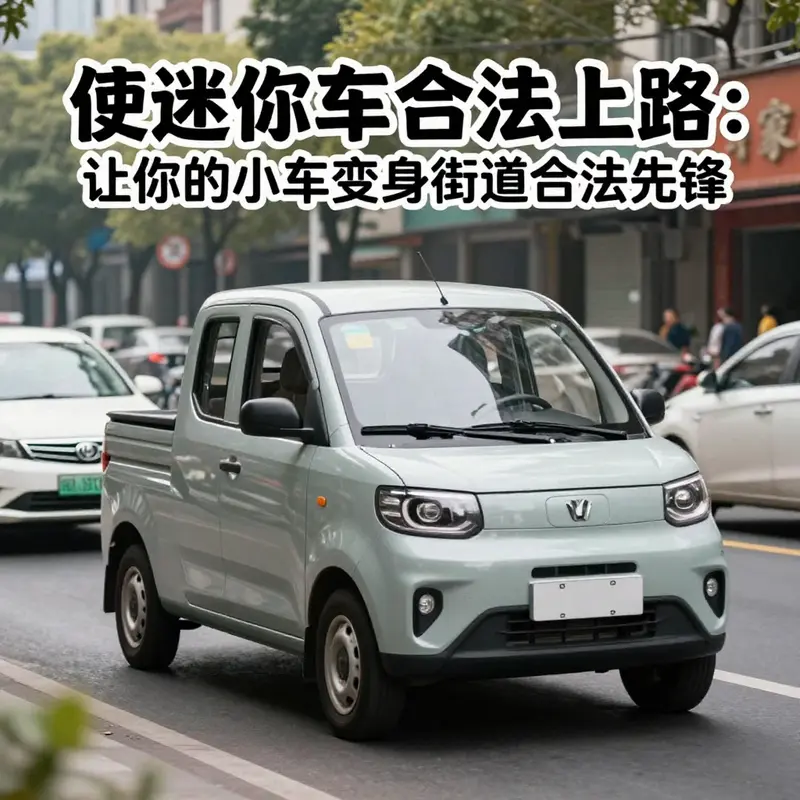
无论你是本地小企业主,住宅业主,还是迷你卡车爱好者,了解如何将迷你卡车打造成街道合法的交通工具都是至关重要的。一辆正规的迷你卡车不仅能提升你在街道上的合法性,还能增强驾驶的乐趣和安全性。在本文中,我们将为你详细解析从车辆分类确认到注册牌照申请的整个过程,确保你能轻松应对道路法规的各项要求。每一章都会引导你走过使迷你卡车合法上路的必要步骤,助你提升迷你卡车的价值和合法性。
From Classification to Compliance: How to Legally On-Route a Mini Truck
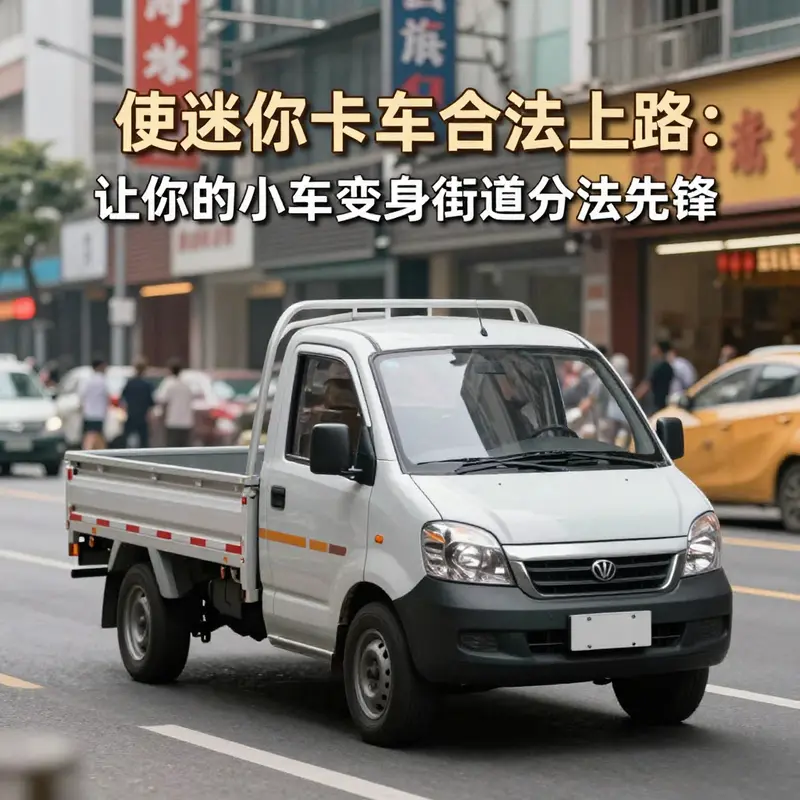
Turning a mini truck from a workshop project into a street-legal vehicle is not just a matter of bolting on lights or adding a tag. It starts with a clear view of how the vehicle is classified in your jurisdiction and what that classification obligates you to prove before you may legally share the road with other drivers. In many places, the law treats miniature cargo vehicles differently from standard passenger cars, and even within the same region, the path to legality diverges depending on whether the vehicle is viewed as a light commercial, a low-speed vehicle, or a purpose-built road vehicle. What follows is a narrative that stitches together the essential logic of classification, the technical thresholds that drive the requirements, and the practical steps to move from a concept to certified roadworthiness. The perspective is deliberately broad, resting on the dual pillars of recognized national classifications and the strict, field-based processes that govern inspections, registrations, and licensing, with concrete pointers drawn from global guidelines and the best available regulatory references. The central thread is that the classification you land on shapes the entire compliance journey, from the suite of safety systems you must install to the kind of proof you must carry when you roll out of the shop.
First, it is crucial to acknowledge that jurisdictions diverge in how they categorize a mini truck. In standardized terms, some countries classify a small cargo vehicle as a light-duty automobile, while others reserve that term for passenger cars and reserve a separate category for freight vehicles. Within many regulatory schemes, a key split lies between low-speed electric or gasoline-powered vehicles designed for on-road use and more traditional, higher-speed light trucks. If a vehicle is designed to operate up to only 25 miles per hour (about 40 kilometers per hour) and meets certain equipment and safety criteria, it might be treated as a low-speed vehicle with a streamlined approval process. If it is capable of higher speeds or is built in a way that places it on the same regulatory footing as standard motor vehicles, it is likely to encounter the full spectrum of on-road standards. The distinction is not merely about performance; it shapes which federal or national standards apply, which agencies supervise inspections, and what kinds of proof you must present to obtain registration and plate issuance. For readers navigating a particular national system, the starting point should be a careful verification of the official vehicle classification under the relevant national standard or transportation code. This initial classification then cascades into the subsequent requirements and disciplines of compliance.
In parallel with classification, a precise inventory of the technical standards the vehicle must meet becomes essential. In many jurisdictions, the requirements fall into several interlocking domains: a) safety and signaling equipment, b) structure and braking, c) emissions or, for electric powertrains, the presence of a compliant control and diagnostic framework, and d) documentation that proves the vehicle’s origin, modifications, and conformity with production or conversion rules. The path is not simply about meeting a checklist; it is about demonstrating, under inspection, that the vehicle, as configured and operated by a typical driver, behaves like a vehicle built to the same road rules as other traffic participants. A typical modern street-legal pathway will expect that the vehicle carries front and rear lighting with properly functioning low and high beams, turn signals, and brake lights; mirrors on at least both sides; seat belts for every occupant; a horn; a braking system with adequate redundancy; road-appropriate tires; and an emissions or control system that complies with the environmental and safety expectations of the jurisdiction. In some places, electric vehicles have the added burden of proving data-recording or telematics capabilities so that the state or province can verify that the vehicle remains within approved operating parameters during use. While these specifics can vary, the underlying logic is consistent: your classification informs the exact set of features that must be present at the point of road-use authentication.
Beyond the general safety architecture, it is useful to reflect on the concrete Chinese framework that often appears in parallel to Western norms. If a mini truck in this context weighs no more than 3.5 metric tons, it typically falls within a light-duty category labeled N1 for freight purposes. A micro version of this class is often described with a total mass not exceeding 1.8 tons, aligning with a distinct subcategory that emphasizes urban utility and compact dimensions. In practice, this means the vehicle must be produced under a recognized industrial or information technology framework and be included in the official public announcements of approved vehicle models. This is not a mere formality; it is the assurance that the vehicle type is backed by a legitimate manufacturing lineage and that the model has passed a baseline safety and reliability program prior to consideration for road use. In China as in other places, the nomenclature also interacts with licensing plates, with blue plates and other color-coded identifiers signaling the vehicle’s category and permissible operating environments. It is worth noting, though, that not every electric micro or three-wheeled alternative belongs to the same category as a four-wheeled motor vehicle; some electric three- or four-wheelers do not qualify as motor vehicles at all, and attempting to register them as street-legal cars can lead to confiscation or penalties. This nuance underscores why classification and compliance must be pursued with care and verified against official listings and public announcements.
Once classification is established, the next phase is to align the vehicle’s technical configuration with the regulatory expectations tied to that classification. In a typical on-road conversion, the safety and compliance second act involves assembling a package of equipment that not only makes the vehicle road-ready but also certifiably traceable to a manufacture or approved conversion standard. The list often begins with basic visibility and signaling: headlights with appropriate cutoffs, taillights, brake lights, and turn signals, plus an audible horn capable of meeting local noise standards. Mirrors must be present on both sides so that the driver can monitor traffic behind and to the sides. A robust seat belt system is usually required for every seating position, a measure that aligns with the broader principle of occupant protection on public roadways. The braking system also receives special attention; in many jurisdictions, a multi-circuit or redundant braking architecture is preferred or mandated, ensuring that control is preserved even if one subsystem fails. Tires designated for highway use, rather than off-road-only rubber, are a common requirement, because ride quality, steering response, and contact with urban surfaces differ markedly between slippery or uneven terrains and paved streets. Where emissions controls are relevant, vehicles powered by internal combustion engines must pass tailpipe emissions tests, and hybrids or dedicated clean-energy variants may have additional requirements or incentives designed to reduce pollution.
Electric powertrains introduce their own set of considerations. Even though an electric mini truck may not have an exhaust plume, the vehicle typically must still be equipped with a control system that records operation data and presents a digestible audit trail for regulators and insurers. This traceability helps demonstrate that the vehicle remains within the prescribed operating envelope and that safety features such as speed limitation, braking performance, and chassis integrity continue to perform as certified. In jurisdictions where such data handling is unusual, it becomes essential to pre-empt questions about how the car will behave under a standard set of road conditions, how it responds to aggressive driving, and how it complies with periodic inspection cycles that test functional safety across the vehicle’s life. The emphasis here is on establishing a credible, auditable link between the vehicle’s hardware, its software, and the performance that a road-legal rider would expect to observe in daily operation.
With classification and technical alignment in place, the administrative path toward street legality begins. After making the required hardware and software changes, you approach the licensing authority in your area to initiate a formal vehicle verification. The process typically requires submitting the Vehicle Identification Number, manufacturer information, and a detailed record of what modifications were performed, along with any installation documentation validating that the safety features function as intended. An official inspection follows, where an authorized agency physically checks the vehicle for compliance with the stated standards. Once the vehicle passes inspection, the agency issues registration documents and a license plate or its local equivalent. Alongside registration, you will usually obtain proof of insurance reflecting minimum liability coverage, and you must possess a valid driver’s license appropriate to the vehicle category in your jurisdiction. In many places, the driver’s licensing path for a small, street-legal mini truck aligns with that of standard light motor vehicles, though some regions require a more specialized class or endorsement for small commercial vehicles.
A crucial caveat for anyone pursuing street legality is the need to respect local and regional peculiarities. In metropolitan districts, there can be heightened restrictions on certain vehicle classes, sometimes even outright bans for vehicles of particular weights or categories on main thoroughfares. Conversely, more rural or agricultural zones may provide clearer allowances for smaller, utility-focused trucks, sometimes with fewer or differently structured inspection and insurance requirements. A noteworthy topic in some jurisdictions is the policy landscape for zero-emission light commercial vehicles, where incentives, subsidies, or simplified approval processes may exist. The overarching principle remains: do not assume that a universal, one-size-fits-all rule applies. Regulations are typically dynamic and locally enforced, and a credible compliance approach starts with a direct check of the latest local guidance, ideally by consulting the official transportation or vehicle registration authority’s website or visiting their office for a precise briefing.
In the broader frame, a practical approach to building toward street legality is to develop a continuous, documentable trail from concept to certification. Gather a dossier that includes the vehicle’s original production papers or conversion records, all safety equipment specifications, testing results from the inspection if any, photos showing the installed components, and receipts for parts and labor. This dossier helps reduce friction during the inspection phase and clarifies how the final configuration meets the classification’s expectations. It is equally important to verify that the vehicle complies with the jurisdiction’s ongoing post-certification requirements, such as annual or periodic safety inspections, maintenance standards, and the requirement to carry proof of registration and insurance while operating on public roads. The goal is not merely to obtain a plate and a title but to cultivate a culture of ongoing compliance. This mindset helps prevent sudden regulatory changes from producing unexpected penalties and keeps the vehicle usable as intended. For readers seeking further practical context on model options and how they compare in terms of regulatory readiness, a deeper dive into the Mini Truck Blog can provide useful distinctions between design philosophies, weight targets, and how different configurations align with local rules. Mini Truck Blog
In closing, the journey from a concept to a street-legal mini truck is best navigated with a clear sense of classification first, followed by a disciplined build that aligns with safety, emission, and structural standards. Recognizing that qualification can hinge on whether the vehicle is treated as a low-speed vehicle or as a conventional light truck will prevent missteps that derail registration or trigger costly rework. The practical steps—assemble the required safety and performance features, secure documentation that traces the vehicle’s lineage and modifications, complete the official inspection, and obtain registration and insurance—form a cohesive workflow that, when executed with diligence, yields a legal and reliable vehicle that can fulfill its intended urban or rural duties. It is a process anchored in official standards and procedural rigor more than in wishful compliance, and the most reliable route to success is to confirm all classifications and requirements with the local motor vehicle authority before beginning any substantial modification. External regulatory reference: https://www.dmv.ca.gov
From Workshop to Street: The Safety Systems and Compliance Path That Makes a Mini Truck Legally Roadworthy
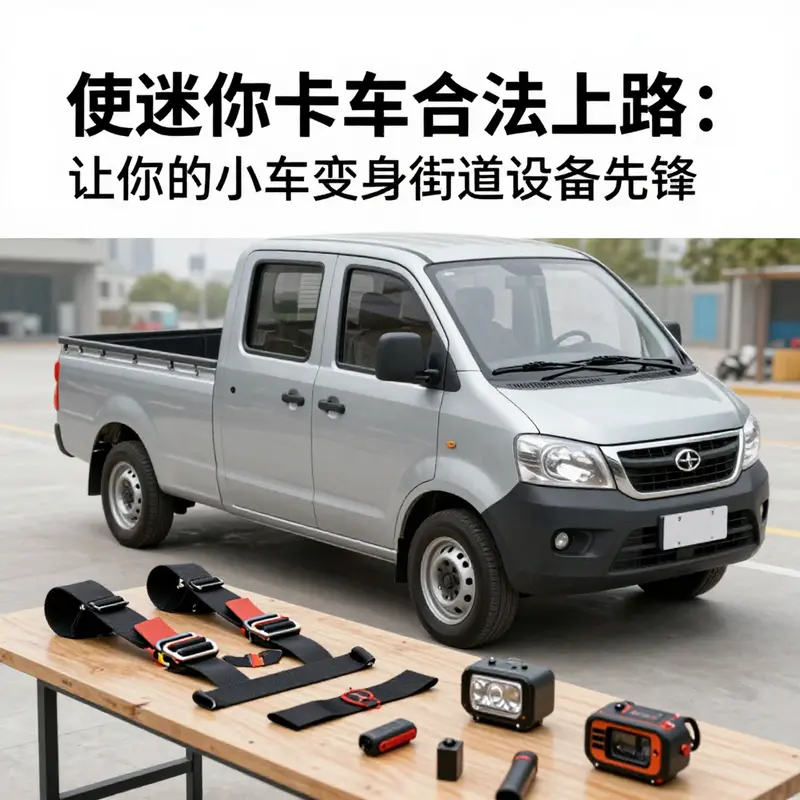
Turning a compact work vehicle into a street legal mini truck involves a disciplined, two track process: meet essential safety standards on the hardware side and secure formal regulatory approval on the paperwork side. Start by confirming the vehicle’s classification in your jurisdiction and ensuring the design limits (top speed, seating, cargo use) align with applicable rules. Then implement mandatory safety hardware such as functional lighting, mirrors, seat belts, a compliant horn, a robust braking system, and appropriate tires; in some regions emissions control is also required. In many places a formal VIN linkage, documented modification logs, and a pre approval inspection are necessary. The path continues with registered ownership, valid insurance, a licensed driver, and periodic inspections to maintain compliant operation. The core message is clear: street legality comes from a transparent chain of safety, documentation, and professional oversight rather than shortcut engineering. As laws evolve, consult the local transportation authority and rely on qualified installers to ensure every change is properly documented and verifiable.
Registration and Licensing Journey for a Street-Legal Mini Truck

Turning a mini truck from a curious build into a permitted road vehicle is a compliance discipline as much as engineering. The street legality goal is not a single checkbox; it is a tapestry woven from federal standards, state or provincial rules, and the vehicle’s specific classification. From production or procurement to the moment you drive on public streets, the registration and licensing phase sits at a critical crossroads. Here you confirm the vehicle is safe, identifiable, and properly documented for on-road use. The path is not identical in every jurisdiction, but the logic is consistent: establish the vehicle’s type, prove safety and compliance, and secure the credentials—title, registration, license plates, and insurance—that authorize operation. Understanding this journey helps prevent missteps that can become costly or risky.
The first decision point is classification. In many regions a mini truck can be categorized as a low-speed vehicle, a traditional motor vehicle, or a modified vehicle. If the top speed remains at or below 25 mph, it may be treated as an LSV in some jurisdictions, with its own safety and usage restrictions. If it exceeds that speed or resembles a conventional automobile, it is typically regulated as a standard vehicle with stricter safety, emissions, and inspection requirements. This classification dictates which standards apply to brakes, lighting, occupant protection, and the registration pathway. In practice, the decision hinges on precise specifications and certified documentation. Start with a clear, documented understanding of how the vehicle is categorized under local rules, because every subsequent step derives from that classification.
Once category is settled, safety and compliance hardware become the focus. Lighting systems must be functional: headlights, tail lights, brake lights, and turn signals; mirrors on both sides for rear visibility; and a horn audible to others. The braking system usually requires redundancy—often a dual-circuit design—and seat belts with three-point restraints for all occupied seats. Tires and suspension must meet road-use standards and tolerate on-road loads. Electric builds add nuance: even without an exhaust, an electric mini truck needs a robust control system capable of recording usage data and satisfying safety traceability. Emissions or evaporative controls for combustion-powered variants may be required before insurance and registration. Collectively these hardware requirements form the foundation for every subsequent document.
Documentation is the bridge between workshop and the registration authority. At minimum you will need proof of ownership, VIN confirmation, and documents from the manufacturer or builder detailing specifications and modifications. A bill of sale, original title, and proof of purchase are often required to establish ownership. If the vehicle was imported or assembled from parts, additional documentation may be demanded to verify authenticity and conformity. With the identity well documented, you move toward the next gate: inspection. The inspector will verify lights, brakes, tires, seat belts, mirrors, horn, and, where applicable, emissions controls meet the regulatory baseline. They may check that the frame and structural components are sound. For electric builds, data-recording capabilities may also be reviewed. A well-documented build and cooperative inspector can shorten the process considerably.
A successful inspection clears the path to registration and the issuance of license plates and a title. Registration is the formal acknowledgement by the state or province that the vehicle is registered to an owner and is eligible to be driven on public roads. The process typically involves submitting the inspection report, proof of ownership, VIN verification, proof of insurance, and payment of fees. Depending on the jurisdiction, the vehicle is assigned a plate or a serial number that serves as the public identifier. The title remains the legal record of ownership. Together, the title and registration embody the credentials that separate a hobby project from a legitimate road vehicle. Holding a plate can provide psychological relief and a clear signal to law enforcement and the DMV.
Insurance comes next and is a legal prerequisite in most regions. Liability coverage is the standard minimum, ensuring financial protection for others and for you. The required scope can vary; some places require additional protections for commercial use or for certain zones. The driver license landscape is another piece: in many areas a standard license suffices once safety checks are satisfied, while in others a special designation or endorsement is required for commercial use. The overarching principle is that legal operation emerges only when vehicle, driver, and insurance align under the local framework.
Beyond the core steps, practical considerations affect the likelihood of a smooth journey. Your declared use and maximum capabilities should stay consistent with paperwork. If you plan commercial use, a separate pathway—potentially including a business license, fleet registration, and a permit for commercial road use—may apply. Some regions restrict when and where you can drive street-legal mini trucks, especially in urban cores or near schools. Rural or agricultural settings may be more forgiving, but safety standards and insurance requirements still apply. Regulations can change, so check with your local DMV or transportation authority to confirm current requirements.
As you navigate this process, view compliance as an ongoing dialogue rather than a one-time hurdle. After registration you may face periodic inspections or audits, and you may need to report major modifications. If ownership changes, update the registration and sometimes reissue the title. If you modify the vehicle after initial registration—a braking upgrade, lighting recalibration, or weight distribution adjustment—you may trigger a re-inspection. Keeping records current and monitoring regulatory updates reduces the risk of last-minute denials.
To round out the practical narrative, rely on official government sources as your primary reference. Official portals and motor-vehicle authorities remain the most reliable sources and can help you avoid misinterpretation. Community resources and builder forums can provide context and case studies, but always compare to official guidance. Some builders and enthusiasts turn to dedicated online spaces that curate regulatory changes and safety advisories. If you want a centralized hub, you can explore the mini truck blog space for articles that translate regulatory language into actionable steps. For example, a concise US reference is the DMV overview of street-legal mini trucks: https://www.dmv.org/us/vehicle/mini-truck-street-legal.php
As you prepare to advance, remember the road from the factory floor to the open road is about presenting a vehicle that can be trusted to perform safely, and a documentation trail that stands up to scrutiny. Prepared customers enjoy smoother processing, fewer delays, and clarity about ongoing requirements. The more you align with official expectations, the greater your confidence when you turn the key and ride onto the pavement, knowing you have earned a rightful place on the road.
External reference: For a concise overview in the United States, see https://www.dmv.org/us/vehicle/mini-truck-street-legal.php
地区法规导航:让迷你卡车合规上路的全景解读
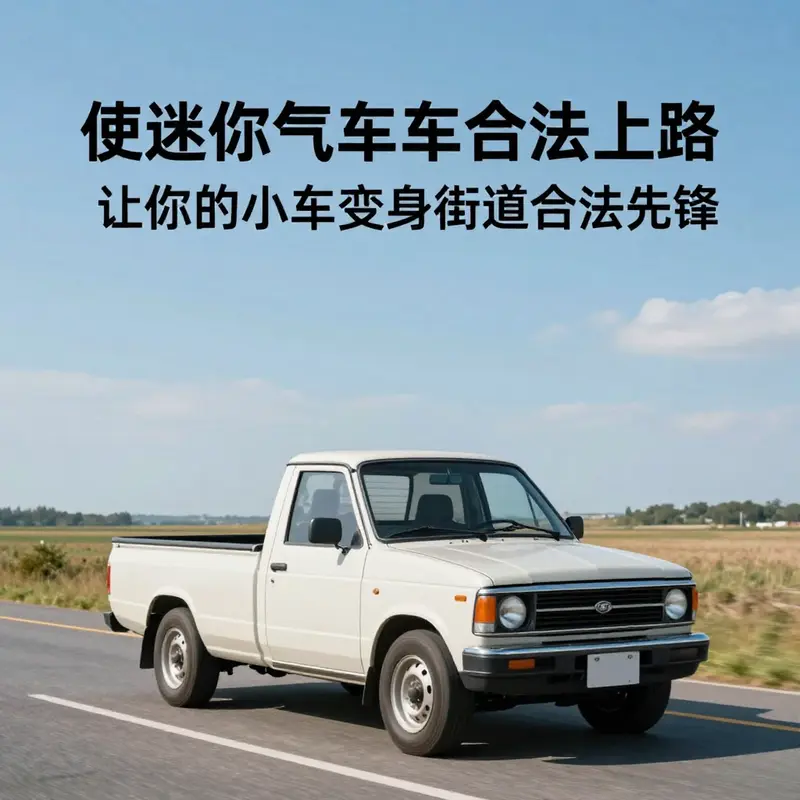
在全球范围内,迷你卡车的上路合规远比改装一套件更像是一场法规与现实之间的对话。它不是单纯的技术改造,而是一段必须理解、对齐并落地执行的合规旅程。要让这类体型紧凑、用途灵活的车辆在公共道路上行驶,必须先厘清“车辆类别”的定位,再对照一整套的安全、登记、保险以及地区性限行等要素逐一落实。这个过程之所以重要,是因为不同司法辖区对同一类车辆的要求可能相差极大,错误的分类或遗落的合规环节,往往会让改装成果难以获得正式上路许可,甚至带来法律与保险方面的负担。以下是一个连贯、可落地的合规路径,它将带你从对车辆类别的认知出发,逐步转化为在路上的合法权利。为了避免断章取义,本文以通用原则为底线,并结合中美两地常见做法,力求在多地区域具备参考价值,同时保持叙述的连贯性和现实性。
首先要明确,迷你卡车究竟属于哪一类机动车。区域法规对这点的界定,会直接决定后续的安全标准、检验方式以及可行的行驶场景。在不少市场,车辆若最高设计时速超过某个门槛,便会从“轻型货车/微型货车”转入更严格的正式机动车监管范畴。这不仅关系到安全装备的完备,也影响到登记、保险、上牌以及在特定路段的通行许可。为了避免走错路,最先需要的是对“车辆类别”的确证。若你的车被归类为低速电动车(LSV)或简化路线的街道用车辆,相关法规与普通机动车在速度、设备清单、年检要求上会存在差异。反之,若被视作改装车或全尺寸机动车,标准也会随之提升。这一步并非小事,它决定了你后续所有改动的合规性边界。进一步说,了解该分类的关键在于对照本地交通管理部门的规定,通常会要求提供制造商信息、车辆识别号码(VIN)以及改造记录,以便进行正式的车辆检验和登记。
在具备清晰的车辆分类后,核心的合规工作才真正展开:安装必要的安全与合规设备。这不仅是“做足够就行”的问题,而是要让每一个设备都在道路法规的框架内发挥作用。无论在美国还是在其他国家,以下装置往往构成基本合规的骨架:前照灯、尾灯、制动灯、转向灯等照明系统要齐全且功能完好,反光镜至少覆盖车辆两侧的后视视野,安全带需覆盖所有乘坐位并具备相应的安全等级,喇叭需具备在公路环境中清晰发声的能力,制动系统要有可靠的减速与停车性能,轮胎需符合公路使用标准,排放系统若是燃油车则需经过排放测试并具备必要的净化装置。对于电动迷你卡车,虽然可能没有传统的排气管,但恰恰因此需要更完善的电控记录和数据记录系统,以证明车辆在运行时机权、故障告警与维护状态都在监管可追溯的范围内。这一系列的装备并非单点改造,而是在整车安全性与可审计性上的综合体现。
在美国法规的普遍框架下,完成硬件提升后,进入登记与牌照申请阶段也就成为必经之路。注册并取得正式牌照,意味着你的改装不仅具备技术合规性,更具备可持续的路上追溯性。通常需要提交完整的改造清单、VIN 与制造信息、以及改动后的技术参数,随后由授权机构对车辆进行检验。通过后,便可办理登记、领取车牌及登记证书。这一过程的核心在于官方对改造的逐项验证,确保市场上的每一辆“街车”都符合安全标准与车辆权属的清晰性。值得强调的是,哪怕在同一国家,州或省级的要求也可能出现差异,因此应在动手改装前就与当地的机动车管理部门取得联系,确认所需的检验流程、费用和时间表,以免因信息不对称而被迫撤回改造计划。
接着要关注的是特定地区的法规差异。城市、郊区、农村的路权、限行政策和保险要求往往并非一成不变。很多城市对小型货车在主干道、快速路甚至某些时段的通行有明确规定,某些区域可能需要额外的通行许可、责任保险或驾驶资格要求。以大城市的常见做法为参考,部分区域在工作日高峰时段对小型货车实施限行,或对非新能源车型设立额外的通行条件。另一方面,某些地区对非核心区的通行相对宽松,且对改装车辆的监管相对灵活。为了避免违规和罚款,务必在出行前通过官方平台查询实时限行地图、路段禁行信息及时段限制。许多地方还提供便捷的数字工具,帮助驾驶人核对所在区域的路权与限行规定。
保险与驾驶资质同样是上路前的不可忽视的基础条件。多数地区要求购买汽车责任险,且驾驶员需要持有有效的驾照或相应驾驶资质。不同区域对驾照的类别和适用车型也有差异,因此在计划上路前应确认你所需的许可类别与驾照等级。这里需要强调的是,合规并非完成某一项考试或获得某一张证照就算完事,它还涵盖了持续的保险、年度或周期性的车辆检查,以及在实际道路使用过程中的合规行为。若涉及进口或跨区域使用,还需对车辆的年龄、认证和备案等额外要求做出响应,以确保在新的监管环境中也能保持合法状态。
结合上述要素,形成一个有机的上路合规框架尤为关键。本文的逻辑并非构成一个庞大的清单,而是一个在真实世界中可执行的连续过程。你需要在每一个阶段保持对法规文本的敏感度,确保改造阶段、注册阶段与日常使用之间的衔接紧密且可追溯。为了帮助读者缩短试错成本,我们把核心要点总结如下:首先要确定车辆分类,其次确保灯光、信号、制动、轮胎与安全带等系统完好并符合相应标准;再次完成官方检验、注册与牌照领取;随后关注所在地区的限行规则与时段限制;最后确保保险和驾驶资质的有效性并保持对法规更新的关注。若在任何一个节点出现不确定,建议直接咨询当地的机动车管理部门,避免在路上因为法规问题而产生不必要的风险。
在此过程中,建立一个高效的信息获取通道也很重要。你可以将一些常用的查询入口前置,例如借助官方平台的限行地图、法规文本及常见问题解答来快速判定自家改装车的合规性边界。与此同时,保持改造记录的完整性与可追溯性也极为关键。把VIN、制造商信息、改造清单、检测证明等材料整理成一个统一的档案,将在后续申办登记、保险理赔甚至潜在事故调查时发挥决定性作用。若你需要进一步了解地区性的案例与流程,可以参考专门的行业博客与政府公示中的解读,这些资源往往以具体城市或地区的执行细则作为落地点,帮助你把理论转化为操作手册。作为一个长期的合规策略,建议在动手前就建立一个“变化监控点”,定期检查法规更新、排放标准调整、限行区域的动态变动,以及新的保险政策的出台,以确保你的迷你卡车始终保持合法上路的状态。
对于读者来说,把握合规的关键在于把自家车辆的技术参数、使用情景与地区约束之间建立清晰的对应关系。你需要知道:是否属于可在日常街道行驶的类别、是否具备完备的照明与信号、是否具备符合公路标准的制动与轮胎、是否完成注册与保险、以及是否具备进入特定区域的许可。这些不是碎片化的要求,而是一个统一的治理框架。只要你愿意系统地对齐它们,迷你卡车就能在你的城市中拥有稳定且合法的路权。为了进一步了解和对照你所在地区的实践做法,你可以访问专门的行业资源与官方解读,在实际操作中遇到不确定时,优先选择以官方规定为准的路径,并以安全为前提执行所有改装与上线流程。
在本文的最后,我们把焦点放在一个简单却关键的现实心态上:任何改造的初衷都是为了提升使用体验,同时确保公共安全与法治要求不被妥协。合规并非阻碍创造力的枷锁,而是一道通往可持续使用、可追溯与可保险的“道路许可门槛”。只有在对法规文本有清晰理解、对改动有完整记录、对区域限行与保险要求有准确把握的前提下,迷你卡车才真正具备在公共道路上自由穿行的资格。若你对合规路径仍有疑问,建议与所在地区的交通管理部门保持沟通,同时可通过正规渠道获取最新法规文本和官方指南。最终,你的改装成果将不仅是一个独立的机械作品,更是一辆被社会规则认可的交通工具。
参考与延展资源:为帮助读者理解国际框架与趋势,本文在结尾处列出一个权威性较强的外部参考。你可以把这类链接作为了解全球合规框架的起点,以便在跨境购车或跨地区运营时,保持对规范演变的敏感度。外部参考入口如下: https://www.transportation.gov/vehicle-safety
嵌入内链参考:为了获得更具体的社区视角与改装后的实操经验,请参考本系列中的专题博客,尤其是包含对地区政策解读的文章。你也可以通过“迷你卡车博客”来获取更多背景信息与读者问答的实际案例,细节见: 迷你卡车博客。
Final thoughts
确保你的迷你卡车合法上路是提升其功能和使用安心的关键。无论是确认车辆分类、安装合规设备、申请注册,还是遵守地方法规,理解每一步都至关重要。通过遵循这些步骤,你不仅能合法上路,还能享受到驾驶的乐趣与便利。为自己和他人提供安全的驾驶环境,这才是真正的道路使用者的责任。