
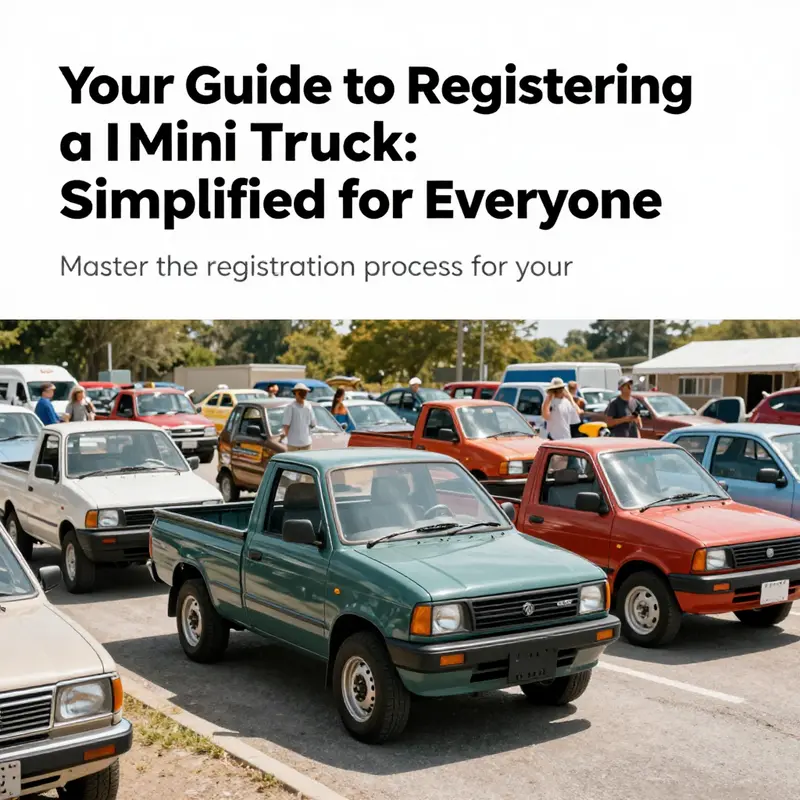
Embarking on the journey of registering a mini truck can feel daunting, especially with varied regulations across regions. Whether you’re a small business owner needing a dependable vehicle or an enthusiast eager to hit the road, understanding the registration process is crucial. This guide breaks down each step, from obtaining the Small Specialized Vehicle Permit to ensuring compliance with safety regulations, tailored to help local property owners, business operators, and hobbyists navigate the essentials of legally getting their mini truck on the road.
Gateways and Gear: Beginning the Mini Truck Registration with the Small Specialized Vehicle Permit
The journey from vehicle ownership to lawful operation on public roads begins with a single, decisive gateway: the Small Specialized Vehicle Permit. In many parts of China, this permit is more than a formality. It marks the moment when a transport activity transitions from a private or uncertain arrangement into a legally sanctioned operation. For anyone planning to use a mini truck for work, this permit is the first bead on a chain of approvals that ultimately legitimizes the entire enterprise. The path is not merely bureaucratic; it is designed to ensure that the vehicle, its owner, and its intended use align with road safety, commercial responsibility, and the broader public interest. To walk this path well, you must see the permit as both a protector and a passport: it protects the public and it legitimizes your ability to carry goods on official terms.
The practical rhythm of securing the Small Specialized Vehicle Permit begins with straightforward, but non negotiable, documentation. Your local Traffic Management Bureau or Vehicle Administration Office is the starting point. The core documents you will need are your valid ID and a copy of the vehicle owner’s ID, both sides, because the authorities want a clear chain of accountability. You will also present the vehicle registration certificate and the driving license, along with the vehicle insurance policy. These items establish who owns the vehicle, who is licensed to operate it, and that the vehicle is financially protected against losses or liabilities on the road. A processing fee is typically required, a reminder that these procedures reflect real costs of administration as well as the standards they uphold. Once the request has been reviewed and approved, the Small Specialized Vehicle Permit is issued, and with it comes a formal recognition that the vehicle is eligible for road use within the scope of its intended function.
Even as this permit is being sought, other layers of safety and compliance are already taking form in the background, because the system is designed to work as a coherent whole rather than as a sequence of isolated steps. Among these, the installation of safety equipment is a critical element. The national framework requires a GPS tracking device and an onboard recording device, such as a driving recorder. The GPS unit provides real-time location data that can improve fleet management and incident response, while the driving recorder serves as a safeguard for both the driver and the public by capturing a video record of events that occur during operation. The installation itself is not a cosmetic addition; it must be conducted according to national standards and registered with the relevant authorities. The paperwork accompanying this step, proof of installation and the technical specifications of the equipment, will be requested during later stages of the registration process or when permissions tied to commercial operation are sought. The combination of the Small Specialized Vehicle Permit and these monitoring devices creates a framework in which accountability, traceability, and safety are integrated from day one.
For any vehicle intended to carry goods commercially, the Road Transport landscape adds another essential permit: the Road Transport Operation Permit. This is the permission that legitimizes the business use of the vehicle on public roads. The documents usually required here include a valid business license or an operating qualification, the vehicle registration certificate, and proof of the vehicle’s technical condition, such as an inspection report. The review process is careful, because the permit signals that the operator has the organizational capacity to manage a transportation activity in a way that is compliant with road safety and environmental norms. Once approved, the permit unlocks the ability to conduct commercial freight operations under the law. It is a reminder that the road is not a free-for-all but a regulated space where commercial activity must be conducted with clear responsibility and oversight.
As the theory of compliance stabilizes into practical steps, the concept of route control and corridor access emerges. Depending on the weight and type of cargo, you may need a Road Transport Vehicle Pass. This pass is not a universal requirement; it is a tool that helps authorities manage traffic flow, protect sensitive routes, and ensure that the vehicle’s path through the network respects local conditions and constraints. The process of obtaining a pass—when and where to apply, and what fees apply—should be anticipated well before travel plans are set. The aim is to avoid last-minute delays that can disrupt a delivery schedule or escalate costs. Throughout this phase, keep a well-organized folder of documents, because the system is sympathetic to well-prepared applicants and less forgiving of disorganization. The emphasis is on reliability: the smoother your paperwork, the quicker you gain lawful access to the roads you intend to use for business.
The broader context of these steps is that regulations can vary significantly by province and city. Some regions may streamline certain elements through centralized platforms, while others require interaction with local offices or even authorized agents. This variability does not undermine the core logic of the process; it simply means that the practical paperwork, the sequence, and the timing may shift a little depending on local rules. With that in mind, build your plan around a few universal principles: secure mandatory insurance and taxes first, prepare for possible inspections, and then approach the vehicle management authority with a complete set of documents that demonstrates both technical readiness and legal intent. The goal is not to rush through a checklist but to align every detail of the vehicle and its use with the expectations of the regulatory framework. A well-prepared applicant reduces the chance of back-and-forth, minimizes the risk of delays, and sets a clear trajectory toward lawful operation.
In this context, the practical details matter. You will be asked for proof of motor vehicle insurance before any registration proceeds. You will pay the Vehicle Acquisition Tax, a one-time levy on the purchase of the vehicle, and you will submit the purchase invoice along with the tax application form. A formal inspection may be required for safety and conformity, especially for vehicles intended for commercial activity. When permissible exemptions exist—such as for brand-new vehicles meeting particular standards—you will still likely confront a verification of the chassis number and engine number to confirm identity and conformity. The registration itself is handled at the local Vehicle Management Office, where you submit a package including your ID, copies of the vehicle owner’s ID, the purchase invoice and conformity certificate, proof of insurance, the tax receipt, and the completed application form for motor vehicle registration, transfer, or cancellation. If the vehicle has already passed an inspection and the technical documents are in order, the office will issue a registration certificate, the license plate, and the driving license. These elements complete the journey from ownership to road legality, tying together the legal identity of the vehicle, its operator, and its use on the public highway.
As the final steps unfold, a moment of practical reflection helps keep the process humane and manageable. Before you begin, map out a realistic timeline that factors in processing times, potential delays, and the need to coordinate with multiple bureaus. The preparation is not merely about collecting papers; it is about constructing a coherent narrative of compliance that makes sense to the authorities and to your own team. A small but meaningful habit is to maintain an organized digital and physical archive of every document, every receipt, every installation certificate, and every permit decision. This archive is not only a reference point for audits; it is a living record that supports ongoing compliance as your operations evolve. And if you operate in a business context, continue to view the monitoring devices and route passes as active tools rather than static requirements. They are instruments that enable safer operations, better asset management, and more predictable service.
For readers seeking additional guidance and a broader view of the landscape, a visit to the mini truck ecosystem can be surprisingly informative. A well-curated source like a centralized industry blog can offer perspectives, case studies, and practical tips that complement the official requirements without replacing them. The web can serve as a practical compass, helping you anticipate common questions, locate relevant forms, and understand how different jurisdictions implement the same overarching framework. For further reading and ongoing updates, you can explore the broader minibuilding conversations and practical viewpoints at the mini truck blog.
Above all, keep in mind that the process described here is designed to facilitate safe, transparent, and accountable transport. The Small Specialized Vehicle Permit is not merely a bureaucratic hurdle; it is a foundational instrument that supports legitimate commerce on the roads, reduces risk, and aligns a vehicle’s operation with the expectations of road authorities and the public alike. The steps that follow—from insurance and taxes to inspections and vehicle passes—are the natural extensions of that foundation. When you approach each step with preparation, patience, and a clear sense of purpose, you transform a potentially confusing maze into a well-lit, lawful route to running a mini truck as a responsible part of a compliant transport operation. For those who view the process as a series of coordinated moves rather than a cascade of forms, the result is not only compliance, but confidence: the confidence that your business can move goods efficiently while treating safety, legality, and public trust with the seriousness they deserve. And with that frame of mind, you are not simply registering a vehicle—you are integrating it into a system built to protect you, your customers, and your community.
External resource for up-to-date guidance: National Public Service Platform and related regulatory communications can be found at https://www.gjzwfw.gov.cn. This portal provides standardized procedures across regions and can help you align your plans with current policies as you chart your course toward full, compliant operation.
Lock, Link, and Legally Drive: How Installing Safety Equipment Softens the Path to Mini Truck Registration
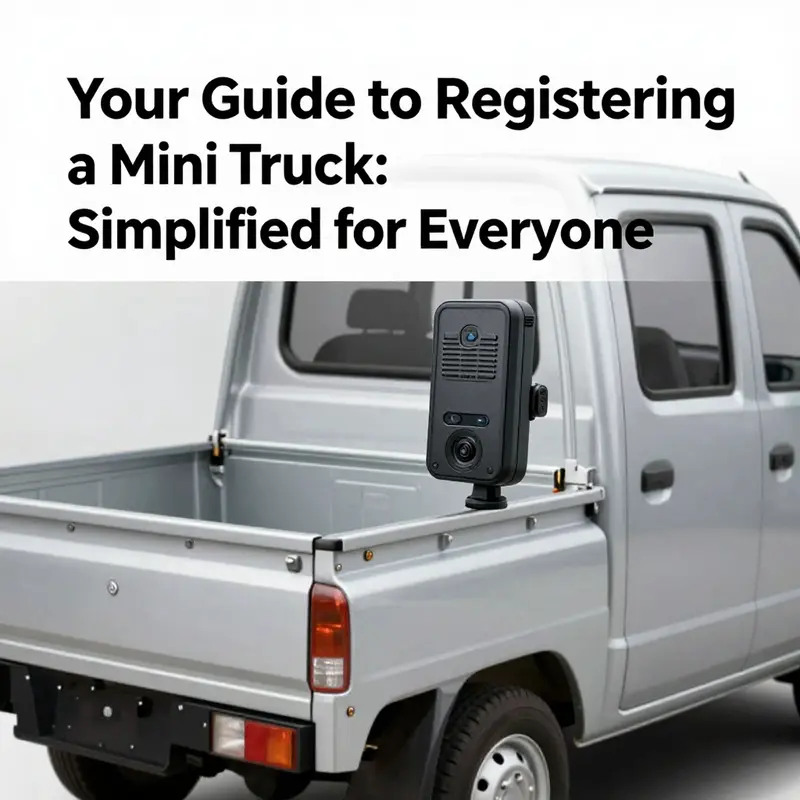
Installing and registering a mini truck is not merely a technical task; it is a carefully choreographed gatekeeper step that connects ownership with lawful road use. In this chapter, we follow Step 2 of the registration journey, where the focus shifts from ownership to security, from a bare chassis to a compliant vehicle that can travel on public roads with confidence. The core idea is simple: without the proper safety equipment installed and properly registered, the vehicle remains invisible to the legal system, and its operation risks being treated as unauthorized. But when the installation is done right, when the device is bound to the vehicle’s identity, and when the data it collects is securely transmitted and monitored, the mini truck gains a verifiable, trackable presence on the road. This transition is not only about theft prevention; it is about creating a reliable data trail that supports safety, accountability, and regulatory compliance across the entire lifecycle of the vehicle.
First comes the hands-on installation of the safety device, the compact but crucial hardware that will become the vehicle’s digital guardian. Depending on the model chosen, this could involve a compact GPS tracker and a driving recorder that logs events and stores them for review. The physical work is more than just tucking a box under the dashboard. It requires careful integration with the truck’s electrical system—ensuring power connections are solid, the device is securely fastened in a protected location, and the installation does not interfere with airbags, wiring harnesses, or other essential components. A sloppy install can trigger false alarms, drains on the battery, or misreporting of location data, undermining both safety and compliance. The technician’s goal is to maintain the vehicle’s reliability while ensuring the equipment remains functional through daily use, weather, and vibration. In practice, this means following a structured method: plan the wiring path to avoid heat and moisture, test the device’s readings after it’s connected, and secure the unit so it cannot be easily tampered with or removed by opportunistic thieves. It is worth noting that, while some owners opt for self-installation, the safest route—especially for commercial fleets or vehicles used for regulated transport—is to have the system installed by trained personnel who understand local standards and can certify that the installation meets required specifications.
After the hardware is in place, the next step is to register the device through the official application associated with the safety system. The process begins with downloading the app, creating an account, and validating identity via a phone verification code. The app then becomes the control center for the vehicle’s data stream, giving the owner visibility into location, speed, and alert events in real time. This stage is more than just creating a login; it is establishing a trusted link between the device and the owner’s identity, which will be essential for data integrity and for any future inspections or audits. As you set up the account, it is important to adopt strong security practices: use a unique, strong password, enable two-factor authentication if available, and keep recovery options updated. The goal is to ensure that access to vehicle data and control features—such as remote immobilization or alert configurations—remains in the hands of the rightful owner or authorized personnel. The app architecture typically includes a vehicle management section where you can bind a device to a specific vehicle, monitor live data, and customize notification preferences. This transition from physical installation to digital registration marks the moment when the vehicle becomes a controlled asset rather than a loose piece of equipment.
Binding the device to the truck is the operational hinge that ensures the data you collect is correctly attributed to your particular mini truck. You will be prompted to provide specific vehicle identifiers, most commonly the Vehicle Identification Number (VIN). Entering the VIN correctly is not a formality; it guarantees that the transmitted data—GPS coordinates, speed, geofence breaches, and movement history—are associated with the right vehicle. A misentry here can create confusion during audits or enforcement checks, potentially complicating permit renewals or safety inspections. The binding process also typically confirms the device’s hardware ID alongside your user credentials, creating a single point of reference for authorities or service providers who may later review the vehicle’s operational history. Once the binding step is completed, you can proceed to activate key security features. Remote immobilization, a capability that allows authorized users to stop the engine remotely if the vehicle is stolen or involved in suspicious activity, is a powerful tool but one that carries responsibility. Activation should be restricted to trusted users and accompanied by clear protocols to prevent abuse. Real-time alerts, including geofence and motion-detection notifications, provide immediate visibility into unauthorized movement, while GPS tracking lets you view live locations and retrieve historical routes for a defined period, often up to 30 days depending on the system’s configuration. These features transform the mini truck into a monitored asset, providing peace of mind for owners and a regulatory-friendly data trail that can be reviewed during routine checks or audits.
The purpose of these steps extends beyond theft deterrence. In many jurisdictions, a road transport operation permit and related authorities look for evidence of proper security measures as part of the broader vehicle registration ecosystem. The safety equipment registration supported by the app and the binding to the VIN can act as a bridge between the private ownership record and the public regulatory record. However, the exact requirements for official vehicle registration in this domain can vary by province or city, which is why it is crucial to verify with the local transportation department and to keep documentation up to date. In some cases, the device registration may be a component of the permissible vehicle profile, while in others it stands as a separate layer of compliance that must be demonstrated alongside the physical vehicle records. The guiding principle is that every step you take—installation, registration, binding, activation—creates a traceable, auditable chain of custody for the vehicle’s data and its operational capabilities. This is why meticulous record-keeping matters. Retain receipts for installation, keep the device’s serial number and firmware version on file, and store the VIN alongside the user account details in both digital and physical form. Such diligence pays off when you advance to the next stages of registration, especially when authorities request proof of compliant security measures during inspections or permit applications.
For operators who want to evaluate different device models and their features before committing, a practical approach is to compare options that emphasize reliable GPS tracking, robust geofencing, and dependable immobilization capabilities. When you consider a comparison, one resource that offers a structured view of various models and their specifications is a dedicated comparison page that examines model-by-model features and performance. This kind of resource can help you weigh the trade-offs between coverage, data latency, battery life, and user privacy controls, and it can guide you toward a configuration that aligns with your operational needs and regulatory expectations. You may encounter discussions of different models and their specs across several service pages, but the key takeaway is to prioritize accuracy, security, and ease of use. In matters of safety and compliance, the quality of the data link between the device and your account is as important as the device’s physical robustness. For a concise primer on how these comparisons are typically framed, see the following resource: comparing-kingstar-kruzr-models-specs-features.
As this chapter closes on the installation and registration of safety equipment, it is important to emphasize the practical discipline that supports lasting compliance. Keep the device’s firmware updated; schedule periodic checks to ensure the GPS module and the recording device are functioning correctly; test geofence alerts and remote immobilization in a controlled setting to confirm there are no false positives or unintended unlock scenarios. Documentation should accompany every tested step: the installation date, the technician’s credentials, the VIN the device is bound to, and the specific settings activated within the app. When you couple these records with formal vehicle documentation from the local authorities, you create a cohesive compliance narrative that extends from your first drive to the time you renew permits and registrations. This integrated approach—assembly, registration, binding, and feature activation—renders the mini truck not just a convenient mobility option but a legally compliant asset with a transparent operational history. The road to stable operation is paved with careful installation, deliberate digital linking, and vigilant ongoing management of security features. With these practices, you are well positioned to proceed to the next stage: understanding the broader road transport regulatory framework and ensuring that your use of the vehicle remains aligned with all applicable rules and permits. External resources can further illuminate official standards and practical checklists as you navigate the continuing registration journey.
External resources and official guidance can provide additional clarity on the broader regulatory context. For official device specifications and support resources, consult the manufacturer’s site at https://www.zianzhuguanjia.com.
Navigating Compliance for a Small Freight Mini Truck: What You Need to Register and Move Goods Legally (No Separate Permit Required for ≤4.5 Tons)
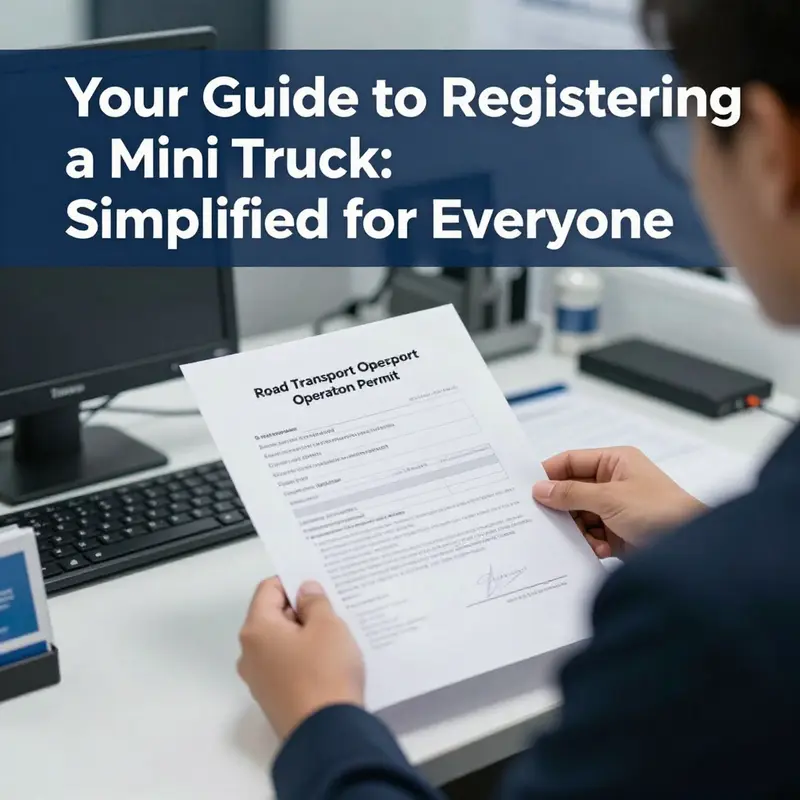
The regulatory landscape for registering a small freight vehicle in China has evolved into a clearer, if still detail-rich, pathway for operators who only need a light-duty footprint. For mini trucks with a total mass of 4.5 tons or less, the road to legal operation emphasizes a solid business base, a roadworthy vehicle, and qualified drivers, rather than a single, blanket operating permit. This shift reflects a broader aim: to lower entry barriers for small operators while preserving safety and accountability on public roads. Understanding how these pieces fit together helps a would-be operator plan with confidence and avoid common traps that slow or derail the process.
At the heart of this approach is the distinction between the prohibition and the permission. There is no universal Road Transport Operation Permit requirement for the small truck category that weighs in at 4.5 tons or under when the operation is general freight transport. Yet this absence does not mean a free pass to run a commercial fleet from a home garage. The vehicle must still be registered and inspected, the business must be legally established, and the driver must hold the appropriate professional qualifications. In short, the absence of one permit makes room for stricter attention to a handful of other prerequisites that anchor legitimate freight activity in law and policy.
The first pillar is establishing a legal business entity. An operator cannot obtain the Road Transport Operation Permit as an individual; this certificate is issued to corporate entities, partnerships, or other formal business structures. Creating a company is not purely bureaucratic theater. It ensures there is a discernible legal personality, a responsible owner or board, and a defined commercial scope that includes road cargo transport. The registration process generally involves naming a company, selecting a business scope that explicitly contemplates freight activities on public roads, and securing a registered office address. The address can stem from a logistics park or an approved virtual address, so long as it satisfies the transportation authority’s rules. Completing this registration online through a government portal—often described as an integrated or “one-stop” service for enterprise establishment—simplifies the flow. The underlying logic is straightforward: you need a formal framework within which the vehicle and the driver operate, and this framework is what regulators rely on when they assess safety, accountability, and compliance. For operators exploring the practical steps, a good starting point is to review official guidance and then map it to the specific documents you’ll assemble for your local authority. A well-organized file reduces back-and-forth delays when authorities validate your business’s legitimacy and its stated transportation scope.
The second pillar concerns the vehicle itself. Even without a separate operating permit for small trucks, the vehicle must be properly certified and deemed roadworthy. The two essential documents are the Motor Vehicle Registration Certificate and the Motor Vehicle Inspection Qualification Certificate, or a vehicle technical grade assessment report. The registration certificate confirms that the vehicle is legally registered for road use, while the inspection or technical assessment attests to its safety and mechanical condition. These certifications are not one-off requirements; they must be kept current and aligned with periodic inspections and regulatory updates. If a vehicle fails an inspection or falls out of compliance, it cannot be used for commercial transport until the issues are remedied and the vehicle is re-certified. For operators, this underscores a practical discipline: maintain a proactive vehicle maintenance plan, schedule regular inspections, and keep verification documents readily accessible in the vehicle or in the company’s records.
Driver qualifications form the third pillar. The policy framework requires drivers of commercial freight vehicles to hold the Road Transport Professional Qualification Certificate. This certificate is not optional for anyone who handles goods as part of a business operation; it represents the driver’s compliance with laws, operation rules, and safety practices essential to professional freight work. Obtaining this credential involves training and passing an exam that covers traffic laws, safe loading and unloading protocols, hours-of-service considerations, and other operational guidelines. The practical implication is clear: the operator cannot substitute skill with sentiment or experience alone. The driver’s certification verifies a standardized level of competency that supports predictable behavior on the road, reduced accident risk, and more reliable service.
Together, these elements create a coherent operational package for a small freight operator. The absence of a dedicated operating permit for mini trucks under 4.5 tons does not translate into a license-by-default scenario. It translates into a code-based obligation to align corporate structure, vehicle readiness, and driver qualifications. The operator who attends to these details will find that the paperwork becomes a reflection of real capability rather than a hurdle to overcome. The procedure invites a disciplined approach: plan the company, verify the vehicle, certify the driver, and monitor the regulatory environment for any local adaptations.
For operators who eventually scale beyond the 4.5-ton threshold or who intend to run larger fleets, the Road Transport Operation Permit remains a relevant instrument. The application process for larger vehicles or fleets is more structured and demanding, typically requiring a written safety management system, proof of business and personnel qualifications, and an on-site inspection of business premises and vehicles. Applicants prepare documents that include the company’s registration details, the driver’s professional qualification certificates, and the vehicle’s inspection reports. After submission, authorities may conduct on-site checks to verify compliance with safety standards, administrative rules, and operational controls. If the inspection and the documentary review are satisfactory, the permit is issued, enabling legal operation of the freight service with broader vehicle categories. This boundary between the small-truck exception and the full operating permit helps explain why many operators keep their fleets compact and compliant, while maintaining a plan for future expansion that remains aligned with regulatory requirements.
A practical takeaway emerges from this framework: the timeline and quality of preparation matter as much as the ticket itself. Apply for shared prerequisites—company registration, vehicle verification, and driver certification—well in advance of planned operations. Regulations can vary slightly by province or city, and regional authorities may adjust procedural details. Keeping documents organized, up to date, and accessible becomes a strategic asset. In the months ahead, stay attuned to notices from transportation departments and licensing bureaus, especially if a business plans to transition into larger vehicle classes. The core advice remains simple: build a compliant base first, then incrementally widen your scope as permitted.
For readers seeking a practical route map and hands-on references, there are operator-focused resources that distill these concepts into actionable steps. One such resource, a hub for operators exploring mini trucks and related logistics topics, can provide broader context and examples. Readers can explore the community-facing insights at minitrucksocala.com/blog/, which offers background notes and operator perspectives that complement official guidance. This kind of resource can help align day-to-day operations with the regulatory framework described above, without substituting for the statutory processes that ensure legality and safety.
Finally, it is important to anchor your process in official channels. The National Public Service Platform and the Ministry of Transport’s portal serve as the primary sources for forms, guidelines, and current requirements. As a matter of record, the central assertion remains that a separate operating permit is not required for a small truck operating in general freight mode under the 4.5-ton limit; however, the steps to form a legitimate business, certify the vehicle, and credential the driver are indispensable. Always verify local nuances, keep your documentation current, and plan for compliance as part of your core business strategy rather than as a calendar fit. For authoritative guidance, you can consult the Ministry of Transport’s official site at https://www.mot.gov.cn and reference the broader national service platform when you begin collecting documents or registering a corporate entity.
In sum, the pathway to legally moving goods with a small freight mini truck is less about acquiring a single permit and more about building a compliant foundation. A registered company with a valid vehicle registration and inspection certificates, paired with a driver who holds the professional qualification certificate, forms the triad that makes lawful operation possible. With this structure, operators can focus on service quality, route planning, and safety, confident that the legal requisites align with practical logistics needs. As the regulatory environment continues to evolve, the most reliable strategy remains proactive preparation, clear documentation, and continuous alignment with both national standards and local implementation practices. For those ready to start, the path is clear—and the steps, though precise, are achievable with disciplined planning and disciplined execution.
Securing the Road: A Practical Guide to the Road Transport Vehicle Pass for a Mini Truck
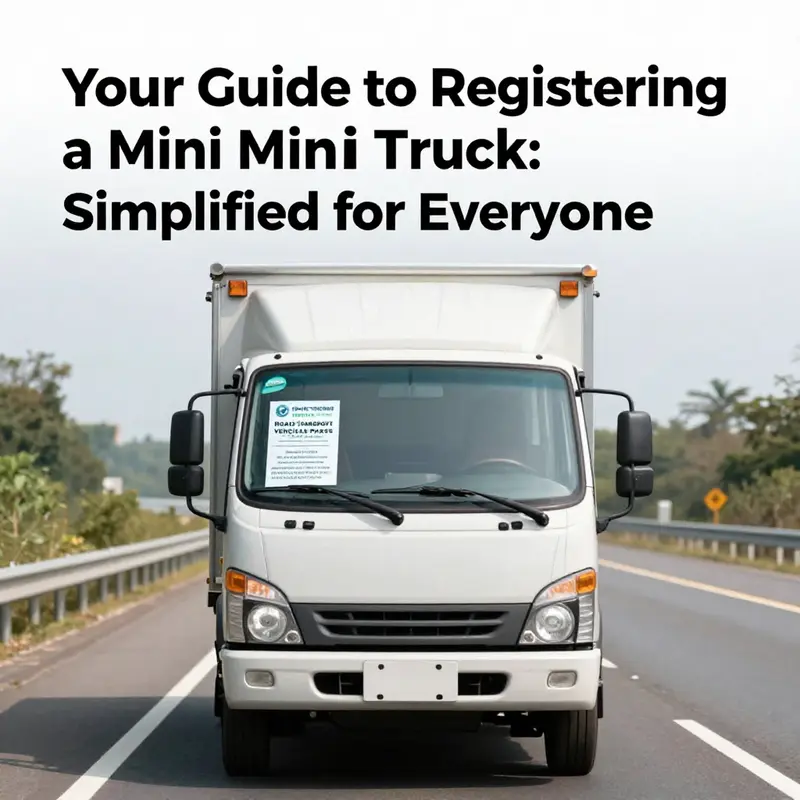
When a small transport operation decides to expand into freight on public roads, the Road Transport Vehicle Pass becomes the legal heartbeat of the business. This chapter follows the journey from eligibility to receipt, weaving together the rules, the paperwork, and the online steps into a coherent path that keeps a mini truck legally on the move. The process is not just a checklist; it is a framework that aligns safety, compliance, and planning with the realities of daily logistics. For operators, understanding this permit is less about ticking boxes than about building a dependable, lawful foundation for growth.
To begin, imagine the pass not as a hurdle but as a contract with the road. The core eligibility criteria set the stage. The vehicle itself must carry a current registration certificate and pass the annual inspection, demonstrating that it meets safety and technical standards. There should be no major traffic violations that would disqualify a driver or the operator, because access to the pass is tied to a history of responsible operation. The driver, meanwhile, must hold a valid license appropriate to the vehicle’s weight class and a Road Transport Driver Qualification Certificate. In commercial operations, the business itself should have a license with road transport explicitly included in its scope. These prerequisites are not mere formalities; they signal to inspectors and authorities that the enterprise is prepared to manage risk, protect cargo, and safeguard public safety.
Next comes the careful assembly of documents. The process hinges on having a coherent dossier that proves identity, ownership, and capability. An application form is typically downloaded from the official government portal and filled with precise information about the operator, the vehicle, and the proposed route network. Alongside this form, the business license with road transport in its scope, copies of the vehicle registration certificate, and a current vehicle inspection report are required. Copies of the driver’s ID and driving license, plus the Road Transport Driver Qualification Certificate, are indispensable. The authorities also want to see proof of a safe parking facility—an essential factor for day-to-day operations, where long hours of waiting, loading, and staging can occur. A Safety Management System document, describing internal policies for safeguarding people, cargo, and equipment, demonstrates that the operator has thought through risk control, incident response, and ongoing training. It is not enough to say that safety is a priority; the document must show how safety is implemented in practice. In many jurisdictions, confirmatory documents are requested to be current within a specified period, typically within the last year for inspection reports and driver qualifications.
With a solid document set in hand, the next phase moves online. The national government service platform offers a streamlined path for Road Goods Transport Operation Permits, and applicants are encouraged to use this digital channel for speed and transparency. The online journey starts by selecting the appropriate permit category and province or city, then uploading the prepared documents in the order requested by the portal. The advantages of online submission are clear: it usually shortens processing time, eliminates extra trips to government offices, and provides real-time progress tracking. The platform also serves as a central repository, so updates to any document—such as a renewed vehicle inspection report or an updated driver qualification certificate—can be incorporated without re-starting the entire process. Operators who adopt the online workflow often comment on how the digital trail simplifies accountability and makes it easier to coordinate renewal timelines. As with any formal procedure, accuracy matters. Misfiled forms, missing pages, or mismatched names between the vehicle and the business license can stall the review, so attention to detail in the digital submission is as important as in the paper version.
Some cities reserve the option for on-site verification as part of the permit review. If such verification is required, applicants will receive an alert by SMS or email with a scheduled location and time. The on-site check is not a test of driving skill but an integrity check: authorities verify the vehicle’s condition in person, confirm the parking site’s suitability, and ensure that the information on the permit aligns with the actual operation. This step, while potentially time-consuming, is a critical assurance that what is recorded in the system corresponds to real-world practice. A well-prepared operator can make this phase smooth by ensuring the vehicle is clean, safe, and compliant with the inspection standards, and by having the parking facility ready for inspection at the designated location.
Fees for this permit are typically modest or even waived in some regions, but a small administrative charge may apply. Online platforms routinely accept payments through common digital channels, making the financial part of the process straightforward. The emphasis, again, is on timely submission and accurate documentation rather than expensive fees. After the review, the permit—often issued in digital form—is valid for a defined period, commonly three years, with renewal required as its expiration nears. The permit must be carried in the vehicle at all times when the truck is on public roads and displayed as proof of lawful operation. This digital-to-tactual consistency is designed to prevent unauthorized use and to facilitate police or traffic checks without friction.
The practical implications of securing a Road Transport Vehicle Pass extend beyond the legal ticket to ride. For operators, the permit is a gateway to scale—more routes, more cargo types, and more predictable planning. It also imposes a framework that promotes consistent maintenance, driver training, and route discipline. A thoughtful operator uses the permit as a tool for reinforcing operational discipline rather than as a mere credential. For instance, maintaining an up-to-date parking facility record, aligning the safety policy with actual procedures, and keeping the driver qualification certificates current all contribute to smoother renewals and fewer compliance hiccups in the future. The process rewards preparation with fewer delays and a more reliable service proposition for customers who rely on timely, compliant freight movement.
To illustrate how the process unfolds in practice, consider the online portal experience. The National Government Service Platform provides step-by-step guidance, provincial sub-platforms, and the ability to upload documents and track the status of an application. The clarity of the online workflow can significantly reduce the ambiguity that sometimes accompanies regulatory processes. Practitioners who engage with the system early and maintain organized records often find that the review phase proceeds with fewer back-and-forth inquiries, a smoother verification stage, and a quicker final decision. For readers seeking additional practical context, a broad perspective can be found in the industry blog hub that hosts case studies, reflections, and procedural notes for operators navigating similar regulatory challenges. You can explore this resource at minitrucksocala.com/blog/.
As a final note, the importance of official guidance cannot be overstated. While this chapter outlines a practical narrative for Step 4, the most authoritative, up-to-date guidance comes from the national and provincial portals that administer road transport permits. Operators should regularly consult the official channels to confirm current requirements, forms, and timelines. The National Government Service Platform consolidates forms, submission steps, and status updates, and serves as the authoritative source for the Road Goods Transport Operation Permit application. For direct access to the official guidance and forms, refer to the National Government Service Platform at https://www.gjzwfw.gov.cn. Keeping pace with the evolving regulatory landscape is not a luxury but a core part of maintaining a reliable, lawful trucking operation.
In sum, Step 4 is a disciplined integration of eligibility, documentation, digital submission, and potential on-site verification, all aimed at issuing a permit that legitimizes a mini truck’s role in freight transport for a defined period. Done right, it becomes a foundation for compliant operations, routine renewals, and a more predictable, scalable business model. A well-prepared operator moves through the process with confidence, knowing that the paperwork and the road are in alignment, and that the permit itself is more than a document—it is a commitment to safety, accountability, and professional growth in the world of light-duty freight.
From Paper Trails to Road Readiness: A Cohesive Path to Registering a Mini Truck in China
Registering a mini truck in China is a process that blends regulatory clarity with on‑the‑ground practicality. The path is not simply about filling forms; it is about understanding how local policies shape what it means to operate a small, cargo‑carrying vehicle on public roads. As you begin, you quickly realize that the designation of your vehicle—the precise category it falls into—will influence every subsequent step. A so‑called mini truck, often treated as a small special‑purpose vehicle, may carry different implications from city to city. In some places, these vehicles are treated largely like standard light trucks, while in others they face tighter doors and more rigid entry policies, particularly when they are allowed into crowded urban cores. Beijing, for instance, has a track record of imposing additional rules for entering the city center, with requirements tied to national markings, approved body colors, and other specifications. The lesson is clear: confirm the designation and the local regulations before you begin any paperwork. The quickest way to miss a critical detail is to assume a single, nationwide workflow exists. Every province, municipality, and even district can adjust requirements in subtle ways, so a conversation with the local Traffic Management Bureau or Vehicle Administration Office is not a formality—it is the cornerstone of a compliant process. The ultimate goal is to line up your vehicle, your documents, and your operational plans with the expectations of the local administration so that your path from application to road can proceed without unnecessary delays. If you’re documenting the journey in a reference guide or a step‑by‑step checklist, you’ll want to anchor it in a sense of local specificity while retaining a clear view of the national baseline. This is the balance that keeps your registration both enforceable and efficient. The practical consequence is straightforward: you must verify the latest local policies before you commit to any particular sequence of steps. Then you can move forward with confidence, knowing that you are aligning with both national requirements and the local contours of road use. The first non‑negotiable checkpoint is the Small Special‑Purpose Vehicle designation, often referred to in Chinese as the Xiao Zhuan. This label is not merely a tag; it is a formal classification that can govern everything from the vehicle’s permitted用途 to the precise documents you will need. Because the designation is typically set at the factory level and reflected on your vehicle’s official papers, the code on your vehicle and the paperwork must match what the local authorities expect. The mismatch between a vehicle’s designation and local practice is a frequent source of friction, especially for owners who purchase second‑hand or import a vehicle that carries ambiguous paperwork. For those reasons, the opening phase of registration should be treated as a design verification exercise as much as a paperwork exercise. After confirming the designation, you’ll assemble a dossier that includes your own identification and the vehicle’s credentials. A valid ID is required, and you should prepare copies of both sides. The vehicle registration certificate—often the initial certificate that accompanies the vehicle—will need to be present in original form and copy. A motor vehicle insurance policy is mandatory, typically the compulsory third‑party liability, and you’ll need the policy to be current and recognized by the authorities. The purchase invoice and certificate of conformity are also standard parts of the bundle. In most cases, you will be asked to show proof of the payment of vehicle purchase tax, if applicable. You can think of this stage as establishing a legal identity line for the vehicle and its owner. With these documents in hand, most applicants move to the formal submission at the local Vehicle Management Office. The processing fee is a routine part of the procedure, and once your package passes the review, you will receive the Small Special‑Purpose Vehicle Certificate, the Xiao Zhuan certificate, which confirms your vehicle’s eligibility for road use. This moment marks the shift from potential to permitted. The certificate is not simply a formality; it is the document that anchors your ongoing compliance and often serves as the key reference point for subsequent steps if you intend to transport goods commercially. As your project evolves, you will be reminded that safety and monitoring requirements are not optional add‑ons but regulatory expectations. A GPS tracking device is now a standard fixture for many small cargo vehicles, and a driving recording device, or black box, is commonly required as well. The installation must be performed in accordance with national standards and, crucially, registered with the relevant authorities. This means you’ll need to document the installation—sometimes including technical specifications—and provide evidence that the devices are functioning and linked to the vehicle’s record. These monitoring systems are more than data points; they are part of a broader commitment to road safety and accountability in the modern transport landscape. If your plans include commercial freight, another gate opens: the Road Transport Operation Permit. This permit is essential for those who intend to use the mini truck for business purposes beyond private use. The documents you’ll typically need include a valid business license or operating qualification, the vehicle registration certificate, and proof of the vehicle’s technical condition, usually demonstrated through an inspection report. The review process can take time, and the outcome is a legal authorization to conduct road transport operations under the rules that govern commercial freight. Depending on your route, cargo type, and weight, you may also need a Road Transport Vehicle Pass. This pass is not universal; it emerges as a requirement when certain corridors—urban centers, highways, or zones with traffic controls—call for enhanced checks or limitations on vehicle movements. When you anticipate needing such a pass, plan in advance and be prepared for associated fees. Across all these steps, there is a practical, almost day‑to‑day attitude you must cultivate: apply well ahead of your planned operations, keep every document organized and up to date, and stay attuned to the local adoption of national standards. The landscape changes over time. A February 2026 notice on strengthening production and registration management for light trucks and small passenger cars signals tighter safety requirements and tighter control over cargo‑carrying configurations. To stay in step with these shifts, it is wise to monitor official channels from agencies such as the Ministry of Industry and Information Technology and the Ministry of Public Security and to confirm any interpretation or adjustment with your local authority before proceeding. For readers seeking a practical touchstone beyond the official forms, there is value in tapping into community knowledge and procedural discussions. The mini truck community hosts a steady stream of first‑hand insights about how offices interpret the paperwork, what common pitfalls show up, and how to navigate the inspection and verification steps. For those who want a concise starting point that still offers real guidance, consider visiting a well‑trafficked hub of practical notes and updates, such as the Mini Truck Blog, which curates procedural threads and user experiences. You can explore this resource here: minitrucksocala blog. What matters most is that you stay proactive and organized through each phase. Gather your documents early, verify their alignment with the Xiao Zhuan designation, schedule inspections promptly, and anticipate the need for monitoring gear as part of the vehicle’s ongoing compliance. As you move from the initial permit inquiries to the actual road‑readiness checks, keep a clear ledger of dates, submissions, and responses. A well‑tracked journey reduces delays and ensures you can respond quickly to any additional requests from the Vehicle Management Office. In the final stage, you may be required to present the Xiao Zhuan Certificate alongside the Road Transport Operation Permit and the Vehicle Pass documentation if applicable. When the authorities issue these documents, your mini truck is legally primed to operate within the permitted scope—whether for private service, a small business delivery route, or another authorized use. The process is designed to balance efficiency with safety, speed with scrutiny, and local flexibility with national standards. In keeping with that balance, you should also keep abreast of regulatory changes that affect safety standards and emissions controls. The 2026 notice adds to the ongoing expectation that cargo vehicles will meet a higher baseline for safety compliance and record‑keeping. Complying with these evolutions requires steady attention to official updates and a readiness to adjust procedures as necessary. In practice, this means scheduling periodic vehicle inspections, validating the accuracy of your GPS and driving recorder data, and maintaining up‑to‑date insurance and tax records. It also means maintaining a proactive line of communication with your local vehicle management office, especially if you plan to modify the vehicle or adjust its intended use. By approaching registration as a coherent journey rather than a single act, you align with the regulatory architecture that governs road transport and, ultimately, confidence that your mini truck can operate legally, safely, and efficiently. For readers aiming to verify the most authoritative guidance or to start the formal application online, the official government service portal remains the indispensable touchstone: https://www.gov.cn. This portal complements the local offices by providing overarching rules, forms, and notices that shape how the process unfolds in practice. In this way, the chapter you are reading is not only about a sequence of steps but about adopting a disciplined, local‑savvy approach that translates national requirements into smooth, road‑ready reality.
Final thoughts
Navigating the complexities of registering a mini truck doesn’t have to be overwhelming. By taking each step seriously—from applying for your Small Specialized Vehicle Permit to ensuring your vehicle is equipped with the necessary safety devices—you set yourself up for success whether for personal use or as a crucial asset for your business. Remember, staying compliant with local regulations not only keeps you legal but also promotes safety on the road. Take the plunge today and drive your mini truck with confidence!