

Mini trucks have gained tremendous popularity in urban transport and among enthusiasts, yet many are unaware of the different names they go by. From ‘mini pickup’ to ‘small commercial vehicle,’ these vehicles serve diverse purposes across various regions. This article will explore what mini trucks are called in different contexts and locations, delve into their specifications, economic roles, and cultural perceptions. By the end, you’ll have a comprehensive understanding of these versatile vehicles and the terminology surrounding them.
Naming the Tiny Workhorses: A Global Look at What Mini Trucks Are Called

Naming mini trucks is not a one word affair. Across regions, people talk about small, practical work vehicles with a vocabulary that signals size, capability, and intended use. The simplest label, mini truck, sits alongside a range of terms that highlight different aspects of the same family of machines.
Some terms emphasize size and commercial purpose. Compact truck and small commercial vehicle point to a class that sits below full size pickups while keeping a professional edge. Others describe the vehicle as a light duty utility vehicle, a catchall that covers various chassis and body configurations used for trades, deliveries, or municipal tasks.
Regional usage adds color. In Europe, journeys often focus on small commercial vehicles and their regulatory category. In Asia, the language may combine the idea of a cab and a cargo bed, calling the vehicle a micro pickup or a compact pickup. In some markets, the label micro truck appears, while policy documents may prefer light duty vehicle in fleet procurement.
A practical distinction matters for buyers. Fleet managers thinking in terms of cab and chassis plan for configurability, while procurement professionals rely on small commercial vehicle language to align with cost and maintenance metrics. The goal is to communicate capability rather than to push a single product line.
The global story continues with electrified variants. Electric mini trucks are described as compact or light duty electric vehicles designed for last mile delivery and urban work, offering quiet operation and agile maneuverability in tight spaces.
Ultimately, the many names reflect a single core idea: a small, capable machine that moves goods where larger trucks cannot. The labels help buyers map a job to a tool, not to a single model.
Global Names for Tiny Workhorses: How Mini Trucks Are Called Across Regions

Small, nimble, and built for busy streets or tight alleys, the mini truck is a vehicle class that travels under many flags. The same core idea—light, efficient transport of goods in restricted spaces—emerges in markets around the world, but the labels shift with regulation, culture, and marketing. In one country they are kei trucks; in another, light commercial vehicles; in yet another, micro trucks or city trucks. The result is a global mosaic of terms that can be as practical as a cargo bed and as telling as a classification code. Reading these names side by side reveals not just how people transport goods, but how cities, industries, and travelers conceive of efficiency in urban logistics. It is a story of language meeting geometry—the way a vehicle fits into a street, a budget, and a business.
In Japan, the compact workhorse is most often called a kei truck. The term comes from the Kei class of vehicles, a category defined by size and engine limits that shape what can be sold and used on crowded city streets. Kei trucks are designed to maximize payload within a micro footprint, offering a surprising cargo capacity for their tiny footprint and a turning radius that makes navigating narrow lanes almost effortless. The kei designation is more than a nickname; it signals a precise regulatory framework that governs everything from exterior dimensions to engine displacement. In practice, these vehicles serve urban deliveries, small trades, and agricultural tasks where larger trucks would be impractical. The label Kei truck therefore carries both a technical meaning and a cultural resonance: a small, efficient, work-centric machine suited to densely built environments.
Across Europe, the naming landscape broadens. Here, what many markets simply call a pickup or a van becomes a matter of use and body style. The same small vehicle might be described as a light commercial vehicle when it carries enclosed cargo, or as a small utility vehicle when the cabin and chassis are paired with a variety of bodies for different trades. In European discourse, “LCV” (light commercial vehicle) is a common umbrella term, while specific models may be referred to by the more descriptive “city truck” or “micro truck” in marketing contexts. The emphasis is often on efficiency, emissions, and cargo density in urban delivery, with an implicit understanding that space in crowded streets is a currency of its own. The European vocabulary thus speaks to a practical sensitivity: the vehicle’s role in last-mile logistics, not just its size, shapes the name assigned to it.
In China, the vocabulary aligns with a long tradition of practical labeling and a fast-moving manufacturing ecosystem. The vehicles are frequently described in official and commercial contexts as mini trucks or micro trucks, terms that underscore their compact size and their suitability for rural routes and urban corridors alike. The discourse may also lean on “light-duty trucks” in technical documentation, reflecting the industrial mindset that categorizes equipment by load class and capability rather than by a purely aesthetic sense of form. In markets where these small trucks are integral to local commerce, the naming reflects not only size but also function: affordable, efficient, and capable of weaving through traffic with a surprising degree of autonomy. The language of China’s mini trucks, then, doubles as a map of practical use in diverse settings—from farm gates to bustling marketplaces.
In North America, the terrain of names shifts again, shaped by a distinctive regulatory environment and a different fleet landscape. Truly compact mini trucks are less common, but when they appear in the market they often land under the umbrella of compact pickups or small utility trucks. The domestic dialogue tends to emphasize utility and urban compatibility, and so you may encounter terms that highlight efficiency in city logistics or adaptability for light-duty tasks. In some segments, especially where electrification intersects with urban delivery, marketers describe these vehicles as micro pickups or urban workhorses, signaling a niche that blends compact dimensions with city-friendly performance. The North American lexicon, then, mirrors a broader negotiation about what constitutes a practical balance between size, payload, and regulatory clearance.
Southeast Asia and several parts of Africa add another layer to this linguistic tapestry. Here, practical descriptors proliferate because the vehicles are tools of everyday commerce, construction, and farm work. Pithy labels like “small cargo truck,” “utility van,” or even colloquial “go-kart truck” appear in informal speech, capturing impressions of velocity, maneuverability, and low operating costs. The emphasis in these regions tends to be on the vehicle’s daily economics as much as on its footprint. The country’s roads, markets, and working rhythms shape how people describe a machine that is meant to be affordable, versatile, and resilient in environments that demand reliability more than luxury. In these contexts, the name is a shorthand for capability—how much cargo can be moved, how easily the vehicle navigates crowded streets, how little fuel it consumes, and how quickly it can return to service after a delivery run.
What all these regional names share is a faithful fidelity to purpose. Regardless of whether a city official speaks of an LCV, a market vendor calls something a mini truck, or a rural operator uses a rural label, the essential function remains constant: a small, maneuverable vehicle designed to transport light cargo efficiently. The naming conventions function as a map of constraints—precise enough to guide regulation, broad enough to accommodate evolving technology and evolving road networks. The shift from bed open to enclosed body, or from gasoline to electric power, does not upend the core identity of the mini truck; it reframes its use and, sometimes, its label. As urban logistics intensifies and delivery demands expand, these labels will continue to evolve, reflecting regulatory horizons, consumer expectations, and technological breakthroughs.
For readers seeking a portal into broader regional discussions without leaving this chapter, a starting point is the dedicated mini truck discourse hosted on industry-focused blogs. These outlets parse how the same class of vehicle can be conceptualized differently in different places, while still serving the fundamental needs of small-business logistics and urban mobility. You can explore the evolving terminology at the minitrucksala blog, which often threads together regional usage, market trends, and practical considerations for operators. This resource helps translate the regional vocabulary into a practical lexicon for buyers and operators who navigate the complicated language of small-scale freight.
In sum, the tapestry of names around mini trucks is not a puzzle to be solved but a living atlas of global logistics culture. The labels reflect often-overlapping regulatory regimes, market tactics, and cultural preferences for urban form and mobility. Whether a vehicle is framed as a kei truck, a light commercial vehicle, a micro truck, or a city workhorse, the underlying story is the same: a small, efficient partner designed to move goods where space is precious and time is currency. The chapter of terms continues to unfold as cities grow more dense and as new powertrains expand the reach of these compact carriers. The names will shift, but the purpose remains a constant reminder of how people connect place, need, and machine in the modern economy. For a deeper dive into regional perspectives and historical context, see the external guide linked below, which offers a structured overview of global mini truck types and their applications: https://www.sinotruk.com/mini-truck-guide.
Naming the Tiny Workhorses: How Mini Trucks Are Labeled Across Tech, Law, and Logistics
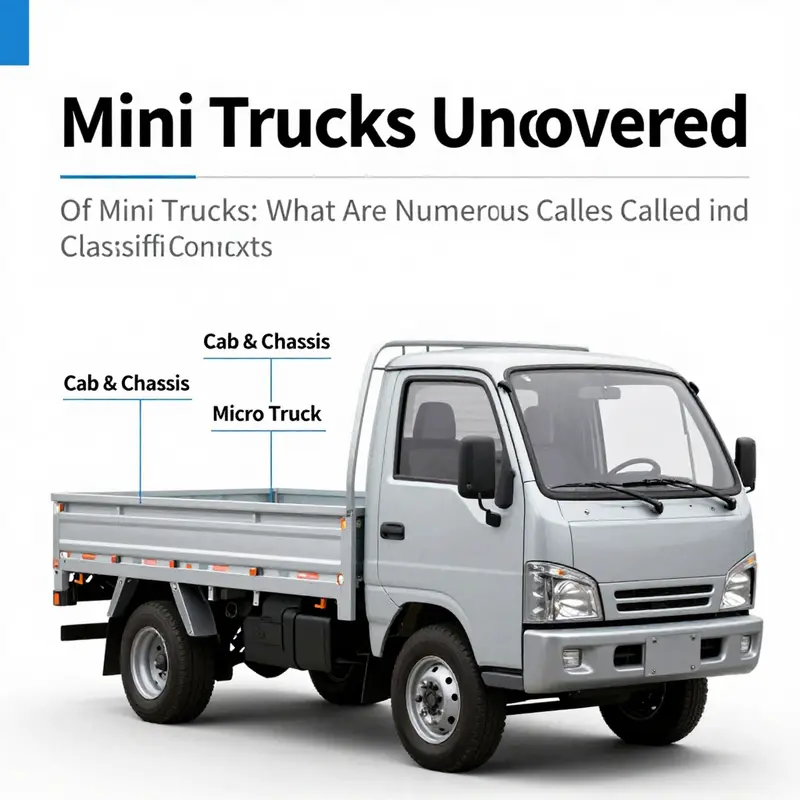
Across urban corridors and industrial yards, a family of compact cargo vehicles works in anonymity and efficiency. They push through traffic, haul a pallet or two, and slip into narrow spaces where full-size trucks fear to tread. In the vocabulary of transport engineering and market regulation, these small machines carry more than a simple label; their names encode their purpose, powertrain, and the rules that govern where and how they operate. The term that most people recognize—mini truck—serves as an umbrella for a diverse set of designs. Yet beneath that simple phrase lies a spectrum of terms that reflect regional usage, technical intent, and the evolving reality of modern logistics. When you see a line of small, cab-forward vehicles in a warehouse district or a quiet street corner used for local deliveries, you are witnessing a language in motion. Different markets have settled on different phrases, and those phrases often reveal the context in which the vehicle is meant to work. In some places the standard label is just that: a compact vehicle designed for light-duty transport, sharing the road with larger pickups and vans but occupying its own niche. In others, the same machine may be categorized to emphasize a specific capability—electric propulsion, a bare chassis for customization, or a narrow focus on last-mile service. The spectrum is not random. It reflects the goals of urban freighting, the constraints of safety regulations, and the push toward cleaner, more nimble fleets that can thread through crowded streets without becoming a burden on municipal infrastructure.
Beyond the everyday language of dealers and fleet managers, there is a more technical taxonomy that helps planners, engineers, and policymakers forecast performance, safety, and emissions. When the cargo box and seating are small enough to be considered light-duty, and the vehicle is meant for short-range, frequent trips, we enter a domain where several precise terms compete for accuracy. The most basic and widely accepted designation remains the simple “Mini Truck.” It signals a compact silhouette, a cab that seats a pair to three people, and a bed or cargo area sized for light commercial work. But the same vehicle might be described as a “Mini Pickup” in markets where a dedicated cargo bed is a key selling point and where marketing language leans on familiarity with pickup traditions. In other regions, a more general label such as “Compact Truck” is used to remind buyers that size matters, and that these tools are designed to operate as active parts of a broader fleet rather than as mere city cars. The phrase “Cab & Chassis” appears when the emphasis is on the platform rather than the finished body. This descriptor signals that the vehicle is presented as a baseline for conversions and custom configurations, from flatbeds for construction sites to specialized bodies for agricultural or service work.
Another broad category that crops up in regulatory discussions and fleet procurement is the “Small Commercial Vehicle,” or SCV. This term emphasizes utility over sport and places the mini truck in a family with other compact commercial options like light vans and small delivery vehicles. It is a reminder that, for many operators, the mission matters as much as the machine. In some regions, you will also hear the phrases “micro trucks” or “light-duty utility vehicles,” which capture a blend of compact dimensions, practical payloads, and urban accessibility. The European market often frames these vehicles within the umbrella of “small commercial vehicles,” a category that covers a range of body styles and powertrains while focusing on regulatory and financing implications for urban fleets. In China and other parts of Asia, a frequently used label is the “Chinese mini pickup,” a term designed for marketing simplicity and regional specificity, signaling both size and capability within dense urban environments.
These labels do not exist in isolation. They map to more granular classifications that are essential for understanding how the vehicles perform and how they are governed. In technical and industrial contexts, several designations appear with greater clarity about powertrain and use case. A growing presence in modern fleets is the class of Light-Duty Electric Trucks (LDETs). These are small, battery-powered cargo vehicles designed for urban logistics, with a gross vehicle weight rating typically under 3,500 pounds. LDETs are more than a powertrain decision; they embody a broader strategy toward sustainable city freight. They are often paired with charging infrastructure designed for frequent, short-radius trips, predictable duty cycles, and a high number of daily starts and stops. The LDET label communicates both capability and constraint: a vehicle built to nimbly navigate city streets, yet engineered to deliver predictable payloads without the noise and emissions of combustion-powered rivals.
Within this same ecosystem sits the broader category of Small Commercial Vehicles (SCVs), a designation that broadens the lens to include cargo vans and micro-delivery platforms that share the same urban duties as mini trucks. SCVs emphasize serviceability and last-mile flexibility, acknowledging that many urban deliveries demand precise scheduling, easy loading, and the ability to operate on routes that do not justify a full-sized truck. Then there are Low-Speed Vehicles (LSVs) or Neighborhood Electric Vehicles (NEVs), a regulatory niche in North American contexts. When a mini truck is restricted to streets where speeds stay below roughly 25 miles per hour (40 kilometers per hour), and when it carries certain safety equipment and certification standards, it may fall into this category. The LSV label is a reminder that the vehicle’s role is specialized: it works on the edge of public road networks, often in gated communities, campuses, or industrial parks, where speed and maneuverability trump long-haul range. It is a realm in which safety standards—such as those set by national regulators—shape design decisions and operating rules.
As the fleet world evolves, another growing classification emerges: Electric Cargo Vans and Micro Delivery Vehicles. In practice, many of these vehicles are variants of the mini truck design, rebranded to capture the urban last-mile function that today drives e-commerce and service mobility. They combine the compact footprint with the functional body language of a delivery vehicle, often prioritizing battery capacity and payload density over showroom aesthetics. The shift toward electrification has nudged the vocabulary toward efficiency and reliability, reinforcing the idea that naming is not just about identity but about function, regulatory alignment, and the logistical niche the machine is meant to fill. In all these discussions, performance standards, safety regimes, and usage environments are the invisible threads that knit the labels together. A mini truck used indoors in a warehouse might be described as a zero-emission, low-speed electric delivery vehicle, whereas one cruising on a public road will be categorized as a light-duty electric truck subject to emissions and highway safety rules. The same chassis can live in multiple identities depending on the body it carries, the road it travels, and the market that buys it.
For readers who want to explore these distinctions with a broader, ongoing perspective, a quick detour to the Minitrucks blog offers accessible summaries and evolving viewpoints on how these terms appear in everyday media and product catalogs. This kind of resource helps bridge the technical language of engineers with the practical language used by fleet managers, drivers, and city planners. The language of mini trucks is not static. It grows with our cities, with new powertrains, and with the way logistics challenges shape vehicle design and procurement. In the end, the labels matter less for vanity and more for clarity: they tell buyers where a vehicle fits, what it can do, and which rules govern its use. They help operators assemble fleets that are efficient, compliant, and capable of delivering the goods that keep urban life moving.
Overview of regulatory and market perspectives remains essential for anyone examining the role of mini trucks. As cities push for cleaner air and quieter streets, the appeal of compact, nimble, and electric options becomes clearer. The way we name these vehicles—driven by their size, powertrain, and intended duty—serves as a map for their deployment. A single term may carry different meanings across borders, but the underlying intent is consistent: to provide practical, reliable transport that fits into tight spaces while delivering predictable performance. This balance between footprint, payload, and regulatory alignment explains why the vocabulary around mini trucks remains diverse yet coherent. For researchers and practitioners alike, keeping pace with these labels helps in assessing market trends, planning urban fleets, and understanding the regulatory frameworks that determine how and where these remarkable little machines can operate.
External reference: https://www.nhtsa.gov/vehicle-safety/low-speed-vehicles
Naming the Light Fleet: How Mini Trucks Are Called and What They Do in Modern Commerce

Mini trucks are defined by their compact size and versatile cargo capabilities. Across regions they are referred to by several terms, including mini truck, mini pickup, compact truck, cab and chassis, small commercial vehicle, micro truck, and light-duty utility vehicle. Terminology often reflects regional markets and the intended use, such as urban delivery, short-haul tasks, or bespoke body configurations. In Europe they are commonly discussed as small commercial vehicles or micro trucks, while in China and some Asian markets the term mini pickup is prevalent. The shape and configuration—cargo bed, box body, tipping mechanism, or cab and chassis base—inform how the vehicle is perceived and what duties it is expected to perform. These labels influence expectations about payload, maneuverability, fuel efficiency, and regulatory treatment, and they guide procurement and fleet planning. Electric variants are increasingly common for urban logistics, offering zero tailpipe emissions and lower operating costs, while ICE-powered options emphasize efficiency and compact drivetrains. The practical takeaway is that the terminology surrounding these vehicles is aligned with form and function: a small, capable platform designed for tight spaces, flexible enough to adapt to evolving urban and sustainability goals. For readers seeking context, industry discussions and market guides often illustrate regional usage patterns and practical implications of the labels, helping align language with actual specifications and operations.
Small Workhorses, Big Perceptions: The Cultural Language of Mini Trucks

In popular culture and everyday speech, the phrase mini truck does not sit neatly in a formal category. It functions more as a cross-border shorthand that hints at utility, economy, and urban agility than as a rigid classification. Across regions, people talk about these compact workhorses with a spectrum of terms that echo local priorities: from the simple, global call of mini truck to the more practical labels of mini pickup, compact truck, or small commercial vehicle. The vocabulary is not just about size; it is about what the vehicle is asked to do, where it is driven, and how much identity the driver wants to project. In the United States, for instance, the vocabulary tends to orbit around the broad idea of a pickup, a category long steeped in rural folklore and the imagery of hard work, independence, and long roads. The term pickup truck serves as a cultural anchor, even when the actual vehicle in question is modest in scale. The word pickup carries with it a lineage, a sense of carrying goods, tools, and perhaps a bit of personal history, which makes it a natural default in media, advertising, and casual conversation. Yet when the conversation shifts toward smaller, more manoeuvrable options intended for urban logistics or light-duty tasks, the nomenclature shifts as well. People begin to describe these vehicles as compact trucks or mini pickups—labels that signal both utility and urban practicality. The shift is telling. It marks a broader cultural hunger for vehicles that can perform essential functions without demanding the space and fuel of a full-size truck. In this sense, the language mirrors a market reality: urban deliveries, farm chores near crowded town centers, and construction sites that require tight access all benefit from a smaller, more nimble tool. This semantic drift away from a single, monolithic category toward a family of descriptors is not merely linguistic housekeeping; it reflects real-world usage patterns and changing consumer preferences. The terms mini truck and mini pickup are still common in marketing and trade discussions, yet they do not enjoy the same resonance in mainstream popular culture as their larger siblings. When pop culture references appear in films, television, or social media, the conversation tends to pivot to the more familiar image of the pickup as a rugged, capable, American icon. The narrative of rugged individualism, rural identity, and independence that has long colored the image of the pickup becomes harder to translate when the vehicle is smaller and more urban-friendly. In these moments, media commentators, bloggers, and enthusiasts often describe the new breed as “smaller pickups” or “compact trucks,” framing them as efficient tools that bridge the gap between the city’s tight streets and the countryside’s practical needs. This rhetorical translation—from rugged, large-scale symbol to nimble, city-friendly tool—highlights a broader cultural trend: as urban living intensifies and delivery economics squeeze, people gravitate toward vehicles that can deliver payloads without oversized footprints. The vocabulary then becomes a map of these evolving priorities. It is also worth noting that regional regulatory language shapes the conversation. In Europe, for example, the vehicle segment is frequently discussed under the umbrella of “small commercial vehicles” or “mini trucks for sale.” The framing emphasizes use cases—delivery services, tradespeople, municipal fleets—more than the romance of raw power. In Asia, particularly China, the term mini pickup appears in marketing and technical guides, signaling a specific vehicle form: a compact chassis with a small cargo bed and seating for a modest crew, designed to handle urban routes with limited load. The same vehicle, when viewed from a regulatory lens, is a “compact truck” or a “cab & chassis” depending on the vantage point. This diversity of labels underscores a central truth: what a culture calls a vehicle is as much about the language of its institutions as it is about its roads and garages. It is not an accident that a vehicle designed to navigate crowded streets carries multiple names. Language follows use, and use follows need. The result is a rich, sometimes contradictory ecosystem of terms that reflect practical realities—fuel economy, maneuverability, payload, and the ability to thread through narrow alleys—while also shaping how people imagine themselves within the broader transportation narrative. In popular discourse, there is also a clear boundary between the realm of the mini truck and the domain of other small, family-oriented vehicles. The term minivan, for instance, arises in suburban life as a symbol of practicality and family logistics, not of ruggedness or fieldwork. The two classes occupy different cultural spaces, and the vocabulary helps maintain those boundaries. Yet the emergence of compact utility vehicles and electrified pickups blurs them gradually. As urban deliveries proliferate and fleets seek efficiency, the demand for truly compact, low-cost, and easy-to-operate trucks grows. The cultural conversation, once dominated by larger, more status-driven pickup models, expands to accommodate a new archetype: the small, capable, urban-friendly truck that shrinks the footprint without sacrificing usefulness. It is here that the interplay between culture and naming becomes most visible. People do not just buy vehicles; they acquire linguistic frames through which to interpret them. The same model might be called a mini pickup in a market guide and a compact truck in a press piece, and yet the underlying design language remains consistent: a small bed, a cab with seating for two to three, and a focus on payload-to-stability in dense environments. Even within enthusiast circles, phrasing matters. Online discussions often facet the topic in terms of “smaller pickups” or “compact trucks” to distinguish them from the archetypal, larger American pickups. These words carry social cues about where the vehicle can be used, who might own it, and what myths about work, leisure, and mobility the vehicle can help tell. In this sense, naming is not only descriptive; it is aspirational. When a family considers a compact truck for urban delivery or a light-duty farming task, the vocabulary provides a cue about its value and its limits. The same cues operate among small-business owners who rely on these vehicles to keep costs manageable while ensuring reliability. The language that surrounds mini trucks thus becomes a living reflection of a broader shift toward efficient, adaptable mobility. It is also a reminder that cultural perception can outpace formal classifications. In settings where regulation requires precise categories for safety, taxation, or fleet management, those classifications may be more aggressive and precise. In everyday life, people reach for terms that capture fit, feel, and function. In this landscape, a deeper awareness of naming helps readers understand why a tiny truck can feel like a big idea to a city planner, a tradesperson, or a delivery driver. It helps explain why a potential buyer might explore several labels before deciding what to call their tool for work. For readers seeking additional perspectives on how small trucks are discussed and reviewed in communities of practice, the Mini Trucks CaLa blog provides a space for stories, conversions, and practical experiments, including discussions about how owners adapt compact vehicles for camping or modular work setups. Explore that ongoing conversation at Mini Trucks CaLa blog. As this chapter unfolds, notice how the language around mini trucks evolves in response to shifting needs and new technologies. The surge of urban logistics, the rise of electric powertrains, and the continuing desire for vehicles that can do “more with less” are shaping not only how these vehicles are used but also how they are talked about. The cultural vocabulary will keep evolving, branching into new adjectives, new use cases, and perhaps even new nicknames that capture a future where small, efficient, and versatile trucks play a central role in city life and rural chores alike. The conversation remains grounded in a practical reality: people want vehicles that fit tight spaces, reduce operating costs, and offer dependable service without demanding large-scale infrastructure to support them. That pragmatic core will continue to drive linguistic innovation as communities, marketers, regulators, and drivers negotiate the balance between capability and footprint. For a broader sense of how official classifications frame what we call these vehicles, see the U.S. Department of Energy’s guide on vehicle types. External reference: https://www.energy.gov/eere/vehicles/vehicle-types
Final thoughts
As we’ve discovered, mini trucks encompass a vast range of names, specifications, and cultural significance that reflects their adaptability and crucial role in various industries. From local businesses to enthusiastic communities, these vehicles underline the importance of language in defining utility and regional identity. Whether you refer to them as mini pickups or small commercial vehicles, one thing is clear: their impact is undeniable and ever-evolving.