
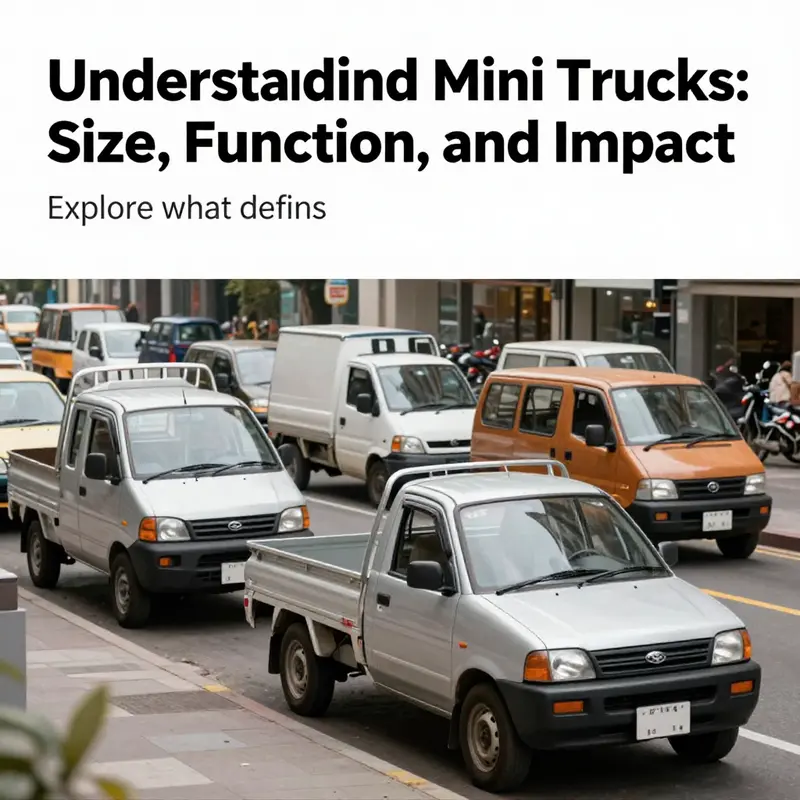
Mini trucks are more than just cute, compact vehicles; they are invaluable assets for local businesses and residents alike. With their ability to navigate tight spaces and carry cargo efficiently, these vehicles have gained popularity globally. In this article, we’ll delve into the definition and regulations surrounding mini trucks, explore international variations in design and functionality, examine their practical applications in urban settings, assess their economic impact on small businesses, and compare them with standard pickup trucks to understand their unique advantages. By the end, you’ll have a comprehensive view of mini trucks and why they matter in our everyday lives.
Size, Weight, and Jurisdiction: Defining What Counts as a Mini Truck in Urban Logistics
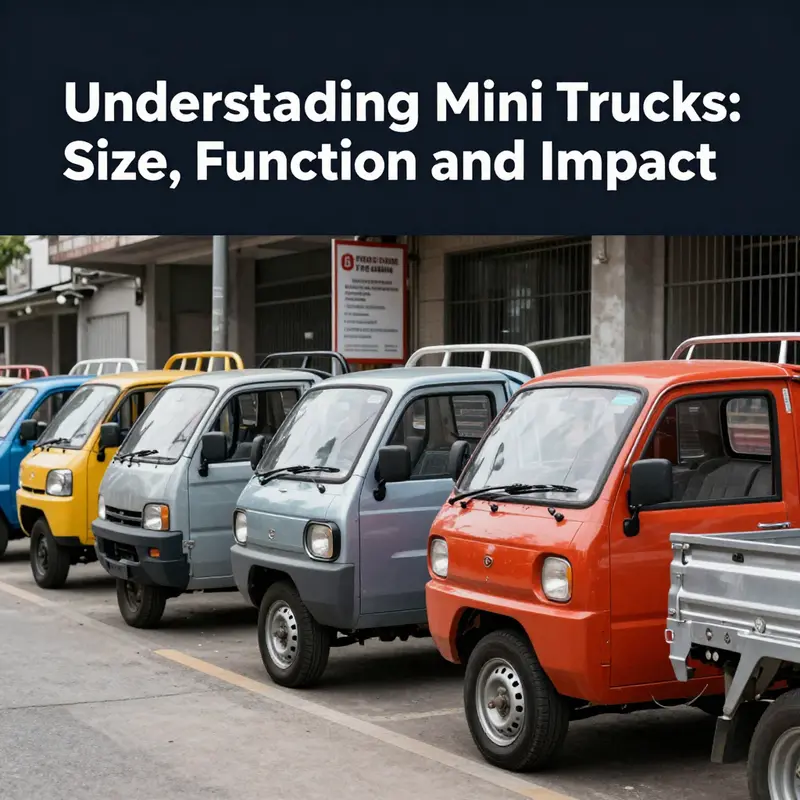
Defining what counts as a mini truck is best understood as a practical blend of size, weight, and regulatory context. These vehicles are designed to move cargo efficiently in urban environments, yet the exact thresholds vary by country and by jurisdiction. What matters across cases is the same idea: a compact, capable work vehicle that can operate within tight streets while staying within legal limits for safety, emissions, and licensing.
In many regions, dimensional limits (length, wheelbase, and sometimes vehicle width) combine with mass-based criteria such as gross vehicle weight rating (GVWR) to determine whether a vehicle sits in a light- to mid-duty category or crosses into larger freight classifications. The result is a regulatory mosaic where a given model may be treated differently depending on where it is operated, even if its physical footprint is similar. This variability underscores the need for operators to align vehicle design and fleet planning with local rules and permitting regimes.
Where there is convergence, the shared aim is clear: maximize urban mobility and efficiency without imposing unnecessary barriers on small businesses. A true mini truck, in this view, delivers reliable payload, nimble handling, and predictable compliance, enabling daily urban deliveries, service calls, and on-site tasks without the overhead of full-size trucks.
Global Frames for a Tiny Hauler: How Regions Define the Mini Truck
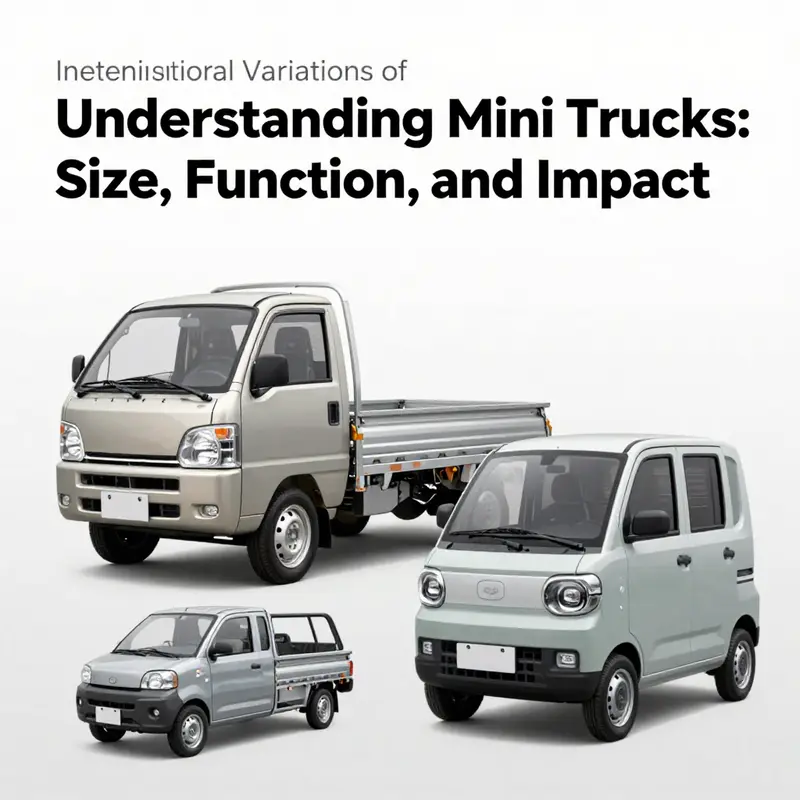
A single category, the mini truck, takes on a different shape wherever it appears. The idea of a compact, practical cargo hauler seems straightforward at first glance, yet its meaning shifts with the laws that govern roads, the demands of busy streets, and the economic logic of small businesses. Across continents, regulators sculpt a narrow lane for these diminutive workhorses, while manufacturers tune every inch for efficiency, safety, and cost. The result is a family that looks familiar at a glance but behaves very differently in different markets. Understanding these regional differences helps illuminate what a mini truck is, and why the same label can mask a spectrum of sizes, weights, engines, and uses that map to local needs more than to a single universal standard.
In Japan, the Kei truck sits at the origin point of this conversation. The Kei Car regulations carved out a space for tiny, fuel-efficient vehicles by limiting engine displacement, width, length, and height in a way that makes these machines more affordable to own and operate. The Kei truck follows strict boundaries: a maximum engine displacement of 660 cubic centimeters, a width under about 1.48 meters, a length just over three meters, and a low maximum weight. Those constraints aren’t mere numbers; they drive a cascade of consequences. Tax incentives, lower insurance costs, and friendly parking rules flow from the same policy logic that keeps the vehicles compact and nimble. In practice, Kei trucks trade some payload and outright capacity for extraordinary maneuverability and low operating costs, which makes them ideal for narrow city lanes, market deliveries, and farm-to-urban routes where space is the true currency. While most Kei variants have relied on internal combustion, the trend toward electrification has begun to loosen the grip of pure engine size on the category, expanding the possibilities without eroding the core benefits of their compact footprint.
Move westward and the regulatory lens shifts toward weight and classification rather than fixed dimensional ceilings. In the United States, the term mini truck is not codified in federal vehicle codes with a single, universal threshold. Instead, the market segment is understood through a blend of labels such as light-duty trucks and compact pickups, each tied to a range of gross vehicle weight ratings and payload capacities. The practical effect is that a “mini” in the American lexicon often sits around or just below the light-duty line, but the exact footprint can vary. The emphasis is less on exact exterior dimensions and more on payload potential, drivability, and resilience across diverse terrains—from farm lanes and rural byways to suburban job sites. This flexibility supports a spectrum of buyers who need a capable, smaller alternative to midsize pickups, without being constrained by narrow dimensional rules. In practice, the U.S. market has long treated these vehicles as versatile work tools rather than strictly regulated primitives. The result is a broad assortment of practical configurations, engines, and suspensions designed to maximize usable space and reliability under a variety of operating conditions.
Across the Atlantic, Europe frames the category primarily through the lens of light commercial vehicles and emissions control. The European system classifies most smaller cargo carriers as N1 vehicles—light commercial vehicles up to a 3.5-ton gross vehicle weight—placing the emphasis squarely on compatibility with urban logistics needs, safety mandates, and environmental limits. In this view, a mini truck is less a defined size and more a tool for city delivery and last-mile operations that must meet strict emissions targets and safety technologies. The regulatory architecture also nudges manufacturers toward electrification, with city-focused electric LCVs increasingly common. The net effect is a generation of compact, efficient, and clean workhorses whose size is a practical response to narrow streets and dense traffic, rather than a hard-coded numerical ceiling.
China presents a hybrid blueprint that mirrors the country’s broader urbanization and policy ambitions. The landscape blends micro and light-truck categorizations to accommodate a vast and varied logistics ecosystem. Micro trucks, defined by light total masses, are favored for small-volume, frequent deliveries in crowded urban environments, while light trucks cover a broader range of duties as operations scale. Within this continuum, mini trucks occupy a dynamic niche—small, affordable, and well-suited to the needs of small businesses, rural vendors, and neighborhood distribution. In China’s modernization push, electric drivetrains gain prominence as a policy and commercial priority. Government incentives, coupled with growing charging infrastructure, accelerate the transition to cleaner, quieter, and more affordable mini-trucks for everyday commerce. This policy direction reflects a broader view: enabling micro and light vehicles to shoulder more of the urban logistics burden while gradually reducing the environmental footprint of last-mile transport.
Despite these regional distinctions, several overarching threads weave through the global landscape of mini trucks. Electrification is a shared horizon. Each market is plotting an electric variant of the same idea: a compact, low-speed, efficient cargo vehicle that can weave through city arteries with minimal noise and emissions. The logic of urbanization reinforces this trend—the more densely populated an area becomes, the more valuable small, maneuverable, and economical haulers appear. Safety and regulatory frameworks increasingly shape the design and price of mini trucks, pushing manufacturers to embed electronic stability controls, modern braking systems, and other safeguards even in the smallest models. At a higher level, there is a quiet movement toward convergence in how buyers and policymakers think about these vehicles. While the exact language varies, the core function remains: a tool to move goods in tight spaces efficiently, with a cost footprint that supports small business viability rather than corporate-scale logistics only.
What binds these regional narratives is a common purpose, even if the vocabulary differs. A mini truck, in essence, is a small, efficient, and practical solution for light cargo transport. Its appeal lies in its ability to slip into the urban fabric, carry modest payloads, and do so with lower operating costs than larger trucks. The regulatory ecosystems around the world reflect a balance between enabling practical use and pushing for safety and sustainability. As cities grow, as e-commerce expands, and as fleets experiment with new powertrains, the category continues to morph. Yet the essence remains stable: a tool designed for short hauls, frequent trips, and the daily rhythms of neighborhoods where space and budget constraint the scale of logistics.
For readers seeking a broader window into how these shifts translate into market dynamics and future possibilities, a recent market perspective offers a structured view of global trajectories, regional growth, and technology adoption in the mini truck space. It highlights electrification as a universal vector, the ongoing importance of urban logistics, and the strategic moves manufacturers are making to meet evolving regulatory targets while preserving the practical value that defines the mini truck. To dig deeper into those projections, see the Global Mini Truck Market Report 2026. In the spirit of connected learning, you can also explore the ideas and discussions hosted on the broader industry blog that this chapter links to, which provides context and examples from practitioners and researchers alike. minitrucksocala.com/blog/.
In sum, the mini truck is not a single, universal prototype but a family shaped by place. The Japanese Kei system fixes a tight scale and a tight budget; the American approach prizes flexibility and payload; Europe centers on emissions and city usability; China blends micro and light classifications within a policy-driven push toward electrification. The global picture is less about a shared measurement and more about a shared capability: to deliver, on a small scale, with minimal expense and maximum usefulness in the spaces that matter most to people who live and work in rapidly changing urban and suburban landscapes. The language of size gives way to the language of function—and that function is remarkably consistent: a reliable, affordable means to move goods where larger trucks would be impractical or wasteful. For the reader charting the boundaries of what a mini truck is, the map is less about finding a single line and more about understanding the terrain on which small, capable cargo partners operate.
null
null
Small-Scale Efficiency, Big-Impact: The Economic Narrative of Mini Trucks in Local Commerce
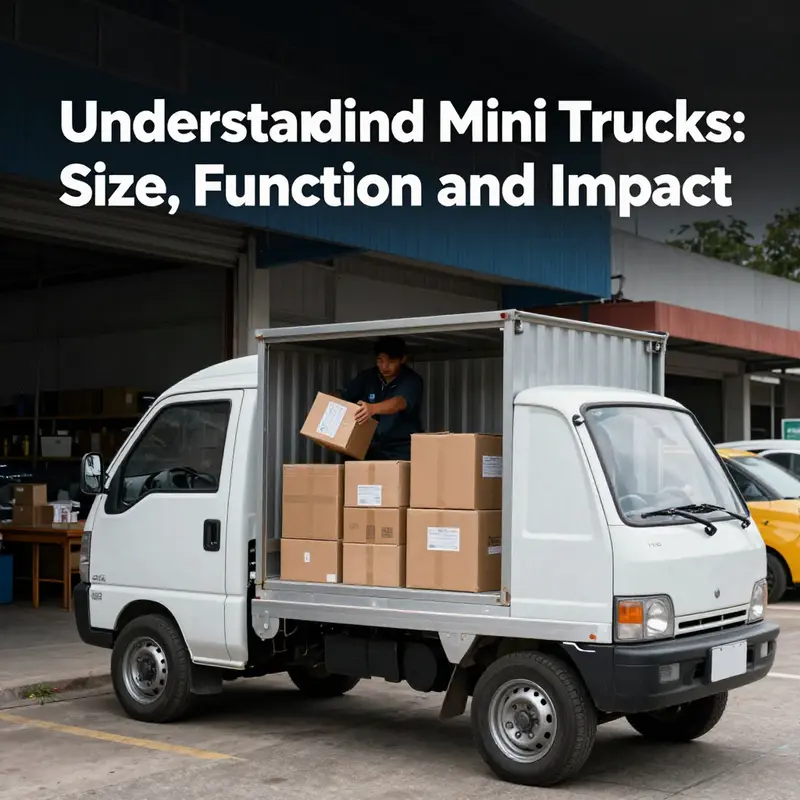
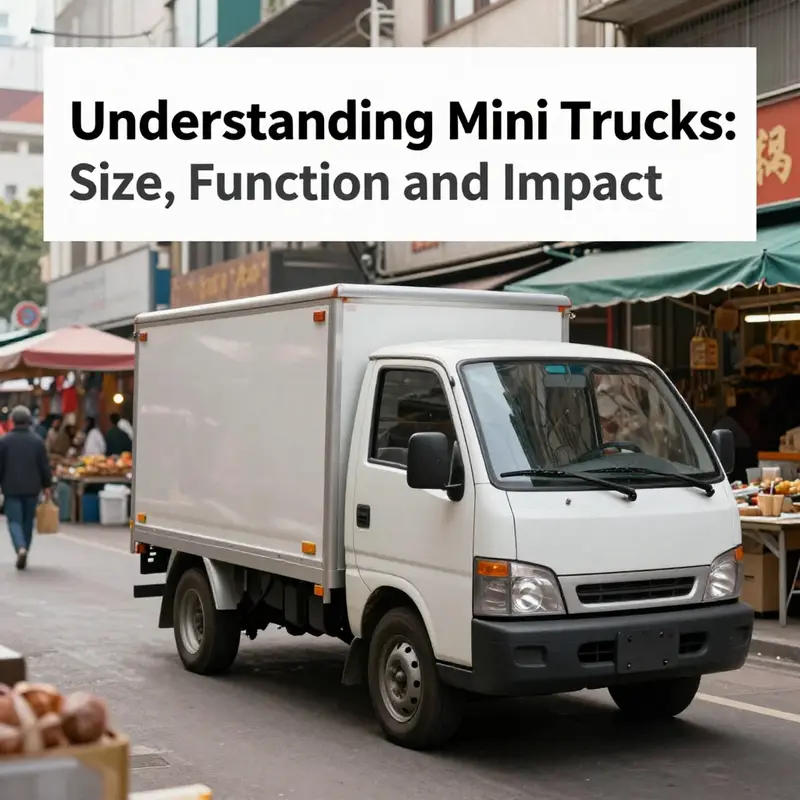
If a vehicle is defined by footprint as much as by payload, the mini truck sits at a paradox of size and capability. It is a compact, purpose built workhorse whose economics hinge on the steady arithmetic of daily routines. To understand the economic impact on small businesses, one must start with what the vehicle is designed to do: move modest loads through tight urban channels, reach customers where larger vans struggle, and do so with fuel and maintenance costs that stay manageable even when margins are thin.
The economic appeal is simple: mini trucks optimize two enduring business costs—fuel and capital. On fuel, compact engines and light frames translate into lower consumption per mile compared with larger delivery vehicles. Over a year, even small savings compound into meaningful cash flow improvements, especially for routes that are short and stop-and-go. On capital, the initial price tag is typically lower than full size vans, and the depreciation profile can align with a small business cash cycle. Rental or lease options offer a pathway to scale a fleet without tying up large amounts of capital, enabling experimentation and growth in step with demand.
Rental flexibility democratizes participation in local delivery. A business can test route optimization, service windows, and customer expectations, then adjust fleet size as demand evolves. When demand shifts due to seasonality or market changes, the ability to reallocate resources quickly matters more than any single vehicle specification. In economic terms this is dynamic capital allocation at the micro level, reducing opportunity cost of unused capacity while preserving liquidity.
The technology surrounding mini trucks also contributes to the economics, though not in a way that dominates cost. Improvements in energy efficiency, simple powertrains, and telematics that monitor usage and predict maintenance help keep downtime low and reliability high. This translates into predictable service windows and steadier cash flow. Insurance and financing terms often reflect disciplined maintenance and reliable operating patterns, creating further financial upside.
Policy and public-sector support can tilt the economics in favor of compact urban logistics. Subsidies or tax incentives aimed at reducing environmental footprints can shorten payback periods and lower total cost of ownership. In dense urban cores where micro-delivery is common, these factors can make mini trucks a more competitive option than larger fleets. The broader policy context thus amplifies the private sector’s ability to offer reliable, low-cost service in crowded neighborhoods.
For small businesses, the takeaway is that the mini truck represents a pragmatic, scalable option for local delivery. It combines predictable operating costs with flexible financing and a route that fits urban life. The result is a business asset that supports reliable, timely service while preserving margins in price sensitive markets. As demand for quick, dependable local delivery grows, the mini truck can be a core instrument in a small business’s logistics toolkit.
Mini Truc ks in the Urban Arc: Defining the Small Workhorse and its Distinction from Standard Pickups
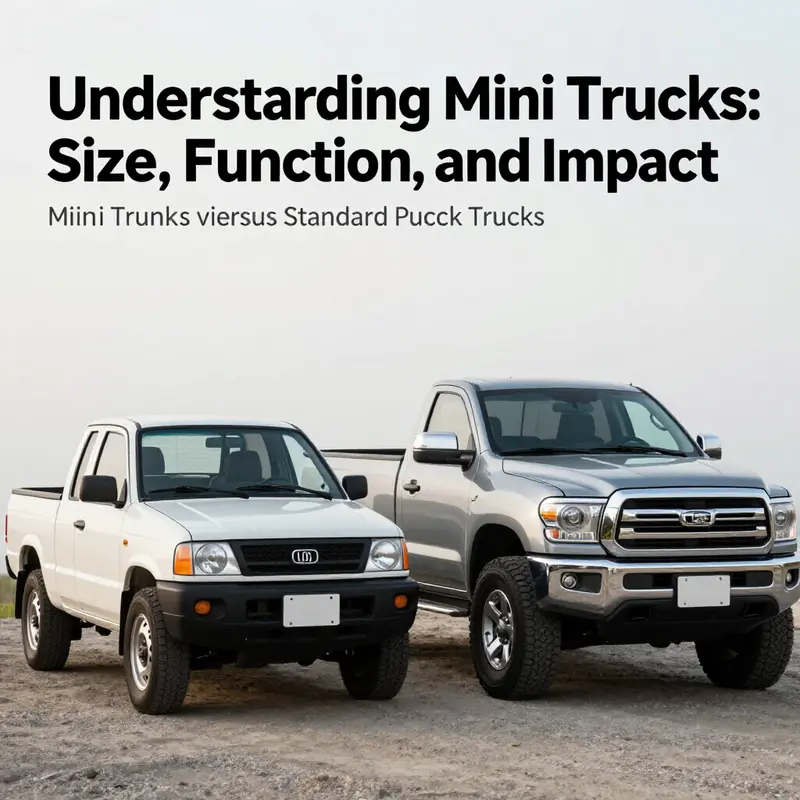
The question of what precisely constitutes a mini truck invites a careful, region-sensitive answer. Across regulatory regimes and market cultures, the term captures a shared intuition: a vehicle small enough to weave through crowded streets, efficient enough to keep operating costs modest, and capable enough to move goods in urban or suburban settings without the heft and expense of a full-size pickup. Yet the law and the market diverge in meaningful ways. In one context, a narrow length constraint paired with a tight total mass limit shapes a class of cargo vehicles that fit into narrow alleys and small loading bays. In another, a separate category of tiny, highly maneuverable trucks emerges, governed by a different set of size and engine criteria that emphasize urban efficiency. Taken together, these perspectives sketch a practical definition of the mini truck as a small, light, purpose-built solution for light-duty cargo transport. They also illuminate why the same phrase can mean slightly different things in different places, even as the core idea remains stable: compact, economical, and well-suited to last-mile work where larger trucks would be impractical or too costly to operate.
A concrete regulatory anchor from the Chinese context clarifies one end of the spectrum. The SZDB/Z standard established by the Shenzhen Market Supervision and Administration Bureau in 2016 defines a mini truck, or 微型货车, as a cargo vehicle of 3,500 millimeters in length or less and a maximum total mass of 1,800 kilograms or less, with exclusions that acknowledge other low-speed freight concepts. This formulation foregrounds size and weight as the primary discriminators, aligning with a broader regional emphasis on urban-accessible cargo solutions. It is not simply a matter of being small; it is a matter of being small enough to be legally and economically viable for frequent city trips, loading and unloading in constrained spaces, and operating within cost constraints that matter to small businesses and individual operators. In practice, the result is a vehicle that looks purpose-built for city logistics: a compact footprint, a cargo area that is easy to load and unload, and a configuration that minimizes dead weight without sacrificing practical payload.
But the mini truck is not a monolith whose borders are defined by one set of numbers alone. Across Asia, and then in other markets influenced by similar urban logistics needs, the concept has often aligned with what Japan calls the kei truck. Kei-class vehicles are defined by a bundle of constraints designed to maximize maneuverability, fuel efficiency, and affordability. The kei truck embodies the same urban logic as the Chinese microtruck but approaches it through a different regulatory lens—one that emphasizes a tiny footprint, efficient engines, and cost-conscious design. The upshot is a class of vehicles that are particularly well-suited to city deliveries, market stalls, and small businesses that require a nimble workhorse able to navigate narrow streets, negotiate tight parking, and perform routine hauls with minimal fuss. The general impression is clear: mini trucks are small, efficient, and economical by design, not simply by accident.
The practical implications of these definitions unfold in how the vehicles are sized, how much they can carry, and what they can do on a daily basis. Mini trucks typically carry payloads that suffice for last-mile deliveries, simple construction tasks, and local service work. They are designed to keep operating costs low, which translates into better fuel efficiency and lower maintenance expenses. The smaller frame and lighter build contribute to a reduced curb weight and a more favorable energy balance, making these vehicles attractive for contractors who run multiple stops in a day or for small businesses that need to move goods without tying up capital in a larger vehicle. The cargo area is commonly a box or bin that is accessed from the rear, with seating usually limited to one or two rows. This arrangement reflects the balance between securing a usable cargo volume and retaining a compact, maneuverable vehicle footprint.
A crucial thread running through these considerations is the question of how much these machines can legally carry and how those figures compare with standard pickup trucks. In many markets, mini trucks sit below a GVWR threshold of roughly 10,000 pounds (about 4,536 kilograms). That boundary, while specific in some regions, signals a general class characteristic: lightweight, daily-driven, urban logistics machines that do not require heavy-duty frames or towing capacity on the scale of their larger cousins. By contrast, standard pickup trucks occupy the other end of the spectrum. They are robust, large-framed machines with GVWRs commonly ranging from 10,000 pounds up to 14,000 pounds or more. They are designed for heavier-hauling tasks, towing capabilities, and serious off-road use. The payload, the box dimensions, and the chassis strength are all scaled to support work that involves larger volumes, tougher materials, or more frequent long-haul trips. The distinction is not merely academic. It translates to continually different maintenance costs, fuel consumption patterns, insurance profiles, and even the day-to-day ergonomics of loading and unloading.
In practice, then, mini trucks emerge as the preferred tool for a particular workflow: frequent, small-scale deliveries; the need to navigate congested corridors or tight loading zones; and the demand for affordable, predictable operating costs. They excel when the cargo is heavy enough to justify a dedicated box or bed, yet light enough that the vehicle itself remains easy to maneuver, easy to park, and easy to maintain. That combination of factors—size, weight, and intended use—defines the mini truck not only as a category, but as a working philosophy for urban logistics. The cargo box, often a simple, box-like enclosure, offers a practical solution for transporting furniture, construction materials, or other moderately sized goods in a single trip. It is less about sheer volume and more about the reliability of access and the consistency of daily performance across stop-after-stop routes.
The design emphasis here is pragmatic. A mini truck offers a single or double row of seating and a rear cargo area that can be accessed from the back of the vehicle, sometimes with additional side access. The goal is to keep the vehicle compact enough to slip through traffic while still delivering a meaningful payload. The compact size also feeds into fuel efficiency, which remains a central advantage. A lighter vehicle typically requires less energy to move, and the smaller aerodynamics profile generally helps in urban stop-and-go conditions. In urban logistics, every minute counted, and the lower operating cost per mile translates into a more sustainable business model over time. These attributes—in tandem with relatively lower purchase prices compared to larger pickups—help explain why mini trucks have found a niche in local distribution networks, market vendors, and service-oriented operations that prioritize frequent, predictable trips over long hauls.
For those who want a practical, model-specific sense of how these vehicles compare, the literature and enthusiast content often points to side-by-side model comparisons that highlight how a given mini truck stacks up against a larger pickup in terms of payload, box size, and efficiency. One useful reference for readers seeking granular model-level data is the comparison of Kingstar Kruzr models, which offers a snapshot of specifications and features across closely related variants. This kind of comparison supports the broader narrative by illustrating how small design choices affect real-world performance, including payload capacity, load versatility, and the ease of navigating crowded urban spaces. See Kingstar Kruzr models specs and features for a concrete model-level lens on these dynamics.
Despite the emphasis on size and weight, the mini truck remains adaptable to a range of roles. Vendors and contractors may customize the cargo box to fit particular goods or services, while some operators add simple campers, tool racks, or storage solutions that extend the vehicle’s utility beyond raw hauling. In the end, the core attributes endure: a vehicle that is small enough to fit where larger trucks cannot, light enough to be economical to run every day, and resilient enough to complete multiple trips with modest maintenance demands. The mini truck, in this sense, is not an exotic outlier but a practical instrument—one that embodies a precise response to the pressures of modern urban commerce.
As the field evolves, the relationship between regulatory definitions, market demand, and engineering practice will continue to shape how mini trucks are built and used. The ongoing refinement of size, weight, and efficiency targets will influence future models and their suitability for a broader array of urban logistics tasks. The central message remains consistent: when the task is to move goods efficiently through dense urban fabric, a small, economical, purpose-built vehicle often provides the most reliable and cost-effective solution. The broader conversation, then, is less about chasing ever-larger cargo and more about optimizing the tiny workhorse for the daily rhythms of city life, while recognizing that the specific numbers may shift with policy and market conditions in different regions.
External resource for further exploration: external guide
Final thoughts
Mini trucks present an exciting transportation solution, merging compact design with versatile functionality. They cater to the needs of urban businesses, offer economic advantages, and maintain compliance with regulatory standards. As small business owners and local residents recognize their value, understanding the intricacies of mini trucks becomes pivotal. Explore your options and consider how a mini truck could enhance your operational efficiency or personal errands in your local community.