
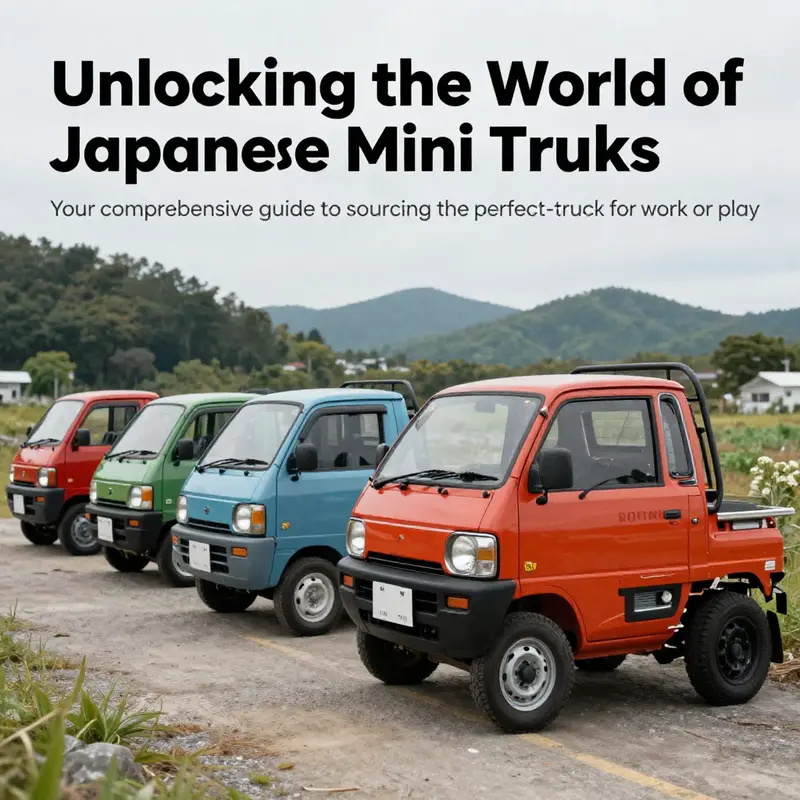
Have you ever found yourself in need of a compact, versatile vehicle that can handle everything from landscaping tools to weekend adventures? Japanese mini trucks, affectionately known as K-Trucks, have surged in popularity among local small business owners, residential property owners, and mini truck enthusiasts alike. With their unique blend of functionality, fuel efficiency, and compact size, these trucks are ideal for a variety of uses. In this guide, we’ll explore several avenues to purchase your very own Japanese mini truck, from online marketplaces to international trade shows, each presenting unique benefits and opportunities to fit your needs. Get ready to discover where you can find these fantastic vehicles that are perfect for both work and play!
The Digital Aisle: Navigating Online Marketplaces to Buy a Japanese Mini Truck
Japanese mini trucks occupy a unique niche in global commerce. They are compact, economical, and remarkably capable in tight spaces. The digital age has expanded how buyers access them from overseas, turning what was once a complex import process into a sequence of accessible online steps. The online marketplaces that host these vehicles act as global bazaars, connecting distant sellers with buyers who value efficiency as much as reliability. A thoughtful approach to these platforms turns curiosity into a concrete purchase, while a cautious one protects you from the rough edges of cross-border trade. To begin, picture the market as a spectrum rather than a single storefront. You can encounter general export marketplaces that list a wide range of vehicles, specialized platforms focused on light commercial gear, and auction or dealer portals that host both individual sellers and certified exporters. Each channel has its rhythms. Some emphasize bulk listings with long, data-rich specs and verifiable export documents. Others lean on quick turnarounds and lower entry costs, with more variability in vehicle history. For a buyer, the key is recognizing which channel best fits your needs—whether you are sourcing for a business fleet, a regional farm operation, or a personal project that rewards hands-on maintenance. The niche is important; the broad approach can still work, but the nuance matters when you are navigating freight, duties, and local compliance. One practical starting point is the Minitrucks Blog, a resource built to translate assessments of listings into actionable steps. It can help you frame your inquiries, compare listings on different platforms, and track the information you collect as you refine your shortlist. Minitrucks Blog This blend of scale and specialization is what makes online marketplaces so effective for acquiring a Japanese mini truck, provided you move with a plan rather than impulse. You learn to read listings as blueprints rather than advertisements, to recognize how a seller frames a vehicle’s condition, and to distinguish between what is promised and what can be verified. The process begins with a careful review of the listing itself. Look for a clear set of photos taken from multiple angles: exterior panels, undercarriage, engine bay, and the cargo bed. Photos tell a story that words sometimes cannot. In a well-documented listing, you should see a systematic breakdown of the vehicle’s essential parameters: payload capacity within a sensible range for a compact truck, drive configuration that suits your terrain, and transmission type that matches your driving style. The numbers themselves are not everything, but they anchor your expectations and help you spot inconsistencies. A credible listing will also include a concise history section. It may mention previous ownership, whether the vehicle was used in agriculture, construction, or urban delivery, and any notable repairs or maintenance milestones. If a seller cannot provide even a rough history, that absence should be a red flag. Don’t rely on a single photo or a single line of text. Ask for more images, especially of the chassis, suspension, and any signs of rust or damage. Request the vehicle’s age and mileage if available, but be prepared for a range rather than a precise figure. On reputable platforms, you will often encounter buyer protections and dispute resolutions designed to reduce risk. These safeguards can include escrow services, secure payment gateways, or certified export documentation. The presence of such features signals that the platform has vetted processes to support international transactions. As you assess a listing, you should also confirm the vehicle’s export eligibility. Some listings note that the vehicle is prepared for export with a clean title, a history report, and the necessary customs paperwork. Others may require you to obtain documents after purchase or through a third party. This distinction affects your planning and cost calculation. If a listing mentions export, you will want to confirm its current status, whether it is eligible for shipment by RoRo (roll-on/roll-off) or container, and the anticipated route. Shipping method matters because it directly influences the risk of damage, the pace of delivery, and the total landed cost. RoRo is often more economical for smaller cargo and straightforward for straightforward vehicles, while container shipping provides stronger protection but at a higher price. The practicalities of shipping also depend on the paperwork trail. Expect to see a bill of lading, a commercial invoice, and possibly a certificate of title. A seller who cannot provide these documents or who asks for unusual payment terms should trigger further due diligence. When you begin to exchange messages with a seller, keep a careful record of every claim and every promise made. If the seller asserts certain conditions about mileage, accident history, or recent repairs, request supporting evidence—service receipts, inspection reports, or official certificates. In cross-border purchases, it is wise to have a local mechanic or a trusted inspector translate and verify the condition of the truck. An inspection plan can be structured around a set of priority checks: the structural integrity of the chassis, the condition of seals and weathering, the state of the electrical system, the function of the braking and steering assemblies, and the readiness of the cargo area. If the vehicle comes with a cargo bed, ensure that the bed floor shows no hidden corrosion or damage that would compromise payload integrity. The focus should stay practical: can you rely on this truck for its intended work, or would repairs beyond the posted price become a liability? In parallel with content checks, you should map out the entire cost of ownership. The price tag on the listing is only the tip of the iceberg. Import duties, local taxes, and registration fees can significantly shape your budget. The shipping cost, whether it is via container or RoRo, adds to the tally as do potential port handling charges and insurance. In some regions, the legal path to registering a used imported vehicle requires meeting local safety and emissions standards or adapting certain components. You may need to install compliant lighting, emission controls, or other parts to meet regulatory requirements. If you plan to keep the truck for business use, this step becomes part of your project timeline and pricing model rather than an afterthought. A broad, careful cushion in your budgeting helps you avoid sticker shock at the port. It also gives you leverage in price negotiations, because confident buyers can distinguish between a seller who is merely testing the market and a partner who understands the full import process. Negotiation on online marketplaces tends to be a balance between price and certainty. Some sellers are prepared to accept a lower price in exchange for a quicker transaction and a clearer export path. Others may hold to a fixed price while offering additional assurances, such as a longer warranty window on certain components or complimentary shipping arrangements. It is reasonable to negotiate for a more exact description of the vehicle’s condition, the certainty of the paperwork, and an explicit timeline for shipment. Any concessions you obtain should be reflected in a revised, well-documented purchase agreement. If you choose to proceed, you may consider engaging a broker or an intermediary who specializes in cross-border vehicle purchases. A broker can help verify listing accuracy, manage negotiations, coordinate inspections, and align shipping schedules with your regulatory obligations. They can be particularly helpful for buyers who are new to international procurement, as they translate technical terms, confirm export legality, and help you avoid common missteps. The decision to use a broker should consider your comfort with the process, the level of risk you can tolerate, and the price trade-offs. Documentation becomes the backbone of trust in online marketplaces. You want a clear chain of custody for every document—from the listing details to the payment receipts and the shipping paperwork. A well-maintained trail reduces ambiguity and minimizes the chance of miscommunication as the vehicle moves from seller to buyer across oceans and borders. Throughout this journey, maintaining clear, courteous communication with the seller is essential. Set expectations early about response times, the need for additional photos, and the preferred methods of payment and shipping. If the listing satisfies your criteria but you still have questions, pose them in writing and request written confirmations. This approach not only protects you but also provides a reference point if disputes arise later. Once a deal is sealed, the immediate tasks shift to logistics and compliance. Confirm the shipping method, arrangement of insurance, and a realistic delivery window. Verify that the shipper can handle all necessary customs documentation and that you have a plan for port pickup or door-to-door delivery. In many markets, the path from purchase to practical use involves a final round of local checks. You may want to arrange for a pre-registration inspection or a local inspection of the vehicle upon arrival to your country. If you are new to the international market, consider connecting with others who have completed similar transactions. Peer experiences provide a realistic sense of timing, hidden costs, and the emotional ups and downs of remote purchases. The online marketplace is a powerful starting point for acquiring a Japanese mini truck, but the journey is only as strong as your preparation and your willingness to verify every claim. A well-researched listing, a transparent communication pattern, robust documentation, and a clear plan for shipping and compliance together reduce risk and increase the likelihood that the vehicle you receive will perform as expected in its new home. For readers seeking additional context or practical examples of how buyers navigate these waters, the Minitrucks Blog offers narratives and checklists that align with this approach. Minitrucks Blog While the exact models and configurations you encounter online may vary, the foundational principles remain constant: demand accuracy over enthusiasm, document everything, and budget for the full lifecycle of the vehicle. For more targeted reading on the marketplace experience and how to compare listings across platforms, you can explore broader guides and reviews at the same hub. As you accumulate listings and refine your criteria, you’ll start to see patterns emerge. Reliable sellers tend to present complete documentation, offer responsive communication, and provide consistent, verifiable information about the vehicle’s condition and export status. In contrast, listings with sparse details, vague history, or reluctance to share additional documentation should prompt deeper scrutiny or a cautious withdrawal. Remember that buying is only the first step; the long-term cost of ownership—maintenance, spare parts availability, and local service options—often depends on the depth of your due diligence during the listing phase. The online marketplace landscape rewards patience and a disciplined approach. It allows you to compare a broad spectrum of options from multiple regions, weigh the trade-offs between price, condition, and logistics, and assemble a purchase plan that aligns with your use case. With time, you’ll become adept at translating a vehicle’s listed specifications into real-world performance expectations. You’ll learn to read the subtle cues in a listing’s language—how the seller describes wear, how comprehensive the documentation is, and how clearly the export pathway is mapped out. When you factor in the cost of shipping, duties, and local registration, the total price becomes a transparent equation rather than a speculative number. The chapter of online marketplaces closes not with a single purchase, but with a process you can repeat and optimize. Each transaction strengthens your ability to read listings, anticipate common delays, and refine expectations for delivery timelines. And as you gather experience, you’ll find yourself more confident in engaging with sellers, negotiating terms, and securing a vehicle that truly fits your operational needs. For readers interested in expanding their horizons beyond general online marketplaces, the broader ecosystem includes specialized auctions and official dealer networks that operate across borders. These avenues can offer added assurances, such as verified vehicle history and certified pre-owned status, though they may come with different price and access dynamics. If you are assessing whether to pursue new-old stock through a direct-from-market source or to explore used inventory through an export-focused channel, weigh the trade-offs between early access and price certainty. In any case, online marketplaces remain a practical, scalable route to obtain a Japanese mini truck. With diligence, a clear checklist, and a measured budget, you can navigate the digital aisles with confidence and move from curiosity to a successful, well-documented purchase. External resource: https://www.alibaba.com/trade/search?fsb=y&IndexArea=product_en&CatId=&SearchText=japanese+mini+truck
Finding Your Japanese Mini Truck Through Auctions and Dealers: A Practical Sourcing Guide
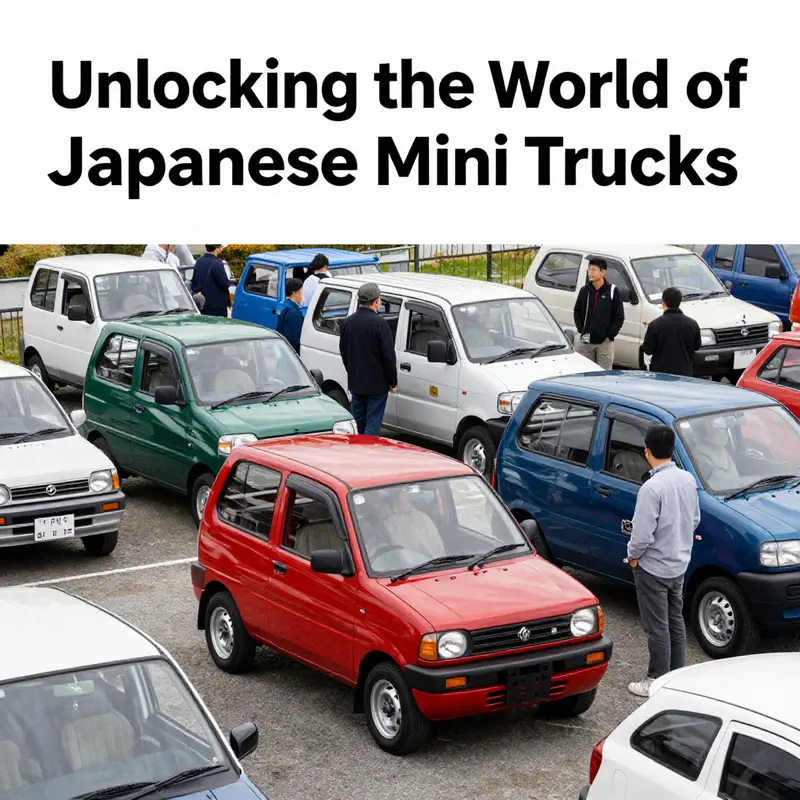
Sourcing a Japanese mini truck requires a blend of patience, due diligence, and a willingness to explore channels that specialize in small, capable work vehicles. These compact machines have earned a reputation for practicality and reliability in a variety of settings, from narrow rural lanes to crowded urban jobsites. Because they are built to tight specifications and to withstand heavy use, the best way to find one that matches your needs is to follow a deliberate path through specialized auctions and trusted dealerships, then supplement that path with direct-from-Japan options when the situation calls for it. The key is to see this as a sourcing journey rather than a single purchase event. When you approach it as a process, you gain the leverage of clearer expectations, better pricing, and a greater chance of landing a vehicle that aligns with your intended use, maintenance capacity, and local regulations.
Auctions and dedicated marketplaces represent two sides of the same coin. On one side, there are online marketplaces that host listings from a broad network of sellers, including private owners and professional exporters. On the other side, there are specialized auction houses and export-focused dealerships that curate inventories specifically for international buyers. The common thread is that both channels provide access to a wide array of configurations—drivetrains, bed lengths, payload capacities, and interior layouts—that you simply cannot sample by visiting a handful of local outlets. For the buyer who needs a compact truck capable of navigating tight streets, a dump bed or flatbed conversion, and a workhorse reputation, these specialized channels can open a wider field of options in a shorter time frame. As you explore, you will learn that it is not just about price; it is about the balance of condition, documentation, and logistics, all coordinated to deliver a vehicle that truly fits your needs.
A practical approach to auctions begins with understanding how listings are described and how vehicle history is conveyed. Reputable platforms in this niche typically provide detailed specifications, including overall condition, mechanical notes, mileage, body integrity, and any notable prior work. Importantly, you should expect documentation to accompany the listing: a clean title, service notes, and, where possible, records of inspections or prior maintenance. The reality is that auction listings can span a wide spectrum of quality and provenance. Some units may come with comprehensive histories and clear provenance, while others might present as project candidates or require more thorough in-person inspection. The prudent buyer builds a short list of criteria before they begin bidding. They may decide on non-negotiables, such as a reliable four-wheel-drive option, certain bed lengths, or a preference for a particular transmission type. They also set a firm ceiling on total landed cost, factoring in import duties, shipping, insurance, and any required compliance work. This pre-planning matters because auctions reward decisiveness and clear judgment. A well-defined threshold helps you avoid the common trap of overbidding in the heat of the moment.
Inspection is the linchpin of a successful auction purchase. If you cannot directly inspect the vehicle in person, rely on professional third-party inspection services that specialize in importing small work trucks. Inspections should focus on critical elements: frame integrity, rust at wheel arches and undercarriage, the condition of the cab floor, drivetrain responsiveness, and the status of brakes and tires. A vehicle that feels solid in the photos but shows hidden corrosion on arrival will leave you with mounting repair costs and downtime. For many buyers, the most reliable route is to cross-check multiple sources: the listing, inspection reports, and seller disclosures. When possible, request live video walkthroughs or real-time inspection windows, and seek high-resolution images of the chassis, undercarriage, and areas known to trap moisture. Since many of these trucks operate in regions with varied climates, understanding the chassis condition and rust history often proves more important than a pristine paint job.
The ecosystem of specialized dealerships complements auctions by adding a layer of assurances that can ease the import process. Authorized exporters and export-focused dealers curate inventories with export readiness in mind. They handle initial vetting, prepare export paperwork, and coordinate freight and insurance in a way that reduces the buyer’s administrative burden. The trade-off is that prices from these dealers can include a premium for their coordination and guarantees. Still, for buyers who require a smoother path to ownership, the price premium is often worth the peace of mind. In these interactions, transparency about the vehicle’s origin, its service history, and any refurbishments is critical. A reputable dealer will be forthcoming about known issues and ready to provide a detailed bill of sale, motor history, and title documents, all of which simplify clearance in a buyer’s country. You should also consider whether the dealer offers any post-purchase support, such as basic mechanical checks on arrival or a limited warranty window. Even without naming brands, the value proposition is clear: a curated inventory, predictable paperwork, and a structured process that reduces the risk of surprises after you take delivery.
Beyond the auction room and showroom floor, the broader channel landscape includes direct-from-Japan sourcing. This route appeals to buyers who want to target specific configurations or models that may no longer be readily available in overseas markets. Direct-from-Japan purchases typically require a careful evaluation of export eligibility and local compliance regimes before any commitment. One practical reality is that direct-from-Japan purchases frequently involve working through intermediaries who understand the nuances of cross-border transport, currency fluctuations, and import duties. The advantage, however, lies in the ability to tailor a build to your precise requirements, obtain a vehicle with a known maintenance pedigree, and negotiate terms that align with your delivery timeline. The ecosystem supporting direct purchases often offers a menu of options: pre-purchase inspections, consolidated shipments with other buyers to reduce costs, and a suite of logistics services that cover from port-to-door delivery. This is a compelling option for buyers who are comfortable coordinating multiple moving parts and who wish to minimize the risk of miscommunication that can occur when working with a single intermediary.
In practice, successful sourcing from specialized channels hinges on three pillars: due diligence, logistics, and alignment of expectations. Due diligence means validating documentation, confirming the vehicle’s configuration, and verifying the seller’s credibility. Logistics means coordinating packaging, shipping, and customs clearance, including any necessary modifications to satisfy local safety or emissions standards. Alignment of expectations means negotiating terms that reflect not only the vehicle’s price but also the timeline for delivery and any post-arrival services that might be part of the package. Buyers who master these pillars often find that the journey from initial inquiry to receipt of the vehicle becomes a sequence of predictable steps rather than a scramble for information. A well-structured approach reduces the risk of delays and misinterpretations, and it helps buyers plan for the inevitable questions that arise at the border or in the port city.
For readers who want a real-world sense of how communities share practical sourcing wisdom, consider the resource hub maintained by enthusiasts who document their procurement journeys. These accounts shed light on the day-to-day realities of comparing listings, arranging inspections, and negotiating with exporters. A single, well-curated thread can illuminate a dozen subtleties that no formal guide captures—like the rhythm of bidding at a weekend auction, or the way a dealer phrases a warranty offer. You can explore these experiences and reflections at the community resources section of the sourcing network, where narratives from buyers and sellers alike offer actionable tips and cautions. The value of these perspectives lies not in anecdote alone but in the patterns they reveal: how to interpret a listing’s language, what a diagnostic report should reveal, and how to structure a shipping timeline that minimizes layover risk. If you want a concise starting point for the kind of practical insights that help with decision-making, you can begin with a centralized hub that aggregates these experiences and connects readers to ongoing conversations on mini truck sourcing. You can find this resource at minitrucksocala.com/blog.
As you move from theory toward action, you must also prepare for the realities of import compliance and local regulations. Many buyers underestimate the complexity of transporting a vehicle across borders, especially when the original market uses different safety standards, emissions levels, or steering configurations. The process can involve translation of documents, certification of compliance, and, in some cases, modifications to meet local regulations. Given these realities, it is prudent to budget not only for the purchase price and shipping but also for possible compliance work or conformity testing. Engaging a logistics partner who specializes in vehicle imports can streamline this stage and help you anticipate costs before bids are finalized. A thoughtful buyer will also consider insurance coverage for transit and the potential for port-side storage if schedules shift during transit. The overarching aim is to ensure that every step—from bidding to delivery—occurs within a framework of transparency and predictability, so there are no unwelcome surprises when the vehicle arrives at your door.
Ultimately, the decision to pursue auctions, dealerships, or direct-from-Japan sourcing emerges from a balanced assessment of risk, cost, and convenience. Auctions may offer the broadest pool of candidate vehicles and the possibility of strong bargains, but they demand extra vigilance and, frequently, a willingness to take on some post-purchase work. Dealers deliver more certainty and a smoother path to ownership, often with bundled services that ease the transition across borders, but at a premium that reflects their added value. Direct-from-Japan can optimize for customization and provenance, yet it requires careful coordination across multiple parties and a firmer grip on logistics. Most buyers find they benefit from a hybrid approach: they start with a broad market scan through auctions, shortlist a few candidates with solid histories, then narrow the field with a trusted dealer who can vouch for provenance and handle the export paperwork. When a specific configuration is nonnegotiable, they turn to direct-from-Japan channels with a clear set of acceptance criteria and a timeline that accommodates the additional steps involved.
In the end, the journey to owning a Japanese mini truck is less about chasing a single perfect find and more about mastering a sourcing process that aligns with your operational goals. The vehicles themselves are simple but resilient, designed to maximize utility in tight spaces. The channels that supply them—specialized auctions, export-focused dealerships, and direct-from-Japan options—each carry a distinct value proposition. Your job as a buyer is to map your priorities, assemble a credible support network, and approach each opportunity with due diligence and clear expectations. By doing so, you convert a seemingly specialized purchase into a reliable strategic asset for your business or hobby project. And as you accumulate experience, you’ll refine your criteria, sharpen your negotiation instincts, and develop a sense for when to push for a deeper warranty, when to accept a modest price concession, and when to pursue a direct-from-Japan option that truly aligns with your long-term plans.
External resource for further exploration: to gain broader exposure to the market and to experience a major event where buyers and sellers converge, you can explore the official site for a major truck exhibition held in Japan. This resource provides schedules, exhibitor lists, and logistics guidance that can inform your sourcing strategy and help you assess potential candidates in person: https://www.japan-truck-show.com/.
Sourcing Japanese Mini Trucks Through International Trade Shows: A Hands-On Path to Direct Purchase
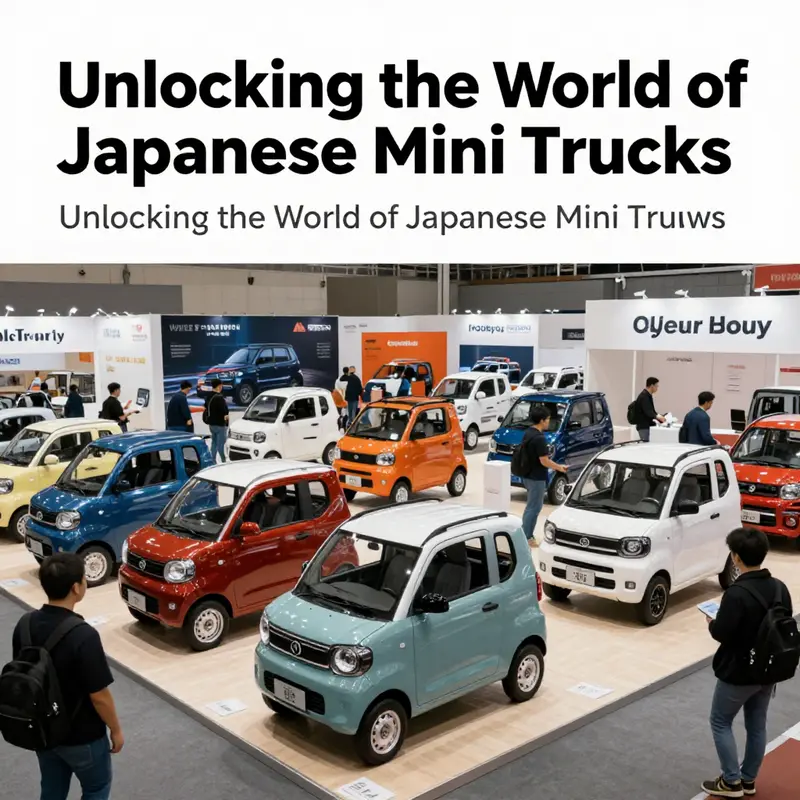
When you set out to acquire a Japanese mini truck, the journey often begins with questions about where to buy, how to verify quality, and what it means to negotiate from abroad. International trade shows in Japan offer a distinctive route that combines education, observation, and direct access in a single, immersive experience. The premier truck exhibition held in Yokohama has earned its reputation as the most authoritative gathering in the country for commercial light-duty vehicles, and it functions not just as a showcase but as a marketplace where buyers can meet with manufacturers, exporters, and insiders who understand the practical realities of moving a vehicle from Japan to overseas markets. For a buyer who wants to move beyond secondhand listings and opaque online catalogs, the show can illuminate the path to an authentic, export-ready purchase. It is less about chasing a single bargain and more about validating a vehicle’s lineage, its readiness for export, and the kind of aftercare you can expect once the truck arrives on your side of the world. In this sense, the show is a microcosm of the broader Japanese mini truck ecosystem: practical, compact, well-engineered machines presented alongside the people who understand their strengths and their limits in various jurisdictions and climates.
The logistics of attending a trade show in Japan are themselves part of the education. The event typically unfolds over a concentrated window, drawing a large, diverse crowd—from regional distributors and fleet operators to small and mid-size enterprises exploring new ways to source transport solutions. The Yokohama venue organizes space in a way that lets buyers stroll aisles, pause at demonstrations, and step into model booths where visible, tangible diesel- and electric-powered platforms are displayed in configurations that reflect real-world use. The scale is impressive: tens of thousands of square meters host more than a hundred exhibitors, with a steady cadence of live demonstrations, product briefings, and on-site consultations. The environment encourages direct dialogue, which is essential when you’re navigating the complexities of cross-border purchasing, such as payment terms, export documentation, and compliance with your local import requirements. The experience is different from online marketplaces or auction rooms; here you can read a vehicle’s condition through its undercarriage, listen to a representative explain the maintenance philosophy, and assess how readily parts and service support could be integrated into your operation.
The show’s value becomes especially clear when you consider the scope of vehicles on display. You’ll encounter a spectrum that spans compact cargo trucks, specialized variants with enhanced payload configurations, and right-hand-drive models tailored for export markets. The presence of both new and pre-owned units provides a practical frame for evaluating total cost of ownership, not just purchase price. New vehicles promise modern safety features and the latest engineering refinements, while certified pre-owned units offer a more immediate entry point and a clearer understanding of real-world wear and service history. The ability to compare such options side by side and to discuss real-world usage with owners and technicians helps demystify what might otherwise be an opaque online decision. Buyers increasingly value the chance to assess a vehicle in person, to understand how a given model might perform in their local terrain, and to hear from the source about feasible customization paths, spare parts availability, and the support network that follows a purchase.
One of the most compelling reasons to attend is the direct access to the people who move these vehicles from factory floors to overseas yards. Interactions at the booth floor often reveal the practicalities of exporting, including minimum order quantities, phased delivery, and how local regulations shape what configurations can be imported. You can ask about the availability of export-ready paperwork, conversion services for local compliance, and the typical lead times for a shipment from port to port. The exchanges are candid because many exhibitors operate on international footing; they understand the deadlines, the documentation, and the diligence required by buyers who are coordinating with freight forwarders and customs brokers back home. For first-time international buyers, these conversations establish a reliable baseline for what is feasible and what comes with additional costs, delays, or regulatory hurdles.
Planning to participate in such a show is not just about arriving with a travel plan. It is about securing the prerequisites that make a visit productive. You’ll want to arrange visas if required, align your interpretation needs, and prepare a short-list of models or configurations you wish to review firsthand. A well-prepared buyer brings a grid for quick comparisons—dimensions, payload, drive layout, fuel type, and any after-sales service commitments that might accompany a purchase. The on-site environment rewards focus and efficiency; you won’t find a single vendor who can accommodate long, open-ended discussions without a clear intent. That’s why many buyers prepare a compact itinerary that includes pre-scheduled meetings, live demonstrations, and time blocks to consult with experts about export logistics, transport insurance, and the post-sale support structure that keeps a small fleet running after it lands in your country.
Beyond the practicalities, there is a strategic layer to attending international trade shows. They are forums where buyers glean market intelligence—what configurations are gaining interest in certain regions, which design tweaks have delivering value in rough terrain, and what the current pricing rhythms look like in a market that models a mix of domestic production and export-oriented supply chains. This information helps you calibrate your purchase strategy, not only for the present deal but for potential future acquisitions, service contracts, and geographic expansion. For organizations eyeing a longer horizon, the show becomes a living library of regional preferences, regulatory constraints, and the kinds of partnerships that sustain a small fleet over several years.
To maximize the experience, study the show’s program in advance and identify exhibitors who demonstrate a robust export track record and a transparent approach to documentation. Some vendors will offer on-site assessments that you can constrain to a single day, allowing you to compare several candidates without losing momentum in your purchasing plan. If you are new to the export process, ask about the documentation bundle typically required for cross-border clearance: purchase invoices, bill of lading, commercial terms, maintenance records, and any required certificates of conformity or safety compliance. These details aren’t mere formalities; they often determine whether a vehicle can clear customs and what duties or taxes will apply in your country. The conversations can also reveal the existence of a spare-parts network and a sanctioned service partner who can travel with your fleet, provide routine maintenance, and minimize downtime.
In addition to the practical and logistical aspects, the show offers a chance to witness the culture of vehicle customization and adaptation that accompanies a successful export business. Some exhibitors discuss feasible alterations to meet local weather conditions, road profiles, or regulatory expectations. You may hear about upgrades that improve durability in challenging climates, or about ways to adapt interiors to better suit the needs of a small business operation. While such discussions can be technical, they are also grounded in real-world results, as many exhibitors share case studies of fleets that have benefited from targeted modifications and localized support agreements. This is where the value of attending becomes clear: you are not just buying a truck; you are entering into a relationship with a vendor who can help you sustain your operation across borders, and who understands how to keep your fleet efficient and compliant over time.
As you prepare to walk the show floor, you might find it helpful to anchor your visit in a couple of practical routines. First, map a route that prioritizes the most relevant vehicle categories and the exhibitors that specialize in export-friendly configurations. Second, reserve time for informal conversations—these exchanges often yield insights that formal presentations do not capture, such as how a particular vendor handles warranty coverage for imported units or how quickly they can secure spare parts for customers in your region. Third, request a guided walk-through or a language-assisted briefing if possible; clear communication can prevent misinterpretations about vehicle specifications, options, or delivery terms. Finally, take advantage of any organizer-facilitated tours to nearby attractions, since these experiences can help you stay refreshed during a dense schedule and maintain focus over the course of several days. The organizers frequently arrange practical add-ons—visa assistance, logistics coordination, and even reduced-cost guided activities—that can ease the burden of an international purchase and help you extract maximum value from your time in Japan. Such support services can be a significant relief for SMEs, underscoring the event’s role as a comprehensive conduit between Japanese makers and global buyers.
The decision to pursue a purchase through an international trade show should be viewed in the context of your overall procurement and fleet strategy. If you are buying for a fleet whose operations depend on reliable uptime, the possibility of inspecting a vehicle in person and negotiating terms directly with a manufacturer or official distributor becomes a meaningful risk-reduction step. It allows you to verify the vehicle’s provenance, assess the condition of any used units, and discuss terms that align with your operational realities. You can explore whether the vendor offers bundled services that simplify import clearance, such as pre-verified export documentation, or flexible delivery schedules that reduce the time your fleet is out of service while awaiting shipment. You can also gauge a vendor’s willingness to accommodate your local voltage, gauge, or seating configurations, and determine whether any customization is practical within your budget and regulatory constraints. For buyers who plan to scale, the show can serve as a matchmaking venue, helping you identify service partners, trusted brokers, and potential local representatives who can support a growing fleet and provide ongoing technical assistance long after the initial purchase.
In the end, the value of attending an international trade show for a Japanese mini truck purchase lies in the blend of direct access, authentic evaluation, and the confidence that comes from engaging with people who speak the language of export and fleet management. It is a rare opportunity to observe how a vehicle is designed for local and international use, to discuss the realities of maintenance and supply, and to assess whether a given model fits your climate, your roads, and your workload. If your goal is a purchase that is transparent, well-supported, and aligned with your long-term needs, the show stands out as a practical and strategic step in the journey. For ongoing updates and related buyer resources, you can explore the industry blog that tracks trends and guides buyers through similar decisions: minitrucksocala.com/blog/. This resource can offer context on how market dynamics evolve, what buyers should watch for in the coming years, and how exporters adapt to shifting regulatory landscapes.
For those who want to widen their knowledge beyond the show floor, consider using the insights gathered here to compare internationally sourced options with locally available alternatives. The goal is a purchase path that maintains transparency, ensures compliance, and delivers value through reliable after-sales support. While the specifics of each exhibit may differ year to year, the underlying principles remain stable: conduct due diligence, verify export readiness, and build relationships with trusted partners who can support you over the long term. The international trade show format is not a single event but a starting point for a disciplined, thoughtful procurement process that respects both the spirit of the market and the practical realities of importing vehicles into your country. It invites you to see how a compact workhorse becomes a dependable asset for your operation, and it invites you to imagine how such a vehicle can integrate into your daily workflow, your maintenance planning, and your expansion strategy. With careful preparation and a clear set of criteria, attending a major trade show can transform the idea of “where to buy a Japanese mini truck” from a search into a structured, achievable purchase.
External resource: https://www.japan-truckshow.com/
Direct Purchases from Japan: Sourcing a Reliable Mini Truck for Global Buyers
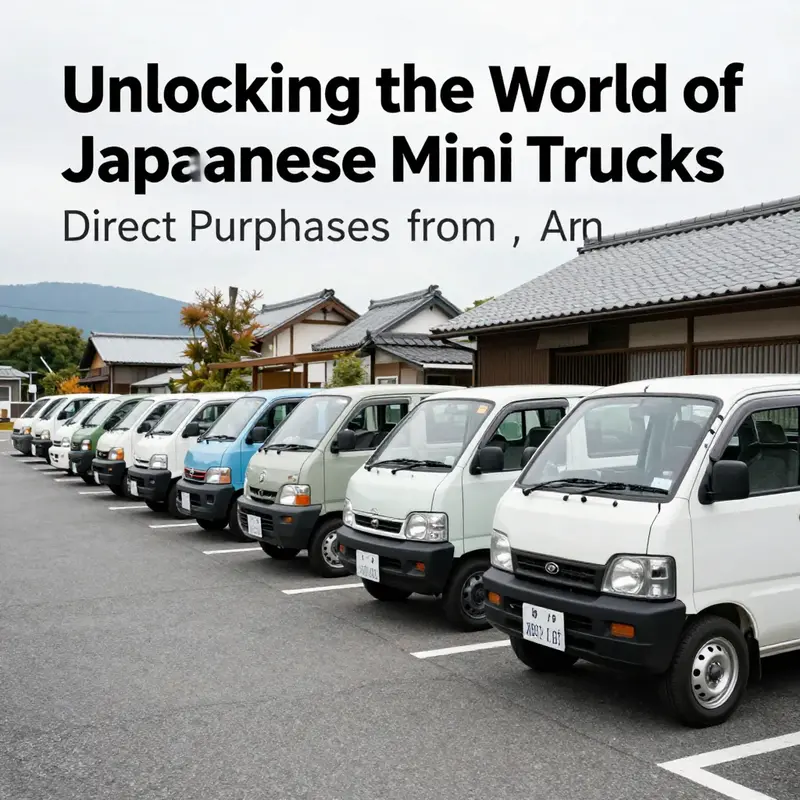
Direct purchases from Japan offer a compelling path for global buyers seeking small, practical workhorses that pair compact size with surprising versatility. A direct-from-Japan approach is more than a transaction; it’s a process that blends legacy manufacturing focus with modern cross-border logistics. Buyers who start from this vantage point often arrive with a fundamental question: how do I translate a listing on a distant marketplace into a road-ready vehicle in my own city? The answer hinges on a careful, experiential understanding of how these machines are categorized, how sellers present them, and how shipping, compliance, and post-purchase steps weave together to form a seamless supply chain. The appeal is clear: access to a broad spectrum of lightweight, fuel-efficient trucks that excel at urban deliveries, farm work, and small-scale construction tasks. They are designed to navigate tight streets and crowded spaces with a surprising payload relative to their footprint. Yet this appeal comes with a set of realities—regulatory checks, documentation demands, and the logistics of moving a vehicle across borders—that buyers must navigate with patience and precision.
Online marketplaces, auctions, and direct-from-Japan arrangements each offer distinct routes to the same end: a vehicle sourced in Japan, brought to your market, and registered for use under local rules. A direct-purchase mindset emphasizes transparency and history, the ability to compare between listings, and a clear understanding of what is included in the price. Listings on global marketplaces commonly present key details in a structured way: the vehicle’s weight category and drive configuration, visible wear or modifications, mileage or usage history when available, and the seller’s terms of delivery. Because mini trucks are valued for their nimble size and economical operation, buyers often focus on practical attributes that map directly to real-world use: payload capacity, cargo bed dimensions, turning radius, fuel efficiency, and reliability indicators gleaned from the vehicle’s age and maintenance signals. The more precise a listing’s data, the more confident a buyer can be when aligning a vehicle with a specific job—from urban courier tasks to rural farm chores.
Another dimension of the direct-purchase route is the right-hand-drive format, which is common in many export markets. This configuration can be a favorable fit for buyers in regions where road rules and traffic patterns align with right-hand drive, potentially reducing the need for invasive modifications after import. It’s important to recognize that a vehicle’s configuration is not merely a curiosity; it can shape everyday driving comfort, navigation, and the ease of integrating the vehicle into local fleets. Because these trucks come from a market where design priorities emphasize simplicity, robustness, and serviceability, buyers often encounter fewer surprises in terms of onboard electronics compared with more complex contemporary models. Still, a rigorous review of electrical systems, rust risk, and structural integrity remains essential, particularly when purchasing a unit with extensive use in harsh environments or with aftermarket alterations.
Direct channels in Japan also include specialized dealerships and auctions that cater to international buyers. These venues typically furnish a more curated experience than a generic online listing, offering vehicle histories, certified condition assessments, and a clearer outline of export documentation. For buyers, this reduces the guesswork that sometimes accompanies distant purchases. A well-informed buyer will take advantage of these channels by asking pointed questions about the vehicle’s service history, any collision or frame-repair history, and the availability of return or warranty options, if any are offered through the seller or the intermediary. It is in these exchanges that a buyer begins to understand the true value of a vehicle and how it aligns with the candidate’s intended use. While prices can be competitive compared with domestic options, the total cost of ownership—shipping, insurance, import duties, compliance work, and local registration—must be weighed against the initial price tag.
A practical way to approach listings is to establish a baseline of expectations before examining any vehicle. Buyers should consider the typical weight range and payload that characterize most compact trucks, along with the standard drivetrain configurations that define how these machines use power to move cargo efficiently. The focus on weight, drive type, and condition helps align a listing with a buyer’s operational needs. It’s worth noting that many listings emphasize right-hand-drive configurations, which can streamline integration into certain markets. However, buyers must remain mindful of the legal and practical implications of importing a right-hand-drive vehicle, including how it fits with local traffic laws and safety standards. A methodical approach—comparing a handful of listings against a consistent checklist—offers a solid path to identifying candidates that are genuinely suitable for purchase and import.
The next piece of the puzzle is the shipping method. Two primary pathways exist for moving a vehicle from Japan to another country: roll-on/roll-off (RO-RO) and container shipping. RO-RO tends to be faster and less expensive for straightforward, single-vehicle shipments, though it offers less protection from the elements than a sealed container. Container shipping, by contrast, provides a higher degree of protection for the vehicle during transit and makes it easier to bundle additional items such as spare parts or maintenance gear, but it comes with higher costs and longer lead times. The choice between these options will depend on the buyer’s risk tolerance, budget, and the value of the vehicle. In either case, buyers should obtain a detailed shipping quote that includes terminal handling charges, inland transportation to the port of origin and final destination, insurance, and expected transit times. A careful buyer also confirms whether the seller or broker will handle the export clearance formalities in Japan, a service that can reduce potential snags at the port and speed up the overall timeline.
Once shipping is secured, the conversation shifts toward compliance and documentation. A modern import path is not complete without a clear plan for aligning the vehicle with local regulatory standards. This involves ensuring the vehicle’s equipment meets safety, emissions, and lighting requirements, and that it can be registered in the destination jurisdiction without excessive modification. Buyers may need to prepare an export certificate, bill of lading, and a title or ownership document, along with any required translation or legalization. The exact documents vary by country, but the principle remains: good record-keeping minimizes friction and provides a reliable trail from the original seller to the new owner. This is where the value of a reputable intermediary or dealer becomes evident. A seasoned facilitator can help verify the vehicle’s history, confirm that documentation appears complete and legitimate, and guide the buyer through the steps to obtain local inspection and registration. Such support is especially valuable for first-time importers who may feel overwhelmed by the scale and scope of required paperwork.
As with any major purchase sourced overseas, due diligence is not merely a precaution; it is a core component of risk management. Buyers should scrutinize listing specifics for consistency, request additional photographs or video where needed, and verify the seller’s reputation through reviews or references. A prudent buyer asks about the vehicle’s service history, any aftermarket changes, and the availability of spare parts in the local market. While many listings advertise vehicles with clean histories, it is prudent to request a vehicle history report or third-party inspection where feasible. The goal is not to chase perfection but to clearly understand what you are getting and what it will take to keep it running in your climate and with your maintenance capabilities.
The financial side of a direct purchase requires careful planning as well. International payments carry their own set of risks and requirements. Escrow arrangements, letters of credit, or payment via trusted financial channels can provide safeguards for both buyer and seller. It is wise to align payment milestones with the progression of the purchase, shipping, and clearance process. Clear communication about deposit terms, final payment triggers, and the handling of any potential delays is essential. When a buyer has confidence in the seller’s transparency and in the contract terms, the pathway to ownership becomes more predictable and less stressful. In addition to price, buyers should factor in all ancillary costs—shipping, insurance, export fees, import duties, regulatory compliance costs, and local registration fees. A methodical budgeting approach is the best defense against cost surprises that could erode the overall value of the investment.
Educational resources and community insights can also play a significant role in shaping a successful direct-purchase experience. For readers seeking continued guidance and real-world experiences, a practical next step is to explore an established content hub focused on mini trucks and related adventures. The internal resource provides a wealth of practical narratives, checklists, and decision-making frameworks that complement the more transactional aspects of direct purchasing. For more, visit the internal resource minitrucksocala.com/blog/.
Beyond the basics of sourcing, shipping, and compliance, buyers should also consider what post-import steps will enable the vehicle to perform as intended in its new home. Local inspection regimes may require modifications to lighting, emissions controls, or safety features. The vehicle’s chassis and body condition, especially in vehicles with longer service histories, should be verified by a qualified mechanic or a reputable inspection service. If mechanical integrity checks pass, the next phase is integration: obtaining provisional registration or an import-specific registration plate, arranging insurance, and coordinating with a local mechanic or service network for ongoing maintenance. A steady, predictable maintenance plan—emphasizing components that experience wear in small, utilitarian trucks—will help ensure that a direct-purchase vehicle remains dependable over many miles of service.
Finally, a note on context and expectation. The direct purchase route is inherently attractive because it unlocks access to a broad, global inventory that is not always visible through domestic channels. It invites buyers to compare, negotiate, and select with a breadth of options that can suit a range of budgets and operational needs. Yet it also demands a disciplined approach to risk, a willingness to navigate international logistics, and a readiness to invest in compliance and local integration. When approached with rigor, this path can produce a durable, economical, and practical vehicle that serves well in a variety of roles—from compact fleet work to personal hobby projects. The journey from a distant listing to a ready-to-work vehicle can be transformative, turning a simple curiosity about international markets into a concrete asset that expands a buyer’s capabilities. External factors, such as global shipping lanes, regulatory shifts, and market dynamics, will continue to shape the experience, but a thoughtful plan and collaborative partners can keep the process smooth and predictable.
In sum, direct purchases from Japan combine access, simplicity, and value in a way that resonates with buyers seeking practical, economical transportation solutions. By carefully evaluating listings, choosing appropriate shipping methods, securing accurate documentation, and budgeting for all related costs, buyers can move from curiosity to ownership with confidence. The path requires patience and diligence, but the payoff—a compact truck with proven utility and a reputation for reliability—offers a compelling return on investment for those who respect the process and leverage the resources available through trusted intermediaries and communities. For those ready to begin, the journey starts with a clear set of criteria, a disciplined approach to verification, and a willingness to engage with the process as an extended, collaborative effort rather than a one-off purchase. And as the market continues to evolve, the core principles—transparency, documentation, and pragmatic risk management—will remain the compass guiding buyers toward a successful, direct-from-Japan acquisition. For additional perspectives and hands-on experiences, the broader community and its curated discussions can be a valuable companion along the way.
External resource: https://www.alibaba.com/showroom/japanese-mini-trucks.html
Final thoughts
Navigating the world of Japanese mini trucks offers exciting opportunities for small business owners, property owners, and enthusiasts seeking a reliable and versatile vehicle. With various purchasing options, including online marketplaces, specialized auctions, international trade shows, and direct purchases from Japan, you can find the perfect K-Truck to suit your needs. As you explore these avenues, remember to consider factors such as vehicle history, local regulations, and the specific features that best serve your intended use. By doing your homework, you’ll not only save time but also investment costs. Your journey into the world of Japanese mini trucks is just beginning, and the possibilities are endless!