
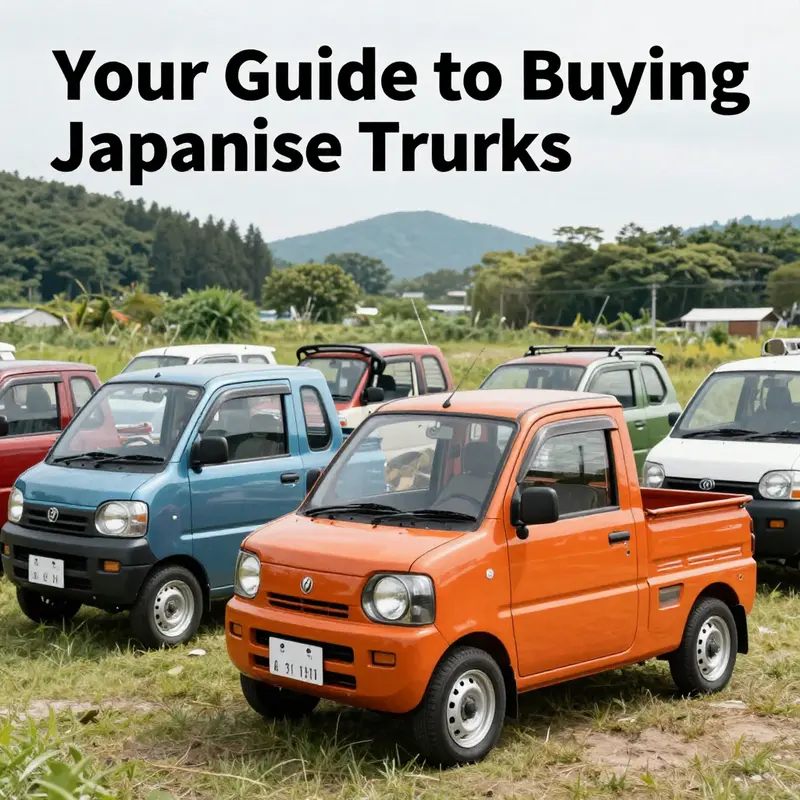
Japanese mini trucks have grown popular among small business owners, hobbyists, and property managers for their versatility and efficiency. Whether you need a reliable vehicle for transporting goods, maintaining your property, or simply want to enjoy an efficient and fun vehicle for personal use, knowing where to buy these unique trucks is essential. This guide will explore three key avenues: online marketplaces and auction sites, specialized export companies, and understanding import regulations along with vehicle condition checks. Each of these areas is crucial to making sure you find the perfect mini truck that fits your needs and complies with regulations.
Where to Buy Japanese Mini Trucks: Online Marketplaces, Auctions, and Exporters
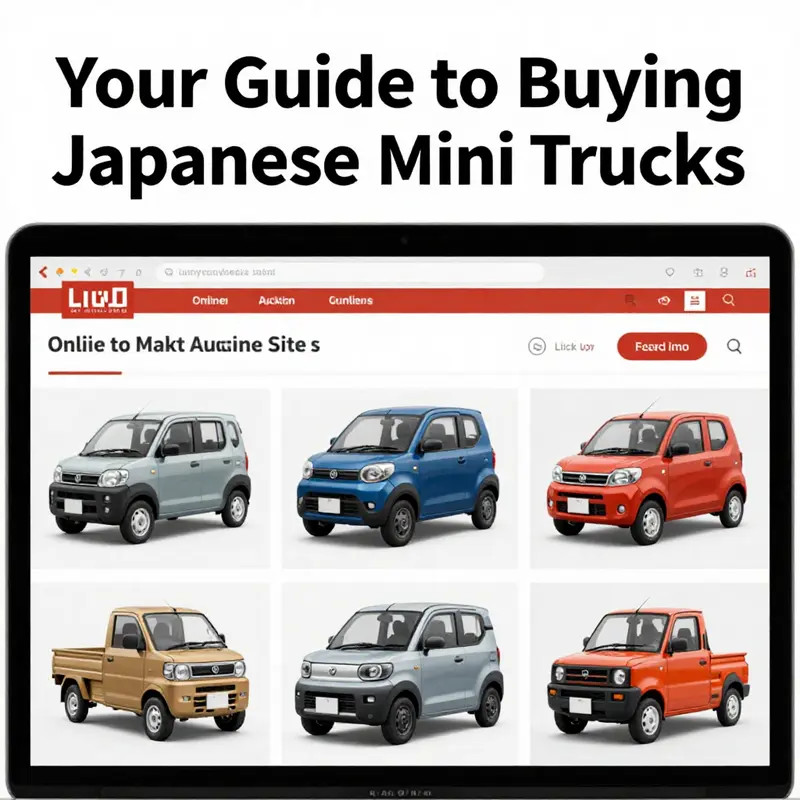
Japanese mini trucks offer a compact, capable solution for farmers, small businesses, and urban operators. When buying them online, think in terms of three reliable channels: online marketplaces, auction platforms, and specialized export exporters. Each channel has a distinct rhythm, risk profile, and value proposition, and the best approach often blends all three depending on your goals and risk tolerance. Online marketplaces typically provide broad inventories with clear specifications, photos, and shipping terms. They are best for due diligence and price discovery across a wide range of configurations. The risk is heterogeneous quality and varying export readiness, so verify maintenance history, service notes, and the availability of export documents before committing. Look for listings that include recent inspections, high-resolution images of the chassis and crucial components, and explicit statements about export compliance. Auction platforms can offer significant price savings but require discipline. Vehicles are often sold as-is, with limited warranty, and you should plan for independent pre-purchase inspections and potential post-purchase repairs. Use a firm maximum bid and, when possible, arrange an intermediary who can bid on your behalf, arrange inspections, and coordinate export paperwork. International buyers often rely on an agent for bidding and logistics, especially where language and local regulations add friction. Specialized export platforms curate inventories and bundle export services. They can simplify the process by providing export certificates, title transfers, container or RoRo shipping arrangements, and sometimes limited warranties on critical systems. This path tends to be most attractive if you plan to purchase in larger quantities or want a smoother import experience with predictable paperwork. However, the premium for this convenience will show up as a higher unit cost, so compare the total cost of ownership against direct listings or auctions. Regardless of channel, four pillars govern a successful online purchase: condition and history, export documentation, logistics and transit risk, and clear terms on delivery and post-sale support. Start with a precise spec map: payload capacity, driving drive (LHD or RHD), vehicle age and mileage, and the intended working environment. Build a simple due-diligence checklist that you apply across platforms: obtain a current inspection or a recent maintenance log when available, request detailed photos or a video walk-around showing the bed, chassis, and critical components, verify the presence and accuracy of the export documents (export certificate, bill of lading, title), and confirm who handles title transfer and customs clearance. Cost awareness is essential. The sale price is only part of the total cost. Add export handling, freight, insurance, import duties, port charges, and local registration costs. A well-documented export-ready unit may save time and reduce surprises, but it often costs more upfront. Weigh the premium against the risk reduction and the speed of delivery, especially if you are managing a fleet or a tight deployment schedule. Shipping decisions matter. Container shipments give protection and are predictable for smaller batches; Ro-Ro can be cheaper and faster but offers less protection during port handling. Coordinate insurance coverage with the carrier or a specialized broker who understands international vehicle transit. Once the vehicle arrives, ensure you complete compliance checks and arrange for any required inspections or modifications to meet local standards before registration. If you want a smoother experience, consider engaging an export partner who can advise on import rules, prepare the necessary paperwork, and coordinate the logistics. If you prefer more control or are testing a new operation with a pilot, a well-curated online listing or a small auction run can validate your process before scaling. In all cases, document everything: capture the vehicle’s condition and history, secure copies of export paperwork and the title, and keep a written agreement covering shipping timelines, insurance, and who will handle customs clearance. Finally, remember that the typical price story on Japanese mini trucks online reflects three levers: vehicle condition, export readiness, and shipping costs. You will see older, lower-mileage, or clearly documented export-ready units at different price bands. The right choice depends on your tolerance for risk, your need for speed, and your ability to manage cross-border logistics. For more context on model types and maintenance considerations, cross-reference reputable model guides and the exporter’s documentation bundle. The bottom line: approach online acquisitions with a structured plan, align your budget with a realistic timeline, and verify export compliance before bidding or buying. If you want a concise practical overview of export and shipping considerations, use the partner resources and standard checklists provided by your exporter or freight forwarder.
From Platform to Port: Selecting Specialized Export Partners for Japanese Mini Trucks
Sourcing Japanese mini trucks for export is not merely a matter of finding a listing and placing an order. The journey from a distant market to a functioning asset on your own soil hinges on the strength and reliability of the intermediary you choose. In the ecosystem of international procurement, specialized export companies act as seasoned navigators who translate the complexities of Japanese vehicle markets into a smooth, auditable, and compliant process tailored to your business needs. The decision to work with a specialized exporter, rather than chasing random online listings or attending sporadic auctions, reframes the purchase from a gamble into a structured procurement project. You begin not with a single vehicle, but with a carefully curated pathway that encompasses sourcing, quality assurance, documentation, logistics, and post-purchase support. The result is not only potential savings in price or lead times but a greater certainty that the asset you acquire will integrate with your operations without surprise compliance hurdles or unexpected downtime on arrival.
The essence of choosing specialized export partners rests on their dual mastery: first, a deep, day-to-day familiarity with the Japanese market’s nuances—model variants, maintenance norms, and the subtleties of vehicle condition that are often lost in translation for international buyers; second, a robust logistics and regulatory framework that translates that market knowledge into a concrete, auditable export process. Such partners operate at the intersection of sourcing and shipment, coordinating with Japanese dealers, auction houses, and asset managers, and then guiding vehicles through the maze of export documentation, customs clearance, and import compliance in your country. The value of this arrangement becomes most apparent when you encounter the core risk factors of international vehicle procurement: the risk of undisclosed damage or omitted service history, the risk of non-conforming specifications, and the risk of costly delays caused by paperwork gaps. A reputable specialist is not merely a broker; they are the conductor of a complex orchestra, ensuring that every instrument—vehicle condition, legal title, warranty coverage, shipment schedule, and regulatory compliance—plays in harmony.
In practical terms, the services provided by specialized exporters typically span several interconnected stages. First comes sourcing. With their networks, they can access a broad inventory that includes multiple configurations and load capacities, often across a range of vintages and usage histories. This breadth matters because it gives buyers options to match their specific business requirements, whether the priority is payload capacity, fuel efficiency, or access to older, more affordable models for rugged field work. Rather than scouring dozens of independent listings and weighing inconsistent photos and descriptions, buyers receive curated selections that have passed a preliminary vetting process. The exporter’s team typically screens for clear title, verification of vehicle history, and alignment with the buyer’s stated use case, whether it’s urban last-mile deliveries, rural farm work, or temporary on-site logistics support. The result is a more targeted pool of candidates rather than a spread of uncertain possibilities.
Quality assurance is the next decisive layer. Specialized exporters often offer inspection options—ranging from a basic visual check to a more rigorous third-party pre-export inspection—that provide objective data on essential components: the engine, transmission, braking system, suspension, tires, and electrical wiring, along with a careful look at the odometer, service logs, and any accident history. For buyers far from the source, this inspection becomes a meaningful proxy for trust. It aligns expectations with reality and creates a defensible baseline for price negotiations. The best exporters publish detailed inspection reports or provide a live, video-assisted tour of the vehicle condition, accompanied by spare parts availability and records of any repairs performed prior to export. And because many mini trucks operate in demanding environments, buyers also gain access to information about body integrity, rust risk, and cab comfort—factors that influence long-term maintenance costs and uptime.
Documentation is where the rubber meets the road. A robust export partner treats documentation not as a one-off paperwork task but as a continuous, auditable trail that travels with the vehicle from origin to destination. At minimum, buyers should expect clear titles or transfer documents, export declarations, and the necessary certificates of conformity or compliance that are specific to their import jurisdiction. An experienced exporter will also lead the way on value declarations, shipment insurance, and bankable payment terms that minimize both currency risk and the chance of delayed releases at port. In many cases, the exporter can arrange the current market’s most practical export routes and modes—whether by containerized shipment or roll-on/roll-off—while coordinating documentation across customs agencies and port authorities. This orchestration reduces the likelihood of regulatory bottlenecks and ensures that vehicles move efficiently through the chain rather than becoming entangled in it.
Logistics and risk management are the third pillar. Specialized exporters typically manage end-to-end logistics, including pick-up from the seller, consolidation with other vehicles if needed, inland transport arrangements in Japan, export freight, insurance, and the handover of the vehicle to the carrier at the port. They also advise on appropriate shipment methods, considering factors like transit time, weather exposure, and the buyer’s risk tolerance. In practice, this means a well-structured risk assessment that anticipates potential delays—such as seasonal port congestion, fluctuations in freight rates, or regulatory slowdowns—and defines contingency plans. Buyers benefit from transparent pricing that includes freight, insurance, and handling fees, along with a clear visibility ladder that tracks the vessel’s route and estimated arrival. The exporter often offers post-shipping services, including receipt of the vehicle at local port, handling of any import taxes or duties where applicable, and onward delivery to your facility or a designated installation site. These services are not cosmetic add-ons; they are the backbone that turns a distant listing into a callable asset in your operational calendar.
The decision to work with a specialized exporter also reshapes the negotiation dynamic in a buyer’s favor. When you request vehicles, you’re not negotiating with a single seller but with a professional team that can present a structured package. This package typically includes a recommended shortlist based on your specifications, a transparent breakdown of price bands by model and condition, and a defined timeline that ties vehicle availability to your procurement calendar. Because specialized exporters operate with repeat business and reputational stakes, they tend to offer more predictable terms, more consistent after-sales support, and a more rigorous approach to warranty and post-export service arrangements. If you have a particular operational constraint—such as tight lead times, a strict budget ceiling, or a need for a certain mix of configurations—these exporters are better positioned to translate those constraints into feasible, well-documented options, rather than leaving you to improvise a plan after you’ve chosen a vehicle.
A practical test of any exporter’s value proposition is how well they communicate and how thoroughly they document every step. Ask for a sample verification package, a mock bill of lading, and a typical export timeline. Request references from previous international buyers and, if possible, a short visit to their facility or a staged virtual walkthrough to observe their sourcing grid, inspection standards, and logistical playbook. In the absence of such transparency, the risk of misalignment grows. Conversely, a transparent exporter will welcome questions about model variance, inspection criteria, and the exact steps from purchase to port handoff. They will provide clear instructions on what remains your responsibility and where their involvement ends. In essence, a good export partner becomes an extension of your procurement team, translating market opportunities into viable, well-documented, and compliant purchases that reliably traverse borders.
For readers who are compiling a mental map of where to start, think of the search process as a funnel that culminates in a single, trusted partner rather than a long list of transactional connections. Early on, you can broaden your lens to include online platforms that host large vendor ecosystems, and you may eventually narrow to specialized exporters who demonstrate a track record of export readiness and customer-centric service. The online platforms can serve as an initial pulse check to understand available configurations, price ranges, and typical lead times, but the real work of risk mitigation and regulatory compliance is best handled by a partner who lives in the cross-border space daily. The advantage here is resilience: you gain access to a network that has navigated regulatory shifts, currency volatility, and port logistics repeatedly, so your project remains on schedule even when external conditions shift.
In this landscape, one useful touchpoint is a pragmatic, learning-oriented approach to market exposure. The literature and industry collateral surrounding the export of light commercial vehicles consistently emphasizes three themes. First, the importance of reliable condition reporting and documentation that match your regulatory requirements. Second, the critical role of a coordinated logistics plan that minimizes dwell time at ports and reduces the risk of cargo damage during transit. Third, the enduring value of a post-sale framework that covers maintenance guidance, spare parts availability, and warranty coverage, if offered. When you experience a specialized exporter that integrates these three strands into a coherent service model, you are likely engaging with a partner who can transform a potentially uncertain procurement exercise into a repeatable, scalable capability for your business.
To connect this discussion with practical actions, consider a stepwise approach that respects the complexity without becoming paralyzing. Start by articulating your concrete needs: the number of vehicles, preferred configurations, payload requirements, anticipated operating environments, and a realistic delivery window. Then request a curated shortlist from a shortlisted exporter, including copies of inspection reports and preliminary price ranges. Require a defined export timeline and a transparent cost structure, including the freight method and any insurance or handling fees. If possible, arrange a virtual tour or a site visit to observe how the exporter handles vehicle storage, inventory management, and the readiness of documents. If the exporter can demonstrate a standardized inspection protocol and a clear post-export support path, you have a signal that the partnership will be capable of maintaining efficiency across multiple purchases over time.
As you evaluate the offerings that specialized exporters present, you will also likely come across broader market signals about price ranges and availability. The online platforms that host used mini trucks offer a snapshot of market breadth, while the exporters’ networks reveal how price is affected by factors such as vehicle age, mileage, configuration, and the condition of essential supporting systems. You will notice that price bands tend to widen with more complex configurations or when the supply chain tightens—for instance, when certain body styles or transmission options become less common due to regulatory shifts or changes in common usage patterns. In such moments, a skilled exporter can deploy the leverage of their sourcing network to identify acceptable substitutes that meet safety, payload, and regulatory standards while preserving the overall business case for the purchase. The result is a transaction that aligns with your operational needs, your risk tolerance, and your budget, all within a framework that you can audit and repeat in the future.
For readers who want a tangible touchstone on what a well-managed export process looks like, the guidance above can be reinforced by practical insights shared in industry circles and experiential narratives from international buyers who have navigated the journey successfully. A representative path begins with a careful screening of potential partners, followed by a staged verification of vehicle candidates, a documented and agreed-upon inspection standard, and a shipping plan that is traceable from origin to arrival. The value of this approach is that it does not rely on luck; it relies on a well-defined execution plan. When the plan is executed by a partner who communicates clearly, documents every step with precision, and maintains a ready-to-activate supply chain, you gain the peace of mind that your investment is protected and your operations can begin with minimal disruption once the vehicles arrive.
If you are new to this process, a practical tip is to anchor your evaluation around a few core criteria rather than attempting to optimize every variable at once. Prioritize vehicle condition and documentation, then logistics predictability, followed by after-sales support and warranty terms, and finally the total cost of ownership across the first year of operation. Each criterion helps you validate the exporter’s competency in a way that scales as you grow your fleet or expand into new regions. In this way, the choice of a specialized export partner becomes less about a single transaction and more about a long-term capability that you can rely on as part of your broader procurement strategy. For those who want to dive deeper into community-tested insights about specialized exporters and their role in international vehicle sourcing, the Minitrucks Scala blog offers perspectives on related topics and practical tips for buyers navigating similar paths. Minitrucks Scala blog
The chapter closes with an acknowledgment that the market remains dynamic. Models, configurations, and regulatory expectations shift with market needs and environmental considerations. A trusted exporter stays ahead of these shifts by maintaining open channels with dealers, keeping abreast of policy changes, and continually updating inspection protocols to reflect the latest safety standards. The buyer, in turn, gains not only a vehicle that meets immediate requirements but a procurement partner capable of aligning future acquisitions with evolving specifications, port regulations, and shipment realities. The synergy created by such an alliance is a cornerstone of sustainable international sourcing and a practical, repeatable path to acquiring Japanese mini trucks that fit the realities of global commerce while delivering consistent operational value.
For readers exploring concrete examples of current market listings, a representative external resource can illustrate how listings describe configurations, conditions, and shipping options in practice. External reference: https://www.alibaba.com/product-detail/wholesale-Japanese-used-mini-truck-Isuzu-Elf_1600388259815.html
Beyond the Auction Floor: Import Rules and Vehicle Verification When Sourcing Japanese Mini Trucks
Sourcing Japanese mini trucks offers a practical balance of compact efficiency and proven reliability, but the path from a distant showroom to a working fleet abroad is paved with regulatory hurdles and careful inspection. The allure of a well-maintained vehicle that can slip through tight urban jobsites or navigate narrow rural lanes is undeniable. Yet the reality is that direct sales from Japanese suppliers to international buyers have become constrained in recent years. By late 2025, the most effective routes typically involve third‑party importers or specialized dealerships operating outside Japan. This reality reframes the process from a straightforward online purchase to a coordinated cross‑border project that rests on two pillars: understanding import regulations and validating vehicle condition with discipline and documentation. The chapter that follows threads these pillars into a cohesive decision-making journey, one that keeps the big picture in view while attending to the granular checks that protect a buyer’s time, money, and operational readiness.
To begin with, think of import regulations as a map that shows what is permissible, what requires certification, and what constitutes a safe, legal import in a given jurisdiction. The landscape differs widely by region, and the specifics can shift as new environmental standards, safety rules, or trade policies come into effect. In the United States, for example, emissions and safety compliance is governed by agencies that enforce standards designed to protect public health and ensure roadworthiness. A key nuance is the aging rule that often comes into play for imports: vehicles that are older than a certain threshold can sometimes bypass some newer requirements, unlocking a path for older, legally permissible models. In practice, this aging provision translates into a practical deadline and a strategic window for buyers who want to import without navigating the full spectrum of modern certification processes. It also means that the decision about whether to import a model now or wait for a newer, potentially more costly option hinges on the regulatory clock as well as the vehicle’s price and predicted life cycle.
Across the Atlantic, the European Union presents a different framework centered on emissions standards and type approval. Euro 6 and related regulatory constructs create a rigorous gatekeeping role for imported vehicles, especially those with diesel powertrains or other propulsion configurations that carry heavier compliance costs. The takeaway is not to assume a universal set of rules but to identify the local requirements, the paperwork like conformity certificates or equivalent equivalents, and the inspections that will be necessary at border entry. In all regions, the upfront investment in understanding these rules pays dividends in the form of smoother customs processing, fewer delays, and less risk of post‑import surprises such as failed inspections or costly retrofits.
Yet regulation is only part of the equation. Vehicle condition verification stands as the other half of the decision puzzle. Japan’s reputation for meticulous maintenance translates into many mini trucks that show remarkable longevity. A vehicle that has earned its keep on farm lanes, construction sites, or mobile trades can deliver reliable performance years after its manufacturing date. But even well‑kept examples can carry hidden shortcomings. The most common risks are structural rust in exposed frame members or underbody panels, fluid leaks that may reflect long‑term maintenance neglect or past overwork, worn tires that reduce safety margins, and electrical faults that manifest as intermittent sensor or harness problems. None of these issues by itself may be catastrophic; together they can undermine reliability, increase maintenance costs, and shorten the vehicle’s effective life if left unaddressed.
With these realities in mind, a disciplined approach to due diligence becomes essential. A comprehensive inspection report from a qualified mechanic is not a luxury but a prerequisite. The best reports come from technicians who understand imported vehicles and the particular character of mini trucks. A good report should cover structural integrity, rust in critical frames or mounting points, engine and transmission health, cooling and lubrication systems, brake lines and pads, steering geometry, suspension wear, and exhaust components. It should also document electrical systems, including lighting, instrumentation, and any aftermarket wiring or alarm setups that can complicate maintenance or compliance. A careful reading of the maintenance history helps separate well‑maintained vehicles from those that have been patched together after minor incidents or sudden failures. When possible, obtain the vehicle’s mileage history, service intervals, and any known accidents. A transparent record provides invaluable context for assessing remaining life and residual value.
The value of a detailed history grows when it comes to the way a vehicle was used. A compact utility vehicle that spent its life on a farm or in a remote location may have benefited from straightforward, utilitarian upkeep but could also reveal wear patterns that differ from a city‑oriented workload. Conversely, a truck that spent many years in a dense urban setting may show different stressors, including corrosive exposure or frequent stop‑and‑go operation. In either case, the goal is to piece together a coherent story from multiple data points: mileage, service notes, and the condition glimpsed in a hands‑on inspection. If you are working with an importer or dealer, insist on full disclosure about past use, any known accidents, and a documented maintenance timeline. A reputable intermediary will provide these details and stand behind them with a written statement or warranty terms that clarify what is covered and for how long.
An important practical step is to review the vehicle’s documentation package before it leaves the seller’s site. In many instances, the necessary export and export‑clearance papers, title documentation, and vehicle history are not just formalities but essential tools that prevent delays at border control. Aligning these documents with the import requirements of your country helps anticipate edge cases and prevents last‑minute detours. If an intermediary handles the import process, ask for copies of the paperwork early and verify that the VIN matches the vehicle you intend to buy. Mismatches inVIN, model year, or engine code can signal miscommunication or a riskier transaction than you would want to undertake.
In this context, a good sourcing strategy balances risk and reward. The typical path involves working with specialized importers or dealerships outside Japan that focus on international buyers. These partners do more than merely broker a sale; they serve as curators who verify compliance, coordinate transport, arrange export documentation, and manage the often‑complex logistics of cross‑border trucking or container shipping. The value here lies not in a single‑digit price advantage but in the confidence that the vehicle you receive has been vetted for compliance and that a framework exists for ongoing support if issues arise once the vehicle is in your country. When evaluating a potential partner, look for licensing, transparent fee structures, a clear understanding of your country’s import rules, and a track record of successful imports. A responsible intermediary should provide a straightforward checklist, a timeline, and a warranty or after‑sales support policy that can endure the moment a vehicle arrives in port.
One practical way to deepen your understanding while you navigate this landscape is to consult reliable reference materials. For readers seeking a grounded technical overview of the kinds of models and their typical applications, a comprehensive guide from a respected resource can illuminate what to expect in terms of engineering and performance. This resource calls out the range of engines, drivetrain configurations, payload capacities, and mud‑and‑snow capabilities that are common among compact utility vehicles built for hard work. It also helps translate maintenance considerations into real buying criteria, such as recommended service intervals, parts availability, and the kinds of design features that contribute to long service life in varying climates. By studying these insights, buyers can translate general import rules into practical evaluation criteria for the vehicles they encounter through intermediaries and auctions.
The overall journey—from initial exploration to final import—rests on the dual pillars of regulatory literacy and procedural transparency. This isn’t merely a matter of finding a low price on a remote listing; it is about ensuring that the vehicle you end up with meets practical, legal, and financial expectations in your own market. A mindful buyer keeps a running checklist that travels with every inquiry: regulatory eligibility for the intended use, the availability and clarity of export documents, the credibility and warranties offered by the intermediary, a robust inspection report, and a comprehensive maintenance history. Each item on that list reduces risk and strengthens the case for a successful, compliant import that delivers value over the long term.
In closing, the act of choosing where to buy Japanese mini trucks is less about racing to the lowest upfront cost and more about building a robust bridge from a distant source to a functioning asset in your operation. The bridge is built with two sturdy planks: a solid understanding of import regulations and a meticulous approach to vehicle condition verification. If you treat regulatory compliance as a front‑loading effort and inspection as an ongoing responsibility, you increase the odds that the imported mini truck will serve reliably across seasons and workloads. And if a single intermediary can provide both transparency and support—from the initial inquiry through post‑delivery service—so much the better. For readers who want to dive into practical guidance and broader context on choosing and evaluating Japanese mini trucks, a trusted resource offers a detailed exploration of production details, technical specifications, and real‑world applications that align with the realities of cross‑border purchasing. See the linked guide for a deeper technical dive into the kinds of specifications that commonly govern these vehicles and the scenarios in which they shine. minitrucks blog.
For those who prefer to widen their view with external perspectives and technical benchmarks, the broader field of guidance emphasizes the importance of understanding emissions standards, safety regulations, and the practicalities of export paperwork. A well‑regarded reference outlines the typical production variants, the engine layouts that frequently appear in mini trucks, and how these factors influence maintenance planning and operating costs. It also situates these vehicles within the broader ecosystem of utility transport, offering a clear sense of when a mini truck makes sense as a core asset versus when alternatives might be more suitable. To further explore these technical and regulatory themes, you can consult a respected external guide that compiles specifications and applications for Japanese mini trucks.
For ongoing reference and additional context, explore the practical insights in the broader industry discussions through the following resource: https://www.madisonhill.com/japanese-mini-truck-guide. This external guide provides a useful framework for comparing models, understanding typical workloads, and mapping maintenance paths to keep a Japanese mini truck productive after arrival. And for any reader who wants to keep a finger on the pulse of the community and gather practical anecdotes, a fast‑growing hub of field reports and product explorations offers a centralized repository of experiences and ideas that may inform your own import journey. For open access to a broad collection of commentary and case studies, the community blog hub linked here can serve as a starting point: minitrucks blog.
Final thoughts
Buying a Japanese mini truck can be an exciting journey whether for business, leisure, or property management. Remember to explore various online marketplaces, partner with specialized export companies, and check compliance with import regulations to ensure a smooth purchase process. Each of these steps contributes to your overall success in acquiring a reliable mini truck that meets your needs. With this guide, you’re now equipped to confidently navigate the market and find the perfect model for you!