
Hess Mini Trucks have captivated collectors and enthusiasts alike with their charming designs and festive releases. You might wonder, just how big are these little treasures? Each toy truck boasts dimensions of approximately 9 inches in length, 7 inches in width, and 3 inches in height—perfectly sized for display or play. In this journey, we’ll navigate through four insightful chapters that will shed light on the specifications that make these trucks special, their appeal in the collectibles market, the aesthetic details that capture our hearts, and their intriguing historical background. Whether you’re a local business owner, a property owner, or a devoted mini truck hobbyist, understanding the size and significance of these models will enhance your appreciation and connection with the Hess legacy.
Size and Scale: Unpacking the Dimensions of Hess Mini Trucks
In the realm of Hess-branded toy trucks, size is less a practical measure than a window into detail, display value, and the story these miniature machines tell. Enthusiasts don’t chase speed or payload when they search for a Hess mini; they seek proportion, finish, and the sense that a tiny model captures the spirit of a full‑sized vehicle. The question that begins many conversations about these collectibles—how big are they?—has to be answered with nuance. The available public documents for recent Hess mini collections outline a broad strategy of compact, highly detailed replicas. They describe the concept of a small‑scale model designed primarily for collection and display, not for road use or play in the sense of a full vehicle. This approach makes precise measurements both more intriguing and more elusive, because the charm of the minis rests as much on visual impression as on exact numbers.
Across the Hess 2022 mini truck lineup, the collection contains a helicopter, a truck, a fire truck, and a front-loader variant. These are handsomely crafted items that invite close inspection of panel lines, paint texture, cab shaping, and the way the model mimics features like rotor hubs, ladders, or loading arms. Yet, in the publicly available product references, the exact length, width, and height of each model aren’t published. This absence is not unusual for collectible lines that emphasize the experience of owning and displaying a model more than the technical details of a production vehicle. Collectors often rely on shared measurements from broad overviews or from included packaging imagery, rather than a formal specifications sheet. In the Hess mini universe, that means the most dependable anchor point remains the general impression of size: a compact, palm‑sized display piece that nevertheless feels substantial when held and studied up close.
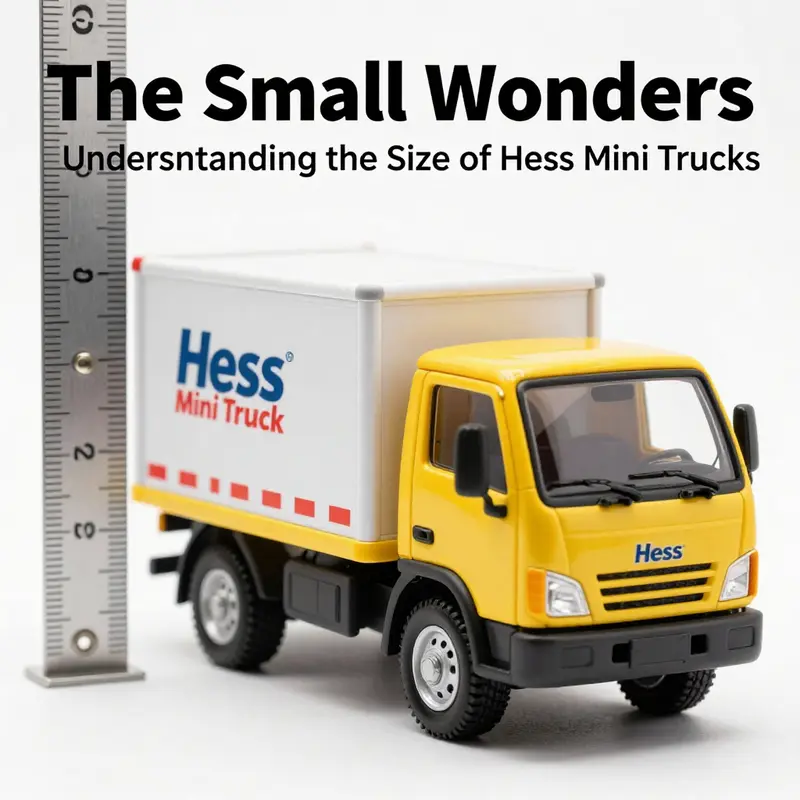
What does emerge from the best‑available summaries is a consistent sense of scale for these items. The overview you commonly encounter characterizes the Hess mini trucks as roughly nine inches long, about seven inches wide, and around three inches high. In metric terms, that translates to approximately 23 centimeters in length, 18 centimeters in width, and 7.6 centimeters in height. These numbers circulate in collector circles and hobby sites as a practical reference for how to display the minis, pair them with a shelf setup, or compare them to other small‑scale models in a display case. The figures are useful, but they should be understood as approximate—an Open‑like standard that helps collectors form a mental image of size without rising to the level of a formal product specification.
The practical effect of these approximate measurements is telling. A nine‑inch length makes the models long enough to showcase distinctive design cues—front grilles with badges, cab silhouettes, wheels with visible rims, and the font and layout of the Hess branding—while keeping the entire model compact enough to encourage family‑room or curio‑case display. A seven‑inch width ensures the vehicle sits comfortably on a shelf alongside other small collectibles, providing a stable footprint that reduces the risk of tipping or crowding. The three‑inch height adds depth to the model’s physical presence; it’s tall enough to display a realistic cab height for a compact truck, yet low enough to avoid dominating a display space intended for multiple miniature vehicles. For collectors who want to know what they’re getting before opening a package, these numbers offer a quick and practical sense of proportion that aligns with the visual memory of the item when seen in person.
Of course, not every Hess mini is created equal in the details that can influence perceived size. The collection includes a helicopter and a front loader, alongside traditional truck silhouettes. The rotor assembly, rotor blades, and cockpit canopy of the helicopter, for instance, contribute to a different overall silhouette than a standard delivery or service truck. The front loader adds another dimension of bulk around the loader arm and the cab area, which can subtly influence how the model reads in a display. Because these features vary in physical structure, the overall dimensions can shift a touch from model to model, even within the same collection. The absence of formal, model‑by‑model measurements in standard product listings leaves room for minor variation, which is part of the appeal for many collectors who enjoy comparing instance to instance and noting where a particular variant tilts the balance toward a slightly longer nose, a broader cab, or a stouter wheelbase. The human eye perceives these subtle differences as part of the charm of a limited run—the sense that no two pieces are identical, even if they share the same nominal footprint.
From a display standpoint, the approximate dimensions also guide how collectors organize their space. A typical rifle of display practice is to pair several Hess minis on a shelf or in a glass case with other compact models. The roughly nine‑inch length provides enough real estate to feature a front‑end grille detail or a wheel design in close view, while the seven‑inch width helps the group maintain clean lines and spacing. With a height near three inches, the models present a satisfyingly balanced profile against other small vehicles and dioramas. In practice, this means a display of Hess minis can look cohesive yet varied, with some models standing slightly taller due to mounting or presentation angle, while others remain compact and low in profile. The general rule of thumb is to create a rhythm in the display that allows each model to catch the eye without crowding the next piece, a principle that aligns with the collecting ethos—careful attention to both form and placement.
The specific information gaps on the 2022 and 2021 collections reflect a broader reality in the world of toy‑truck collectibles: precise model measurements are not always published by manufacturers, especially for limited editions or special releases that emphasize novelty or display over technical data. For the 2021 5‑in‑1 Limited Edition, described as featuring “glowing” plastic toy trucks in white, the published materials again omit exact dimensions. The lack of published metrics does not diminish the value or appeal of the items; instead, it invites enthusiasts to compare, measure visually, or rely on community‑generated roundups to build an understanding of size. In the absence of an official ruler, the community often converges on a shared language of approximate dimensions, which becomes part of the social fabric of collecting. This shared language fosters a sense of belonging and common experience among enthusiasts who trade photos, discuss scale perceptions, and debate whether a particular model reads larger or smaller in person than in a catalog image.
The absence of model‑by‑model specifications also nudges buyers to consider the practical realities of handling and storage. A nine‑inch package length becomes a sweet spot for most display cases, not too long for a standard shelf, yet long enough to showcase an appropriately detailed model. The three‑inch height ensures that even crowded display rows remain legible; the painted surface, texturing on the cab, and the miniature weathering details benefit from light sources that can illuminate fine lines and tiny badge emblems without casting harsh shadows. Collectors often find that, in person, the tactile feel—how the paint sits on the surface, how the wheels rotate or hang free if the model is designed without rolling axles, and how the overall weight balances in hand—adds a layer of perception that dimensions alone cannot convey. The dimensional estimates become a framework within which this tactile experience unfolds, guiding how pieces are displayed, touched, and compared, rather than serving as a rigid measurement standard.
From a curatorial perspective, the approximate size also encourages a broader, more inclusive display strategy. You can curate a vignette that includes a Hess mini alongside other compact figures, ornaments, or miniature vehicles without worrying that the scale will clash so dramatically that the scene loses coherence. The lower height helps the mini sit comfortably beneath framed photographs or small dioramas, while the width and length maintain a silhouette that is visually engaging without dominating surrounding elements. This is particularly valuable in quiet, intimate display settings, where the eye can rest on the careful detailing of the model—piston lines, door handles, and crest badges—without the distraction of exaggerated scale differences. In other words, the approximate dimensions support both a practical display and an aesthetic intention that the collection aims to achieve: a compact, tidy, and inviting presentation that highlights craft over mass production specifics.
For researchers and enthusiasts who want to anchor their discussions in real numbers, it’s worth noting that the nine by seven by three inch rule is a commonly cited reference in collector forums and catalog summaries. While not an official specification sheet, this rule provides a workable baseline for planning purchases, storage, and display space. If you’re organizing a winter display, for instance, you can allocate shelf depth that comfortably accommodates a model’s width, plus a margin for a stand or a small ledge, and you can arrange multiple pieces with enough breathing room to appreciate each subject’s nuances. The practical implication is that the nine‑inch length often informs the layout of a row or a grid of models, while the three‑inch height suggests a consistent eye level when grouped with other compact pieces. This is not a fixation on exactness but a useful heuristic that helps collectors assemble a coherent collection narrative, where each model contributes to a shared sense of scale and character.
An interesting dimension of size in this niche is how it interacts with product packaging. While the model dimensions themselves are rarely spelled out in detail in public listings, the packaging must accommodate the length, width, and height of the item with protective margins, a display card, and sometimes a blister or clamshell. The packaging dimensions can therefore give a practical sense of the model’s footprint while also offering clues about the intended presentation—whether as a standalone display piece or as a seasonal gift in a boxed set. In turn, the packaging can become part of the collectible experience, with art direction, branding, and imagery that reinforce the perceived scale and the appeal of the model as a keepsake rather than a play item. This relationship between packaging and model size reinforces the collective understanding that Hess minis are crafted for reverent display and careful handling, rather than rough play or rough transport as full‑size vehicles might require.
As with any collectible, the ultimate question of “how big” a Hess mini is less a matter of a single measurement and more a matter of how the model sits in the collector’s world. The approximate nine by seven by three inches offers a workable anchor, a way to situate the object within a physical space and within the broader ecosystem of miniature vehicles. Yet the details—how the cab is sculpted, how the wheels are finished, how the palette of color works with underlying plastic—provide a more meaningful measure of value than any ruler can convey. In the end, size matters because it frames the first impression a potential buyer or admirer has of the object, and that first impression is inseparable from the craftsmanship and the storytelling embedded in the design. The Hess mini trucks, in this sense, are less about precise numeric scalability and more about a shared aesthetic vocabulary—one that appreciates the small as a deliberate, meticulously engineered reflection of the full‑size world these toys echo.
To those who crave a more concrete comparison, the pointer toward related model discussions on the collector community’s platforms offers a gentle nudge toward a broader context. A relevant resource for those interested in model comparisons and specifications from parallel lines can be found through a dedicated page exploring how different miniature brands present their specs and features. This reference helps situate the Hess minis within the larger conversation about scale, detailing, and the way scale language is used across brands to convey size and usefulness to collectors. For readers who wish to see how a different brand frames its own miniatures, this comparison provides a useful contrast and broadens the sense of what “dimensions and specifications” can mean in this world. The linked discussion offers a practical counterpoint to the Hess minis, highlighting how even within the same hobby, the language of scale can vary and how collectors interpret those choices in their own displays and collections.
Internal link: Kingstar Kruzr models specs and features. This resource provides a comparative lens on how another brand communicates its model dimensions and design choices, which can help readers gauge how widely a given size is interpreted across collectible lines. External reference to a primary listing for the Hess mini trucks can help ground the discussion in a real-world example of how these items are offered to the public. See the product listing for further context and imagery: https://www.amazon.com/dp/B09W4X3JZG?th=1.
In sum, while the precise measurements for each 2022 or 2021 Hess mini model aren’t published in the standard reference materials, the community‑accepted rough footprint of roughly 9 inches by 7 inches by 3 inches provides a practical and shared frame. This frame supports a robust collecting practice centered on detail, display, and the shared delight of owning a miniature that captures a fragment of the real vehicle’s character. The size becomes a touchstone for how the pieces interact with each other in a display, how a viewer’s eye moves from one model to the next, and how the stories of these tiny machines unfold in a quiet, carefully arranged space. It is a reminder that in the world of small vehicles, the poise of a model—its silhouette, its finish, its weight in the hand—often speaks louder than the exact numbers etched on a publicly available sheet. And it is precisely this blend of approximate scale, craftsmanship, and display‑friendly design that has kept Hess mini trucks a beloved corner of the collecting universe, year after year.
Sizing the Minis: Scale, Collectibility, and the Market Pulse of Tiny Oil-Brand Toy Trucks
Size matters in more ways than one when we step into the world of the tiniest display pieces built around the familiar silhouette of a full-sized truck. The fascination isn’t merely about how big a toy is in inches or centimeters; it’s about how that size shapes every aspect of value, display, play, and memory. In the realm of these celebrated miniature vehicles, the line between a casual curio and a coveted collectible is drawn as much by scale as by history, packaging, and the story each edition carries. When people ask how big these minis are, they are really asking about how a seemingly simple measurement can unlock a web of decisions made by builders, buyers, and museum-minded collectors alike. The most common takeaway is a compact figure—roughly two and a half to three inches in length. This is the size that often makes the models ideal for display in neat cases, for careful stacking in organized shelves, and for the tactile pleasure of handling a perfect little machine with intricate detail. Yet the landscape is not always so tidy. A handful of sources mention a different, larger dimension—about nine inches in length—when referring to certain items in the broader family of Hess-branded toy trucks. The discrepancy invites careful scrutiny, because it underscores a central truth about miniature vehicles: scale is not a single, universal standard, but a spectrum that can reflect multiple purposes, eras, and design intentions. The smaller, more common scale—two and a half to three inches—aligns with the long-running practice of creating pocket-sized models that are easy to collect in multiples, arrange in dioramas, or display in compact glass cases. These models are small enough to be both playful and precise, inviting enthusiasts to curate scenes that echo the rhythms of a bustling depot, a roadside stop, or a seaside port. The 2.5 to 3-inch length also harmonizes with widely used toy-truck ecosystems, where a 1:64 scale is a frequent benchmark. The result is a uniformity that helps collectors compare, inventory, and trade with confidence. It’s a scale that respects the constraints of small parts, fine decals, and the attention to detail that makes a miniature feel almost life-sized in its intention, even as its physical footprint remains undeniably tiny. The notion of nine inches, by contrast, pushes us into a different corner of the toy-truck world. In some reference materials, this larger footprint appears, and it usually signals a different category—one that might encompass larger promotional figures, display props, or premium editions produced for specific events or campaigns. Such items could be designed to capture attention on a showroom floor or to demonstrate a brand at a trade show, rather than to serve as the go-to scale for everyday play or steady display. The mismatch between the two figures can be confusing to newcomers and seasoned collectors alike, and it becomes a teachable moment about how size, purpose, and market position intersect in the miniature-vehicle landscape. The honest takeaway is that shoppers and fans will encounter both scales in the wild, and the choice between them will often come down to intent. Are you building a tightly arranged, research-grade display that emphasizes uniformity and archival clarity? Or are you assembling a broader, more forgiving collection that tolerates variation and rewards exploration? In either case, the small-but-signal size is the through line that makes the hobby both approachable and deeply resonant. Beyond the sheer physical footprint, the design language of these tiny trucks deserves attention. The attention to detail is not a mere flourish; it is a statement about how seriously the community takes its miniature vehicles. Fine lines, careful color separation, accurate grilles, tiny emblems, and authentic decals all contribute to the illusion that the mini truck could slip off a shelf and roll into a moment of storytelling. The scale becomes a narrative tool—inviting collectors to recreate a weekend convoy or a maintenance yard, to stage a lighthouse-leaning shoreline scene, or to assemble a set that documents the evolution of a brand’s toy-vehicle line over decades. The size also shapes how people experience the thrill of discovery. When a tiny truck is discovered in a thrift store, a flea market, or a dealer’s boutique, the relative ease of handling and the clarity of its details can make the find feel suddenly alive. A little model suddenly becomes a portal to memory, a spark that revives a bedtime ritual of toy-street storytelling, or a reminder of a long-ago holiday gift wrapped with care. The most engaged collectors often describe the pleasure of arranging scale-compliant scenes—a miniature fuel station, a dockside loading area, or a tiny town plaza—where each truck contributes to a larger tableau. In that sense, the exact centimeter or inch of a model is less important than how it participates in the choreography of the display, the cadence of the diorama, and the rhythm of the collector’s space. The conversation about size inevitably threads back to value—a relationship that scales with interest, trend cycles, and the ebb and flow of the secondary market. Here, the compact dimensions are a boon for display and for the logistics of collecting. The smaller scale means more models can be gathered without crowding, more scenes can be created within a single glass case, and more participants can join in the pleasure of the hobby without a prohibitive investment in shelf space. Yet nothing about value is guaranteed by size alone. The market has learned to read the age of a release, the rarity of a variant, and the significance of a commemorative edition as clearly as it reads the length of a model. In the end, the true magic lies in the balance: a model that is small enough to fit into a thoughtfully assembled shelf of memories, yet resonant enough to carry a sense of history that outlives the moment of its purchase. When a model line carries a strong emotional memory—holiday rituals, weekend trips, or the quiet excitement of unwrapping a new figure—the size ceases to be a mere statistic. It becomes a vessel for nostalgia, a tiny ambassador to the larger story of a brand’s enduring presence in toy cabinets and display cases around the world. Collectibility factors, in particular, reveal how size interacts with history and scarcity. The year of release matters because the market tends to reward models that mark milestones or reflect shifts in design and packaging. Older models can become scarce as they wear their provenance with pride, and the scarcity often translates into higher prices on resale platforms or in auction settings. While the typical size makes a model accessible, scarcity makes it coveted. Rarity itself can emerge from limited runs tied to special events or partnerships, the kind of limited edition that gets tucked into collectors’ minds as a “must-have” memory of a particular era. Special editions magnify this appeal. They are not merely different colors or branding; they are designed to commemorate a moment, a milestone, or a collaboration, and they frequently bear packaging that itself becomes a fondly remembered artifact. These editions often arrive with distinctive color schemes, exclusive decals, and sometimes unique packaging designed to evoke the era or event being celebrated. The 90th-anniversary line, for instance, is typically highlighted by a commemorative identity—an aesthetic that signals rarity and significance. The attachment fans develop to such items is often anchored in storytelling as much as in optics—the way a package’s foil stamp, a special insert, or the tone of the year of release creates a sense of belonging to a unique club. The market responds in tandem. Price points on well-known retail and auction platforms reflect demand and condition as much as chronology. A mid-1990s model with a practical backstory and clean execution can attract solid interest in the secondary market, particularly if it survives in good condition and with accompanying packaging. One can observe examples where older, rescue-themed micro-trucks show up in used condition at prices in the neighborhood of the mid-twenties, indicating that collectors are willing to pay a premium for the sense of history they carry. Newer or rarer editions often command higher premiums, especially when they arrive as part of a commemorative release with careful branding and limited quantities. The fluctuations in price are not random; they are driven by visibility in collector communities, the discovery of new examples, and how well a given edition records its narrative in packaging, decals, and in the physical paint and finish. The market also rewards documentation. Provenance matters—clear, photo-documented packaging and a complete original box can tilt the value scale upward. In the same breath, a model that is pristine but lacks the original packaging can still fetch a respectable sum if it is rare or part of a sought-after edition. The combination of condition, completeness, and edition-ness often determines the final appraisal. For enthusiasts looking to understand current offerings, there is value in tracing the official catalog and noting editions that highlight niche corners of the hobby. The public-facing listings and collector guides can be essential compass points, helping to distinguish a standard mini from a commemorative treasure. As with any collectible, a healthy degree of skepticism and due diligence pays dividends. Confirming year and edition, examining the quality of decals, and ensuring the packaging aligns with the claimed edition reduces the risk of misinterpretation or misrepresentation in the marketplace. For readers who want to explore how these small-scale vehicles compare to other micro-truck lines, there is a useful resource that surveys contemporaries and near-variants in similar scales and design language. See this comparative guide on Kingstar Kruzr models for a thoughtful examination of scale, detailing, and market behavior across a related family of miniatures. (comparing Kingstar Kruzr models specs and features) This kind of comparative context can illuminate why certain editions feel more collectible than others, even when the physical footprint remains tightly constrained. It’s not just about what you hold in your hand; it’s about what the model represents within a wider ecosystem of miniature vehicles, brands, and display cultures. The dialogue about size is therefore a doorway to a broader conversation about display culture, memory, and value. The smallest objects, in their careful detailing and commemorative packaging, often become the most durable reminders of a brand’s story and a collector’s personal history. They transform from mere playthings into artifacts that narrate a shared history of childhood, design, and collecting. For those venturing into this field, the practical path is to approach size with curiosity rather than as a fixed metric. Start with the widely referenced two-and-a-half-to-three-inch range, observe how different editions use scale to achieve particular visual rhythms, and then consider how special editions and limited runs alter the dynamics of scarcity and desirability. The journey from size to value is not linear, but it is navigable with attention to edition history, packaging integrity, and the collector community’s conversations. In time, the tiny model becomes less a toy and more a tactile record—an object that encodes a moment in the evolution of a toy-line culture that thrives on meticulous detail, careful presentation, and the quiet thrill of discovery. An up-to-date catalog and a well-documented backstory can help the curious distinguish whether a given piece is a straightforward, mass-produced miniature or a commemorative edition that marks a moment in time. For readers who want to verify current catalog offerings or to dive into a broader ecosystem of micro-trucks, the official listing for a recent commemorative initiative provides a concrete reference point. Endnote: External reference for further context and current catalog details can be found here: https://www.walmart.com/ip/Hess-2023-Hess-Toy-Truck-90th-Anniversary-Collectors-Edition-Ocean-Explorer-Play-Vehicle-Multicolor/1376695745
Compact Craftsmanship: How Hess Mini Trucks Balance Size, Design, and Nostalgia
Compact Craftsmanship: Design Details That Punch Above Their Size
Hess mini trucks are small in footprint but large in intention. At a glance they read as toys. Look closer and you find careful choices that echo real-world commercial vehicles. The result is a product that sits comfortably between a plaything and a scaled display model. This chapter examines how those choices—dimensions, materials, surface work, functional bits, and packaging—combine to make these mini trucks visually compelling and emotionally resonant.
Most mini trucks are engineered to be compact for display and handling. Typical lengths often fall in the lower single-digit inches. That small scale forces designers to prioritize which details to keep and which to simplify. Proportions matter a great deal; a cab that is too squat or a bed that looks shallow instantly betrays the vehicle’s intent. Successful models maintain the silhouette and primary character lines of their real-world inspirations, despite their tiny size.
The dimensions used across the range yield several advantages. A length of only a few inches makes each piece easy to hold and pose. Shelf and cabinet displays can accommodate many units without crowding. Small size also reduces material cost and shipping weight, which in turn supports seasonal releases. Those compact measurements do not prevent the inclusion of surprising detailing, though. Designers exploit every millimeter of space to render paint, logos, trim, and surface texture.
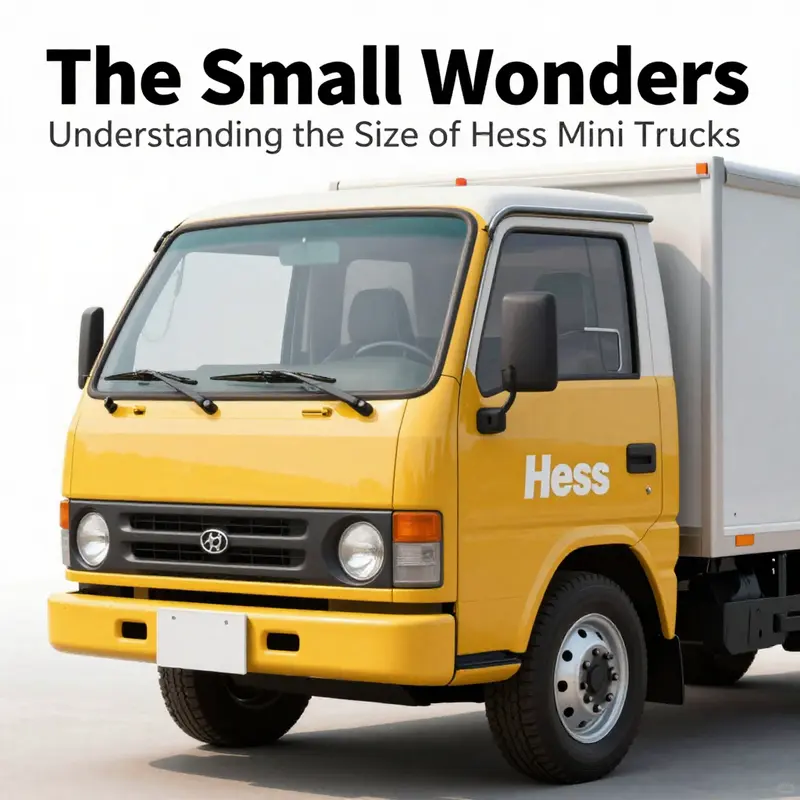
Surface finish and color are the first things the eye notes. These mini trucks typically use bright, faithful color schemes. Paint application is clean and consistent, with crisp edges where two colors meet. Where a full-sized vehicle might rely on embossed badges and large decals, mini trucks use tampography and tiny decals. These techniques reproduce logos and lettering at a readable scale. The result is instantly recognizable branding, even on models only a few centimeters long.
Bodywork is treated with care. Panel lines, grille patterns, and light housings are sculpted rather than painted flat. That three-dimensional modeling catches light and creates depth. For collectors, these subtle cues matter. A simple painted grille looks fine at arm’s length. But a sculpted grille reads as authentic when viewed among other scale models. The same is true for door seams, mirror housings, and bumper detail. These elements suggest a level of craft that belies the unit’s modest dimensions.
Materials are chosen to balance permanence with weight. Die-cast metal is common for chassis and major body sections because it lends heft and a satisfying tactile feedback when lifted. Plastic enables fine detailing, like window frames, light lenses, and tiny accessories. When metal and plastic are combined thoughtfully, the model feels substantial without appearing clumsy. That perceived quality plays directly into the aesthetic: these mini trucks look like miniatures of their larger cousins, not like generic toy cars.
Functional features amplify visual interest. Many models include lighting elements that illuminate headlamps or running lights. Tiny LEDs or fiber-optic links are integrated in such a way that the light source appears natural, not like a bulb glued into place. Wheels often turn freely, and some models include opening doors, moving beds, or rotating booms. These moving parts are designed to be durable while maintaining tight tolerances. Motion adds life, which is especially valuable in display settings or when these pieces are used in small-scale play scenes.
Sound functions are less common on very small models due to space limitations, but selective editions add audio cues. When present, sound modules are compact and carefully tuned. A short horn blast or engine burble adds atmosphere without overpowering the piece. Because not every release uses sound, its presence can also signal a special edition, adding collectible appeal.
Thematic variety is another aesthetic driver. Releases cover service vehicles, construction rigs, emergency apparatus, and specialty equipment. Each theme introduces a different palette and accessory set. Emergency-oriented models emphasize bold colors, contrasting stripes, and reflective decals. Construction pieces favor textured surfaces, weathered tones, and simulated dirt. Thematic choices affect not only paint but also the inclusion of tools, ladders, booms, and decals. When a model depicts a specific role, its accessories often underscore that identity with convincing small-scale realism.
Designers also consider play-versus-display balance. Some mini trucks are primarily collectibles and are finished with display-first considerations. Their paint, decals, and packaging are optimized for long-term preservation. Others are made for hands-on interaction, so moving parts are reinforced and high-wear finishes are selected. The best designs thread the needle: they look great on a shelf and withstand occasional handling without showing rapid wear.
Packaging is part of the visual story. Premium boxes provide a backdrop that frames the model. Clear windows allow viewing without removal. Foam inserts or clamshell trays keep pieces secure while exposing key aesthetic lines. For collectors, original packaging often adds value nearly as much as the model itself. Mint-condition sealed sets command higher interest in secondary markets because the packaging signals care and preservation. A well-designed box also reinforces the theme through graphics, typography, and color choices that echo the truck’s paint scheme.
Scale and proportion deserve special mention because they determine how these tiny trucks relate to other miniature items. While absolute scale varies, designers aim for a consistent internal scale across a given collection. That consistency lets enthusiasts create coherent displays. A compact model with faithful proportions will sit comfortably beside other small-scale items, dioramas, or hobby accessories. Scale also affects perceived realism: wheels, windows, and cabin heights must match expected ratios. If any element reads out of scale, the illusion breaks.
Detailing techniques are technical but crucial. Tampo printing reproduces logos and tiny text with surprising clarity. Fine molded plastics allow realistic lenses and light housings. Chrome plating is simulated through vacuum metallization or reflective paints rather than heavy metal plating, which keeps weight and cost down. Textures such as ribbed beds, tread plates, and simulated rivets are captured in the mold. These small touches invite close inspection and reward repeat viewing.
Aesthetic choices extend to how the model suggests age and use. Some pieces appear pristine, while others sport a staged patina. Designers use washes, subdued paint tones, and small scuffs to evoke a working vehicle. That patina is subtle on these tiny canvases but effective. It suggests stories and helps display scenes feel lived-in. Conversely, bright, perfect finishes communicate showroom newness and align with a different collector mindset.
Lighting one of these mini trucks changes perception. Under warm, directional lights, sculpted surfaces cast small shadows, enhancing the illusion of full-scale mass. Under flat fluorescent light, small imperfections may disappear, and paint finishes appear uniformly bright. For photography and display, this means choice of lighting can emphasize either the model’s sculpt or its color fidelity. Collectors who photograph their pieces often use low-angle lighting to highlight panel lines and textures.
Practical display considerations influence aesthetics too. The small footprint allows creative arrangements. Rows of models can become visual narratives, such as a fleet lined up by color or theme. Staggered heights, risers, and mirrored backdrops accentuate reflective paints and chrome accents. When the model includes lighting, wiring and battery compartments are discreetly located to preserve the clean lines. Thoughtful placement makes the tiny details most visible and ensures the collection reads as an intentional display.
For those who pair models with accessory items, compatibility matters. Scaled accessories like miniature cones, barrels, and figures enhance storytelling. These elements must be proportionate or they risk overwhelming the trucks. When scaled correctly, accessories create context and scale perception, strengthening the overall aesthetic.
Finally, nostalgia is a powerful aesthetic component. Design cues that evoke earlier decades—rounded fenders, classic liveries, retro logos—tap into memory. Even a small model can trigger strong feelings because of color palette, typeface, or a single emblem. The emotional impact often transcends the object’s physical size. That design-led nostalgia fuels collecting and makes each piece more than the sum of its parts.
Taken together, these design decisions illustrate why mini trucks punch above their size. Their compact dimensions are a constraint and a canvas. Designers use scale, sculpting, paint, functional features, and packaging to craft a cohesive visual identity. The result is a miniature object that communicates authenticity, invites handling, and rewards display. For collectors and casual fans alike, these small models deliver a satisfying balance of craftsmanship and charm.
For more discussions on miniature vehicle style and presentation, visit the Mini Trucks OCALA blog.
Source details and product confirmation are available from the official product listing: Walmart.com – 2021 Hess Mini Truck Collection 5 in 1 Limited Edition
The Scale of a Legend: From Promos to Collectibles, Tracing the Size and Story of Hess Mini Trucks
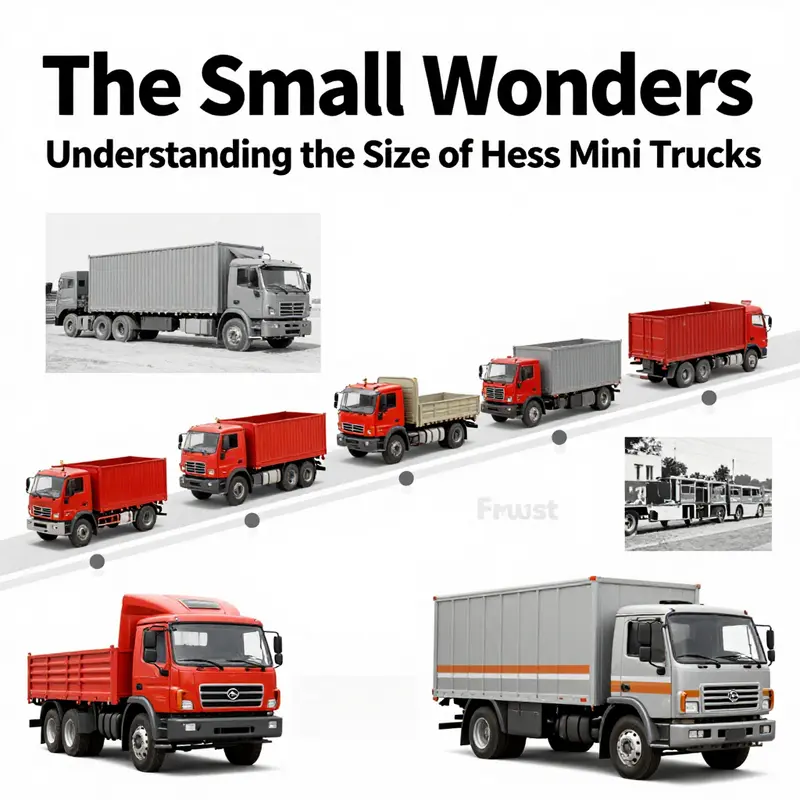
The question of how big Hess mini trucks are invites more than a simple measurement. It opens a window onto a evolving tradition in American toy culture, where a small metal model can carry a surge of memory, marketing strategy, and meticulous craftsmanship. Size, in this context, is less a fixed attribute than a conversation between past and present about what a toy can symbolize. Early models were compact enough to fit in a palm and slip into a station wagon cup holder, while later releases grew into display pieces that demanded shelf space and careful placement. Across decades, the Hess line has traded purely promotional value for a nuanced role as collectible artifacts that chart changes in manufacturing, branding, and consumer culture. The numbers tell the story as surely as the shapes do: a compact 3.5 inch length to start with, a later expansion that brought larger silhouettes for contemporary releases, and a persistent claim to the term mini that is as much about spirit as it is about scale.
The origin story begins in 1964, when a prominent energy company turned promotional toy making into a lasting brand encounter. The first truly iconic Hess mini truck, the Hess Delivery Truck, arrived as a die-cast model designed to resemble a real-world delivery vehicle. Its length, about 3.5 inches, placed it firmly within the small, collectible domain. This size was not merely a matter of whim; it was a practical choice for distribution at gas stations and for consumers who wanted a tangible reminder of service stations and road travel. The small scale made the toy easy to handle for children and delightful for adults who appreciated precision in miniature form. The aesthetic was intentionally straightforward, with clean lines and a basic palette that emphasized the silhouette of a genuine delivery vehicle rather than decorative excess. Yet even at this modest scale, the model carried a level of realism that invited closer inspection—the kind of inspection that would nurture a collector’s curiosity for years to come.
From the outset, the Hess line was more than a toy assortment; it was a promotional vehicle, literally and figuratively. The 1960s consumer environment valued tangible reminders of brand identity, and the Hess mini trucks delivered just that. Gas stations distributed these trinkets, using them as small emblems of the Hess name and as friendly keepsakes that reinforced the connection between fuel, travel, and a country on the move. The scale, while modest, did its job: it created a recognizable presence that fit neatly on a store shelf, a desktop, or a collector’s glass cabinet. It was the age of the compact collectible, where the charm lay in how faithfully a toy could echo a full-sized fleet vehicle without demanding impractical space. The early trucks were seeded with the promise that each piece could be part of a larger, shared memory—a memory rooted in everyday journeys and the routine act of fueling up.
As the decades rolled forward, the Hess line did not stagnate. In the 1970s and 1980s the company expanded the assortment to include specialized models that pushed the boundaries of scale and detail. The introduction of a Hess Fuel Oil Tanker in 1977, for instance, represented a shift toward more complex branding and a higher degree of realism. These models often bore the Hess logo on miniature barrels and included distinctive elements that captured the feel of the company’s real-world operations. The accessory details—logos, tiny drums, carefully painted accents—began to matter as much as the overall form. Limited production runs amplified their desirability, creating a sense that owning a Hess mini truck was an act of curating a fragment of American industrial history. Collectors learned to watch for subtle cues: paint quality, the sharpness of the casting, and the way branding was integrated into the miniature world. The promotional roots persisted, but the taste for craftsmanship grew alongside it.
This period marks a turning point in how scale communicates value. The 1970s and 1980s brought a broader understanding that a die-cast vehicle could be both a marketing tool and a meticulously crafted display piece. The models began to evolve beyond simple silhouettes into a vocabulary of detail—correct badge placement, period-accurate color schemes, and increasingly precise paint jobs. The brand recognized that collectors counted the minute differences: the way a logo appeared on a tiny oil drum, the shading on a cab, the alignment of wheels. Each release was a negotiation between brand clarity and the temptation of realism. The result was a line that could be appreciated both as a faithful representation of a Hess service vehicle and as a piece of nostalgic Americana. The interplay of utility and art in these mini trucks contributed to a broader shift in toy production, one that valued storytelling through scale and surface as much as function.
By the time the modern era arrived, the concept of mini trucks within the Hess family had broadened to accommodate new tastes and new markets. The 2022 Hess Toy Truck Mini Collection, for example, measures approximately 9 inches in length, 7 inches in width, and 3 inches in height. In metric terms, that translates to about 23 centimeters long, 18 centimeters wide, and 7.6 centimeters tall. This set-up resonates with a contemporary desire for display pieces that still feel compact and approachable. The contrast with the original 3.5 inch Hess Delivery Truck is striking, yet not surprising. The new scale reflects a possibility that the modern collector might want to celebrate the past while presenting it in a form that commands a little more attention on a shelf or in a cabinet. The newer dimensions retain the essence of the Hess identity—a vehicle that looks and feels like a miniature version of a real-world fleet partner—while offering a more substantial presence that suits today’s display habits. The shift in size does not erase the earlier models from memory; it rather sits alongside them, expanding the narrative of scale in the Hess line.
What remains constant across these shifts is the commitment to detail that defines the Hess brand. The die-cast construction, the careful attention to paint and logos, and the notion of the truck as a collectible rather than a mere toy have endured. The older, smaller models sit in a lineage of compact authenticity, while the larger, newer configurations reflect a modern consumer culture that values deluxe presentation and museum-worthy craftsmanship. The ongoing tension between promotional purpose and collectible value is part of what makes Hess mini trucks a living history lesson. Collectors often reflect on how the scale communicates different kinds of value: the intimate charm of a small, approachable piece versus the bold presence of a larger, more display-ready model. Both sizes invite admiration, but they do so in distinct ways that illuminate the changing mood of toy culture over time.
This evolving sense of scale is inseparable from the broader currents in American manufacturing and marketing. The early small-scale trucks were a product of their time, designed to be plentiful, affordable, and portable reminders of a brand during a period when in-store premiums and station logos shaped consumer experience. As production techniques advanced and consumer expectations shifted toward heightened realism and collectibility, the line widened both in technique and ambition. The 1970s and 1980s saw a convergence of promotional utility and artistic ambition: more accurate branding, more precise casting, and a willingness to create limited editions that rewarded patient collectors. In this sense, the size grew along with the brand’s appetite for storytelling, packaging, and provenance. A solid, compact model could still anchor a narrative, but a larger, more detailed version could deepen that narrative by offering new angles on proportion, shade, and texture. The result is a family of models that document not only a vehicle’s silhouette but a culture’s evolving appetite for miniature artifacts that feel both faithful and collectible.
Today, the Hess mini truck line sits at an intersection of memory and display economics. The 9 by 7 by 3 inch configuration of the 2022 release speaks to a modern collector who wants a piece that is visually impactful yet portable enough to keep within a comfortable space. It is a reminder that the term mini, in the Hess lexicon, does not imply a single, static scale. Instead, it signals a family of sizes that suit different kinds of engagement: the smaller pieces reward careful inspection and nostalgia, while the larger pieces reward presence and showpiece display. In this way, size becomes a storytelling tool as much as a measurement. The same way an old photograph conveys mood through grain and contrast, a miniature truck conveys history through its dimensions, its level of detail, and the era it evokes.
The enduring appeal rests in a simple but powerful triangle: accuracy in detail, fidelity to a brand history rooted in gas stations and service, and a format that makes the object accessible to a broad audience of both children and adult collectors. The Hess story is not one of a single model and a single size but of a lineage that has learned to speak in multiple scales, each with its own audience and own moment in time. While there are practical reasons to celebrate the smaller cores—ease of distribution, cost efficiency, and nostalgia—there is also value in recognizing how the larger, more substantial releases expand the conversation. They invite a new generation to engage with the same brand identity in a different format, to acknowledge that the world of Hess mini trucks is not bound to a single, unchanging standard but rather a living tradition that can adapt while staying true to its roots.
For readers who crave a deeper dive into the historical arc and specific model-by-model details, a broader survey can be found through established resources that compile model histories and production dates. Collectors often cross-reference the lineage with catalogues and guides that track the evolution of the line, noting shifts in scale, materials, and branding. In practice, that means the Hess mini trucks serve as a case study in how a single brand can maintain continuity while expanding its physical footprint across generations. The small beginnings in the 1960s, the deliberate moves in the 1970s and 1980s toward more elaborate presentations, and the contemporary practice of offering larger, display-friendly variants together illustrate a dynamic, ongoing conversation about what a mini truck represents. The result is a durable, evolving legacy whose size is less a fixed metric and more a record of change—an index of how memory, marketing, and model-making intersect on the shelf.
Those who wish to explore further and connect with the broader community of enthusiasts can turn to hobby-focused venues and online discussions that gather insights about scale preferences, collection strategies, and the market for vintage pieces. For a broad overview and current product context, the official Hess site offers historical background and product information that helps anchor the story in contemporary reality. Readers who enjoy digging into community discussions can also visit related hobby pages such as minitrucksocala.com/blog/ to see how collectors talk about scale, detail, and display options in today’s market. These conversations complement the historical arc presented here and illustrate how the scale question remains a living, evolving dialogue among fans and scholars alike.
In sum, the big question of how big Hess mini trucks are cannot be answered by a single number alone. It is a narrative about movement and memory, about promotional artifacts that become coveted keepsakes, and about the evolving design practices that turn a simple service vehicle into a beloved collectible. From the modest 3.5 inch origins that fit neatly in a child’s hand to the modern 9 inch display pieces that demand attention on a shelf, size tells a part of the story—but the whole story lies in how those sizes reflect changing times, shifting consumer aspirations, and the enduring desire to hold a piece of history in miniature form. The Hess mini truck, in its various scales, remains a compact ambassador of American craftsmanship and marketing ingenuity, a tiny vehicle with a surprisingly large footprint in the annals of toy history.
External resources provide authoritative context and verify the lineage of these models. For official historical background and current product information, see the Hess corporate site: https://www.hess.com
Final thoughts
From their compact dimensions to their significant role in the world of collectibles, Hess Mini Trucks embody a delightful blend of nostalgia and craftsmanship. Whether you intend to display them as cherished pieces or share them with younger generations, understanding their size and context enhances your appreciation. The Hess legacy stretches far beyond mere toy trucks; it represents a tradition of quality and creativity that speaks to enthusiasts, collectors, and local business owners alike. The next time you consider adding a piece to your collection or share the joy of these mini masterpieces with others, remember the rich story that comes with their size.