
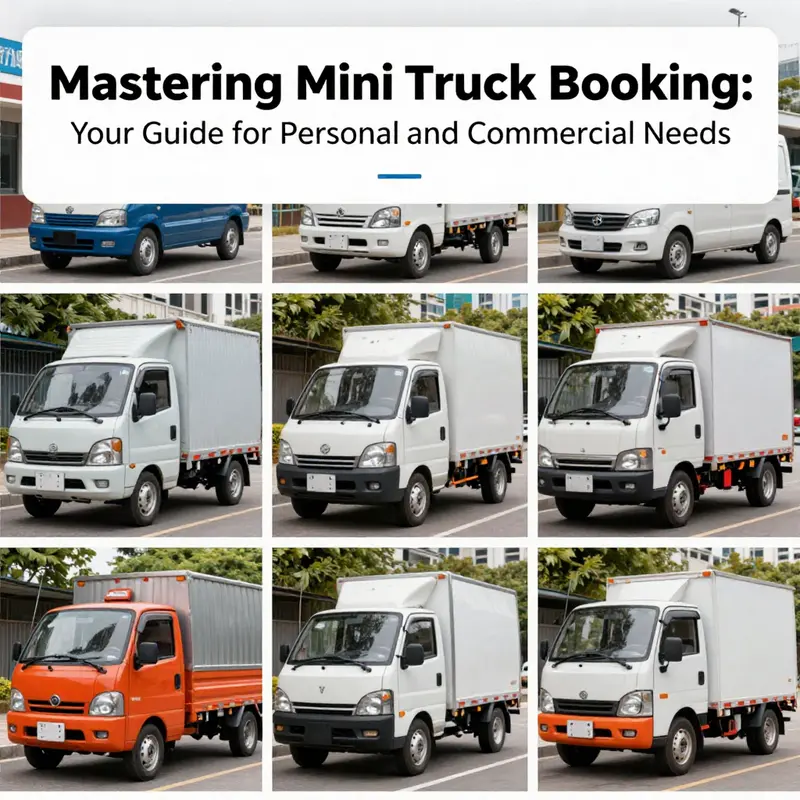
Understanding how to book a mini truck can significantly benefit local small business owners, residential property owners, and mini truck enthusiasts. Whether you’re looking to rent a truck for moving, test drive a compact vehicle, or explore commercial opportunities in Asia, this guide will walk you through each step. Each chapter targets specific needs, ensuring you have the right resources and knowledge to make informed decisions.
In the Driver’s Seat: A Practical Guide to Booking Mini Truck Rentals for Personal Moves
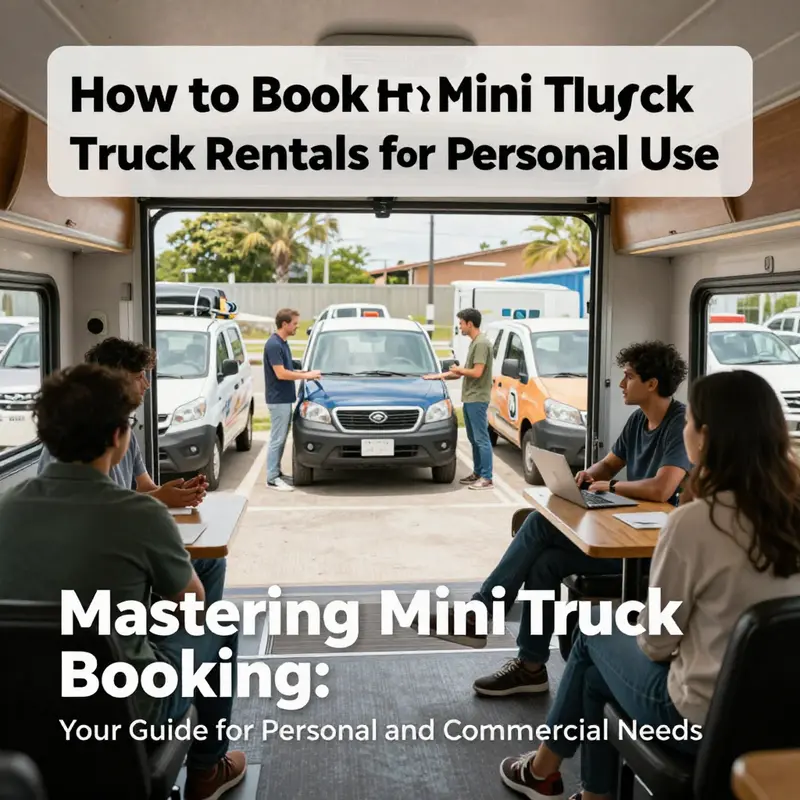
When planning a move, a single decision can redefine the day: choosing the right mini truck and knowing how to book it with confidence. A mini truck, in its lean frame and compact bed, can thread through crowded streets, shoulder the burden of awkward furniture, and still return a clean, simple bill. But the act of booking one is more than a click or a call. It is a careful choreography of needs, timing, and policies that protect your load and your wallet. The path to a smooth rental begins with a clear map of what you’re trying to move, how far you’ll go, and how much you’re willing to pay to keep the process uncomplicated. In practice, this means starting with a honest assessment of your load, the route you’ll take, and the one-way or round-trip nature of the trip. It means recognizing that mini trucks come in different sizes—small, versatile 8 to 10 feet, with varying ladder heights, tie-down points, and payload capacities—and that those differences matter when you’re stacking sofas, wardrobes, or dozens of boxes into a single, efficient space. The moment you set those parameters, you gain a framework for comparing options, rather than chasing dreams of endless upgrades or last-minute surprises at the counter. The practical approach to booking emerges from this grounding. You begin with a search for reputable platforms that offer mini trucks, focusing on reliability, real-time availability, and transparent pricing. Those platforms exist across regions, and in many markets they provide online tools that let you see what is actually available on the day you plan to move. You input your pickup location, your drop-off point, and the dates, and you watch as the system returns vehicles that fit your size requirement and your budget. A crucial point emerges early in this process: the day and location of pickup can affect price and availability. A truck that sits idle in one neighborhood may be unavailable in another, and a different fleet for the same company could price differently depending on demand. The ability to compare, therefore, is not a luxury; it is a necessity. As you scroll through options, you quickly learn to think about the trip as a series of steps rather than a single event. Step one is to determine the cargo space you truly need. A small apartment move may require only a few dozen cubic feet of space, while a more ambitious haul—appliances, wardrobe boxes, and an assortment of oddly shaped items—might demand a larger bed and higher payload. You translate this into a rough estimate of cubic feet or a mental picture of how many pallets or large boxes can fit in the bed while still allowing you to secure them with straps and, ideally, a loading ramp. This practical sizing matters because it reduces the risk of overestimating or underestimating what your trip will require. It also guides you toward the right model when you compare vehicles. The second step is to consider the route and the mileages, such as whether you will be traveling across town in congested patterns or making a longer, more open jaunt between cities. Some rental arrangements cap mileage, while others include a generous allowance with the option to pay for extra miles if you go beyond the limit. A thoughtful approach here is to set a ceiling on miles, then compare the per-mile rate if your plan breaches that ceiling. This habit pays off in clarity when you receive the final invoice, because it keeps you from discovering a surprise charge after you’ve already unloaded the last box. The third step is to examine the terms and conditions, an area where many movers learn the hard way about hidden fees, fuel policies, and coverage options. The typical rental agreement outlines a baseline daily rate, a mileage cap, and a series of potential surcharges for late returns, fuel refills, or damages. The fuel policy is particularly important. Some agreements require you to return the vehicle with a full tank, while others accept a pre-paid fuel option or a post-return adjustment. If you anticipate a long day of driving in unfamiliar streets, you may prefer a policy that minimizes the risk of complacency around the fuel gauge. It is also wise to note the policy on tolls and parking fines, which can creep into the final bill if you’re not careful. Insurance is another essential piece of the puzzle. Rental companies typically offer several levels of coverage, from basic protection to more comprehensive plans that cover theft, damage, or loss of use. The decision on insurance is nuanced. If you are moving a modest load in a familiar area, a lighter plan may suffice. If you are navigating a city with tricky turns or long stretches of highway, or if your move involves valuable items, a broader coverage choice is prudent. For most people, the right choice lies in a balance of risk tolerance and cost. The fourth step concerns documentation and eligibility. Most rental services require a valid driver’s license, a credit card to secure and pay the order, and sometimes proof of insurance, especially if you are using a corporate or commercial account. If you are renting under a family or personal umbrella, you’ll want to check whether a second driver must be named and whether they meet the age and driving history requirements. Some platforms streamline this with online identity verification or digital documents, so having scanned copies ready speeds up the process at pickup. With the legal basics in place, the actual booking becomes a straightforward, almost routine act. You select your vehicle, confirm your dates and pickup location, and then proceed to the payment screen. It is common to reserve a vehicle online and then confirm it in person at the counter or curbside desk, particularly if the rental office offers a same-day pickup. A quick tip is to read the terms once more before finalizing the booking. It is easy to skim, but a careful read helps you catch any regional differences or time-based restrictions that could affect your plan. A small, often overlooked detail is the condition of the vehicle prior to departure. At pickup, walk around the truck with the agent and note any pre-existing scratches or dents. A quick photo log can prevent disputes when you return the vehicle. You will also want to test key features before you drive away—headlights, wipers, brakes, and the loading ramp if one is included. The moment you slide behind the wheel, you should feel confident about the vehicle’s safety and performance. The human element matters, too. If you have questions about the model you’re booking, you should be able to speak with a staff member who can explain the bed dimensions, the door clearance, and the best ways to secure different types of loads. If language or regional differences play a role, you should have access to bilingual support or a local agent who can walk you through the details. A well-structured rental experience integrates the online booking with a responsive in-person handoff. The transition from screen to street should be smooth, almost seamless, with the only surprises being the ones you intend to have—like discovering a sturdy tie-down strap in the glove box or a spare wheel tucked under the cargo bed. The personal nature of renting a mini truck for a move is that it is not just about portability; it’s about control. You control the time, the route, the way you load, and the pace of the day. You control the budget by selecting the model that fits your scale and by anticipating incidental costs. You control the experience by inspecting the vehicle and asking questions until you feel confident you understand every facet of the arrangement. And you can share this decision-making process with someone you trust, whether that person is a partner, friend, or family member who will help with loading and unloading. The shared planning can turn a potentially stressful day into a well-orchestrated operation. For readers who want to see concrete examples of how others approach similar tasks, a practical resource exists that covers broader topics around mini trucks, their capabilities, and real-world usage. You can explore the minitrucksocala blog to gain additional context, anecdotes, and practical tips that complement the booking steps described here. The blog can offer case studies—how people determine the right truck size for a particular move, what loading strategies work best, and how to handle more challenging items like bulky wardrobes or fragile electronics. The value of looking at these real-world stories is in seeing how the booking principles translate into everyday practice. After you have captured the essentials—size, distance, terms, and documentation—you still face one more dimension: regional variation. In some places, the availability of mini trucks may be more limited, and the day-to-day traffic patterns can influence the most efficient pickup times. The weather and seasonal demand can also shift the pricing and the willingness of a rental company to offer flexible terms. When you travel to different parts of the country, or to different provinces in other countries, the local fleet composition and the typical biweekly demand cycles will influence what you pay and what you get. It is not a fault of the system; it is simply a reflection of the logistics network under which these vehicles operate. You should therefore approach bookings with a small buffer for timing. If you anticipate a weekend move, you might book several days in advance to secure the right vehicle during peak periods. If your schedule is more flexible, you may find a last-minute option that still meets your needs, especially if you are willing to accept a slightly smaller bed or a different loading configuration. Even with careful planning, the day can surprise you. The key is to stay adaptable. If the chosen truck becomes unavailable, have a short list of backups with similar size and payload. If the route ahead looks longer or more congested than anticipated, be ready to adjust your loading strategy or the departure window. And if a minor hiccup—like a last-minute item you forgot to account for—appears, you should have a plan to integrate it without compromising the safety and stability of the cargo. The experience of booking a mini truck for personal use, when done with mindfulness, reveals a broader truth about moving and transport in general. It is not about rushing to a vehicle and driving away; it is about designing a small ecosystem that sustains a larger day. The movement of one couch, one bed frame, or twenty boxes becomes an exercise in logistics philosophy: how to allocate space, how to secure items so they stay put, and how to price time and effort so that the day remains manageable rather than overwhelming. With the right approach, a rental becomes a tool of empowerment rather than a constraint. You gain the freedom to choreograph your own work, to manage your time, and to maintain a sense of control in the midst of change. As you near the realization of a successful booking, you may wish to reflect on the broader ecosystem that supports this choice. The rental industry has sculpted a simple framework that can be navigated by almost anyone who can read a contract, take a few measurements, and identify a loading situation that uses space efficiently. It is a framework built on reliability, transparency around pricing, and clear expectations for what you can expect at pickup and return. Those elements—reliability in the fleet, transparency around pricing, and clear expectations for what you can expect at pickup and return—are what separate a smooth rental from a day that drains energy and budget. For the reader who wants to supplement this narrative with practical screen-time research, a real-world reference point exists that delves into how people approach renting, loading, and driving mini trucks in a variety of contexts. The link below offers a broad panorama of what such a process can look like when done well, and it is a useful companion to the booking steps described here. External resource: https://www.uhaul.com/truck-rentals/
Booking Mini Truck Test Drives: A Practical, No-nonsense Guide to Securing a Real-World Ride

When you set out to book a test drive for a mini truck, you’re not simply scheduling a quick drive around a parking lot. You’re arranging a real-world experience that lets you judge how a compact electric commercial vehicle handles in urban conditions, how it responds to cargo loading, and how practical it is for your daily workflow. The journey from interest to seat time can unfold through official channels, digital platforms, and even a little on-site improvisation, and each route has its own rhythm. The goal of this chapter is to map that rhythm clearly, so you can move through the process with confidence, knowing you’ve checked the essential boxes while keeping friction to a minimum. The path is straightforward in structure but rich in nuance, because every city, every dealership, and every model variant carries its own flavor of scheduling, documentation, and regulations. What remains constant is the core idea: a test drive is a targeted, time-bound exploration of capability, ergonomics, and suitability for your tasks, not a sales pitch that lasts forever.
To begin, anchor your plans in intent. Are you exploring a potential purchase for a small business that relies on efficient last‑mile deliveries? Or are you simply curious about how a compact electric truck feels when you’re moving apartment furniture or loading crates for a weekend project? Your purpose will shape the questions you ask, the routes you pursue, and the kinds of test-drive routes you request. With personal use, you may want a relaxed drive through residual city traffic, a stretch of urban curbside maneuvers, and a demonstration of the vehicle’s payload behavior under modest, real-world loads. For commercial use, you’ll want to test the vehicle’s performance with useful cargo, the ease of access to the cargo area, and how the powertrain delivers torque when the truck is loaded. Either path benefits from a clear list of priorities: turning radius, braking feel, ride comfort on imperfect pavement, NVH (noise, vibration, and harshness) levels during loading, and, importantly, charging behavior if you’re evaluating an electric model. Keeping these priorities top of mind helps you translate a one-hour test drive into actionable insights for decision-making.
The first practical decision is where to book. There are several avenues, each with its own cadence and its own expectations regarding documentation and eligibility. The most direct option is an official booking system operated by the vehicle manufacturer or the brand’s appointed retail network. These portals or apps typically present a straightforward flow: choose a city, select a model variant, pick a date and time, and confirm. The advantage here is accuracy and real-time alignment with dealer availability. If you’re in a major market, the system may even offer same-day or next-day slots, especially during off-peak hours. The downside is that popular time slots can disappear quickly, particularly on weekends or at the end of the month when purchases and test drives trend upward. If your schedule is tight, you may want to supplement with a direct phone call to the local showroom—some locations hold a few walk-in slots, and human agents can sometimes uncover openings that the web calendar doesn’t display in real time.
Another viable route is a large, multi-brand online rental or test-drive platform. These platforms aggregate dealer inventories and may provide faster confirmations, along with policy clarity around test-drive durations, what documents are required, and what happens if you test-drive a vehicle that isn’t available in the exact specification you initially selected. In a market where urban logistics and short-range transport are increasingly central, these platforms can be more nimble than a single-brand portal, because they’re designed to balance demand across several models and dealer partners. They also tend to standardize the language around eligibility and waivers, which helps set expectations and minimizes surprises on the day of the appointment.
A third path, which is especially relevant where digital adoption is still burgeoning, is messaging channels tied to the brand or to the local dealer network. In some regions, you’ll find the option to message a sales consultant through a brand’s official app, or through a social platform’s shop or appointment feature. The advantage here is the potential for a more personalized booking experience: a consultant can suggest suitable times, propose alternative routes to meet your needs, and provide quick answers about model variants that align with your commercial or personal goals. The caveat is that response times can vary, and you may end up coordinating back-and-forth messages rather than obtaining a single, canonical appointment confirmation. If you opt for this path, it helps to keep a notebook of dates, times, and the names of the consultants you correspond with so you can rapidly pin down a precise slot.
Importantly, you should consider the possibility of on-site, instant drive opportunities at nearby showrooms. Some facilities reserve a handful of same-day test drives for walk-in visitors, often during midweek hours when the showroom floor is quieter. On-site appointments can be particularly efficient if you’re evaluating a truck against other vehicles in a single outing or if you want to compare a couple of configurations with the guidance of a knowledgeable staff member. If you pursue this option, arrive early, bring your license, and be prepared for a brief safety briefing and possibly a short paperwork step that aligns with dealership policy. While on-site bookings can be faster, they require a touch more flexibility in your schedule because walk-in slots are by nature variable and depend on the day’s flow of traffic and test-drive requests.
Whichever route you choose, a few universal preparation steps will smooth the process. First, gather the standard documentation that a test-drive typically requires: a valid driver’s license, a secondary ID if the policy demands, and proof that you’re legally authorized to operate the vehicle in your locale. Some programs may request proof of address or demonstrate that you have a certain driving history, especially when evaluating commercial or heavier-duty variants. Knowing what’s requested ahead of time prevents last-minute trips back to the car to fetch documents and reduces the risk of losing your place in line. Next, clarify the testing window. Request a drive duration that mirrors your planned use case as closely as possible, whether that’s 20–30 minutes of city driving, a cargo-loading exercise, or a longer loop that includes highway access. Rehearse the test route in your mind: how you’ll approach roundabouts, how you’ll stop and start with a load in the bed, and how the braking and acceleration feel when the vehicle is lightly loaded versus fully loaded. If you’re evaluating an electric model, you may also want to observe regenerative braking behavior, throttle response in eco versus normal modes, and the tactile feedback of the gearbox or drive mode selector. And as powertrain options proliferate, it pays to have a few concrete questions ready for the sales consultant, such as expected range under typical payload, battery aging considerations, and the availability of charging adapters or on-site charging during the test.
When you actually book, the process tends to follow a familiar rhythm: you pick a city or region, you select a model or variant, you specify date and time, and you confirm with a signature or acknowledgment. In many systems, you’ll receive an immediate confirmation email or app notification, followed by a reminder a day before the appointment. If you don’t receive confirmation within 24 hours, a proactive nudge—via phone call or a follow-up message—can prevent a missed slot. If you’re coordinating for a business, you may also want to arrange coverage with a colleague or an assistant so you’re not tied to a single person’s calendar. For businesses, there’s often a chance to arrange a test-drive at a corporate or regional event where multiple models will be available for evaluation; for individuals, these events can be an efficient way to sample more options in one afternoon, albeit with the potential for slightly longer wait times.
Let’s zoom in on the experience itself, because the value of a test drive rests as much on what you observe as on the act of sitting behind the wheel. A compact electric truck is designed to excel in city delivery scenarios: tight turns, quick acceleration for lane changes, and predictable braking with lighter feel. During the drive, you should pay close attention to how the vehicle maneuvers at low speeds—turn-in feel, steering effort, and visibility from the driver’s seat. The payload area deserves scrutiny: is the loading height comfortable, is the bed easy to access, and can you reach cargo with the seat in a comfortable position for longer periods? If the ride is stiffer than you expect, ask about suspension tuning or available comfort packages. Noise levels in the cabin are also telling, particularly when the vehicle is not heavily loaded. A well-insulated cabin and a well-tuned powertrain can make a big difference in driver fatigue over a typical delivery route or a long shift.
Another critical dimension is the powertrain’s character. With a compact electric truck, you’ll evaluate how instant torque translates into practical performance. When fully loaded, does the output feel adequate for starting from a stop on an incline? How does the pedal feel in different drive modes? Does the motor noise or motor whine change as the battery discharges or as the load increases? These observations matter for real-world operations, where efficiency and reliability translate into lower operating costs and less downtime between jobs. The cargo area itself deserves careful testing: is the opening wide enough, is the floor height manageable with common loading equipment, and are there tie-down points that accommodate the kinds of loads you expect to carry? These questions matter whether you’re focusing on a solo delivery route or coordinating a small fleet where standardization of cargo handling reduces confusion and errors.
Booking is not only about securing time behind the wheel; it’s about aligning the vehicle’s capabilities with your operational realities. If you’re evaluating for business purposes, you might want to bring a small team to the appointment—a supervisor to review dimensions and payload, a driver to assess the seat ergonomics, and a logistics planner to discuss cargo handling and route integration. If you do so, prepare a concise checklist you can compare across multiple sessions. The point is not to “win” a demo by memory, but to harvest objective notes you can translate into a data sheet for a procurement decision. Keep an eye on the practical details: confirm whether a test-drive area includes real traffic opportunities or is limited to controlled routes, whether a staff member accompanies you to explain features, and whether the dealership offers a post-drive evaluation window to answer questions that arise after you’ve had time to reflect on the experience.
The conversation you have with a sales consultant after the drive is as important as the drive itself. It’s common to request information about ownership costs, maintenance plans, and any promotions that apply to test drives or early-lease options. While it’s tempting to chase discounts, a more productive approach is to compare total cost of ownership estimates across models and configurations you consider. For commercial users, this often means weighing not just the sticker price or monthly payment, but also the energy efficiency, the load capacity, the maintenance cadence, and the residual value after a certain usage period. If a consultant invites you to a second, more detailed evaluation or to a longer test-drive with a higher payload level, consider scheduling it. A second session can reveal gaps in your initial impressions and provide an opportunity to validate a handful of critical use-case scenarios that were hard to simulate in a one-hour window.
As you proceed, you’ll likely want to tap into community resources and peer reviews to benchmark your impressions. A practical way to do this is to engage with online content and user forums that focus on compact truck usage, urban logistics, and fleet operations. These spaces often share tips about equipment compatibility, payload optimization, and real-world charging infrastructure. If you’d like to explore broader industry conversations and related topic discussions, there is a central hub of articles and posts that curates a wide range of perspectives on mini trucks and their practical applications. It can be especially helpful to read through a few articles to understand common pain points and creative solutions that other drivers and operators have discovered when negotiating test-drive experiences and vendor relationships. For readers who want a consolidated starting point, consider visiting the general hub that hosts a variety of updates and reviews across the mini truck space. This resource acts as a lens into the broader ecosystem and can help you frame your own evaluation as part of a larger conversation around urban logistics, last-mile efficiency, and sustainable transport.
In addition to formal channels, it’s worth keeping an eye on the more community-driven side of vehicle discovery. A well-curated blog or community site dedicated to mini trucks can offer practical insights drawn from real-world use, such as how different load configurations affect handling, what to expect from different battery options in varying climates, and how to integrate these vehicles into small business operations. For readers who want a centralized starting point, there is a dedicated blog hub that aggregates posts and reviews about mini trucks, camber adjustments, and lightweight campers. The hub is a useful resource for readers who want to broaden their understanding of the category while maintaining a focus on practical, actionable information. And because you’ll likely be researching a number of topics during your decision journey, having a single, reliable online touchpoint can help you stay organized and consistent as you compare experiences across multiple visits or multiple vendors. If you’re curious about the broader landscape and want to explore additional perspectives, consider checking out the hub’s compendium of articles and discussions.
To cap off the booking and testing experience, it’s important to leave with a clear plan. If the test drive confirms that a particular model aligns with your needs, you’ll still need to carry out the next steps: confirm the model’s availability, discuss the purchase or rental terms, and arrange any follow-up demonstrations that might be necessary for larger fleet decisions. If, however, your impression is mixed, you can repeat the process with a different configuration or even a different manufacturer’s compact truck model to ensure you’ve explored a representative slice of the market. The aim isn’t to rush into a decision but to ensure you’ve conducted a fair, well-documented exploration that translates into an informed choice. The more transparent and structured your approach, the more confident you’ll be as you step into negotiations with dealers or fleet managers.
Throughout this journey, remember that the core of booking a mini truck test drive is simplicity layered with intention. Pick a booking path that matches your preference for speed or depth, prepare your documents and test parameters, and approach the drive with a curious but critical eye. The right appointment is the one that slots into your calendar without creating friction, matches your operational realities, and leaves you with data you can act on. If you want a quick route to a general information resource and community discussions that complement the shopping and booking experience, you can explore the central mini truck blog hub. It’s a gateway to a broader conversation that can reinforce the choices you’re making in your own evaluation. Mini Truck Blog hub
External resource for further reading: https://www.pcauto.com.cn/car/2726934.html
Securing Mini Trucks for Commercial Operations in Asia: A Practical Booking and Deployment Guide
Securing Mini Trucks for Commercial Operations in Asia: A Practical Booking and Deployment Guide
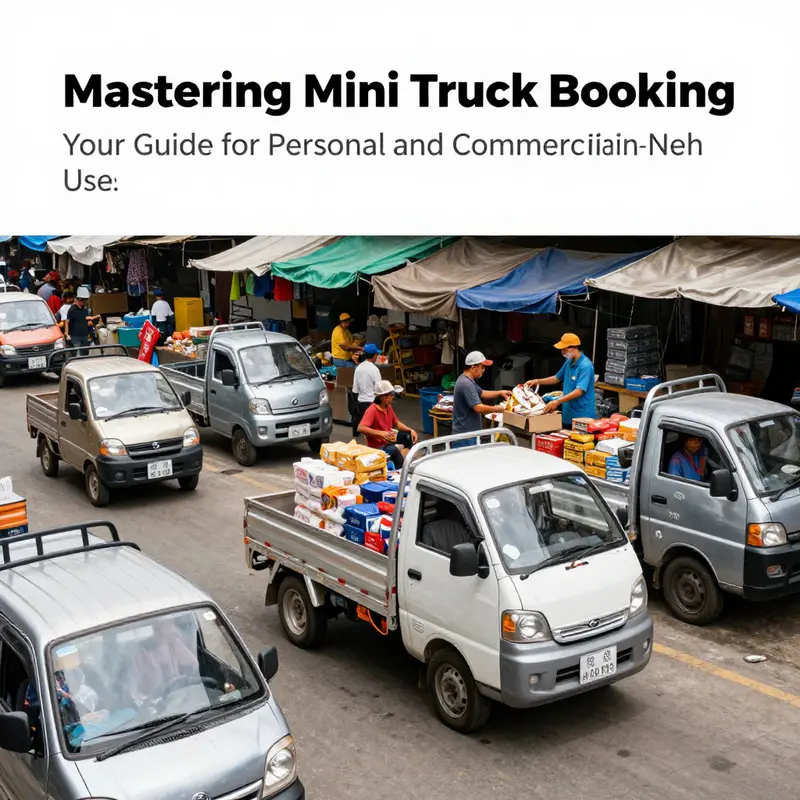
Booking mini trucks for commercial use in Asian markets requires a practical blend of planning, local knowledge, and clear communication. This chapter walks through the full journey, from defining the job to putting vehicles into daily service. It blends procurement and booking advice with operational steps you will need to execute after keys change hands. Read it as a single, continuous process: identify needs, choose vehicles, source suppliers, confirm compliance, finalize contracts, and integrate the trucks into your logistics network.
Start by clarifying why you need mini trucks. Define the cargo type, delivery patterns, and route types. Will trucks haul pallets, loose bulk, passengers, or equipment? Are loads time-sensitive? How many round trips each day will a single vehicle make? Short, frequent trips favor electric models in dense cities. Heavy loads or long routes often require combustion engines and stronger suspensions. Also map your operating environment precisely. Urban centers present tight lanes and strict emissions rules. Rural or mountainous terrain demands higher ground clearance and possibly four-wheel drive. By listing cargo dimensions, gross weights, daily distances, and expected stop density, you create a specification document you can share with suppliers. This document speeds quotes and avoids mismatched offers.
Next, consider vehicle type and configuration. The category “mini truck” covers varied chassis, beds, and drivetrains. Many commercial buyers need to choose among basic chassis cabs, enclosed cargo boxes, tipper beds, and modified platforms for specific trades. Choose a bed or body suited to your cargo type. A tipper bed eases unloading for construction materials. An enclosed box works for parcels or temperature-sensitive goods. If you plan passenger transport, opt for models with secure seating and safety features. Drivetrain choices affect operations. Electric mini trucks offer lower running costs and zero tailpipe emissions. They are ideal where routes are short and charging infrastructure exists. Combustion models provide better range and towing capability. Consider hybrid options where available, to balance range and lower emissions.
Procurement strategy depends on scale and timeframe. If you need a small number of vehicles immediately, local dealerships and used-vehicle markets often provide the fastest path. For larger fleets, factory-direct purchases, authorized distributors, and lease-to-own programs offer volume discounts and maintenance packages. When evaluating suppliers, request detailed quotes that break down price, lead time, optional features, warranty terms, service network coverage, and spare parts availability. Ask for total cost of ownership projections for at least three years. These should include fuel or electricity, scheduled maintenance, expected battery replacement for electric models, and insurance costs. A clear total cost projection helps you compare options that may differ in initial price.
Negotiation and booking are rarely one-step events. Use your specification document to solicit proposals from multiple sources. Compare not only sticker prices but also delivery schedules and service commitments. Negotiate service level agreements when buying multiple units. Seek dedicated spare parts guarantees to protect uptime. Insist on written lead times and penalties or remedies for missed deliveries if timing is critical. For electric models, confirm battery warranty coverage and criteria for replacement. For tipper and specialized bodies, ensure certifications for load ratings and hydraulic systems are included.
Legal compliance and registration must be handled early. Different countries and municipalities impose distinct emissions rules, vehicle dimension limits, and load securing standards. Confirm the vehicle class for registration and whether any import duties or local homologation steps apply. Check driver licensing requirements. Some mini trucks fall under standard light vehicle licenses, while others require commercial endorsements. For cross-border operations, verify transit permits, insurance extensions, and customs procedures. It is often efficient to engage a local import or regulatory consultant who handles paperwork and registration processing on your behalf. This reduces delays and prevents costly compliance oversights.
Leasing versus purchasing deserves careful thought. Leasing reduces upfront capital outlay and often bundles maintenance. For businesses testing demand or operating in high-cost markets, leases provide flexibility to scale up or down. Purchase becomes attractive when predictable demand and long service life make ownership more cost-effective. Many suppliers offer flexible finance options, including lease-to-own arrangements. Evaluate the residual values offered and the maintenance obligations assigned to either party. If you plan to operate in multiple cities or countries, choose finance and lease terms that permit relocation without heavy penalties.
When finalizing a booking, confirm delivery logistics. Will the supplier deliver to your yard, or will you collect at a depot? For multiple units, schedule batch deliveries to minimize disruption. Confirm handover procedures, including a final vehicle inspection checklist and documentation of accessories and spares supplied. For electric trucks, verify charger delivery and installation timing. If chargers will be installed at your facilities, coordinate with electrical contractors and local utilities for capacity upgrades and permits. Make sure that the delivery package includes a copy of the vehicle manual, maintenance schedule, and contact details for roadside assistance.
Training and operational readiness matter for uptime and safety. Arrange driver induction for new vehicle models. Cover vehicle-specific handling, load securing, daily checks, and safe charging procedures for electric models. Train drivers on real-world limitations, such as hill-start handling in tipper models and how regenerative braking affects stop distances. Maintenance teams require training on scheduled servicing points, battery health monitoring, and fault code diagnostics. Ask the supplier for training sessions during handover, and record the sessions for future staff onboarding.
Maintenance planning protects your investment. Create a maintenance calendar based on manufacturer recommendations and real-world usage. For electric trucks, institute battery monitoring and periodic capacity checks. For hydraulic tippers and other specialized equipment, schedule inspections of seals, cylinders, and structural components. Maintain a small, rotating stock of high-failure items to reduce downtime. Track maintenance events in a central system for visibility across the fleet. Consider partnering with local workshops for light repairs and keeping the manufacturer or authorized service centers for critical work.
Insurance and risk management should align with your operating risks. Ensure policies cover cargo, third-party liability, and vehicle damage. For fleets operating in difficult terrain or construction sites, include coverage for off-road damage and specialized recovery services. For electric fleets, verify coverage for battery damage and charging-related incidents. If vehicles will cross borders, include international liability extensions. Keep all policy documents accessible and verify that claims procedures are clear to drivers and site managers.
Fleet management systems improve efficiency and control. Install telematics to capture location, idle time, fuel or energy use, and maintenance alerts. Use route optimization to reduce empty miles and improve delivery density. For last-mile operations, pair telematics with proof-of-delivery tools. Build simple dashboards that show vehicle utilization, cost per kilometer, and time lost to maintenance. Regular reviews of these metrics allow you to identify underperforming routes or vehicles. Prioritize corrective actions such as re-routing, additional driver training, or replacing high-cost assets.
Spare parts and local support networks determine long-term viability. Confirm spare parts lead times and distributor coverage for your region. For imported models, determine which components are stocked locally and which require import lead times. Seek suppliers that provide a local parts warehouse or guarantee shipment times. For older models or low-volume variants, plan for custom fabrication or local repair capabilities. In regions with limited official support, cultivate relationships with trusted workshops and parts suppliers.
Sustainability and future-proofing should influence choices. Electric models help meet clean air policies and reduce operating costs. However, consider the maturity of charging infrastructure and battery lifecycle costs. If your operations span urban cores and remote districts, a mixed fleet may deliver the best balance. Also consider modular bodies that allow reconfiguration without changing the chassis. Modular platforms extend vehicle life and reduce capital expenditures when business needs change.
Operational rollout is about incremental learning. Start with a pilot deployment of a small number of vehicles. Use that phase to validate real-world performance, driver comfort, and route suitability. Collect data for at least four to six weeks. Use findings to adjust vehicle specifications and maintenance intervals before scaling. Pilot rollouts also identify soft costs such as local permitting delays and neighborhood restrictions you might not foresee.
Communication and documentation simplify ongoing management. Standardize vehicle handover forms, daily walk-around checklists, and incident reporting templates. Keep digital records of all maintenance, modifications, and incidents. This history supports warranty claims and aids resale. Create a simple escalation matrix for roadside breakdowns that directs drivers quickly to appropriate support contacts.
When scaling, centralize procurement to secure better terms. Consolidated orders often unlock volume discounts, service agreements, and prioritized delivery slots. Central procurement also lets you standardize vehicle specs, simplifying maintenance and spare parts stocking. Conversely, allow local branches some flexibility to choose body types suited to unique last-mile needs.
Finally, consider resale and end-of-life plans early. Vehicles that are well-documented, regularly serviced, and kept within recommended usage limits command better resale values. Plan battery replacement strategies for electric models and document any major repairs. Local secondary markets vary, so factor projected resale value into your total cost calculations when negotiating purchases.
For practical community resources and regional insights, consult the local mini truck community blog for owner-contributed reviews and customization notes: Mini Truck SoCal blog. For technical specifications and procurement guidance from a manufacturer portal that outlines standards, grades, and performance metrics for heavy-duty tipper models used across demanding environments, refer to this official sales portal: https://www.sinotrucks.com/ethiopia-sales
With clear specifications, a thoughtful procurement strategy, and an operational plan that includes training, maintenance, and telematics, booking mini trucks for commercial work in Asia becomes a structured, manageable project. Treat each booking as the start of a longer lifecycle. The decisions you make at purchase and handover shape uptime, cost, and flexibility for years.
Final thoughts
Now equipped with essential insights, local small business owners, residential property owners, and mini truck enthusiasts can navigate mini truck bookings with confidence. Whether it’s personal rentals, test drives, or commercial uses, each option contains unique advantages. Make your booking today and experience the convenience and efficiency of mini trucks!