
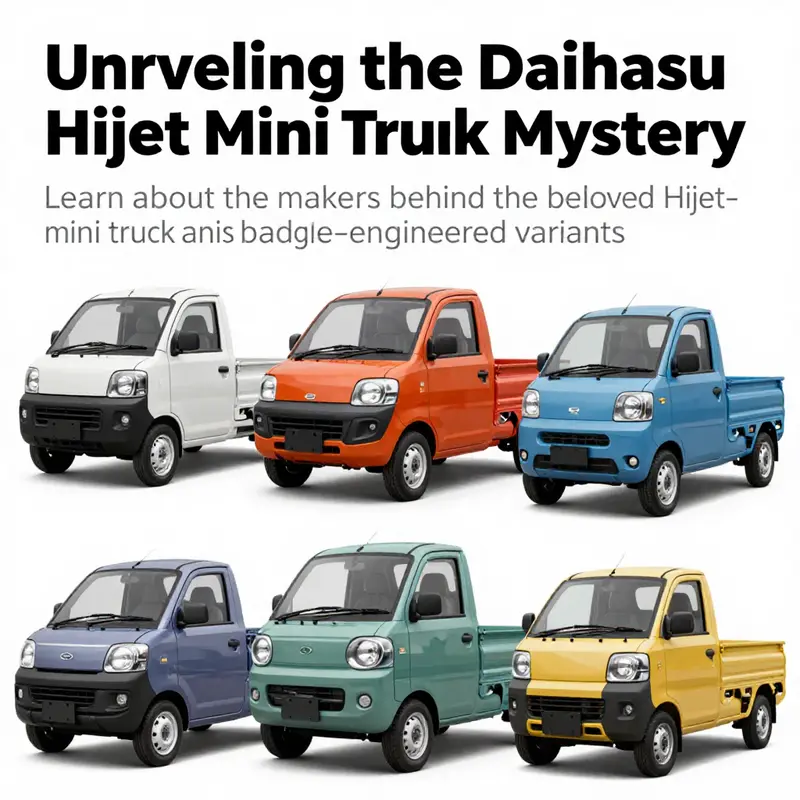
For local small business owners, residential property owners, and mini truck enthusiasts alike, understanding who makes the Daihatsu Hijet mini truck is more than just knowledge—it’s about uncovering the craftsmanship behind this versatile vehicle. The Hijet is a favorite in many spheres, from carrying loads to recreational activities, and knowing its origins can help you appreciate its practical and cultural significance. In this exploration, we will discuss Daihatsu’s crucial role, delve into its badge-engineered relations with Toyota, Subaru, and Nissan, and uncover how the K-Car segment in Japan shapes these mini marvels. Together, we can broaden our understanding of this beloved vehicle and its impact on our lives.
Daihatsu and the Hijet: The Maker Behind Japan’s Iconic Mini Truck
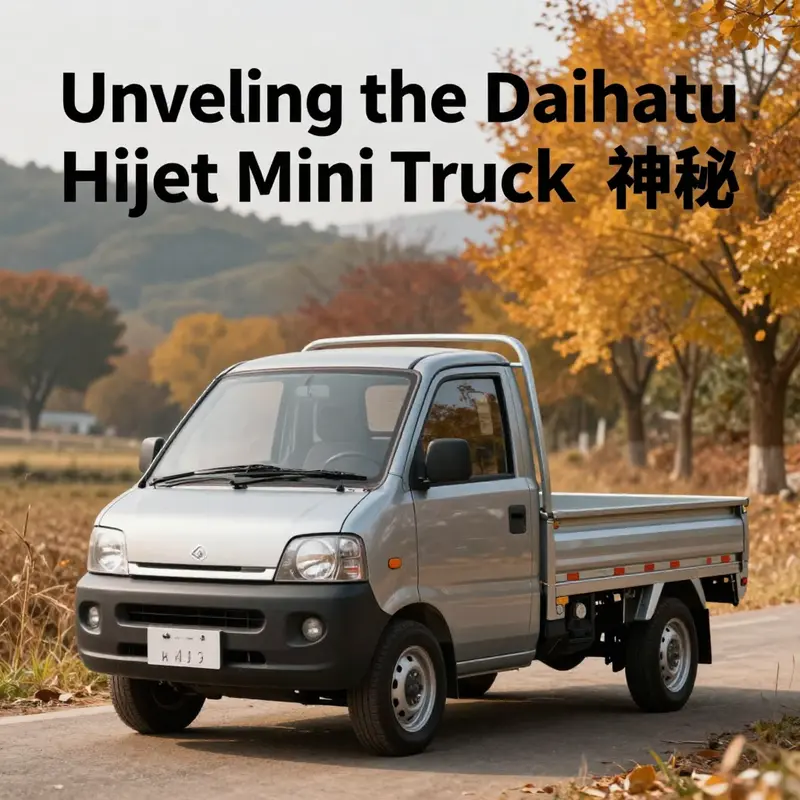
Daihatsu and the Hijet: a single-maker story with wide reach
The Hijet mini truck traces back to a single manufacturer: Daihatsu Motor Co., Ltd. That company has designed, produced, and refined the model since its debut in 1960. Over decades the Hijet became a concise expression of a focused philosophy: compact dimensions, straightforward mechanics, and exceptional utility. This chapter describes how Daihatsu built the Hijet into a durable platform and how that platform expanded through partnerships to appear under other badges.
From the start, the Hijet answered practical needs. Cities and farms needed a vehicle that could carry loads in tight spaces. Daihatsu engineered short wheelbases, narrow bodies, and efficient small-displacement engines. Those choices kept running costs low and allowed easy maneuvering on narrow roads. The vehicle’s purpose — urban delivery, agricultural duty, and light-work applications — shaped every subsequent iteration.
Daihatsu’s role has always been both maker and steward of the Hijet platform. The company manages design, testing, assembly, and parts support. That consistency matters. A single corporate design philosophy preserves reliability across generations. Even when the truck evolves, its core priorities remain: practicality, fuel economy, and simple serviceability. These traits appeal to small businesses, municipalities, and individual owners who need a dependable utility vehicle.
The fleet of Hijet variants demonstrates Daihatsu’s responsiveness to diverse conditions. Basic models prioritize low cost and efficiency. More specialized versions add features for tougher work. For example, four-wheel-drive configurations provide improved traction. They pair rugged underbody components with increased ground clearance. Such variants suit construction sites, rural routes, and snow-prone regions. They extend the platform’s usefulness without altering its basic strengths.
Daihatsu also extends the Hijet range by varying body styles and accessory options. Cab configurations differ to optimize cargo capacity. Flatbeds, enclosed boxes, and specialized bodies adapt the chassis to specific trades. Optional fittings — reinforced suspension, heavy-duty springs, and weatherproofing — tailor the truck to a given task. Keeping a common chassis across these choices reduces manufacturing complexity. It benefits owners too, through easier maintenance and broad availability of spare parts.
The company’s engineering choices show a distinct focus on long-term ownership costs. Small-displacement engines prioritizing fuel economy are easier and cheaper to maintain. Mechanical simplicity reduces downtime in rural or remote settings. Parts are compact and modular, simplifying repairs. That focus is not accidental; it reflects Daihatsu’s deep experience in the light commercial vehicle segment. By designing with maintainability in mind, Daihatsu secures the truck’s reputation for longevity.
Beyond engineering, production practices matter. Daihatsu manufactures the Hijet in facilities that emphasize efficient assembly. Quality control at each stage reduces variability. Standardized platforms across models make training and logistics easier. Those practices support consistent build quality whether the truck is destined for urban routes or off-grid farms.
The Hijet platform’s durability created another outcome: collaboration. In Japan’s automotive market, sharing platforms is a common strategy. Daihatsu supplies the core platform and expertise. Other manufacturers then sell badge-engineered versions with altered branding and minor cosmetic differences. These arrangements broaden market reach without duplicating development costs. The result is a family of vehicles that trace back to the same underlying design and manufacturing process.
Those partnerships do not lessen Daihatsu’s role as original equipment manufacturer. The company remains the technical origin of the platform. It provides chassis, powertrain options, and primary engineering validation. Partner brands rely on Daihatsu’s production and quality assurance. Badge-engineered variants typically follow the same production lines or are assembled under mutual agreements. The commonality preserves parts interchangeability and simplifies aftersales support across the range.
For prospective owners and fleet managers, the implications are practical. Buying a variant sold under a different brand does not necessarily change the vehicle’s maintenance realities. Service manuals, spare parts compatibility, and repair knowledge often overlap. That consistency can lower ownership costs and broaden the service network. Still, cosmetic differences and dealer support can vary, so buyers should check local service policies.
Daihatsu’s stewardship of the platform also extends to regulatory and market adaptation. The company updates engine choices and safety features to meet evolving standards. It adapts suspension tuning and cabin ergonomics to local preferences. Those iterative improvements keep the model relevant across decades. They also allow partners to market a vehicle that meets regional expectations without major redesign.
The Hijet’s lineage shows how a focused manufacturer can build a platform with broad utility. Daihatsu’s emphasis on small-car engineering and practical design created a versatile chassis. That chassis supports basic urban trucks and more rugged variants alike. When other manufacturers adopt the platform under different badges, the result is a wider presence of essentially the same design. The platform’s core promise — dependable, economical light commercial transport — remains intact.
For deeper reading about how these compact trucks find new roles today, see the Minitruck SoCal blog for owner stories and customization perspectives. It illustrates the practical applications and aftermarket adaptations common in the community.
Daihatsu’s official materials provide the latest specification and model information. For the most up-to-date technical details and current model specifications, consult the manufacturer’s site: https://www.daihatsu.co.jp
Who Builds the Hijet Mini Truck: Daihatsu’s Craft and Toyota’s Pixis Rebadging
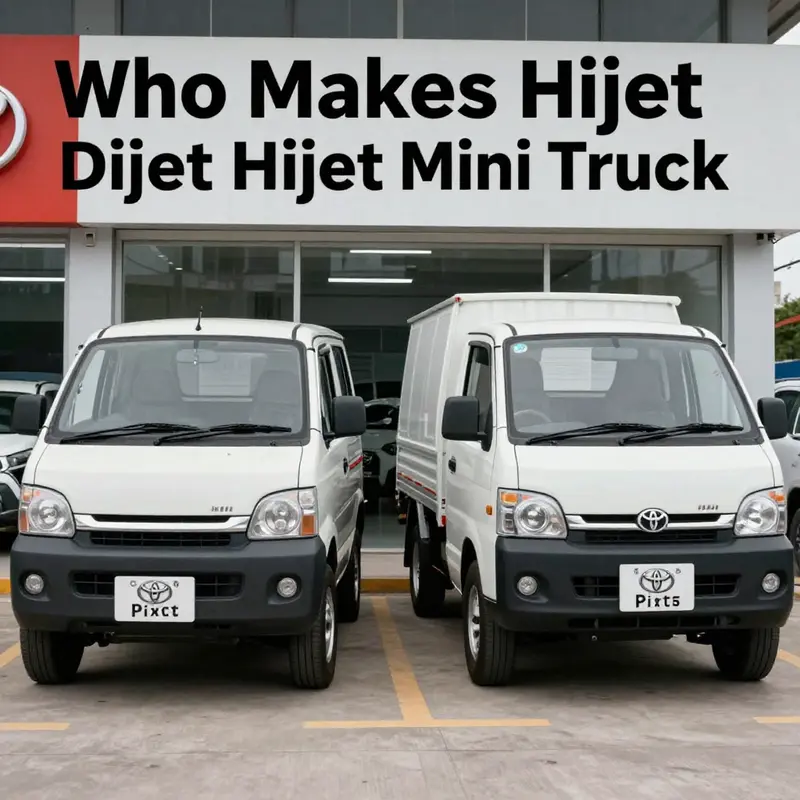
Daihatsu builds the Hijet, and Toyota sells a rebadged version known as the Pixis Truck. That simple statement covers the headline, but the story behind it reveals why small commercial trucks in Japan often wear different badges while remaining mechanically identical. A short, clear thread runs through that story: ownership, platform sharing, and a business strategy called badge engineering.
Daihatsu is the engineering and manufacturing origin of the Hijet mini truck. The company developed the model to meet Japan’s light vehicle, or K‑Car, regulations. The Hijet’s compact footprint, efficient engines, and practical bed design made it ideal for small businesses, farms, and municipal uses across Japan. Daihatsu’s teams handle the core design, production engineering, and assembly for the vehicle. They set the chassis, powertrain, and body specifications that define what a Hijet is at its most fundamental level.
Toyota’s role enters the picture through corporate ownership and strategic distribution. Daihatsu is a wholly owned subsidiary of Toyota Motor Corporation. That ownership structure means Toyota and Daihatsu coordinate product lines closely. For certain light vehicles, Toyota opts not to duplicate development and manufacturing efforts. Instead, Toyota markets a rebadged twin developed and built by Daihatsu. The Hijet appears in Toyota’s lineup as the Pixis Truck. Mechanically and structurally, the Pixis Truck is the same vehicle. Toyota may vary the badging, dealer positioning, and optional trim, but the platform, engine choices, and much of the hardware are shared.
Badge engineering of this type is a pragmatic move. It reduces research and development duplication. It allows each brand to fill gaps in its range rapidly. Toyota gains access to a proven K‑Car while Daihatsu’s volume improves through additional sales. For buyers, the practical outcome is easy parts interchangeability and shared service knowledge. A Toyota‑badged Pixis Truck and a Daihatsu Hijet often use the same filters, lights, and suspension parts. Maintenance shops familiar with the Hijet will find the Pixis Truck immediately recognizable.
The rebadging relationship also helps each brand reach different dealer networks and customer groups. Toyota’s dealers can offer the Pixis Truck to customers who prefer Toyota’s sales channels. At the same time, Daihatsu can continue to serve customers who intentionally choose the Daihatsu brand. The two channels coexist without much product overlap besides cosmetic touches and dealer-level options.
It’s important to understand what changes when one brand rebadges another’s vehicle, and what stays the same. Cosmetic items often receive the most attention. Badging and grille design are typical touchpoints. Interior trim choices, upholstery colors, and access to specific option packages might vary. However, the structural and mechanical components — the engine, transmission, chassis mounting points, and cargo bed dimensions — typically remain identical. For many buyers, that means functionality and load capability are unchanged regardless of which badge sits on the tailgate.
For the mini truck market, this approach has consequences beyond manufacturing efficiency. Resale values can be influenced by brand perception. In some markets, a vehicle carrying Toyota’s badge may command a different resale price than an otherwise identical Daihatsu. Service networks and warranty policies also differ by brand. Buyers should weigh these factors when choosing between what are, at their core, the same trucks.
From a regulatory perspective, the arrangement is tidy. The Hijet was engineered to satisfy Japan’s K‑Car rules, and the Pixis Truck benefits from those same certifications. That saves duplicated homologation work and expedites distribution. When export markets accept the platform, variations of the Hijet may appear under different names elsewhere. The essential engineering remains Daihatsu’s contribution, while partner brands handle localized marketing.
Dealers and fleet managers appreciate the predictability this model delivers. Parts availability is typically excellent because a single production line serves two sales channels. Mechanics trained on the Hijet will find the Pixis Truck familiar. For small fleets requiring consistent uptime, access to parts through multiple dealer networks is a meaningful advantage. The shared platform also simplifies customization for those who convert the chassis for specialized uses, such as light campers or service bodies.
There are also strategic reasons why Toyota retains the Pixis name instead of simply offering the Hijet under its primary brand. Brand positioning matters. Toyota maintains a distinct image globally, and that image may carry different expectations for customers than Daihatsu’s. By marketing a rebadged Daihatsu under a separate model name, Toyota can align pricing, promotions, and dealer messaging with its brand strategy while ensuring customers receive a product optimized for the K‑Car niche.
For anyone researching who makes the Hijet mini truck, the short answer remains: Daihatsu manufactures it. The nuance is that Toyota sells the same vehicle as the Pixis Truck through badge engineering. That arrangement exemplifies how modern automotive groups leverage subsidiary expertise. The original engineering and production work are Daihatsu’s. Toyota amplifies that work across its channels with a rebadged offering that meets the same functional requirements.
If you want practical advice when comparing a Daihatsu‑badged Hijet against a Toyota Pixis Truck, focus on service and ownership details. Confirm warranty coverage differences. Ask dealers about available options specific to each badge. Compare resale expectations in your local market. And consider maintenance networks — shared parts simplify service, but dealer locations and policies can vary.
For readers interested in broader customization and use cases for small trucks, the Mini Truck SoCal blog has helpful community resources and conversions to explore. Their content highlights ways owners adapt these compact trucks for diverse tasks, from utility work to leisure camping. Mini Truck SoCal blog
External reference: https://www.marklines.com/en/vehicle/daihatsu-hijet.html
From Hijet to Sambar: The Shared Blueprint Behind Japan’s Mini Truck Icon
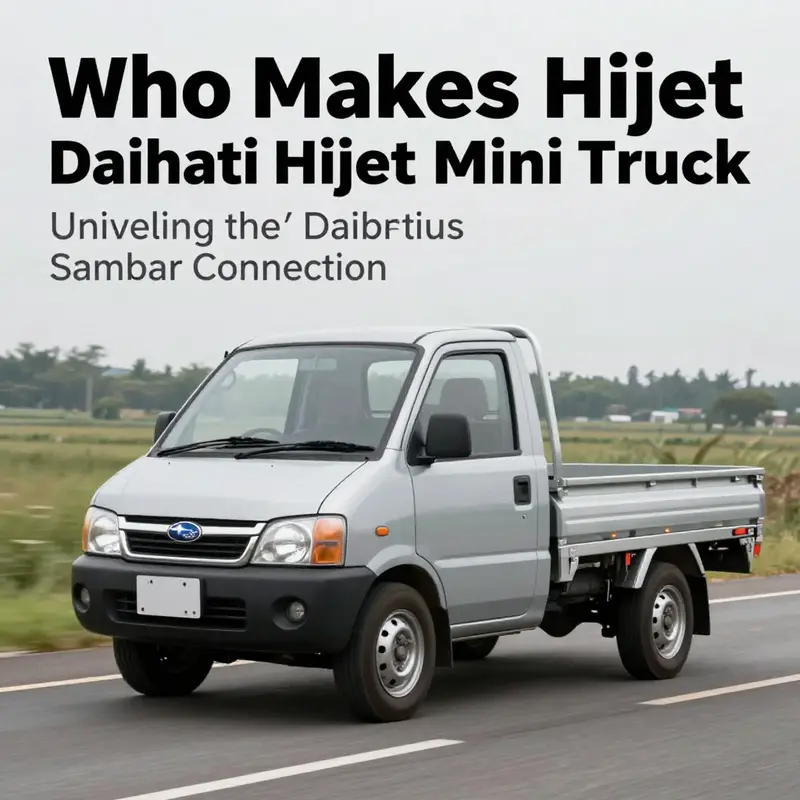
In Japan, the compact workhorse that hauls everything from vegetables to tools has long relied on a quiet but persistent pattern: a single, efficient design that appears under several faces. This approach keeps costs contained, parts accessible, and service networks streamlined, all while delivering the familiar, practical performance that small-businesses and farmers rely on. At the center of this pattern sits a foundational platform created by a prominent Japanese automaker, a design that becomes a badge in the hands of other brands through badge engineering and close collaboration. The Hijet mini truck, as it is commonly known, epitomizes this strategy. It is not merely a single logo on a sheet metal shell; it is a shared engineering language that travels across brands, a common heartbeat that keeps the small-truck segment alive and adaptable to shifting market needs.
The primary maker of this compact workhorse is the company that has specialized in small, economical vehicles designed for practical everyday use. This company developed a nimble platform that prioritizes lightness, compact exterior dimensions, and a dense payload-to-size ratio. The result is a vehicle that can weave through narrow city streets with ease, while still offering the reliability and simplicity that fleets, farmers, and tradespeople demand. But the story doesn’t end with the original builder. In Japan, it is quite common for the same core architecture to take on new identities under a different badge. This practice—often called badge engineering or platform sharing—lets a brand tailor the product’s branding, interior features, and market positioning without rebuilding the entire mechanical package from scratch. So, while one company remains the technical originator of the platform, multiple brands can offer essentially the same chassis with their own branding, styling cues, and option packages.
Among the better-known examples of this approach are three long-running relationships in the subcompact commercial space: a familiar face under a major brand that focuses on a specific commercial niche, a second brand that uses the same mechanics but targets a different customer base, and a third brand that leverages the same engineering core to fill a different light-duty role. The result is a family of trucks that rides on the same wheelbase, uses the same engine and transmission pairing, shares the same suspension layout, and — most importantly for a buyer — relies on the same supply chain and service infrastructure. The practical implications are clear: parts availability, dealer and repair network coverage, and a predictable maintenance plan become more robust when the underlying platform is shared across several model lines.
In this ecosystem, a trio of badge-engineered siblings stands out. One of them wears the badge of a familiar household brand, while another wears a more utility-focused identity aimed at a different segment of the market. The third, often, remains close to the original in engineering terms but appears under a partner brand that seeks access to the same compact, capable vehicle for its own customers. The common thread among all of them is the engineering core: a compact, efficient powertrain pairing, a chassis tuned for urban maneuverability and light payloads, and a suspension that favors a smooth ride over rougher terrain. These shared traits are what make the platform so durable and adaptable across generations, allowing it to endure as market preferences shift but core utility remains constant.
Since the mid-life of this platform, a notable shift has sharpened the link between the original maker and one of its badge-engineered partners. Beginning in 2012, the seventh-generation model of the partner brand’s mini truck—launched in the spring of that year—was developed as a joint effort with the original platform. The two teams collaborated to reuse the same body and chassis geometry, ensuring that the partner model could deliver the same tight turning radius, payload capacity, and simplicity in maintenance that customers expected from the Hijet lineage. In practical terms, that means the partner model and the original Hijet share the same fundamental structural skeleton. The platform is not only common in theory but identical in many mechanical aspects, which means parts compatibility extends beyond mere similarity in appearance.
This collaboration did more than just keep a product line viable; it reinforced a broader industrial pattern. The latest iterations of the Hijet family—the ninth generation of the micro truck and the tenth generation of the accompanying van—continue to share the platform with the Subaru-backed mini-truck line. The Sambar, as it is marketed in Subaru’s lineup, hinges on the same engineering core that Daihatsu created for the Hijet. This is not a case of superficial branding; it is a deep structural alignment that makes a single design viable across multiple brands with varied market expectations. For Subaru, the Sambar gains a compact, reliable workhorse option that can be positioned for urban logistics, agricultural use, or light commercial duties, all while capitalizing on the economies of scale generated by a widely shared platform. For Daihatsu, the Hijet remains the baseline, a proven, adaptable foundation that can undergo branding shifts without sacrificing the integrity of the engineering underpinnings.
The practical outcome for buyers is a more predictable ownership experience. Availability of parts and service tends to improve when a vehicle’s core platform spans several models, and the same labor skill sets can be leveraged across brand lines. Consumers benefit from standardized maintenance intervals, interoperable parts supply, and a level of familiarity that makes inspections and repairs straightforward. In a sector where uptime can spell the difference between a productive workday and downtime, this level of predictability is not just a convenience; it is a competitive advantage. Yet this arrangement also invites a nuanced discussion about branding versus engineering. While the outward appearance and nameplate may differ, the more meaningful differences lie in the tuning of interiors, the choice of amenities, and the emphasis on brand heritage. Some customers may prefer the subtle styling cues or dealer incentives associated with a particular brand, while others value access to a known, shared mechanical core that has proven its merit in real-world tasks.
For readers who want to explore related stories about the broader world of compact work vehicles and their evolving configurations, a deeper dive into the online archive can offer a broader view of how badge engineering in this space has developed over time. You can find related discussions and case studies at the Mini Truck Sca la blog, which compiles a range of stories about small, practical trucks and their journeys through different brands and markets: minitrucksocala.com/blog/.
Overall, the Hijet’s legacy is not confined to a single nameplate or a single market segment. It represents a durable engineering approach that accommodates brand diversity while preserving core capabilities. The Subaru Sambar connection is a clear demonstration of how a single platform can serve multiple brand strategies, offering a practical solution for urban and rural logistics alike. This shared blueprint underscores a broader truth about the Japanese light-vehicle segment: efficiency, reliability, and adaptability are built into the platform from the outset, and branding is increasingly a matter of presentation rather than a separate, standalone engineering project. As generations advance and market demands shift, the story of the Hijet and its badge-engineered relatives continues to unfold, illustrating how a well-crafted core can endure across brands, generations, and evolving definitions of what a practical work vehicle should be.
External resource: https://en.wikipedia.org/wiki/Daihatsu_Hijet
Nissan’s Hijet and the Cabstar Partnership: How a Mini Truck and a Joint Venture Diverge
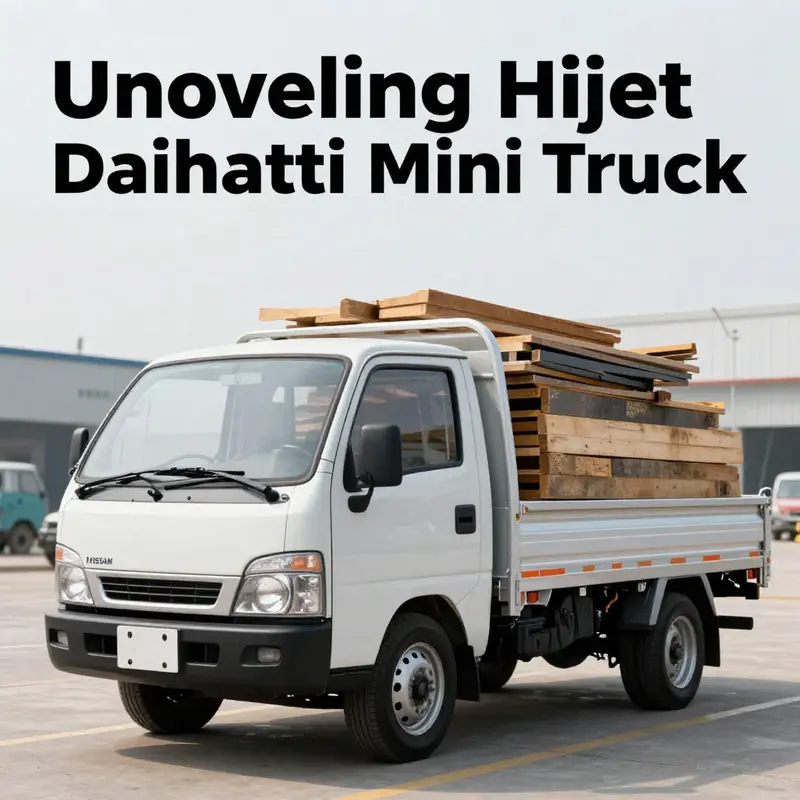
Nissan’s place in the compact commercial vehicle world can be confusing at first glance. Multiple names, overlapping partnerships, and badge-engineered models create a tangle of labels. At the center of this knot are two vehicles that often get mentioned together: the Hijet mini truck and the Cabstar. Both serve commercial roles, but they differ sharply in scale, engineering, and corporate origins. This chapter clarifies Nissan’s role, explains how the Cabstar partnership fits in, and shows why the Hijet remains distinct.
The simplest way to separate them is by class. The Hijet is a true mini truck. It’s built for tight streets, light loads, and efficient daily work. The Cabstar sits one size up. It addresses heavier payloads, longer hauls, and a different regulatory category. Despite surface similarities, these two trucks answer different operational needs. Nissan markets and develops vehicles across both segments, and collaboration with other manufacturers is common. That collaboration, however, does not mean the products are the same.
Nissan’s manufacturing role with the Hijet is often mischaracterized. Some assume another manufacturer builds it, because badge engineering is so prevalent in Japan. Yet the Hijet associated with Nissan is produced under Nissan’s umbrella. It carries Nissan branding, meets Nissan quality and service standards, and is positioned within Nissan’s light commercial lineup. Where confusion arises is in the broader Japanese practice of sharing platforms and components. Nissan participates in that ecosystem, but the Hijet branded to Nissan remains its product.
Parallel to Nissan’s Hijet presence is the Cabstar arrangement. The Cabstar emerged through cooperation between Nissan and Hino Motors. Hino brings deep expertise in commercial vehicle platforms, particularly for medium-duty trucks. Nissan contributes market reach, distribution networks, and its own engineering resources. The result is a truck designed to fit a middle-weight niche: more robust than a mini truck, yet more maneuverable than a heavy-duty rig. This joint venture leverages strengths from both companies, optimizing production and reducing development costs.
It helps to think of the relationship like two toolkits. Nissan’s mini truck toolkit handles compact frames, small-displacement engines, and space-efficient cabins. Hino’s toolkit favors sturdier frames, heavier suspensions, and diesel systems tuned for larger loads. When those toolkits are combined for the Cabstar, the product inherits attributes from both sources. That inheritance explains why people sometimes conflate model names or assume a single manufacturer builds both vehicles. In reality, Nissan’s Hijet and the Cabstar are separate outputs from different collaborative pathways.
Market needs shaped these decisions. Urban logistics and agriculture demanded a compact, nimble truck. Nissan answered with a mini truck that prioritizes size, economy, and simplicity. For construction, municipal work, and regional delivery, operators needed trucks carrying heavier payloads and offering longer service intervals. The Cabstar fills that role. Nissan’s willingness to partner with Hino allowed it to address that market without duplicating in-house platforms. Partnerships like this reduce time to market and create cost efficiencies, while preserving brand-specific products.
Understanding who makes what also helps when sourcing parts or planning maintenance. A Hijet owner can rely on Nissan’s parts catalog and service network for model-specific components. That continuity simplifies ownership costs and warranty interactions. Conversely, Cabstar owners may see components and service patterns influenced by Hino’s commercial vehicle knowledge. Dealers and fleet managers accustomed to Japanese badge-engineering practices know to check part numbers and VIN references carefully. Small differences in chassis mounts, suspension, or electrical systems can change which components fit.
Brand identity plays a role too. Nissan positions the Hijet within a lineup that balances passenger cars and light commercial vehicles. The Hijet appeals to customers wanting predictable Nissan ownership. On the other hand, the Cabstar’s dual-parent background signals a purpose-built, work-first approach. Hino’s reputation in heavier trucks reassures buyers who prioritize durability and uptime. Those brand cues help buyers select the right truck for the job.
The public narrative also affects resale and fleet decisions. Fleets often standardize to a brand for service simplicity. When a company decides to adopt a Nissan mini truck across multiple urban routes, it benefits from unified training and spare parts. If a fleet needs heavier-duty trucks in parallel, they might procure Cabstar variants under the same procurement strategy, but treat them as a distinct class. Clear distinctions in procurement paperwork and maintenance schedules prevent mix-ups and reduce downtime.
Misunderstandings about manufacture can also lead to incorrect assumptions about capability. Some buyers assume the Cabstar and Hijet share the same underpinnings, and thus the same towing or payload ratings. That’s not true. The Cabstar is engineered for greater loads and different duty cycles. At the same time, the Hijet’s compact dimensions and lower operating cost can make it the more practical choice for many small businesses. Choosing the right vehicle requires an honest appraisal of routes, payloads, and service intervals, not just model names.
For readers exploring mini-truck ownership or comparing light commercial options, helpful resources exist. Community-driven blogs and specialist sites provide ownership stories, customization ideas, and real-world comparisons. One such hub is the Mini Truck SoCal blog, which covers practical modifications and buyer experiences and helps operators understand how mini trucks perform in everyday use. That kind of community knowledge complements manufacturer specifications and clarifies which vehicle suits particular needs: compact efficiency or middle-weight capability.
In short, Nissan makes and brands the Hijet mini truck under its lineup. The Cabstar, while often mentioned alongside the Hijet, is a product of Nissan and Hino collaboration. Each vehicle reflects different design priorities and market demands. Recognizing that distinction removes confusion and helps purchasers choose the right truck for their work. For detailed technical specifications and official product information, consult Nissan’s resources directly: https://www.nissan-global.com/EN/PRODUCTS/VEHICLES/HIJET/.
Who Builds the Hijet: Daihatsu’s Role and the K‑Car Network Behind Japan’s Mini Truck
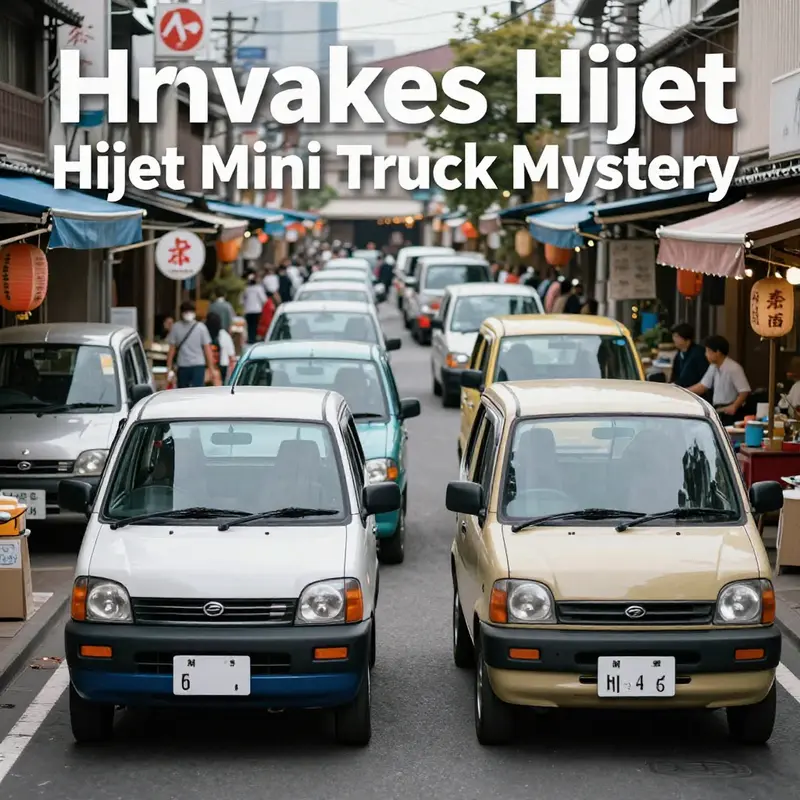
Who builds the Hijet? The short answer is that the Hijet mini truck is built by Daihatsu, a manufacturer with deep roots in Japan’s small‑car culture. But that simple fact hides a more interesting story about how Japan’s light vehicle, or K‑Car, segment works. The Hijet is not only a single model; it is also a platform that travels through corporate partnerships. That network shapes how the Hijet is sold, rebadged, and used across different brands and markets.
Daihatsu’s expertise in small vehicles goes back decades. The company emerged after World War II with a focus on compact and economical transport. The Hijet first appeared in the 1960s as a practical answer to commercial needs in a compact footprint. Over time the model evolved, improving reliability, durability, and drivability while staying true to the K‑Car rules that govern size and engine capacity in Japan. Those regulations keep vehicles small, light, and efficient. They also encourage specialized designs for narrow roads and tight urban environments. The Hijet excels under those constraints, offering a balance of maneuverability and load capacity.
Beyond its original design, the Hijet became a natural candidate for badge engineering. In Japan, automakers often share platforms to meet demand without duplicating development costs. Daihatsu supplies complete vehicles or platform components to other manufacturers who rebadge them for their own lineups. That means a mechanically identical or closely related truck can wear different brand badges while keeping the same underlying structure. This practice is common in the K‑Car sector and helps multiple brands offer competitive products under varied marketing strategies.
The badge‑engineering relationships matter because they broaden the Hijet’s footprint. When another automaker rebadges the Hijet, it introduces a version to its own dealer network and customer base. The result is a mini truck that is familiar under several names, yet traceable back to Daihatsu engineering and assembly. This arrangement benefits all parties: Daihatsu achieves higher production volumes and more efficient manufacturing, partner brands fill gaps in their lineups, and customers get proven technology through different sales channels.
Functionally, the Hijet represents a design philosophy geared toward utility. It balances a rugged chassis with a compact body. High ground clearance and an available four‑wheel‑drive system give it off‑road capability that belies its size. The cab and bed layout emphasize practicality, which is why the truck is a staple for agricultural work, local deliveries, and construction sites. Its small footprint makes it easy to park and maneuver in narrow lanes. Those same traits make the Hijet appealing for creative uses beyond commercial work. Enthusiasts and small business owners convert these trucks into campers, mobile shops, and bespoke utility vehicles, finding that the platform adapts well to custom interiors and lightweight add‑ons.
Daihatsu’s approach to the Hijet has been incremental and pragmatic. Engineers refine mechanical systems, improve fuel consumption, and enhance comfort while respecting the K‑Car envelope. That means the Hijet evolves through generations without radical departures from its original purpose. Recent updates emphasize efficiency and reliability, sometimes adding modern conveniences to improve daily usability. At the same time, the structural fundamentals — a compact, load‑bearing frame and a proportionate powertrain — remain consistent. That consistency is what makes the Hijet a dependable partner for small operators across rural and urban Japan.
The vehicle’s reputation is built on utility and longevity. Owners prize simple serviceability and robust construction. That makes the Hijet attractive in markets where local mechanics keep vehicles running for many years. Parts are relatively straightforward, which supports repairability. The truck’s drivetrain and chassis components are designed to endure heavy use, which is a key selling point for commercial buyers.
Because the Hijet is part of a broader network of rebadged models, its presence extends beyond a single dealer channel. This network also affects aftermarket support and customization trends. When multiple brands sell the same platform, third‑party suppliers have a larger base of compatible vehicles to serve. That leads to a richer ecosystem of accessories, conversion kits, and performance upgrades. For those interested in transforming a mini truck into a compact camper or an off‑grid utility rig, the available parts and community knowledge make the process easier. If you want to see how these conversions can look in real life, check out this Godzilla truck camper review and customization page for a sense of possibilities: Godzilla truck camper review and customization.
From a manufacturing perspective, Daihatsu retains core responsibilities for the Hijet. The company oversees engineering, production standards, and quality control. Even when another brand rebadges the truck, the original design intent and much of the manufacturing process remain Daihatsu’s. This central role helps maintain consistent performance across different branded variants. It also allows Daihatsu to scale production while keeping margins manageable through shared development costs.
Internationally, the Hijet and its derivatives find homes in niche markets and among enthusiasts who value compact utility. Export markets often adapt the vehicle to local regulations or customer preferences. In some regions, the Hijet requires modifications to meet safety or emissions standards. In others, it is embraced almost unchanged because its compact size and low operating costs are beneficial in dense urban areas.
Understanding who makes the Hijet therefore means recognizing two layers. The first layer is clear: Daihatsu is the manufacturer and engineering source. The second layer is the commercial network of rebadged variants that place the same basic vehicle under different emblems. That network is a hallmark of Japan’s K‑Car strategy. It spreads proven technology across brands and markets, and it helps keep small trucks like the Hijet in continuous production.
This structure explains why you may find the same vehicle sold under different badges yet still traceable to the same origin. It also explains why the Hijet remains relevant: continuous refinement, practical design, and a collaborative manufacturing model keep it adaptable. For deeper technical details and model specifications, consult the manufacturer’s official information on the Hijet and related K‑Car models at the Daihatsu global site: https://www.daihatsu.com/global/en/.
Final thoughts
By uncovering the origins of the Daihatsu Hijet mini truck and its relationships with Toyota, Subaru, and Nissan, we’ve gained valuable insight into its legacy and versatility. Its role within the K-Car segment of Japan showcases the importance of compact vehicles that cater to various needs, from business to leisure. Whether you’re a local small business owner, a keen property manager, or simply a mini truck fan, understanding this lineage deepens your connection to the Hijet and its variants. Always remember, the best choice for your needs could be sitting in your driveway, ready to make your tasks a whole lot easier.