
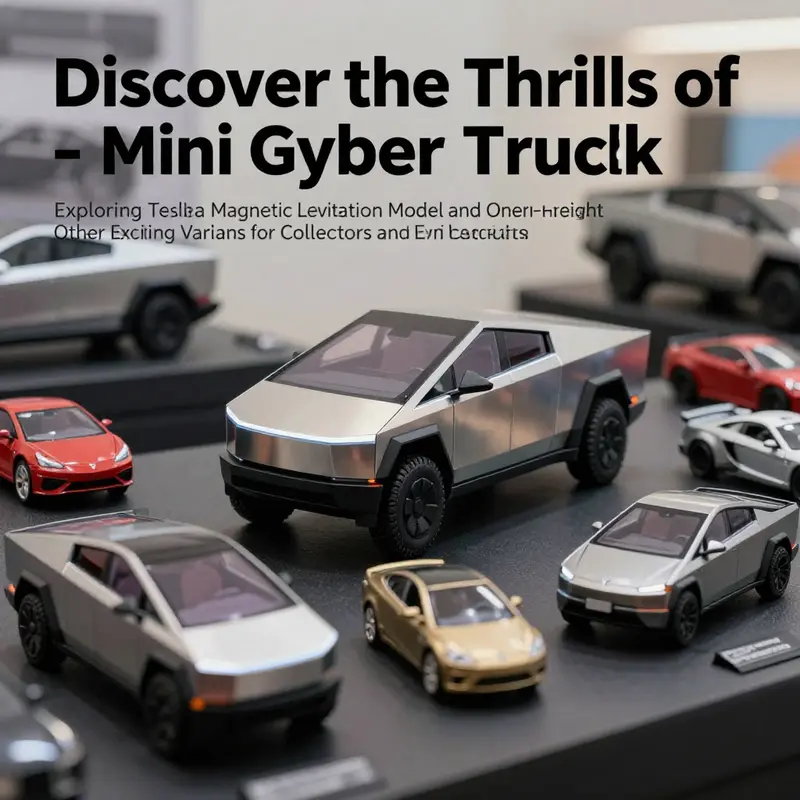
The world of mini cyber trucks is not just a realm for automotive enthusiasts; it’s a playground for collectors and hobbyists alike. As Tesla’s innovation captures imaginations, unique models like the Magnetic Levitation Cybertruck, remote-controlled options from Hot Wheels, and stylish metal replicas from Topway are making waves. Each offers distinct appeal for local small business owners, residential property owners, and mini truck enthusiasts. In this article, we will journey through these fantastic models, discuss their impact on the market, and discover why they hold such an enthusiastic following. Join us in exploring the charm, utility, and community that surround these miniature marvels!
Levitation at Scale: A 1:24 Mini Cybertruck as Sculpture, Spec, and Signal of a New Collectible Era

The microcosm of a future-pacing vehicle arrives not on four wheels but on a circular magnetic stage. The mini cyber truck, in its 1:24 scale, is less a toy and more a sculptural avatar of the full-size icon it mirrors. Its gleaming, silvered silhouette captures the vehicle’s signature angles with a precision that invites closer inspection. At first glance, the piece appears paradoxical: a car that never drives, yet it exerts movement through the quiet drama of levitation. The levitation is not merely a gimmick but a deliberate display of how scale can transform a familiar form into a floating object of contemplation. The model measures 22.8 centimeters from bumper to bumper, a size that sits perfectly on a shelf or a glass cabinet, where light can play across its facets and LED accents, and where the eye is drawn deeper into its geometry rather than outward toward motion.
The core visual drama rests on a circular base, 15.6 centimeters in diameter, that anchors the hover with a magnetic field rather than a pivot point. The engineering is deliberately restrained: no wheels, no doors, no hinge mechanisms that demand attention away from form. Inside, 14 LEDs glow with front and rear light functions that can be toggled at the base with a simple press. This combination of light and suspension creates a display experience that feels contemporary and almost cinematic—the way a modern sculpture or a kinetic art piece invites you to observe, rather than to operate. The model itself weighs 293 grams, a light, precise object that seems almost too delicate for its own gravity until it rests on the magnetic stage, where the base’s heft—1,291 grams—provides the stability that keeps the spectacle calm and controlled. The weight balance is not accidental; it is an intentional design choice to ensure that levitation remains smooth, predictable, and safely contained within the display environment.
The packaging and presentation emphasize the model’s sculptural intent. Its angular, almost chiseled profile echoes the full-size vehicle’s silhouette, but on this micro stage the emphasis is on straight lines, a clean triangular profile, and a precision cut that reads as architectural rather than automotive. For collectors, the absence of moving parts is a feature, not a flaw. It foregrounds the design language—the interplay of planes, edges, and material finish—over the thrill of a miniature car with working doors or a hover function that merely hints at propulsion. The decision to forego wheels or doors is a conscious one, turning the object from a smaller replica into a standalone artwork that respects the aesthetic logic of the original while reinterpreting it for a display context. The result is a piece that looks almost frostily quiet yet carries a latent potential energy, promising to captivate observers just as a monumental sculpture might in a gallery.
When the model was first introduced, it landed within a broader ecosystem of miniatures that orbit the same cultural gravity. The 1:24 levitating version entered a landscape already populated by 1:64 hot wheels-tuned minis and 1:18 scale die-casts with opening panels and interior details, units that suggest a continuum from plaything toward collectible. The levitating edition, however, occupies a distinct niche. It belongs to a family of display pieces that leverage magnetism and careful weight distribution to create a sense of motion without actual motion. The levitation effect is subtle yet compelling, a reminder that perception can be as persuasive as function. The model’s scale does not merely shrink the real thing; it reconfigures it into a gaze-friendly object whose value is defined by presence, accuracy of the form, and the technology that makes it hover. This is why the piece appeals to technology enthusiasts, design lovers, and collectors who relish the conversation around how a vehicle’s identity can persist in a form that is unmistakably present, yet unachievable as a conventional model.
The experience of owning this miniature is inseparable from its practical details. The device ships with a 12-volt AC adapter and a USB-C charging cable, enabling it to be kept ready for display with the base doing most of the heavy lifting—literally and figuratively. The levitation surface requires a flat, non-metallic plane for optimal performance, a small but important reminder that the magic relies on a precise interplay of magnetic fields and gravity. The base acts as a gyroscope for perception as much as a physical platform; its functionality invites a gentle touch to observe the subtle rotation that sometimes accompanies a true hover, a momentary, almost conversational, rotation that adds a third dimension to the visual story. The model’s LEDs—14 in total—are arranged to highlight the angular facets of the body, casting light into the creases and corners. The result is a display that reveals new angles with every glance, rewarding the viewer who returns to it again and again.
Price, availability, and regional strategy have shaped the narrative around this mini marvel. The levitating mini, initially priced at $250, sailed out of stock quickly, its demand underscoring a collector culture that rewards rarity, distinctive display value, and a certain symbol of technological optimism. In late 2025, pricing and accessibility shifted in a significant way in a large consumer market, where the same product appeared on a domestic site at 999 RMB. The change signals more than currency conversion; it reflects a broader attempt to calibrate accessibility without diluting the allure of a limited-edition collectible. Safety considerations accompany these updates: the model is not recommended for children under fourteen due to small parts that could pose choking hazards, and there are cautions for people with pacemakers who should avoid exposure to strong electromagnetic fields in close proximity to the base. Such warnings are part of the product’s narrative, not incidental footnotes, and they contribute to the sense that this item straddles domains—between toy, sculpture, and engineering artifact.
The mini cyber truck’s place in the market is not merely about price points or display ergonomics. It reflects a convergence of design language, consumer electronics, and the psychology of collecting. In a world where the real vehicle continues to symbolize a frontier of autonomy and sustainability, the levitating model translates that mythology into a tangible, contemplative object. It invites a conversation about scale and significance: how a smaller replica can convey the essence of a vehicle that has long stood at the edge of speculative design and practical capability. The choice to present the model as a levitating sculpture rather than a functioning miniature aligns with a growing trend in collecting where the value lies less in operability and more in interpretive fidelity, material mastery, and the aura of technology embodied by the object. There is a parallel thread here with the broader ecosystem of micro-models and display pieces—the way shelves become galleries where form asserts itself with the elegance of a well-executed idea.
For readers who want to situate this piece within a broader hobby narrative, a closer look at related micro-model ecosystems can be illuminating. The online conversation around mini trucks and scaled displays has grown into a cross-pollination of builders, model designers, and collectors who discuss everything from base materials to LED layouts and magnetic stability. The discussion is not just about technical specs; it is about how scale transforms perception, how a hover can be more evocative than motion, and how the collector’s gaze can shape the cultural meaning of a device that sits at the cusp of toy, sculpture, and prototype. If you want to explore a broader horizon of the hobby and its evolving communities, the Minitrucks CaLa Blog provides context and commentary on related micro-vehicle displays and the way enthusiasts curate their shelves. Minitrucks CaLa Blog.
With the Levitating Cybertruck, the line between artifact and artifact’s story stretches wider. The piece does not simply replicate a car; it reframes what a miniature can be when technology, display design, and collector culture converge. Its appeal is not only in the fidelity of its angular geometry or the drama of its float but in the way it embodies an era’s curiosity about magnetism, small-scale engineering, and the aesthetics of a near-future urban vehicle. The levitation is a metaphor as much as a mechanism, suggesting that the dreams we chase in design often find their best expression not in how fast something moves, but in how it makes us pause to look, to imagine, and to reconsider what constitutes a vehicle’s essence when it is reduced to arching light, sharp shadow, and a quiet, almost meditative hover.
For readers seeking official specifications and context beyond the narrative, the Levitating Cybertruck product page offers detailed information about dimensions, power requirements, and LED layouts. External resource: https://www.tesla.com/levitatingcybertruck
Pocket Power: The Remote-Control Mini Cyber Truck That Blends Play and Display

Pocket Power: The Remote-Control Mini Cyber Truck That Blends Play and Display
The compact remote-control interpretation of the angular electric pickup brings a surprising amount of presence to a small footprint. Built at roughly 1:64 scale, this nimble model captures the stark, triangular silhouette of its full-size inspiration. The designers translated that look into a toy that feels modern, tactile, and unusually capable for its size. It’s a machine that sits comfortably between shelf ornament and weekend driver, and understanding its strengths and limits helps owners get the most from it.
From the first glance, the model sells the aesthetic. Flat panels meet hard edges. LED light strips are scaled down but effective, giving the miniature an unmistakable personality when lights are on. Proportional steering and a thoughtfully tuned throttle deliver an experience that mirrors real vehicle behavior. Acceleration is smooth rather than jerky, making it fun for controlled runs on pavement or hard-packed surfaces. A small track adapter adds versatility, letting the vehicle run on tracks designed for mini RC competitions as well as open play spaces.
Performance is where this mini truck shines and where its compromises also appear. In open environments, it accelerates crisply, corners with reasonable grip, and responds predictably to steering inputs. The powertrain and gearing are tuned for a balance of torque and top speed, which makes the model entertaining both for short sprints and slower technical driving. On surfaces with low traction, like concrete or compact asphalt, the vehicle holds lines well and rewards smooth throttle control.
High-traction environments reveal the physics that trip up a lot of small, high-sitting designs. On carpet or loose terrain, aggressive cornering can induce tipping or rolling, particularly during sharp, late braking followed by heavy steering. The model’s high stance and narrow track relative to its height raise the center of gravity, increasing rollover risk. Owners quickly learn to moderate inputs, or to adjust settings in models that provide electronic limits on steering angle and top speed. Simple physical modifications also reduce roll tendency; lowering the center of mass, widening the wheelbase with aftermarket adapters, and fitting softer suspension components make a big difference.
Durability is another mixed picture. The body is molded to look robust, and the chassis is engineered to absorb reasonable impacts. Yet, at this scale, plastics and light alloys can only take so much. Small collisions result in scuffs, cracked paint, or dented panels. The vehicle is tougher than many collectibles, but less resilient than hobby-grade rock crawlers built specifically for rough use. Treating this mini truck as a premium toy yields the best long-term results: avoid extreme jumps and hard impacts, and plan for periodic touch-ups and part replacements.
For enthusiasts who enjoy tweaking, the platform invites upgrades. Battery care is critical; using high-quality rechargeable cells and avoiding full discharge prolongs life. Upgrading tires to grippier compounds or foam inserts improves traction and handling. Motor and gear swaps can increase torque or top speed, depending on your goals. Suspension tinkering—softening springs, adding dampers, or lowering the chassis—reduces rollovers and smooths cornering. Cosmetic mods like textured wraps, light tints, or protective bumper guards keep the look fresh while guarding against wear.
Technology has also crept into these mini models. Recent releases introduced Bluetooth connectivity and smartphone app control, bringing features like configurable steering curves, throttle profiles, and telemetry feedback. App-based tuning makes the vehicle accessible to casual users, while providing depth for tinkerers. A speed limiter or adjustable steering sensitivity is especially useful for beginners or indoor play, reducing the chance of flips and collisions. For competitive players, a responsive controller with low latency remains the preference, but the app offerings close the gap for everyday driving.
The model’s role sits in two camps: play and display. For families and casual hobbyists, it’s a premium remote-control toy that rewards careful driving and light modification. For collectors, the design fidelity, lighting details, and scale presence make it a desirable shelf piece. Display-minded buyers might instead prefer static 1:24-scale magnetic levitation models, which float in mid-air and emphasize technology and presentation over play. Those levitation pieces are engineered as showpieces, with no functioning wheels or doors, and exist purely for display. The remote-control mini fills the middle ground, offering both visual appeal and interactive fun.
Community and aftermarket support enhance ownership. Forums and social groups exchange tuning tips, spare parts sources, and custom wrap files. Local mini-truck clubs organize informal meets and track days for small-scale RC competitions. For broader context on small truck communities and customization culture, the mini truck socala blog offers a useful hub of related content and local insights.
Practical care tips keep the mini truck performing well. Clean the chassis and drivetrain after dusty runs. Inspect electronics for moisture and debris, especially around connectors. Balance tires regularly and check wheel hexes for looseness. Replace worn gears before they fail catastrophically. Keep spare body mounts and bumper clips on hand; they’re inexpensive and save a trip to a repair shop. When storing the vehicle for long periods, remove the battery and keep the car in a stable, cool environment to protect electronics and plastics.
Playing smart extends the life and enjoyment of the model. Choose surfaces that match your tuning: low-speed technical driving on carpet, faster runs on smooth pavement. Use the track adapter for controlled sprints and timed laps. If you want to practice dramatic maneuvers, pick a field with a soft surface or place crash-absorbing barriers. For display, simple risers and subdued LED backlighting highlight the geometry and light strips without subjecting the model to wear.
Collectors should also consider the market. Limited runs and special editions tend to hold value, especially models with unique colorways or technology features. Documentation and original packaging increase resale appeal. If you modify heavily, keep a photographic record of the original build; reversible mods and preserved stock parts help when selling.
Ultimately, the remote-control mini cyber truck is an exercise in translation: a bold, futuristic truck condensed into an approachable scale. It asks owners to negotiate the trade-offs between fidelity, performance, and durability. With thoughtful handling and a few targeted upgrades, it becomes a versatile machine. It can entertain on weekend runs, teach basic RC mechanics, and sit proudly among a shelf of miniatures. That flexibility is its greatest asset, and it explains why so many enthusiasts and collectors find themselves drawn to this scaled-down icon.
More technical specifications and official product details are available from the official RC product page: https://www.hotwheels.com/en-us/vehicles/tesla-cybertruck-rc
null

null
Mini Futuristic Steel Pickup: A 1:32 Metal Scale Masterpiece
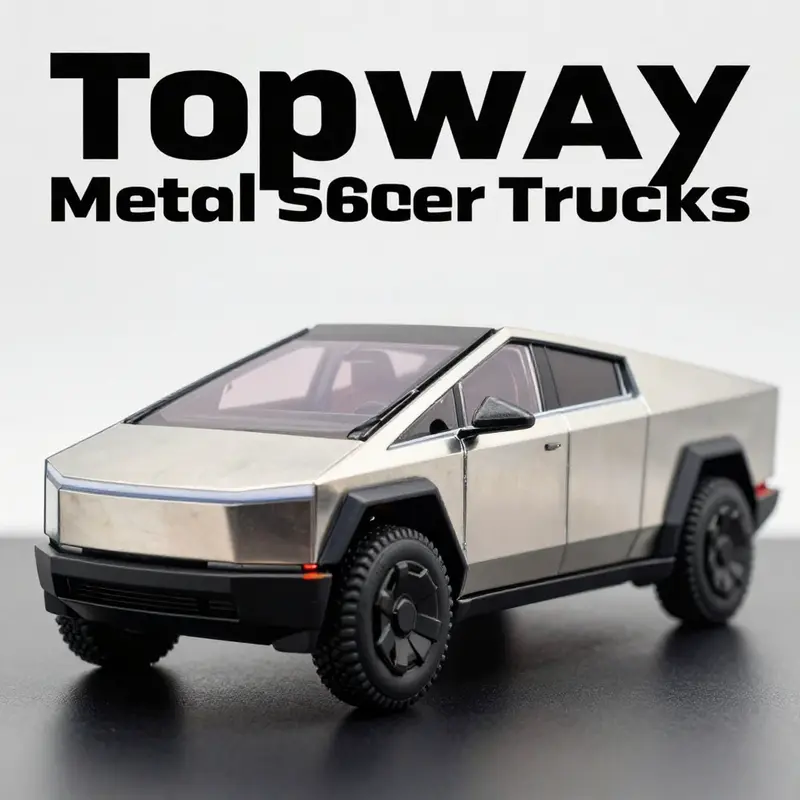
A tiny, impeccably engineered silhouette sits on a shelf or in a glass case, a miniature that condenses an entire design philosophy into a handful of centimeters. The 1:32 metal scale model of a futuristic pickup is more than a toy or a collectible; it is a portable study in proportion, material language, and the way designers imagine mass-market vehicles at a micro scale. The moment you pick up this compact replica, you feel the weight of its purpose. Diecast metal gives the model a solidity that cheap plastic cannot match. It reflects light with a subtle, even sheen and carries the muted impression of a factory-finished surface rather than a glossy, consumer-grade polish. The finish is not merely cosmetic; it communicates a philosophy of durability and intent. Every edge, every bevel has been sharpened not for show but for the sense of a vehicle that could survive the rigors of real-world use while existing in a more fragile, collectible space. In this sense, the miniaturization becomes a storytelling device: it invites the viewer to extrapolate, to imagine the real car behind the miniature shell.
The choice of scale—precisely 1:32—has its own kind of logic. It is large enough to reveal detail, yet small enough to allow a collector to accumulate a diverse cohort without surrendering precious shelf real estate. The approximate 10 to 12 centimeters in length is enough to showcase the model’s most essential character: the clean, angular geometry that defines the vehicle’s camera-ready silhouette. The lines are crisp, the surfaces flat, and the overall shape communicates an identity that is both utilitarian and aspirational. The model’s designers have embraced a philosophy common to high-end diecasts: form follows function, and in the case of a futuristic pickup, function translates into visual clarity. The broad shoulders, the flat panels, and the slightly tucked undercarriage all contribute to a perception of strength and efficiency—an aesthetic argument that this is a vehicle ready for hard work and for big ideas alike.
Material fidelity matters as much as silhouette fidelity. The metal body resists the scratch of everyday handling, and the matte or satin-like finish helps the model avoid the glare that can obscure fine detail on brighter, factory-painted pieces. The surface texture mirrors the industrial look of many modern vehicles—the juxtaposition of broad, almost featureless planes with a handful of intricate creases that hint at wind resistance, aerodynamics, and the psychology of a design that wants to look capable even when stationary. This is not a car designed for a showroom photograph alone; it is a model that carries the aura of a real workhorse, a trait collectors often prize when they seek items that might one day feel representative of a broader design era.
Where the realism truly comes alive is in the model’s functional elements. The doors open with a satisfying precision, a deliberate motion that invites hands-on play or careful inspection. The tailgate detaches, revealing a small cargo bay that hints at practical utility, even in a miniature world. These features are not gimmicks; they are essential to the seduction of scale. They offer a tactile bridge between the viewer’s finger and the imagined life of the vehicle. Turn the model over, and you can feel the weight distribution that hints at its robust construction. The rubber tires are not the soft, disposable kind found on many toy cars; they have a slight give, a texture that resembles real rubber more closely and contributes to a more believable rolling experience. The tires, the axle tolerances, and the subtle gaps around the doors collectively communicate a seriousness of craft that makes the model more than a decorative object.
Sound and light features amplify the sense of immersion. A gentle engine-like hum from a speaker and a carefully choreographed sequence of LEDs give the model a pulse. The sound is not overpowering; it functions as a cue, a reminder that the vehicle is a product of engineering that has to communicate two worlds at once: the quiet, controlled environment of a display and the dynamic, noisy reality of movement. The lights, which illuminate the outlines and the interior accents, create a moment of theater. They remind the viewer that this is a model grounded in a design language built to convey future possibility through present form.
The appeal of this miniature is not simply the thrill of owning a tiny version of a beloved archetype. It also lies in the accessibility it offers to a broader audience—enthusiasts who might not own a full-size utility vehicle yet want to engage with its design language in a more intimate way. For some, a 1:32 metal replica is a first real encounter with the vocabulary of scale and proportion. For others, it is a deliberate extension of a keystone collectors’ practice: to assemble, compare, and reflect on what makes a vehicle instantly recognizable, even when reduced to a few square centimeters. The model becomes a conversation starter, a compact ambassador of a design era defined by sharp edges, flat surfaces, and a readiness for whatever the future holds.
What makes a scale model truly meaningful, though, is not only its fidelity to a real-world counterpart but its capacity to engage with the broader ecosystem of collectibles and design discourse. The marketplace for these miniatures thrives on a confluence of display culture and play culture. On one hand, collectors seek an orderly, curated display that communicates taste and scale literacy. On the other, enthusiasts may want to manipulate the model, compare it with others in a similar genre, or imagine alternate configurations that reflect speculative futures. The universal questions arise: How does scale alter our perception of a vehicle’s proportions? How do material choices influence our sense of authenticity? What does a miniature say about the risks and promises of the real thing? The 1:32 metal scale model answers with a quiet, confident voice, signaling that the future of vehicle design can be observed, discussed, and valued in intimate, manageable doses.
In this context, the piece also plays a subtle educational role. It invites observers to think about the relationship between form and function at scales beyond the usual. When you examine the model’s profile, you notice how the silhouette communicates readiness for work, while the interior cues suggest an underlying modernism—an emphasis on efficiency, durability, and ease of manufacturing. This is not a nostalgia piece; it is an artifact of a design language that values clean lines and practical capability. The miniature, in its restraint, teaches an important lesson about how automotive design communicates meaning across scales: the same values that guide a full-sized vehicle—clarity of purpose, strength, and a certain unapologetic futurism—are legible even in a weekly display of metal and light.
For readers exploring the dimensions of the micro-ecosystem around scale models, a gentle invitation is embedded in every such piece. A simple curiosity—how would a no-frills, highly functional design translate into a small, collectible form?—becomes a gateway to broader conversations about materials, manufacturing, and consumer culture. It is easy to overlook the significance of these tiny replicas, but when they align with a well-considered design language, they become instructive artifacts. They help demystify the leap from concept sketches to production realities. They also remind us that the appeal of futuristic design often rests less in flashy novelty than in the consistency of its visual grammar: the edge geometry, the flat panels, the restrained use of ornament. This is the kind of design literacy that turns a shelf full of miniatures into a purposeful archive, a space for study, comparison, and growing appreciation.
Internal links can point to adjacent conversations within this growing field. For readers seeking related discussions on micro-vehicle collecting and scale modeling, a curated resource hub offers deeper dives into practical considerations, comparison across scales, and the broader culture surrounding these artifacts. For a broader audience interested in how these micro-objects connect with hobbyist communities, check out the Mini Trucks Blog, where enthusiasts share insights, build guides, and display configurations that echo the spirit of this miniature’s design philosophy.
External references reinforce the sense that scale modeling sits at an intersection of craft and commerce. While these replicas exist as standalone objects, they also participate in a market that blends hobbyist passion with manufacturing precision. A recent listing exemplifies the kind of 1:32 diecast metal replica that buyers encounter online, featuring authentic detailing, opening features, and light-and-sound accompaniments. The listing demonstrates how far a miniature can travel—from a maker’s bench to a collector’s shelf—carrying with it questions of value, durability, and the enduring appeal of a well-made tiny object. The presence of such items in the market underscores a cultural appetite for tangible, tactile interpretations of future design, a hunger that micro-scale artifacts satisfy with a quiet confidence.
External resource: https://www.alibaba.com/product-detail/Topway-1-32-Tesla-Cybertruck-Diecast-Metal_1601457927465.html?spm=a2700.18494155.0.0.1b0a7c1eJxuFZs
Tiny Titans of the EV Pickup Arena: Market Currents and the Promise of a Mini Electric Truck

The emergence of a truly compact electric pickup sits at an inflection point for a segment that has long lived on aspiration as much as on capability. The market for electric pickups has been defined by bold, high-end designs that promise power and prestige, yet a subset of buyers remains under-served: those who want practical utility, approachable price, and daily usability in a package that fits a smaller footprint. The idea of a mini electric pickup is not merely a scaled-down version of its larger kin; it is a strategic wager that a broad swath of buyers can be persuaded to value efficiency, maneuverability, and total ownership costs over sheer scale. In this light, the current discussions and signals from industry leadership become more than curiosity. They crystallize the tension between premium aspirations and mass-market realities, and they point to a potential turning point in how an established automaker could broaden its appeal without surrendering the core values that define electric utility today.
Development chatter around a smaller pickup has grown louder since mid-2025, when an engineering executive openly acknowledged the feasibility question at an investor event. The refrain is simple: if the company can deliver a compact, affordable electric truck with the right tradeoffs—range, payload, complexity, and production costs—it could tap into a much larger addressable market. This line of inquiry echoes a familiar arc in automotive history, where early ambitions about a premium, feature-rich flagship gradually give way to a more pragmatic, scalable model that broadens the brand’s footprint. The scholars of the plan talk about balancing engineering discipline with the realities of factory automation, supply chain resilience, and the broad spectrum of consumer needs. The idea is not just to shrink dimensions; it is to reimagine the value equation for a pickup that many households could see as a practical daily tool rather than a weekend luxury.
To place this prospect in context, it helps to recall the leadership dynamics in the electric pickup market just prior to the current discussions. In the year when a full-size electric pickup briefly topped the category in sales, it was clear that the market could accommodate novelty and tech-forward design, but price sensitivity remained a decisive factor for many buyers. By the second quarter of the following year, sales in that segment had fallen sharply from the high-water mark, underscoring a critical point: premium pricing and large-scale vehicles, while compelling, can constrain growth when competing against more affordable entries from traditional automakers. The affordability threshold matters. A smaller, more street-friendly model could reduce the perceived premium and open doors to first-time EV buyers, rural buyers, urban commuters who need a practical payload, and fleet customers seeking predictable maintenance costs. The potential here is not simply incremental sales; it is a redefinition of the buyer pool itself.
The strategic importance of such a model lies not only in expanding unit volume, but in reshaping the competitive landscape. A compact electric pickup can act as a bridge between the premium electric truck narrative and the broader, more price-conscious market that has long shaped the success of traditional pickups. If mass production can achieve favorable unit costs, the economics could enable more aggressive feature sets without pushing price into the stratosphere. That is the promise: a product that delivers compelling technology—fast charging compatibility, robust software updates, and practical payload—without forcing buyers to overspend. For the automaker, this is as much about safeguarding market share as it is about sustaining revenue streams. The brand’s capacity to win hearts in the mid-tier segment could soften the headwinds from the premium segment’s volatility, stabilize cash flows, and re-anchor investor expectations around long-run scale rather than short-term peaks.
The price architecture surrounding the mini electric pickup remains a central concern. While some of the high-end entries in the full-size category carry sticker prices that deter mass adoption, the mid-priced tier—roughly in the low-to-mid fifty-thousand-dollar range in current market terms—remains the battleground. Traditional automakers have shown that affordable EVs with practical design can pick up market share quickly when they align with consumer preferences: intuitive interiors, familiar control layouts, simple but rugged exterior styling, and a focus on reliability and serviceability. A mini model would need to deliver not only a compelling price but also a compelling value proposition. This includes a combination of reasonable payload and towing capacity, efficient battery chemistry, and a charging experience that minimizes total ownership friction. The goal would be perceptual as much as practical: buyers should feel that they are acquiring a smarter and more economical tool for daily life, not sacrificing essential capability to gain efficiency.
From an economic lens, the introduction of a mass-producible mini pickup would carry implications beyond its own margins. Analysts have argued that if the model achieves even moderate success, it could reframe the company’s growth narrative and anchor a new phase of cash flow generation. Economies of scale become a talking point, as does the potential for better cost control through standardized components, simplified production lines, and more predictable supply chains. In turn, the market’s assessment of the company’s long-term value could shift back toward a multi-year growth trajectory rather than relying on the volatility of flagship models alone. The anticipated effect is not only about the immediate revenue line; it is about positioning the company for a broader, more resilient portfolio. A successful mini pickup could temper cyclical demand swings and contribute to steadier quarterly performance, which in turn could support more confident investment theses in the broader EV transition.
There is also a cultural and consumer-behavior aspect to consider. A smaller pickup could change how people think about electric utility in everyday life. It might encourage urban dwellers to adopt EV ownership for the first time, someone who wants a practical work vehicle for light-duty tasks, or a second vehicle in households that already own an EV for city commutes. It could also broaden appeal among small business operators who need a capable, reliable, low-maintenance workhorse without the overhead of a larger truck. The outcome would be a more diverse market for electric pickups, with different trims, battery options, and feature packages that cater to a wider variety of needs.
The ecosystem surrounding such a product is not restricted to the vehicle itself. It touches charging infrastructure, after-sales support, and the total cost of ownership. A smaller truck could benefit from a broader acceptance of home charging, workplace charging incentives, and public networks that help commuters who previously viewed EV ownership as a constraint. In turn, these factors reinforce the appeal of a lighter, more nimble platform that can be deployed across urban and suburban landscapes without demanding substantial changes in buyers’ routines. The strategic calculus, therefore, hinges on translating engineering feasibility into a coherent business model that can be sustained by a mix of customer segments, fleet adoption, and ongoing software-enabled value.
For readers seeking a lens into how mini-vehicle concepts intersect with both consumer passions and practical economics, the hobbyist and model-space ecosystem offers a useful mirror. Miniature, levitating, or display-grade renditions of advanced vehicles reveal a consistent appetite for compact, high-tech form factors and the way they symbolize a larger shift toward advanced mobility. They show that the idea of a small, capable, tech-forward transport option can captivate the imagination even when real-world constraints loom. To explore those crossovers and the ways hobbyist perspectives hint at broader market sentiment, see the Mini Truck blog. Mini Truck blog.
As this narrative unfolds, it is essential to anchor all speculation in the practical channels that will determine whether a mini electric pickup becomes a sustainable product. Production capability, supplier relationships, and the speed with which a company can iterate to meet evolving consumer demands will be decisive. The market’s response will hinge on how convincingly the model threads the needle between affordability, practicality, and a forward-looking technology stack. A compelling mini pickup would not merely be a smaller version of a larger idea; it would represent a disciplined reimagining of what a utility vehicle can be in a world where efficiency and software-defined value increasingly drive purchasing decisions.
External reading that situates this discussion within the broader business and market discourse can provide additional context. For those who want to examine the near-term expectations and the investment narrative around the concept of a smaller electric pickup, the following external resource offers a detailed sectoral view: https://www.businessinsider.com/tesla-planning-smaller-electric-pickup-to-complement-cybertruck-2025-7.
Final thoughts
Mini cyber trucks have emerged as more than just toys; they are collectibles that resonate with a wide audience—from enthusiasts to collectors who value innovation and style. With Tesla’s striking Magnetic Levitation model at the forefront, and diverse offerings from brands like Hot Wheels and Topway, the mini truck scene is rich with possibility. Whether you’re attracted to the fun of remote-controlled versions, the aesthetic of display pieces, or the quality of scale models, there’s something compelling for everyone. As the enthusiasts and communities surrounding these mini marvels continue to grow, the future of mini cyber trucks looks bright and full of exciting opportunities.