
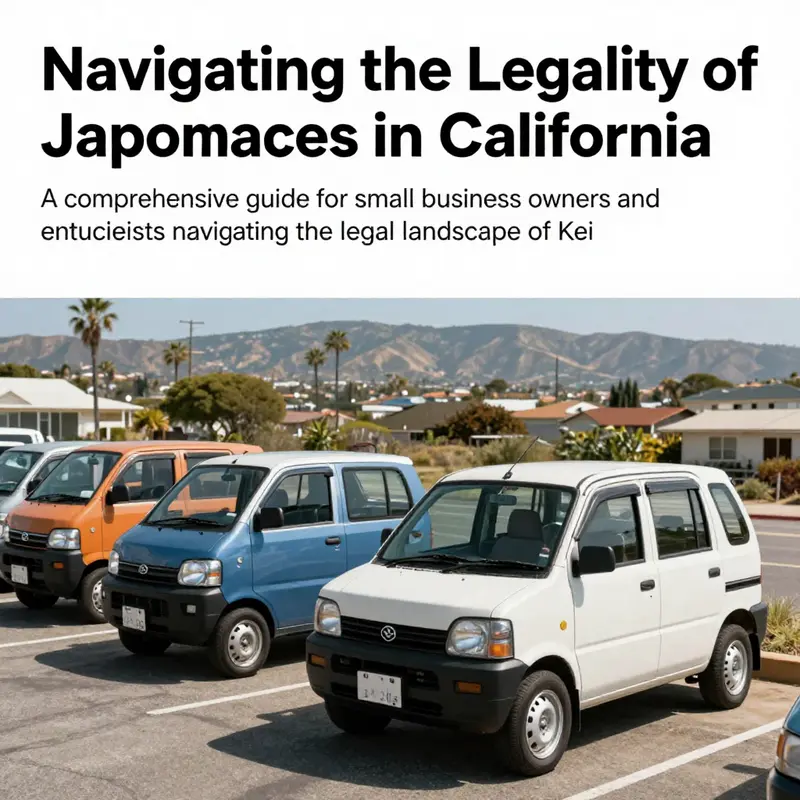
Japanese mini trucks, particularly the beloved Kei trucks, have captured the hearts of many in California, from local small business owners seeking utility to hobbyists enamored with their compact charm. However, before you hit the road, it’s crucial to understand the legal framework governing their operation in the state. This guide will dive deep into the essential components influencing the legality of these vehicles. We’ll explore emissions standards that affect registration, safety regulations that ensure roadworthiness, the specific importation rules you need to follow, and the significant age exemption that allows older models a legal pass. Each chapter will add a layer of understanding to help you navigate the often complex regulatory landscape surrounding Kei trucks in California.
Emissions Gatekeepers: Navigating California’s Rules for Japanese Kei Trucks on Public Roads
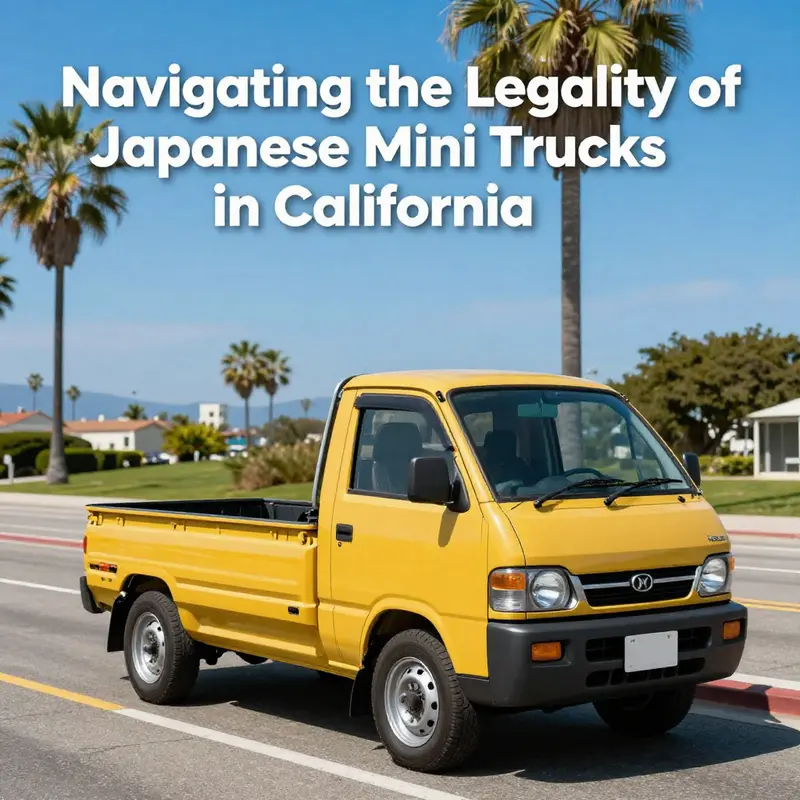
California sits at a regulatory crossroads where climate policy, vehicle safety standards, and import rules converge to decide what can actually roll onto its roads. The story of the Japanese kei truck in this state is less a tale of design and more a narrative about compliance, certification, and the stubborn realities of emissions and safety regimes. The kei truck’s small size and efficiency make it an appealing tool for farmers, landscapers, and hobbyists who prize maneuverability and frugality. But those virtues run headlong into a maze of policies that treat every vehicle as a test case for air quality and occupant protection.
CARB’s role as the state’s air quality guardian shapes the rulebook. California standards do not simply copy federal rules; they extend, refine, and sometimes redefine what counts as a compliant vehicle. For a foreign, lightweight pickup not originally designed for U.S. testing, CARB’s demands can feel like a moving target—shifting with evolving goals and the state’s broader climate strategy. The upshot is that kei trucks, by design, typically have small engines, minimal emissions controls, and a certification history that may not align with California’s current expectations. These realities are not aberrations; they reflect the vehicle’s origin in a different regulatory environment.
Practical rule of thumb: vehicles with a GVWR at or below 8,500 pounds and a recent model year can appear in California’s emissions scrutiny if particular conditions apply. In some summaries, any vehicle with less than 7,500 miles on the odometer and a model year of 2000 or newer must meet California’s emissions standards if it has a GVWR of 8,500 pounds or less. This places kei trucks squarely in CARB’s test-and-certification crosshairs when the vehicle is relatively modern and lightly used. In short, a very low-mileage kei truck manufactured in or after 2000 is not automatically road legal in California; it must demonstrate compliance before it can be registered.
Safety standards add another layer. The federal FMVSS interact with California requirements for occupant protection, lighting, and crashworthiness. Kei trucks prioritize compactness and cost, and their simpler designs may not map neatly onto U.S. safety expectations. Even if emissions hurdles are cleared, safety gaps can block registration, and the reverse is true as well. The result is a real risk that a vehicle cannot be legally driven on public streets, regardless of utility or cost advantage.
Import pathways add further complexity. Vehicles over 25 years old sometimes enjoy exemptions from newer restrictions, but California still applies its emissions and safety rules at registration. A 25-year-old kei truck may enter under federal allowances, but it may face a brick wall at the DMV if it cannot meet California standards or obtain an approved exemption. Show or Display is another option that allows non road use for rare or collector vehicles, but it excludes regular road use.
Beyond regulations, California continues to push toward zero emissions for new vehicles. That policy direction subtly narrows the long term viability of traditional gasoline kei trucks, while still leaving narrow doors for certain imports under specific conditions. For those pursuing imports, consulting experienced importers and legal experts and following authoritative sources such as the state’s regulatory sites can help map the path toward or away from registration.
Bottom line: most kei trucks designed for the Japanese market are not readily eligible for normal road use in California, and the door to compliance is narrow and expensive. If your goal is everyday road use, consider models certified for California standards or wait for clearer pathways. For ongoing updates, you can consult the California Air Resources Board and the DMV and relevant legal guidance.
Small in Stature, Big on Regulation: Navigating Safety Standards for Japanese Kei Trucks in California
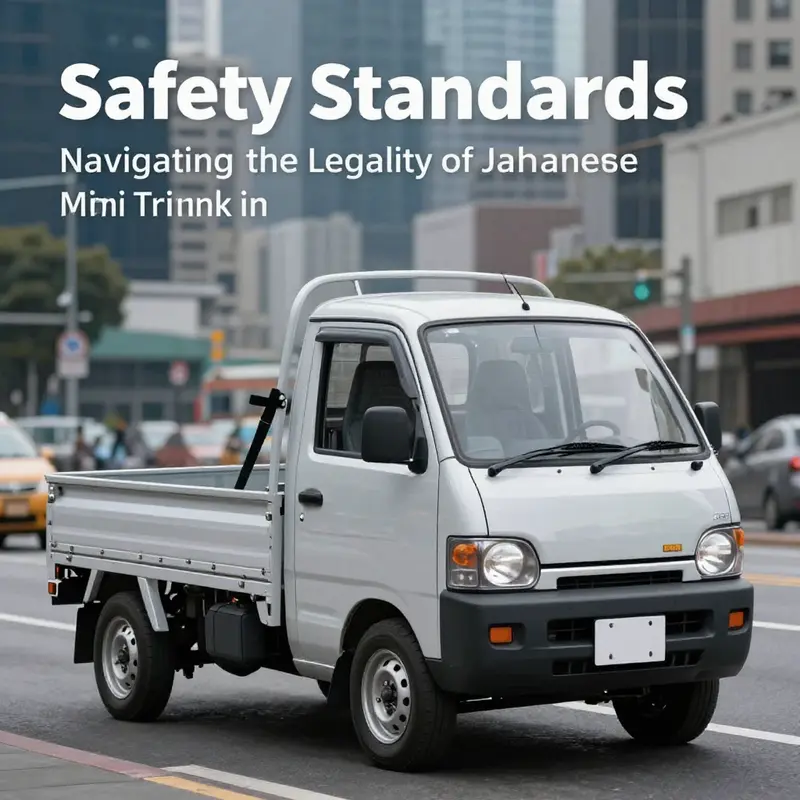
The allure of Japanese Kei trucks in California lies as much in their compact, utilitarian silhouettes as in the promise of efficiency for farms, markets, and tight urban corridors. They are vehicles that seem tailor-made for narrow alleys, bike lanes, and the kind of work that doesn’t demand a full-sized pickup’s bulk. Yet the very factors that make them appealing are the same ones that bring them into a web of regulatory constraints. In California, safety standards and emissions requirements act like meticulous gatekeepers, assessing every vehicle that would share the state’s roads against a rigorous baseline. The practical question in the public conversation about legality is not merely whether these little trucks exist in the world, but whether they can be registered and operated on public streets in a manner that satisfies both federal and state authorities. The answer, in short, is nuanced. Some kei trucks can be legal to drive in California, but only under a narrow set of conditions, and the path to legal operation is often blocked by age, design, and the way these vehicles were originally built and marketed. The story, then, is as much about the engineering choices of a distant market as it is about the regulatory posture of a state that has chosen to treat the road system as a shared, highly standardized entity with very particular expectations about safety and cleanliness. It is a story that demands attention to three intertwined realities: emissions accounting, crash and safety performance, and the practical mechanics of importation and registration. And as the chapter unfolds, it becomes clear that the tiny truck’s charm does not automatically translate into a simple permit to roam California’s highways. Instead, it sits at the intersection of policy, engineering, and the practicalities of ownership, ownership transfer, and ongoing operation on a public road network that prizes predictability above novelty.
California’s approach to vehicle eligibility begins with emissions. The state’s air quality agency has long treated exhaust as a core indicator of a vehicle’s legitimacy on its roads. In the broader federal system, there is a two-layered structure: the federal Environmental Protection Agency (EPA) sets nationwide emissions standards, while California adds its own layer—one that tends to be stricter and more comprehensive. Kei trucks, many of them built for markets that did not require the same exhaust-control architecture found in U.S.-spec vehicles, frequently arrive in the import stream with emissions systems that either differ or are incomplete by today’s measures. The practical effect is that a large group of these vehicles will fail to meet CARB’s standards, or will lack the precise configuration of catalytic converters, oxygen sensors, and fuel-management controls that a CARB-approved exhaust system requires. This is not merely a technical hurdle; it is the signal that the vehicle, in its current form, cannot be registered for road use in California. The state’s emphasis on clean air means that the specter of non-compliance will be a non-starter at the DMV counters unless there is a clear path to conformity or an established exemption. In many cases, that path does not exist for a kei truck sold in a distant market years ago, designed with a different regulatory reality in mind.
There is, however, a critical and widely discussed exception that can tilt the odds in favor of importers and enthusiasts alike: the 25-year rule. This rule, rooted in federal practice, provides a general exemption for vehicles that are twenty-five years old or older from many current emissions standards. In practice, this means that a kei truck manufactured in or before a given year can, at least in theory, be imported without needing to meet today’s emissions criteria. It is precisely this kind of retroactive leniency that makes older Japanese mini trucks a talking point in California, because it offers a potential doorway around the most prohibitive emissions requirements for a vehicle that would otherwise be deemed non-compliant. Yet the 25-year rule is not a universal, automatic passport to road legality. Even when the clock has clicked past the twenty-five-year threshold, the vehicle still must clear a stand-alone safety hurdle. The California DMV does not automatically minimize the safety bar simply because a car is older. A vehicle that is eligible for import under the 25-year exemption still must pass a safety inspection and comply with the state’s safety standards as applicable to road vehicles. The result is that the threshold for legality becomes a two-step process: age eligibility for emissions and a separate, rigorous safety appraisal that covers brakes, lighting, seat belts, crashworthiness, and other critical systems. It is not uncommon for vehicles that meet the age criterion to encounter another door slammed shut if the safety appraisal reveals misalignment with modern requirements.
The second strand of the safety story concerns the actual design and build of kei trucks, which frequently emphasize compact dimensions and off-road or utility-supply functionality. The nature of their construction—compact frames, light weight, and frequently unusual underbody geometry—can challenge modern crash-test criteria that are aligned with more conventional passenger cars and light trucks. In California, safety standards are not merely about whether a car has seat belts. They extend to a broad evaluation of frontal and side-impact performance, roof integrity, head restraints, lighting packages, and even the durability of cabin fixtures under expected road loads. The regulations are meant to guarantee that a vehicle, once on the road, will respond in a predictable manner when confronted with common hazards—things like a rear-end collision, a side-impact at an intersection, or a rollover in a curve taken at a sensible speed. Kei trucks, with their distinctive rear-heavy stance and light construction, sometimes display advantages in some types of off-road or low-speed utility work, but disadvantages in others—especially when tested against standardized crash criteria. The traditional compromises that make these vehicles fleet-friendly and economical can, paradoxically, become liabilities in a safety lane that insists on a particular balance of structural integrity and occupant protection.
Registration presents the practical gateway once emissions and safety hurdles have been navigated. Importers often discover that even a kei truck that has aged into eligibility under the 25-year rule must still pass the DMV’s inspection regime, confirming that the vehicle conforms to California’s safety expectations. The inspection itself is not a one-and-done ordeal. It is a process that can involve verifying the integrity of the braking system, ensuring that lighting and signaling meet current codes, confirming the proper operation of seat belts, and assessing the vehicle’s basic roadworthiness. In many instances, modifications or upfits may be required to bring the vehicle into compliance, and those modifications may carry significant cost and complexity. Some applicants discover that the most feasible course involves limited, carefully scoped uses—such as agricultural applications or other exemptions—rather than broad, everyday highway driving. The exemptions themselves can be complex and are not guaranteed to apply in all circumstances. Agricultural exemptions, for instance, rely on the vehicle’s intended purpose and the owner’s ability to document and substantiate that purpose, along with ongoing compliance with any related regulations. Historic vehicle status is another avenue that some see as appealing, offering a potential interpretive path to leniency in certain contexts. But these options, while real, are not guaranteed, and they demand substantial documentation and a careful alignment of intent, use, and the vehicle’s mechanical reality with the standards the state enforces.
The overarching takeaway is that California’s regulatory architecture does not simply bless or bar a kei truck based on a single attribute. It integrates age, emissions history, safety design, and intended use into a broader, often nuanced assessment of legality. For the casual observer or the casual buyer, the picture can seem opaque. The practical path to a legally roadworthy kei truck in California is not a matter of a single checkbox being ticked; it is a choreography of compliance steps, each with its own prerequisites and potential obstacles. Because the state requires that vehicles on its roads meet established safety and emissions baselines, a kei truck that is entirely compliant with the 25-year exemption and that also passes a DMV safety inspection becomes, at least in theory, a permissible participant in California’s traffic ecosystem. In contrast, a truck that lacks a proper emissions profile, or that cannot demonstrate compliance with relevant crash-safety standards, faces a far higher degree of challenge. This is not a simple yes or no question; it is a result produced by the interaction of multiple regulatory strands, each with its own history and rationale.
For enthusiasts and operators, the conversation often turns to the practicalities of finding legitimate pathways to use these vehicles. Some people engage licensed importers who understand the regulatory ecosystem and can guide an older kei truck through the process of certification or eligibility assessment. Others explore community channels where like-minded buyers share experiences about registration hurdles, best practices for meeting safety standards, and the practical realities of maintaining a tiny, economical vehicle on modern California roads. In these communities, the conversation frequently crosses the boundary between legal possibility and practical feasibility. The appeal of a kei truck’s efficiency, its nimble handling in tight spaces, and its modest maintenance requirements sits against the sober reality of a painstaking compliance process that cannot be rushed or glossed over. That juxtaposition, more than anything, defines the contemporary status of Japanese mini trucks in California: they remain objects of fascination and utility, yet their road legality is contingent on a careful, often intricate alignment with the state’s high standards.
In the end, the regulatory story is not a barrier to enthusiasm but a guide to responsible use. The 25-year rule offers a potential doorway for importers seeking to bring aging kei trucks into the state’s orbit, but it must be coupled with a thorough safety assessment and, in many cases, with targeted modifications that align the vehicle with California’s standards. Emissions considerations stay central, as CARB’s stringent expectations shape the doorways and the deadlines. The DMV’s inspection regime acts as a final checkpoint, ensuring that any vehicle on public roads maintains a credible commitment to safety and reliability. A kei truck that survives this gauntlet—one that is sufficiently aged to qualify under the exemption and that has been harmonized with modern safety and lighting requirements—can, with the right documentation and compliance work, operate legally in California. Yet for every story of success, there are others that illustrate the reality: that the charm of a tiny, economical workhorse does not automatically translate into a free pass onto the freeway.
This nuanced landscape has implications beyond individual ownership. It shapes how dealers, mechanical shops, and importers communicate about what is possible and what is prudent. It also informs the consumer mindset: buyers must weigh the appeal of a vintage, economical executive or farm vehicle against the ongoing costs and technical challenges of achieving compliance. The best-informed path—one that maximizes the likelihood of lawful operation while preserving the vehicle’s unique value—often begins with careful research, candid assessment of the vehicle’s emissions and safety profile, and engagement with knowledgeable professionals who understand the California regulatory terrain. For readers who want to explore more about the regulatory framework, including the official import guidelines and how the 25-year rule interacts with state requirements, the journey can start with a dedicated information hub that aggregates regulatory guidance and community experience. You can read a broad overview in the community resource hub linked here Mini Trucks CA Blog. It offers context, anecdotes, and practical pointers drawn from the experiences of people navigating similar paths, and it can be a useful compass as you weigh the costs and benefits of bringing a kei truck into California’s legal fold.
As this chapter closes, the reader is left with a clearer sense of why safety standards, rather than nostalgia alone, determine the fate of these vehicles on California’s roads. The kei truck’s intrinsic value—its compact footprint, its surprising payload capacity, and its fuel efficiency—remains part of the conversation. The legal reality, however, rests on a layered framework where emissions compliance, crashworthiness, and the ability to pass DMV inspection together decide whether a tiny, efficient utility vehicle can share space with California’s traffic. The path is not simple, but it is navigable for those who approach it with a well-informed plan, the right paperwork, and the patience to see the process through. For policymakers and advocates, the chapter also serves as a reminder that the balance between innovation and safety, between import freedom and road reliability, is a dynamic, ongoing negotiation—one that will continue to shape the choices of owners who value a distinctive, economical vehicle and want to use it responsibly on public streets.
External resources provide the formal backbone for what has been discussed here. For a deeper dive into the state’s approach to vehicle imports and the emissions focus that governs these decisions, you can consult the official information on importing vehicles into California. This resource outlines the requirements, restrictions, and the certification processes that affect foreign-built vehicles seeking registration in the state. While the specifics may evolve, the framework remains a crucial reference point for anyone considering a kei truck as a road vehicle in California. For official guidance, see CARB’s importer information: https://www.arb.ca.gov/info/imports.htm.
Beyond the Borderline: Navigating Import Rules for Japanese Kei Trucks in California
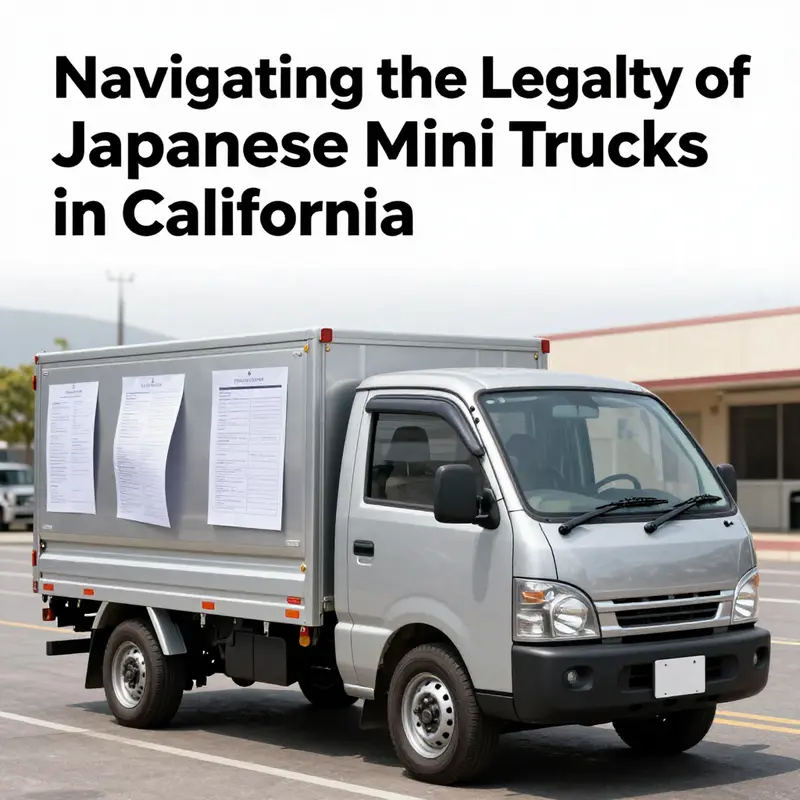
California sits at a curious crossroads for Japanese Kei trucks, the tiny workhorses that fuse compact design with unexpected cargo capacity. For many enthusiasts and small-business operators, the dream of bringing a Kei truck from overseas feels practical and appealing. It’s a vehicle type that can squeeze into tight urban jobsites, haul plants and bricks on a small flatbed, or serve as a nimble utility vehicle in a vineyard or farm. Yet the path from curiosity to road-ready ownership is defined by a set of rules that cut across federal and state lines, and those lines rarely align in a simple yes-or-no verdict. The core tension is straightforward in theory but complex in practice: the federal government allows importation of vehicles that are at least twenty-five years old, sparing them from current FMVSS and emissions standards. This is the so-called twenty-five-year rule, a rule that has opened doors for many Kei trucks to enter the United States in years past. In California, however, that door does not automatically grant permission to drive on public roads. California’s environmental authorities, led by the California Air Resources Board, enforce emissions standards that are often more stringent than federal requirements. The result is a layered reality: a Kei truck might be legally importable under federal age, but it must still navigate California’s emissions and safety landscape before it can be registered and plated for everyday use. The distinction is not merely academic. It shapes the decisions of everyday people who weigh the costs of compliance, the feasibility of retrofits, and the realities of how they intend to use the vehicle. And it is precisely this tension—between age-based import permissibility and state-imposed performance standards—that creates the practical, real-world drama behind the question, Are Japanese mini trucks legal in California? The simplest answer is nuanced: a Kei truck can be legal in California only if it is at least twenty-five years old, and even then, it may only pass the final hurdle after meeting or demonstrating compliance with broader California requirements and a DMV inspection. To understand how this works, it helps to trace the two major streams of regulation that converge on every imported Kei truck: federal rules that govern import eligibility, and California rules that govern registration and operation on public roads. The federal framework defines which vehicles may legally enter the country, while California’s rules dictate which of those vehicles may actually be driven after they arrive. The result is a lifecycle, from import to inspection to registration, in which each step can reveal new limits or new opportunities depending on the vehicle’s age, condition, and the owner’s willingness to pursue compliance and documentation. The twenty-five-year benchmark is not a guarantee. It is a doorway that may open, provided the vehicle meets the standards that California ultimately requires. The door, in practical terms, often remains closed for Kei trucks that do not meet emissions requirements or safety standards, even if they are old enough to be imported. When readers ask, in effect, whether a Kei truck can be legally driven on California roads, the honest answer hinges on this sequence: first confirm the age, then assess emissions and safety compliance, and finally secure the DMV’s approval through inspection and paperwork. This chain of steps emphasizes the central truth: legality is not a single condition but a process with several checkpoints, each demanding documentation, testing, and sometimes retrofit work. The twenty-five-year rule was designed to acknowledge historical import patterns and the realities of vehicle aging. It recognizes that many older vehicles born in a different regulatory era can still serve functional roles without having to meet the most recent standards. But California applies a second, stricter gatekeeping standard that can override the federal leniency. CARB’s emissions framework is designed to preserve air quality by requiring vehicles that operate on public roads to meet current or certified emissions levels. In practice, this means that even a Kei truck that arrived under the twenty-five-year exemption may still fail to qualify for registration if it cannot demonstrate, through testing or documentation, that it meets California’s emissions requirements. This is where the story often diverges from the simplified narrative of “import is allowed, therefore road legal.” The reality is that CARB’s regime looks beyond the vehicle’s age and brand. It asks: does this vehicle, in its current configuration or in a feasible modification path, align with California’s stringent scripts for tailpipe emissions, evaporative controls, and overall pollution performance? For many Kei trucks, the answer is no. The engines used in Kei models—tiny, efficient mills designed for city driving and light loads—were never engineered with California’s longer tasting of fuel rigor in mind. The converted emissions equipment, catalytic converters sized for much larger engines, and complex certification requirements create a practical wall. Even when the vehicle is old enough, it must be shown to meet at least one of California’s recognized emission standards or pass a CARB certification process. The standard process is well defined in theory, but in practice it can be elusive, time-consuming, and expensive. Owners frequently confront questions about available pathways: Can the truck be adapted to meet California’s emissions? Are there exemptions for off-road use or special uses like farming or rural commerce? Does the DMV accept an equivalency or a test-docking approach that verifies the vehicle’s performance without requiring a full retrofit? The careful shopper considers these questions in the context of the vehicle’s overall condition, the vendor’s or importer’s track record, and the costs of potential modifications. The emotional push to own a Kei truck—its compact footprint, its utility value, its charm as a practical machine—must be balanced against the logistics of compliance. The import path, while technically straightforward for an aged vehicle, becomes a negotiation with regulators when the vehicle meets California on-road requirements but falls short on emissions or safety. This is not merely a matter of technicalities; it is a matter of risk, cost, and the realistic assessment of what the vehicle will be used for in a California setting. For farmers who rely on a small but reliable work vehicle to move feed or tools across a ranch, the argument for a specialized exemption or a carefully chosen model might be persuasive. For urban contractors, the calculus may be different, focusing on the reliability of the vehicle in mixed traffic and the certainty of compliance with city and state environment standards. In most cases, the practical reality remains that a Kei truck imported under the twenty-five-year rule does not automatically become road-legal in California unless the owner secures emissions compliance and passes a DMV safety inspection. The DMV inspection itself is a final, decisive hurdle. California requires a vehicle to meet safety standards that cover a broad spectrum: seat belts, lighting, braking, and crashworthiness features, to name a few. Many Kei trucks lack modern crash protection or lighting configurations that align with current FMVSS expectations. While the federal rule exempted them from new-vehicle standards, the state’s requirement for on-road safety remains. The DMV will verify compliance, inspect the vehicle for road-use readiness, and determine whether any modifications are necessary. In practice, this means that even if an older Kei truck is imported without incident due to the twenty-five-year rule, its time may come to a halt at the DMV’s door if it cannot demonstrate adequate safety features or if modifications would be impractical or unaffordable. This layered reality can feel discouraging to someone who has envisioned a simple import process. Yet it also reflects a careful balancing act: California’s responsibility to protect air quality and road safety while acknowledging the import landscape that has evolved over decades. The practical takeaway is clear. If the intention is to operate a Kei truck on California roads, the first step is to verify the vehicle’s age and confirm eligibility for import under federal law. The second step is to assess whether the existing emissions and safety configurations can be brought into compliance with California requirements, or if a feasible modification path exists that would make the truck eligible for CARB certification and DMV registration. The third step is to engage early with a licensed importer or a knowledgeable California DMV office to clarify what documentation, tests, or modifications would be required. This is not merely an academic exercise but a practical plan that can save time and money by preventing missteps. For readers seeking more practical guidance and local considerations, a trusted source of practical perspectives offers a grounded view of how enthusiasts approach the issue within the California landscape. The linked resource provides additional context about the import and registration process, including what to expect from the DMV and the typical costs and timelines associated with certification and inspection. For further reading, explore the broader discussions on the California scene at minitrucksocala.com/blog/. The knowledge shared there reflects the lived experience of people who have walked this path, balancing the romance of a Kei truck with the realities of regulatory compliance and practical use. It is also worth noting that the regulatory environment is not static. California regulators periodically reassess emissions strategies, testing protocols, and the scope of exemptions. A shift in policy or a new interpretation of the rules can alter the lifetime viability of older imports. Those who decide to pursue a Kei truck project should remain attentive to changes announced by CARB and the DMV, and should prepare to adapt if a new path to compliance emerges. In the end, the question of legality centers less on a single verdict and more on a careful, staged process that respects both federal permissiveness and state constraints. If the goal is a Kei truck that can be driven daily on California streets, the reality remains that the age-based import rule is only the opening act. The performance and safety standards California enforces are the real gatekeepers. The journey from import to on-road operation hinges on whether the vehicle can meet or be made to meet CARB’s emissions and DMV’s safety criteria, a task that, for many Kei trucks, translates into a high bar of retrofit or, in some cases, a reevaluation of feasibility. For readers seeking a concise summary before pursuing any formal steps, the takeaway is straightforward: a Kei truck may be legally importable under the federal twenty-five-year rule, but registration and legal road use in California require emission compliance, safety conformity, and DMV approval. Those who prefer to dig deeper into the regulatory framework will find the California Air Resources Board to be the authoritative source for current emissions rules, while the DMV provides the procedural guidance on how to demonstrate compliance and secure registration. The interplay of federal age considerations with state-specific standards is what makes the question both challenging and fascinating. It invites a careful, well-researched plan rather than a quick, optimistic assumption. Readers who approach the topic with this layered mindset are better prepared to navigate the realities of California’s regulatory environment and to determine, with confidence, whether their Kei truck project can move from aspiration to the open road. External resource: CARB.
No Easy Pass: Navigating the Age Myth and the Legal Framework for Japanese Mini Trucks in California
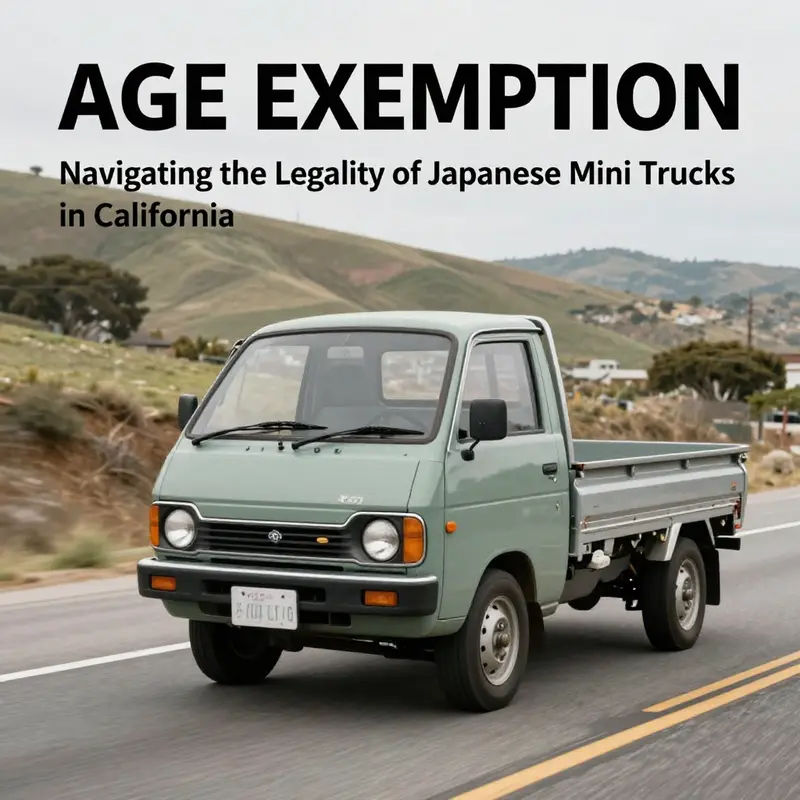
What makes a Japanese mini truck so appealing to a wide range of drivers and operators is not only its compact size and utilitarian bed, but also the freedom it promises to those who want a nimble workhorse on public roads. Yet for many California residents, the dream runs into a stubborn frontier: law and regulation. The notion that simply buying a truck that was built decades ago grants an automatic pass to California streets is deeply ingrained in some circles, but the reality is more complex. This chapter unpacks the legal framework that governs the use of Japanese mini trucks in California, focusing on what is sometimes described as an age-based gateway, and why that gateway does not function as a universal doorway for all kei trucks. Rather, California follows a layered approach in which federal import rules, state emissions standards, and safety requirements intersect in ways that can both enable and block road use. The result is a landscape where age is a factor, but not a blanket exemption, and where the path to legal road use is paved with compliance, inspection, and documentation rather than with a simple year threshold.
To begin with, it is essential to clarify a common misperception. There is no formal California provision labeled as an age exemption for kei cars or Japanese mini trucks within the state’s vehicle registration or titling statutes. In plain terms, California does not grant a free pass to older vehicles simply because they originated from Japan or because they crossed a 25-year line. The state’s policy framework centers on meeting applicable federal standards and then ensuring those standards align with California’s stricter emissions and safety regimes. Federal rules do provide a separate avenue—the so-called age-based import exemptions—that apply to vehicles entering the United States from abroad. Broadly, vehicles manufactured more than 25 years prior to the current date are exempt from certain EPA and DOT requirements that apply to new imports. However, that exemption operates on the federal side and does not automatically translate into California registration approval. In other words, the federal age-based allowance may permit import of a vehicle that is older than 25 years, but that does not guarantee the vehicle will be registerable for road use in California. The state’s own gatekeeping remains active after import, and it is here that the real challenge lies for kei trucks.
The nuanced reality begins with emissions. California’s Air Resources Board (CARB) governs emissions controls with a rigorous hand, well beyond the federal baseline. CARB certification or a pathway that CARB recognizes is often the threshold that a vehicle must clear before it can be registered and used on public roads in the state. When a Japanese mini truck is older than the federal 25-year threshold, it might be eligible for import from a federal standpoint, but if the vehicle lacks CARB certification or an approved exemption, it cannot be operated legally in California. This is where the practical barrier appears: many older kei trucks were designed to meet pre-existing Japanese standards that may not align with the current CARB framework. Without a CARB Executive Order (EO) or an approved route that demonstrates equivalent emissions performance, the vehicle will struggle to gain a California registration. The consequence is not a mere paperwork delay; it is a fundamental restriction on road use. In short, the federal age rule and the California emissions regime operate in parallel, and success in one lane does not guarantee success in the other.
Safety is the other pillar of the California regulatory tripod. California’s safety standards are anchored in federal FMVSS—Federal Motor Vehicle Safety Standards—that set requirements for crashworthiness, lighting, seat belts, airbags, and other key safety features. Older Japanese mini trucks commonly lack the safety-compliance features that contemporary U.S. vehicles possess or may not meet the crashworthiness benchmarks defined by FMVSS. The California DMV’s road-legal pathway routinely includes a safety inspection to verify compliance with FMVSS where applicable. If a kei truck’s design or components diverge from these standards, California will not authorize registration for use on public roadways. The import path that once cleared the emissions hurdle can become blocked at the inspection stage if the vehicle cannot demonstrate conformity with the safety rules. The takeaway for potential owners is direct: even a 25-year-old kei truck that arrives with a clean EPA/DOT import record may still be denied registration in California if it cannot meet or be demonstrated to meet FMVSS-specified safety requirements and the state’s inspection criteria.
The interplay of these regimes is reinforced by California’s specific statutory language and regulatory posture. A provision from California’s Revenue and Taxation Code—often cited in discussions about unusual vehicle types—addresses the Interstate Commercial Truck Exemption, which applies to certain heavy trailers or semitrailers with a substantial unladen weight. This exemption, however, is highly specific in scope and does not extend to light-duty passenger vehicles like kei trucks. The practical implication is clear: California’s exemptions for certain kinds of commercial equipment do not create a backdoor for kei trucks to bypass the normal emissions and safety gatekeeping that the state otherwise enforces. While some readers may search for an alternative route based on this or that exemption, the regulatory door that opens for heavy trailers does not open for compact passenger-style vehicles. The state’s approach is consistent: it aligns closely with federal law, but it does not adopt federal rules wholesale for every vehicle category without scrutiny.
Within this framework, the import process itself becomes a crucible for kei truck enthusiasts. When a vehicle is imported, the pathway through EPA and DOT compliance must be navigated. For vehicles older than the 25-year threshold, the federal exemption may allow entry into the United States without meeting the current emissions and safety standards. Yet, once the vehicle arrives in California, the CARB and DMV regulatory gates dominate. The importer must demonstrate that the vehicle can be registered under California law, which typically means emissions certification or a CARB-approved exemption, and a safety inspection that can pan out only if the vehicle demonstrates alignment with FMVSS or has an approved workaround that the DMV accepts. In the absence of such pathways, the vehicle remains eligible only for non-operator use, such as off-road or private property contexts, rather than road legality. The distinction between “importable” and “registerable” becomes the critical hinge.
What does this mean for someone who is genuinely considering a Japanese mini truck as a practical work vehicle in California? First, recognize that the 25-year threshold is a federal concept that does not automatically grant a California registration. A vehicle manufactured in 1999 or earlier may travel under the federal exemption, but it still faces a steep probability of rejection at the DMV if it cannot meet CARB requirements or FMVSS-related safety criteria. Second, even if the vehicle passes emissions and safety hurdles, the state’s registration process will require meticulous documentation, potentially involving an importer who can articulate how the vehicle meets or is exempted from applicable standards. The DMV’s own guidance emphasizes that importing a vehicle into California is a regulated process, and it is prudent to consult official sources to understand the current stance before making any purchase decisions or commitments. This is not a scenario for casual or impulsive importing; it demands careful planning, verification of compliance, and a readiness to adjust expectations about road-use legality.
For readers seeking a practical starting point, the official California DMV resource on importing a vehicle into California is indispensable. It lays out the procedural sequence, the documentation needs, and the key checkpoints that a prospective importer must navigate. In addition to this authoritative resource, many people find it helpful to engage a licensed importer who specializes in foreign vehicles and who understands both federal and state requirements. A thoughtful importer can help determine whether a particular kei truck is worth the effort, risk, and cost of obtaining registration in California, and can advise on whether there are CARB-approved pathways or EO-based exemptions relevant to the given model and year. It is important, however, to approach the process with realistic expectations. The combination of federal exemptions, CARB compliance demands, and DMV safety inspections creates a layered hurdle that is not trivial, especially for those who hope to use the vehicle as a daily driver.
The broader takeaway is that the California landscape for Japanese mini trucks is not a simple yes-or-no proposition based on age alone. It is a careful negotiation among federal import allowances, state emissions controls, and safety compliance requirements. The decision to pursue a kei truck for road use in California should begin with a clear understanding that age, while relevant in the federal import equation, does not automatically translate into road-legal status in the state. Prospective owners should invest time in researching CARB certifications or approved exemptions, verifying FMVSS compatibility, anticipating the need for inspections, and budgeting for the possibility that a particular vehicle may be eligible only for off-road use or may require substantial modification. The pursuit is not futile, but it is inherently meticulous and best pursued with reliable, up-to-date information and the right professional guidance.
From a planning and education perspective, it is helpful to situate this topic within the broader conversation about how California approaches imported vehicles in general. The state’s regulatory emphasis on emissions and safety reflects its policy priorities and environmental commitments. It also encourages a structured approach to vehicle eligibility, which, while it may disappoint enthusiasts who hoped for a straightforward, age-based permission slip, ultimately supports a safe and cleaner road system. For those who are curious about the practicalities and want additional guidance, a quick route to more information is available via a resource that aggregates perspectives from the kei truck community and advocates for careful compliance. See the internal resource linked here for further discussion and community insights: minitrucksocala.com/blog/.
To complement the detailed regulatory exploration, a closer look at the official regulatory documents and guidance is essential. The California DMV’s import guidance, in particular, remains a central reference point for anyone evaluating whether a specific kei truck can be registered and driven in California. It lays out the steps, the documentation, and the various paths that might be possible depending on the vehicle’s origin, age, and certification status. While this chapter has emphasized that no general age exemption exists in California, the door to understanding and pursuing a compliant pathway is not closed. It simply requires patience, diligence, and a willingness to align expectations with regulatory realities. For those who want to verify the latest official stance, the external resource provided by the state is the definitive authority: California DMV: Importing a Vehicle Into California. This external reference is a reliable anchor as the regulatory landscape continues to evolve, and as new guidance and exemptions may be introduced that could alter the practical route to registration over time.
In sum, the legal framework surrounding Japanese mini trucks in California rests on a triad of considerations: federal import rules that may afford an age-based entry for some older vehicles, CARB’s rigorous emissions standards that must be satisfied or legitimately exempted, and FMVSS-aligned safety requirements that the vehicle must meet or be shown to comply with through the California DMV inspection process. The absence of a broad, automatic age exemption means that prospective owners cannot assume road-legal status solely on the basis of the vehicle’s age or origin. Instead, success hinges on a combination of documentation, expert guidance, and, in many cases, the readiness to accept a peaceable conclusion that the vehicle may serve certain purposes off public roads rather than as a daily driver. For now, California’s kei-truck pathway remains nuanced and selective, rewarding thorough preparation over impulsive procurement. As regulations evolve, staying informed through official channels and trusted import specialists will continue to be the most reliable strategy for anyone who hopes to see a Japanese mini truck on California highways as a functioning part of daily life. The conversation is ongoing, and the landscape may shift with new regulatory developments, but the core principle endures: compliance, not age alone, is the decisive factor for road legality in the Golden State.
External resource: For the official rules and step-by-step guidance, see the California DMV’s Importing a Vehicle Into California page: California DMV: Importing a Vehicle Into California.
Final thoughts
Understanding the legal landscape surrounding Japanese mini trucks in California not only empowers potential owners but also enhances their cruising experience. By grasping emissions standards, safety regulations, importation rules, and the age exemption, you pave the way for compliance and enjoyment on the road. Remember, whether you’re enhancing your business fleet or indulging your passion for these mini marvels, having the legal knowledge by your side is vital. So gear up, stay informed, and enjoy every ride in your Kei truck!