
Japanese mini trucks like the Daihatsu Hijet and Suzuki Carry have captured the hearts of many in Idaho, offering a unique blend of utility and charm. But before you hit the road in one of these compact vehicles, it’s essential to understand their legality. From emissions standards to registration requirements, numerous factors determine if these mini marvels can legally cruise on public highways. This article walks you through the critical aspects to ensure you’re fully informed and ready to enjoy your mini truck. Each chapter will explore a specific element of legality, providing practical insights for local small business owners, residential property owners, and mini truck enthusiasts alike. So, let’s dive into the essential details to help you navigate Idaho’s regulations with ease!
Riding the Line: Navigating Idaho’s Street-Legal Path for Japanese Mini Trucks
The allure of Japanese mini trucks in Idaho sits at a curious intersection of practicality and policy. These compact workhorses are prized by rural landowners, small business operators, and enthusiasts for their maneuverability, fuel efficiency, and surprisingly capable utility bed. Yet the leap from “cool on a back road” to “street-legal on a public highway” isn’t automatic. Idahoans who dream of putting one of these machines to work on state roads must understand a layered framework of rules that govern size, weight, emissions, safety, and paperwork. The question then becomes less about whether a Japanese mini truck can exist on Idaho’s streets and more about what steps are necessary to align a foreign-built, off-road–oriented vehicle with the standards that Idaho’s traffic laws demand. The answer, in brief, is nuanced but clear: it is possible, but only if the vehicle meets several independent requirements and the owner completes a formal registration and compliance process. In practice, that means planning ahead, budgeting for inspections or modifications, and consulting the right authorities to avoid a surprise stop at the curb or a late-arriving citation. The journey toward legality is not a single hurdle; it is a sequence of checks that begins long before the truck ever turns a wheel on a public road and ends, ideally, with the operator confidently carrying a title, registration, and proof of compliance to satisfy law enforcement and the DMV alike. For readers who want a compass in this terrain, the first landmark is the vehicle’s fit with Idaho’s core on-road standards: how heavy the truck is, how it’s built to stop and steer, and whether it can meet the state’s emissions expectations in a form that does not invite penalties or fines. In Idaho, the Highway Department expects that any vehicle used on public highways fits within a framework crafted to protect drivers, pedestrians, and the broader environment. The practical implication for a Japanese mini truck is not a blanket ban, but a careful alignment with GVWR restrictions, axle load limits, brake performance, lighting, and other fundamentals of safe operation. The first step, therefore, is to assess the vehicle’s heart: its weight and undercarriage configuration. A truck with a compact footprint may still present a weight profile or axle arrangement that places it outside the standard on-road category. Idaho’s rules are not abstract; they are enforced on the road and at inspections, where brakes, tires, steering linkage, and analog components are weighed against the vehicle’s declared specifications. If the truck is found to exceed the limits or to lack compliant safety systems, it may be deemed unsuitable for general public-road use without modifications. In this frame, weight becomes not merely a number on a sticker but a gatekeeper to the right to travel on state highways. A vehicle that sails past the GVWR threshold, or that presents an axle load that violates state-permitted limits, can be subject to denial of registration or a requirement to reconfigure the axles, wheels, or suspension to bring the stark numbers into line. The lesson from Idaho’s approach is that street legality is a property of the machine’s class as defined by the highway code, not a status earned by rarity or novelty. The practical implication for owners is straightforward: before pursuing registration, gather the vehicle’s official specifications—weight ratings, axle configurations, and braking system types—and compare them with the state’s published standards. If there is uncertainty, the prudent path is to consult the Idaho Department of Transportation (IDOT) or a licensed vehicle inspector who can translate the regulatory language into a concrete plan for bringing a mini truck into compliance. It is here that the conversation often shifts from “can this be on the road?” to “what must be done to make it road-ready?” and the difference is typically found in the crosshairs of safety and emissions. The same careful eye should be cast on emissions, which form another decisive line in the sand between a showpiece and a street-legal utility. Idaho, like many states, follows federal emissions guidelines while also recognizing the full suite of US environmental programs administered by agencies such as the EPA. The emission story for a Japanese mini truck imported for Idaho roads is one of certification and verification. Vehicles built for other markets may rely on different standards or testing regimes, and that creates a potential gap between the vehicle’s original configuration and what Idaho will deem acceptable for on-road operation. The result is not merely a test of whether the engine runs clean enough; it is a question of whether the vehicle can be proven to meet emissions standards under U.S. conditions. For a vehicle to be registered and plated, it must demonstrate compliance, either through a complete EPA/DOT certification pathway or through a recognized exemption for older vehicles. This is where the federal framework that governs importation collides with state administration. Idaho’s inspectors and the ITD will expect documentation that the vehicle conforms to applicable emissions categories or has been appropriately modified to do so. The challenge is that many older mini trucks, although mechanically sound, were never certified for U.S. market standards. Without that certification—or a legally recognized pathway to exemption—a vehicle may fail the emissions review, stalling the road-legal process before it even leaves the driveway. In practice, the path to compliance often requires more than a clean engine and a green sticker. It can require a formal letter from the manufacturer’s representative or a DOT/EPA compliance statement that the imported unit meets or is exempt from current regulations. Owners who pursue this route frequently work with licensed importers or compliance specialists who can interpret the regulatory labyrinth and translate it into actionable steps, such as engine management updates, catalytic converters, or approved fuel-system modifications. The point is not to complicate the dream but to acknowledge the environment in which Idaho’s streets must function: a programmatic system designed to curb pollution, improve safety, and ensure universal signals for other drivers. The third pillar in the street-legal equation is safety equipment, which is foundational to public-road operation. Idaho’s traffic code lays out essential features like seat belts, functional lighting, and reliable braking, steering, and suspension systems. While Japanese mini trucks are celebrated for their compact design and utilitarian cargo capacity, they often originate from markets where standards for occupant protection and highway readiness differ from U.S. expectations. The immediate question becomes not whether a seat appears in the cab, but whether every seat is equipped with a functioning belt and whether the fastening system performs under load, whether the headlights and tail lamps meet the visibility and signaling requirements, and whether the braking system, including ABS if present, can deliver predictable stopping distances under Idaho’s road conditions. These are not cosmetic issues; they are core elements of a vehicle’s ability to navigate traffic safely in a state with varying winter conditions, rural segments, and high-speed corridors. The inspector’s eyes are drawn to every element that joins the vehicle to the public road: the instrument cluster’s readouts, the presence of amber turn signals, the proximity of side reflectors, and the reliability of the horn or the emergency signaling device. If any of these systems are nonfunctional or noncompliant, the registration can be delayed or denied until corrective steps are taken. The safety conversation also extends to structural integrity: are there any modifications that compromise rollover resistance, suspension geometry, or steering feedback? If the truck has been altered to widen the track or to install aftermarket components not rated for on-road use, the inspector may require ballast changes, additional bracing, or a recertification that confirms the modifications meet the state’s safety thresholds. Beyond the mechanical, Idaho’s process emphasizes the importance of proper documentation. To operate legally, a vehicle must have a valid title and registration, and the owner must present documentation that traces ownership, importation, and the path to compliance. The paperwork trail can be a maze: bills of sale, import documents, and possibly a compliance letter from federal agencies. The sequence matters because the ITD will seek a coherent story that connects the vehicle in the owner’s name with proof that it has met safety and emissions requirements. The trade-off here is logical, if not always easy: the more the vehicle diverges from standard U.S. market designs, the longer the journey toward equivalence in the eyes of Idaho’s regulators. Some owners discover that pursuing a “special permit”—a limited, perhaps regional authorization to operate under specific conditions—offers a pragmatic middle path. The permit can allow restricted use on certain routes or during particular hours while the vehicle continues to be evaluated for full compliance. Other founders of these projects decide to maintain the vehicle on private property or in designated off-road zones until a complete compliance package is verified. In any case, the path requires patience and a willingness to engage with multiple agencies and professionals. For readers seeking a practical starting point, a good next step is to connect with Idaho’s licensing and inspection resources and ask for the latest forms, fee schedules, and checklists. The process can feel iterative, but it rewards diligence with the confidence that the truck can legally share Idaho’s roads with other, more conventional vehicles. As a companion resource for those who want community perspectives on this niche, many readers find value in the broader online discussions hosted by fellow enthusiasts. For broader guidance and community discussions, see minitrucksocala.com/blog/. This repository of experiences helps set expectations and offers real-world anecdotes about registration challenges, successful compliance strategies, and the kinds of modifications commonly pursued when bringing a mini truck into line with U.S. standards. Yet even with this experiential input, the definitive guide remains the official channels. The Idaho Department of Motor Vehicles and the Idaho Transportation Department publish the authoritative criteria and the stepwise procedures that determine whether a particular vehicle can be registered and driven on public roads. The 25-year import rule is a persistent thread in the fabric of this conversation. Under federal rules, a vehicle generally qualifies for import if it was manufactured before a certain cutoff year, which historically aligns with vehicles manufactured prior to 2001. As of 2026, this rule still functions as a central lever in decisions about whether modern emissions and safety updates can be sidestepped through exemption. The implication for Idaho is clear: while a mini truck born in Japan may be a perfect fit for a farm workday or a rural haul, it cannot automatically join Idaho’s traffic ecosystem solely based on its utility. The vehicle must still pass through a federal-state compliance pipeline, and the state will demand evidence that it has the appropriate authority to operate on public highways. For those who choose to follow this route, the path begins with careful research and ends with a structured submission: proof of age, a clear title chain, documentation of import status, and a plan for meeting or confirming emissions and safety requirements. The end goal is straightforward—legal operation on public roads—and the journey is largely about assembling the right documentation, securing the necessary inspections, and, where needed, financing modifications that bring the truck into alignment with U.S. standards. The cultural dimension of this topic should not be ignored. Idaho is a state that blends agricultural practicality with a growing interest in personalized, compact utility vehicles. The appeal of small trucks is real, and the willingness of the state to accommodate these machines reflects a broader tolerance for innovation within regulatory boundaries. This nuance is important because it signals that the barrier to street legality is not a blanket prohibition but rather a gate kept by safety, emissions, and paperwork. By approaching the process with a clear plan—assessing weight, aligning emissions, ensuring safety equipment, securing the necessary documents, and consulting with the right authorities—owners can move from an appealing concept to a legally operating vehicle that earns a place on Idaho’s highways. Ultimately, the question of whether a Japanese mini truck is street legal in Idaho is not a single yes-or-no verdict. It is a conditional status that can be achieved with methodical adherence to rules and a willingness to navigate the regulatory landscape. The chapter’s throughline is simple: legality is earned through demonstrable compliance, not assumed through origin or intention. For readers who are charting this path, the practical takeaway is to view the process as a sequence of verifications rather than a single hurdle. Start with weight and axle assessments, proceed to emissions verification, confirm safety equipment, and then assemble the title, registration, and compliance documentation. If you proceed with diligence, your mini truck can share Idaho’s roads with confidence, and the journey from curiosity to legality can become a straightforward, auditable, and ultimately rewarding experience. External guidance can provide a final layer of assurance. For official guidance, consult the Idaho DMV: https://www.dmv.idaho.gov
Riding Idaho’s Narrow-Width Roads: Emissions, Safety, and the Legal Path for Japanese Mini Trucks
On Idaho’s open highways and rural byways, a compact Japanese mini truck can be a practical tool for farms, small businesses, and urban trips that benefit from nimble handling. Yet turning a foreign micro truck into street-legal Idaho hardware requires navigating emissions rules, safety standards, and the registration process. There is no blanket ban, but a clear sequence of checks is essential to ensure that a vehicle built for another country can operate safely on U.S. roads with consistent environmental and safety compliance. The core message is that a Japanese mini truck can become road-legal, but only after it aligns with EPA emissions documentation, FMVSS-based safety upgrades if needed, and Idaho’s registration requirements.
Emissions are the first frontier. The EPA holds primary authority over national air quality, and Idaho generally follows federal standards for imported vehicles. Vehicles must demonstrate they meet applicable emission limits or qualify for exemptions based on age and model year. In practice, older vehicles nearing the 25-year threshold often have a smoother regulatory route, though eligibility depends on documentation from the importer, testing results, and any required compliance letters. Newer models usually require EPA approval or documented emissions testing demonstrating compliance.
Safety standards form the second pillar. The FMVSS define the baseline safety performance for vehicles sold or imported in the United States. An imported mini truck must meet these standards or be supported by safety upgrades and documentation that demonstrates conformity. Idaho’s inspections focus on reliable braking, proper lighting and signaling, and adequate occupant protection. For many export-market trucks, right-hand-drive layouts require conversion to left-hand-drive or other verifications to ensure safe operation in typical U.S. traffic conditions.
Registration is the final hurdle. Idaho’s ITD coordinates title, registration, and licensing, and the process often involves establishing provenance, confirming federal conformity, and ensuring documentation ties to a clear ownership history. A qualified importer or specialized service can assist with import declarations, EPA/DOT letters, and evidence of FMVSS compliance. Timelines vary, but proactive planning reduces surprises at inspection and speeds plate issuance.
Practical takeaway: assess age and the likely EPA/DOT pathway, work with a qualified importer, and plan for potential safety upgrades and testing. Maintain a proactive maintenance regime after registration to keep emissions-related components and safety systems in good order. With careful planning, a Japanese mini truck can become a reliable, economical participant in Idaho’s road network while respecting environmental and safety standards.
From Import to Road-Ready: Navigating Registration and Street-Legal Realities for Japanese Mini Trucks in Idaho
Idaho’s road-legal path for a Japanese kei truck blends federal import rules with state-level emissions, safety, and registration standards. The general opening is the 25-year threshold, which allows older vehicles to enter the U.S. with fewer modern constraints, but it does not guarantee street legality. After the import, the vehicle must be evaluated by Idaho for emissions compatibility, safety conformity, and proper paperwork. The process typically involves proof of ownership, import history, and sometimes a country-of-origin title. A licensed importer or a DMV professional who understands Idaho’s titling and registration requirements can help assemble the necessary forms and fees.\n\nEmissions and safety are the two major hurdles. Emissions compliance may require testing or documentation showing conformity or exemption, and safety work often entails upgrades or retrofits to meet U.S. standards, such as lighting, mirrors, seat belts, and other essential systems. These changes are meant to ensure predictable performance on Idaho roads while preserving the vehicle’s core character. If the truck cannot meet thresholds, registration may be impossible or require additional documentation.\n\nWith the necessary checks complete, Idaho issues a title and registration if all conditions are satisfied, allowing the kei truck to be driven on public roads alongside ordinary vehicles. The journey can be lengthy and nuanced, but careful planning, honest documentation, and professional guidance increase the odds of success. For official details, always consult the Idaho DMV website and, when needed, a qualified import specialist.
Small Wheels, Broad Roads: Navigating Idaho’s Rules for Street-Legal Japanese Mini Trucks
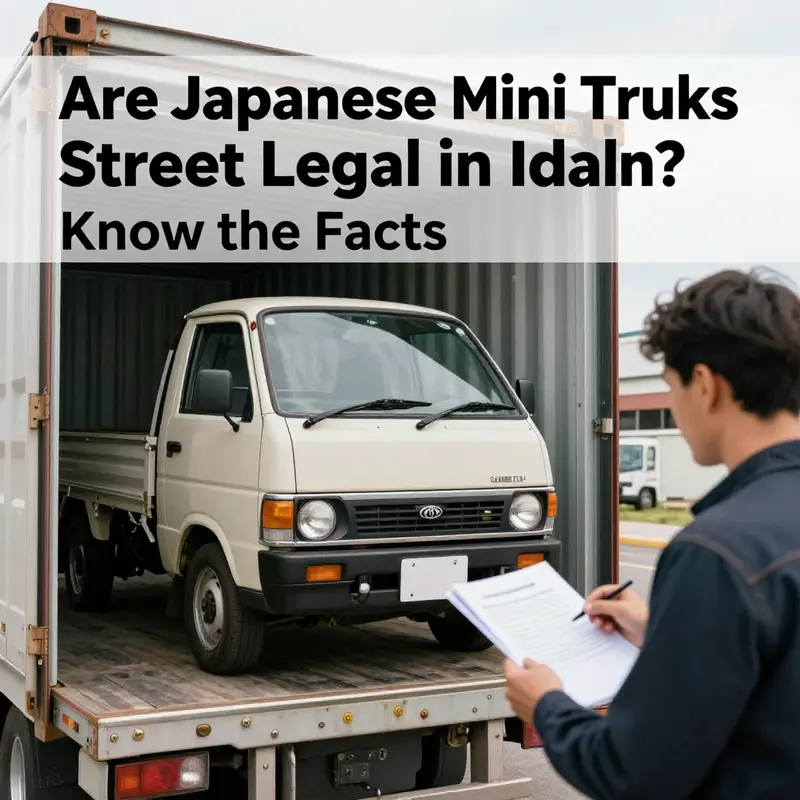
In Idaho, the appeal of compact Japanese mini trucks rests not just in their quirky charm or their ability to squeeze into tight spaces, but in the practical work they can do on a state with wide-open landscapes, ranch precincts, and a growing appetite for versatile, fuel-efficient utility vehicles. Across rural counties, backroads, and even some urban corridors, these small pickups offer a blend of maneuverability and payload that can be just what a farm, a construction site, or a snow-removal crew needs. Yet the allure only holds if the vehicle can actually operate on public streets, and that means navigating a layered system of federal and state rules. The core reality is straightforward: Japanese mini trucks are not categorically illegal in Idaho, but they must clear a set of hurdles that ensure safety, emissions compliance, and proper documentation before they’re permitted to take a seat on the road next to full-size pickups and daily commuter cars. The way Idaho implements these rules reflects a broader federal framework that governs imported vehicles, while leaving room for state-specific requirements that can surprise newcomers who assume a green light simply because a vehicle looks the part or fits a particular niche. In other words, the question “are they street legal in Idaho?” isn’t a yes-or-no inquiry so much as a careful checklist of age, compliance, and paperwork, all of which must align with both federal guidelines and Idaho’s own registration and safety standards. The first principle to consider is the age of the vehicle and how federal import rules treat age as a key gatekeeper for what can be imported and operated without undergoing the full, modern compliance regime. This is the so-called 25-year rule, a boundary that has become a practical doorway for many enthusiasts and small-scale importers. Under this rule, vehicles manufactured before a certain cut-off year can be imported without being retrofitted to meet the current FMVSS and EPA standards. The logic behind the rule is straightforward: older vehicles were not built to the same modern safety and emissions benchmarks that apply to newer models, and the federal government has carved out an exemption that recognizes the historic and mechanical nature of these older machines. Idaho, like other states, does not create an outright prohibition or blanket ban; instead, it relies on the federal age-based exemption as a starting point, then adds its own verifications to ensure the vehicle is safe, legal to operate, and properly documented before it can be registered and insured for street use. Practically, this means that for a Japanese mini truck to be street legal in Idaho under the 25-year rule, it must be manufactured before 2001. If the vehicle meets this age threshold, it can often be brought into the state’s registry with far fewer modifications than a newer import might require. The essence is not a free pass but a recognition that these older vehicles, by virtue of their age, are already outside the scope of some modern regulatory requirements. However, even with the 25-year exemption, there are non-negotiables that Idaho takes seriously, and those non-negotiables belong to the broader safety and emissions framework that governs all vehicles used on public roads. The moment a vehicle steps into Idaho’s registration lane, it meets a safety standard check that is designed to protect drivers, passengers, and other road users. This safety check, administered at the state level, addresses essential components: brakes that stop the vehicle reliably, lighting systems that illuminate the road correctly, tires with sufficient tread and correct sizing, steering that responds predictably, and a structure that provides occupant protection. While an older Japanese mini truck may not need to be retrofitted to comply with the latest FMVSS, it still must pass a practical safety inspection that ensures basic roadworthiness. The inspection acts as a bridge between federal exemptions and state expectations, ensuring that despite age, a vehicle does not present an undue risk on Idaho’s streets. In addition to safety, emissions stand as a pillar of street legality. The EPA’s role in this process is explicit: federally, the vehicle must meet applicable emissions standards or qualify for an exemption under the 25-year rule. In Idaho, as with other states, this means a careful balancing act. A vehicle that is older may qualify for the 25-year exemption from current US EPA emissions standards, but it still must be demonstrably compliant with the state’s emissions enforcement framework at the point of registration and during inspections. In practice, this often translates into a need for documentation that the vehicle’s emissions equipment was preserved or that the vehicle has a verifiable path to compliance through the import process. The end result is that the vehicle can be street legal in Idaho if it can show that it meets both the federal age-based exemption and the state’s stricter, on-the-ground testing requirements. The path toward registration is rarely a straight line, particularly for imports. Idaho’s process of titling and registering an imported vehicle requires a careful assembly of documents. A bill of sale, proof of import, and occasional letters of compliance from the EPA or the DOT can all be part of the package that ITD or a local licensing office will examine. These pieces of paperwork demonstrate that the vehicle arrived through proper channels and that the necessary regulatory steps were followed, even if the vehicle does not conform to every modern standard. The reality for many owners and enthusiasts is that working with a licensed importer is not a luxury but a practical necessity. Importers who understand the maze of federal and state requirements can help assemble the necessary documentation, verify eligibility under the 25-year rule, and guide the vehicle through the Idaho registration process with fewer surprises. This is not simply about satisfying bureaucratic demands; it is about ensuring that a vehicle purchased for work or recreation can be used legally and with confidence on Idaho’s roads, whether you are traversing a backcountry route to check livestock, delivering goods across a rural district, or cruising to a weekend gathering at a nearby trailhead. The differences between a vehicle that is compliant and one that runs afoul of the rules can hinge on seemingly small details. For example, lighting is a category where compliance matters significantly. In Japan, lighting configurations and patterns may differ from U.S. requirements. Idaho’s inspectors will check that headlights, turn signals, and taillights meet the state’s specifications, and that any retrofits needed to bring the vehicle into compliance have been properly executed. Similarly, the brakes and tires must be up to Idaho’s standards, with appropriate tread depth and proper functioning under diverse Idaho conditions, from gravel roads to slick winter surfaces. The occupant protection systems, including seat belts, must be present and functional. Even a vehicle that falls under the 25-year exemption can pose a challenge if it lacks the safety features that Idaho expects as a baseline for on-road operation. The broader point is simple: street legality in Idaho demands alignment with both federal age-based exemptions and state-level safety and registration requirements. While the younger, post-2001 imports face the most rigorous path, the 25-year rule provides a practical entry door—one that can lead to legitimate street use, given that all other checks balance correctly. The personal narrative here is important, because many owners who pursue these vehicles are drawn not just to the novelty but to the utility: a compact, nimble pickup that can haul a surprising amount, navigate tight spaces, and perform in places where larger trucks lose efficiency. Yet the market reality remains that importing, certifying, and registering a compact Japanese truck for Idaho streets demands time, planning, and a commitment to compliance. It is not a matter of a quick purchase and casual drive; it is a process that requires attention to documentation, potential modifications, and a willingness to work with regulators and professionals who understand both federal and state requirements. In this sense, the Idaho experience mirrors the broader U.S. landscape: the 25-year rule opens doors, but it does not close them to responsibility. The vehicle must still be safe, legal, and properly documented, and the owner must understand that street use is contingent on a successful blend of age-based exemptions and state verification. For those who want to situate these rules in a practical, everyday context, consider how a small work truck travels from a coastal ship to an inland field, then onto a county road, and finally to a town street. The journey illustrates why the rules exist in the first place: to ensure that the road network remains safe for everyone, even when drivers bring in machines that are different in origin, design, and era. It also helps to explain why communities and regulators are pragmatic about these imports. Idaho’s approach does not reject the concept of street-legal Japanese mini trucks; it simply asks for responsible bridging of two regulatory worlds—for old machines with a certain character and modern roads that demand predictable performance. And because the discussion of legality is never merely theoretical, owners who want to pursue these vehicles should treat the process as a careful partnership with local authorities, not as a one-off transaction. To gain practical insight beyond the statutes, several readers find value in turning to community voices and real-world case studies that appear in the broader mini-truck ecosystem. For those curious about day-to-day experiences and practical adjustments, the Minitrucks CaLa blog offers a window into the realities of ownership, modification, and use for these compact workhorses. You can explore that perspective here: the Minitrucks CaLa blog. While stories vary, they often converge on a common theme: success on Idaho’s roads comes from preparation, documentation, and a willingness to adjust a project plan as needed to meet safety and regulatory requirements. The broader regulatory backdrop is supported by federal guidance that remains the backbone of import decisions. The EPA’s role in emissions standards for imported vehicles is a critical reference point for any owner contemplating a 25-year exemption or a post-25-year import. The agency’s emphasis on ensuring that engines and exhaust systems operate within environmentally responsible limits—whether through direct compliance or through documented exemption—frames the practical steps that importers and owners must follow. For reference and further study, consult the EPA’s guidance on emissions standards for imported vehicles, which provides the official context for how these vehicles navigate the regulatory landscape as they move from ceremony of ownership to lawful operation on public roads: https://www.epa.gov/transportation/emissions-standards-imported-vehicles. In sum, Idaho’s street-legal pathway for Japanese mini trucks is not a loophole but a structured channel that recognizes the age of some vehicles while insisting on safety, documentation, and accountability. The outcome depends on careful preparation and collaboration—between buyers, importers, and state authorities—to ensure that the machine you intend to use, whether for daily work or occasional adventure, can share Idaho’s highways without compromising anyone’s safety. This is the practical essence of the policy: empower responsible ownership by making the process transparent, traceable, and aligned with a shared standard of roadworthiness. By understanding the 25-year rule, anticipating the safety and emissions checks, and securing the necessary documentation, a would-be owner can turn a distinctive, compact Japanese pickup into a legitimate, street-legal asset on Idaho’s roads. For readers who want to connect these considerations to real-world expectations, the conversation continues in community forums and blogs that document journeys through import, compliance, and road use. The path is not uniformly simple, but it is navigable with the right information, planning, and professional guidance. It is also a reminder that a vehicle’s legality is not merely a function of its origin but of the ongoing commitment to maintain it as a safe, compliant participant in Idaho’s shared road system.
Final thoughts
Understanding the street legality of Japanese mini trucks in Idaho is essential for any prospective owner. By navigating emissions standards, safety inspections, registration processes, and import regulations, you can ensure compliance and enjoy your mini truck worry-free. Whether you’re a small business owner needing a reliable work vehicle or a residential property owner looking for practical transport, knowing these regulations makes the road ahead clearer. Embrace the charm of Japanese mini trucks, but always prioritize legality and safety to make your driving experience in Idaho enjoyable and compliant.