
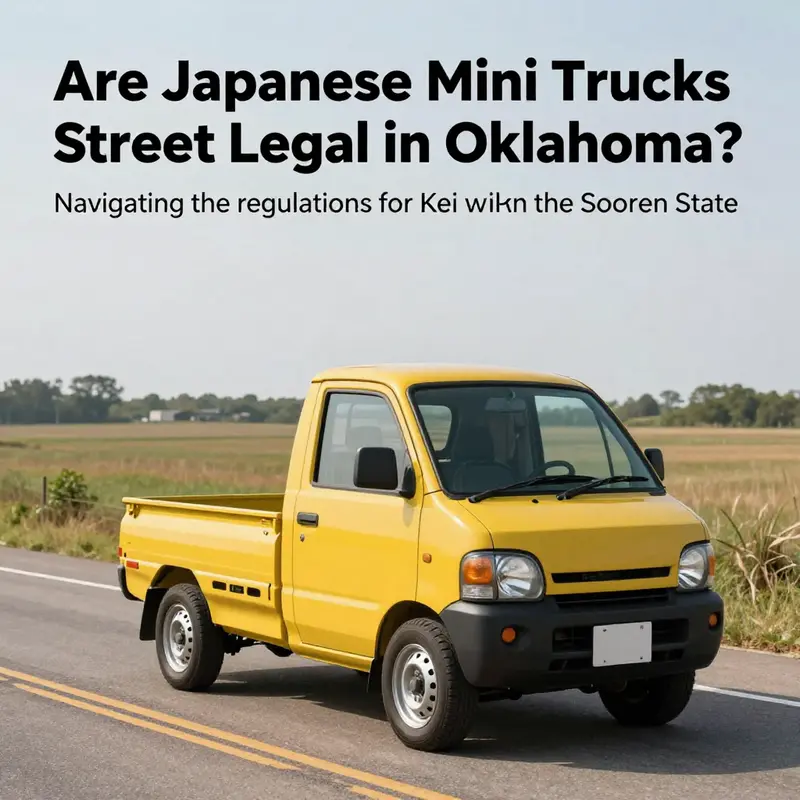
Curious about driving a Japanese mini truck in Oklahoma? Whether you’re a local small business owner looking for a unique delivery vehicle, a residential property owner needing efficient transport, or a mini truck enthusiast eager to hit the road, it’s essential to understand the legal landscape. This guide will break down key factors, including federal compliance, import regulations, DMV registration, and insurance requirements, ensuring you’re well-prepared to enjoy your Kei truck legally and safely.
Tiny Power, Big Rules: Navigating the Legality of Japanese Kei Trucks on Oklahoma Roads
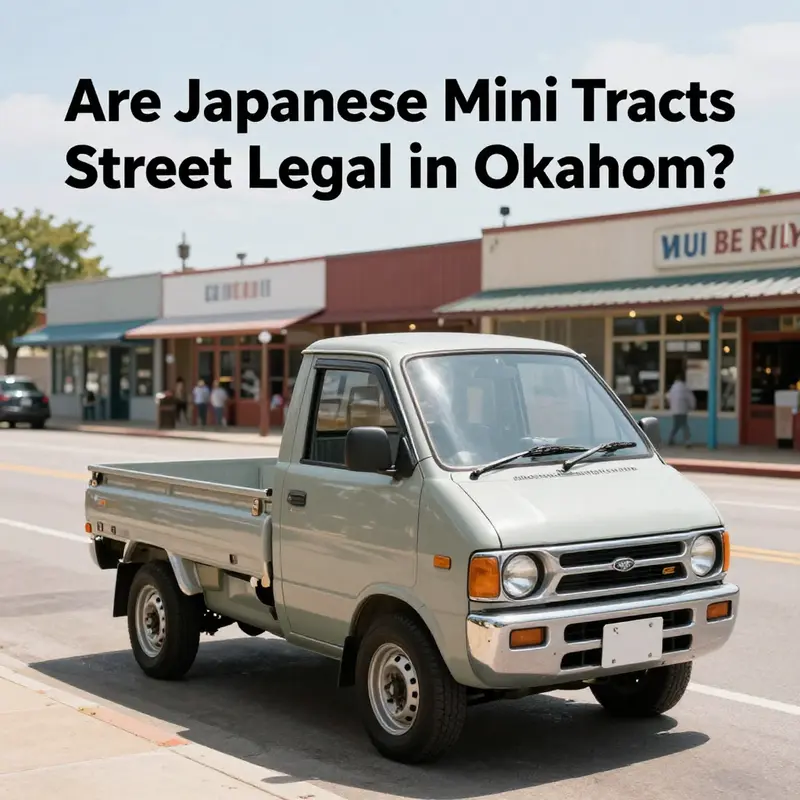
A Kei truck, with its compact frame and surprisingly capable footprint, carries a certain appeal for Oklahoma drivers who crave utility without sacrificing maneuverability. It’s the kind of vehicle that can squeeze through a tight city block, haul a modest load along a rural lane, and still sip fuel like a careful accountant. Yet that practical charm runs headlong into a maze of federal and state rules designed to keep certain vehicles off public highways. The result is a paradox familiar to many would-be importers: the truck you want to bring home may be possible to drive legally, but you must thread a precise regulatory needle to do so. Understanding this landscape means tracing the path from a Japanese market kei truck’s origins to a legally registered vehicle rolling on Oklahoma roads, and recognizing where the gaps and exemptions lie along the way.
At the heart of the matter is how federal standards interact with vehicles that were never built with U.S. safety and emissions rules in mind. Kei trucks, designed in Japan for a market with its own regulatory priorities, typically did not leave the factory optimized for U.S. safety standards or EPA emissions requirements. This is not a quibble about preference; it is a legal reality. The National Highway Traffic Safety Administration (NHTSA) and the Environmental Protection Agency (EPA) establish a baseline for on-road use in the United States. Vehicles that do not meet those standards are generally not eligible for on-road operation unless they undergo significant modifications and receive formal certification. In practical terms, that means any modern kei truck imported with the intent to drive on a U.S. road must be evaluated against a set of stringent criteria, with the possibility of costly retrofits to achieve compliance or an exemption pathway that may be narrow in scope.
There is, however, a recognized route that changes the calculus for some older Japanese pickups: the 25-year rule. This provision acknowledges that older vehicles, having operated in the world for a longer period, may be imported and operated under a different set of considerations than contemporary models. The logic is straightforward: technology moves on, and older examples have withstood the test of time from a safety and durability perspective in their original market. Under this framework, vehicles that are at least 25 years old can, in many cases, be imported and operated on public roads without meeting the current U.S. safety and emissions standards that apply to newer vehicles. In Oklahoma, this translates to a potential avenue for ownership that does not demand the same level of certification as a brand-new import would require. As of 2026, that threshold typically means vehicles manufactured before 2001 fall into the eligible category for the 25-year rule via the “Show or Display” exemption. It is essential, though, to place any such import into context with the state’s own processes: even if a truck qualifies for the 25-year exemption, it still must pass a state inspection and be registered through the Oklahoma Department of Motor Vehicles (DMV). In other words, the federal exemption helps, but it does not remove the obligation to demonstrate basic safety and road-worthiness at the state level.
That distinction is critical. The Show or Display exemption exists as a pathway to allow certain imported, older vehicles to be operated on public roads without conforming to the latest safety and emissions standards. It does not automatically grant freedom from inspection, registration, or the requirement to demonstrate basic operational functionality. In Oklahoma, that means the vehicle must still be inspected, proof of ownership must be established, and applicable fees must be paid. The process is designed to ensure that, even if the vehicle is older and not up to current U.S. model-year standards, it is still safe to share the street with other drivers and pedestrians. The practical implication for a potential owner is clear: the 25-year rule can unlock a path to legal operation, but it comes with a non-negotiable commitment to a state-level safety check and official registration.
For those considering models a bit newer or not clearly meeting the 25-year criterion, there is an alternative pathway, though it tends to be more demanding. The Individual Vehicle Importation (IVI) program provides a formal avenue to bring specific models into the United States after satisfying detailed documentation, inspections, and financial obligations. Even with IVI, approval is not guaranteed, and every step must align with the applicable federal rules. The IVI process is not a shortcut; rather, it is a rigorously regulated route for vehicles that fall outside the 25-year grandfathering window. Prospective importers should expect a careful review of the vehicle’s origin, its conformity with emission and safety benchmarks, and the specifics of the importer’s documentation package. Costs in this channel can be substantial, and timing can be uncertain, which means the effort and investment must be weighed against the vehicle’s intended use and long-term ownership goals.
The import and registration journey does not end with federal or state approval. Once a kei truck has cleared the front gates of import compliance and has been admitted into Oklahoma, the next stage involves the DMV. Registration is not merely a ceremonial act; it is the formal recognition by the state that the vehicle is authorized for on-road use within the jurisdiction. The Oklahoma DMV requires, among other things, proof of ownership, an inspection, and payment of the appropriate fees. In some cases, the vehicle may need to meet basic safety standards as a practical matter, even if it falls under the 25-year exemption. The point is not to dissuade—rather, it is to illustrate that compliance is a continuum, from federal import rules to state registration realities, with the possibility of intermediate inspections that address fundamental roadworthiness.
Insurance is another piece of the equation that cannot be overlooked. A legally operable kei truck in Oklahoma must be covered by liability insurance, consistent with what the state requires for motor vehicles. Insurance requirements serve two purposes: they protect the operator and other road users, and they help ensure accountability in the event of an incident. The exact terms of coverage may vary, but the underlying principle remains consistent: you can drive legally only if you are financially responsible for potential damages or injuries that could arise on public streets. The practical implication for a new owner is to secure a policy that aligns with the vehicle’s classification, intended use, and the state’s minimum liability requirements.
Into this regulatory tapestry, the decision to pursue a kei truck as a daily driver in Oklahoma carries practical considerations beyond legality. Some owners view these vehicles as highly capable workhorses for light hauling, farm tasks, or niche applications where their compact size and tight turning radius deliver real benefits. Others approach kei trucks as collectibles or weekend project platforms, appreciating the engineering quirks and the cultural appeal of a vehicle born in a different regulatory environment. Regardless of the motivation, the path to legality demands careful planning, budget forecasting, and an honest assessment of one’s tolerance for administrative steps. The desire to save money on fuel and increase maneuverability must be balanced against the potential costs of compliance, including parts, modifications, inspections, and the time required to navigate the process.
To those who want a closer view of how this process unfolds in practice, there is value in consulting community knowledge and local perspectives. A steady stream of enthusiasts and importers discuss the realities of paperwork, inspections, and the sometimes-circuitous journeys from port to pavement. Such conversations can illuminate the practicalities that official checklists alone may not capture. For readers seeking a practical lens beyond the regulation texts, the following resource offers ongoing discussion and context about kei trucks in a broader U.S. setting: minitrucksocala.com/blog/.
As with many questions of legality and practicality, there is always a balance to strike between ambition and the rules that govern public road use. The framework is clear in its intent: it seeks to ensure safety, protect environmental standards, and maintain orderly vehicle operation on shared spaces. The kei truck, with its small footprint, does not inherently violate these aims. It becomes enforceable precisely because conditions are met—federal conformance where required, or a lawful exemption under the 25-year rule, followed by state inspection and registration, and backed by insurance. The result can be a vehicle that, under the right circumstances, is both legal and functional on Oklahoma streets. It is not a universal green light for every kei truck, nor is it an admission that all models will neatly slide into compliance with minimal effort. Instead, it is a pragmatic pathway that requires careful alignment of federal, state, and local requirements with the vehicle’s age, origin, and condition.
For readers who want to dig deeper into the regulatory scaffolding that supports or restricts these imports, federal guidance is essential. The National Highway Traffic Safety Administration and the U.S. Customs and Border Protection provide the broader framework for vehicle imports, detailing what is required for different pathways, including the 25-year rule and the IVI program. In Oklahoma, the DMV serves as the gatekeeper for on-road legitimacy, translating federal allowances into state-level registration and inspection standards. Ultimately, the decision to pursue a kei truck hinges on a clear-eyed assessment of the vehicle’s age, its conformity (or intended conformity) with U.S. standards, the realities of the IVI process if applicable, and the practical steps needed to secure registration and insurance.
In the end, the legal path for Japanese kei trucks in Oklahoma is not a single step but a sequence of checkpoints. It begins with understanding the federal landscape, moves through the 25-year rule or the IVI option, and culminates in a state inspection, DMV registration, and appropriate insurance. This sequence matters not just for legality but for peace of mind: knowing that the truck you drive at highway speeds, through town, or along back roads meets the standards that keep you and other road users safe. The process may be intricate, but it is navigable for those who approach it with patience, a clear budget, and an awareness of the real-world demands of compliance.
For a broader sense of the official, nationwide guidance on importing and exporting vehicles—and the caveats that accompany show-or-display demonstrations—the following external resource offers authoritative insight into the federal backdrop that shapes state decisions: https://www.nhtsa.gov/vehicle-imports-and-exports.
Federal Compliance Gateways: Navigating NHTSA, EPA, and the 25-Year Rule for Japanese Kei Trucks in Oklahoma
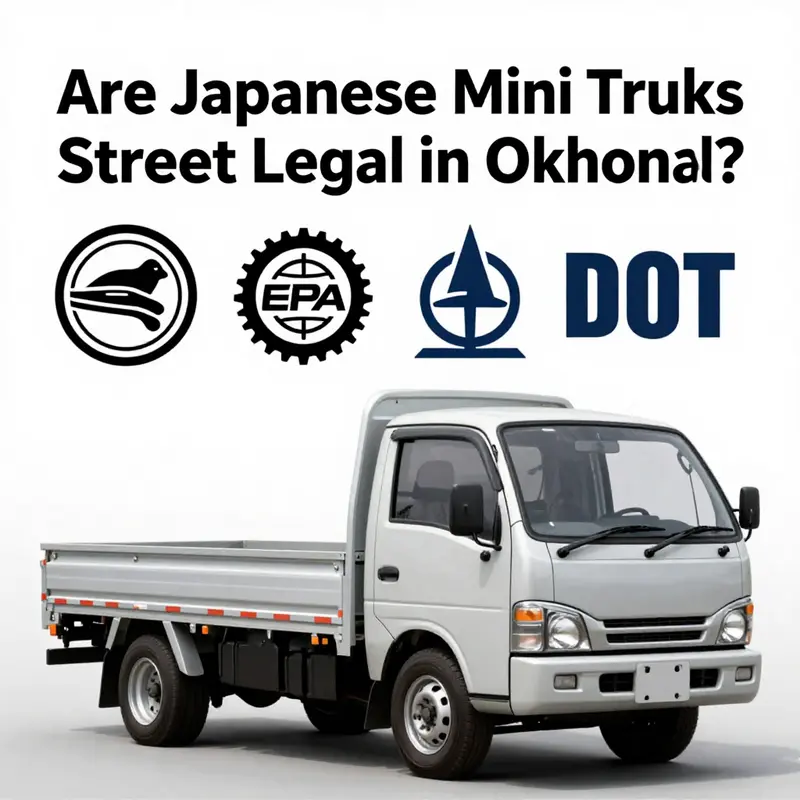
Every journey toward making a Japanese mini truck legally roadworthy in Oklahoma begins with the federal framework that governs vehicle safety and environmental performance. The story is not simply about whether a tiny, 660cc vehicle can be driven on state roads; it is about how federal standards intersect with state registration, insurance, and daily driving realities. At the heart of this discussion are two federal agencies—the National Highway Traffic Safety Administration and the Environmental Protection Agency—that craft the rules every importer must respect. Their influence is not theoretical. It determines whether a Kei truck can be registered, whether it can be insured, and whether it can truly share Oklahoma streets with a wide array of larger, purpose-built trucks and passenger cars. In practice, this means tracing a path that begins with safety compliance and emissions conformity and then follows through into the more mundane but equally essential steps of ownership, registration, and lawful operation. For those who are curious about practical perspectives on ownership and customization, the blog can offer a complementary lens, though the regulatory path remains the same regardless of personal modifications. Here, the focus is on the rules that shape the roadworthiness of these compact imports and how Oklahoma fits into that regulatory mosaic.
The central hinge of federal policy is the recognition that vehicles manufactured for markets outside the United States were not originally designed to meet U.S. safety standards. NHTSA and EPA are explicit about the fact that imported vehicles must either comply with current U.S. standards or qualify for an exemption under specific programs. A widely discussed mechanism is the so-called 25-year rule, which creates a doorway for older vehicles to enter the U.S. market without satisfying the full array of modern federal safety standards. In the Kei truck world, this means older models may become importable more readily once they reach twenty-five model years of age. As a practical example, a 1999 model year Kei truck would become eligible for import under the 25-year rule starting in 2024. Yet this doorway is not a universal pass for every vintage. The rule is age-based and safety-standards-based in a nuanced way: it opens the door to import without meeting current safety standards, but it does not grant blanket immunity to emissions compliance. EPA rules still loom large, and compliance with U.S. emissions standards remains a pivotal gatekeeper for most imports.
The 25-year rule, therefore, functions as a formal recognition that as vehicles grow older, the incremental risk they pose to safety on American roads decreases relative to the standards that govern new vehicles. This is not a universal exemption from all federal requirements, but it is a practical path for enthusiasts and small-business operators who want to bring a classic-in-Japan’s terms truck into the United States. The key caveat is that eligibility hinges on age and the vehicle’s ability to be legally imported without meeting the latest DOT safety standards. Vehicles manufactured before the cutoff date become eligible for import under the rule, but those manufactured after remain subject to the full spectrum of federal safety and, increasingly, emissions requirements. The nuance matters because it directly shapes how a prospective Oklahoma owner approaches the import process: the year of manufacture defines whether the 25-year exception applies, and the emissions profile of the vehicle will determine the next steps toward eventual registration and operation.
The EPA’s role is equally pragmatic and non-negotiable. Regardless of the vehicle’s age, the imported machine must meet U.S. emissions standards if the 25-year rule does not apply. When a Kei truck does not conform to those standards, the barriers to registration in any state are real. In practice, this means potential retrofits or modifications to the exhaust system, catalytic converters, or other emissions-control components, to bring the vehicle into alignment with U.S. environmental expectations. The result can be a complex decision point for a would-be Oklahoma owner: invest in modifications to meet emissions versus pursuing a pre-25-year model that can leverage the import pathway with a more straightforward emissions profile. The regulatory landscape makes it clear that environmental compliance is not optional; it is a gate that can determine whether the vehicle can ever legally circulate on public roads.
Beyond the wall of federal rules, Oklahoma’s state-level requirements translate those decisions into concrete steps. After an importer clears the federal hurdles, the next phase concerns how the vehicle enters state rolls and records. Registration with the Oklahoma Department of Motor Vehicles is mandatory. This process often involves presenting proof of ownership, documenting the vehicle’s origin, and paying a series of fees that reflect the vehicle’s classification and age. Importantly, the state may require a basic safety inspection to ensure the vehicle remains operable and reasonably safe for public road use. The inspection may examine critical systems such as lighting, brakes, steering, tires, and structural integrity. While the inspection standards are not a mirror of federal crash-test requirements, they function as a state-level firewall meant to protect other road users and ensure that legally operated Kei trucks do not undermine road safety. The titling and registration process also typically requires documentation that demonstrates the vehicle’s age and its conformity with applicable state rules. For Oklahoma, as for many states, this documentation becomes the practical currency that converts the theoretical possibility of import into an actual, road-legal machine.
Insurance, of course, is the bridge between a registered vehicle and lawful operation. Oklahoma requires liability insurance for most vehicles operated on public roads, and the Kei truck is no exception. The insurance policy must be active and aligned with the vehicle’s registered use and mileage. As a practical matter, insurers evaluate risk factors such as the vehicle’s engine size, its potential for safe operation, and the owner’s driving history. The small size and light weight of Kei trucks can influence premium calculations, but the fundamental obligation remains: without proof of insurance, the vehicle cannot be lawfully operated on state roads. The interplay among federal clearance, state registration, and insurance coverage means that a prospective Oklahoma owner should view the import and registration process as an integrated workflow rather than a sequence of independent hurdles.
Operating a Kei truck on Oklahoma roads also means understanding how state traffic laws apply to small, often idiosyncratic vehicles. While the vehicle may technically qualify for street use, it must adhere to all standard rules of the road. This includes obeying speed limits, yielding rules, and lane discipline, while recognizing that small vehicles can present unique safety considerations for other drivers. The operation is not simply a matter of compliance on paper; it is about actual, consistent adherence to the rules of the road, with due regard for vehicle performance, visibility, and the specific dynamics of small trucks in mixed traffic. The federal and state layers of regulation create a cautious but navigable path for people who want a Kei truck to function as a practical daily driver or a specialized work vehicle in Oklahoma.
For those who need a clearer sense of where to begin, the federal import guidance remains the most reliable compass. NHTSA’s Import Vehicle Compliance resources lay out the procedures, eligibility criteria, and the kinds of documentation dealers and private individuals may need to collect. The EPA’s emissions framework is similarly explicit about what constitutes compliant emissions behavior and what modifications, if any, would be necessary to reach compliance. The practical upshot is simple: if you are considering a Kei truck for Oklahoma, you must realistically plan for a dual track—one that contemplates age-based import eligibility and, where relevant, emissions conformity—and you must also prepare for the state-specific steps that culminate in registration and on-road permission.
To anchor this path in real-world context, it helps to consult a broader information resource that outlines the import process and compliance considerations. For practical connections and to see how others are navigating this landscape, you can explore the blog that covers various aspects of kei trucks and related topics. The blog serves as a useful companion to official guidance, offering hands-on perspectives on ownership, maintenance, and the realities of operating in different locales, including Oklahoma. https://minitrucksocala.com/blog/
As the federal and state gates begin to part, the remaining steps—proof of ownership, registration fees, and a valid insurance policy—are the final layers that seal the deal. In Oklahoma, those who have walked this path report that the process is certainly feasible for the right vehicle, but it is not automatic. The vehicle’s age, its emissions profile, and the outcomes of any required inspections all shape the timeline and the ultimate cost. Those considering this route should be prepared for possible paperwork, potential inspections, and the need to demonstrate that the vehicle can safely operate on public roads. Above all, they should verify the latest guidance on official state and federal resources before committing to import. The landscape can shift with policy updates, and the most prudent approach is to anchor decisions in current, authoritative sources, including the federal import guidance and Oklahoma’s DMV instructions.
For a final emphasis, the federal compliance path is a combination of eligibility by age, emissions conformity, and the practical realities of state registration and insurance. The 25-year rule provides a potential opening, but it is not a universal exemption from environmental standards, and it does not necessarily guarantee a smooth journey through the state’s inspection and registration processes. With careful planning, and by consulting the right authorities, a Japanese mini truck can become a legal and usable part of Oklahoma’s road network. Those who pursue the route should treat it as a multi-layered project—a blend of regulatory compliance, financial planning, and practical vehicle preparation—rather than a quick swap from import to on-road use. The payoff, for many, is a compact, nimble vehicle that fits their work or hobby needs while still respecting the rules that govern safe and responsible driving on Oklahoma’s public roads. External resources from federal agencies further illuminate the process, and it is worth reviewing those official documents to understand the precise steps and eligibility criteria before taking any concrete steps toward import or registration. For more official guidance, see the NHTSA Import Vehicle Compliance pages at https://www.nhtsa.gov/vehicle-imports.
The 25-Year Gate: Navigating Oklahoma’s Path to Legitimizing Japanese Kei Trucks on Public Roads
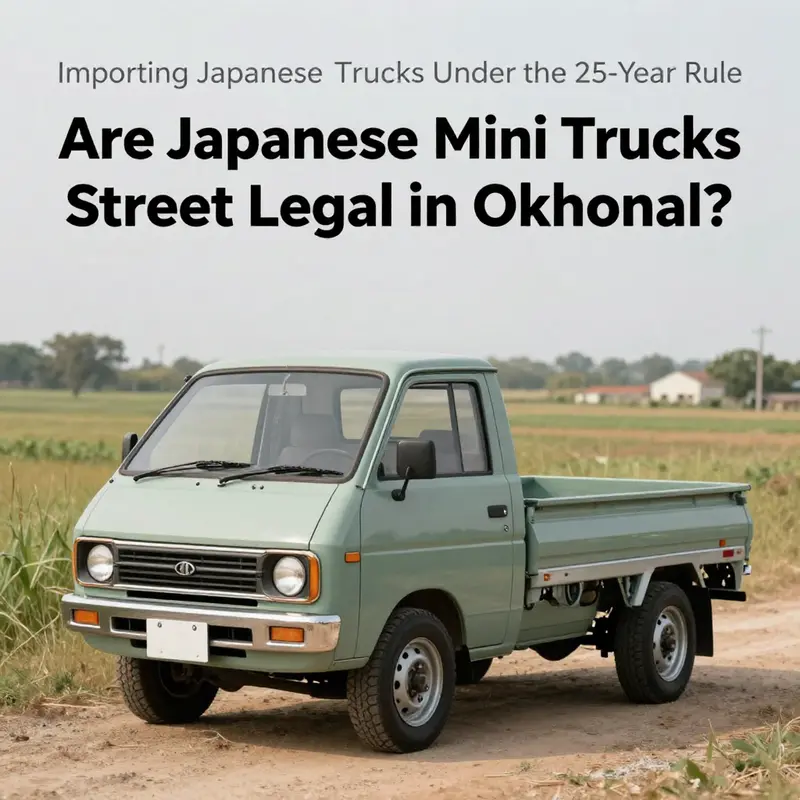
Crossing the border from a faraway manufacturing landscape into a small, practical corner of American roads is more than a simple registration card and a set of safety checks. It is a nuanced journey that blends federal policy, state-specific discretion, and a consumer’s own appetite for utility and efficiency. For anyone eyeing a Japanese mini truck as a potential daily driver or a workhorse for light-duty tasks in Oklahoma, the question is not only whether the vehicle can be driven legally, but how diligently one must tread through the rules that govern import, safety, and road usage. The core of the inquiry rests on a single, potent concept: the 25-year rule. This rule opens a door for vehicles that are at least a quarter of a century old to enter the United States outside the usual ceiling of modern safety and emissions standards. Yet the moment a vehicle steps onto American soil, the door does not automatically swing wide; it becomes a hinge that connects federal allowances to state permissions and practical roadworthiness. Understanding this hinge requires a patient, careful look at how federal regulations interact with Oklahoma’s own policies and enforcement realities. The result is not a black-and-white yes or no, but a landscape of considerations that can shape whether a Kei truck becomes a legitimate street vehicle in Oklahoma, or remains a project parked in a driveway or a yard. The journey begins with the federal framework that the 25-year rule embodies, and then moves into the more intimate terrain of state-level administration where the final decision often rests on practical safety and compliance questions. Federal law provides a clear, if broad, pathway: once a vehicle reaches the age of 25 years, it can be imported and registered without conforming to the standard DOT safety and EPA emissions requirements that apply to newer, mass-produced vehicles. This rule recognizes that time can soften some of the complexities of modern manufacturing standards, especially for vehicles that were never designed with U.S. highway systems in mind. The 25-year lens is a permit in form, a gateway in spirit, and a reminder that the transfer from foreign manufacturing to U.S. roads is not fully divorced from the practicalities of safe operation. Yet the same rule also sets expectations. It is not a blanket exemption from every regulatory concern. It does not magically erase the realities of safety on public highways, nor does it promise a frictionless import experience. In practice, even vehicles that qualify under the 25-year rule must be handled with attention to documentation, provenance, and a careful demonstration of basic roadworthiness during the registration process. The distinction matters because it clarifies why Oklahoma, like many states, doesn’t simply rubber-stamp every eligible vehicle. The federal permission exists, but state authorities reserve the right to apply their own criteria to ensure that any vehicle entering the public roadway is not only older, but also reasonably fit to operate in contemporary traffic. Oklahoma’s stance, as of early 2026, is more conservative than a blanket ban or a blanket blessing. There is no publicly documented statewide prohibition on Kei trucks registered under the 25-year rule. That absence of an outright ban is a hopeful signal for prospective importers, yet it should not be mistaken for a guarantee. Experience in other states has shown that registration can be pulled back or restricted if the state identifies concerns about safety or mechanical suitability for highway use. This dynamic is not accidental; it reflects a broader tension between the federal doorway that allows a vehicle to exist in the country and the state’s responsibility to ensure that every vehicle on its roads meets practical standards for safety and reliability. The pragmatic takeaway for Oklahoma residents and would-be importers is that proactive verification with the right state bodies is essential. The Oklahoma Department of Transportation and the Oklahoma Motor Vehicle Division are the official channels that can confirm current eligibility, address questions about required safety or emissions tests, and outline any state-specific prerequisites that might apply to a Kei truck imported under the 25-year rule. The notion of “safety tests beyond federal standards” is not simply a theoretical possibility. Some states have interpreted the 25-year rule in ways that demand a higher bar for highway operation, especially when a vehicle’s original design does not align with the performance expectations of modern roads. In Rhode Island and Maine, for instance, the trend has been toward tightening registration or more stringent checks related to mechanical reliability and highway-readiness, even for vehicles that meet the age threshold. These cases serve as a cautionary tale and a reminder that the federal exemption does not immunize a vehicle from state scrutiny. Oklahoma’s path, then, is one of measured diligence. Prospective owners should anticipate a process that may include verification of ownership documents, proof of age, and a diligent demonstration that the vehicle can operate in a safe and predictable manner under Oklahoma’s traffic laws. Some applicants may encounter a safety inspection requirement that goes beyond mere ownership and identity verification. The rationale is straightforward: the state must ensure that, even if a vehicle is legally importable, it still meets a basic standard of road-safe operation—brakes, steering, lighting, tires, and a general condition that supports reliable performance at typical road speeds. The practical effect is that a Kei truck with questionable brake performance, tires past their prime, or a weak lighting system is more likely to face a hurdle at the point of registration. This is not an indictment of small, economical trucks, but a reminder that road sense and vehicle health matter as soon as a vehicle crosses a state line and begins to share Oklahoma’s highways with larger, purpose-built automobiles. For any prospective importer, the path to legality in Oklahoma blends diligence with humility. It begins with confirming that the vehicle indeed meets the 25-year threshold as of the date of import. That threshold is straightforward in calculation: if the vehicle was manufactured before 2001, it qualifies for import under the 25-year rule in 2026. The next steps involve assembling documentation that proves the vehicle’s age, its provenance, and its ownership history. A clear title, a clean bill of sale, and any records of export or import compliance are essential. In parallel, one must prepare for the possibility that the vehicle may require some modification or certification to satisfy U.S. safety expectations. This might involve alterations to meet basic safety standards that are universally recognized as essential for all road-going vehicles, even if they are older. It is not a guarantee that every Kei truck will need full DOT or EPA conformity, but it is a reminder that the import journey often includes a conversation about modifications, certification, or verification from appropriate authorities. The broader narrative here is that the 25-year rule is a doorway, not a guarantee of a smooth, automatic registration. The state’s role is to ensure that the vehicle, once inside the jurisdiction, does not undermine public safety or the orderly operation of traffic. In Oklahoma, this means an assessment of whether the vehicle’s essential systems are functional and dependable enough to operate on public roads without posing undue risk to others. The practical implication for drivers is straightforward: if you are considering importing a Kei truck for street use in Oklahoma, you should be prepared to engage with the MVD and perhaps schedule inspections or provide technical documentation that demonstrates roadworthiness. It is wise to approach this proactively, recognizing that the absence of a formal statewide ban does not erase the likelihood of administrative steps or conditions that may be imposed locally or in particular cases. Because regulations can evolve rapidly, the best course is to seek guidance from official sources and to document every step of the import and registration process. An accessible place to start is the official Oklahoma policy pages for vehicle import and registration, which outline the procedures and requirements for foreign-made vehicles. For broader context and a comparative sense of how other states are handling similar situations, it can be informative to review the general landscape of import guidance provided by federal agencies. This helps situate Oklahoma’s approach within the larger framework of U.S. import policy and safety standards, and it can inform a decision-making plan that respects both federal allowances and state discretion. For readers seeking a resource-rich starting point that offers ongoing updates and community insights from the mini-truck community, the dedicated mini trucks blog provides a trove of perspectives and practical tips that can help frame expectations and prepare for conversations with Oklahoma authorities. You can explore a straightforward compilation of perspectives and practical discussions at the mini trucks blog, which offers a broad view of the import and ownership journey on a national scale and can help contextualize Oklahoma’s position within a wider enthusiast community. See more at minitrucksocala.com/blog/. Beyond the practical steps and policy considerations, there is the everyday reality of owning and operating a Kei truck once it is on the road. These vehicles are renowned for their compact dimensions, nimble handling, and the ability to navigate tight urban spaces with ease. They are also designed with mechanisms that emphasize low maintenance costs, simple mechanical layouts, and a reliance on smaller, more economical engines. The trade-off, in practical terms, often centers on performance and comfort relative to highway travel. The reality is that speed, acceleration, and long-distance cruising with such small powertrains require a careful approach to maintenance, tire choice, and load management. For many owners, the appeal lies in the vehicle’s suitability for light-duty tasks such as small deliveries, farm use, and personal utility work where the vehicle’s modest footprint and low operating costs become decisive advantages. The chant of the road in Oklahoma—where farms, rural routes, and growing urban corridors intersect—offers a natural habitat for Kei trucks, provided that the owner has done the due diligence to align federal permissions with state expectations. Prospective drivers should approach the journey with a mindset of compliance and caution. The process is not simply about owning a vehicle that happens to be older than a quarter of a century; it is about ensuring that the vehicle can be safely introduced into a driving ecosystem that includes larger, faster vehicles, pedestrians, and varying weather conditions across the state. In that sense, the 25-year rule is less of a loophole and more of a transitional pathway—one that invites careful preparation, respectful adherence to state guidelines, and a recognition that legality on paper must translate into legitimate, safe operation on Oklahoma roads. The road ahead is navigable, but not automatic. It requires a blend of official clarity, practical readiness, and a measured expectation that state authorities will balance federal latitude with local safety imperatives. For anyone who wants to pursue this path, the first conversation should be with the Oklahoma MVD or ODOT to confirm current interpretations and requirements. The journey is as much about understanding the rules as it is about preparing a vehicle to meet them. In that sense, the story of Japanese mini trucks in Oklahoma becomes a narrative about the interplay of policy, practicality, and the everyday responsibilities of road stewardship. It is a story that invites readers to weigh desire against duty, to plan with precision, and to respect the evolving nature of vehicle regulation while staying engaged with official guidance. For readers who want a broader sense of the ongoing dialogue within the enthusiast community and the practical experiences that shape how these policies are interpreted on the ground, the linked resource above offers a useful lens into the daily realities of owning and operating these compact workhorses. Finally, as with any legal question that touches on safety, the most reliable path remains direct consultation with official sources. An authoritative external reference that outlines federal import considerations can be found here: https://www.nhtsa.gov/vehicle-imports. This resource provides a solid frame for understanding how the federal landscape interfaces with state processes and highlights the importance of aligning the import journey with the documented rules and recommendations that govern vehicle safety and compliance across the United States.
From Harbor to Highway: Navigating Oklahoma’s DMV Path for Imported Kei Trucks
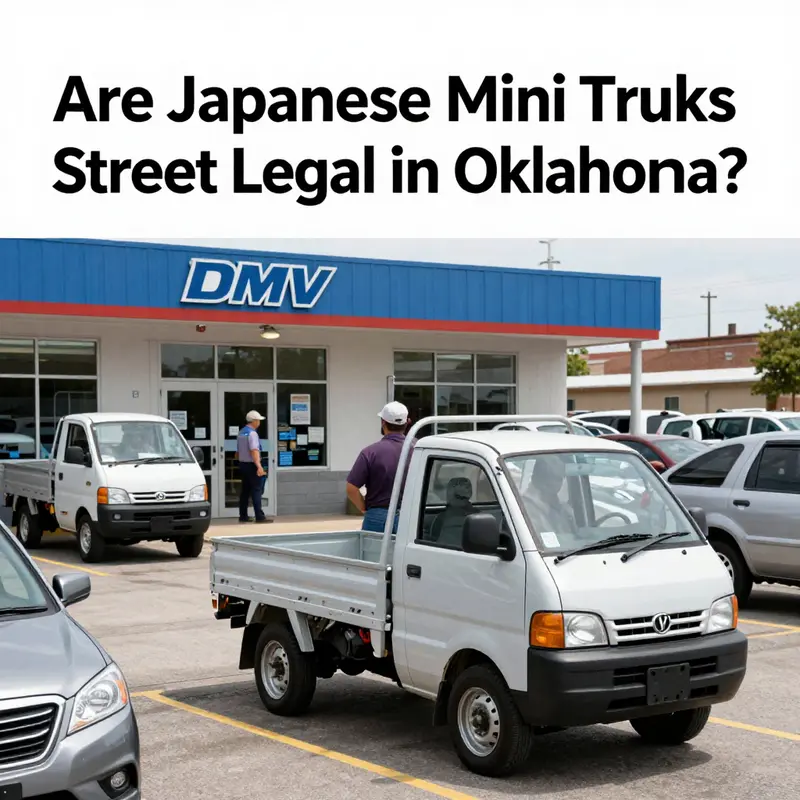
When people first encounter a Japanese Kei truck barreling through Oklahoma’s farm lanes or quiet suburb streets, the sight can feel almost like a cross-cultural joke played out on pavement. A vehicle built small enough to squeeze through tight alleys in Osaka now purrs along American roads, where the rules of the road can be as large as the trucks are compact. The core question, of course, is legality. Are these diminutive pickups street legal in Oklahoma? The short answer is yes, but the path from import to on-road compliance is a careful journey through federal standards, state regulations, and practical DMV processes. It is a journey that requires patience, accurate documentation, and an appreciation for how U.S. rules interact with vehicles that were never designed to meet them from the factory floor. The broad framework rests on two pillars: Federal compliance and state registration. The federal layer asks whether the vehicle meets U.S. Department of Transportation safety standards and Environmental Protection Agency emissions requirements. In most cases, Kei trucks produced for Japanese markets were not built to meet those exact standards when they rolled off the assembly line in the 1990s and earlier. That does not seal their fate, but it does mean prospective owners must be prepared to address potential modifications, certifications, or exemptions to satisfy federal and state authorities when the time comes to register and operate on public roads. The state layer, here Oklahoma, adds its own steps—inspections, titles, fees, and the day-to-day realities of driving legally within a state’s boundaries. The tale of a Kei truck’s life on Oklahoma asphalt, then, unfolds at the intersection where import rules meet the DMV counter and finally the driver’s daily routine behind the wheel. The 25-year rule remains a central hinge in this story. For import purposes, the rule provides a simplified door to entry: if a vehicle is at least 25 model years old, it can be imported without full compliance with the current U.S. safety and emissions standards. In practical terms, that means a vehicle manufactured in 2001 or earlier would qualify for import under this exemption as of 2026. This is not a blanket guarantee of street readiness, but it is a meaningful shortcut that many Kei truck enthusiasts and small-business operators rely on when deciding whether to pursue an import. Yet even when the 25-year rule applies, the clock does not stop there. Once the vehicle locates a home in Oklahoma and crosses the border into the state, it must still pass the kind of checks that keep Oklahoma roads safe and conformant. The federal exemption does not automatically guarantee that an older Kei truck will glide through the Oklahoma inspection lane or the DMV’s title office. The state’s process requires a careful synthesis of documents, inspections, and fees. The journey begins with knowing what counts as eligible, then moving through the importation and registration steps with a clear plan rather than a tentative, last-minute scramble. Eligibility under the 25-year rule is straightforward on the calendar, but it is only the first mile. It is the bridge between a legally imported vehicle and a legally operating vehicle. A Kei truck that is older than 25 years is admissible into the United States without the same level of compliance demanded of newer models, provided other regulatory obligations—such as customs clearance and proper documentation—have been met. But once it arrives, the Oklahoma DMV will still assess the vehicle to verify that it can be registered and operated within state law. That assessment often means a safety and emissions inspection, a careful look at the vehicle’s paperwork, and a verification of ownership. The inspection step is not a mere formality. Even with the 25-year exemption, the state expects basic safeguards to be present and functioning. Lights, brakes, tires, and seat belts must operate, and the vehicle should be in a safe overall condition. In some cases, if the Kei truck’s equipment or structure raises questions about safety, the inspector may flag items for corrective action before the vehicle can be insured and plated. The practical consequence is simple: the 25-year rule reduces the regulatory burden significantly, but it does not remove the need to demonstrate that the vehicle can be driven safely on Oklahoma roads. The document trail is the second pillar of the process. To register an imported Kei truck in Oklahoma, you must assemble and present a set of foundational documents. These typically include proof of ownership, such as a bill of sale or the original title from the prior owner, and an application for Oklahoma title and registration. A crucial component is an inspection certificate from an approved Oklahoma inspection station. This certificate should attest that the vehicle meets basic safety standards and, where applicable, emissions requirements. Because the vehicle’s origin and modifications can vary widely, the inspection acts as a gatekeeper to ensure that, even with the 25-year exemption, the vehicle remains suitable for public roads in Oklahoma. The documentation does more than prove ownership; it establishes a chain of custody and compliance that the DMV can trace. A clean, well-organized packet can smooth the process, while disorganized or incomplete records are a common source of delays. Some owners find themselves returning to the seller or importer to retrieve missing documents or to verify dates and odometer readings. In addition to proof of ownership and the inspection certificate, the Oklahoma DMV will require forms that detail the vehicle’s make, model, year, VIN, and other identifying information. These forms, though routine, are essential for generating a correct title and ensuring that future registrations and renewals are accurate. It is easy to underestimate how critical these forms can be when time is tight and the to-do list grows long. The fee structure is another practical consideration that accompanies the paperwork and inspections. Registration fees, title fees, and taxes are determined by the vehicle’s value and other factors. The total cost can vary depending on the vehicle’s exact specifications, whether the truck is classified as a passenger vehicle or a light commercial vehicle, and the assessed value at the time of registration. Prospective owners may also encounter potential taxes or local charges that arise in addition to the base state fees. It is wise to budget not only for the purchase price and shipping but also for the registration and any inspection-related costs that are likely to surface as the process unfolds. Once the paperwork is in place and the vehicle has passed inspection, the moment of truth arrives: the moment you receive license plates and are officially authorized to drive on Oklahoma highways. With plates in hand, the Kei truck becomes part of the state’s traffic ecosystem, subject to the same rules that govern any other vehicle on the road. Insurance remains a non-negotiable requirement. Oklahoma law requires liability insurance to operate on public roads, and vehicle owners must carry coverage that meets or exceeds state minimums. The insurance policy not only satisfies the law but also underpins the financial protection needed in the event of an incident. The reality of operating an import vehicle with a non-U.S. origin requires ongoing attention. The 25-year rule helps at the border, but daily driving in Oklahoma demands vigilance about maintenance, parts compatibility, and emission controls. Vehicle ownership becomes a responsibility that extends beyond a title and a plate. It includes keeping records of any repairs or modifications that were necessary to satisfy the inspection and continuing to meet safety standards as the vehicle ages. For people considering this route, there is value in connecting with communities of like-minded enthusiasts and practical readers who have navigated the same course. Community resources often offer practical tips on how to approach inspections, where to source compliant parts, and what common pitfalls to avoid. If you are exploring further perspectives on Kei trucks and their broader ecosystem, a visit to Minitrucks blog can provide general insights and context about the culture, maintenance, and practical realities of owning a small import vehicle on U.S. soil. You can learn more at the Minitrucks blog.
To deepen the practical understanding of how these vehicles fit into the spectrum of imported and domestic options, consider following wider discussions and experiences shared in relevant automotive communities. This kind of engagement can illuminate how others handle the balance between keeping a classic, older vehicle compliant and keeping it reliable for everyday use on Oklahoma roads. While this chapter centers on the registration process, the bigger picture includes ongoing responsibilities: staying current with any changes to state rules, keeping up with periodic inspections, and understanding how a vehicle that began life under different safety and emission norms can be maintained in a way that respects both the spirit of the import and the letter of the law. The Oklahoma DMV site is the definitive source for the most up-to-date requirements, and prospective owners should plan a direct call or visit to confirm specifics before beginning the process. The path is clear but not instantaneous. It demands careful preparation, a willingness to gather exact documents, and a readiness to address any compliance issues that may arise during inspection. The experience, while potentially meticulous, ultimately yields a vehicle that can contribute to a practical and economical mobility solution without compromising safety or legal standing. The end goal is straightforward: a Kei truck that is legally registered, insured, and ready to fulfill its role on Oklahoma streets and beyond. As the process unfolds, patience and precision are the companion virtues. The result is not merely a plate and a title, but a reliable vehicle that has earned its spot on the road through compliance and responsible ownership. For readers who want to explore more about the community and practical considerations of Kei trucks in the United States, the connected nature of online resources can be a helpful companion on this journey. The internal link to the broader community hub offers a doorway to additional conversations, while the external resources provide a wider frame of reference for federal import guidance and regulatory context. External resource: For broader federal import guidance, consult NHTSA’s vehicle import information at https://www.nhtsa.gov/vehicle-imports.
Insurance, Inspections, and Street-Readiness: Making Japanese Kei Trucks Legally Drive in Oklahoma
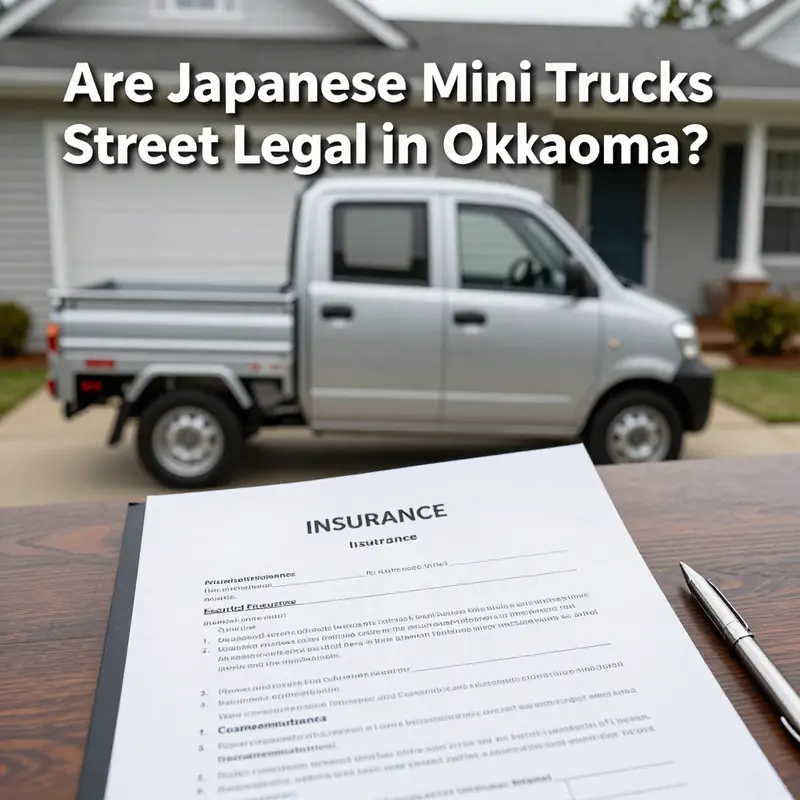
A Kei truck from Japan arriving in Oklahoma must navigate a layered set of requirements before it can share the road. At the federal level, the vehicle must meet U.S. safety standards and emissions rules, and many Kei trucks qualify for import under the 25 year rule, meaning vehicles manufactured at least 25 years ago can enter with fewer immediate compliance steps. In practice, this means confirming that the vehicle can be titled and registered under state and federal rules and ensuring that any needed inspections are arranged.
In Oklahoma, the DMV process centers on documentation and verifiability. Expect to present a bill of lading, customs documentation, proof of ownership, and a completed title or registration application. Depending on the county and the vehicle, a state safety inspection and, in some cases, an emissions test may be required. Since nonstandard or older imports can stress typical service networks, inspectors will look for functional lighting, verified braking systems, proper seat belts, and general roadworthy condition rather than re engineering the vehicle. The goal is to confirm basic controls and safety features are present and reliable.
Insurance coverage is the practical daily consideration. Oklahoma requires liability coverage, and the typical baseline is the 25/50/25 policy, though many owners opt for higher limits to reflect the higher repair costs or limited parts availability associated with imported or nonstandard vehicles. When shopping, discuss usage patterns, annual mileage, and expected loads, as these factors influence premium levels and the adequacy of coverage for both bodily injury and property damage.
Beyond legal minimums, maintenance planning matters. Parts availability for Kei trucks can be more limited in Oklahoma, which means proactive maintenance and relationships with knowledgeable shops matter. Owners should budget for longer lead times on specialty components, and be prepared to source parts from specialized suppliers. Routine checks of emissions controls, engine performance, and electrical systems help keep the vehicle reliable on local roads and free from unexpected downtime.
The practical takeaway is that street legality for a Japanese mini truck in Oklahoma hinges on a clear understanding of federal import rules, compliant state registration, sensible insurance planning, and proactive maintenance. When addressed together, these elements create a pathway from port to pavement that emphasizes safety, traceability, and responsible ownership.
Final thoughts
In summary, while Japanese mini trucks—Kei trucks—have become an exciting option for many, it’s imperative to navigate the legal landscape correctly. From federal compliance and registration to insurance, each step contributes to making your Kei truck road-ready in Oklahoma. Embracing these vehicles can enhance your business operations, personal transport, or hobby—so ensure you’re informed and compliant to make the most of your mini truck adventure!