
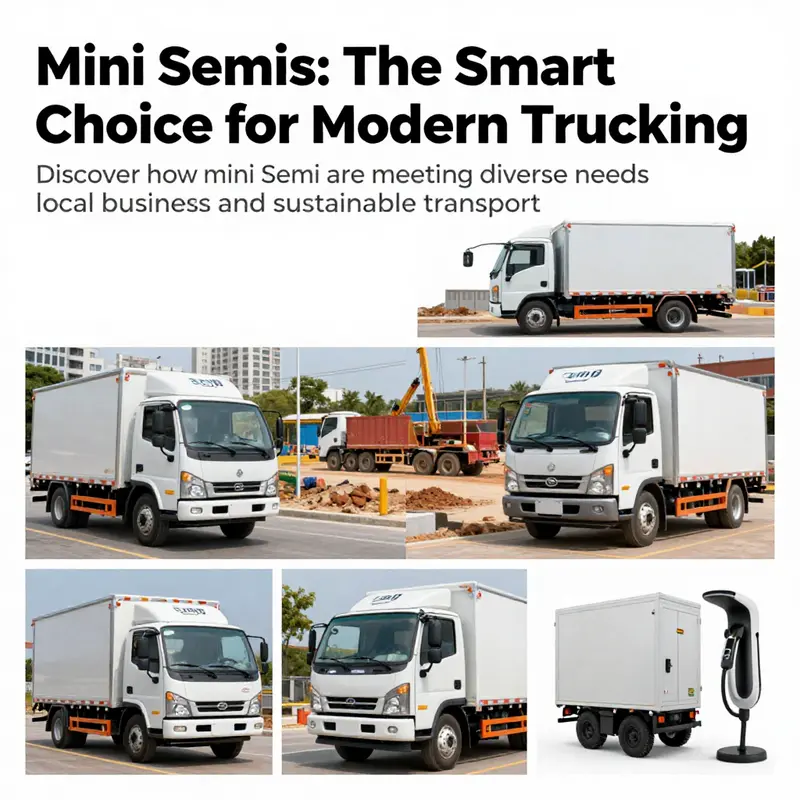
In today’s fast-paced world, finding efficient, sustainable, and flexible transportation solutions is imperative, especially for local small businesses and property owners. Mini semi trucks have emerged as a remarkable answer to these challenges, offering the agility and utility necessary for urban deliveries and specialized hauling. This article explores how mini semis can improve trucking efficiency in urban settings, their positive environmental impact, their operational flexibility across various industries, cost-effectiveness, and the shift toward electric models. Together, these points highlight the growing role of mini semis in revolutionizing transportation for many stakeholders.
Urban Utility Reimagined: Mini Semis, City Freight, and the Future of Efficient Trucking

Cities press inward as freight activities intensify. The urban landscape demands more than raw torque and payload capacity; it requires agility, predictability, and a unit that can slip through traffic without becoming a bottleneck. Mini semis—compact, lighter-weight cousins of full-size semis—have emerged as a practical answer to this set of constraints. Their design prioritizes maneuverability, brisk acceleration for tight intersections, and the ability to reposition quickly between dense neighborhoods. Where a traditional tractor-trailer might fight to turn around or park, a mini semi can thread a city block, find a loading dock tucked behind a row of parked cars, and reduce the time a shipment spends waiting for access. The data points—range up to about 300 kilometers per charge, payloads exceeding 650 kilograms, and the possibility of battery-electric propulsion—point to a vehicle class that aligns with the cadence of urban logistics. This alignment matters because the economics of city deliveries hinge on utilization. If a fleet sits idle for a day, the cost per mile climbs regardless of sticker price, but if a small, responsive truck can be deployed more days per week with fewer deadhead miles, the math shifts in favor of the smaller unit without sacrificing on safety or reliability.
Consider the everyday routes that make up city freight: grocery distributors, e-commerce urban hubs, maintenance crews delivering parts to construction sites, and refrigerated shipments that must stay within a narrow temperature window. Mini semis are well-suited to these tasks because they can access tight loading docks and deliver to multi-tenant facilities where street congestion would otherwise force a larger truck to skip certain stops or schedule a longer dwell time. In this context, utilization becomes the central metric. A truck that can complete more drops per shift, with less time spent idling while chasing parking and dock access, translates directly into higher revenue per driver hour and more predictable service levels for customers. The open cargo bed design common to many mini semis, paired with 360-degree access to the bed, enables rapid loading and unloading of irregularly shaped items or bulk materials typical of urban projects. For a practical sense of how such vehicles fit into a broader content ecosystem, see the minitrucksocala blog: minitrucksocala blog.
From an energy perspective, the electrified mini semis bring additional consistency to urban fleets. Battery-electric drive trains deliver quiet operation, which reduces noise complaints in dense neighborhoods and supports expanded delivery windows in some districts. The absence of tailpipe emissions also helps cities meet air quality standards and may unlock incentives or favorable permitting for fleets that demonstrate measurable urban air improvements. Range figures around 300 km per charge are compatible with daily urban routings and mid-level regional work, where a driver can complete numerous stops within a single shift and return to a base or charging hub without mid-day recharges. When paired with efficient planning, these powertrains lower energy costs per mile and reduce maintenance frequency because the number of moving parts is smaller and simpler than traditional internal combustion engines in heavy-duty service. Yet for non-urban routes, or for fleets that must handle extreme payloads, mini semis do not claim to replace long-haul tractors. They supplement larger assets by handling the first and last miles with precision.
One technical advantage often cited is payload capability within the urban footprint. While the name implies a petite form, many mini semis can carry substantial loads for city work—heavy enough to transport pallets, bulk parts, or cold-chain products, while still fitting into traffic patterns and parking constraints that larger trucks cannot. The open bed logistics approach supports versatile material handling. For industries such as construction or utility services, these vehicles can act as mobile supply depots on site, ferrying materials from a central stockroom to a temporary work zone with the kind of efficiency that reduces the amount of time crew spend unloading and reloading. In refrigerated applications, the ability to maintain consistent temperatures without imposing significant mechanical complexity is a boon, especially when every minute of uptime matters to preserving product quality. In addition to payload, the modularity of the bed area—from flat beds to specialized cargo configurations—affords operators flexibility that aligns with fluctuating demand. This adaptability helps small businesses experiment with lighter, faster delivery strategies that previously might have required a larger, more expensive fleet.
Safety remains a critical thread in the urban mini semi story. The compact size and lower weight distributions help with road manners in city traffic, but urban operation also invites unique risk profiles. For operators, this means rigorous driver training, robust collision-avoidance systems, and careful management of charging and maintenance schedules to avoid unexpected downtime. There is also the matter of energy storage, especially for variants powered by hydrogen or other advanced fuels. Safety considerations regarding storage and handling of alternative energy sources matter as much for city operations as for any other setting, given the proximity of pedestrians and dense infrastructure. Regulators and fleets should factor these concerns into procurement and maintenance plans, ensuring that emergency procedures, fueling infrastructure, and incident reporting are in place before a fleet expands. The overall safety calculus weighs heavily in favor of mini semis for many urban tasks, provided operators invest in the systems, training, and procedures that keep downtime and risk at a minimum.
Beyond the vehicle itself, the value proposition becomes a matter of how fleets are organized and supported. The economics of urban micro-trucking hinge on efficiency, not necessarily on sticker price alone. Electric mini semis can realize lower operating costs through quieter performance, reduced maintenance, and potential savings on fuel when guided by urban charging cycles. Fleets equipped with flexible rental or leasing options can adjust to seasonal demand, promotional windows, or city-specific delivery requirements without long-term capital commitments. In practice, this means a city-based fleet can scale up during peak periods and scale back during slower months, maintaining service levels without overexposing capital. The business case strengthens as fleets pair these vehicles with a well-planned charging network, predictive maintenance, and route optimization that minimizes deadhead miles. The technology must be integrated thoughtfully: data from telematics, route analytics, and real-time traffic feeds converge to guide when to charge, where to discharge, and how to sequence stops to maximize payload efficiency while limiting energy losses. The end result is a fleet capable of delivering reliable service to dense neighborhoods while staying compliant with urban emission and noise policies.
Some observers emphasize that mini semis are not a wholesale replacement for the heavy-duty tractors that dominate long-haul corridors. Instead, they represent a design philosophy that broadens the reach of a trucking company by handling the tasks that occur within the urban core and on the first mile home. In that sense they become a bridge between two worlds: the city logistics network that demands nimbleness and the regional distribution network that requires dependable throughput. The transition invites a more nuanced approach to operations, one that blends multiple asset classes and a unified fleet management strategy. For small operators, the appeal lies in the opportunity to reduce downtime and consolidate deliveries among a single vehicle class that can handle multiple roles, from general freight to temperature-controlled goods. This diversification supports resilience in supply chains that increasingly seek redundancy and rapid adaptability in response to changing demand patterns. The energy story, already favorable on many fronts, gains additional momentum as cities pursue cleaner air and quieter streets, making it more feasible for fleets to expand their urban footprint without incurring disproportionate costs or regulatory friction. The ongoing data-driven management of these assets—paired with community and municipal planning—suggests a future where mini semis are a standard, not a novelty, in the urban logistics toolkit. For deeper technical context, an external overview of E-Mini Truck standards can be consulted at https://www.alibaba.com/product-detail/An-Overview-of-E-Mini-Truck-Standards-Grades_1600479882297.html
Small Tractors, Large Questions: Reassessing Sustainability and the Urban Footprint of Mini Semis
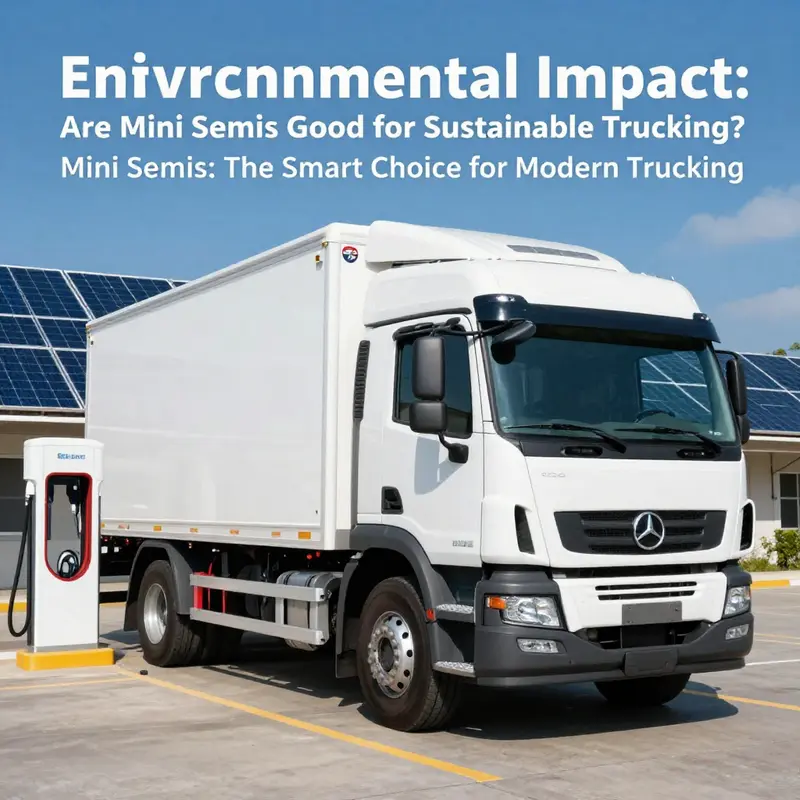
The allure of mini semis in urban freight rests on a simple premise: smaller, nimbler trucks can weave through tight streets, access curbside deliveries, and slip into loading docks where larger rigs cannot. In practice, that agility translates into more predictable turnarounds, higher utilization in dense markets, and the potential for quieter, more city-friendly operations. Yet the environmental footprint of these compact machines is not a straightforward arithmetic of pounds saved per mile. When the routing grid is crowded and parcel volumes fluctuate, the very advantages that make mini semis attractive can tilt the balance in surprising ways. They can reduce certain emissions per mile, yes, but they can also multiply the total miles traveled if fleets chase more frequent, smaller deliveries to keep customer service levels high. The truth lies in dynamic context: the city’s layout, the patterns of demand, and the energy mix that powers the vehicles and the charging infrastructure that keeps them moving.
What makes this topic especially compelling is not simply the vehicle’s size, but how that size interacts with real-world logistics. A mini semi’s compact footprint allows it to slip into inner-urban lanes and maneuver around dense blocks with less constraint than a full-size tractor-trailer. This can translate into shorter dwell times at urban depots, faster pickups from distribution centers, and more flexible scheduling for last-mile routes. Such advantages matter when the objective is to curb congestion impacts and improve air quality in downtown cores. The zero-emission potential of electric mini semis adds another layer of nuance. In city corridors, where noise and fumes can disrupt everyday life, an electric model promises quieter operation and near-silent starts and stops that keep commerce flowing after typical business hours. The environmental upside becomes even clearer when the electrified fleet aligns with a city’s clean-energy aspirations, enabling a more cohesive reduction in tailpipe emissions while supporting broader climate goals. The initial appeal is powerful, but sustainability depends on how these vehicles are deployed over time, not merely on what they are capable of doing in isolation.
To understand the environmental proposition, one must look beyond per-mile efficiency to the broader calculus of vehicle miles traveled (VMT) and load factors. The intuitive benefit of improved fuel economy per mile can be undermined if the fleet’s utilization rate is too low or if the shorter-range vehicles necessitate more trips to deliver the same volume of goods. In some studies of goods distribution, the use of smaller capacity vehicles tends to increase total driving activity, because many more individual trips are required to move the same total weight. If operations are not tightly integrated with consolidation centers, optimized routing, and demand-aware scheduling, those extra trips can erode or even erase per-mile gains. The practical takeaway is clear: mini semis can be a sustainable option, but only when they are embedded within a high-load-factor strategy that minimizes empty miles and redundant trips. A robust fleet plan should emphasize maximizing payload utilization, synchronizing deliveries to reduce the number of stops, and deploying dynamic routing that accounts for traffic patterns, loading constraints, and the availability of designated loading zones.
The environmental equation is further influenced by the energy source fueling the fleet. Electric mini semis offer a pathway to drastically lower tailpipe emissions, with the potential for a substantial drop in local pollutants and noise in urban areas. The overall environmental benefit, however, hinges on the electricity grid’s composition. When charging relies on renewable energy or low-emission sources, the lifecycle emissions can be meaningfully reduced. Conversely, if charging is powered predominantly by fossil fuels, the per-mile advantage narrows as the grid’s carbon intensity rises. This interplay between vehicle technology and energy infrastructure underscores a broader truth: sustainable trucking in dense urban spaces is as much a matter of city energy policy and grid resilience as it is of vehicle design.
Another layer to consider is the maintenance and operational quiet that mini semis offer. Fewer moving parts in certain electric propulsion systems, smoother torque delivery, and regenerative braking can translate into lower maintenance costs and less downtime. A fleet that spends more time moving and less time in the shop contributes to higher asset utilization and a lower relative emissions footprint per ton of freight moved. Yet maintenance dynamics also shape sustainability: if the electric technology requires scarce or specialized components, supply chain resilience becomes a factor. Fleet managers must weigh the availability of spare parts, the reliability of charging infrastructure, and the expected lifecycle of batteries against the anticipated gains in efficiency and emissions reductions.
A central element in the sustainability narrative is the design of the urban distribution network itself. Mini semis excel when integrated into a broader urban logistics strategy that emphasizes micro-hubs, cross-docking, and time-window optimization. Handled correctly, these strategies reduce the necessity for long-haul trips into city centers and enable a more balanced distribution pattern that tears fewer miles from the pavement. The bed geometry and loading access of compact trucks—often featuring open, accessible cargo areas with 360-degree bed access—can augment material handling efficiency. The ability to load and unload with minimal manual handling reduces loading time and the risk of damage to goods, which in turn supports more reliable service and better fleet utilization. In practice, cities that invest in dedicated loading zones, electric charging corridors, and smart traffic signals can further tilt the sustainability equation in favor of mini semis by lowering energy use, eliminating idle time, and shortening the overall trip duration.
In evaluating sustainability, it is also important to acknowledge the lifecycle perspective. The manufacturing footprint, battery production, and end-of-life recycling all contribute to a vehicle’s total environmental impact. Even as electric powertrains eliminate tailpipe emissions, the energy and resources required to produce batteries and components carry weight in the lifecycle assessment. Manufacturers and fleets increasingly focus on improving battery chemistry, extending range through lighter materials, and implementing take-back programs to ensure responsible battery recycling. These measures help close the loop and reduce the long-term footprint of small, city-oriented trucks. The lifecycle reality invites fleets to adopt a holistic approach: choose vehicles whose production and disposal practices align with broader sustainability commitments, complement electrification with renewable-driven charging, and design distribution networks that reduce unnecessary travel from the outset.
From a practical standpoint, the path to a more sustainable deployment of mini semis in urban freight involves careful planning, tight operational discipline, and a willingness to adapt to evolving city policies. Fleets should aim for high load factors, a cornerstone of efficiency. The higher the percentage of available payload that actually moves on each trip, the more the per-ton-mile emissions are lowered. Achieving high load factors requires a mix of demand forecasting, load optimization software, and carefully choreographed pickup and delivery windows. It also calls for collaborative logistics arrangements, such as shared consolidation centers and synchronized deliveries with other shippers operating in the same urban corridors. When empty miles—the miles traveled without carrying a payload—are minimized, the environmental benefits of smaller, more agile vehicles become more pronounced.
Strategic routing is another pivotal lever. Advanced telematics and route optimization can steer mini semis along paths that minimize congestion exposure, reduce energy consumption, and align with charging opportunities for electric fleets. The synergy between real-time traffic data, battery state-of-charge, and charging infrastructure availability enables fleets to avoid wasteful detours and unnecessary stops. Importantly, effective routing benefits not only emissions numbers but also service reliability. In a city where delivery windows are tight and customer expectations are high, keeping trips predictable reduces the risk of missed deliveries and backlogs that would otherwise necessitate additional trips.
The practical application of these principles can be glimpsed in how mini semis are used in sectors that demand flexible, on-demand movement of materials and goods. For construction, farming, or outdoor recreation, the compact trucks’ roomy cargo areas and easy bed access support efficient material handling and safe transport of irregular items. They can negotiate tight construction sites, rural access routes, and event spaces more easily than larger semis, provided the trips are planned to maximize payload and minimize detours. However, even in these contexts, sustainability hinges on how well the operations are integrated with broader logistics workflows and energy strategies. The value proposition grows when the fleet’s planning includes not only trip efficiency but also freight consolidation opportunities, shared utilization of facilities, and schedules that avoid peak energy demand periods where possible.
The conversation around sustainability also benefits from a broader view of urban mobility and the role of freight within it. Cities increasingly seek to balance economic vitality with air quality, noise management, and street safety. Mini semis, when deployed thoughtfully, can support these objectives by offering lower emissions in busy cores, reduced noise during critical delivery hours, and a frictionless loading experience that minimizes idling. Still, policymakers and planners must be mindful of the potential downsides if not paired with robust infrastructure investments and demand management strategies. Encouraging shared use of urban freight resources, investing in charging networks, and coordinating with public transit and rail hubs can help harness the benefits of mini semis while curbing unintended increases in total driving activity.
For readers seeking deeper context on how vehicle size intersects with emissions and performance in freight distribution, a notable external reference provides a rigorous examination of these dynamics. The study highlights how size, loading efficiency, and routing choices collectively influence emissions outcomes in real-world networks. A thorough look at these findings can be accessed here: https://www.sciencedirect.com/science/article/pii/S019126192200175X. In parallel, practitioners can explore practical, on-the-ground perspectives through industry-focused resources such as the fleet and logistics discussions found in the blog. This combination of academic insight and hands-on experience helps frame a balanced view: mini semis are neither a universal remedy nor a mission in vain. Their value is situational, dependent on the rigor of planning, the sophistication of routing, and the cleanliness of the energy supply backing the fleet.
In closing, the environmental case for mini semis is not about absolutes but about alignment. When these vehicles are deployed within a tightly integrated urban logistics strategy—one that emphasizes high load factors, minimized empty miles, optimized routing, and electricity drawn from low-emission sources—their contribution to sustainable trucking can be meaningful. They can offer tangible advantages in dense urban environments where access is limited and time is scarce, while supporting city objectives for cleaner air and quieter streets. Yet without deliberate, data-driven planning, their smaller size can become a liability in environmental terms, as added trips and inefficient routing erode the per-mile gains they promise. The upshot is clear: mini semis hold promise for sustainable city logistics, but only when their adoption is part of a broader, well-coordinated approach to freight efficiency, energy management, and urban planning.
Operational Agility on Small Footprints: Mini Semis Redefining Urban and Regional Freight
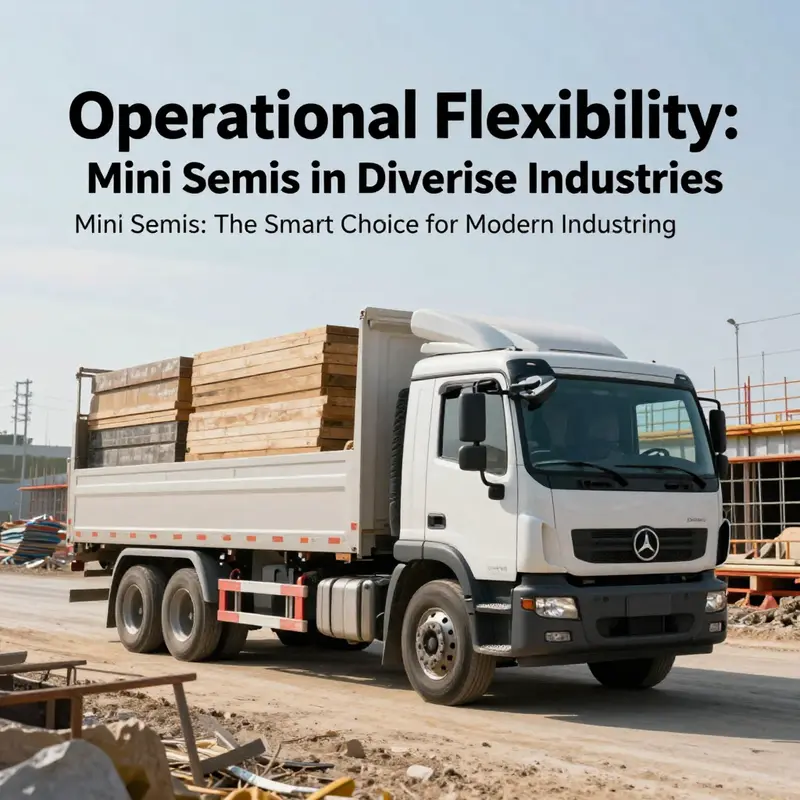
Mini semi trucks are not merely scaled-down versions of their highway-running counterparts; they are purpose-built platforms for agility, responsiveness, and precise logistics in environments that larger tractors struggle to navigate. The idea behind mini semis is not to replace long-haul capacity but to fill a widening gap where speed, access, and adaptability matter most. In cities with congested streets, loading docks tucked into tight corridors, and a growing emphasis on last-mile delivery, these compact tractors punch above their weight. They offer a blend of maneuverability and usable load space that makes them compelling for fleets looking to improve utilization without taking on the overhead of larger rigs. The chapter that follows threads together the operational realities that make mini semis a sensible option for certain trucking applications, while acknowledging their limits in long-haul freight.
First is the practical advantage of size and geometry. A vehicle that fits easily through narrow streets, negotiates tight turn radii, and parks with a smaller footprint is inherently more flexible in urban corridors. This agility translates into fewer routing constraints and more consistent scheduling. When a truck can access back alleys, side streets, and industrial yards that are off-limits to bigger equipment, the entire supply chain gains a measure of reliability. The result is a more predictable delivery cadence and a reduction in the delays that typically accumulate as fleets juggle multiple stops with limited yard space. In effect, the strategic value of mini semis resides in their ability to remove friction from the most congested parts of the logistics network—the last mile, the final cargo handoff, and the moment when a shipment finally meets the end customer or a regional distribution hub.
The same spatial advantages underpin the broader versatility of these vehicles. Open cargo areas with 360-degree bed access, for example, enable loading from multiple angles, simplifying the handling of irregularly shaped items, materials, and tools that professional drivers frequently encounter on-site. Such versatility is not just a matter of convenience; it changes the way fleets plan and execute tasks. A single mini semi can transition from delivering construction materials to hauling farming equipment or transporting outdoor recreational gear with only minor cab-side adjustments. In many cases, this reduces the number of trips a fleet must make or the number of specialized vehicles it must own. The result is a leaner fleet portfolio that can handle a wider range of jobs with a shared asset pool, improving utilization rates and lowering the per-millage cost of each assignment.
From a design perspective, the ongoing evolution of mini semis is shaped by a push toward modularity and adaptable payload configurations. Operators demand vehicles that can be tailored to specific tasks—whether it is a flatbed configuration for oversized items, a compact box for organized deliveries, or a hybrid layout that maximizes secure, accessible cargo space. By embracing modular design principles, manufacturers can offer fleets a way to swap in features that suit particular industries or routes without investing in entirely new chassis. This flexibility is especially valuable on the demand side of logistics, where markets swing between high-volume urban deliveries and more spread-out regional work. A modular approach reduces downtime during reconfiguration and lets fleets respond quickly to shifts in customer needs or seasonal work.
These capabilities dovetail with a broader trend in supply chain strategy: resilience through flexibility. A 2022 study on resilience in global supply chains highlights how local, scalable transportation options can cushion regional disruptions and support post-crisis recovery. In practice, mini semis enable fleets to reallocate capacity quickly, respond to sudden demand spikes, and maintain service levels even when traditional distribution networks face constraints. The ability to deploy smaller, nimble assets for last-mile and regional tasks strengthens the overall agility of the logistics system. When a few compact tractors can route goods to multiple neighborhoods without overwhelming central hubs, the friction tied to congestion, dock availability, and last-mile scheduling diminishes. In this way, mini semis contribute to a more distributed and robust network where resilience is not solely a function of inventory buffers or duplicate equipment but of adaptable transportation capacity.
The environmental and economic implications of this adaptability are also central to their appeal. Electric mini semis introduce a quiet, smooth, low-emission operating profile that aligns well with urban logistics goals. Zero-emission powertrains reduce tailpipe emissions and help fleets comply with urban air quality initiatives, while the lower noise footprint facilitates earlier or later loading windows in residential zones. Fewer mechanical components and simpler drivetrains can translate into lower maintenance costs and reduced downtime, factors that compound as fleets increase route variety and vehicle utilization. The long-term economics become more favorable when fleets can push more miles per vehicle per day with fewer service interruptions. Even when considering higher upfront capital costs for electric powertrains, the total cost of ownership can tilt in favor of mini semis in settings where urban efficiency and city-mentric deliveries dominate.
Yet the strengths of mini semis are not universal. Long-haul and cross-country freight still demands the payload capacity, range, and driver comfort that larger tractors provide. The restricted space for fuel or energy storage and the scale of operations across dozens or hundreds of miles make the small class impractical for most true long-haul tasks. The narrative here is not one of universal replacement but of selective deployment. For fleets whose routes are regional, neighborhood-based, or site-specific—such as construction supply, agricultural inputs, event logistics, and on-site material handling—the mini semi emerges as a powerful tool that complements larger trucks rather than competing against them. In these contexts, the ability to navigate congested centers, meet tight delivery windows, and execute rapid turnarounds translates into measurable gains in throughput and reliability.
The practical impact on industries that rely on on-site material handling underscores the broader utility of mini semis. In construction, for example, a compact truck can shuttle steel, lumber, and equipment across a site where access roads are narrow and parking is scarce. In farming, it can transport feed, fencing, or irrigation components from a central yard to fields that sit behind hedgerows or along winding access routes. In outdoor recreation, it can move gear between a warehouse and a staging area where space is at a premium. Even as a single vehicle class, the mini semi demonstrates how a flexible, small-footprint platform can be a catalyst for more efficient on-site logistics, reducing idle time, and cutting the cost of inventory movement in environments that are not simply urban but also physically constrained and variable.
The idea of a dedicated city-first or region-first vehicle can seem at odds with the broader push for standardization and scale in trucking. Yet evidence from logistics practice suggests that the mix of vehicle sizes matters. A diversified fleet that includes compact, mid-size, and larger tractors can assign each task to the vehicle type best suited for it. The compact option excels on routes and jobs where access limitations, frequent stop sequences, and tight loading bays dominate. The mid-size and larger trucks then take on the heavier payloads and longer distances where the density of urban streets gives way to highway resilience. This complementary use of capacity is precisely how a diversified fleet achieves higher utilization. It reduces the number of trips needed to complete a given set of orders, enabling more deliveries per day, a smoother cash flow, and less risk tied to single-point failure in the logistics chain.
The narrative around mini semis also benefits from recognizing their role in a broader ecosystem of vehicle systems and digital planning tools. As fleets adopt more connected technologies, the ability to profile routes for vehicle size, energy use, and load optimization becomes more powerful. Fleet managers can match route characteristics to vehicle capabilities, plan for expected peak periods, and reallocate assets in real time as conditions change. In a world of dynamic scheduling and data-driven decisions, the agility of mini semis becomes a lever for efficiency in a way that static vehicle assignments cannot be. This synergy between vehicle design and digital planning is what makes mini semis not only a practical choice but a strategic one for fleets seeking to maximize uptime and service reliability in complex urban and regional networks.
Operations are also influenced by the evolving expectations of customers and the regulatory environment. Shippers and recipients increasingly demand visibility, reliability, and speed in delivery windows. The compact truck, with its predictable performance in dense urban corridors, supports more dependable last-mile service. When fleets can offer precise time windows and consistent on-time performance, customer satisfaction rises and retention improves. From a regulatory standpoint, lower emissions and quieter operation align with city policies that aim to reduce noise and pollution in populated areas. While these policies vary by jurisdiction, the overarching pattern is clear: smaller, cleaner, and more adaptable delivery options earn traction where they are feasible and economically viable.
The future trajectory for mini semis rests on continued innovation in powertrains, materials, and structural design that push payload efficiency, range, and resilience even further. Advances in lightweight materials, modular cargo systems, and energy-dense batteries or alternative propulsion technologies could expand the class’s practical radius and payload capacity while maintaining or reducing total cost of ownership. Additionally, new shapes of collaboration between fleets, vendors, and urban infrastructure could extend the practical utility of mini semis in city logistics, regional distribution, and on-site material handling. This is a story not of a single technology replacing older ones but of a suite of improvements that expand what a small truck can do—and where it can do it—within a broader portfolio of trucking solutions.
For readers seeking practical context and current examples of how compact trucks are being used to streamline fleets and improve on-site operations, the blog offers many real-world perspectives and case studies that illuminate how these vehicles function in day-to-day logistics. blog
External reading:
For a deeper look at how flexible vehicle systems like mini semis contribute to resilient logistics and post-pandemic recovery strategies, see the external resource linked at the end of this chapter: https://www.researchgate.net/publication/361954874ResilienceinGlobalSupplyChainsConceptualFrameworksforOperationalFlexibilityandPost-PandemicBusinessRecovery_Strategies
Economic Mobility in Urban Freight: The Cost-Effectiveness of Mini Semis in Trucking

When evaluating the economics of a modern fleet, operators confront a balance sheet where every mile and every minute translate into cash. Mini semis alter that balance by shrinking both the truck’s footprint and, often, its demand on day-to-day capital. In urban and regional freight, the economic question frequently becomes not whether a truck can haul a certain payload, but how quickly it can move through dense streets, load and unload with minimal downtime, and return to service. The smaller form factor can reduce initial costs in ways that aren’t always obvious—from lower insurance premiums and easier parking to simpler maintenance logistics and faster turnarounds at facilities designed for tight margins. The result is a vehicle class that, when deployed with discipline, can deliver a greater portion of time in motion and a shorter path from purchase to profitability.
Fuel efficiency sits at the core of the cost story. Mini trucks, by their nature, carry lighter loads and operate on smaller powertrains, which typically translates to lower fuel consumption per mile, especially on short hauls and frequent stop-start routes common in city logistics. The savings accumulate across a week of deliveries, and the math improves further when vehicles spend less time idling in traffic or waiting for access to limited loading docks. Beyond raw fuel pull, there is a broader economics of maintenance. Fewer moving parts, simpler drivetrains, and compact assemblies often translate to lower routine service needs and shorter repair windows. Fleet managers recognize that a small, reliable chassis configured for urban duty reduces unscheduled downtime, which is a critical driver of effective utilization. In many operations, the portion of total operating cost that is variable—fuel and maintenance—becomes the dominant lever for improving quarterly margins.
Electrification is reshaping the cost horizon in this segment. Electric mini semis promise the dual benefits of much lower energy costs and quieter, cleaner operation in dense neighborhoods where noise and emissions restrictions are in effect. The total cost of ownership flips favorably over time as electricity prices remain comparatively stable and maintenance requirements drop, particularly for vehicles with fewer moving components and no internal combustion exhaust aftertreatment to service. Still, challenges persist. Charging infrastructure must align with routes and schedules, and energy storage considerations raise questions about range, payload capacity, and charging time. Market studies show a general trend toward electrified platforms because the day-to-day savings on fuel and maintenance accumulate into a meaningful differential against diesel equivalents. Nevertheless, the path to optimal economics depends on careful route planning, battery technology maturity, and the availability of reliable charging options near key hubs and customer addresses. In this context, the economic case for smaller, electrified models strengthens as fleets commit to greener operations and the logistical sophistication to back it up grows.
New technologies further tilt the cost equation. As designers downsize components and integrate electrification, the economics of production and procurement shift. A smaller, simpler vehicle architecture can relax certain maintenance demands while preserving payload flexibility through adaptable bed configurations or modular cargo areas. Innovations in drivetrain efficiency, regenerative braking, and lightweight materials contribute to lower energy use and longer service life for critical parts. Even more compelling is the potential leverage from automation and telematics. Autonomous or semi-autonomous capabilities can improve utilization by sustaining longer duty cycles with safer operations, while advanced fleet software can orchestrate multi-stop routes that squeeze more deliveries into the same workday. The research across autonomous truck studies suggests that when applied to the right mission profiles, these technologies can reduce downtime, optimize braking and acceleration, and ultimately lower the TCO. The practical takeaway is that cost-effectiveness in mini semis is not a single feature but a convergence of design choices, energy strategy, and digital optimization that together deliver more predictable economics.
Incentives and policy signals play a nontrivial role in shaping the economics of micro- and mini-truck deployments. Green technology grants, tax credits, and favorable depreciation schedules can shorten payback periods and improve the internal rate of return on new equipment. While incentive programs differ by region, the direction is clear: policymakers favor lower-emission, higher-efficiency fleets in urban freight corridors. For operators evaluating a mixed fleet, the incremental cost of adding electrified mini semis can be offset by reduced fuel spend and potential incentives, offsetting higher upfront capital costs with longer-term savings. This dynamic matters most for small and mid-sized fleets that must protect cash flow while pursuing service quality. The operational flexibility of mini semis—such as rapid loading, 360-degree access to cargo beds, and the ability to serve tighter delivery windows—translates into higher utilization, a crucial factor when every hour in service reduces the cost per delivered unit. When these vehicles are deployed thoughtfully, they enable a more resilient urban logistics network that can adapt to peak periods, roadwork, or weather constraints without sacrificing reliability or customer satisfaction.
It’s important to recognize that mini semis are not a universal remedy for all trucking challenges. They excel in specific contexts—urban deliveries, regional shuttles, and last-mile scenarios where access is constrained and speed to customers matters. In long-haul or high-density payload corridors where scale and volume dominate, the cost advantages may narrow, and the total payload moved per hour may require a larger platform. Yet, as a complementary component of a diversified fleet, mini semis can raise overall fleet efficiency. They enable more routes to be serviced per day, reduce deadhead miles, and help maintain predictable service levels in cities where congestion or permit costs erode margins for larger trucks. In the broader picture, this is about balancing the fleet mix to maximize utilization while containing risk and capital exposure. It is also about recognizing that the economics of mini semis are strongly influenced by route design, load profiles, and the maturity of the local charging ecosystem for electrified models. Operators who map their network, identify high-frequency legs, and align vehicle capabilities with customer expectations tend to find that mini semis deliver a superior price-to-performance ratio within their niche.
As the industry continues to evolve, the best practice becomes less about chasing a single technology and more about orchestrating a smart, adaptive mix. An urban-oriented fleet manager can design a core backbone of mid-range trailers and compact dray trucks that handle recurring urban corridors, while reserving larger, high-capacity tractors for trunk routes where volume justifies higher fuel burn. The economics of this strategy hinge on precise metrics: miles per gallon, average payload, dwell times, maintenance intervals, and the costs and benefits of charging infrastructure. It is a dynamic balance that requires careful data analysis and ongoing recalibration as technology and policy landscapes shift. The literature on new truck technologies notes that even incremental improvements in drivetrain efficiency, battery reliability, and vehicle uptime accumulate into tangible savings over the life of a vehicle. The practical effect is a fleet that sustains higher utilization with steadier maintenance costs, translating into more predictable quarterly results and improved competitiveness in crowded markets.
For operators ready to explore, the path to financial clarity begins with disciplined benchmarking. Build a model that compares diesel and electric configurations on the routes that matter. Factor in the upfront capital, the residual value at end of life, the energy costs, and the maintenance profile across the expected lifetime. Consider how the vehicle’s form factor influences loading efficiency, dock access, and driver productivity. Track downtime by root cause, whether it’s charging, tire maintenance, or electronics. The insights from such a model are not merely academic; they shape real-world decisions about when to replace aging equipment or expand capacity. In practice, the calculation changes with geography and industry sector. A regional distributor with dense urban corridors may find a compelling business case for adding a growing share of electrified mini semis, while a rural contractor might weigh the rigidity of fleet electrification against the reliability of a diesel alternative. Across these contexts, cost-effectiveness remains a moving target—one that depends on operational discipline, smart data, and a willingness to experiment with new configurations and service patterns. For those seeking broader context on how compact vehicle design influences urban logistics, see the Mini Trucks Blog.
To pick up the thread of practical implications, consider the customer service angle. In last-mile and urban distribution, reliability translates directly into customer satisfaction and the ability to meet delivery windows. A vehicle that can operate later into the evening, traverse narrow streets, and maneuver into loading bays with minimal guidance contributes to a smoother, faster service. When the economic rationale is strong, fleets invest in driver training, route optimization software, and maintenance best practices that preserve reliability. The result is a chain of flexibility from the warehouse dock to the customer door, where economics and service converge. This synergy is what makes mini semis attractive for certain operators: the ability to push more deliveries into a single, efficient route without compromising safety or service quality. The conversation around cost-effectiveness thus becomes a dialogue among design, operations, and policy incentives, guided by data-driven decision making and a clear understanding of mission profile.
As with all technology choices, context matters. The chapter on cost-effectiveness is not a blanket endorsement of mini semis; rather, it is an assessment of where these vehicles contribute meaningful improvements. They tend to fit best when the mission requires agility, frequent stop patterns, and access to constrained environments. In those situations, the economic math—lower fuel costs, simpler maintenance, and favorable depreciation or incentives—adds up to a compelling total cost of ownership. For fleet managers and owners, the key is to apply rigorous route-level economics, verify the assumptions behind energy use and maintenance intervals, and ensure that the inbound and outbound logistics chain can accommodate the vehicle’s capabilities. The result is a fleet that doesn’t merely move goods but moves them efficiently, with less waste, and with a smaller environmental footprint where it matters most. The broader narrative remains: mini semis are not a universal substitute for large semis, but they are a practical response to the modern urban freight challenge, delivering cost-effectiveness through a combination of design efficiency, energy strategy, and operational discipline.
External resource for further reading: Why Mini Trucks Are a Game-Changer for Small Business Deliveries.
Electric Mini Semis: Redrawing the Map of Urban Freight and Short-Haul Efficiency

In the evolving landscape of trucking, a shift is taking shape that quietly but powerfully alters how goods move through cities and between regional hubs. Electric mini semis are stepping into spaces where traditional big rigs have long struggled: densely populated urban cores, tight loading docks, and routes that demand nimble, predictable performance over long days of city driving. This is not about replacing long-haul freight, but about redefining the core of regional and urban logistics. The compact form factor, combined with zero-emission propulsion, brings a set of advantages that resonate with fleet managers who prize reliability, reduced operating costs, and the ability to access locations that were previously off-limits or costly to serve. In practice, the practical value of these vehicles emerges most clearly on routes that demand frequent stops, precise timing, and rapid turnover at a variety of micro-fulfillment sites. The urban freight puzzle has always hinged on balance: weight, range, payload, and the friction of city streets. Electric mini semis start by stacking the odds in favor of the operator, offering a blend of energy efficiency, quiet operation, and responsive torque that is well suited to the cadence of city logistics and short-haul work.
What makes these machines stand out is their design philosophy. They are purpose-built for urban logistics, last-mile delivery, and short-haul transport, where the payload can be substantial but the distance per shift is measured in miles rather than hundreds. The absence of traditional internal combustion demands means fewer moving parts in the powertrain, smoother acceleration, and far less vibration at typical urban speeds. The result is a more stable, predictable driving experience for operators who navigate cramped streets or who park and maneuver around loading bays all day. The terrain often includes uneven pavement, loading ramps, and a mosaic of delivery windows; the compact electric platform, with its high-torque electric motors and compact battery packs, tends to deliver strong performance without the penalty of a heavy, fuel-thirsty chassis. This translates into higher utilization rates for fleets that deploy these vehicles because they can access more locations with less planning overhead and shorter turnarounds at each stop. The synergy between vehicle design and route structure matters as much as the hardware itself, and the urban planner in the fleet manager begins to look for when and where to deploy these machines for maximum effect.
A major practical advantage lies in their energy profile. Electric drive systems deliver high torque at low speeds, which is precisely what urban corridors require for precise docking and safe, confident climbs up ramped loading docks. The torque curve delivers strong, immediate acceleration, reducing dwell time at each stop and making the overall cycle time shorter. In addition, the regenerative braking inherent to electric drivetrains helps decelerate smoothly while recapturing energy that would otherwise be lost—an important factor when navigating city blocks with frequent pedestrian crossings and slower posted speeds. The energy management becomes a daily discipline: planning routes that exploit regenerative opportunities, maintaining state of charge, and coordinating with charging infrastructure so that a truck leaves a depot with ample range for the next set of deliveries. While the payload density on a mini semi remains lower than a conventional tractor-trailer, the improved utilization of available cargo space and the absence of emissions give operators a way to stretch productivity without increasing emissions or noise exposure at the curb.
Open, versatile cargo layouts also contribute to the case for mini semis in certain segments. In sectors like construction, farming, or outdoor recreation, a compact platform with broad access to the bed can be a boon for material handling. A bed that offers 360-degree access and a flexible interior helps staff load and unload irregularly shaped items or bulky materials with less risk of damage to surrounding infrastructure. The ability to load from multiple angles, combined with the vehicle’s flexibility in payload configuration, makes a mini semi a practical alternative for regional distribution centers, retail replenishment, and on-site deliveries to facilities where space is at a premium. In short, the urban and regional logistics workflow can benefit from a vehicle that is less intimidating to operate in tight spaces, yet capable of carrying a useful cargo load in a predictable, repeatable way.
The regulatory backdrop reinforces the appeal of electric minis. Cities around the world are tightening emissions standards, prioritizing quieter streets, and encouraging fleets to shift to cleaner powertrains for urban deliveries. As climate and air-quality policies become more stringent, fleets that adopt electric mini semis can align with broader municipal goals while staying compliant with evolving rules on idling, noise, and curbside usage. This regulatory momentum also nudges the development of charging infrastructure forward. Where charging networks are robust, the total cost of ownership for electric mini semis can become more favorable, particularly when combined with lower maintenance costs and the potential for energy cost savings through time-of-use rates or on-site generation. That said, the transition is not without its challenges. The most visible hurdle is the charging ecosystem. Fleets must plan around charging time, depot capacity, and the reliability of on-route charging options if the daily duty cycles demand multiple stops with limited downtime. Safety considerations around new energy storage technologies, storage safety for alternative fuels in some regions, and the integration of these vehicles into existing traffic-management systems all require careful attention. The complexity of coordinating energy supply, vehicle availability, and route planning can be daunting, but it is a solvable problem with the right combination of technology, policy support, and fleet discipline.
Real-world pilots have begun to illuminate what works and where the friction points lie. A widely watched indicator is the long-haul test conducted by a major logistics operator that pushed a heavy electric truck through extended routes to validate endurance, reliability, and the ability to scale beyond the pilot phase. The lessons from such trials matter as much as the results themselves. They reveal how charging cycles intersect with route design, where hub locations should be sited, and how maintenance regimes adapt to a high-utilization, city-first operating model. Even as range and charging time improve with each generation of electric drivetrains, fleets learn to redesign their operations around predictable energy use and station density. The practical takeaways center on laying the groundwork for dependable service: establishing depots with sufficient charging capacity, implementing intelligent dispatch that minimizes idle time, and leveraging data from telematics and battery management systems to optimize energy use and uptime. In these narratives, the electric mini semi becomes less a novelty and more a tool that complements the urban freight toolkit.
From a technological standpoint, the backbone of these vehicles rests on advances in electric axle systems, torque delivery, and battery management. Modern electric powertrains offer high torque at low speeds, enabling confident performance when pulling away on ramps or negotiating tight intersections. The axle architecture—designed to maximize traction and minimize weight—plays a critical role in delivering robust performance across a range of urban and semi-urban environments. Battery systems are evolving toward higher energy density with improved thermal management, enabling longer service intervals and reducing the risk of performance degradation in hot or cold climates. In parallel, the integration of advanced software platforms for fleet management—telemetry, route optimization, predictive maintenance, and energy management—creates a virtuous circle. Vehicles communicate with control towers and charging hubs, enabling dynamic scheduling that maximizes uptime and reduces the time trucks spend waiting for power. Digitalization also supports safety and compliance, allowing operators to monitor vehicle conditions in real time, ensuring that any anomalies or preventative maintenance needs are addressed before they escalate into unscheduled downtime.
As the industry looks toward a zero-emission future, the convergence of electrification with digitalization and smart fleet management is redefining what is possible in commercial transportation. The macro trend is clear: electrification reduces fuel costs and emissions, while data-driven fleet optimization improves utilization and service quality. Yet, these gains are closely tied to the broader ecosystem. Powertrain innovation continues to unlock better performance at lower energy costs, while the service and maintenance landscape evolves to support electric fleets, with new expertise, training, and supply chains that keep uptime high. Vehicle-to-grid concepts and on-site energy storage also begin to show their potential, enabling fleets to play a small but meaningful role in grid resilience while maximizing the value of their energy investments. At a strategic level, operators must weigh capital expenditure against long-term savings, calibrating their fleets to the specific demands of urban routes, peak delivery windows, and the geographic distribution of customers. In that calculus, mini semis offer a compelling option for operators pursuing aggressive emissions reductions without sacrificing reliability, payload integrity, or service speed.
The market outlook is nuanced. On the one hand, electrification brings clear advantages for urban freight—quiet operation, reduced tailpipe emissions, and the potential for lower maintenance costs due to fewer moving parts. On the other hand, the transition requires policy clarity, robust charging infrastructure, and a continuous cadence of innovation to bring down costs and improve reliability in all climates and geographies. Policymakers and industry stakeholders alike are recognizing that electrification cannot be an afterthought; it must be embedded in planning for city blocks, depots, and supply-chain corridors. Financial incentives, standardized charging interfaces, and interoperable data standards all help reduce friction and accelerate adoption. In this sense, the story of electric mini semis is not just about a single vehicle type; it is about a coordinated shift that aligns technology, policy, and practice to support cleaner, quieter, and more resilient urban freight networks.
For fleet operators considering whether mini semis make sense for their trucking mix, the evidence points to a pragmatic conclusion: these vehicles excel in specialized, regional, and urban environments where efficiency, maneuverability, and environmental considerations are paramount. They are not a universal fix for every trucking need, but they can fill critical gaps in the urban-to-regional continuum. When deployed thoughtfully, they deliver higher utilization, faster turnarounds, and a lower total cost of ownership in the right contexts. The question, then, becomes not whether electric mini semis can do the job, but where and how to integrate them into an existing or planned fleet architecture to maximize value. For some fleets, the answer lies in pairing these compact powerhouses with a broader portfolio of powertrains, optimizing the balance between range, payload, and efficiency to meet the specific demand patterns of their service area. The future of trucking, especially in congested and environmentally conscious markets, will be shaped by these decisions.
For readers seeking a practical entry point into broader considerations about model families and capabilities in this segment, an overview of compact-truck model comparisons and specifications offers a useful starting point. comparing mini truck models, specs, and features. This resource helps fleet planners translate the qualitative benefits described here into concrete, side-by-side assessments of payload, range, charging requirements, and total cost of ownership across different configurations. It is a reminder that the move toward electric mini semis is as much about operational discipline as it is about hardware performance. A careful, data-driven approach to route planning, charging strategy, and maintenance scheduling will determine how quickly a fleet can unlock the potential of these vehicles and deliver on the emissions and efficiency promises they carry.
As the industry progresses, broader reading and analysis become essential. A comprehensive external perspective on electrification and urban freight highlights the ongoing shifts in powertrain design, asset management, and network connectivity that underpin the adoption of cleaner, smarter trucks. This broader view underscores that the shift toward electric mini semis is part of a wider transformation—one that integrates technology, policy, and practice to make urban freight more economical, more reliable, and far more sustainable. For readers who want to explore these dynamics further, this external resource provides an evidence-based overview of electrification trends and implications for urban logistics: https://www.mckinsey.com/industries/automotive-and-assembly/our-insights/electrifying-the-last-mile-delivery
Final thoughts
Mini semi trucks are emerging as a game-changer for local businesses, property owners, and industries that value efficiency, sustainability, and operational flexibility. As urban areas grow and the demand for eco-friendly solutions rises, the case for mini semis becomes increasingly compelling. By embracing these compact powerhouses, stakeholders stand to improve their logistics, reduce their environmental footprint, and capitalize on a more versatile approach to trucking. The future may just belong to these nimble giants navigating our streets.