
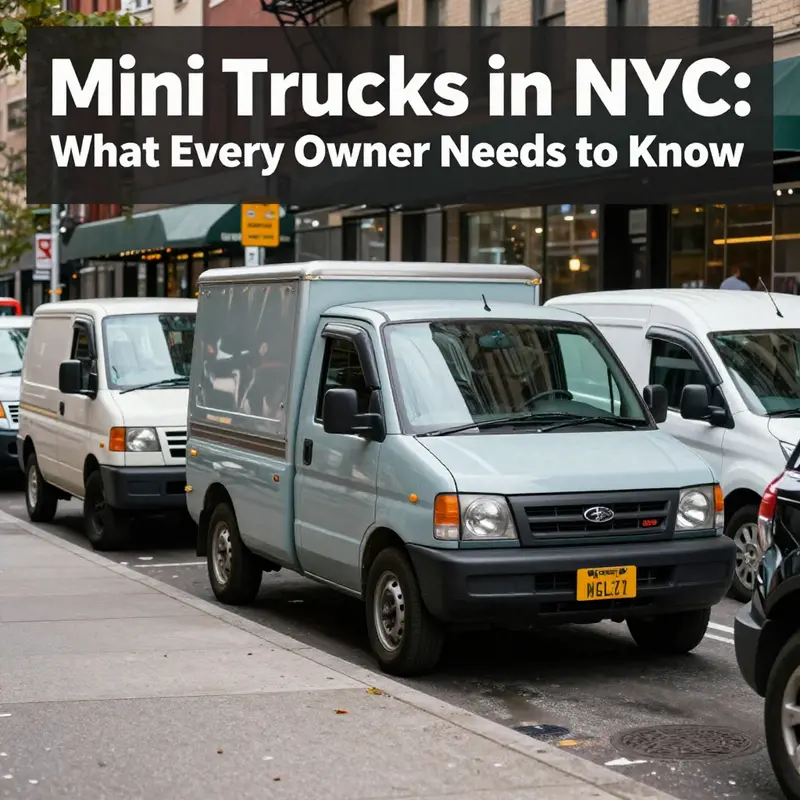
Owning a mini truck can be a thrilling venture, blending practicality with unique style. However, for local small business owners, residential property owners, and mini truck enthusiasts, understanding the legal landscape in New York City is crucial. Many people may be surprised to learn that mini trucks, often designed for utility and off-road usage, often fall short of local regulations required for public road use. In the following chapters, we will dive into the complexities of mini truck legality in NYC, safety and environmental standards necessary for road compliance, and the repercussions of illegal use to ensure all mini truck aficionados can navigate this intricate environment with confidence.
Mini Trucks in NYC: Navigating a Web of Rules, Safety Standards, and Urban Constraints
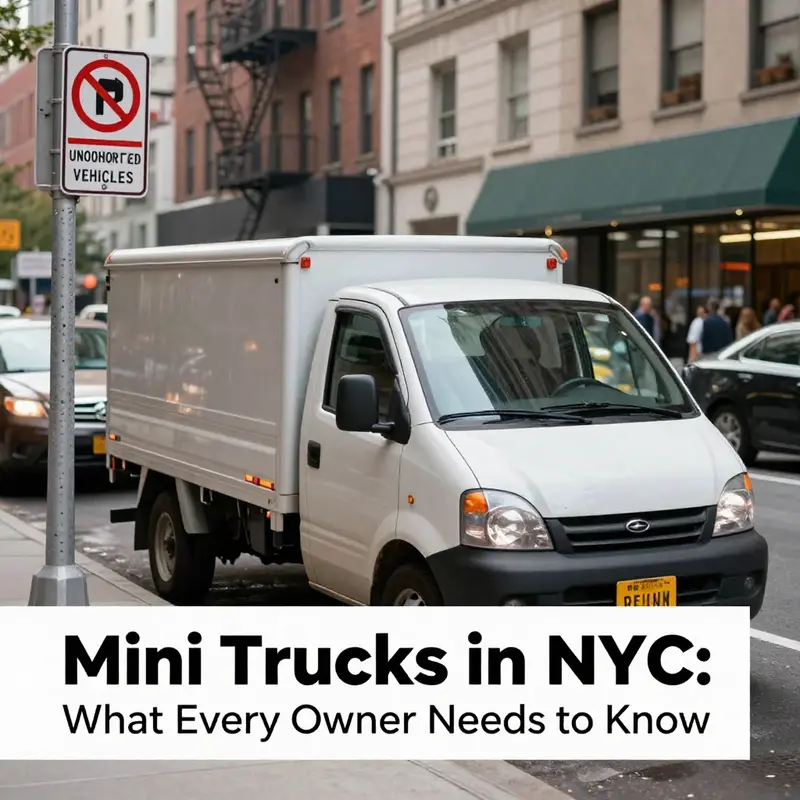
When a city as dense and dynamic as New York makes daily claims on every square inch of street space, the question of whether mini trucks can legally ply public roads is less a simple yes or no than a careful reckoning of safety, regulation, and urban logic. The term itself can be slippery, used to describe a range of small cargo vehicles, from compact moving vans to purpose-built delivery platforms. In the thick of Broadway traffic, in the shadow of towering residential towers, the practical realism of moving goods by these small machines prompts a careful reading of the regulatory map. What looks like a straightforward solution to last‑mile logistics becomes, under scrutiny, a convergence of city objectives: keeping pedestrians safe, ensuring reliable traffic flow, reducing emissions, and maintaining a fair playing field for legitimate commercial operators. The result is not a blanket prohibition, but a tightly woven set of conditions that determine whether a given mini truck can operate on a given street, at a given time, for a given purpose.
To understand the legality, one must first acknowledge how New York City and New York State classify and regulate vehicles that carry cargo. The city relies on a framework that intersects the state’s motor vehicle code with local transportation rules. At its core, the issue hinges on whether a vehicle is treated as a private passenger conveyance or as a commercial delivery vehicle. The distinction matters because it triggers different standards for size, equipment, and operation. If a mini truck is used primarily for private transport and meets the baseline criteria of a passenger vehicle, it can be licensed and insured as such, and it can use the public streets in accordance with standard traffic rules. When the same vehicle is deployed for commercial gain, especially in a dense urban setting with high pedestrian and cyclist activity, the regulatory burden extends beyond registration. It invites scrutiny over dimensions, equipment, permissible routes, and the requirement to obtain appropriate permits that acknowledge the vehicle’s intended use and its impact on street safety. The overarching philosophy is simple in form but exacting in practice: every cargo-holding machine that shares the road with riders and walkers must be designed, maintained, and operated so that it communicates clearly to other road users and does not introduce avoidable risks into the urban mobility mix. This is not a loophole or a backroom decision; it is a deliberate stance aimed at preserving the city’s fragile balance between commerce and community.
A central element of the regulatory puzzle is the physical footprint of the vehicle. The NYC Department of Transportation and the state motor vehicle authorities outline size constraints that apply primarily to commercial delivery vehicles operating on city streets. In practical terms, many mini trucks are expected to fall under these constraints only if their body dimensions remain within specific bounds. A commonly cited threshold concerns width and length; for a vehicle to fit into the city’s delivery vehicle category, it should generally stay within a width not exceeding eight feet and a loaded length not exceeding twelve feet. These measurements are not arbitrary odds; they reflect a measured approach to preserving lane width for general traffic and ensuring the vehicle can negotiate curbside loading zones, narrow streets, and limit-pedestrian interactions with predictable geometry. The width limit helps prevent side-swipe hazards with a broadening array of urban street furniture, from street trees to parked cars to pedestrians stepping from curbside cafes. The length cap, when loaded, serves to constrain the turning radius and the potential blind spots behind a cargo area, which is particularly important in congested corridors where a driver’s rear view can be compromised by cargo and vehicle architecture.
Even when a mini truck fits within these dimensional boundaries, the equipment that accompanies it becomes a litmus test for legality. City and state authorities require robust safety features and compliance with emissions standards. Lighting equipment, mirrors, and brakes are not ornamental add-ons but essential safety infrastructure. Daylight running lights, proper reflectors, adequate braking power, and well-placed mirrors are necessary to compensate for the reduced visibility that cargo area dimensions can create. In an urban rhythm where pedestrians, cyclists, and buses weave through dense traffic, the absence of reliable lighting or clear signaling can turn a small load-carrying vehicle into a hazard. Likewise, the emission profile of the vehicle must align with state and local expectations for air quality in a city already grappling with smog episodes and climate concerns. The city’s broader environmental strategy applies here, urging operators to choose powertrains and configurations that do not simply meet baseline legality but also support ongoing air quality goals consistent with city planning.
Registration and permits sit at the nexus of legality and day‑to‑day operation. A mini truck used for commercial purposes has to be registered with the New York State Department of Motor Vehicles, and in many cases it must be treated like any other commercial delivery vehicle for the purposes of insurance, inspection, and route authorization. Private owners occasionally operate small cargo vehicles for personal use, but even then there are important caveats: the vehicle must meet standard passenger vehicle criteria and be properly licensed. The moment the vehicle shifts from private to commercial use, a different set of expectations comes into play, including the potential need for special permits that acknowledge the business’s scale, the routes it plans to serve, and the time windows during which deliveries occur. The aim of these requirements is straightforward: to maintain a level playing field among operators, to ensure vehicles circulating in the city meet safety benchmarks, and to keep a clear record of who is using public streets for commercial gain.
Enforcement is where the practical reality of these rules becomes visible. The city has intensified its efforts to crack down on unlicensed delivery operations, particularly those associated with informal or gray market arrangements. The consequences are not theoretical: fines, impoundment, and legal action can follow a vehicle that is deemed to be operating outside the bounds of its registration or without the necessary permits. These enforcement actions are not merely punitive but also preventive. They aim to deter a pattern where small, unregulated delivery operations crowd shared road space, disrupt traffic, and obscure accountability. For legitimate operators, the enforcement landscape serves as a reminder that the city values predictability and safety in last‑mile logistics. The rules are not designed to single out small trucks for exclusion, but to ensure that any vehicle performing a cargo function in a busy urban core does so within a framework that prioritizes the most vulnerable road users and the overall health of the traffic system.
A broader thread runs through this topic—the tension between urban efficiency and street safety. In a city where every square foot of curb is valuable for loading and unloading, the appeal of compact, nimble cargo vehicles is easy to grasp. They promise lower operating costs and the possibility of rapid, localized deliveries that can reduce last‑mile distances and potentially cut vehicle miles traveled. Yet the same urban fabric that motivates such use also imposes constraints that are less visible in more open geographies. Narrow bus lanes, bustling pedestrian zones, and a dense mix of cyclists create a choreography that demands high levels of precision from drivers and rigorous maintenance of vehicles. The rules respond to this reality by demanding a disciplined approach to vehicle selection, configuration, and operation. In practice, this means choosing a vehicle that inherently supports safe interaction with pedestrians and cyclists, aligning the vehicle’s size and weight with city allowances, and coordinating with regulatory bodies to secure the permits and registrations that prove the vehicle is a legitimate part of the city’s logistical ecosystem.
For readers who want to explore the practical implications beyond the theoretical framework, consider how urban fleets might be implemented in a compliant way. If a small delivery operation relies on a mini truck, the first step is to map out how the vehicle will be used in the street—what neighborhoods, what times, what cargo sizes, and what routes. The next step is to verify that the vehicle’s dimensions stay within the defined limits when loaded, that it meets the required lighting and safety equipment standards, and that it has been registered with the state and, if necessary, granted the appropriate permits. This process is not merely paperwork; it is a structural check that aligns operational reality with the city’s safety and mobility objectives. An operator who understands this alignment can avoid costly penalties, plan safer loading zones, and participate in a legitimate ecosystem of small-vehicle logistics that respects both commerce and community needs.
The conversation about mini trucks in NYC is also a conversation about information access. City agencies publish guidance intended to clarify what counts as a compliant commercial vehicle, how to apply for permits, and what inspections are required. For someone evaluating whether a particular mini truck can operate on city streets for a given task, these sources are not merely bureaucratic steps; they are the compass for lawful practice. The essential takeaway is straightforward: the city does not ban all mini trucks. It restricts operation to those that meet the size, equipment, and use standards designed to maintain road safety and orderly traffic. Operators who ignore these standards encounter real consequences that ripple through the cost of doing business, the reliability of service, and the perception of legitimacy in a crowded market.
As the urban economy evolves, so too might the regulatory environment surrounding compact cargo vehicles. Policymakers are continually weighing the balance between enabling small‑scale delivery innovations and preserving the safety and efficiency of street networks. While there is no single, universal pathway to legality that fits every use case, there is a consistent thread: alignment with clearly defined vehicle standards, transparent registration and permit processes, and proactive compliance practices that emphasize safety over speed. The practical implication for anyone considering a mini truck in New York City is to approach the decision as a process, not a one‑time purchase. Assess the vehicle against the size and safety criteria, confirm the necessary registrations and permits, and establish a compliance program that includes routine maintenance and up-to-date insurance coverage. Only then does a mini truck begin to function as a legitimate tool within the city’s commerce and its crowded streets.
For readers curious about the actual footprint of these vehicles and how size interacts with city rules, see model comparisons and specs for mini trucks. This resource helps illuminate how small differences in width, length, and cargo configuration can translate into meaningful regulatory outcomes, reinforcing the idea that legality rests on precise, demonstrable characteristics rather than on a generalized notion of a vehicle’s small size. Keeping this context in mind ensures discussions about mini trucks in New York City stay grounded in the practicalities that shape real-world operation, from curbside logistics to the nuanced dance of safety and neighborhood livability.
Ultimately, the question of whether mini trucks are legal in NYC is best answered by looking at the vehicle, not just the label. A well‑defined vehicle that fits within the size constraints, is equipped with the required safety features, and carries proper registration and permits can operate legitimately on public streets. A vehicle that falls outside these parameters faces penalties and enforcement actions that reflect a public policy choice: safety and reliability on the city’s busy streets matter as much as the convenience of smaller, local deliveries. For businesses and private owners alike, this means a careful, methodical approach—one that respects the city’s regulatory framework while seeking practical solutions to urban logistics concerns. The road to legality is thus paved not with a single certificate of compliance, but with a consistent, documented practice of safety, accountability, and transparency about how cargo moves through the urban core.
External resource: https://www.nyc.gov/site/dot/vehicles/vehicle-regulations.page
Urban Safety Standards and the Street-Readiness Question for Mini Trucks in NYC
This chapter explains how New York City safety rules determine whether mini trucks can legally operate on public streets, including registration, equipment, inspections, and the practical implications for last-mile delivery fleets in dense urban environments.
Environmental Compliance and Mini Trucks in NYC: Navigating Emission Law and Legality
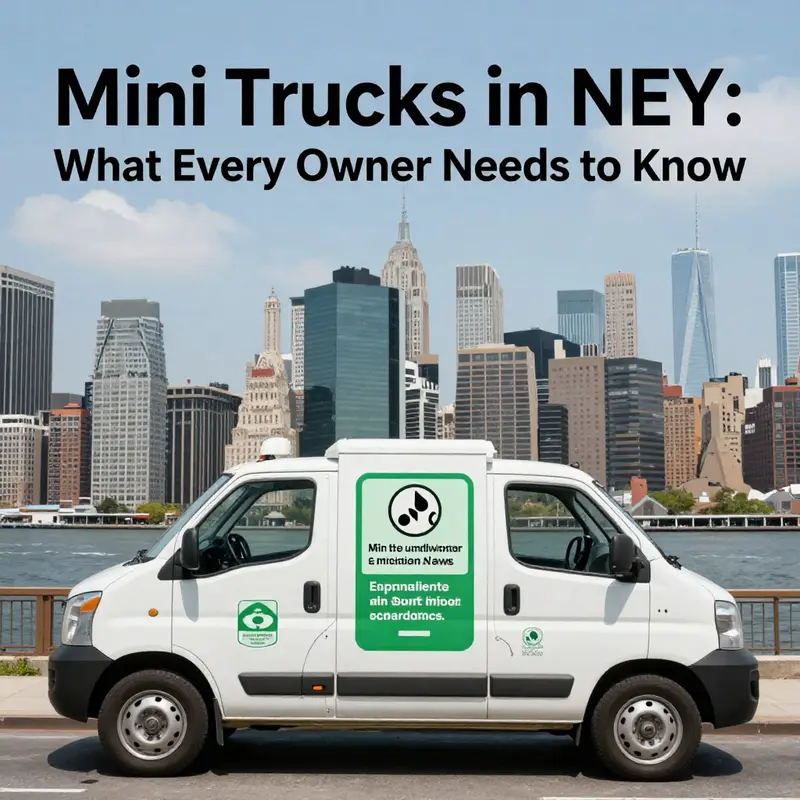
Air quality in New York City is not a relegated concern but a daily constraint that shapes how goods move, how fleets are built, and how small vehicles fit into a crowded urban landscape. The city’s emission regulations are designed not only to cut exhaust in absolute terms but to optimize what remains in the air for healthier streets and schools, cleaner air corridors, and a more livable metropolis. When the conversation turns to mini trucks, many people assume the same strict rules apply across the board—that these compact workhorses must meet the same heavy-duty standards as larger trucks. Yet the reality is more nuanced. Local Law 145, a centerpiece of the city’s long-running effort to curb pollution from on-road diesel and other heavy-duty vehicles, targets a specific class of vehicles with significant weight and usage profiles. It is a framework built for scale and impact, not for every small work vehicle that might roam the curbside on any given business day. In practice, mini trucks often fall below the heavy-duty thresholds that Local Law 145 sets, which means they are generally not bound by the core emissions requirements of that particular law. This exemption, however, does not isolate mini trucks from the broader environmental oversight that governs all motorized transportation in the city. The regulations operate in layers, and while Local Law 145 defines a crucial boundary, the entire regulatory picture remains active for any vehicle that contributes to transportation emissions, regardless of size. To understand how these engines and exhaust systems sit within the larger framework, one must move beyond the binary question of legality on the street and examine the fabric of environmental compliance that knits together state, city, and department-level standards. The city’s environmental ethos does not hinge on a single statute alone; it rests on a spectrum of rules designed to pull every tailpipe toward cleaner performance while preserving the practical utility of light-duty delivery and service tasks that small businesses rely on. In this sense, mini trucks inhabit a regulatory space that balances pragmatic operation with environmental responsibility, and the path to lawful operation is less about a cardinal prohibition and more about staying within a complex lattice of compliance expectations that evolve over time. The most important takeaway is not simply whether a mini truck can legally drive on a given street but whether the vehicle, in its operation, aligns with the city’s overarching imperative to curb emissions while maintaining essential urban mobility. The Local Law 145 framework is explicit and important: it targets on-road heavy-duty vehicles and applies emissions performance criteria that often rely on cleaner fuels or advanced emissions controls. Vehicles that meet certain weight and use thresholds fall under this sector, and the compliance requirements reflect the scale and the performance expectations associated with substantial commercial fleets. For mini trucks, which typically are under the GVWR thresholds that attract the heaviest oversight, the stringent provisions of Local Law 145 do not usually apply in full. This is an exemption that many operators rely on when considering the feasibility of a small-scale fleet or a one-truck operation in the city. Yet the exemption is not a blanket pass on all environmental responsibilities. Even if a mini truck is not tethered to the specific emission performance criteria of Local Law 145, it remains subject to the broader air quality standards enforced by state authorities such as the New York State Department of Environmental Conservation (NYSDEC). These standards address general air pollutants and the overall impact of mobile sources on regional and urban air quality. The NYSDEC framework ensures that no vehicle bypasses the essential obligation to limit harmful emissions through proper maintenance, appropriate fuel use, and adherence to general environmental standards. This means that while a mini truck might evade the most stringent local heavy-duty mandates, it still participates in a shared responsibility to minimize pollution, offer reasonable fuel efficiency, and operate within the regulatory perimeter that governs all motor vehicles. Operators should recognize that regulatory landscapes are dynamic, and exemptions exist not as a perpetual loophole but as a current alignment of vehicle class, weight, and usage. The possibility of future regulatory updates adds another layer of vigilance. Local Law 145 and its related regulatory scaffolding reflect a city that continually assesses air quality outcomes against ambitious targets. Even if a mini truck presently falls outside the Subpart 217-3 of 6 NYCRR thresholds that apply to larger fleets, the broader trend in environmental governance suggests that all vehicles contributing to transportation emissions could be subject to changes in enforcement or the introduction of new requirements. In this context, fleet managers and individual operators should monitor regulatory developments with an eye toward potential shifts that would bring mini trucks into closer alignment with evolving city and state goals. The practical implication is not to assume permanent disengagement from environmental standards, but to acknowledge that the regulatory perimeter is not static. It expands and tightens as the city pursues cleaner air, more efficient fleets, and technologies that deliver measurable reductions in pollutants such as nitrogen oxides and particulate matter. The city’s emission strategy thus becomes a living framework rather than a fixed checklist, and mini trucks sit within this living framework as actors whose emissions profile, maintenance practices, and fuel choices contribute to the city’s air quality trajectory. For operators, the right approach is to treat Local Law 145 as a guiding boundary rather than a sole determinant of compliance. Even with the exemption for mini trucks, there are actionable steps that align a compact vehicle with the city’s environmental ambitions. Regular maintenance to ensure optimal combustion, timely replacement of worn components, and careful selection of fuel and additives can help minimize emissions within the allowable state and city standards. In addition, adopting cleaner operating practices—such as planned maintenance cycles, reduced idling, and efficient routing—can compound the environmental benefits without sacrificing the core utility of the vehicle. While Local Law 145 speaks to a weight threshold and a defined set of performance criteria for heavy-duty fleets, the general expectations for environmental compliance, weathering the city’s air quality goals, remain a shared burden. It is in this shared burden that mini trucks find their place: they are not immune to environmental accountability, but their path to compliance is not the same as that of a heavy-duty, high-GVWR vehicle. The city’s environmental governance process thus invites operators to remain informed and adaptable. The reality for many owners and operators is that while their vehicle may be exempt from certain parts of Local Law 145, it is still wise to anticipate possible future changes and to consider how emerging standards—whether they take the form of more stringent maintenance requirements, retrofitting options, or fuel and technology incentives—could affect the feasibility and cost of operation in the coming years. The outward sign of this is a regulatory environment that often emphasizes transparency, data collection, and accountability in emissions reporting, even for light-duty or smaller commercial vehicles. In this broad sense, the environmental compliance chapter of the mini truck story in NYC is not a tale of one law and a single permit, but a narrative of layered oversight. It recognizes the practical realities of urban commerce and the constraints of city streets while insisting that every vehicle, regardless of size, plays its part in reducing pollution. The guidance for practitioners is straightforward: stay current with Local Law 145 developments, understand how the exemptions apply to your vehicle class, and align operations with broader NYSDEC standards. For some, that may mean a careful evaluation of fleet composition, a consideration of alternative powertrains or cleaner fuels, and a review of maintenance protocols that minimize emissions. For others, the question may pivot from legality to practicality—whether the available regulatory path permits a given mini truck to operate on a specific corridor, at a particular time, or under a defined set of road-use limitations. In any case, the core message remains consistent: NYC’s emission laws are designed to be robust, forward-looking, and enforceable, and mini trucks participate in that design, not as outliers but as actors embedded in a regulatory ecosystem that values cleaner air and dependable urban service. To illustrate the broader context, one can explore industry perspectives and practical discussions that appear on dedicated blogs and resources online, such as the space where practitioners exchange insights about mini trucks and city regulation. For readers seeking a practical touchstone in the landscape of city compliance and small commercial vehicles, consider the ongoing conversation and examples found in the industry blog space linked here: minitrucksocala.com/blog/. This reference offers a lens into how operators interpret regulatory language, plan fleets, and navigate the day-to-day realities of operating compact work vehicles in a dense urban market. It is not a substitute for official regulatory guidance, but it provides real-world context that complements the formal standards described above and helps ground decisions in practical experience. In a city where every mile of road carries competing demands—delivery windows, public safety, air quality, and traffic flow—the environmental compliance story of mini trucks is less about a single yes or no and more about how small, efficient, well-maintained vehicles can coexist with a healthier atmosphere and a more resilient urban economy. This perspective emphasizes the interplay between exemptions, general standards, and the evolving regulatory agenda that shapes what is permissible today and what could be required tomorrow. For those who want to verify the latest legal stance or explore the exact text of Local Law 145 and related rules, the city publishes official summaries and full documents to support transparent compliance. Keeping abreast of these resources is essential, particularly as enforcement patterns and regulatory thresholds can shift with new environmental goals, technological advances, and changes in fleet practices. As the city continues to pursue ambitious air quality targets, it remains essential to view mini trucks not as outliers but as components of a broader, shared challenge: moving goods efficiently while preserving the public health and environmental standards that define a livable urban future. External references and official resources provide the benchmarks necessary for responsible operation, while practical knowledge from industry discussions helps translate policy into daily practice. The bottom line is clear: mini trucks are not automatically barred from NYC streets, but their operation sits within a broader fabric of environmental compliance that is both layered and evolving. By understanding Local Law 145, recognizing the role of NYSDEC standards, and staying informed about potential regulatory developments, operators can navigate the city’s emission landscape with greater clarity and foresight. External reference: https://www.nyc.gov/site/dep/laws/local-law-145.page
When Tiny Trucks Meet City Law: The Consequences of Illegal Mini Truck Use in New York City
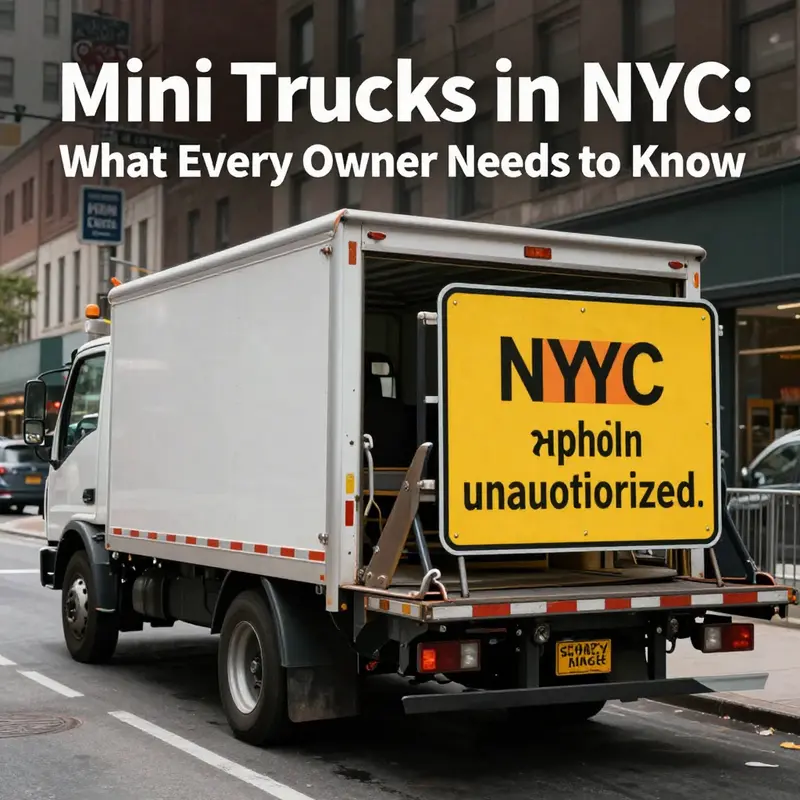
In the dense urban tapestry of New York City, small, utilitarian vehicles often promise nimble deliveries, easier parking, and lower operating costs. Yet the legal landscape that governs public roads is not so easily navigated by size alone. What seems like an efficient workaround for last‑mile tasks can quickly become a minefield of fines, enforcement actions, and operational disruption if the vehicle in question is a “mini truck” that falls outside state and city regulatory boundaries. This chapter follows the thread of consequences that arise when a mini truck—intended perhaps for off‑road work or restricted settings—enters the city’s public streets without the proper approvals, registrations, and compliance measures. The story here is not merely about a one‑time penalty. It is about the cascading risks to a business, a driver’s livelihood, and even to the broader goals of air quality and road safety that the city seeks to protect. It is a reminder that legal Cliffs Notes for a compact vehicle do not exist in a vacuum; they are embedded in a network of state licensing, city enforcement, and environmental policy, all of which converge where traffic, commerce, and curb space collide. In this sense, the consequences of illegal mini truck use are as much about the city’s regulatory ethos as they are about the financial sting of a fine or the practical inconvenience of a seized permit or a halted route. For readers who want a fuller sense of how these rules play out in everyday practice, a nearby compass point is the broader world of small utility vehicles and how urban law frames their use, which is explored in accessible industry resources that discuss the evolving logistics landscape in this niche. And while the specifics of the law vary by jurisdiction and by the precise classification of a vehicle, the core message remains stable: in New York City, compliance is the price of mobility, not merely a bureaucratic formality.
At the heart of the legal issue is the rough boundary between what is allowed on public roads and what is not. New York State’s Department of Motor Vehicles, together with the New York City Department of Transportation, maintains standards for what kinds of vehicles may legally circulate in city traffic. Mini trucks that are marketed or used for off‑road, industrial, or private property work typically do not meet the safety and emissions criteria that many street‑legal vehicles must satisfy. These standards include, among other things, proper lighting, seat belts, airbags, crash safety ratings, and verified emissions compliance. When a vehicle lacks these features or when its registration and declared use do not align with its actual employment on city streets, it travels into a gray area that authorities treat as noncompliant. The consequence is not simply a wink and a nod from a traffic officer; it is a risk profile that can trigger a sequence of enforcement actions, administrative penalties, and legal exposure that far outweighs any initial savings from using a compact chassis for urban logistics.
One practical—and often overlooked—avenue for enforcement is the city’s ongoing effort to curb idle emissions and reduce air pollution from vehicles idling for extended periods. The New York City environment is shaped by active programs designed to detect, report, and penalize excessive idling. The Citizens Air Complaint Program, administered through the city’s environmental agency, provides a formal channel for residents and businesses to report idling vehicles that operate without proper exemptions. The core idea is straightforward: idle time contributes to unnecessary emissions, and where there is a pattern of excessive idle activity, enforcement may follow. For a mini truck operating illegally, with idle practices that do not qualify for legitimate exemptions, the potential penalties start to accumulate. The program outlines practical thresholds and exemptions that are intended to differentiate routine, unavoidable idling from prohibited, wasteful practices. The legal framework recognizes that some situations compel short-term idling for safety, loading and unloading, or climate control under extreme conditions. Yet when those exemptions do not apply, or when idle time crosses the standard duration, a vehicle can become a target of corrective action.
The penalties for idle time violations are explicit and escalate with repeated offenses. The first violation can carry fines that reach up to several hundred dollars, with the amount commonly cited as a maximum around two hundred fifty dollars. Should a second violation occur, the penalty typically rises, potentially up to five hundred dollars, and subsequent violations can trigger even more severe consequences. The city emphasizes that enforcement can take several forms. While the official DEP program does not routinely authorize vehicle impoundment, it does authorize a disciplined enforcement approach: tickets issued to the operator, documentation of plate information, and the pursuit of a pattern of violations. In practice, a licensed operator with a vehicle that is not registered correctly or with a declared use that does not align with actual operations faces a composite risk. The risk is not solely monetary; it also includes the possibility of diligent law enforcement pursuing repeat offenders, keeping careful records that can affect future licensing and registration status.
To understand the full sweep of possible outcomes, it is important to map the chain of accountability beyond idle time alone. A mini truck that is used for business purposes may already be on another regulatory track. If the vehicle is unregistered, or if its registration does not reflect its actual use—such as a light delivery task being conducted under a personal or noncommercial registration—the operator can be exposed to violations of the broader New York City Transportation Law and to oversight by the Taxi and Limousine Commission (TLC). The TLC oversees for‑hire vehicles in the city, including taxis and rideshare operations, and operates under a set of licensing requirements that are specifically designed to regulate safety, driver qualifications, and vehicle standards. If a mini truck is employed to provide taxi-like or rideshare services without a TLC license, the legal exposure becomes more acute. Operators can face not only fines but also vehicle impoundment, driver suspension, and civil or criminal penalties, depending on the severity and recurrence of the violations. The intersection of TLC law with idling restrictions and general vehicle compliance yields a scenario where even a seemingly modest vehicle can become a focal point in a much wider enforcement regime if operating outside the permitted framework.
This is where the broader occupational risk emerges. Small fleet operators, couriers, or independent drivers who rely on compact trucks for last‑mile tasks may be drawn to the apparent efficiency a mini truck offers. But the city’s regulatory architecture is designed to prevent the proliferation of nonconforming vehicles on public streets, especially when those vehicles do not meet safety norms or emissions standards. The result is a set of incentives to pursue the compliant path rather than the shortcut. Compliance means ensuring that the vehicle is properly registered and that its declared use aligns with its actual operations. It means that idle time is kept within allowed limits or that exemptions are legitimately documented when idling is necessary for loading, unloading, maintenance, or climate control under extreme conditions. It means that if the business truly requires a vehicle to perform taxi‑ or rideshare‑style services, obtaining the TLC license is not optional but mandatory. And it means recognizing that the costs of noncompliance—fines, potential impoundment, license suspensions, and civil or criminal exposure—often far exceed any initial savings achieved by using a smaller or cheaper vehicle in a city that prizes safety, air quality, and orderly traffic flow.
For readers who want to explore the practical landscape of how these rules are traversed in the real world, there is a continuity with broader discussions in the industry about small utility vehicles and their urban applications. The Mini Trucks Blog offers a useful digest of the evolving regulatory and operational context for compact vehicles used in diverse settings. It provides a grounded perspective on how owners and operators navigate city limits, licensing challenges, and the balance between efficiency and compliance. This resource is a helpful companion for anyone weighing the decision to deploy a mini truck in a dense metropolitan environment. You can learn more by visiting the Mini Trucks Blog. Mini Trucks Blog
Beyond the idle debate, the practical consequences of illegal mini truck use reach into the core functions of a business that depends on timely deliveries, curbside access, and predictable routes. An operator accustomed to leaving a vehicle idling for minutes at a time, or one who uses a small truck for a service that requires frequent stops, confronts a renewed risk: a steady stream of enforcement actions that can disrupt operations. A single lapse—an unregistered vehicle, an ambiguous declaration of use, or an excursion into TLC‑regulated activity without the proper license—can trigger a chain reaction. The city’s enforcement apparatus is designed to be precise and repeatable. A routine traffic stop can result in citations and requests for documentation, while a pattern of violations can prompt more formal actions, including potential investigations into business practices and licensing compliance. In a city where curb space is scarce and the regulatory focus on safety is relentless, the consequences of nonconformity can extend far beyond the monetary penalties. They can affect the ability to continue operating, the eligibility for permits, and even the standing of a business within the regulatory ecosystem of New York.
So what is the practical counsel for someone who relies on a mini truck for legitimate urban work? First, recognize that legality and practicality are not interchangeable. A tiny workhorse may be ideal in concept, but without proper licensing, registration, and compliance with idling standards, it remains a liability on city streets. Second, prioritize alignment with the regulatory framework. If the business case truly requires a vehicle that navigates city traffic, begin with a legitimate vehicle classification, ensure the vehicle is compliant with safety and emissions requirements, and obtain the necessary approvals before it ever hits the road. Third, understand the idle rules and exemptions. Keep idle time to a minimum, document exemptions when needed, and be prepared to account for those exemptions in any inspection or enforcement scenario. Fourth, plan for the TLC landscape if the vehicle is used for taxi or for‑hire services. Without a TLC license and the corresponding vehicle standards, the operation is at risk of immediate shutdown and heavy penalties. Finally, maintain open lines of communication with the relevant authorities. If a business case involves special permits or unique operational needs, engaging with the DMV and NYCDOT for guidance can prevent missteps and build a compliant path forward rather than triggering a punitive arc.
In sum, the legal status of mini trucks on New York City streets is less about the compact footprint and more about the regulatory apparatus that governs safety, emissions, licensing, and urban policy. The consequences of illegal use are real and multi‑faceted. They range from financial penalties that escalate with repeat offenses to enforcement actions that can curtail a vehicle’s ability to operate, to more severe civil or criminal implications if the vehicle is used in ways that breach licensing or safety standards. For business owners and operators who want the advantages of a small, nimble vehicle without courting the risk, the path is clear: pursue compliance, seek the appropriate permits, and anchor operations in the rulebook. The city rewards this diligence with steadier logistics, clearer planning horizons, and the peace of mind that comes with knowing that every mile on public streets is mapped to safety, accountability, and legitimate enterprise.
External resource: Official guidance on idle rules and enforcement can be found at https://www.nyc.gov/site/dep/campaigns/citizens-air-complaint-program.page
Final thoughts
Understanding the legalities surrounding mini trucks in NYC is essential for all owners and enthusiasts. From navigating vehicle regulations to ensuring compliance with safety and environmental standards, it’s critical to be informed to avoid potential penalties. While the allure of mini trucks can be strong, knowing the rules can empower you to enjoy your vehicle without the stress of legal complications. Stay informed, stay compliant, and most importantly, stay safe on NYC roads!