
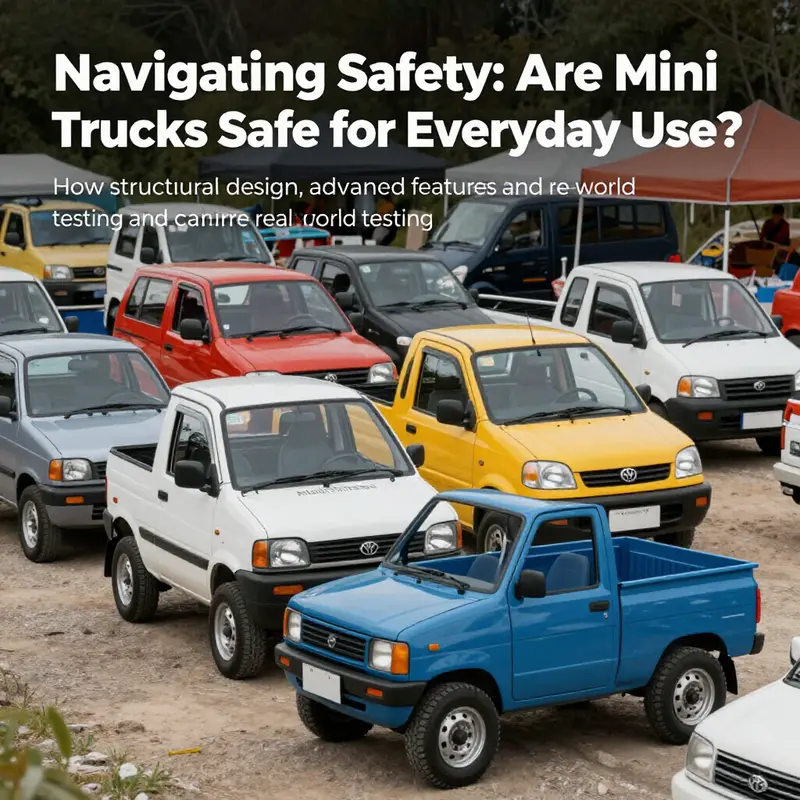
Understanding the safety of mini trucks is crucial, especially for local small business owners and enthusiasts who depend on these vehicles for their daily operations or hobbies. With their growing popularity, particularly among residential property owners and mini truck enthusiasts, it’s important to assess what makes these compact vehicles safe. From modern structural designs to advanced safety technologies, this article delves into various aspects of mini truck safety. We will explore their structural integrity, examine advanced safety technologies that contribute to their reliability, evaluate real-world performance under different conditions, discuss existing regulations that ensure safety standards, and conclude with a comprehensive overview of the safety of mini trucks.
null
null
Small, Safer, and Smarter: How Advanced Safety Technologies Make Mini Trucks a Strong Choice for Urban Work
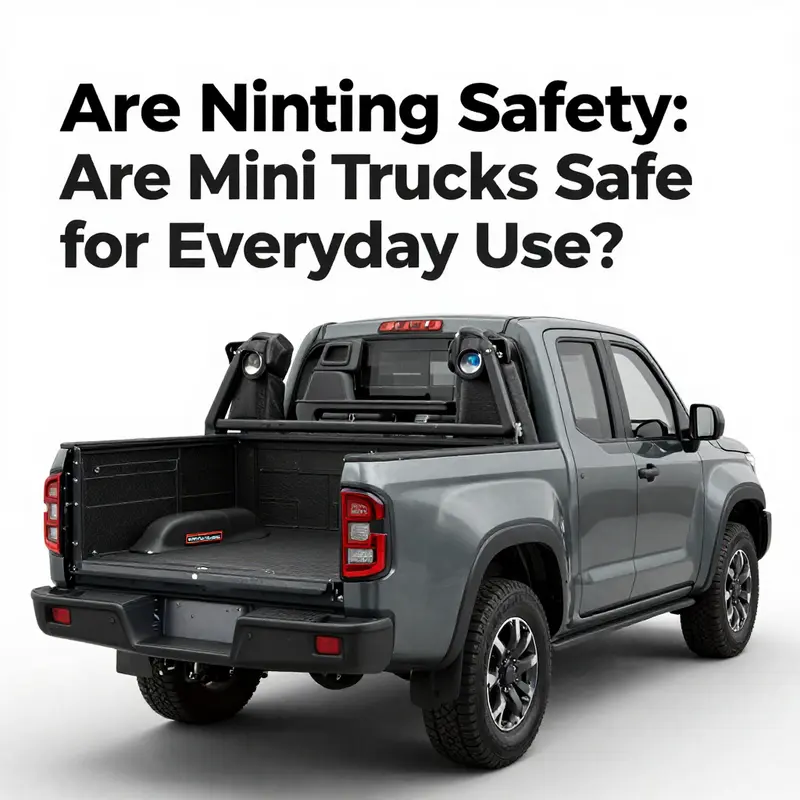
The question of safety often centers on size, but the best answer today hinges on design philosophy, materials, and a growing suite of intelligent safety features that redefine what a compact utility vehicle can offer. Mini trucks, especially in their modern iterations and electric variants, have moved far beyond the reputation of being merely economical and nimble. They are increasingly recognized as carefully engineered tools that blend robust structural safety with technologies designed to reduce risk in the most demanding urban environments. In this sense, safety is not an afterthought but a core design principle, woven into every stage from chassis development to the software that guides braking, steering, and driver alerts. The result is a vehicle that remains easy to maneuver in tight city streets while delivering a level of occupant protection and accident avoidance capability that rivals larger, more expensive rivals in certain scenarios. This chapter examines how advanced safety technologies, rather than pure mass or size, shape the safety profile of mini trucks and why, when operated with prudent driving and proper cargo management, they can be a prudent choice for daily work or personal use in dense urban settings.
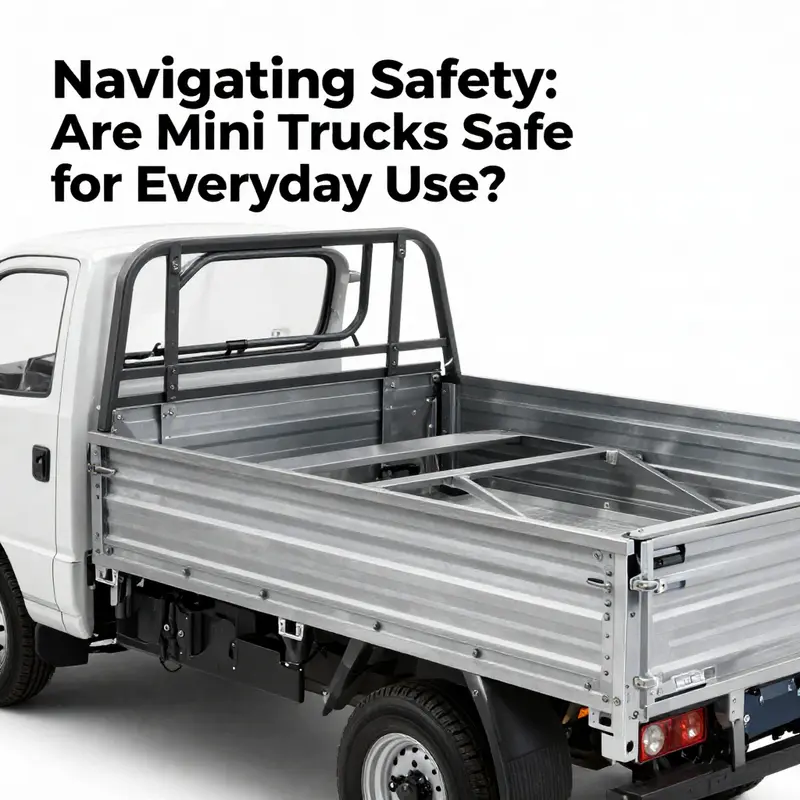
Central to understanding mini truck safety is structural safety. Modern compact trucks are built on high-strength steel frameworks that are specifically reinforced at critical junctures. The cabin is designed to retain its integrity by accounting for crash energy and by shaping the behavior of the vehicle during an impact. Reinforced body structures and thoughtful crash energy management systems help dissipate forces away from occupants, a feature that becomes especially important given the greater exposure to foot traffic, cyclists, and pedestrians in urban environments. The result is a chassis that remains relatively rigid where it needs to be and more forgiving where energy absorption matters most. When drivers encounter sudden stops or unavoidable obstacles, this kind of structural engineering helps preserve cabin integrity and provides a foundation for the rest of the safety system to function effectively.
Yet even the most robust skeleton needs a capable nervous system. This is where the blend of active safety technologies and driver assistance systems comes into play. A modern mini truck is typically equipped with essential anti-lock braking (ABS) and electronic brakeforce distribution (EBD), which together help prevent wheel lock-up and optimize brake force during urgent stops. Traction control and electronic stability control contribute an additional layer of restraint, guiding the vehicle through cornering or on slippery surfaces so the driver can maintain steering control. These features are particularly valuable in city driving, where abrupt lane changes, potholes, and sudden wet patches can challenge a driver’s reflexes. Dual front airbags have become standard in most contemporary models, while higher trims may broaden protection with side airbags and curtain airbags that further reduce injury risk in the event of a side impact.
Beyond these fundamentals, the latest mini trucks increasingly rely on advanced driver assistance systems (ADAS) that act like a quiet second set of eyes. Lane departure warning systems alert drivers when the vehicle begins to drift from its lane without signaling, which is especially helpful during long urban drives when fatigue can dull attention. Forward collision warning and automatic emergency braking provide a proactive defense, warning of an impending impact and then applying braking force to mitigate or avoid a collision. Blind-spot detection helps with lane changes in tight spaces or heavy traffic, a common scenario for delivery routes and urban errands. These technologies do not replace vigilant driving, but they do reduce the likelihood of human error, which remains the leading cause of many preventable accidents in dense traffic.
The recent emphasis on ADAS in mini trucks also aligns with the shifting landscape of urban mobility. Data emerging from late 2025 highlights how these features translate into real-world benefits: drivers report improved awareness of surrounding traffic and better reaction times to evolving situations. The urban milieu—where congestion, frequent stops, and limited visibility are the norm—serves as a proving ground for ADAS, and mini trucks appear to benefit from this testing ground. The combination of lane-keeping cues, collision warnings, and automatic braking contributes to a more controlled driving experience. This is especially important for professionals who spend long hours behind the wheel, delivering goods or managing small fleets in cities where the margin for error is slim and the pace is relentless.
Another critical layer is stopping power and ride quality. Advances in braking systems, coupled with refined suspension design, have a meaningful impact on how safely a mini truck can perform in urban stop-and-go conditions. Modern suspensions are tuned to absorb irregularities in pavement while maintaining stable handling characteristics, which helps prevent loss of control during sudden maneuvers. ABS remains a cornerstone, but its effectiveness is magnified when paired with EBD and stability control. The elasticity of urban roads—ranging from smooth renewals to patched surfaces and construction zones—calls for braking systems that can adapt to changing grip, weight distribution, and dynamic loading. In this context, even a compact vehicle can display surprising confidence when braking distances shorten abruptly due to a sudden obstruction or a slowing vehicle in front.
A more nuanced piece of the safety puzzle is electro-assisted steering. This technology, common in modern compact trucks, combines ease of steering with precise control. At low speeds, which are particularly common in urban driving—think tight driveways, loading bays, and crowded parking lots—electro-assisted steering reduces driver fatigue and makes precise positioning easier. The improved feedback and response at these speeds help drivers respond more quickly to pedestrian movements, stray carts, or a vehicle door flung open in a busy curbside corridor. The result is not only comfort but also situational awareness that translates into safer, more predictable vehicle behavior. When combined with ADAS, the steering system becomes part of a broader safety ecosystem that helps drivers maintain control under a range of conditions and demands.
Of course, numbers and systems are not the whole story; the way a vehicle is used matters as much as the features it carries. Mini trucks’ compact footprint and elevated seating position offer clear advantages for urban driving. The higher driving position provides a broad and confident view of the road and surrounding activity, which in turn helps drivers anticipate hazards that might otherwise be missed in a smaller, lower-slung vehicle. The nimble turning radius and light weight also contribute to safer operation by enabling easier avoidance of obstacles and more controlled lane changes in tight streets. However, these benefits hinge on maintaining safe driving practices. Even the most advanced safety suite cannot compensate for excessive speed, overloaded cargo, or reckless maneuvering. Cargo loading, in particular, deserves careful attention because improper weight distribution can alter a vehicle’s handling and braking performance. A well-balanced load is essential to preserve the intended stability and to prevent overloading of any single axle, which could compromise braking efficiency and steering response during braking or cornering.
From a broader safety perspective, the safety landscape for mini trucks also invites readers to consult authoritative, independent assessments. National and European safety testing programs continue to evaluate and rate safety performance with rigor. These tests, while not the sole measure of everyday safety, offer valuable benchmarks that complement the practical, experience-based understanding of how well a vehicle protects occupants in real-world scenarios. The key takeaway is that the safety profile of mini trucks is no longer defined by their size alone. It is defined by a calibrated blend of robust construction, reliable braking and suspension systems, and a growing suite of driver-assistance technologies that actively work to prevent crashes and minimize injuries when incidents occur.
For readers seeking a deeper dive into how safety technology is transforming compact utility vehicles, there is a wealth of practical information available through industry resources and expert commentary. A helpful starting point is the general safety-focused content found in industry blogs, which often distill complex engineering principles into accessible comparisons and case studies. You can explore more about ongoing developments and real-world implications at the dedicated safety-focused section of one reputable industry blog: minitrucksocala.com/blog.
As the urban landscape continues to evolve, the safety story of mini trucks will likely grow richer still. The convergence of sturdy, crash-conscious construction with sophisticated electronic safety aids creates a vehicle class that is not merely safer by virtue of its compact dimensions but safer because it actively supports the driver in preventing misjudgments and in mitigating the consequences of unforeseen events. While no vehicle is invincible, the current trajectory suggests that mini trucks can offer a compelling safety proposition for both personal and commercial use in cities where space is scarce and every delivery window matters. The critical caveat remains: safety is a shared responsibility between the vehicle’s capabilities and the driver’s choices. Keeping within speed limits, ensuring cargo is properly secured, and staying attentive to the changing city environment are essential habits that compound the benefits of advanced safety technologies. By embracing both technology and prudent driving, mini trucks can deliver dependable safety performance that aligns with the demands of modern urban life.
External resource: For a broader frame on how advanced driver assistance systems function and what they mean for everyday driving in compact vehicles, see the national resource on ADAS: https://www.nhtsa.gov/vehicle-safety/advanced-driver-systems-adas
Compact Confidence: How Mini Trucks Stand Up to Real-World Demands Across Terrains and Loads
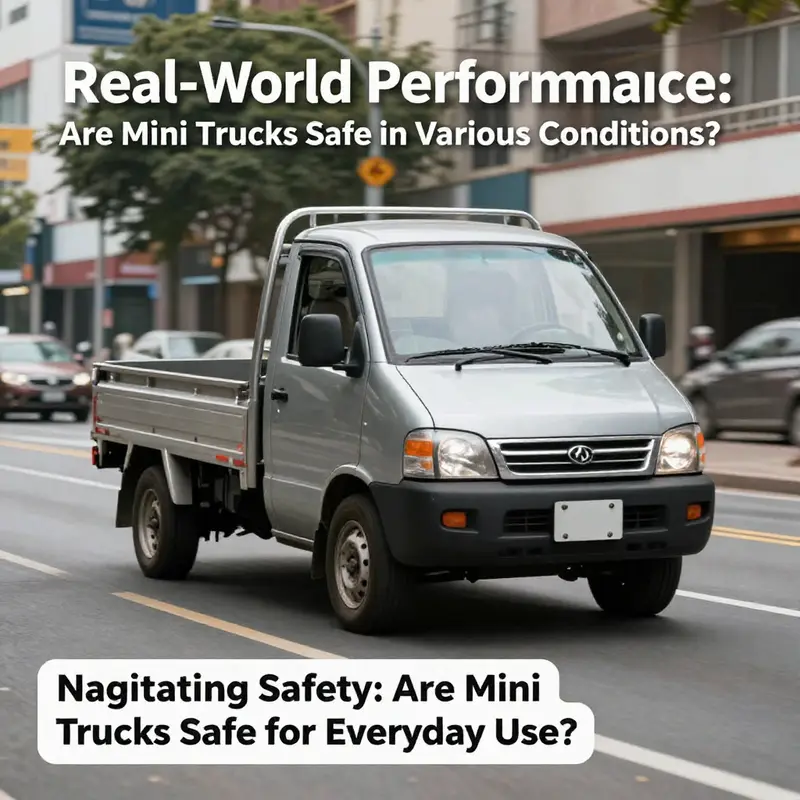
Compact trucks have long occupied a practical middle ground between urban utility and off-road capability. Their safety narratives, once filtered through size assumptions, now rest on a more nuanced blend of engineering discipline, active safety systems, and real-world driving behavior. When you examine modern mini trucks—especially those from established manufacturers—the picture that emerges is less about bravado and more about engineered resilience. The cabin protection, the way the chassis distributes forces in a crash, and the spectrum of safety features available in contemporary models all come together to form a coherent safety story. This story is not universal across all mini trucks, but it becomes compelling when you account for the way each configuration is designed to perform in specific environments and under particular operating demands. The result is a vehicle class that can be both practical for daily tasks and reassuring in terms of occupant protection when used correctly and within its intended remit.
At the core of modern mini-truck safety is structural safety. A high-strength steel framework is typically employed to create a stiff, predictable shell that resists deformation in the event of a collision. Reinforced frames and carefully designed body structures aim to preserve cabin integrity by protecting critical points such as the A-pillars and B-pillars. This structural philosophy is not about maximizing weight but about optimizing energy management, so that occupants experience the least possible intrusion regardless of the direction of impact. The intent is to maintain a survivable space for the driver and passengers while keeping the vehicle’s deceleration within controllable envelopes. In practical terms, this means that even within a compact footprint, the vehicle’s skeleton is designed to behave like a larger, safer platform when confronted with typical urban mishaps or more challenging terrains.
Alongside a solid shell, the safety architecture of mini trucks benefits from modern active technologies. Anti-lock Braking Systems (ABS) and Electronic Brakeforce Distribution (EBD) help the vehicle maintain steering control during hard or emergency braking. Traction Control (TC) and Electronic Stability Control (ESC) systems are designed to mitigate loss of control on wet roads, loose gravel, or uneven surfaces. They work by recognizing wheel slip, yaw, or oversteer tendencies and then applying targeted brake pressure or adjusting engine output to correct the vehicle’s trajectory. It is this category of active safety that often makes the most tangible difference in everyday driving, turning what could be a precarious situation into a manageable one. When combined with basic occupant protection—dual front airbags as standard in many models, with higher trims offering side airbags and curtain protection—the safety envelope expands to cover a broad spectrum of real-world crash scenarios.
Yet safety is not only about devices and metal; it is also about how a vehicle behaves on the street and in the field. Real-world performance is shaped by the interplay between design choices and driver behavior. The compact dimensions of mini trucks convey a particular advantage: a higher driving position and excellent forward visibility, both of which contribute to better situational awareness. A clearer view of pedestrians, cyclists, and traffic lanes can reduce the likelihood of sudden swerves or near-misses. The brevity of the vehicle’s wheelbase and the nimble steering response also play a critical role in urban maneuverability, enabling quicker corrections in tight spaces and during tight parking maneuvers. This does not erase risk; rather, it reallocates it—emphasizing attentiveness, speed discipline, and prudent loading practices.
The spectrum of drivetrain configurations further shapes safety in practical terms. All-Wheel Drive (AWD) mini trucks, for example, bring meaningful advantages to challenging environments. In mud, snow, or uneven terrain, AWD with automatic torque distribution often provides steadier traction than a two-wheel-drive counterpart. The system can channel torque to the wheels with the most grip, which helps the vehicle maintain momentum while the driver concentrates on choosing safe lines and avoiding hazards. When air suspension is part of the package, the ride height can adjust to improve ground clearance and wheel contact, enhancing stability on rough ground. For rural workers and outdoor enthusiasts who confront variable surfaces, AWD configurations can translate into safer operation by reducing the likelihood of wheel spin or the need for abrupt steering corrections.
Conversely, not all mini trucks are equipped with AWD or 4×4 capabilities. In single-rear-wheel or front-drive variants, the safety equation shifts. They perform well in standard urban conditions and on well-paved routes, but their traction and stability characteristics can be more sensitive to slippery surfaces or off-road patches. This reality makes it essential for buyers to align their vehicle choice with the intended environment. A van or cargo-oriented mini truck, while excellent for delivering goods and navigating through narrow streets, may require extra attention to weather and road conditions. In rough weather or uneven terrains, such designs often rely on driver skill and conservative planning rather than off-road confidence, underscoring the core message that safety is context-dependent.
An important dimension of safe operation is the interaction of safety features with practical loading and daily use. The way a mini truck handles cargo—how weight is distributed, where it is placed, and how much is carried—can influence stability and braking performance. Overloading, or loading unevenly, can shift the center of gravity in undesirable ways, diminishing cornering stability and increasing the risk of a loss of control. Proper procedures for securing cargo, combined with attention to weight limits specified by the manufacturer, help ensure that structural and safety systems operate within their intended design margins. The combination of protective cabin design, robust structural elements, and correct loading practices creates a safety envelope that supports both personal and commercial use, without demanding extraordinary attention from the driver at every turn.
The narrative of safety in mini trucks is therefore not a single template but a mosaic of configurations, capabilities, and human factors. For some operators, the AWD option is a meaningful safety enhancement that broadens the range of usable environments. For others, the compact footprint and agile handling offer a level of maneuverability that helps avoid risky situations in densely built areas. In all cases, the driver remains a central piece of the safety equation. Adherence to traffic laws, careful speed management, and thoughtful cargo loading are as crucial to safety as any advanced braking system or reinforced pillar. In the end, safety for mini trucks emerges from a disciplined synthesis: strong structure, proactive safety tech, appropriate drivetrain choices, and responsible operation.
This synthesis, however, benefits from a broader understanding of model variations. Buyers should seek out vehicles that harmonize structural integrity with a suite of safety features suitable for their typical tasks and environments. The right combination turns a compact vehicle into a reliable partner for everyday errands, as well as for occasional off-road or remote work. For readers seeking a deeper, model-specific comparison, a practical resource that analyzes the nuances of configurations such as different drive layouts and feature packages can be helpful. See this analysis on Kingstar Kruzr model comparisons for a grounded look at how design choices translate into on-road performance and safety outcomes: Kingstar Kruzr model comparisons.
Of course, the safety story does not stop with design and features. Real-world data and standards continue to shape what is considered acceptable risk and how manufacturers continually raise the baseline. The broader community of researchers and practitioners emphasizes that safety is an ongoing, dynamic process. Standards evolve, testing regimes become more stringent, and manufacturers respond by tightening tolerances, augmenting crash protection measures, and refining control systems. For readers who want to explore the latest in safety standards and how they translate to mini trucks on the road, an external resource provides a comprehensive overview of performance benchmarks and regulatory expectations. This resource offers a rigorous framework for understanding why and how mini trucks remain a safe choice when used as intended: https://www.trucknews.com/technical-insights/mini-truck-performance-and-safety-standards-2026. The practical takeaway is straightforward: safety is achievable in this category, but it depends on choosing the right vehicle for the job, respecting its limits, and maintaining the equipment to the standards that keep those limits reliable over time.
The overall takeaway for most drivers is clear. When matched to appropriate conditions, and when operated with awareness and discipline, mini trucks can offer a safety profile that compares favorably with larger, more expensive alternatives in tasks that demand agility, visibility, and durability. Their compact size does not automatically limit their safety; rather, it channelizes the conversation toward thoughtful selection, proper maintenance, and prudent driving. The combination of structural rigidity, modern safety features, and the ability to tailor a vehicle to specific environments makes the case for mini trucks compelling for many personal and commercial uses. In the right hands and with the right configuration, these vehicles do more than move goods or people. They advance a practical safety proposition that aligns with real-world needs, balancing protection, control, and efficiency in a package that remains easy to maneuver and dependable over the long haul.
null
null
Small Frames, Strong Safeguards: Unpacking the Safety of Modern Mini Trucks
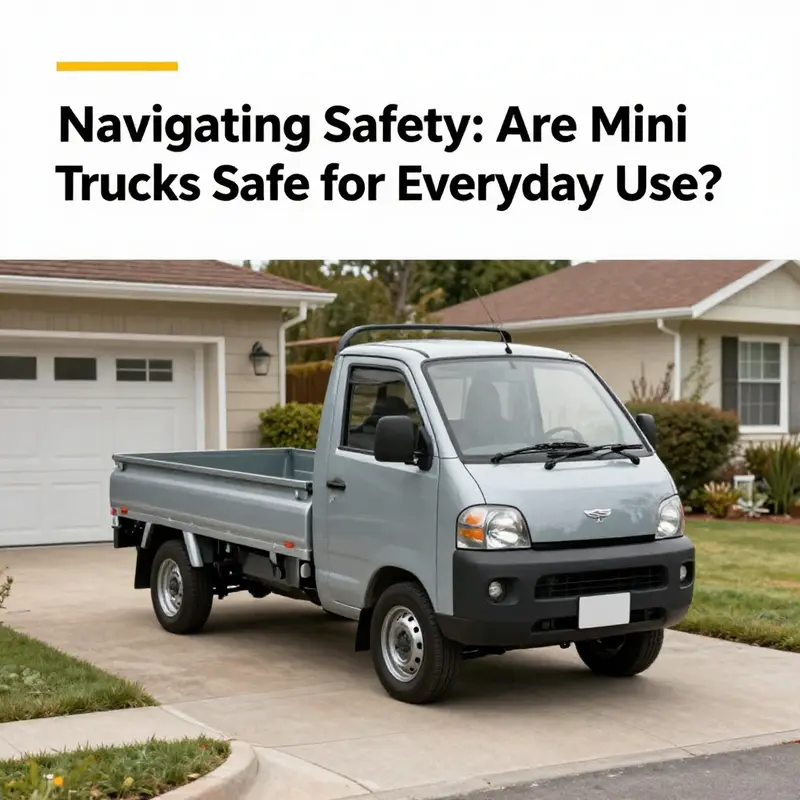
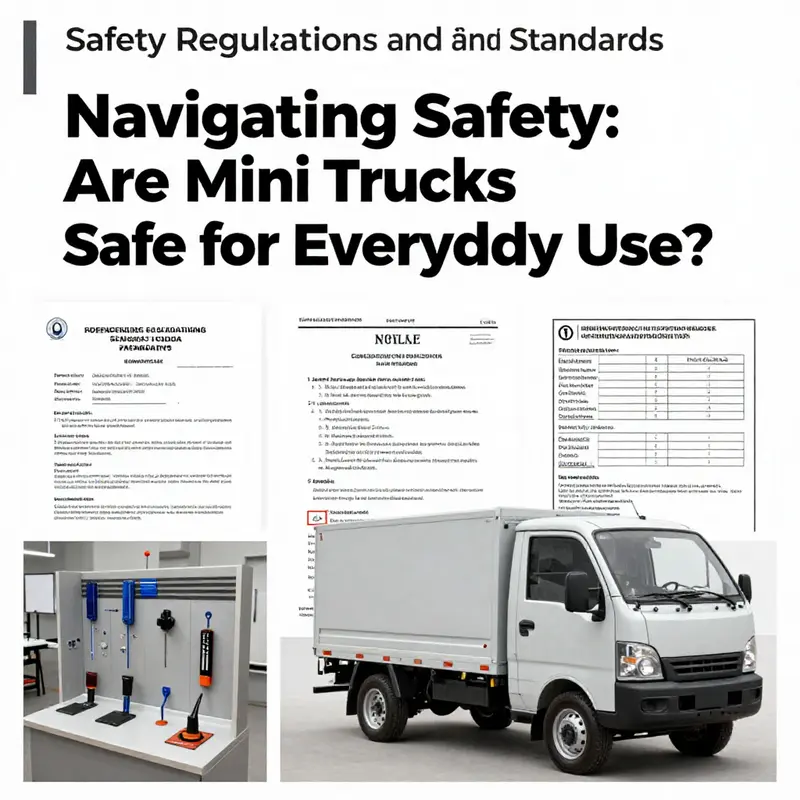
In dense cities and on the edge of industrial sites, mini trucks have carved a pragmatic niche. They are prized for their nimble handling, surprisingly capable load capacity, and remarkably low operating costs. Yet safety remains a central question whenever people consider downsizing from larger pickups or vans. The answer, as current research shows, is not a simple yes or no. Instead it depends on how the vehicle is designed, what safety features it carries, and how it is used. When the focus stays on responsible operation and prudent selection, mini trucks can perform reliably in everyday tasks without exposing drivers or pedestrians to undue risk. The conversation about safety begins with structure. Modern mini trucks are built around reinforced, high-strength steel frames that are tuned to protect occupants without sacrificing cargo practicality. Such frames are designed to absorb some of the energy in a crash and to maintain cabin integrity even under substantial pursuit of a collision in the most common urban scenarios. The safety design targets are clear: keep the driver and passengers within a rigid, deformable envelope that directs energy away from the occupants, preserve space around the knees and torso, and minimize intrusion into the cabin that could endanger the head and neck. This approach echoes a broader truth in automotive safety: a vehicle does not have to be large to be safe, but it must be engineered with rigid, well-positioned crumple zones and robust pillars that resist collapse when confronted by an impact. While the small footprint of these vehicles means they carry less kinetic energy than a larger truck, that does not automatically translate into a negligible risk. In practice, the most effective mini trucks balance light weight with strategic reinforcement. The A-pillars and B-pillars, for example, receive targeted reinforcement to preserve cabin integrity during side impacts and rollovers. A well-executed ladder frame or unibody configuration can still manage crash forces without making the vehicle feel fragile to the touch. Beyond the core frame, the cabin itself is often reinforced with structural cross-members and energy-absorbing materials that help distribute crash energy more evenly. This is especially important when considering the urban realities many drivers face—pedestrian and cyclist interactions, narrow lanes, and the need for precise, controlled deceleration in tight spaces. The next layer of safety comes from active systems that keep the vehicle under control even when the driver is not perfectly poised to respond. Anti-lock Braking Systems (ABS) are nearly universal on modern mini trucks, preventing wheel lock-up as a driver decelerates sharply on slick surfaces or must brake hard when pedestrians appear unexpectedly. Electronic Brakeforce Distribution (EBD) works in concert with ABS to allocate braking power to the wheels that need it most, maintaining steering control during emergencies. Traction Control (TC) and Electronic Stability Control (ESC) play a crucial role in reducing the likelihood of skidding and rollover, particularly on uneven or slippery ground. These systems interpret tire grip and vehicle dynamics in real time, applying selective braking or reducing engine power to restore stability. The safety package would be incomplete without airbags, and the trend toward dual front airbags is now complemented by higher trims that offer side-impact airbags and curtain airbags to protect occupants further. While airbags cannot prevent crashes, they dramatically reduce the severity of injuries should a collision occur. The combination of strong structural design and modern restraint systems creates a line of defense that extends beyond the moment of impact to the broader driving experience. It matters not only what the car can do in a lab but what it does in the real world. Drivers benefit from an elevated driving position and good sightlines, which can translate into earlier hazard recognition in busy urban environments. The typical mini truck’s raised ride height and compact dimensions enable easier scanning of the street ahead and around corners—a practical advantage when every second counts at junctions and pedestrian crossings. This visibility, however, depends on a stable and well-maintained chassis. A high-quality suspension that cushions rough pavement while preserving steering precision helps the driver feel more secure when maneuvering around construction zones or crowded loading docks. In many ways, the daily life of a mini truck becomes a test of balance: how to keep a small vehicle nimble and economical while preserving the predictability that comes from stable handling and robust safety systems. The reality is that the vehicle’s safety performance is not merely a function of its design; it is also a product of how it is used. The compact size can be a boon in urban settings, enabling agile navigation through tight spaces and easier parking, which reduces the likelihood of certain parking-related incidents. But size can introduce specific hazards if speed is allowed to rise or if cargo is not properly secured. A carefully planned cargo strategy—using appropriate tie-downs, securing heavier loads low and centered, and avoiding overhangs—helps maintain vehicle stability and prevents load shifts that might affect steering and braking. This is where operational discipline intersects with engineering. If a driver compresses the capabilities of braking and steering by carrying improperly balanced loads or ignoring weight limits, even a well-engineered mini truck can behave unpredictably. The industry has recognized this reality and increasingly integrates practical safety considerations into training programs for fleet operators. Training emphasizes safe loading practices, route planning for urban deliveries, and the importance of regular maintenance. It is not enough to select a vehicle with good safety features if the vehicle is not kept in proper working order or if the operator lacks familiarity with its handling characteristics. For readers seeking a broader perspective on how safety features translate to practice, the mini trucks blog offers contextual discussions on real-world usage and safety considerations in everyday operations. mini trucks blog. While the exact configurations and feature sets vary by market, the underlying principle holds: safety is the sum of design, technology, and responsible use rather than any single attribute. Regulatory standards further shape safety outcomes by setting minimum crash-test performance and emissions requirements, albeit with regional variations. In the European context, for instance, stringent testing regimes push manufacturers toward better energy absorption and more consistent restraint systems. Other regions may emphasize different aspects of safety or adopt alternative performance benchmarks. The net effect is that mini trucks enter markets with a baseline level of safety that reflects a combination of engineering excellence and regulatory oversight. The ongoing evolution of safety technology continues to narrow the gap between the safety performance of small and large vehicles. Electric mini trucks, for example, bring enhanced braking control, rearview cameras, and collision-avoidance sensors that complement traditional systems. Four-wheel-drive variants used in agricultural or construction settings often feature reinforced chassis and upgraded suspension, improving stability on uneven terrain while reducing rollover risk. These advances, along with better traction control and more accurate electronic stability programs, reinforce the practical point that mini trucks are not inherently unsafe. They are capable, but safety hinges on how well the vehicle is matched to the task and how diligently operators follow best practices. The regulatory landscape, too, is a critical determinant. Compliance with crash tests and emissions standards in different markets ensures a certain level of quality and safety assurance. As noted in the broader research results, adherence to standards helps minimize potential hazards and supports safer operation in everyday contexts. Ultimately, the safety narrative around mini trucks is not about the size of the vehicle alone. It is about thoughtful design, robust safety features, and a culture of careful operation. When drivers respect load limits, drive within speed limits, and maintain their vehicles, mini trucks can be reliable and secure companions for personal use and for essential, small-scale commercial work. For those who seek a deeper dive into the practical implications of safety features and how they play out in real life, the mini trucks blog provides useful reflections and case studies that complement the technical perspective of this chapter. External resource: https://www.nhtsa.gov
Final thoughts
In summary, mini trucks stand out as safe vehicles, supported by their robust structural designs, advanced safety features, and favorable real-world performance. For small business owners and enthusiasts alike, these vehicles provide not only utility but peace of mind on the road. By adhering to safety regulations and employing responsible driving practices, drivers can effectively mitigate risks associated with their compact nature. As we wrap up, it’s clear that with continued technological advancements and stringent compliance to safety standards, mini trucks will remain a safe choice for various personal and commercial needs.