
Mini trucks, especially popular Japanese Kei trucks, have captured the hearts of many in Maine for their compactness and efficiency. However, the excitement of owning one is often met with questions about legalities. Are these vehicles street legal in Maine? The answer isn’t simple, as it involves consideration of safety standards, emissions laws, and registration processes. In this guide, we’ll delve into each aspect of mini truck legality in Maine, providing clarity for local small business owners, homeowners, and mini truck enthusiasts. Each section will equip you with the information needed to navigate the complexities of owning a mini truck while staying compliant with state regulations.
How Mini Trucks Fit Maine Law: Registration, Inspections, and Practical Steps
Understanding how mini trucks are treated under Maine law requires a practical approach. Ownership is straightforward. You may legally own a mini truck in Maine. Driving one on public roads, however, depends on compliance with state requirements.
Maine treats all vehicles that use public highways under the same basic safety and environmental rules. Size and weight limits matter. So do lighting, braking, and restraint systems. Emissions standards apply where relevant. A mini truck that meets these standards can be registered and driven. One that does not meet them must be kept off public roads.
The path from ownership to legal operation usually follows a predictable sequence. First, the vehicle must pass a safety inspection. This inspection checks lights, brakes, tires, mirrors, and seat belts. Inspectors also confirm the vehicle’s structural integrity. If the vehicle is an import, inspectors verify that any modifications are properly documented.
Second, the vehicle must meet Maine’s emission rules. Depending on the model year and powertrain, a mini truck may need to pass emissions testing administered by the state. Gas- and diesel-powered mini trucks often require catalytic converters, functioning exhaust systems, and emissions controls. Electric mini trucks are exempt from tailpipe emissions tests, but they must still meet other safety and equipment requirements.
Third, successful inspection and emissions compliance lead to registration with the Maine Bureau of Motor Vehicles. Registration requires proof of ownership, a completed inspection certificate, and payment of registration fees and taxes. The BMV issues a registration and license plates once all paperwork is in order. Registering an imported mini truck may require additional documentation showing legal importation and any compliance steps taken to meet U.S. standards.
Importation introduces another layer of complexity. Many mini trucks in the U.S. are based on small Japanese commercial models. These vehicles were not built to U.S. federal safety standards. When imported, they may need modifications to meet Maine’s requirements. Typical modifications include adding or upgrading headlights and taillights, installing stronger seat belts, modifying mirrors, and improving brake systems. Importers should keep detailed records of every change and any parts used.
Speed governors and performance alterations deserve special mention. Some mini trucks arrive with limited top speeds. Owners sometimes remove speed governors to increase performance. Altering the speed-limiting equipment can create compliance issues. If a change affects how the vehicle functions, inspectors will evaluate whether the modification undermines safety or emissions compliance.
Electric mini trucks are a growing category. Their advantages include zero tailpipe emissions, quiet operation, and lower operating costs. Those traits make them attractive for urban use, campus duties, and short-haul commercial work. But electric mini trucks have notable limits. Range typically falls between 30 and 60 miles per charge. Charging times and battery performance in cold weather are also practical constraints. Still, electric models often face fewer hurdles in the emissions portion of registration. They still must meet all safety equipment and inspection standards.
Practical steps for owners who want to make a mini truck street legal in Maine start with research. Identify the exact model, production year, and origin. Contact the Maine BMV or a licensed vehicle inspector early. A licensed inspector can list required upgrades and estimate inspection outcomes. Plan the modifications with safety as the primary goal. Use quality parts and professional installation. Keep receipts and documentation for every modification.
Expect to provide paperwork during registration. Common documents include the bill of sale, title or importation documents, inspection certificates, emissions test results if required, and receipts for major modifications. If the truck was imported, include customs documents and any compliance letters from the importer or manufacturer. The BMV reviews these documents to confirm eligibility for registration.
Enforcement and tolerance vary across jurisdictions. Local police and state troopers focus on safety hazards. A mini truck that lacks functioning headlights or safe brakes will draw attention. Similarly, an unregistered vehicle or one without plates risks fines and impoundment. That said, several mini trucks have been successfully registered in Maine after passing thorough inspections and meeting state rules. Success is possible but not automatic.
Costs matter. Expect inspection fees, registration fees, and expenses for modifications. Electric conversions or battery replacements incur significant cost. Factor labor into your budget if professional installers are needed. The total can exceed the purchase price of some mini trucks. Weigh these costs against how you plan to use the vehicle.
Finally, community resources can help. Owners, mechanics, and small builders share tips about parts and inspection strategies. For practical stories, build ideas, and hands-on guidance, consult the MiniTrucks SoCal blog for community insight and examples. This resource often highlights common upgrades and creative compliance solutions.
For authoritative details and nuanced legal guidance, consult Maine’s official resources and specialized legal digests. State rules can change, and inspectors interpret requirements case by case. For additional background on legal frameworks governing these vehicles, refer to the external guide: https://www.minichina.com.cn/zh_CN/home/my-mini.html
This chapter covers the practical and regulatory steps needed in Maine. Follow inspection and registration processes carefully. Document every modification. Consult the BMV and a licensed inspector early. With planning and the right upgrades, many mini trucks can become street legal in Maine—but compliance is the essential requirement.
Meeting Maine’s Safety Bar for Mini Trucks: What Makes a Kei Truck Road-Ready?
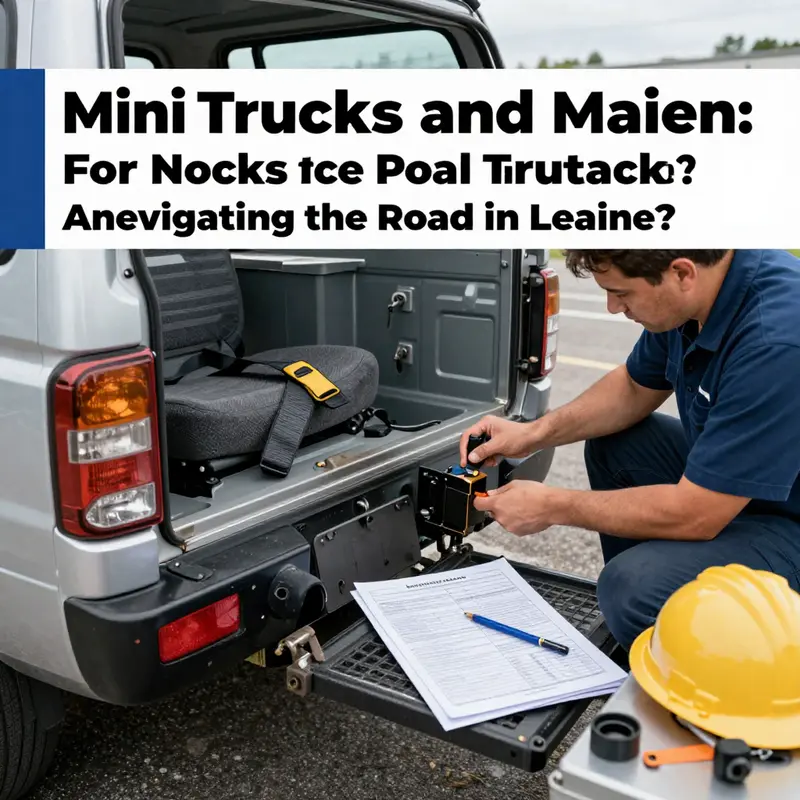
What Maine Requires and How to Bring a Mini Truck into Compliance
Owning a mini truck in Maine is straightforward. Driving one on public roads is conditional. State rules require that any vehicle used on public highways meet safety, emissions, and registration standards. For many Kei-style mini trucks, that means upgrades and verification before they become street-legal. This chapter walks through the safety expectations, the common modifications that matter, and practical steps owners should follow to avoid surprises during inspection and registration.
At the core, Maine looks for vehicles that can operate safely alongside other traffic. That expectation breaks down into a few concrete requirements. Lighting must be functional and compliant. Brakes must stop the vehicle reliably. Occupants must have proper restraints. The vehicle itself must meet federal safety criteria as interpreted by state inspectors. Emissions control can also apply, depending on the vehicle’s engine and age. Each of these points matters individually, but together they determine whether a mini truck can be registered and driven on Maine roads.
Lighting and visibility are often the most obvious hurdles. Mini trucks must possess headlights that provide adequate illumination, taillights, turn signals, brake lights, and reflectors in the correct positions and intensities. Many imported mini trucks need rewiring or replacement lenses to match U.S. standards. Mirrors and windshield visibility are evaluated too. If a windshield is absent or non-standard, or if wipers and defrosters are ineffective, the vehicle may fail inspection.
Braking systems receive close scrutiny because stopping distance and brake balance are safety-critical. Inspectors check for a reliably functioning service brake, secure mounting, and absence of leaks. Anti-lock brake systems are not always required, but brakes must perform consistently under load. Owners who have altered tires, ride height, or suspension may also need to ensure these changes don’t compromise brake geometry or performance.
Seat belts and occupant protection are non-negotiable. Each seating position must have a functioning restraint system that meets state specifications. If a mini truck was originally built without seat belts for certain positions, those positions may be excluded for street operation, or the vehicle may need retrofitted belts installed by a qualified professional.
A major technical bar relates to Federal Motor Vehicle Safety Standards (FMVSS). Many Kei trucks were designed for markets governed by different safety rules. Maine requires vehicles to comply with applicable FMVSS as interpreted by state inspectors and the National Highway Traffic Safety Administration. That can mean upgrades to structural elements, lighting, glass, and other safety systems. An inspector may require documentation showing compliance or evidence that specific safety features meet U.S. standards.
Emissions are another gatekeeper. The Maine Department of Environmental Protection enforces emission standards that vary by vehicle class and model year. Mini trucks with engines that do not meet the state’s emission thresholds may be barred from road use unless modified to meet those standards. Catalytic converters, proper exhaust systems, and functioning emission control devices are typical requirements. In some cases, an emissions test is mandatory during registration.
Importation and modification history matter. Many mini trucks arrive with speed governors, different lighting configurations, or nonstandard tires. Owners sometimes remove governors or swap parts without documentation. Any modification that changes original specifications can complicate registration. Inspectors look for documented evidence that major changes were performed professionally and that the vehicle remains safe. Removing a governor, for example, might increase top speed but raise questions about compliance with FMVSS or state speed-related requirements.
Registration and inspection are procedural but crucial steps. To register a mini truck, you will typically present a title or import paperwork, a VIN verification, proof of compliance with safety and emission requirements, and payment for fees. The Maine Bureau of Motor Vehicles coordinates registration and will often require a safety inspection by a licensed inspector. That inspection is the moment of truth: the vehicle either meets the checklist or it needs repairs and re-inspection.
Practically, follow a checklist before you bring a mini truck for inspection. Ensure lights and turn signals work. Replace or upgrade mirrors and glass if visibility is compromised. Confirm brakes, lines, and master cylinders are in good order. Fit seat belts for every seating position you intend to use on the road. Address exhaust leaks and emission control devices. Keep detailed receipts for any parts or labor associated with compliance work. Documentation can tip the balance when an inspector is uncertain about an aftermarket modification.
Use a licensed inspector or mechanic familiar with small imported trucks when possible. They can advise which modifications are likely to pass and which require more extensive changes. A qualified inspector can also perform a pre-inspection check, saving time and money by identifying easy-to-fix failures before formal testing.
Expect common pitfalls and plan for them. Wiring and lighting are frequent failure points after imports. Nonstandard tires or altered wheel offsets can trigger a rejection. Missing or nonfunctional safety equipment is an immediate fail. Owners who assume that a cosmetic or performance upgrade is acceptable may find that the same change voids compliance, particularly when it affects safety-critical systems.
Finally, consider how you will use the mini truck. If your plan is limited to private property, a farm, or an off-road setting, regulatory demands differ. Many owners find the cost and effort to make a mini truck street-legal are worthwhile only if the vehicle will see regular highway use. If you intend to modify the truck heavily for work or recreation, discuss compliance early with an inspector or the BMV to avoid costly rework.
For practical reading on owner experiences and creative flatbed or camper conversions that still respect regulatory limits, a community resource like the mini truck blog offers useful perspectives and real-world examples that can inform your compliance approach. See that collection for inspiration and discussion on adaptability and safety: mini truck blog.
For authoritative, current details about registration, inspections, and state-specific standards, consult the Maine Bureau of Motor Vehicles. Their guidance clarifies procedures and answers many questions owners face during the compliance process. https://www.maine.gov/dmv/
Breathing Easy and Staying Legal: Emissions Compliance for Maine’s Mini Trucks
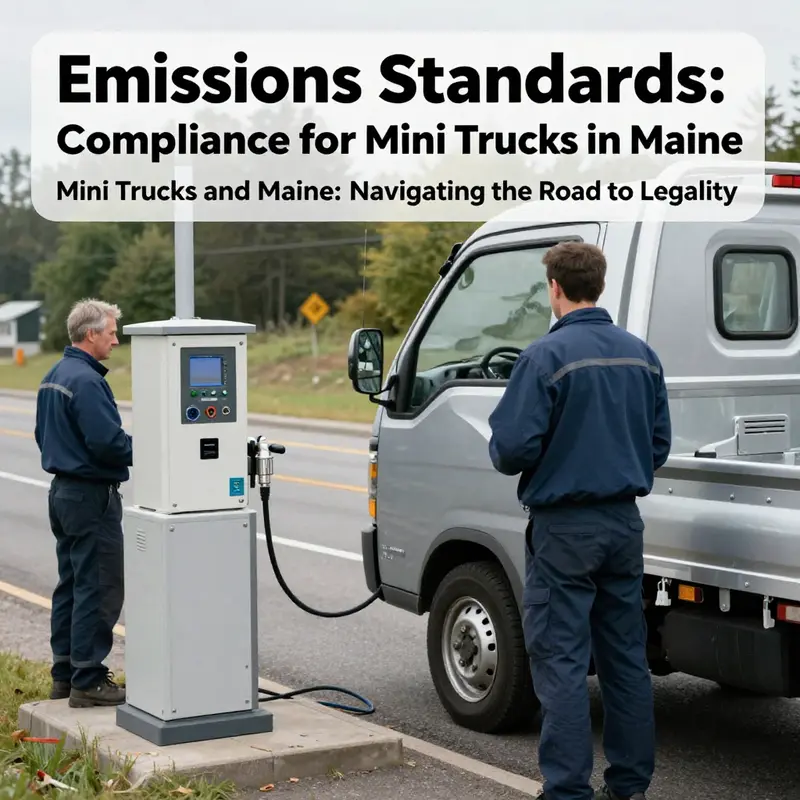
When evaluating whether mini trucks can roam Maine’s streets, emissions compliance sits at the heart of the question. The tangled interplay between federal rules and state expectations creates a gate that every importer and owner must respect. In practice, even though a Kei-style mini truck might be legal in some parts of the country, Maine’s environmental and motorist-safety standards shape whether such a vehicle can be registered and kept on public roads. The core principle is clear: a mini truck must meet both the national emissions floor set by federal authorities and Maine’s own environmental enforcement framework before it can be driven in the state. This means more than a simple inspection. It means confirming that the vehicle’s engine, exhaust system, and any after-market changes align with the current limits on pollutants like nitrogen oxides, hydrocarbons, and particulate matter, and that those limits are enforceable under Maine’s regulatory regime.
At the federal level, the Environmental Protection Agency establishes national emissions standards that apply to all light-duty vehicles operating on public roads, including imported or heavily modified mini trucks. These standards are designed to limit the amount of pollutants emitted during typical operation, with NOx and particulate matter being among the most scrutinized categories for small, turbocharged engines and older powertrains that might not have modern after-treatment systems. When a Kei-style truck arrives in the United States, its compliance status depends on whether the vehicle, as it sits or as it is legally modified, meets EPA thresholds for the pollutants that the agency regulates. A truck that has not been updated to incorporate compliant exhaust after-treatment or that relies on non-conforming components risks failing EPA-based conformity, which can restrict registration and operation. This is not a matter of preference but a legal standard that frames the practical viability of using such vehicles in Maine and elsewhere.
Maine, while it respects federal emission baselines, also imposes its own layer of scrutiny through the Maine Department of Environmental Protection and the state’s Bureau of Motor Vehicles (BMV). Maine’s approach emphasizes consistency with EPA standards while ensuring that any vehicle being operated locally does not contribute to air-quality concerns beyond what the state deems acceptable. What this means for a potential Maine operator is that a Kei truck cannot simply be imported and registered on a whim. It must be shown to meet EPA emissions criteria, and it must be tested or certified to prove that the emissions system performs within the scope of Maine’s expectations. In practice, this translates into documentation and testing that can include conformity certifications, engine certifications, and proof that the vehicle’s exhaust system, catalytic converter(s), and related components remain intact or are appropriately replaced with compliant equivalents.
The state’s emphasis on emissions testing also intersects with ongoing enforcement during vehicle inspections and registration renewals. Roadside checks and annual or multi-year inspections may verify that a registered vehicle continues to meet the necessary standards. If a mini truck’s emissions characteristics drift outside the permitted range, or if an importer has altered the vehicle in ways that invalidate EPA conformity, the state can require remediation, limit registration, or even impose penalties. The message is pragmatic: Maine does not grant a blanket exemption for imported Kei trucks. Compliance must be demonstrable, and the vehicle must be able to pass the state’s and the EPA’s checks to remain legally operable on Maine roads. The practical upshot for prospective owners is that a successful path to legal operation involves careful planning, not hopeful assumptions about a vehicle’s age or origin.
For owners and would-be importers, the road to compliance begins with diligence before the vehicle ever reaches Maine’s borders. It is essential to verify that the mini truck can meet EPA emissions standards and that any modifications made to gain import eligibility do not undermine that compliance. This often means engaging with licensed inspectors, obtaining conformity documents, and retaining all emissions-related paperwork. The Maine BMV and a certified vehicle inspector are the primary sources of guidance for confirmation. They can help determine which models, configurations, or modifications can be registered and what documentation is required to demonstrate compliance. In this process, the availability of documentation becomes almost as important as the vehicle’s physical condition. Without appropriate records, even a well-intentioned owner may encounter significant hurdles at registration or during renewal cycles.
To sharpen the practical understanding of Maine’s emissions expectations, many readers have found it useful to consult broader Maine-specific resources that summarize the intersection of federal and state requirements. A centralized resource hub offers an area to review the nuances of state-by-state compliance, the kinds of emissions testing that may be encountered, and what kinds of documentation typically reassure a regulator that a vehicle is, in fact, compliant. For readers seeking a concise, accessible overview, this Maine mini truck resource hub provides a convenient starting point for understanding the local regulatory landscape and the kinds of steps that successful applicants have taken in the past. Maine mini truck resource hub.
The essence of compliant operation also rests on the broader, national guidance provided by the Environmental Protection Agency. The EPA’s official guidance outlines vehicles’ emission testing, conformity, and importation considerations that apply regardless of state. It is important to recognize that the EPA’s role is to set a baseline that all states lean on for enforcement. However, states can and do add their own checks or emphasize certain pollutants based on local air quality priorities. Therefore, even if a truck crosses the threshold of federal compliance, Maine’s authorities may request state-specific documentation or demonstration that the vehicle’s emissions performance is stable and consistent with EPA parameters in the state’s own testing regime. This layered structure — federal standards, supplemented by state enforcement — is what makes the topic of emissions in Maine so consequential for mini trucks. It also underscores why the import and registration process can be lengthy and complex, requiring patience and precise recordkeeping.
An informed owner will also pay attention to the practical effects of emissions controls on daily use. Vehicles that rely on older or less sophisticated control technologies might experience higher emissions in certain operating conditions, such as idle or cold-start phases. While some owners might consider shifting toward simpler, lighter exhaust configurations in pursuit of reliability, doing so can jeopardize compliance with EPA standards and Maine’s enforcement expectations. The prudent path is to prioritize certified, compliant components and to seek professional testing that confirms the vehicle remains within the allowed emissions envelope under typical Maine driving conditions and climate. This is especially important in a state with varied geography and a wide range of seasonal temperatures, which can influence engine performance and emissions output over time.
For anyone planning an import or considering a trial run with a Kei-style mini truck in Maine, the recommendations are straightforward. First, verify that the truck can meet EPA emissions standards in its intended configuration. Second, obtain and preserve all relevant documentation, including conformity approvals, diagnostic tests, and any state-issued inspection records that relate to emissions. Third, consult with the Maine BMV or a licensed vehicle inspector early in the process to determine whether the model qualifies for registration and what specific steps are required to demonstrate compliance. Fourth, maintain ongoing compliance by adhering to inspection schedules and keeping the emissions-control systems in good working order. These steps collectively reduce uncertainty and help ensure the vehicle remains legally operable on Maine’s roads rather than becoming a liability during a registration renewal or roadside check.
In closing, Maine’s approach to mini trucks—especially those rooted in the Kei tradition—rests on a balanced, regulatory framework that honors federal norms while applying state-specific expectations. The goal is not to stifle a niche interest or to complicate ownership but to ensure that any vehicle sharing Maine’s streets does so cleanly and safely. By prioritizing measurable emissions compliance, thorough documentation, and professional guidance, owners can navigate the process with greater confidence and clarity. For readers seeking authoritative, up-to-date guidance, the EPA’s Vehicle Emissions Testing resources offer a definitive starting point. https://www.epa.gov/vehicle-emissions-testing
Toward Registration: Legal Pathways for Maine Mini Trucks
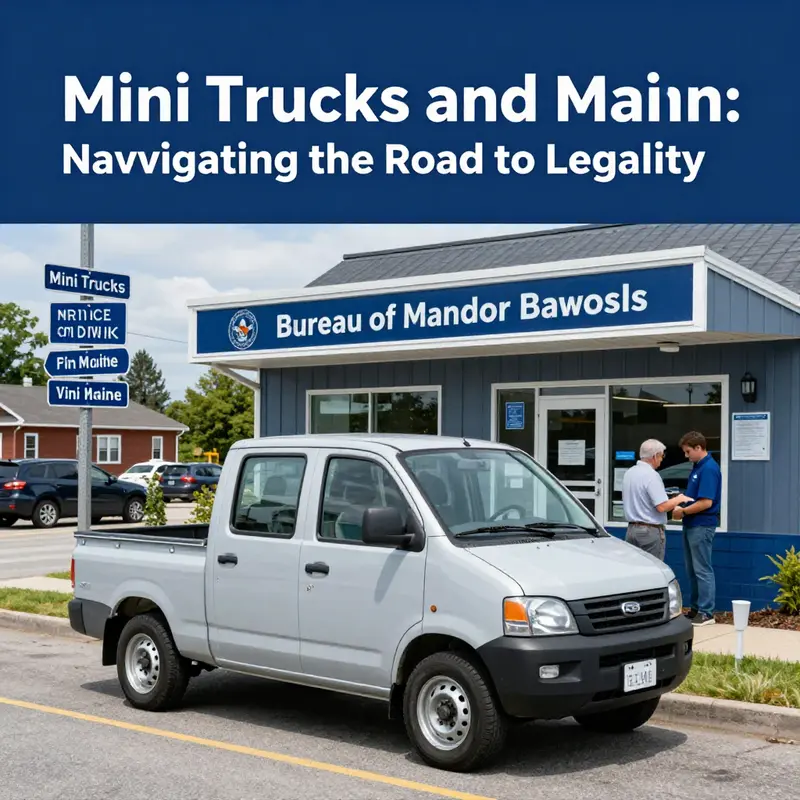
Maine owners and importers of small “mini” or kei-style trucks face a practical but structured pathway to getting these vehicles legally on public roads. The state does not automatically accept every imported compact truck; instead, registration depends on meeting Maine’s safety, emissions, and documentation requirements. Prospective owners should approach the process as a sequence of inspections, modifications when necessary, and careful paperwork.
The first step is understanding the applicable standards. Maine requires a safety inspection that addresses lighting, brakes, steering, tires, seat belts, and related systems so the vehicle operates predictably and safely. Emissions requirements, enforced by the Maine Department of Environmental Protection, must also be met for many vehicles. Some very old or very low-powered machines may qualify for different treatment, but generally emissions compliance and a clean inspection certificate are central to registration.
Modification and certification are common. Many mini trucks need changes to lighting, mirrors, seat belts, or exhaust systems to meet state expectations. In some cases, suppliers, mechanics, or compliance shops can perform modifications and document them. Where federal FMVSS compliance is lacking, Maine may require state-level testing, engineering statements, or a series of documented inspections showing that the vehicle meets safety and environmental goals in practice.
Documentation is equally important. When presenting a vehicle for title and registration at the Maine Bureau of Motor Vehicles, owners should be prepared with a clear bill of sale, import documents if applicable, proof of identity and residency, proof of insurance, and the results of any required inspections or emissions tests. Itemized records of parts and modifications help inspectors and BMV staff evaluate compliance and reduce delays.
Expect an iterative process. It is common for inspectors to identify items that need correction before a final registration can be issued. Working with a licensed inspector or a mechanic experienced with these vehicles speeds the process: the inspector interprets regulatory expectations, the mechanic implements changes, and the owner assembles the paperwork. Successful registration converts a project truck into a regularly titled and plated vehicle that is legally operable on Maine roads.
Where to get authoritative guidance: always consult the Maine Bureau of Motor Vehicles and the Maine Department of Environmental Protection for current rules and procedures. Local BMV offices or certified inspection stations can provide practical direction for specific models. Community resources and owner forums can offer experience-based tips, but they should not replace official information.
In summary, the door to legally operating a mini truck in Maine exists, but it opens only after safety and emissions compliance, proper documentation, and successful inspection. Planning, professional help where needed, and attention to paperwork make the pathway achievable for owners who wish to use these compact vehicles for work or hobby purposes.
On Maine Roads: Navigating Practical Realities and Legal Hurdles for Mini Trucks
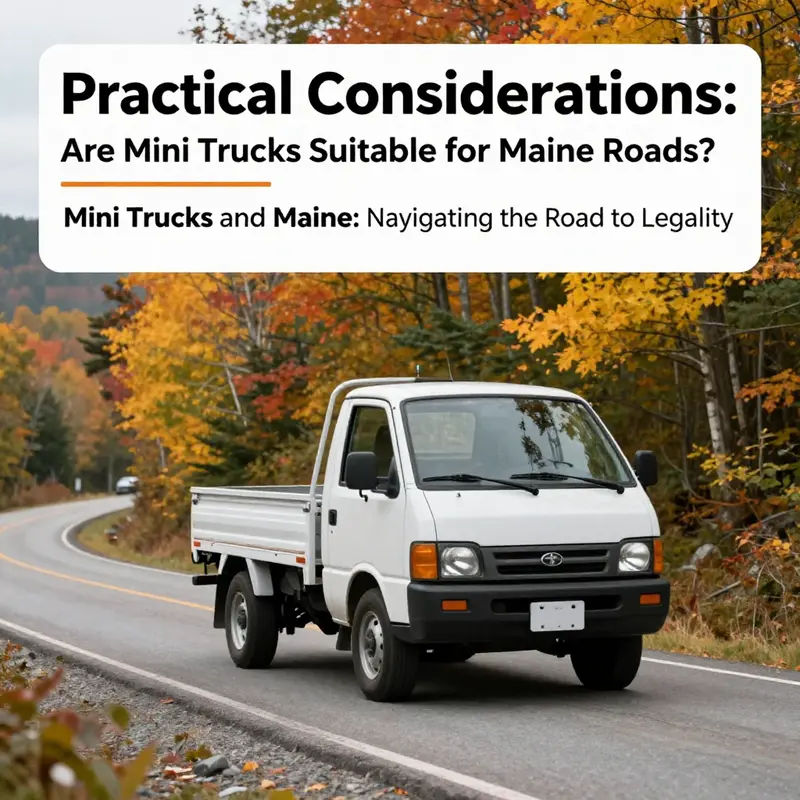
Maine’s road network and climate shape a unique calculus for any vehicle, but they press a particularly distinct question when the vehicle is a compact mini truck: could it realistically operate on Maine streets and highways with any degree of ease, and what does legality require in the process? The compact silhouette, tight turning radius, and impressive maneuverability that make these vehicles appealing in small-town deliveries, landscaping jobs, and controlled construction sites also bring them into a regulatory gray zone. In practice, the decision hinges less on what the truck can do in a snowbank and more on whether it can meet a constellation of state standards for safety, emissions, lighting, and registration. In Maine, as in many states, the path from import to weekday workhorse is paved with inspections, verifications, and a clear understanding of what constitutes street-legal versus farm- or off-road-only use. The prudent approach blends a streetwise assessment of the road environment with a careful, document-driven route to compliance. Beginning with the roads themselves helps frame the conversation: Maine’s rural corridors weave through forests and fields, while towns and coastal routes push traffic into more constrained spaces. The roads are narrow in places, and shoulders can be soft or nonexistent. In hilly regions, sight lines around bends demand steady braking and reliable steering. For a small, lightweight vehicle with a footprint designed for urban efficiency, these conditions reward nimble handling more than bulk, but they also elevate the stakes for stability and braking performance. Mini trucks can and do thrive in such settings, especially for localized tasks that don’t demand long highway hauls. Yet the capacity to perform on these routes does not automatically translate into legality. The state’s safety standards, emissions thresholds, and vehicle-registration requirements create a framework that a private buyer or a business importer must navigate. The practical question, therefore, becomes a matter of whether a given mini truck can pass a Maine safety inspection and emission test, then be properly registered. The pathway begins with the underlying design philosophy of the vehicle: a kei-derived mini truck emphasizes compact size and efficiency, but it is not automatically aligned with U.S. FMVSS safety standards or Maine’s own specifications for lighting, braking systems, upholstery, seat belts, and other equipment. Some of these trucks arrive with features like speed governors that cap top speed at around 60 miles per hour; removing or modifying such features can complicate compliance if the broader safety and documentation trail is not updated accordingly. This is not a mere paperwork exercise. It is a live test of whether the vehicle’s modifications, weight distribution, braking performance, and lighting meet what the state requires for on-road operation. The key is a demonstrated, verifiable pathway to compliance rather than a one-size-fits-all verdict. To be street-legal in Maine, a mini truck generally must pass a safety inspection, meet emission standards set by the state’s environmental authority, and be officially registered with the Bureau of Motor Vehicles. In addition, the vehicle must carry the appropriate lighting configuration, functional brakes, and seat belts, along with other safety equipment stipulated by the state. The process often involves a detailed review of the imported vehicle’s modifications, followed by testing and documentation that the vehicle meets FMVSS or an approved alternative. Importers and buyers alike are advised to consult directly with the Maine Bureau of Motor Vehicles or a licensed vehicle inspector to determine whether a specific model qualifies for registration. The practical reality is that several modified Kei-truck concepts have achieved registration in Maine after undergoing compliance testing, but such outcomes are not guaranteed and depend on the particulars of the model and the modifications performed. The Maine BMV is the definitive arbiter for these determinations, and their guidance should be considered a prerequisite for any serious import or conversion plan. For the most current rules and pathways, the official Maine BMV site is the best starting point, and it serves as a touchstone for what counts as lawful and road-ready in the state. Readers who want a broader sense of how these vehicles are handled in real-world settings can explore more on practical articles from related online resources, including dedicated mini-truck content hubs. For readers who want to dig deeper into practical considerations beyond regulation, the following internal link offers a broader look at the community and practical builds in the mini-truck space: minitrucksocala.com/blog/. This source provides a repository of hands-on discussions about maintenance, customization, and the day-to-day realities of owning and operating compact utility trucks, which can help frame how owners approach Maine’s winter and road conditions. From a buyer’s standpoint, that background matters because it complements the regulatory framework with real-world expectations about reliability, parts availability, and long-term service. The practical story of Maine roads does not hinge on a single variable but on how the vehicle’s design and the state’s requirements intersect. For instance, winter is a dominant factor in Maine. The seasonality of snow, ice, and fluctuating temperatures makes traction, braking performance, and heating capabilities crucial for safe operation. While a 4×4 drive system is not a universal requirement, it markedly enhances capability in deep snow or on slick grades, making a 4×4 mini dump truck—or any vehicle with weight transfer and appropriate traction control—appealing for work sites where plowing or road maintenance intersect with small-scale hauling. On the other hand, electric mini trucks offer advantages in urban or residential areas where quiet operation and zero tailpipe emissions are valued. Yet in extreme cold, battery efficiency can detract from range and performance, which underscores the need for winterization strategies, battery thermal management, and a robust charging plan. Winterization is not a cosmetic feature but a set of operational practices: sealing hose connections, ensuring coolant lines and seals tolerate freezing temperatures, and verifying the integrity of heating systems that keep the operator comfortable and alert. In professional settings—sites like mining, demolition, or tight urban construction—these vehicles can deliver precise dumping capability and reduced maintenance demands in the absence of a heavy engine, provided that the fleet maintains rigorous inspections and preventive maintenance. Still, even the most durable configurations demand regular checks on hoses, seals, and mounting hardware when subjected to cold and moisture. This is where the practical considerations merge with safety protocols: the road becomes a laboratory for testing whether a compact truck can sustain the level of reliability a Maine workday requires. The truth is that viability is not simply a matter of size; it is about the cumulative alignment of registration, inspection, and ongoing compliance with safety standards. The length and texture of Maine’s winter season often dictate how a vehicle performs day to day and season to season, and these factors influence the decision to pursue a 4×4 variant, a battery-powered option, or a conventional gasoline-powered model that has been thoroughly prepared for cold-start reliability and winter operation. When a professional or a homeowner evaluates a potential purchase, the aim should be to harmonize the vehicle’s capabilities with the kinds of tasks anticipated and with the realities of Maine’s road network. A fleet that operates primarily on paved streets, residential streets, and small commercial lanes may find a well-maintained, compliant mini truck a perfect fit for local deliveries, landscaping, and light construction. A fleet that regularly negotiates remote dirt roads or unpaved corridors must weigh the benefits of added traction and weight distribution against maintenance demands in freezing temperatures. In that sense, Maine’s practical considerations are a living guide: they tell you what to test, what to document, and what to validate with the state authorities before any registration attempt. The road ahead hinges on preparation, not optimism. The road conditions portal maintained by the state can supply timely information about seasonal restrictions, road closures, and weight limits that bear on the choice of vehicle type and the routes you plan to run. For readers seeking more background on the broader ecosystem of mini trucks and their real-world uses, the linked blog resource can be a helpful companion, while the official regulatory authority remains the anchor for legality and eligibility. Official sources aside, the balance of practical realities—winter performance, terrain agility, and the nuanced process of compliance—tells a clear, cautious story: mini trucks can be suitable for many Maine roads, but only when they are purpose-built, properly certified, and registered through the right channels. The synthesis of field practicality and regulatory rigor is what ultimately determines whether a mini truck becomes a dependable tool for work and a lawful participant on Maine’s streets. For those who want to pursue this path, start with an up-to-date check of the Maine Bureau of Motor Vehicles requirements, and use their guidance to map out the steps necessary to legitimate operation on state roads. Official information: https://www.maine.gov/bmv
Final thoughts
Understanding the legal status of mini trucks in Maine is essential for anyone considering ownership or use of these vehicles. With specific safety, emissions, and registration requirements, navigating this landscape can seem daunting. However, by following the outlined steps and recognizing the importance of compliance, you can enjoy the unique benefits mini trucks offer while staying on the right side of the law. Whether you’re a small business owner, a homeowner, or simply an enthusiast, this knowledge empowers you to make informed decisions about your mini truck journey in Maine.