

Japanese mini trucks, known for their compact size and versatility, are becoming increasingly popular among local small business owners, residential property owners, and mini truck enthusiasts. But a common question arises: can you legally drive these Kei trucks on the road? Understanding the legal requirements, safety features, and compliance standards is essential regardless of your driving purpose—be it for business or recreational use. We’ll delve deep into the specifics of importing and registering these unique vehicles, addressing the practical uses and specific benefits they offer in our communities.
Kei on the Road: Navigating Legal Requirements and Road-Use Realities for Japanese Mini Trucks
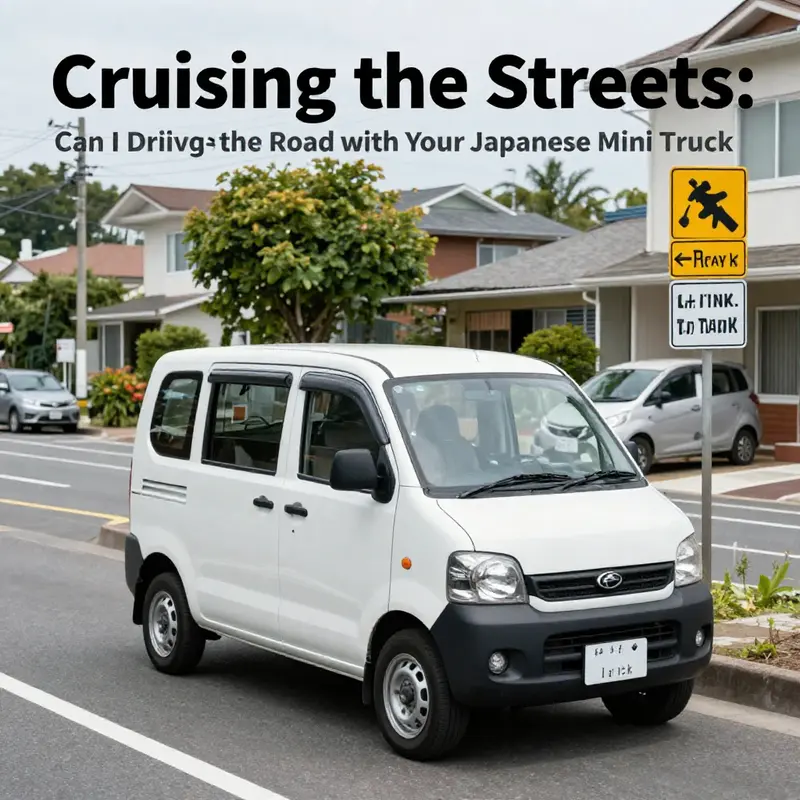
Japanese mini trucks, or kei trucks as they are commonly known, embody a practical philosophy: compact size, simple mechanics, and remarkable usefulness for daily work. This chapter enters the question that many readers ask with genuine curiosity and careful practicality: can I drive one of these small, efficient workhorses on public roads, where laws, safety checks, and environmental standards shape every mile? The answer is yes in many places, but the road to legality is paved with specific rules and thoughtful preparation. The journey begins with understanding the framework that governs road use for any foreign vehicle, then moves through the steps of importation, registration, and ongoing compliance. It is a narrative of stewardship as much as it is a story about ownership, because a kei truck on the road is a tool that must respect the rules designed to keep drivers, pedestrians, and other road users safe. For readers seeking practical paths and community perspectives, the Mini Truck Blog offers real-world reflections from owners and drivers who have navigated these waters, linking theory to experience: Mini Truck Blog.
The core of road legality for kei trucks rests on a few pillars that recur across many jurisdictions: emissions, safety, vehicle dimensions, and the drive arrangement. Kei trucks in Japan are built to Kei car standards, which regulate engine displacement, overall size, and power output. This standardization is part of what makes them economical to own and operate in their home market. However, when stepping beyond Japan’s borders, the same characteristics that make kei trucks attractive can pose compliance questions. The small engine, often around 660 cubic centimeters, and the compact dimensions of kei trucks do not automatically guarantee eligibility for road use in other countries. In some places, the vehicle must meet specific emissions standards and safety requirements that differ from those enforced in Japan. The practical upshot is straightforward: you can drive one on public roads abroad, but you will need to confirm, with official regulation texts and, if necessary, with accredited importers or modification specialists, that the vehicle meets all local requirements.
A helpful way to think about the process is to imagine the road-legal kei truck as a passport holder that must carry the right stamps. Import regulations function as the first vital set of stamps. Many countries maintain strict import laws that assess environmental impact and safety. In the United States, for example, vehicles must comply with regulatory regimes set by the Environmental Protection Agency and the National Highway Traffic Safety Administration. This means that a traditional kei truck may need to undergo testing or modifications to satisfy both emissions and safety standards before it can be registered for road use. The outcome in any given country is not merely about engine size; it is about the total package: how the vehicle performs within local guidelines for noise, emissions, lighting, crash safety features, and overall compatibility with the road environment.
Once a vehicle clears import hurdles, the journey often moves to the registration camp. Registration is the formal recognition that a vehicle is legally allowed to operate on public roads. It typically requires proof of ownership, a bill of sale, and confirmation that the vehicle meets safety and emissions expectations, or that it has been suitably modified to do so. A safety inspection may be required, sometimes involving a check of lights, mirrors, seat belts, tires, braking performance, and the structural integrity of important components. The need for such inspections is not merely bureaucratic; it is a careful, standardized check that ensures a vehicle presents predictable performance in real-world driving. This is a crucial distinction: the clearance to import does not automatically confer the right to drive the vehicle on the local road network. The final step in many places is registration itself, which unlocks the ability to obtain license plates, insurance, and, crucially, the ability to legally drive on public streets.
Another layer of complexity concerns drive orientation. Japanese kei trucks are predominantly left-hand drive in markets where vehicles drive on the right side of the road, while some models exist in right-hand drive configurations. When a vehicle is intended for a country that drives on the right, a left-hand drive arrangement may be straightforwardly permissible, but a right-hand drive vehicle can encounter extra restrictions or require special permits or modifications. The policy framework governing RHD vehicles varies widely. Some jurisdictions have more lenient paths for RHD imports, especially if the vehicle has already been modified for use in similar road environments, while others impose additional compliance steps or outright bans on certain configurations. The practical implication is clear: the drive orientation affects both legal status and operating practicality, including how the vehicle interacts with traffic rules, mirror placement, and visibility to other road users.
Insurance and taxes complete the trio of ongoing costs and responsibilities. Insurance coverage is essential for any road vehicle, but the specifics can shift when the vehicle is imported rather than manufactured domestically. The cost and availability of insurance depend on factors such as the vehicle’s age, its safety features, and local regulations about third-party liability. Taxes and import duties may be due at the time of entry, and ongoing vehicle taxes or annual fees can accompany ownership as well. These financial considerations can be substantial, especially in regions with high import taxes or strict emissions-related levies. They are real parts of the total cost of ownership and thus deserve careful budgeting alongside the regulatory hurdles.
The practical steps to move from curiosity to road-ready involve a blend of research, professional guidance, and a clear-eyed assessment of local rules. Start with official sources from the country or region of residence. Transportation authorities and customs offices publish detailed, country-specific guidance about vehicle eligibility, required documentation, and inspection standards. In many cases, a responsible path is to engage with a licensed importer or a compliance specialist who understands how to bridge the gap between Japanese specifications and local standards. They can help determine whether the kei truck meets, or can be adapted to meet, emissions criteria, braking and lighting standards, and crashworthiness expectations. This is not about gaming the system; it is about ensuring the vehicle behaves predictably and safely in traffic and that every required aspect of compliance is satisfied before a single kilometer is driven on public roads.
In tandem with regulatory diligence, prospective owners should plan for the tangible aspects of daily road use. The compact dimensions and light weight of kei trucks typically translate into excellent maneuverability in urban settings and improved fuel efficiency. However, these advantages can be offset by factors like the vehicle’s limited ground clearance, back-up visibility, or the need for modified lighting to satisfy local standards. If an imported kei truck uses a lighting setup appropriate to its original market, it may require adjustments—such as headlight alignment or the addition of reflectors—to meet local visibility and safety regulations. The shift from a workshop or showroom reality to public-road reality is, in many ways, a test of how well a vehicle can be integrated with local traffic norms, driver training expectations, and the rhythms of daily life on the road.
The legality path also invites contemplation of practical risks and responsibilities. There is merit in considering how such a vehicle would perform under different weather conditions, how its braking system interacts with local road surfaces, and whether the tires and suspension are appropriate for a country’s climate and geography. A thorough readiness check includes ensuring the vehicle’s tires, brakes, and steering are up to the task of regular road use. It also means acknowledging the role of maintenance in keeping a small, high-usage vehicle safe and reliable. Regular service intervals, the availability of replacement parts, and the potential need for specialized service in areas without a dense network of kei-truck-experienced technicians are all realities that influence the decision to drive such a vehicle on public roads.
In a broader sense, owning and operating a kei truck on public roads is a story of balancing practicality with accountability. The vehicle’s appeal lies in its compact footprint, high load-to-size ratio, and straightforward mechanical design. Yet the governance that surrounds it is designed to keep everyone safe and to ensure that each vehicle entering the road ecosystem contributes to predictable, stable traffic flow. This balance calls for diligence and patience. It invites prospective owners to view the regulatory process not as an obstacle but as a framework within which the kei truck can operate responsibly, efficiently, and for many years. The result is a vehicle that, when properly prepared, becomes a versatile tool rather than a novelty, capable of providing dependable service in urban deliveries, workshops, and small business outreach.
As you navigate this landscape, remember that you are not alone. There is a growing community of kei-truck enthusiasts and professional importers who share notes about compliance experiences, local variations, and practical tips for ensuring smooth road use. Tapping into these conversations can yield realistic expectations and a clearer map of next steps. The goal is not to avoid regulation but to understand it well enough to align a vehicle’s capabilities with the rules that govern the road. In this sense, a kei truck on public streets can be a responsible, efficient, and surprisingly capable choice for many applications—so long as its journey from Japan to the local road is approached with due diligence, careful planning, and respect for the system that keeps every road user protected.
For readers seeking further context on technical specifications and broader applications of Japanese mini trucks, a comprehensive external reference can provide deeper insight into the production processes, functional design, and practical uses of these vehicles. See the external resource here: Japanese Mini Truck for Sale: Technical Specifications, Production Process, and Applications.
In sum, you can drive a kei truck on public roads, but success hinges on disciplined preparation. The import path, the registration path, and the ongoing path of insurance, taxes, and compliance all demand careful attention. If you approach each stage with clarity and a willingness to adapt—the vehicle’s small size, its efficient design, and its task-oriented nature become even more potent allies on the road. The journey from curiosity to lawful, confident road use is not a leap but a sequence of informed steps, each reinforcing the next. With the right guidance and a thoughtful plan, a Japanese mini truck can become not just a curiosity but a dependable, road-legal part of daily work and life.
On the Road with a Japanese Kei Truck: Balancing Safety, Compliance, and Everyday Practicality
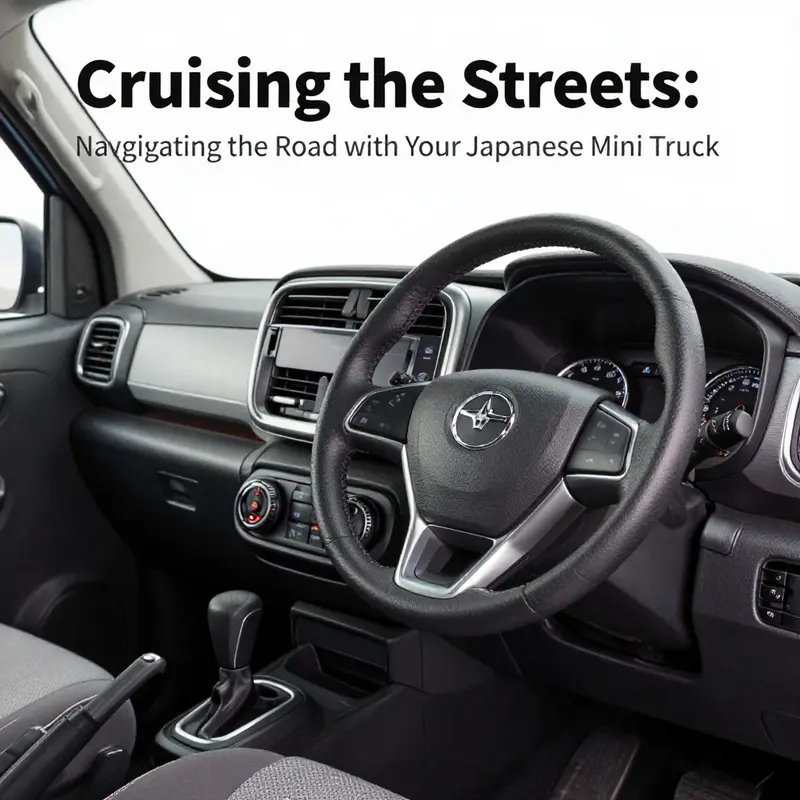
A straightforward question often prompts a far more nuanced answer: can you drive a Japanese kei truck on public roads in your country, and if so, what does that require beyond simply owning the vehicle? The simple answer is yes, you can, but only if the vehicle meets the local rules that govern road use. Kei trucks—compact, purpose-built workhorses designed to navigate crowded urban sidewalks of commerce—have earned a global reputation for efficiency, maneuverability, and surprisingly robust capability for their size. They are seen on city streets, in delivery lanes, and across rural byways where a larger truck would waste space and fuel. Yet the path from a keystone of Japanese urban logistics to a legally roadworthy vehicle abroad is paved with compliance standards and practical realities that differ from one country to another. The chapter that follows does not merely tally the requirements; it weaves them into a narrative of how safety, regulation, and everyday utility come together in the real world of driving a kei truck on the road. It begins with the fundamental design principles and safety features that make these small workhorses road-appropriate, then moves into the regulatory framework that determines whether a vehicle can actually ply public streets in a given jurisdiction. Throughout, the focus remains on how drivers can approach import, inspection, and ongoing operation with clarity and confidence, rather than on hypothetical scenarios or contradictions between pages of law and the practicalities of daily use.
The serendipitous appeal of kei trucks lies not in bravado or novelty but in their lean design: compact dimensions, efficient powertrains, and an emphasis on urban accessibility. Even as they prioritize payload efficiency and tight turning radii, modern models are equipped with a suite of safety features that align with broader road-use expectations. Anti-lock braking systems help prevent wheel lock during abrupt stops, a critical attribute when cargo shifts or when stopping in wet or uneven surfaces. Electronic stability control works in the background, guiding the vehicle through abrupt maneuvers or slick conditions by modulating braking force and engine output. These systems, now common in many light-duty and compact commercial vehicles, are particularly valuable in kei trucks, whose small footprint can tempt brisk cornering or sudden lane changes when drivers are negotiating tight city routes or cramped loading zones. In parallel, airbags—where installed as part of newer model generations—offer essential protection in the event of a collision, while rearview cameras and parking sensors address the unique visibility challenges posed by a narrow cabin and high cargo loads. Such features turn a tiny truck into a safer participant on public roads, reinforcing the notion that safety design is not an optional garnish but a core condition of roadworthiness.
Yet safety is only part of the story. Compliance standards that govern road-use extend well beyond national borders and require careful alignment with local regulations on emissions, inspections, and vehicle dimensions. Kei class regulations in Japan set a framework that focuses on keeping urban driving approachable: engine displacement is limited to 660 cubic centimeters, size templates are constrained, and power output is calibrated to promote efficiency and manageable performance. While this design philosophy supports reliable, urban-friendly operation, importing or operating a kei truck in another country introduces a new set of considerations. The vehicle must meet the destination’s safety and environmental standards, and it must be compatible with its road-use rules. In practical terms, that means verifying that the vehicle complies with lighting requirements, crashworthiness standards, emissions limits, and seat belt performance—standards that are well defined by the importing jurisdiction’s regulatory bodies and, in many cases, by international references. The framework is not merely about ticking boxes; it shapes every step of the journey—from choosing a compliant vehicle to navigating registration, inspections, and ongoing maintenance.
Consider, for a moment, the issue of drive orientation. Some countries drive on the left side of the road, others on the right. The kei truck’s original design often assumes a right-hand drive configuration to suit domestic road-use standards. When bringing such a vehicle into a market with a different driving orientation, additions or modifications may be required to align with local import laws and safety expectations. In some cases, authorities may permit the vehicle as-is if it is deemed legal under import provisions for non-conforming vehicles; in others, conversion or specialty certification may be necessary. The practical upshot is that the journey to road legality is not solely about the engine’s horsepower or the presence of airbags. It also hinges on the mechanical and regulatory readiness to operate safely in a new traffic environment, along with the capacity to maintain the vehicle through a local service network that understands kei-truck internals—engine, brake, and electrical systems that differ in layout and components from larger, more globally common trucks.
Emissions and environmental compliance, in particular, deserve emphasis as global urban centers push toward stricter air-quality standards. While the kei truck’s compact engine was designed with efficiency in mind, importing a vehicle into a different regulatory space may require certification of its emissions profile under local or national test cycles. Some regions offer pathways for older vehicles to be imported under special exemptions based on age or historical use, but even then the vehicle must be certified as fit for road use and shown to meet safety and emissions expectations. The interplay between age, compliance, and market access often becomes a deciding factor for buyers who weigh the economics of import against the time and cost of conformity work. For those who choose to pursue it, the process can be navigated with a careful plan that includes documentation of original specifications, proof of compliance where possible, and a clear map of the steps required by the destination authority to obtain registration and ongoing inspection approvals.
From the perspective of daily operation, the practical realities of owning a kei truck outside Japan hinge on more than just a single stamp of approval. Insurance coverage, for instance, is a critical piece of the road-ownership puzzle. Not all insurers will automatically extend coverage to non-native import vehicles, and those that do may tailor policies to reflect the vehicle’s compact dimensions, payload limitations, and maintenance profile. This is not an obstacle so much as a planning factor: the driver must factor in potential premium implications, the availability of certified repair options, and the reliability of parts supply. In many markets, a robust local network of service providers with familiarity in light commercial vehicles helps, but it is essential to verify that the local workshop can access or source the specialized components that kei trucks require. A secondary obstacle—spare parts availability—tends to appear not as a barrier to driving but as a factor shaping the long-term cost of ownership and uptime. The best approach is to anticipate these realities early and seek suppliers or shops that have experience with compact, low-volume vehicles, rather than discovering such constraints after a breakdown on the edge of town.
A further dimension to consider is vehicle length, width, and overall footprint. Regulations in many jurisdictions specify maximum vehicle dimensions for on-road use, and even small deviations can affect whether a kei truck qualifies for road registration. It is common for buyers and importers to work with specialists who understand the dimension thresholds and how they interact with body kits, bed lengths, and aftermarket equipment. The goal is to preserve the inherent agility that makes kei trucks appealing for city logistics while ensuring that each facet of the vehicle aligns with street-legal expectations. This alignment extends to lighting and signaling, where regulation typically requires functioning headlights, taillights, turn signals, and compliance with glare and visibility standards that ensure other road users can anticipate the vehicle’s movements clearly, day or night. The road-legal kei truck, then, becomes a synthesis of compact engineering and meticulous regulatory alignment, rather than a mere scaled-down version of a larger work truck.
All of these considerations—safety features, emissions readiness, drive orientation compatibility, dimensions, and ongoing maintenance—coalesce into a practical framework for decision-making. For a prospective owner or operator, the journey begins with a clear understanding of the intended use, the local regulatory landscape, and the available support infrastructure. If the vehicle will serve as a primary tool for urban delivery, the stakes of compliance rise because the vehicle will spend more of its life on public streets, at a higher probability of routine inspections, and in more complex traffic scenarios. For seasonal or infrequent use, some buyers may accept a longer path to registration, but even then the presiding authorities will expect the vehicle to meet baseline safety and environmental criteria. In either case, the right approach blends proactive planning with a willingness to engage a knowledgeable importer, regulator, or local technician who can translate regulatory language into practical actions. This translation is essential because the rules are not static. They evolve with environmental goals, road-safety campaigns, and the introduction of newer vehicle technologies that affect how older designs are judged on the road.
In practice, the road-legal journey often unfolds as a sequence of well-defined milestones: confirm the vehicle’s compliance with the destination country’s safety and emissions standards; obtain import clearance and any required modifications; secure local registration and plates; pass periodic inspections; and maintain ongoing compliance through routine servicing. Each milestone is more than paperwork; it is the point at which the vehicle earns its right to share space with larger, more conspicuous road users. The driver’s responsibilities extend beyond operating the vehicle safely. They include maintaining clear records of inspections, keeping up with maintenance schedules, and understanding how any modifications—whether for steering configuration, lighting, or emissions control—affect the vehicle’s compliance status. When approached with a disciplined, systematic mindset, the kei truck can become a reliable, economical, and highly maneuverable tool for a wide range of tasks, from urban deliveries to rural work that benefits from a compact footprint.
As you consider the possibility of driving a kei truck on your roads, you may find value in connecting with communities and resources that discuss hands-on experiences, practical modifications, and real-world regulatory outcomes. For readers who want to explore more about how these vehicles are discussed and used in practice, a visit to the broader kei-truck-focused content ecosystem can be insightful. You can explore a variety of perspectives and case studies at the referenced blog hub, which hosts discussions ranging from practical modifications to long-form reviews of how these vehicles are employed in different settings. The link below points to a central hub where such conversations take place and where readers can surface the latest real-world insights from enthusiasts and professionals alike: https://minitrucksocala.com/blog/. This resource is not a substitute for official regulatory guidance, but it can illuminate practical experiences and highlight common questions that arise as people navigate import, registration, and everyday operation.
For those seeking formal, authoritative guidance, official governmental and regulatory sources remain essential. They provide the foundation for understanding the precise requirements that apply to lighting, crashworthiness, emissions, and seat-belt performance, as applicable in a given jurisdiction. In the United States, for example, the relevant framework is defined by the vehicle safety and compliance standards that govern what is legally required for road use. This constellation of rules helps ensure that every vehicle sharing the road with other drivers is measured against transparent safety criteria, and that any imported vehicle has been screened for the same. Inquiries into the regulatory landscape should always begin with the jurisdiction’s transportation authority and should be complemented by the kind of research that falls under government-provided compliance information, which remains the most reliable compass for navigating road-legal import and operation. See, for instance, the official vehicle compliance information portal to understand the overarching safety testing, certification, and conformity requirements that may apply to a kei truck, depending on your location. External reference: https://www.nhtsa.gov/vehicle-compliance
Kei on the Open Road: Navigating Import, Registration, and the Everyday Reality of Driving a Japanese Mini Truck
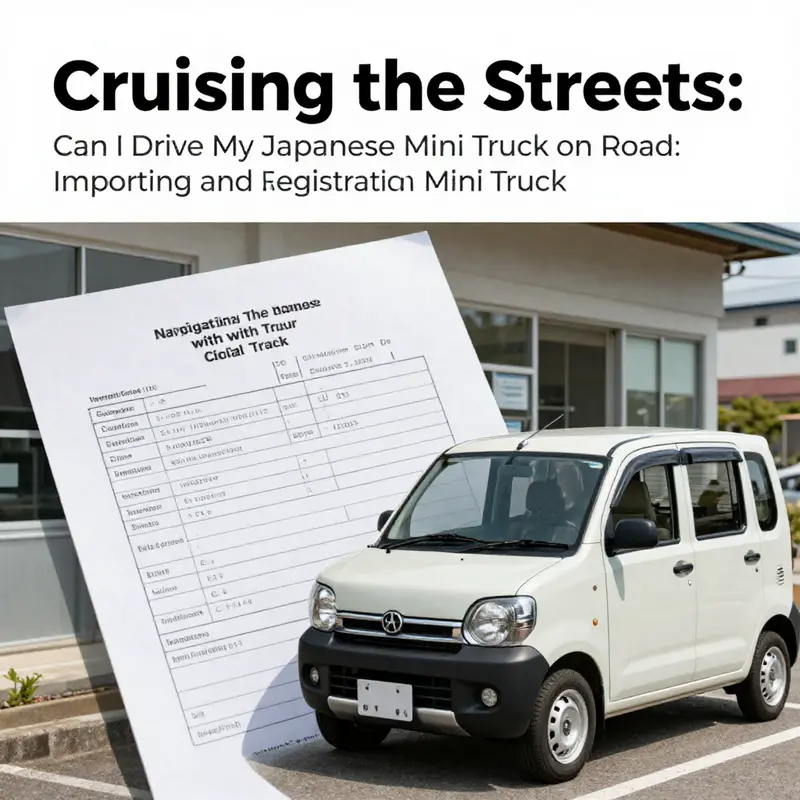
A compact silhouette crawls along a quiet urban street, a small engine humming with the unassuming confidence of a tool carrier more than a billboard for performance. In many places, a Japanese mini truck, the so‑called kei truck, can be a practical lifeline for businesses, farms, and urban dwellers who prioritize maneuverability and efficiency over size and sheer power. The core question, can I drive this little workhorse on public roads, is not a simple yes or no. It is a careful yes, a conditional yes, and sometimes a no that invites a different path. The road is not just a surface for travel; it is a framework of rules, standards, and expectations that protect drivers, pedestrians, and communities. Understanding that framework is the first step in turning a clever, compact vehicle into a dependable road companion rather than a legal or logistical problem waiting to happen.
In the way these vehicles are designed, there is an intentional simplicity. The kei class of trucks is anchored in a Japan where space is precious, fuel is expensive, and urban logistics demand nimble, affordable machinery. A kei truck typically embodies this philosophy: a small footprint, a compact engine, light weight, and a chassis tuned for short-range tasks. That combination yields advantages that are easy to feel in daily use—excellent visibility, tight turning radii, and a surprisingly generous payload for a vehicle that never pretends to be a full‑sized truck. Yet that same design celebrates constraints that can clash with the road regulations of other countries. The same engine size that keeps running costs low may run afoul of emissions tests, the dimensions that make it ideal for tight streets may fail to align with safety standards, and the lack of certain safety features that are common in larger modern trucks can complicate the road‑worthiness assessment in a new jurisdiction. The practical takeaway is simple: the vehicle’s economics and its legal status are not independent questions; they are two sides of the same decision.
The legal pathway starts with a clear acknowledgment: road use is governed by public authorities that set the minimum requirements for safety, emissions, crashworthiness, and vehicle identity. In many places, a kei truck can be driven on public roads once it meets those standards and is properly registered. But the path to compliance is rarely seamless. You will encounter a series of checkpoints that start with import rules and end with registration and ongoing maintenance obligations. The exact requirements vary from country to country, and within regions, they can hinge on whether you drive on the left or the right side of the road, the vehicle’s weight class, and whether the vehicle was originally designed for domestic use or as an imported model. In practice, that means that while the idea of a road‑legal kei truck is not impossible, the journey to that status is often long and targeted. The first stop is usually a determination of whether the vehicle can be classified within the national or regional framework for imports and whether it can clear emissions and safety tests without extensive modification. Some jurisdictions allow older or imported vehicles to remain in service with a simpler set of checks, while others require new components, redesigned headlights, upgraded seat belts, or even airbags. The balance point between feasibility and cost becomes the hinge around which your decision turns.
Consider the import process as a series of layers, each with its own standards and practical consequences. The most fundamental layer concerns safety and emissions. In many advanced markets, vehicles must conform to crashworthiness standards that dictate how the vehicle behaves in a collision, how it protects occupants, and how it integrates with seat belts and restraint systems. Emissions standards can demand significant retrofits, especially when a vehicle was never designed to operate under the host country’s fuel and exhaust requirements. Some kei trucks, when brought into certain markets, arrive as vintage curiosities or off‑road demonstrators, legally permitted for limited or non‑public use. Others may require full compliance with modern safety features, including lighting systems that meet intensities and angles for road use, as well as validated braking performance and electronic control unit calibrations. The financial implication is straightforward: every retrofit to pass the standards is an investment that compounds with shipping, customs duties, and inspection fees. The second layer concerns the vehicle’s dimensions and weight. Many countries impose maximum length, width, and height limits for road vehicles. If a kei truck’s footprint falls within those parameters, you still may need to adjust the suspension or add reflective markings to align with regulatory expectations. The third layer—driving orientation—addresses the question of which side of the road you drive on and which side the steering wheel sits. In left‑hand drive countries, you may find that your kei truck can be adapted to the correct steering configuration, but the process might require professional work and specialized approvals. In right‑hand drive regions, the natural alignment of the vehicle might be closer to the local norm, yet other compliance hurdles can still arise. The convergence of these layers often means that the dream of a simple import quietly becoming a daily driver is replaced by a careful calculation of costs, timelines, and risks.
The practical implications of these regulations are felt most directly in the registration and licensing phase. After an import clearance, a vehicle must pass a series of inspections that verify safety equipment, lighting, braking, and structural integrity. The exact inspection criteria vary, but the underlying logic is consistent: the vehicle must behave predictably and safely on public roads, and it must be traceable to standards that the authorities recognize. In many cases, this means that the vehicle you brought from overseas will require substantial modifications. Standard lighting may need to be upgraded to meet brightness or beam pattern requirements. Seat belts, if they were not originally installed or certified for the local market, may need to be upgraded with proper anchors and retractors. Emissions equipment may require calibration or even replacement to reduce pollutants to the levels the local air quality agencies demand. Sometimes dealers or certified shops offer compliant retrofit packages, but those packages come with labor costs and parts that can stretch the total price beyond the cost of the vehicle itself. The result is a delicate balancing act: you want to preserve the vehicle’s utility and economy while ensuring it can legally operate on the streets you use every day.
Beyond the mechanics of compliance lies a more nuanced challenge: the alignment of your personal and business needs with the regulatory environment. For a small business delivering goods in a dense urban area, the kei truck’s fuel efficiency and ease of parking can translate into a meaningful advantage, particularly in tight alleys or residential districts where larger vans struggle. The prospect of low upfront costs and high maneuverability is tempting, especially for last‑mile tasks, mobile retail, or tool transport to remote job sites. Yet those advantages can be overshadowed by ongoing compliance expenses, regular inspections, and the potential for regulatory changes that tighten import rules or require newer safety devices. The best way to approach this is with a clear plan that balances time, money, and risk. Start by mapping out the exact regulatory path for your country or region. Gather the official guidance, contact the relevant transport or road authority, and, if possible, speak with a technician who specializes in imported vehicles. This is not merely about getting a vehicle to pass a check; it is about creating a reliable, long‑term asset that remains usable year after year, with a minimum of unexpected interruptions.
An important practical step is to explore the community of fellow importers and users. Online forums, local clubs, and enthusiast networks can offer real‑world insights into the kinds of modifications that have proven workable in specific places, the costs people have faced, and the timing of inspections. While it is tempting to rely on anecdotal success stories, the safest approach is to cross‑verify any claim with official guidance and, when in doubt, consult a qualified mechanic or regulatory expert. A useful way to stay connected to practical, up‑to‑date information is to read through broad industry content that tracks regulatory trends and practical experiences. For readers who want a sense of how these vehicles are perceived and used in different contexts, the following resource can be a useful starting point for broader perspectives and practical notes, including experiences from people who operate compact trucks in varying environments: Minitrucks Cali blog. The blog often aggregates user stories, technical notes, and practical tips that help bridge the gap between theory and on‑the‑ground realities, even as you confirm specifics with your local authority.
Flowing from this groundwork is the recognition that the path to road‑legal operation is not a single leap but a sequence of careful steps. First, verify whether import is permitted and under what conditions. Then, assess whether the vehicle’s chassis, brakes, lighting, safety restraints, and emissions controls can be upgraded to meet local standards without undermining the core business value of the vehicle. If the required alterations are too extensive or the costs too high, consider alternatives that fit within the regulatory framework. These alternatives could include purchasing a vehicle that is already compliant with the target market’s standards or using the kei truck in a role that does not require street legality—while the latter is often not ideal for day‑to‑day business operations, it can be a practical interim solution during regulatory negotiations.
Importantly, the journey toward legal road use also opens opportunities to rethink the vehicle’s role. A kei truck’s compact form factor makes it an excellent candidate for customized setups, such as small mobile shops or tool‑cab platforms that operate in controlled environments or in marked zones where local rules permit certain configurations. For operators in rural settings, the ability to digitize routes, optimize loads, and minimize fuel consumption can transform a basic, affordable utility vehicle into a dependable partner. The decision to pursue a road‑legal kei truck should be anchored in a comprehensive cost‑benefit analysis that weighs the upfront expenses of compliance against the long‑term savings from reduced fuel use, lower maintenance, and the ability to work wherever infrastructure and regulations permit.
A subtle but important consideration is the difference between importing a vehicle for personal use versus commercial use. When a vehicle is intended for business, authorities may scrutinize it more closely for issues like odometer integrity, compliance with commercial regulations, and potential tax implications. In some places, commercial registration can unlock different tax treatment or tolling arrangements, but it can also trigger more detailed record‑keeping requirements. As with any major purchase for business purposes, the planning stage should include a clear plan for maintenance, insurance, and potential decommissioning or re‑exporting if regulations shift. This is not just about making a vehicle legally road‑worthy; it is about ensuring the vehicle contributes reliably to operations without becoming a recurring regulatory hurdle.
In navigating these complexities, a steady, methodical approach is essential. Start with official channels to confirm what is required, then gather practical input from knowledgeable mechanics and compliance specialists. Maintain a transparent budget that anticipates modifications, inspections, shipping delays, and potential duties. Build a pipeline of options: the ideal scenario where the vehicle passes without major retrofits, a middle scenario where targeted upgrades bring it into compliance, and a cautious fallback scenario where the vehicle remains usable only in restricted contexts. In striking that balance, you preserve the kei truck’s core strengths—economy, agility, and ease of service—while honoring the rules that keep roads safe and orderly for everyone else.
For readers who want a broader sense of how these vehicles fit into a landscape of small, capable workhorses, the discussion can extend to how other compact, utility‑oriented vehicles are evaluated and used across regions. The emphasis remains on practical adaptation rather than rapid adoption: understanding what changes are legally necessary, what costs are reasonable, and how to integrate a vehicle within a fleet or household budget without compromising safety or compliance. The aspirations of owning and operating a kei truck on public roads are legitimate and achievable in many jurisdictions, but they require patience, diligence, and a willingness to engage with regulators as partners rather than obstacles.
As you explore the road ahead, remember that you are not merely buying a vehicle; you are entering into a relationship with a complex ecosystem of standards, inspections, and expectations. The kei truck, with its pared‑down simplicity, invites a straightforward approach: respect the rules, prepare thoroughly, and leverage its strengths in ways that enhance efficiency rather than invite risk. If you keep that mindset, the road becomes less a test of legality and more a platform for reliable, economical work—an ally in everyday tasks rather than a barrier to progress. And when you encounter the moment of decision—the point at which the numbers, not just the dream, determine your path—pause to reflect on the total cost of ownership, the value of predictable maintenance, and the peace of knowing you are driving within the law. The road will respond in kind, offering steady, dependable service suitable for a vehicle that is, at heart, a compact tool built to move not just goods, but ideas and opportunities.
For readers who want to keep exploring practical references and real‑world experiences, the blog mentioned above offers a collection of perspectives that can illuminate the variations across regions and scenarios. It can help you gauge how communities are adapting to these vehicles and what lessons beginners often learn as they navigate import and registration realities. The road teaches by example, and the more you learn from those who have walked this path, the more confidently you can plan your own route. In addition to personal research, always consult the official guidelines from your country’s transportation authority for the most current requirements. A reliable external resource that summarizes import considerations and regulatory expectations can be found at official government portals, such as the U.S. Department of Transportation’s vehicle import requirements, which provide structured guidance on the steps, approvals, and documentation involved in bringing a non‑domestic vehicle onto public roads. This information is crucial for anyone weighing the feasibility and timing of such an undertaking and helps anchor decisions in the reality of legal compliance rather than optimistic projections alone.
Ultimately, the question of road legality for a kei truck is not a single verdict but a spectrum of possibilities. It is a negotiation between the vehicle’s intrinsic efficiency and the regulatory landscape’s insistence on safety, emissions compliance, and predictable performance. If you enter this process with clarity, prepared to modify and adapt as rules require, you can unlock a remarkably capable vehicle that serves as both a practical workhorse and a sensible choice for smaller‑scale logistics. The kei truck’s charm—its compact footprint, its light touch on the road, and its affordable running costs—remains compelling. The key is to translate that charm into a lawful, durable, and reliable presence on public streets, supported by solid planning, professional guidance, and a willingness to align dream with due diligence.
For those seeking a consolidated starting point to see how communities discuss and document their experiences with import, operation, and customization (while keeping in mind that this is not a substitute for official regulation), you can visit the blog mentioned earlier. It serves as a useful gateway to practical discussions about compact trucks, their setup, and the realities of ownership in different settings.
External resource: For official guidelines on import requirements and vehicle eligibility, consult the U.S. Department of Transportation’s vehicle import requirements at https://www.transportation.gov/vehicle-imports.
Road-Ready Kei Trucks: Navigating Legality, Practical Uses, and Everyday Possibilities
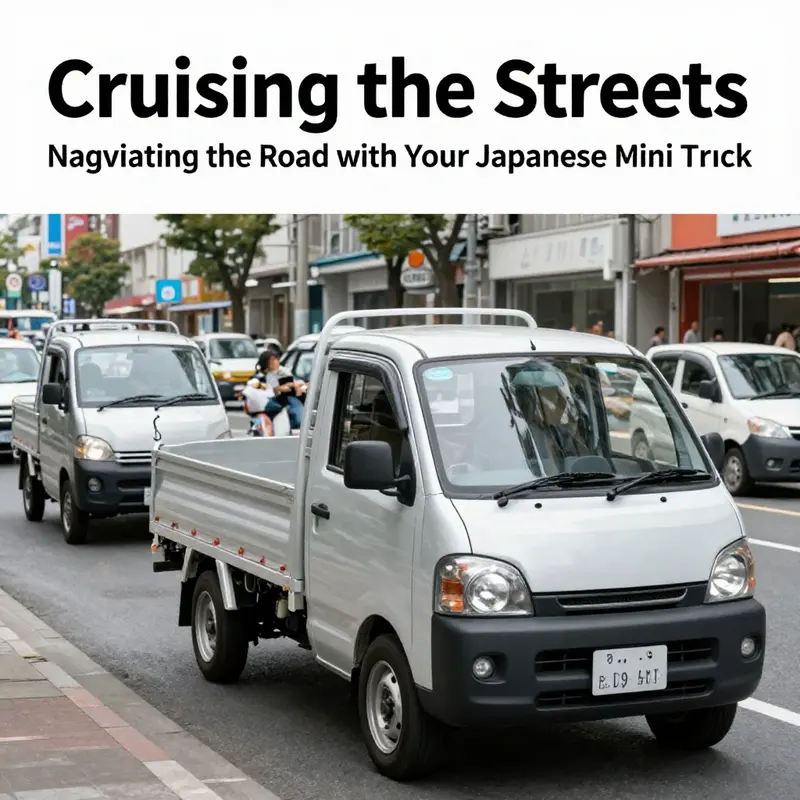
A straightforward question invites a practical exploration: can a Japanese mini truck, a Kei-class workhorse by design, truly join the everyday traffic on a public road? The answer is nuanced but affirmative in most places, provided the vehicle meets the local road-use rules. Kei trucks are compact, economical, and remarkably maneuverable, features that have kept them popular not only in their homeland but in many regions where space, fuel efficiency, and urban access are at a premium. The central premise is not a guarantee of universal access but a reminder that road legality is a matter of jurisdictional alignment. The vehicle itself is built to be roadworthy in the sense that it meets a baseline of safety, lighting, and basic equipment. Yet the moment it crosses a border or changes ownership in a new market, the obligation shifts to the importing or operating party to verify that the model conforms to the host country’s standards on emissions, inspections, dimensions, and drive orientation. In practice, this means checking with the relevant transportation authority, examining the tiny but critical details of where the truck fits within the local regulatory framework, and understanding that compliance is not a single event but an ongoing process of maintenance, renewal, and proper documentation. The logic behind this approach rests on a simple but essential idea: the road is a shared space with rules designed to ensure safety for everyone, from pedestrians to long-haul drivers, and every vehicle must meet those expectations to participate. This is especially important for Kei trucks, whose compact size and light-duty nature can be an asset in busy streets but also a reminder that even small vehicles must respect the same standards as their larger counterparts. When you consider road use in broader terms, the appeal of Kei trucks becomes even clearer. Their compact footprint makes navigating narrow alleys, loading docks, and crowded urban routes feasible where larger trucks would struggle. They excel in scenarios that demand quick stops, easy parking, and precise positioning, opening opportunities for courier services, small-business deliveries, mobile retail setups, and on-site tool transport at work sites that are off the typical paved grid. The practical benefits are not merely about saving fuel or cutting fuel costs; they extend to how a business operates, how a home workshop moves between jobs, and how a family or individual can manage tasks that once required a larger vehicle. The core idea, then, is a balance: the Kei truck brings efficiency and agility, but that efficiency must be earned through compliance with the laws that govern the roads you want to travel. A vehicle can be road-legal in theory and legal in practice only when the regulatory framework matches its specifications and its intended use. This is why the first step in considering a Kei truck for road use outside its domestic market is not a test drive but a regulatory audit. The audit begins with a clear inventory of the rules that matter: emissions standards that govern what can be driven on public streets, safety inspections that confirm the vehicle remains fit for operation, and the physical dimensions that determine how it fits into traffic lanes, parking spaces, and lane usage. The dimension aspect matters because the Kei truck’s short wheelbase and overall size are integral to its identity as a compact utility vehicle. In some markets, those dimensions are well within the accepted ranges for light-duty vehicles; in others, the same vehicle may require modification or may be restricted to certain classes of roads or times of operation. The drive orientation also plays a substantive role. Right-hand-drive or left-hand-drive configurations can be a source of friction, especially in countries with established norms for steering. If a vehicle is not aligned with local driving conventions, importers or operators may need to convert the steering arrangement or pursue authorization that accommodates non-standard configurations. Such changes, while feasible for some, add cost and complexity to the process, underscoring why early due diligence is essential. Importantly, the road-legal reality is dynamic. Regulations evolve with environmental policy, traffic safety research, and evolving technology such as improved braking systems, more rigorous crash standards, and contemporary lighting requirements. A Kei truck that was compliant in one year may require updates to remain compliant in the next. This reality is not a deterrent but a practical cue: any plan to drive a Kei truck on public roads outside Japan should be anchored in ongoing engagement with the relevant authorities and a readiness to adapt the vehicle to changing standards. Beyond compliance, the day-to-day operation of a Kei truck on the road tends to reinforce its value. In urban deliveries, the vehicle’s compact dimensions enable smoother navigation through congested streets and tighter corners. In rural or industrial settings, its light footprint can translate into lower infrastructure impact and easier maneuvering around tight storage areas. For a small business, that translates into lower operating costs and greater schedule flexibility, especially when the customer base is dispersed and delivery windows are tight. For tradespeople who need to shuttle tools between sites, the Kei truck offers a balance of payload capacity and mobility that larger work vans may struggle to match in restricted spaces. The ability to park in a tight stall or to weave through a busy market square without provoking a logistical headache is a practical advantage that translates into real-world efficiency. The safety and reliability story remains central to this convenience. Road-legal status does not emerge from the vehicle’s size alone. It comes from a combination of design features and ongoing maintenance that preserve performance, visibility, and occupant protection. Standard equipment in many jurisdictions includes functioning lights, dependable mirrors, seat belts, and a registration plate that signals the vehicle’s legal status. The emphasis on visibility and occupant protection mirrors a broader social contract: every road user deserves predictable behavior from every vehicle. This is where a careful, methodical approach to compliance pays off. For a prospective owner or operator, the journey toward road-legal operation typically begins with a thorough review of the importing country’s requirements and a candid assessment of what must change to satisfy them. If the vehicle arrives with a left-hand-drive configuration in a country that drives on the left, or if the emissions profile falls outside the permitted range, the path to road use becomes a matter of adaptation rather than refusal. In many cases, a combination of mechanical adjustments, certification processes, and a formal inspection regime can bridge those gaps. It can also reveal the true cost of entry, which may be lower or higher than expected depending on the regulatory environment and the vehicle’s condition at entry. The key is transparency and preparation. It is crucial to work with reputable sources and, where possible, to consult official guidelines published by the country’s transportation authority. These resources, although sometimes dense, provide the framework that ensures you are driving within the law while maximizing the truck’s practical advantages. To contextualize what this means in daily terms, imagine an operator who uses a Kei truck for evening deliveries in a dense city center. The vehicle’s size allows it to park near curbside delivery points where a full-sized van would need a larger reserved space. The operator can complete more runs in a shorter time frame, which translates into better route efficiency and lower cost per delivery. Yet, that efficiency rests on two supporting pillars: reliable regulatory compliance and a well-maintained vehicle. Without these, the advantages can quickly erode through fines, failed inspections, or the need to replace parts prematurely due to non-compliance-related wear. The broader message is practical and optimistic. Kei trucks exist precisely because they address the friction between space, cost, and function. They do so in a way that invites business creativity: mobile retail stalls, compact service vehicles, or on-site transport for event setups, all within the bounds of what the law allows. The choice to drive on public roads is thus not simply about whether a vehicle can move from point A to point B. It is about whether the vehicle can move there consistently, safely, and in compliance with the rules that apply to the corridors it uses. When you begin to dramatize it, you realize that the Kei truck’s greatest appeal is not only its compact charm but its potential to reshape what is possible in small-business logistics, farm operations, and community-serving services. If you are considering importing or using such a vehicle, your next steps are practical and grounded in official guidance. Start with a clear checklist: verify emissions compliance with your authority, confirm that the vehicle’s dimensions fit local standards, determine whether the drivetrain orientation aligns with local driving norms, and prepare for the necessary inspections and registrations. In parallel, think about how the vehicle fits your specific use case: can it shuttle tools around a large property with ease, or deliver goods along narrow urban routes without sacrificing safety or reliability? These reflections are not mere preferences. They are the basis for making an informed decision that respects the letter of the law and the spirit of efficient, practical mobility. For those who want a broader sense of how the Kei truck lifestyle has developed and how enthusiasts and businesses are adapting these vehicles for diverse needs, there is a wide field of resources and community experience to draw from. One of the most useful ways to contextualize this topic is to explore ongoing conversations within the broader mini-truck community. For more context and perspectives, visit minitrucksocala.com/blog/. This hub offers insights into how owners customize and deploy these vehicles in various settings, from rural farm use to small-scale mobile commerce. While browsing, you’ll encounter stories that illuminate how people address issues like payload optimization, stability on uneven surfaces, and the integration of auxiliary equipment that expands usefulness without compromising safety or compliance. It’s important to remember that such experiences are specific to circumstances and regulations, which can vary widely. The takeaway is not to imitate a single use case but to glean principles: understand the regulatory baseline, assess the vehicle’s inherent advantages, and adapt your plan to the local road environment. In the end, driving a Kei truck on public roads can be both economical and efficient, provided you enter the process with due diligence and a willingness to align with local rules. The vehicle offers a distinctive set of capabilities that can unlock new ways of approaching work and mobility, but those advantages only materialize when they are supported by compliance, maintenance discipline, and a clear understanding of the road you intend to share. For anyone navigating these decisions, the path forward looks practical rather than theoretical. Start with the fundamental question of legality, map out your intended use, and treat compliance as a continuous practice rather than a one-time hurdle. The result can be a versatile, road-ready work vehicle that proves how compact design—paired with responsible ownership and regulatory clarity—can redefine what is possible in everyday transportation. External resources from regulatory authorities can provide authoritative guidance on licensing, inspection standards, and border-crossing rules, so be sure to consult them as your plan evolves. For authoritative guidance on licensing and import standards, see https://www.mot.gov.uk/vehicle-standards-and-licensing. This direct reference helps ground the discussion in recognized standards and ensures that practical ambitions remain aligned with public safety and compliance requirements.
Final thoughts
Driving a Japanese mini truck on the road is not only achievable but can also enhance the day-to-day operations for local businesses and provide ample recreational enjoyment for enthusiasts. By understanding the legal requirements, ensuring compliance with safety standards, navigating import challenges, and recognizing the practical benefits, you’ll be well-equipped to enjoy the many advantages these efficient vehicles bring. Whether used for business purpose or hobbyist adventures, Kei trucks are a valuable addition to our roads.