

Owning a mini truck can be a game-changer for small business owners and hobbyists alike. Whether you’re a local entrepreneur needing a reliable vehicle for deliveries, a homeowner looking for a versatile utility truck, or a mini truck enthusiast, understanding how to title your vehicle is crucial. This comprehensive guide will walk you through the nuances of titling a mini truck, compliance and classification, and intricacies of registration processes across different states, ensuring you’re fully equipped to handle the paperwork. Let’s dive into the world of mini trucks and uncover what it takes to make sure your vehicle is properly titled and ready for the road.
Titling a Mini Truck: A Clear Path Through Classification, Compliance, and Paperwork

The question of whether you can title a mini truck is not just a bureaucratic hurdle; it is a gatekeeper that determines what you can legally do with a compact cargo vehicle on public roads. A mini truck, sometimes called a micro or kei-style truck in different markets, sits at a unique intersection of dimensions, weight, and intended use. The core reality is straightforward: if the vehicle meets certain size and weight thresholds and conforms to local safety and emissions standards, it can be titled and registered like other roadworthy vehicles. Yet the path to title status is not one-size-fits-all. It hinges on precise measurements, clear intent for use, and an understanding of how the vehicle will be classified by the relevant authority. The careful collector of documents and the patient applicant must align the vehicle’s technical profile with the jurisdiction’s definitions for passenger, commercial, or utility vehicles. At its heart, titling a mini truck is about matching a set of facts—dimensions, weight, equipment, and use—to a catalog of regulatory categories so that the vehicle can legally live on the road, serve its purpose, and be insured appropriately. The practical upshot is simple: accurate classification underwrites lawful operation, reliable insurance rates, and predictable maintenance and compliance obligations over the vehicle’s life cycle. When done well, titling a mini truck becomes a routine administrative step rather than a source of ongoing friction; when done poorly, it can trigger audits, penalties, and a long, uncertain path to lawful operation. The stakes are high enough that jurisdictions generally push for a clear, documented match between the vehicle’s actual technical profile and the category under which it is titled and registered. This alignment is not merely a paperwork exercise. It is the glue that binds the vehicle’s physical reality to a set of regulatory expectations, from emissions compliance to safety standards, and from weight limits to speed and road-use allowances. For readers who want a practical compass, the first anchor is typically found in the vehicle’s own specifications: length, weight, and how the cargo space is configured. In many places, these factors determine whether the vehicle will be treated as a light-duty commercial vehicle, a micro cargo vehicle, or a passenger-type vehicle with utility capacity. Those distinctions matter because they influence the required paperwork, the kind of title the DMV or equivalent authority will issue, and the practical implications for insurance, financing, and potential business usage. The second anchor is how the broader regulatory framework classifies the vehicle for safety and environmental purposes. In the United States, for example, the Department of Transportation and state motor vehicle departments have established conventions for light-duty operations and commercial use. The bottom line is that a mini truck typically falls within a light-duty truck category, sometimes described in state-level code as a light commercial vehicle or a small cargo van, but the precise label can differ by jurisdiction. This is not mere semantics. The label you see on the title, the classification code you record with the DMV, and the insurance products available to you are all shaped by that official designation. One practical consequence is that the line between “personal vehicle” and “commercial vehicle” can be thin but meaningful. If you intend to use the mini truck for business deliveries, a commercial designation is more likely. This can influence the type of registration, the tax treatment, and even the vehicle’s eligibility for certain business-friendly programs. If, on the other hand, the vehicle will function primarily as a personal utility vehicle—perhaps for light hauling within a rural area or for occasional domestic use—the classification may tilt toward a passenger vehicle with cargo capacity, subject to different insurance and emissions rules. For anyone navigating this landscape, one constant remains: you will need to verify that the vehicle meets local emissions, safety, and weight regulations, especially if the usage involves frequent freight, deliveries, or commercial operations. The modern titling process increasingly demands a full package of documentation that captures the vehicle’s technical profile with precision. Expect to provide a VIN, the original manufacturer’s specification sheet, and any test reports or compliance certificates that demonstrate adherence to safety and environmental standards. In some jurisdictions, if the vehicle is electric or powered by alternative propulsion, the classification might hinge on additional specifics, such as top speed, battery capacity, and whether the vehicle conforms to broader low-speed vehicle guidelines. This nuance matters because it can shift the vehicle into a different regulatory bucket, with different titling and use-case rules. A compact electric delivery vehicle, for instance, might be treated as a low-speed vehicle in some locales, while others will require a full registration as a light-duty electric truck. Those differences ripple through insurance categories and the potential need for specialized signage, weight ratings, or fleet-management compliance. When contemplating imports or cross-border purchases, the complexity grows. If you are sourcing from manufacturing hubs abroad, you must ensure that the vehicle you intend to title will satisfy the destination country’s or state’s safety and emissions certificates. International suppliers often provide technical documentation, but it is essential that you verify its authenticity and compatibility with local standards before you begin the titling process. In practice, this means confirming that the chassis, engine system, and body components align with the legal framework in your jurisdiction and that the documentation can withstand an audit or a title-application review. Many buyers and fleets start from the premise that a compliant mini truck must meet a baseline threshold—length no longer than a specified limit, GVW under a defined weight, and a configuration that supports cargo handling without crossing into categories reserved for larger commercial trucks. The numerical thresholds that recur in many places include a length limit around 3.5 meters and a GVW or GVWR around 1,800 kilograms. These figures are not universal, but they serve as a useful yardstick when planning and budgeting for titling work. The logic is straightforward: staying under these thresholds often simplifies the titling process and aligns with common regulatory expectations for micro- and light-commercial vehicles. Yet the real-world outcome depends on the precise vehicle that arrives at the DMV window or its international equivalent. The human element matters as much as the numbers. DMV staff or their counterparts in other jurisdictions assess your package for coherence: does the published vehicle spec align with the physical vehicle, does the cargo configuration appear consistent with the claimed use, and are the safety and emissions marks genuinely applicable to the vehicle in its intended market? Misalignment—such as an incorrect claimed weight, or a mischaracterized cargo area that misrepresents the vehicle’s purpose—poses the risk of rejected applications, delayed titling, or, in the worst case, penalties for noncompliance. To mitigate these risks, applicants are advised to assemble a precise dossier: the vehicle’s exact exterior dimensions, an accurate GVWR, the GVW as configured, and a clear description of how the vehicle will be used. For many jurisdictions, that means delivering a consistent narrative across the public-facing documentation and the internal technical sheets. If the vehicle is dual-use—capable of both passenger transport and cargo work—the applicant should specify the dominant use case and ensure that the titling classification mirrors that priority. There is also a practical, less formal layer to this process that buyers often encounter: the expectations of the local DMV or road authority. While official criteria are published, the interpretation sometimes varies by officer, region, or department. A patient, well-documented approach—supported by direct inquiries to the DMV and, where relevant, by a written request for a determination letter—can prevent delays. For some readers, the route to clarity includes consulting an official resource that outlines classification and titling procedures in clear terms. In the United States, the National Highway Traffic Safety Administration provides authoritative guidance on vehicle classifications, which helps frame how a mini truck fits into the broader system. While the specifics will still be determined by the state or country, this guidance offers a credible backdrop for understanding the logic of labeling, safety, and emissions compliance. In any case, the journey from a first inquiry to a titled vehicle is not a single move but a sequence of checks: confirm the vehicle’s measurements, verify the intended use, gather the technical documentation, submit the package to the right authority, and be prepared to respond to any questions or requests for additional information. It is also worth noting the growing attention to electric mini trucks, which add a layer of nuance to the categorization. Battery-powered variants often come under discussions about low-speed vehicle status or specialized delivery vehicle categories, depending on speed capability, battery range, and the regulatory interpretation of electric propulsion within the jurisdiction. The regulatory ecosystem recognizes the environmental and urban efficiency benefits of these small electric options, but it also preserves a strict framework to ensure safety, reliability, and interoperability with existing road systems. If you are contemplating importation or cross-border procurement, additional steps include confirming that the vehicle complies with import regulations, that the vehicle’s chassis and electrical systems meet any international safety standards, and that a path to titling is clear in your intended market. In some cases, the vehicle may require modifications or certified declarations to align with local standards, or it may be prioritized for certain uses such as municipal fleets or light commercial operations. Throughout this process, the importance of a reliable information channel cannot be overstated. For readers seeking practical, on-the-ground guidance, a well-curated resource or community discussion can illuminate common pitfalls and best practices. You may encounter case studies or anecdotal experiences that show how similar vehicles were successfully titled in particular states or countries, and those narratives can provide useful templates for documentation and presentation. A key takeaway is that there is no universal form of titling for a mini truck. The universal constant is the requirement to demonstrate that the vehicle’s actual physical characteristics and its intended use fit the regulatory framework that governs vehicle classification, safety, and environmental compliance. By approaching the process with a methodical mindset—verify the numbers, align the use with the appropriate category, compile the documentation, and consult the issuing authority early and often—you increase the likelihood of a smooth title issuance, lower the risk of fines or impoundment, and reduce the total time from purchase to road-ready operation. For readers who want to explore practical, state-level considerations, there are additional resources and community-driven discussions that can offer context and examples. A relevant internal resource that often provides general guidance and peer-first perspectives is available at minitrucksocala.com/blog/. While it cannot substitute for official regulations, it can help readers frame questions to ask their local DMV and to prepare their documentation package more effectively. Beyond the internal conversations, it is prudent to anchor expectations in a credible external standard. The National Highway Traffic Safety Administration’s materials offer foundational context about how vehicles are classified, how those classifications influence compliance requirements, and how to interpret the often nuanced language used in state regulations. For those who want to deepen their understanding, the official NHTSA site is a reliable companion as you navigate the landscape of vehicle classification, safety requirements, and regulatory expectations. In summary, titling a mini truck is both a technical and a procedural exercise. By grounding your approach in the vehicle’s precise dimensions and weight, clarifying the intended use, compiling comprehensive documentation, and engaging the proper regulatory authorities early, you place yourself in a position to obtain a title without unnecessary delay. The interplay between classification and compliance will shape not only the title itself but also ancillary considerations such as insurance, fleet-use permissions, and ongoing maintenance obligations. As you prepare to move from purchase to registration to operation, keep in mind that clarity at the outset saves time and reduces risk later on. The journey is navigable, but it rewards patience, precision, and proactive engagement with the rules that govern road-legal transport for compact utility vehicles. For further context and evolving standards, readers should consult the authoritative regulatory bodies and stay tuned to formal updates that affect how mini trucks are titled and integrated into broader road-use frameworks. External resource: https://www.nhtsa.gov
Can I Title a Mini Truck? A State-by-State Guide to Titling Small Cargo Vehicles

A mini truck sits at a curious intersection of practicality and policy. It carries the cargo you need without the size and heft of a full-size pickup, and it often serves as a nimble workhorse for small businesses, farms, or urban delivery tasks. Yet when it comes to giving the vehicle a title and keeping it properly registered, the path can diverge quickly depending on where you live. The central question—can I title a mini truck?—is not a single yes or no, but a map of rules that change with each state, and sometimes even within counties or city jurisdictions. The core idea remains straightforward: a mini truck is a compact vehicle whose dimensions and weight place it in a gray area between passenger cars and traditional work trucks. The moment you shed light on its classification, you unlock or, at times, complicate the finance and legal steps that follow. In many places, the key variables are length and gross vehicle weight, or GVW, because those measurements help authorities decide whether the vehicle is a passenger vehicle, a light commercial vehicle, or a kind of utility vehicle built for cargo transport. Official definitions in influential markets typically set a boundary: a mini truck is generally regarded as having a vehicle length of 3.5 meters or less and a GVW not exceeding about 1,800 kilograms. Those figures are not universal gospel, but they are useful guardrails when you begin to navigate forms, fees, and inspections. Once you establish that your mini truck falls within that window, you can proceed with the titling and registration steps with a more predictable framework, even though the exact labels and forms you’ll encounter will depend on your state. The practical upshot is clear: with the right classification, you can title the vehicle and then register it in a way that reflects how you plan to use it, whether as a personal utility vehicle, a light commercial asset, or a passenger vehicle that happens to carry cargo. The experience in California offers a concrete example of how this plays out in practice, while also illustrating the caution you should exercise. In California, a mini truck that satisfies the under-3.5-meter length and under-1,800-kilogram GVW criteria may be titled under a category such as Light Truck or Van, depending on the exact body style and intended use. The crucial point is that the state’s rules hinge on the vehicle’s physical attributes and its declared function. The DMV will expect you to present information and documentation that confirm those attributes, and you will likely encounter a decision about whether the vehicle is classified for personal use or for commercial purposes. The broader message is that the title itself is not merely a label; it serves as a legal declaration of the vehicle’s identity, its permitted uses, and its regulatory footprint—emissions requirements, inspection standards, and even how fees are assessed. It is this regulatory footprint that can shift between states. Some jurisdictions treat a mini truck as a basic passenger vehicle when it is primarily used for noncommercial, light-duty tasks; others categorize it as a light commercial vehicle or a utility vehicle when its primary role is for business-related cargo movement. Those designations influence not only the title words but the subsequent registration type, the applicable taxes and fees, and the maintenance or inspection schedule that may apply. The formation of the process is relatively consistent across jurisdictions, yet the exact forms, subcategories, and checks you must complete vary. Most states require a standard sequence: determine the correct classification; assemble the necessary documents; submit a title application; disclose the odometer if the vehicle is above a certain age or mileage threshold; sometimes obtain a smog or emissions certification; pay the required fee; and finally wait for the DMV to issue the title and register the vehicle. The classification itself can ripple through the entire workflow. If the mini truck is treated as a light commercial vehicle, you may face different registration fees, insurance requirements, and inspection standards than if it is registered as a passenger vehicle with cargo capacity. In practice, that means the same tiny chassis can carry very different regulatory burdens depending on which door you knock on first. The breadth of possible requirements is why the most reliable initial step is to consult your state’s official DMV site. These portals deliver the precise forms, the current fee schedules, and the up-to-date steps you must follow. Because rules change, and because local interpretations often differ, an online checklist you can trust is always anchored to the official source. For example, in California the DMV emphasizes that the vehicle must meet the criteria of being under 3.5 meters long and under 1,800 kilograms GVW to fall into the light-truck or van categories. The exact classification can depend on body style and use, so it’s not enough to rely on length and weight alone; you must also consider how the state expects the vehicle to be operated and what the title will declare about its function. This necessity to align physical attributes with intended use helps prevent misclassification that could lead to improper registration, unexpected taxes, or administrative delays that slow down getting the vehicle on the road. In many cases, the titling process will feel straightforward if you approach it with a clear plan and the willingness to gather the right documents in advance. Typical documentation includes proof of identity, proof of ownership such as a bill of sale or a transfer document, the current vehicle title if you are transferring a used mini truck, and, in some jurisdictions, a notarized signature on the title transfer. An odometer disclosure statement is another common requirement for older vehicles or vehicles within certain mileage thresholds. Smog or emissions certification requirements may also appear, especially if the vehicle is intended for delivery work in urban areas where emissions controls are stringent. Importantly, the stated use of the vehicle can influence the paperwork. If you intend to use the mini truck for business deliveries or other commercial tasks, you should expect to designate it as a commercial or utility vehicle for registration purposes. That designation can alter not only the title language but the insurance requirements, the inspection cadence, and even some tax considerations. It is essential to avoid assumptions because a wrong classification can trigger compliance issues later on, including potential penalties or the need to re-titling the vehicle. The guidance I keep returning to is simple and practical: start with your state’s DMV, read the exact definitions for light-duty or mini commercial vehicles, and then confirm your vehicle’s dimensions and weight against those definitions. If you are unsure about the GVW display on the door sticker or the vehicle’s documentation, get it weighed and verified by a licensed facility. A weight that sits close to the threshold can become a point of contention during titling and registration if the numbers differ across documents or scales. The next layer of complexity comes with the local interpretation of what constitutes a commercial use. Some jurisdictions allow a private owner to register a small cargo vehicle as a passenger vehicle if the cargo capacity is modest and the vehicle is used primarily for personal tasks. Others will insist on commercial registration if there is any practical cargo transport aspect beyond the typical family shopping outings. This distinction matters because it can influence insurance premiums, tax treatment for registration, and eligibility for certain exemptions or incentives that apply to business fleets. The overarching lesson is that the right approach is measured and deliberate. Begin with the official source. Gather proof of identity, ownership, and vehicle attributes. Decide how you plan to use the vehicle in practice, because your declared use will often determine the class of registration and the accompanying fees. If you plan to operate commercially, prepare to demonstrate that usage through business documentation, permits, or tax records that reflect cargo activities. The process will be smoother if you commit to accuracy in the initial filing and resist the temptation to classify the vehicle in a way that seems convenient but could later prove incompatible with the state’s rules. Throughout this journey, you are not alone. The DMV and its counterparts provide the framework, but the exact route you’ll travel depends on your locality. A practical way to stay aligned is to compile a simple decision trail: confirm the vehicle’s length and GVW; check the state’s official category names for tiny cargo vehicles; determine whether the state requires a commercial or utility classification for your intended use; gather the necessary transfer documents, identity proof, and odometer statements; and then submit the package with the correct fee. If you run into an unfamiliar requirement—such as a notarization or a specific form for odometer disclosures—do not overlook it. In many cases, your submission will be accepted with the right paperwork, and you’ll receive updates from the DMV about the expected timeline for the title and registration. It is also worthwhile to plan ahead for the financial aspect. The fee structure in many states reflects the vehicle’s classification, and there can be additional costs tied to emissions testing or safety inspections. If you anticipate a delivery or logistics function for the mini truck, factor in commercial registration costs and any applicable business tax considerations. The bottom line remains pragmatic: yes, you can title a mini truck, but you must honor the state-specific rules that determine how it is categorized and what paperwork accompanies the title. Work through the documents with diligence, ensure you align the vehicle’s declared use with its physical attributes, and refer to the official DMV resources to confirm the precise steps in your jurisdiction. For readers seeking a practical, location-aware overview that captures the lived experience of this process from a community perspective, the Mini Trucks Cala blog offers a repository of discussions and nuanced experiences that can illuminate what to expect when you prepare to title and register in real-world terms. minitrucks cala blog The blog compiles stories and practical tips that often complement the formal guidance found on DMV portals, helping you translate policy into action without getting derailed by unfamiliar forms or requirements. As you map your path from ownership to a valid title and active registration, keep this balance in mind: the rules protect the public and enable safe, responsible use of small cargo vehicles; your task is to bring your vehicle into compliance with those rules in a way that matches your purpose and budget. If you approach the process with curiosity, patience, and a readiness to consult official sources, you will reduce the chances of surprise fees or delays, and you will gain a reliable platform for using your mini truck within the bounds of the law. In the end, titling a mini truck is less about chasing a single label and more about aligning identity, purpose, and regulation. You adopt the classification that the state recognizes for your vehicle’s real use, you provide the documents that prove that identity, and you complete the transfer and registration steps with care. The result is straightforward: a legally titled and properly registered mini truck that you can drive with confidence, knowing it has the official designation it deserves and the compliance framework required to operate smoothly on public roads. External resource: https://www.dmv.ca.gov
Classification on Paper: Navigating How Mini Trucks Are Labeled for Titling and Registration
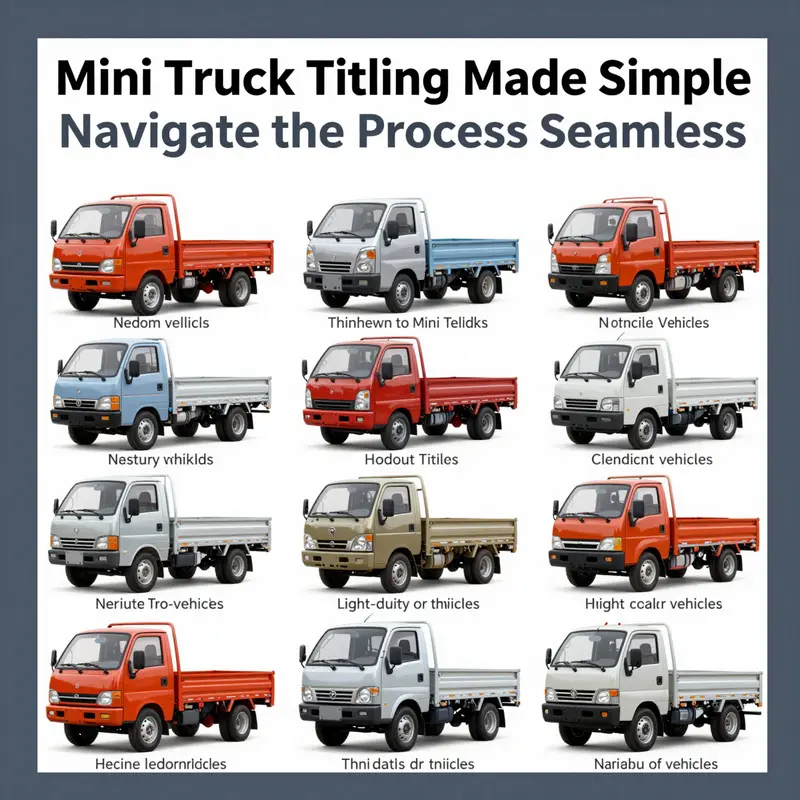
When you start counting the factors that determine how a vehicle is titled and registered, the smallest machines can seem to carry the heaviest paperwork. For the mini truck—a compact, urban-ready workhorse—the way it is classified on paper matters just as much as how it looks in the lot. The classification a mini truck earns in titling and registration is not a single attribute but a careful balance of measurements and capacities. It hinges on a blend of statutorily defined thresholds and how those thresholds are interpreted by the state or country in which the vehicle is registered. In many places, these micro or ultra-light cargo vehicles sit near the boundary lines that separate light-duty trucks, small commercial vehicles, and certain passenger-vehicle categories. What this means in practical terms is that two vehicles that look almost identical to the untrained eye can end up with very different titles and different registration implications, simply because the governing authorities consider one dimension or rating more decisive than another, or because they adjudicate a particular use as “business” rather than “personal.” In this sense, the title is not a label you assign to a vehicle; it is a formal description of its characteristics, its suitability for certain types of operation, and, ultimately, the rights and responsibilities that flow from its classification. Understanding these dynamics begins with the core benchmarks that regulators use to categorize vehicles and then extends to the consequences those categories have for owners, operators, and insurers alike.
Central to the conversation is the gross vehicle weight rating, or GVWR, and the overall dimensions of the vehicle. These two metrics, along with wheelbase and cargo capacity, function as the primary levers that determine whether a mini truck falls under the umbrella of a light-duty truck, a small commercial vehicle, or even a passenger vehicle with utility capabilities. The national norms established by the DOT and NHTSA provide a framework, but how they are interpreted in practice varies by state. A vehicle with a GVWR under a certain threshold—commonly a number in the vicinity of 6,000 pounds in many jurisdictions—tends to be treated as a light-duty option rather than a heavier commercial conveyance. Yet a toy-sized truck that is especially cargo-focused, or one with a longer wheelbase, may still command a different classification if its payload and dimensions push it into a different envelope. Likewise, the vehicle’s length, typically constrained in official tests and regulations to a limit around 3.5 meters in many regulatory narratives for micro and mini trucks, becomes a touchstone for determining whether the vehicle behaves more like a compact commercial van or closer to a small passenger vehicle with a limited cargo area.
In practice, most mini trucks inhabit the lower end of the GVWR spectrum and feature cargo capacities that are modest by conventional standards—often under 1,000 pounds. This combination—smaller footprint, light weight, and limited cargo capacity—tends to support their classification as non-commercial or low-capacity vehicles in many jurisdictions. Still, because regulations differ from one state to the next, it is all too possible to encounter a mini truck that is categorized in a manner more favorable to freight use or business operations, depending on whether its owner intends a professional application or personal, occasional hauling. The careful reader will recognize that the category labels—whether “Mini Truck,” “Micro Truck,” “Light Commercial Vehicle,” or a hybrid designation—do not merely reflect a name. They reflect a regulatory posture about where a vehicle fits in the hierarchy of road use, taxation, emissions obligations, and safety oversight.
The careful observer should also pay attention to the way dimensional constraints interact with regulatory definitions. If a vehicle comfortably sits within a short length—often under the 3.5-meter barrier—and maintains a GVWR below the threshold that would push it into heavier commercial classifications, the autonomy of its titling path can be clearer. However, even within those confines, differences in body style, such as whether the vehicle is configured as a compact cargo van, a flatbed, or a cab-forward utility vehicle, may alter the exact pass-through for titling terms. In jurisdictions where utility and delivery roles are common, authorities may lean toward a “commercial vehicle” registration path even when a vehicle remains physically small. The practical implication is that the same vehicle could be titled as a “Mini Truck,” a “Light Commercial Vehicle,” or a “Van” based on the confluence of its body style and its intended use. The distinguishing factor—whether you plan to use the vehicle primarily for personal tasks or for business operations—often governs the initial registration category and the ongoing compliance framework.
The operational consequences of titling decisions go beyond the printer’s ink on a title certificate. They ripple into insurance classifications and rates, road-use restrictions, and eligibility for certain incentives or exemptions. A vehicle registered as a light commercial vehicle may be treated differently by insurers, with pricing that reflects its utility role rather than a purely private passenger use. In some states, commercial classifications carry different licensing requirements for drivers, distinct inspection schedules, and even separate fuel or emissions considerations. For example, a vehicle used for local delivery might be required to meet stricter emissions standards or periodic safety checks, depending on the jurisdiction’s environmental and safety policies. In other places, the same vehicle might be allowed in certain lanes or times as a commercial utility vehicle, reflecting a policy approach that recognizes its practical role in commerce. The effect is that titling decisions trickle outward, shaping operating costs and the opportunities available to the owner.
Given this landscape, the titling process for mini trucks frequently comes down to a few actionable steps that a prospective owner can take to secure the proper classification without friction. First, your GVWR and gross vehicle weight figures must be verified from the vehicle’s official documentation or the manufacturer’s specification sheet. If the GVWR is near the fringe of a threshold, it can trigger a different regulatory treatment, making precise documentation essential. Second, you should measure the vehicle’s essential dimensions, especially its length and wheelbase, and compare them against local standards. Some jurisdictions consider wheelbase and length together, while others focus more on overall length. Third, you should assess the intended use. Do you plan to operate the mini truck as a business tool—delivering goods, carrying equipment, or supporting a commercial service? Or will its role be primarily personal, with occasional light hauling? The answer to this question can tilt the classification, especially when a state’s Department of Motor Vehicles or transportation authority weighs the vehicle for commercial registration versus passenger-vehicle status.
A practical reminder is to consult the local DMV or the equivalent transportation authority for the most accurate guidance. Naming conventions and classification rules vary widely, even across cities within the same state. A single rule that applies to a large metropolitan area may be interpreted differently in a rural county, and a few tens of pounds of GVWR can change the registration category in some jurisdictions. This variability is why a preliminary online check is never a substitute for direct confirmation. The DMV’s own publications, vehicle classification guides, and the specific titling instructions for light-duty and commercial vehicles will spell out the exact steps and required documentation. In many cases, the process involves supplying the vehicle’s VIN, proof of ownership, a bill of sale, notices of compliance with emissions or safety requirements, and, if applicable, documentation related to business use. In others, the emphasis is on birth certificate-level data for the vehicle’s dimensions and weight, followed by a straightforward assignment of a category that best fits the vehicle’s intended role.
Beyond the weight, the dimension and use considerations, the rise of electric mini trucks adds another layer of nuance to titling and classification. Zero-emission powertrains bring potential incentives, rebates, and special considerations that can influence how authorities view the vehicle. Some regions explicitly recognize electric mini trucks as eligible for incentives aimed at reducing urban air pollution and promoting clean transportation. These incentives can, in turn, affect the perceived utility class of the vehicle and may favor a category that aligns with low-emission operations. In a marketplace that has seen growing interest in compact electric fleets for last-mile delivery or service calls, the regulatory landscape is actively evolving. Yet even with potential advantages, owners must ensure that the vehicle’s overall weight, dimensions, and propulsion method align with the program’s eligibility criteria and the jurisdiction’s tacit expectations for safety and compliance. The interplay between environmental programs and titling categories illustrates how policy tools can shape the practical realities of owning and operating a mini truck in a busy urban or suburban environment.
Because regulations are not static, the best strategy is not to assume the classification you prefer but to verify the actual category assigned after submission. The DMV and equivalent agencies publish the final titling and registration categories once the vehicle is evaluated, and those categories drive not only the paperwork but also the ongoing regulatory obligations. In short, the chapter of a mini truck’s life that is written on its title is a concise synopsis of how the vehicle is perceived by the system that governs road use: a compact, capable tool, a practical business asset, or a personal vehicle with utility, depending on the exact combination of weight, size, and use.
If you are exploring the landscape of model options and how their specifications influence classification, you may want to examine how different designs compare in terms of payload, dimensions, and powertrain choices. A detailed model comparison page can offer insights into how small changes in wheelbase, bed dimensions, or GVWR can push a vehicle into a slightly different regulatory bucket. This is where the conversation becomes especially practical: not every model qualifies for the same title, even if they occupy the same general vehicle class. A single model with a longer wheelbase and a heavier GVWR could be treated more like a true light-duty truck than a compact van, while another with the same gross weight but a more urban-oriented footprint could be viewed as a borderline commercial vehicle. These distinctions, while seemingly subtle, carry real consequences for registration, insurance, and use-case flexibility. To better understand how these nuances play out across different offerings, consider exploring the model comparison discussions that delve into the trade-offs between dimensions, payload, and overall mass.
For readers who want a visual reference to how these discussions translate into real-world choices, the literature around minitruck configurations often compares a few representative forms: a compact cab-forward chassis, a small cargo van with a tight footprint, and a lightweight flatbed geared toward urban delivery. Each configuration interacts with the weight and dimension thresholds in its own way, which is why your specific vehicle spec sheet remains your most reliable compass. The more precise the measurements you bring to the DMV—weight ratings, vehicle length, wheelbase, and payload—the more confident you can be when discussing registration options with the licensing authority. And if your ambitions include pursuing incentives or special programs for low-emission fleets, you’ll want to align the vehicle’s technical profile with the program’s eligibility criteria from the outset so you don’t encounter surprises after submission.
As a practical note, always consider creating a clear record of the intended use for your mini truck and being prepared to demonstrate that use if required. For instance, if you plan to use the vehicle for business deliveries, keeping a log of typical routes, payloads, and operating hours can help validate the commercial designation to the extent it is mandated by local statutes. If, on the other hand, the vehicle is strictly a personal utility vehicle, maintaining documentation that supports private-use operation can help avoid misclassification that could complicate insurance or compliance down the line. In short, a thoughtful approach to preparations, supported by accurate and current regulatory references, can smooth the path from purchase to titling and ownership.
To those who want a practical shortcut without sacrificing accuracy, a good rule of thumb is to lean into the official sources before assuming any label. The distinctions among Mini Truck, Light Commercial Vehicle, and Passenger Vehicle with Cargo use are not mere semantics; they are the scaffolding that supports vehicle taxes, road access, and safety compliance. The best decision is informed by the collective guidance of the vehicle’s dimensional data, weight ratings, and the intended use, validated against your local authority’s published rules. When you align these elements coherently, the title reflects the vehicle’s true role, and the registry process proceeds with fewer surprises, fewer amendments, and a clearer sense of what is required to maintain compliance over time.
Internal link for model considerations and specifications can offer further insight into how subtle design differences influence classification, including body style and payload capacity. For a focused look at how specific model configurations have been evaluated in terms of specifications and practical use, you can explore this resource: comparing-kingstar-kruzr-models-specs-features.
External resource for authoritative guidance on classification and titling rules: For official, up-to-date regulatory standards, see the U.S. Department of Transportation’s Vehicle Classification Guide. This external reference provides a comprehensive framework for understanding how weight, dimensions, and use influence vehicle categorization across jurisdictions: https://www.transportation.gov/vehicle-classification.
From Kei to Compliance: Navigating the Title Path for a Mini Truck Across Jurisdictions

A mini truck raises questions about titling that go beyond a simple paperwork checkbox. It sits at a curious crossroads of size, weight, purpose, and place. In practice, you can title a mini truck, but the exact label and the rules you must follow depend on where you register it and how you intend to use it. The journey from a compact cargo carrier to a legally titled vehicle is shaped by a mix of physical parameters and administrative definitions that vary from one jurisdiction to the next. To understand why the process feels different from titling a typical sedan or a standard full‑size pickup, you first need to recognize the core tension: the vehicle is small, yet it carries cargo, and that cargo function invites commercial classifications in many places. The result is a practical truth you will hear echoed in DMV offices and registry portals across the land: the title may read as a “Mini Truck,” a “Micro Truck,” or a “Light Commercial Vehicle,” but the precise tag is largely a local matter that changes with the administrative weather of each state or country. Keeping that variability in mind makes the rest of the titling process less mysterious and more predictable, even when the rules seem to shift underfoot.
The key to this puzzle lies in the vehicle’s physical and regulatory profile. A true mini or kei truck, as conceptually defined in Japan and echoed in many registries, is built to a compact footprint yet capable of meaningful cargo transfer. In practical terms, that means it tends to meet specific size and weight thresholds that push it into a distinct category. For Kei trucks, the standard pushes hard against several limits: engine displacement is capped, and dimensions are tightly constrained. In Japan, Kei cars carry strict limits on engine size and dimensions that ensure a certain class of tax and regulatory treatment. For Kei trucks, the body must stay neatly within those overall constraints to maintain eligibility for the “Kei” label, and that label in turn influences how the vehicle is treated when it arrives on a foreign market’s doorsteps. In other jurisdictions, the same logic applies, though the exact numbers and the terminology shift. Generally, a mini truck in the broader sense is a small cargo vehicle with a length not exceeding about 3.5 meters and a GVW close to or below 1,800 kilograms, depending on the region. The practical upshot is simple: the more the vehicle adheres to small size and light weight, the more likely it will be seen as a light commercial vehicle or a passenger vehicle with cargo capacity rather than a conventional full‑size truck. That classification matters because it sets the baseline for registration fees, insurance, road usage, and permissible operations.
As you approach the actual titling step, the first decision point concerns classification. State and national authorities do not universally label these vehicles the same way, and a single vehicle can be titled differently if used for personal transport, delivery, or fleet service. In some places, a mini truck used for personal errands may be registered under a passenger vehicle category with a cargo endorsement, while the same model used for a small business could be registered as a light commercial vehicle. The distinction is not academic. It affects the cost of registration, the applicable taxes, and even the level of required maintenance inspections. The result is a practical implication: plan the title around the intended use. If the goal is a business operation, you are most likely looking at a commercial designation that triggers additional paperwork, potential licensing, and more stringent compliance checks. If the vehicle will see limited, noncommercial use, a passenger‑vehicle path may be available in some jurisdictions, often with fewer regulatory hurdles but still requiring compliance with emissions and safety standards.
Beyond the label lies the question of compliance—both for entry into a market and for ongoing operation. A central thread in the titling story is conformity to safety and emissions standards. In practice, this means confirming that the vehicle meets local standards for its era, country, and intended use. Importing a Kei‑style mini truck into another country typically demands an approval pathway that demonstrates compliance with safety and environmental rules. In the United States, for example, this often involves engagement with the regulatory frameworks overseen by agencies charged with vehicle safety and emissions. If a vehicle cannot pass the necessary testing or certification steps, formal registration and on‑road use may be blocked. While some jurisdictions provide pathways for vehicles that do not conform to every standard to be modified to meet the requirements, the route can be costly and time‑consuming. That is an important reality for anyone considering cross‑border procurement of mini trucks: the path to a legal title hinges on whether the vehicle can clear the jurisdiction’s certification gate.
Another layer of the titling landscape is the financial and administrative cost, which often varies more than people expect. Registration fees in different regions don’t just scale with vehicle weight; they are shaped by how the vehicle is classified and by how it will be used. In some places, lightweight commercial registrations enjoy reduced annual taxes or fees, which can be a meaningful incentive for small businesses seeking a practical fleet option. Insurance costs tend to follow similar logic. While the underlying risk factors are modest for a small, low‑speed vehicle in a low‑miles category, premiums rise and fall depending on the declared use, the driver’s history, and the exact vehicle class assigned by the regulator. It is tempting to view the rear of the title as a minor administrative formality, but in truth the title interacts with every recurring cost tied to vehicle ownership and operation.
The nature of use enters the conversation as a practical hinge. When the vehicle serves a business function—delivering goods, transporting tools, or supporting a small‑volume operation—the titling process commonly expands into a fuller regulatory footprint. Some jurisdictions layer additional requirements, such as commercial registration, fleet licensing, or vehicle inspections aligned with fleet standards. In a country where commercial transport rules are detailed, even a tiny truck used for business can become subject to rules designed for larger operations. The guiding idea is straightforward: business use invites more oversight, so the titling and registration processes adapt to reflect that reality. The same is true for cross‑border operations where cross‑jurisdiction fleet management norms come into play. A fleet operator’s decision to pursue a single, unified online platform for registrations across states hints at a broader trend. Digital systems promise fewer trips to the DMV, faster processing, and clearer tracking for fleets. This shift is not merely anecdotal; several jurisdictions have begun migrating core titling and registration tasks to centralized, cloud‑based platforms. The broader implication for the practical reader is that the timeline for obtaining a title may be smoother in the future, albeit with continued attention to local rules and necessary filings. The practical takeaway is to stay aware of evolving digital services and to verify whether a jurisdiction offers online portals that streamline the process for small commercial vehicles.
The path to a legitimate title also requires careful attention to import status and certification. If the mini truck you have in mind comes from abroad, you will need to navigate import rules that may require verification of safety features, emissions controls, braking systems, lighting, and the like. Agencies responsible for vehicle safety and environmental protection outline the certification pathways, and if the vehicle cannot meet these standards, it may be barred from registration in its current form. The challenge is not simply about meeting a single standard. It often involves a package of requirements that must be verified together, which can drive the decision to modify a vehicle or to opt for a domestically compliant alternative. For readers wrestling with cross‑border plans, the core message is clear: investigate the precise regulatory gatekeepers in your intended market early, because the cost, time, and feasibility of compliant entry depend on the vehicle’s specification and intended use.
An encouraging note appears in the broader regulatory landscape. There is growing momentum toward digitized, standardized processes that reduce friction for temporary and permanent registrations alike. The idea is not to erase the nuance that local rules require, but to provide a more predictable framework for owners and fleets that cross borders or cross state lines. Platforms aimed at fleet management and streamlined titling services are gaining traction, with regulators exploring common data standards and shared workflows. The practical effect for a reader is that you should seek out official online resources and updates from your local registry, and consider whether cross‑jurisdiction platforms are available to simplify the experience. For a broader sense of how the industry is evolving, one can consult general industry resources that discuss evolving digital workflows and the increasing emphasis on cross‑state compatibility.
In this light, the decision to title a mini truck becomes less about a single form and more about aligning the vehicle’s profile with the regulatory and practical realities of the intended market. If your goal is to operate within a single jurisdiction, you still benefit from understanding how the vehicle could be classified in that jurisdiction—from a light commercial vehicle to a specialized passenger vehicle with cargo capacity—and from knowing the requirements for emissions, safety, and weight compliance. If your aim is cross‑border or multi‑state use, you must map out the potential pathway to harmonized or at least compatible titling across jurisdictions. The less obvious benefit of this knowledge is flexibility: understanding where a vehicle can be registered with a favorable classification helps you plan ownership, insurance, and use.
As you weigh these considerations, you will likely consult with your local DMV or equivalent authority to confirm how your vehicle will be classified, what documents you must provide, and which inspections or tests are required. The core documents typically include proof of ownership, a clear vehicle identification number, records showing the vehicle meets safety and emissions standards, and evidence of the vehicle’s weight and dimensions. In the case of imported or modified minis, additional documentation may be needed to prove conformity with local rules. It is also wise to inquire about any special fees or exemptions that might apply to small commercial vehicles, as these can shift the overall cost equation in meaningful ways. And if you want a broader sense of how mini trucks fit into current fleet and registration ecosystems, exploring related discussions on industry blogs can provide useful context. For a broader look at the topic on this site, see the mini truck blog resources: minitrucksocala.com/blog/.
Ultimately, the title is not just a label but a gateway to how the vehicle is perceived, taxed, insured, and allowed to operate. The practical path to success begins with acknowledging the variability of rules and embracing a plan that prioritizes compliant use and accurate classification. In the end, titling a mini truck is feasible. The key is to align the vehicle’s physical profile with the jurisdiction’s regulatory framework, to anticipate the costs and steps of certification, and to use digital avenues when available to simplify the process. The journey from a compact, capable cargo vehicle to a legally titled asset is less about finding a universal rule and more about navigating a network of local rules with clarity and patience.
External reference: https://www.fleetindustry.com/
Final thoughts
Titling your mini truck doesn’t have to feel overwhelming. With the right information about compliance, local regulations, and the classification of your vehicle, you can streamline the registration process. Whether you’re using your mini truck for business purposes or leisure, understanding the nuances of your local laws ensures a smooth experience. Always refer to your state’s Department of Motor Vehicles for specific requirements and stay informed. Happy driving!