

When it comes to managing your Mini Maxx during truck repairs, many owners often find themselves asking one important question: Can I unplug my Mini Maxx while my truck is being fixed? This article delves deep into the impact of unplugging your Mini Maxx on installation processes, the technical considerations that come into play during repairs, manufacturer recommendations for maintenance, and real user experiences highlighting precautions. With a clear understanding of these aspects, residential property owners, small business owners, and Mini truck enthusiasts will be better equipped to maintain their devices during truck repairs without risking damage or failure.
Power, Protocol, and Prudence: Navigating Unplugging an Essential Vehicle Module During Repairs
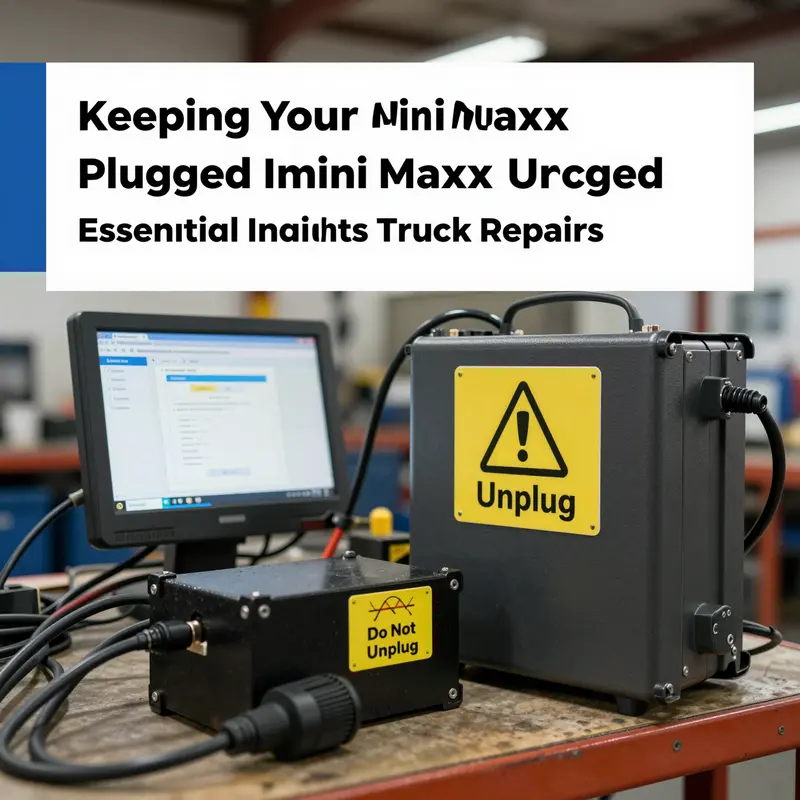
The central question—whether you can unplug a compact power module during repair—is more than a simple yes or no. Modern vehicles use power, software, and hardware in a carefully choreographed sequence. Interrupting a firmware update or calibration by removing power can leave the module in a partially updated, unstable state with risks to calibration, sensors, and boot logic. High-energy systems amplify these risks: a sudden disconnection can cause inrush, transient conditions, or voltage deviations that exceed safe envelopes and compromise safety.
A prudent approach is to keep power connected until the official shutdown procedure is completed and a safe, non-energized state is verified. If work requires handling near the module, power the system down per manufacturer guidelines or isolate it from the high-voltage network, ensuring a controlled environment. If there is doubt about safety, pause and consult official guidance to perform disconnections in the documented order.
In practice, plan maintenance windows to avoid driving during updates, coordinate with the service team, and verify a safe reboot after the work is finished. Unplugging mid-operation is a last resort and generally discouraged; the safer path is to complete the installation or update, then perform a verified shutdown and reboot to preserve calibration, memory, and the expected trust chain.
For readers seeking broader context, general best practices for installing and updating control modules in vehicle environments are discussed in automotive upgrade literature, including hobbyist contexts where similar issues arise. External resources can illustrate potential consequences of mid‑process power loss; the key takeaway is to treat power-down as a defined step in the repair workflow rather than an afterthought.
Guarding the Quiet Heart of Truck Electronics: Do Not Unplug During Repairs

In modern trucks, a small power-management module coordinates energy and communication. During repairs, this unit is central. The temptation to unplug it exists for space or speed, but interrupting an update can cause broader problems.
Understanding its role: In many trucks, electrical architecture is a network of high and low voltage subsystems and many control modules. The device acts as a keystone. If its firmware is updating, interruption can leave it in an indeterminate state, sometimes with error codes or failed protections, and may cascade to other systems.
Safety and procedural guidance: Do not unplug during updates. Firmware updates reconfigure how the device negotiates power, how it guards against voltage dips, and how it reports fault conditions. Interruptions can leave the device unable to guarantee safety. Practical consequences include initialization failure, misreporting voltages to essential modules, and the need to reflash with specialized tools and a controlled power supply.
Repair strategies: Diagnose with a reliable diagnostic tool, plan a sequence that minimizes power interruptions, and ensure the device stays powered during critical steps. Avoid unplugging until the update completes and the system stabilizes. Coordinate with mechanical work so that power state is not altered during high load or critical alignments. Use a stable power source or dedicated power supply regulated for electronics.
Post repair validation: Conduct a thorough test drive and check for fault codes or unstable electrical readings. Confirm consistent behavior across multiple cycles before returning to service.
Resources: For practice guidelines and best practices, consult manufacturer manuals and industry guidance. See professional repair manuals and independent technician communities for up to date recommendations. If you reference external reading, cite industry sources that discuss power integrity during firmware updates and the risks of interruptions.
Power Stability and Firmware Updates in the Shop

During maintenance, preserving a stable power supply while firmware or software updates run is critical. An update that is interrupted risks corrupted code, failed boot, and the need for costly reinitialization. Technicians follow documented procedures to keep power steady, avoid disconnects, and coordinate any needed changes with the service team. When the update completes, the vehicle can return to normal diagnostics and testing with fewer post repair surprises.
Power on Hold: The Quiet Rules for Unplugging a Portable Power Module During Truck Repairs

In the workshop, where the rhythm of tools and diagnostic screens competes with the hum of engines, a compact power module often sits at the intersection of safety and function. It powers sensors, displays, and control modules that technicians rely on as they diagnose and repair a truck. The question at the heart of this chapter—whether it is safe or prudent to unplug that device while the truck is being fixed—is not merely a matter of unplugging a cord. It is a question of risk management, power sequencing, and adherence to explicit safety guidelines that are designed to protect people and equipment alike. The cautionary principle is clear: power it down from its source before you begin intimate work on the unit or any system it supports. Yet the real world is seldom black and white, and the best practice emerges not from a single rule but from a careful reading of instruction, a sober assessment of the current task, and an awareness of how a live power state interacts with the mechanical work being performed on a vehicle.
At the core of this guidance is the understanding that modern power modules are not simple plugs and sockets. They are embedded in a network of electronic control, energy management, and protective circuitry. When a technician approaches a repair sequence, the first instinct must be to secure the power supply to the device. This instinct is reinforced by official directions that emphasize unplugging the device from its power source during maintenance. The logic is straightforward: once a device is disconnected, the risk of unexpected behavior, electrical shock, or unintended power feedback is greatly reduced. In a workshop where a truck’s electrical architecture can be complex—combining 12-volt auxiliary systems with higher-energy storage and sensitive microprocessors—the benefits of cutting power are magnified. The moment power is removed, the chance that a short, a surge, or a backfeed could travel through cables to other components diminishes. This single action—unplugging—becomes a foundational safety step that supports every subsequent diagnostic or repair activity.
Beyond the act of unplugging lies a second layer of critical guidance: if the device overheats or assumes an abnormal shape, stop immediately and disconnect all electronic devices. This admonition is not merely a cautious line from a manual; it is a recognition that electrical faults often accompany mechanical stress. Overheating can indicate insulation breakdown, internal arcing, or failed cooling pathways. An abnormal shape can be a precursor to a catastrophic failure. In the context of repair work, where tools, fluids, and heat sources mingle with electronics, the risk of electric shock, burns, or a fire rises sharply when a fault state coexists with active power. The guidance here is practical and blunt: when safety is compromised, power down, isolate, and reassess before continuing. This stance is especially important in a repair setting where residual energy can linger and where a momentary lapse in power disconnection could amplify the hazard.
The integrity of the power cord and plug is another central concern. If there is any fraying, overheating, or visible wear, such issues are not minor cosmetic faults; they are indicators that insulation may be compromised and that a fault path could be created under load. The recommended course of action is clear: have a qualified technician address the damage. Attempting to repair or modify a compromised power supply without proper tools, testing protocols, and training risks electric shock, burns, or fire. In the repair environment, the habit should be to treat any damaged power cord as non-serviceable by the user, and to route the problem to the manufacturer or an authorized service provider. This approach preserves the safety margin that the device’s design relies on and preserves the integrity of the overall electrical system in the vehicle as well.
Humidity and moisture add another layer of risk to any electrical task. The workshop floor, a rain-lashed bay, or even a bathroom-like area in a mobile workshop creates a vulnerability to short circuits and corrosion. The guideline is explicit: keep the device out of high-humidity zones and away from water sources during maintenance. If the work must occur in a damp environment, power should be disconnected and the outlet should be equipped with a residual current device (RCD) rated no higher than 30 milliamps. The intention is to create a buffered path that stops fault currents from reaching a person who might touch a live conductor. In practical terms, this means planning the workspace, laying out power sources and cords so that water exposure is unlikely, and verifying that protective devices are in place before any live work begins. The emphasis on supervision of children is not merely to prevent nuisance trips; it is a reminder that the workshop is a risk-rich environment, and even curious hands can disrupt a fragile electrical setup during maintenance tasks.
The interplay between a repair job on a vehicle and the status of a connected power module invites a broader reflection on power management. The vehicle’s own electrical architecture can influence how a standby device behaves. In some cases, when maintenance requires you to work around connectors or modules embedded in the vehicle’s frame, it is prudent to work with the power module disconnected. The logic is not about denying power or creating a hostile working environment; rather, it is about ensuring that work on the truck does not inadvertently energize a circuit that is already stressed by exposure to heat, vibration, or moisture. When the vehicle is powered down in a controlled manner, and when the energy storage system is in a safe state, technicians can perform mechanical tasks with a reduced risk of sudden re-energization, which could be dangerous during disassembly, inspection, or reassembly.
In many repair operations, technicians rely on the ability to observe the behavior of connected devices once power is restored. This is where the caution about not unplugging during an active installation or firmware update becomes central. If a device is in the middle of a process, such as a firmware upgrade or a configuration write, an unintended interruption could leave the unit in an undefined state. Bricking, partial updates, or corrupted configurations can cascade into later failures that ripple through the vehicle’s control networks. For this reason, the safest practice—except in specific, exception-laden scenarios—is to avoid disconnecting power as a routine during ongoing updates. The manual speaks to this nuance: updates should complete with power supplied in a stable, controlled manner. Yet the repair context demands a balanced interpretation. If the work requires you to access bundled cables or to test a particular subsystem, it may still be necessary to unplug the device to protect the technicians and the vehicle. The key is to perform unplugging deliberately, with a clear plan, and to re-establish power only after the area has been secured and the device has been inspected for safety.
This balancing act—between keeping power on for ongoing updates and removing power for safe mechanical work—echoes a broader principle familiar to technicians: follow the logic of the task at hand. If the device is actively updating, the risk of interrupting a critical sequence is high and often unacceptable. In that case, coordinate with the maintenance plan, schedule the update to complete before intrusive work, and ensure the vehicle’s power system remains stable to avoid ripple effects in the control networks. If, instead, the work is purely mechanical, mechanical inspection, or component replacement, then powering down and unplugging is the prudent, safer path. The decision should be guided by three questions: Is the device currently executing a critical operation? Will unplugging introduce a hazard to the technician or to the vehicle’s systems? Is there a risk that leaving the device powered could create a fault path during the repair? Answering these questions with care reduces risk and keeps the repair workflow efficient.
To illustrate how this plays out in real-world practice, consider the practical role of documentation and guidance from trusted sources. The narrative from the industry’s voices underscores the point that safety rules are not arbitrary; they arise from a history of electronics behavior in mobile contexts and from the learning that comes with every repair job. In this vein, technicians often describe a courtesy protocol: before beginning any repair on or near an energized device, they check that the device is not in a mid-update state; they then disconnect the device from its power source; they verify that the vehicle’s other power sources, if any, are isolated; and they confirm that there is no residual energy in capacitors that could pose a threat. These steps build a safe foundation for the rest of the work and help ensure that once repairs are complete, the system can be brought back to life without unintended consequences.
Within this framework, it is also important to acknowledge the broader ecosystem of safety culture that surrounds truck maintenance. Reading and internalizing the guidance of the device’s official user manual gives technicians a shared vocabulary and a consistent standard of practice. It is not enough to know that unplugging is generally safer; it is essential to know when it is appropriate to unplug and when it is safer to leave power in place until a task is finished. The manual’s insistence on turning off power if overheating, on avoiding any attempt to repair damaged power components, and on the use of protective devices in damp environments all contribute to a layered safety approach. This approach acknowledges both the realities of a busy repair floor and the physics of electricity, where voltage, current, resistance, and impedance dance in a delicate balance.
A final element of this discussion concerns the social and procedural dimensions of safety in the workshop. The practice of unplugging a device during repairs is not merely a personal precaution; it is a shared habit that depends on clear communication, proper labeling, and a disciplined workflow. Technicians must communicate their intentions to colleagues, especially when multiple tasks could intersect at the same time. A good workflow uses visible indicators—labels on cords, power switches in known states, and documented steps that describe the expected sequence of power-downs and restarts. The end goal is to avoid a scenario in which one person assumes power is off because a switch appears inactive, while another person, operating a different system nearby, re-energizes the circuit with potentially dangerous consequences. In practice, this means taking a calm, deliberate approach to power management, confirming expectations with the team, and relying on a documented plan that is accessible in the repair area. The result is not only safer work but a faster, more predictable repair process because workers spend less time double-checking states and more time resolving actual mechanical or electrical issues.
For readers who want to explore further, the conversation about unplugging during repairs also intersects with broader online discussions and professional resources. Insights from the broader community emphasize the value of a cautious mindset and the importance of following the precise procedures laid out in device documentation. These voices remind us that while the specifics of a given job can vary, the overarching discipline remains the same: protect yourself, protect others, and protect the equipment by managing power conscientiously. To connect with continuing conversations and practical tips, you can visit the Mini Trucks Scala Blog, which gathers hands-on perspectives from working technicians and enthusiasts who frequently navigate similar safety considerations in the field. Mini Trucks Scala Blog
As the discussion circles back to the central question, a practical takeaway emerges. If the truck repair plan involves a device that is actively updating, do not unplug mid-update. Schedule the work so that the update can complete with power intact, or coordinate a pause in the repair to allow the update to finish. If your work is safety-oriented, diagnostic, or involves disassembly near energy storage components, the default safe posture is to unplug the device, confirm there is no hazardous energy in the line, and proceed with the repair using appropriate protective practices. In either case, the guiding principle remains unchanged: safety first, power second, and repair progress third. The device’s own documented safety stance reinforces this posture, and it is a principle that technicians carry into every job, from the simplest connector check to the most complex system reconfiguration.
For those seeking a precise formal reference that codifies these precautions, the official device maintenance guide provides a comprehensive overview of when and how to disconnect power, how to handle damaged cables, and how to set up safe work environments in high-humidity contexts. While the specifics may evolve with each firmware revision or hardware platform, the fundamental rules endure. They remind us that the act of unplugging—a seemingly small gesture—often carries significant weight in the safety and success of a repair project. The clarity of these guidelines helps keep workshops safe, reduces the likelihood of costly mistakes, and supports technicians as they work to return a vehicle to road readiness with confidence.
In sum, the overarching answer to the question can be framed simply: unplugging a power module during repairs is not a one-size-fits-all decision. It hinges on whether the device is in the middle of a critical update, the presence of any signs of fault, and the environmental conditions in which the work occurs. The safest default is to unplug when you begin work on the unit, provided this is aligned with the repair plan. If the device is undergoing a process that must complete uninterrupted, then maintain power and coordinate the maintenance to avoid conflicts. The best practice is guided by the device’s own manuals and by the shared safety culture of the workshop. In the end, the right answer is the one that keeps people safe while preserving the integrity of the equipment and the reliability of the vehicle as a whole.
External resource: For more detailed guidance on device-specific safety procedures, consult the official device maintenance guide at https://www.minimax.com/support/user-guide/v3-mmx-wt-v3-v4-2. This resource provides structured, step-by-step safety recommendations that complement the workshop-based practices described above.
Final thoughts
Understanding the implications of unplugging your Mini Maxx while your truck is being repaired is paramount. Throughout our exploration, we’ve uncovered critical insights into how unplugging can disrupt installation processes, what technical considerations to keep in mind, the manufacturer recommendations that can guide you, and real user experiences that underscore the importance of caution. By keeping your Mini Maxx powered during repairs, you safeguard your investment and ensure a smoother operation once your truck is back on the road.