
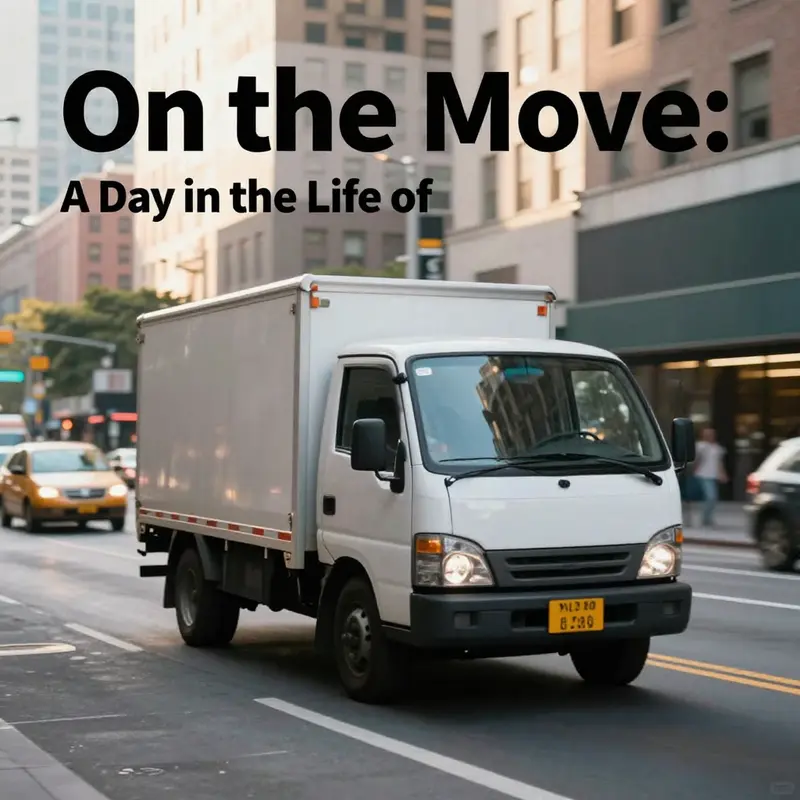
Imagine a compact powerhouse weaving through the bustling city streets, delivering essential goods with agility and precision. That’s a day in the life of a mini truck! For local small business owners, residential property owners, and mini truck enthusiasts alike, understanding what these hardworking vehicles go through daily provides valuable insights into their capabilities and significance. This article unfolds the morning routine, bustling midday deliveries, daily challenges, efficiency in design, and evening reflections of these capable trucks, showcasing their undeniable impact on urban logistics and community support.
Dawn Checks and Coffee: Morning Rituals of a Mini Truck
Dawn Checks and Coffee: Morning Rituals of a Mini Truck
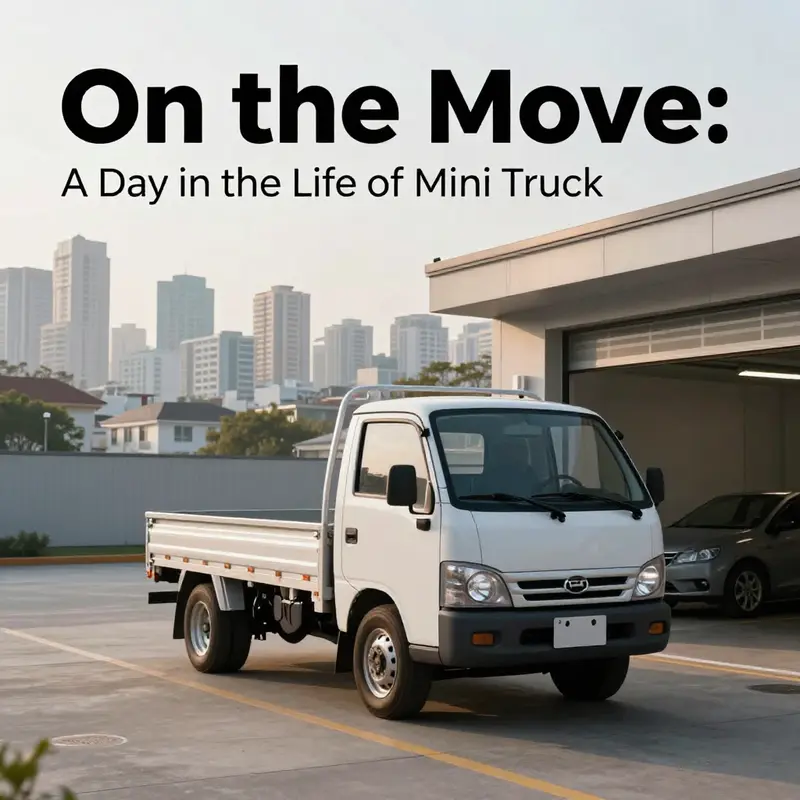
The day begins before the city wakes. A compact truck rests under a thin layer of frost or in the dim glow of an alley light. The driver climbs out and moves with practiced care. The first actions are deliberate and familiar. A hood is lifted. Fluids are checked. Tire pressure is felt by hand. Lights are tested. Each step is quick, but precise. These small rituals protect the load, the route, and the people who depend on timely deliveries.
There is a reason the morning check feels like a ceremony. The mini truck is built to be nimble. Its size lets it thread through alleys and squeeze between parked cars. That strength also calls for attention to balance and securement. Cargo must be tight against the bed. Straps are inspected for frays. Any loose pallet is pinned down. When goods sit square and secure, the truck reacts predictably on wet streets, steep entries, and narrow ramps.
While the engine idles and eases away the overnight chill, the driver completes an inward checklist. A steaming cup of coffee warms cold hands. A quick breakfast steadies the body. Paperwork is lined up or scanned into an app. The manifest is read once, then again. This quiet time is the only uninterrupted stretch until the day fills with doorbells, horns, and tight parking spots.
Route planning happens in two layers. There is the mapped route from depot or app. Then there is the practical route born of experience. Which side streets avoid morning construction? Where do delivery zones reduce double-parking fines? Which loading docks accept small trucks and which insist on larger rigs? A mini truck’s route balances speed with access. Short detours often save time by avoiding bottlenecks and awkward turns.
Modern drivers combine old instincts with new tools. A quick glance at traffic feeds and weather alerts guides timing and tire pressure adjustments. GPS suggests alternatives when incidents occur. Dispatch messages may change the order or add a last-minute stop. The morning ritual includes a brief mental rehearsal. Drivers picture the first three stops and think through parking, unloading, and reloading. That mental map keeps minutes from turning into costly delays.
Space management is a morning art. Many mini trucks use modular cargo solutions. Side rails, foldable boxes, and removable panels let crews adapt the bed to the day’s needs. Breakfast deliveries ride beside crates of produce. A bundle of parcels stacks neatly for downtown handoffs. When the load is configured correctly, each stop becomes a quick choreography. The driver grabs the right package without wasting steps.
Safety touches every move. Emergency kits are checked and refilled. Reflective vests sit within reach. A small shovel or traction mat might live under the seat in colder regions. Simple habits—wiping frost from mirrors, clearing lights of snow, or letting brakes warm on steep descents—make a measurable difference. The morning check turns the vehicle into a predictable partner rather than a source of surprises.
There is a human side to the ritual as well. Drivers exchange nods with other early risers at the truck stop. A brief conversation about road closures or a new loading rule can change a route for the better. These informal networks speed knowledge more reliably than any alert. In smaller communities, a mini truck driver might be the person who brings supplies to family-owned shops or fills an urgent repair order. That responsibility adds quiet pride to the morning routine.
Fuel and energy management begin with a full tank or a charged battery. For those running on traditional fuel, the morning stop can be the last chance to top off before a long loop. For electric variants, charging strategy matters. Rapid charging points are rare in tight city cores, so drivers plan their day to reach accessible stations during natural downtime. Balancing energy consumption with payload weight keeps the vehicle moving efficiently.
Documentation is brief, but essential. Proof of delivery photos, digital signatures, and time stamps get uploaded at the first stop. Keeping records organized prevents disputes later. Drivers often use a single app to track stops, log maintenance flags, and communicate with dispatch. When software and human experience align, the day moves smoothly.
Weather shapes the ritual in obvious and subtle ways. A morning in sleet calls for slower acceleration and earlier braking distances. Heat demands attention to coolant levels and shaded parking during breaks. Windy mornings make lightweight cargo vulnerable if not tied down. The morning inspection adapts to the forecast so that the truck handles the day without surprises.
As the sun lifts higher, the truck leaves the starting lot and settles into rhythm. The morning rituals remain a quiet backbone. Checks and habits performed at dawn ripple through the day. They prevent sudden breakdowns, reduce wasted time, and create a professional cadence that customers notice. Punctuality starts with a steady cup of coffee, a tightened strap, and a clear plan.
For those who want to read more about the daily life and practical tips for mini trucks, the mini truck socala blog offers timely articles and community stories.
The routine described here is echoed in everyday footage from drivers who share their mornings. One such capture shows the pause for coffee, a cinnamon roll, a pre-drive inspection, and the long, rewarding loop that follows. It reflects the practical, resilient life of compact trucks and the people who operate them: steady, attentive, and quietly essential. Source: https://www.tiktok.com/@truckerlife/video/715432109876543210
Midday Deliveries: A City-Pulsing Day in the Life of a Mini Truck
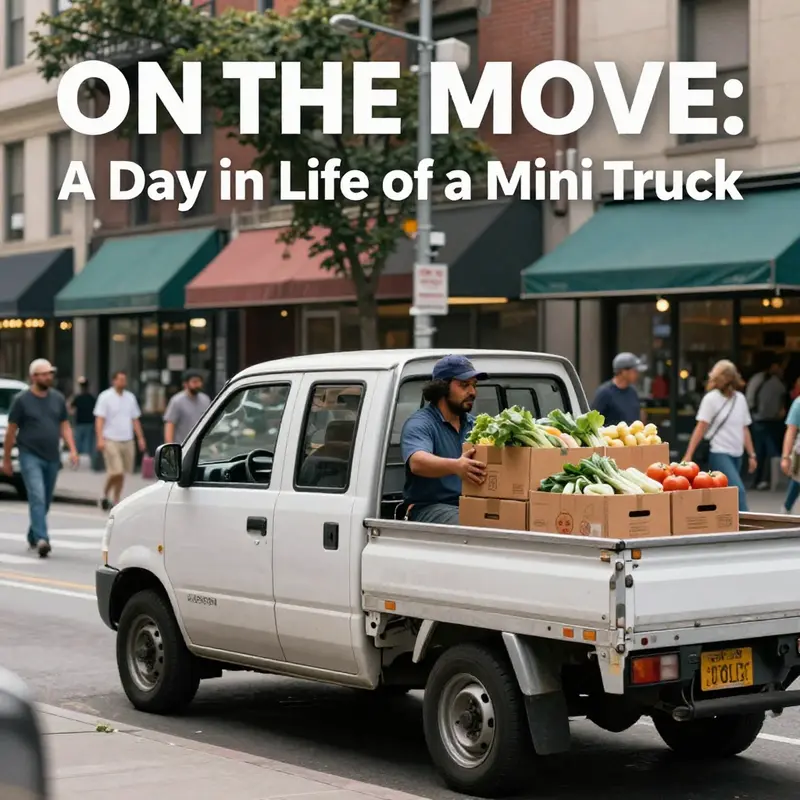
The clock moves with the traffic, and so does the mini truck, a compact workhorse that slides through gaps others would miss. By midday, the streets have shifted from the morning rush to a different rhythm: buses clearing out, couriers weaving between delivery vans, pedestrians threading along curb edges. The cab-over silhouette of a small truck is a constant reminder that size can be a quiet advantage. It fits where larger vehicles balk, slipping into narrow lanes and tight loading bays with a deftness that makes the driver’s job look almost choreographed. Inside, the routine is a discipline: check the route, confirm the stops, and keep the cargo secured, temperature-controlled, and ready for rapid reconfiguration if a stop changes course. The day’s pressure sits not in magnitude but in precision—each mile must count, each minute must be accounted for, and every handoff must feel effortless to the person waiting on the other end.
Midday is the hinge of the shift, where the delivery system pivots from origin to impact. The midday meal delivery frame, while simple in concept, becomes a concert of logistics when run through the lens of a compact vehicle. Cooked meals travel from central kitchens to multiple schools within a narrow window, which means routing matters as much as the meals themselves. The aim is to minimize travel time while maximizing coverage, a challenge that grows more intricate as a city’s grid reveals its shortcuts and its bottlenecks. In this setting, the mini truck acts as a mobile kitchen-to-door conduit, a quiet mediator between prepared food and hungry lunchrooms. Temperature integrity matters as much as punctuality. A well-insulated cargo box, possibly with modular compartments or a foldable reconfiguration option, allows drivers to adapt as stops multiply. If a school requests last-minute changes, the vehicle’s interior layout can be reshaped on the fly, shifting from a single tight stack of meals to a tiered arrangement that keeps food hot without compromising safety. The driver becomes a conductor in a small orchestra of temperatures, timings, and human expectations, each note carefully tuned to land within the lunch hour.
The real-time heartbeat of this midday operation is not only the driver’s skill but the technology that shadows every mile. Live tracking and GPS coordinates illuminate a path through the city’s layered fabric—avenues, alleys, and service roads that exist in a different rhythm than the main drags. In supported regions, dispatchers and program managers watch the feed with a careful eye, ready to reroute a stubbornly stalled vehicle, flag a delay to a school, or reprioritize a stop to prevent a missed lunch. The transparency isn’t for show; it’s a practical shield against uncertainty, a way to hold the clock steady when traffic conspires against it. For parents and guardians relying on timely nourishment, knowing the truck’s location in real time turns anxiety into confidence. And for the driver, the ability to adapt mid-route is a form of competence that grows with experience: a jam on a bridge becomes a detour through a quiet side street; a mechanical hiccup is diagnosed in minutes, with a plan B installed before the next curb. As explored in the minitrucksocala blog, real-time routing and tracking reshape midday delivery systems, turning a simple loop into a flexible, accountable service that keeps nourishment flowing. minitrucksocala blog is a concise reminder that technology and street wisdom together craft resilience on every mile.
The human element threads through this midday tapestry as if it were a visible wire. Drivers carry more than route sheets and thermoses; they carry the day’s emotional weather, the little rituals that steady a shift, and the practical gear that keeps them moving when the temperature dips or the wind bites. A driver might begin the morning with warm clothing and a compact heater tucked beside the cab, a personal ritual that guards focus during the hours when fatigue becomes a sticky shadow. A sturdy thermos, a reliable mug, a small spare blanket—these items are not luxuries but lifelines that translate into steadier hands, sharper attention, and warmer meals for the students who rely on that midday nourishment. A mentor once noted that the most durable tools are not the newest gadgets but the simple comforts that allow a driver to endure a tough route with dignity. It’s not about price; it’s about usefulness. That ethos lives in every curbside handoff, every careful re-portioning of meals to keep heat consistent, and every time a student smiles at the sight of a lunch that arrived on time.
In a broader human context, the same tempo of midday care can be seen in places far from the urban corridor where the system was born. Consider grassroots acts where neighbors share small portions of food and essentials, a reminder that the thread connecting a kitchen to a doorstep—whether in a planned program or a spontaneous act of kindness—hinges on timeliness and reliability. The day’s routine is a microcosm of those larger acts: a dependable vehicle, a driver who values punctuality, a route that respects the spaces it passes through, and a moment when feeding someone in the middle of the day feels ordinary yet essential. Within this larger frame, the mini truck’s midday loop becomes more than a sequence of deliveries; it is a vehicle for continuity, a steady link in a chain that supports education, health, and community well-being. The load is dual—a practical cargo of meals and a symbolic cargo of trust: that a community can count on its smallest conveyance to carry something big in its heart.
As the day advances toward its final stops, the rhythm shifts again. The truck returns toward the depot with the last boxes secured and the last signatures obtained, but not without reflection. The driver checks the route log, notes any deviations, and weighs how today’s decisions will ripple through tomorrow’s schedule. Traffic, weather, and last-minute requests will always test the system, but the compact truck’s nimble profile remains a constant advantage. There is a quiet satisfaction in knowing that a small vehicle, aided by smart routing and human care, can deliver something substantial: nourishment, reliability, and a sense of connection to a city that never quite stops moving. In this sense, the midday chapter of a mini truck’s day is not merely a transition between morning and afternoon; it is a demonstration of how modest means, when guided by precision and compassion, can sustain a community at its most practical and most human. The day ends not with a flourish but with a practiced routine—the depot doors closing on a job well done, the engine cooling, and the driver already mapping the next day’s route in memory.
External resources for readers curious about the tracking and logistics implications of real-time delivery can be found here: The Ultimate Guide To Live Tracking Your Amazon Package With Precision And Ease. https://www.amazon.com/gp/help/customer/display.html?nodeId=5081342
Navigating the City Edges: A Challenge-Driven Day in the Life of a Mini Truck
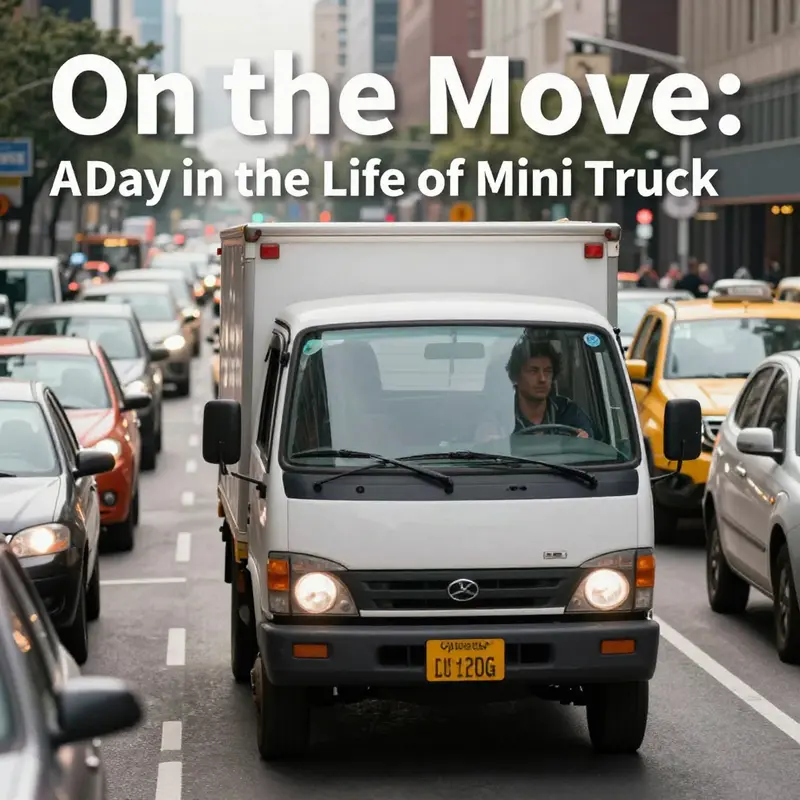
Dawn finds the cab-over mini truck parked at the edge of the depot, its compact silhouette catching the first pale light of the day. The engine settles into a steady purr, and with a practiced turn of the key, the driver settles into a rhythm known as daily business for urban logistics. The city is a living obstacle course, and this little vehicle is built to move through it with precision. The driver breathes in the hum of the engine, checks the cargo bay, and surveys a route that must thread through narrow lanes, crowded curb zones, and a string of neighborhoods that all want to be delivered to, yet all seem to resist being reached at the exact planned moment. The cab-over design, with its high eye line and compact footprint, isn’t just a configuration choice; it’s a tool that translates into better visibility, tighter turns, and a smaller footprint on the street. Yet even with this advantage, the day begins with a simple truth: in the city, space is capital, and every meter counts.
The morning is a careful negotiation with the clock. The driver moves through a network of blocks where storefronts spill onto sidewalks and delivery bays tuck out of sight around corner angles. Tight streets demand a constant talk with the GPS, the driver’s memory of one-way patterns, and a willingness to adapt in real time. It isn’t about speed so much as timing—being where needed when others are still trying to locate the right loading dock. Each arrival triggers a dance of loading and loading-out, a choreography that hinges on the truck’s size and the driver’s familiarity with the local terrain. The payload is kept light and judiciously distributed, not merely to maximize volume but to keep handling predictable. A misstep with weight distribution can tip a corner too aggressively or make a curbside stop more than a little nerve-wracking. The driver’s hands remember the feel of the wheel and the subtle shifts demanded by undulating pavement or a sudden gust that sweeps across a high-rise street canyon.
A foldable cargo box, a feature born of urban cleverness, makes this day’s logistics possible. It folds down when space is at a premium and extends to create a stable, secure surface that can be reconfigured with almost surgical speed at each stop. When a load is unloaded at a restaurant doorway or a small shop’s back alley, the box can be collapsed and tucked under a canopy or into a narrow loading zone without blocking the street for more than a heartbeat. This small innovation has a tangible impact on efficiency because every minute saved in maneuvering and reloading translates into the ability to take on one more drop or adjust to a sudden change in route. The day is punctuated by moments when this adaptability reveals itself: a set of fresh groceries that must be delivered to a market before the heat of the day degrades them, or a set of urgent documents that must arrive at a local business before the end of business hours.
Midmorning stretches into a series of quick, precise stops. The driver slides past a row of parked cars, measuring the distance to the curb with practiced eyes. A phone call confirms a changed window for a delicate parcel; a nod goes to the shopkeeper who understands that a last-minute adjustment is part of the job, not a problem to be solved later. Each stop is a reminder that the truck’s capacity is both a shield and a constraint: it protects the cargo from the misfortune of over-ambitious loading, yet it also requires careful planning to avoid underutilization that wastes time and fuel. The driver checks the weight distribution again after each unload, reloading the box in ways that maintain balance and minimize strain on the suspension and tires. It is a constant calculation, a mental ledger that tallies the practicalities of the street—parking angles, delivery priorities, customer expectations—and converts them into a smooth, continuous route rather than a patchwork of stops.
The physical demands creep into the day as well. The act of climbing in and out of the small truck, lifting and carrying hand trucks or boxes across a damp floor, and standing in traffic lanes for short periods all begin to add up. Posture matters more than the casual observer might assume; a back twinge can become a long problem if the day’s schedule doesn’t permit a pause for stretch and adjustment. The body learns to breathe through the fatigue, to pace the stride so that the energy is conserved for the latter part of the afternoon when the couriers’ window tightens and the demand for punctual delivery peaks. The driver wears out not only in muscles but in focus, the mind staying razor-sharp to catch the details that keep a day from slipping behind schedule—an extra box on a doorstep that really is heavy, a stairwell with a narrow turn that demands careful edging, a road with slick paint lines that glitter dangerously in the sun. The city’s temper is unpredictable, and rain can turn a routine stop into a slow, careful procedure, a negotiation with a new set of slick tiles and a damp ramp.
Weather is a constant variable, a factor that reshapes the day’s playbook in minutes. Sunshine can wash out the numbers in a phone display; glare can blur the edge of a curb. A sudden shower can turn a familiar loading zone into a slick obstacle course where traction and patience are the true tools of the trade. The driver’s routine includes protective steps: proper footwear for grip, a steady hand on the cargo, and a mental checklist for safe loading and unloading under wet conditions. Even with the foldable box and the nimble chassis, the weather reminds the driver that the city is not a static map but a living, shifting landscape where the rules can reconfigure themselves with the weather, the traffic pattern, or the day’s evolving priorities. In moments like these, the portable, practical design of the truck becomes more than convenience; it is resilience in motion—a commitment to delivering value even when the elements conspire to slow down a schedule.
As afternoon light angles lower, the rhythm tightens. The driver chases a new set of delivery times, balancing urgency against safety, and the depot’s clock becomes a reference point for a day that has already proven that small vehicles can generate big momentum if driven with discipline and finesse. There is satisfaction in the chain of compliance: paperwork completed, goods delivered in pristine condition, and customers who acknowledge receipt with a quick nod or a whispered thank-you. It is not merely about the cargo but about trust—about showing up on time, keeping promises, and doing the math of urban life so that a courier’s footprint remains as light as possible and the last mile stays clean and efficient.
The day closes as it began, in a quiet hum of the engine and the soft clack of cargo doors easing into their closed state. The driver surveys the route ahead, already planning for the inevitable tomorrow. The city has offered a script once again, full of tight turns, narrow parking spots, and short, high-tempo deliveries. And in the margins of those daily challenges, the mini truck has proven itself more than a compact workhorse; it is a careful instrument of urban logistics, a vanishingly small space that nonetheless makes a meaningful impact on the way businesses move goods and people move forward. To see a real-world sketch of this daily grind and the kind of persistence it requires, one can explore examples that paint the day in motion and the human effort behind it. For readers seeking a closer look at this rhythm, the blog offers deeper dives into the world of compact urban transport and its evolving solutions at minitrucksocala.com/blog/.
The TikTok snapshot of the life of a small truck delivery driver, cited in the research materials, captures the day’s hustle in a format that mirrors the chapter’s tempo: a sequence of precise maneuvers, a steady cadence of loading and unloading, and the sense that every mile rolled out in the city is earned. While the video illustrates a single moment in a broad landscape, the thread it reveals aligns with the broader truth of urban logistics: even the smallest vehicle can bear a heavy load of responsibility when driven with care, adaptability, and a willingness to work within the city’s edge-y geometry. The day’s end is not a celebration of exhaustion but a quiet acknowledgment that the city’s demand for timely, reliable service rests on the driver’s ability to translate minute decisions into dependable outcomes. The chapter closes with the same resolve that begins each morning, readying for another day on the curb, another run through the tight streets, another test of the box and the balance that keep urban commerce moving forward. The city may push back, but the mini truck’s day ends with a clear message: precision, patience, and practical design make a small vehicle surprisingly powerful in the right hands. A future chapter will take this thread further, tracing how shifts in route planning, loading strategies, and driver ergonomics can refine this already efficient system.
External reference for further context: https://www.tiktok.com/@rctruckpower/video/7523456789012345678
Small Footprint, Big Impact: The Daily Rhythm of an Efficient City Mini Truck
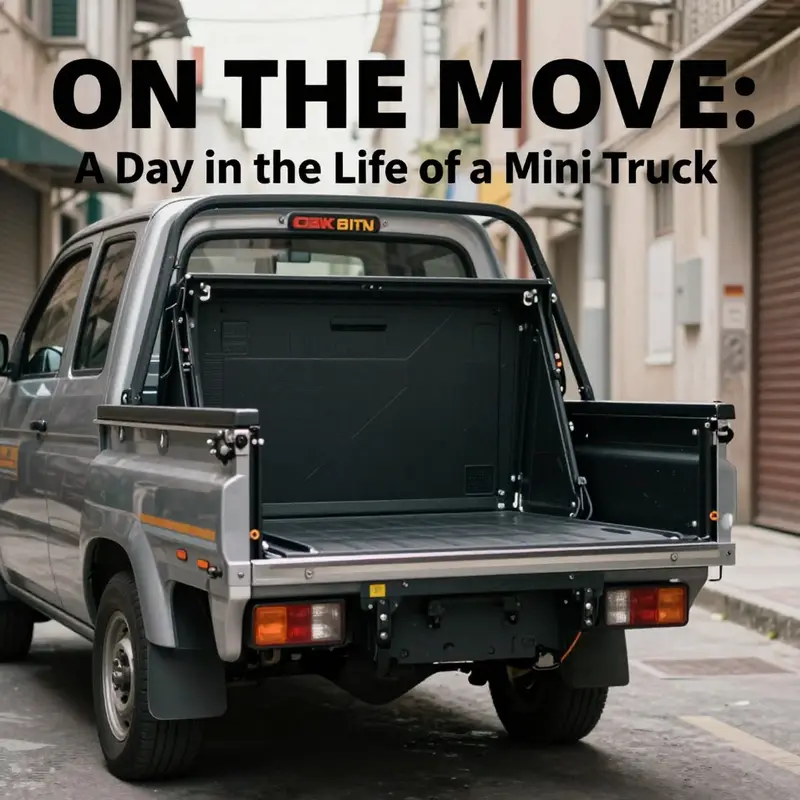
A city wakes to the hum of commerce, and a compact electric workhorse sets out to prove that efficiency isn’t about size so much as design. The day begins with the engine’s quiet certainty, the cabin already ready for a long shift. In urban routes, every meter matters, and the truck’s anatomy is tuned to preserve time, energy, and space. Its footprint is small enough to slide through narrow alleyways, weaving between parked cars and glass-fronted storefronts with a poise that larger vans can only envy. The truck’s overall proportions—roughly three and a half to nearly four meters in length, and just over one and a half meters in width—are more than a glimpse of clever packaging. They are the first hint that efficiency here is a design discipline, not just a feature. A turning radius measured in under five meters translates to tight U-turns, tight parking, and fewer bottlenecks when the route requires a quick reversal at a cul-de-sac or a curbside handoff. The geometry of this vehicle is a daily advantage, turning the math of city congestion into a practical, repeatable rhythm of motion.
As the day unfolds, the driver moves with a measured cadence that mirrors the truck’s engineered balance between power, weight, and aerodynamics. Mid-morning stops bloom across districts, and the vehicle slides into spaces where larger machines fear to tread. The design’s efficiency is not an abstraction; it is experienced in the way acceleration arrives without delay, and how braking feels linear and predictable in stop-and-go traffic. The electric powertrain is deliberately sized to meet frequent starts and short trips, delivering a quick, confident response that keeps pace with the tempo of urban deliveries. The motor’s nominal rating—the kind of practical specification that matters on the road—enables prompt takeoffs, smooth throttle response, and a sense that the truck is always ready for the next assignment. In city driving, that responsiveness is not a luxury; it is the difference between an on-time delivery and a second-minute delay that cascades into the entire schedule.
The numbers behind the performance are not mere trivia. A compact electric platform can combine low rolling resistance with a streamlined shape to stretch every kilometer. A rolling resistance figure of roughly 4.5 per thousand and a drag coefficient just over 0.41 are not cosmetic facts; they are the engine of energy efficiency. In practice, these metrics mean more miles per charge, fewer recharges during a heavy day, and the freedom to reallocate charging stops to when the vehicle is already near a depot or a convenient grid. The range, often quoted around 140 kilometers in real-world use, fuels a broader truth: the vehicle can cover a full slate of multi-stop routes with time to spare for last-minute changes without surrendering a large chunk of the day to charging downtime. This reliability matters when every handoff, every customer signature, and every brief pause for goods to settle can tilt a route’s success.
Behind the wheel, the cabin is a study in ergonomic design. A sealed, climate-controlled cockpit protects the driver from the city’s shifting weather and particulate load, while a suspended seat reduces fatigue over long shifts. Fine-tuning capabilities—custom operator profiles that let one driver dial in a preferred steering effort, seat angle, visibility, and climate settings—translate personal comfort into sustained productivity. The cabin’s atmosphere isn’t a luxury feature but a tactical decision: by making the driver physically comfortable, the vehicle helps preserve attention, reduce micro-fatigue, and shorten recovery time between deliveries. In an urban setting where the day is a chain of precise tasks, comfort becomes concentration, and concentration becomes punctuality.
The cargo area itself embodies the chapter’s core thesis: efficiency in design extends beyond propulsion to the entire workflow. A foldable or collapsible cargo box is more than a clever trick; it is a scalable solution to the problem of space and reconfiguration. When the truck leaves a site with a partial load, the box can compress or reformat to free space for the next stop, enabling rapid back-to-back redeployments without the awkward, clumsy maneuvering that larger vehicles require. At drive-by speed, the workflow remains seamless—the driver unloads with practiced efficiency, then reconfigures on the fly for the next delivery, minimizing idle time and avoiding the need to shift weights or rearrange pallets in the tight confines of an urban curbside. The result is a day that feels compressed, even as the calendar fills with brief exchanges and hand-to-hand exchanges of goods.
From the moment the route is plotted to the moment the last parcel is secured back at the depot, the vehicle demonstrates an integrated approach to efficiency. The energy story is not about a single component working in isolation but about a system where motor power, aerodynamics, rolling resistance, and driver ergonomics converge. The low maintenance footprint amplifies this efficiency. With no engine oil to change, no exhaust system to worry about, and only essential, routine checks, the operating costs shrink to a level that makes frequent, reliable service viable for small businesses and couriers alike. The total cost of ownership becomes a more meaningful calculation in the busy life of urban distribution, where every kilometer saved compounds over months and years, supporting competitive pricing, faster delivery promises, and a smaller environmental footprint.
Even when complications arise—a traffic snag, a sudden gate closure, or a last-minute reroute—the design delivers a resilient performance. The compact form factor, with its nimble steering and agile response, handles detours more gracefully than a larger vehicle would. A day lived in the life of this kind of truck is a sequence of micro-optimizations: choosing routes that maximize the time between stops, arranging cargo to minimize handling, and using the cabin’s climate control to stay alert even as the day grows warm. The driver’s perspective is personal and practical, a narrative of choices made in real time to protect on-time delivery windows and keep customers satisfied. The efficiency, in this sense, is not merely a straight line of miles per hour or kilowatt-hours per kilometer; it is a philosophy that treats every stop as an opportunity to refine the process and every turn as a test of the vehicle’s capacity to stay fast, nimble, and reliable.
For readers who want a broader view of how these micro-trucks fit into the evolving urban logistics landscape, the ongoing conversation across logistics blogs and industry updates offers a wealth of practical examples and case studies. As a practical entry point, consider exploring the Minitrucks Blog, which gathers insights and real-world experiences from the field: Minitrucks Blog.
External references can provide technical context for those curious about the specifics that underwrite this daily efficiency. A detailed technical overview of compact electric delivery platforms, including real-world range and efficiency metrics, can be found here: https://www.beiqileichi.com/minitruck
Twilight Routes: Finishing a Day in the Life of a Mini Truck

The depot quiets as the last light drains from the tall windows, and the small workhorse sits with the clinical stillness of a routine completed. After hours of weaving through narrow lanes, sliding past locked garages, and threading between parked cars, the day finally exhales. The engine cools, the cabin sighs with the memory of careful maneuvers, and the driver moves with the patience that only late shifts know. It is in this quiet that the day’s inner dialogue emerges: a ledger of small victories and stubborn challenges, all written in the language of traffic patterns, dock calls, and punctual handoffs. The mini truck, with its compact silhouette and cab-over stance, has learned to be everywhere at once and nowhere too long. Tonight it rests, but only after a ritual of wrap-up that turns work into a measured sense of completion rather than a frenzy of activity foregone.
The day began with a purpose that suited its size. In the morning, the city woke up to a vehicle that could slip through gaps where larger trucks could not reach. The cab-over design places the driver close to the wheel, giving a direct line of sight to the pedestrian edge and the curb. That perspective matters, because in urban logistics every inch counts. The route is not a straight line but a living map—alleyways that narrow, traffic lights that blink with a stubborn rhythm, and storefronts that require the box to swing just enough to deliver without grazing a sign. As the sun climbed, the truck became a mobile puzzle solver: a little box on wheels that could adjust on the fly, repackage a load, and pivot from a grocery dock to a stationery shop with equal ease. The operator planned ahead, weighing payloads to keep deliveries reliable without overtaxing the vehicle’s mobility. The day’s rhythm demanded care and respect for each constraint—the weight, the timing, the weather, and the ever-shifting needs of customers who rely on steady arrivals.
Midday brought a chorus of stops that sounded like a metronome for competence. Each drop demanded not just a move from point A to point B but an orchestration of small tasks that kept a chain intact. The cargo box, occasionally foldable or collapsible, rose as a clever companion in tight spaces. When the stop was tight and the street was louder than dust, the truck could compress its available space, making room for a late return or a quick swap of goods without creating a bottleneck. This flexibility was essential for urgent packages, perishable goods, and last-minute changes that seemed to accompany every day in the city. The driver learned to anticipate, to anticipate, and to observe the signs that suggested an adjustment: a loading dock with a limited window, a customer who preferred a particular handoff method, or a route that suddenly turned into a detour for a parade or roadwork. The cargo bed, with its engineered versatility, supported these adjustments—whether it meant pulling a refrigerated load to preserve freshness or reconfiguring a light-duty set for a courier job—so that time stayed on track without compromising safety or care for the goods.
Evening began to speak in softer tones, and the truck’s role shifted from mover to custodian. The day’s haul had ranged from time-sensitive documents to small, temperature-controlled groceries, and the operator reflected on how the vehicle’s design underpinned each outcome. The cabin’s compact scale did not limit its ambition; it amplified it. A modern mini truck can host electric powertrains that hover in quiet operation within city limits, reducing emissions as it glides through downtown corridors. It can offer attachments that expand the scope of work: a refrigerated cargo space for perishables, a dump bed for debris, or a scissor-lift accessory that makes work safer for loading at height. These configurations reveal a broader truth about urban logistics. Efficiency does not come from brute force alone. It comes from the ability to choose the right tool for the task and to adapt quickly when conditions change. Tonight’s reflections are a catalog of adaptations, each one a small but meaningful influence on the day’s reliability.
Alongside the practicalities, there is a human thread. The driver remembers the conversations with shopkeepers, the steady nod of a customer who recognizes the routine as a reliable rhythm, and the moment when a late order was accommodated with a courteous, smiling exchange. The mini truck, in its quiet work, serves as a bridge between people and their daily needs. It moves goods to kitchens that rely on fresh supplies, printers who keep their lines running, and families who value a dependable delivery window. In such moments, the vehicle feels less like a machine and more like a partner—a steadfast collaborator that carries momentum from dawn to dusk and then, with care, hands off tomorrow’s tasks to the next shift. The day’s narrative is not told in loud chapters but in a continuum of small, deliberate choices that keep promises intact and communities fed, hydrated, and connected.
Reflecting on the day, the operator nods toward the broader landscape of mini trucks—these compact, adaptable machines that can anchor an entire logistics chain without demanding vast space or monumental infrastructure. There are variants designed to meet diverse tasks: electric propulsion for city centers, climate-controlled interiors for perishables, and specialized geometries for high-access jobs. The evening’s stillness invites gratitude for a tool that negotiates the dense urban fabric with tact, not force. It makes possible work that feels almost ceremonial in its precision—loading with care, parking with intention, delivering with a personal touch that makes customers feel seen and valued. Even when a plan goes sideways, the truck’s compact intelligence enables improvisation that preserves the day’s integrity. The setting sun does not erase the day’s exertion; it reframes it as purposeful progress.
To understand the cadence of this life is to read a ledger of small but meaningful acts. The driver checks the dashboard, inspects the cargo area, and secures the empty box for the return to the depot. The lights dim, the doors shut with a decisive click, and the city’s evening hum closes around the vehicle like a soft shawl. The day ends, but the story is not finished; it waits, patient and ready, for the next morning’s first delivery, the next call from a client, the next careful maneuver into a sleepy alley. For those who rely on these silent carriers, the evening reflections are not about fatigue alone. They are a quiet gratitude for a tool that makes routine acts possible and turns everyday labor into steady progress. If you want to glimpse the daily rhythm that underpins these journeys, the Mini Truck Blog captures some of that cadence in vivid, human terms. Mini Truck Blog
External reference: https://www.hino.com/en/vehicles/mini-truck
Final thoughts
The journey of a mini truck through the bustling city landscape highlights its importance to local businesses and the community. From navigating tight spaces during deliveries to efficiently managing various cargo, these compact vehicles prove that size does not determine capability. They embody the spirit of urban adaptability, showcasing how essential they are to everyday life. For small business owners and mini truck enthusiasts, acknowledging their role deepens the appreciation of what these vehicles offer, paving the way for growth, efficiency, and connection within the community.