
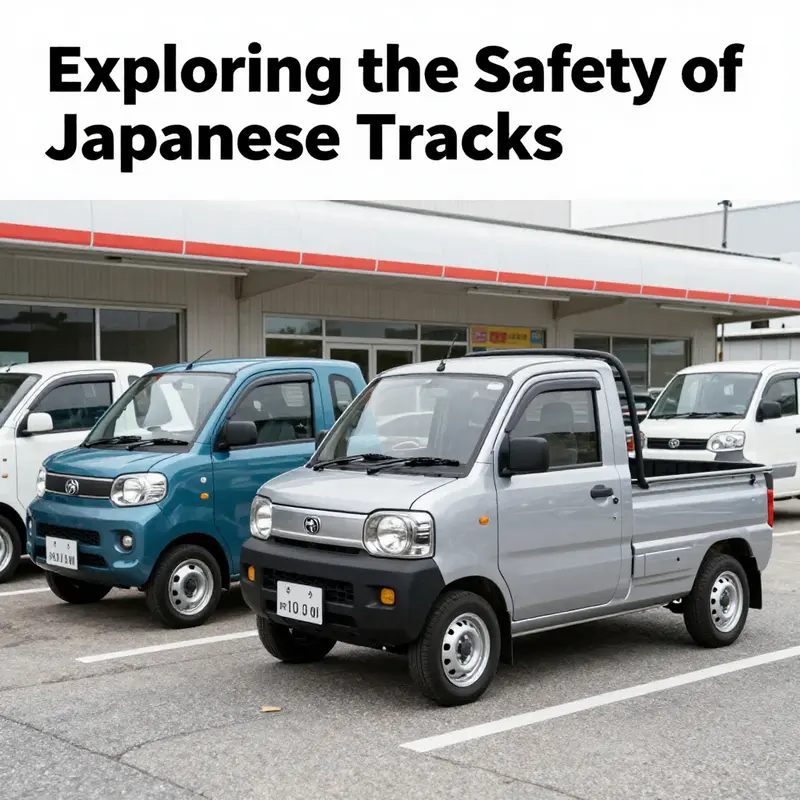
When considering a vehicle for your small business or personal use, safety should be at the forefront of your decision-making. Japanese mini trucks, popular for their compact size and utility, are engineered to meet high safety standards, making them a great choice for both commercial and residential needs. In this article, we’ll explore the robust safety design features that set these mini trucks apart, the stringent regulatory frameworks that govern their manufacturing, and the proven track record of their safety performance in real-world conditions. Understanding these aspects will provide you with a holistic view of why Japanese mini trucks are regarded as a safe investment for any driver.
Built to Protect: The Safety Architecture Behind Japanese Mini Trucks
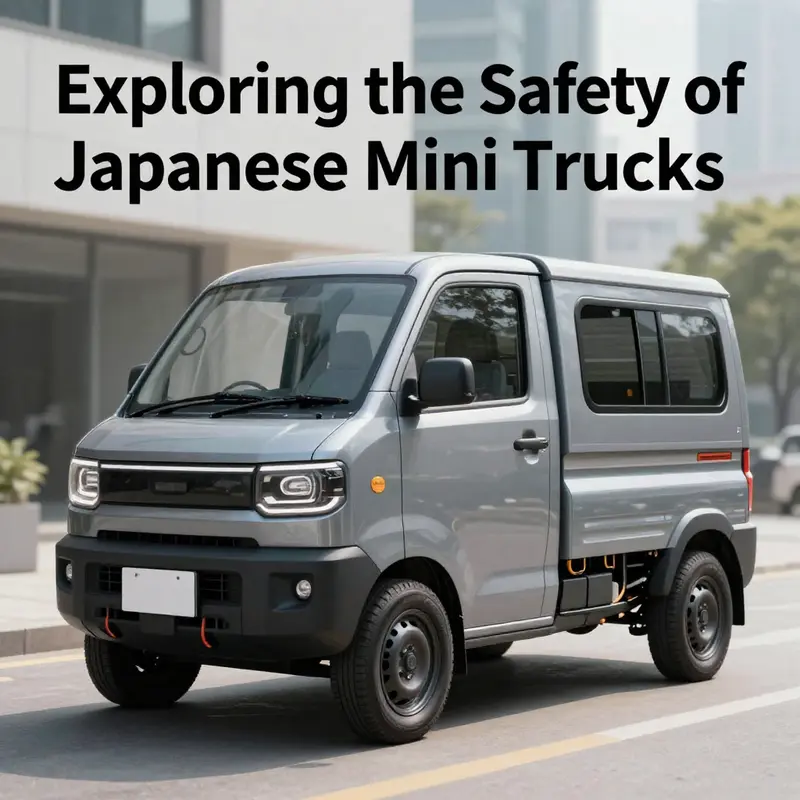
Across bustling city streets, winding rural lanes, and the narrow alleys where deliveries must pass through with precision, Japanese mini trucks have earned a reputation for safety that goes beyond compliance. The story is not driven by flashy gear or expensive electronic driver aids alone; it rests on a practical, repeatable design philosophy. These vehicles are engineered to prevent accidents through robust physical architecture and disciplined operating practices. That approach—prioritizing tangible protections over high-tech gimmicks—shapes every aspect of their form and function, from how the chassis is built to how cargo is secured, how drivers see the road, and how the vehicle behaves in the aftermath of a collision. When examined closely, the safety architecture reveals how a compact workhorse can offer strong protection without sacrificing maneuverability in dense urban environments or efficiency in long daily routes. This coherence between form, function, and regulation explains why the safety claim is not merely aspirational but demonstrable in both design intent and real-world performance.
A first pillar of safety is a design that neutralizes common, high-probability hazards in the everyday task of moving goods. The trucks in this class are built with a focus on three core ideas: preventing under-ride and intrusion in the event of a collision, preserving driver and ground-level visibility, and maintaining structural integrity in the harsh life of repetitive loading and unloading. The chassis, for instance, does not rely on an elaborate web of electronics to shield occupants. Instead, it deploys a physical defense that becomes evident when the vehicle is viewed from the side. A robust series of cross-members—three or more along the lower side of the chassis—forms a bar-like cradle that encases the wheel area. This multi-bar system closes the lower side gap, dramatically reducing the chance that a smaller vehicle or vulnerable road user could be dragged under the truck in the event of an impact. In crash dynamics, under-ride remains a notorious killer, and the very idea of enclosing the space between wheel and frame is a practical countermeasure that keeps the assault of high-energy contact away from vital cabin structures.
Beyond the protection at the frame, the design of the doors and windows is another quiet yet powerful statement about safety. The trucks in this segment often feature large, full-coverage double-windowed passenger doors. The glass surfaces extend to provide a broad, uninterrupted view of the surroundings and the ground beneath, lowering the chance that the driver misses an imminent hazard at intersections or during turns. Night driving benefits from the same logic; some models incorporate lighting features along the lower edge of these windows to illuminate the ground immediately beside and ahead of the truck, enhancing perceptual awareness in low light. The explicit aim is to shrink blind spots, not to chase the latest electronic gadget. In situations where maneuvers are tight and the street is crowded with pedestrians, cyclists, and other vehicles, this visibility becomes an active safety measure that complements the driver’s judgment and reduces the likelihood of surprises.
Another cornerstone is material choice and coating technology. The cabins and cargo areas of these mini trucks are frequently built with galvanized steel, a material well-known for its rust resistance and durability. The longevity of structural components matters, because safety is not a one-off event but a property of a vehicle over many years of service. A galvanized body resists environmental corrosion that can otherwise erode protective strength and integrity. Some models push this further with multiple coating processes, including electrophoretic coatings followed by mid-coat and top-coat applications. Each layer is designed to guard against moisture, salts, and chemical exposure that vehicles routinely encounter on construction sites, farm routes, and city streets. A steelwork that remains corrosion-free preserves crumple zones and joining points, ensuring the frame retains its designed energy absorption capacity across its lifetime.
Safety architecture also acknowledges that accident avoidance is only part of the picture. It must be supported by the practical discipline of cargo securement—an area often overlooked in casual discussions about vehicle safety. In Japan, tarpaulins, or cargo covers, are not optional accessories but mandatory elements of safe operation. Regulations strictly enforce their use whenever cargo is exposed. Failure to cover an open cargo area triggers immediate consequences, including vehicle seizure and heavy penalties under a system sometimes described as ‘one violation, three penalties.’ The intent is not punitive theatrics but creating a reliable habit: when every load is properly covered, debris has less chance to escape, roads stay safer, and drivers are less exposed to liability and sudden mid-route stops caused by loose payloads. This rule hinges on the practical workflow of securing cargo: tarpaulins must be readily accessible, stored in dedicated slots on the vehicle, and easily deployable even on larger models that might require a ladder for access. The emphasis is on standardization, accessibility, and routine compliance, recognizing that simple, consistent processes often trump complex, expensive systems when it comes to everyday safety.
The tarpaulin system aligns with a broader design philosophy that prizes reliability and predictability over complexity. Without depending on a maze of sensors and automated safety nets, engineers prioritize features that perform under real-world conditions—dust, rain, heat, heavy loads, and continuous vibration. The structural elements—thick, robust rear and side protection beams, sometimes described as anti-jackknife bars—illustrate this lean, sturdy approach. These beams are not decorative; they serve as a barrier against deformation during rear- and side-impact scenarios and help preserve the integrity of cabin space where occupants sit. The side protection design often includes multiple reinforcing beams that effectively enclose the space between the wheels and the ground. This enclosure helps mitigate the risk of “inside wheel cut-in,” a hazard frequently faced by pedestrians and cyclists who might be struck or clipped during turns or lane changes. The logic is straightforward: when protection becomes dimensional, not merely cosmetic, it becomes part of the driver’s safe operating envelope.
The conversation about safety in these vehicles cannot ignore the regulatory environment that frames every design decision. Japan’s vehicle safety and emissions standards are among the most stringent in the world, and the regulatory framework is built to ensure a high baseline for all new vehicles, including compact trucks. Within this system, the emphasis on crashworthiness and controlled emissions means engineers are rewarded for designing around physical safety rather than relying on aftermarket devices. The kei-class, for example, is defined by size and engine displacement restrictions that are intended to keep these vehicles practical and economical. Yet these constraints do not compress the safety agenda; they co-exist with mandatory safety features like anti-lock braking systems and airbags, underscoring a balance between efficiency, affordability, and protection. In practice, the regulatory discipline fosters a culture of precision engineering. It encourages the adoption of high-quality materials, strict production controls, and rigorous testing, all of which contribute to a family of vehicles that deliver predictable behavior in a range of conditions—urban, rural, highway, and industrial work sites.
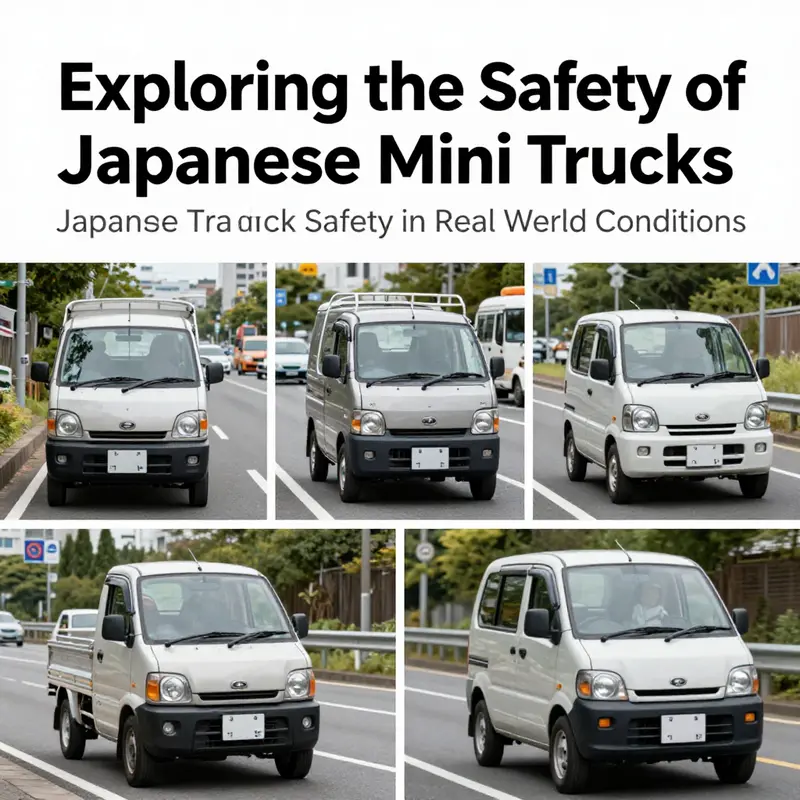
Real-world performance corroborates the safety narrative. The compact footprint of these trucks makes them naturally adept at navigating narrow streets, tight corners, and tight parking scenarios. Their agility reduces the likelihood of high-speed misjudgments and collisions that more cumbersome vehicles might experience in crowded environments. This is not to say that accidents do not happen, but the safety design helps ensure that when misjudgments occur, the consequences are mitigated by the vehicle’s inherent resilience. Reliability also plays a crucial role. A vehicle that is consistently dependable is less likely to experience unexpected failures on the job, and this reliability translates into safer operation. When a truck can complete its daily route with minimal unscheduled downtime, drivers can maintain a steady pace that reduces fatigue—a known contributor to driving risk. The combined effect of reliable operation and robust physical protection yields a practical safety advantage: a mini truck that remains a predictable participant in traffic, not a source of unexpected risk.
A final thread in the safety tapestry is the cultural and operational discipline surrounding how these trucks are used. The design choices described above are not abstractions detached from daily practice; they are reinforced by a culture that values exacting standards and careful maintenance. A truck that is well maintained, with rust prevented by galvanization and coatings, and with cargo secured every time, becomes a safer asset year after year. The tarpaulin system, too, is more than a rule; it is a daily habit that reduces road hazards and fosters a shared sense of responsibility among operators, dispatchers, and owners. In the end, safety is an integrated outcome of design realism, regulatory rigor, and disciplined usage. The vehicles are not hyper-sophisticated marvels in search of a problem to solve; they are pragmatic instruments crafted to perform safely in the conditions where they are most needed: the everyday flow of urban and peri-urban commerce.
For readers seeking a broader sense of this safety ecosystem, there is value in exploring how these principles play out across different contexts within the mini truck landscape. The practical wisdom encapsulated in their design—robust barriers, clear visibility, durable materials, and cargo-control practices—offers a lens through which to evaluate safety in any compact utility vehicle. As you consider whether Japanese mini trucks are safe, it is essential to weigh not only the presence of protective features but also the consistency with which they are applied, maintained, and integrated into the daily rhythm of work. The result is a coherent safety narrative anchored in tangible design choices and reinforced by a regulatory environment that prizes reliability and accountability. For readers who want to dive deeper into ongoing discussions about safety in this domain, the minitrucks blog provides a comprehensive hub of thought and analysis that complements this examination. minitrucks blog
In this light, safety is less a single feature and more a comprehensive practice—one that begins with a sound chassis and ends with a driver who operates with confidence, backed by a vehicle whose hardware stands up to the rigors of daily use. The chapter’s inspection of design elements—multi-bar side protection, enhanced visibility through expansive glass and illuminated sightlines, thick protective beams, and rust-resistant construction—reveals a deliberate, repeatable architecture. It is an architecture that aligns with the regulatory expectations that shape a whole generation of vehicles and with the practical realities of everyday work. The result is a class of vehicles whose safety profile emerges not from a single breakthrough, but from a disciplined synthesis of design intent, manufacturing rigor, and operating culture. While no vehicle is immune to risk, this integrated approach makes Japanese mini trucks among the safest options for urban delivery, light-duty hauling, and other tasks that demand a light footprint without sacrificing protection or longevity.
The narrative does not end with a catalog of features. It returns to a simple but powerful observation: safety in these trucks is a product of design clarity and operational prudence. The emphasis on physical protection, the insistence on cargo security, the commitment to visibility, and the adherence to a strict regulatory regime together form a practical guarantee. What emerges is not a collection of gadgets but a coherent system whose components reinforce one another. The result is a vehicle that performs reliably, protects its occupants and road users, and remains an efficient partner in the daily work that keeps communities moving. This convergence of design, regulation, and daily practice helps explain why Japanese mini trucks maintain a strong safety reputation in a world of ever-evolving automotive technologies. They succeed not by chasing novelty, but by delivering durable, comprehensible protection that stands up to the demands of real life on the road.
Regulatory Rigidity, Safer Streets: How Japan’s Kei-Car Rules Shape the Safety of Mini Trucks
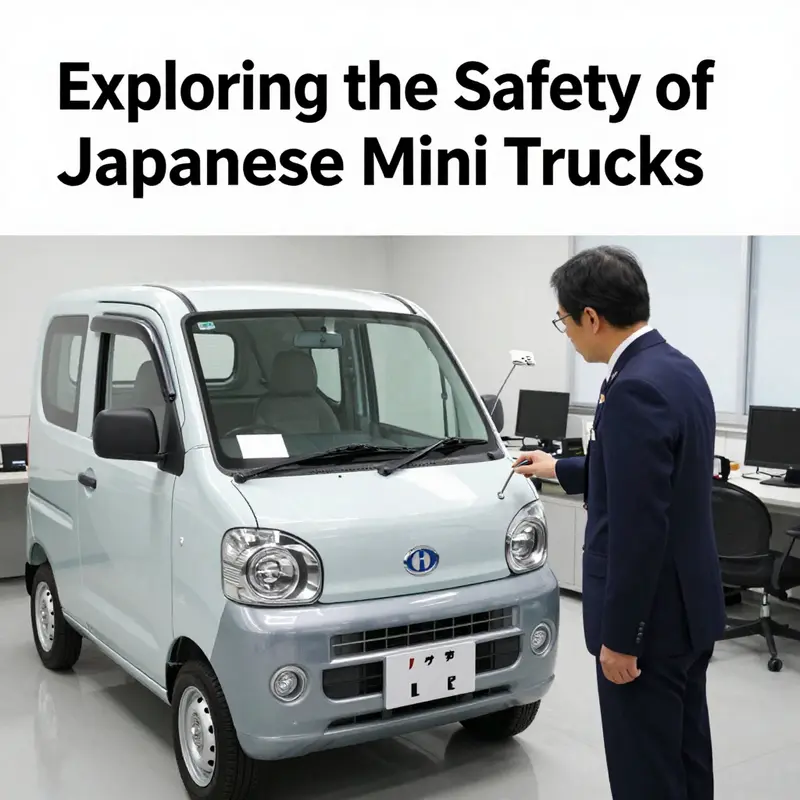
Regulatory frameworks are rarely glamorous, yet in the world of urban logistics they constitute the quiet engine of safety and reliability. The kei-car segment, which encompasses Japan’s compact urban workhorses, including mini trucks, exists not simply due to historical preference but because a carefully calibrated set of rules shapes every aspect of design, operation, and accountability. When we ask whether Japanese mini trucks are safe, we must look beyond a single feature or a single accident report. Safety emerges from a lattice of size limitations, environmental commitments, and hard regulations that govern how a vehicle is built, how it behaves on city streets, and how the people who operate and manage them are held to account. In this regulatory landscape, safety is not an afterthought; it is embedded in the very constraints that define the category. The effect is not merely theoretical. It translates into every slice of urban driving where these vehicles navigate narrow lanes, load fragile goods, and share road space with pedestrians, cyclists, and larger trucks. The result is a vehicle class whose design and operating rules produce a predictable performance profile, one that modern cities find increasingly compatible with ambitious goals for efficiency, emission reduction, and road safety. The core of this safety identity lies in three pillars that together illuminate how regulation shapes safety: precise size and power constraints that ensure nimble handling; a stringent, forward-looking environmental regime that favors clean operation and long-term durability; and a comprehensive safety and cargo-management regime that recognizes safety as a system property, not a property of the vehicle alone. To grasp the depth of this system, imagine the kei-car category as a living codebook. Its pages spell out dimensions, power, and weight in a way that channels vehicle development toward balance: compactness that invites precise control, power limits that remind engineers to optimize torque delivery and efficiency rather than raw speed, and weight restrictions that encourage robust yet economical construction. That combination is essential because urban roads demand a vehicle that can weave through tight spaces without imposing excessive inertia yet still deliver the reliability drivers expect for daily work. The regulatory emphasis on margins and margins’ margins pushes safety outward in practical terms. Size regulations are the most conspicuous of these rules. A kei-car must stay within strict dimensions: length must not exceed 3.4 meters, width must not exceed 1.48 meters, and height must stay under 2 meters. These are not arbitrary numbers; they encode a philosophy that prioritizes maneuverability and parking practicality in dense city cores. The punchline is simple but powerful: smaller footprints reduce the chance of striking pedestrians and curbside obstacles, and they enable quick, confident maneuvers in congested streets. In parallel with the size envelope, engine displacement is capped at 660 cubic centimeters for passenger cars and light trucks within the Kei category. That cap may seem modest by global standards, yet it carries a dual purpose. First, it curbs power output and emphasizes throttle precision and torque management, which in turn encourages fuel efficiency and predictable acceleration. Second, it aligns safety with durability. Smaller engines tend to operate within a narrower speed and torque band, making drivers more attuned to vehicle response and less prone to abrupt or unanticipated weaponized acceleration on busy roads. The power-to-weight equation becomes a governance tool, nudging manufacturers toward designs that maximize control at urban speeds rather than chasing raw horsepower. The regulatory logic here is not to soften capability but to steer it toward reliability and predictability. If the body is the frame of safety, then the environment around the vehicle supplies the weather. Japan’s environmental regulations for kei-vehicles are as rigorous as the mechanical constraints, and they are designed to harmonize with the country’s broader goals for cleaner air, lower noise, and reduced congestion. Emissions tests are a non-negotiable requirement, ensuring that even a compact vehicle makes the cleanest possible impact on air quality and public health. The emphasis on low-emission technologies has accelerated into the broader logistics framework, where hybrid and electric powertrains are increasingly common in this segment. This environmental emphasis is not a mere trend; it anchors a policy posture that views urban freight as an opportunity to demonstrate responsible energy use, to reduce heat island effects, and to advance sustainable last-mile delivery. The regulatory push toward green logistics is not incidental. It is reinforced by long-running policy dialogues and concrete initiatives such as the Green Logistics Special Committee and the 2005 Comprehensive Logistics Policy Outline. These frameworks push for eco-friendly logistics systems and the systemic reduction of carbon footprints across distribution networks. They encourage fleets to adopt alternative powertrains where feasible, to optimize routes and loads for efficiency, and to invest in technologies that monitor and minimize emissions. The environmental regime further aligns with the fleet safety agenda by promoting technologies that reduce operational risk through more predictable engine behavior and smoother power delivery, thereby lowering chances of sudden performance changes during critical urban maneuvers. Still, regulatory safety for kei-vehicles goes beyond emissions and the engine. The safety landscape is understood as a system, where vehicle design must be complemented by responsible operation and robust load management. A striking illustration of this holistic view comes from a real-world incident on a highway in Tochigi Prefecture. While the incident itself highlighted vulnerabilities outside the vehicle’s direct design features, it underscored how cargo securing practices are integral to road safety and how regulators, operators, and inspectors must collaborate to close gaps. In response, authorities have signaled the need for mandatory cargo inspection checklists and for mechanisms that track load security with greater transparency. These measures are not mere paperwork; they are practical tools intended to prevent the catastrophic chain reactions that can occur when unsecured cargo shifts or falls off a moving vehicle. The emphasis on cargo management complements the vehicle-centric approach to safety with a broader, systemic safeguard that protects drivers, other road users, and the goods being transported. In the same safety ecosystem, the law imposes penalties that are meant to be both deterrents and catalysts for ongoing improvement. A well-known example in this regulatory climate is the so-called one violation, three punishments approach for overloading. If a vehicle is found overloaded, the driver, the transport company, and the cargo owner can all face fines, which, in Japan, can be significant given the typical earnings in the industry. The penalties are designed to reinforce the idea that safety and compliance are collective responsibilities across the entire transport chain. This approach mirrors the broader philosophy of road safety in the country, where enforcement and accountability extend beyond the individual operator to the organizations that deploy and manage fleets. The penalties for violations, alongside strict rules on alcohol testing and safety protocols, create a framework in which safety is reinforced by consistent, predictable consequences. The consequences of noncompliance have been illustrated by high-profile cases in recent years, where lapses in testing or in load security disrupted operations and prompted deeper inspections of safety programs across the sector. These disruptions themselves can be seen as a mechanism to elevate future compliance and reduce risk. Taken together, the regulatory regime surrounding kei-vehicles embodies a proactive, rather than reactive, safety philosophy. It marries design constraints with environmental priorities and a comprehensive approach to safety and cargo handling. While no regulatory system can guarantee that every vehicle operates perfectly under every circumstance, this integrated framework has a measurable impact on real-world safety. Its strength lies in ensuring that safety is an architectural feature of the kei-car class, not a peripheral add-on. It is valuable to consider the broader implications for urban logistics if we examine how these rules translate into day-to-day practice. The size and power limits force engineers to innovate around efficiency and control, rather than stretch for power. The environmental regulations push fleets toward cleaner technologies that reduce noise and pollution at the street level, which directly affects the lived experience of city residents and pedestrians who share space with these vehicles. The safety provisions around cargo security and enforcement mechanisms create a culture of vigilance that touches every stage of a vehicle’s lifecycle, from loading to unloading, to maintenance, to driver training. The end result is a safety profile that rests on consistency and predictability across fleets and routes, rather than on the luck of individual drivers or the robustness of a single component. For readers who want to explore the practical implications of these regulatory features, the kei-car safety story is not a sequence of isolated regulations but a coherent, enforceable approach to urban mobility. It teaches a broader lesson about how societies can balance efficiency with safety by embedding value into the architecture of vehicles themselves and into the systems that govern their use. If you are curious about how these principles translate into everyday learning and the practical knowledge shared by practitioners and enthusiasts, a good place to start is the community dialogue on our own platform where practical guidance and community insights are gathered and shared. For example, you can explore practical discussions and perspectives on how urban logistics safety is evolving on the minitrucksocala blog, which offers a community-driven lens on the topic and helps translate regulatory principles into actionable insights for fleets, drivers, and operators. The link to that resource is embedded here for readers who want to delve deeper into the lived realities of kei-vehicle safety and operation: minitrucksocala blog. This internal conversation complements the formal regulatory narrative by providing ground-level context and practical considerations that regulatory texts cannot fully convey. Looking ahead, the regulatory framework in Japan remains oriented toward continuous improvement. The combination of precise dimensional constraints, disciplined power and emissions management, and rigorous safety and cargo controls provides a model of how regulation can harmonize urban practicality with safety outcomes. It asks manufacturers to design with the street in mind, operators to manage loads and routes with discipline, and policymakers to monitor and refine enforcement mechanisms so that safety is sustained as cities evolve and freight patterns change. It is this dynamic, rather than any single rule, that sustains the reliable safety profile of kei-vehicles in Japan. In assessing safety, it is important to acknowledge the role of continuous oversight and evaluation. Regulators periodically update standards to reflect new technologies and new data on road safety. The regulatory apparatus is not static; it seeks to respond to shifting urban forms, changing freight demands, and evolving patterns of risk. For readers who want to understand where these standards come from and how they are maintained, the authoritative source is the national ministry responsible for road transport and vehicle regulation. Detailed, accessible information on vehicle regulations, safety standards, and related policy initiatives is available from that agency, which provides the frameworks that shape every kei-vehicle and every fleet that uses them. In short, the safety reputation of Japanese mini trucks is not a matter of luck; it is the product of a deliberate, well-coordinated regulatory strategy that aligns design, environmental responsibility, and operational safety into a coherent safety narrative for urban freight. This alignment helps explain why these vehicles are often regarded as among the safer options for dense urban delivery and municipal services, and it invites readers to consider how similar regulatory philosophies could inform safety outcomes in other vehicle categories and markets as cities around the world increasingly rely on compact, efficiency-minded fleets to meet daily demands. For those who want to engage with these ideas further, the broader literature and official sources provide a robust foundation for understanding how regulation can drive safety without compromising urban productivity. External resources, including regulatory databases and policy outlines, offer further context for the reader who wishes to explore the assumptions, data, and methods that underpin these conclusions. External resource: https://www.mlit.go.jp/road/vehicle/index.html
null
null
Final thoughts
In summary, Japanese mini trucks stand out as a safe and reliable choice for both local small business owners and residential property owners. With their robust design, compliance with rigorous regulations, and a strong record of safety in real-world conditions, these vehicles offer peace of mind for those seeking efficiency without compromising on safety. Whether you’re navigating through tight city streets or managing deliveries in suburban neighborhoods, Japanese mini trucks are engineered to safeguard you on every journey.