

Japanese mini trucks, known as kei trucks, have garnered a dedicated following due to their compact design, fuel efficiency, and practicality. While these versatile vehicles thrive on Japan’s narrow streets, you might be wondering about their legality elsewhere, particularly in the U.S. and other countries. This article delves into the street-legal status of Japanese mini trucks in Japan, the United States, and beyond. We aim to provide local small business owners, residential property owners, and mini truck hobbyists with clarity on regulations, the implications of the 25-year import rule, and how street legality affects vehicle ownership across various regions. Let’s embark on this informational journey together to explore your options!
Kei Trucks on Japanese Roads: Tiny Giants That Stay Fully Legal—and What That Means for Street-Readiness

In Japan, the Kei truck is not merely a niche option; it is a staple of daily life, a vehicle class built to fit the rhythm of a country where narrow streets, dense urban cores, and sprawling rural lanes all exist side by side. The appeal of these mini trucks rests on a clean alignment between form and function: a compact footprint that slides through tight passages, a light yet capable chassis, and an engine that sips fuel without sacrificing practical power. What makes Kei trucks especially compelling is not only how they perform on the road, but how they are designed to meet a precise set of regulatory standards that keep them street legal by design. In Japan, these vehicles are fully compliant with the country’s kei car regulations, a framework that sets explicit limits on size and engine displacement to ensure that small, economical vehicles can share the road with larger, higher-performance ones. And because the regulatory criteria are built around the realities of Japanese road networks, Kei trucks emerge as a natural fit for both urban errands and rural logistics, a dual role that reinforces their everyday legitimacy on public streets.
At the heart of Kei trucks’ legality is a careful balancing act: by capping length, width, height, and engine size, the authorities create a class of vehicles that remains nimble and economical yet robust enough for practical work. The numbers matter as much as the philosophy behind them. Kei trucks in Japan are designed with a maximum length of 3.4 meters, a width no greater than 1.2 meters, a height up to 2 meters, and an engine displacement that tops out at 660 cubic centimeters. These constraints do more than limit physical dimensions; they shape the vehicle’s performance envelope, steering behavior, load capacity, and maintenance profile. The narrow width, for example, is not merely a convenience; it translates into easier lane sharing on congested streets and tighter turns in dense neighborhoods, where larger trucks would struggle to maneuver without disruptive compromises. The 660cc engine size is a deliberate trade-off that favors efficiency and reliability over raw horsepower, a choice that aligns with Japan’s needs for economical transport over long-haul speed. It is this calibrated approach—tight dimensions paired with modest displacement—that makes Kei trucks a practical answer to Japan’s unique mix of urban density and rural demand.
What emerges from this regulatory logic is a vehicle that, on a day-to-day basis, feels natural on the road. The cabin is compact, but the layout is intentionally ergonomic, with controls sized for quick, intuitive use and a driving position that encourages alert, compact handling rather than aggressive, long-distance performance. The cargo bed, when opened, reveals a surprising amount of usable space given the overall footprint, a factor that makes these trucks versatile in small businesses, farms, and construction sites alike. The design philosophy prioritizes reliability and low operating costs. With a lightweight frame, simple mechanicals, and a drivetrain tuned for efficiency rather than high-speed torque, Kei trucks excel at short trips, steady loads, and predictable maintenance intervals. This is not a design built to dazzle in a showroom; it is a design built to endure daily tasks with minimal fuss. The result is a vehicle that feels almost tailored to the street-scale realities of Japanese life—where every parking space, every alleyway, and every narrow road has to be navigable without second-guessing.
The public reception of Kei trucks in Japan reflects this practical alignment. They are widely used across a range of contexts—personal commuting, small business deliveries, agriculture, construction, and logistics—that demand a vehicle capable of going where larger trucks cannot, without imposing prohibitive costs. The appeal is not solely about the initial purchase price or the fuel economy; it is about the total cost of ownership and the vehicle’s ability to integrate into daily life with minimal disruption. The compact footprint lowers parking barriers and reduces insurance costs, while the simple, proven engineering reduces downtime and maintenance headaches. In this sense, Kei trucks embody a philosophy of accessibility: they are designed to be affordable to own and easy to operate, a combination that broadens their appeal beyond a single use case and into broad, everyday utility. This broad acceptance is reinforced by the way they have become an everyday sight, a natural part of the street-scene rather than a specialized curiosity. Their familiarity underpins a sense of normalcy around their presence on the road, which further consolidates their street legitimacy in a country that prioritizes predictable, practical mobility.
The story of legal status in Japan, however, provides a useful foil for thinking about Kei trucks elsewhere. The Japanese model is built on domestically standardized regulations that guarantee street legality through defined specifications. In contrast, many other countries have created regulatory gates that effectively block newer Kei-style trucks from the road unless they meet local safety and emissions standards. In the United States, for example, newly manufactured Kei trucks are not street legal because they typically do not comply with federal safety standards. The reasons span crash testing, seat belt anchors, airbag systems, and structural requirements that are foundational to U.S. vehicle safety rules. Yet, a backdoor exists in the form of the 25-year rule, often referred to as the “age-out” provision: vehicles that are over 25 years old can be imported and registered in many cases, even if they originally failed to meet current federal standards. This creates a distinct split in the United States between vintage imports and modern, regulation-compliant new vehicles, and it illustrates how legality can be as much about the regulatory frame as about the hardware itself. The difference between a fresh Kei design’s street legitimacy in Japan and a vintage Kei in the U.S. is not simply about age; it is about the regulatory permission that accompanies a given vehicle’s entry into the road network.
The global landscape with Kei trucks reflects a broader pattern: the road is a system, and each jurisdiction navigates it through its own lattice of rules. In many European Union countries, road use depends on homologation standards that consider emissions, safety, and conformity with local vehicle categories. Australia similarly leans on an age-based import approach for non-compliant vehicles. Canada sits somewhere in between, applying exemptions or restrictions that hinge on a vehicle’s age and compliance history. Taken together, these variations underscore a core point: street legality is not a universal attribute of Kei trucks; it is a function of a country’s regulatory architecture, its safety priorities, and its environmental goals. In Japan, the architecture is designed to accommodate Kei trucks as a mainstream transport option, which is why these vehicles are so deeply embedded in the country’s mobility ecosystem. In other places, the same small, efficient design might be celebrated for its frugality and practicality, yet the legal path to using it on public roads can be markedly more complicated and expensive.
For readers seeking a concise anchor on how to interpret these differences, a practical reminder holds true: the bedrock of street legality is compliance with local standards. In Japan, that compliance is baked into the design and purpose of Kei trucks, into the sale and registration processes, and into the cultural expectation that small vehicles can shoulder major everyday tasks. In the United States and other markets, the path to legality is shaped by a different set of priorities—safety testing, environmental performance, and regulatory alignment—that can render new Kei designs non-starters unless significant modifications, cost, and time are invested. The contrast is instructive for anyone weighing the appeal of Kei trucks from afar. They are not just about compact dimensions or fuel economy; they are about how a national framework celebrates or restricts a vehicle’s right to be seen and driven on public streets.
If you want a sense of how Kei trucks fit into a broader regional conversation, consider exploring broader perspectives in regional automotive discourse. For a regional take on why these little machines capture a particular cultural and practical niche, you can visit the Minitrucks California blog. There, readers discuss how compact trucks navigate local roads, parking realities, and shared-use spaces that resemble a cross-border version of Japan’s everyday traffic landscape. This kind of reflective, place-based discussion helps unlock why a vehicle that is fully lawful in one country might require a different legal posture in another, and it highlights how the road itself—the infrastructure, the drivers, and the rules—ultimately shapes how these machines appear on the street. Minitrucks California blog
From a practical, user-centered perspective, the Japanese Kei truck represents a coherent solution to the constraints and opportunities of contemporary mobility. The law aligns with the vehicle’s capabilities, and the vehicle, in turn, aligns with the daily tasks of a diverse set of users. Whether it is delivering vegetables through a market’s back alleys, transporting tools to a site that sits at the edge of a rural road, or simply commuting in a city with extremely dense housing and frequent parking challenges, Kei trucks deliver a predictable, economical performance. And because the regulatory framework in Japan treats them as standard, everyday vehicles rather than exotic or niche contraptions, their deployment remains steady and reliable across seasons and regions. In this sense, the Kei truck is more than a clever engineering solution; it is a culturally integrated component of Japan’s transport system, a symbol of how constraints, when thoughtfully translated into design, can yield vehicles that stay legible on the street and useful in daily life.
For readers who want to ground these thoughts in official, jurisdictional guidance, it is worth consulting authoritative sources on vehicle import rules and registration in different regions. In the United States, the vehicle import framework is outlined by national agencies that regulate safety and environmental performance for new vehicles and establish the 25-year exemption for older imports. While those provisions do not guarantee a simple path for new Kei trucks, they do illuminate the logic behind why certain models can journey over time from Japanese shores to American highways, even as they remain off the showroom floor for new-market sales. To obtain the most up-to-date, official guidance on vehicle imports, consult the appropriate government resource that codifies these rules. For a direct reference to the broader regulatory landscape, see the U.S. Department of Homeland Security vehicle imports page. In the meantime, in Japan, Kei trucks continue to be a standard feature of the road, a testament to how regulatory design can shape daily life, fleet composition, and the lived experience of mobility across an entire country.
On Narrow Streets and Federal Rules: The Legal Status of Japanese Kei Trucks in the United States

Across classrooms of urban life and rural logistics, Japanese kei trucks have long played a quiet but vital role. They are celebrated in Japan for their compact footprint, frugal fuel use, and surprisingly able payloads. In many neighborhoods they glide through narrow alleys with a confidence that larger trucks can only dream of. The broader story, however, widens when these small workhorses cross the Pacific and encounter a different legal landscape. The question of whether Japanese kei trucks are street legal in the United States does not have a simple yes or no answer; it is a layered conversation about safety standards, regulatory intent, and the practical realities of vehicle design versus road infrastructure. As of January 2026, the federal framework in the United States does not authorize new kei trucks to be sold or registered for general street use in the same way as conventional light passenger cars or trucks. The law, in this sense, follows the logic that kept these machines out of the market long before any pop culture headlines. Yet the story remains nuanced. There is a path for older vehicles, a path that some drivers pursue for practical reasons, and a path that policymakers would need to consider if a broader cohort of compact utility vehicles were ever to become commonplace on U.S. roads. In Japan, kei trucks exist because the regulatory system directly shapes vehicle dimensions and power. The kei class is defined by precise limits: maximum length about 3.4 meters, width around 1.48 meters, and height near 2.0 meters. The engine displacement is capped at 660 cubic centimeters, and weight stays under a threshold that preserves maneuverability and efficiency. This design philosophy favors urban efficiency where narrow streets and tight parking are the daily norm. The result is a vehicle that excels in conditions that American drivers often consider challenging for a larger pickup or SUV: a curb-to-curb dance on streets that demand quick turning, minimal overhang, and frequent stop-and-go operation. Those strengths are precisely what makes kei trucks so appealing to small-business operators, farmers, and hobbyists mounted on a budget who value utility over sheer mass. Yet the same characteristics that make kei trucks so adaptable in Japan can be a stumbling block in the United States. The federal safety standards that apply to US-registered vehicles are built around a different set of assumptions. Crash testing, seat belt anchors, airbags, and structural integrity are not merely formalities; they are the backbone of a safety philosophy that translates the road into a space of predictable performance. Kei trucks, by design, often emphasize economy and compactness over the heavy cradle of safety features favored in many markets. That discrepancy is the crux of the current legal status. The Department of Transportation and the National Highway Traffic Safety Administration enforce rules that determine whether a vehicle can be imported, modified, and then sold as a street-legal product. For new kei trucks, the hurdle is not merely a paperwork formality. It is a requirement to demonstrate compliance with FMVSS, the federal safety standards that govern a wide range of crashworthiness, occupant protection, and structural performance. In practice, most kei trucks do not meet these standards without significant redesign, reengineering, and costly validation testing. The economic calculus, from the perspective of manufacturers, often renders compliance impractical. A compact, purpose-built kei truck is a marvel of efficiency, but the safety envelope it would need to satisfy in the United States is broader and more expensive than its Japanese counterparts. This is why new kei trucks are not street-legal in the US under standard regulatory pathways. The situation, however, includes a well-known and legally relevant exception: the 25-year rule. Vehicles that are over 25 years old can be imported into the United States and placed on the road in most cases, even if they did not originally meet current federal standards. This creates an avenue for vintages that are no longer produced or supported in the domestic market to be used as collector cars, farm machines, or limited-use vehicles on private or rural roads where state or local rules permit. In practice, this means older kei trucks from the 1990s or earlier can travel on U.S. roads after proper registration and compliance with state requirements. The 25-year threshold, however, does not open the door to immediate accessibility for new units or for mass-market commercial ventures. It represents a distinct, time-bound carve-out that recognizes the historical and cultural value of these vehicles, rather than offering a simple workaround to federal safety standards. The regulatory story is complemented by broader international context. In several European Union countries, road use by kei-class vehicles hinges on homologation and adherence to EU standards, which often require different testing regimes and compliance pathways. In Australia and Canada, the import posture mirrors the 25-year rule in principle for older vehicles but remains more restricted for recent models. The overarching message is that the kei truck’s street legality is not a universal attribute but a jurisdictional negotiation between engineering, safety philosophy, and the political will to adapt rules for new or traditional technological mixes. For enthusiasts and small operators in the United States, the practical implications are clear. If a driver wants to operate a kei truck on public roads, the most straightforward option is to pursue an older model that predates current FMVSS requirements, secure appropriate state registration, and rely on the vehicle’s vintage status to justify nonstandard safety configurations under local law. Yet this path has its own limits. It places the vehicle firmly outside the latest safety technologies and the most recent emissions controls, which can carry insurance and liability considerations. It also means forgoing the advantages that come with modern safety upgrades. As a community, hobbyists and small businesses often find themselves balancing nostalgia, utility, and the realities of road safety in the framework of state and federal expectations. The public conversation around kei trucks in the United States has, at times, floated movements or proposals that would loosen gating standards, potentially enabling a broader import and domestic production of smaller, efficient vehicles. Political rhetoric, including discussions about market openness and environmental considerations, has sometimes captured attention. Yet as of early 2026, no legislative changes have materialized into action. The regulatory pathway remains anchored in the established FMVSS framework and the ongoing evaluation process that governs how foreign vehicles can become street-legal here. For readers who want a sense of where to look and how to interpret the official stance, the federal framework is laid out in formal channels that describe the safety standards and the processes for approvals and exemptions. The most relevant, up-to-date reference is the FMVSS page maintained by the federal regulator. Those seeking deeper context should also consult practical guides on import compliance and state-level registration, which clarify the steps required to bring any nonconforming vehicle into a compliant status over time. In this landscape, the kei truck remains a symbol of urban viability and a reminder of how regulatory ecosystems shape not just what we drive, but how we think about transport itself. For readers who want a broader sense of how compact utility concepts fit into the current market for smaller vehicles in the United States, a useful starting point is the general body of content that surveys the micro-mobility and compact-truck ecosystem. See the Mini Trucks Blog to explore discussions, critiques, and practical perspectives from people who live with these vehicles in daily life. minitrucksocala.com/blog/ This internal resource provides a sense of how enthusiasts frame compatibility, customization, and real-world use, without drifting into speculative policy debates. On the regulatory front, the public-facing safety standards remain the ultimate gatekeeper. The FMVSS rules are designed to protect occupants and pedestrians alike, balancing efficiency and safety with the realities of vehicle design. The framework is complex and evolving, particularly as technology and new vehicle concepts—hybridized platforms, light-duty electric configurations, and compact utility designs—continue to push at traditional categories. The question of whether kei trucks might someday qualify for street use in the United States hinges on whether a pathway can be created to demonstrate compliance in a way that satisfies regulators, manufacturers, and the driving public. It would require a combination of targeted vehicle redesign, robust crash testing, and perhaps modular safety solutions that align with the shared safety goals of the FMVSS. Until that kind of consensus emerges, the kei truck remains a fascinating case study in how a vehicle born of a particular regulatory environment can challenge, and be limited by, another. In the meantime, those who appreciate their efficiency and their nimble character are invited to consider the broader implications: how urban design, infrastructure, and policy choices intersect with vehicle form. The result is not simply a legal status; it is a conversation about what it means to move goods and people in cities built for larger machines. For readers who want to consult primary regulatory sources directly, the FMVSS framework offers the most authoritative lens on why new kei trucks are not street-legal by default and why an older, imported kei truck can only become a legally operable vehicle under specific conditions. External reference for readers seeking official context includes the Federal Motor Vehicle Safety Standards page, which outlines the standards and the processes for compliance. https://www.transportation.gov/vehicle-safety/federal-motor-vehicle-safety-standards
Timelines on the Road: Navigating the 25-Year Import Rule for Japanese Kei Trucks in the U.S.

Across decades of urban and rural life in Japan, a tiny workhorse class has moved quietly along narrow streets and farm lanes alike. In Japan, these kei trucks are not just allowed but practical mainstays of daily labor, prized for their compact dimensions, surprising maneuverability, and impressive fuel efficiency. For readers outside that system, the question of whether these small workhorses can legally cross borders and actually drive on public streets often centers on a single, stubborn hinge: time. Time in the United States is not just a calendar but a regulatory threshold that determines whether a vehicle can even enter the country as a street-legal machine. The 25-year rule has become the quiet gateway for many enthusiasts who dream of importing vintage Japanese kei trucks to American roads. It is not a blanket license to import anything from Japan, nor is it a guarantee that a long-hooded, boxy little truck will glide onto the asphalt without further checks. Instead, it marks a pragmatic compromise between nostalgia, practicality, and a mosaic of federal and state compliance requirements that still govern how vehicles are allowed to move, work, and be registered in the United States.
The essence of Japan’s kei system is constraint designed to foster efficient urban mobility. In the U.S., however, the regulatory landscape is built on a set of federal safety standards that were forged from larger and heavier vehicles, certain crash-test expectations, and a broader spectrum of emissions controls. New kei trucks—those manufactured specifically to meet U.S. safety standards—face formidable barriers. The U.S. Department of Transportation (DOT) and the National Highway Traffic Safety Administration (NHTSA) require items like crash-test documentation, seat belt anchors, airbags, and robust structural integrity. Kei trucks, by their design philosophy, prioritize compactness, light weight, and cost-conscious engineering over the breadth of safety features that U.S. buyers and regulators have come to expect. The result is a gap: the vehicles exist and thrive in Japan, yet they cannot be sold or registered in the United States as new, street-legal units without substantial, and often prohibitive, modification. That is where the 25-year import rule becomes the bridge between the two worlds.
As of January 22, 2026, the rule states that any vehicle manufactured in 1999 or earlier qualifies for import into the United States without having to meet the current FMVSS standards. In practical terms, this means that a crate-dusted, time-worn kei truck from the late 1990s can legally traverse the Pacific and be brought into the country, provided it also clears other mandatory checkpoints. The rule does not erase all other requirements; it simply eliminates the need to demonstrate compliance with newer safety standards that would otherwise apply to a modern vehicle entering the U.S. market. Emissions compliance, proper title, and lien clearance remain essential elements of the import process, and the vehicle must still satisfy the Environmental Protection Agency (EPA) and U.S. Customs and Border Protection (CBP) requirements. The 25-year age criterion creates a predictable window for collectors, hobbyists, small business operators, and farmers who value the trucks for their utility and charm, while avoiding the high costs of bringing a design up to current FMVSS. It is a carefully defined compromise: a path to legal entry that respects safety while recognizing the practical reality of time-worn machinery.
Importing a Japanese kei truck under the 25-year rule is not automatic or guaranteed. The vehicle must be properly titled in its country of origin and must be passable under U.S. emissions and import rules. Even if the vehicle clears the 25-year criterion, it must be free of liens and have paperwork that verifies ownership and provenance. The EPA’s emissions requirements, even when the 25-year rule applies, are not a mere formality. Some older engines may not meet U.S. emissions expectations, and the importer may need to verify compliance or arrange for appropriate exemptions or testing. CBP documentation is another critical thread: import declarations, accurate valuation, and proof of identity are all elements that, if mishandled, can delay or derail the process. It is this blend of age eligibility, emissions realities, and paperwork discipline that defines the path from a garage in Japan to a registered plate in an American state.
State-by-state nuances are an additional layer that cannot be overlooked. While federal rules might open the door, each state retains the authority to interpret and apply its own registration requirements. A vehicle that qualifies under the 25-year rule might still face state-specific hurdles related to title status, inspections, and registration fees. Some states may impose their own safety inspections, even for older vehicles, or require documentation that proves compliance with EPA-related standards or that a vehicle is indeed over the 25-year threshold. The practical effect is that the importer must do more than simply fetch a receipt from a Japanese port; the vehicle must be projected through a state bureaucracy that sometimes moves slowly, sometimes with unexpected paperwork demands, and occasionally with quirks tied to local motor vehicle departments.
Beyond the U.S., the landscape is patchwork. In many European countries, road use for kei trucks depends on meeting EU homologation standards, which may be practically prohibitive for a small, lightweight truck designed for urban and rural tasks rather than highway performance. Australia, similarly, tends to require compliance with stricter modern standards, with a clear exception for vehicles older than 25 years—but this is not a universal guarantee and is often complemented by state or territorial import rules. Canada mirrors the U.S. in its own way; older vehicles may be eligible under certain import exemptions, but new kei trucks face analogous barriers tied to safety and emissions. In short, the 25-year rule is a lifeline that often makes U.S. import possible for vintage kei trucks, but it is not a universal passport across borders. The legal viability of any given vehicle hinges on a careful alignment of age, paperwork, emissions, and the domestic regulatory context where it will eventually be operated.
The narrative of import and reintegration into American streets is, for many, as much about practical utility as it is about culture and nostalgia. These compact trucks are admired for their simple, utilitarian design that favors real-world functionality over display. They excel in tight parking, narrow alleys, and urban delivery tasks where a full-sized pickup would feel like an obstacle course. In rural settings, their light footprint and easy maintenance can be a surprisingly effective solution for orchard-based farms, small operators, or weekend hobbyists who want a reliable vehicle that can navigate unpaved lanes and resource-limited worksites. The pleasure lies not only in their compact charm but in the story of crossing borders, both geographical and regulatory, and the patience that a 25-year gap implies. Enthusiasts often talk about the tactile joy of a vehicle that has seen decades of work and yet remains functional, a kind of rolling relic that still serves a purpose. The psychological and cultural pull of these vehicles is intertwined with their legal status: a 25-year-old kei truck becomes not just a tool but a symbol of the enduring link between Japanese ingenuity and American opportunity.
For readers who want to explore the topic further, there are resources that translate the regulatory morass into a more navigable map. A well-rounded entry point for general context can be found in the community-driven discourse that collects experiences, tips, and practical guidance from people who have walked this road. The blog space offers anecdotes about sourcing, shipping, and the sometimes-unexpected requirements that appear along the way. This kind of collective knowledge helps demystify the process and gives prospective importers a sense of the common hurdles without the fear of the unknown. To deepen your understanding and see how others frame their projects, you can visit the community blog at the Mini Trucks blog, which hosts a broad range of discussions about import logistics, modification considerations, and the joys of owning a compact Japanese kei truck on American soil: the Mini Trucks blog.
Of course, the official, non-enthusiast route remains essential for anyone seriously considering an import. The federal government’s guidance documents lay out the concrete steps and the legal thresholds that govern vehicles crossing the border. In particular, the 25-year import rule is clarified in relation to the FMVSS framework, and readers should verify both the age criterion and the posture of emissions documentation before making any purchase or shipment commitments. For the most authoritative path to compliance, the U.S. Department of Transportation’s Vehicle Imports guidance offers a precise, up-to-date reference that outlines how to approach an import and the various agency touchpoints involved. Official guidance: https://www.transportation.gov/vehicle-imports
Beyond Borders: The Global Street-Legal Journey of Japanese Kei Trucks

When a writer asks whether Japanese kei trucks can roam the world’s streets, the answer drifts as easily as a small urban kei vehicle through a narrow alley: it depends. In Japan, these compact workers are nothing exceptional; they are part of the daily rhythm, legally designed to squeeze through tight lanes, park in squeezed lots, and shoulder the demands of small-scale commerce with surprisingly frugal fuel burn. But export a concept from a homogenous regulatory system to a mosaic of roads, rules, and enforcement, and the reality becomes more complicated. The question of street legality does not hinge on the vehicle’s size or efficiency alone. It hinges on the regulatory DNA of the country in question—its safety standards, its emissions regime, its vehicle approval processes, and its willingness to register something that looks out of step with the local automotive tradition. This is not merely a matter of a vehicle meeting a single criterion; it is a test of compatibility with a country’s approach to road safety, consumer protection, and environmental responsibility. The kei truck, which excels in urban utility, often encounters a different set of expectations outside Japan that threaten to bend it into a shape the local road system cannot recognize without further adaptation.
In the United States, the fate of a new Japanese kei truck on public roads follows a demanding regulatory path. The national safety net—embodied in the FMVSS framework, enforced by the Department of Transportation and the National Highway Traffic Safety Administration—sets a bar that most kei trucks were not designed to meet from the factory. The criteria are not merely cosmetic; they touch the core of crashworthiness, occupant protection, and structural integrity. The trucks’ compact frames, light weight, and minimal crash structures reflect a different design philosophy—one that prioritizes economic efficiency and maneuverability over the more extensive safety redundancies that a larger, heavier vehicle would demand. In practice, this means that many brand-new kei trucks that arrive from Japan cannot be registered for street use in the United States unless they undergo substantial, and often prohibitively expensive, modifications to comply with federal standards. The scale of retrofit required—thorough crash testing, reinforcement of key chassis points, seat belt anchor systems, airbag considerations, and other safety-critical elements—places new imports into a landscape of high costs with uncertain returns for manufacturers. This is not a simple engineering hurdle; it is a regulatory and economic calculus that dissuades most mainstream manufacturers from pursuing U.S. street-legal status for new kei trucks. The result is a practical limitation: new kei trucks cannot be sold or registered as standard, street-legal vehicles in the U.S., except in constrained niches or after heavy adaptation.
Yet, a doorway does exist, a narrow, long-simmering loophole: the 25-year rule. Time unfolds the opportunity for importers and enthusiasts alike. Any vehicle that is over 25 years old can be imported into the United States and made street legal, regardless of whether it originally met modern U.S. safety standards. In other words, a kei truck from 1999 or earlier can legally join American roads after proper registration and compliance with state registration and emissions requirements. The 25-year threshold acts as a cultural passport for vintage enthusiasts, small-business operators who value the unique utility of kei trucks, and importers who curate a fleet of older Japanese vehicles for niche markets. This loophole does not erase the regulatory complexity, however. It simply shifts the burden from new-construction compliance to age-based eligibility, and it often requires careful attention to state inspections, emissions testing, and local ordinances. The practical reality is that these vintage imports can coexist with U.S. roads, but only under a regime that respects the letter of the 25-year rule, along with diligent documentation, proper insurance, and appropriate licensing. It is a scenario that underscores how regulatory landscapes can create a dual track: one for new, fully certified vehicles and another for older machines that are grandfathered into the system through a different set of compliance steps.
Across the Atlantic and around the globe, the pathway to street-legal status for kei trucks looks different again. In many European Union countries, the route is mediated by EU-wide homologation standards. Vehicles must meet a uniform set of safety and emissions criteria that are designed to harmonize road-legal requirements across member states. Kei trucks, with their 660cc engines and compact dimensions, often fall outside the typical mainstream European vehicle category without substantial modification. The outcome is a higher barrier to entry for new kei models or imports that do not conform to EU regulations at the point of manufacture. In Australia, as in several other regions, the 25-year rule serves a function similar to the United States’ approach: older kei trucks can sometimes be imported and used legally after a designated period, provided they meet the local environment and safety expectations and pass the required inspections. The general picture in Australia is consistent with a broader global stance: older, classic, or farm-oriented vehicles may gain entry more readily than modern, purpose-built models, especially when used for specific commercial or agricultural roles and not as general-purpose street vehicles.
Canada presents a parallel narrative to the United States, with its own blend of federal and provincial oversight. The overarching thread mirrors the 25-year or 15-year import pathways that allow older vehicles to qualify under exemptions or special programs. The older-vehicle exemptions can permit importation and operation after appropriate compliance steps, which may include emissions tests, safety checks, and a careful alignment with provincial registration rules. The practical implication is similar to the U.S. approach: the kei truck can exist on Canadian roads, but the road to legality depends heavily on timing, vehicle age, and the capacity to meet the local standards through a combination of documentation and retrofits where required.
This global mosaic is not merely a catalog of barriers; it is also a story about adaptability and the way communities value different vehicle roles. Kei trucks serve agriculture, small-scale logistics, and urban delivery with a nimble footprint that is hard to replicate with larger machinery. Their appeal lies in their cost efficiency, ease of maintenance, and ability to navigate crowded streets and congested alleyways where bigger trucks falter. The regulatory challenge, however, often mirrors that functional benefit: what makes a kei truck so effective in one system can be a stumbling block in another. The local authorities’ emphasis on safety, emissions, and consumer protection is not an obstacle to be conquered so much as a framework to be navigated. Without that navigation, the kei truck’s practical advantages may remain locked behind the gate of compliance, and the vehicle’s international journey becomes a tale of regulated possibility rather than immediate universality.
Within this framework, it is also important to recognize the role of the online community and the knowledge sharing that underpins how people approach these regulatory landscapes. For readers who want to explore practical, on-the-ground experiences—what it takes to import, register, and operate kei trucks legally in various jurisdictions—the community blog at minitrucksocala.com/blog/ serves as a resource for typical considerations, cautionary tales, and tips drawn from real-world cases. The blog is not a substitute for official guidance, but it can illuminate the day-to-day realities of navigating foreign regulatory systems, preparing vehicles for inspections, and aligning import practices with local expectations. As a practical prompt, readers may refer to the discussions and articles hosted there to understand better how hobbyists and small operators assemble a workable pathway through the maze of compliance. minitrucksocala.com/blog/
The broader takeaway is that the Japan-to-world road chart for kei trucks is not a single, universal map. It is a patchwork quilt stitched from different regulatory threads: safety standards that demand more extensive vehicle certification, emissions regimes that measure environmental impact in nuanced ways, and age-based import policies that create a temporal opening for older models. For anyone contemplating a Kei truck’s street-legal future beyond Japan, the prudent path begins with understanding the local rules, then assessing whether the vehicle can meet those standards without prohibitive modification costs. In some regions, the path may be straightforward for vintage imports that meet the age threshold; in others, it may require a technical retrofit program, or perhaps a decision to use the vehicle in a non-public-road context where street compliance is not a prerequisite. The reality is that the kei truck’s celebrated compact practicality can still find a place on international roads, but that place is defined by the precise contours of each country’s regulatory landscape rather than by a globally shared standard.
For readers seeking official guidance, it is wise to consult primary sources and regulatory bodies that administer import and vehicle safety rules in their country of interest. The U.S. Department of Transportation and related agencies offer the official framework for understanding how foreign vehicles can be brought into the country, including the 25-year exemption and the steps required to achieve legal road use. A starting point for up-to-date information is the government’s vehicle-import resources, which outline the criteria, exemptions, and procedural steps involved in importing and registering imported vehicles. As this chapter has underscored, the journey from a kei truck’s Japan-origin design to a legally operating vehicle on foreign roads is not a guaranteed cross-border move; it is a careful negotiation with regulators, backed by documentation, compliance work, and, in some cases, a willingness to accept an exciting but non-standard position on public road use.
External resource: https://www.dhs.gov/vehicle-imports
Wheels in Narrow Corridors: Understanding the Street-Legal Landscape of Japanese Mini Trucks
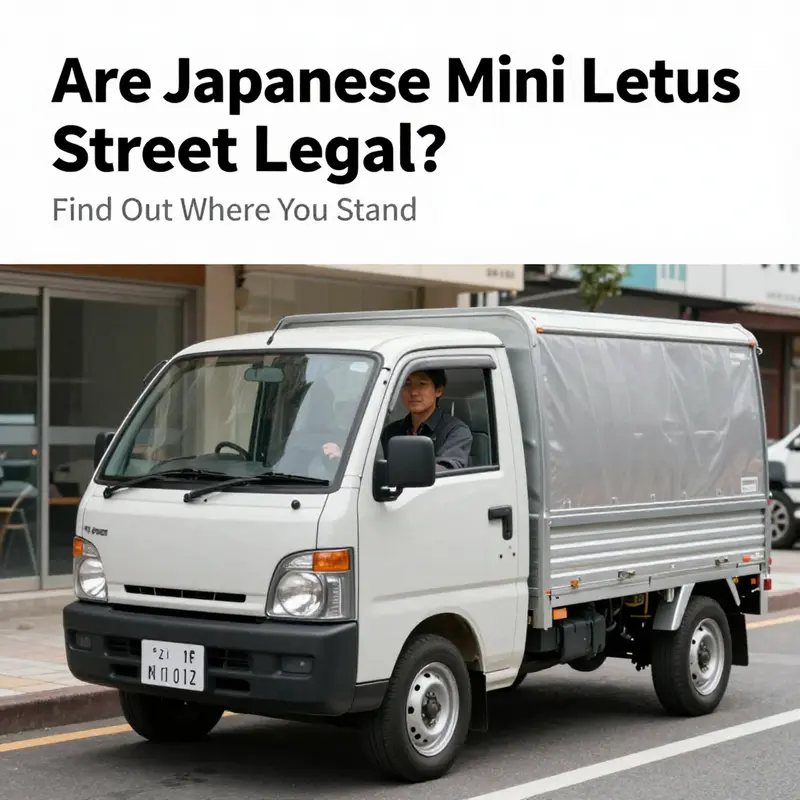
Street legality is rarely a single, simple yes or no. It is a tapestry woven from regulatory threads that vary by jurisdiction, year, vehicle class, and the purpose for which a vehicle is used. When the topic turns to small, lightweight work vehicles from Japan, the threads become especially intricate. In Japan, kei trucks sit comfortably within a tightly choreographed system of standards designed to keep narrow urban arteries navigable while still offering practical utility for farms, construction sites, and small businesses. Kei trucks are designed to conform to kei car regulations, which cap engine displacement, exterior dimensions, and weight. The result is a vehicle that is unusually well suited to Japan’s dense cities and winding rural lanes. In that country, such vehicles are fully street legal, routinely seen on roads and counted among everyday tools for people who need to move goods without owning a larger pickup. The elegance of this arrangement is that it is purpose built for a country with compact streets and limited parking, where every centimeter of width and every kilogram of mass matters. The broader legal question, however, shifts when the same machine crosses international borders and attempts to join roads governed by different safety, emissions, and design criteria. The United States, in particular, has maintained a restrictive stance on new kei trucks, insisting that they meet a spectrum of federal standards that their small, utilitarian design often does not. The tension between Japanese manufacturing philosophy and American regulatory philosophy has sparked ongoing debates about who benefits from each approach, how risk is managed, and what freedom of choice means in a modern, cross-border market. For readers tracing the arc from domestic legality to international feasibility, the core question remains: are these compact, efficient machines street legal outside Japan, and if so, under what conditions and at what cost?
In practical terms, the United States currently does not allow new kei trucks to be registered as street-legal unless they are heavily modified to meet federal crashworthiness, occupant protection, and emissions standards. The age of a vehicle matters a great deal here. A vehicle that is over 25 years old can be imported and registered in many cases, despite not meeting the same safety requirements as a new vehicle. This is the so-called 25-year rule that has become a critical pathway for enthusiasts and small-business operators who value the kei truck’s compact footprint and low operating costs. The idea behind the rule is not to reward noncompliance but to acknowledge the practical reality that older vehicles were built to different standards and may not warrant the cost and complexity of modern compliance for every owner. Yet even this pathway comes with caveats: the vehicle must be properly documented, imported under the rule, and then retrofitted or maintained within the framework of local regulations. The result is a niche but real channel for those who want a vintage kei truck to function on American roads, unchanged or minimally modified, while still respecting the letter of the law.
The regulatory landscape is not uniform across borders. In the European Union, street-legal status for kei-style trucks generally hinges on meeting EU homologation standards, which can be a high hurdle for ultra-compact, low-displacement designs. Across the Pacific, Australia imposes a similar gatekeeper function, often requiring vehicles to clear a 25-year threshold or satisfy a battery of inspections and compliance tests that may be out of proportion to the vehicle’s size and intended use. Canada mirrors the United States in its cautious approach to new imports, though it does make allowances for older vehicles under certain exemptions. Taken together, these policies illustrate a broader truth: the compact, efficient, and highly maneuverable kei truck is a marvel of domestic practicality, but the global road network is built around a patchwork of safety cultures and regulatory traditions. What is tolerated on a Japanese highway can become a regulatory gauntlet the moment it leaves the harbor.
The political imagination around this topic has at times pushed toward legalization or looser import rules on a national scale. A notable thread in recent years involves discussions in the United States about expanding access to kei cars through legislative or regulatory adjustments. Some advocates argue that such vehicles could help reduce urban congestion, lower emissions through superior fuel economy, and provide affordable alternatives for small businesses needing light-duty workhorses. Opponents counter that loosening or bypassing safety standards could increase the risk of serious injuries in collisions and complicate enforcement. The debate is not merely about engineering taste or consumer preference; it touches on fundamental questions about how a society values road safety, how it measures risk, and how it balances those concerns against the benefits of affordability and efficiency. In this discourse, the practical mechanics of importation—including vehicle eligibility, the cost of meeting or circumventing standards, and the reliability of compliance—are as important as the philosophical arguments about freedom of movement.
The size and weight of these vehicles sit at the heart of the conversation. Kei trucks are designed to be slim, light, and highly maneuverable. In Japan, the narrow streets and tight parking spaces reward a vehicle that can slice through urban canyons and slip into small gaps between buildings. The compact dimensions, a controlled curb weight, and a modest engine displacement translate into remarkable fuel efficiency and a capacity to carry useful loads without the burdens that accompany larger pickups. That same design philosophy, however, runs headlong into the realities of other regulatory regimes that prioritize occupant protection and crashworthiness. Critics point out that a small, lightweight body may offer less resistance in a collision and can complicate the integration of modern safety features like airbags, reinforced frames, and standardized anchor points for restraints. The result is a paradox: the very traits that make kei trucks practical and economical in Japan become the sticking points that prevent them from fulfilling the role of a universal, street-legal vehicle.
Within this paradox lies a practical pathway for those who want to reconcile the two worlds. The 25-year rule remains a pivotal mechanism for bringing older kei trucks into the United States without forcing a complete redesign to meet contemporary standards. That approach preserves the charm and utility of classic Japanese micro-trucks, while acknowledging that the cost of full compliance may exceed their perceived value for many owners. It is a reminder that legality is rarely a fixed line; it is often a moving boundary shaped by age, use, and the willingness of regulators to accommodate change. For enthusiasts and small business operators alike, the option to import a vintage kei truck under this rule provides a way to retain a piece of Japan’s practical automotive culture without compromising the broader safety ecosystem. The same logic applies in other parts of the world where regulators acknowledge the tension between heritage vehicles and modern safety imperatives. As the conversation evolves, one can expect to see a continued recalibration of what it means for a small, efficient vehicle to navigate the roadways of different countries.
The human dimension of the discussion should not be overlooked. For many, kei trucks symbolize a sustainable, economical solution to everyday tasks: delivering produce from a rural farmstand, moving building materials for a small contractor, or simply commuting in a tight, dense city where parking is at a premium. The appeal lies not only in fuel savings or lower upfront costs but also in the practical poetry of a vehicle that can perform significant work within a small footprint. This emotional and functional resonance drives a vibrant, if sometimes contentious, dialogue about how a country chooses to regulate and, ultimately, how it chooses to allow people to live and work with the machines that support daily life. For readers who want to explore these ideas further, the Mini Trucks Blog offers a focused window into how hobbyists and small-business operators discuss the realities, challenges, and ambitions surrounding kei trucks. Mini Trucks Blog
In the end, the question of street legality for Japanese mini trucks hinges on context. In Japan, these vehicles are fully compliant, widely used, and fully integrated into the road system. In the United States, new kei trucks do not clear the regulatory gate unless they undergo substantial modifications, and even then the economics often do not pencil out for manufacturers or consumers. Older kei trucks can sometimes navigate import rules under the 25-year threshold, offering a niche but legitimate option for those who value the character and simplicity of these machines. In other regions, the rules vary, but the overarching pattern is consistent: local standards tailored to safety and environmental goals will continue to shape whether and how kei trucks can become street-legal. This is not merely a technical debate about engines and crash tests. It is a dialog about how societies balance innovation, affordability, and safety, and about how global markets adapt to the demands of local streets. For those seeking a deeper, policy-focused understanding of the pathways and hurdles involved, official guidance remains essential, and it is worth consulting the regulatory resources that govern vehicle imports and compliance. The conversation is ongoing, and the outcomes will influence how compact, efficient vehicles participate in daily life around the world. For official information on import rules, consult the relevant federal guidelines, and for ongoing community perspectives, the Mini Trucks Blog offers a space to follow the practical implications of these regulatory choices. As laws evolve and trade policies shift, the street-legal status of kei trucks will continue to reflect a balance between heritage, safety, and the evolving needs of road users. For official information, see the Department of Homeland Security’s vehicle import guidance: https://www.dhs.gov/vehicle-imports
Final thoughts
Understanding the street legal status of Japanese mini trucks is essential for any owner or potential buyer. In Japan, these vehicles thrive, providing practical solutions for both urban and rural needs. However, for enthusiasts or local business owners in the U.S. and other nations, navigating the complex regulations can be daunting. With vintage kei trucks able to hit the streets after 25 years, and varied regulations elsewhere, there are exciting possibilities waiting to be explored. Stay informed and consider how these unique vehicles can serve you while ensuring you’ll be compliant with local laws.