
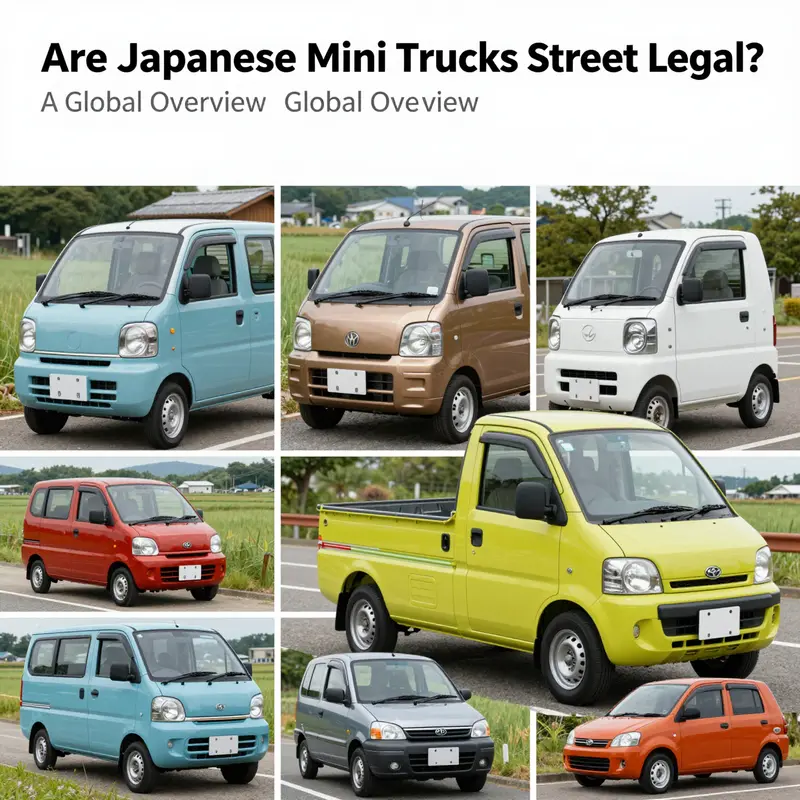
Japanese kei trucks are a staple in Japan’s urban and rural transport, prized for their compact size and versatility. While widespread at home, their street legality in other markets depends on meeting specific safety, emissions, and regulatory requirements. This article surveys their status in Japan, the hurdles they face abroad, and the outlook for harmonization and broader adoption.
Kei Power on Narrow Roads: The Legal Landscape of Japanese Mini Trucks
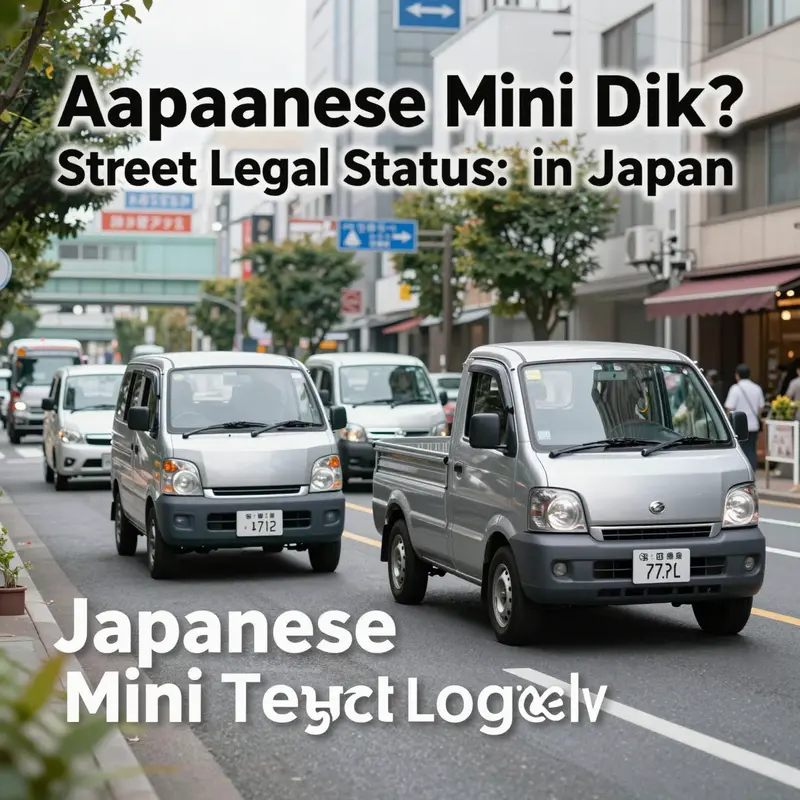
In the dense tapestry of Japanese urban life, the sight of a kei truck weaving through traffic is almost emblematic. These compact workhorses are not only a practical solution to space constraints; they are a reflection of a regulatory philosophy that prizes efficiency, safety, and reliability in everyday mobility. On Japanese streets, their presence feels inevitable because the country’s city planning and traffic patterns have long prioritized small-scale transportation. Narrow streets, limited parking, and a bustling, high-density environment create a natural habitat for vehicles that can slip through tight gaps and still carry meaningful loads. The kei truck is the vehicle version of a well-tailored suit: modest in size, but purpose-built to fit the job at hand. It is a product of a national standard that treats size, engine, and performance as a package, designed to balance utility with the realities of urban life. In this sense, the kei truck is less a niche vehicle than a core element of Japan’s road system, a vehicle class that is fully integrated into daily commerce, agriculture, and personal transport alike.
What makes this integration possible is a carefully crafted legal framework. The kei car standard defines a family of vehicles that share three fundamental characteristics: engine size capped at a small displacement, compact dimensions, and a controlled power output. The engine size cap—typically 660cc—establishes a ceiling that is enough to provide reliable urban performance without promoting high-speed travel or fuel-gue consumption that would undermine the goals of city living. The dimensional limits, which constrain length, width, and height, ensure that kei trucks can maneuver through the narrow lanes, tight alleyways, and congested intersections that are a daily feature of Japanese towns and countryside alike. The power ceiling, closely tied to the engine displacement, reinforces the idea that these vehicles are optimized for efficiency and practicality rather than raw, highway-ready performance. Together, these constraints foster a class of vehicles that are safe, economical, and well-suited to the specific demands of Japanese roads.
The public road status of kei trucks in Japan is not merely a permissive allowance; it is a consequence of rigorous roadworthiness and safety standards. Vehicles that meet the kei criteria must comply with Japan’s broader regulatory framework for safety and emissions. This means that kei trucks are designed, manufactured, and maintained to uphold the country’s expectations for on-road reliability. Maintenance practices and regular inspections play a critical role in keeping these vehicles fit for daily use, whether they are hauling produce to market, delivering goods to a neighborhood shop, or transporting tools to a rural field. Because kei trucks are integral to economic activity, the regulatory system treats them as legitimate tools for work rather than as curiosities of automotive design. They come with the same on-road rights as any other vehicle operating on public highways, but with the understanding that their footprint, performance envelope, and safety profile are tailored to the environment in which they operate.
From a practical viewpoint, the kei truck’s design translates into real-world advantages. Its compact footprint makes parking in tight urban lots feasible and reduces street clutter, while its lighter weight can contribute to better fuel efficiency and lower wear on infrastructure. The typical payload, optimized within the kei constraints, addresses the kind of short-haul tasks that define daily commerce in a densely populated country. Small deliveries, instrumented routes through residential neighborhoods, and farm-to-market transports all benefit from a vehicle that can stop quickly, accelerate smoothly, and fit into spaces that larger trucks would struggle to reach. In rural areas, the same virtues apply as farmers and smallholders rely on a vehicle that can navigate local byways and farm lanes without imposing a burdensome toll on the road network or a heavy footprint on the landscape.
The regulatory framework also shapes the consumer experience in meaningful ways. Kei trucks are designed not only to meet technical standards but to be practical to own and operate. This practicality shows up in ownership costs, insurance considerations, and the ease of maintenance. Because the class is tightly defined, repair and replacement parts are often straightforward to source, and technicians familiar with kei vehicles understand the common failure modes and service intervals. The result is a vehicle ecosystem where regular upkeep aligns with the rhythms of daily life. This alignment helps sustain widespread reliance on kei trucks, making them a familiar choice for businesses that rely on dependable, affordable, and straightforward transportation. Their ubiquity also supports a resilient resale market, where vehicles that have proven their reliability in Japan’s varied conditions retain value and demand across time.
The culture surrounding kei trucks further reinforces their street legality and everyday usefulness. In Japan, small-scale logistics and local commerce have long leveraged the advantages of compact utility vehicles. The kei truck’s size and efficiency fit neatly into city logistics, enabling last-mile delivery services in neighborhoods with limited loading zones. The agricultural sector also leans on these vehicles to move supplies, transport soil and equipment, and shuttle goods between fields and markets. The public perception of kei trucks as dependable, work-ready machines complements the regulatory approach, which treats them as essential components of a modern, urban-industrial landscape rather than as specialized or exotic curiosities. In such a framework, a kei truck is not a compromise between form and function; it is a deliberate choice to harmonize capability with the realities of Japan’s built environment.
For readers who want to explore the technical side of these vehicles in greater depth, there is a comprehensive guide that delves into their production processes, technical specifications, and wide range of applications within the Japanese market. This resource offers an in-depth look at how kei trucks are engineered to meet the precise standards that allow them to roam freely on public roads while maintaining efficiency and affordability. It provides context for how the traits of engine size, dimensions, and power output come together with safety and emissions guidelines to deliver a vehicle class that remains relevant across decades of urban and rural use. The guide also helps illuminate why kei trucks are so deeply embedded in Japan’s transportation fabric and why they continue to evolve in step with changing environmental and regulatory priorities.
In the broader narrative of global mobility, the Japanese kei truck stands as a case study in how regulation and design can be aligned to serve a particular societal purpose. While the primary focus here is on Japan, the chapter hints at the complexities that arise when similar vehicles are considered for other markets. The very idea of “street legal” can shift with jurisdiction, and the kei truck offers a clear example of how a country’s road laws, road conditions, and cultural expectations can converge to shape a vehicle category that is, in practice, indispensable. The balance achieved in Japan—between small size, safety, efficiency, and utility—serves as a benchmark for what it means for a specialized vehicle to be fully integrated into everyday life. It is a reminder that legality is not a single stamp but a living system that connects design, regulation, and real-world use into a coherent, workable whole.
As you look to compare kei trucks with other compact or utility vehicles in different markets, one can appreciate how the Japanese framework supports a robust, street-legal fleet that remains relevant in changing times. For a broader look at market-specific evolutions, including how similar models fare in comparative analyses, you may explore discussions that compare platform choices and specifications across different brands and models. Such comparisons help illuminate how legal frameworks influence design decisions, and how buyers weigh cost, capability, and compliance when selecting a small, purpose-built vehicle for everyday tasks. The integration of legal clarity with practical utility is the core appeal of kei trucks in Japan, and it remains a central thread in any exploration of their street legitimacy and everyday value.
For a deeper dive into how these trucks are evolving in the broader market, including model comparisons and feature sets, you can explore this comparative analysis focused on kei-truck choices: comparing Kingstar Kruzr models. This resource helps frame the options available to buyers who want a compact workhorse that remains compliant and economical while delivering practical capability for urban deliveries, farming, and small-business logistics. The discussion highlights how manufacturers navigate the trade-offs between payload, maneuverability, and regulatory alignment, a balancing act that is central to the street legitimacy of kei trucks in Japan. It also provides a sense of how aftermarket and customization options can extend the utility of these vehicles without compromising their core compliance profile.
In sum, Japan’s kei truck class demonstrates how a country can cultivate a vehicle ecosystem that is simultaneously compact, capable, and compliant. The legal status of kei trucks on public roads is not a mere formality; it is an outcome of deliberate policy decisions, rigorous engineering, and a transportation culture that values efficiency and reliability. The result is a fleet that is thoroughly integrated into daily life—from crowded city streets to rural byways—where the constraints of size and power actually enable more flexible, cost-effective, and practical transportation. The kei truck’s status as a street-legal workhorse is thus less a curiosity than a testament to how regulation and design can converge to empower everyday mobility.
External resource for further reading: https://www.japantechnews.com/mini-trucks-technical-specs-japan-market-2026
Tiny Wheels, Big Rules: The Legal Gauntlet for Japanese Kei Trucks on American Roads
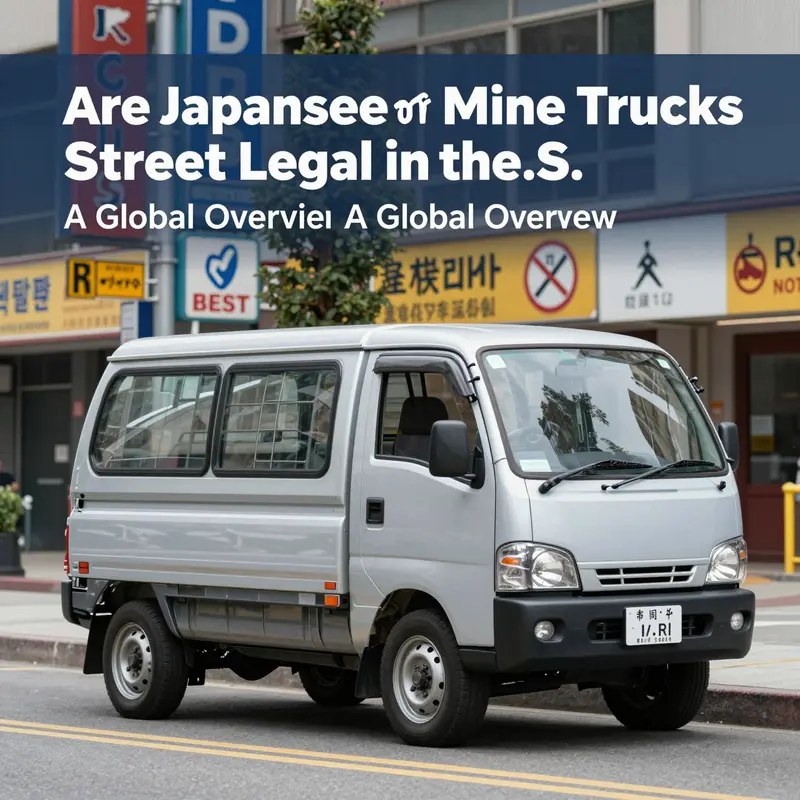
Daring questions often begin with quiet observations. A kei truck, compact and efficient, rolls along a narrow Japanese street with an ease that feels almost choreographed to a city’s rhythm. In Japan, where streets confine space and traffic moves with a patient, orderly cadence, such vehicles are not just common; they are practical workhorses. They shuttle market goods, ferry farmers to fields, and navigate alleyways with a precision that seems tuned to their size. Yet when the same vehicle crosses an ocean or expands beyond its islanded market, it steps into a vastly different legal and cultural landscape. The question of whether Japanese mini trucks are street legal in the United States is not a simple yes or no. It is a thread pulled through a web of safety standards, regulatory frameworks, consumer expectations, and political debate. And it is a thread that pulls taut when you consider the realities of American highways, where speeds soar, mass shifts into a different calculus of crashworthiness, and driving norms assume an entire ecosystem of large, feature-rich vehicles designed to meet decades of evolving rules.
In Japan, kei cars—the broader category that includes these diminutive trucks—are built to satisfy the country’s kei car standards. The engine is typically capped at 660 cubic centimeters, dimensions are tightly controlled, and power output stays within strict limits. The result is a vehicle designed to be light, efficient, and maneuverable in congested urban cores rather than a long-haul hauler on high-speed interstates. The practical implication is that such a vehicle can be comfortable under Japanese regulatory expectations while also delivering a kind of urban discipline that suits narrow streets and dense traffic. On Japanese roads, you will see kei trucks performing the daily labor of the nation with relative ease and predictability, because the design is optimized for the environment in which they operate.
But the United States presents an entirely different set of calculations. The federal safety framework, administered by the National Highway Traffic Safety Administration, is built on a philosophy of crashworthiness that assumes larger, heavier, and structurally reinforced vehicles operating at higher speeds. In this context, the very traits that make kei trucks excellent in Japan—compact dimensions, light weight, modest power, and limited frontal protection—become potential safety liabilities in a collision that involves heavier, crumple-prone mass. The standard expected by U.S. regulators includes robust crash testing, airbag mandates, reinforced structural elements, and passive safety features that work in concert with a higher-speed driving environment. The discrepancy between the design envelope of kei trucks and the regulatory envelope of U.S. highways forms the central pillar of the legal challenge. It is not merely a matter of matching engine displacement or trim options; it is a reimagining of a vehicle’s core architecture to align with a different risk calculus and a different road ecology.
Beyond the crash-and-structure frame, there is the matter of layout and driving habits. Many kei vehicles are right-hand drive and feature compact seating arrangements that optimize pedestrian clearance and interior efficiency in Japan’s left-driving, left-side-of-the-road context. American traffic corridors, by contrast, assume left-hand drive, with routing designed around a different set of driver ergonomics, sightlines, and overtaking dynamics. The resulting mismatch affects not just comfort but the fundamental capacity to merge, react to fast-moving traffic, and position a vehicle safely in a high-speed lane. Even if a manufacturer were to attempt a wholesale redesign, the vehicle would rapidly depart from the core concept that defines a kei truck: lightness, nimbleness, and city-specific utility. Replacing one constraint with another—stronger frames, more airbags, larger crumple zones—begins to erode the attributes that drove the kei format in the first place. The cost, both in engineering and in consumer price, becomes a paradox: the very advantages that entice buyers in one market may be erased in another when the product must simultaneously conquer safety mandates and market realities.
The regulatory landscape in the United States adds another layer to the complexity. While the possibility exists to import and operate older vehicles that exceed 25 years in age, under a federal exemption, this path does not translate into a straightforward pathway for new, domestically produced kei trucks to enter the market as street-legal machines. The 25-year rule is a doorway for used imports, not a portal for fresh, compliant vehicles built to American specifications. It lowers the barrier to ownership for enthusiasts and small-batch importers, but it does not create a viable framework for mass adoption or the production of kei trucks that meet contemporary U.S. safety standards. In practice, the exemption preserves a narrow window for niche passions rather than creating a scalable solution for everyday mobility.
States add a mosaic of restrictions that further complicate the picture. Some jurisdictions have moved to ban kei cars altogether, while others impose speed limitations or other usage constraints that render highway operation impractical. The pattern of regulatory responses across states reflects divergent risk assessments and political atmospheres, rather than a single, cohesive national policy. For instance, several state-level prohibitions or prohibitive restrictions complicate any attempt to use these vehicles as a practical transportation option on public roads. The result is a patchwork compliance environment that makes even the notion of a uniform, street-legal kei truck across the United States feel distant. The legal pathway is not simply a matter of engineering compliance; it is a negotiation with a patchwork of state decisions, interplay with federal safety standards, and the political calculus that often governs transportation policy.
If a political pivot were to occur, some observers point to the possibility of domestic production of kei-like vehicles tailored to American norms. The notion implies a rethinking of vehicle architecture in a way that preserves affordability and efficiency while delivering the safety features and regulatory conformity demanded by U.S. law. Yet even in a hypothetical scenario where a shift of this magnitude happens, the engineering costs would be immense. Adding heavy frames, multiple airbags, reinforced bumpers, advanced lighting, and modern crash structures would fundamentally transform the vehicle, stripping away its defining advantages. The result could be a product that bears only a distant resemblance to the kei trucks that captivated interest in Japan and among enthusiasts abroad. The efficiency, price competitiveness, and compact footprint—the main selling points—would have to be weighed against safety improvements and regulatory compliance costs. In short, the vision of a street-legal kei truck in the U.S. grows more plausible on paper than in the practical, price-sensitive markets Americans inhabit.
Amid this layered reality, public discourse has occasionally touched on policy shifts that could alter the trajectory. In late 2025, a high-profile political moment brought into view a debate about whether kei designs could be legalized for the American market and even produced domestically as affordable, fuel-efficient alternatives. The rhetoric underscored a broader longing to diversify the fleet with smaller, more economical options in an era of rising fuel costs and constrained new-vehicle inventories. Yet the pragmatic scepticism remains pronounced among safety and transportation professionals. A candid assessment from the leadership of U.S. transportation oversight during that period captured the prevailing sentiment: the likelihood of highway-dominant kei trucks entering mainstream circulation in the near term was deemed unlikely, given the substantial safety and design hurdles. The tension between aspirational policy debates and the stubborn realities of crash standards and traffic dynamics continues to define the current moment.
Within this framework, enthusiasts and observers often point to the existence of a vibrant, global conversation around light-commercial mobility and urban efficiency. The appeal of kei trucks lies not only in their compact form but in their potential to deliver practical utility in crowded cities, reduce congestion, and improve fuel efficiency in routine commercial tasks. The challenge lies in translating that utility into a form that harmonizes with the safety and performance demands of American roads. The tensions among size, weight, speed, and protective systems are not easily reconciled, and they demand a thoughtful, multidisciplinary approach that blends engineering ingenuity with regulatory clarity. As a result, the path to street legality in the United States remains a moving target, shaped by technical feasibility, political will, and the ever-changing vocabulary of transportation safety.
For readers who want to explore the community and the evolving dialogue around kei trucks, there is value in looking at the broader online conversations and debates that form around this niche. The online landscape serves as a space where enthusiasts compare notes on legality, maintenance, and the realities of operating a small vehicle in a country built around larger, more robust options. It is in these conversations that one can sense the tension between passion and prudence, between the romance of a compact, economical vehicle and the sober calculus of safety, regulation, and infrastructure. Acknowledging this dynamic helps frame the argument not as a triumph or a defeat for kei trucks, but as a complex negotiation about how mobility evolves in different places with distinct priorities and capabilities.
As part of this broader exploration, readers can gain practical perspective by turning to community resources and discussions that regularly revisit the core questions of legality, safety, and adaptation. For those seeking a community-centric overview, the following resource offers an accessible entry point to ongoing discussions and practical considerations, presented in a format that invites curious readers to dive deeper into the topic: minitrucksocala blog. This hub provides context, case studies, and reflections from people who are testing the boundaries of what it means to own and operate compact work vehicles in varied regulatory environments. Engaging with this kind of content helps illuminate the lived reality behind policy debates and regulatory texts, grounding the conversation in real-world experiences and the shared challenges of working with limited power, safety expectations, and the realities of road use.
Yet even as communities gather around these conversations, the ultimate barrier remains the regulatory and safety framework that governs road use in a large, diverse country. The safety standards that dictate whom and what can drive on the nation’s highways are comprehensive and concrete. They reflect decades of knowledge about vehicle design, occupant protection, and highway dynamics. They also reflect a political economy that weighs consumer access to affordable mobility against the imperative to prevent catastrophic injuries. The balance between these aims is difficult to achieve when the product in question is a vehicle designed to be light, efficient, and inexpensive, yet not built to the crumple zones and sensor-rich safety systems assumed for larger vehicles. In this balancing act, the current reality is clear: while the appeal of kei trucks is real, they occupy a space that remains largely outside the mainstream of American street-legal passenger-car expectations for new vehicles. They persist as a niche, a curiosity, and a topic of ongoing policy and engineering dialogue rather than a standard figure on American roads.
For those who want to continue exploring the topic in depth, consider reading further into the regulatory resources and safety standards that shape this debate. The central, authoritative reference remains the framework established by federal agencies that oversee vehicle safety and highway use, which continues to guide any discussion about importing or producing kei-like vehicles for U.S. roads. This chapter has sought to trace the connective tissue between Japan’s urban design priorities, the structural realities of U.S. highway systems, and the political conversations that periodically surface around how to reconcile those differences in a way that serves both safety and mobility.
In sum, the story of whether Japanese mini trucks can be street legal in the United States is a case study in how very small, very practical vehicles collide with the realities of a very large, very safety-conscious market. The kei design excels in its native urban context; the U.S. legal and regulatory environment reveals a different set of priorities and constraints. The gap between those worlds is not simply a matter of engineering hurdles; it is about aligning a vehicle’s capabilities with a highway system built on assumptions about mass, speed, and protective engineering that are not easily adjusted for a compact, economical format. The path forward will likely depend less on a single policy shift and more on a broad, multi-stakeholder conversation about safety, urban mobility, and the evolving needs of drivers who value efficiency and pragmatism without compromising the integrity of the road system.
External resource: For more on U.S. vehicle safety standards and the regulatory context discussed, see the National Highway Traffic Safety Administration: https://www.nhtsa.gov
Rules on the Road: Regulatory Gatekeepers and the Street Legality of Japanese Kei Trucks
In the landscape of urban mobility, Japanese kei trucks occupy a distinct position. They are small, efficient work vehicles designed for narrow streets. In Japan, kei trucks are street legal and supported by kei-car standards that cap engine displacement at 660 cc and space and weight limits. This framework promotes affordability and practicality on crowded roads. Outside Japan, however, street legality becomes more conditional, as regulators weigh safety, emissions, and vehicle classification against market expectations. Across the United States and Europe, imported kei trucks must meet federal or regional crash standards, airbag and restraint requirements, and emissions rules that can be challenging for ultra-light, small-displacement vehicles. The cost of compliance can reduce the appeal of importing new kei models, though exemptions or age-based import rules (such as the 25-year rule in the United States) create niche access for older vehicles. The global picture is therefore mosaic rather than a single verdict, with some markets embracing compact efficiency while others demand designs aligned with longer-established safety and environmental regimes. Readers considering kei-truck ownership or import should assess local regulations, costs of compliance, and the potential need for aftermarket certifications or reconfigurations. The practical takeaway is clear: in Japan, kei trucks are legal as built; elsewhere, legality depends on meeting safety and environmental standards and often on navigating market-specific pathways.
Cross-Border Kei Trucks: Charting the Road Ahead for Street-Legal Status
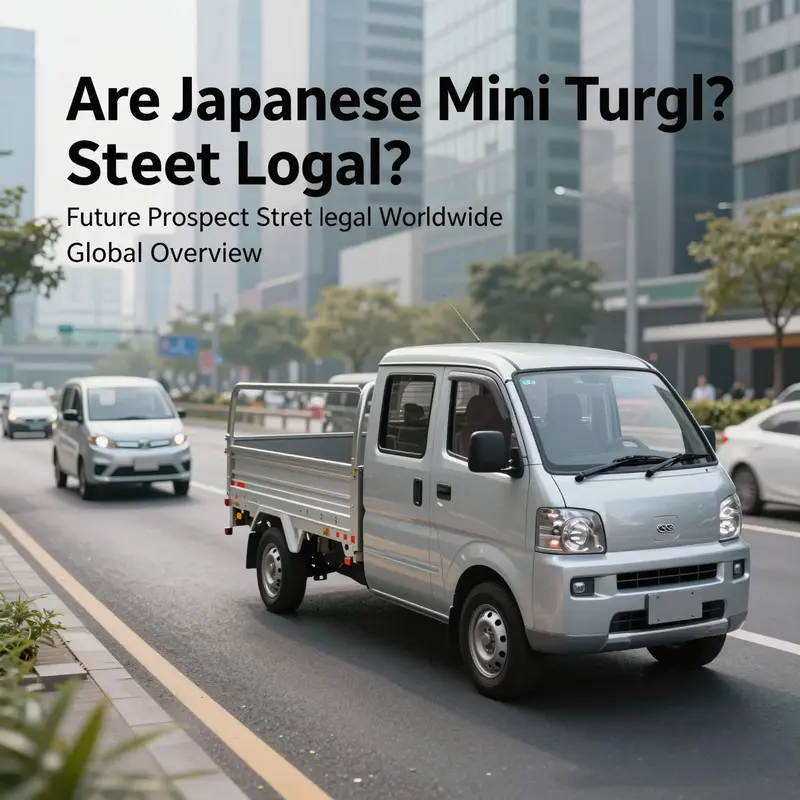
The question of whether Japanese mini trucks can become street legal across diverse regions is not a simple yes or no decision but a complex negotiation among safety standards, urban design, and market demand. Kei trucks arise from a regulatory framework that prizes compact dimensions, modest power, and practical taxation, yet that very logic can become a barrier when crossing borders. The future of global street legality rests on balancing the core advantages that define kei trucks with the engineering and policy requirements of different jurisdictions. It is a trajectory that is likely to unfold through localized breakthroughs rather than a single sweeping policy shift.
In Japan, regulation delineates a clear envelope: engine displacement, vehicle size, and domestic safety and emissions standards are aligned with urban mobility needs. This alignment reflects a design philosophy that prioritizes agility, fuel economy, and practicality over raw power. The domestic market has matured around this equilibrium, and kei trucks hold a meaningful share of light commercial registrations. But domestic success does not automatically translate into a green light for similar vehicles abroad, where road conditions and safety expectations differ.
The global feasibility map is uneven and evolving. In parts of Europe, safety and emissions regimes are among the strictest, with frameworks like Euro NCAP and national homologation pathways. A kei-truck chassis would face intense scrutiny to demonstrate equivalence in crashworthiness and emissions, and the cost of recertification across multiple markets would push such projects toward specialized import programs or local partnerships rather than mass deployment. The United States presents additional obstacles under FMVSS, and substantial engineering changes are usually required to meet crash, restraint, and airbag requirements, making the case for modern commercial use more challenging.
Yet the landscape is not static. Policy signals can shift with political will; in some markets regulators explore flexible certification for light-duty commercial vehicles or accelerated pathways for designs tailored to local standards. In this mosaic of pilots, regional approaches may matter more than any single policy shift.
A critical driver is evolving safety and automation technology. When frameworks are rigid, bridging pathways can emerge if vehicles demonstrate equivalence to or superiority over existing standards. Advances in ADAS, stability control, lightweight crash structures, and modular safety systems can narrow the gap between kei norms and foreign expectations. Trials of semi autonomous trucking concepts in Japan illustrate potential efficiency gains in urban logistics, and a global roll-out of robust safety tech could widen acceptance in markets once seen as inhospitable.
Emissions remain a central gatekeeper. Electrification or hybridization can broaden acceptance by delivering low emissions without sacrificing payload. If manufacturers deliver electric powertrains that preserve range and maneuverability while meeting local targets, some markets may become more open to kei trucks as urban delivery tools; the total cost and regulatory risk must still be justified in each market.
Global auto power dynamics also shape prospects. Domestic brands and regional champions pursuing industrial-policy goals can dampen receptivity to foreign small trucks. Shifts toward national truck brands or reshoring could influence whether foreign-origin solutions find a home, adding a political dimension to certification and market access.
Location-specific opportunities exist in regions with rising e commerce and last mile delivery pressure. In narrow streets and dense cores, compact trucks offer viable advantages, and pilots may smooth paths for limited operation under supervision. Local assembly partnerships can reduce retrofit costs and shorten entry times, making street legality more modular and jurisdiction-specific than universal.
Cultural and consumer factors also matter. Public familiarity with kei style vehicles can influence regulators, and societies prioritizing urban mobility and affordable commercial transport may be more open to non traditional configurations, while markets seeking larger trucks may resist.
In summary, prospects for Japanese mini trucks to become street legal worldwide are not a single policy leap but a triad of regulatory adaptability, technological maturation, and market alignment. Each region writes its own chapter, sometimes welcoming kei concepts as cost effective urban tools, sometimes treating them as imported curiosities requiring careful certification and local manufacturing. The path forward is incremental and context driven, with pilots and modular certification strategies that keep costs in check without compromising safety.
The broader trajectory is gradual and context dependent, with continued dialogue among policymakers, industry, and city planners shaping when and where kei trucks can operate on public roads.
Final thoughts
The road to street legality for Japanese mini trucks varies by country. While highly practical in Japan, external markets require alignment with safety, emissions, and import rules. Ongoing policy discussions and advocacy could expand opportunities for kei trucks in diverse markets as standards converge.