
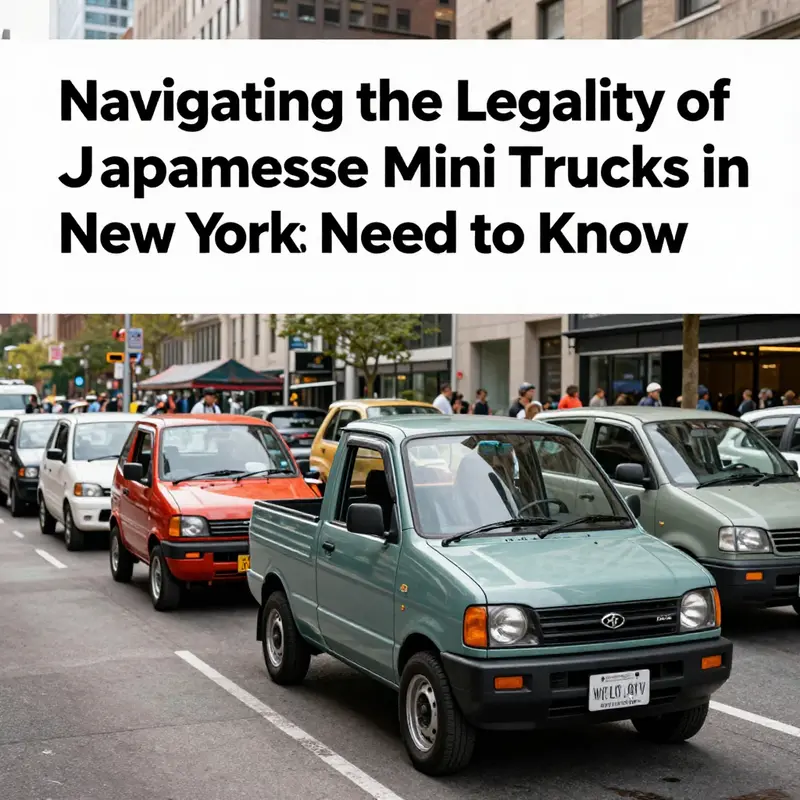
Japanese mini trucks like the Daihatsu Hijet and Suzuki Carry offer versatility and utility that many crave, especially among local small businesses and hobbyists. Despite their charm and practicality, these compact vehicles face significant roadblocks in New York State due to stringent safety and emissions regulations. Understanding the legal intricacies surrounding these vehicles is critical for anyone considering ownership or usage on public roads. As we delve through each chapter, we will explore safety standards, emissions compliance, size and weight regulations, potential modifications for legal use, and the political landscape that impacts these decisions. Whether you’re a business owner looking for a cost-effective transport solution or a mini truck enthusiast ready to hit the streets, this guide will shed light on the vital aspects of driving a Japanese mini truck within New York State’s framework.
Tiny Trucks, Tight Rules: Why Kei Cars Face Street Legal Hurdles in New York
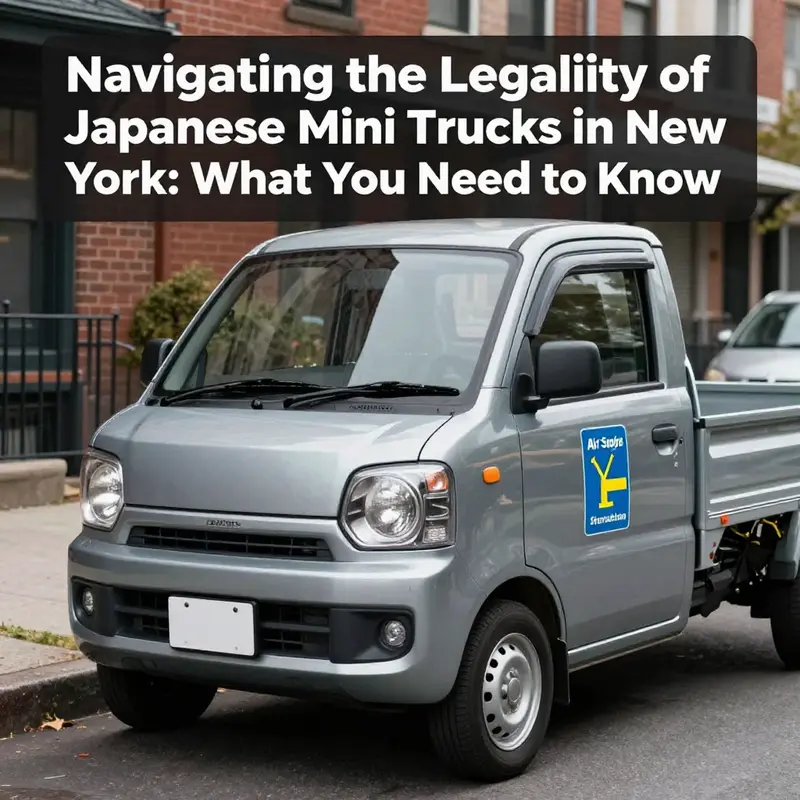
An urbanized look at kei trucks reveals how New York safety and emissions rules shape what can be driven on regular streets. Kei trucks are designed for compact cities and light work, but in the United States they must meet a wide range of FMVSS standards and EPA emissions rules that are not part of their original design. The result is that most of these tiny pickups cannot be registered for everyday road use in New York without expensive and technically challenging modifications. Emissions control, crash protection, lighting and restraint systems are the main sticking points. Even if importers attempt to Show or Display exemptions, those are for non operational use and do not permit routine driving on public highways. The cost and engineering work to retrofit a kei truck to current US standards is often prohibitive, and many owners simply use them off road or in limited private settings. There has been discussion about regulatory relief, but as of the current date no comprehensive path has been adopted. The broader point is that safety first rules, while demanding, are designed to protect dense urban traffic. For enthusiasts, potential routes include pursuing vehicles that are already built to US standards, or identifying states with different approaches, but in New York the street legal path remains narrow. Readers seeking up to date guidance should check the NY DMV and EPA guidance as well as industry discussions on the feasibility and cost of bringing such vehicles into compliance.
null
null
On Thin Wheels and Tight Rules: The Regulatory Reality Keeping Japanese Mini Trucks Off New York Streets
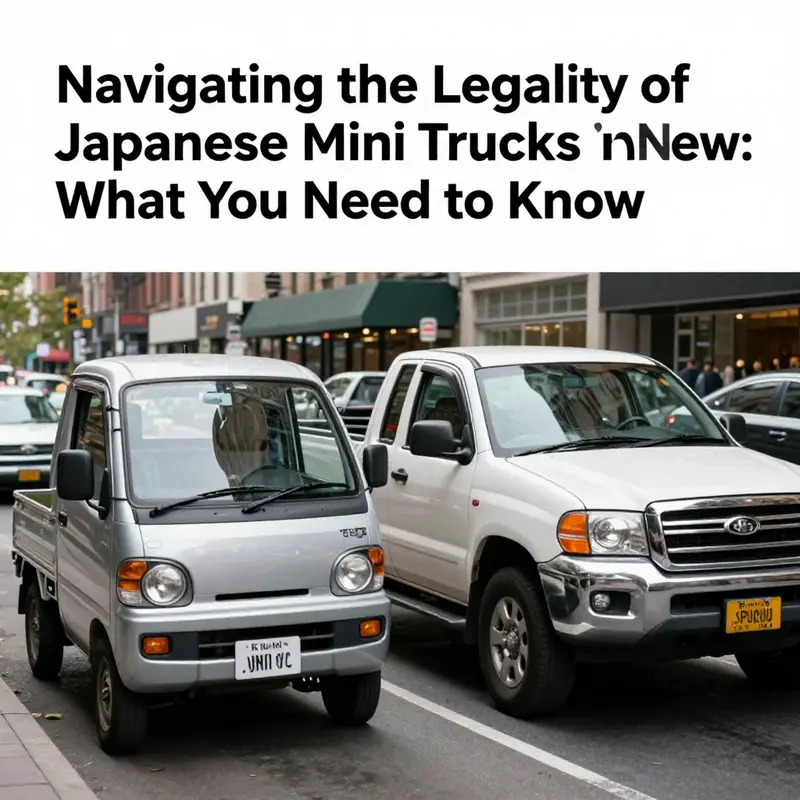
In many parts of the country, small is a virtue when it comes to urban logistics. In New York, however, the same compact footprints that endear kei trucks to farmers and city dwellers abroad face a labyrinth of rules designed to preserve safety, emissions integrity, and highway performance. The romantic image of a tiny, maneuverable truck slipping through narrow streets clashes with a reality written in size limits, weight thresholds, and a dense catalog of U.S. safety and environmental standards. To understand whether Japanese mini trucks can ever share New York’s public roads, one must trace how federal regulations translate into state practice, and how a vehicle devised for a very different regulatory world becomes a symbolic obstacle course when it crosses the Atlantic, so to speak. What emerges is not a single ruling but a system that privileges certain design choices, crash protections, and emissions profiles over others. And in that framework, the small but sturdy Japanese micro trucks, loved in rural farmlands and compact industrial sites, rarely qualify without substantial, costly, and technically complex alterations that push the project beyond feasible feasibility for most private owners or small businesses in New York.
The backbone of the story is safety, a term that abroad may describe an air of robustness. In the United States, safety standards for road-going trucks are not merely about avoiding a rollover in a cornfield but about a comprehensive set of Federal Motor Vehicle Safety Standards (FMVSS) that shape every bolt and panel. The National Highway Traffic Safety Administration (NHTSA) sets the rules for crashworthiness, restraint systems, lighting, and occupant protection. The core idea is simple in practice but exacting in execution: a vehicle sold for highway use must demonstrate, at minimum, that it can protect occupants during a collision and that it remains controllable and visible under typical driving conditions. In Japan, a kei truck is optimized for urban deliveries, rural farms, and a different mix of traffic realities. Its footprint may be smaller, its undeclared mass lower, and its structural design tailored to its domestic market. The same combination that makes it agile in a Japanese town can make it noncompliant on an American highway, where a heavier curb weight can be a factor in crash performance, and where modern frontal collision protection and side-impact beams are standard expectations. The result is a vehicle that arrives in New York with a clean slate in the eyes of a buyer, but with a regulatory ledger that’s far from balanced.
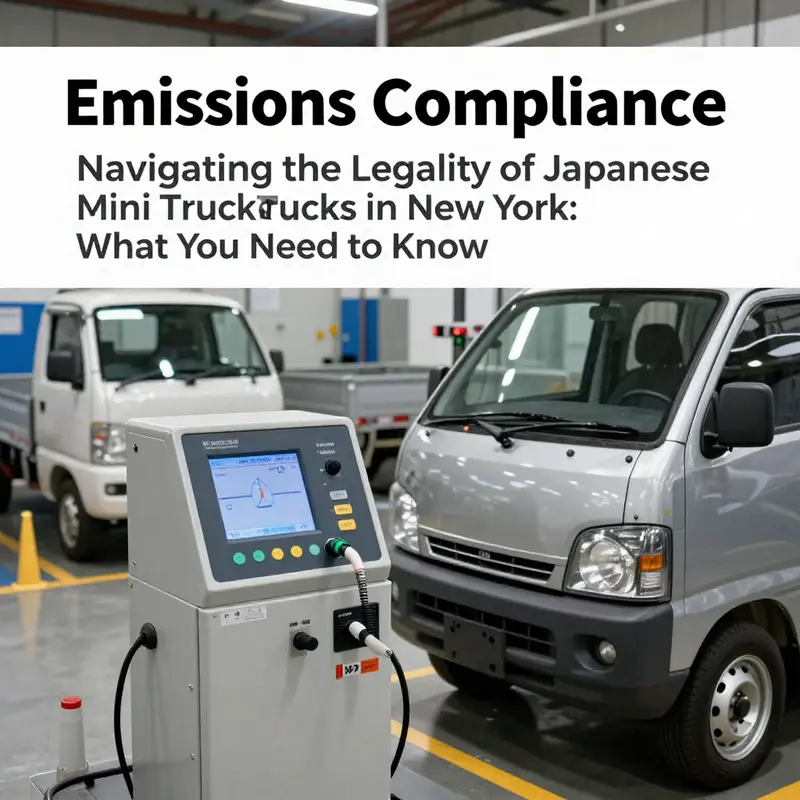
Emissions regulation adds another layer of complexity. The Environmental Protection Agency (EPA) sets nationwide standards for exhaust emissions and fuel economy, with state-level enforcement through registration and inspection regimes. Importing a kei truck into New York means proving that the vehicle meets those standards—or that it can be modified to do so in a way that satisfies both federal and state authorities. The difficulty here is not only about achieving cleaner exhaust numbers but about aligning the powertrain, fuel system, and catalytic technologies with American testing cycles and labeling requirements. In practice, many kei trucks rely on compact engines and simple exhaust configurations that do not map neatly onto EPA certifications. The result is often a gulf between as-built specifications and what is required to receive a clean bill of health from the EPA’s compliance framework. Owners who dream of converting a kei truck into a low-emission, highway-legal workhorse quickly discover that the path is not a walk but a rigorous ascent through conformity testing, documentation, and potential retrofits that may rival the vehicle’s total cost.
The “size and weight” question, as the chapter title suggests, is not merely about dimensions but about how the U.S. system classifies and weighs a vehicle for road use. New York state law, implemented through federal guidance but interpreted at the state level, expects a certain minimum mass for safe highway operation and a maximum footprint that ensures predictable performance in a multi-lane context. A kei truck’s compact dimensions and light curb weight can be advantages adrift in a Japanese city but become liabilities on multi-lane interchanges. For example, the smaller mass and narrow track can translate into vulnerable rollover margins and less resilient crash dynamics when the vehicle encounters high-speed impacts or heavier opposing traffic. Additionally, the crash-test requirements of FMVSS are not optional for road use; failing to pass them means the vehicle cannot be titled or registered as a street-legal vehicle in New York. The practical upshot is that even if a kei truck somehow clears EPA emissions for a certain market, it still must pass a battery of federal safety tests. Without those, the DMV will not issue a plate or a title, and the vehicle remains in the realm of off-road, agricultural, or display use only.
The regulatory arc then becomes a question of what it would take to bring a kei truck into alignment with U.S. standards. It’s not enough to swap tires, add seatbelts, or install a modern headlamp; the modifications often touch the vehicle’s fundamental safety architecture. Crumple zones, reinforced cabin structures, airbags, and the integration of compliant brake systems are not cosmetic upgrades; they require redesigns that affect the vehicle’s structural integrity, weight distribution, and performance characteristics. With each postulated modification, the question shifts from “can it be made legal?” to “does the cost justify the outcome?” For many rosters of hobbyists and small businesses, the answer is a cautious no. The costs of engineering validation, crash testing, and conformity documentation can exceed the value of the vehicle several times over. That is a cruel mathematics for a vehicle that shines in tight urban spaces or off-road work where a larger truck would be overkill. The rough calculus is that in New York, the potential return on investment for turning a kei truck into a road-legal workhorse rarely pencils out, given the volume of daily operating miles, the regulatory risk, and the ongoing maintenance demands that such compliance entails.
There is also the political and regulatory theater surrounding the prospect of relaxing rules for kei cars. The initial research snapshot notes that there has been public discussion about easing the lane access for small “kei” cars, a topic that surfaces periodically in political discourse. Yet, as of March 2026, no enacted legislation has granted authority for Japanese mini trucks to operate legally on New York streets in the way that their domestic counterparts do in some other states. The legislative landscape can wax and wane, but the practical effect in New York remains unchanged: the standard path to road-legal status remains closed to kei trucks that do not meet the full spectrum of federal safety and emissions standards. This is not merely a technical nuance; it is a comprehensive system that prioritizes road safety in a densely populated, highly regulated state environment. For an owner who prioritizes daily commuting or commercial delivery on public roads, the path would require a different class of vehicle, one that is built from its inception to satisfy U.S. standards rather than adapted after import.
What, then, is the value in understanding these constraints? For enthusiasts and policymakers alike, the dialogue around kei trucks reveals broader truths about how a global vehicle ecosystem negotiates divergent safety, environmental, and market expectations. The friction between a vehicle’s practical utility in specific contexts—small footprint, good fuel economy, and simplicity—and a sophisticated, centralized safety regime highlights the balancing act that governs modern road travel. It is a reminder that legality on the road often hinges not on what a vehicle can perform in the field but on how decisively a state’s regulatory apparatus can align new entrants with established safety and environmental norms. This alignment is not a mere formality; it shapes which vehicles become everyday tools for small businesses and farmers, and which remain curiosities imported for off-road or display-only use. The overarching message is sober: the best pathway to the roads in a state with stringent standards is not to bend the rules but to pursue a design and procurement strategy that anticipates and satisfies them from the outset.
For readers who want a sense of how this landscape unfolds on the ground, the story is not about a single owner chasing a lone dream. It is about a community of regulators, compliance specialists, and importers who continuously evaluate model-by-model feasibility, cost, and risk. The narrative is not about giving up on low-emission, efficient, compact transportation; it is about recognizing that the current regulatory architecture in New York is tailored to a particular set of vehicle profiles. In this sense, the local road system operates as a filter, selecting for a particular class of vehicle, rather than simply welcoming every compact alternative into the public lanes. Those who need a compact and capable workhorse must either adapt to the domestic market’s offerings or pursue rural exemptions, classic-car pathways, or carefully circumscribed use cases that do not demand full roadworthiness. The consequences for planning and budgeting are clear: any project involving a kei truck destined for everyday New York street use should start with a candid regulatory assessment rather than an aspirational purchase.
In the broader arc of the article, this chapter’s focus on sizing and weight, while framed by the mythos of the street-legal kei truck, underscores a more universal point. Road legality is a social contract that binds vehicle design to the shared, predictable expectations of all road users. A vehicle’s size and weight do not merely determine its parking space; they determine how the vehicle behaves in emergencies, how it interacts with other traffic, and how it contributes to or detracts from traffic safety and emissions targets. In New York, that contract is nontrivial, and the kei truck, with its particular strengths and compromises, finds itself calibrated away from highway legality rather than integrated into it. For readers who want to keep digging into the regulatory maze and staying updated on any potential shifts, the authoritative guidance remains the federal and state agencies that set the baseline and enforce it in practice. The conversation continues, with every import, every retrofit, and every registration attempt becoming part of a living record of how a dynamic, modern urban jurisdiction negotiates the appearance of a practical tool with the reality of the road safety and environmental mandates that define the modern American highway system. For ongoing context and community perspectives, the Mini Trucks Blog offers a continuously updated lens on how owners navigate these constraints and what the community hopes or expects as rules evolve. Mini Trucks Blog. For official regulatory groundwork, consult the NHTSA’s guidance on vehicle size and weight regulations to understand how these standards shape New York’s interpretation and enforcement: NHTSA Regulations.
Small Trucks, Big Rules: The Challenging Path to Making Japanese Kei Trucks Street-Legal in New York
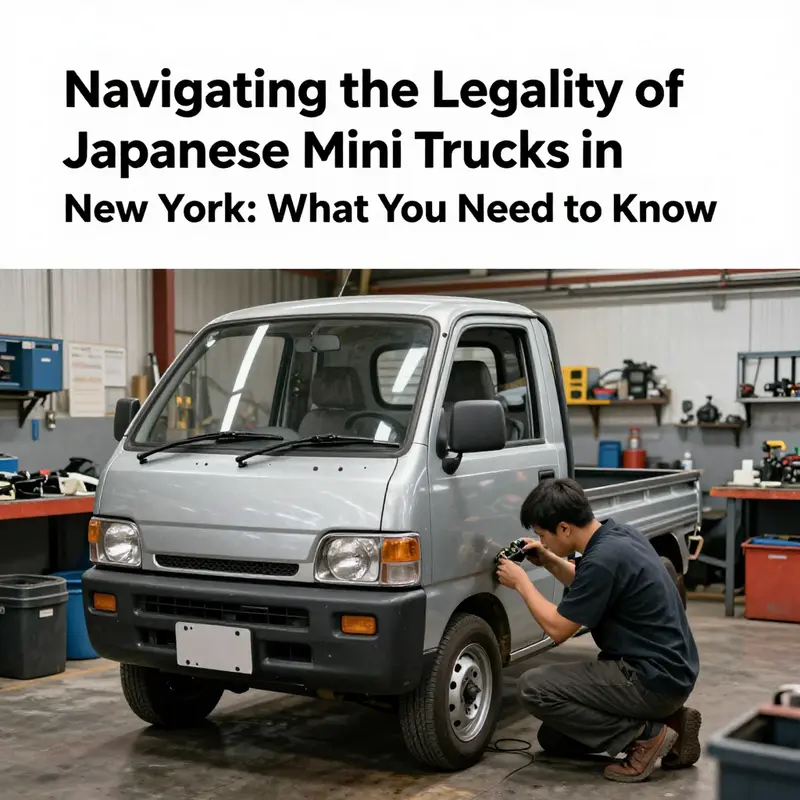
The allure of a tiny Japanese kei truck is undeniable in places where urban streets demand nimble maneuverability and a compact footprint. Yet in New York, that charm collides with a maze of federal and state rules designed to ensure safety, emissions, and road reliability for every vehicle that shares the pavement. The chapter that follows frames the practical, often stubborn, truth: making a Japanese mini truck street-legal for regular public roads in New York is not simply a matter of bolt-on parts or clever rebranding. It requires a painstaking alignment with FMVSS safety standards, EPA emissions requirements, vehicle classification rules, and a registration system that is meticulous by design. The tension between a vehicle’s low-profile, efficiency-focused design and the high-performance, safety-focused expectations of U.S. regulations forms the core of the discussion, not as a lecture but as a narrative of feasibility, trade-offs, and the realities that shape every decision a prospective owner must weigh.
From the outset, the central hurdle is not a single standard but a constellation of requirements that govern what can legally operate on a New York street. Emissions compliance sits alongside safety equipment upgrades and structural considerations. Emissions in particular pose a stubborn barrier. New York, aligned with federal EPA regulations, requires that engines, exhaust systems, and catalytic converters meet stringent emissions limits. In practice, this means either demonstrating that a non-U.S. engine meets U.S. standards or installing modifications that bring the vehicle into compliance. The pathway is rarely smooth. Many older imports rely on engine management systems and exhaust configurations that simply cannot be retrofitted to the level of EPA conformity without wholesale, factory-like changes. The result is a calculus of feasibility that pits the age and design of the original chassis against the technical demands of U.S. emissions law. The lesson is blunt: without a compliant baseline, the odds of turning a kei truck into a regular NY road vehicle are long.
Safety is the other half of the equation, and it is equally unforgiving. U.S. safety standards emphasize a suite of features designed to protect occupants and other road users. Functional three-point seat belts at every seating position, properly designed head and tail lighting, reliable windshield wipers, adequate mirrors, a permissible horn, and a braking system that meets FMVSS criteria are not optional add-ons; they are minimum requirements. The challenge with many Japanese mini trucks is not that they lack a willingness to comply, but that their original configuration may not align with U.S. photometric standards for lighting, or with the redundancy and integrity demanded by a dual-circuit brake system and other crash-safety features. The result is a path that often requires more than cosmetic upgrades: it demands a fundamental reengineering of the vehicle’s safety architecture. The practical effect is that even vehicles in good mechanical condition can become impractical projects when the cost and complexity of upgrading essential systems approach or surpass the vehicle’s own value on the market.
Beyond emissions and safety hardware, the regulatory framework introduces classification and documentation hurdles that complicate the journey from import to street use. A vehicle’s VIN must be valid and recognized, which can trigger a re-identification process through the National Highway Traffic Safety Administration if the original VIN cannot be verified. The paperwork trails are long: an Import Certificate of Origin, U.S. Customs Form 7501, and, for younger imports, NHTSA import approvals or conformity certifications. Although vehicles older than 25 years pass through a federal exemption that relaxes FMVSS requirements, there is a practical caveat: most kei trucks imported into the United States fall into the sub-25-year category, and those younger vehicles must demonstrate compliance in a way that is often extremely difficult to achieve without factory-level modifications. This is not an exaggeration; it is a reality recognized by regulators and industry observers who understand the cost and engineering hurdles involved.
The New York DMV’s own guidance offers the clearest compass for this terrain. Their official pages on importing a vehicle lay out the path: determine eligibility by age, confirm emissions status, pursue necessary testing, and prepare for inspections that will verify safety features and system integrity. The DMV also emphasizes the importance of documentation and provenance, including the Import Certificate of Origin and related customs forms, which form the backbone of any attempt to register a non-U.S. vehicle in the state. In practice, the DMV’s procedures reflect a more conservative stance toward new imports than some political talk might suggest. While there has been public discussion about relaxing kei car regulations, no legislative change has produced a broad pathway to street legality for younger kei trucks as of early 2026. The result is a regulatory environment in which enthusiasts must be prepared for a long, costly process, if there is a pathway at all.
Against this backdrop, many buyers recalibrate their expectations. The dream of a compact, maneuverable work vehicle that can navigate city streets and small-town corridors remains appealing, but the reality is that the practical route to legality rarely aligns with a quick conversion or a weekend project. The most viable legal avenue in New York remains the option to acquire a vehicle that is already at least 25 years old, thereby qualifying for exemption from FMVSS–a federal provision that acknowledges historical differences in vehicle design and safety philosophy. In effect, the 25-year rule functions as a door to legality that would otherwise be closed by the strict contemporary standards of safety and emissions. It is not a loophole so much as a statutory allowance designed to preserve access to older, nonconforming vehicles under a different regulatory lens. The trade-off here is clear: you trade modern FMVSS-aligned safety features for the simplicity of compliance, which may still require a careful compliance check with the state and a careful appraisal of the vehicle’s condition and provenance.
Even for enthusiasts who accept that the goal is not mass-market streetability but a controlled, perhaps limited, use—granted for off-road, agricultural, or private-property contexts—the road to legality remains filtered through the DMV’s and EPA’s gatekeepers. The practical steps, when they are possible at all, involve a meticulous inventory of what must be upgraded, replaced, or reconfigured. The headlights must illuminate the road in a pattern and intensity that meet U.S. standards; the taillights must transmit signals clearly and reliably; the mirrors must provide adequate coverage to reduce blind spots; the windshield wipers must function in inclement weather. The brake system often requires an upgrade to meet dual-circuit requirements and possibly ABS if current FMVSS standards call for it in similar vehicle classes. The interior must accommodate visible, functional seat belts in all seating positions, and the vehicle must carry a horn capable of a legally adequate sound level. In many cases, the scope of work becomes so extensive that the project is more akin to building a vehicle from the ground up than to a bolt-on retrofit.
Documentation remains a critical, sometimes overlooked, element of the journey. Importers must secure the ICO and 7501 forms, navigate customs, and obtain NHTSA’s compliance’ or exemption where required. The VIN issue, in particular, can become a stumbling block. If a vehicle’s original identification cannot be verified or if a re-identification is required, it can trigger a cascade of regulatory steps that add time, cost, and uncertainty to the project. For those who do pursue age-based exemptions, the narrative shifts again: you must ensure that the vehicle’s age criteria are clearly documented and that the vehicle is sufficiently preserved to meet state inspection standards after any age-related exemptions are recognized. The DMV’s requirement for passing a safety inspection and emissions test remains a final, determinative checkpoint before a title and registration can be issued.
Given all these layers, it is not surprising that the practical conclusion drawn by many observers is stark: for kei trucks under 25 years old, the road to NY street legality is rarely, if ever, cost-effective. The engineering effort and the financial outlay often exceed the vehicle’s value or the buyer’s willingness to invest in a niche project. The best, most reliable path to legal street use in New York is typically to target a vehicle that already meets the exemption criterion—an older, more compliant platform that can be legally registered and insured without a transformation that would rewrite its fundamental safety or emissions profile. In other words, the feasibility gap is real, and the reasons behind that gap are built into the regulatory fabric that governs road use in New York.
For readers who want a sense of ongoing community discussion and practical, experience-based insights, there is value in turning to the broader kei-truck conversation found in online spaces where enthusiasts share build notes, inspection stories, and regulatory hurdles. The Mini Truck Blog offers a cumulative repository of such perspectives, including posts that reflect both the optimism of low-variance urban utility and the sobering reality of compliance challenges. Mini Truck Blog can be a starting point for readers who want to see how others frame the cost-benefit calculus, what kinds of modifications people have attempted, and how regulators respond to these projects in practice. It is important to approach these sources with a critical eye and to supplement them with official guidance from the New York DMV and federal agencies.
Ultimately, the question are Japanese mini trucks street legal in New York is answered through a combination of practical engineering assessment and careful regulatory navigation. The numbers and the rules do not lie: while it is technically possible to envision a scenario in which a kei truck becomes street-legal in New York, the likelihood is constrained by the confluence of emissions demands, crash-safety requirements, and the cost-structure of modernizing a vehicle that was never designed for U.S. standards. The pursuit is not impossible, but it is rarely economical or efficient, especially when weighed against the option of acquiring a vehicle already qualified for the road under the age-based exemption. For those drawn to the idea of a compact, utilitarian work vehicle, the road toward legality demands patience, a clear understanding of the regulatory landscape, and a readiness to engage with both the DMV and the broader regulatory framework in a way that respects the law and the safety of all road users.
External reference: https://dmv.ny.gov/vehicles/importing-vehicle
Small Wheel, Big Jurisdiction: The Legal Reality and Political Winds of Japanese Mini Trucks on New York Streets
On the surface, the question of whether Japanese mini trucks can roam New York’s streets sounds almost quaint—a curiosity that sits at the edge of hobbyist interest and regulatory gravity. Yet it is precisely this tension between compact practicality and the heavy rules of the road that makes the topic a useful lens for understanding how a modern, densely regulated state balances consumer fascination with road safety. Across the United States, these small, light-duty vehicles have sparked debates about what counts as street-legal in a country whose safety, emissions, and vehicle-performance standards are tied to federal and state regimes. In New York, the answer is more cautious than celebratory. The state’s current framework does not accommodate general public use of nonconforming imports on public highways, a situation that leaves enthusiasts facing a high hurdle if they hope to register a Kei-like truck for everyday errands, commuting, or service work within New York City’s five boroughs or along the Hudson Valley’s winding corridors. To understand why, it helps to map the three broad pillars of compliance that most often determine street legality: safety standards, emissions controls, and vehicle classification. Each pillar represents not a single hurdle but a constellation of requirements, tests, and interpretive standards that together shape what can and cannot be driven on public roads.
Safety, at its core, is about predictability. The U.S. system relies on a suite of crash-test results, occupant protection features, and robust structural design that neighboring vehicles expect to encounter in urban traffic. English-language summaries of these standards show a clear preference for safety features that many small Japanese imports don’t routinely carry en route to the U.S. market. Airbags, reinforced crumple zones, weather-resistant seatbelts, and anchoring systems tested to U.S. National Highway Traffic Safety Administration (NHTSA) specifications are not mere bonuses; they are prerequisites for mass-market registration. When a vehicle’s safety profile is framed around the kinds of low-speed, low-mass dynamics common in Japan but not calibrated to U.S. crash environments, regulators naturally ask hard questions about how such a vehicle would behave in a collision with a larger, heavier vehicle, or in a pedestrian impact scenario. Even if the powertrain and chassis are perfectly reliable on a showroom floor in Asia, real-world miles on American city streets demand a different risk calculus. The result is a high bar for retrofit or redesign that can erase the economic appeal these vehicles once held for small-business fleets, farmers, or urban micro-entrepreneurs.
Emissions standards present a parallel hurdle. The Environmental Protection Agency’s rules govern everything from exhaust gas composition to catalytic converter performance and overall fleet-wide emissions. A vehicle designed for one regulatory environment may harness a different emissions profile—even if it shares an identical engine size on paper—due to the way fuel-injection systems, exhaust aftertreatment, and other emissions-control technologies are calibrated in its country of origin. A small, air-cooled or lightly tuned engine that meets Japanese test cycles might fail EPA testing or require extensive modification to reduce pollutants to acceptable levels. The cost and difficulty of achieving compliant emissions across various model years, engine variants, and potential modifications quickly escalate, especially for older imports where parts supply and certification trails are uncertain. In practical terms, even if a vehicle passes the basic mechanical inspections, the emissions lane is often the decisive bottleneck—an additional, potentially prohibitive layer of compliance that pushes many applicants toward private land or farm-use exemptions rather than regular road use.
The third pillar—vehicle size and weight—seals the matter in a more architectural way. U.S. classifications for passenger cars, light trucks, and utility vehicles are not mere labels; they shape crash-test requirements, bumper standards, tire and wheel constraints, and even the geometry of the vehicle in relation to roadway features like railings, curbs, and pedestrian pathways. A compact truck that is small, light, and agile by Japanese standards sits in a gray area when weighed against the expectations of U.S. safety margins and performance envelopes. It may travel well on narrow rural lanes or be maneuverable within tight urban lots, but its structural rigidity, bumper height, and overall mass ratio can complicate how it is perceived by inspectors, insurers, and other drivers. The result is often a trade-off: the vehicle serves a specialized purpose but does not align with broad street-use rules that are designed for a different market mix. In practice, that misalignment translates into a requirement for substantial redesign or a decision to restrict use to non-public roads, private property, or agricultural settings. From a policy perspective, that is a clear signal that street legality, in New York, is less about a simple yes-or-no verdict and more about a carefully calibrated alignment of design, performance, and regulatory compatibility.
Given this triad of hurdles, the New York landscape presents a familiar pattern seen in other states where nonstandard imports have attracted hobbyist attention but have not achieved mainstream street status. The New York Department of Motor Vehicles (NY DMV) remains the primary source of guidance for drivers trying to navigate these waters, and its framework emphasizes conformity to the state’s safety and environmental standards. The practical takeaway for readers who are curious about the current state of play is straightforward: today, New York does not offer a broad pathway to register and operate nonconforming Japanese mini trucks on public streets for everyday use. The vehicles might find a place in off-road, agricultural, or controlled-access scenarios where the demands of on-road compliance are not the governing constraint. Still, doing so on regular public roads typically involves a level of modification that several planners and safety advocates would consider impractical from both a cost and risk perspective. The bottom line is not a political verdict but a regulatory one: the road to legality in New York continues to be blocked by the hard requirements of crash safety, emissions compliance, and vehicle classification.
This dynamic is not a universal rule across the United States. Parts of the country have flirted with exceptions, amendments, or pilot programs that acknowledge the enduring appeal of these compact vehicles for certain uses, such as farming, small-business operations, or hobbyist show-and-go contexts. The most visible policy experiments have occurred in states with different regulatory ecosystems and political priorities. In Texas, for example, there has been a strategic push to preserve access for older Japanese imports by carving out a legislative niche that recognizes their utility in specific conditions. A 2023 proposal sought to streamline registration for vehicles over 25 years old, with engine displacement under a threshold and a top speed that exceeds a modest limit. The aim was to create a formal stream for classic micro-trucks that could serve as work vehicles while avoiding the more stringent requirements reserved for modern vehicles. While the text of that proposal reflects a pragmatic approach—honoring historical import trends while maintaining safety and environmental guardrails—it did not become law in the period surveyed. The takeaway for New York watchers is not a prediction of inevitability, but a reminder that regional policy experiments can shift the national discourse around how and when a nonstandard vehicle might legally share the road.
Meanwhile, Michigan’s experience offers a cautionary counterpoint. A 2019 amendment to the state vehicle code targeted the registration of so-called gray-market off-road mini trucks, and in practice led to the revocation of licenses for vehicles previously registered under antique or special-use categories. Legal challenges followed, arguing due process concerns and the idea that some vehicles were designed for on-road use in their country of origin and had previously satisfied certain registration requirements. The logic of that contest centers on whether regulatory changes are applied retroactively in a manner that upends owners’ reasonable expectations and established use. The Michigan case study thus illuminates a core tension: when officials tighten the net around regulatory compliance, owners who had navigated a prior path can find themselves stranded between old classifications and new mandates. For New York policymakers, the Michigan experience underscores the political sensitivity around reopening or reshaping vehicle-registration categories that touch on ownership rights, environmental standards, and traffic safety.
What, then, would a path to NY-wide legality look like if policymakers and stakeholders pursued it? Part of the answer lies in recognizing the magnitude of the engineering and regulatory lift. To meet U.S. safety standards, a vehicle would likely require major structural upgrades, modern restraint systems, and a robust occupant-protection package designed to withstand the kinds of crashes these vehicles could encounter on densely trafficked streets. Emissions compliance would necessitate a certified powertrain and aftertreatment system that can deliver EPA-level performance across the vehicle’s entire lifecycle. On the classification front, regulators would need to address how such a vehicle fits into existing categories, from passenger car to light truck, and how insurance, licensing, and transportation planning would adapt to a product that sits at the periphery of the established market. The fiscal calculus matters too: the cost of re-engineering a nonconforming import to meet U.S. standards would, in many cases, approach or exceed the cost of acquiring a purpose-built vehicle that already meets those standards. That mathematical reality helps explain why, despite passionate interest, the economic incentive to overhaul these imports into road-legal staples remains limited. Yet there is a subtle political dimension as well. If policymakers begin to view these vehicles as a way to address rural transportation gaps or small-business needs without compromising road safety, debates could pivot toward creating narrow, tightly scoped exceptions—perhaps for specific vehicle ages, engine displacements, or use cases—that would not replicate a blanket legalization but would offer a measured pathway for certain buyers and operators.
For readers who want to place the debate in a broader community context, a look at how enthusiasts and advocates talk about kei trucks in the wider American scene can be instructive. The online conversations surrounding these vehicles often emphasize practicality: the ability to work in tight spaces, to transport goods with minimal footprint, and to reduce operating costs in environments where traditional pickups may be less efficient or harder to maneuver. These conversations also reveal a tension between cultural fascination and regulatory practicality. As much as the appeal lies in their compact footprint and nimble handling, any realistic path to broader street legality would have to reckon with the safety, environmental, and regulatory hurdles that stand between hobby and daily use. For readers who want a sense of how these discussions play out in a broader hobbyist ecosystem, the Mini Trucks California blog offers a window into the community’s debates, projects, and practical considerations, including how owners adapt their vehicles for different uses. You can explore that context here: Mini Trucks California blog.
Even as the political winds flicker—sometimes described in media conversations as a distant possibility—New York’s actual regulatory stance remains anchored in the mechanical and policy realities described above. The state’s agencies emphasize safety, environmental stewardship, and the integrity of the road system as they regulate what can legally share public space. Enthusiasts and small-business operators who dream of a nimble work vehicle must therefore reconcile aspiration with the likelihood of substantial, if not prohibitive, modifications or the acceptance of alternate uses that fall outside public-road operation. The practical implication is clear: while a future extension of street legality is not categorically impossible, any meaningful shift would require deliberate, cross-cutting action—from safety standard accommodations and emissions pathways to tax, insurance, and registration frameworks—that together redefine what “street legal” means in New York.
For readers seeking authoritative guidance beyond the narrative, the official source of truth remains the state’s regulatory pages. The NY DMV provides the current rules, interpretations, and pathways for registration and operation. Because regulatory landscapes change, and because local authorities can interpret general rules in nuanced ways, it is prudent to consult the latest guidance directly when planning any importation or potential use on New York’s public roads. Official guidance and updated requirements can be found at the New York Department of Motor Vehicles site: https://www.dmv.ny.gov. In the meantime, the reality embedded in the present framework is that New York’s street-legal status for Japanese mini trucks is, for the foreseeable future, limited by design, by standards, and by policy priorities that favor a regulated and predictable road environment over a cavalier embrace of novelty imports.
External resource: https://www.dmv.ny.gov
Final thoughts
Understanding the complexities of whether Japanese mini trucks are street legal in New York requires a close look at safety standards, emissions compliance, size regulations, and potential modifications. While these vehicles present fantastic utility for local business owners and enthusiasts alike, the strict adherence to federal and state regulations remains a challenge. If you’re passionate about mini trucks, staying informed on the ongoing political discussions regarding their legality will empower you as an owner and advocate for change. Remember, knowledge is power, so keep exploring your options and advocating for regulations that allow for these unique vehicles to thrive on New York’s roads.