
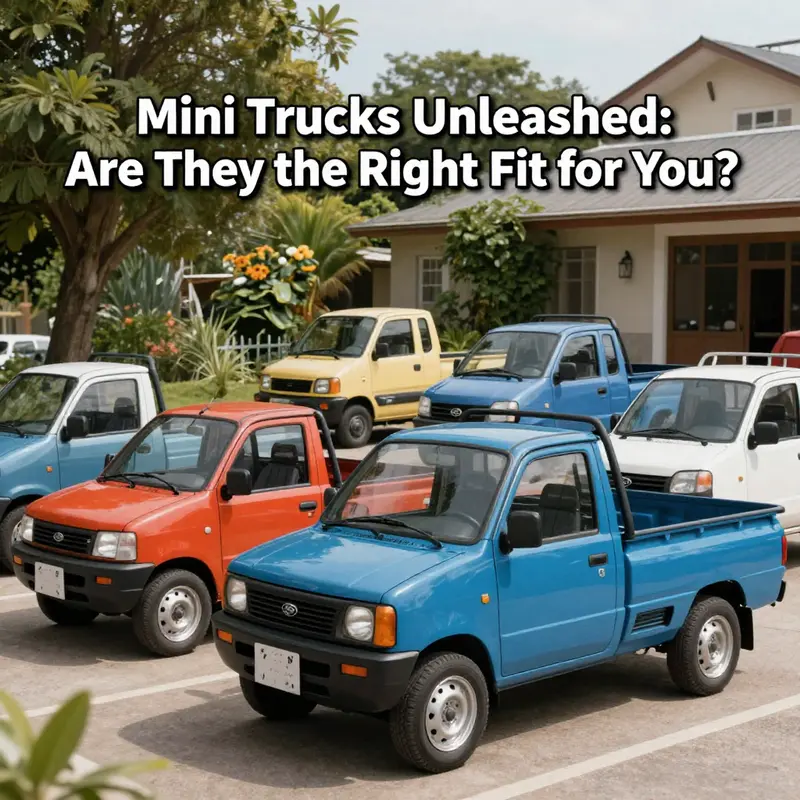
For small business owners and hobbyists alike, finding the right vehicle to suit your needs can feel like a daunting task. With the growing popularity of mini trucks, many are left wondering: are mini trucks any good? Their compact size, efficiency, and versatility make mini trucks appealing options for local deliveries, off-road adventures, and much more. Throughout this guide, we’ll explore their urban efficiency in city driving, their cost-effectiveness for small businesses, and their versatility across various industries, providing clarity on why a mini truck might just be your perfect match.
Urban Efficiency Reimagined: Assessing the Real Value of Mini Trucks in City Driving

In dense urban landscapes, where every curb, turn, and stop sign tests the limits of space and patience, the question of utility is rarely answered with a simple yes or no. Are mini trucks any good for city driving? The answer, like city life itself, depends on how you measure value. When the goal is to move goods and services through the last mile with minimal frictions, compact trucks can deliver a surprising blend of maneuverability, efficiency, and practicality. They are not a universal solution for every urban challenge, but they are a remarkably effective tool in the right hands and for the right tasks. The core of their appeal lies in a combination of size, cost discipline, and adaptability. In cities where space is a scarce resource, a vehicle that can squeeze through tight lanes, fit into small loading zones, and park where others cannot is a competitive advantage. This advantage becomes even clearer when we look beyond the car-like comforts most people associate with everyday driving and focus on how these vehicles perform as workhorses in urban environments. The chapter that follows builds on that premise, tracing how mini trucks work in practice, what makes them attractive to diverse operators, and where their limitations keep them from being the best fit for certain jobs. It is a story of space, speed, and the quiet efficiency that emerges when a vehicle is designed specifically to meet the demands of city life rather than to mimic its long-haul cousin.
Size, maneuverability, and access. These three factors are often cited as the practical backbone of mini trucks in urban settings. Their compact footprint means they can turn on a dime where a full-size pickup would struggle to align with the curb. In street canyons, where delivery windows compress and parking spots narrow, the ability to slide into a tiny loading bay or slide out with an open tailgate can shave minutes off each stop. Those minutes accumulate over a shift, and the math becomes compelling when thousands of last-mile deliveries are counted over a year. The same compact size that helps with parking also enables access to locations that simply aren’t reachable by larger trucks. In many cities, access rules, loading zone restrictions, and narrow alleys are real constraints. Mini trucks are designed to thrive under those conditions, not fight them. They are the urban tool whose primary design objective is to reduce friction at the point of use.
Payload relative to size is another striking facet. The cargo area may look modest, but the effective payload of many mini trucks punches well above their visual weight. Of course, payload depends on the configuration—open flatbeds, small enclosed boxes, and insulated bodies each bring different strengths—but the economic calculus often tilts toward higher payload density per square meter of vehicle. For small businesses and service operators, this matters. A vehicle that can carry bulk materials for a landscaping project, bundles of groceries for a neighborhood delivery route, or a spare parts inventory for a mobile repair unit can complete a day’s work with fewer trips. In urban logistics, where trips are short, frequent, and subject to unpredictable congestion, the ability to maximize load per trip is not a luxury; it is a necessity that affects reliability and service levels.
From a cost perspective, the appeal of mini trucks in city operations is not merely the sticker price. It’s the total cost of ownership over time. Fuel efficiency, lower maintenance intensity, and reduced insurance costs translate to meaningful ongoing savings. Many compact trucks are engineered around efficiency—from engine choice to drive-line tuning—that minimizes fuel burn during stop-and-go driving. In cities with fuel price volatility or strict emissions targets, those savings compound. The arithmetic extends to maintenance: simpler drivetrains, fewer components at risk in stop-start traffic, and easier access to routine service are all advantages when every mile counts. The result is a fleet that can stay productive longer between expensive repairs, a critical factor for operators scraping margins in tight urban markets.
A broad range of industries has discovered this formula and repurposed mini trucks for tasks that previously depended on larger vans or trucks. For street-food operations and mobile clinics, the compact footprint supports quick set-up and break-down in congested spaces. For courier networks and last-mile delivery teams, the nimbleness helps navigate high-density neighborhoods while still offering a respectable payload. Landscaping crews can haul soil, mulch, and tools more efficiently, while utility and municipal service teams appreciate the ability to ferry equipment and components to sites that lack full-service access. The versatility is not about one spectacular capability but about a dependable pattern: a vehicle that can travel the city with lower idle time, carry substantial loads, and return to the next call without the fatigue associated with larger, heavier machines.
Modern mini trucks increasingly offer safety and driver-assistance features that matter in urban traffic. Blind-spot monitoring, rearview cameras, electronic stability control, and responsive braking systems are not novelties but expectations in the current market. These technologies reduce the cognitive load on drivers who must inch through crowded streets, negotiate tight loading zones, and contend with erratic pedestrian and cyclist movements. The urban driver benefits from a more forgiving experience: better situational awareness, clearer visibility in confined spaces, and confidence when making a tight lane change or backing into a loading dock. Safety systems that are commonplace on passenger cars have found a vital role in compact commercial vehicles, translating into real-world reductions in incidents and near misses. In a city where every inch of clearance matters, the added cushion of safety is a meaningful component of overall reliability.
Electric powertrains have emerged as a defining evolution for urban use. As cities push toward cleaner air and quieter streets, the appeal of battery-powered mini trucks grows because they directly address two persistent urban pain points: emissions and noise. Electric variants offer the potential for near-zero tailpipe emissions, smoother torque that benefits low-speed maneuvering, and a reduction in maintenance costs tied to internal combustion components. For drivers who spend long hours in city traffic, the gentle acceleration and predictable power delivery of electric drives translate into less fatigue and a safer urban experience. Charging infrastructure—once a limiting factor—now serves as a practical enabler in many neighborhoods and commercial districts. In some fleets, the opportunity to decouple fuel from operating budgets is transformative, shifting cost considerations from price per gallon to price per kilowatt-hour and corresponding maintenance cycles. This is not a speculative trend; industry observers increasingly describe electric mini trucks as a sustainable evolution of urban freight that aligns with broader mobility and climate goals. Further exploration of this trajectory can be found in the ongoing discussion about electric mini trucks and urban freight sustainability.
Yet, even with these advantages, the city is not a universal proving ground for every configuration. There are limits to payload and space, and performance must be evaluated against the specific geography and schedules of a given operation. Narrow sidewalks and very tight corners test a vehicle’s geometry; multi-stop routes in dense neighborhoods require careful route planning to maximize efficiency per mile. Weather also matters: rain can complicate loading, while temperature regimes influence insulation needs and cargo condition. For some applications, particularly those that require substantial insulated cargo volumes or long continuous drayage, a larger platform may still be necessary. In other words, mini trucks are excellent for certain urban missions where time, space, and cost converge in favorable ways; when the job grows beyond those constraints, a broader toolbox becomes appropriate.
Viewed through the lens of urban sustainability, mini trucks offer an appealing mix of capabilities that can complement broader transport strategies. They fit neatly into urban logistics ecosystems that reduce vehicle-miles traveled, lower emissions per delivered unit, and shorten the average time a parcel spends in transit. As cities experiment with dedicated delivery windows, curbside loading rules, and micro-distribution concepts, compact trucks can be a practical backbone for fleets that prioritize reliability and flexibility over sheer volume. The concept of compact, efficient urban freight is not a slogan; it is a design philosophy that guides vehicle engineers, fleet operators, and city planners toward solutions that align with real-world urban rhythms. The result is a transportation segment that moves from niche novelty to practical staple in many urban markets.
To be sure, the pattern is not universal. For long-haul freight, for heavy industrial loads, or for operations requiring expansive enclosed cargo space and consistent climate control across large volumes, mini trucks may not deliver the required scale. In those cases, a larger chassis or warehouse-based logistics approach might be more appropriate. The strength of mini trucks lies in tailoring the tool to the task and recognizing where the urban environment itself acts as a constraint or an enabler. When the task is frequent, predictable, and bound to city limits—where trips are short, roads are crowded, and time is of the essence—the mini truck presents a compelling case for being a good, perhaps even indispensable, urban companion. This perspective is echoed by industry analyses that highlight compact cargo trucks as compact, efficient solutions for urban logistics, especially as electrification broadens the scope of feasible, low-emission operations.
For readers seeking a broader view of how electric variants are changing the urban freight landscape, a detailed discussion is available in external industry coverage that examines the sustainability benefits and practical considerations of upgrading urban fleets with electric mini trucks. The link offers a deeper dive into how cities balance emissions targets with the need for dependable delivery and service access in busy urban cores.
Within the broader article, this chapter remains anchored in the practical reality that mini trucks are most valuable when they are matched to the task. They are not a universal answer to all city-driving challenges, but they are an effective and increasingly essential tool for many urban operations. When a route, a load, and a service schedule align with the strengths of a compact, efficient vehicle, the result is a smoother, more predictable operation that improves service levels without sacrificing cost efficiency. The balance between space, effort, and economy is delicate, yet for many city-based uses, miniature cargo transport hits the sweet spot where the work gets done on time, every time.
If you’re curious about how to translate these general observations into a concrete plan for your city-based operation, consider exploring a broader set of perspectives in the linked resource and the internal community notes for practical considerations and case studies. For a concise sense of where this movement is headed, the city-centric advantages of micro-trucks are becoming a staple topic in urban logistics discussions, and the conversations around electrification are moving quickly toward standard practice in many municipal fleets. The core takeaway remains consistent: mini trucks, when deployed with clarity about task scope and operating conditions, deliver a meaningful blend of efficiency, safety, and flexibility that can redefine what city driving is capable of.
To broaden your understanding, you can consult the Mini Trucks Blog for additional context and case examples that expand on how these vehicles perform in various urban scenarios, including route design, payload management, and fleet optimization. minitrucksocala.com/blog/.
External reading for a deeper dive into the electrification dimension and urban freight sustainability is available here: https://www.greenbiz.com/article/electric-mini-trucks-urban-freight-sustainability
Cost-Effectiveness in Motion: How Mini Trucks Deliver Big Value for Small Business Operations
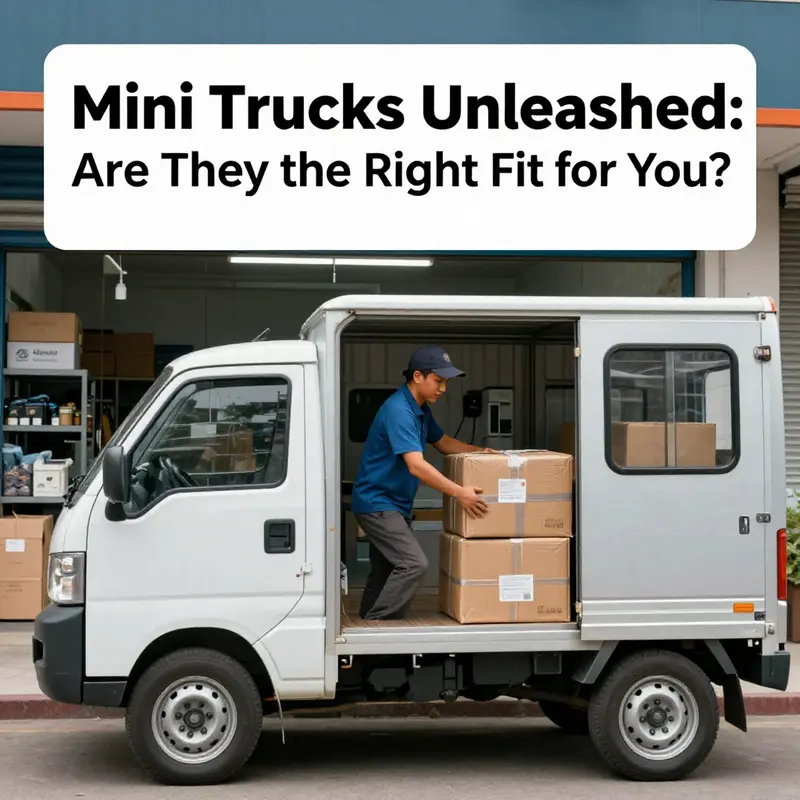
In the tight lanes of city streets and the back edges of rural delivery routes, money matters as much as momentum. Small businesses often face the double challenge of needing dependable transport while guarding every dollar in a budget that is rarely forgiving. The case for mini trucks rests on more than their cute size or their nimble handling; it rests on a deliberate balance of upfront affordability, ongoing operating costs, and practical utility. When a fleet manager or a solo entrepreneur asks whether mini trucks are good investments, what they are really asking is whether these compact workhorses can convert modest capital outlays into measurable, repeatable returns. The answer, across a broad range of urban and semi-rural tasks, tends to be yes. The reasons are as much about cost discipline as they are about capability. They are designed to minimize the friction that often makes small-business logistics a costly headache: fuel, maintenance, insurance, and time wasted maneuvering through dense traffic and crowded parking lots.
The core appeal begins with the economics of purchase and ownership. A mini truck costs less to acquire than a full-sized counterpart with a similar payload. That lower sticker price immediately reduces the hurdle to entry for a small operation, enabling a fleet to scale without committing to debt levels that would constrain other critical investments. The lower purchase cost also translates into gentler depreciation curves, which matter for equipment refresh cycles and balance-sheet management. When a business plans for the next five to seven years, these reduced capital and depreciation considerations can free capital for other essential needs—inventory, marketing, software systems, or a more robust service fleet. The conversation often turns to total cost of ownership, where fuel, maintenance, and insurance loom large in the spectrum of ongoing expenses. Here, mini trucks shine in two distinct ways: predictable, efficient fuel consumption and maintenance simplicity.
Fuel efficiency is not merely a statistic for hobbyists; it translates directly into bottom-line savings. In urban logistics and last-mile delivery, the vehicle’s fuel burn matters every day. Many mini trucks are engineered around compact, efficient engines and drivetrain architectures that deliver far better miles-per-gallon (or equivalent) than larger commercial vehicles used for comparable tasks. That efficiency compounds over hundreds or thousands of trips each year, reducing fuel expense in a way that is both tangible and steady. In a 2025 industry analysis, the potential reduction in fuel expenses for these vehicles was noted as up to 30 percent when compared with larger freight options. While that figure will vary with route type, payload, and loading practices, it underscores a consistent pattern: smaller, lighter vehicles can do more with less fuel, which is a decisive advantage for operators watching every penny of operating costs.
Maintenance costs follow a similar logic. A smaller truck is generally easier and cheaper to maintain. The mechanical systems are simpler, parts are often less expensive, and routine service intervals can be shorter or more predictable. Fleets built around compact trucks benefit from easier availability of local service and faster turnarounds, reducing downtime that eats into productivity. The financial ripple effect is meaningful: lower maintenance outlays preserve cash flow and keep vehicles on the road longer before major refurbishments or replacements are necessary. Insurance is typically more affordable for smaller, lower-value vehicles as well, particularly for operators who maintain safe driving records and stay current with routine servicing. And when insurers do require risk assessments for fleets, the smaller footprint and reduced risk exposure can translate into favorable terms, further tightening the chain of cost savings.
But cost effectiveness is not just about the price tag. It also hinges on how well the vehicle aligns with the specific tasks a small business needs to perform. Mini trucks offer a remarkable degree of versatility that translates into tangible productivity gains. The compact size is not just a convenience; it is a design feature that unlocks access to spaces that full-size vehicles simply cannot reach. Narrow city alleys, congested downtown corridors, tightly packed loading docks, and parking spots that would swallow a larger truck become manageable. This agility reduces the time spent in traffic, searching for parking, or waiting for loading bay access—a sequence of small inefficiencies that accumulate into big costs over a typical workday. In addition, the payload capacity relative to size is surprisingly strong in many models. Despite their modest exterior, these vehicles can carry substantial loads for their class, making them practical for a wide range of tasks—from carrying construction materials and delivery goods to transporting agricultural produce or mobile service equipment. The result is a fleet that can handle diverse assignments without switching vehicles or arrangements mid-shift.
Another critical dimension for cost-effectiveness is the flexibility of body configurations. Mini trucks are not monolithic; they come in a spectrum of body styles that can be matched to the job. Open-bed configurations allow for easy loading and unloading of bulky items, while enclosed cargo bodies protect goods from weather and theft. Some variants are designed with tipping mechanisms to facilitate unloading of loose materials, and insulated or refrigerated bodies support light food service or on-site service activities. This breadth of options reduces the need for ancillary equipment—dumpsters, multiple trailers, or specialized trucks—because the same basic platform can be adapted to a wide array of tasks. The ability to tailor a vehicle to the exact need of a route or service scenario enhances productivity while conserving capital. When a business does not have to purchase multiple high-dollar trucks to cover a spectrum of functions, the savings multiply.
Technology also plays a role in the cost-effectiveness story, though in a way that respects the practical realities of small-business budgets. The most impactful safety and efficiency features in modern mini trucks are not just about luxury; they are about reducing risk, saving time, and improving reliability. Modern iterations often include essential aids such as rearview cameras, improved visibility systems, and some level of driver-assistance technologies. These features help drivers navigate crowded urban landscapes with more confidence, reduce the likelihood of damage to loads and vehicle bodies, and streamline daily operations by limiting the kinds of incidents that cause costly downtime. In practice, safety features translate into fewer insurance claims, lower maintenance surprises, and a smoother training path for new drivers—an important consideration for owner-operators who often juggle multiple roles and responsibilities within a single business.
The strategic value of mini trucks extends beyond singular metrics. They enable faster, more flexible service models that can be scaled incrementally to align with demand. For small operators who must adapt to shifting workloads, the ability to add or adjust a fleet with comparatively modest capital exposure is a powerful advantage. A business can seasonally adjust its transportation capacity—adding more compact vehicles for peak periods or reducing the fleet during lull times—without the cash flow disruption that often accompanies larger asset purchases. This flexibility is not merely about what is bought but how it is used. The design of a mini truck encourages a workflow that emphasizes quick turnarounds, efficient loading, and consistent, repeatable routes. When a driver can complete more tasks in a given shift, the money earned per hour rises, and the business’s unit economics improve. The cumulative effect is a fleet that scales not just in size but in efficiency, turning each mile into a more productive leg of the business’s overall model.
Of course, no vehicle class is a one-size-fits-all answer. There are legitimate constraints with mini trucks that operators must weigh against the benefits. They typically do not offer the same level of cargo space as full-size trucks, nor are they destined for long-haul freight or heavy-duty, continuous-duty work. In settings where vast volume or extreme payloads are routine, conventional trucks may still be required. The key is task alignment: identify the work that benefits most from a compact footprint, high maneuverability, and efficient operation, and you will often discover that mini trucks deliver outsized value. For routine urban deliveries, on-site service calls, or rural errands that require frequent short trips and tight access, these vehicles can outperform expectation. They shrink the cost-per-delivery and increase the number of service windows a business can maintain in a day, which translates into better margins and more dependable service levels for customers.
That is the heart of the cost-effectiveness argument: mini trucks translate small-scale capability into scalable, repeatable cost savings. The narrative is not about a flashy, one-off bargain; it is about a consistent, predictable value proposition. A business that uses mini trucks for last-mile delivery, on-site services, or light construction logistics can achieve a lower cost per mile and a more stable cash-flow profile. The reduced debt risk, coupled with lower ongoing costs, creates a foundation for more resilient operations. It also encourages a culture of efficiency—drivers become more adept at optimizing routes, scheduling, and loading procedures, while fleet managers continuously refine processes to drive further savings. The ultimate measure is not a single statistic but a pattern: frequent, repeatable cost reductions across fuel, maintenance, insurance, and downtime accumulate into significant annual savings. When these savings are reinvested, they enable better service, broader coverage, or more competitive pricing, all of which contribute to a stronger competitive position for the business.
The reliability of mini trucks, when combined with their cost profile, is not an accident of engineering but a deliberate response to the needs of lean operations. In markets where regulations favor smaller, less polluting fleets or where urban congestion makes every minute precious, these vehicles offer a practical advantage that can be quantified in more predictable margins. The research outlook supports this view, pointing to a clear, cost-conscious path for small enterprises that value efficiency as much as endurance. The result is a compelling proposition: buy once, operate efficiently, and scale gradually with a vehicle platform that remains consistent in its performance across diverse tasks. In the end, the question of whether mini trucks are good for small business operations is not a yes-or-no check but a calculus of cost versus capability, time saved versus load carried, and the strategic flexibility gained from a fleet that can adapt as quickly as the market demands.
For readers who want to explore broader perspectives on these vehicles and their operational applications, a wider community conversation exists online. The minitrucks blog hosts discussions, case studies, and practical tips that illuminate how owners and operators optimize their use of compact fleets across different contexts. A helpful starting point for that ongoing dialogue is the minitrucksocala.com/blog/, which curates insights and real-world experiences from practitioners who rely on compact trucks to keep their businesses moving. This resource can provide useful, real-world illustrations of how the principles discussed here translate into daily practice on the ground. While the specifics of individual models and configurations matter, the broader lessons about cost control, route optimization, and flexible utilization remain consistent across the community.
The argument for cost-effectiveness also benefits from the recognition that these vehicles do not exist in isolation. They operate within a larger ecosystem of urban planning, delivery networks, and service models that increasingly prize efficiency and reliability. As cities grow more congested and customers demand faster, more transparent service, a compact, well-managed fleet becomes less a curiosity and more a strategic asset. The cost savings achieved through better fuel economy and smarter maintenance are amplified when combined with improved scheduling, better load planning, and smarter driver training. The payoff is a more predictable operating budget and a stronger capacity to meet service commitments without sacrificing profitability. In this way, mini trucks are not merely cheap alternatives; they are thoughtfully designed tools that, when deployed with discipline, help small businesses compete on service quality and reliability while staying within budget. The discipline of cost management—tracking fuel per mile, monitoring maintenance intervals, optimizing load distribution, and refining routes—becomes a core competency rather than a peripheral consideration.
The broader implication is clear: for many small businesses, mini trucks offer a pragmatic path to profitability that aligns with the realities of tight budgets and evolving customer expectations. They are not a universal solution for every logistics challenge, but for the right tasks—the urban last mile, the rural run with modest volume, the service visit to a busy client site—their blend of cost savings, payload efficiency, and nimble operation makes them especially well suited. When matched to the right job, these vehicles can deliver more value per mile than larger, more expensive alternatives while reinforcing a business’s ability to respond quickly to customer needs. The cost-effectiveness story, therefore, is not simply about a lower price tag or a leaner maintenance schedule; it is about a strategic approach to working smarter, leveraging smaller assets to achieve greater overall efficiency, and building a business that can adapt with agility in the face of changing demand.
External resource: https://www.logisticsmanagement.com/mini-trucks-small-business-deliveries
Small in Size, Big in Scope: How Mini Trucks Power Diverse Industries

Mini trucks have a way of slipping quietly into the rhythm of a workspace and then quietly multiplying the ways a business can operate. They aren’t flashy, and they don’t pretend to be one-trick ponies. Instead, their value sits in a balance between compact footprint, frugal operating costs, and a surprising ability to morph into purpose-built tools for a wide range of tasks. When you stand back and look at the broader landscape of urban logistics, rural mobility, and service delivery, the case for mini trucks becomes a narrative about adaptability rather than a single-use endorsement. The overarching question—are mini trucks any good?—yields a thoughtful yes, provided you match the vehicle to the job, respect the constraints of size, and leverage the modern features that have moved these platforms from simple workhorses to multi-faceted workstations on wheels.
In dense urban cores, the allure begins with a practical truth: space is scarce, but the demand for local transport is high. Mini trucks occupy a relatively tiny footprint, which translates into easier navigation through congested streets, tighter parking, and access to alleys that are off-limits to larger vans and trucks. This isn’t just about chasing a few extra minutes of time on a daily schedule; it’s about transforming the end-to-end flow of a delivery route, a service call, or a construction site visit. The agility they offer means more touches per hour, less time wasted while maneuvering, and fewer delays caused by parking challenges. The payoff is not just speed; it’s predictability and reliability in environments where every inch matters. Left-hand drive variants add another dimension, extending the reach of these vehicles into markets where forward visibility and maneuverability on busy urban streets provide tangible safety and efficiency benefits for drivers accustomed to driving on a particular side of the road.
Payload capacity punches above the weight one might expect from a compact chassis. The weight-to-volume ratio often favors mini trucks when the task is to move heavy, compact loads with frequent stops. This characteristic makes them especially well suited to tradespeople who haul building materials, landscapers transporting soil and mulch, or market vendors who need to carry a steady stream of goods without sacrificing maneuverability. The ability to balance payload with low operating costs—fuel or electricity, maintenance, and insurance—creates a compelling total cost of ownership profile. In practical terms, it means that a small, efficient truck can move the same amount of freight more times throughout the day than a larger, less efficient vehicle could manage with the same driver effort. The result is a workflow that scales with demand rather than being throttled by fuel bills or maintenance headaches.
Across industries, the versatility of mini trucks is perhaps most visible in how they are adapted to specific tasks. In construction and landscaping, for example, dump beds enable self-unloading, which directly reduces manual labor, speeds up project timelines, and lowers the risk of worker injuries from heavy lifting. This feature—simple in concept, transformative in effect—turns what might be a slow, manually unloaded pile of gravel or mulch into a streamlined operation where material is moved, unloaded, and dispersed with a minimal punch of the lever. Even when a project requires a canopy or a box to shield tools and materials from weather or theft, the configurations can be adjusted without sacrificing the vehicle’s core advantages. This adaptability is not a nicety; it’s a practical enabler for crews that move between different job sites and different material needs in a single day.
The agricultural sector has long relied on compact, nimble vehicles that can navigate narrow paths and uneven terrain. A reliable, all-wheel-drive setup in a kei-class or similar small, purpose-built truck makes field work feasible in spaces where larger tractors or trucks would struggle to access. Farmers appreciate a machine that can climb dirt paths, traverse rutted fields, and deliver hay bales, seed, or fertilizer to the edge of a field without dragging along a heavy, fuel-hungry vehicle. In such settings, the compact size becomes a strategic advantage: a smaller footprint means less soil compaction, easier turning, and fewer crop damages from misdirected turns. The driver’s view remains intimate with the working environment, and that direct line of sight translates into safer, more deliberate operation in rough terrain.
Urban delivery and last-mile logistics showcase another facet of mini truck versatility. In a world where speed and reliability can differentiate a service, these vehicles excel by offering a blend of fuel efficiency and tight maneuverability that helps fleets slip through rush hour more predictably. The potential for impressive fuel economy—often in the 40 miles per gallon range on certain configurations—helps keep daily operating costs in check when the same vehicle makes dozens of returns to a distribution hub. The compact cargo area remains a limitation in absolute volume, but for many delivery routes the frequency of trips, the quick loading and unloading, and the ability to operate from curbside locations outweigh the downside. Vehicle safety technology continues to mature in newer models, with features like rearview cameras and assistive sensors reducing blind spots and contributing to a smoother, less stressful workday for drivers who face the unpredictability of city streets.
In the freight and moving sector, the beauty of mini trucks lies in the physics of the job: moving bulky, irregular shapes over short distances with consistent, predictable velocity. Flatbed configurations enable transport of oversized items that don’t fit neatly into a box or a canopy. When weather protection is essential, a weather-resistant canopy or an enclosed flatbed can secure cargo and deter theft, improving the reliability of a local relocation or a small-scale moving service. It’s not about cramming as much cargo as possible into a tiny space; it’s about creating a platform that can be configured for the actual shapes and needs of a given job, so the driver spends less time improvising and more time executing.
Beyond the city limits, the rugged edge of mini truck capability becomes evident in sectors like mining, forestry, and other remote construction sites. Here, gas-powered or diesel-powered variants gain appeal because they deliver durable torque and robust performance in off-grid conditions. The chassis is engineered to endure rough terrain, with suspensions and driveline layouts that favor reliability over high-speed cruising. The importance of a stable, predictable work platform becomes evident when fuel stations are scarce, when weather can complicate operations, and when a crew depends on transport to keep a project on schedule. In such environments, the compact truck’s size is not a limitation but a strategic enabler that allows access to trails and routes that would be closed off to larger equipment. For sites that require low-profile access or reduced equipment footprints, these vehicles become indispensable.
Another evolving trend that broadens the applicability of mini trucks is the rise of electric and ultra-clean platforms for confined spaces. Eco-sensitive zones, indoor facilities, and tightly regulated urban districts are increasingly receptive to quiet, low-emission transport. Electric configurations—many designed to be compact, versatile, and easy to recharge on-site—offer a compelling option for indoor deliveries, campus logistics, or hospital and facility maintenance work where noise and emissions would otherwise pose conflicts. In these settings, the zero-emission operation is not merely a compliance feature; it is a meaningful contributor to a safer, more pleasant work environment and a way to keep city centers moving without generating additional air pollution or noise pollution.
From a strategic perspective, the strength of mini trucks is not one single capability but a portfolio of capabilities that can be tuned to fit different demand curves. Manufacturers and operators increasingly emphasize customization. Bodies can be swapped or augmented, engine options provide flexibility between performance and efficiency, and regulations—such as those governing light commercial vehicles in different regions—shape how these platforms are built and used. The result is a vehicle class that competes on adaptability as much as on cost or efficiency. In practice, that means a small business can start with a basic, fuel-efficient truck and, as needs evolve, add a dump bed for construction work, a canopy for tool storage, an insulated box for temperature-controlled deliveries, or an electric propulsion option for clean urban use. The modularity of these platforms turns a single investment into a family of fleet options, reducing the friction of expansion and allowing teams to customize on a budget that aligns with growth.
Global market patterns reinforce this narrative of versatility. Across regions where used kei-class vehicles have established a strong foothold, fleets have demonstrated that compact trucks can perform as daily drivers as well as specialized work vehicles. The same chassis that ferries a contractor’s tools can transport crops to a local market, or shuttle municipal maintenance crews through a plant or campus with ease. The market data trend lines emphasize a broader appetite for vehicles that can be adapted quickly, without the procurement delays that often accompany purchasing multiple specialized trucks. In this light, mini trucks are less about replacing larger trucks and more about filling capacity gaps—providing nimble, cost-effective solutions that can be deployed with speed and scaled thoughtfully over time.
Yet no tool collection is complete without recognizing the limits. The smaller cargo volume is a natural constraint, especially for long-haul or high-density freight tasks that demand continuous, large-scale throughput. The trade-off is clear: you gain in agility, cost, and ease of operation, but you concede some absolute cargo capacity and range. The key to maximizing value is not to overlook these trade-offs but to design operations that align with a task profile where the benefits of a compact platform are most impactful. For a business focused on overnight, cross-country transport or bulk industrial haulage, larger trucks will still be necessary. For local deliveries, remote service calls, or rapid material handling in constrained spaces, mini trucks often outperform expectations and deliver a distinct competitive edge.
The overall takeaway is nuanced: mini trucks are not blueprints for every logistics challenge, but they are exceptionally good when the job involves frequent starts and stops, tight spaces, and a disciplined balance of payload and efficiency. Their versatility is the practical outcome of design choices focused on light weight, compact dimensions, and modular adaptability. The decision to deploy them should be anchored in a clear understanding of the task profile, a candid assessment of space and access constraints, and a forward-looking view of how a fleet might evolve with changing requirements. When that alignment exists, mini trucks do more than move goods; they actively enable a broader range of services, expand the boundaries of what is possible in urban and rural logistics, and help small and medium operations punch above their weight in a marketplace that rewards agility and reliability as much as it does volume.
For readers seeking to explore how these platforms can be tailored to niche roles without losing sight of their core strengths, a closer look at camper conversions and other specialized designs reveals a familiar pattern. The same fundamental virtues—compactness, efficiency, and adaptability—drive a spectrum of transformations that turn a simple truck into a customized tool for mobile services, on-site support, or seasonal needs. In many cases, the practical value of such conversions rests on the vehicle’s ability to maintain usable payload and dependable operation even after a retrofit. That balance is not incidental; it is a reflection of a design philosophy that prioritizes real-world utility over theoretical capacity. If the discussion you’re after includes how such conversions are planned and executed, consider this camper customization resource as a reference point camper customization. It illustrates how a compact platform can be reimagined to support living and working in a mobile context without compromising the core advantages that define mini trucks.
In the broader picture, the rise of mini trucks mirrors a shift in how small businesses and service providers think about mobility. It’s less about owning a single vehicle designed for a narrow task and more about owning an adaptable, reliable tool that can morph as needs change. The practical implications ripple through planning and procurement: fleets can diversify without overcommitting to specialized equipment, maintenance costs can be controlled by choosing configurations that deliver value across multiple tasks, and training can focus on a common operating baseline rather than a roster of disparate vehicles. This is not a sales pitch for any one configuration but an invitation to recognize a family of vehicles that can keep pace with evolving urban and rural demands. As cities get denser and rural work becomes more service-driven, the opportunity to leverage compact, modular platforms grows more compelling.
Ultimately, the question of whether mini trucks are good across various industries is best answered with a synthesis: they are not universal panaceas, but they are exceptionally well suited to the kinds of tasks that define modern, distributed work. Their strength lies in the careful alignment of vehicle design with task requirements, a dynamic that becomes even more powerful when customization options are embraced rather than avoided. For many operators, the right mini truck is not a compromise but a strategic enabler—an instrument that bridges the gap between the needs of urban delivery, on-site service, and remote access with a level of efficiency and reliability that larger fleets cannot always match. In a world that prizes speed, flexibility, and cost-effectiveness, this class of vehicles emerges as a practical, resilient solution that expands the potential of what small teams can accomplish on a daily basis.
External resource: MarketsandMarkets Market Research on Mini Trucks: https://www.marketsandmarkets.com/Market-Reports/mini-trucks-market-182537937.html
Final thoughts
In summary, mini trucks offer an array of benefits that make them both practical and appealing for local small business owners and enthusiasts. Their urban efficiency makes navigating city streets a breeze, while their cost-effectiveness ensures that operating expenses remain manageable. Lastly, their versatility allows for various applications across industries, proving their worth as valuable assets. So whether you’re looking to streamline your business operations or require a reliable vehicle for personal use, mini trucks may well be the solution you’ve been searching for.